

A survey of ex vivo/in vitro transduction efficiency of mammalian primary cells and cell lines with Nine natural adeno-associated virus (AAV1-9) and one engineered adeno-associated virus serotype
Open accessThe DOI matches its Crossref record; 62 of the 63 references it cites were found in a registry or an index.
Abstract
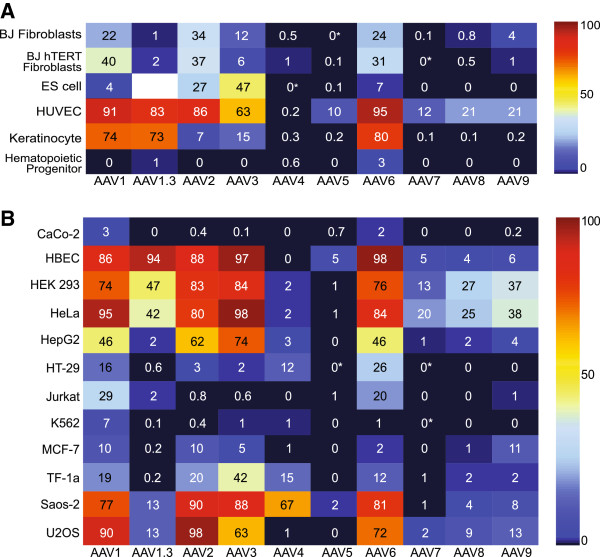
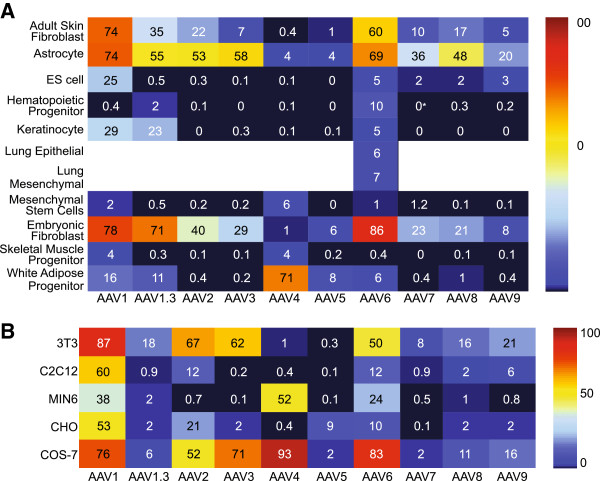
Background: The ability to deliver a gene of interest into a specific cell type is an essential aspect of biomedical research. Viruses can be a useful tool for this delivery, particularly in difficult to transfect cell types. Adeno-associated virus (AAV) is a useful gene transfer vector because of its ability to mediate efficient gene transduction in numerous dividing and quiescent cell types, without inducing any known pathogenicity. There are now a number of natural for that designed AAV serotypes that each has a differential ability to infect a variety of cell types. Although transduction studies have been completed, the bulk of the studies have been done in vivo , and there has never been a comprehensive study of transduction ex vivo/in vitro . Methods: Each cell type was infected with each serotype at a multiplicity of infection of 100,000 viral genomes/cell and transduction was analyzed by flow cytometry + . Results: We found that AAV1 and AAV6 have the greatest ability to transduce a wide range of cell types, however, for particular cell types, there are specific serotypes that provide optimal transduction. Conclusions: In this work, we describe the transduction efficiency of ten different AAV serotypes in thirty-four different mammalian cell lines and primary cell types. Although these results may not be universal due to numerous factors such as, culture conditions and/ or cell growth rates and cell heterogeneity, these results provide an important and unique resource for investigators who use AAV as an ex vivo gene delivery vector or who work with cells that are difficult to transfect.
Overview
The claims and statistics of this paper haven’t been checked yet.
Free: it reads the open-access text and checks the first 5 claims that cite a source we can check. Create a free account to check every claim.
Integrity signals
Registry
Cites
Statistics
Figures
Verification
Claims the paper makes
The claims and statistics of this paper haven’t been checked yet.
Free: it reads the open-access text and checks the first 5 claims that cite a source we can check. Create a free account to check every claim.
Claims other papers make about this one
Each is checked against this paper’s own text: does it say what the citing paper says it does?
The source backs part of the claim, not all of it — or backs it for a different population, condition or comparison.
In the citing paper
“For example, rAAV5 vectors infect very poorly HEK293 cells, HeLa cells, and BJ fibroblasts [264] but infect RPE cells and human retinal organoids efficiently [62,265].”
From Recombinant Adeno-Associated Viral Vectors (rAAV)-Vector Elements in Ocular Gene Therapy Clinical Trials and Transgene Expression and Bioactivity Assays (2020) · cites this paper as [264]
Experimental — accuracy not yet measured
Self-check
Percentages, sums and reported differences re-computed from the paper’s own numbers.
The self-check needs the paper’s full text.
Citations
Cites
Cermak, T., Doyle, E. L., Christian, M., Wang, L., Zhang, Y., Schmidt, C., Baller, J. A., Somia, N. V., Bogdanove, A. J., & Voytas, D. F. (2011) · Nucleic Acids Research · doi:10.1093/nar/gkr218 · Cited by 1,787 · cited 1×
“These site-specific double-strand breaks could be induced by a homing endonuclease [21,41,42], by zinc finger nucleases [43], or by some other nuclease, like TAL effector nucleases (TALENs) [44-47].”
BackgroundAnalysis of AAV Serotypes 1–9 Mediated Gene Expression and Tropism in Mice After Systemic Injection
Zincarelli, C., Soltys, S., Rengo, G., & Rabinowitz, J. E. (2008) · Molecular Therapy · doi:10.1038/mt.2008.76 · Cited by 1,490 · cited 1×
“For example, a broad study of AAV serotypes 1-9 has been done in mice [19].”
BackgroundSummerford, C., & Samulski, R. J. (1998) · Journal of Virology · doi:10.1128/jvi.72.2.1438-1445.1998 · Cited by 1,406 · cited 1×
“The primary receptor for AAV2 and AAV3 is heparan sulfate-proteoglycan [6].”
BackgroundGenetic engineering of human pluripotent cells using TALE nucleases
Hockemeyer, D., Wang, H., Kiani, S., Lai, C. S., Gao, Q., Cassady, J. P., Cost, G. J., Zhang, L., Santiago, Y., Miller, J. C., et al. (2011) · Nature Biotechnology · doi:10.1038/nbt.1927 · Cited by 1,135
White Fat Progenitor Cells Reside in the Adipose Vasculature
Tang, W., Zeve, D., Suh, J. M., Bosnakovski, D., Kyba, M., Hammer, R. E., Tallquist, M. D., & Graff, J. M. (2008) · Science · doi:10.1126/science.1156232 · Cited by 1,113 · cited 1×
“The white adipose progenitor cells were isolated and cultured as described previously [58] (isolation instruction was generously provided by Jon Graff at UTSW).”
MethodGene therapy using adeno-associated virus vectors
Daya, S., & Berns, K. I. (2008) · Clinical Microbiology Reviews · doi:10.1128/cmr.00008-08 · Cited by 926
Adeno-associated Virus Serotypes: Vector Toolkit for Human Gene Therapy
Wu, Z., Asokan, A., & Samulski, R. J. (2006) · Molecular Therapy · doi:10.1016/j.ymthe.2006.05.009 · Cited by 922 · cited 2×
“Expansion in the number of AAV serotypes, both through the identification of novel natural serotypes and new, engineered serotypes [16,23,25-35], has resulted in improved gene transfer to specific cell types in vivo.”
BackgroundAbsence of cancer–associated changes in human fibroblasts immortalized with telomerase
Morales, C. P., Holt, S. E., Ouellette, M., Kaur, K. J., Yan, Y., Wilson, K. S., White, M. A., Wright, W. E., & Shay, J. W. (1999) · Nature Genetics · doi:10.1038/5063 · Cited by 803 · cited 1×
“BJ fibroblasts and BJ hTERT fibroblasts were a generous gift from Jerry Shay and Woodring Wright and were cultured as previously described [52].”
MethodFerrari, F. K., Samulski, T., Shenk, T., & Samulski, R. J. (1996) · Journal of Virology · doi:10.1128/jvi.70.5.3227-3234.1996 · Cited by 761 · cited 2×
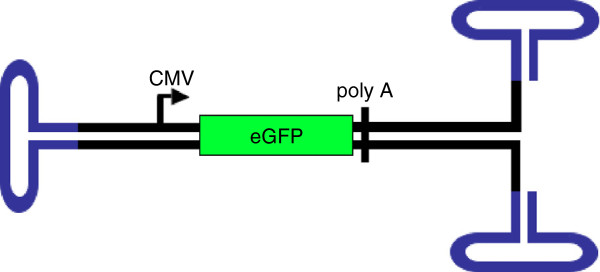
“scAAV vectors have shown earlier onset of transgene expression and overall higher transduction efficiencies than ssAAV vectors [4,5].”
BackgroundMcCarty, D., Monahan, P., & Samulski, R. (2001) · Gene Therapy · doi:10.1038/sj.gt.3301514 · Cited by 735 · cited 2×
“scAAV vectors have shown earlier onset of transgene expression and overall higher transduction efficiencies than ssAAV vectors [4,5].”
BackgroundMethod
Cited by
Items 201–251 of 251
Development of cell-based assay for detecting replication-competent adeno-associated virus by qPCR
Shevade, A., Reeves, J. S., Bak, H., & Tustian, A. D. (2025) · Molecular Therapy — Methods & Clinical Development · doi:10.1016/j.omtm.2025.101529 · Cited by 2
“18 This suggests a need for optimizing the transduction conditions relevant to the sero-type of the product.”
Stamataki, M., Lüschow, J., Schlumbohm, C., Alawi, M., Lunding, L. P., Fuchs, E., Trepel, M., Schwaninger, M., & Körbelin, J. (2025) · Gene Therapy · doi:10.1038/s41434-025-00563-4 · Cited by 4
“6A) which is consistent with previous in vitro studies [38].”
Recent Advances in In Vivo Genome Editing Targeting Mammalian Preimplantation Embryos
Sato, M., Ohtsuka, M., Inada, E., Nakamura, S., Saitoh, I., & Takabayashi, S. (2023) · IntechOpen eBooks · doi:10.5772/intechopen.106873 · Cited by 2
Hirai, T., Kono, K., Sawada, R., Kuroda, T., Yasuda, S., Matsuyama, S., Matsuyama, A., Koizumi, N., Utoguchi, N., Mizuguchi, H., et al. (2021) · Scientific Reports · doi:10.1038/s41598-021-90928-7 · Cited by 2
Li, A., Yi, J., Li, X., Dong, L., Ostrow, L. W., Ma, J., & Zhou, J. (2024) · eLife · doi:10.1101/2023.02.12.528218 · Cited by 12
Fustinoni, C., Liu, X., Chen, Z., Cawood, R., Valenti, W., Patrício, M. I., & Su, W. (2025) · Molecular Therapy — Methods & Clinical Development · doi:10.1016/j.omtm.2025.101492 · Cited by 1
“31 Qualification of the TREAT assay in HEK293AD cells yielded intermediate precision with titers across six independent runs falling within ± 0.5 log of the average titer.”
InfluentialChen, Q., Lee, C. H., Whitfield, R., & Nesbeth, D. (2025) · Molecular Therapy — Methods & Clinical Development · doi:10.1016/j.omtm.2025.101610 · Cited by 1
Samie, M., Parman, T., Jalan, M., Lee, J., Dunn, P., Eshleman, J. A., Vidales, D. B., Kennard, K., Holter, J., Jones, B., et al. (2026) · Science Translational Medicine · doi:10.1126/scitranslmed.adu0217 · Cited by 5
Boucher, J. D., Stranford, D. M., Edelstein, H. I., Tullman‐Ercek, D., Kamat, N. P., & Leonard, J. N. (2026) · Journal of Extracellular Vesicles · doi:10.1002/jev2.70258 · Cited by 1
Preclinical efficacy of a gene therapy for CHKB-mediated muscular dystrophy
Tavasoli, M., Alkandari, M., Dorighello, G. G., Devitt, J., Hagerty, L., Damsker, J. M., Hoffman, E. P., & McMaster, C. R. (2026) · Molecular Therapy Advances · doi:10.1016/j.omta.2026.201766 · Cited by 1
Stimulation of AAV Gene Editing via DSB Repair
Mitchell, A. M., Moser, R. J., Samulski, R. J., & Hirsch, M. L. (2016) · Advances in experimental medicine and biology · doi:10.1007/978-1-4939-3509-3_8 · Cited by 1
Self-citationSon, H.-S., Jun, A. S., Foster, J. W., Wang, W., Daoud, Y. J., Auffarth, G. U., & Roy, M. (2022) · Scientific Reports · doi:10.1038/s41598-022-26926-0 · Cited by 1
Hematopoietic stem cell gene therapy: progress and challenges
Zhang, X., Cheng, T., & Zhang, J. (2017) · Scientia Sinica Vitae · doi:10.1360/n052017-00268 · Cited by 2
AAV Capsid Screening for Translational Pig Research Using a Mouse Xenograft Liver ModelPreprint
Willimann, M., Tiyaboonchai, A., Adachi, K., Li, B., Waldburger, L., Nakai, H., Grompe, M., & Thöny, B. (2024) · bioRxiv (Cold Spring Harbor Laboratory) · doi:10.1101/2024.05.29.596409 · Cited by 1
“It has been shown that various AAV capsids perform vastly different in vitro than in vivo 54,66 and emphasizes the need of standardized assays and models to compare the transduction efficiency of different capsids, most importantly including cell type and origin, incubation time, viral genome…”
BackgroundAdeno-associated viruses escort nanomaterials to specific cells and tissuesPreprint
Nagao, K., Paniagua, E. V., Lei, K., Beckham, J. L., Worthington, P., Manthey, M., Ye, M., Koehler, F., Kim, Y. J., Malkin, E., et al. (2025) · bioRxiv (Cold Spring Harbor Laboratory) · doi:10.1101/2025.04.04.647267 · Cited by 2
“A common mammalian cell line HEK293T is known to be transduced by AAV-DJ but not AAV9 serotype 57,58 , and thus we synthesized chimeras from both AAV serotypes ( 𝜒̅ = 0.3) and assessed their targeting efficacy.”
InfluentialMolecular and cellular mechanisms of energy homeostasis in birds
Xiao, Y. (2020) · VTechWorks (Virginia Tech)
Gunawan, M. G. (2019) · Summit (Simon Fraser University)
Improved Strategies for Directed Evolution of Adeno-Associated Virus Gene Therapy Vectors
Ojala, D. S. (2017) · eScholarship (California Digital Library)
マルチトーン信号のピーク対平均電力比(PAPR)を低減する初期位相設定法
楢橋, 祥., & 野島, 俊. (1995) · Cited by 4
Benefits and Shortcomings of Laboratory Model Systems in the Development of Genetic Therapies
Bucher, K., Rodríguez‐Bocanegra, E., & Fischer, M. D. (2022) · Klinische Monatsblätter für Augenheilkunde · doi:10.1055/a-1757-9879
Suh, Y. (2020) · Faculty Opinions – Post-Publication Peer Review of the Biomedical Literature · doi:10.3410/f.737144813.793579904
Spinal interneurons and cellular engineering
White, N., & Sakiyama‐Elbert, S. E. (2022) · Elsevier eBooks · doi:10.1016/b978-0-12-819260-3.00004-4
Silveria, M. (2022) · MOspace Institutional Repository (University of Missouri) · doi:10.32469/10355/94095
Benyamini, B., Esbin, M. N., Whitney, O. N., Walther, N., & Maurer, A. C. (2023) · doi:10.3791/65572-v
Li, A., Yi, J., Li, X., Dong, L., Ostrow, L. W., Ma, J., & Zhou, J. (2023) · eLife · doi:10.7554/elife.92644.1
Introduction to AAV ‐based in vivo Gene Therapy
Segurado, O. G. (2024) · Wiley eBooks · doi:10.1002/9781119852810.ch1
Li, A., Yi, J., Li, X., Dong, L., Ostrow, L. W., Ma, J., & Zhou, J. (2024) · eLife · doi:10.7554/elife.92644.2 · Cited by 1
Li, A., Yi, J., Li, X., Dong, L., Ostrow, L. W., Ma, J., & Zhou, J. (2024) · eLife · doi:10.7554/elife.92644.3
Fleischmann, T. T. (2024) · Expert Opinion on Biological Therapy · doi:10.1080/14712598.2024.2418961
“Assuming the same binding rate as in feces, and assuming as a safety margin a very conservative virion concentration in saliva of 10 2 higher than in feces, the likelihood of infection would still be at least ~4700× lower than in Ellis [21] ideal experimental set-up.”
A Highly Precise Method for the Quantitation of rAAV Cellular Uptake by ddPCR
Kiladjian, A., Pathak, P., Feschenko, M. S., Bergelson, S., Mason, C., & Wang, Y. (2025) · Human Gene Therapy · doi:10.1089/hum.2025.023
“16 We sought to evaluate our method by testing the cellular uptake ef fi ciency of seven common AAV sero-types carrying a GFP transgene.”
Yamamoto, H., Tamari, M., Wada, S., Takahashi, H., Yoshida-Komiya, H., Saito, H., Morita, H., Matsumoto, K., & Motomura, K. (2026) · Placenta · doi:10.1016/j.placenta.2026.01.005
Iterative engineering of a compact Cas9 ortholog for in vivo gene editing via single AAV deliveryPreprint
Barenghi, A., Hackett, J. A., Humphreys, N. E., & Sawitzke, J. A. (2026) · bioRxiv (Cold Spring Harbor Laboratory) · doi:10.64898/2026.01.12.698990
“The low level of editing observed can be explained by the lack of cell selection and the particularly low transduction efficiency of mESC by AAVs, in line with the literature [54].”
Assessing the biopotency of the rAAV9 vector In Vitro
Adhikari, P., Nichols, P. G., Vorobiov, S., Bobo, T. A., & Fu, H. (2026) · PLoS ONE · doi:10.1371/journal.pone.0341451
“AAV9 serotype at an MOI of 100,000 viral genomes/cell was not efficient in transducing several human cell lines [17].”
Soto-Avellaneda, A., Pugel, A. D., Holmes, J. R., Hicks, A., Alsaifi, S. Z., Koirala, G., Oxford, A. E., & Morrison, B. E. (2026) · Biology · doi:10.3390/biology15050421
“…transduction routes show the importance of utilizing intact animal models to evaluate rAAV biology versus cell culture systems and might explain the diverse cell types labeled in our study (Table 1) and others that differ considerably from the cell culture screens reported for rAAV9 tropism [52].”
Liu, W., Bi, W., Hou, S., Du, J., Zeng, L., Zhang, A., Zhang, H., Wen, D., Cai, Q., Gao, C., et al. (2026) · MedComm · doi:10.1002/mco2.70716
“The most effective and commonly used gene delivery vectors are those based on AAV [ 11 ].”
Saunier, M. (2018) · theses.fr (ABES) · doi:10.70675/ec8722d7z26fcz42a9za385z276d03e06ac3
Fibrose musculaire : acteurs cellulaires et stratégies thérapeutiques
Bensalah, M. (2019) · theses.fr (ABES) · doi:10.70675/26f11f97zd40az491cz93fcz9608314a2b03
Kumar, S. (2026) · Springer eBooks · doi:10.1007/978-981-95-7688-3_3
Beljan, J., Nicolau, S., Lin, H., Lay, J. W., Frair, E. C., Gushchina, L. V., Weiss, R. B., & Flanigan, K. M. (2026) · Molecular Therapy Advances · doi:10.1016/j.omta.2026.201750
“27 Translational development will require further studies, but this proof-of-concept study confirms that the pseu-doexon class of DMD mutations is amenable to U7snRNA treat-ment and demonstrates the potential of such individualized gene therapies to restore full-length dystrophin expression, which…”
Cell‑intrinsic mechanisms underlying species differences in lipid nanoparticle‑mRNA deliveryPreprint
Goihberg, P., Martyniak, K., Hickey, J., Jami‐Alahmadi, Y., Soo, P. L., Narula, J., & Neubert, H. (2026) · Research Square · doi:10.21203/rs.3.rs-9180848/v1
Cholesterol-tuned lipid nanoparticles for plasmid DNA delivery and CRISPR–Cas9 gene editing
Kim, H., Kang, J., Shin, J., Shin, Y., & Joo, K. I. (2026) · Biotechnology and Bioprocess Engineering · doi:10.1007/s12257-026-00297-z
abdelnaby, M., Galiakberova, A. A., & Dashinimaev, E. B. (2026) · International Journal of Molecular Sciences · doi:10.3390/ijms27156846
“This serotype-dependent tropism is also observed at the cellular level: AAV1 and AAV6 have broad tropism for mammalian cell types, including human ESCs, whereas other serotypes have more restricted preferences such as AAV3 for human ESCs and AAV4 for murine adipose progenitors [16].”
Sakamoto, K., Yoshida, K., Tsunekawa, Y., Mendoza, N. A. G., Komaki, Y., Onodera, A., & Okada, T. (2026) · Molecular Therapy Advances · doi:10.1016/j.omta.2026.201830
Kubek-Luck, K., Velazquez, J. G., Yao, X., Gabriels, J., Hsu, C., Arora, S., Bontadelli, L., Gilbart, Y., Aihara, F., Li, H., et al. (2026) · Molecular Therapy · doi:10.1016/j.ymthe.2026.08.024
Donohue, N., Bogdanovic, A., Conheady, J., Davin, S., Barron, N., & Glennon, B. (2026) · International Journal of Molecular Sciences · doi:10.3390/ijms27177603
“CHO cells were used for these experiments as previous work had indicated that this cell line was best suited for rAAV5 transduction [22].”
Jahnz, H., Hamann, M. V., Kim, H. O., Sun, Y., Salazar-Quiroz, N. A., Zhu, L., Leddy, S. M., Swaiba, U. E., Schneider, C., Foth, D., et al. (2026) · Human Gene Therapy · doi:10.1177/10430342261487919
Theisohn, I., Heilmann, H., Busch, L., Bufe, B., Ritzmann, F., Beißwenger, C., Bals, R., & Herr, C. (2026) · Research Square · doi:10.21203/rs.3.rs-10984049/v1
Adeno-associated virus-mediated epithelial IL-33 silencing attenuates type 2 airway inflammation
Tomiyasu, S., Kabata, H., Akiyama, Y., Ogawa, T., Koyama, K., Kurihara, M., Masaki, K., Miyata, J., Mizukami, H., & Fukunaga, K. (2026) · Allergology International · doi:10.1016/j.alit.2026.09.004
Metadata
- Authors
- Ellis, B. L., Hirsch, M. L., Barker, J. C., Connelly, J. P., Steininger, R. J., & Porteus, M. H.
- Affiliations
- The University of Texas Southwestern Medical Center (US)
- University of North Carolina at Chapel Hill (US)
- Harold C. Simmons Comprehensive Cancer Center (US)
- Corresponding author
- Porteus, Matthew H
- Venue
- Virology Journal
- Published
- 2013-03-06
- Volume
- 10
- Issue
- 1
- Pages
- 74-74
- ISSN
- 1743-422X (ISSN-L)
- PMC
- PMC3607841
- OpenAlex
- W2112808685
- Cited by
- 252
- References
- 63
- Citations by year
- 2026: 21 · 2025: 32 · 2024: 25 · 2023: 24 · 2022: 27 · 2021: 28 · 2020: 20 · 2019: 22 · 2018: 10 · 2017: 15 · 2016: 7 · 2015: 11 · 2014: 7 · 2013: 1
- FWCI
- 5.74
- Type
- journal article
- Language
- en
- Open access
- gold
- doi.org
- Licence
- cc-by
- creativecommons.org/licenses/by/2.0 (tdm)
- Locations
- Virology Journal (publishedVersion, cc-by)
- Europe PMC (PubMed Central) (publishedVersion, cc-by)
- PubMed Central (publishedVersion, cc-by)
- PubMed (publishedVersion)
- Carolina Digital Repository (University of North Carolina at Chapel Hill) (submittedVersion, cc-by)
- Carolina Digital Repository (University of North Carolina at Chapel Hill) (submittedVersion)
- eScholarship (California Digital Library) (submittedVersion)
- UNC Libraries
- Funders
- Amon G. Carter Foundation
- University of Texas Southwestern Medical Center
- Topics
- Life Sciences › Biochemistry, Genetics and Molecular Biology › Genetics › Virus-based gene therapy research
- Life Sciences › Biochemistry, Genetics and Molecular Biology › Molecular Biology › RNA Interference and Gene Delivery
- Life Sciences › Biochemistry, Genetics and Molecular Biology › Molecular Biology › Viral Infectious Diseases and Gene Expression in Insects
- Keywords
- adeno-associated virus, AAV serotypes, AAV1, AAV6, AAV9, transduction efficiency, ex vivo gene delivery, in vitro gene transfer, mammalian cell lines, primary cells, viral vectors
- MeSH terms
- Dependovirus, Animals, Haplorhini, Cell Line, Cells, Cultured, Genetic Engineering, Genetic Vectors, Cricetinae, Humans, Mammals, Transduction, Genetic, Genetic Therapy, Mice, Viral Tropism
About these checks
Registry, retraction, Cites and statistics results are computed, not judged, with one exception: a printed reference that no index lists is read once by a model before it counts as a citation error. Claims are extracted by a model and kept only when their quote appears verbatim in the text; each cited source is then checked, with a model’s help, for whether it says what the claim relies on. Those verdicts can be wrong — read the claim’s quote and the cited source before relying on one.
Statistics and arithmetic are recomputed, not judged.
Confidence bands are shown only for fields calibrated on our annotated test set. None is calibrated yet, so no band is shown.
What counts as a claim ›How we measure confidence ›How we check this ›
Are you an author, or do you see a problem with this page? Request a review
Data sources
Bibliographic data: Semantic Scholar, OpenAlex, Crossref.
Contains information from the Semantic Scholar Academic Graph Datasets, made available under the ODC Attribution License (ODC-BY 1.0).
Semantic Scholar’s data is described in: Kinney, R., et al. (2023). The Semantic Scholar Open Data Platform. arXiv:2301.10140.
