

A survey of ex vivo/in vitro transduction efficiency of mammalian primary cells and cell lines with Nine natural adeno-associated virus (AAV1-9) and one engineered adeno-associated virus serotype
Open accessThe DOI matches its Crossref record; 62 of the 63 references it cites were found in a registry or an index.
Abstract
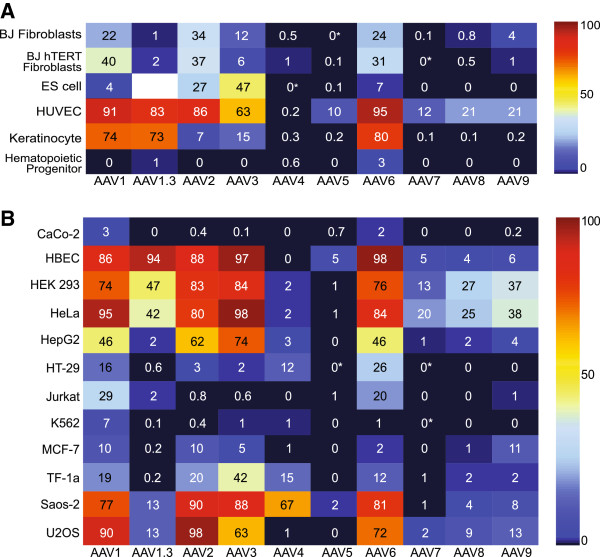
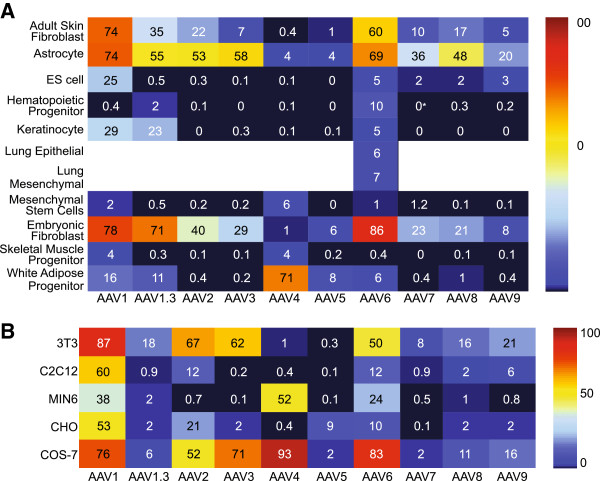
Background: The ability to deliver a gene of interest into a specific cell type is an essential aspect of biomedical research. Viruses can be a useful tool for this delivery, particularly in difficult to transfect cell types. Adeno-associated virus (AAV) is a useful gene transfer vector because of its ability to mediate efficient gene transduction in numerous dividing and quiescent cell types, without inducing any known pathogenicity. There are now a number of natural for that designed AAV serotypes that each has a differential ability to infect a variety of cell types. Although transduction studies have been completed, the bulk of the studies have been done in vivo , and there has never been a comprehensive study of transduction ex vivo/in vitro . Methods: Each cell type was infected with each serotype at a multiplicity of infection of 100,000 viral genomes/cell and transduction was analyzed by flow cytometry + . Results: We found that AAV1 and AAV6 have the greatest ability to transduce a wide range of cell types, however, for particular cell types, there are specific serotypes that provide optimal transduction. Conclusions: In this work, we describe the transduction efficiency of ten different AAV serotypes in thirty-four different mammalian cell lines and primary cell types. Although these results may not be universal due to numerous factors such as, culture conditions and/ or cell growth rates and cell heterogeneity, these results provide an important and unique resource for investigators who use AAV as an ex vivo gene delivery vector or who work with cells that are difficult to transfect.
Overview
The claims and statistics of this paper haven’t been checked yet.
Free: it reads the open-access text and checks the first 5 claims that cite a source we can check. Create a free account to check every claim.
Integrity signals
Registry
Cites
Statistics
Figures
Verification
Claims the paper makes
The claims and statistics of this paper haven’t been checked yet.
Free: it reads the open-access text and checks the first 5 claims that cite a source we can check. Create a free account to check every claim.
Claims other papers make about this one
Each is checked against this paper’s own text: does it say what the citing paper says it does?
The source backs part of the claim, not all of it — or backs it for a different population, condition or comparison.
In the citing paper
“For example, rAAV5 vectors infect very poorly HEK293 cells, HeLa cells, and BJ fibroblasts [264] but infect RPE cells and human retinal organoids efficiently [62,265].”
From Recombinant Adeno-Associated Viral Vectors (rAAV)-Vector Elements in Ocular Gene Therapy Clinical Trials and Transgene Expression and Bioactivity Assays (2020) · cites this paper as [264]
Experimental — accuracy not yet measured
Self-check
Percentages, sums and reported differences re-computed from the paper’s own numbers.
The self-check needs the paper’s full text.
Citations
Cites
Cermak, T., Doyle, E. L., Christian, M., Wang, L., Zhang, Y., Schmidt, C., Baller, J. A., Somia, N. V., Bogdanove, A. J., & Voytas, D. F. (2011) · Nucleic Acids Research · doi:10.1093/nar/gkr218 · Cited by 1,787 · cited 1×
“These site-specific double-strand breaks could be induced by a homing endonuclease [21,41,42], by zinc finger nucleases [43], or by some other nuclease, like TAL effector nucleases (TALENs) [44-47].”
BackgroundAnalysis of AAV Serotypes 1–9 Mediated Gene Expression and Tropism in Mice After Systemic Injection
Zincarelli, C., Soltys, S., Rengo, G., & Rabinowitz, J. E. (2008) · Molecular Therapy · doi:10.1038/mt.2008.76 · Cited by 1,490 · cited 1×
“For example, a broad study of AAV serotypes 1-9 has been done in mice [19].”
BackgroundSummerford, C., & Samulski, R. J. (1998) · Journal of Virology · doi:10.1128/jvi.72.2.1438-1445.1998 · Cited by 1,406 · cited 1×
“The primary receptor for AAV2 and AAV3 is heparan sulfate-proteoglycan [6].”
BackgroundGenetic engineering of human pluripotent cells using TALE nucleases
Hockemeyer, D., Wang, H., Kiani, S., Lai, C. S., Gao, Q., Cassady, J. P., Cost, G. J., Zhang, L., Santiago, Y., Miller, J. C., et al. (2011) · Nature Biotechnology · doi:10.1038/nbt.1927 · Cited by 1,135
White Fat Progenitor Cells Reside in the Adipose Vasculature
Tang, W., Zeve, D., Suh, J. M., Bosnakovski, D., Kyba, M., Hammer, R. E., Tallquist, M. D., & Graff, J. M. (2008) · Science · doi:10.1126/science.1156232 · Cited by 1,113 · cited 1×
“The white adipose progenitor cells were isolated and cultured as described previously [58] (isolation instruction was generously provided by Jon Graff at UTSW).”
MethodGene therapy using adeno-associated virus vectors
Daya, S., & Berns, K. I. (2008) · Clinical Microbiology Reviews · doi:10.1128/cmr.00008-08 · Cited by 926
Adeno-associated Virus Serotypes: Vector Toolkit for Human Gene Therapy
Wu, Z., Asokan, A., & Samulski, R. J. (2006) · Molecular Therapy · doi:10.1016/j.ymthe.2006.05.009 · Cited by 922 · cited 2×
“Expansion in the number of AAV serotypes, both through the identification of novel natural serotypes and new, engineered serotypes [16,23,25-35], has resulted in improved gene transfer to specific cell types in vivo.”
BackgroundAbsence of cancer–associated changes in human fibroblasts immortalized with telomerase
Morales, C. P., Holt, S. E., Ouellette, M., Kaur, K. J., Yan, Y., Wilson, K. S., White, M. A., Wright, W. E., & Shay, J. W. (1999) · Nature Genetics · doi:10.1038/5063 · Cited by 803 · cited 1×
“BJ fibroblasts and BJ hTERT fibroblasts were a generous gift from Jerry Shay and Woodring Wright and were cultured as previously described [52].”
MethodFerrari, F. K., Samulski, T., Shenk, T., & Samulski, R. J. (1996) · Journal of Virology · doi:10.1128/jvi.70.5.3227-3234.1996 · Cited by 761 · cited 2×
“scAAV vectors have shown earlier onset of transgene expression and overall higher transduction efficiencies than ssAAV vectors [4,5].”
BackgroundMcCarty, D., Monahan, P., & Samulski, R. (2001) · Gene Therapy · doi:10.1038/sj.gt.3301514 · Cited by 735 · cited 2×
“scAAV vectors have shown earlier onset of transgene expression and overall higher transduction efficiencies than ssAAV vectors [4,5].”
BackgroundMethodαVβ5 integrin: a co-receptor for adeno-associated virus type 2 infection
Summerford, C., Bartlett, J. S., & Samulski, R. J. (1999) · Nature Medicine · doi:10.1038/4768 · Cited by 711
Gene targeting using zinc finger nucleases
Porteus, M. H., & Carroll, D. (2005) · Nature Biotechnology · doi:10.1038/nbt1125 · Cited by 641 · cited 1×
“These site-specific double-strand breaks could be induced by a homing endonuclease [21,41,42], by zinc finger nucleases [43], or by some other nuclease, like TAL effector nucleases (TALENs) [44-47].”
BackgroundSelf-citationImmortalization of human bronchial epithelial cells in the absence of viral oncoproteins
Ramirez, R. D., Sheridan, S., Girard, L., Sato, M., Kim, Y., Pollack, J., Peyton, M., Zou, Y., Kurie, J. M., DiMaio, J. M., et al. (2004) · Cancer Research · doi:10.1158/0008-5472.can-04-3703 · Cited by 607 · cited 1×
“HBEC3KT cells were a generous gift from John Minna (UTSW) and were cultured as previously described [53].”
MethodProduction and characterization of adeno-associated viral vectors
Grieger, J. C., Choi, V. W., & Samulski, R. J. (2006) · Nature Protocols · doi:10.1038/nprot.2006.207 · Cited by 581 · cited 3×
“AAV vector production relied on the triple transfection method described previously [51].”
MethodInfluentialDirected evolution of adeno-associated virus yields enhanced gene delivery vectors
Maheshri, N., Koerber, J. T., Kaspar, B. K., & Schaffer, D. V. (2006) · Nature Biotechnology · doi:10.1038/nbt1182 · Cited by 538 · cited 1×
“Expansion in the number of AAV serotypes, both through the identification of novel natural serotypes and new, engineered serotypes [16,23,25-35], has resulted in improved gene transfer to specific cell types in vivo.”
BackgroundHighly Efficient, Functional Engraftment of Skeletal Muscle Stem Cells in Dystrophic Muscles
Cerletti, M., Jurga, S., Witczak, C. A., Hirshman, M. F., Shadrach, J. L., Goodyear, L. J., & Wagers, A. J. (2008) · Cell · doi:10.1016/j.cell.2008.05.049 · Cited by 472
Murine marrow‐derived mesenchymal stem cell: isolation, in vitro expansion, and characterization
Meirelles, L. D. S., & Nardi, N. B. (2003) · British Journal of Haematology · doi:10.1046/j.1365-2141.2003.04669.x · Cited by 460 · cited 1×
“The mesenchymal stem cells were isolated and expanded from 8 week old mice as previously described [56].”
MethodHuman fibroblast growth factor receptor 1 is a co-receptor for infection by adeno-associated virus 2
Qing, K., Mah, C., Hansen, J., Zhou, S., Dwarki, V., & Srivastava, A. (1999) · Nature Medicine · doi:10.1038/4758 · Cited by 443
Lichti, U., Anders, J., & Yuspa, S. H. (2008) · Nature Protocols · doi:10.1038/nprot.2008.50 · Cited by 441 · cited 1×
“Murine keratinocytes were isolated and cultured as described previously [55].”
MethodAkache, B., Grimm, D., Pandey, K., Yant, S. R., Xu, H., & Kay, M. A. (2006) · Journal of Virology · doi:10.1128/jvi.00878-06 · Cited by 430
Kaludov, N., Brown, K. E., Walters, R. W., Zabner, J., & Chiorini, J. A. (2001) · Journal of Virology · doi:10.1128/jvi.75.15.6884-6893.2001 · Cited by 427 · cited 1×
“The primary receptor for AAV1, AAV4, and AAV5 is O-linked sialic acid, while the primary receptor for AAV6 is N-linked sialic acid [14-17].”
BackgroundLi, T., Huang, S., Zhao, X., Wright, D. A., Carpenter, S., Spalding, M. H., Weeks, D. P., & Yang, B. (2011) · Nucleic Acids Research · doi:10.1093/nar/gkr188 · Cited by 416 · cited 1×
“These site-specific double-strand breaks could be induced by a homing endonuclease [21,41,42], by zinc finger nucleases [43], or by some other nuclease, like TAL effector nucleases (TALENs) [44-47].”
BackgroundA viral assembly factor promotes AAV2 capsid formation in the nucleolus
Sonntag, F., Schmidt, K., & Kleinschmidt, J. A. (2010) · Proceedings of the National Academy of Sciences · doi:10.1073/pnas.1001673107 · Cited by 392 · cited 1×
“In addition, a third ORF was recently shown to exist [3].”
BackgroundIdentification of PDGFR as a receptor for AAV-5 transduction
Pasquale, G. D., Davidson, B. L., Stein, C. S., Martins, I., Scudiero, D., Monks, A., & Chiorini, J. A. (2003) · Nature Medicine · doi:10.1038/nm929 · Cited by 355 · cited 6×
“In some cases our results did not match perfectly with previous results [23] (for example AAV1, AAV2, AAV5 on C2C12 cells; AAV1, AAV2, AAV5 on CHOK1 cells).”
BackgroundInfluentialWu, Z., Miller, E., Agbandje-McKenna, M., & Samulski, R. J. (2006) · Journal of Virology · doi:10.1128/jvi.00895-06 · Cited by 328 · cited 1×
“The primary receptor for AAV1, AAV4, and AAV5 is O-linked sialic acid, while the primary receptor for AAV6 is N-linked sialic acid [14-17].”
BackgroundHuman gene targeting by viral vectors
Russell, D. W., & Hirata, R. K. (1998) · Nature Genetics · doi:10.1038/ng0498-325 · Cited by 316 · cited 1×
“This modification could be done through gene targeting directly by AAV [37-40] or in combination with the induction of a site-specific double-strand break.”
BackgroundCermak, T., Doyle, E. L., Christian, M., Wang, L., Zhang, Y., Schmidt, C., Baller, J. A., Somia, N. V., Bogdanove, A. J., & Voytas, D. F. (2011) · Nucleic Acids Research · doi:10.1093/nar/gkr739 · Cited by 281
Asokan, A., Conway, J. C., Phillips, J. L., Li, C., Hegge, J., Sinnott, R., Yadav, S., DiPrimio, N., Nam, H.-J., Agbandje-McKenna, M., et al. (2010) · Nature Biotechnology · doi:10.1038/nbt.1599 · Cited by 266 · cited 1×
“Expansion in the number of AAV serotypes, both through the identification of novel natural serotypes and new, engineered serotypes [16,23,25-35], has resulted in improved gene transfer to specific cell types in vivo.”
BackgroundLi, W., Asokan, A., Wu, Z., Van Dyke, T., DiPrimio, N., Johnson, J. S., Govindaswamy, L., Agbandje-McKenna, M., Leichtle, S., Eugene Redmond Jr, D., et al. (2008) · Molecular Therapy · doi:10.1038/mt.2008.100 · Cited by 261 · cited 1×
“Expansion in the number of AAV serotypes, both through the identification of novel natural serotypes and new, engineered serotypes [16,23,25-35], has resulted in improved gene transfer to specific cell types in vivo.”
BackgroundHepatocyte Growth Factor Receptor Is a Coreceptor for Adeno-Associated Virus Type 2 Infection
Kashiwakura, Y., Tamayose, K., Iwabuchi, K., Hirai, Y., Shimada, T., Matsumoto, K., Nakamura, T., Watanabe, M., Oshimi, K., & Daida, H. (2005) · Journal of Virology · doi:10.1128/jvi.79.1.609-614.2005 · Cited by 246 · cited 12×
“In some cases our results did not match perfectly with previous results [23] (for example AAV1, AAV2, AAV5 on C2C12 cells; AAV1, AAV2, AAV5 on CHOK1 cells).”
BackgroundInfluentialWu, Z., Asokan, A., Grieger, J. C., Govindasamy, L., Agbandje-McKenna, M., & Samulski, R. J. (2006) · Journal of Virology · doi:10.1128/jvi.01288-06 · Cited by 237 · cited 1×
“Expansion in the number of AAV serotypes, both through the identification of novel natural serotypes and new, engineered serotypes [16,23,25-35], has resulted in improved gene transfer to specific cell types in vivo.”
BackgroundAdeno-associated virus 2 co-receptors?-first reply
Qing, K., Hansen, J., & Srivastava, A. (1999) · Nature Medicine · doi:10.1038/8526 · Cited by 228
Klein, R. L., Dayton, R. D., Tatom, J. B., Henderson, K. M., & Henning, P. P. (2008) · Molecular Therapy · doi:10.1038/sj.mt.6300331 · Cited by 196 · cited 1×
“In the future, it may be important to further study the transduction of AAV after different purification strategies are used, as it has been shown to affect transduction [48].”
AAV hybrid serotypes: improved vectors for gene delivery
Choi, V., McCarty, D., & Samulski, R. (2005) · Current Gene Therapy · doi:10.2174/1566523054064968 · Cited by 191 · cited 1×
“Expansion in the number of AAV serotypes, both through the identification of novel natural serotypes and new, engineered serotypes [16,23,25-35], has resulted in improved gene transfer to specific cell types in vivo.”
BackgroundGray, S. J., Blake, B. L., Criswell, H. E., Nicolson, S. C., Samulski, R. J., & McCown, T. J. (2010) · Molecular Therapy · doi:10.1038/mt.2009.292 · Cited by 185 · cited 1×
“Expansion in the number of AAV serotypes, both through the identification of novel natural serotypes and new, engineered serotypes [16,23,25-35], has resulted in improved gene transfer to specific cell types in vivo.”
BackgroundAsokan, A., Hamra, J. B., Govindasamy, L., Agbandje-McKenna, M., & Samulski, R. J. (2006) · Journal of Virology · doi:10.1128/jvi.00843-06 · Cited by 183 · cited 1×
“Integrin α5β5, integrin α5β1, hepatocyte growth factor receptor (c-Met), and CD9 have also been described previously as potential co-receptors for AAV2 [7-10].”
BackgroundDNA Shuffling of Adeno-associated Virus Yields Functionally Diverse Viral Progeny
Koerber, J. T., Jang, J.-H., & Schaffer, D. V. (2008) · Molecular Therapy · doi:10.1038/mt.2008.167 · Cited by 181 · cited 1×
“Expansion in the number of AAV serotypes, both through the identification of novel natural serotypes and new, engineered serotypes [16,23,25-35], has resulted in improved gene transfer to specific cell types in vivo.”
BackgroundThurmond, D. C., Gonelle-Gispert, C., Furukawa, M., Halban, P. A., & Pessin, J. E. (2003) · Molecular Endocrinology · doi:10.1210/me.2002-0333 · Cited by 174 · cited 1×
“MIN6 cells were a generous gift from Melanie Cobb (UTSW) and were cultured as described previously [59].”
MethodRabinowitz, J. E., Bowles, D. E., Faust, S. M., Ledford, J. G., Cunningham, S. E., & Samulski, R. J. (2004) · Journal of Virology · doi:10.1128/jvi.78.9.4421-4432.2004 · Cited by 171 · cited 3×
“With the exception of AAV5 on C2C12 cells, the data presented here reasonably reflect previous data [23] when viewing the panel qualitatively, and the differences in culture conditions and MOI (10,000 or 100,000 vs.”
BackgroundResultKwon, I., & Schaffer, D. V. (2008) · Pharmaceutical Research · doi:10.1007/s11095-007-9431-0 · Cited by 164 · cited 1×
“There have been several publications reviewing the preferred in vivo tropism of these new serotypes [2,36].”
BackgroundEfficient Gene Targeting Mediated by Adeno-Associated Virus and DNA Double-Strand Breaks
Porteus, M. H., Cathomen, T., Weitzman, M. D., & Baltimore, D. (2003) · Molecular and Cellular Biology · doi:10.1128/mcb.23.10.3558-3565.2003 · Cited by 159 · cited 2×
“MOIs of 10,000 or 100,000 in some cases might be considered high, MOIs of 10,000 and up to 500,000 have been used for gene targeting [20,21], and importantly, it ensures that if a cell was not transduced it was not because too low of an MOI was tested.”
BackgroundSelf-citationAdeno-Associated Viral Vectors and Their Redirection to Cell-Type Specific Receptors
Michelfelder, S., & Trepel, M. (2009) · Advances in genetics · doi:10.1016/s0065-2660(09)67002-4 · Cited by 151 · cited 2×
“There have been several publications reviewing the preferred in vivo tropism of these new serotypes [2,36].”
BackgroundOptimized TAL effector nucleases (TALENs) for use in treatment of sickle cell disease
Sun, N., Liang, J., Abil, Z., & Zhao, H. (2012) · Molecular BioSystems · doi:10.1039/c2mb05461b · Cited by 134 · cited 1×
“These site-specific double-strand breaks could be induced by a homing endonuclease [21,41,42], by zinc finger nucleases [43], or by some other nuclease, like TAL effector nucleases (TALENs) [44-47].”
BackgroundHuman Gene Targeting by Adeno-Associated Virus Vectors Is Enhanced by DNA Double-Strand Breaks
Miller, D. G., Petek, L. M., & Russell, D. W. (2003) · Molecular and Cellular Biology · doi:10.1128/mcb.23.10.3550-3557.2003 · Cited by 128 · cited 1×
“These site-specific double-strand breaks could be induced by a homing endonuclease [21,41,42], by zinc finger nucleases [43], or by some other nuclease, like TAL effector nucleases (TALENs) [44-47].”
BackgroundCharacterization of Tissue Tropism Determinants of Adeno-Associated Virus Type 1
Hauck, B., & Xiao, W. (2003) · Journal of Virology · doi:10.1128/jvi.77.4.2768-2774.2003 · Cited by 124 · cited 1×
“Another discrepancy from our data [24] showed that AAV2 transduced COS cells better”
ResultEngineering of Human Pluripotent Stem Cells by AAV-mediated Gene Targeting
Khan, I. F., Hirata, R. K., Wang, P.-R., Li, Y., Kho, J., Nelson, A., Huo, Y., Zavaljevski, M., Ware, C., & Russell, D. W. (2010) · Molecular Therapy · doi:10.1038/mt.2010.55 · Cited by 115 · cited 1×
“This modification could be done through gene targeting directly by AAV [37-40] or in combination with the induction of a site-specific double-strand break.”
BackgroundFinn, J. D., Hui, D., Downey, H. D., Dunn, D., Pien, G. C., Mingozzi, F., Zhou, S., & High, K. A. (2010) · Molecular Therapy · doi:10.1038/mt.2009.257 · Cited by 115
Smith-Arica, J. R., Thomson, A. J., Ansell, R., Chiorini, J., Davidson, B., & McWhir, J. (2003) · Cloning and Stem Cells · doi:10.1089/153623003321512166 · Cited by 110 · cited 1×
“This also fits with the data the McWhir group showed using AAV2, 4, and 5 that mES cells were not transduced efficiently [22].”
ResultGene targeting in vivo by adeno‐associated virus vectors
Miller, D. G., Wang, P.-R., Petek, L. M., Hirata, R. K., Sands, M. S., & Russell, D. W. (2006) · Nature Biotechnology · doi:10.1038/nbt1231 · Cited by 105 · cited 1×
“This modification could be done through gene targeting directly by AAV [37-40] or in combination with the induction of a site-specific double-strand break.”
BackgroundKoerber, J. T., Maheshri, N., Kaspar, B. K., & Schaffer, D. V. (2006) · Nature Protocols · doi:10.1038/nprot.2006.93 · Cited by 93 · cited 1×
“Expansion in the number of AAV serotypes, both through the identification of novel natural serotypes and new, engineered serotypes [16,23,25-35], has resulted in improved gene transfer to specific cell types in vivo.”
BackgroundAdeno-Associated Virus Types 5 and 6 Use Distinct Receptors for Cell Entry
Seiler, M. P., Miller, A. D., Zabner, J., & Halbert, C. L. (2006) · Human Gene Therapy · doi:10.1089/hum.2006.17.10 · Cited by 91 · cited 1×
“The primary receptor for AAV1, AAV4, and AAV5 is O-linked sialic acid, while the primary receptor for AAV6 is N-linked sialic acid [14-17].”
BackgroundAkache, B., Grimm, D., Shen, X., Fuess, S., Yant, S. R., Glazer, D. S., Park, J., & Kay, M. A. (2007) · Molecular Therapy · doi:10.1038/sj.mt.6300053 · Cited by 85 · cited 1×
“The fibroblast growth factor receptor-1 is a co-receptor for both AAV2 and AAV3 [11] and the 37/67-kDa laminin receptor is a co-receptor for AAV2, AAV3, AAV8 and AAV9 [12,13].”
BackgroundEllis, B. L., Hirsch, M. L., Porter, S. N., Samulski, R. J., & Porteus, M. H. (2013) · Gene Therapy · doi:10.1038/gt.2011.211 · Cited by 84 · cited 2×
“In fact, we have already reported the ability of a single AAV6 vector to deliver both zinc-finger nucleases as well as a donor repair substrate, to stimulate gene targeting [20].”
BackgroundSelf-citationBowles, D. E., Rabinowitz, J. E., & Samulski, R. J. (2003) · Journal of Virology · doi:10.1128/jvi.77.1.423-432.2003 · Cited by 67 · cited 1×
“Expansion in the number of AAV serotypes, both through the identification of novel natural serotypes and new, engineered serotypes [16,23,25-35], has resulted in improved gene transfer to specific cell types in vivo.”
BackgroundViral Single-Strand DNA Induces p53-Dependent Apoptosis in Human Embryonic Stem Cells
Hirsch, M. L., Fagan, B. M., Dumitru, R., Bower, J. J., Yadav, S., Porteus, M. H., Pevny, L. H., & Samulski, R. J. (2011) · PLoS ONE · doi:10.1371/journal.pone.0027520 · Cited by 53 · cited 1×
“For example, it is possible that the apparent low transduction could be a consequence of AAV vectors inducing apoptosis [50].”
BackgroundSelf-citationConnelly, J. P., Barker, J. C., Pruett-Miller, S., & Porteus, M. H. (2010) · Molecular Therapy · doi:10.1038/mt.2010.57 · Cited by 48 · cited 2×
“3 T3 cells were created as previously described [54] and were cultured in the same way as CaCo-2 cells.”
BackgroundMethodSelf-citationHirsch, M. L., Green, L., Porteus, M. H., & Samulski, R. J. (2010) · Gene Therapy · doi:10.1038/gt.2010.65 · Cited by 42 · cited 1×
“These site-specific double-strand breaks could be induced by a homing endonuclease [21,41,42], by zinc finger nucleases [43], or by some other nuclease, like TAL effector nucleases (TALENs) [44-47].”
BackgroundSelf-citationKurzeder, C., Koppold, B., Sauer, G., Pabst, S., Kreienberg, R., & Deissler, H. (2007) · International Journal of Molecular Medicine · doi:10.3892/ijmm.19.2.325 · Cited by 41 · cited 12×
“In some cases our results did not match perfectly with previous results [23] (for example AAV1, AAV2, AAV5 on C2C12 cells; AAV1, AAV2, AAV5 on CHOK1 cells).”
BackgroundInfluentialJang, J.-H., Koerber, J. T., Gujraty, K. V., Bethi, S. R., Kane, R. S., & Schaffer, D. V. (2010) · Gene Therapy · doi:10.1038/gt.2010.81 · Cited by 22 · cited 1×
“Expansion in the number of AAV serotypes, both through the identification of novel natural serotypes and new, engineered serotypes [16,23,25-35], has resulted in improved gene transfer to specific cell types in vivo.”
BackgroundValidation of AAV-mediated gene targeting
Russell, D. W., Hirata, R. K., & Inoue, N. (2002) · Nature Biotechnology · doi:10.1038/nbt0702-658 · Cited by 20 · cited 1×
“This modification could be done through gene targeting directly by AAV [37-40] or in combination with the induction of a site-specific double-strand break.”
BackgroundKoerber, J. T., & Schaffer, D. V. (2008) · Humana Press eBooks · doi:10.1007/978-1-60327-248-3_10 · Cited by 15 · cited 1×
“Expansion in the number of AAV serotypes, both through the identification of novel natural serotypes and new, engineered serotypes [16,23,25-35], has resulted in improved gene transfer to specific cell types in vivo.”
Background(2010) · Molecular Therapy · doi:10.1038/mt.2010.6 · Cited by 4
Cited by
An essential receptor for adeno-associated virus infection
Pillay, S., Meyer, N. L., Puschnik, A. S., Davulcu, O., Diep, J., Ishikawa, Y., Jae, L. T., Wosen, J. E., Nagamine, C. M., Chapman, M. S., et al. (2016) · Nature · doi:10.1038/nature16465 · Cited by 532
Adeno-associated virus (AAV) vectors in cancer gene therapy
Santiago-Ortiz, J. L., & Schaffer, D. V. (2016) · Journal of Controlled Release · doi:10.1016/j.jconrel.2016.01.001 · Cited by 228
“Over 100 natural AAV variants have been isolated, and variations in amino acid sequences result in somewhat different tropisms (the range of cells and tissues a virus can infect) [20], though none are pathogens [21].”
BackgroundSather, B. D., Romano Ibarra, G. S., Sommer, K., Curinga, G., Hale, M., Khan, I. F., Singh, S., Song, Y., Gwiazda, K., Sahni, J., et al. (2015) · Science Translational Medicine · doi:10.1126/scitranslmed.aac5530 · Cited by 223
“Although our serotype findings in CD34 cells differ from earlier studies (33, 34), they are consistent with work from another group (35, 36).”
Result(2012) · CRC Press eBooks · doi:10.1201/b11760 · Cited by 201
Pillay, S., Zou, W., Cheng, F., Puschnik, A. S., Meyer, N. L., Ganaie, S. S., Deng, X., Wosen, J. E., Davulcu, O., Yan, Z., et al. (2017) · Journal of Virology · doi:10.1128/jvi.00391-17 · Cited by 187
“The 150-kDa AAV-BP was detected strongly in membrane fractions of AAV2-permissive cells (HeLa S3, K562, HeLa, HEK293, KB, and Hep-2 cells) but was weakly detected or undetectable in cell lines known to be less permissive to AAV2 transduction (HL60 and UT7/Epo cells) (17, 21, 24).”
Background
Metadata
- Authors
- Ellis, B. L., Hirsch, M. L., Barker, J. C., Connelly, J. P., Steininger, R. J., & Porteus, M. H.
- Affiliations
- The University of Texas Southwestern Medical Center (US)
- University of North Carolina at Chapel Hill (US)
- Harold C. Simmons Comprehensive Cancer Center (US)
- Corresponding author
- Porteus, Matthew H
- Venue
- Virology Journal
- Published
- 2013-03-06
- Volume
- 10
- Issue
- 1
- Pages
- 74-74
- ISSN
- 1743-422X (ISSN-L)
- PMC
- PMC3607841
- OpenAlex
- W2112808685
- Cited by
- 252
- References
- 63
- Citations by year
- 2026: 21 · 2025: 32 · 2024: 25 · 2023: 24 · 2022: 27 · 2021: 28 · 2020: 20 · 2019: 22 · 2018: 10 · 2017: 15 · 2016: 7 · 2015: 11 · 2014: 7 · 2013: 1
- FWCI
- 5.74
- Type
- journal article
- Language
- en
- Open access
- gold
- doi.org
- Licence
- cc-by
- creativecommons.org/licenses/by/2.0 (tdm)
- Locations
- Virology Journal (publishedVersion, cc-by)
- Europe PMC (PubMed Central) (publishedVersion, cc-by)
- PubMed Central (publishedVersion, cc-by)
- PubMed (publishedVersion)
- Carolina Digital Repository (University of North Carolina at Chapel Hill) (submittedVersion, cc-by)
- Carolina Digital Repository (University of North Carolina at Chapel Hill) (submittedVersion)
- eScholarship (California Digital Library) (submittedVersion)
- UNC Libraries
- Funders
- Amon G. Carter Foundation
- University of Texas Southwestern Medical Center
- Topics
- Life Sciences › Biochemistry, Genetics and Molecular Biology › Genetics › Virus-based gene therapy research
- Life Sciences › Biochemistry, Genetics and Molecular Biology › Molecular Biology › RNA Interference and Gene Delivery
- Life Sciences › Biochemistry, Genetics and Molecular Biology › Molecular Biology › Viral Infectious Diseases and Gene Expression in Insects
- Keywords
- adeno-associated virus, AAV serotypes, AAV1, AAV6, AAV9, transduction efficiency, ex vivo gene delivery, in vitro gene transfer, mammalian cell lines, primary cells, viral vectors
- MeSH terms
- Dependovirus, Animals, Haplorhini, Cell Line, Cells, Cultured, Genetic Engineering, Genetic Vectors, Cricetinae, Humans, Mammals, Transduction, Genetic, Genetic Therapy, Mice, Viral Tropism
About these checks
Registry, retraction, Cites and statistics results are computed, not judged, with one exception: a printed reference that no index lists is read once by a model before it counts as a citation error. Claims are extracted by a model and kept only when their quote appears verbatim in the text; each cited source is then checked, with a model’s help, for whether it says what the claim relies on. Those verdicts can be wrong — read the claim’s quote and the cited source before relying on one.
Statistics and arithmetic are recomputed, not judged.
Confidence bands are shown only for fields calibrated on our annotated test set. None is calibrated yet, so no band is shown.
What counts as a claim ›How we measure confidence ›How we check this ›
Are you an author, or do you see a problem with this page? Request a review
Data sources
Bibliographic data: Semantic Scholar, OpenAlex, Crossref.
Contains information from the Semantic Scholar Academic Graph Datasets, made available under the ODC Attribution License (ODC-BY 1.0).
Semantic Scholar’s data is described in: Kinney, R., et al. (2023). The Semantic Scholar Open Data Platform. arXiv:2301.10140.
