

The product of the Herpes simplex virus 1 UL7 gene interacts with a mitochondrial protein, adenine nucleotide translocator 2
Open accessThe DOI matches its Crossref record; 32 of the 34 references it cites were found in a registry or an index.
Abstract
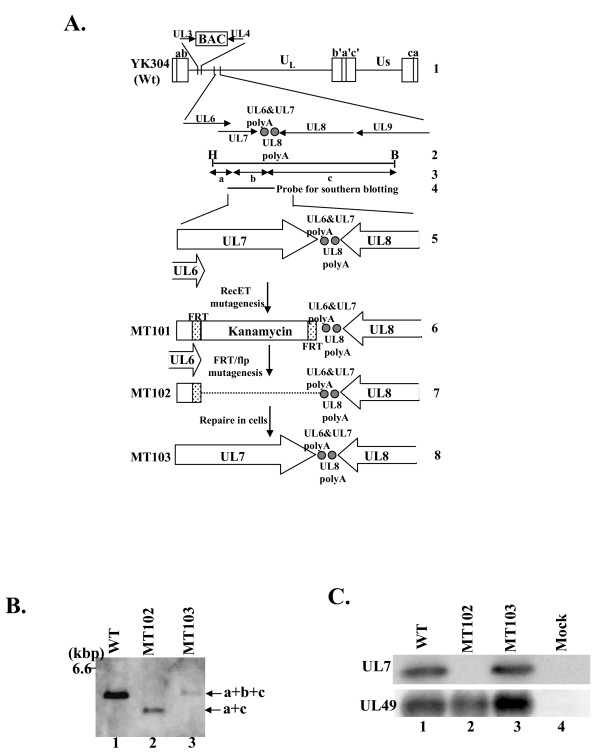
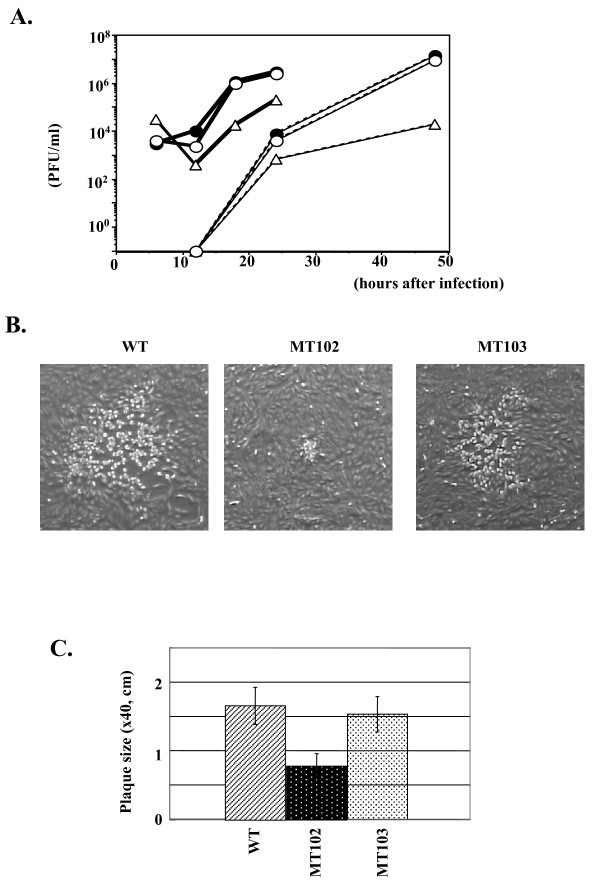
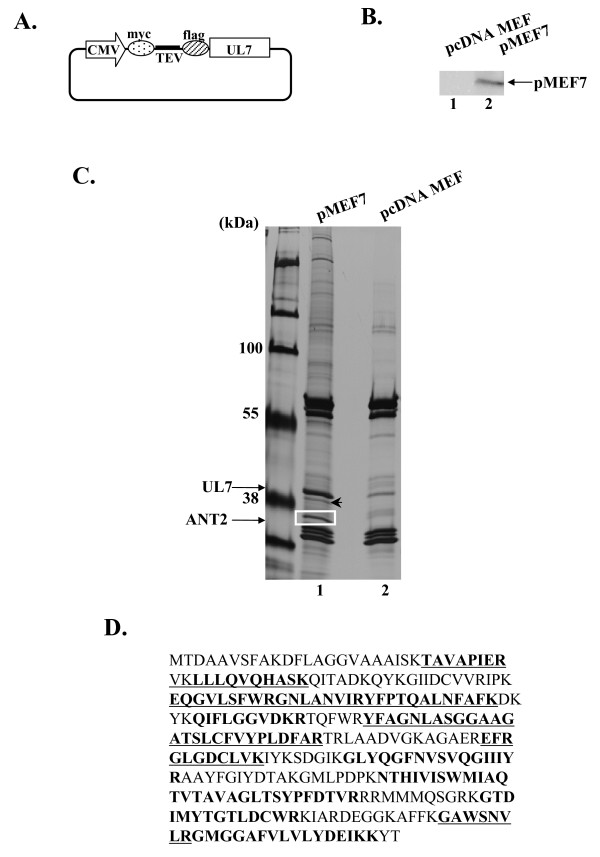
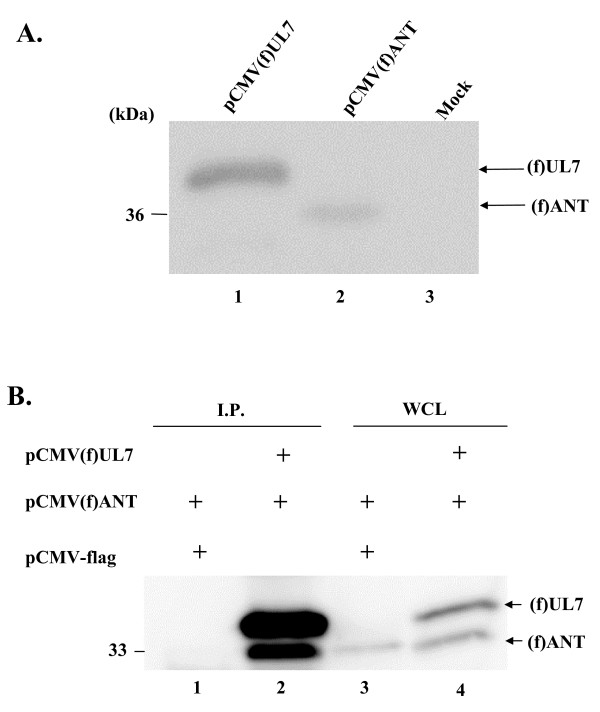
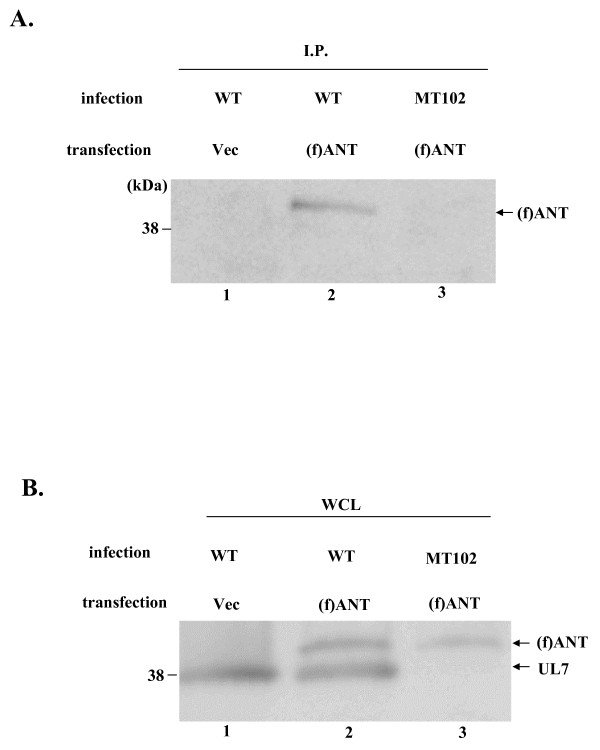
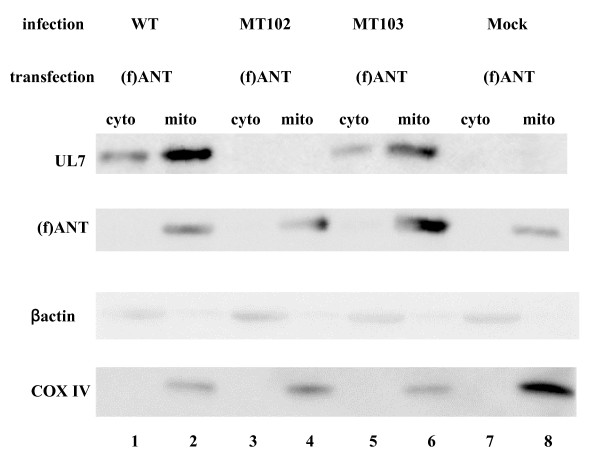
The herpes simplex virus 1 (HSV-1) UL7 gene is highly conserved among herpesviridae. Since the construction of recombinant HSV-1 with a mutation in the UL7 gene has not been reported, the involvement of HSV-1 UL7 in viral replication has been unclear. In this study, we succeeded in generating a UL7 null HSV-1 mutant virus, MT102, and characterized it. Our results were as follows. (i) In Vero cells, MT102 was replication-competent, but formed smaller plaques and yielded 10- to 100-fold fewer progeny than the wild-type virus, depending on the multiplicity of infection. (ii) Using mass spectrometry-based proteomics technology, we identified a cellular mitochondrial protein, adenine nucleotide translocator 2 (ANT2), as a UL7-interacting partner. (iii) When ANT2 was transiently expressed in COS-7 cells infected with HSV-1, ANT2 was specifically co-precipitated with UL7. (iv) Cell fractionation experiments with HSV-1-infected cells detected the UL7 protein in both the mitochondrial and cytosolic fractions, whereas ANT2 was detected only in the mitochondrial fraction. These results indicate the importance of HSV-1 UL7's involvement in viral replication and demonstrate that it interacts with ANT2 in infected cells. The potential biological significance of the interaction between UL7 and ANT2 is discussed.
Overview
The claims and statistics of this paper haven’t been checked yet.
Free: it reads the open-access text and checks the first 5 claims that cite a source we can check. Create a free account to check every claim.
Integrity signals
Registry
Cites
Statistics
Figures
Verification
Claims the paper makes
The claims and statistics of this paper haven’t been checked yet.
Free: it reads the open-access text and checks the first 5 claims that cite a source we can check. Create a free account to check every claim.
Claims other papers make about this one
Each is checked against this paper’s own text: does it say what the citing paper says it does?
In the citing paper
“As the name implies, TAP uses a dual epitope tag for successive immunoaffinity isolations and has been applied to interactions within virus-infected cells (51–54).”
From The Impact of Mass Spectrometry–Based Proteomics on Fundamental Discoveries in Virology (2014) · cites this paper as [52]
Self-check
Percentages, sums and reported differences re-computed from the paper’s own numbers.
The self-check needs the paper’s full text.
Citations
Cites
Cherepanov, P. P., & Wackernagel, W. (1995) · Gene · doi:10.1016/0378-1119(95)00193-a · Cited by 1,937 · cited 1×
“To this end, the Flp expression plasmid pCP20Zeo [11] was electroporated into the E.”
MethodBax and Adenine Nucleotide Translocator Cooperate in the Mitochondrial Control of Apoptosis
Marzo, I., Brenner, C., Zamzami, N., Jürgensmeier, J. M., Susin, S. A., Vieira, H. L. A., Prévost, M.-C., Xie, Z., Matsuyama, S., Reed, J. C., et al. (1998) · Science · doi:10.1126/science.281.5385.2027 · Cited by 1,168 · cited 5×
“Dolce V, Scarcia P, Iacopetta D, Palmieri F: A fourth ADP/ATP carrier isoform in man: identification, bacterial expression, functional characterization and tissue distribution.”
BackgroundInfluentialThe ADP/ATP translocator is not essential for the mitochondrial permeability transition pore
Kokoszka, J. E., Waymire, K. G., Levy, S. E., Sligh, J. E., Cai, J., Jones, D. P., MacGregor, G. R., & Wallace, D. C. (2004) · Nature · doi:10.1038/nature02229 · Cited by 1,086 · cited 1×
“ANT is a bifunctional protein that, in physiological conditions, exchanges ATP and ADP on the inner mitochondrial membrane, whereas in apoptotic conditions it can form a nonspecific pore [3,17].”
BackgroundProteins of purified Epstein-Barr virus
Johannsen, E., Luftig, M., Chase, M. R., Weicksel, S., Cahir-McFarland, E., Illanes, D., Sarracino, D., & Kieff, E. (2004) · Proceedings of the National Academy of Sciences · doi:10.1073/pnas.0407320101 · Cited by 450 · cited 1×
“The UL7 amino acid sequence is conserved in all Herpesviridae subfamilies [2], suggesting that UL7 homologues may play conserved roles in the herpes virus life cycle.”
BackgroundStepien, G., Torroni, A., Chung, A. B., Hodge, J. A., & Wallace, D. C. (1992) · Journal of Biological Chemistry · doi:10.1016/s0021-9258(18)42082-0 · Cited by 325 · cited 1×
“Four ANT proteins exist in human (ANT1~4) as the mitochondrial carrier family, and they are expressed in tissue- and development-specific manners [18-20].”
BackgroundTanaka, M., Kagawa, H., Yamanashi, Y., Sata, T., & Kawaguchi, Y. (2003) · Journal of Virology · doi:10.1128/jvi.77.2.1382-1391.2003 · Cited by 292 · cited 9×
“As expected, UL7 protein was not detected in mock- or MT102-infected cell lysates (Figure 1C), whereas UL49 protein levels were equivalent among all of the lysates of infected cells.”
BackgroundMethodSelf-citationKawaguchi, Y., Van Sant, C., & Roizman, B. (1997) · Journal of Virology · doi:10.1128/jvi.71.10.7328-7336.1997 · Cited by 245 · cited 1×
“Vero, rabbit skin, and COS-7 cells were maintained in Dulbecco's modified Eagle's medium (DMEM) containing 5% fetal calf serum (FCS) as described previously [7].”
MethodSelf-citationGibbs, J. S., Malide, D., Hornung, F., Bennink, J. R., & Yewdell, J. W. (2003) · Journal of Virology · doi:10.1128/jvi.77.13.7214-7224.2003 · Cited by 224 · cited 1×
“ANT2 is up-regulated in proliferative cells, including several cancer cell lines, and induces apoptosis by interacting with many kinds of materials [21], including viral protein (Vpr of HIV-1 and pBI-F2 of influenza virus) [22-24], although ANT2 was not an essential member.”
BackgroundDolce, V., Scarcia, P., Iacopetta, D., & Palmieri, F. (2005) · FEBS Letters · doi:10.1016/j.febslet.2004.12.034 · Cited by 222 · cited 2×
“It is also interesting that another ANT family member, ANT4 (SLC25A3), recently identified but with an unknown function [19], also interacts with UL7 in human cells.”
BackgroundCloning of reiterated and nonreiterated herpes simplex virus 1 sequences as BamHI fragments.
Post, L. E., Conley, A. J., Mocarski, E. S., & Roizman, B. (1980) · Proceedings of the National Academy of Sciences · doi:10.1073/pnas.77.7.4201 · Cited by 165 · cited 1×
“Since Post and Roizman first characterized recombinant viruses in which a specific HSV-1 gene was mutated by the reverse genetics system [1], this gene's roles in the viral life cycle have been extensively investigated.”
Background
Cited by
Tegument Assembly and Secondary Envelopment of Alphaherpesviruses
Owen, D., Crump, C., & Graham, S. (2015) · Viruses · doi:10.3390/v7092861 · Cited by 202
Functional roles of the tegument proteins of herpes simplex virus type 1
Kelly, B., Fraefel, C., Cunningham, A. L., & Diefenbach, R. J. (2009) · Virus Research · doi:10.1016/j.virusres.2009.07.007 · Cited by 205
Ohta, A., & Nishiyama, Y. (2010) · Mitochondrion · doi:10.1016/j.mito.2010.08.006 · Cited by 122
“UL7 is present in both mitochondria and cytoplasm and interacts with ANT2 and ANT4 in HSV-1-infected cells (Tanaka et al., 2008).”
Alphaherpesvirus Infection Disrupts Mitochondrial Transport in Neurons
Kramer, T., & Enquist, L. W. (2012) · Cell Host & Microbe · doi:10.1016/j.chom.2012.03.005 · Cited by 92
“Candidates include viral proteins that localize to mitochondria, such as pUL7 (Tanaka et al., 2008) and pUL12.”
BackgroundOldfield, L. M., Grzesik, P., Voorhies, A. A., Alperovich, N., MacMath, D., Najera, C. D., Chandra, D. S., Prasad, S., Noskov, V. N., Montague, M. G., et al. (2017) · Proceedings of the National Academy of Sciences · doi:10.1073/pnas.1700534114 · Cited by 84
The Impact of Mass Spectrometry–Based Proteomics on Fundamental Discoveries in Virology
Greco, T. M., Diner, B. A., & Cristea, I. M. (2014) · Annual Review of Virology · doi:10.1146/annurev-virology-031413-085527 · Cited by 67
Roles of p53 in Herpes Simplex Virus 1 Replication
Maruzuru, Y., Fujii, H., Oyama, M., Kozuka‐Hata, H., Kato, A., & Kawaguchi, Y. (2013) · Journal of Virology · doi:10.1128/jvi.01581-13 · Cited by 72
Self-citationDual Function of the pUL7-pUL51 Tegument Protein Complex in Herpes Simplex Virus 1 Infection
Albecka, A., Owen, D. J., Ivanova, L., Brun, J., Liman, R., Davies, L. J. P., Ahmed, F., Colaco, S., Hollinshead, M. S., Graham, S. C., et al. (2016) · Journal of Virology · doi:10.1128/jvi.02196-16 · Cited by 59
Roller, R. J., & Fetters, R. (2015) · Journal of Virology · doi:10.1128/jvi.02799-14 · Cited by 50
Xu, X., Fan, S., Zhou, J., Zhang, Y., Che, Y., Cai, H., Wang, L., Guo, L., Liu, L., & Li, Q. (2016) · Virology Journal · doi:10.1186/s12985-016-0600-9 · Cited by 57
“Non-Essential” Proteins of HSV-1 with Essential Roles In Vivo: A Comprehensive Review
Dogrammatzis, C., Waisner, H., & Kalamvoki, M. (2020) · Viruses · doi:10.3390/v13010017 · Cited by 56
Investigating the biology of alpha herpesviruses with MS‐based proteomics
Engel, E. A., Song, R., Koyuncu, O. Ö., & Enquist, L. W. (2015) · PROTEOMICS · doi:10.1002/pmic.201400604 · Cited by 39
“The relevance of this interaction is yet to be determined [31].”
BackgroundXing, J., Wang, S., Li, Y., Guo, H., Zhao, L., Pan, W., Lin, F., Zhu, H., Wang, L., Li, M., et al. (2010) · Medical Microbiology and Immunology · doi:10.1007/s00430-010-0175-9 · Cited by 37
Nahas, K. L., Connor, V., Scherer, K. M., Kaminski, C. F., Harkiolaki, M., Crump, C. M., & Graham, S. C. (2022) · PLoS Pathogens · doi:10.1371/journal.ppat.1010629 · Cited by 37
Zhao, L., Deng, X., Li, Y., Hu, J., Xie, L., Shi, F., Tang, M., Bode, A. M., Zhang, X., Liao, W., et al. (2021) · EMBO Molecular Medicine · doi:10.15252/emmm.202114072 · Cited by 32
Viral Product Trafficking to Mitochondria, Mechanisms and Roles in Pathogenesis
Williamson, C. D., DeBiasi, R. L., & Colberg‐Poley, A. M. (2012) · Infectious Disorders - Drug Targets · doi:10.2174/187152612798994948 · Cited by 33
“HSV UL7 traffics to mitochondria and interacts with ANT2 [185].”
BackgroundArii, J., Fukui, A., Shimanaka, Y., Kono, N., Arai, H., Maruzuru, Y., Koyanagi, N., Kato, A., Mori, Y., & Kawaguchi, Y. (2020) · Journal of Virology · doi:10.1128/jvi.01572-20 · Cited by 30
Self-citationOrtiz, D. A., Glassbrook, J. E., & Pellett, P. E. (2016) · Journal of Virology · doi:10.1128/jvi.00097-16 · Cited by 30
Fu, X., Jiang, X., Chen, X., Zhu, L., & Zhang, G. (2019) · Mediators of Inflammation · doi:10.1155/2019/7072917 · Cited by 40
“, in HSV-infected Vero cells, the mitochondria migrates to a perinuclear region in the cytoplasm and forms a ring-like structure, which is closely associated with viral tegument protein UL41 and UL46 [34]; HSV-1 viral protein US3 inhibits the mitochondrial RC by targeting a site between complexes II and III [22]; and…”
BackgroundRoles of Mitochondrial Respiratory Complexes during Infection
Escoll, P., Platon, L., & Buchrieser, C. (2019) · Immunometabolism · doi:10.20900/immunometab20190011 · Cited by 27
ANTs and cancer: Emerging pathogenesis, mechanisms, and perspectives
Zhao, L., Tang, M., Bode, A. M., Liao, W., & Cao, Y. (2020) · Biochimica et Biophysica Acta (BBA) - Reviews on Cancer · doi:10.1016/j.bbcan.2020.188485 · Cited by 28
Loret, S., & Lippé, R. (2011) · Journal of General Virology · doi:10.1099/vir.0.039776-0 · Cited by 28
“In contrast, two studies demonstrated the involvement of UL7 in the maturation and egress of HSV-1 and PRV and its interaction with the mitochondrial adenine nucleotide translocator 2 (ANT2) (Fuchs et al., 2005; Tanaka et al., 2008).”
BackgroundResultHSV-1 tegument protein and the development of its genome editing technology
Xu, X., Che, Y., & Li, Q. (2016) · Virology Journal · doi:10.1186/s12985-016-0563-x · Cited by 23
The UL16 protein of HSV-1 promotes the metabolism of cell mitochondria by binding to ANT2 protein
Li, S., Liu, S., Dai, Z., Zhang, Q., Xu, Y., Chen, Y., Jiang, Z., Huang, W., & Sun, H. (2021) · Scientific Reports · doi:10.1038/s41598-021-93430-2 · Cited by 31
Butnaru, M., & Gaglia, M. M. (2019) · Viruses · doi:10.3390/v11080711 · Cited by 14
Xing, Y., Cui, Y., Xu, G., Qi, C., Zhang, M., Cheng, G., Liu, Y., & Liu, J. (2023) · Cell Biochemistry and Biophysics · doi:10.1007/s12013-023-01141-4 · Cited by 15
Xu, X., Guo, Y., Fan, S., Cui, P., Feng, M. H., Wang, L., Zhang, Y., Liao, Y., Zhang, X., & Li, Q. (2017) · Virologica Sinica · doi:10.1007/s12250-017-3947-1 · Cited by 13
Tegument proteins of Epstein-Barr virus: Diverse functions, complex networks, and oncogenesis
Murata, T. (2023) · Tumour Virus Research · doi:10.1016/j.tvr.2023.200260 · Cited by 11
Deng, J., Zhong, Z., Geng, C., Dai, Z., Zheng, W., Li, Z., Yan, Z., Yang, J., Deng, W., Tan, W. D. V., et al. (2022) · Cells · doi:10.3390/cells11223594 · Cited by 10
Insights into the function of tegument proteins from the varicella zoster virus
Wang, W., Cheng, T., Zhu, H., & Xia, N. (2015) · Science China Life Sciences · doi:10.1007/s11427-015-4887-3 · Cited by 9
Shibazaki, M., Kato, A., Takeshima, K., Ito, J., Suganami, M., Koyanagi, N., Maruzuru, Y., Sato, K., & Kawaguchi, Y. (2020) · Journal of Virology · doi:10.1128/jvi.01055-20 · Cited by 7
Self-citationInteractome analysis of herpes simplex virus 1 envelope glycoprotein H
Hirohata, Y., Kato, A., Oyama, M., Kozuka‐Hata, H., Koyanagi, N., Arii, J., & Kawaguchi, Y. (2015) · Microbiology and Immunology · doi:10.1111/1348-0421.12255 · Cited by 6
Self-citationStructural Overview of Herpesvirus Tegument Proteins
He, H.-P., Liao, S., Gu, D.-D., Shi, K., & Gao, S. (2025) · Health and Metabolism · doi:10.53941/hm.2025.100006 · Cited by 1
Sohpal, V. K., Dey, A., & Singh, A. (2010) · International Journal of Computational Biology and Drug Design · doi:10.1504/ijcbdd.2010.034466 · Cited by 1
“Tong et al. (2009) presented new monotonicity constrained maximum likelihood approach, called Partial Order Optimum Likelihood (POOL), applied to the problem of current challenge in genomics.”
BackgroundStructure Overview of Herpesvirus Tegument ProteinsPreprint
He, H., & Gao, S. (2023) · Preprints.org · doi:10.20944/preprints202311.0147.v1 · Cited by 1
The roles of human cytomegalovirus tegument proteins pUL48 and pUL103 during lytic infection
Ortiz, D. A. (2015) · Human Biology
Butnaru, M., Rivas, H. G., & Gaglia, M. M. (2018) · bioRxiv (Cold Spring Harbor Laboratory) · doi:10.1101/375386
“Null mutations of the ORF42 homolog UL103 in the beta-herpesvirus human cytomegalovirus (HCMV) and the UL7 homolog in the alpha-herpesviruses pseudorabies virus (PRV) and herpes simplex virus 1 (HSV-1) result in a decrease in virus production (6–9).”
BackgroundDuck enteritis virus UL7 is a late gene and the UL7-encoded protein co-localizes with pUL51
Huang, J., Wang, M., Cheng, A., Tian, B., Ou, X., Wu, Y., Yang, Q., Sun, D., Zhang, S., Mao, S., et al. (2024) · Acta Virologica · doi:10.3389/av.2024.12023
Kato, A., Tannaka, T., Iwasaki, R., Shio, S., Liu, S., Takeshima, K., Maruzuru, Y., & Kawaguchi, Y. (2026) · Journal of Virology · doi:10.1128/jvi.00200-26
“…UL6 Tyr-234, together with our previous reports on the importance of UL7 itself and/or its serine phosphoryla tion in HSV replication and pathogenicity (30, 31), we prioritized further investigation into the functional significance of UL7 Tyr-89 phosphorylation both in vitro and in vivo .”
InfluentialSelf-citation
Metadata
- Authors
- Tanaka, M., Sata, T., & Kawaguchi, Y.
- Affiliations
- National Institute of Infectious Diseases (JP)
- The University of Tokyo (JP)
- Corresponding author
- Tanaka, Michiko
- ORCID
- Kawaguchi, Yasushi
- Venue
- Virology Journal
- Published
- 2008
- Volume
- 5
- Issue
- 1
- Pages
- 125
- ISSN
- 1743-422X (ISSN-L)
- PMC
- PMC2577096
- OpenAlex
- W2170269014
- Semantic Scholar
- 500146bb4df1475d3a89cbed2cb1d56832a42c24
- Cited by
- 39
- References
- 34
- Citations by year
- 2026: 1 · 2025: 1 · 2024: 1 · 2023: 3 · 2022: 2 · 2021: 2 · 2020: 4 · 2019: 3 · 2018: 1 · 2017: 2 · 2016: 4 · 2015: 6 · 2014: 1 · 2013: 1 · 2012: 2
- FWCI
- 1.24
- Type
- journal article
- Language
- en
- Open access
- gold
- doi.org
- Licence
- cc-by
- Locations
- Virology Journal (publishedVersion, cc-by)
- PubMed Central (publishedVersion, cc-by)
- PubMed (publishedVersion)
- DOAJ (DOAJ: Directory of Open Access Journals) (submittedVersion)
- Topics
- Health Sciences › Medicine › Infectious Diseases › Herpesvirus Infections and Treatments
- Health Sciences › Medicine › Epidemiology › Cytomegalovirus and herpesvirus research
- Health Sciences › Medicine › Oncology › Viral-associated cancers and disorders
- Keywords
- herpes simplex virus type 1, ANT2, viral replication, viral virulence, herpesvirus-host interaction
- MeSH terms
- Animals, Cell Fractionation, Chlorocebus aethiops, Cytosol, Mitochondria, Mutation, Viral Plaque Assay, Protein Binding, Rabbits, Vero Cells, Viral Matrix Proteins, Viral Proteins, Virus Replication, Herpesvirus 1, Human, COS Cells, Mitochondrial Proteins, Protein Interaction Mapping, Adenine Nucleotide Translocator 2, Immunoprecipitation
About these checks
Registry, retraction, Cites and statistics results are computed, not judged, with one exception: a printed reference that no index lists is read once by a model before it counts as a citation error. Claims are extracted by a model and kept only when their quote appears verbatim in the text; each cited source is then checked, with a model’s help, for whether it says what the claim relies on. Those verdicts can be wrong — read the claim’s quote and the cited source before relying on one.
Statistics and arithmetic are recomputed, not judged.
Confidence bands are shown only for fields calibrated on our annotated test set. None is calibrated yet, so no band is shown.
What counts as a claim ›How we measure confidence ›How we check this ›
Are you an author, or do you see a problem with this page? Request a review
Data sources
Bibliographic data: Semantic Scholar, OpenAlex, Crossref.
Contains information from the Semantic Scholar Academic Graph Datasets, made available under the ODC Attribution License (ODC-BY 1.0).
Semantic Scholar’s data is described in: Kinney, R., et al. (2023). The Semantic Scholar Open Data Platform. arXiv:2301.10140.
