

The product of the Herpes simplex virus 1 UL7 gene interacts with a mitochondrial protein, adenine nucleotide translocator 2
Open accessThe DOI matches its Crossref record; 32 of the 34 references it cites were found in a registry or an index.
Abstract
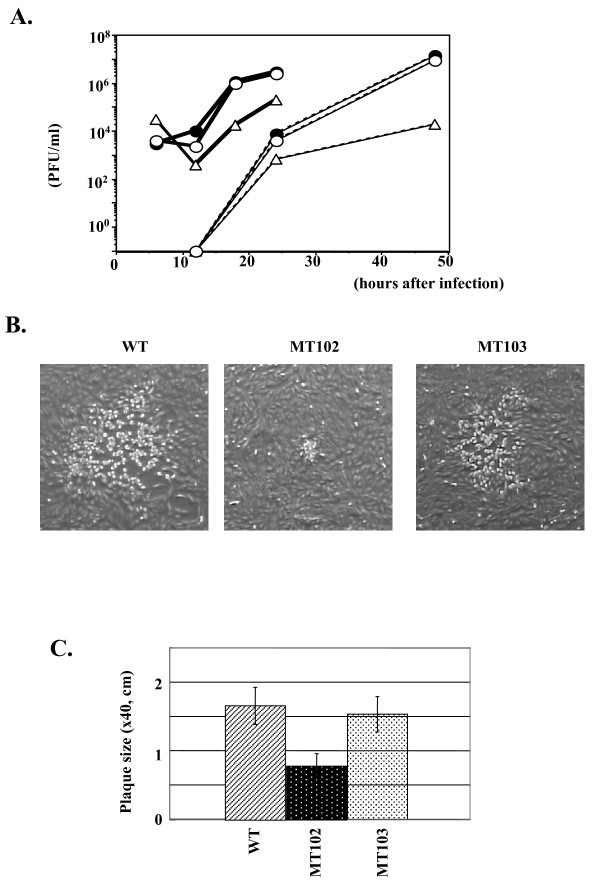
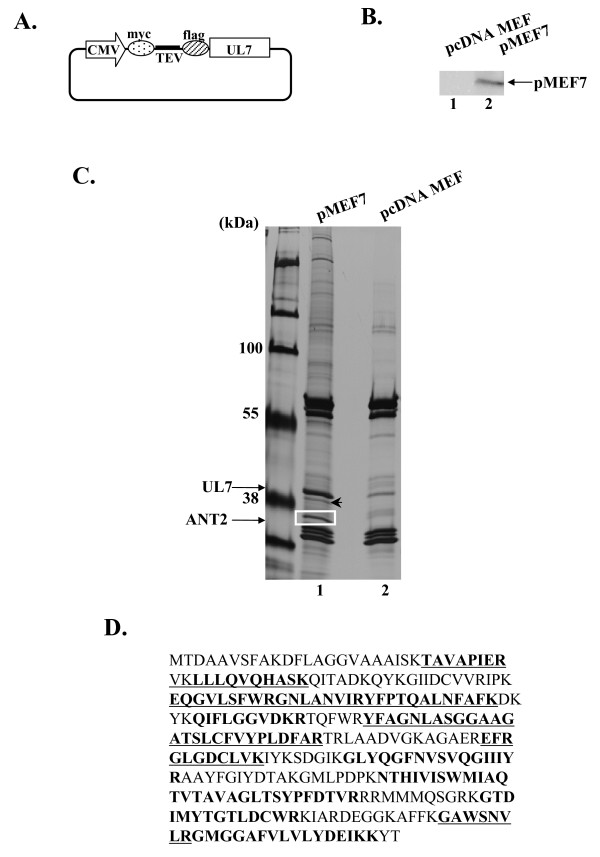
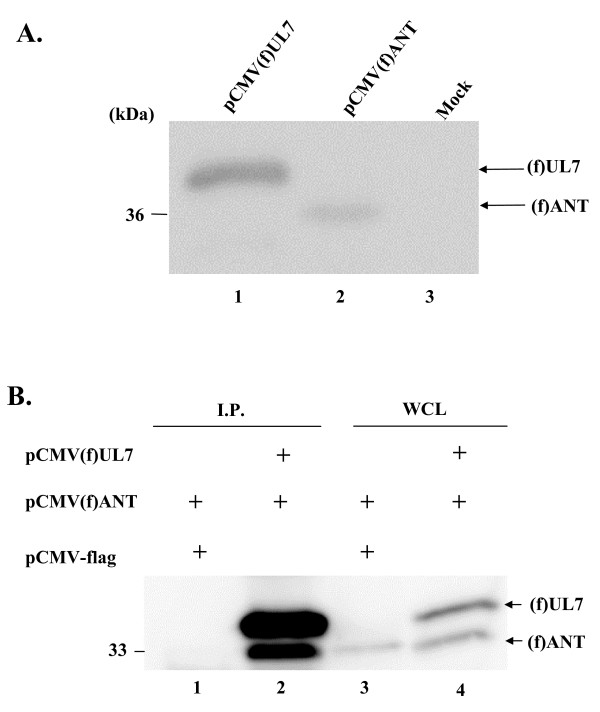
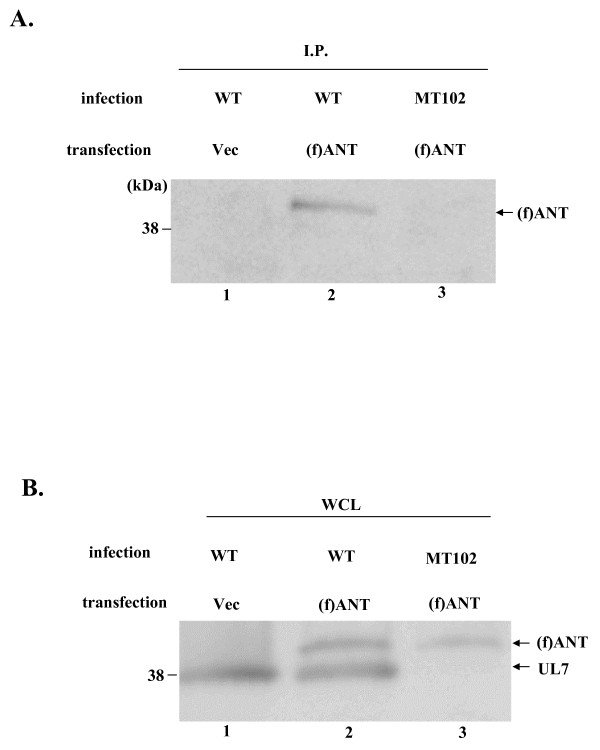
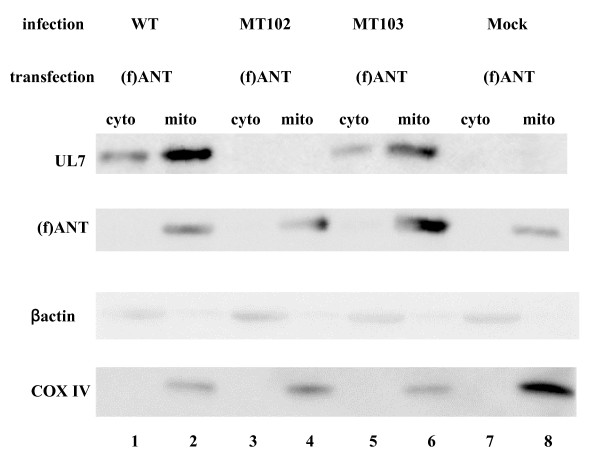
The herpes simplex virus 1 (HSV-1) UL7 gene is highly conserved among herpesviridae. Since the construction of recombinant HSV-1 with a mutation in the UL7 gene has not been reported, the involvement of HSV-1 UL7 in viral replication has been unclear. In this study, we succeeded in generating a UL7 null HSV-1 mutant virus, MT102, and characterized it. Our results were as follows. (i) In Vero cells, MT102 was replication-competent, but formed smaller plaques and yielded 10- to 100-fold fewer progeny than the wild-type virus, depending on the multiplicity of infection. (ii) Using mass spectrometry-based proteomics technology, we identified a cellular mitochondrial protein, adenine nucleotide translocator 2 (ANT2), as a UL7-interacting partner. (iii) When ANT2 was transiently expressed in COS-7 cells infected with HSV-1, ANT2 was specifically co-precipitated with UL7. (iv) Cell fractionation experiments with HSV-1-infected cells detected the UL7 protein in both the mitochondrial and cytosolic fractions, whereas ANT2 was detected only in the mitochondrial fraction. These results indicate the importance of HSV-1 UL7's involvement in viral replication and demonstrate that it interacts with ANT2 in infected cells. The potential biological significance of the interaction between UL7 and ANT2 is discussed.
Overview
The claims and statistics of this paper haven’t been checked yet.
Free: it reads the open-access text and checks the first 5 claims that cite a source we can check. Create a free account to check every claim.
Integrity signals
Registry
Cites
Statistics
Figures
Verification
Claims the paper makes
The claims and statistics of this paper haven’t been checked yet.
Free: it reads the open-access text and checks the first 5 claims that cite a source we can check. Create a free account to check every claim.
Claims other papers make about this one
Each is checked against this paper’s own text: does it say what the citing paper says it does?
In the citing paper
“As the name implies, TAP uses a dual epitope tag for successive immunoaffinity isolations and has been applied to interactions within virus-infected cells (51–54).”
From The Impact of Mass Spectrometry–Based Proteomics on Fundamental Discoveries in Virology (2014) · cites this paper as [52]
Self-check
Percentages, sums and reported differences re-computed from the paper’s own numbers.
The self-check needs the paper’s full text.
Citations
Cites
Cherepanov, P. P., & Wackernagel, W. (1995) · Gene · doi:10.1016/0378-1119(95)00193-a · Cited by 1,937 · cited 1×
“To this end, the Flp expression plasmid pCP20Zeo [11] was electroporated into the E.”
MethodBax and Adenine Nucleotide Translocator Cooperate in the Mitochondrial Control of Apoptosis
Marzo, I., Brenner, C., Zamzami, N., Jürgensmeier, J. M., Susin, S. A., Vieira, H. L. A., Prévost, M.-C., Xie, Z., Matsuyama, S., Reed, J. C., et al. (1998) · Science · doi:10.1126/science.281.5385.2027 · Cited by 1,168 · cited 5×
“Dolce V, Scarcia P, Iacopetta D, Palmieri F: A fourth ADP/ATP carrier isoform in man: identification, bacterial expression, functional characterization and tissue distribution.”
BackgroundInfluentialThe ADP/ATP translocator is not essential for the mitochondrial permeability transition pore
Kokoszka, J. E., Waymire, K. G., Levy, S. E., Sligh, J. E., Cai, J., Jones, D. P., MacGregor, G. R., & Wallace, D. C. (2004) · Nature · doi:10.1038/nature02229 · Cited by 1,086 · cited 1×
“ANT is a bifunctional protein that, in physiological conditions, exchanges ATP and ADP on the inner mitochondrial membrane, whereas in apoptotic conditions it can form a nonspecific pore [3,17].”
BackgroundProteins of purified Epstein-Barr virus
Johannsen, E., Luftig, M., Chase, M. R., Weicksel, S., Cahir-McFarland, E., Illanes, D., Sarracino, D., & Kieff, E. (2004) · Proceedings of the National Academy of Sciences · doi:10.1073/pnas.0407320101 · Cited by 450 · cited 1×
“The UL7 amino acid sequence is conserved in all Herpesviridae subfamilies [2], suggesting that UL7 homologues may play conserved roles in the herpes virus life cycle.”
BackgroundStepien, G., Torroni, A., Chung, A. B., Hodge, J. A., & Wallace, D. C. (1992) · Journal of Biological Chemistry · doi:10.1016/s0021-9258(18)42082-0 · Cited by 325 · cited 1×
“Four ANT proteins exist in human (ANT1~4) as the mitochondrial carrier family, and they are expressed in tissue- and development-specific manners [18-20].”
BackgroundTanaka, M., Kagawa, H., Yamanashi, Y., Sata, T., & Kawaguchi, Y. (2003) · Journal of Virology · doi:10.1128/jvi.77.2.1382-1391.2003 · Cited by 292 · cited 9×
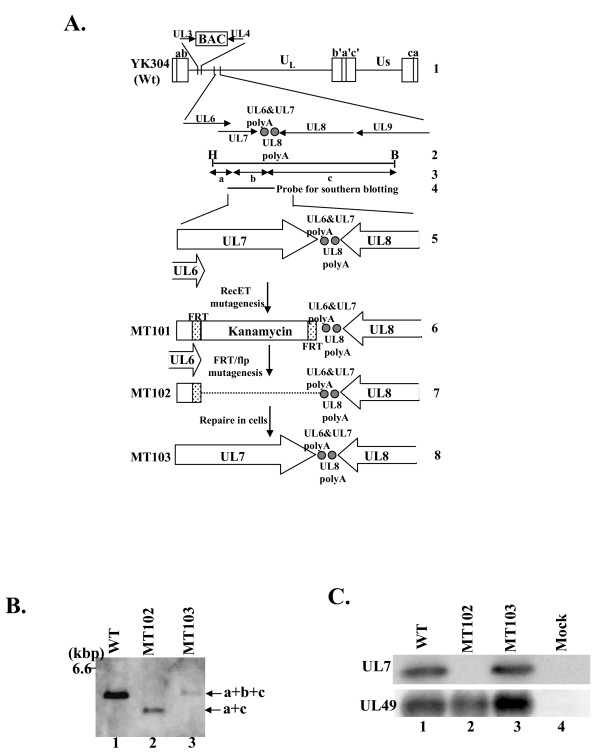
“As expected, UL7 protein was not detected in mock- or MT102-infected cell lysates (Figure 1C), whereas UL49 protein levels were equivalent among all of the lysates of infected cells.”
BackgroundMethodSelf-citationKawaguchi, Y., Van Sant, C., & Roizman, B. (1997) · Journal of Virology · doi:10.1128/jvi.71.10.7328-7336.1997 · Cited by 245 · cited 1×
“Vero, rabbit skin, and COS-7 cells were maintained in Dulbecco's modified Eagle's medium (DMEM) containing 5% fetal calf serum (FCS) as described previously [7].”
MethodSelf-citationGibbs, J. S., Malide, D., Hornung, F., Bennink, J. R., & Yewdell, J. W. (2003) · Journal of Virology · doi:10.1128/jvi.77.13.7214-7224.2003 · Cited by 224 · cited 1×
“ANT2 is up-regulated in proliferative cells, including several cancer cell lines, and induces apoptosis by interacting with many kinds of materials [21], including viral protein (Vpr of HIV-1 and pBI-F2 of influenza virus) [22-24], although ANT2 was not an essential member.”
BackgroundDolce, V., Scarcia, P., Iacopetta, D., & Palmieri, F. (2005) · FEBS Letters · doi:10.1016/j.febslet.2004.12.034 · Cited by 222 · cited 2×
“It is also interesting that another ANT family member, ANT4 (SLC25A3), recently identified but with an unknown function [19], also interacts with UL7 in human cells.”
BackgroundCloning of reiterated and nonreiterated herpes simplex virus 1 sequences as BamHI fragments.
Post, L. E., Conley, A. J., Mocarski, E. S., & Roizman, B. (1980) · Proceedings of the National Academy of Sciences · doi:10.1073/pnas.77.7.4201 · Cited by 165 · cited 1×
“Since Post and Roizman first characterized recombinant viruses in which a specific HSV-1 gene was mutated by the reverse genetics system [1], this gene's roles in the viral life cycle have been extensively investigated.”
BackgroundNarayanan, K., Williamson, R., Zhang, Y., Stewart, A. F., & Ioannou, P. A. (1999) · Gene Therapy · doi:10.1038/sj.gt.3300901 · Cited by 144 · cited 1×
“First, we generated a UL7 mutant virus genome (pMT101) in which a domain of UL7 encoding codons 27–891 was replaced with the gene encoding kanamycin resistance using a one-step mutagenenesis method called ET cloning as described previously [10].”
MethodHerpes simplex virus eliminates host mitochondrial DNA
Saffran, H. A., Pare, J. M., Corcoran, J. A., Weller, S. K., & Smiley, J. R. (2007) · EMBO reports · doi:10.1038/sj.embor.7400878 · Cited by 141 · cited 1×
“Other studies using HSV mutants, revealed the release of cytochrome C, which is known to be a stress-responsive mitochondrial protein, into the cytoplasm [31,32]; it thus confirms the influence of HSV infection on mitochondrial condition.”
BackgroundHIV-1 Vpr-Induced Apoptosis Is Cell Cycle Dependent and Requires Bax but Not ANT
Andersen, J. L., DeHart, J. L., Zimmerman, E. S., Ardon, O., Kim, B., Jacquot, G., Benichou, S., & Planelles, V. (2006) · PLoS Pathogens · doi:10.1371/journal.ppat.0020127 · Cited by 115 · cited 1×
“ANT2 is up-regulated in proliferative cells, including several cancer cell lines, and induces apoptosis by interacting with many kinds of materials [21], including viral protein (Vpr of HIV-1 and pBI-F2 of influenza virus) [22-24], although ANT2 was not an essential member.”
BackgroundMitochondrial distribution and function in herpes simplex virus-infected cells
Murata, T., Goshima, F., Daikoku, T., Inagaki-Ohara, K., Takakuwa, H., Kato, K., & Nishiyama, Y. (2000) · Microbiology · doi:10.1099/0022-1317-81-2-401 · Cited by 114 · cited 1×
“A confocal microscopic study also reported clustering of mitochondria in HSV-2 infected cells [29].”
BackgroundChemosensitization by Knockdown of Adenine Nucleotide Translocase-2
Le Bras, M., Borgne-Sanchez, A., Touat, Z., El Dein, O. S., Deniaud, A., Maillier, E., Lecellier, G., Rebouillat, D., Lemaire, C., Kroemer, G., et al. (2006) · Cancer Research · doi:10.1158/0008-5472.can-05-4407 · Cited by 106 · cited 1×
“ANT2 is up-regulated in proliferative cells, including several cancer cell lines, and induces apoptosis by interacting with many kinds of materials [21], including viral protein (Vpr of HIV-1 and pBI-F2 of influenza virus) [22-24], although ANT2 was not an essential member.”
BackgroundThe hepatitis B virus X protein enhances AP-1 activation through interaction with Jab1
Tanaka, Y., Kanai, F., Ichimura, T., Tateishi, K., Asaoka, Y., Guleng, B., Jazag, A., Ohta, M., Imamura, J., Ikenoue, T., et al. (2005) · Oncogene · doi:10.1038/sj.onc.1209093 · Cited by 104 · cited 15×
“Acknowledgements We thank Dr. Y. Nishiyama for the antibody to UL7 and Dr. T. Suzuki for pCDNA-MEF.”
BackgroundMethodInfluentialHerpes Simplex Virus 1 Blocks Caspase-3-Independent and Caspase-Dependent Pathways to Cell Death
Galván, V., Brandimarti, R., & Roizman, B. (1999) · Journal of Virology · doi:10.1128/jvi.73.4.3219-3226.1999 · Cited by 89 · cited 1×
“Subcellular fractionation was performed as described previously [15].”
MethodJang, J.-Y., Choi, Y. J., Jeon, Y., & Kim, C. W. (2008) · Breast Cancer Research · doi:10.1186/bcr1857 · Cited by 86 · cited 1×
“ANT2 has therefore recently become a useful target for cancer therapy based on molecular targeting [25].”
BackgroundKawaguchi, Y., Sant, C. V., & Roizman, B. (1998) · Journal of Virology · doi:10.1128/jvi.72.3.1731-1736.1998 · Cited by 85
Self-citationIdentification and Characterization of the UL56 Gene Product of Herpes Simplex Virus Type 2
Koshizuka, T., Goshima, F., Takakuwa, H., Nozawa, N., Daikoku, T., Koiwai, O., & Nishiyama, Y. (2002) · Journal of Virology · doi:10.1128/jvi.76.13.6718-6728.2002 · Cited by 81
The product of the UL6 gene of herpes simplex virus type 1 is associated with virus capsids
Pateli, A. H., & Maclean, J. B. (1995) · Virology · doi:10.1016/s0042-6822(95)80062-x · Cited by 80 · cited 3×
“ANT is a bifunctional protein that, in physiological conditions, exchanges ATP and ADP on the inner mitochondrial membrane, whereas in apoptotic conditions it can form a nonspecific pore [3,17].”
BackgroundHerpes Simplex Virus Type 1 UL51 Protein Is Involved in Maturation and Egress of Virus Particles
Nozawa, N., Kawaguchi, Y., Tanaka, M., Kato, A., Kato, A., Kimura, H., & Nishiyama, Y. (2005) · Journal of Virology · doi:10.1128/jvi.79.11.6947-6956.2005 · Cited by 76 · cited 4×
“Rabbit polyclonal antibodies to UL7 and UL49 [13] were kindly provided by Dr.”
MethodSelf-citationAbsence of PIK3CA hotspot mutations in hepatocellular carcinoma in Japanese patients
Tanaka, Y., Kanai, F., Tada, M., Asaoka, Y., Guleng, B., Jazag, A., Ohta, M., Ikenoue, T., Tateishi, K., Obi, S., et al. (2006) · Oncogene · doi:10.1038/sj.onc.1209311 · Cited by 74
Mogensen, T. H., Melchjorsen, J., Höllsberg, P., & Paludan, S. R. (2003) · The Journal of Immunology · doi:10.4049/jimmunol.170.12.6224 · Cited by 64
Baráth, P., Luciaková, K., Hodný, Z., Li, R., & Nelson, B. D. (1999) · Experimental Cell Research · doi:10.1006/excr.1999.4432 · Cited by 61 · cited 1×
“Four ANT proteins exist in human (ANT1~4) as the mitochondrial carrier family, and they are expressed in tissue- and development-specific manners [18-20].”
BackgroundTanaka, M., Nishiyama, Y., Sata, T., & Kawaguchi, Y. (2005) · Virology · doi:10.1016/j.virol.2005.07.010 · Cited by 49 · cited 1×
“The recombinant viruses were verified by Southern blotting as described previously [12].”
MethodSelf-citationHuman herpesvirus 1 protein US3 induces an inhibition of mitochondrial electron transport
Derakhshan, M. H., Willcocks, M. M., Salako, M. A., Kass, G. E. N., & Carter, M. J. (2006) · Journal of General Virology · doi:10.1099/vir.0.81949-0 · Cited by 43 · cited 1×
“In addition, some mitochondrial changes in HSV-infected cells have been reported [26,27].”
BackgroundZhou, G., & Roizman, B. (2000) · Journal of Virology · doi:10.1128/jvi.74.19.9048-9053.2000 · Cited by 41 · cited 1×
“Other studies using HSV mutants, revealed the release of cytochrome C, which is known to be a stress-responsive mitochondrial protein, into the cytoplasm [31,32]; it thus confirms the influence of HSV infection on mitochondrial condition.”
BackgroundInteraction between the HIV‐1 Protein Vpr and the Adenine Nucleotide Translocator
Sabbah, E. N., Druillennec, S., Morellet, N., Bouaziz, S., Kroemer, G., & Roques, B. P. (2006) · Chemical Biology & Drug Design · doi:10.1111/j.1747-0285.2006.00340.x · Cited by 36 · cited 1×
“ANT2 is up-regulated in proliferative cells, including several cancer cell lines, and induces apoptosis by interacting with many kinds of materials [21], including viral protein (Vpr of HIV-1 and pBI-F2 of influenza virus) [22-24], although ANT2 was not an essential member.”
BackgroundFuchs, W., Granzow, H., Klopfleisch, R., Klupp, B. G., Rosenkranz, D., & Mettenleiter, T. C. (2005) · Journal of Virology · doi:10.1128/jvi.79.17.11291-11299.2005 · Cited by 36 · cited 8×
“hand, virus titers in cells infected with MT102 were also impaired, as observed with the UL7 null mutant viruses of BHV-1 [6] and PRV [5], implying that each UL7 protein functions in at least one step of viral replication other than viral release.”
BackgroundMethodInfluentialIdentification and Characterization of the UL7 Gene Product of Herpes Simplex Virus Type 2
Nozawa, N., Daikoku, T., Yamauchi, Y., Takakuwa, H., Goshima, F., Yoshikawa, T., & Nishiyama, Y. (2002) · Virus Genes · doi:10.1023/a:1015332716927 · Cited by 30 · cited 1×
“The only reported experimental evidence with regard to HSV UL7 is that its gene products are present in integumentary layers of mature virions, and that the viral protein is localized predominantly in the juxtanuclear cytoplasmic domains of infected cells, although it is also detected transiently in the nucleus [ 4 ].”
BackgroundEarly apoptosis-related changes triggered by hsv-1 in individual neuronlike cells
Gautier, I. (2003) · Experimental Cell Research · doi:10.1016/s0014-4827(03)00258-1 · Cited by 27 · cited 1×
“Spherical morphological change of mitochondria was observed using intensified fluorescence digital imaging at an early point in infection [28].”
Schmitt, J. F., & Keil, G. M. (1996) · Journal of Virology · doi:10.1128/jvi.70.2.1091-1099.1996 · Cited by 19
Release of RNA polymerase from vero cell mitochondria after herpes simplex virus type 1 infection
Tsurumi, T., & Lehman, I. (1990) · Journal of Virology · doi:10.1128/jvi.64.1.450-452.1990 · Cited by 15 · cited 1×
“In addition, some mitochondrial changes in HSV-infected cells have been reported [26,27].”
Background
Cited by
Tegument Assembly and Secondary Envelopment of Alphaherpesviruses
Owen, D., Crump, C., & Graham, S. (2015) · Viruses · doi:10.3390/v7092861 · Cited by 202
Functional roles of the tegument proteins of herpes simplex virus type 1
Kelly, B., Fraefel, C., Cunningham, A. L., & Diefenbach, R. J. (2009) · Virus Research · doi:10.1016/j.virusres.2009.07.007 · Cited by 205
Ohta, A., & Nishiyama, Y. (2010) · Mitochondrion · doi:10.1016/j.mito.2010.08.006 · Cited by 122
“UL7 is present in both mitochondria and cytoplasm and interacts with ANT2 and ANT4 in HSV-1-infected cells (Tanaka et al., 2008).”
Alphaherpesvirus Infection Disrupts Mitochondrial Transport in Neurons
Kramer, T., & Enquist, L. W. (2012) · Cell Host & Microbe · doi:10.1016/j.chom.2012.03.005 · Cited by 92
“Candidates include viral proteins that localize to mitochondria, such as pUL7 (Tanaka et al., 2008) and pUL12.”
BackgroundOldfield, L. M., Grzesik, P., Voorhies, A. A., Alperovich, N., MacMath, D., Najera, C. D., Chandra, D. S., Prasad, S., Noskov, V. N., Montague, M. G., et al. (2017) · Proceedings of the National Academy of Sciences · doi:10.1073/pnas.1700534114 · Cited by 84
Metadata
- Authors
- Tanaka, M., Sata, T., & Kawaguchi, Y.
- Affiliations
- National Institute of Infectious Diseases (JP)
- The University of Tokyo (JP)
- Corresponding author
- Tanaka, Michiko
- ORCID
- Kawaguchi, Yasushi
- Venue
- Virology Journal
- Published
- 2008
- Volume
- 5
- Issue
- 1
- Pages
- 125
- ISSN
- 1743-422X (ISSN-L)
- PMC
- PMC2577096
- OpenAlex
- W2170269014
- Cited by
- 39
- References
- 34
- Citations by year
- 2026: 1 · 2025: 1 · 2024: 1 · 2023: 3 · 2022: 2 · 2021: 2 · 2020: 4 · 2019: 3 · 2018: 1 · 2017: 2 · 2016: 4 · 2015: 6 · 2014: 1 · 2013: 1 · 2012: 2
- FWCI
- 1.24
- Type
- journal article
- Language
- en
- Open access
- gold
- doi.org
- Licence
- cc-by
- Locations
- Virology Journal (publishedVersion, cc-by)
- PubMed Central (publishedVersion, cc-by)
- PubMed (publishedVersion)
- DOAJ (DOAJ: Directory of Open Access Journals) (submittedVersion)
- Topics
- Health Sciences › Medicine › Infectious Diseases › Herpesvirus Infections and Treatments
- Health Sciences › Medicine › Epidemiology › Cytomegalovirus and herpesvirus research
- Health Sciences › Medicine › Oncology › Viral-associated cancers and disorders
- Keywords
- herpes simplex virus type 1, ANT2, viral replication, viral virulence, herpesvirus-host interaction
- MeSH terms
- Animals, Cell Fractionation, Chlorocebus aethiops, Cytosol, Mitochondria, Mutation, Viral Plaque Assay, Protein Binding, Rabbits, Vero Cells, Viral Matrix Proteins, Viral Proteins, Virus Replication, Herpesvirus 1, Human, COS Cells, Mitochondrial Proteins, Protein Interaction Mapping, Adenine Nucleotide Translocator 2, Immunoprecipitation
About these checks
Registry, retraction, Cites and statistics results are computed, not judged, with one exception: a printed reference that no index lists is read once by a model before it counts as a citation error. Claims are extracted by a model and kept only when their quote appears verbatim in the text; each cited source is then checked, with a model’s help, for whether it says what the claim relies on. Those verdicts can be wrong — read the claim’s quote and the cited source before relying on one.
Statistics and arithmetic are recomputed, not judged.
Confidence bands are shown only for fields calibrated on our annotated test set. None is calibrated yet, so no band is shown.
What counts as a claim ›How we measure confidence ›How we check this ›
Are you an author, or do you see a problem with this page? Request a review
Data sources
Bibliographic data: Semantic Scholar, OpenAlex, Crossref.
Contains information from the Semantic Scholar Academic Graph Datasets, made available under the ODC Attribution License (ODC-BY 1.0).
Semantic Scholar’s data is described in: Kinney, R., et al. (2023). The Semantic Scholar Open Data Platform. arXiv:2301.10140.
