

The DOI matches its Crossref record; 39 of the 40 references it cites were found in a registry or an index.
A ketogenic diet reduces amyloid beta 40 and 42 in a mouse model of Alzheimer's disease
Open accessAbstract
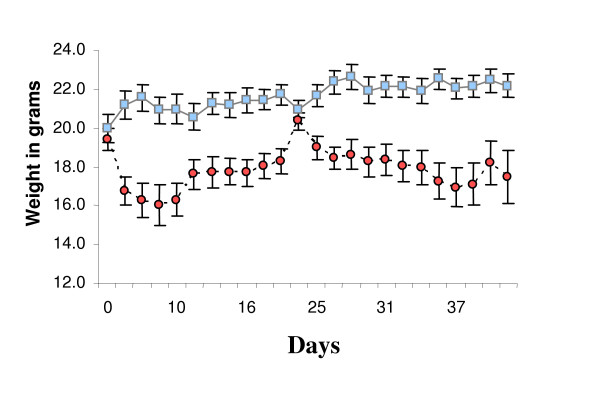
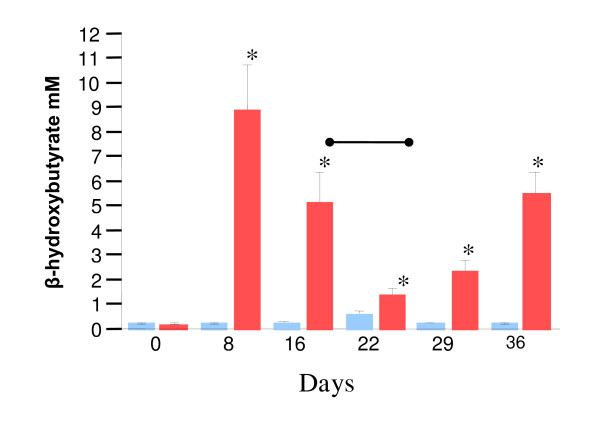
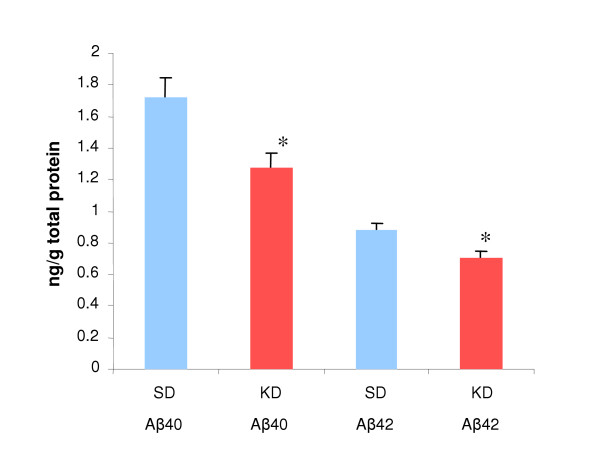
Background: Alzheimer's disease (AD) is a progressive neurodegenerative disorder that primarily strikes the elderly. Studies in both humans and animal models have linked the consumption of cholesterol and saturated fats with amyloid-β (Aβ) deposition and development of AD. Yet, these studies did not examine high fat diets in combination with reduced carbohydrate intake. Here we tested the effect of a high saturated fat/low carbohydrate diet on a transgenic mouse model of AD. Results: Starting at three months of age, two groups of female transgenic mice carrying the "London" APP mutation (APP/V717I) were fed either, a standard diet (SD) composed of high carbohydrate/low fat chow, or a ketogenic diet (KD) composed of very low carbohydrate/high saturated fat chow for 43 days. Animals fed the KD exhibited greatly elevated serum ketone body levels, as measured by β-hydroxybutyrate (3.85 ± 2.6 mM), compared to SD fed animals (0.29 ± 0.06 mM). In addition, animals fed the KD lost body weight (SD 22.2 ± 0.6 g vs. KD 17.5 ± 1.4 g, p = 0.0067). In contrast to earlier studies, the brief KD feeding regime significantly reduced total brain Aβ levels by approximately 25%. Despite changes in ketone levels, body weight, and Aβ levels, the KD diet did not alter behavioral measures. Conclusion: Previous studies have suggested that diets rich in cholesterol and saturated fats increased the deposition of Aβ and the risk of developing AD. Here we demonstrate that a diet rich in saturated fats and low in carbohydrates can actually reduce levels of Aβ. Therefore, dietary strategies aimed at reducing Aβ levels should take into account interactions of dietary components and the metabolic outcomes, in particular, levels of carbohydrates, total calories, and presence of ketone bodies should be considered.
Overview
The claims and statistics of this paper haven’t been checked yet.
Run the check — free, no account needed. It reads the open-access text and checks the sources it cites.
Integrity signals
Registry
Cites
Statistics
Figures
Verification
Claims the paper makes
The claims and statistics of this paper haven’t been checked yet.
Run the check — free, no account needed. It reads the open-access text and checks the sources it cites.
Claims other papers make about this one
Each is checked against this paper’s own text: does it say what the citing paper says it does?
In the citing paper
“Several clinical studies have shown a positive effect of a ketogenic diet on patients with AD or mild cognitive impairment (MCI), consistent with preclinical results [87–91] (Table 1).”
From Role of diet and its effects on the gut microbiome in the pathophysiology of mental disorders (2022) · cites this paper as [89]
Self-check
Percentages, sums and reported differences re-computed from the paper’s own numbers.
The self-check needs the paper’s full text.
Citations
Cites
Alzheimer's Disease: Genes, Proteins, and Therapy
Selkoe, D. J. (2001) · Physiological Reviews · doi:10.1152/physrev.2001.81.2.741 · Cited by 6,063
Alzheimer Disease in the US Population: Prevalence Estimates Using the 2000 Census
Hebert, L. E., Scherr, P. A., Bienias, J. L., Bennett, D. A., & Evans, D. A. (2003) · Archives of Neurology · doi:10.1001/archneur.60.8.1119 · Cited by 2,168
Evans, D. A. (1989) · JAMA · doi:10.1001/jama.262.18.2551 · Cited by 1,627
Evans, D. A. (1989) · JAMA · doi:10.1001/jama.1989.03430180093036 · Cited by 1,226 · cited 1×
“Background Alzheimer's disease (AD) is an age-associated neurodegenerative disease that is very common in the US, affecting up to 50% of people between the ages of 75 to 84 years [1].”
BackgroundAxonopathy and Transport Deficits Early in the Pathogenesis of Alzheimer’s Disease
Stokin, G. B., Lillo, C., Falzone, T. L., Brusch, R. G., Rockenstein, E., Mount, S. L., Raman, R., Davies, P., Masliah, E., Williams, D. S., et al. (2005) · Science · doi:10.1126/science.1105681 · Cited by 1,214
Calorie restriction, SIRT1 and metabolism: understanding longevity
Bordone, L., & Guarente, L. (2005) · Nature Reviews Molecular Cell Biology · doi:10.1038/nrm1616 · Cited by 1,038
Dietary fat intake and the risk of incident dementia in the Rotterdam study
Kalmijn, S., Launer, L. J., Ott, A., Witteman, J. C. M., Hofman, A., & Breteler, M. M. B. (1997) · Annals of Neurology · doi:10.1002/ana.410420514 · Cited by 895 · cited 2×
“The results from this analysis led the author to suggest that diets rich in saturated fats and cholesterol increased the risk of several types of dementia [5].”
BackgroundResultHypercholesterolemia Accelerates the Alzheimer's Amyloid Pathology in a Transgenic Mouse Model
Refolo, L. M., Pappolla, M. A., Malester, B., LaFrancois, J., Bryant-Thomas, T., Wang, R., Tint, G. S., Sambamurti, K., & Duff, K. (2000) · Neurobiology of Disease · doi:10.1006/nbdi.2000.0304 · Cited by 783
Moechars, D., Dewachter, I., Lorent, K., Reversé, D., Baekelandt, V., Naidu, A., Tesseur, I., Spittaels, K., Haute, C. V. D., Checler, F., et al. (1999) · Journal of Biological Chemistry · doi:10.1074/jbc.274.10.6483 · Cited by 668
Apolipoprotein E (APOE) allele distribution in the world. Is APOE*4 a ‘thrifty’ allele?
Corbo, R. M., & Scacchi, R. (1999) · Annals of Human Genetics · doi:10.1046/j.1469-1809.1999.6340301.x · Cited by 653
Cited by
Sorted by citations
Items 201–300 of 306
Gardener, S. L., Rainey‐Smith, S. R., Sohrabi, H. R., Weinborn, M., Verdile, G., Fernando, W. M. A. D. B., Lim, Y. Y., Harrington, K., Burnham, S. C., Taddei, K., et al. (2017) · Journal of Alzheimer s Disease · doi:10.3233/jad-161158 · Cited by 16
Soejima, E., Ohki, T., Kurita, Y., Yuan, X., Tanaka, K., Kakino, S., Hara, K., Nakayama, H., Tajiri, Y., & Yamada, K. (2018) · PLoS ONE · doi:10.1371/journal.pone.0191147 · Cited by 15
Yin, L., Liu, Q., Jia, Z., & Guo, B. (2025) · Advanced Exercise and Health Science · doi:10.1016/j.aehs.2025.05.004 · Cited by 17
Noshiro, K., Umazume, T., Inubashiri, M., Tamura, M., Hosaka, M., & Watari, H. (2023) · Nutrients · doi:10.3390/nu15030768 · Cited by 14
Mayr, K. A., Kwok, C. H. T., Eaton, S. E. A., Baker, G. B., & Whelan, P. J. (2020) · eNeuro · doi:10.1523/eneuro.0178-20.2020 · Cited by 14
Ketogenic diet compromises vertebral microstructure and biomechanical characteristics in mice
Wu, X., Ding, J., Xu, X., Wang, X., Liu, J., Jiang, J., Liu, Q., Kong, G., Huang, Z., Zhou, Y., et al. (2019) · Journal of Bone and Mineral Metabolism · doi:10.1007/s00774-019-01002-2 · Cited by 14
Li, C., Ma, Y., Chai, X., Feng, X. M., Feng, W., Zhao, Y., Cui, C., Wang, J., Zhao, S., & Zhu, X. (2023) · Food & Function · doi:10.1039/d3fo04007k · Cited by 14
Jiwani, R. B., Robbins, R. N., Neri, A. L., Renero, J., Lopez, E., & Serra, M. C. (2022) · Current Nutrition Reports · doi:10.1007/s13668-022-00412-5 · Cited by 12
Ketogenic Metabolism in Neurodegenerative Diseases: Mechanisms of Action and Therapeutic Potential
Pawłowska, M., Kruszka, J., Porzych, M., Garbarek, J., & Nuszkiewicz, J. (2025) · Metabolites · doi:10.3390/metabo15080508 · Cited by 15
Current progress in the therapeutic options for mitochondrial disorders.
Koňaříková, E., Markovic, A., Korandová, Z., Houštěk, J., & Mráček, T. (2020) · Physiological Research · doi:10.33549/physiolres.934529 · Cited by 13
Yuan, X., Wang, L., Tandon, N., Sun, H., Tian, J., Du, H., Pascual, J. M., & Guo, L. (2020) · Journal of Alzheimer s Disease · doi:10.3233/jad-200594 · Cited by 12
Arguments In Favor Of Ketogenic Diets
(2007) · The Internet Journal of Nutrition and Wellness · doi:10.5580/1650 · Cited by 12
The Interplay of Sports and Nutrition in Neurological Health and Recovery
Clemente‐Suárez, V. J., Redondo-Flórez, L., Beltrán-Velasco, A. I., Belinchón-deMiguel, P., Ramos‐Campo, D. J., Curiel-Regueros, A., Martín-Rodríguez, A., & Tornero-Aguilera, J. F. (2024) · Journal of Clinical Medicine · doi:10.3390/jcm13072065 · Cited by 13
To, J. Q., Shao, Z. Y., Gandawidjaja, M., Tabibi, T., Grysman, N., & Grossberg, G. T. (2022) · Current Nutrition Reports · doi:10.1007/s13668-022-00407-2 · Cited by 11
Moura, E. L. R., dos Santos, H., Celes, A. P. M., Bassani, T. B., Souza, L. C., & Vital, M. A. B. F. (2020) · Journal of Alzheimer s Disease Reports · doi:10.3233/adr-200175 · Cited by 11
White, H. T., Venkatesh, K., & Venkatesh, B. (2017) · Journal of Neurology and Neuroscience · doi:10.21767/2171-6625.1000188 · Cited by 10
Nakayama, H., Tokubuchi, I., Wada, N., Tsuruta, M., Ohki, T., Oshige, T., Sasaki, Y., Iwata, S., Kato, N., Ohtsuka, Y., et al. (2014) · Endocrine Journal · doi:10.1507/endocrj.ej14-0431 · Cited by 10
Balietti, M., Fattoretti, P., Giorgetti, B., Casoli, T., Stefano, G. D., Platano, D., Aicardi, G., Lattanzio, F., & Bertoni–Freddari, C. (2009) · Microscopy Research and Technique · doi:10.1002/jemt.20737 · Cited by 10
Optimizing Diagnosis and Management in mild-to-moderate Alzheimer’s Disease
Galvin, J. E. (2012) · Neurodegenerative Disease Management · doi:10.2217/nmt.12.21 · Cited by 9
Li, J., Liu, Y., Liu, H., Chen, L., & Li, R. (2020) · Molecular Nutrition & Food Research · doi:10.1002/mnfr.201900535 · Cited by 10
Implications of ketogenic diet on weight gain, motor activity and cicatrization in Wistar rats
Peres, R. C., Nogueira, D. B., Guimarães, G. D. P., da Costa, E. L., & Ribeiro, D. A. (2012) · Toxicology Mechanisms and Methods · doi:10.3109/15376516.2012.735276 · Cited by 9
When is a high fat diet not a high fat diet?
Feinman, R. D. (2005) · Nutrition & Metabolism · doi:10.1186/1743-7075-2-27 · Cited by 9
Bisong, S. A., Nku, C. O., Sanya, O. A., Ita, S. O., Fischer, V. A., & Abuo, F. E. (2020) · Chinese Herbal Medicines · doi:10.1016/j.chmed.2020.03.008 · Cited by 10
Ketogenic Approaches for the Treatment of Alzheimer’s Disease
Gabuzyan, R., Lee, C., & Nygaard, H. (2024) · Journal of Alzheimer's Disease · doi:10.3233/jad-240186 · Cited by 8
Yang, K., Tan, Y. L., Wang, F., Zhang, Q., Sun, P., Zhang, Y., Yao, N., Zhao, Y., Wang, X., Fan, A., et al. (2014) · Experimental Biology and Medicine · doi:10.1177/1535370214532757 · Cited by 7
Characteristics of ketogenic diet and its therapeutic properties in central nervous system disorders
Liśkiewicz, A., Jędrzejowska–Szypułka, H., & Lewin‐Kowalik, J. (2012) · Annales Academiae Medicae Silesiensis · Cited by 7
Ari, C., Pilla, R., & D’Agostino, D. P. (2014) · Elsevier eBooks · doi:10.1016/b978-0-12-411462-3.00047-3 · Cited by 7
Maynard, S., & Gelblum, J. (2013) · Neuropsychiatric Disease and Treatment · doi:10.2147/ndt.s52331 · Cited by 7
The Influences of Dietary Sugar and Related Metabolic Disorders on Cognitive Aging and Dementia
Seetharaman, S. (2016) · Elsevier eBooks · doi:10.1016/b978-0-12-801816-3.00024-8 · Cited by 7
Pilla, R. (2020) · International Electronic Conference on Nutrients (IECN) · doi:10.3390/iecn2020-06982 · Cited by 7
Juby, A. G., Cunnane, S. C., & Mager, D. R. (2023) · Frontiers in Nutrition · doi:10.3389/fnut.2023.1126534 · Cited by 8
Enhanced cerebral bioenergetics with dietary ketosis in Mild Cognitive Impairment
Krikorian, R., Boespflug, E. L., Dudley, J. A., Norris, M. M., Chu, W., Summer, S. S., & Eliassen, J. C. (2014) · Nutrition and Aging · doi:10.3233/nua-140044 · Cited by 7
The ketogenic diet in Parkinson’s disease: a potential therapeutic strategy
Pokora, B., Pokora, K., Binienda, A., & Fichna, J. (2025) · Pharmacological Reports · doi:10.1007/s43440-025-00799-2 · Cited by 9
Yu, M.-J., Xiong, R., Wu, J.-W., Li, Y., Xie, J., Zhou, H.-P., Ye, G.-Y., Chang, Y., Huang, K.-B., & Pan, S.-Y. (2026) · Acta Pharmacologica Sinica · doi:10.1038/s41401-025-01706-4 · Cited by 6
Carta, P. M. P. (2015) · Journal of Neurology & Neurophysiology · doi:10.4172/2155-9562.1000304 · Cited by 6
El-Swefy, S. E., & Atteia, H. H. (2014) · Elsevier eBooks · doi:10.1016/b978-0-12-407824-6.00102-6 · Cited by 5
Tai, K., Pham, L., & Truong, D. D. (2009) · Brain Injury · doi:10.3109/02699050903421123 · Cited by 6
Does Neuroinflammation Underlie the Cognitive Changes Observed With Dietary Interventions?
Robbins, J. P., & Solito, E. (2022) · Frontiers in Neuroscience · doi:10.3389/fnins.2022.854050 · Cited by 6
Şimşek, H., & Uçar, A. (2022) · Advances in Gerontology · doi:10.1134/s2079057022020175 · Cited by 6
Sugar Utilization by Microglia in Alzheimer's Disease
Marino, K. M., Shippy, D. C., & Ulland, T. K. (2024) · Journal of Neuroimmunology · doi:10.1016/j.jneuroim.2025.578552 · Cited by 5
Srokowska, M., Żwierełło, W., Wszołek, A., & Gutowska, I. (2025) · Biology · doi:10.3390/biology14101317 · Cited by 6
Ghasemi, G., Ayyari, M., Azimi, M.-H., & Ebadi, M. (2023) · Industrial Crops and Products · doi:10.1016/j.indcrop.2023.116935 · Cited by 5
Potential Therapeutic Strategies to Prevent the Progression of Alzheimer to Disease States
Aso, E., & Ferrer, I. (2013) · InTech eBooks · doi:10.5772/54783 · Cited by 5
Prevention of Obesity Using Low Carbohydrate Ketogenic Diet
Dashti, H. M., & Mathew, T. C. (2009) · Cited by 5
Suzuki, K., & Kaneko‐Kawano, T. (2016) · The Journal of Physical Fitness and Sports Medicine · doi:10.7600/jpfsm.5.213 · Cited by 5
Faradila, F., Syafrita, Y., & Lipoeto, N. I. (2020) · Open Access Macedonian Journal of Medical Sciences · doi:10.3889/oamjms.2020.3243 · Cited by 5
Dietary restriction in senolysis and prevention and treatment of disease
Aminzadeh-Gohari, S., Kofler, B., & Herzog, C. M. S. (2022) · Critical Reviews in Food Science and Nutrition · doi:10.1080/10408398.2022.2153355 · Cited by 5
The Impact of Lifestyle on Brain Health
Potashkin, J. A., Vidyadhara, D. J., & Hunsberger, H. C. (2025) · American Journal of Lifestyle Medicine · doi:10.1177/15598276251411888 · Cited by 6
Fletcher, R., Hoppe, M., McQuail, J. A., Hernandez, C. M., & Hernandez, A. R. (2025) · Molecular Neurobiology · doi:10.1007/s12035-025-04988-1 · Cited by 4
The role of microbiota modulation in preventing Alzheimer’s disease- a review
Strzępa, A., & Szczepanik, M. (2025) · Pharmacological Reports · doi:10.1007/s43440-025-00796-5 · Cited by 3
Salgueiro, A. M., Ferreira‐Marques, M., Ribeiro, R. F. N., Lopes, S. M., Pereira, D., Costa, D. G., Santana, M. M., de Almeida, L. P., & Cavadas, C. (2026) · Translational Neurodegeneration · doi:10.1186/s40035-026-00557-1 · Cited by 4
Noshiro, K., Umazume, T., Hattori, R., Kataoka, S., Yamada, T., & Watari, H. (2022) · Nutrients · doi:10.3390/nu14091971 · Cited by 3
Vallamchetla, S. K. (2023) · Journal of Neurology and Neuromedicine · doi:10.29245/2572.942x/2023/1.1286 · Cited by 3
The Effects of Diet, Exercise, and Sleep on Brain Metabolism and Function
Farooqui, A. A. (2014) · Springer eBooks · doi:10.1007/978-3-319-04111-7_1 · Cited by 3
Obesity and neurodegeneration: effect of a Mediterranean dietary pattern
Mohamed, H. E., El-Swefy, S. E., Rashed, L. A., & Hammad, S. K. (2010) · Nutritional Neuroscience · doi:10.1179/147683010x12611460764444 · Cited by 3
The impact of the ketogenic diet on Alzheimer’s disease progression
Grese, Z. R., Naidu, A., Silverglate, B., & Grossberg, G. T. (2026) · Expert Review of Neurotherapeutics · doi:10.1080/14737175.2026.2621502 · Cited by 2
Die ketogene Diät – was sie kann, wie sie wirkt und wie sie gelingt
Bahr, L. S., Bellmann–Strobl, J., & Michalsen, A. (2018) · Zeitschrift für Komplementärmedizin · doi:10.1055/a-0584-5311 · Cited by 2
Role of the gut microbiome in the pathophysiology of brain disorders
Mayer, E. A., Horn, J. V., Mayer, E. D., & Chen, S. J. (2022) · Elsevier eBooks · doi:10.1016/b978-0-323-85654-6.00058-7 · Cited by 2
Pulido-Correa, V., Hernandez, A., Wind, E. J., Zhu, Y., Vogel, C., Binu, S., Jeneske, M., Kuni, D., Chiduruppa, V., Echeverria, B., et al. (2026) · Journal of Alzheimer s Disease · doi:10.1177/13872877261445916 · Cited by 3
The modification of the ketogenic diet mitigates its stunting effects in rodents
Liśkiewicz, A., Liśkiewicz, D., Sługocka, A., Nowacka-Chmielewska, M. M., Wiaderkiewicz, J., Jędrzejowska–Szypułka, H., Barski, J. J., & Lewin‐Kowalik, J. (2017) · Applied Physiology Nutrition and Metabolism · doi:10.1139/apnm-2017-0374 · Cited by 2
Drug-Resistant Epilepsy and the Influence of Age, Gender, and Comorbid Disorders
Medel‐Matus, J., Santana‐Gomez, C., & Puig-Lagunes, Á. A. (2023) · Springer eBooks · doi:10.1007/978-3-031-36526-3_18 · Cited by 3
Andreeva-Gateva, P. A., Sabit, Z., Bakalov, D. V., Sayıner, S., Tafradjiiska-Hadjiolova, R. K., Zaharinova, S., Abarova, S., Koynova, R. D., & Tenchov, B. G. (2022) · Neurochemical Research · doi:10.1007/s11064-022-03579-z · Cited by 1
Unhealthy dietary patterns and Alzheimer’s disease: associations and underlying mechanistic pathways
Ramasinghe, C., & Xu, B. (2026) · Critical Reviews in Food Science and Nutrition · doi:10.1080/10408398.2026.2691237 · Cited by 1
A fat chance at neuroprotection: Ketogenic diet and Parkinson's disease
Hitawala, G., & Lm, S. (2026) · Clinical Nutrition ESPEN · doi:10.1016/j.clnesp.2026.103430 · Cited by 1
Síndrome do ovário poliquístico – do diagnóstico ao tratamento
Souto, S. B., Carvalho Braga, D., & Medina, J. L. (2008) · Revista Portuguesa de Endocrinologia Diabetes e Metabolismo · doi:10.26497/2008.000017.000308 · Cited by 1
The Ketogenic Diet Approach as Metabolic Treatment for a Variety of Diseases
Pilla, R. (2016) · Epilepsy Journal · doi:10.4172/2472-0895.1000e110 · Cited by 1
Genetic, Social and Behavioral Risk Factors Associated with Alzheimer’s Disease
Nagamalla, V., Patel, J., & Saleem, M. (2021) · OBM Neurobiology · doi:10.21926/obm.neurobiol.2103104 · Cited by 1
Food for Memory: A Review of the Effects of Diet on Alzheimer's Disease Progression
Krishnan, A., & Katchur, N. J. (2021) · Journal of Student Research · doi:10.47611/jsrhs.v10i4.2320 · Cited by 1
Ketosis in Mild Cognitive Impairment and Alzheimer’s Disease
Henderson, S. T. (2014) · Elsevier eBooks · doi:10.1016/b978-0-12-407824-6.00040-9 · Cited by 1
Self-citationOBESITY AND TYPE 3 DIABETES: NUTRITIONAL APPROACHES AND THERAPEUTIC IMPLICATION
Sakr, A. (2019) · Records of Pharmaceutical and Biomedical Sciences/Records of Pharmaceutical & Biomedical Sciences · doi:10.21608/rpbs.2019.10144.1023 · Cited by 1
The ketogenic diet and healthy brain aging
Rogerson, G., & Preedy, V. R. (2021) · Elsevier eBooks · doi:10.1016/b978-0-12-817990-1.00049-4 · Cited by 1
Massetti, N., Granzotto, A., Bomba, M., Pizzi, S. D., Mosca, A., Scherer, R., ONOFRJ, M. C., Sensi, S. L., & (ADNI), F. T. A. D. N. I. (2021) · Journal of the Neurological Sciences · doi:10.1016/j.jns.2021.119015 · Cited by 1
Beyond Epilepsy: Ketogenic Diet Use in Other Disease States
Hartman, A. L., & Rho, J. M. (2012) · Wiley eBooks · doi:10.1002/9781118702772.ch28 · Cited by 1
Diet‐Based Microbiome Modulation: You are What You Eat
Li, J., Qu, Z., Liu, F., Hao, J., Pan, Y., Guo, S., & Ho, C. L. (2022) · Wiley eBooks · doi:10.1002/9783527825462.ch1 · Cited by 1
Small-molecule ketone esters treat brain network abnormalities in an Alzheimer’s disease mouse modelPreprint
Newman, J. C., Ma, K., Kroll, F., Higgins, E., Ulrich, S. M., Palop, J. J., & Verdin, E. M. (2022) · bioRxiv (Cold Spring Harbor Laboratory) · doi:10.1101/2022.09.24.509337 · Cited by 1
Whittaker, D. S., Akhmetova, L., Romero, H. K., Welsh, D. K., Colwell, C. S., & Desplats, P. (2022) · bioRxiv (Cold Spring Harbor Laboratory) · doi:10.1101/2022.10.07.511346 · Cited by 1
The ketogenic diet as a treatment paradigm for neurological disease
Jaisil, P., Eid, S., Elzinga, S. E., Koubek, E. J., Meyer, J. D., & Feldman, E. L. (2024) · Elsevier eBooks · doi:10.1016/b978-0-12-820480-1.00148-0 · Cited by 1
Ketogenic Diets for the Treatment of Neurologic Disease
Habela, C. W., & Kossoff, E. H. (2015) · Wiley eBooks · doi:10.1002/9781118840634.ch5
Hvoslef‐Eide, M. (2012) · ORCA Online Research @Cardiff (Cardiff University)
Diet-Induced Ketosis and Calorie Restriction in Mouse Models of Alzheimer's Pathology
Brownlow, M. L. (2013) · Digital Commons - University of South Florida (University of South Florida)
Purines and Neuronal Excitability: Links to the Ketogenic Diet [post-print]
Masino, S. A., Kawamura, M., Ruskin, D. N., Geiger, J. D., & Boison, D. (2012) · Trinity College Digital Repository (Trinity College, Hartford CT)
Fernández, S. S. M. (2016) · Digital Library of Theses and Dissertations (Universidade de São Paulo) · doi:10.11606/d.89.2016.tde-19102016-165329
Is There a Link between Saturated Fat Intake and Alzheimer’s disease?
Konig, J. (2015) · Touro Scholar (Touro College)
Therapeutic ketosis for mild traumatic brain injury
Crownover, J. E. J., & Holland, A. M. (2019) · Translational Sports Medicine · doi:10.1002/tsm2.89
Diet and Nutrition in Alzheimer’s Disease and Healthy Aging
Bule, M. H., Shah, M. A., Abdurahman, A. A., Ullah, M. S., Shah, S., Amin, A., & Niaz, K. (2019) · Springer eBooks · doi:10.1007/978-981-13-9636-6_3
Targeting Alzheimer's disease neuronal mitochondria as a therapeutic approach
Onyango, I. G., & Stokin, G. B. (2020) · Elsevier eBooks · doi:10.1016/b978-0-12-819621-2.00015-2
Koçancı, F. G. (2021) · European Journal of Lipid Science and Technology · doi:10.1002/ejlt.202000341
Is Ketogenic Diet Good for People?
Wei, W. (2021) · IOP Conference Series Earth and Environmental Science · doi:10.1088/1755-1315/657/1/012077
The ketogenic diet revisited - evaluation of the ketogenic diet in neurological disorders
Yıldız, D., & Scheurink, A. J. W. (2016)
Halevas, E. G., Katsipis, G., & Pantazaki, Α. A. (2019) · Springer eBooks · doi:10.1007/978-981-13-3759-8_7
Nutrition in Brain Aging: Its Relevance to Age-Associated Neurodegeneration
Maruyama, W., Shamoto‐Nagai, M., & Naoi, M. (2022) · Springer eBooks · doi:10.1007/978-3-319-56015-1_20-1
Diet in Brain Health and Neurological Disorders: Risk Factors and Treatments
Brandt, J. (2019) · MDPI eBooks · doi:10.3390/books978-3-03921-651-2
Wang, R., Ding, D., Atibaike, A., Xi, J., Zhao, Q., Liang, X., Li, Z., Guo, Q., Hong, Z., Fu, H., et al. (2020) · Research Square · doi:10.21203/rs.3.rs-44078/v1
Morio, B., & Wolfe, R. R. (2015) · Wiley eBooks · doi:10.1002/9780470015902.a0003819.pub2
The Ketogenic Diet Approach as Metabolic Treatment for a Variety of Diseases
Pilla, R. (2016) · Epilepsy Journal · doi:10.4172/2472-0895.1000e010
Effects of ketogenic diet on colon anastomosis and wound healing in rats
Altinsoy, E., & Çulcu, S. (2022) · Chirurgia · doi:10.23736/s0394-9508.21.05268-2
Effects of ß-hydroxybutyrate in ischemic stroke
Lehto, A. (2022) · doi:10.21248/gups.71109
Nutrition in Brain Aging: Its Relevance to Age-Associated Neurodegeneration
Maruyama, W., Nagai, M. S., & Naoi, M. (2022) · Springer eBooks · doi:10.1007/978-3-030-62059-2_20 · Cited by 1
Inducing necrotizing pancreatitis associated with a ketogenic diet: A case report
Sikaroudi, M. K., Masoodi, M., & Masoodi, N. (2023) · Clinical Nutrition Open Science · doi:10.1016/j.nutos.2023.10.002
Effect of Diet Patterns in the Prevention of Alzheimer’s Disease
Cosio, D. S., Rodriguez, S., Jayakumar, A. R., & Paidas, M. J. (2023) · Nutritional neurosciences · doi:10.1007/978-981-99-0677-2_13
Metadata
- Authors
- Van der Auwera, I., Wera, S., Van Leuven, F., & Henderson, S. T.
- Affiliations
- KU Leuven (BE)
- Corresponding author
- Henderson, Samuel T
- Venue
- Nutrition & Metabolism
- Published
- 2005-10-17
- Volume
- 2
- Issue
- 1
- Pages
- 28-28
- ISSN
- 1743-7075 (ISSN-L)
- PMC
- PMC1282589
- OpenAlex
- W2109680432
- Cited by
- 307
- References
- 40
- Citations by year
- 2026: 8 · 2025: 12 · 2024: 12 · 2023: 22 · 2022: 36 · 2021: 23 · 2020: 36 · 2019: 24 · 2018: 15 · 2017: 15 · 2016: 12 · 2015: 12 · 2014: 15 · 2013: 11 · 2012: 13
- FWCI
- 3.61
- Type
- journal article
- Language
- en
- Open access
- gold
- doi.org
- Licence
- cc-by
- Locations
- Nutrition & Metabolism (publishedVersion, cc-by)
- PubMed Central (publishedVersion, cc-by)
- PubMed (publishedVersion)
- DOAJ (DOAJ: Directory of Open Access Journals) (submittedVersion)
- Topics
- Health Sciences › Medicine › Physiology (medical) › Diet and metabolism studies
- Life Sciences › Neuroscience › Cellular and Molecular Neuroscience › Alzheimer's disease research and treatments
- Health Sciences › Medicine › Physiology (medical) › Dietary Effects on Health
- Keywords
- ketogenic diet, Alzheimer's disease, amyloid-beta, Aβ40, amyloid-beta 42, high saturated fat diet, low-carbohydrate diet, ketone bodies, beta-hydroxybutyrate, dietary intervention, cholesterol, weight loss
About these checks
Registry, retraction, Cites and statistics results are computed, not judged, with one exception: a printed reference that no index lists is read once by a model before it counts as a citation error. Claims are extracted by a model and kept only when their quote appears verbatim in the text; each cited source is then checked, with a model’s help, for whether it says what the claim relies on. Those verdicts can be wrong — read the claim’s quote and the cited source before relying on one.
Statistics and arithmetic are recomputed, not judged.
Confidence bands are shown only for fields calibrated on our annotated test set. None is calibrated yet, so no band is shown.
What counts as a claim ›How we measure confidence ›How we check this ›
Are you an author, or do you see a problem with this page? Request a review
