

Application of short-term inhalation studies to assess the inhalation toxicity of nanomaterials
Open accessThe DOI matches its Crossref record; 72 of the 73 references it cites were found in a registry or an index.
Abstract
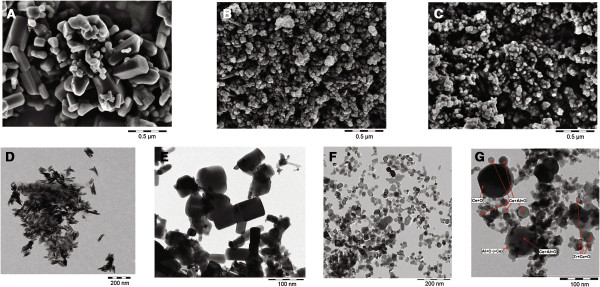
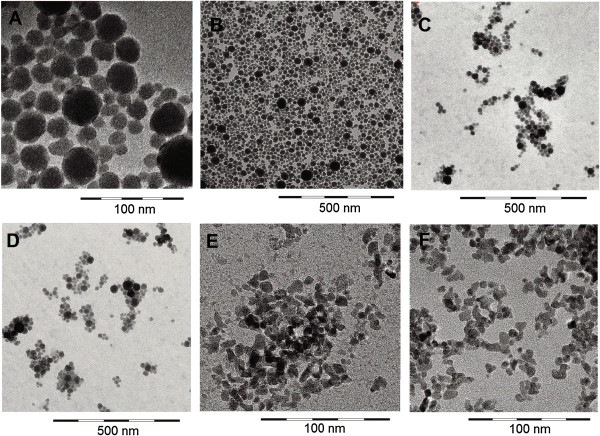
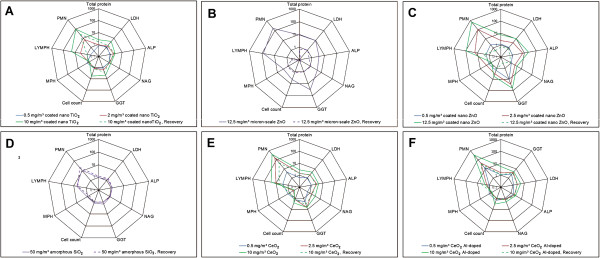
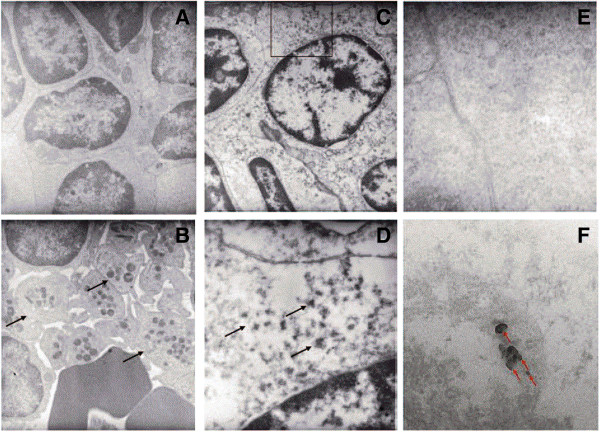
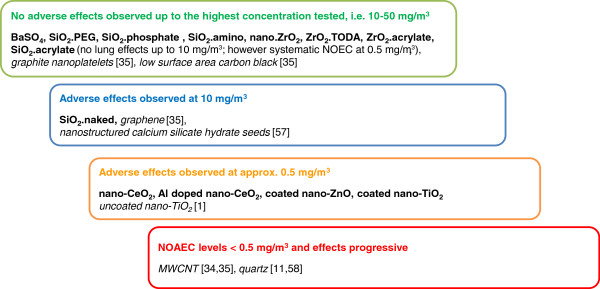
BACKGROUND: A standard short-term inhalation study (STIS) was applied for hazard assessment of 13 metal oxide nanomaterials and micron-scale zinc oxide. METHODS: Rats were exposed to test material aerosols (ranging from 0.5 to 50 mg/m3) for five consecutive days with 14- or 21-day post-exposure observation. Bronchoalveolar lavage fluid (BALF) and histopathological sections of the entire respiratory tract were examined. Pulmonary deposition and clearance and test material translocation into extra-pulmonary organs were assessed. RESULTS: Inhaled nanomaterials were found in the lung, in alveolar macrophages, and in the draining lymph nodes. Polyacrylate-coated silica was also found in the spleen, and both zinc oxides elicited olfactory epithelium necrosis. None of the other nanomaterials was recorded in extra-pulmonary organs. Eight nanomaterials did not elicit pulmonary effects, and their no observed adverse effect concentrations (NOAECs) were at least 10 mg/m3. Five materials (coated nano-TiO2, both ZnO, both CeO2) evoked concentration-dependent transient pulmonary inflammation. Most effects were at least partially reversible during the post-exposure period.Based on the NOAECs that were derived from quantitative parameters, with BALF polymorphonuclear (PMN) neutrophil counts and total protein concentration being most sensitive, or from the severity of histopathological findings, the materials were ranked by increasing toxic potency into 3 grades: lower toxic potency: BaSO4; SiO2.acrylate (by local NOAEC); SiO2.PEG; SiO2.phosphate; SiO2.amino; nano-ZrO2; ZrO2.TODA; ZrO2.acrylate; medium toxic potency: SiO2.naked; higher toxic potency: coated nano-TiO2; nano-CeO2; Al-doped nano-CeO2; micron-scale ZnO; coated nano-ZnO (and SiO2.acrylate by systemic no observed effect concentration (NOEC)). CONCLUSION: The STIS revealed the type of effects of 13 nanomaterials, and micron-scale ZnO, information on their toxic potency, and the location and reversibility of effects. Assessment of lung burden and material translocation provided preliminary biokinetic information. Based upon the study results, the STIS protocol was re-assessed and preliminary suggestions regarding the grouping of nanomaterials for safety assessment were spelled out.
Overview
The claims and statistics of this paper haven’t been checked yet.
Free: it reads the open-access text and checks the first 5 claims that cite a source we can check. Create a free account to check every claim.
Integrity signals
Registry
Cites
Statistics
Figures
Verification
Claims the paper makes
The claims and statistics of this paper haven’t been checked yet.
Free: it reads the open-access text and checks the first 5 claims that cite a source we can check. Create a free account to check every claim.
Claims other papers make about this one
Each is checked against this paper’s own text: does it say what the citing paper says it does?
The source backs part of the claim, not all of it — or backs it for a different population, condition or comparison.
In the citing paper
“Based on the results CeO2 NM-212 and BaSO4 NM-220 were chosen as representative nanomaterials with respectively higher and lower toxicity for further investigation regarding long-term exposure.”
From Effects from a 90-day inhalation toxicity study with cerium oxide and barium sulfate nanoparticles in rats (2017) · cites this paper as [6]
Experimental — accuracy not yet measuredThe source backs part of the claim, not all of it — or backs it for a different population, condition or comparison.
In the citing paper
“Based on short-term exposure to nanoparticles a NOAEC of 50.0 mg/m3 for BaSO4 NM-220 was stated [6].”
From Effects from a 90-day inhalation toxicity study with cerium oxide and barium sulfate nanoparticles in rats (2017) · cites this paper as [6]
Experimental — accuracy not yet measuredThe cited source says what the claim attributes to it.
In the citing paper
“Available in vivo studies on CeO2nanoparticles confirm the induction of inflammation after inhalation [3, 6, 17, 22–26].”
From Effects from a 90-day inhalation toxicity study with cerium oxide and barium sulfate nanoparticles in rats (2017) · cites this paper as [6]
The cited source says what the claim attributes to it.
In the citing paper
“The low toxic potential of BaSO4 is further emphasized by a 5 day inhalation study in which a no-observed adverse effect concentration (NOAEC) of at least 50 mg/m3 has been determined [6].”
From Effects from a 90-day inhalation toxicity study with cerium oxide and barium sulfate nanoparticles in rats (2017) · cites this paper as [6]
The cited source says what the claim attributes to it.
In the citing paper
“In most of the in vivo studies mentioned earlier, histopathological investigations were performed, revealing comparable findings after CeO2 exposure, especially in terms of particle-laden macrophages and lung inflammation [3, 6, 17, 22, 23, 26].”
From Effects from a 90-day inhalation toxicity study with cerium oxide and barium sulfate nanoparticles in rats (2017) · cites this paper as [6]
Self-check
Percentages, sums and reported differences re-computed from the paper’s own numbers.
The self-check needs the paper’s full text.
Citations
Cites
Nonparametric Statistics for the Behavioral Sciences
Guitton, H., & Siegel, S. (1958) · Revue économique · doi:10.2307/3498751 · Cited by 35,245
A Multiple Comparison Procedure for Comparing Several Treatments with a Control
Dunnett, C. W. (1955) · Journal of the American Statistical Association · doi:10.1080/01621459.1955.10501294 · Cited by 6,094 · cited 1×
“Substance-induced effects on body weight were assessed using Dunnett’s test [71,72] by comparing each dose group with the corresponding control group.”
MethodThe Principles of Humane Experimental Technique
(1960) · Medical Journal of Australia · doi:10.5694/j.1326-5377.1960.tb73127.x · Cited by 4,912 · cited 1×
“In this respect, STIS data will contribute to the development and validation of such in vitro methods, thereby directly serving the 3Rs principle to refine, reduce, and, ultimately, replace animal testing as first described by Russell and Burch in 1959 [60] and laid down as legal provision in the European Directive 20…”
MethodCellular and Molecular Immunology
Abbas, A. K., Lichtman, A. H., & Pillai, S. S. (1994) · Cited by 3,584
New Tables for Multiple Comparisons with a Control
Dunnett, C. W. (1964) · Biometrics · doi:10.2307/2528490 · Cited by 3,113 · cited 1×
“Substance-induced effects on body weight were assessed using Dunnett’s test [71,72] by comparing each dose group with the corresponding control group.”
MethodOsteopontin: a protein with diverse functions
Denhardt, D. T., & Guo, X. (1993) · The FASEB Journal · doi:10.1096/fasebj.7.15.8262332 · Cited by 1,078 · cited 1×
“matrix of mineralized tissues, but also as a cytokine in body fluids [43].”
BackgroundSayes, C. M., Reed, K. L., & Warheit, D. B. (2007) · Toxicological Sciences · doi:10.1093/toxsci/kfm018 · Cited by 762 · cited 1×
“in vitro, ZnO nanomaterials have been recorded to be highly toxic to many types of cells with concordant effects observed in vivo upon instillation, to the lung tissue [8].”
BackgroundZhou, J., Xu, N. S., & Wang, Z. L. (2006) · Advanced Materials · doi:10.1002/adma.200600200 · Cited by 739 · cited 1×
“Also zinc oxide is known to be soluble in the body [33].”
BackgroundAdvanced multiplexed analysis with the FlowMetrix system.
Fulton, R. J., McDade, R. L., Smith, P. L., Kienker, L. J., & Kettman, J. R. (1997) · PubMed · Cited by 704
Bermudez, E., Mangum, J. B., Wong, B. A., Asgharian, B., Hext, P. M., Warheit, D. B., & Everitt, J. I. (2004) · Toxicological Sciences · doi:10.1093/toxsci/kfh019 · Cited by 652 · cited 2×
“Nanosized TiO2 has been observed to elicit inflammatory effects [4-6] and morphological changes in the lung [2,7].”
BackgroundResult
Research works printed but not linked: 1
- Siegel S Non-parametric statistics for the behavioural sciences 1956 New York: McGraw–Hill
Cited by
Items 101–168 of 168
Ma‐Hock, L., Farias, P. M. A., Hofmann, T., Andrade, A. C. D. S., Silva, J. M., Arnaud, T. M. S., Wohlleben, W., Strauss, V., Treumann, S., Chaves, C. R., et al. (2013) · Toxicology Letters · doi:10.1016/j.toxlet.2013.11.007 · Cited by 20
Self-citationCreating sets of similar nanoforms with the ECETOC NanoApp: real-life case studies
Janer, G., Seleci, D. A., Sergent, J., Landsiedel, R., & Wohlleben, W. (2021) · Nanotoxicology · doi:10.1080/17435390.2021.1946186 · Cited by 17
“Barium sulfate NF1 was evaluated in the short-term inhalation study (STIS) protocol (Landsiedel et al. 2014; Klein et al. 2012), whereas Barium sulfate NF2 was used in 4-week, 13-week (Konduru et al. 2014; Schwotzer et al. 2017), and 2-year repeated dose toxicity studies (Tentschert et al. 2020).”
BackgroundMethodSelf-citationComparative modeling of exposure to airborne nanoparticles released by consumer spray products
Riebeling, C., Luch, A., & Götz, M. E. (2015) · Nanotoxicology · doi:10.3109/17435390.2015.1071446 · Cited by 17
“As the high dose of 1 108 particles/cm3 agglomerates with a broad size distribution were assumed (Table 5), the parameters were similar to high-dose exposures in in vivo inhalation experiments (Landsiedel et al., 2010, 2014).”
BackgroundMethodInfluentialConcern-driven integrated approaches for the grouping, testing and assessment of nanomaterials
Landsiedel, R. (2015) · Environmental Pollution · doi:10.1016/j.envpol.2015.10.060 · Cited by 17
Self-citationZhao, J., Zhang, P., He, Z., Min, Q., Abdel-Halim, E. S., & Zhu, J. (2016) · Chemical Communications · doi:10.1039/c6cc01162d · Cited by 18
Brandão, F., Costa, C., Bessa, M. J., Dumortier, E., Debacq‐Chainiaux, F., Hubaux, R., Salmon, M., Laloy, J., Stan, M. S., Hermenean, A. O., et al. (2021) · Nanomaterials · doi:10.3390/nano11061502 · Cited by 16
“In summary, the obtained insights are important for unravelling aSiO 2 NM toxicity mechanisms and future studies should be carried out for clarifying in vivo dose–response relationship for aSiO 2 NM.”
Erdely, A., Dahm, M. M., Schubauer‐Berigan, M. K., Chen, B. T., Antonini, J. M., & Hoover, M. D. (2016) · Journal of Aerosol Science · doi:10.1016/j.jaerosci.2016.03.005 · Cited by 16
“for using short term inhalation studies (5 day) as an early tier screen for nanomaterial potency (Landsiedel et al., 2014).”
MethodA Review of Toxicity Studies of Zirconium and Its Derivatives
Shirani, M., Azadnasab, R., Baradaran, M., & Shariati, S. (2023) · Jundishapur Journal of Natural Pharmaceutical Products · doi:10.5812/jjnpp-137464 · Cited by 14
“There were no histopathological changes in the respiratory tract, and the rate of cell proliferation and apoptotic reactions in lung cells were not significantly different from the control groups (49).”
Zhang, Y., Nguyen, K. C., Caldwell, D., Fine, J. H., Lefebvre, D. E., & Tayabali, A. F. (2017) · NanoImpact · doi:10.1016/j.impact.2017.06.003 · Cited by 14
Routes of Exposure to Nanoparticles
Warheit, D. B., & Sayes, C. M. (2015) · Elsevier eBooks · doi:10.1016/b978-0-444-62747-6.00002-6 · Cited by 17
Küstner, M., Eckstein, D., Brauer, D., Mai, P., Hampl, J., Weise, F., Schuhmann, B., Hause, G., Glahn, F., Foth, H., et al. (2024) · Archives of Toxicology · doi:10.1007/s00204-023-03673-3 · Cited by 15
“…et al. 2007; Yu et al. 2013; Zhang et al. 2011) in addition to in vivo inhalation or instillation studies performed with animals, mostly rats (Donaldson et al. 2008; Kim et al. 2011; Klein et al. 2012; Landsiedel et al. 2014a; Molina et al. 2019; Pauluhn 2010; Song et al. 2013; Sung et al. 2009).”
InfluentialSilge, A., Bräutigam, K., Bocklitz, T. W., Rösch, P., Vennemann, A., Schmitz, I., Popp, J., & Wiemann, M. (2015) · The Analyst · doi:10.1039/c5an00942a · Cited by 15
Self-citationSeiffert, S. B., Vennemann, A., Nordhorn, I. D., Kröger, S., Wiemann, M., & Kärst, U. (2022) · Chemical Research in Toxicology · doi:10.1021/acs.chemrestox.1c00433 · Cited by 11
Self-citationKrug, H. F. (2022) · Frontiers in Public Health · doi:10.3389/fpubh.2022.902893 · Cited by 11
Krause, B. C., Kriegel, F. L., Tartz, V., Jungnickel, H., Reichardt, P., Singh, A. V., Laux, P., Shemis, M. A., & Luch, A. (2021) · International Journal of Molecular Sciences · doi:10.3390/ijms22136866 · Cited by 12
“Here, a dose-dependent inflammation of pulmonary tissue could be observed, with effects already emerging at the lowest dose applied [12].”
BackgroundRisk Assessment and Risk Management
Landsiedel, R., Sauer, U. G., & de Jong, W. H. (2017) · Elsevier eBooks · doi:10.1016/b978-0-12-809199-9.00008-2 · Cited by 12
Self-citationA Mechanistic Model for Predicting Lung Inflammogenicity of Oxide Nanoparticles
Burello, E. (2017) · Toxicological Sciences · doi:10.1093/toxsci/kfx136 · Cited by 10
“When information from XPS measurements on the carbon content on the particle’s surface is reported (ie, in the study of Landsiedel et al., 2014), I use this value to adjust the CA of the pristine oxides (Preston et al., 2014).”
InfluentialLaycock, A., Wright, M., Römer, I., Buckley, A. J., & Smith, R. R. (2020) · Atmospheric Environment X · doi:10.1016/j.aeaoa.2020.100079 · Cited by 9
Guo, C., Wright, M., Buckley, A. J., Laycock, A., Berthing, T., Vogel, U. B., Cosnier, F., Gaté, L., Leonard, M. O., & Smith, R. (2025) · Toxics · doi:10.3390/toxics13050401 · Cited by 8
“…to pro-in fl ammatory and fi - brotic responses, chosen for their relevance and sensitivity to the assessment of particle e ff ects in the lung [32], were assessed by measuring their protein concentrations in BALF (Figure 7A) and mRNA concentrations in the lung tissues (Figure 7B) at 3 days…”
InfluentialLehner, R., Zanoni, I., Bannuscher, A., Costa, A. L., & Rothen‐Rutishauser, B. (2022) · Frontiers in Toxicology · doi:10.3389/ftox.2022.918633 · Cited by 9
“We used the already widely investigated NMs belonging to the JRC repository list (Singh et al., 2012; Rasmussen et al., 2013; Landsiedel et al., 2014; Singh et al., 2014; OECD, 2018): zinc oxide (MG1), barium sulfate (MG3), cerium dioxide, titanium dioxide and the control non-nanosized material crystalline silica (DQ1…”
MethodTölle, L., Monsé, C., Rosenkranz, N., Haibel, N., Walter, D., Bünger, J., Hopp, M., & Westphal, G. (2022) · Journal of Materials Science and Chemical Engineering · doi:10.4236/msce.2022.107001 · Cited by 10
Veith, L., Vennemann, A., Breitenstein, D., Engelhard, C., Hagenhoff, B., & Wiemann, M. (2018) · Nanomaterials · doi:10.3390/nano8080571 · Cited by 8
“Of note, the inflammatory effect of colloidal SiO2 can be reduced by surface coating with amino or phosponate residues [5,6].”
BackgroundSelf-citationRisk Assessment of Nanomaterials Toxicity
Hartwig, A., & van Thriel, C. (2023) · Nanomaterials · doi:10.3390/nano13091512 · Cited by 8
Garcia, S., Taghipour, S., Mostrales, D. C. I., Ma, P., Wu, Y., Chen, S., Han, W., & Yeung, K. L. (2025) · Chemosphere · doi:10.1016/j.chemosphere.2025.144100 · Cited by 8
Silge, A., Bocklitz, T. W., Ossig, R., Schnekenburger, J., Rösch, P., & Popp, J. (2016) · Analytical and Bioanalytical Chemistry · doi:10.1007/s00216-016-9710-x · Cited by 8
“In biological environments, considerable differences between specific surface properties of NP with respect to the formation of a biomolecule corona and deposition during inhalation studies are reported [5–7].”
Application of in vitro pulmonary models for hazard screening of silica particles
Ruijter, N., Braakhuis, H., Katsumiti, A., Garriz, I. P., Carrière, M., Zanoni, I., Candalija, A., Marshall, J., Vermeulen, J. P., Cassee, F. R., et al. (2025) · Archives of Toxicology · doi:10.1007/s00204-025-04100-5 · Cited by 6
“Firstly, little information is published about the acute adverse effects of inhalation of silica particles in rodents, as most studies are sub-chronic (90 days) studies as is performed for regulatory purposes and more relevant for human occupational exposures (Landsiedel et al. 2014b).”
Stability and validation of bionanomaterials
Erduran, V., Altuner, E. E., & Şen, F. (2023) · Elsevier eBooks · doi:10.1016/b978-0-323-91195-5.00021-0 · Cited by 6
Dekant, W., Antoniou, E. E., Bosch, A., Bruer, G. G., Colnot, T., Creutzenberg, O., Drexel, C., Duffin, R., Krueger, N., Nolde, J., et al. (2023) · Toxicology Letters · doi:10.1016/j.toxlet.2023.02.002 · Cited by 8
Respiratory toxicity of amorphous silica nanoparticles: a review
Xu, H., Li, Y., Zhao, X., Guo, C., & Li, Y. (2024) · Environmental Chemistry Letters · doi:10.1007/s10311-024-01787-3 · Cited by 6
“This result was far lower than quartz (less than 0.5 mg/m 3 ) but still worth attention [92].”
InfluentialKoltermann-Jülly, J., Ma‐Hock, L., Gröters, S., & Landsiedel, R. (2020) · Toxicologic Pathology · doi:10.1177/0192623319896347 · Cited by 5
“Short-term inhalation studies were performed as described previously.(6,17,18) In brief, Wistar rats were inhalation exposed for 6 hours per day on 5 consecutive days to 100 mg/m(3) TiO2, 25 mg/m(3) CeO2 NM-212, 32 mg/m 3 mwCNT, or 100 mg/m(3) quartz aerosols.”
MethodSelf-citationNo inflammatory effects after acute inhalation of barium sulfate particles in human volunteers
Monsé, C., Westphal, G., Raulf, M., Jettkant, B., van Kampen, V., Kendzia, B., Schürmeyer, L., Seifert, C., Marek, E.-M., Wiegand, F., et al. (2022) · BMC Pulmonary Medicine · doi:10.1186/s12890-022-02021-y · Cited by 6
“Polymorphonuclear neutrophil (PMN) count and total protein concentration are usually the most sensitive, valid parameters that indicate particle toxicity as well in animal experiments (see for example [34]).”
BackgroundMedical Aspects of Nanomaterial Toxicity
Siemianowicz, K., Likus, W., & Markowski, J. (2015) · InTech eBooks · doi:10.5772/60956 · Cited by 5
“Although TiO2 nanoparticles were shown not to penetrate through the skin, the effects of inhalation of these nanoparticles seem to require further studies [11].”
InfluentialWiemann, M., Vennemann, A., Schuster, T., Nolde, J., & Krueger, N. (2022) · Frontiers in Public Health · doi:10.3389/fpubh.2022.902799 · Cited by 5
Self-citationMetal Nanoparticles and Their Toxicity
Pacheco, I., & Buzea, C. (2017) · Wiley eBooks · doi:10.1002/9783527807093.ch10 · Cited by 7
Li, Y., Xu, J., Gao, Z., & Chen, H. (2025) · Advanced Science · doi:10.1002/advs.202511955 · Cited by 5
(2023) · Carpathian Journal of Food Science and Technology · doi:10.34302/crpjfst/2023.15.4.3 · Cited by 4
Inhalation Exposure to Cross-linked Polyacrylic Acid Induces Pulmonary Disorders
Higashi, Y., Nishida, C., Izumi, H., Sato, K., Kawai, N., Tomonaga, T., Morimoto, T., Yamasaki, K., Wang, K.-Y., Higashi, H., et al. (2024) · Toxicology · doi:10.1016/j.tox.2024.154001 · Cited by 6
Oropharyngeal aspirated Ag/TiO2 nanohybrids: Transformation, distribution and toxicity
Huang, X., Li, C., Wei, T., Liu, N., Yao, Y., Wang, Z., Hu, Y., Fang, Q. Z., Guan, S., Xue, Y., et al. (2023) · The Science of The Total Environment · doi:10.1016/j.scitotenv.2023.168309 · Cited by 4
The preparation temperature influences the physicochemical nature and activity of nanoceria
Yokel, R. A., Wohlleben, W., Keller, J. G., Hancock, M. L., Unrine, J. M., Butterfield, D. A., & Grulke, E. A. (2021) · Beilstein Journal of Nanotechnology · doi:10.3762/bjnano.12.43 · Cited by 5
Self-citationGüler, G., & Çelık, A. (2025) · Food and Chemical Toxicology · doi:10.1016/j.fct.2025.115446 · Cited by 2
Johnston, H. J., Gillies, S., Verdon, R., Stone, V., Henry, T. B., Tran, L., Tucker, C. S., Rossi, A. G., & Tyler, C. R. (2023) · F1000Research · doi:10.12688/f1000research.128851.1 · Cited by 6
The Role of In Vivo Screening Studies in Assessing Manufactured Nanomaterials
Landsiedel, R., Gamo, M., & Hirose, A. (2019) · Current topics in environmental health and preventive medicine · doi:10.1007/978-981-13-8433-2_1 · Cited by 3
Self-citationTransgenerational effects and mechanisms of nano-SiO2 on pulmonary
Chu, J., Liu, C., Chen, S., Yang, Y., Zhang, K., Fu, Y., Yuan, B., & Wang, Z. (2025) · Reproductive Toxicology · doi:10.1016/j.reprotox.2025.109003 · Cited by 1
Impacts physiopathologiques des nanoparticules inhalées
Baeza‐Squiban, A. (2014) · Biologie Aujourd hui · doi:10.1051/jbio/2014019 · Cited by 1
Nanomaterials for Toxicity Constraints and Risk Assessment
Jain, A. K., Chauhan, D., Gupta, N. R., Singh, R. P., Singh, A. K., & Singh, V. K. (2023) · Springer eBooks · doi:10.1007/978-981-99-1635-1_3 · Cited by 1
Membrane effects of zinc oxide nanorods and nanoparticles in human lymphocytes
Harmaza, Y. M., Tamashevski, A. V., & Slobozhanina, E. I. (2019) · Doklady of the National Academy of Sciences of Belarus · doi:10.29235/1561-8323-2019-63-1-72-78 · Cited by 1
Wiench, K., & Ma‐Hock, L. (2019) · Current topics in environmental health and preventive medicine · doi:10.1007/978-981-13-8433-2_2 · Cited by 1
Self-citationCorrelations between oxidative stress and aligning nanoparticle safety assessments
Madkour, L. H. (2020) · Elsevier eBooks · doi:10.1016/b978-0-12-822481-6.00022-0 · Cited by 1
Cox, A. J., Chandra, P., & Sharma, N. C. (2021) · Nanotechnology in the life sciences · doi:10.1007/978-3-030-65792-5_1 · Cited by 1
Metal Nanoparticles and Their Toxicity
Pacheco, I., & Buzea, C. (2017) · Wiley eBooks · doi:10.1002/9783527807093.ch9 · Cited by 2
Prüfung der Sicherheit von Nanomaterialien: GT-Toxicology Award der Gesellschaft für Toxikologie
Landsiedel, R. (2016) · BIOspektrum · doi:10.1007/s12268-016-0722-z
“Eine wichtige Erkenntnis daraus ist, dass vorrangig nicht die Größe eines Partikels, sondern dessen Materialeigenschaften die Toxizität bestimmen [5, 6].”
BackgroundSelf-citationIn vitro assays for hazard identification of nanoparticles
Kloet, S. K. (2016) · doi:10.18174/390912
Titandioxid (alveolengängige Fraktion) [MAK Value Documentation in German language, 2019]
Hartwig, A., & MAK Commission (2019) · The MAK-Collection for Occupational Health and Safety · doi:10.1002/3527600418.mb1346367d0067
Madkour, L. H. (2020) · Nanomedicine and nanotoxicology · doi:10.1007/978-3-030-37297-2_11
Research Progress on Vivo Distribution and Safety of Nano-Sized Zinc Oxide
段, 罗. (2020) · Advances in Analytical Chemistry · doi:10.12677/aac.2020.104016
Dekkers, S. (2021) · Utrecht University Repository (Utrecht University) · doi:10.33540/448
Sharma, A., & Singh, A. (2021) · Nanotechnology in the life sciences · doi:10.1007/978-3-030-65792-5_12
Stage of lung cancer and toxic content determination in the lung walls using X-Ray image
Kumaraguru, S., Deepa, A., Kumaar, K. M. A., & Bhuvaneswari, M. (2021) · Journal of Physics Conference Series · doi:10.1088/1742-6596/1937/1/012043
The kinetic laws of anodic oxidation of indium arsenide
Gurtov, V. A., Gurtova, T. V., & Zolotov, M. V. (1985) · OSTI OAI (U.S. Department of Energy Office of Scientific and Technical Information)
Inhaled nanomaterials: dose metrics for risk assessment
Braakhuis, H. (2016) · Research Publications (Maastricht University) · doi:10.26481/dis.20160127hb
Zirkoniumdioxid (alveolengängige Fraktion) [MAK value documentation in German language, 2019]
Hartwig, A., & MAK Commission (2019) · The MAK-Collection for Occupational Health and Safety · doi:10.1002/3527600418.mb131423d0067
Novel In vitro and In vivo Methods in Nano Toxicological Assessments
Vazifedust, M., & Mandegary, A. (2023) · BENTHAM SCIENCE PUBLISHERS eBooks · doi:10.2174/9789815079692123010013
Soliman, Y. M., Mabrouk, M., Raboh, A. S. A., Ereiba, K. T., & Beherei, H. H. (2023) · Research Square · doi:10.21203/rs.3.rs-3146890/v1
Hoet, P. (2018) · Digital Access to Libraries (Université catholique de Louvain (UCL), l'Université de Namur (UNamur) and the Université Saint-Louis (USL-B)) · doi:10.1016/s1877-7856(18)86303-6
HIROSE, T., Nakazawa, H., Hattori, T., Ishigaki, Y., & Umetsu, M. (2025) · Langmuir · doi:10.1021/acs.langmuir.4c03545
Monsé, C., Westphal, G., Raulf, M., Jettkant, B., van Kampen, V., Kendzia, B., Schürmeyer, L., Seifert, C., Marek, E.-M., Wiegand, F., et al. (2022) · Figshare · doi:10.6084/m9.figshare.20086061
Thá, E. L., Vennemann, A., Marani, V., Gräb, O., Verlohner, A., Ma‐Hock, L., Spyridonov, I. M., Weber, P., Chary, A., Serchi, T., et al. (2026) · Frontiers in Toxicology · doi:10.3389/ftox.2026.1844090
“For example, the low reactivity of BaSO 4 makes it a borderline case, consistent with earlier in vivo inhalation studies in rats (Konduru et al., 2014; Landsiedel et al., 2014).”
Self-citationLoncarevic, I., Mutlu, S. M., Fortunatus, R. M., Jung, N., Larios, J., Balog, S., Dzepic, M., Petri‐Fink, A., Blank, F., & Rothen‐Rutishauser, B. (2026) · Journal of Hazardous Materials · doi:10.1016/j.jhazmat.2026.143515
Metadata
- Authors
- Landsiedel, R., Ma-Hock, L., Hofmann, T., Wiemann, M., Strauss, V., Treumann, S., Wohlleben, W., Gröters, S., Wiench, K., & van Ravenzwaay, B.
- Affiliations
- BASF (Germany) (DE)
- University of Münster (DE)
- Corresponding author
- Landsiedel, Robert
- ORCID
- Venue
- Particle and Fibre Toxicology
- Published
- 2014
- Volume
- 11
- Issue
- 1
- Pages
- 16
- ISSN
- 1743-8977 (ISSN-L)
- PMC
- PMC4113196
- OpenAlex
- W2153584068
- Cited by
- 169
- References
- 73
- Citations by year
- 2026: 2 · 2025: 8 · 2024: 6 · 2023: 13 · 2022: 9 · 2021: 12 · 2020: 20 · 2019: 13 · 2018: 14 · 2017: 22 · 2016: 20 · 2015: 16 · 2014: 12
- FWCI
- 10.58
- Type
- journal article
- Language
- en
- Open access
- gold
- doi.org
- Licence
- cc-by
- Locations
- Particle and Fibre Toxicology (publishedVersion, cc-by)
- Europe PMC (PubMed Central) (publishedVersion, cc-by)
- PubMed Central (publishedVersion, cc-by)
- PubMed (publishedVersion)
- Funders
- Bundesministerium für Bildung und Forschung (03X0105M, 03X0021C)
- Topics
- Physical Sciences › Materials Science › Materials Chemistry › Nanoparticles: synthesis and applications
- Life Sciences › Immunology and Microbiology › Immunology › Immunotoxicology and immune responses
- Health Sciences › Medicine › Pulmonary and Respiratory Medicine › Occupational and environmental lung diseases
- Keywords
- inhalation toxicity, nanomaterials, metal oxide nanoparticles, zinc oxide, silica nanoparticles, titanium dioxide nanoparticles, cerium oxide nanoparticles, zirconia nanoparticles, lung inflammation, alveolar macrophages, lung deposition, biokinetics, NOAEC, hazard assessment
- MeSH terms
- Administration, Inhalation, Aerosols, Animals, Barium Sulfate, Body Burden, Bronchoalveolar Lavage Fluid, Cerium, Lung, Male, Microscopy, Electron, Scanning, Oxides, Silicon Dioxide, Titanium, Zinc Oxide, Zirconium, Weight Gain, Rats, Wistar, Apoptosis, Coated Materials, Biocompatible, Cell Proliferation, Nanostructures, Rats
About these checks
Registry, retraction, Cites and statistics results are computed, not judged, with one exception: a printed reference that no index lists is read once by a model before it counts as a citation error. Claims are extracted by a model and kept only when their quote appears verbatim in the text; each cited source is then checked, with a model’s help, for whether it says what the claim relies on. Those verdicts can be wrong — read the claim’s quote and the cited source before relying on one.
Statistics and arithmetic are recomputed, not judged.
Confidence bands are shown only for fields calibrated on our annotated test set. None is calibrated yet, so no band is shown.
What counts as a claim ›How we measure confidence ›How we check this ›
Are you an author, or do you see a problem with this page? Request a review
Data sources
Bibliographic data: Semantic Scholar, OpenAlex, Crossref.
Contains information from the Semantic Scholar Academic Graph Datasets, made available under the ODC Attribution License (ODC-BY 1.0).
Semantic Scholar’s data is described in: Kinney, R., et al. (2023). The Semantic Scholar Open Data Platform. arXiv:2301.10140.
