

Application of short-term inhalation studies to assess the inhalation toxicity of nanomaterials
Open accessThe DOI matches its Crossref record; 72 of the 73 references it cites were found in a registry or an index.
Abstract
BACKGROUND: A standard short-term inhalation study (STIS) was applied for hazard assessment of 13 metal oxide nanomaterials and micron-scale zinc oxide. METHODS: Rats were exposed to test material aerosols (ranging from 0.5 to 50 mg/m3) for five consecutive days with 14- or 21-day post-exposure observation. Bronchoalveolar lavage fluid (BALF) and histopathological sections of the entire respiratory tract were examined. Pulmonary deposition and clearance and test material translocation into extra-pulmonary organs were assessed. RESULTS: Inhaled nanomaterials were found in the lung, in alveolar macrophages, and in the draining lymph nodes. Polyacrylate-coated silica was also found in the spleen, and both zinc oxides elicited olfactory epithelium necrosis. None of the other nanomaterials was recorded in extra-pulmonary organs. Eight nanomaterials did not elicit pulmonary effects, and their no observed adverse effect concentrations (NOAECs) were at least 10 mg/m3. Five materials (coated nano-TiO2, both ZnO, both CeO2) evoked concentration-dependent transient pulmonary inflammation. Most effects were at least partially reversible during the post-exposure period.Based on the NOAECs that were derived from quantitative parameters, with BALF polymorphonuclear (PMN) neutrophil counts and total protein concentration being most sensitive, or from the severity of histopathological findings, the materials were ranked by increasing toxic potency into 3 grades: lower toxic potency: BaSO4; SiO2.acrylate (by local NOAEC); SiO2.PEG; SiO2.phosphate; SiO2.amino; nano-ZrO2; ZrO2.TODA; ZrO2.acrylate; medium toxic potency: SiO2.naked; higher toxic potency: coated nano-TiO2; nano-CeO2; Al-doped nano-CeO2; micron-scale ZnO; coated nano-ZnO (and SiO2.acrylate by systemic no observed effect concentration (NOEC)). CONCLUSION: The STIS revealed the type of effects of 13 nanomaterials, and micron-scale ZnO, information on their toxic potency, and the location and reversibility of effects. Assessment of lung burden and material translocation provided preliminary biokinetic information. Based upon the study results, the STIS protocol was re-assessed and preliminary suggestions regarding the grouping of nanomaterials for safety assessment were spelled out.
Overview
The claims and statistics of this paper haven’t been checked yet.
Free: it reads the open-access text and checks the first 5 claims that cite a source we can check. Create a free account to check every claim.
Integrity signals
Registry
Cites
Statistics
Figures
Verification
Claims the paper makes
The claims and statistics of this paper haven’t been checked yet.
Free: it reads the open-access text and checks the first 5 claims that cite a source we can check. Create a free account to check every claim.
Claims other papers make about this one
Each is checked against this paper’s own text: does it say what the citing paper says it does?
The source backs part of the claim, not all of it — or backs it for a different population, condition or comparison.
In the citing paper
“Based on the results CeO2 NM-212 and BaSO4 NM-220 were chosen as representative nanomaterials with respectively higher and lower toxicity for further investigation regarding long-term exposure.”
From Effects from a 90-day inhalation toxicity study with cerium oxide and barium sulfate nanoparticles in rats (2017) · cites this paper as [6]
Experimental — accuracy not yet measuredThe source backs part of the claim, not all of it — or backs it for a different population, condition or comparison.
In the citing paper
“Based on short-term exposure to nanoparticles a NOAEC of 50.0 mg/m3 for BaSO4 NM-220 was stated [6].”
From Effects from a 90-day inhalation toxicity study with cerium oxide and barium sulfate nanoparticles in rats (2017) · cites this paper as [6]
Experimental — accuracy not yet measuredThe cited source says what the claim attributes to it.
In the citing paper
“Available in vivo studies on CeO2nanoparticles confirm the induction of inflammation after inhalation [3, 6, 17, 22–26].”
From Effects from a 90-day inhalation toxicity study with cerium oxide and barium sulfate nanoparticles in rats (2017) · cites this paper as [6]
The cited source says what the claim attributes to it.
In the citing paper
“The low toxic potential of BaSO4 is further emphasized by a 5 day inhalation study in which a no-observed adverse effect concentration (NOAEC) of at least 50 mg/m3 has been determined [6].”
From Effects from a 90-day inhalation toxicity study with cerium oxide and barium sulfate nanoparticles in rats (2017) · cites this paper as [6]
The cited source says what the claim attributes to it.
In the citing paper
“In most of the in vivo studies mentioned earlier, histopathological investigations were performed, revealing comparable findings after CeO2 exposure, especially in terms of particle-laden macrophages and lung inflammation [3, 6, 17, 22, 23, 26].”
From Effects from a 90-day inhalation toxicity study with cerium oxide and barium sulfate nanoparticles in rats (2017) · cites this paper as [6]
Self-check
Percentages, sums and reported differences re-computed from the paper’s own numbers.
The self-check needs the paper’s full text.
Citations
Cites
Nonparametric Statistics for the Behavioral Sciences
Guitton, H., & Siegel, S. (1958) · Revue économique · doi:10.2307/3498751 · Cited by 35,245
A Multiple Comparison Procedure for Comparing Several Treatments with a Control
Dunnett, C. W. (1955) · Journal of the American Statistical Association · doi:10.1080/01621459.1955.10501294 · Cited by 6,094 · cited 1×
“Substance-induced effects on body weight were assessed using Dunnett’s test [71,72] by comparing each dose group with the corresponding control group.”
MethodThe Principles of Humane Experimental Technique
(1960) · Medical Journal of Australia · doi:10.5694/j.1326-5377.1960.tb73127.x · Cited by 4,912 · cited 1×
“In this respect, STIS data will contribute to the development and validation of such in vitro methods, thereby directly serving the 3Rs principle to refine, reduce, and, ultimately, replace animal testing as first described by Russell and Burch in 1959 [60] and laid down as legal provision in the European Directive 20…”
MethodCellular and Molecular Immunology
Abbas, A. K., Lichtman, A. H., & Pillai, S. S. (1994) · Cited by 3,584
New Tables for Multiple Comparisons with a Control
Dunnett, C. W. (1964) · Biometrics · doi:10.2307/2528490 · Cited by 3,113 · cited 1×
“Substance-induced effects on body weight were assessed using Dunnett’s test [71,72] by comparing each dose group with the corresponding control group.”
MethodOsteopontin: a protein with diverse functions
Denhardt, D. T., & Guo, X. (1993) · The FASEB Journal · doi:10.1096/fasebj.7.15.8262332 · Cited by 1,078 · cited 1×
“matrix of mineralized tissues, but also as a cytokine in body fluids [43].”
BackgroundSayes, C. M., Reed, K. L., & Warheit, D. B. (2007) · Toxicological Sciences · doi:10.1093/toxsci/kfm018 · Cited by 762 · cited 1×
“in vitro, ZnO nanomaterials have been recorded to be highly toxic to many types of cells with concordant effects observed in vivo upon instillation, to the lung tissue [8].”
BackgroundZhou, J., Xu, N. S., & Wang, Z. L. (2006) · Advanced Materials · doi:10.1002/adma.200600200 · Cited by 739 · cited 1×
“Also zinc oxide is known to be soluble in the body [33].”
BackgroundAdvanced multiplexed analysis with the FlowMetrix system.
Fulton, R. J., McDade, R. L., Smith, P. L., Kienker, L. J., & Kettman, J. R. (1997) · PubMed · Cited by 704
Bermudez, E., Mangum, J. B., Wong, B. A., Asgharian, B., Hext, P. M., Warheit, D. B., & Everitt, J. I. (2004) · Toxicological Sciences · doi:10.1093/toxsci/kfh019 · Cited by 652 · cited 2×
“Nanosized TiO2 has been observed to elicit inflammatory effects [4-6] and morphological changes in the lung [2,7].”
BackgroundResultMultiplex bead array assays: Performance evaluation and comparison of sensitivity to ELISA☆
ELSHAL, M., & MCCOY, J. (2006) · Methods · doi:10.1016/j.ymeth.2005.11.010 · Cited by 568 · cited 1×
“, Austin, TX, USA) as described previously [32,64-67].”
The Pulmonary Toxicology of Ultrafine Particles
Donaldson, K., Brown, D., Clouter, A., Duffin, R., MacNee, W., Renwick, L., Tran, L., & Stone, V. (2002) · Journal of Aerosol Medicine · doi:10.1089/089426802320282338 · Cited by 557 · cited 1×
“Nanosized TiO2 has been observed to elicit inflammatory effects [4-6] and morphological changes in the lung [2,7].”
BackgroundA Multiple-Path Model of Particle Deposition in the Rat Lung
Anjilvel, S. (1995) · Fundamental and Applied Toxicology · doi:10.1006/faat.1995.1144 · Cited by 498 · cited 2×
“11) [30,31].”
Monteiller, C., Tran, L., MacNee, W., Faux, S., Jones, A., Miller, B., & Donaldson, K. (2007) · Occupational and Environmental Medicine · doi:10.1136/oem.2005.024802 · Cited by 474 · cited 1×
“Nanosized TiO2 has been observed to elicit inflammatory effects [4-6] and morphological changes in the lung [2,7].”
BackgroundInhalation Toxicity of Multiwall Carbon Nanotubes in Rats Exposed for 3 Months
Ma-Hock, L., Treumann, S., Strauss, V., Brill, S., Luizi, F., Mertler, M., Wiench, K., Gamer, A. O., van Ravenzwaay, B., & Landsiedel, R. (2009) · Toxicological Sciences · doi:10.1093/toxsci/kfp146 · Cited by 448 · cited 4×
“For MWCNTs, however, a NOAEC at or below 0.1 mg/m3 was calculated in a STIS, and this very low value was subsequently confirmed in two unrelated subchronic inhalation studies [35,56].”
BackgroundInfluentialSelf-citationC. L. Tran, D. B. (2000) · Inhalation Toxicology · doi:10.1080/08958370050166796 · Cited by 436 · cited 1×
“Upon inhalation, micron-scale BaSO4 only induces very slight transient inflammatory reactions [13], and it has been used for a long time as a radio-contrast agent for medical diagnostic purposes.”
BackgroundPauluhn, J. (2010) · Toxicological Sciences · doi:10.1093/toxsci/kfp247 · Cited by 358 · cited 1×
“was calculated in a STIS, and this very low value was subsequently confirmed in two unrelated subchronic inhalation studies [35,56].”
ResultHealth hazards due to the inhalation of amorphous silica
Merget, R., Bauer, T., Küpper, H., Philippou, S., Bauer, H., Breitstadt, R., & Bruening, T. (2002) · Archives of Toxicology · doi:10.1007/s002040100266 · Cited by 334
Revised guides for organ sampling and trimming in rats and mice – Part 2
Kittel, B., Ruehl-Fehlert, C., Morawietz, G., Klapwijk, J., Elwell, M. R., Lenz, B., O'Sullivan, M. G., Roth, D. R., & Wadsworth, P. F. (2004) · Experimental and Toxicologic Pathology · doi:10.1078/0940-2993-00349 · Cited by 332 · cited 1×
“[68-70].”
Cho, W.-S., Duffin, R., Poland, C. A., Howie, S. E. M., MacNee, W., Bradley, M., Megson, I. L., & Donaldson, K. (2010) · Environmental Health Perspectives · doi:10.1289/ehp.1002201 · Cited by 324 · cited 2×
“Even though the corresponding histological examinations revealed no signs of beginning granulomatous changes or fibrosis, Cho and co-workers [9] recorded the development of granulomas and deposition of fibrotic tissue, respectively, upon instillation of CeO2 or ZnO nanoparticles.”
BackgroundTNF- alpha mediates recruitment of neutrophils and eosinophils during airway inflammation.
Lukacs, N. W., Strieter, R. M., Chensue, S. W., Widmer, M., & Kunkel, S. L. (1995) · The Journal of Immunology · doi:10.4049/jimmunol.154.10.5411 · Cited by 292
Revised guides for organ sampling and trimming in rats and mice – Part 1
Ruehl-Fehlert, C., Kittel, B., Morawietz, G., Deslex, P., Keenan, C., Mahrt, C. R., Nolte, T., Robinson, M., Stuart, B. P., & Deschl, U. (2003) · Experimental and Toxicologic Pathology · doi:10.1078/0940-2993-00311 · Cited by 291
Bermudez, E. (2002) · Toxicological Sciences · doi:10.1093/toxsci/70.1.86 · Cited by 284
(1999) · PubMed · Cited by 277
Skogstrand, K., Thorsen, P., Nørgaard-Pedersen, B., Schendel, D. E., Sørensen, L. C., & Hougaard, D. M. (2005) · Clinical Chemistry · doi:10.1373/clinchem.2005.052241 · Cited by 262 · cited 1×
“, Austin, TX, USA) as described previously [32,64-67].”
Driscoll, K. E., Carter, J. M., Howard, B. W., Hassenbein, D. G., Pepelko, W., Baggs, R. B., & Oberdörster, G. (1996) · Toxicology and Applied Pharmacology · doi:10.1006/taap.1996.0045 · Cited by 225 · cited 1×
“By autocrine and/or paracrine pathways, they can stimulate release of further chemokines from other macrophages or epithelial cells [48-50].”
BackgroundLeonardi, G. S., Houthuijs, D., Steerenberg, P. A., Fletcher, T., Armstrong, B., Antova, T., Lochman, I., Lochmanová, A., Rudnai, P., Erdei, E., et al. (2000) · Inhalation Toxicology · doi:10.1080/08958370050164833 · Cited by 224
Olin, S. S. (2000) · Inhalation Toxicology · doi:10.1080/08958370050029725 · Cited by 222
Revised guides for organ sampling and trimming in rats and mice – Part 3
Morawietz, G., Ruehl-Fehlert, C., Kittel, B., Bube, A., Keane, K., Halm, S., Heuser, A., & Hellmann, J. (2004) · Experimental and Toxicologic Pathology · doi:10.1078/0940-2993-00350 · Cited by 219
Acute inhalation toxicity of cerium oxide nanoparticles in rats
Srinivas, A., Rao, P. J., Selvam, G., Murthy, P. B., & Reddy, P. N. (2011) · Toxicology Letters · doi:10.1016/j.toxlet.2011.05.1027 · Cited by 211 · cited 1×
“The oxidative and lung toxicity potential of nano-CeO2 has recently been demonstrated in a first acute inhalation study [15] in which 641 mg/m(3) were applied to rats for 4 h in accordance with OECD test guideline (TG) 403.”
MethodMa-Hock, L., Strauss, V., Treumann, S., Küttler, K., Wohlleben, W., Hofmann, T., Gröters, S., Wiench, K., van Ravenzwaay, B., & Landsiedel, R. (2013) · Particle and Fibre Toxicology · doi:10.1186/1743-8977-10-23 · Cited by 202 · cited 8×
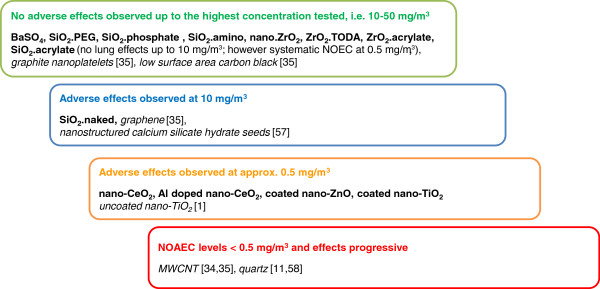
“MWCNT quartz (no lung effects up to 10 mg/m3; however systema [35],”
BackgroundResultInfluentialSelf-citationMa-Hock, L., Burkhardt, S., Strauss, V., Gamer, A. O., Wiench, K., van Ravenzwaay, B., & Landsiedel, R. (2009) · Inhalation Toxicology · doi:10.1080/08958370802361057 · Cited by 197 · cited 22×
“Specifically, 4 mediators, i.e. MCP-1, CINC/IL8, M-CSF and OPN, were selected as being most meaningful for the detection of substance-induced pulmonary reactions in the BALF.”
BackgroundMethodResultInfluentialSelf-citationJohnston, C. J. (2000) · Toxicological Sciences · doi:10.1093/toxsci/56.2.405 · Cited by 195 · cited 2×
“corresponding reference is provided [1,11,35,57,58].”
BackgroundMa, J. Y., Zhao, H., Mercer, R. R., Barger, M., Rao, M., Meighan, T., Schwegler-Berry, D., Castranova, V., & Ma, J. K. (2011) · Nanotoxicology · doi:10.3109/17435390.2010.519835 · Cited by 179 · cited 2×
“These results stand in line with the outcome of a previous study investigating CeO2 effects upon intratracheal instillation of [16], showing that already bolus doses as low as 0.”
Resultvan Ravenzwaay, B., Landsiedel, R., Fabian, E. J., Burkhardt, S., Strauss, V., & Ma‐Hock, L. (2008) · Toxicology Letters · doi:10.1016/j.toxlet.2008.11.020 · Cited by 173
Self-citationArts, J. H. E., Muijser, H., Duistermaat, E., Junker, K., & Kuper, C. F. (2007) · Food and Chemical Toxicology · doi:10.1016/j.fct.2007.04.001 · Cited by 159 · cited 3×
“For all three amorphous silica, effects were observed at concentrations that were significantly lower than those from previously published studies investigating comparable substances or from the STIS performed within the present study: While only mild effects were observed in the BALF after exposure to 10 or 50 mg/m(3…”
BackgroundResultOomen, A. G., Bos, P. M. J., Fernandes, T. F., Hund‐Rinke, K., Boraschi, D., Byrne, H. J., Aschberger, K., Gottardo, S., von der Kammer, F., Kühnel, D., et al. (2013) · Nanotoxicology · doi:10.3109/17435390.2013.802387 · Cited by 158 · cited 2×
“the first tier requiring testing, upon collection of all available information in Tier 1 [55].”
BackgroundSelf-citationDavis, K. A., Abrams, B., Iyer, S. B., Hoffman, R. A., & Bishop, J. E. (1998) · Cytometry · doi:10.1002/(sici)1097-0320(19981001)33:2<234::aid-cyto19>3.0.co;2-v · Cited by 151
Donaldson, K., Borm, P. J. A., Oberdorster, G., Pinkerton, K. E., Stone, V., & Tran, C. L. (2008) · Inhalation Toxicology · doi:10.1080/08958370701758742 · Cited by 142 · cited 3×
“CINC-1, the rat homologue to IL-8, is a pro-inflammatory C-X-C chemokine that exhibits neutrophil chemotactic activity [40].”
BackgroundMethodMaus, U., Herold, S., Muth, H., Maus, R., Ermert, L., Ermert, M., Weissmann, N., Rosseau, S., Seeger, W., Grimminger, F., et al. (2001) · American Journal of Physiology-Lung Cellular and Molecular Physiology · doi:10.1152/ajplung.2001.280.1.l58 · Cited by 138 · cited 1×
“that strongly attracts blood monocytes and lymphocytes to the alveolar compartment [39].”
BackgroundClassification and properties of 64 multiplexed microsphere sets.
Kettman, J. R., Davies, T., Chandler, D. J., Oliver, K. G., & Fulton, R. J. (1998) · PubMed · Cited by 132
TNFα and increased chemokine expression in rat lung after particle exposure
Driscoll, K. E., Hassenbein, D. G., Carter, J. M., Kunkel, S. L., Quinlan, T. R., & Mossman, B. T. (1995) · Toxicology Letters · doi:10.1016/0378-4274(95)03578-8 · Cited by 120
Development of risk-based nanomaterial groups for occupational exposure control
Kuempel, E. D., Castranova, V., Geraci, C. L., & Schulte, P. A. (2012) · Journal of Nanoparticle Research · doi:10.1007/s11051-012-1029-8 · Cited by 117 · cited 2×
“It is increasingly being recognized that it is not possible to relate biological effects elicited by nanomaterials to one single material property and that other forms of grouping might be more relevant in predicting nanomaterial effects [55,59].”
BackgroundMethodIshii, H., Fujii, T., Hogg, J. C., Hayashi, S., Mukae, H., Vincent, R., & van Eeden, S. F. (2004) · American Journal of Physiology-Lung Cellular and Molecular Physiology · doi:10.1152/ajplung.00290.2003 · Cited by 110 · cited 2×
“By autocrine and/or paracrine pathways, they can stimulate release of further chemokines from other macrophages or epithelial cells [48-50].”
BackgroundCELLULAR AND MOLECULAR IMMUNOLOGY - ABBAS,AK, LICHTMAN,AH, POBER,JS
Brodsky, F. M. (1991) · Cited by 106
Abnormal Pulmonary Granuloma Formation in Osteopontin-deficient Mice
O'REGAN, A. W., HAYDEN, J. M., BODY, S., LIAW, L., MULLIGAN, N., GOETSCHKES, M., & BERMAN, J. S. (2001) · American Journal of Respiratory and Critical Care Medicine · doi:10.1164/ajrccm.164.12.2104139 · Cited by 88
Jw, M., Aj, G., Ce, S., Pf, B., & Roggli, V. L. (1995) · PubMed · Cited by 87
Carcinogenicity study with nineteen granular dusts in rats
Pott, F. (2005) · European journal of oncology · Cited by 83
Hazard identification of inhaled nanomaterials: making use of short-term inhalation studies
Klein, C. L., Wiench, K., Wiemann, M., Ma‐Hock, L., van Ravenzwaay, B., & Landsiedel, R. (2012) · Archives of Toxicology · doi:10.1007/s00204-012-0834-2 · Cited by 81 · cited 3×
“Furthermore, the STIS were able to reveal the progression or regression of adverse effects, to indicate translocation of materials to extra-pulmonary organs and to provide early indications of effects that only develop over time and hence only become fully pronounced in longer-term studies [3].”
BackgroundResultInfluentialSelf-citationR. T. Cullen, C. L. T. (2000) · Inhalation Toxicology · doi:10.1080/08958370050166787 · Cited by 81 · cited 1×
“The contents of barium or cerium detected in the liver, as the only extra-pulmonary organ, might be associated with BaSO4 or CeO2 dissolution in the body [26,32].”
BackgroundGeneration and Characterization of Test Atmospheres with Nanomaterials
Ma-Hock, L., Gamer, A. O., Landsiedel, R., Leibold, E., Frechen, T., Sens, B., Linsenbuehler, M., & van Ravenzwaay, B. (2007) · Inhalation Toxicology · doi:10.1080/08958370701479190 · Cited by 76 · cited 2×
“To reduce electrostatic charging, brushes made of stainless steel were used, and the generator itself and all conducting tubes were grounded [57,62].”
BackgroundMethodSelf-citationSauer, U. G., Vogel, S., Aumann, A., Hess, A., Kolle, S. N., Ma‐Hock, L., Wohlleben, W., Dammann, M., Strauss, V., Treumann, S., et al. (2014) · Toxicology and Applied Pharmacology · doi:10.1016/j.taap.2013.12.017 · Cited by 73 · cited 2×
“CINC-1, the rat homologue to IL-8, was added to this spectrum as a further, 68 cytokine, since it had been recognized as relevant in detecting inflammatory reactions in vitro [24,40].”
BackgroundSelf-citationWarheit, D. B., & Hartsky, M. A. (1993) · Microscopy Research and Technique · doi:10.1002/jemt.1070260509 · Cited by 66 · cited 3×
“The contents of barium or cerium detected in the liver, as the only extra-pulmonary organ, might be associated with BaSO4 or CeO2 dissolution in the body [26,32].”
BackgroundMethodMa‐Hock, L., Brill, S., Wohlleben, W., Farias, P. M. A., Chaves, C. R., Tenório, D. P. L. A., Fontes, A., Santos, B. S., Landsiedel, R., Strauss, V., et al. (2011) · Toxicology Letters · doi:10.1016/j.toxlet.2011.10.011 · Cited by 64
Self-citationOsteopontin inhibits inducible nitric oxide synthase activity in rat vascular tissue
Scott, J. A., Weir, M. L., Wilson, S. M., Xuan, J. W., Chambers, A. F., & McCormack, D. G. (1998) · American Journal of Physiology-Heart and Circulatory Physiology · doi:10.1152/ajpheart.1998.275.6.h2258 · Cited by 55 · cited 1×
“(NO) and down-regulates inducible NO synthase [44].”
Mathematical Modeling to Predict the Responses to Poorly Soluble Particles in Rat Lungs
Tran, C. L., Buchanan, D., Miller, B. G., Jones, A. D., & Donaldson, K. (2000) · Inhalation Toxicology · doi:10.1080/08958378.2000.11463252 · Cited by 52
Neoplastic lung lesions in rat after chronic exposure to crystalline silica.
Muhle, H., Kittel, B., Ernst, H., Möhr, U., & Mermelstein, R. (1995) · PubMed · Cited by 52
Abramson, E. H. (2009) · OSTI OAI (U.S. Department of Energy Office of Scientific and Technical Information) · doi:10.2172/958052 · Cited by 43
Rehn, B., Bruch, J., Zou, T., & Hobusch, G. (1992) · Environmental Health Perspectives · doi:10.1289/ehp.929711 · Cited by 41 · cited 1×
“This may be explained by IL-1α also being synthesized by epithelial and endothelial cells and/or by the observation that approximately 80% of the pulmonary macrophages remain in the lung after the first lavage [53].”
BackgroundMatsunaga, I., Oka, S., Fujiwara, N., & Yano, I. (1996) · The Journal of Biochemistry · doi:10.1093/oxfordjournals.jbchem.a021463 · Cited by 37
Bräu, M. F., Ma‐Hock, L., Hesse, C., Nicoleau, L., Strauss, V., Treumann, S., Wiench, K., Landsiedel, R., & Wohlleben, W. (2012) · Archives of Toxicology · doi:10.1007/s00204-012-0839-x · Cited by 34 · cited 2×
“corresponding reference is provided [1,11,35,57,58].”
MethodSelf-citationTOYA, T., TAKATA, A., OTAKI, N., TAKAYA, M., SERITA, F., YOSHIDA, K., & KOHYAMA, N. (2010) · Industrial Health · doi:10.2486/indhealth.48.3 · Cited by 34 · cited 1×
“The results from this first inhalation study were consistent with previous instillation studies [16,17] and with earlier reports on the occurrence of pneumoconiosis in workers exposed to (micron-scale) CeO2 particles [18,19].”
ResultYakata, M., Sugita, O., SAKAI, T., Uchiyama, K., & Wada, K. (1983) · PubMed · Cited by 26
OSTEOPONTIN EXPRESSION IN PARTICLE-INDUCED LUNG DISEASE
Mangum, J. B., Bermudez, E., Sar, M., & Everitt, J. I. (2004) · Experimental Lung Research · doi:10.1080/01902140490476346 · Cited by 25 · cited 1×
“These and other results strongly suggest that OPN is a useful biomarker for fibro-proliferative lung disease in rodents and humans [47].”
ResultGraf, E. (1993) · Pharmazie in unserer Zeit · doi:10.1002/pauz.19930220313 · Cited by 24
The Role of Osteopontin in the Development of Granulomatous Lesions in Lung
Chiba, S., Rashid, M. M., Okamoto, H., Shiraiwa, H., Kon, S., Maeda, M., Murakami, M., Inobe, M., Kitabatake, A., Chambers, A. F., et al. (2000) · Microbiology and Immunology · doi:10.1111/j.1348-0421.2000.tb02501.x · Cited by 23 · cited 1×
“More specifically, OPN has been described to be involved in pulmonary granuloma formation in rodents [45,46].”
BackgroundValberg, P. A., Bruch, J., & McCunney, R. J. (2009) · Regulatory Toxicology and Pharmacology · doi:10.1016/j.yrtph.2009.02.008 · Cited by 23 · cited 1×
“The results from this first inhalation study were consistent with previous instillation studies [16,17] and with earlier reports on the occurrence of pneumoconiosis in workers exposed to (micron-scale) CeO2 particles [18,19].”
ResultA Study of Lung Function and Chest Radiographs in Men Exposed to Zirconium Compounds
Marcus, R. L., Turner, S. A., & Cherry, N. (1996) · Occupational Medicine · doi:10.1093/occmed/46.2.109 · Cited by 22 · cited 1×
“Similarly, a study following up zirconium compound-exposed workers revealed that even long-lasting exposure of up to 20 years to peak concentrations up to 30 mg/m(3) zirconium neither elicited abnormal chest radiographs, nor did it impair lung function parameters [29].”
BackgroundMa‐Hock, L., Farias, P. M. A., Hofmann, T., Andrade, A. C. D. S., Silva, J. M., Arnaud, T. M. S., Wohlleben, W., Strauss, V., Treumann, S., Chaves, C. R., et al. (2013) · Toxicology Letters · doi:10.1016/j.toxlet.2013.11.007 · Cited by 20 · cited 1×
“this study, four carbon-based nanomaterials [34,35], two cadmium-based quantum dots [36,37], one polyacrylate”
BackgroundSelf-citationEvaluation of an occupational respiratory exposure to a zirconium-containing dust.
Hadjimichael, O. C., & Brubaker, R. E. (1981) · PubMed · Cited by 19
Ma‐Hock, L., Landsiedel, R., Wiench, K., Geiger, D., Strauss, V., Gröters, S., van Ravenzwaay, B., Gerst, M., Wohlleben, W., & Scherer, G. (2012) · International Journal of Toxicology · doi:10.1177/1091581811424778 · Cited by 14 · cited 1×
“[38], and one pigment [Ma-Hock and co-workers, un-”
BackgroundSelf-citationRole of the alveolar macrophage in lung injury: studies with ultrafine particles.
Oberdörster, G., Ferin, J., Gelein, R., Soderholm, S. C., & Finkelstein, J. (1992) · Environmental Health Perspectives · doi:10.1289/ehp.97-1519541 · Cited by 12 · cited 1×
“Nanosized TiO2 has been observed to elicit inflammatory effects [4-6] and morphological changes in the lung [2,7].”
Background
Research works printed but not linked: 1
- Siegel S Non-parametric statistics for the behavioural sciences 1956 New York: McGraw–Hill
Cited by
Upadhyay, S., & Palmberg, L. (2018) · Toxicological Sciences · doi:10.1093/toxsci/kfy053 · Cited by 292
Safety of titanium dioxide nanoparticles in cosmetics
Dréno, B., Alexis, A., Chuberre, B., & Marinovich, M. (2019) · Journal of the European Academy of Dermatology and Venereology · doi:10.1111/jdv.15943 · Cited by 279
A decision-making framework for the grouping and testing of nanomaterials (DF4nanoGrouping)
Arts, J. H. E., Hadi, M., Irfan, M.-A., Keene, A. M., Kreiling, R., Lyon, D., Maier, M., Michel, K., Petry, T., Sauer, U. G., et al. (2015) · Regulatory Toxicology and Pharmacology · doi:10.1016/j.yrtph.2015.03.007 · Cited by 256
“The potential of metal oxide nanomaterials to initiate oxidative stress via ROS generation is believed to be one of their primary MoAs of toxic effects.”
BackgroundInfluentialSelf-citationA perspective on the developmental toxicity of inhaled nanoparticles
Hougaard, K. S., Campagnolo, L., Chavatte-Palmer, P., Tarrade, A., Rousseau-Ralliard, D., Valentino, S., Park, M. V. D. Z., de Jong, W. H., Wolterink, G., Piersma, A. H., et al. (2015) · Reproductive Toxicology · doi:10.1016/j.reprotox.2015.05.015 · Cited by 171
“In the adult, lung inflammationhasbeen shown to subside with time for many NMs [186].”
BackgroundThe toxicology of ion-shedding zinc oxide nanoparticles
Liu, J., Feng, X., Wei, L., Chen, L., Song, B., & Shao, L. (2016) · Critical Reviews in Toxicology · doi:10.3109/10408444.2015.1137864 · Cited by 172
“These cells may transport to the lymph nodes (Konduru et al. 2014; Landsiedel et al. 2014) or migrate through the mucociliary escalator to the bronchial region, where they can be swallowed into the GIT or expelled as phlegm.”
BackgroundInfluential
Metadata
- Authors
- Landsiedel, R., Ma-Hock, L., Hofmann, T., Wiemann, M., Strauss, V., Treumann, S., Wohlleben, W., Gröters, S., Wiench, K., & van Ravenzwaay, B.
- Affiliations
- BASF (Germany) (DE)
- University of Münster (DE)
- Corresponding author
- Landsiedel, Robert
- ORCID
- Venue
- Particle and Fibre Toxicology
- Published
- 2014
- Volume
- 11
- Issue
- 1
- Pages
- 16
- ISSN
- 1743-8977 (ISSN-L)
- PMC
- PMC4113196
- OpenAlex
- W2153584068
- Cited by
- 169
- References
- 73
- Citations by year
- 2026: 2 · 2025: 8 · 2024: 6 · 2023: 13 · 2022: 9 · 2021: 12 · 2020: 20 · 2019: 13 · 2018: 14 · 2017: 22 · 2016: 20 · 2015: 16 · 2014: 12
- FWCI
- 10.58
- Type
- journal article
- Language
- en
- Open access
- gold
- doi.org
- Licence
- cc-by
- Locations
- Particle and Fibre Toxicology (publishedVersion, cc-by)
- Europe PMC (PubMed Central) (publishedVersion, cc-by)
- PubMed Central (publishedVersion, cc-by)
- PubMed (publishedVersion)
- Funders
- Bundesministerium für Bildung und Forschung (03X0105M, 03X0021C)
- Topics
- Physical Sciences › Materials Science › Materials Chemistry › Nanoparticles: synthesis and applications
- Life Sciences › Immunology and Microbiology › Immunology › Immunotoxicology and immune responses
- Health Sciences › Medicine › Pulmonary and Respiratory Medicine › Occupational and environmental lung diseases
- Keywords
- inhalation toxicity, nanomaterials, metal oxide nanoparticles, zinc oxide, silica nanoparticles, titanium dioxide nanoparticles, cerium oxide nanoparticles, zirconia nanoparticles, lung inflammation, alveolar macrophages, lung deposition, biokinetics, NOAEC, hazard assessment
- MeSH terms
- Administration, Inhalation, Aerosols, Animals, Barium Sulfate, Body Burden, Bronchoalveolar Lavage Fluid, Cerium, Lung, Male, Microscopy, Electron, Scanning, Oxides, Silicon Dioxide, Titanium, Zinc Oxide, Zirconium, Weight Gain, Rats, Wistar, Apoptosis, Coated Materials, Biocompatible, Cell Proliferation, Nanostructures, Rats
About these checks
Registry, retraction, Cites and statistics results are computed, not judged, with one exception: a printed reference that no index lists is read once by a model before it counts as a citation error. Claims are extracted by a model and kept only when their quote appears verbatim in the text; each cited source is then checked, with a model’s help, for whether it says what the claim relies on. Those verdicts can be wrong — read the claim’s quote and the cited source before relying on one.
Statistics and arithmetic are recomputed, not judged.
Confidence bands are shown only for fields calibrated on our annotated test set. None is calibrated yet, so no band is shown.
What counts as a claim ›How we measure confidence ›How we check this ›
Are you an author, or do you see a problem with this page? Request a review
Data sources
Bibliographic data: Semantic Scholar, OpenAlex, Crossref.
Contains information from the Semantic Scholar Academic Graph Datasets, made available under the ODC Attribution License (ODC-BY 1.0).
Semantic Scholar’s data is described in: Kinney, R., et al. (2023). The Semantic Scholar Open Data Platform. arXiv:2301.10140.
