

Long-term risk of mental health problems in women experiencing preterm birth: a longitudinal study of 29 mothers
Open accessThe DOI matches its Crossref record; 51 of the 51 references it cites were found in a registry or an index.
Abstract
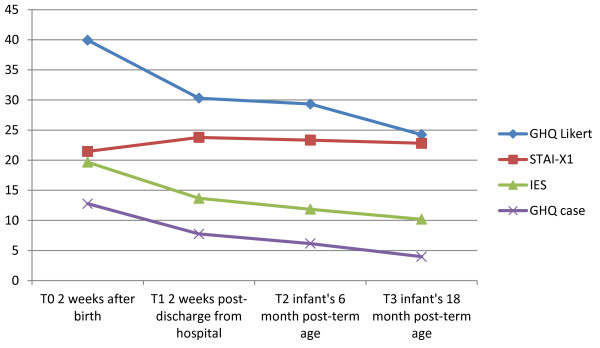
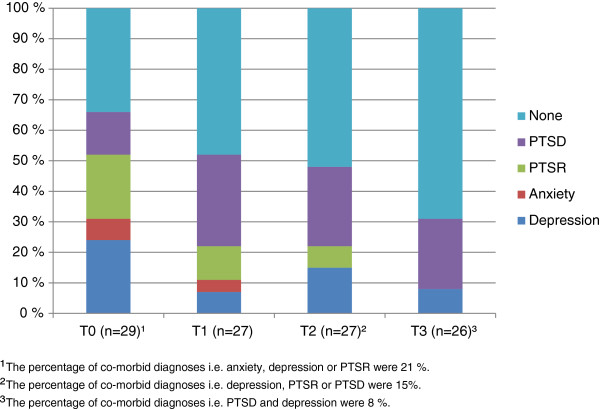
BACKGROUND: Several studies have reported significantly higher stress levels, both short and long terms, among mothers giving preterm birth compared with mothers giving birth at term. Stress, however, is a psychological phenomenon that may present as anxiety, depression and/or trauma reactions. In this study, the long-term mental health outcomes and the prevalence of anxiety, depression and trauma reactions in women experiencing preterm birth were explored. Interactional, main effect variables and predictors were identified. METHODS: Twenty-nine mothers of 35 premature children born before the 33rd week of pregnancy were assessed within 2 weeks postpartum (T0), 2 weeks after hospitalization (T1), 6 months post-term (T2), and 18 months post-term (T3). The standardized psychometric methods Impact of Event Scale (IES), General Health Questionnaire (GHQ) and State Anxiety Inventory (STAI-X1) assessed the maternal mental health outcomes. RESULTS: The maternal mental health problems except state anxiety decreased from T0 to T1, but remained high and stable at T3. The prevalence of posttraumatic stress reactions (PTSR) and posttraumatic stress disorder (PTSD) at T0 and T3 was 52% and 23%, respectively. We identified the time period between T0 and T1 to have a significant main effect on mental health outcomes. The predictors of higher levels of mental health problems were preeclampsia, previous psychological treatment, age, trait anxiety and infant's postnatal intraventricular haemorrhage. Bleeding in pregnancy predicted lower levels of mental health problems. CONCLUSIONS: The prevalence of maternal mental health problems remained high, emphasizing the importance of effective interventions.
Overview
The claims and statistics of this paper haven’t been checked yet.
Free: it reads the open-access text and checks the first 5 claims that cite a source we can check. Create a free account to check every claim.
Integrity signals
Registry
Cites
Statistics
Figures
Verification
Claims the paper makes
The claims and statistics of this paper haven’t been checked yet.
Free: it reads the open-access text and checks the first 5 claims that cite a source we can check. Create a free account to check every claim.
Claims other papers make about this one
Each is checked against this paper’s own text: does it say what the citing paper says it does?
The source backs part of the claim, not all of it — or backs it for a different population, condition or comparison.
In the citing paper
“Post-traumatic symptoms decrease from T1 (19.7 %) to T3 (10.2 %)”
From Parental stress and mental health outcomes following very preterm birth: A systematic review of recent findings (2024) · cites this paper as Misund et al., 2013
Experimental — accuracy not yet measuredThe source backs part of the claim, not all of it — or backs it for a different population, condition or comparison.
In the citing paper
“Additionally, PTSD can occur in 23 % of VLBW mothers at 20 months as well as 57 % of mothers of ELBW and 35 % of VLBW at three to five years (Misund et al., 2013, n = 29; Rodríguez et al., 2020, n = 146).”
From Parental stress and mental health outcomes following very preterm birth: A systematic review of recent findings (2024) · cites this paper as Misund et al., 2013
Experimental — accuracy not yet measuredThe source backs part of the claim, not all of it — or backs it for a different population, condition or comparison.
In the citing paper
“Anxiety increased from T1 (21.5 %) to T1 (23.8 %) and to T3 (22.8 %).”
From Parental stress and mental health outcomes following very preterm birth: A systematic review of recent findings (2024) · cites this paper as Misund et al., 2013
Experimental — accuracy not yet measuredThe source backs part of the claim, not all of it — or backs it for a different population, condition or comparison.
In the citing paper
“Most studies report descriptive results and show that in the period up to one year after birth, anxiety levels decrease (Misund et al., 2013), but remain elevated in 19 -27 % of parents of very pre mature children (Cambonie et al., 2017; Haeusslein et al., 2021; Hall et al., 2017; Vriend et al., 2021).”
From Parental stress and mental health outcomes following very preterm birth: A systematic review of recent findings (2024) · cites this paper as Misund et al., 2013
Experimental — accuracy not yet measuredThe cited source says what the claim attributes to it.
In the citing paper
“Two studies used the DSM-IV (Diagnostic and Statistical Manual of Mental Disorders, Fourth Edition) and the ICD-10 (WHO, 1993) as diagnostic tools for clinical PTSD (Barthel et al., 2020; Misund et al., 2013).”
From Parental stress and mental health outcomes following very preterm birth: A systematic review of recent findings (2024) · cites this paper as Misund et al., 2013
1 more claim about this paper
Create a free account to see every claim other papers make about this one.
Self-check
Percentages, sums and reported differences re-computed from the paper’s own numbers.
The self-check needs the paper’s full text.
Citations
Cites
(1970) · Cited by 24,983
Impact of Event Scale: A Measure of Subjective Stress
Horowitz, M., Wilner, N., & Alvarez, W. (1979) · Psychosomatic Medicine · doi:10.1097/00006842-197905000-00004 · Cited by 7,813 · cited 5×
“Sundin EC, Horowitz MJ: Horowitz's Impact of Event Scale evaluation of 20 years of use.”
MethodInfluential(1988) · NFER-Nelson eBooks · Cited by 5,560
Maternal Depression and Child Psychopathology: A Meta-Analytic Review
Goodman, S. H., Rouse, M. H., Connell, A. M., Broth, M. R., Hall, C. M., & Heyward, D. (2011) · Clinical Child and Family Psychology Review · doi:10.1007/s10567-010-0080-1 · Cited by 2,621 · cited 1×
“Parental mental health is found to be associated with children's cognitive, emotional, social and physical development [29].”
BackgroundSTAI manual for the State-trait anxiety inventory
Cd, S. (1970) · Medical Entomology and Zoology · Cited by 2,492
Predictors of Postpartum Depression: An Update
Beck, C. T. (2001) · Nursing Research · doi:10.1097/00006199-200109000-00004 · Cited by 1,915 · cited 1×
“Predictors of maternal psychological distress following term birth are less explored [35,36].”
BackgroundInfluentialSinger, L. T. (1999) · JAMA · doi:10.1001/jama.281.9.799 · Cited by 726 · cited 4×
“who found that maternal distress following preterm birth of a very low-birth weight child depended on the medical risk status, age and developmental outcome of the child [2].”
BackgroundInfluentialBrennan, P. A., Hammen, C. L., Andersen, M. J., Bor, W., Najman, J. M., & Williams, G. M. (2000) · Developmental Psychology · doi:10.1037//0012-1649.36.6.759 · Cited by 519
Prematurity, maternal stress and mother–child interactions
Muller-Nix, C., Forcada-Guex, M., Pierrehumbert, B., Jaunin, L., Borghini, A., & Ansermet, F. (2004) · Early Human Development · doi:10.1016/j.earlhumdev.2004.05.002 · Cited by 495 · cited 1×
“Further, the intensity of an unresolved trauma may have a mediating effect on later sleep and eating problems in the preterm infant [1,28].”
BackgroundThe Socioemotional Development of 5-year-old Children of Postnatally Depressed Mothers
Murray, L., Sinclair, D., Cooper, P., Ducournau, P., Turner, P., & Stein, A. (1999) · Journal of Child Psychology and Psychiatry · doi:10.1017/s002196309900476x · Cited by 485 · cited 1×
“Several studies of term babies have shown that maternal postpartum or chronic depressive symptoms correspond with poorer cognitive and behavioural child performance [30-34].”
BackgroundPrevalence and predictors of post‐traumatic stress symptoms following childbirth
Czarnocka, J., & Slade, P. (2000) · British Journal of Clinical Psychology · doi:10.1348/014466500163095 · Cited by 384 · cited 1×
“Our results correspond with one of the predictors of postpartum depression, previous psychiatric disorder [26], and with the results from postpartum research showing trait anxiety predicts posttraumatic stress and anxiety [49].”
ResultRisk factors for developing post‐traumatic stress disorder following childbirth: a systematic review
ANDERSEN, L. B., MELVAER, L. B., VIDEBECH, P., LAMONT, R. F., & JOERGENSEN, J. S. (2012) · Acta Obstetricia et Gynecologica Scandinavica · doi:10.1111/j.1600-0412.2012.01476.x · Cited by 349 · cited 1×
“Subjective distress in labor and obstetrical emergencies, as well as infant complications, psychological difficulties in pregnancy and previous traumatic experiences have been identified as risk factors [25].”
BackgroundDepressive Symptoms in Mothers of Prematurely Born Infants
Miles, M. S., Holditch-Davis, D., Schwartz, T. A., & Scher, M. (2007) · Journal of Developmental & Behavioral Pediatrics · doi:10.1097/01.dbp.0000257517.52459.7a · Cited by 328 · cited 2×
“The prevalence of anxiety and depression that we found corresponds with the results of other studies [12,13,15] and contrasts with those of studies that have reported higher prevalence of depression at T0 and T1 [3], and a decrease to zero at T2 [15].”
BackgroundResultPierrehumbert, B., Nicole, A., Muller-Nix, C., Forcada-Guex, M., & Ansermet, F. (2003) · Archives of Disease in Childhood - Fetal and Neonatal Edition · doi:10.1136/fn.88.5.f400 · Cited by 328 · cited 2×
“Further, the intensity of an unresolved trauma may have a mediating effect on later sleep and eating problems in the preterm infant [1,28].”
BackgroundInfluentialKaaresen, P. I., Rønning, J. A., Ulvund, S. E., & Dahl, L. B. (2006) · Pediatrics · doi:10.1542/peds.2005-1491 · Cited by 318 · cited 2×
“Several studies from the past decades have explored maternal mental health problems following preterm birth, both in the short and long terms [1-9].”
BackgroundInfluentialHorowitz’s Impact of Event Scale Evaluation of 20 Years of Use
Sundin, E. C., & Horowitz, M. J. (2003) · Psychosomatic Medicine · doi:10.1097/01.psy.0000084835.46074.f0 · Cited by 308 · cited 5×
“Sundin EC, Horowitz MJ: Horowitz's Impact of Event Scale evaluation of 20 years of use.”
MethodInfluentialMaternal depression and child behaviour problems: a meta‐analysis
Beck, C. T. (1999) · Journal of Advanced Nursing · doi:10.1046/j.1365-2648.1999.00943.x · Cited by 293 · cited 1×
“Several studies of term babies have shown that maternal postpartum or chronic depressive symptoms correspond with poorer cognitive and behavioural child performance [30-34].”
BackgroundShaw, R. J., Bernard, R. S., DeBlois, T., Ikuta, L. M., Ginzburg, K., & Koopman, C. (2009) · Psychosomatics · doi:10.1176/appi.psy.50.2.131 · Cited by 288 · cited 1×
“Few studies, however, have explored maternal trauma reactions following preterm birth [4,6,7,17-22].”
BackgroundInfluentialMaternal posttraumatic stress response after the birth of a very low-birth-weight infant
Kersting, A., Dorsch, M., Wesselmann, U., Lüdorff, K., Witthaut, J., Ohrmann, P., Hörnig-Franz, I., Klockenbusch, W., Harms, E., & Arolt, V (2004) · Journal of Psychosomatic Research · doi:10.1016/j.jpsychores.2004.03.011 · Cited by 267 · cited 6×
“also reported a marked difference between preterm and term outcomes in IES and STAIX1 [6].”
BackgroundResultInfluentialJotzo, M., & Poets, C. F. (2005) · Pediatrics · doi:10.1542/peds.2004-0370 · Cited by 261 · cited 3×
“One study reported a prevalence of 49% of significant trauma reactions 1 year following preterm delivery [7].”
BackgroundInfluentialAYERS, S. (2004) · Clinical Obstetrics and Gynecology · doi:10.1097/01.grf.0000129919.00756.9c · Cited by 240 · cited 1×
“Why 10% of all women have severe traumatic stress responses to birth and only 1% to 2% develop posttraumatic stress disorder (PTSD) after giving birth is still not fully explored [23,24].”
BackgroundPerinatal complications increase the risk of postpartum depression. The Generation R Study
Blom, E., Jansen, P., Verhulst, F., Hofman, A., Raat, H., Jaddoe, V., Coolman, M., Steegers, E., & Tiemeier, H. (2010) · BJOG: An International Journal of Obstetrics & Gynaecology · doi:10.1111/j.1471-0528.2010.02660.x · Cited by 240
Nine-Year Outcome of the Vermont Intervention Program for Low Birth Weight Infants
Achenbach, T. M., Howell, C. T., Aoki, M. F., & Rauh, V. A. (1993) · Pediatrics · doi:10.1542/peds.91.1.45 · Cited by 226 · cited 1×
“Maternal postpartum stress reactions have been the main research focus in these studies [2,8-10], which have reported that women with preterm deliveries experience significantly higher levels of stress than women with term deliveries [2,8].”
BackgroundDeMier, R. L., Hynan, M. T., Harris, H., & Manniello, R. L. (1996) · PubMed · Cited by 187
van der Voort, Gaillard, R., Hofman, A., de Jongste, J. C., & Duijts, L. (2013) · Cited by 181
Depressive symptoms and symptoms of post-traumatic stress disorder in women after childbirth
Zaers, S., Waschke, M., & Ehlert, U. (2008) · Journal of Psychosomatic Obstetrics & Gynecology · doi:10.1080/01674820701804324 · Cited by 179 · cited 3×
“Both term and preterm deliveries may involve certain features such as intense fear, helplessness, pain and loss of control that might predispose for traumatic stress reactions [26,27].”
BackgroundResultHay, D. F., & Kumar, R. (1995) · Child Psychiatry & Human Development · doi:10.1007/bf02251301 · Cited by 164 · cited 1×
“Several studies of term babies have shown that maternal postpartum or chronic depressive symptoms correspond with poorer cognitive and behavioural child performance [30-34].”
BackgroundDistress and Growth Outcomes in Mothers of Medically Fragile Infants
Miles, M. S., Holditch-Davis, D., Burchinal, P., & Nelson, D. (1999) · Nursing Research · doi:10.1097/00006199-199905000-00003 · Cited by 161 · cited 2×
“The prevalence of anxiety and depression that we found corresponds with the results of other studies [12,13,15] and contrasts with those of studies that have reported higher prevalence of depression at T0 and T1 [3], and a decrease to zero at T2 [15].”
BackgroundResultPatterns of Distress in African-American Mothers of Preterm Infants
Holditch-Davis, D., Miles, M. S., Weaver, M. A., Black, B., Beeber, L., Thoyre, S., & Engelke, S. (2009) · Journal of Developmental & Behavioral Pediatrics · doi:10.1097/dbp.0b013e3181a7ee53 · Cited by 152 · cited 3×
“Several studies from the past decades have explored maternal mental health problems following preterm birth, both in the short and long terms [1-9].”
BackgroundInfluentialSkari, H., Malt, U. F., Bjørnland, K., Egeland, T., Haugen, G. N., Skreden, M., Björk, M. D., Østensen, A. B., & Emblem, R. (2006) · Prenatal Diagnosis · doi:10.1002/pd.1542 · Cited by 149 · cited 1×
“One study of psychological distress in parents of children born with malformation reported 19% lower scores in IES at T0, but equivalent results at T1 and T2 [47,48].”
ResultKaaresen, P. I., Rønning, J. A., Tunby, J., Nordhov, S. M., Ulvund, S. E., & Dahl, L. B. (2008) · Early Human Development · doi:10.1016/j.earlhumdev.2007.07.003 · Cited by 135 · cited 2×
“Several studies from the past decades have explored maternal mental health problems following preterm birth, both in the short and long terms [1-9].”
BackgroundInfluentialPosttraumatic stress disorder after pre-eclampsia: an exploratory study
Engelhard, I. M., van Rij, M., Boullart, I., Ekhart, T. H. A., Spaanderman, M. E. A., van den Hout, M., & Peeters, L. L. H. (2002) · General Hospital Psychiatry · doi:10.1016/s0163-8343(02)00189-5 · Cited by 133
Correlates of mother–premature infant interactions
Holditch‐Davis, D., Schwartz, T., Black, B., & Scher, M. (2007) · Research in Nursing & Health · doi:10.1002/nur.20190 · Cited by 128 · cited 1×
“Few studies, however, have explored maternal trauma reactions following preterm birth [4,6,7,17-22].”
BackgroundInfluentialAnxiety affects the relationship between parents and their very low birth weight infants
Zelkowitz, P., Bardin, C., & Papageorgiou, A. (2007) · Infant Mental Health Journal · doi:10.1002/imhj.20137 · Cited by 105 · cited 1×
“Some of the studies have focused on depression [3,11-13], others on depression, distress, and anxiety [2,14-16].”
BackgroundDeMier, R. L., Hynan, M. T., Hatfield, R. F., Varner, M. W., Harris, H. B., & Manniello, R. L. (2000) · Journal of Clinical Psychology · doi:10.1002/(sici)1097-4679(200001)56:1<89::aid-jclp8>3.0.co;2-6 · Cited by 101 · cited 2×
“on PTSD at 6 months postpartum, where infant maturity and infant complications were detected as significant predictors of maternal PTSD [37,38].”
BackgroundSkreden, M., Skari, H., Malt, U. F., Haugen, G. N., Pripp, A. H., Faugli, A., & Emblem, R. (2010) · American Journal of Medical Genetics Part A · doi:10.1002/ajmg.a.33605 · Cited by 95 · cited 1×
“One study of psychological distress in parents of children born with malformation reported 19% lower scores in IES at T0, but equivalent results at T1 and T2 [47,48].”
ResultSelf-citationThe validity of the General Health Questionnaire in a sample of accidentally injured adults
Malt, U. F. (1989) · Acta Psychiatrica Scandinavica · doi:10.1111/j.1600-0447.1989.tb05260.x · Cited by 93 · cited 1×
“The answers to each item may be treated both as Likert sum scores with weights (0-1-2-3) and a possible scale of 0–90, and as case sum scores with weights (0-0-1-1) and possible range 0–30 [42,43].”
BackgroundLyons-Ruth, K., Wolfe, R., Lyubchik, A., & Steingard, R. (2002) · Child Rearing in America · doi:10.1017/cbo9780511499753.008 · Cited by 84
Posttraumatic stress disorder following preeclampsia and HELLP syndrome
van Pampus, M. G., Wolf, H., Schultz, W. W., Neeleman, J., & Aarnoudse, J. (2004) · Journal of Psychosomatic Obstetrics & Gynecology · doi:10.1080/01674820400017863 · Cited by 79 · cited 1×
“Why 10% of all women have severe traumatic stress responses to birth and only 1% to 2% develop posttraumatic stress disorder (PTSD) after giving birth is still not fully explored [23,24].”
BackgroundCognitive function after pre-eclampsia: an explorative study
Baecke, M., Spaanderman, M. E. A., & van der Werf, S. P. (2009) · Journal of Psychosomatic Obstetrics & Gynecology · doi:10.1080/01674820802546212 · Cited by 79 · cited 1×
“Our results correspond with the results of another study [46]: the study of Kersting et al.”
ResultChild rearing in America : challenges facing parents with young children
Halfon, N., McLearn, K. T., & Schuster, M. A. (2002) · Cited by 70
Infants admitted to a neonatal intensive care unit: parental psychological status at 9 months
Carter, J. D., Mulder, R. T., Frampton, C. M. A., & Darlow, B. A. (2007) · Acta Paediatrica · doi:10.1111/j.1651-2227.2007.00425.x · Cited by 62 · cited 2×
“The prevalence of anxiety and depression that we found corresponds with the results of other studies [12,13,15] and contrasts with those of studies that have reported higher prevalence of depression at T0 and T1 [3], and a decrease to zero at T2 [15].”
BackgroundResultMother–infant interactions of medically fragile infants and non‐chronically ill premature infants
Holditch‐Davis, D., Cox, M. F., Miles, M. S., & Belyea, M. (2003) · Research in Nursing & Health · doi:10.1002/nur.10095 · Cited by 57 · cited 1×
“Few studies, however, have explored maternal trauma reactions following preterm birth [4,6,7,17-22].”
BackgroundInfluentialFamily functioning and maternal depression following premature birth
O'brien, M., Asay, J. H., & McCluskey-fawcett, K. (1999) · Journal of Reproductive and Infant Psychology · doi:10.1080/02646839908409096 · Cited by 52
Symptoms of post-traumatic stress after preeclampsia
Hoedjes, M., Berks, D., Vogel, I., Franx, A., Visser, W., Duvekot, J. J., Habbema, J. D. F., Steegers, E. A. P., & Raat, H. (2011) · Journal of Psychosomatic Obstetrics & Gynecology · doi:10.3109/0167482x.2011.599460 · Cited by 50 · cited 1×
“Few studies, however, have explored maternal trauma reactions following preterm birth [4,6,7,17-22].”
BackgroundInfluentialImpact of Extreme Prematurity on Family Functioning and Maternal Health 20 Years Later
Saigal, S., Pinelli, J., Streiner, D. L., Boyle, M., & Stoskopf, B. (2010) · Pediatrics · doi:10.1542/peds.2009-2527 · Cited by 48
Solhaug, M., Bjørk, I. T., & Sandtrø, H. P. (2010) · Journal of Pediatric Nursing · doi:10.1016/j.pedn.2009.11.004 · Cited by 44 · cited 1×
“The neonatal intensive care unit had applied several aspects of the newborn individualized developmental care and assessment program (NIDCAP) in their care of preterm babies and in their parental supervision and support [39].”
MethodSkreden, M., Skari, H., Björk, M. D., Malt, U. F., Veenstra, M., Faugli, A., Åvitsland, T., & Emblem, R. (2008) · BJOG An International Journal of Obstetrics & Gynaecology · doi:10.1111/j.1471-0528.2007.01631.x · Cited by 30 · cited 3×
“In one study, predictors of maternal distress 5 years following term birth were identified as initial psychological distress, being single and having a low educational level [36].”
BackgroundInfluentialJenewein, J., Moergeli, H., Fauchère, J., Bucher, H. U., Kraemer, B., Wittmann, L., Schnyder, U., & Büchi, S. (2008) · Journal of Psychosomatic Obstetrics & Gynecology · doi:10.1080/01674820701640181 · Cited by 30 · cited 1×
“Few studies, however, have explored maternal trauma reactions following preterm birth [4,6,7,17-22].”
BackgroundInfluentialMaternal appraisal of information given around the time of preterm delivery
Calam, R. M., Lambrenos, K., Cox, A. D., & Weindling, A. M. (1999) · Journal of Reproductive and Infant Psychology · doi:10.1080/02646839908404594 · Cited by 22 · cited 1×
“Both term and preterm deliveries may involve certain features such as intense fear, helplessness, pain and loss of control that might predispose for traumatic stress reactions [26,27].”
BackgroundTraumatisierung der Eltern durch die Frühgeburt des Kindes
Jotzo, B. S. M. (2002) · Psychotraumatologie · doi:10.1055/s-2002-33383 · Cited by 14 · cited 1×
“Few studies, however, have explored maternal trauma reactions following preterm birth [4,6,7,17-22].”
BackgroundInfluential
Cited by
Trumello, C., Candelori, C., Cofini, M., Cimino, S., Cerniglia, L., Paciello, M., & Babore, A. (2018) · Frontiers in Public Health · doi:10.3389/fpubh.2018.00359 · Cited by 201
“This result is in line with other ones that highlight elevated anxiety symptoms following a premature delivery (44, 45).”
ResultPre-eclampsia and cardiovascular disease
Chen, C. W., Jaffe, I. Z., & Karumanchi, S. A. (2014) · Cardiovascular Research · doi:10.1093/cvr/cvu018 · Cited by 194
Malouf, R., Harrison, S., Burton, H. A. L., Gale, C., Stein, A., Franck, L. S., & Alderdice, F. (2022) · eClinicalMedicine · doi:10.1016/j.eclinm.2021.101233 · Cited by 172
“Gestational age (GA) at birth was a specified inclusion criterion in 12 studies, published in 13 records24,25,27,28,32,33,38−41,43−45 but GA criteria differed across studies: <30 weeks;43,44 <32 weeks;27,32 <33 weeks;38,39 <34 weeks;41 <37 weeks;25,28,45,46 23 weeks to full-term .24,36,37GA was not reported in one stu…”
BackgroundMethodInfluentialMcKenzie-McHarg, K., Ayers, S., Ford, E., Horsch, A., Jomeen, J., Sawyer, A., Stramrood, C., Thomson, G., & Slade, P. (2015) · Journal of Reproductive and Infant Psychology · doi:10.1080/02646838.2015.1031646 · Cited by 158
“…prematurity, low social support, dysfunctional coping, pre-eclampsia, bleeding in pregnancy, and intraventricular haemorrhage in babies are associated with higher levels of PTSD symptoms (Misund et al., 2013; Shaw, Bernard, Storfer-Isser, Rhine, & Horwitz, 2013; Suttora, Spinelli, & Monzani, 2014).”
BackgroundWelch, M. G., Halperin, M. S., Austin, J., Stark, R. I., Hofer, M. A., Hane, A. A., & Myers, M. M. (2015) · Archives of Women s Mental Health · doi:10.1007/s00737-015-0502-7 · Cited by 154
Metadata
- Authors
- Misund, A. R., Nerdrum, P., Bråten, S., Pripp, A., & Diseth, T. H.
- Affiliations
- OsloMet – Oslo Metropolitan University (NO)
- University of Oslo (NO)
- Oslo University Hospital (NO)
- Corresponding author
- Misund, Aud R
- Venue
- Annals of General Psychiatry
- Published
- 2013
- Volume
- 12
- Issue
- 1
- Pages
- 33
- ISSN
- 1744-859X (ISSN-L)
- PMC
- PMC4175092
- OpenAlex
- W2121994571
- Cited by
- 73
- References
- 51
- Citations by year
- 2026: 2 · 2025: 4 · 2024: 11 · 2023: 6 · 2022: 4 · 2021: 7 · 2020: 7 · 2019: 5 · 2018: 4 · 2017: 8 · 2016: 6 · 2015: 7 · 2014: 2
- FWCI
- 5.11
- Type
- journal article
- Language
- en
- Open access
- gold
- doi.org
- Licence
- cc-by
- Locations
- Annals of General Psychiatry (publishedVersion, cc-by)
- Europe PMC (PubMed Central) (publishedVersion, cc-by)
- PubMed Central (publishedVersion, cc-by)
- PubMed (publishedVersion)
- NORA - Norwegian Open Research Archives (submittedVersion, cc-by)
- Topics
- Health Sciences › Medicine › Public Health, Environmental and Occupational Health › Maternal Mental Health During Pregnancy and Postpartum
- Health Sciences › Medicine › Pediatrics, Perinatology and Child Health › Infant Development and Preterm Care
- Health Sciences › Medicine › Pediatrics, Perinatology and Child Health › Maternal and Neonatal Healthcare
- Keywords
- preterm birth, maternal mental health, post-traumatic stress disorder, post-traumatic stress reaction, anxiety, depression, preeclampsia, intraventricular hemorrhage, bleeding in pregnancy, postpartum period, long-term outcomes, women
About these checks
Registry, retraction, Cites and statistics results are computed, not judged, with one exception: a printed reference that no index lists is read once by a model before it counts as a citation error. Claims are extracted by a model and kept only when their quote appears verbatim in the text; each cited source is then checked, with a model’s help, for whether it says what the claim relies on. Those verdicts can be wrong — read the claim’s quote and the cited source before relying on one.
Statistics and arithmetic are recomputed, not judged.
Confidence bands are shown only for fields calibrated on our annotated test set. None is calibrated yet, so no band is shown.
What counts as a claim ›How we measure confidence ›How we check this ›
Are you an author, or do you see a problem with this page? Request a review
Data sources
Bibliographic data: Semantic Scholar, OpenAlex, Crossref.
Contains information from the Semantic Scholar Academic Graph Datasets, made available under the ODC Attribution License (ODC-BY 1.0).
Semantic Scholar’s data is described in: Kinney, R., et al. (2023). The Semantic Scholar Open Data Platform. arXiv:2301.10140.
