

Response inhibition deficits in externalizing child psychiatric disorders: An ERP-study with the Stop-task
Open accessThe DOI matches its Crossref record; 55 of the 57 references it cites were found in a registry or an index.
Abstract
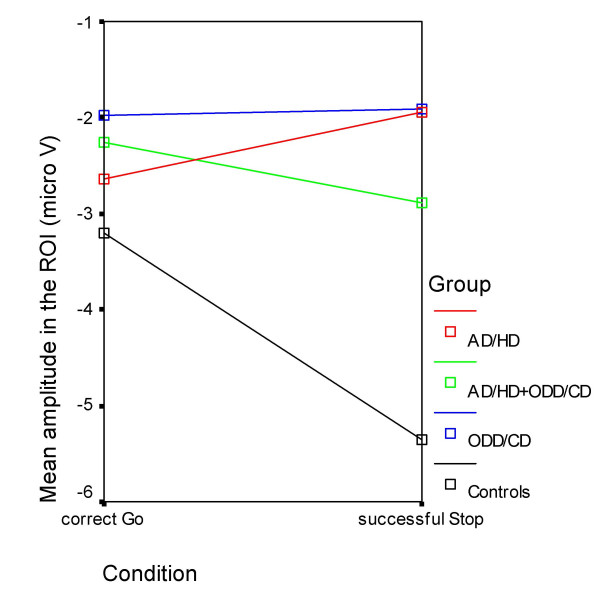
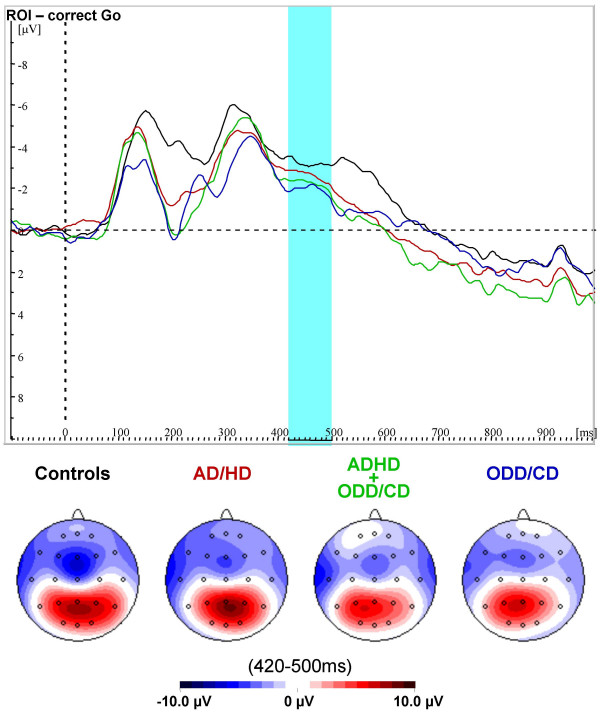
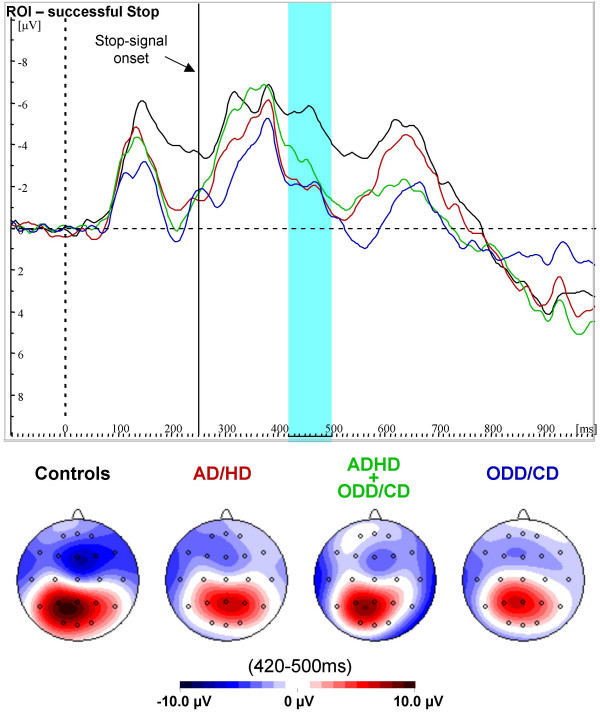
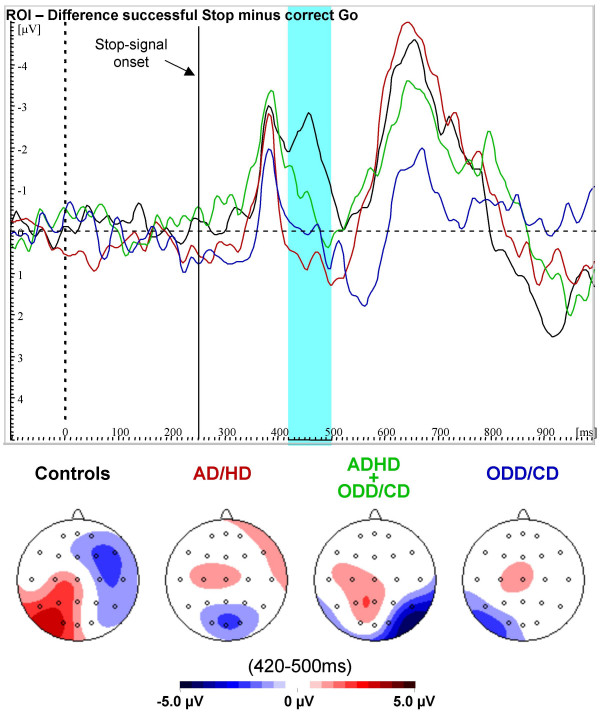
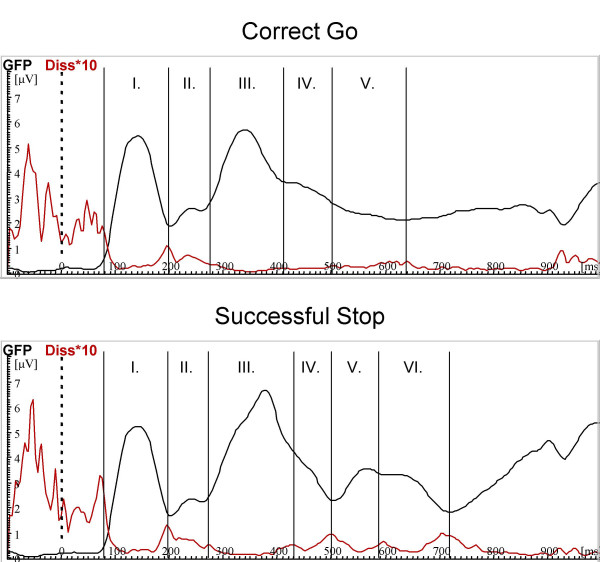
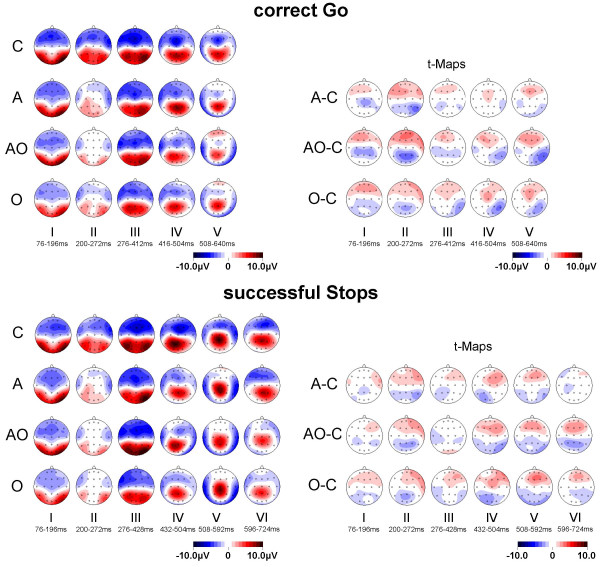
Background: Evidence from behavioural studies suggests that impaired motor response inhibition may be common to several externalizing child psychiatric disorders, although it has been proposed to be the core-deficit in AD/HD. Since similar overt behaviour may be accompanied by different covert brain activity, the aim of this study was to investigate both brain-electric-activity and performance measures in three groups of children with externalizing child psychiatric disorders and a group of normal controls. Methods: A Stop-task was used to measure specific aspects of response inhibition in 10 children with attention-deficit hyperactivity disorder (AD/HD), 8 children with oppositional defiant disorder/conduct disorder (ODD/CD), 11 children with comorbid AD/HD+ODD/CD and 11 normal controls. All children were between 8 and 14 years old. Event-related potentials and behavioural responses were recorded. An initial go-signal related microstate, a subsequent Stop-signal related N200, and performance measures were analyzed using ANCOVA with age as covariate. Results: Groups did not differ in accuracy or reaction time to the Go-stimuli. However, all clinical groups displayed reduced map strength in a microstate related to initial processing of the Go-stimulus compared to normal controls, whereas topography did not differ. Concerning motor response inhibition, the AD/HD-only and the ODD/CD-only groups displayed slower Stop-signal reaction times (SSRT) and Stop-failure reaction time compared to normal controls. In children with comorbid AD/HD+ODD/CD, Stop-failure reaction-time was longer than in controls, but their SSRT was not slowed. Moreover, SSRT in AD/HD+ODD/CD was faster than in AD/HD-only or ODD/CD-only. The AD/HD-only and ODD/CD-only groups displayed reduced Stop-N200 mean amplitude over right-frontal electrodes. This effect reached only a trend for comorbid AD/HD+ODD/CD. Conclusion: Following similar attenuations in initial processing of the Go-signal in all clinical groups compared to controls, distinct Stop-signal related deficits became evident in the clinical groups. Both children with AD/HD and ODD/CD showed deficits in behavioural response-inhibition accompanied by decreased central conflict signalling or inhibition processes. Neither behavioural nor neural markers of inhibitory deficits as found in AD/HD-only and ODD/CD-only were additive. Instead, children with comorbid AD/HD+ODD/CD showed similar or even less prominent inhibition deficits than the other clinical groups. Hence, the AD/HD+ODD/CD-group may represent a separate clinical entity.
Overview
The claims and statistics of this paper haven’t been checked yet.
Free: it reads the open-access text and checks the first 5 claims that cite a source we can check. Create a free account to check every claim.
Integrity signals
Registry
Cites
Statistics
Figures
Verification
Claims the paper makes
The claims and statistics of this paper haven’t been checked yet.
Free: it reads the open-access text and checks the first 5 claims that cite a source we can check. Create a free account to check every claim.
Claims other papers make about this one
Each is checked against this paper’s own text: does it say what the citing paper says it does?
In the citing paper
“For ADHD, the deficits in the right frontal N2 seemed to dominate in STOP tasks with a high inhibition demand (Albrecht et al. 2005; Dimoska et al. 2003; Liotti et al. 2005; Pliszka et al. 2000).”
From The neurobiological link between OCD and ADHD (2014) · cites this paper as Albrecht et al. 2005
Self-check
Percentages, sums and reported differences re-computed from the paper’s own numbers.
The self-check needs the paper’s full text.
Citations
Cites
Diagnostic and Statistical Manual of Mental Disorders
Williams, J. B. W., & First, M. (2013) · Encyclopedia of Social Work · doi:10.1093/acrefore/9780199975839.013.104 · Cited by 109,519
Diagnostic and Statistical Manual of Mental Disorders
(2010) · Handbook of Disease Burdens and Quality of Life Measures · doi:10.1007/978-0-387-78665-0_5485 · Cited by 10,169
(1991) · Medical Entomology and Zoology · Cited by 8,071
Conflict monitoring and cognitive control
Botvinick, M. M., Braver, T. S., Barch, D. M., Carter, C. S., & Cohen, J. D. (2001) · Psychological Review · doi:10.1037/0033-295x.108.3.624 · Cited by 7,351
A new method for off-line removal of ocular artifact
Gratton, G., Coles, M. G. H., & Donchin, E. (1983) · Electroencephalography and Clinical Neurophysiology · doi:10.1016/0013-4694(83)90135-9 · Cited by 5,055
Executive functions and developmental psychopathology.
Pennington, B. F., & Ozonoff, S. (1996) · Journal of Child Psychology and Psychiatry · doi:10.1111/j.1469-7610.1996.tb01380.x · Cited by 3,150
On the ability to inhibit thought and action: a theory of an act of control
Logan, G. D., & Cowan, W. B. (1984) · Psychological Review · doi:10.1037/0033-295x.91.3.295 · Cited by 2,590
Picton, T. W., Bentin, S., Berg, P., Donchin, E., Hillyard, S. A., Johnson, R., Miller, G. A., Ritter, W., Ruchkin, D. S., Rugg, M. D., et al. (2000) · Psychophysiology · doi:10.1111/1469-8986.3720127 · Cited by 2,157
McCarthy, G., & Wood, C. C. (1985) · Electroencephalography and Clinical Neurophysiology/Evoked Potentials Section · doi:10.1016/0168-5597(85)90015-2 · Cited by 1,756
On the ability to inhibit simple and choice reaction time responses: A model and a method.
Logan, G. D., Cowan, W. B., & Davis, K. A. (1984) · Journal of Experimental Psychology: Human Perception and Performance · doi:10.1037/0096-1523.10.2.276 · Cited by 1,542
Research works printed but not linked: 2
- Gray JA Madden J Neural systems, emotion and personality. Neorobiology of learning, emotion and affect 1991 New York, Raven Press 273 306
- Tewes U Hamburg-Wechsler Intelligenztest für Kinder - Revision. HAWIK-R 1983 Bern, Hans Huber
Cited by
Reaction time variability in ADHD: A meta-analytic review of 319 studies
Kofler, M. J., Rapport, M. D., Sarver, D. E., Raiker, J. S., Orban, S. A., Friedman, L. M., & Kolomeyer, E. G. (2013) · Clinical Psychology Review · doi:10.1016/j.cpr.2013.06.001 · Cited by 648
Inhibitory control and psychopathology: A meta-analysis of studies using the stop signal task
LIPSZYC, J., & SCHACHAR, R. (2010) · Journal of the International Neuropsychological Society · doi:10.1017/s1355617710000895 · Cited by 627
Neuropsychological measures of executive function and antisocial behavior: a meta-analysis.
OGILVIE, J. M., STEWART, A. L., CHAN, R. C. K., & SHUM, D. H. K. (2011) · Criminology · doi:10.1111/j.1745-9125.2011.00252.x · Cited by 459
Banaschewski, T., & Brandeis, D. (2007) · Journal of Child Psychology and Psychiatry · doi:10.1111/j.1469-7610.2006.01681.x · Cited by 271
Self-citationAlbrecht, B., Brandeis, D., Uebel, H., Heinrich, H., Mueller, U. C., Hasselhorn, M., Steinhausen, H.-C., Rothenberger, A., & Banaschewski, T. (2008) · Biological Psychiatry · doi:10.1016/j.biopsych.2007.12.016 · Cited by 185
Self-citationTen years on: A follow-up review of ERP research in attention-deficit/hyperactivity disorder
Johnstone, S. J., Barry, R. J., & Clarke, A. R. (2013) · Clinical Neurophysiology · doi:10.1016/j.clinph.2012.09.006 · Cited by 183
Kaiser, A., Aggensteiner, P.-M., Baumeister, S., Holz, N. E., Banaschewski, T., & Brandeis, D. (2020) · Neuroscience & Biobehavioral Reviews · doi:10.1016/j.neubiorev.2020.01.019 · Cited by 171
Self-citationTye, C., Asherson, P., Ashwood, K. L., Azadi, B., Bolton, P., & McLoughlin, G. (2014) · Psychological Medicine · doi:10.1017/s0033291713001049 · Cited by 158
In search of biomarkers in psychiatry: EEG‐based measures of brain function
McLoughlin, G., Makeig, S., & Tsuang, M. T. (2014) · American Journal of Medical Genetics Part B: Neuropsychiatric Genetics · doi:10.1002/ajmg.b.32208 · Cited by 148
Self-regulation: Brain, cognition, and development.
Berger, A. (2011) · American Psychological Association eBooks · doi:10.1037/12327-000 · Cited by 137
Response inhibition of children with ADHD in the stop-signal task: An event-related potential study
Senderecka, M., Grabowska, A., Szewczyk, J., Gerc, K., & Chmylak, R. (2012) · International Journal of Psychophysiology · doi:10.1016/j.ijpsycho.2011.05.007 · Cited by 136
Co-existing psychiatric problems in ADHD in the ADORE cohort
Steinhausen, H., Nøvik, T. S., Baldursson, G., Curatolo, P., Lorenzo, M. J., Pereira, R. R., Ralston, S. J., Rothenberger, A., & ADORE Study Group* (2006) · European Child & Adolescent Psychiatry · doi:10.1007/s00787-006-1004-y · Cited by 169
Self-citationBaskin-sommers, A. R., Curtin, J. J., & Newman, J. P. (2015) · Clinical Psychological Science · doi:10.1177/2167702614560744 · Cited by 154
Performance monitoring is altered in adult ADHD: A familial event-related potential investigation
McLoughlin, G., Albrecht, B., Banaschewski, T., Rothenberger, A., Brandeis, D., Asherson, P., & Kuntsi, J. (2009) · Neuropsychologia · doi:10.1016/j.neuropsychologia.2009.07.013 · Cited by 113
Self-citationEEG microstates as markers of major depressive disorder and predictors of response to SSRIs therapy
Lei, L., Liu, Z., Zhang, Y., Guo, M., Liu, P., Hu, X., Yang, C., Zhang, A., Sun, N., Wang, Y., et al. (2022) · Progress in Neuro-Psychopharmacology and Biological Psychiatry · doi:10.1016/j.pnpbp.2022.110514 · Cited by 121
The neurobiological link between OCD and ADHD
Brem, S., Grünblatt, E., Drechsler, R., Riederer, P., & Walitza, S. (2014) · ADHD Attention Deficit and Hyperactivity Disorders · doi:10.1007/s12402-014-0146-x · Cited by 109
Neurophysiological differences in inhibitory control between adults with ADHD and their peers
Woltering, S., Liu, Z., Rokeach, A., & Tannock, R. (2013) · Neuropsychologia · doi:10.1016/j.neuropsychologia.2013.06.023 · Cited by 128
McLoughlin, G., Albrecht, B., Banaschewski, T., Rothenberger, A., Brandeis, D., Asherson, P., & Kuntsi, J. (2010) · Behavioral and Brain Functions · doi:10.1186/1744-9081-6-66 · Cited by 106
Self-citationMcLoughlin, G., Palmer, J. A., Rijsdijk, F., & Makeig, S. (2014) · Biological Psychiatry · doi:10.1016/j.biopsych.2013.07.020 · Cited by 100
Event‐related potential measures of executive functioning from preschool to adolescence
Downes, M., Bathelt, J., & de Haan, M. D. H. (2017) · Developmental Medicine & Child Neurology · doi:10.1111/dmcn.13395 · Cited by 113
Liotti, M., Pliszka, S. R., Perez, R., Luus, B., Glahn, D., & Semrud‐Clikeman, M. (2007) · Psychophysiology · doi:10.1111/j.1469-8986.2007.00568.x · Cited by 85
Multidimensional measures of impulsivity in obsessive-compulsive disorder: Cannot wait and stop
Sohn, S. Y., Kang, J. I., Namkoong, K., & Kim, S. J. (2014) · PLoS ONE · doi:10.1371/journal.pone.0111739 · Cited by 81
Electrophysiological markers of genetic risk for attention deficit hyperactivity disorder
Tye, C., McLoughlin, G., Kuntsi, J., & Asherson, P. (2011) · Expert Reviews in Molecular Medicine · doi:10.1017/s1462399411001797 · Cited by 70
Liotti, M., Pliszka, S. R., Higgins, K., Perez, R., & Semrud-Clikeman, M. (2010) · Brain and Cognition · doi:10.1016/j.bandc.2009.09.007 · Cited by 69
Ji, H., Wu, S., Won, J., Weng, S., Lee, S., Seo, S., & Park, J.-J. (2023) · JMIR Serious Games · doi:10.2196/40438 · Cited by 74
Wild–Wall, N., Oades, R. D., Schmidt-Wessels, M., Christiansen, H., & Falkenstein, M. (2009) · International Journal of Psychophysiology · doi:10.1016/j.ijpsycho.2009.06.003 · Cited by 74
Bonham, M. D., Shanley, D. C., Waters, A. M., & Elvin, O. M. (2020) · Research on Child and Adolescent Psychopathology · doi:10.1007/s10802-020-00713-9 · Cited by 69
Luman, M., van Noesel, S. J. P., Papanikolau, A., Van Oostenbruggen-Scheffer, J., Veugelers, D., Sergeant, J. A., & Oosterlaan, J. (2009) · Journal of Abnormal Child Psychology · doi:10.1007/s10802-009-9334-0 · Cited by 51
Woltering, S., Liao, V., Liu, Z., & Granic, I. (2015) · Neural Plasticity · doi:10.1155/2015/873197 · Cited by 51
Pathophysiology of ADHD and associated problems—starting points for NF interventions?
Albrecht, B., Uebel, H., Gevensleben, H., & Rothenberger, A. (2015) · Frontiers in Human Neuroscience · doi:10.3389/fnhum.2015.00359 · Cited by 58
Self-citationMeyer, K. N., Santillana, R. M., Miller, B., Clapp, W. C., Way, M., Bridgman-Goines, K., & Sheridan, M. A. (2020) · PLoS ONE · doi:10.1371/journal.pone.0241352 · Cited by 54
Eberhard‐Moscicka, A. K., Jost, L. B., Fehlbaum, L. V., Pfenninger, S. E., & Maurer, U. (2016) · Neuropsychologia · doi:10.1016/j.neuropsychologia.2016.09.014 · Cited by 51
Shen, I., Tsai, S.-Y., & Duann, J. (2011) · International Journal of Psychophysiology · doi:10.1016/j.ijpsycho.2011.03.015 · Cited by 53
van den Bergh, F. S., Spronk, M., Ferreira, L. M. T., Bloemarts, E., Groenink, L., Olivier, B., & Oosting, R. S. (2006) · Behavioural Brain Research · doi:10.1016/j.bbr.2006.08.003 · Cited by 48
Roessner, V., Banaschewski, T., Fillmer-Otte, A., Becker, A., Albrecht, B., Uebel, H., Sergeant, J. A., Tannock, R., & Rothenberger, A. (2007) · Journal of Neural Transmission · doi:10.1007/s00702-007-0817-2 · Cited by 47
Self-citationElectrophysiological indicators of inhibitory control deficits in depression
Palmwood, E. N., Krompinger, J. W., & Simons, R. F. (2017) · Biological Psychology · doi:10.1016/j.biopsycho.2017.10.001 · Cited by 48
Genetic heterogeneity in ADHD: DAT1 gene only affects probands without CD
Zhou, K., Chen, W., Buitelaar, J., Banaschewski, T., Oades, R. D., Franke, B., Sonuga‐Barke, E., Ebstein, R., Eisenberg, J., Gill, M., et al. (2008) · American Journal of Medical Genetics Part B: Neuropsychiatric Genetics · doi:10.1002/ajmg.b.30644 · Cited by 41
Self-citationJanssen, T. W. P., Heslenfeld, D. J., van Mourik, R., Geladé, K., Maras, A., & Oosterlaan, J. (2018) · Journal of Attention Disorders · doi:10.1177/1087054715580847 · Cited by 37
Sadeghi, S., McIntosh, J., Shadli, S. M., Healey, D. M., Rostami, R., Trani, P., & McNaughton, N. (2019) · Personality Neuroscience · doi:10.1017/pen.2019.5 · Cited by 31
Cañigueral, R., Palmer, J. A., Ashwood, K. L., Azadi, B., Asherson, P. J., Bolton, P., McLoughlin, G., & Tye, C. (2021) · Journal of Child Psychology and Psychiatry · doi:10.1111/jcpp.13514 · Cited by 29
Albrecht, B., Brandeis, D., Uebel, H., Heinrich, H., Heise, A., Hasselhorn, M., Rothenberger, A., & Banaschewski, T. (2010) · Neuropsychologia · doi:10.1016/j.neuropsychologia.2009.12.018 · Cited by 23
Self-citationRubinson, M., Horowitz, I., Naim‐Feil, J., Gothelf, D., Levit‐Binnun, N., & Moses, E. (2019) · PLoS ONE · doi:10.1371/journal.pone.0217383 · Cited by 26
Hoyniak, C. P., & Petersen, I. T. (2019) · Neuroscience & Biobehavioral Reviews · doi:10.1016/j.neubiorev.2019.06.011 · Cited by 29
Monetary rewards modulate inhibitory control
Herrera, P., Speranza, M., Hampshire, A., & Bekinschtein, T. A. (2014) · Frontiers in Human Neuroscience · doi:10.3389/fnhum.2014.00257 · Cited by 26
Identifying obstacles to a multidisciplinary understanding of ‘disruptive’ behaviour
Macleod, G. (2010) · Emotional and Behavioural Difficulties · doi:10.1080/13632752.2010.480881 · Cited by 35
Lichenstein, S. D., Roos, C. R., Köhler, R., Kiluk, B. D., Carroll, K. M., Worhunsky, P. D., Witkiewitz, K. A., & Yip, S. W. (2021) · Biological Psychiatry Cognitive Neuroscience and Neuroimaging · doi:10.1016/j.bpsc.2021.02.013 · Cited by 24
Vural, P., Uncu, Y., & Kılıç, E. Z. (2015) · Nöro Psikiyatri Arşivi · doi:10.5152/npa.2015.7346 · Cited by 19
Lie-telling for personal gain in children with and without externalizing behavior problems
Talwar, V., & Lavoie, J. (2022) · Journal of Experimental Child Psychology · doi:10.1016/j.jecp.2022.105385 · Cited by 22
Dysfunctional feedback processing in adolescent males with conduct disorder
Gao, Y., Chen, H., Jia, H., Ming, Q., Yi, J., & Yao, S. (2015) · International Journal of Psychophysiology · doi:10.1016/j.ijpsycho.2015.11.015 · Cited by 15
N2 amplitude modulation across the antisocial spectrum: a meta-analysis
Pasion, R., Prata, C., Fernandes, M., Almeida, R., Garcez, H., Araújo, C. A., & Barbosa, F. (2019) · Reviews in the Neurosciences · doi:10.1515/revneuro-2018-0116 · Cited by 17
Yip, V. T., Ang, R. P.-H., Ooi, Y. P., Fung, D. S. S., Mehrotra, K., Sung, M. H., & Lim, C. G. (2013) · Child & Youth Care Forum · doi:10.1007/s10566-013-9218-x · Cited by 14
Neural Correlates of Executive Functioning in Anorexia Nervosa and Obsessive–Compulsive Disorder
Thomas, K. S., Birch, R. E., Jones, C. R. G., & Vanderwert, R. E. (2022) · Frontiers in Human Neuroscience · doi:10.3389/fnhum.2022.841633 · Cited by 15
Dykstra, T., Waller, D. A., Hazeltine, E., & Wessel, J. R. (2020) · Journal of Cognitive Neuroscience · doi:10.1162/jocn_a_01503 · Cited by 17
The aetiological association between the dynamics of cortisol productivity and ADHD
Pinto, R., Rijsdijk, F. V., Ouellet‐Morin, I., Asherson, P. J., McLoughlin, G., & Kuntsi, J. (2016) · Journal of Neural Transmission · doi:10.1007/s00702-016-1534-5 · Cited by 10
Language Delay in 3-Year-Old Children With ADHD Symptoms
Rohrer-Baumgartner, N., Zeiner, P., Eadie, P. A., Egeland, J., Gustavson, K., Reichborn‐Kjennerud, T., & Aase, H. (2016) · Journal of Attention Disorders · doi:10.1177/1087054713497253 · Cited by 14
Bootsman, F. (2018) · Journal of Criminal Justice · doi:10.1016/j.jcrimjus.2018.05.001 · Cited by 11
“My Brain Can Stop”: An ERP Study of Longitudinal Prediction of Inhibitory Control in Adolescence
Einziger, T., Ben‐Shachar, M. S., Devor, T., Shmueli, M., Auerbach, J. G., & Berger, A. (2021) · Brain Sciences · doi:10.3390/brainsci11010100 · Cited by 9
Kwon, S., Ivory, S. L., McCormick, E. M., & Telzer, E. H. (2019) · Frontiers in Behavioral Neuroscience · doi:10.3389/fnbeh.2019.00158 · Cited by 12
Singh, A. D., Bedard, A., & Andrade, B. F. (2023) · Advances in Neurodevelopmental Disorders · doi:10.1007/s41252-023-00324-7 · Cited by 9
Lee, Y. J., Jeong, M. Y., Park, S., Kim, J., Kim, J.-S., & Woo, S. (2020) · Psychiatry Investigation · doi:10.30773/pi.2020.0083 · Cited by 8
van der Meere, J., Börger, N. A., & Pirilä, S. (2011) · Child Neuropsychology · doi:10.1080/09297049.2011.555943 · Cited by 4
Scalp Topography of Lower Urinary Tract Sensory Evoked Potentials
van der Lely, S., Kessler, T. M., Mehnert, U., & Liechti, M. D. (2020) · Brain Topography · doi:10.1007/s10548-020-00796-z · Cited by 5
Commentary: Neural Changes Associated with Treatment Outcome in Children with Externalizing Problems
Rice, T. (2016) · Frontiers in Psychiatry · doi:10.3389/fpsyt.2016.00161 · Cited by 3
Individual Differences in Executive Function: The Role of Parental Monitoring as a Moderator
Sangawi, H., Adams, J., & Reissland, N. (2018) · Journal of Attention Disorders · doi:10.1177/1087054718797420
Sex, ADHD symptoms, and CHRNA5 genotype influence reaction time but not response inhibition
Schote, A. B., Sayk, C., Pabst, K., Meier, J. K., Frings, C., & Meyer, J. (2018) · Journal of Neuroscience Research · doi:10.1002/jnr.24342 · Cited by 4
The interaction of ADHD traits and trait anxiety on inhibitory control
Hare, C., Panda, E., Collins, T. K., Segalowitz, S. J., & Tekok-Kılıç, A. (2024) · Psychophysiology · doi:10.1111/psyp.14734 · Cited by 2
ADHS — Allgemeine geschichtliche Entwicklung eines wissenschaftlichen Konzepts
Rothenberger, A., & Neumaärker, K.-J. (2005) · Steinkopff eBooks · doi:10.1007/3-7985-1553-0_2 · Cited by 4
Self-citationInfluence of aggressive computer games on the brain cortex activity level in adolescents
Grigoryan, V. G., Stepanyan, L., Stepanyan, A. Y., & Agababian, A. R. (2007) · Human Physiology · doi:10.1134/s0362119707010057 · Cited by 3
Shephard, E. (2014) · Nottingham ePrints (University of Nottingham) · Cited by 3
Hare, C. (2020) · Brock University Digital Repository (Brock University) · Cited by 3
Fornasier-Bélanger, M., Muckle, G., Ayotte, P., Jacobson, J. L., Jacobson, S. W., & Saint‐Amour, D. (2025) · Environmental Research · doi:10.1016/j.envres.2025.122224 · Cited by 2
Zargar, R. M., Hepark, S., & Schoenberg, P. L. A. (2025) · Frontiers in Psychiatry · doi:10.3389/fpsyt.2025.1670602 · Cited by 1
Palácio, S. G. (2014) · Digital Library of Theses and Dissertations (Universidade de São Paulo) · doi:10.11606/t.5.2014.tde-08122014-144049 · Cited by 2
Irons, D. E. (2009) · University of Minnesota Digital Conservancy (University of Minnesota)
Electrophysiology in Child Psychiatric Disorders
Banaschewski, T., & Brandeis, D. (2008) · KARGER eBooks · doi:10.1159/000118527
Self-citationThe Specificity and Neural Basis of Impaired Inhibitory Control
Lipszyc, J. (2009) · TSpace (University of Toronto)
ELECTROPHYSIOLOGICAL MEASURES OF INHIBITORY CONTROL IN CHILDHOOD OBESITY
Henderson, R. D. (2010) · Library, Museums and Press - UDSpace (University of Delaware)
Fehlerbezogene Hirnpotenziale bei Kindern mit Aufmerksamkeitsdefizit - Hyperaktivitätsstörung (ADHS)
Rothenberger, A. (2011)
Self-citationPerera, S. (2012) · Swinburne figshare (Swinburne University of Technology) · doi:10.25916/sut.26285899
Hodgson, N. (2011) · TSpace (University of Toronto)
Wiedmann, K. (2017) · eDiss (Georg-August-Universität Göttingen) · doi:10.53846/goediss-6314
Aspekte der Zeitverarbeitung bei Kindern mit Aufmerksamkeitsdefizit-Hyperaktivitätsstörung (ADHS)
Schlieben, A. C. (2014) · eDiss (Georg-August-Universität Göttingen) · doi:10.53846/goediss-4643 · Cited by 1
ERP and behavioral indicators of inhibitory control in a high risk population
Goldstein, A. (2017) · Library, Museums and Press - UDSpace (University of Delaware) · doi:10.58088/f123-s593
Descuentos retroactivos en salud a los pensionados en Colombia: más allá de su legalidad
Osorio, K. M. (2019) · CES Derecho · doi:10.21615/cesder.10.1.2
Singh, A. D. (2021) · TSpace (University of Toronto)
Fehlerbezogene Hirnpotenziale bei Kindern mit Aufmerksamkeitsdefizit-Hyperaktivitätsstörung (ADHS)
Kühnert, U. (2011) · eDiss (Georg-August-Universität Göttingen) · doi:10.53846/goediss-1014 · Cited by 2
Baskin-sommers, A. R., Curtin, J. J., & Newman, J. P. (2018) · PsyArXiv (OSF Preprints) · doi:10.31234/osf.io/dyhs4
Herrera, P. (2015) · theses.fr (ABES) · doi:10.70675/68f6ec5fz1955z45f6z998azcad81fe76134 · Cited by 1
Oltmann, F. A. (2012) · eDiss (Georg-August-Universität Göttingen) · doi:10.53846/goediss-1548
Kognitive Kontrolle bei Aufmerksamkeits Defizit / Hyperaktivitäts Störung
Albrecht, B. (2010) · eDiss (Georg-August-Universität Göttingen) · doi:10.53846/goediss-402
Self-citation
Metadata
- Authors
- Albrecht, B., Banaschewski, T., Brandeis, D., Heinrich, H., & Rothenberger, A.
- Affiliations
- University of Göttingen (DE)
- University of Zurich (CH)
- Friedrich-Alexander-Universität Erlangen-Nürnberg (DE)
- Corresponding author
- Albrecht, Björn
- Venue
- Behavioral and Brain Functions
- Published
- 2005-12
- Volume
- 1
- Issue
- 1
- Pages
- 22-22
- ISSN
- 1744-9081 (ISSN-L)
- PMC
- PMC1343568
- OpenAlex
- W2157897593
- Cited by
- 94
- References
- 56
- Citations by year
- 2025: 3 · 2024: 1 · 2023: 3 · 2022: 3 · 2021: 6 · 2020: 6 · 2019: 7 · 2018: 4 · 2017: 3 · 2016: 3 · 2015: 7 · 2014: 6 · 2013: 7 · 2012: 3
- FWCI
- 2.01
- Type
- journal article
- Language
- en
- Open access
- gold
- doi.org
- Licence
- cc-by
- Locations
- Behavioral and Brain Functions (publishedVersion, cc-by)
- PubMed Central (publishedVersion, cc-by)
- PubMed (publishedVersion)
- Zurich Open Repository and Archive (University of Zurich) (acceptedVersion, cc-by)
- DOAJ (DOAJ: Directory of Open Access Journals) (submittedVersion, cc-by-sa)
- GRO (submittedVersion, cc-by)
- Zurich Open Repository and Archive (University of Zurich) (submittedVersion, cc-by)
- Zurich Open Repository and Archive (University of Zurich)
- Topics
- Health Sciences › Medicine › Psychiatry and Mental health › Attention Deficit Hyperactivity Disorder
- Life Sciences › Neuroscience › Cognitive Neuroscience › Neural and Behavioral Psychology Studies
- Social Sciences › Psychology › Clinical Psychology › Child and Adolescent Psychosocial and Emotional Development
- Keywords
- response inhibition, attention deficit hyperactivity disorder, oppositional defiant disorder, conduct disorder, stop-signal task, event-related potentials, N2 component, stop-signal reaction time, microstate analysis, conflict processing, children, comorbidities
About these checks
Registry, retraction, Cites and statistics results are computed, not judged, with one exception: a printed reference that no index lists is read once by a model before it counts as a citation error. Claims are extracted by a model and kept only when their quote appears verbatim in the text; each cited source is then checked, with a model’s help, for whether it says what the claim relies on. Those verdicts can be wrong — read the claim’s quote and the cited source before relying on one.
Statistics and arithmetic are recomputed, not judged.
Confidence bands are shown only for fields calibrated on our annotated test set. None is calibrated yet, so no band is shown.
What counts as a claim ›How we measure confidence ›How we check this ›
Are you an author, or do you see a problem with this page? Request a review
Data sources
Bibliographic data: Semantic Scholar, OpenAlex, Crossref.
Contains information from the Semantic Scholar Academic Graph Datasets, made available under the ODC Attribution License (ODC-BY 1.0).
Semantic Scholar’s data is described in: Kinney, R., et al. (2023). The Semantic Scholar Open Data Platform. arXiv:2301.10140.
