

Reduced orbitofrontal cortical thickness in male adolescents with internet addiction
Open accessThe DOI matches its Crossref record; 30 of the 32 references it cites were found in a registry or an index.
Abstract
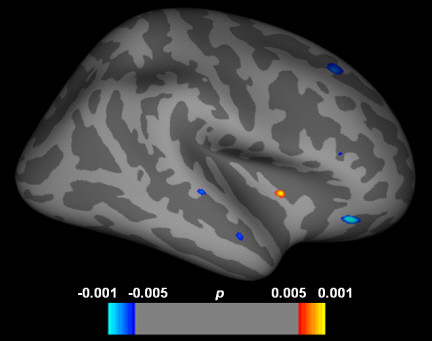
Background: The orbitofrontal cortex (OFC) has consistently been implicated in the pathology of both drug and behavioral addictions. However, no study to date has examined OFC thickness in internet addiction. In the current study, we investigated the existence of differences in cortical thickness of the OFC in adolescents with internet addiction. On the basis of recently proposed theoretical models of addiction, we predicted a reduction of thickness in the OFC of internet addicted individuals. Findings: Participants were 15 male adolescents diagnosed as having internet addiction and 15 male healthy comparison subjects. Brain magnetic resonance images were acquired on a 3T MRI and group differences in cortical thickness were analyzed using FreeSurfer. Our results confirmed that male adolescents with internet addiction have significantly decreased cortical thickness in the right lateral OFC (p<0.05). Conclusion: This finding supports the view that the OFC alterations in adolescents with internet addiction reflect a shared neurobiological marker of addiction-related disorders in general.
Overview
The claims and statistics of this paper haven’t been checked yet.
Free: it reads the open-access text and checks the first 5 claims that cite a source we can check. Create a free account to check every claim.
Integrity signals
Registry
Cites
Statistics
Figures
Verification
Claims the paper makes
The claims and statistics of this paper haven’t been checked yet.
Free: it reads the open-access text and checks the first 5 claims that cite a source we can check. Create a free account to check every claim.
Claims other papers make about this one
Each is checked against this paper’s own text: does it say what the citing paper says it does?
In the citing paper
“a fundamental structure in the reward circuit pathway responsible for decisionmaking and addiction disorders in adolescence and adulthood [25,31,96].”
Self-check
Percentages, sums and reported differences re-computed from the paper’s own numbers.
The self-check needs the paper’s full text.
Citations
Cites
Desikan, R. S., Ségonne, F., Fischl, B., Quinn, B. T., Dickerson, B. C., Blacker, D., Buckner, R. L., Dale, A. M., Maguire, R. P., Hyman, B. T., et al. (2006) · NeuroImage · doi:10.1016/j.neuroimage.2006.01.021 · Cited by 13,324 · cited 2×
“Region-of-interest (ROI)-based analyses were conducted comparing the cortical thickness of the OFC generated by FreeSurfer based on the Desikan-Killiany atlas [20].”
BackgroundMethodKAUFMAN, J., BIRMAHER, B., BRENT, D., RAO, U., FLYNN, C., MORECI, P., WILLIAMSON, D., & RYAN, N. (1997) · Journal of the American Academy of Child & Adolescent Psychiatry · doi:10.1097/00004583-199707000-00021 · Cited by 10,148 · cited 2×
“Kaufman J, Birmaher B, Brent D, Rao U, Flynn C, Moreci P, Williamson D, Ryan N: Schedule for Affective Disorders and Schizophrenia for SchoolAge Children-Present and Lifetime Version (K-SADS-PL): initial reliability and validity data.”
MethodSeparate neural systems value immediate and delayed monetary rewards
McClure, S. M., Laibson, D. I., Loewenstein, G., & Cohen, J. D. (2004) · Science · doi:10.1126/science.1100907 · Cited by 3,089 · cited 1×
“For example, the medial OFC has been found to be preferentially activated in choices involving immediate rewards, whereas the lateral OFC has been implicated in choices concerning delayed rewards or suppression of previously rewarded responses [23,24].”
BackgroundGoldstein, R. Z., & Volkow, N. D. (2002) · American Journal of Psychiatry · doi:10.1176/appi.ajp.159.10.1642 · Cited by 2,667 · cited 1×
“; licensee BioMed Central L Commons Attribution License (http://creativec reproduction in any medium, provided the or drug addiction [4,7].”
BackgroundIntellectual ability and cortical development in children and adolescents
Shaw, P., Greenstein, D., Lerch, J., Clasen, L., Lenroot, R., Gogtay, N., Evans, A., Rapoport, J., & Giedd, J. (2006) · Nature · doi:10.1038/nature04513 · Cited by 1,543 · cited 1×
“reports on normal brain development have shown that cortical thickness peaks at approximately 8–9 years of age and then global cortical thinning begins afterward [30].”
BackgroundIssues for DSM-V: Internet Addiction
Block, J. J. (2008) · American Journal of Psychiatry · doi:10.1176/appi.ajp.2007.07101556 · Cited by 1,385 · cited 2×
“Specifically, we conducted a case–control comparison of cortical thickness in adolescents with and without internet addiction, particularly focusing on excessive online gaming, which is among the major subtypes of this disorder [15].”
BackgroundMethodAddiction, a disease of compulsion and drive: involvement of the orbitofrontal cortex
Volkow, N. D. (2000) · Cerebral Cortex · doi:10.1093/cercor/10.3.318 · Cited by 1,240 · cited 3×
“; licensee BioMed Central L Commons Attribution License (http://creativec reproduction in any medium, provided the or drug addiction [4,7].”
BackgroundResultThe psychometric properties of the Internet addiction test
Widyanto, L., & McMurran, M. (2004) · CyberPsychology & Behavior · doi:10.1089/cpb.2004.7.443 · Cited by 1,073 · cited 3×
“diagnosis of internet addiction we used the Young Internet Addiction Scale (YIAS) [16].”
MethodInfluentialThe association between Internet addiction and psychiatric disorder: A review of the literature
Ko, C.-H., Yen, J.-Y., Yen, C.-F., Chen, C.-S., & Chen, C.-C. (2012) · European Psychiatry · doi:10.1016/j.eurpsy.2010.04.011 · Cited by 895 · cited 2×
“The prevalence of internet addiction has been estimated to be much higher in males than in females [1].”
BackgroundElliott, R. (2000) · Cerebral Cortex · doi:10.1093/cercor/10.3.308 · Cited by 887 · cited 1×
“For example, the medial OFC has been found to be preferentially activated in choices involving immediate rewards, whereas the lateral OFC has been implicated in choices concerning delayed rewards or suppression of previously rewarded responses [23,24].”
Background
Cited by
Items 101–130 of 130
Sensory Metrics of Neuromechanical Trust
Softky, W., & Benford, C. (2017) · Neural Computation · doi:10.1162/neco_a_00988 · Cited by 2
Peng, Y., Xing, W., & Wang, Y. (2023) · Current Psychology · doi:10.1007/s12144-023-05238-0 · Cited by 2
“It is difficult for some individuals to control their smartphone use, which underlaid by deficient inhibitory control (Brand et al., 2014; Dong et al., 2012; Hong et al., 2013).”
Paulino, S., Mesquita, B., Fraga, A. M., Gomes, H. S., & Madeira, L. (2023) · Cyberpsychology Journal of Psychosocial Research on Cyberspace · doi:10.5817/cp2023-1-3 · Cited by 3
Preventing Child and Adolescent Mental Illness - We Got This
McDonald, M. K., & Shatkin, J. P. (2020) · Adolescent Psychiatry · doi:10.2174/2210676610666200316100146 · Cited by 3
Association between bullying and major depressive disorder in a psychiatric consultation
Perales-Blum, L., Juárez-Treviño, M., Capetillo-Ventura, N., Rodríguez-Gutiérrez, G., Valdés-Adamchik, M., Treviño-Treviño, J., & Cáceres-Vargas, M. (2015) · Medicina Universitaria · doi:10.1016/j.rmu.2015.01.005 · Cited by 2
Guo, W., Zhao, C., & Zhang, W. (2026) · Psychiatry Research Neuroimaging · doi:10.1016/j.pscychresns.2026.112193 · Cited by 1
Parsons, T. D. (2019) · Cambridge University Press eBooks · doi:10.1017/9781108553384.013 · Cited by 2
Screen Time Is Associated with Altered Neural Maturation in a Massive Adolescent Cohort
Atalay, A. S., Newman, B. T., & Druzgal, T. J. (2026) · Children · doi:10.3390/children13070969 · Cited by 1
“…research comparing adolescent subjects with internet addictions to healthy controls, relationships were found between problematic internet usage and lower gray matter density in the left ACC, posterior cingulate cortex, and insula [18], as well as a reduction in cortical thickness in the OFC [19].”
Petro, N. M., Webert, L. K., McDonald, K. M., Son, J. J., Ward, T. W., Rice, D. L., Ende, G. C., Coutant, A. T., Steiner, E. L., Livermore, C. L., et al. (2026) · Developmental Cognitive Neuroscience · doi:10.1016/j.dcn.2026.101735
“Of note, other types of problematic internet use have been related to differences in frontal cortical thickness (Hong, Kim, et al., 2013), function (Ko et al., 2014; B. Li et al., 2014), and striatal connectivity (Hong, Zalesky, et al., 2013; B. Li et al., 2014; Lin et al., 2015).”
Szente, A. T., Perlaki, G., Orsi, G., Nagy, S. A., Arató, Á., Áfra, E., Alhour, H. A., Dudás, B., Janszky, J., Matuz, A., et al. (2026) · Heliyon · doi:10.1016/j.heliyon.2026.e44874
Cortical Structure Alterations in Young People With Mild Internet Gaming Disorder
Mei, B., Ma, L., Tao, Q., Dang, J., Sun, J., Zhang, M., Cheng, J., & Zhang, Y. (2026) · Addiction Biology · doi:10.1111/adb.70154 · Cited by 1
“…frontal cortex (OFC) and other prefrontal regions responsible for cognitive control, leading to inadequate behavioural inhibition [9]; and morphological changes, such as grey matter volume (GMV) and cortical thickness (CT), interact with abnormal dynamic patterns of neural activity [10, 11].”
Atalay, A. S., Newman, B. T., & Druzgal, T. (2023) · bioRxiv · doi:10.1101/2023.09.27.559772
“19 Finally, in a network-scale analysis, frequency and duration of screen-based media consumption was correlated with lower overall efficiency of the cognitive control system.”
BackgroundPROBLEMATIC INTERNET USE AND ADOLESCENT MENTAL HEALTH
Пичиков, А. А., & Tikhomirov, D. I. (2023) · Themed collection of papers from Foreign intemational scientific conference «Joint innovation - joint development». Medical sciences . Part 2. Ьу НNRI «National development» in cooperation with PS of UA. June 2023 · doi:10.37539/230629.2023.52.59.045
Cyberlearning and Ethical Considerations for Using Technology with Children
Parsons, T. D. (2019) · Cambridge University Press eBooks · doi:10.1017/9781108553384.006
Digital and Extended Selves in Cyberspace
Parsons, T. D. (2019) · Cambridge University Press eBooks · doi:10.1017/9781108553384.004
Problematic Internet Use, Online Gambling, Smartphones, and Video Games
Parsons, T. D. (2019) · Cambridge University Press eBooks · doi:10.1017/9781108553384.008
Social Media Ethics Section 2: Ethical Research with Social Media
Parsons, T. D. (2019) · Cambridge University Press eBooks · doi:10.1017/9781108553384.011 · Cited by 3
Neuroethics and the Future of Cyberpsychology
Parsons, T. D. (2019) · Cambridge University Press eBooks · doi:10.1017/9781108553384.005
Ethical Approaches to Cyberpsychology
Parsons, T. D. (2019) · Cambridge University Press eBooks · doi:10.1017/9781108553384.003 · Cited by 1
Cyberpsychology Theory and Praxes: Ethical and Methodological Considerations
Parsons, T. D. (2019) · Cambridge University Press eBooks · doi:10.1017/9781108553384.002 · Cited by 1
Cyberpsychology, Aging, and Gerontechnology
Parsons, T. D. (2019) · Cambridge University Press eBooks · doi:10.1017/9781108553384.007
Social Media Ethics Section 3: Digital Citizenship
Parsons, T. D. (2019) · Cambridge University Press eBooks · doi:10.1017/9781108553384.012
Parsons, T. D. (2019) · Cambridge University Press eBooks · doi:10.1017/9781108553384.016
Parsons, T. D. (2019) · Cambridge University Press eBooks · doi:10.1017/9781108553384.015
Video Games, Video Gamers, and the Ethics of Video Game Design
Parsons, T. D. (2019) · Cambridge University Press eBooks · doi:10.1017/9781108553384.014 · Cited by 2
Telepsychology and the Ethical Delivery of e-Therapy
Parsons, T. D. (2019) · Cambridge University Press eBooks · doi:10.1017/9781108553384.009 · Cited by 1
Social Media Ethics Section 1: Facebook, Twitter, and Google – Oh My!
Parsons, T. D. (2019) · Cambridge University Press eBooks · doi:10.1017/9781108553384.010
Parsons, T. D. (2019) · Cambridge University Press eBooks · doi:10.1017/9781108553384.001
Biological Psychiatry: Author Index
(2019) · Ethical Challenges in Digital Psychology and Cyberpsychology · doi:10.1080/02533839.2019.1576826
Neuroimaging Findings in Sleep Disorders and Circadian Disruption
Edited, B., Dai, X.-J., Rao, H., & Spiegelhalder, K. (2019) · Frontiers Research Topics · doi:10.3389/978-2-88945-859-2
Metadata
- Authors
- Hong, S.-B., Kim, J.-W., Choi, E.-J., Kim, H.-H., Suh, J.-E., Kim, C.-D., Klauser, P., Whittle, S., Yűcel, M., Pantelis, C., & Yi, S.-H.
- Affiliations
- The University of Melbourne (AU)
- Seoul National University (KR)
- Corresponding author
- Yi, Soon-Hyung
- ORCID
- Venue
- Behavioral and Brain Functions
- Published
- 2013-03-12
- Volume
- 9
- Issue
- 1
- Pages
- 11-11
- ISSN
- 1744-9081 (ISSN-L)
- PMC
- PMC3608995
- OpenAlex
- W2168628650
- Cited by
- 136
- References
- 32
- Citations by year
- 2026: 6 · 2025: 5 · 2024: 3 · 2023: 12 · 2022: 5 · 2021: 8 · 2020: 1 · 2019: 27 · 2018: 10 · 2017: 15 · 2016: 12 · 2015: 19 · 2014: 11 · 2013: 2
- FWCI
- 45.27
- Type
- journal article
- Language
- en
- Open access
- gold
- doi.org
- Licence
- cc-by
- Locations
- Behavioral and Brain Functions (publishedVersion, cc-by)
- Europe PMC (PubMed Central) (publishedVersion, cc-by)
- PubMed Central (publishedVersion, cc-by)
- PubMed (publishedVersion)
- Minerva Access (University of Melbourne) (submittedVersion, cc-by)
- Figshare (submittedVersion)
- Seoul National University Open Repository (Seoul National University) (submittedVersion)
- Seoul National University Open Repository (Seoul National University) (submittedVersion, cc-by)
- Funders
- National Research Foundation
- Seoul National University
- National Research Foundation of Korea
- National Health and Medical Research Council (1021973)
- Topics
- Social Sciences › Sociology and Political Science › Impact of Technology on Adolescents
- Life Sciences › Neuroscience › Cognitive Neuroscience › Neural and Behavioral Psychology Studies
- Social Sciences › Psychology › Clinical Psychology › Gambling Behavior and Treatments
- Keywords
- internet addiction, orbitofrontal cortex, cortical thickness, adolescents, neurobiology of addiction, behavioral addiction
- MeSH terms
- Adolescent, Data Interpretation, Statistical, Humans, Image Processing, Computer-Assisted, Magnetic Resonance Imaging, Male, Psychiatric Status Rating Scales, Case-Control Studies, Behavior, Addictive, Prefrontal Cortex, Video Games, Internet
About these checks
Registry, retraction, Cites and statistics results are computed, not judged, with one exception: a printed reference that no index lists is read once by a model before it counts as a citation error. Claims are extracted by a model and kept only when their quote appears verbatim in the text; each cited source is then checked, with a model’s help, for whether it says what the claim relies on. Those verdicts can be wrong — read the claim’s quote and the cited source before relying on one.
Statistics and arithmetic are recomputed, not judged.
Confidence bands are shown only for fields calibrated on our annotated test set. None is calibrated yet, so no band is shown.
What counts as a claim ›How we measure confidence ›How we check this ›
Are you an author, or do you see a problem with this page? Request a review
Data sources
Bibliographic data: Semantic Scholar, OpenAlex, Crossref.
Contains information from the Semantic Scholar Academic Graph Datasets, made available under the ODC Attribution License (ODC-BY 1.0).
Semantic Scholar’s data is described in: Kinney, R., et al. (2023). The Semantic Scholar Open Data Platform. arXiv:2301.10140.
