

Anatomic and functional leg-length inequality: A review and recommendation for clinical decision-making. Part I, anatomic leg-length inequality: prevalence, magnitude, effects and clinical significance
Open accessThe DOI matches its Crossref record; 61 of the 62 references it cites were found in a registry or an index.
Abstract
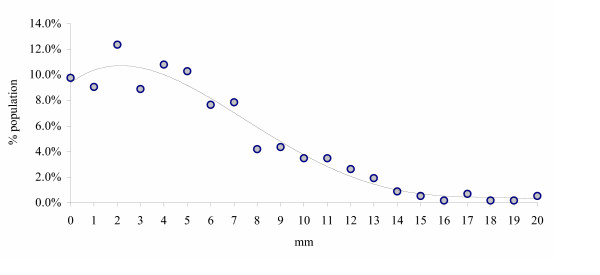
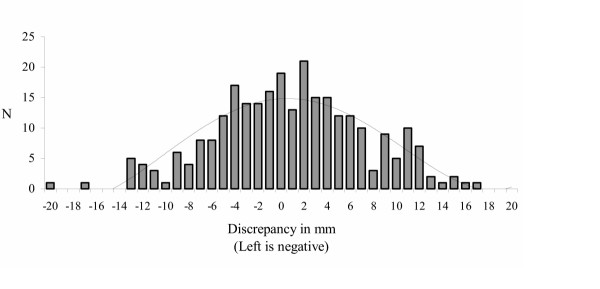
Background: Leg-length inequality is most often divided into two groups: anatomic and functional. Part I of this review analyses data collected on anatomic leg-length inequality relative to prevalence, magnitude, effects and clinical significance. Part II examines the functional "short leg" including anatomic-functional relationships, and provides an outline for clinical decision-making. Methods: Online database – Medline, CINAHL and MANTIS – and library searches for the time frame of 1970–2005 were done using the term "leg-length inequality". Results and Discussion: Using data on leg-length inequality obtained by accurate and reliable x-ray methods, the prevalence of anatomic inequality was found to be 90%, the mean magnitude of anatomic inequality was 5.2 mm (SD 4.1). The evidence suggests that, for most people, anatomic leg-length inequality does not appear to be clinically significant until the magnitude reaches ~ 20 mm (~3/4"). Conclusion: Anatomic leg-length inequality is near universal, but the average magnitude is small and not likely to be clinically significant.
Overview
The claims and statistics of this paper haven’t been checked yet.
Free: it reads the open-access text and checks the first 5 claims that cite a source we can check. Create a free account to check every claim.
Integrity signals
Registry
Cites
Statistics
Figures
Verification
Claims the paper makes
The claims and statistics of this paper haven’t been checked yet.
Free: it reads the open-access text and checks the first 5 claims that cite a source we can check. Create a free account to check every claim.
Self-check
Percentages, sums and reported differences re-computed from the paper’s own numbers.
The self-check needs the paper’s full text.
Citations
Cites
Epidemiological features of chronic low-back pain
Andersson, G. B. (1999) · The Lancet · doi:10.1016/s0140-6736(99)01312-4 · Cited by 3,181 · cited 1×
“Chronic low back pain (CLBP) affects about 21% of the population [34,35].”
Sutton, H. (1937) · Medical Journal of Australia · doi:10.5694/j.1326-5377.1937.tb43685.x · Cited by 816
Myofascial pain and dysfunction
Travell, J. G. (1983) · Medical Entomology and Zoology · Cited by 605
Gurney, B. (2002) · Gait & Posture · doi:10.1016/s0966-6362(01)00148-5 · Cited by 439 · cited 4×
“Gurney B, Mermier C, Robergs R, Gibson A, Rivero D: Effects of Limb-Length Discrepancy on Gait Economy and LowerExtremity Muscle Activity in Older Adults.”
InfluentialClinical Symptoms and Biomechanics of Lumbar Spine and Hip Joint in Leg Length Inequality
FRIBERG, O. (1983) · Spine · doi:10.1097/00007632-198309000-00010 · Cited by 397 · cited 5×
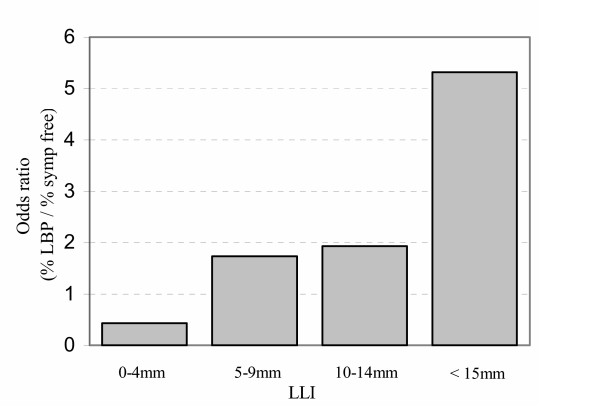
“Recognizing that measurements to the precision of a millimeter will be prone to error, other studies – again, using precise radiographic methods – have examined LLI within a measured range [7,16,17].”
InfluentialLovell and Winter's Pediatric Orthopedics
Morrissy, R. T., & Weinstein, S. L. (1996) · Cited by 348
Risk Factors for Recurrent Stress Fractures in Athletes
Korpelainen, R., Orava, S., Karpakka, J., Siira, P., & Hulkko, A. (2001) · The American Journal of Sports Medicine · doi:10.1177/03635465010290030901 · Cited by 346
Moseley, C. F., Cassidy, N., & Bernstein, R. M. (2007) · Pediatric Orthopaedic Secrets · doi:10.1016/b978-1-4160-2957-1.10039-9 · Cited by 320
Low-Back Pain Associated With Leg Length Inequality
GILES, L. G. F., & TAYLOR, J. R. (1981) · Spine · doi:10.1097/00007632-198109000-00014 · Cited by 281 · cited 2×
“Recognizing that measurements to the precision of a millimeter will be prone to error, other studies – again, using precise radiographic methods – have examined LLI within a measured range [7,16,17].”
Arthroplasty of the hip: Leg length is not important
White, T. O., & Dougall, T. (2002) · Journal of Bone and Joint Surgery - British Volume · doi:10.1302/0301-620x.84b3.12460 · Cited by 248 · cited 1×
“Another study of 200 post total hip replacement surgeries used validated functional outcome scores (Harris hip score and the SF-36 Health Survey) to examine the relationship of imposed LLI to functional outcome [43].”
Research works printed but not linked: 5
- Cooperstein R, Lisi A: Pelvic torsion: anatomic considerations, construct validity, and chiropractic examination procedures. Top Clin Chiro 2000, 7(3):38-49.
- Venn EK, Wakefield KA, Thompson PR: A comparative study of leg-length checks. Eur J Chiropractic 1983, 31:68-80.
- Reid DC, Smith B: Leg length inequalty: A review of etiology and management. Physiotherapy Canada 1984, 36(4):177-182.
- Friberg O: Leg length asymmetry in stress fractures. J Sports Med 1982, 22:485-488.
- Korpelainen R, Orava S, Karpakka J, Siira P, Hulkko A: Risk factors for recurrent stress fractures in athletes. Am J Sports Med 2001, 29(3):304-10. · DOI · Paper page
Cited by
Items 101–200 of 241
Scoliosis and Lower Limb Inequality: To Lift or Not to Lift, That Is the Question
Colonna, S., Casacci, F., & Borghi, C. (2024) · Cureus · doi:10.7759/cureus.58443 · Cited by 6
A proposed method to detect kinematic differences between and within individuals
Frost, D. M., Beach, T. A. C., McGill, S. M., & Callaghan, J. P. (2015) · Journal of Electromyography and Kinesiology · doi:10.1016/j.jelekin.2015.02.012 · Cited by 6
“…paper to examine the relevance of within-subject differences is comparable to previous work that has sought to describe clinical differences (e.g. Knutson, 2005) or make meaningful inferences using confidence limits (e.g. Batterham and Hopkins, 2006), but instead used participants’ variation to…”
ResultCooperstein, R. (2010) · Journal of Chiropractic Medicine · doi:10.1016/j.jcm.2010.06.003 · Cited by 6
Zheng, Q., Liu, B., Tong, X., Liu, J., Wang, J., & Zhang, L. (2022) · Quantitative Imaging in Medicine and Surgery · doi:10.21037/qims-22-282 · Cited by 6
“Knutson et al. (22) reported that only 10% of the average population has exactly equal leg length, 90% of patients have at least a 1 mm LLD, approximately 50% of the population has a 4 mm LLD, and approximately 90% of the population has an LLD of 10 mm or less.”
Hip Asymmetry: Implications in Body Contouring Surgery
Maia, M., Shikowitz-Behr, L., & Matarasso, A. (2019) · Plastic & Reconstructive Surgery · doi:10.1097/prs.0000000000005317 · Cited by 6
Millour, G., Duc, S., Puel, F., & Bertucci, W. (2020) · Sports Engineering · doi:10.1007/s12283-020-00327-w · Cited by 7
“A literature review listed several studies that measured anatomical differences in the lower limb length by accurate radiographic methods [8].”
BackgroundMethodThe prevalence and risk factors for occupational low back pain in manual therapists
Pereira, N. (2009) · DUT Open Scholar (Durban University of Technology) · doi:10.51415/10321/510 · Cited by 11
Liu, S., Yu, D., Li, H., Opoku, M., Li, J., Zhang, B., Li, Y., & Qiao, F. (2023) · Journal of Orthopaedic Surgery and Research · doi:10.1186/s13018-023-03530-0 · Cited by 5
Khamis, S., Leisman, G., & Carmeli, E. (2017) · BMJ Case Reports · doi:10.1136/bcr-2017-219645 · Cited by 5
Vella, S. P., Swain, M. S., Downie, A., Howarth, S. J., Funabashi, M., & Engel, R. M. (2023) · BMC Musculoskeletal Disorders · doi:10.1186/s12891-023-06302-3 · Cited by 5
“Much less research has investigated the biomechanical adaptations with either naturally occurring or artificially induced LLI that is smaller than 15 mm, despite suggestions that more than 90% of the population have been reported to have LLI less than 14 mm [12].”
BackgroundHaas, A., Chung, J., Kent, C. D., Mills, B., & McCoy, M. (2024) · Cureus · doi:10.7759/cureus.56223 · Cited by 7
“Neural/neurophysiological maladaptive manifestations of VS can be observed by paraspinal thermography and sEMG [195], HRV [196], blood pressure assessment [46], tonal/tissue changes, and functional leg length analysis [197-199].”
BackgroundThe Effects of Simulated Mild Leg Length Discrepancy on Gait Parameters and Trunk Acceleration
Jung, S.-J., An, D.-H., & Shin, S.-S. (2018) · Physical Therapy Korea · doi:10.12674/ptk.2018.25.4.009 · Cited by 5
Analysis of intra-examiner reliability of the tape method measure to leg length discrepancy
Brêtas, D., Nogueira, J. V., Carneiro, M. V., de Souza, R. C., & Simão, A. (2009) · Fitness & Performance Journal · doi:10.3900/fpj.8.5.335.e · Cited by 5
Becker nevus syndrome and ipsilateral breast hypoplasia: a systematic literature review
Schneider, M. E., Fritsche, E., Hug, U., & Giovanoli, P. (2017) · European Journal of Plastic Surgery · doi:10.1007/s00238-017-1327-6 · Cited by 5
“In general population, limb length inequality is common and its prevalence was up to 90% [67, 68].”
BackgroundManocchio, N., Marini, R., Ljoka, C., Giordani, L., Iovene, I., Vita, G., & Foti, C. (2025) · Journal of Clinical Medicine · doi:10.3390/jcm14113793 · Cited by 4
“Knutson’s analysis of radiographically measured anatomic LLD in the general population found a prevalence of approximately 90%, with a mean discrepancy of 0.5 cm [41].”
InfluentialBalci, A., Kocahan, T., Akınoğlu, B., Yılmaz, A. E., & Hasanoğlu, A. (2022) · Research in Sports Medicine · doi:10.1080/15438627.2022.2079980 · Cited by 4
“The presence of clinical consequences depends on factors, such as level of LLD, compensation skills of the body, daily life activities (such as standing for a long time), and physical activity level (Knutson, 2005).”
BackgroundFrolov, V. A., Nechaev, V. V., Nechaev, E. V., & Smekalkina, L. V. (2023) · Medical alphabet · doi:10.33667/2078-5631-2023-2-37-43 · Cited by 4
Siegler, A., Pick, C. G., & Been, E. (2019) · Gait & Posture · doi:10.1016/j.gaitpost.2018.12.042 · Cited by 4
Overgrowth After Pediatric Tibial Spine Repair with Symptomatic Leg Length Discrepancy
Tomasevich, K. M., Quinlan, N. J., Mortensen, A. J., Hobson, T. E., & Aoki, S. K. (2021) · JBJS Case Connector · doi:10.2106/jbjs.cc.21.00036 · Cited by 4
Cheng, K., Peng, Y., Yan, X., Wen, X., & Ding, H. (2022) · Orthopaedic Surgery · doi:10.1111/os.13328 · Cited by 4
Murphy, D. P., Webster, J. B., Lovegreen, W. T., & Simoncini, A. (2020) · Elsevier eBooks · doi:10.1016/b978-0-323-62539-5.00012-6 · Cited by 8
Gait asymmetries in children and adolescents with mild leg length discrepancy
Dobler, F., Ender, J., Lengnick, H., & Alexander, N. (2025) · Gait & Posture · doi:10.1016/j.gaitpost.2025.08.078 · Cited by 3
Cheever, C. R., Sim, H., Ahmidouch, M. Y., Moon, J., Powell, A., Shams, R. B., Wang, M., Hunter, M., Kodikara, S., Wilson, L. A., et al. (2025) · Journal of the American Geriatrics Society · doi:10.1111/jgs.70111 · Cited by 3
Yoon, J.-D., Jung, J., Cho, H.-Y., & Shin, H. (2023) · Healthcare · doi:10.3390/healthcare12010053 · Cited by 5
Predictor index of functional limb length discrepancy
Singh, V. A., Ramalingam, S., Haseeb, A., & Yasin, N. F. (2020) · Journal of orthopaedic surgery · doi:10.1177/2309499020941659 · Cited by 3
Inter-limb difference of mechanical work in limb length discrepancy
Song, M. H., Song, H., & Kim, W.-S. (2020) · Gait & Posture · doi:10.1016/j.gaitpost.2020.11.018 · Cited by 3
Hassan, I. M. I., Keblawy, M. A. E., Elsalam, M. A., & Embaby, E. A. (2023) · Hong Kong Physiotherapy Journal · doi:10.1142/s1013702523500051 · Cited by 3
Carlos, N. B. T., Drain, N. P., Byrapogu, V. K., Lippe, D., Romano, R., Kuzmishin, S., Rajesh, D., Angele, S., & Urish, K. L. (2023) · Arthroplasty Today · doi:10.1016/j.artd.2023.101151 · Cited by 3
Kısacık, P., Bazancir‐Apaydin, Z., & Apaydın, H. (2024) · Journal of Pediatric Orthopaedics · doi:10.1097/bpo.0000000000002624 · Cited by 3
“Lower extremity length discrepancy is also reported to be common in individuals without scoliosis, with a mean size of 5.2 mm. 7 Another accompanied factor is lower extremity length discrepancy, which was signi fi cantly correlated with PO.”
BackgroundInfluentialMishra, N. K., Lee, N. K. L., Loo, L. H., & Lim, K. B. L. (2024) · Journal of Pediatric Orthopaedics · doi:10.1097/bpo.0000000000002773 · Cited by 3
Mathematical modeling of the socalled Allis test: a field study in orthopedic confusion
Cooperstein, R., Haneline, M. T., & Young, M. D. (2007) · Chiropractic & Manual Therapies · doi:10.1186/1746-1340-15-3 · Cited by 3
“The oft-noted distinction of aLLI from fLLI [2,3] only adds to the complexity of the controversy.”
BackgroundWard, J., Sorrels, K., Coats, J., Pourmoghaddam, A., DeLeon, C., & Daigneault, P. (2014) · Europe PMC (PubMed Central) · Cited by 3
Exploration of Metrics for Leg Length Discrepancy Using a Wearable Gait Analysis System
Marquez, J. S., Atri, R., & Bai, O. (2018) · Annual International Conference of the IEEE Engineering in Medicine and Biology Society (EMBC) · doi:10.1109/embc.2018.8513290 · Cited by 3
Mahmoud, A. (2017) · Muscles Ligaments and Tendons Journal · doi:10.11138/mltj/2017.7.2.293 · Cited by 3
“Muscles, Ligaments and Tendons Journal 2017;7 (2):293-305 Table IV.”
BackgroundInfluentialShort leg syndrome in clinical practice
Frolov, V. A., Nechaev, V. V., Nechaev, E. V., & Ivanov, V. V. (2024) · Russian Osteopathic Journal · doi:10.32885/2220-0975-2024-2-113-130 · Cited by 2
Kelly, T., Morse, L. J., Wustrack, R. L., & Zimel, M. N. (2024) · Journal of the Pediatric Orthopaedic Society of North America · doi:10.1016/j.jposna.2024.100118 · Cited by 2
D’Hondt, J., D’Hondt, E., Aerenhouts, D., Pauw, K. D., Clarys, P., & Chapelle, L. (2026) · BMC Sports Science Medicine and Rehabilitation · doi:10.1186/s13102-026-01952-x · Cited by 3
Frenken, M., Latz, D., Schiffner, E., Quante, W. A., Knautz, M., Abrar, D. B., Schaarschmidt, B. M., & Schleich, C. (2019) · Journal of Orthopaedics · doi:10.1016/j.jor.2019.06.006 · Cited by 2
“However, there is evidence that untreated LLD can even lead to structural spinal damage such as scoliosis, concavities in the vertebral body endplates, wedging of the 5th lumbar vertebra and traction spurs.(11,12) Glycosaminoglycan Chemical exchange saturation transfer (gagCEST) is a MR imaging technique without the n…”
BackgroundGötze, M., & Hagmann, S. (2020) · Der Orthopäde · doi:10.1007/s00132-020-03977-7 · Cited by 2
Hafez, M. A., Mosa, M. F. I., Abdelaal, A. M., Moghny, A. A., & Makram, A. M. (2023) · International Orthopaedics · doi:10.1007/s00264-023-05948-x · Cited by 2
O’Callaghan, W. B., Thompson, M., Wuestemann, T., Whitehouse, S. L., & Crawford, R. (2023) · Arthroplasty Today · doi:10.1016/j.artd.2023.101206 · Cited by 2
Mattatia, J., Valentin, H., Fredj, P., Nguyen-Kim, P., Sanchez, G., Demir, R., & Roque, P. (2024) · Journal of Bodywork and Movement Therapies · doi:10.1016/j.jbmt.2024.01.036 · Cited by 4
Blievernicht, J., Sullivan, K., & Erickson, M. R. (2011) · Physiotherapy Theory and Practice · doi:10.3109/09593985.2011.606290 · Cited by 2
“Although an LLD of 12 mm was found, it was not incorporated into the intervention as literature suggests that an LLD of less than 20 mm is clinically insignificant (Knutson, 2005).”
BackgroundDoğan, A., Şengül, İ., Aşkın, A., & Tosun, A. (2021) · PM&R · doi:10.1002/pmrj.12655 · Cited by 2
“A difference of 1 cm or more between the two lower extremities was considered abnormal in the true leg length measurement.(30) To accept the measurement as normal or abnormal for other malalignment measurements, the upper values according to gender were accepted as the threshold values.”
BackgroundDynamic leg length measurement is a valid method for detecting anatomic leg length discrepancy
Khamis, S. (2020) · Technology and Health Care · doi:10.3233/thc-192006 · Cited by 2
Brêtas, D., Nogueira, J. V., Carneiro, M., de Souza, R. A., & Simão, A. P. (2009) · Fitness & Performance Journal · doi:10.3900/fpj.8.5.335.p · Cited by 2
The effect of downhill running on impact shock and asymmetry
Killian, M. L. (2007) · Montana State University ScholarWorks (Montana State University) · Cited by 2
Management of Mild Lower Extremity Deformity and Leg Length Discrepancy
Kuzma, A. L., & Nichols, L. R. (2021) · Operative Techniques in Orthopaedics · doi:10.1016/j.oto.2021.100874 · Cited by 2
Leg Length Measurement: Review
Petrova, D. A., & Kenis, V. M. (2022) · Traumatology and Orthopedics of Russia · doi:10.17816/2311-2905-1781 · Cited by 1
Oh, S., Kim, Y.-S., Kwon, S.-Y., Lim, Y. W., Park, H., Park, J., & Song, J. (2022) · Journal of Clinical Medicine · doi:10.3390/jcm11216303 · Cited by 1
“Limb length inequality was found in most people in the general population [25].”
BackgroundDabash, S., Zhang, D. T., Rozbruch, S. R., & Fragomen, A. T. (2024) · European Journal of Orthopaedic Surgery & Traumatology · doi:10.1007/s00590-024-03863-4 · Cited by 1
“…several complications such as secondary pin tract infections, risk of deep infection, muscle and soft tissue trans fixation leading to contractures, knee stiffness, pain, and anxiety; and the burden of caring for the fixation device itself are often associated with external fixators [16–19].”
The Postural-Structural-Biomechanical (PSB) Model
Bassimtabar, A. (2025) · Springer eBooks · doi:10.1007/978-3-662-71562-8_4 · Cited by 1
Talabard, M.-P., Durteste, M., Hamid, A., Vingtrinier, G., Quilliet, R., Feydy, A., Guermazi, A., Ventre, J., Lassalle, L., & Regnard, N.-E. (2025) · European Journal of Radiology · doi:10.1016/j.ejrad.2025.112516 · Cited by 1
Hitting the Limb Length Target in Total Hip Arthroplasty Requires a Patient-specific Approach
Chi, R., Cao, A., Nakla, A. P., & Rajaee, S. S. (2026) · Orthopedics · doi:10.3928/01477447-20260113-02 · Cited by 1
The Effect of Muscle Imbalance on Running Performance in Collegiate Level Athletes
Oxford, M. (2013) · Scholarship at UWindsor (University of Windsor) · Cited by 1
Effects of the Dominant Leg and Leg-crossing Preference on Pelvic Anteversion Angle
Kogo, H., & MURATA, J. (2014) · Rigakuryoho Kagaku · doi:10.1589/rika.29.39 · Cited by 1
Ortiz, J. L. (2017) · Springer eBooks · doi:10.1007/978-1-4939-6554-0_8 · Cited by 2
Adaptation and the Evolution of Disease and Dysfunction
Chaitow, L., & Wallden, M. (2008) · Elsevier eBooks · doi:10.1016/b978-044310390-2.50007-9 · Cited by 2
Volkov, I. V., Karabaev, I. S., Пташников, Д. А., Коновалов, Н. А., & Анатольевна, Л. О. (2018) · N N Priorov Journal of Traumatology and Orthopedics · doi:10.32414/0869-8678-2018-2-13-20 · Cited by 1
Correlación entre la dismetría, reparto de carga y alteraciones estructurales del miembro inferior.
Sánchez, R. M. M., Baño-Alcaraz, A., García-Vidal, J. A., Navarro, M. B., Carrasco, Á. M., & Albaladejo, A. Á. B. (2020) · European Journal of Podiatry / Revista Europea de Podología · doi:10.17979/ejpod.2020.6.1.5726 · Cited by 1
Chronic venous insufficiency symptoms and its potential causes: Are we doing it right?
Santillán-Aguayo, E., Sánchez, J. D. J. R., Carbajal-Robles, V., Duarte-Acuña, J., Piña-Avilés, F. A., & Ramírez-Berumen, M. V. (2021) · Revista Mexicana de Angiolog�a · doi:10.24875/rma.20000046 · Cited by 2
Idowu, O. K., Babalola, O. R., & Abudu, A. (2021) · Acta Orthopaedica Belgica · doi:10.52628/87.3.08 · Cited by 1
Shoe and heel lifts for leg length inequality in adults with musculoskeletal conditions
Campbell, T. M., Ghaedi, B. B., Ghogomu, E. T., Ramsay, T., & Welch, V. A. (2021) · Cochrane Database of Systematic Reviews · doi:10.1002/14651858.cd014456 · Cited by 2
Weldon, E. J., Agonias, K. B., DeJesus, J., Weldon, R. H., Au, D., & Nakasone, C. K. (2024) · Archives of Orthopaedic and Trauma Surgery · doi:10.1007/s00402-024-05239-z · Cited by 1
Reeves, B., Roper, B. P., Salton, R. L., Baumann, A., Dimovski, R., Hadley-Miller, N. A., & Albright, J. C. (2024) · PubMed Central · Cited by 1
Kamitsou, N., Kafetzakis, I., & Mandalidis, D. G. (2025) · Applied Sciences · doi:10.3390/app15063209 · Cited by 1
Multidisciplinary Manual Therapy Management of Cervicogenic Headache: A Case Report.
Ganer, N. (2015) · International Journal of Health Sciences and Research · Cited by 1
Application of a mathematical model for long bone growth
Seetharam, S. R., & Bhatia, S. K. (2012) · IEEE Annual Northeast Bioengineering Conference (NEBEC) · doi:10.1109/nebc.2012.6207099 · Cited by 1
Derivation and development of a mathematical model for long bone growth
Seetharam, S. R., & Bhatia, S. K. (2012) · IEEE Annual Northeast Bioengineering Conference (NEBEC) · doi:10.1109/nebc.2012.6207098 · Cited by 1
“This disorder can lead to a variety of issues including anxiety due to noticeable abnormalities when walking as well as back pain and physiologic changes as a result of compensation [3].”
BackgroundPabón‐Carrasco, M., Reyes, F. G., Seguín, L. F., Munuera-Martínez, P. V., Palomo-Toucedo, I. C., & Castro-Méndez, A. (2019) · Fisioterapia · doi:10.1016/j.ft.2019.02.005 · Cited by 1
ILIAC CREST HEIGHT DIFFERENCE AND OTHER RUNNING-RELATED VARIABLES’ RELATIONSHIP WITH RUNNING INJURY
Cahanin, R., Jefferson, J. R., Flynn, T. W., & Goyeneche, N. P. (2019) · International Journal of Sports Physical Therapy · doi:10.26603/ijspt20190957 · Cited by 1
(Schijnbaar) beenlengteverschil
Riezebos, C. (2017) · PodoSophia · doi:10.1007/s12481-017-0152-y · Cited by 1
“Lengteverschillen kleiner dan 2 cm worden klinisch niet-relevant geacht [2, 3].”
BackgroundJean, B., Luc, G., & Chankowsky, J. (2021) · Journal of Musculoskeletal Disorders and Treatment · doi:10.23937/2572-3243.1510105 · Cited by 1
AI in Musculoskeletal Radiology
Nehrer, S., Meier, P., DiFranco, M. D., Bertalan, Z., & Ljuhar, R. (2022) · Springer eBooks · doi:10.1007/978-3-030-64573-1_292 · Cited by 2
Bens, S. M. (2014) · ProQuest Demo Repository · Cited by 1
Measures of symmetry in gait. Methodological principles and clinical choices
Hodt-Billington, C. (2012) · NORA - Norwegian Open Research Archives · Cited by 1
Tang, P. (2018) · TSpace (University of Toronto) · Cited by 1
Leg Deformity and Length Discrepancy
Fixsen, J. A., Hill, R. A., & Grill, F. (2009) · Springer eBooks · doi:10.1007/978-1-84882-611-3_24
ACL Treatment in the Skeletally Immature Patient
Vavken, P., & Murray, M. M. (2013) · Springer eBooks · doi:10.1007/978-1-4614-0760-7_4
Brêtas, D., Nogueira, J. V., Carneiro, M., de Souza, R. A., & Simão, A. P. (2009) · Fitness & Performance Journal · doi:10.3900/fpj.8.5.335.s
Mann, L., Kleinpaul, J. F., Carpes, F. P., & dos Santos, S. G. (2009) · journal of physical education · doi:10.4025/reveducfis.v20i3.7316
Foot orthoses improve kinematic measurement in young women with biomechanical abnormality
Rachmawati, M. R., Tulaar, A. B., Mansyur, M., Idris, F. H., Ismail, I., & Haryadi, R. D. (2013) · DOAJ (DOAJ: Directory of Open Access Journals) · doi:10.18051/univmed.2013.v32.187-196
“The presence of functional leg-length disparity due to foot pronation, which results in pelvic height difference, has been demonstrated in previous studies conducted by Knutson, Lenvinger et al., and Rothbart.”
BackgroundInfluentialGheno, R. (2012) · LA Referencia (Red Federada de Repositorios Institucionales de Publicaciones Científicas)
Lower Limb Alignment and Leg Length Discrepancy
Jowett, C., & Barry, M. J. (2016) · In clinical practice · doi:10.1007/978-1-4471-6769-3_13
Botes, J. A. (2016) · DUT Open Scholar (Durban University of Technology) · doi:10.51415/10321/1626
Serlo, J. A. (2017) · Helda - University of Helsinki Institutional Repository
An Investigation of the Biomechanical Implications of Lower Limb Fractures and Leg Length Disparity
Mills, E. N. C. (2016) · STARS (University of Central Florida)
Mahajan, D. N. P. (2017) · Journal of Medical Science And clinical Research · doi:10.18535/jmscr/v5i8.77
Abstract: Hip Asymmetry: Implications in Abdominal Contour Surgery
Maia, M., Shikowitz-Behr, L., & Matarasso, A. (2017) · Plastic & Reconstructive Surgery Global Open · doi:10.1097/01.gox.0000526230.09701.d8
Dolor lumbar crónico y pronación unilateral o bilateral del pie
Pabón‐Carrasco, M., Palomo-Toucedo, I. C., Munuera-Martínez, P. V., Seguín, L. F., & Castro-Méndez, A. (2019) · Fisioterapia · doi:10.1016/j.ft.2019.04.003
Sergueef, N., & Nelson, K. E. (2015) · Elsevier eBooks · doi:10.1016/b978-2-8101-0159-7.00008-6
Peris, C. D., Gómez-Bernal, A., Santafé, J. A., Almenar-Arasanz, A. J., & Muñoz, F. B. (2020) · Revista Española de Podología · doi:10.20986/revesppod.2020.1553/2019
Obiang, E., Obiang, J. A., Mezene, C., Mbameyo, S. M., & Obame, R. (2020) · HEALTH SCIENCES AND DISEASE
Prevalence and Degree of Lower Limb Inequality in Asymptomatic Young Adult Nigerians
Ajani, R. S., & Ayanleke, E. O. (2020) · Journal of Advances in Medical and Pharmaceutical Sciences · doi:10.9734/jamps/2020/v22i930190
Evaluation of immediate effect of sacroiliac joint manipulation on balance and muscle strength
TOPRAK, M., Coşkunsu, D. K., Alptekin, H. K., & İnal, H. S. (2021) · Gazzetta Medica Italiana Archivio per le Scienze Mediche · doi:10.23736/s0393-3660.19.04215-3
Effect of Tibial Length Discrepancy on the Pelvic List During Human Gait
Shaw, D., & Andrabi, S. M. H. (2021) · International Journal of Current Research and Review · doi:10.31782/ijcrr.2021.131533
Khatri, K., Banga, R. K., Malhotra, N., & Bansal, D. (2021) · Revista Brasileira de Ortopedia · doi:10.1055/s-0041-1732392
Contratos de trabajo, contratos administrativos y personal estatutario
Moya, J. M. (2005) · Manuales de formación continuada
Mahmoud, A., Abundo, P., Basile, L., Albensi, C., Marasco, M., Bellizzi, L., Galasso, F., & Foti, C. (2019) · Muscles Ligaments and Tendons Journal · doi:10.32098/mltj.02.2017.12
Végtaghosszkülönbség speciális esete csípőprotézis-beültetés kapcsán : Esetismertetés
Kovács, D., & Than, P. (2021) · Magyar Traumatológia Ortopédia Kézsebészet Plasztikai Sebészet · doi:10.21755/mto.2021.064.0104.007
Metadata
- Authors
- Knutson, G. A.
- Corresponding author
- Knutson, Gary A
- Venue
- Chiropractic & Osteopathy
- Published
- 2005-07-20
- Volume
- 13
- Issue
- 1
- Pages
- 11-11
- ISSN
- 1746-1340 (ISSN-L)
- PMC
- PMC1232860
- OpenAlex
- W1937327178
- Cited by
- 242
- References
- 62
- Citations by year
- 2026: 13 · 2025: 14 · 2024: 23 · 2023: 21 · 2022: 19 · 2021: 24 · 2020: 19 · 2019: 14 · 2018: 12 · 2017: 21 · 2016: 8 · 2015: 6 · 2014: 8 · 2013: 7 · 2012: 9
- FWCI
- 1.48
- Type
- journal article
- Language
- en
- Open access
- hybrid
- doi.org
- Licence
- cc-by
- Locations
- Chiropractic & Manual Therapies (publishedVersion, cc-by)
- PubMed Central (publishedVersion, cc-by)
- PubMed (publishedVersion)
- DOAJ (DOAJ: Directory of Open Access Journals) (submittedVersion)
- Topics
- Physical Sciences › Engineering › Biomedical Engineering › Lower Extremity Biomechanics and Pathologies
- Health Sciences › Medicine › Orthopedics and Sports Medicine › Foot and Ankle Surgery
- Health Sciences › Health Professions › Physical Therapy, Sports Therapy and Rehabilitation › Musculoskeletal pain and rehabilitation
- Keywords
- short leg, prevalence, clinical significance, clinical decision-making
About these checks
Registry, retraction, Cites and statistics results are computed, not judged, with one exception: a printed reference that no index lists is read once by a model before it counts as a citation error. Claims are extracted by a model and kept only when their quote appears verbatim in the text; each cited source is then checked, with a model’s help, for whether it says what the claim relies on. Those verdicts can be wrong — read the claim’s quote and the cited source before relying on one.
Statistics and arithmetic are recomputed, not judged.
Confidence bands are shown only for fields calibrated on our annotated test set. None is calibrated yet, so no band is shown.
What counts as a claim ›How we measure confidence ›How we check this ›
Are you an author, or do you see a problem with this page? Request a review
Data sources
Bibliographic data: Semantic Scholar, OpenAlex, Crossref.
Contains information from the Semantic Scholar Academic Graph Datasets, made available under the ODC Attribution License (ODC-BY 1.0).
Semantic Scholar’s data is described in: Kinney, R., et al. (2023). The Semantic Scholar Open Data Platform. arXiv:2301.10140.
