

Anatomic and functional leg-length inequality: A review and recommendation for clinical decision-making. Part I, anatomic leg-length inequality: prevalence, magnitude, effects and clinical significance
Open accessThe DOI matches its Crossref record; 61 of the 62 references it cites were found in a registry or an index.
Abstract
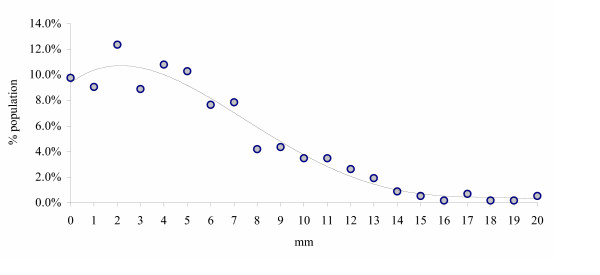
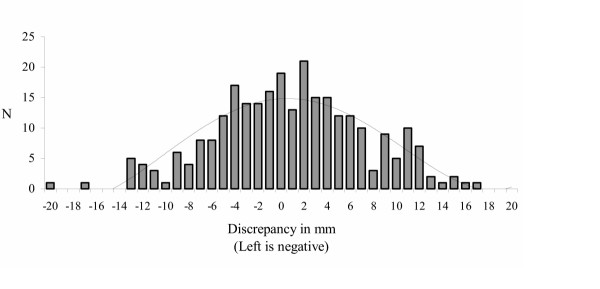
Background: Leg-length inequality is most often divided into two groups: anatomic and functional. Part I of this review analyses data collected on anatomic leg-length inequality relative to prevalence, magnitude, effects and clinical significance. Part II examines the functional "short leg" including anatomic-functional relationships, and provides an outline for clinical decision-making. Methods: Online database – Medline, CINAHL and MANTIS – and library searches for the time frame of 1970–2005 were done using the term "leg-length inequality". Results and Discussion: Using data on leg-length inequality obtained by accurate and reliable x-ray methods, the prevalence of anatomic inequality was found to be 90%, the mean magnitude of anatomic inequality was 5.2 mm (SD 4.1). The evidence suggests that, for most people, anatomic leg-length inequality does not appear to be clinically significant until the magnitude reaches ~ 20 mm (~3/4"). Conclusion: Anatomic leg-length inequality is near universal, but the average magnitude is small and not likely to be clinically significant.
Overview
The claims and statistics of this paper haven’t been checked yet.
Free: it reads the open-access text and checks the first 5 claims that cite a source we can check. Create a free account to check every claim.
Integrity signals
Registry
Cites
Statistics
Figures
Verification
Claims the paper makes
The claims and statistics of this paper haven’t been checked yet.
Free: it reads the open-access text and checks the first 5 claims that cite a source we can check. Create a free account to check every claim.
Self-check
Percentages, sums and reported differences re-computed from the paper’s own numbers.
The self-check needs the paper’s full text.
Citations
Cites
Epidemiological features of chronic low-back pain
Andersson, G. B. (1999) · The Lancet · doi:10.1016/s0140-6736(99)01312-4 · Cited by 3,181 · cited 1×
“Chronic low back pain (CLBP) affects about 21% of the population [34,35].”
Sutton, H. (1937) · Medical Journal of Australia · doi:10.5694/j.1326-5377.1937.tb43685.x · Cited by 816
Myofascial pain and dysfunction
Travell, J. G. (1983) · Medical Entomology and Zoology · Cited by 605
Gurney, B. (2002) · Gait & Posture · doi:10.1016/s0966-6362(01)00148-5 · Cited by 439 · cited 4×
“Gurney B, Mermier C, Robergs R, Gibson A, Rivero D: Effects of Limb-Length Discrepancy on Gait Economy and LowerExtremity Muscle Activity in Older Adults.”
InfluentialClinical Symptoms and Biomechanics of Lumbar Spine and Hip Joint in Leg Length Inequality
FRIBERG, O. (1983) · Spine · doi:10.1097/00007632-198309000-00010 · Cited by 397 · cited 5×
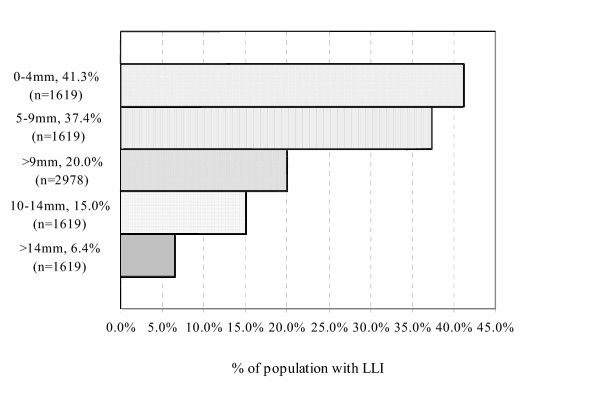
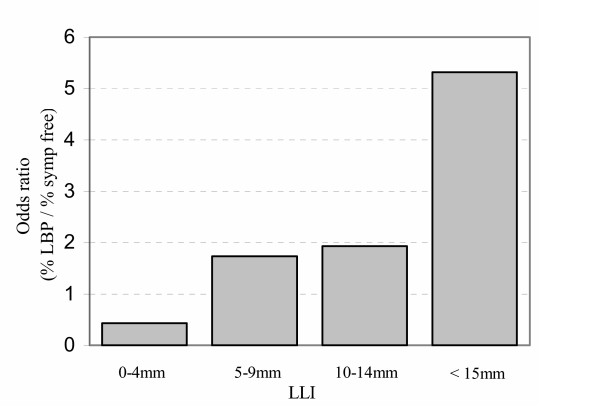
“Recognizing that measurements to the precision of a millimeter will be prone to error, other studies – again, using precise radiographic methods – have examined LLI within a measured range [7,16,17].”
InfluentialLovell and Winter's Pediatric Orthopedics
Morrissy, R. T., & Weinstein, S. L. (1996) · Cited by 348
Risk Factors for Recurrent Stress Fractures in Athletes
Korpelainen, R., Orava, S., Karpakka, J., Siira, P., & Hulkko, A. (2001) · The American Journal of Sports Medicine · doi:10.1177/03635465010290030901 · Cited by 346
Moseley, C. F., Cassidy, N., & Bernstein, R. M. (2007) · Pediatric Orthopaedic Secrets · doi:10.1016/b978-1-4160-2957-1.10039-9 · Cited by 320
Low-Back Pain Associated With Leg Length Inequality
GILES, L. G. F., & TAYLOR, J. R. (1981) · Spine · doi:10.1097/00007632-198109000-00014 · Cited by 281 · cited 2×
“Recognizing that measurements to the precision of a millimeter will be prone to error, other studies – again, using precise radiographic methods – have examined LLI within a measured range [7,16,17].”
Arthroplasty of the hip: Leg length is not important
White, T. O., & Dougall, T. (2002) · Journal of Bone and Joint Surgery - British Volume · doi:10.1302/0301-620x.84b3.12460 · Cited by 248 · cited 1×
“Another study of 200 post total hip replacement surgeries used validated functional outcome scores (Harris hip score and the SF-36 Health Survey) to examine the relationship of imposed LLI to functional outcome [43].”
Research works printed but not linked: 5
- Cooperstein R, Lisi A: Pelvic torsion: anatomic considerations, construct validity, and chiropractic examination procedures. Top Clin Chiro 2000, 7(3):38-49.
- Venn EK, Wakefield KA, Thompson PR: A comparative study of leg-length checks. Eur J Chiropractic 1983, 31:68-80.
- Reid DC, Smith B: Leg length inequalty: A review of etiology and management. Physiotherapy Canada 1984, 36(4):177-182.
- Friberg O: Leg length asymmetry in stress fractures. J Sports Med 1982, 22:485-488.
- Korpelainen R, Orava S, Karpakka J, Siira P, Hulkko A: Risk factors for recurrent stress fractures in athletes. Am J Sports Med 2001, 29(3):304-10. · DOI · Paper page
Cited by
Items 201–241 of 241
Gait during simulated and natural leg length discrepancy: Inconsistencies in the literature
Shaw, D., & Andrabi, S. M. H. (2022) · Saudi Journal of Sports Medicine · doi:10.4103/sjsm.sjsm_14_22
Frost, M. W. (2022) · VBN Forskningsportal (Aalborg Universitet) · doi:10.54337/aau494414555
Détection clinique et radiologique d’une inégalité de longueur des membres inférieurs
Mangin, P., Casabianca, L., & Blouin, C. (2022) · Revue du Podologue · doi:10.1016/j.revpod.2022.12.003
Posttraumatische Heilungs- und Wachstumsstörungen des kindlichen Knochens
Frei, B., & Mayr, J. M. (2022) · Springer Reference Medizin · doi:10.1007/978-3-642-54673-0_162-1
Dutton, H. L., Kearns, N. T., & Spragg, R. (2022) · JPO Journal of Prosthetics and Orthotics · doi:10.1097/jpo.0000000000000454
Horwood, A., & Chockalingam, N. (2023) · Elsevier eBooks · doi:10.1016/b978-0-443-15860-5.00001-5 · Cited by 1
Lee, N. J., Fields, M. W., Hassan, F. M., Zuckerman, S. L., Ha, A. S., Lombardi, J. M., Sardar, Z. M., Lehman, R. A., & Lenke, L. G. (2023) · Journal of Neurosurgery Spine · doi:10.3171/2023.3.spine221364
Cahanin, R., Fallavollita, A., Burley, T., & McQuiston, S. A. (2023) · Ultrasound · doi:10.1177/1742271x231195741
Wiangkham, T. (2022) · Chulalongkorn Medical Journal · doi:10.58837/chula.cmj.66.1.3
“0% of the population.((15)) Although the association of LLD and LBP has been established((10)), there is no previous rigorous study investigating the relationship between LLD and asymptomatic SJD (ASJD).”
BackgroundThe effect of limb length discrepancy on spinopelvic posture
Nasr, A. S., El-Tabakh, M. R., Ramadan, M. O., & El-Rosasy, M. A.-M. (2024) · International Journal of Orthopaedics Sciences · doi:10.22271/ortho.2024.v10.i1a.3486
Angular Deformity after Temporary Epiphysiodesis for Leg Length Discrepancy
Abousamra, O., Antoniak, K. S., Vandenberg, C. D., & Wren, T. A. L. (2023) · Journal of Limb Lengthening & Reconstruction · doi:10.4103/jllr.jllr_25_22
Geambaşu, A., Costache, R. M., & Constantin, A. A. (2024) · Internal Medicine · doi:10.2478/inmed-2024-0292
Krawczyk, P., Zemková, D., Myslivec, R., Sarka, P., & Mařík, I. A. (2024) · Acta Orthopaedica et Traumatologica Turcica · doi:10.5152/j.aott.2024.21095
“During the last 2 decades, mini-invasive epiphysiodesis during the growing period has become the method of choice for management of LLD between 2 and 5 cm. 4,10,23,26,27 The modified drilling epiphysiodesis technique 15 requires experience with pinpoint prediction of remaining growth.”
BackgroundMethodKluszczyński, M., Karpiel, I. S., & Piechaczek, A. (2024) · Advances in Clinical and Experimental Medicine · doi:10.17219/acem/191598
Das postural-strukturell-biomechanische (PSB) Modell
Bassimtabar, A. (2025) · Springer eBooks · doi:10.1007/978-3-662-70334-2_4
Computed Tomography Scanographic Analysis of Symptomatic Limb Length Discrepancy
Fleischman, A., An, M., & Young, W. (2025) · Journal of the American Podiatric Medical Association · doi:10.7547/23-179
Konior, K., Bitenc-Jasiejko, A., Lubkowska, A., Stachowska, E., Walińska, A., Gonta, K., Skomro, P., & Lietz–Kijak, D. (2025) · Symmetry · doi:10.3390/sym17071059
Seo, M. W., Lee, C., & Park, H. J. (2025) · Diagnostics · doi:10.3390/diagnostics15151943
“Although LLD is common in both healthy and pathological conditions [26], it causes gait disorders in both contexts.”
Gesing, V., & Reinecke, S. (2025) · Elsevier eBooks · doi:10.1016/b978-3-437-45043-3.00007-x
Alexander, J. (2012) · CLOK (University of Central Lancashire)
Vella, S. P., Swain, M. S., Downie, A., Howarth, S. J., Funabashi, M., & Engel, R. M. (2023) · Figshare · doi:10.6084/m9.figshare.22618987
Shin, C. H., Lim, C., Kim, H. Y., Yoo, W. J., Cho, T.-J., Choi, I. H., & Ko, J. M. (2021) · Figshare · doi:10.6084/m9.figshare.16779868
Shin, C. H., Lim, C., Kim, H. Y., Yoo, W. J., Cho, T.-J., Choi, I. H., & Ko, J. M. (2021) · Figshare · doi:10.6084/m9.figshare.16779871
Bocheński, W., Luba, G., Manca, F., Philippi, M. L., Vasta, S., Pili, D., & Torre, G. (2026) · Strategies in Trauma and Limb Reconstruction · doi:10.5005/jp-journals-10080-1644
Alqahtani, A. M. A., Assiri, K. I., Chalikkandy, S. N., Koura, G. M., AlMoqbel, R. M., Habtar, S., Alahmad, R. M., AlHamid, N. Z. A., & Alqahtani, A. A. (2026) · The Journal of Contemporary Dental Practice · doi:10.5005/jp-journals-10024-3983
State of the art of lower limb prosthesis simulators: A literature review
Neelen, I., van der Windt, B., Major, M. J., & Smit, G. (2026) · Wearable Technologies · doi:10.1017/wtc.2026.10038
“Asymmetry in leg length up to 2 cm is not uncommon in able-bodied persons (Knutson, 2005), while asymmetries larger than 2 cm can lead to altered kinematics (Vanicek et al., 2007).”
Leg length discrepancy as a risk factor of lower back pain
Ukolov, I. A., Churyukanov, M. V., & Коваленко, А. А. (2026) · Russian Journal of Pain · doi:10.17116/pain20262401182
Millour, G. (2020) · theses.fr (ABES) · doi:10.70675/9c848222z5802z444cz906dzb838e1c884de · Cited by 3
Argemí, A. M., Alexe, D. I., Ortuño‐Soriano, I., Zaragoza‐García, I., Sempere, Á. S., Fermoso, R. B., Carrión, Á. G., & Sánchez‐Gómez, R. (2026) · Life · doi:10.3390/life16040612
“This threshold was selected because, with high-precision imaging and standardized positioning, a 3 mm difference exceeds the absolute measurement error typically reported for these modalities ( ≈ 2.6–3.6 mm) [7,26,27].”
InfluentialAdenis, N. (2025) · theses.fr (ABES) · doi:10.70675/37675cd0z9427z45fczaa8az3f1af854d94e
Gholinezhad, S., Rahbek, O., Husum, H., & Kold, S. (2025) · Journal of Limb Lengthening & Reconstruction · doi:10.4103/jllr.jllr_8_25
Chaudhry, F., Bridger, A., Daud, A., Greenberg, A., Safir, O. A., GROSS, A., & Kuzyk, P. R. T. (2026) · International Orthopaedics · doi:10.1007/s00264-026-06881-5
“Prior literature has demonstrated that patient tolerance to LLD may vary considerably between individuals, with some patients remaining asymptomatic despite large discrepancies, while others are significantly affected by relatively minor inequalities [6, 16, 23, 24].”
Something Doesn’t Look Right: Recognizing and Managing Limb-Length Discrepancy
Marsh, D., Said, M., Mackey, C., & Fornari, E. (2026) · Pediatrics in Review · doi:10.1542/pir.2025-006863
Rodríguez-Cigala, M. A., Velázquez-Arestegui, D., Fuentes-Figueroa, S., & Guzmán-Martín, C. A. (2026) · Journal of Clinical Medicine · doi:10.3390/jcm15166198
Latessa, P. M., Spagnolo, F., Martinelli, I., Belli, G., & Raggi, D. (2026) · Applied Sciences · doi:10.3390/app16168217
“The evaluation of postural alignment is supported by the importance of functional rather than structural assessment, particularly concerning Functional Leg Length Discrepancy (FLLD) arising from adaptive positioning [22,23].”
Rupp, M., von Schacky, C. E., Lindner, F. J., Feucht, M. J., Ehmann, Y. J., Fritsch, L., Doucas, A., Haddadin, S., Hinterwimmer, F., Jung, M., et al. (2026) · Knee Surgery Sports Traumatology Arthroscopy · doi:10.1002/ksa.70635
Johnson, B. L., Lewis, D. M., Metz, A. K., Matter, A., Peters, C. L., Anderson, L. A., & Aoki, S. K. (2026) · Arthroscopy Sports Medicine and Rehabilitation · doi:10.1002/ars2.70129
“22,23 24-26 Among all patients in this study, the higher hip tended to be more symptomatic in both the PAO (61”
Sanhudo, J. A. V. (2012) · Americanae (AECID Library)
Butnarasu, O. (2014) · DUNE - DigitalUNE (University of New England)
Metadata
- Authors
- Knutson, G. A.
- Corresponding author
- Knutson, Gary A
- Venue
- Chiropractic & Osteopathy
- Published
- 2005-07-20
- Volume
- 13
- Issue
- 1
- Pages
- 11-11
- ISSN
- 1746-1340 (ISSN-L)
- PMC
- PMC1232860
- OpenAlex
- W1937327178
- Cited by
- 242
- References
- 62
- Citations by year
- 2026: 13 · 2025: 14 · 2024: 23 · 2023: 21 · 2022: 19 · 2021: 24 · 2020: 19 · 2019: 14 · 2018: 12 · 2017: 21 · 2016: 8 · 2015: 6 · 2014: 8 · 2013: 7 · 2012: 9
- FWCI
- 1.48
- Type
- journal article
- Language
- en
- Open access
- hybrid
- doi.org
- Licence
- cc-by
- Locations
- Chiropractic & Manual Therapies (publishedVersion, cc-by)
- PubMed Central (publishedVersion, cc-by)
- PubMed (publishedVersion)
- DOAJ (DOAJ: Directory of Open Access Journals) (submittedVersion)
- Topics
- Physical Sciences › Engineering › Biomedical Engineering › Lower Extremity Biomechanics and Pathologies
- Health Sciences › Medicine › Orthopedics and Sports Medicine › Foot and Ankle Surgery
- Health Sciences › Health Professions › Physical Therapy, Sports Therapy and Rehabilitation › Musculoskeletal pain and rehabilitation
- Keywords
- short leg, prevalence, clinical significance, clinical decision-making
About these checks
Registry, retraction, Cites and statistics results are computed, not judged, with one exception: a printed reference that no index lists is read once by a model before it counts as a citation error. Claims are extracted by a model and kept only when their quote appears verbatim in the text; each cited source is then checked, with a model’s help, for whether it says what the claim relies on. Those verdicts can be wrong — read the claim’s quote and the cited source before relying on one.
Statistics and arithmetic are recomputed, not judged.
Confidence bands are shown only for fields calibrated on our annotated test set. None is calibrated yet, so no band is shown.
What counts as a claim ›How we measure confidence ›How we check this ›
Are you an author, or do you see a problem with this page? Request a review
Data sources
Bibliographic data: Semantic Scholar, OpenAlex, Crossref.
Contains information from the Semantic Scholar Academic Graph Datasets, made available under the ODC Attribution License (ODC-BY 1.0).
Semantic Scholar’s data is described in: Kinney, R., et al. (2023). The Semantic Scholar Open Data Platform. arXiv:2301.10140.
