

Do self- reported intentions predict clinicians' behaviour: a systematic review
Open accessThe DOI matches its Crossref record; 34 of the 35 references it cites were found in a registry or an index.
Abstract
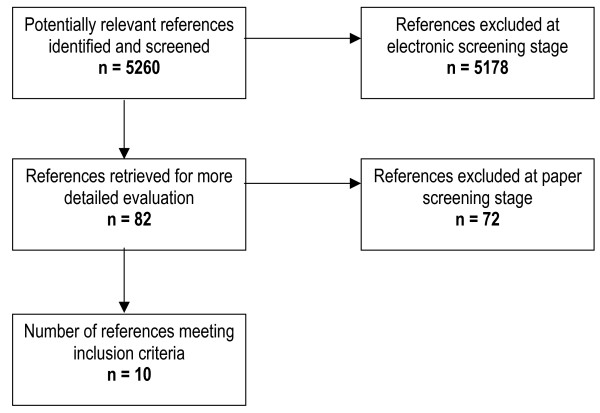
BACKGROUND: Implementation research is the scientific study of methods to promote the systematic uptake of clinical research findings into routine clinical practice. Several interventions have been shown to be effective in changing health care professionals' behaviour, but heterogeneity within interventions, targeted behaviours, and study settings make generalisation difficult. Therefore, it is necessary to identify the 'active ingredients' in professional behaviour change strategies. Theories of human behaviour that feature an individual's "intention" to do something as the most immediate predictor of their behaviour have proved to be useful in non-clinical populations. As clinical practice is a form of human behaviour such theories may offer a basis for developing a scientific rationale for the choice of intervention to use in the implementation of new practice. The aim of this review was to explore the relationship between intention and behaviour in clinicians and how this compares to the intention-behaviour relationship in studies of non-clinicians. METHODS: We searched: PsycINFO, MEDLINE, EMBASE, CINAHL, Cochrane Central Register of Controlled Trials, Science/Social science citation index, Current contents (social & behavioural med/clinical med), ISI conference proceedings, and Index to Theses. The reference lists of all included papers were checked manually. Studies were eligible for inclusion if they had: examined a clinical behaviour within a clinical context, included measures of both intention and behaviour, measured behaviour after intention, and explored this relationship quantitatively. All titles and abstracts retrieved by electronic searching were screened independently by two reviewers, with disagreements resolved by discussion. DISCUSSION: Ten studies were found that examined the relationship between intention and clinical behaviours in 1623 health professionals. The proportion of variance in behaviour explained by intention was of a similar magnitude to that found in the literature relating to non-health professionals. This was more consistently the case for studies in which intention-behaviour correspondence was good and behaviour was self-reported. Though firm conclusions are limited by a smaller literature, our findings are consistent with that of the non-health professional literature. This review, viewed in the context of the larger populations of studies, provides encouragement for the contention that there is a predictable relationship between the intentions of a health professional and their subsequent behaviour. However, there remain significant methodological challenges.
Overview
The claims and statistics of this paper haven’t been checked yet.
Free: it reads the open-access text and checks the first 5 claims that cite a source we can check. Create a free account to check every claim.
Integrity signals
Registry
Cites
Statistics
Figures
Verification
Claims the paper makes
The claims and statistics of this paper haven’t been checked yet.
Free: it reads the open-access text and checks the first 5 claims that cite a source we can check. Create a free account to check every claim.
Claims other papers make about this one
Each is checked against this paper’s own text: does it say what the citing paper says it does?
The source backs part of the claim, not all of it — or backs it for a different population, condition or comparison.
In the citing paper
“Although intention is the best available proxy for actual use (Eccles et al., 2006), it cannot directly being translated to actual utilization, and the so -called ' intention -behavior gap ' is widely known (Sniehotta, Scholz, & Schwarzer, 2005).”
From Increasing intentions to use mental health services among university students. Results of a pilot randomized controlled trial within the World Health Organization's World Mental Health International College Student Initiative (2019) · cites this paper as Eccles et al., 2006
Experimental — accuracy not yet measuredIn the citing paper
“Other systematic reviews and meta-analyses have focused on measures that assess provider-level constructs, such as behavioral intentions to implement evidence-based practices [38] and other research-related variables (e.g., attitudes toward and involvement in research activities) and demographic attributes (e.g., education [41]).”
In the citing paper
“All of these factors play a central role in behavior change associated with effective mental health treatments [87,88,89]”
From eMental Healthcare Technologies for Anxiety and Depression in Childhood and Adolescence: Systematic Review of Studies Reporting Implementation Outcomes (2018) · cites this paper as [89]
Self-check
Percentages, sums and reported differences re-computed from the paper’s own numbers.
The self-check needs the paper’s full text.
Citations
Cites
The theory of planned behavior
Ajzen, I. (1991) · Organizational Behavior and Human Decision Processes · doi:10.1016/0749-5978(91)90020-t · Cited by 90,587
(1980) · Medical Entomology and Zoology · Cited by 25,810
Efficacy of the Theory of Planned Behaviour: A meta‐analytic review
Armitage, C. J., & Conner, M. (2001) · British Journal of Social Psychology · doi:10.1348/014466601164939 · Cited by 9,970 · cited 3×
“None of these reviews [7-10] specifically identified studies of healthcare professionals and clinical behaviours.”
Health Measurement Scales: A Practical Guide to Their Development and Use
Streiner, D. L., Norman, G. R., & Cairney, J. (1989) · Cited by 9,595
Cohen, J. (1992) · Psychological Bulletin · doi:10.1037//0033-2909.112.1.155 · Cited by 8,771
Implementation intentions: Strong effects of simple plans.
Gollwitzer, P. M. (1999) · American Psychologist · doi:10.1037/0003-066x.54.7.493 · Cited by 5,478 · cited 1×
“A second approach focuses on mediators of the intention-behaviour relationship, or processes that might be regarded as 'post-intentional,' such as implementation intentions [12], action plans and coping plans [13].”
The Theory of Planned Behaviour
Conner, M. T., & McMillan, B. (2004) · Research Explorer (The University of Manchester) · Cited by 4,463
Webb, T. L., & Sheeran, P. (2006) · Psychological Bulletin · doi:10.1037/0033-2909.132.2.249 · Cited by 3,732 · cited 5×
“A meta-analysis of 10 meta-analyses by Sheeran [9] reported that intention accounted for almost one-third of the variance in behaviour.”
InfluentialIntention—Behavior Relations: A Conceptual and Empirical Review
Sheeran, P. (2002) · European Review of Social Psychology · doi:10.1080/14792772143000003 · Cited by 3,688 · cited 4×
“None of these reviews [7-10] specifically identified studies of healthcare professionals and clinical behaviours.”
InfluentialThe Theory of Planned Behavior: A Review of its Applications to Health-Related Behaviors
Godin, G., & Kok, G. (1996) · American Journal of Health Promotion · doi:10.4278/0890-1171-11.2.87 · Cited by 3,185 · cited 2×
“None of these reviews [ 7-10 ] specifically identified studies of healthcare professionals and clinical behaviours.”
Influential
Research works printed but not linked: 3
- Oxman AD No magic bullets: a systematic review of 102 trials of interventions to help health care professionals deliver services more effectively or efficiently 1994 Hamilton,Ontario, McMaster University
- Quinn RM Attitude, subjective norm, behavioral intention, and patient teaching among nurses 1996 Temple University ED, v. D.
- Triandis HC Interpersonal behavior 1977 Monteray, CA, Brooks/Cole
Cited by
Forsetlund, L., Bjørndal, A., Rashidian, A., Jamtvedt, G., O'Brien, M. A., Wolf, F. M., Davis, D., Odgaard-Jensen, J., & Oxman, A. D. (2009) · Cochrane Database of Systematic Reviews · doi:10.1002/14651858.cd003030.pub2 · Cited by 1,849
Godin, G., Bélanger-Gravel, A., Eccles, M., & Grimshaw, J. (2008) · Implementation Science · doi:10.1186/1748-5908-3-36 · Cited by 1,096
Self-citationChaudoir, S. R., Dugan, A. G., & Barr, C. H. (2013) · Implementation Science · doi:10.1186/1748-5908-8-22 · Cited by 800
Nilsen, P., Roback, K., Broström, A., & Ellström, P.-E. (2012) · Implementation Science · doi:10.1186/1748-5908-7-53 · Cited by 284
“Two systematic reviews [5,15] of the relationship between intention and clinical behaviour found only 16 studies, but suggested that the nature of the relationship was similar to that of nonhealthcare professionals.”
Forsetlund, L., O'Brien, M. A., Forsén, L., Mwai, L., Reinar, L. M., Okwen, M. P., Horsley, T., & Rose, C. J. (2021) · Cochrane Database of Systematic Reviews · doi:10.1002/14651858.cd003030.pub3 · Cited by 268
Williams, N. J., & Beidas, R. S. (2019) · Journal of Child Psychology and Psychiatry · doi:10.1111/jcpp.12960 · Cited by 233
Scott, S. D., Plotnikoff, R. C., Karunamuni, N., Bize, R., & Rodgers, W. (2008) · Implementation Science · doi:10.1186/1748-5908-3-41 · Cited by 217
A Randomized Study of How Physicians Interpret Research Funding Disclosures
Kesselheim, A. S., Robertson, C. T., Myers, J. A., Rose, S. L., Gillet, V., Ross, K. M., Glynn, R. J., Joffe, S., & Avorn, J. (2012) · New England Journal of Medicine · doi:10.1056/nejmsa1202397 · Cited by 183
Kortteisto, T., Kaila, M., Komulainen, J., Mäntyranta, T., & Rissanen, P. (2010) · Implementation Science · doi:10.1186/1748-5908-5-51 · Cited by 164
Are there valid proxy measures of clinical behaviour? a systematic review
Hrisos, S., Eccles, M. P., Francis, J. J., Dickinson, H. O., Kaner, E. F., Beyer, F., & Johnston, M. (2009) · Implementation Science · doi:10.1186/1748-5908-4-37 · Cited by 162
“Two recent systematic reviews evaluated the efficacy of social cognitive models of behaviour in explaining clinical performance [3,27].”
Self-citationFrench, S. D., McKenzie, J. E., O'Connor, D. A., Grimshaw, J. M., Mortimer, D., Francis, J. J., Michie, S., Spike, N., Schattner, P., Kent, P., et al. (2013) · PLoS ONE · doi:10.1371/journal.pone.0065471 · Cited by 156
Self-citationEccles, M. P., Grimshaw, J. M., Johnston, M., Steen, N., Pitts, N. B., Thomas, R., Glidewell, E., Maclennan, G., Bonetti, D., & Walker, A. (2007) · Implementation Science · doi:10.1186/1748-5908-2-26 · Cited by 149
“A systematic review [39] found only 10 studies exploring the relationship between intention and behaviour in healthcare professionals, but these reported explaining a similar proportion of the variance in”
Self-citationBrennan, S. E., McKenzie, J. E., Turner, T., Redman, S., Makkar, S., Williamson, A., Haynes, A., & Green, S. E. (2017) · Health Research Policy and Systems · doi:10.1186/s12961-016-0162-8 · Cited by 149
Nilsén, P., Wallerstedt, B., Behm, L., & Ahlström, G. (2018) · Implementation Science · doi:10.1186/s13012-017-0699-0 · Cited by 167
Beenstock, J., Sniehotta, F. F., White, M., Bell, R., Milne, E. M., & Araujo-Soares, V. (2012) · Implementation Science · doi:10.1186/1748-5908-7-36 · Cited by 138
Fishman, J., Yang, C. F., & Mandell, D. S. (2021) · Implementation Science · doi:10.1186/s13012-021-01153-9 · Cited by 181
Evidence briefs and deliberative dialogues: perceptions and intentions to act on what was learnt
Moat, K. A., Lavis, J. N., Clancy, S. J., El-Jardali, F., Pantoja, T., & for the Knowledge Translation Platform Evaluation study team (2014) · Bulletin of the World Health Organization · doi:10.2471/blt.12.116806 · Cited by 110
Fishman, J., Lushin, V., & Mandell, D. S. (2020) · Implementation Science Communications · doi:10.1186/s43058-020-00050-4 · Cited by 134
Ebert, D. D., Franke, M., Kählke, F., Küchler, A., Bruffaerts, R., Mortier, P., Karyotaki, E., Alonso, J., Cuijpers, P., Berking, M., et al. (2019) · International Journal of Methods in Psychiatric Research · doi:10.1002/mpr.1754 · Cited by 105
Friedmann, P. D., Wilson, D., Knudsen, H. K., Ducharme, L. J., Welsh, W. N., Frisman, L. K., Knight, K. K., Lin, H., James, A., Albizu‐García, C. E., et al. (2014) · Journal of Substance Abuse Treatment · doi:10.1016/j.jsat.2014.10.001 · Cited by 111
Ferguson, J., Wakeling, J., & Bowie, P. (2014) · BMC Medical Education · doi:10.1186/1472-6920-14-76 · Cited by 131
Zhou, G., Stoltzfus, J. C., Houldin, A. D., Parks, S. M., & Swan, B. A. (2010) · Oncology nursing forum · doi:10.1188/10.onf.e400-e410 · Cited by 131
“…Vol. 37, No. 6, November 2010 • Oncology Nursing Forum The Theory of Planned Behavior has been used readily in studies among healthcare professionals to predict behavioral intention and clinical behaviors (Eccles et al., 2006; Godin, Bélanger-Gravel, Eccles, & Grimshaw, 2008; Perkins et al., 2007).”
Healthcare professional acceptance of telemonitoring for chronic care patients in primary care
Asua, J., Orruño, E., Reviriego, E., & Gagnon, M. P. (2012) · BMC Medical Informatics and Decision Making · doi:10.1186/1472-6947-12-139 · Cited by 95
Potthoff, S., Rasul, O., Sniehotta, F. F., Marques, M. M., Beyer, F. R., Thomson, R., Avery, L., & Presseau, J. (2019) · Health Psychology Review · doi:10.1080/17437199.2018.1547119 · Cited by 106
“…included studies The methodological quality of seven studies were rated as fair (Bonetti et al., 2006; Bonetti et al., 2009; Bonetti et al., 2010; Eccles et al., 2006; Eccles et al., 2012; Grimshaw et al., 2011; Hrisos et al., 2008), two studies rated as good quality (Presseau, Johnston, Francis…”
Self-citationMoore, D. E., Chappell, K., Sherman, L., & Vinayaga-Pavan, M. (2018) · Medical Teacher · doi:10.1080/0142159x.2018.1483578 · Cited by 92
Persuasive messaging to increase COVID-19 vaccine uptake intentions
James, E. K., Bokemper, S., Gerber, A. S., Omer, S. B., & Huber, G. A. (2021) · Vaccine · doi:10.1016/j.vaccine.2021.10.039 · Cited by 90
Amemori, M., Michie, S., Korhonen, T., Murtomaa, H., & Kinnunen, T. H. (2011) · Implementation Science · doi:10.1186/1748-5908-6-50 · Cited by 82
Côté, F., Gagnon, J., Houme, P. K., Abdeljelil, A. B., & Gagnon, M. (2012) · Journal of Advanced Nursing · doi:10.1111/j.1365-2648.2011.05922.x · Cited by 113
Musa, G., Seng, W. T., Thirumoorthi, T., & Abessi, M. (2010) · Tourism in Marine Environments · doi:10.3727/154427310x12826772784757 · Cited by 78
Barnett, D. J., Levine, R. E., Thompson, C. B., Wijetunge, G., Oliver, A. L., Bentley, M. A., Neubert, P. D., Pirrallo, R. G., Links, J. M., & Balicer, R. D. (2010) · PLoS ONE · doi:10.1371/journal.pone.0009856 · Cited by 93
Effectiveness of a Brief, Basic Evidence‐Based Practice Course for Clinical Nurses
Ramos‐Morcillo, A. J., Fernández‐Salazar, S., Ruzafa‐Martínez, M., & Casado, R. D. P. (2015) · Worldviews on Evidence-Based Nursing · doi:10.1111/wvn.12103 · Cited by 91
Presseau, J., Sniehotta, F. F., Francis, J. J., & Campbell, N. C. (2009) · Implementation Science · doi:10.1186/1748-5908-4-77 · Cited by 77
“To the best of our knowledge, none of the studies in systematic reviews of tests of social cognition models with health professionals [5,8] considered whether performing multiple goal-directed behaviours was perceived to influence a focal behaviour of interest.”
Self-citationTao, W., Yang, J., & Qu, X. (2024) · JMIR Medical Education · doi:10.2196/57132 · Cited by 71
Systematic Review of Standardized Patient Use in Continuing Medical Education
Wilbur, K., Elmubark, A., & Shabana, S. (2018) · Journal of Continuing Education in the Health Professions · doi:10.1097/ceh.0000000000000190 · Cited by 72
Ramis, M., Chang, A., Conway, A., LIM, D. J., Munday, J., & Nissen, L. M. (2019) · BMC Medical Education · doi:10.1186/s12909-019-1698-4 · Cited by 90
Understanding the impact of information sources on COVID-19 related preventive measures in Finland
Farooq, A., Laato, S., Islam, A. K. M. N., & Isoaho, J. (2021) · Technology in Society · doi:10.1016/j.techsoc.2021.101573 · Cited by 81
Assessing and Changing Organizational Social Contexts for Effective Mental Health Services
Glisson, C., & Williams, N. J. (2015) · Annual Review of Public Health · doi:10.1146/annurev-publhealth-031914-122435 · Cited by 70
Schoenfeld, E. M., Mader, S. C., Houghton, C., Wenger, R. J., Probst, M. A., Schoenfeld, D., Lindenauer, P. K., & Mazor, K. M. (2019) · Annals of Emergency Medicine · doi:10.1016/j.annemergmed.2018.11.017 · Cited by 69
Gavaza, P., Brown, C. M., Lawson, K. A., Rascati, K. L., Wilson, J. P., & Steinhardt, M. A. (2010) · Research in Social and Administrative Pharmacy · doi:10.1016/j.sapharm.2010.09.001 · Cited by 80
Foy, R., Francis, J. J., Johnston, M., Eccles, M., Lecouturier, J., Bamford, C., & Grimshaw, J. (2007) · BMC Health Services Research · doi:10.1186/1472-6963-7-207 · Cited by 66
“A recent systematic review of the relationship between clinical behaviours and behavioural intention found that the proportion of variance in behaviour explained by intention was of a similar magnitude to that found in the literature relating to non-health professionals [13].”
Self-citationAshley, M., Pahl, S., Glegg, G., & Fletcher, S. (2019) · Frontiers in Marine Science · doi:10.3389/fmars.2019.00288 · Cited by 80
Buchbinder, R., Staples, M., Shanahan, E. M., & Roos, J. F. (2013) · PLoS ONE · doi:10.1371/journal.pone.0061243 · Cited by 74
Reynolds, S. S., Woltz, P. C., Keating, E., Neff, J., Elliott, J., Hatch, D., Yang, Q., & Granger, B. B. (2021) · Implementation Science · doi:10.1186/s13012-021-01112-4 · Cited by 83
Team leadership in the intensive care unit: The perspective of specialists*
Reader, T. W., Flin, R. H., & Cuthbertson, B. H. (2011) · Critical Care Medicine · doi:10.1097/ccm.0b013e318218a4c7 · Cited by 73
Tai, B. B., Hata, M., Wu, S. X., Frausto, S., & Law, A. V. (2016) · Journal of Evaluation in Clinical Practice · doi:10.1111/jep.12511 · Cited by 63
Francis, J. J., Tinmouth, A., Stanworth, S. J., Grimshaw, J. M., Johnston, M., Hyde, C., Stockton, C., Brehaut, J. C., Fergusson, D., & Eccles, M. P. (2009) · Implementation Science · doi:10.1186/1748-5908-4-70 · Cited by 60
Self-citationHrisos, S., Eccles, M., Johnston, M., Francis, J., Kaner, E. F., Steen, N., & Grimshaw, J. (2008) · BMC Health Services Research · doi:10.1186/1472-6963-8-11 · Cited by 60
Self-citationHack, T. F., Carlson, L. E., Butler, L., Degner, L. F., Jakulj, F., Pickles, T., Ruether, J. D., & Weir, L. M. (2011) · Supportive Care in Cancer · doi:10.1007/s00520-011-1159-z · Cited by 70
Bonetti, D., Johnston, M., Clarkson, J. E., Grimshaw, J., Pitts, N. B., Eccles, M., Steen, N., Thomas, R., Maclennan, G., Glidewell, L., et al. (2010) · Implementation Science · doi:10.1186/1748-5908-5-25 · Cited by 57
“The second outcome was a theoretically derived measure, behavioural intention, because there is also evidence supporting intention as a consistent predictor of subsequent behaviour [16,18,23].”
Self-citationGude, W. T., Roos-Blom, M.-J., van der Veer, S. N., Dongelmans, D. A., de Jonge, E., Francis, J., Peek, N. B., & de Keizer, N. F. (2018) · Implementation Science · doi:10.1186/s13012-018-0727-8 · Cited by 65
Self-citationZielińska‐Tomczak, Ł., Cerbin‐Koczorowska, M., Przymuszała, P., & Marciniak, R. (2021) · BMC Health Services Research · doi:10.1186/s12913-021-06903-5 · Cited by 75
Gavaza, P., Fleming, M. L., & Barner, J. C. (2013) · Research in Social and Administrative Pharmacy · doi:10.1016/j.sapharm.2013.06.011 · Cited by 54
Sales, A. E., Estabrooks, C. A., & Valente, T. W. (2010) · Implementation Science · doi:10.1186/1748-5908-5-49 · Cited by 55
Boyko, J. A., Lavis, J. N., Dobbins, M., & Souza, N. M. (2011) · Health Research Policy and Systems · doi:10.1186/1478-4505-9-29 · Cited by 74
Bernhardt, B. A., Zayac, C., Gordon, E. S., Wawak, L., Pyeritz, R. E., & Gollust, S. E. (2012) · Personalized Medicine · doi:10.2217/pme.12.80 · Cited by 51
Bigham, B. L., Dainty, K. N., Scales, D. C., Morrison, L. J., & Brooks, S. C. (2009) · Resuscitation · doi:10.1016/j.resuscitation.2009.09.022 · Cited by 53
Wozney, L., McGrath, P. J., Gehring, N. D., Bennett, K., Huguet, A., Hartling, L., Dyson, M. P., Soleimani, A., & Newton, A. S. (2018) · JMIR Mental Health · doi:10.2196/mental.9655 · Cited by 50
Moullin, J. C., Ehrhart, M. G., & Aarons, G. A. (2018) · Implementation Science · doi:10.1186/s13012-018-0782-1 · Cited by 52
Alabdullah, J. H., Lunen, B. L. V., Claiborne, D. M., Daniel, S. J., Yen, C., & Gustin, T. S. (2020) · Journal of Dental Education · doi:10.1002/jdd.12304 · Cited by 69
Francis, J. J., Eccles, M. P., Johnston, M., Whitty, P., Grimshaw, J. M., Kaner, E. F., Smith, L., & Walker, A. (2008) · Implementation Science · doi:10.1186/1748-5908-3-50 · Cited by 49
“A recent systematic review concluded that intention is an appropriate proxy measure of individual behaviour [9].”
Self-citationPresseau, J., Francis, J. J., Campbell, N. C., & Sniehotta, F. F. (2011) · Implementation Science · doi:10.1186/1748-5908-6-73 · Cited by 47
Self-citationWright, J., Lawton, R., O'Hara, J. K., Armitage, G., Sheard, L., Marsh, C., Grange, A., McEachan, R., Cocks, K., Hrisos, S., et al. (2016) · Programme Grants for Applied Research · doi:10.3310/pgfar04150 · Cited by 57
Self-citationLyon, A. R., Cook, C. R., Duong, M. T., Nicodimos, S., Pullmann, M. D., Brewer, S. K., Gaias, L. M., & Cox, S. (2019) · Implementation Science · doi:10.1186/s13012-019-0905-3 · Cited by 54
Prediction of health professionals' intention to screen for decisional conflict in clinical practice
Légaré, F., Graham, I. D., O’Connor, A. C., Aubin, M., Baillargeon, L., Leduc, Y., & Maziade, J. (2007) · Health Expectations · doi:10.1111/j.1369-7625.2007.00465.x · Cited by 48
Campbell, L., Novak, I., McIntyre, S. J., & Lord, S. J. (2013) · Implementation Science · doi:10.1186/1748-5908-8-132 · Cited by 53
Effects of an awareness raising campaign on intention and behavioural determinants for handwashing
Seimetz, E., Kumar, S., & Mosler, H. (2016) · Health Education Research · doi:10.1093/her/cyw002 · Cited by 49
Sassen, B., Kok, G., & Vanhees, L. (2011) · BMC Public Health · doi:10.1186/1471-2458-11-246 · Cited by 53
Gaal, S., Verstappen, W. H. J. M., & Wensing, M. (2011) · BMC Health Services Research · doi:10.1186/1472-6963-11-102 · Cited by 45
Foy, R., Bamford, C., Francis, J. J., Johnston, M., Lecouturier, J., Eccles, M., Steen, N., & Grimshaw, J. (2007) · Implementation Science · doi:10.1186/1748-5908-2-31 · Cited by 43
“However, other studies have demonstrated that measuring behavioural intention using similar methods can usefully predict actual behaviour [30-32].”
Self-citationMcKenzie, J. E., O'Connor, D. A., Page, M. J., Mortimer, D. S., French, S. D., Walker, B. F., Keating, J. L., Grimshaw, J. M., Michie, S., Francis, J. J., et al. (2010) · Implementation Science · doi:10.1186/1748-5908-5-86 · Cited by 42
Self-citationRitchie, M. J., Dollar, K. M., Kearney, L. K., & Kirchner, J. E. (2014) · Psychiatric Services · doi:10.1176/appi.ps.201300468 · Cited by 46
Forsman, H., Wallin, L., Gustavsson, P. J., & Rudman, A. (2012) · International Journal of Nursing Studies · doi:10.1016/j.ijnurstu.2012.04.002 · Cited by 48
Ma, H., Kieu, T. K.-T., Ribisl, K. M., & Noar, S. M. (2023) · Health Communication · doi:10.1080/10410236.2023.2185578 · Cited by 48
Gagnon, M., Ouimet, M., Godin, G., Rousseau, M., Labrecque, M., Leduc, Y., & Abdeljelil, A. B. (2010) · Implementation Science · doi:10.1186/1748-5908-5-30 · Cited by 52
“A meta-analysis of the intention-behaviour relation among healthcare professionals [72] has reported significant positive correlations between intention and self-reported behaviour.”
Predicting Physicians' Intentions to Recommend Medical Cannabis
Zolotov, Y., Vulfsons, S., & Sznitman, S. R. (2019) · Journal of Pain and Symptom Management · doi:10.1016/j.jpainsymman.2019.05.010 · Cited by 46
Bull, E. R., & Dale, H. (2020) · Health & Social Care in the Community · doi:10.1111/hsc.13090 · Cited by 44
Wilson, M. G., Lavis, J. N., & Gauvin, F.-P. (2015) · Systematic Reviews · doi:10.1186/s13643-015-0009-3 · Cited by 36
Williams, S. D., Phipps, D. L., & Ashcroft, D. M. (2015) · International Journal for Quality in Health Care · doi:10.1093/intqhc/mzv044 · Cited by 45
A theory-based study of doctors’ intentions to engage in professional behaviours
Rich, A., Medišauskaitė, A., POTTS, H. W. W., & Griffin, A. (2020) · BMC Medical Education · doi:10.1186/s12909-020-1961-8 · Cited by 43
Dahlgren, A., Bjørndal, A., Odgaard‐Jensen, J., & Helseth, S. (2012) · PLoS ONE · doi:10.1371/journal.pone.0037715 · Cited by 45
Travel Intentions among Foreign Tourists for Medical Treatment in Malaysia: An Empirical Study
Seow, A. N., Onn, C. Y., & Meng, C. L. (2016) · Procedia - Social and Behavioral Sciences · doi:10.1016/j.sbspro.2016.05.434 · Cited by 44
Tomasone, J. R., Ginis, K. A. M., Estabrooks, P. A., & Domenicucci, L. (2014) · Implementation Science · doi:10.1186/1748-5908-9-30 · Cited by 39
Hobday, J. V., Gaugler, J. E., & Mittelman, M. S. (2017) · Research in Gerontological Nursing · doi:10.3928/19404921-20170131-01 · Cited by 38
Bonetti, D., Johnston, M., Pitts, N. B., Deery, C., Ricketts, I., Tilley, C., & Clarkson, J. E. (2009) · International Journal of Behavioral Medicine · doi:10.1007/s12529-008-9017-1 · Cited by 32
Self-citationBonetti, D. L., Johnston, M., Clarkson, J., & Turner, S. (2008) · Psychology and Health · doi:10.1080/08870440802108918 · Cited by 34
Self-citationSladek, R., Bond, M. J., Huynh, L. T., Chew, D. P., & Phillips, P. A. (2008) · Implementation Science · doi:10.1186/1748-5908-3-23 · Cited by 37
Casper, E. S. (2008) · Psychiatric Services · doi:10.1176/appi.ps.59.7.747 · Cited by 38
Improving quality in hospital end-of-life care: honest communication, compassion and empathy
Rawlings, D., Devery, K., & Poole, N. (2019) · BMJ Open Quality · doi:10.1136/bmjoq-2019-000669 · Cited by 33
Rye, M., Rognmo, K., Aarons, G. A., & Skre, I. (2019) · Administration and Policy in Mental Health and Mental Health Services Research · doi:10.1007/s10488-019-00968-5 · Cited by 40
Olsen, N. R., Bradley, P., Espehaug, B., Nortvedt, M. W., Lygren, H., Frisk, B., & Bjordal, J. M. (2015) · PLoS ONE · doi:10.1371/journal.pone.0124332 · Cited by 31
Eccles, M., Francis, J., Foy, R., Johnston, M., Bamford, C., Grimshaw, J., Hughes, J. C., Lecouturier, J., Steen, N., & Whitty, P. (2009) · International Journal of Behavioral Medicine · doi:10.1007/s12529-008-9023-3 · Cited by 32
Self-citationYu, C. H. Y., Lillie, E., Johnson, A. M., Casey, C. G., & Straus, S. E. (2018) · Diabetes Research and Clinical Practice · doi:10.1016/j.diabres.2018.02.041 · Cited by 30
Voorn, V. M. A., de Mheen, P. J. M., Wentink, M. M., Kaptein, A. A., Gemert, A. W. M. M. K.-V., So‐Osman, C., Vlieland, T. P. M. V., Nelissen, R. G. H. H., van Bodegom‐Vos, L., & LISBOA Study Group (2014) · Transfusion · doi:10.1111/trf.12672 · Cited by 29
Galanis, P., Vraka, I. S., Katsiroumpa, A., Siskou, O. C., Konstantakopoulou, O., Katsoulas, T. A., Mariolis-Sapsakos, T. D., & Καϊτελίδου, Δ. (2022) · Journal of Clinical Nursing · doi:10.1111/jocn.16576 · Cited by 28
Lavis, J. N., Wilson, M. G., Grimshaw, J., Haynes, R. B., Hanna, S., Raina, P. S., Gruen, R. L., & Ouimet, M. (2011) · Implementation Science · doi:10.1186/1748-5908-6-51 · Cited by 32
Smit, E. S., de Vries, H., & Hoving, C. (2013) · Journal of Advanced Nursing · doi:10.1111/jan.12153 · Cited by 35
Chabot, G., Godin, G., & Gagnon, M. (2010) · Implementation Science · doi:10.1186/1748-5908-5-93 · Cited by 28
Williams, N. J. (2015) · Implementation Science · doi:10.1186/s13012-016-0417-3 · Cited by 33
National registries: Lessons learnt from quality improvement initiatives in intensive care
Litton, E., Guidet, B., & de Lange, D. W. (2020) · Journal of Critical Care · doi:10.1016/j.jcrc.2020.08.012 · Cited by 29
Backman, R., Foy, R., Michael, B. D., Defres, S., Kneen, R., & Solomon, T. (2015) · Implementation Science · doi:10.1186/s13012-015-0224-2 · Cited by 32
Metadata
- Authors
- Eccles, M. P., Hrisos, S., Francis, J., Kaner, E. F., Dickinson, H. O., Beyer, F., & Johnston, M.
- Affiliations
- Newcastle University (GB)
- University of Aberdeen (GB)
- Corresponding author
- Eccles, Martin P
- Venue
- Implementation Science
- Published
- 2006-11-21
- Volume
- 1
- Issue
- 1
- Pages
- 28-28
- ISSN
- 1748-5908 (ISSN-L)
- PMC
- PMC1664582
- OpenAlex
- W2131256220
- Cited by
- 350
- References
- 35
- Citations by year
- 2026: 11 · 2025: 11 · 2024: 23 · 2023: 13 · 2022: 23 · 2021: 30 · 2020: 23 · 2019: 22 · 2018: 19 · 2017: 13 · 2016: 11 · 2015: 28 · 2014: 22 · 2013: 24 · 2012: 17
- FWCI
- 1.77
- Type
- journal article
- Language
- en
- Open access
- gold
- doi.org
- Licence
- Locations
- Implementation Science (publishedVersion, cc-by)
- Europe PMC (PubMed Central) (publishedVersion, cc-by)
- PubMed (publishedVersion)
- City Research Online (City University London) (acceptedVersion)
- Minerva Access (University of Melbourne) (submittedVersion, cc-by)
- Aberdeen University Research Archive (Aberdeen University) (submittedVersion)
- DOAJ (DOAJ: Directory of Open Access Journals) (submittedVersion)
- Newcastle University ePrints (Newcastle Univesity)
- Funders
- European Commission
- Topics
- Health Sciences › Health Professions › General Health Professions › Health Policy Implementation Science
- Social Sciences › Psychology › Applied Psychology › Behavioral Health and Interventions
- Health Sciences › Health Professions › General Health Professions › Health Sciences Research and Education
- Keywords
- intention-behavior relationship, clinician behavior, implementation research, behaviour change interventions, self-reported behavior
About these checks
Registry, retraction, Cites and statistics results are computed, not judged, with one exception: a printed reference that no index lists is read once by a model before it counts as a citation error. Claims are extracted by a model and kept only when their quote appears verbatim in the text; each cited source is then checked, with a model’s help, for whether it says what the claim relies on. Those verdicts can be wrong — read the claim’s quote and the cited source before relying on one.
Statistics and arithmetic are recomputed, not judged.
Confidence bands are shown only for fields calibrated on our annotated test set. None is calibrated yet, so no band is shown.
What counts as a claim ›How we measure confidence ›How we check this ›
Are you an author, or do you see a problem with this page? Request a review
Data sources
Bibliographic data: Semantic Scholar, OpenAlex, Crossref.
Contains information from the Semantic Scholar Academic Graph Datasets, made available under the ODC Attribution License (ODC-BY 1.0).
Semantic Scholar’s data is described in: Kinney, R., et al. (2023). The Semantic Scholar Open Data Platform. arXiv:2301.10140.
