

The behaviour change wheel: A new method for characterising and designing behaviour change interventions
Open accessThe DOI matches its Crossref record; 43 of the 44 references it cites were found in a registry or an index; 12 of the 35 sources its claims cite were checked for support.
Abstract
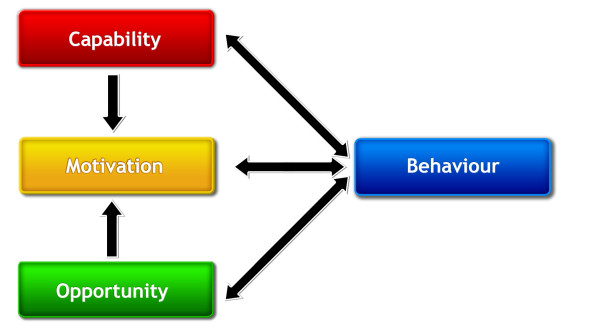
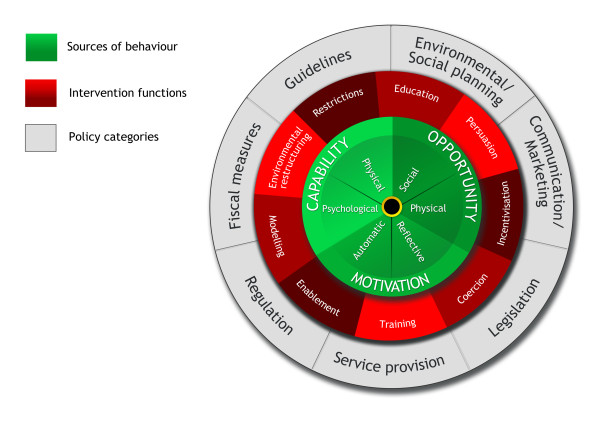
BACKGROUND: Improving the design and implementation of evidence-based practice depends on successful behaviour change interventions. This requires an appropriate method for characterising interventions and linking them to an analysis of the targeted behaviour. There exists a plethora of frameworks of behaviour change interventions, but it is not clear how well they serve this purpose. This paper evaluates these frameworks, and develops and evaluates a new framework aimed at overcoming their limitations. METHODS: A systematic search of electronic databases and consultation with behaviour change experts were used to identify frameworks of behaviour change interventions. These were evaluated according to three criteria: comprehensiveness, coherence, and a clear link to an overarching model of behaviour. A new framework was developed to meet these criteria. The reliability with which it could be applied was examined in two domains of behaviour change: tobacco control and obesity. RESULTS: Nineteen frameworks were identified covering nine intervention functions and seven policy categories that could enable those interventions. None of the frameworks reviewed covered the full range of intervention functions or policies, and only a minority met the criteria of coherence or linkage to a model of behaviour. At the centre of a proposed new framework is a 'behaviour system' involving three essential conditions: capability, opportunity, and motivation (what we term the 'COM-B system'). This forms the hub of a 'behaviour change wheel' (BCW) around which are positioned the nine intervention functions aimed at addressing deficits in one or more of these conditions; around this are placed seven categories of policy that could enable those interventions to occur. The BCW was used reliably to characterise interventions within the English Department of Health's 2010 tobacco control strategy and the National Institute of Health and Clinical Excellence's guidance on reducing obesity. CONCLUSIONS: Interventions and policies to change behaviour can be usefully characterised by means of a BCW comprising: a 'behaviour system' at the hub, encircled by intervention functions and then by policy categories. Research is needed to establish how far the BCW can lead to more efficient design of effective interventions.
Overview
CoChat Summary
TL;DR
The paper reviews 19 existing frameworks for behaviour change interventions, finds none comprehensive, coherent, and linked to an overarching behaviour model, and proposes the Behaviour Change Wheel (BCW). The BCW places a COM-B behaviour system at its hub, surrounded by nine intervention functions and seven policy categories, and was applied reliably to English tobacco control and NICE obesity guidance.
Key findings
- Of 19 identified frameworks, none covered the full range of nine intervention functions and seven policy categories; only three met the criterion of coherence, and seven were explicitly linked to an overarching model of behaviour.
- The proposed BCW comprises a COM-B behaviour system (capability, opportunity, motivation) at the hub, nine intervention functions, and seven policy categories.
- Inter-rater agreement for coding the frameworks by intervention functions and policy categories was 88%.
- Reliability testing of the BCW gave 88% agreement for the 2010 English Tobacco Control Strategy and 79% for the NICE Obesity Guidance; agreement with the gold standard was 85% for the Department of Health implementation lead and 75% for the tobacco researcher.
Methods
- Systematic searches of Web of Science, Pubmed, and PsycInfo plus consultation with eight international behaviour change experts identified 1,267 articles; 8 met inclusion criteria, expert consultation added 11 more, yielding 19 frameworks.
- Frameworks were evaluated against three criteria: comprehensiveness, coherence, and links to an overarching model of behaviour; the new BCW was developed by tabulating intervention categories and linking them to COM-B components.
- Reliability was tested by independent classification of 24 components of the 2010 English tobacco control strategy and 21 components of the 2006 NICE obesity guidance by RW and SM, then by two policy experts against a gold standard.
Limitations
- The paper states that the systematic review may have missed important frameworks and/or intervention functions; judgement was inevitably involved in conceptualising intervention functions and policy categories, with no guarantee the resulting framework is optimal; and the framework may prove difficult to use.
- Evident from the text: reliability was not perfect, with 79% agreement for the NICE obesity guidance and 75% agreement for the tobacco researcher against the gold standard.
- The paper states that research is needed to establish how far the BCW can lead to more efficient design of effective interventions; effectiveness prediction was not tested.
Model-written summary. Check it against the paper before relying on it.
Integrity signals
Registry
Cites
Statistics
Figures
Verification
Claims the paper makes
9 Valid · 1 Not valid · 17 Not checked · 84 Own results and interpretations
The cited sources support only part of this claim — read each source’s verdict below.
In the paper
“In addition, often no analysis is undertaken to guide the choice of theories [8].”
§ The behaviour change wheel: A new method for characterising and designing behaviour change interventions > Background
What the sources say
- Partly supportedcites [8] Davies P Walker AE Grimshaw JM A systematic review of the use of theory in the design of guideline dissemination and implementation strategies and interpretation of the results of rigorous evaluations Implement Sci 2010 5 14 10.1186/1748-5908-5-14 20181130 PMC2832624 sourceExperimental — accuracy not yet measured
The Discussion (page not available in our copy) reports poor documentation of why specific theories and constructs were chosen. That supports a concern about the rationale for theory choice, but it does not establish that researchers often undertook no analysis to guide that choice. (LLM, conf=0.84)
plain- Asserted: passes — The authors put it forward as true.
- Checkable: passes — It can be checked against evidence.
- Load-bearing: passes — The paper’s conclusions depend on it.
- Based: passes — The paper gives a reason why it holds.
- Partly supported
Every source the paper cites for this claim was checked and supports it.
In the paper
“It should also be noted that even when interventions are said to be guided by theory, in practice they are often not or are only minimally [10].”
§ The behaviour change wheel: A new method for characterising and designing behaviour change interventions > Background
What the sources say
- Supportedcites [10] Michie S Prestwich A Are interventions theory-based? Development of a theory coding scheme Health Psychol 2010 29 1 1 8 20063930 source
The Introduction says theory is too often used as a 'loose framework' rather than integrated into intervention design, and that interventions stating a theoretical base seldom explain how theory informed their design. The Results also describe interventions whose techniques are not linked to the theory they claim as a basis. (LLM, conf=0.90)
plain- Asserted: passes — The authors put it forward as true.
- Checkable: passes — It can be checked against evidence.
- Load-bearing: passes — The paper’s conclusions depend on it.
- Based: passes — The paper gives a reason why it holds.
- Supported
The cited sources support only part of this claim — read each source’s verdict below.
In the paper
“In general, insufficient attention appears to be given to analysing the nature of behaviour as the starting point of behaviour change interventions [15], a notable exception being intervention mapping [16].”
§ The behaviour change wheel: A new method for characterising and designing behaviour change interventions > Background
What the sources say
- Supportedcites [15] Johnston M Dixon D Current issues and new directions in psychology and health: What happened to behaviour in the decade of behaviour? Psychology and Health 2008 23 5 509 13 10.1080/08870440701816728 25160717 source
In “Do (health) psychologists recognise the importance of behaviour?”, the authors say that insufficient work has been done to characterise behaviour in ways that guide theory selection. “Classifying behaviour” likewise says remarkably little has been done to categorise behaviours for that purpose. Together with the paper’s discussion of the need for a theoretical basis for interventions, this supports the citing sentence’s broad paraphrase; the citation does not cover its separate intervention-mapping exception. (LLM, conf=0.86)
- Not matchedcites [16] Bartholomew L Parcel G Kok G Gottlieb N Planning Health Promotion Programs: Intervention Mapping 2011 San Francisco Jossey-Bass
We searched by its title and found no matching paper.
hedged- Asserted: passes — The authors put it forward as true.
- Checkable: passes — It can be checked against evidence.
- Load-bearing: passes — The paper’s conclusions depend on it.
- Based: passes — The paper gives a reason why it holds.
- Supported
Every source the paper cites for this claim was checked and supports it.
In the paper
“Interventions are commonly designed without evidence of having gone through this kind of process, with no formal analysis of either the target behaviour or the theoretically predicted mechanisms of action. They are based on implicit commonsense models of behaviour [6].”
§ The behaviour change wheel: A new method for characterising and designing behaviour change interventions > Background
What the sources say
- Supportedcites [6] Michie S Fixsen D Grimshaw JM Eccles MP Specifying and reporting complex behaviour change interventions: the need for a scientific method Implement Sci 2009 4 40 10.1186/1748-5908-4-40 19607700 PMC2717906 source
In “What is the problem? > Interventions aren't described” (page not specified), the paper says intervention development often relies on simple, mostly unstated models of behaviour, or uses theory through intuitive rather than systematic methods. Its discussion of the role of theory also calls for explicit links between intervention techniques and mechanisms of change. Together, these support the citing sentence's paraphrase. (LLM, conf=0.88)
plain- Asserted: passes — The authors put it forward as true.
- Checkable: passes — It can be checked against evidence.
- Load-bearing: passes — The paper’s conclusions depend on it.
- Based: passes — The paper gives a reason why it holds.
- Supported
The sources with a verdict support this claim; the rest weren’t checked yet, have no full text we could read, or their verdicts aren’t rated yet.
In the paper
“there is already evidence that characterising interventions by behaviour change techniques (BCTs) can be helpful in understanding which interventions are more or less effective [6,17]”
§ The behaviour change wheel: A new method for characterising and designing behaviour change interventions > Background
What the sources say
- Supportedcites [6] Michie S Fixsen D Grimshaw JM Eccles MP Specifying and reporting complex behaviour change interventions: the need for a scientific method Implement Sci 2009 4 40 10.1186/1748-5908-4-40 19607700 PMC2717906 source
In “Future developments > An overall framework for describing important elements of an intervention,” the paper reports that coding interventions by behaviour change technique, combined with meta-regression, identified a combination that was significantly more effective than other interventions. It says this difference would have been missed by traditional meta-analyses, directly supporting the claim that such characterisation can help explain relative effectiveness. (LLM, conf=0.94)
- Not checked — no full text of the sourcecites [17] West R Walia A Hyder N Shahab L Michie S Behavior change techniques used by the English Stop Smoking Services and their associations with short-term quit outcomes Nicotine Tob Res 2010 12 7 742 7 10.1093/ntr/ntq074 20478957 source
plainstates an association- Asserted: passes — The authors put it forward as true.
- Checkable: passes — It can be checked against evidence.
- Load-bearing: passes — The paper’s conclusions depend on it.
- Based: passes — The paper gives a reason why it holds.
- Supported
41 more claims · 1 with their cited sources checked
Create a free account to see all 111 claims and to verify the 1 reference still open.
- Probably not a substantial claim. 45
- It may state two separate claims as one. 31
- The quote only partly states this claim. 1
Claims other papers make about this one
Each is checked against this paper’s own text: does it say what the citing paper says it does?
The source backs part of the claim, not all of it — or backs it for a different population, condition or comparison.
In the citing paper
“These divergent findings may reflect the impact of pre-existing severe medical conditions on motivation and ability to exercise 139 140 , alongside potential participation bias for physically healthier populations 141 .”
From Effect of exercise on depression and anxiety symptoms: systematic umbrella review with meta-meta-analysis (2026) · cites this paper as [141]
Experimental — accuracy not yet measuredThe source backs part of the claim, not all of it — or backs it for a different population, condition or comparison.
In the citing paper
“Interventions are often designed without sufficient knowledge about the target group and without a theoretical framework [46].”
From A Mobile Health Intervention for Self-Management and Lifestyle Change for Persons With Type 2 Diabetes, Part 2: One-Year Results From the Norwegian Randomized Controlled Trial RENEWING HEALTH (2014) · cites this paper as [46]
Experimental — accuracy not yet measuredThe source backs part of the claim, not all of it — or backs it for a different population, condition or comparison.
In the citing paper
“we propose that the concept of the individual might incorporate: capability, capacity, motivation (including recognising a need for change), resilience, acceptability, feelings, knowledge and beliefs (including self efficacy) about the intervention/evidence, position and fit within the organization/social system, and approach to decision-making (e.g., experimentation, use of information).”
From The role of evidence, context, and facilitation in an implementation trial: implications for the development of the PARIHS framework (2013) · cites this paper as [7]
Experimental — accuracy not yet measuredThe source backs part of the claim, not all of it — or backs it for a different population, condition or comparison.
In the citing paper
“However, targeting ability of individuals to engage in a behavior is central to achieving long-term behavioral change [30].”
From Just a Fad? Gamification in Health and Fitness Apps (2014) · cites this paper as [30]
Experimental — accuracy not yet measuredThe source backs part of the claim, not all of it — or backs it for a different population, condition or comparison.
In the citing paper
“Although several models have been discussed in dentistry [38–40], limited correlation with periodontal health (PI, bleeding and probing depth) has been provided to date.”
From Concordance and Clinical Outcomes Improvement Following Oral Hygiene Motivation: A Systematic Review and Report of the Workshop of the Italian Societies of Dental Hygiene (2024) · cites this paper as [40]
Experimental — accuracy not yet measured
38 more claims about this paper
Create a free account to see every claim other papers make about this one.
Citations
Cites
Nudge: improving decisions about health, wealth, and happiness
(2008) · Choice Reviews Online · doi:10.5860/choice.46-0977 · Cited by 11,572
Pharmacological interventions for somatoform disorders in adults
Kleinstäuber, M., Witthöft, M., Steffanowski, A., van Marwijk, H., Hiller, W., & Lambert, M. J. (2014) · Cochrane Database of Systematic Reviews · doi:10.1002/14651858.cd010628.pub2 · Cited by 11,335
Bulletin of the World Health Organization
van der Sande, M. A. B., Walraven, G. E. L., Milligan, P. J., BANYA, W. A. S., CEESAY, S. M., Nyan, O. A., & McAdam, K. P. W. J. (2001) · Bulletin of the World Health Organization · Cited by 7,097
Nudge: Improving Decisions About Health, Wealth and Happiness
Adkisson, R. V. (2008) · The Social Science Journal · doi:10.1016/j.soscij.2008.09.003 · Cited by 5,543
Reflective and Impulsive Determinants of Social Behavior
Strack, F., & Deutsch, R. (2004) · Personality and Social Psychology Review · doi:10.1207/s15327957pspr0803_1 · Cited by 3,984 · cited 1×
“With regard to motivation, we distinguished between reflective processes (involving evaluations and plans) and automatic processes (involving emotions and impulses that arise from associative learning and/or innate dispositions) [7,18,20].”
Making psychological theory useful for implementing evidence based practice: a consensus approach
Michie, S. (2005) · Quality and Safety in Health Care · doi:10.1136/qshc.2004.011155 · Cited by 3,440 · cited 3×
“Whilst this framework of 12 theoretical domains has proved useful in assessing and intervening with implementation problems [9], the domain of behaviour has remained under-theorised and therefore underused in its application.”
InfluentialSelf-citationInterventions for preventing obesity in children
Brown, T., Moore, T. H., Hooper, L., Gao, Y., Zayegh, A., Ijaz, S., Elwenspoek, M., Foxen, S. C., Magee, L., O'Malley, C., et al. (2019) · Cochrane Database of Systematic Reviews · doi:10.1002/14651858.cd001871.pub4 · Cited by 2,982
Bulletin of the World Health Organization
Frick, K. D., Lynch, M. C., West, S. K., Muñoz, B., & Mkocha, H. A. (2003) · Bulletin of the World Health Organization · Cited by 2,660
Planning health promotion programs an intervention mapping approach
Bartholomew, L. K., Parcel, G. S., Kok, G., & Gottlieb, N. (2006) · Research Publications (Maastricht University) · Cited by 2,321
Effective techniques in healthy eating and physical activity interventions: A meta-regression.
Michie, S., Abraham, C., Whittington, C., McAteer, J., & Gupta, S. (2009) · Health Psychology · doi:10.1037/a0016136 · Cited by 2,229 · cited 1×
“An examination of BCTs used in selfmanagement approaches to increasing physical activity and healthy eating [46], and in behavioural support for smoking cessation [47,48], shows that these BCTs serve five of the intervention functions: education, persuasion, incentivisation, training, and enablement.”
Self-citation
Research works printed but not linked: 16
- Institute for Government MINDSPACE; Influencing behaviour through public policy 2010 Institute for Government, the Cabinet Office
- Cochrane Effective Practice and Organisation of Care Group EPOC resources for review authors 2010 http://epoc.cochrane.org/epoc-resources-review-authors
- National Institute for Health and Clinical Excellence Behaviour change at population, community and individual levels (Public Health Guidance 6) 2007 London NICE
- Information Centre Statistics on NHS Stop-Smoking Services 2009/10 2010 London: Department of Health
- Bartholomew L Parcel G Kok G Gottlieb N Planning Health Promotion Programs: Intervention Mapping 2011 San Francisco Jossey-Bass
- Anon Prisma: Transparent Reporting of Systematic Reviews and Meta-Analyses 2009 http://www.prisma-statement.org/index.htm
- Department of Health A Smoke-free Future: A comprehensive Tobacco Control Strategy for England 2010 London
- National Institute for Health and Clinical Excellence Obesity: the prevention, identification, assessment and management of overweight and obesity in adults and children National Institute for Health and Clinical Excellence 2006 22497033
- DEFRA A Framework for Pro-Environmental Behaviours: Report 2008 London: Defra
- Knott D Muers S Aldridge S Achieving Culture Change: A Policy Framework Strategy Unit 2008
- Nuffield Council on Bioethics Public Health: ethical issues; a guide to the report 2007 Nuffield Council on Bioethics
- Population Services International PSI Behaviour Change Framework "Bubbles" 2004 Washington DC http://www.psilearning.com
- Walter I Nutley S Davies H Developing a taxonomy of interventions used to increase the impact of research 2003 St Andrews University of St Andrews
- White P PETeR: a universal model for health interventions 2010
- West R Michie S Behaviour change: the importance of seeing the whole picture and a critique of 'Nudge': Submission to the House of Lords Science and Technology Select Committee Call for Evidence: Behaviour Change 2010 London House of Lords
- Featherstone H Reed H Jarvis M Michie S Gilmour A West R APPG Enquiry into the effectiveness and Cost Effectiveness of Tobacco Control: Submission to the Spending Review and Public Health White Paper Consultation Process 2010 London: Action on Smpoking and Health
Cited by
Items 2,801–2,900 of 13,595
Wilkinson, S. A., O’Brien, M. L., McCray, S. J., & Harvey, D. (2019) · BMC Health Services Research · doi:10.1186/s12913-019-3947-y · Cited by 19
Hatfield, J., Boufous, S., & Eveston, T. (2019) · Accident Analysis & Prevention · doi:10.1016/j.aap.2019.02.021 · Cited by 19
Bearne, L., Holmes, M. G., Bieles, J., Eddy, S., Fisher, G., Modarai, B., Patel, S. D., Peacock, J. L., Sackley, C. M., Volkmer, B., et al. (2019) · BMJ Open · doi:10.1136/bmjopen-2019-030002 · Cited by 20
Engagement of Stakeholders in the Design, Evaluation, and Implementation of Complex Interventions
Hudson, J. L., Moon, Z., Hughes, L. D., & Moss-Morris, R. E. (2020) · Cambridge University Press eBooks · doi:10.1017/9781108677318.024 · Cited by 29
Taylor, C., Bhavnani, V., Zasada, M., USSHER, M. H., & Bick, D. (2020) · BMJ Open · doi:10.1136/bmjopen-2019-034747 · Cited by 20
Hall, J., Jones, L. F., Robertson, G. S., Hiley, R., Nathwani, D., & Perry, M. R. (2020) · PLoS ONE · doi:10.1371/journal.pone.0240471 · Cited by 19
Spillane, D., Courtenay, M., Chater, A., Family, H. E., Whitaker, A., & Acton, J. H. (2021) · Ophthalmic and Physiological Optics · doi:10.1111/opo.12782 · Cited by 22
Norris, E., He, Y., Loh, R., West, R., Michie, S., & Ward, K. D. (2021) · The Journal of Smoking Cessation · doi:10.1155/2021/6694386 · Cited by 12
Self-citationBunten, A., Porter, L., Sanders, J. G., Sallis, A., Payne, S., van Schaik, P., González‐Iraizoz, M., Chadborn, T., & Forwood, S. (2021) · PLoS ONE · doi:10.1371/journal.pone.0246455 · Cited by 23
Sustainability and monitoring of the European Code Against Cancer: Recommendations
Espina, C., Yared, W., Ritchie, D., et al. (2021) · Cancer Epidemiology · doi:10.1016/j.canep.2021.101933 · Cited by 19
Dunn, S., Earp, M. A., Biondo, P. D., Cheung, W. Y., Kerba, M., Tang, P. A., Sinnarajah, A., Watanabe, S., & Simon, J. E. (2021) · Current Oncology · doi:10.3390/curroncol28020140 · Cited by 22
Saba, O. A., Weir, C., & Aceves‐Martins, M. (2021) · International Journal of Drug Policy · doi:10.1016/j.drugpo.2021.103251 · Cited by 27
Wang, H., Blake, H., & Chattopadhyay, K. (2021) · Frontiers in Public Health · doi:10.3389/fpubh.2021.610245 · Cited by 22
Domestic retrofit: understanding capabilities of micro-enterprise building practitioners
Simpson, K., Murtagh, N., & Owen, A. M. (2021) · Buildings and Cities · doi:10.5334/bc.106 · Cited by 25
Morrison, J., Akter, K., Jennings, H. M., Ahmed, N., Shaha, S. K., Kuddus, A., Nahar, T., King, C., Haghparast‐Bidgoli, H., Khan, A., et al. (2021) · Global Public Health · doi:10.1080/17441692.2021.1923776 · Cited by 24
Kemp, B. J., Thompson, D. R., Watson, C. J., McGuigan, K., Woodside, J. V., & Ski, C. F. (2021) · Preventive Medicine · doi:10.1016/j.ypmed.2021.106608 · Cited by 23
Clinicians’ delirium treatment practice, practice change, and influences: A national online survey
Hosie, A., Agar, M. R., Caplan, G. A., Draper, B., Hedger, S. C., Rowett, D. S., Tuffin, P., Cheah, S. L., Phillips, J. L., Brown, L., et al. (2021) · Palliative Medicine · doi:10.1177/02692163211022183 · Cited by 24
Tapia‐Serrano, M. Á., Sevil‐Serrano, J., Sánchez‐Oliva, D., Vaquero‐Solís, M., & Miguel, P. A. S. (2021) · Revista de Psicodidáctica (English ed ) · doi:10.1016/j.psicoe.2021.06.001 · Cited by 28
Bright, D., Gray, B. J., Kyle, R. G., Bolton, S., & Davies, A. R. (2021) · Journal of Advanced Nursing · doi:10.1111/jan.14926 · Cited by 24
Bezabih, A. M., Gerling, K., Abebe, W., & Abeele, V. V. (2021) · JMIR mhealth and uhealth · doi:10.2196/25129 · Cited by 25
Semsarian, C. R., Rigney, G., Cistulli, P. A., & Bin, Y. S. (2021) · International Journal of Environmental Research and Public Health · doi:10.3390/ijerph181910180 · Cited by 27
Nutrition knowledge assessment tools for older adults and their carers: a scoping review
Chin, S., Wong, R., Hirani, V., & O’Leary, F. (2021) · Nutrition Research Reviews · doi:10.1017/s0954422421000330 · Cited by 25
Coates, E. J., Zarotti, N., Williams, I. A., White, S., Halliday, V., Beever, D., Hackney, G., Stavroulakis, T., White, D. A., Norman, P. E., et al. (2021) · Chronic Illness · doi:10.1177/17423953211069090 · Cited by 25
Systematic review of factors promoting behaviour change toward antibiotic use in hospitals
Pouly, E., Coppry, M., Rogues, A.-M., & Dumartin, C. (2022) · Clinical Microbiology and Infection · doi:10.1016/j.cmi.2022.01.005 · Cited by 23
Robling, M. R., Lugg-Widger, F. V., Cannings-John, R. L., Angel, L., Channon, S., Fitzsimmons, D. F., Hood, K., Kenkre, J. E., Moody, G., Owen-Jones, E., et al. (2022) · BMJ Open · doi:10.1136/bmjopen-2021-049960 · Cited by 25
Marshall, S. M., Moore, A., Fleming, A., & Sahm, L. J. (2022) · Vaccines · doi:10.3390/vaccines10040562 · Cited by 25
Gan, W., Zhang, Q., Yang, D., Yin, J., Wang, Y., Song, L., Chen, T., & Qi, H. (2022) · Trials · doi:10.1186/s13063-022-06300-1 · Cited by 26
Philippine, T., Forsgren, E., DeWitt, C., Carter, I., McCollough, M., & Taira, B. R. (2022) · BMC Health Services Research · doi:10.1186/s12913-022-07862-1 · Cited by 19
Facilitators and barriers to social distancing for young people during the COVID-19 pandemic
Berry, E., Jenkins, C., & Allen, S. (2022) · BMC Public Health · doi:10.1186/s12889-022-13325-3 · Cited by 24
“Psychological Capability Psychological Capability refers to an individual’s knowledge and skills to engage in the behaviour, and includes elements of self-regulation [10].”
BackgroundMethodInfluentialDownie, A. P., Mashanya, T., Chipwaza, B., Griffiths, F. E., Harris, B., Kalolo, A., Ndegese, S., Sturt, J. A., Valliere, N. D., & Pemba, S. (2022) · JMIR Formative Research · doi:10.2196/32964 · Cited by 20
What should we eat? Realistic solutions for reducing our food footprint
Allenden, N., Hine, D. W., Craig, B. M., Cowie, A., McGreevy, P. D., & Lykins, A. D. (2022) · Sustainable Production and Consumption · doi:10.1016/j.spc.2022.05.008 · Cited by 26
Development and Validation of a Two-component Perceived Control Measure
Lithopoulos, A., Zhang, C., Williams, D. M., & Rhodes, R. E. (2022) · Annals of Behavioral Medicine · doi:10.1093/abm/kaac033 · Cited by 23
Sporrel, K., Wang, S., Ettema, D., Nibbeling, N., Kröse, B., Deutekom, M. D. L. F., Boer, R. D., & Simons, M. (2022) · JMIR Formative Research · doi:10.2196/35268 · Cited by 22
Ee, C., MacMillan, F., Boyages, J., & McBride, K. A. (2022) · BMC Public Health · doi:10.1186/s12889-022-13980-6 · Cited by 25
Fakha, A., Leithaus, M., de Boer, B., van Achterberg, T., Hamers, J. P. H., & Verbeek, H. (2022) · The Gerontologist · doi:10.1093/geront/gnac128 · Cited by 23
Yong, H., Chow, R., East, K. A., Thrasher, J. F., Hitchman, S. C., Borland, R., Cummings, K. M., & Fong, G. T. (2022) · Nicotine & Tobacco Research · doi:10.1093/ntr/ntac212 · Cited by 20
Tong, L. K., Zhu, M., Wang, S.-C., Cheong, P. L., & Van, I. (2022) · Journal of Nursing Management · doi:10.1111/jonm.13855 · Cited by 19
Schroë, S. C. H., Bonifácio, C. C., Bruers, J. J. M., Innes, N., & Hesse, D. (2022) · BMC Oral Health · doi:10.1186/s12903-022-02475-w · Cited by 20
Decarbonising existing homes in Wales: a participatory behavioural systems mapping approach
Hale, J., Jofeh, C., & Chadwick, P. (2022) · UCL Open Environment · doi:10.14324/111.444/ucloe.000047 · Cited by 27
Teacher educators’ perspectives on gender responsive pedagogy in higher education
Khalil, N., Aljanazrah, A., Hamed, G., & Murtagh, E. (2023) · Irish Educational Studies · doi:10.1080/03323315.2023.2174575 · Cited by 33
Williams, D. M. (2023) · Frontiers in Psychology · doi:10.3389/fpsyg.2023.1130813 · Cited by 24
Pérez, B. D. D., das Nair, R., & Radford, K. (2023) · Disability and Rehabilitation · doi:10.1080/09638288.2023.2181411 · Cited by 24
Fritz, J., & Overmeer, T. (2023) · Physical Therapy · doi:10.1093/ptj/pzad025 · Cited by 23
Grillich, L., Titscher, V., Klingenstein, P., Kostial, E., Emprechtinger, R., Klerings, I., Sommer, I., Nikitin, J., & Laireiter, A. (2023) · European Journal of Public Health · doi:10.1093/eurpub/ckad006 · Cited by 24
Nakaye, C., Mukiza, N., Mawanda, D., Kataike, H., Kaganzi, H., Ahimbisibwe, G. M., Businge, G. B., Kyambadde, R. C., & Nakalega, R. (2023) · AIDS Research and Therapy · doi:10.1186/s12981-023-00513-3 · Cited by 21
Flack, K. D., Stults‐Kolehmainen, M., Creasy, S. A., Khullar, S., Boullosa, D. A., Catenacci, V. A., & King, N. A. (2023) · Frontiers in Psychology · doi:10.3389/fpsyg.2023.1098394 · Cited by 24
Bennett, K. M., Panzeri, A., Derrer‐Merk, E., Butter, S., Hartman, T. K., Mason, L., McBride, O., Murphy, J., Shevlin, M. E., Miller, J. G., et al. (2023) · PLoS ONE · doi:10.1371/journal.pone.0283254 · Cited by 22
Self-management education for children with epilepsy and their caregivers. A scoping review
Leviton, A., Patel, A. D., & Loddenkemper, T. (2023) · Epilepsy & Behavior · doi:10.1016/j.yebeh.2023.109232 · Cited by 29
Tang, H., Wang, R., Liu, W. Y., Han, X., Jing, H., Song, F., Guo, S., Li, T., Yi, L., Zhang, Y., et al. (2023) · European Journal of Oncology Nursing · doi:10.1016/j.ejon.2023.102344 · Cited by 30
Guastaferro, K., & Pfammatter, A. F. (2023) · Journal of Clinical and Translational Science · doi:10.1017/cts.2023.546 · Cited by 24
Sustainability, Collective Self‐Regulation, and Human–Nature Interdependence
Kashima, Y., Sewell, D. K., & Li, Y. (2023) · Topics in Cognitive Science · doi:10.1111/tops.12668 · Cited by 24
A scoping review exploring the confidence of healthcare professionals in assessing all skin tones
Harrison, J. (2023) · British Paramedic Journal · doi:10.29045/14784726.2023.9.8.2.18 · Cited by 20
Haggar, P. C., Whitmarsh, L. E., & Nash, N. (2023) · Environment and Behavior · doi:10.1177/00139165231201371 · Cited by 24
MacDonald, J., Estcourt, C. S., Flowers, P., Nandwani, R., Frankis, J. S., Young, I., Clutterbuck, D., Dalrymple, J., McDaid, L. M., Steedman, N., et al. (2023) · PLoS ONE · doi:10.1371/journal.pone.0292289 · Cited by 22
Avellaneda, N., Masri, M. A., Baimakhanov, A., Balasubramaniam, D., Bhangu, A. A., Bouchagier, K., Bozbıyık, O., Carpelan, A., Chwat, C., Cunha, M. F., et al. (2023) · British journal of surgery · doi:10.1093/bjs/znad370 · Cited by 25
Gil, N., Cox, A., Whitaker, K. L., & Kerrison, R. (2023) · Journal of Intellectual Disability Research · doi:10.1111/jir.13110 · Cited by 22
Fogg‐Rogers, L., Sardo, A. M., Csobod, E., Boushel, C., Laggan, S., & Hayes, E. T. (2024) · Environmental Science & Policy · doi:10.1016/j.envsci.2024.103692 · Cited by 20
Ahern, L., Timmons, S., Lamb, S. E., & McCullagh, R. (2024) · Journal of Frailty Sarcopenia and Falls · doi:10.22540/jfsf-09-066 · Cited by 25
Baker, S., Gallegos, D., Rebuli, M. A., Taylor, A. J., & Mahoney, R. (2024) · Nutrients · doi:10.3390/nu16111684 · Cited by 22
Increasing exercise capacity and physical activity in the COPD patient
Kaur, A., Bourbeau, J., Brighton, L. J., Celli, B. R., Crouch, R. H., Demeyer, H., Gerardi, D. A., Katsura, H., Meek, P., Morgan, M. D., et al. (2024) · Breathe · doi:10.1183/20734735.0347-2023 · Cited by 20
Exploring teachers teaching reading comprehension: knowledge, behaviours and attitudes
Dixon, M., & Oakhill, J. V. (2024) · Education 3-13 · doi:10.1080/03004279.2024.2357884 · Cited by 58
Ohashi, T., Saijo, M., Suzuki, K., & Arafuka, S. (2024) · Technological Forecasting and Social Change · doi:10.1016/j.techfore.2024.123692 · Cited by 37
Using population segmentation to inform local obesity strategy in England
Wills, J., Crichton, N., Lorenc, A., & Kelly, M. (2014) · Health Promotion International · doi:10.1093/heapro/dau004 · Cited by 19
Austin, J. (2015) · American Journal of Medical Genetics Part A · doi:10.1002/ajmg.a.37289 · Cited by 22
Improving the Safety Performance of Nigeria Construction Workers: A Social Ecological Approach
Okoye, P. U. (2016) · Universal Journal of Engineering Science · doi:10.13189/ujes.2016.040202 · Cited by 33
Acute pain in the emergency department: Effect of an educational intervention
Friesgaard, K. D., Paltved, C., & Nikolajsen, L. (2016) · Scandinavian Journal of Pain · doi:10.1016/j.sjpain.2016.11.004 · Cited by 19
Kassianos, A. P., Georgiou, G., Papaconstantinou, E. P., Detzortzi, A., & Horne, R. (2017) · Frontiers in Psychology · doi:10.3389/fpsyg.2017.01769 · Cited by 21
Olson, J. L., March, S., Brownlow, C., Biddle, S., & Ireland, M. J. (2018) · Health Promotion Journal of Australia · doi:10.1002/hpja.199 · Cited by 22
Billah, S. M., Hoque, D. M. E., Rahman, M., Christou, A., Mugo, N. S., Begum, K., Tahsina, T., Rahman, Q. S.-U., Chowdhury, E., Haque, T. M., et al. (2018) · Journal of Global Health · doi:10.7189/jogh.08.020413 · Cited by 26
Using evidence‐informed logic models to bridge methods in educational evaluation
Coldwell, M., & Maxwell, B. (2018) · Review of Education · doi:10.1002/rev3.3151 · Cited by 32
Kayser, L., Nøhr, C. G., Bertelsen, P., Botin, L., Villumsen, S., Showell, C., & Turner, P. A. (2018) · Informatics · doi:10.3390/informatics5040041 · Cited by 20
VIRTUE - A Virtual Reality Trainer for Hand Hygiene
Clack, L., Hirt, C., Wenger, M., et al. (2018) · International Conference on Information, Intelligence, Systems and Applications · doi:10.1109/iisa.2018.8633588 · Cited by 19
The Development of VegEze: Smartphone App to Increase Vegetable Consumption in Australian Adults
Hendrie, G. A., James‐Martin, G., Williams, G., Brindal, E., Whyte, B., & Crook, A. (2019) · JMIR Formative Research · doi:10.2196/10731 · Cited by 22
Nadler, M. B., Bainbridge, D. B., Fong, A. J., SUSSMAN, J. S., Tomasone, J. R., & Neil‐Sztramko, S. (2019) · Supportive Care in Cancer · doi:10.1007/s00520-019-04689-1 · Cited by 22
Wilkinson, S. A., Beckmann, M. M., Donaldson, E., & McCray, S. J. (2019) · BMC Pregnancy and Childbirth · doi:10.1186/s12884-018-2162-x · Cited by 20
Exploring the Design of mHealth Systems for Health Behavior Change using Mobile Biosensors
Noorbergen, T. J., Adam, M. T. P., Attia, J. R., Cornforth, D. J., & Minichiello, M. (2019) · Communications of the Association for Information Systems · doi:10.17705/1cais.04444 · Cited by 29
Delea, M. G., Snyder, J. S., Belew, M. L., Caruso, B. A., Garn, J. V., Sclar, G. D., Woreta, M., Zewudie, K., Gebremariam, A., & Freeman, M. C. (2019) · BMC Public Health · doi:10.1186/s12889-019-7040-6 · Cited by 21
Santaló, M. I., Gibbons, S. L., & Naylor, P. (2019) · Nutrients · doi:10.3390/nu11081763 · Cited by 28
Marlow, L. A. V., Ryan, M., & Waller, J. (2019) · Sexually Transmitted Infections · doi:10.1136/sextrans-2019-054120 · Cited by 23
Response to diagnosis of pre-diabetes in socioeconomically deprived areas: a qualitative study
Twohig, H., Hodges, V., Hobbis, C., & Mitchell, C. A. (2019) · BJGP Open · doi:10.3399/bjgpopen19x101661 · Cited by 24
Kelly, A., Crimston-Smith, L., Tong, A., Bartlett, S. J., Bekker, C. L., Christensen, R., Vera, M. A. D., de Wit, M. P. T., Evans, V., Gill, M., et al. (2019) · The Journal of Rheumatology · doi:10.3899/jrheum.190726 · Cited by 18
Kompf, J. M. (2020) · Journal of Physical Activity and Health · doi:10.1123/jpah.2018-0720 · Cited by 26
Shajrawi, A. M., Granat, M. H., Jones, I. D., & Astin, F. (2020) · Journal of Nursing Research · doi:10.1097/jnr.0000000000000408 · Cited by 24
Kostick, K. M., Trejo, M. B., Volk, R. J., Estep, J. D., & Blumenthal-Barby, J. S. S. (2020) · MDM Policy & Practice · doi:10.1177/2381468320915906 · Cited by 23
Behn, N., Francis, J., Power, E., Hatch, E., & Hilari, K. (2020) · Brain Injury · doi:10.1080/02699052.2020.1763465 · Cited by 21
Varisco, T. J., Downs, C. G., Rathburn, K. R., Fleming, M. L., & Thornton, J. D. (2020) · International Journal of Drug Policy · doi:10.1016/j.drugpo.2020.102827 · Cited by 20
Haynes, A. S., Sherrington, C., Wallbank, G., Lester, D., Tong, A., Merom, D., Rissel, C. E., & Tiedemann, A. (2020) · Journal of Aging and Physical Activity · doi:10.1123/japa.2020-0116 · Cited by 21
Söderlund, A., Elvén, M., Sandborgh, M., & Fritz, J. (2020) · PAIN Reports · doi:10.1097/pr9.0000000000000844 · Cited by 35
Cunningham, K. B., Rogowsky, R., Carstairs, S. A., Sullivan, F., & Özakinci, G. (2020) · Health & Social Care in the Community · doi:10.1111/hsc.13186 · Cited by 20
Allison, R., Chapman, S., Howard, P., Thornley, T., Ashiru-Oredope, D. A. I., Walker, S. S., Jones, L. F., & McNulty, C. A. M. (2020) · JAC-Antimicrobial Resistance · doi:10.1093/jacamr/dlaa089 · Cited by 19
Kastaun, S., Leve, V., Hildebrandt, J., Funke, C., Klosterhalfen, S., Lubisch, D., Reddemann, O., McRobbie, H. J., Raupach, T., West, R., et al. (2020) · ERJ Open Research · doi:10.1183/23120541.00621-2020 · Cited by 22
Self-citationBehaviour change techniques in personalised care planning for older people: a systematic review
Ahmed, S., Heaven, A., Lawton, R., Rawlings, G. H., Sloan, C., & Clegg, A. P. (2020) · British Journal of General Practice · doi:10.3399/bjgp20x714017 · Cited by 22
Reicherzer, L., Kramer-Gmeiner, F., Labudek, S. E., Jansen, C.-P., Nerz, C., Nystrand, M. J., Becker, C., Clemson, L. M., & Schwenk, M. (2021) · BMC Geriatrics · doi:10.1186/s12877-020-01991-0 · Cited by 25
Leon, N., Namadingo, H., Bobrow, K., Cooper, S., Crampin, A. C., Pauly, B., Levitt, N. S., & Farmer, A. A. (2021) · BMC Public Health · doi:10.1186/s12889-020-10089-6 · Cited by 26
Doughty, H. L., Oliver, K. A., Veríssimo, D., Lee, J. S. H., & Milner‐Gulland, E. J. (2021) · People and Nature · doi:10.1002/pan3.10189 · Cited by 22
Gültzow, T., Hoving, C., Smit, E. S., & Bekker, H. (2021) · Patient Education and Counseling · doi:10.1016/j.pec.2021.04.007 · Cited by 26
Byrne, J. L., Willis, A., Dunkley, A. J., Fitzpatrick, C., Campbell, S., Sidhu, M. S., Choudhary, P., Davies, M. J., & Khunti, K. (2021) · Diabetic Medicine · doi:10.1111/dme.14678 · Cited by 23
Woolley, K. E., Bartington, S., Thomas, G. N., Pope, F. D., Muhizi, A., Mugabe, C., Ahishakiye, O., Kabera, T., & Greenfield, S. (2022) · Sustainability · doi:10.3390/su14031608 · Cited by 23
Perspectives of Fijian Policymakers on the Obesity Prevention Policy Landscape
Hendriks, A.-M., Delai, M. Y., Thow, A. M., Gubbels, J. S., de Vries, N. K., Kremers, S., & Jansen, M. W. J. (2015) · BioMed Research International · doi:10.1155/2015/926159 · Cited by 23
Antibiotic resistance - a call to arms for primary healthcare providers
OXFORD, J. S., & Kozlov, R. S. (2013) · International Journal of Clinical Practice · doi:10.1111/ijcp.12334 · Cited by 19
Metadata
- Authors
- Michie, S., van Stralen, M. M., & West, R.
- Affiliations
- University College London (GB)
- Corresponding author
- Michie, Susan
- Venue
- Implementation Science
- Published
- 2011-04-23
- Volume
- 6
- Issue
- 1
- Pages
- 42-42
- ISSN
- 1748-5908 (ISSN-L)
- PMC
- PMC3096582
- OpenAlex
- W2136608905
- Cited by
- 13,697
- References
- 42
- Citations by year
- 2026: 2046 · 2025: 1906 · 2024: 1773 · 2023: 1521 · 2022: 1553 · 2021: 1324 · 2020: 1068 · 2019: 684 · 2018: 554 · 2017: 423 · 2016: 303 · 2015: 255 · 2014: 127 · 2013: 110 · 2012: 33
- FWCI
- 118.28
- Type
- journal article
- Language
- en
- Open access
- gold
- doi.org
- Licence
- Locations
- Implementation Science (publishedVersion, cc-by)
- PubMed Central (publishedVersion, cc-by)
- PubMed (publishedVersion)
- Research Publications (Maastricht University) (publishedVersion, cc-by)
- Amsterdam UMC (VU Amsterdam) - Institutional Repository (publishedVersion, other-oa)
- Pure Amsterdam UMC (submittedVersion, other-oa)
- Digital Academic REpository of VU University Amsterdam (Vrije Universiteit Amsterdam) (submittedVersion)
- DOAJ (DOAJ: Directory of Open Access Journals) (submittedVersion, cc-by-sa)
- UCL Discovery (University College London) (submittedVersion)
- VU Research Portal (submittedVersion, other-oa)
- Research Publications (Maastricht University) (submittedVersion, other-oa)
- Data Archiving and Networked Services (DANS) (submittedVersion, other-oa)
- Funders
- Cancer Research UK
- University College London
- University of Aberdeen
- Universiteit Maastricht
- Topics
- Social Sciences › Psychology › Applied Psychology › Behavioral Health and Interventions
- Health Sciences › Health Professions › General Health Professions › Health Policy Implementation Science
- Health Sciences › Medicine › Public Health, Environmental and Occupational Health › Smoking Behavior and Cessation
- Keywords
- Behaviour Change Wheel, COM-B model, behaviour change interventions, intervention design, intervention functions, enabling policies, capability, opportunity and motivation, tobacco control, obesity prevention
- MeSH terms
- Health Policy, Health Promotion, Health Services Research, Humans, Motivation, Practice Patterns, Physicians', Health Behavior, Public Health Practice, Evidence-Based Medicine, Risk Reduction Behavior, Quality Improvement
About these checks
Registry, retraction, Cites and statistics results are computed, not judged, with one exception: a printed reference that no index lists is read once by a model before it counts as a citation error. Claims are extracted by a model and kept only when their quote appears verbatim in the text; each cited source is then checked, with a model’s help, for whether it says what the claim relies on. Those verdicts can be wrong — read the claim’s quote and the cited source before relying on one.
The claim verdicts this report counts are experimental: their accuracy is not yet measured.
A language model drew the claims from the paper on 2026-10-10, under version 3 of the claim definition (model deepseek-v4.1-flash, prompt extract-v3).
A second model labelled each claim on 2026-10-10 (model jev-1.13-20260917, definition revision gold-guideline-v0.2).
Cited sources are checked with a language model’s help (gpt-6-sol).
Statistics and arithmetic are recomputed, not judged.
Confidence bands are shown only for fields calibrated on our annotated test set. None is calibrated yet, so no band is shown.
What counts as a claim ›How we measure confidence ›How we check this ›
Are you an author, or do you see a problem with this page? Request a review
Data sources
Bibliographic data: Semantic Scholar, OpenAlex, Crossref.
Contains information from the Semantic Scholar Academic Graph Datasets, made available under the ODC Attribution License (ODC-BY 1.0).
Semantic Scholar’s data is described in: Kinney, R., et al. (2023). The Semantic Scholar Open Data Platform. arXiv:2301.10140.
