

The DOI matches its Crossref record; 45 of the 45 references it cites were found in a registry or an index.
Aβ reduction in BACE1 heterozygous null 5XFAD mice is associated with transgenic APP level
Open accessAbstract
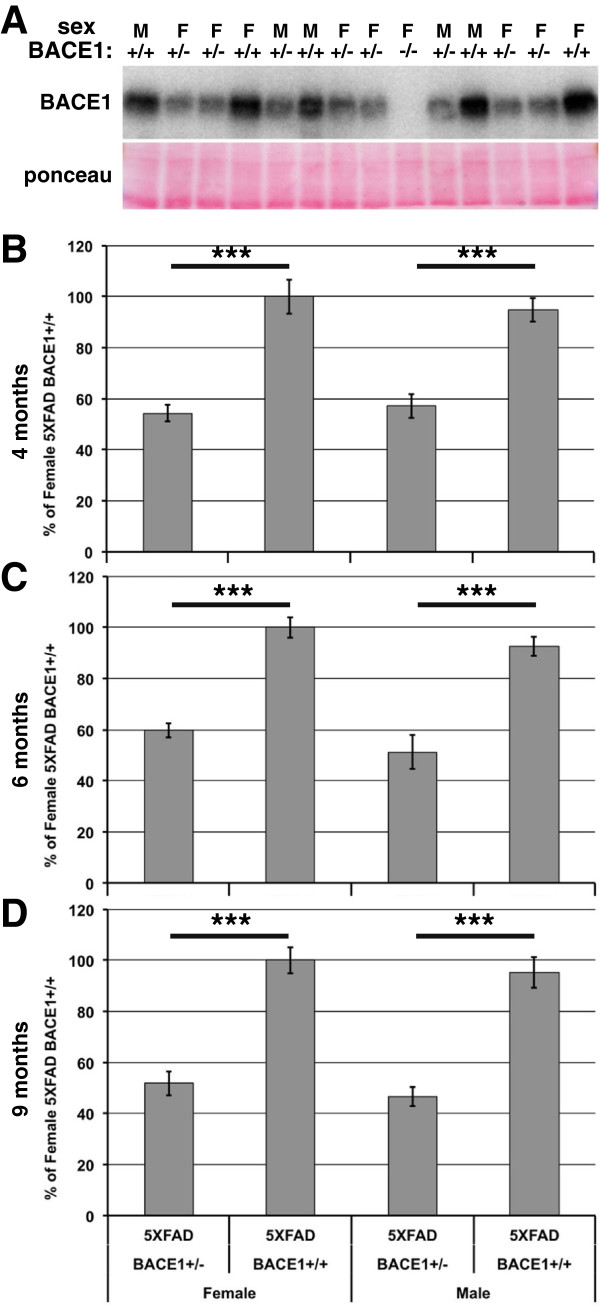
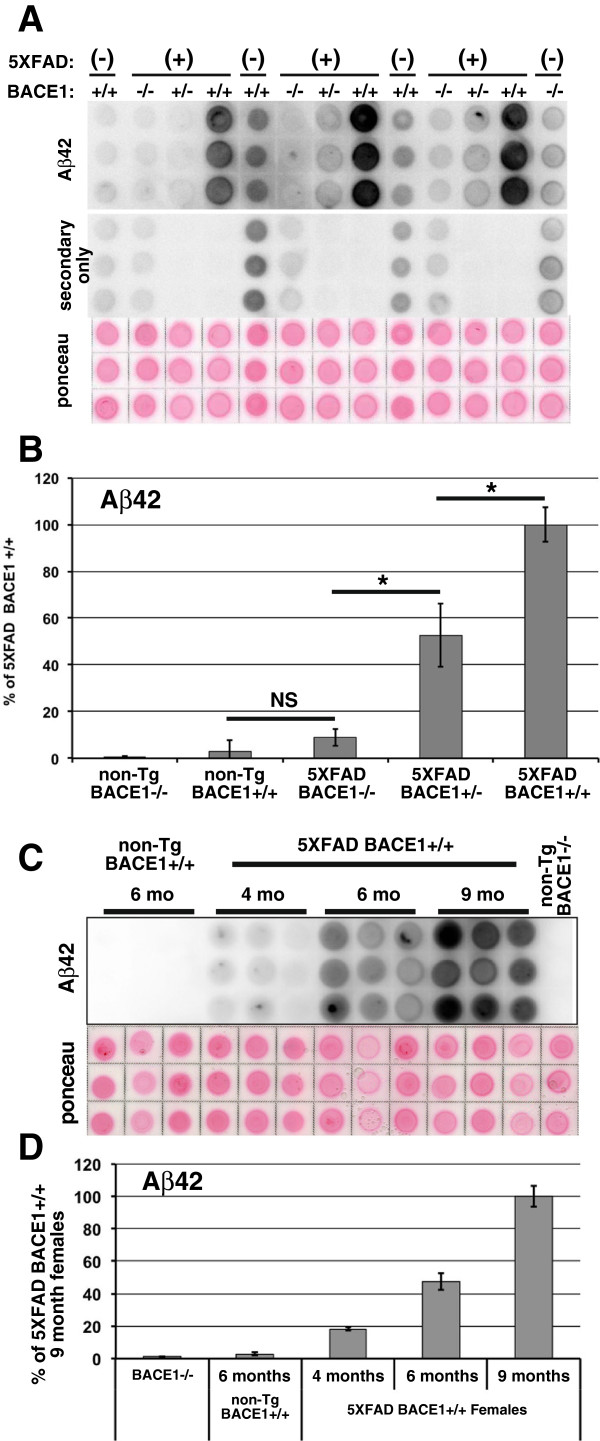
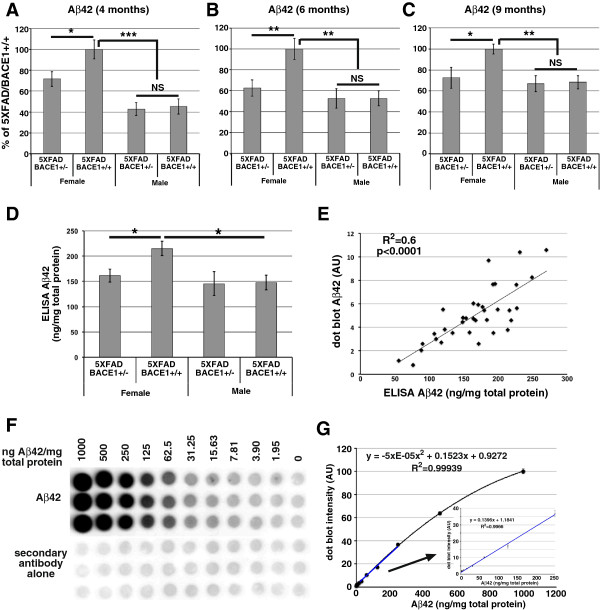
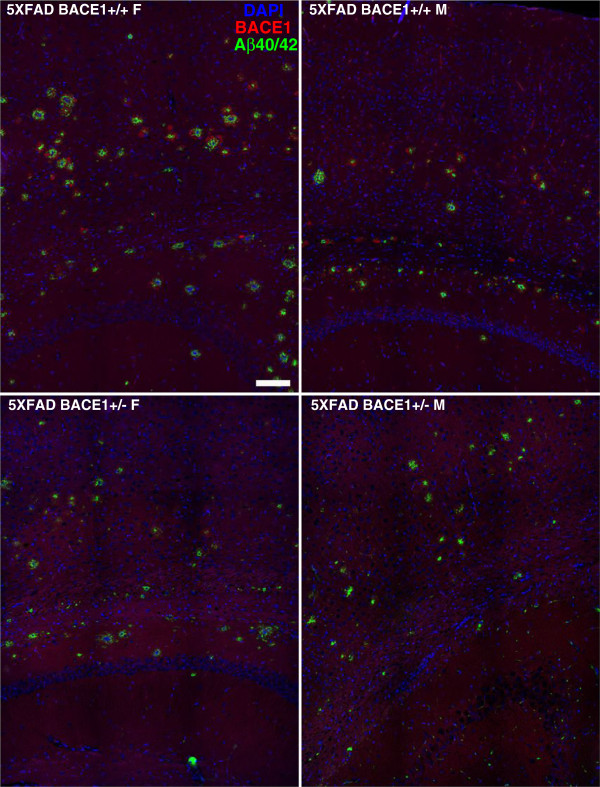
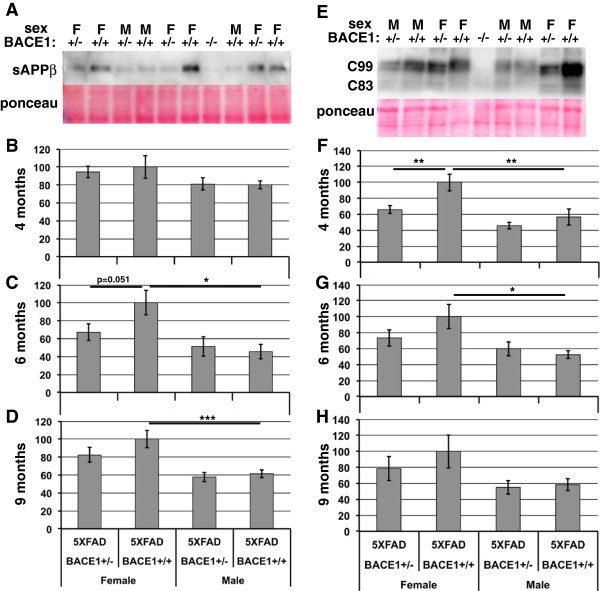
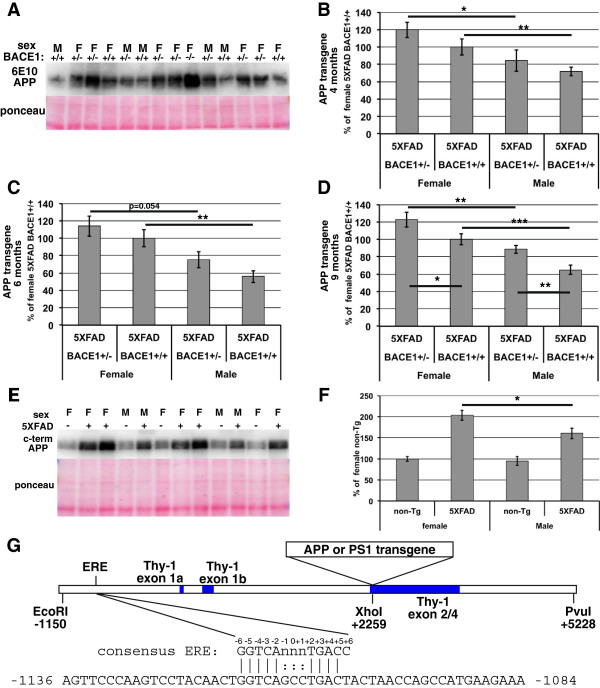
BACKGROUND: The β-secretase, BACE1, cleaves APP to initiate generation of the β-amyloid peptide, Aβ, that comprises amyloid plaques in Alzheimer's disease (AD). Reducing BACE1 activity is an attractive therapeutic approach to AD, but complete inhibition of BACE1 could have mechanism-based side-effects as BACE1-/- mice show deficits in axon guidance, myelination, memory, and other neurological processes. Since BACE1+/- mice appear normal there is interest in determining whether 50% reduction in BACE1 is potentially effective in preventing or treating AD. APP transgenic mice heterozygous for BACE1 have decreased Aβ but the extent of reduction varies greatly from study to study. Here we assess the effects of 50% BACE1 reduction on the widely used 5XFAD mouse model of AD. RESULTS: 50% BACE1 reduction reduces Aβ42, plaques, and BACE1-cleaved APP fragments in female, but not in male, 5XFAD/BACE1+/- mice. 5XFAD/BACE1+/+ females have higher levels of Aβ42 and steady-state transgenic APP than males, likely caused by an estrogen response element in the transgene Thy-1 promoter. We hypothesize that higher transgenic APP level in female 5XFAD mice causes BACE1 to no longer be in excess over APP so that 50% BACE1 reduction has a significant Aβ42 lowering effect. In contrast, the lower APP level in 5XFAD males allows BACE1 to be in excess over APP even at 50% BACE1 reduction, preventing lowering of Aβ42 in 5XFAD/BACE1+/- males. We also developed and validated a dot blot assay with an Aβ42-selective antibody as an accurate and cost-effective alternative to ELISA for measuring cerebral Aβ42 levels. CONCLUSIONS: 50% BACE1 reduction lowers Aβ42 in female 5XFAD mice only, potentially because BACE1 is not in excess over APP in 5XFAD females with higher transgene expression, while BACE1 is in excess over APP in 5XFAD males with lower transgene expression. Our results suggest that greater than 50% BACE1 inhibition might be necessary to significantly lower Aβ, given that BACE1 is likely to be in excess over APP in the human brain. Additionally, in experiments using the 5XFAD mouse model, or other Thy-1 promoter transgenic mice, equal numbers of male and female mice should be used, in order to avoid artifactual gender-related differences.
Overview
The claims and statistics of this paper haven’t been checked yet.
Run the check — free, no account needed. It reads the open-access text and checks the sources it cites.
Integrity signals
Registry
Cites
Statistics
Figures
Verification
Claims the paper makes
The claims and statistics of this paper haven’t been checked yet.
Run the check — free, no account needed. It reads the open-access text and checks the sources it cites.
Claims other papers make about this one
Each is checked against this paper’s own text: does it say what the citing paper says it does?
The source backs part of the claim, not all of it — or backs it for a different population, condition or comparison.
In the citing paper
“Consistent with the reported phenotypes of the 5XFAD model17, we found that Aβ accumulation in females was almost double that of males.”
From Effects of SPI1-mediated transcriptome remodeling on Alzheimer's disease-related phenotypes in mouse models of Aβ amyloidosis (2024) · cites this paper as [17]
Experimental — accuracy not yet measuredThe source backs part of the claim, not all of it — or backs it for a different population, condition or comparison.
In the citing paper
“Consistent with the reported phenotypes of the 5XFAD model17, we found that Aβ accumulation in females was almost double that of males.”
From Effects of SPI1-mediated transcriptome remodeling on Alzheimer's disease-related phenotypes in mouse models of Aβ amyloidosis (2024) · cites this paper as [17]
Experimental — accuracy not yet measuredThe cited source says what the claim attributes to it.
In the citing paper
“Because 5XFAD mouse model has a significant sex difference in Aβ levels and amyloid deposition17, we performed all statistical analyses for males and females separately.”
From Effects of SPI1-mediated transcriptome remodeling on Alzheimer's disease-related phenotypes in mouse models of Aβ amyloidosis (2024) · cites this paper as [17]
The cited source says what the claim attributes to it.
In the citing paper
“Because 5XFAD mice are known to have a sex-dependent difference in the extent of amyloid accumulation (25), we designed our study to consider sex difference, analyzing the results separately between male and female mice.”
From Deletion of Abi3 gene locus exacerbates neuropathological features of Alzheimer’s disease in a mouse model of Aβ amyloidosis (2021) · cites this paper as [25]
In the citing paper
“Females also appear to have increased BACE1 activity, a β-secretase processing enzyme which cleaves pAPP and produces pathogenic Aβ fragments [40,41], ultimately leading to increased amyloid plaque burden compared to male 5XFAD mice [41,42].”
From Centella Asiatica Improves Memory and Promotes Antioxidative Signaling in 5XFAD Mice (2019) · cites this paper as [40]
Self-check
Percentages, sums and reported differences re-computed from the paper’s own numbers.
The self-check needs the paper’s full text.
Citations
Cites
Oakley, H., Cole, S. L., Logan, S., Maus, E., Shao, P., Craft, J., Guillozet-Bongaarts, A., Ohno, M., Disterhoft, J., Van Eldik, L., et al. (2006) · The Journal of Neuroscience · doi:10.1523/jneurosci.1202-06.2006 · Cited by 3,530 · cited 5×
“To accomplish these goals, we modeled partial BACE1 inhibition by crossing BACE1 mice [3,5,11] with 5XFAD transgenic mice that exhibit aggressive, early-onset amyloid pathology [27].”
BackgroundMethodInfluentialAlzheimer-type neuropathology in transgenic mice overexpressing V717F β-amyloid precursor protein
Games, D., Adams, D., Alessandrini, R., Barbour, R., Borthelette, P., Blackwell, C., Carr, T., Clemens, J., Donaldson, T., Gillespie, F., et al. (1995) · Nature · doi:10.1038/373523a0 · Cited by 2,516
Citron, M., Oltersdorf, T., Haass, C., McConlogue, L., Hung, A. Y., Seubert, P., Vigo-Pelfrey, C., Lieberburg, I., & Selkoe, D. J. (1992) · Nature · doi:10.1038/360672a0 · Cited by 1,757
BACE1 is the major β-secretase for generation of Aβ peptides by neurons
Cai, H., Wang, Y., McCarthy, D. B., Wen, H., Borchelt, D., Price, D. L., & Wong, P. C. (2001) · Nature Neuroscience · doi:10.1038/85064 · Cited by 1,087
Trafficking and Proteolytic Processing of APP
Haass, C., Kaether, C., Thinakaran, G., & Sisodia, S. (2012) · Cold Spring Harbor Perspectives in Medicine · doi:10.1101/cshperspect.a006270 · Cited by 1,075
Luo, Y., Bolon, B., Kahn, S., Bennett, B. D., Babu-Khan, S., Denis, P., Fan, W., Kha, H., Zhang, J., Gong, Y., et al. (2001) · Nature Neuroscience · doi:10.1038/85059 · Cited by 1,001
The Genetics of Alzheimer's Disease
Bertram, L., & Tanzi, R. E. (2012) · Progress in molecular biology and translational science · doi:10.1016/b978-0-12-385883-2.00008-4 · Cited by 794
The genetics of Alzheimer disease
Tanzi, R. E. (2012) · Cold Spring Harbor Perspectives in Medicine · doi:10.1101/cshperspect.a006296 · Cited by 727
Roberds, S. L. (2001) · Human Molecular Genetics · doi:10.1093/hmg/10.12.1317 · Cited by 705
Control of Peripheral Nerve Myelination by the ß-Secretase BACE1
Willem, M., Garratt, A. N., Novak, B., Citron, M., Kaufmann, S., Rittger, A., DeStrooper, B., Saftig, P., Birchmeier, C., & Haass, C. (2006) · Science · doi:10.1126/science.1132341 · Cited by 703
Targeting the β secretase BACE1 for Alzheimer's disease therapy
Yan, R., & Vassar, R. J. (2014) · The Lancet Neurology · doi:10.1016/s1474-4422(13)70276-x · Cited by 645
Bace1 modulates myelination in the central and peripheral nervous system
Hu, X., Hicks, C. W., He, W., Wong, P., Macklin, W. B., Trapp, B. D., & Yan, R. (2006) · Nature Neuroscience · doi:10.1038/nn1797 · Cited by 608
β-Secretase Protein and Activity Are Increased in the Neocortex in Alzheimer Disease
Fukumoto, H. (2002) · Archives of Neurology · doi:10.1001/archneur.59.9.1381 · Cited by 575
Increased expression of the amyloid precursor β‐secretase in Alzheimer's disease
Holsinger, R. M. D., McLean, C. A., Beyreuther, K., Masters, C. L., & Evin, G. (2002) · Annals of Neurology · doi:10.1002/ana.10208 · Cited by 562
Ohno, M., Sametsky, E. A., Younkin, L. H., Oakley, H., Younkin, S. G., Citron, M., Vassar, R., & Disterhoft, J. F. (2004) · Neuron · doi:10.1016/s0896-6273(03)00810-9 · Cited by 549
Laird, F. M., Cai, H., Savonenko, A. V., Farah, M. H., He, K., Melnikova, T., Wen, H., Chiang, H.-C., Xu, G., Koliatsos, V. E., et al. (2005) · The Journal of Neuroscience · doi:10.1523/jneurosci.2766-05.2005 · Cited by 521
Zhao, J., Fu, Y., Yasvoina, M., Shao, P., Hitt, B., O'Connor, T., Logan, S., Maus, E., Citron, M., Berry, R., et al. (2007) · The Journal of Neuroscience · doi:10.1523/jneurosci.4396-06.2007 · Cited by 365
Phenotypic and Biochemical Analyses of BACE1- and BACE2-deficient Mice
Dominguez, D. I., Tournoy, J., Hartmann, D., Huth, T., Cryns, K., Deforce, S., Serneels, L., Espuny-Camacho, I., Marjaux, E., Craessaerts, K., et al. (2005) · Journal of Biological Chemistry · doi:10.1074/jbc.m505249200 · Cited by 359
Anatomy of the estrogen response element
Gruber, C. J., Gruber, D. M., Gruber, I. M. L., Wieser, F., & Huber, J. C. (2004) · Trends in Endocrinology and Metabolism · doi:10.1016/j.tem.2004.01.008 · Cited by 319
Vassar, R., Kuhn, P., Haass, C., Kennedy, M. E., Rajendran, L., Wong, P. C., & Lichtenthaler, S. F. (2014) · Journal of Neurochemistry · doi:10.1111/jnc.12715 · Cited by 311
Secretome protein enrichment identifies physiological BACE1 protease substrates in neurons
Kuhn, P., Koroniak, K., Hogl, S., Colombo, A., Zeitschel, U., Willem, M., Volbracht, C., Schepers, U., Imhof, A., Hoffmeister, A., et al. (2012) · The EMBO Journal · doi:10.1038/emboj.2012.173 · Cited by 301
McConlogue, L., Buttini, M., Anderson, J. P., Brigham, E. F., Chen, K. S., Freedman, S. B., Games, D., Johnson-Wood, K., Lee, M., Zeller, M., et al. (2007) · Journal of Biological Chemistry · doi:10.1074/jbc.m611687200 · Cited by 300 · cited 5×
“It has been reported in the PDAPP mouse model that BACE1 genotype led to a small reduction in Aβ at 3 months of age, but dramatic Aβ decreases at 13 and 18 months [24].”
BackgroundResultInfluentialSavonenko, A. V., Melnikova, T., Laird, F. M., Stewart, K.-A., Price, D. L., & Wong, P. C. (2008) · Proceedings of the National Academy of Sciences · doi:10.1073/pnas.0710373105 · Cited by 290
BACE1 gene deletion prevents neuron loss and memory deficits in 5XFAD APP/PS1 transgenic mice
Ohno, M., Cole, S. L., Yasvoina, M., Zhao, J., Citron, M., Berry, R., Disterhoft, J. F., & Vassar, R. (2007) · Neurobiology of Disease · doi:10.1016/j.nbd.2006.12.008 · Cited by 290
Females exhibit more extensive amyloid, but not tau, pathology in an Alzheimer transgenic model
Hirata-Fukae, C., Li, H.-F., Hoe, H.-S., Gray, A. J., Minami, S. S., Hamada, K., Niikura, T., Hua, F., Tsukagoshi-Nagai, H., Horikoshi-Sakuraba, Y., et al. (2008) · Brain Research · doi:10.1016/j.brainres.2008.03.079 · Cited by 284
Augmented Senile Plaque Load in Aged Female β-Amyloid Precursor Protein-Transgenic Mice
Callahan, M. J., Lipinski, W. J., Bian, F., Durham, R. A., Pack, A., & Walker, L. C. (2001) · The American Journal of Pathology · doi:10.1016/s0002-9440(10)64064-3 · Cited by 274
Kandalepas, P. C., Sadleir, K. R., Eimer, W. A., Zhao, J., Nicholson, D. A., & Vassar, R. (2013) · Acta Neuropathologica · doi:10.1007/s00401-013-1152-3 · Cited by 240
Self-citationMoechars, D., Lorent, K., De Strooper, B., Dewachter, I., & Van Leuven, F. (1996) · The EMBO Journal · doi:10.1002/j.1460-2075.1996.tb00468.x · Cited by 201
Luo, Y. (2003) · Neurobiology of Disease · doi:10.1016/s0969-9961(03)00104-9 · Cited by 178
The Neural Cell Adhesion Molecules L1 and CHL1 Are Cleaved by BACE1 Protease in Vivo
Zhou, L., Barão, S., Laga, M., Bockstael, K., Borgers, M., Gijsen, H., Annaert, W., Moechars, D., Mercken, M., Gevaer, K., et al. (2012) · Journal of Biological Chemistry · doi:10.1074/jbc.m112.377465 · Cited by 167
Hy, L. X., & Keller, D. M. (2000) · Neurology · doi:10.1212/wnl.55.2.198 · Cited by 161
Kimura, R., Devi, L., & Ohno, M. (2010) · Journal of Neurochemistry · doi:10.1111/j.1471-4159.2010.06608.x · Cited by 147
Hitt, B., Riordan, S. M., Kukreja, L., Eimer, W. A., Rajapaksha, T. W., & Vassar, R. (2012) · Journal of Biological Chemistry · doi:10.1074/jbc.m112.415505 · Cited by 143
Devi, L., & Ohno, M. (2010) · PLoS ONE · doi:10.1371/journal.pone.0012974 · Cited by 140 · cited 4×
“The BACE1 heterozygous null mouse is a useful model for 50% BACE1 inhibition, and several publications have described BACE1 mice on various backgrounds of APP transgenic mouse models, with most observing some reduction in Aβ levels, but the degree of Aβ lowering varies from model to model [5,14,21-26].”
BackgroundResultInfluentialBACE (β-secretase) modulates the processing of APLP2 in vivo
Pastorino, L., Ikin, A. F., Lamprianou, S., Vacaresse, N., Revelli, J., Platt, K. A., Paganetti, P., Mathews, P. M., Harroch, S., & Buxbaum, J. D. (2004) · Molecular and Cellular Neuroscience · doi:10.1016/j.mcn.2003.12.013 · Cited by 106
Hitt, B. D., Jaramillo, T. C., Chetkovich, D. M., & Vassar, R. (2010) · Molecular Neurodegeneration · doi:10.1186/1750-1326-5-31 · Cited by 99
Rajapaksha, T. W., Eimer, W. A., Bozza, T. C., & Vassar, R. J. (2011) · Molecular Neurodegeneration · doi:10.1186/1750-1326-6-88 · Cited by 98
Sierksma, A. S. R., Prickaerts, J., Chouliaras, L., Rostamian, S., Delbroek, L., Rutten, B. P. F., Steinbusch, H. W. M., & van den Hove, D. (2012) · Neurobiology of Aging · doi:10.1016/j.neurobiolaging.2012.05.012 · Cited by 88
Devi, L., & Ohno, M. (2009) · European Journal of Neuroscience · doi:10.1111/j.1460-9568.2009.07031.x · Cited by 67
Ingraham, H. A., & Evans, G. A. (1986) · Molecular and Cellular Biology · doi:10.1128/mcb.6.8.2923-2931.1986 · Cited by 63
Overk, C., Lu, P.-Y., Wang, Y.-T., Choi, J. W., Shaw, J. W., Thatcher, G. R. J., & Mufson, E. J. (2011) · Neurobiology of Disease · doi:10.1016/j.nbd.2011.08.035 · Cited by 45
Rabe, S., Reichwald, J., Ammaturo, D., Strooper, B. D., Säftig, P., Neumann, U., & Staufenbiel, M. (2011) · Journal of Neurochemistry · doi:10.1111/j.1471-4159.2011.07412.x · Cited by 28
Rajapaksha, T., & Vassar, R. J. (2012) · Alzheimer s & Dementia · doi:10.1016/j.jalz.2012.05.213 · Cited by 16
Elevated Aβ42 in Aged, Non-demented Individuals with Cerebral Atherosclerosis
Sadleir, K. R., Bennett, D. A., Schneider, J. A., & Vassar, R. J. (2013) · Current Alzheimer Research · doi:10.2174/15672050113109990152 · Cited by 15
Kandalepas, P. C., Sadleir, K. R., Eimer, W. A., Zhao, J. J., Nicholson, D. A., & Vassar, R. J. (2013) · Acta Neuropathologica · doi:10.1007/s00401-013-1176-8 · Cited by 12
Cited by
Sorted by citations
Systematic phenotyping and characterization of the 5xFAD mouse model of Alzheimer’s disease.
Forner, S., Kawauchi, S., Balderrama-Gutierrez, G., Kramár, E. A., Matheos, D. P., Phan, J., Javonillo, D. I., Tran, K. M., Hingco, E., da Cunha, C., et al. (2021) · Scientific Data · doi:10.1038/s41597-021-01054-y · Cited by 501
MAPT mutations, tauopathy, and mechanisms of neurodegeneration
Strang, K. H., Golde, T. E., & Giasson, B. I. (2019) · Laboratory Investigation · doi:10.1038/s41374-019-0197-x · Cited by 424
Lee, C. Y. D., Daggett, A., Gu, X., Jiang, L.-L., Langfelder, P., Li, X., Wang, N., Zhao, Y., Park, C. S., Cooper, Y., et al. (2018) · Neuron · doi:10.1016/j.neuron.2018.02.002 · Cited by 396
“Prior studies of APP transgenic models including 5xFAD showed earlier and more severe disease-related phenotypes such as amyloid plaque pathology in female compared to male mice (Oakley et al., 2006; Sadleir et al., 2015), which is reminiscent of sex differences in AD (Mazure and Swendsen, 2016).”
BackgroundResultMechanisms of sex differences in Alzheimer’s disease
Lopez-Lee, C., Torres, E. R. S., Carling, G., & Gan, L. (2024) · Neuron · doi:10.1016/j.neuron.2024.01.024 · Cited by 376
“159 This review primarily focuses on molecular contributors to sex differences in AD-related processes.”
APOE and Alzheimer’s Disease: From Lipid Transport to Physiopathology and Therapeutics
Husain, M. A., Laurent, B., & Plourde, M. (2021) · Frontiers in Neuroscience · doi:10.3389/fnins.2021.630502 · Cited by 353
Metadata
- Authors
- Sadleir, K. R., Eimer, W. A., Cole, S. L., & Vassar, R.
- Affiliations
- Northwestern University (US)
- Corresponding author
- Vassar, Robert
- Venue
- Molecular Neurodegeneration
- Published
- 2015-01-07
- Volume
- 10
- Issue
- 1
- Pages
- 1-1
- ISSN
- 1750-1326 (ISSN-L)
- PMC
- PMC4297413
- OpenAlex
- W2137860879
- Cited by
- 213
- References
- 45
- Citations by year
- 2026: 15 · 2025: 18 · 2024: 14 · 2023: 12 · 2022: 12 · 2021: 42 · 2020: 18 · 2019: 22 · 2018: 18 · 2017: 22 · 2016: 18 · 2015: 2
- FWCI
- 14.74
- Type
- journal article
- Language
- en
- Open access
- gold
- doi.org
- Licence
- cc-by
- Locations
- Molecular Neurodegeneration (publishedVersion, cc-by)
- Europe PMC (PubMed Central) (publishedVersion, cc-by)
- PubMed Central (publishedVersion, cc-by)
- PubMed (publishedVersion)
- Funders
- Northwestern University (CA060553, NCI CA060553)
- National Institutes of Health (CA-060553, AG022560, NCI CA060553)
- National Institute on Aging (RF1AG022560, R01AG030142, R01AG022560, 5T32AG00026, F32AG033445)
- National Cancer Institute (CA 060553, NCI CA060553, P30CA060553)
- Topics
- Life Sciences › Neuroscience › Cellular and Molecular Neuroscience › Alzheimer's disease research and treatments
- Health Sciences › Medicine › Psychiatry and Mental health › Dementia and Cognitive Impairment Research
- Life Sciences › Neuroscience › Neurology › Neuroinflammation and Neurodegeneration Mechanisms
- Keywords
- BACE1, amyloid-beta, amyloid-beta 42, 5xFAD mice, Alzheimer's disease, sex differences, estrogen response element, dot blot, amyloid plaques, BACE1 inhibition, axon guidance, myelination, memory impairment
- MeSH terms
- Alzheimer Disease, Animals, Brain, Disease Models, Animal, Heterozygote, Humans, Memory, Mice, Transgenic, Amyloid beta-Peptides, Aspartic Acid Endopeptidases, Mice, Knockout, Amyloid Precursor Protein Secretases, Plaque, Amyloid
About these checks
Registry, retraction, Cites and statistics results are computed, not judged, with one exception: a printed reference that no index lists is read once by a model before it counts as a citation error. Claims are extracted by a model and kept only when their quote appears verbatim in the text; each cited source is then checked, with a model’s help, for whether it says what the claim relies on. Those verdicts can be wrong — read the claim’s quote and the cited source before relying on one.
Statistics and arithmetic are recomputed, not judged.
Confidence bands are shown only for fields calibrated on our annotated test set. None is calibrated yet, so no band is shown.
What counts as a claim ›How we measure confidence ›How we check this ›
Are you an author, or do you see a problem with this page? Request a review
