

HDAC6 as a target for neurodegenerative diseases: what makes it different from the other HDACs?
Open accessThe DOI matches its Crossref record; 123 of the 126 references it cites were found in a registry or an index.
Abstract
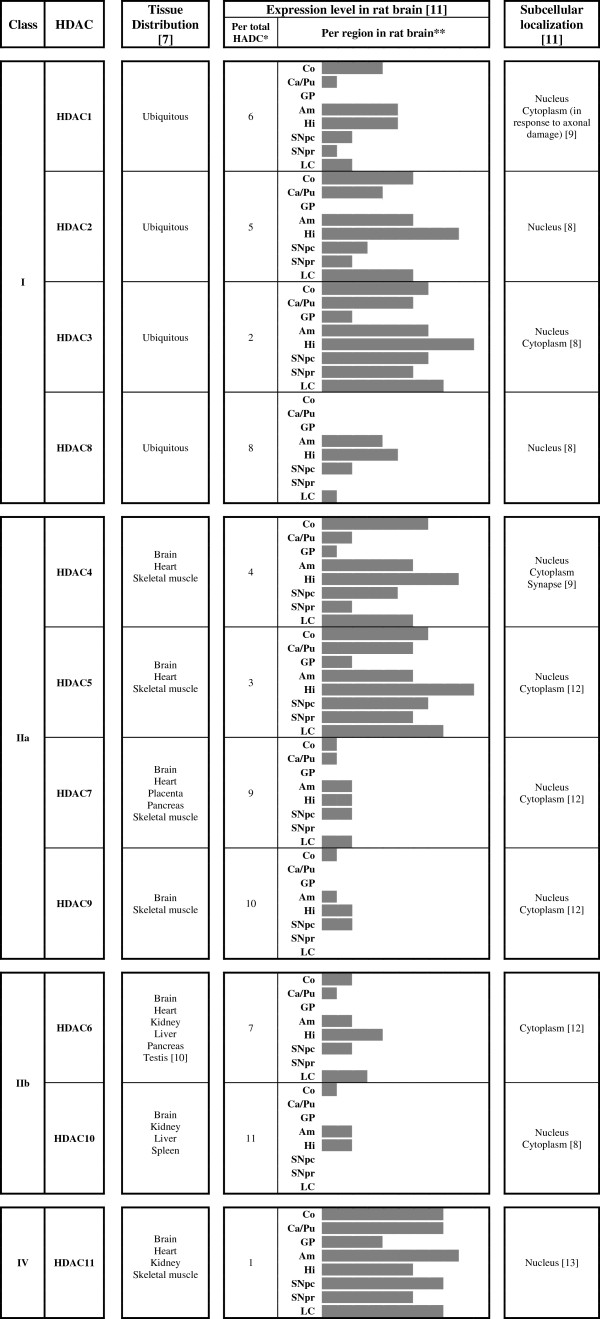
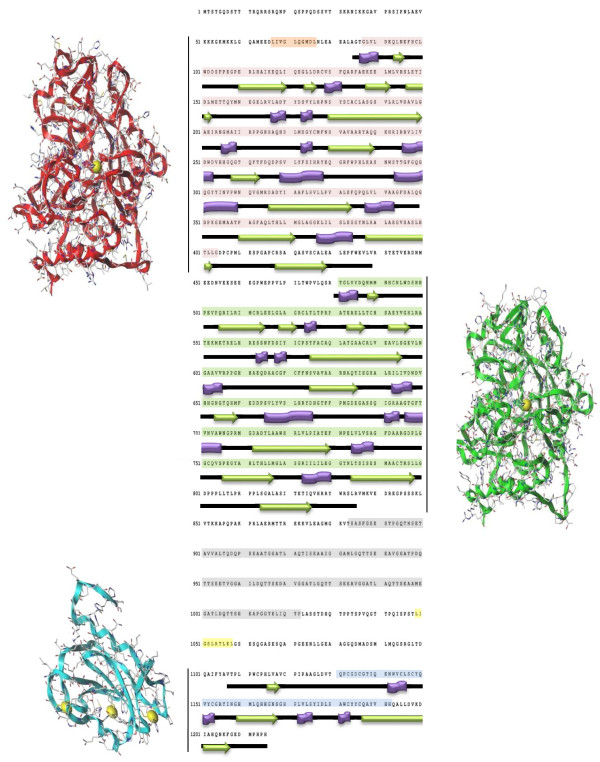
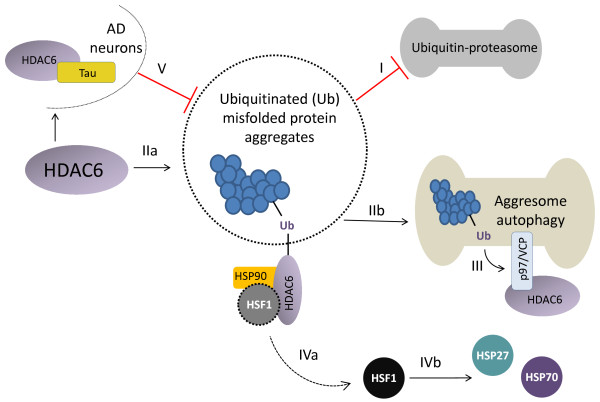
Histone deacetylase (HDAC) inhibitors have been demonstrated to be beneficial in animal models of neurodegenerative diseases. Such results were mainly associated with the epigenetic modulation caused by HDACs, especially those from class I, via chromatin deacetylation. However, other mechanisms may contribute to the neuroprotective effect of HDAC inhibitors, since each HDAC may present distinct specific functions within the neurodegenerative cascades. Such an example is HDAC6 for which the role in neurodegeneration has been partially elucidated so far. The strategy to be adopted in promising therapeutics targeting HDAC6 is still controversial. Specific inhibitors exert neuroprotection by increasing the acetylation levels of α-tubulin with subsequent improvement of the axonal transport, which is usually impaired in neurodegenerative disorders. On the other hand, an induction of HDAC6 would theoretically contribute to the degradation of protein aggregates which characterize various neurodegenerative disorders, including Alzheimer’s, Parkinson’s and Hutington’s diseases. This review describes the specific role of HDAC6 compared to the other HDACs in the context of neurodegeneration, by collecting in silico , in vitro and in vivo results regarding the inhibition and/or knockdown of HDAC6 and other HDACs. Moreover, structure, function, subcellular localization, as well as the level of HDAC6 expression within brain regions are reviewed and compared to the other HDAC isoforms. In various neurodegenerative diseases, the mechanisms underlying HDAC6 interaction with other proteins seem to be a promising approach in understanding the modulation of HDAC6 activity.
Overview
The claims and statistics of this paper haven’t been checked yet.
Free: it reads the open-access text and checks the first 5 claims that cite a source we can check. Create a free account to check every claim.
Integrity signals
Registry
Cites
Statistics
Figures
Verification
Claims the paper makes
The claims and statistics of this paper haven’t been checked yet.
Free: it reads the open-access text and checks the first 5 claims that cite a source we can check. Create a free account to check every claim.
Claims other papers make about this one
Each is checked against this paper’s own text: does it say what the citing paper says it does?
The cited source says what the claim attributes to it.
In the citing paper
“Among them, HDAC6 has two catalytic domains and a C-terminal zinc finger domain, interacts with tau and α-tubulin, and is involved in the degradation of protein aggregates, mitochondrial transport, and cognitive memory,506–509 making it relevant to AD pathology.”
From Recent advances in Alzheimer's disease: Mechanisms, clinical trials and new drug development strategies. (2024) · cites this paper as [506]
Self-check
Percentages, sums and reported differences re-computed from the paper’s own numbers.
The self-check needs the paper’s full text.
Citations
Cites
Mirra, S. S., Heyman, A., McKeel, D., Sumi, S. M., Crain, B. J., Brownlee, L. M., Vogel, F. S., Hughes, J. P., Belle, G. V., Berg, L., et al. (1991) · Neurology · doi:10.1212/wnl.41.4.479 · Cited by 4,961
Molecular Chaperones in the Cytosol: from Nascent Chain to Folded Protein
Hartl, F. U., & Hayer-Hartl, M. (2002) · Science · doi:10.1126/science.1068408 · Cited by 3,347
Histone deacetylases (HDACs): characterization of the classical HDAC family
RUIJTER, A. J. M. D., GENNIP, A. H. V., CARON, H. N., KEMP, S., & KUILENBURG, A. B. P. V. (2003) · Biochemical Journal · doi:10.1042/bj20021321 · Cited by 3,114
Haberland, M., Montgomery, R. L., & Olson, E. N. (2009) · Nature Reviews Genetics · doi:10.1038/nrg2485 · Cited by 2,526
Impairment of the Ubiquitin-Proteasome System by Protein Aggregation
Bence, N. F., Sampat, R. M., & Kopito, R. R. (2001) · Science · doi:10.1126/science.292.5521.1552 · Cited by 2,187
Davies, S. W., Turmaine, M., Cozens, B. A., DiFiglia, M., Sharp, A. H., Ross, C. A., Scherzinger, E., Wanker, E. E., Mangiarini, L., & Bates, G. P. (1997) · Cell · doi:10.1016/s0092-8674(00)80513-9 · Cited by 2,181
Reaching for high-hanging fruit in drug discovery at protein–protein interfaces
Wells, J. A., & McClendon, C. L. (2007) · Nature · doi:10.1038/nature06526 · Cited by 1,960
Enriched environments, experience-dependent plasticity and disorders of the nervous system
Nithianantharajah, J., & Hannan, A. J. (2006) · Nature Reviews Neuroscience · doi:10.1038/nrn1970 · Cited by 1,771
Masliah, E., Rockenstein, E., Veinbergs, I., Mallory, M., Hashimoto, M., Takeda, A., Sagara, Y., Sisk, A., & Mucke, L. (2000) · Science · doi:10.1126/science.287.5456.1265 · Cited by 1,765
Structures of a histone deacetylase homologue bound to the TSA and SAHA inhibitors
Finnin, M. S., Donigian, J. R., Cohen, A., Richon, V. M., Rifkind, R. A., Marks, P. A., Breslow, R., & Pavletich, N. P. (1999) · Nature · doi:10.1038/43710 · Cited by 1,714
Cited by
Items 301–355 of 355
Histone Deacetylase Inhibitors: Design, Synthesis, and Biological Evaluation
Pulya, S., Ganorkar, A., Biswas, S., & Ghosh, B. (2023) · Springer eBooks · doi:10.1007/978-981-99-6038-5_16 · Cited by 1
Epigenetic modulations induced by natural products
Pavan, A. R., Bonjorno, A. F., Chiba, D. E., Lopes, J. R., Fernandes, L. D. R., & dos Santos, J. L. (2024) · Elsevier eBooks · doi:10.1016/b978-0-443-23763-8.00009-9
Dzreyan, V., & Demyanenko, S. V. (2023) · Биологические мембраны Журнал мембранной и клеточной биологии · doi:10.31857/s0233475523060038
The Function of HDAC6 Mediated Prx2 Acetylation in Neuronal Apoptosis Related Alzheimer's diseasePreprint
Zhang, L., Hu, J., Zhang, T., Gao, H., Wu, X., Zhang, C.-H., Zhang, C., Chen, H., Yang, M., Cao, X., et al. (2024) · Research Square · doi:10.21203/rs.3.rs-4379662/v1
Renda, G., Sevgi, S., Šoral, M., Bora, G., Sarı, S., Çetin, Ö., Zobaroğlu-Özer, P., & Şöhretoğlu, D. (2024) · International Journal of Environmental Health Research · doi:10.1080/09603123.2024.2399210
Ganai, S. A., & Suma Mohan, S. (2025) · In Silico Pharmacology · doi:10.1007/s40203-024-00294-1 · Cited by 1
Chemoproteomics Sheds Light on Epigenetic Targets of [11C]Martinostat in the Human Brain
Catanese, M. C., Klingl, Y. E., Gilbert, T. M., Strebl, M. G., Hartigan, C. R., Schenone, M., & Hooker, J. M. (2025) · ACS Chemical Neuroscience · doi:10.1021/acschemneuro.4c00781
Tarara, V., & Karamitrousis, E. (2025) · Forum of Clinical Oncology · doi:10.2478/fco-2024-0007
Genotype–Phenotype Distinctions in Spastic Paraplegia 4 Reveal HDAC6 as a Therapeutic TargetPreprint
Mohan, N., Ramakrishnan, S., Sun, X., Sun, Y., Connors, T. M., Chai, V. Z., Piermarini, E., Baas, P. W., Cai, J. J., Liu, M., et al. (2025) · bioRxiv (Cold Spring Harbor Laboratory) · doi:10.1101/2025.07.15.664947
Therapeutic effect of histone deacetylase 6 inhibitor for a mouse model of phenylketonuria
Choi, J. E., Park, S., Song, H., Hwang, I. T., Jung, S., & Kim, H. S. (2025) · Scientific Reports · doi:10.1038/s41598-025-29143-7 · Cited by 1
Agujetas, V. R., Barbero-Camps, E., de Dios, C., Podlesniy, P., Abadin, X., Morales, A., Marí, M., Trullás, R., & Colell, A. (2021) · Figshare · doi:10.6084/m9.figshare.14183579
Cavallo, F., Troglio, F., Fagà, G., Fancelli, D., Shyti, R., Trattaro, S., Zanella, M., D’Agostino, G., Hughes, J. M., Cera, M. R., et al. (2020) · Figshare · doi:10.6084/m9.figshare.13257785
Cavallo, F., Troglio, F., Fagà, G., Fancelli, D., Shyti, R., Trattaro, S., Zanella, M., D’Agostino, G., Hughes, J. M., Cera, M. R., et al. (2020) · Figshare · doi:10.6084/m9.figshare.13257791
Cavallo, F., Troglio, F., Fagà, G., Fancelli, D., Shyti, R., Trattaro, S., Zanella, M., D’Agostino, G., Hughes, J. M., Cera, M. R., et al. (2020) · Figshare · doi:10.6084/m9.figshare.13257788
Balmik, A. A., Sonawane, S. K., & Chinnathambi, S. (2021) · Figshare · doi:10.6084/m9.figshare.14525927
Patra, J., Madkhali, H. A., Samad, A., & Ansari, M. N. (2025) · Journal of Computational Biophysics and Chemistry · doi:10.1142/s273741652650047x
Histone deacetylase 6 (HDAC 6) inhibition by mangrove-derived fat and fatty acids
Ediriweera, M. K., Sandamalika, W. M. G., Gopi, J., Manokaran, S., Joydas, T. V., Sethi, D., & Chandran, T. (2026) · Natural Product Research · doi:10.1080/14786419.2026.2613758
Cabrera-Rodríguez, R., Pons-Grífols, A., Pernas, M., Casado, C., Trujillo‐González, R., Lorenzo-Sánchez, I., Reyes-Castañeda, I., Trinité, B., Blanco, J., & Valenzuela-Fernández, A. (2026) · Cell Communication and Signaling · doi:10.1186/s12964-026-02762-x
Chatterjee, S. (2020) · theses.fr (ABES) · doi:10.70675/5d269afcz42aez4bd5zaf6cz373fc60b5595
Ramos‐Morales, E. (2021) · theses.fr (ABES) · doi:10.70675/c6b28473zf6b6z4024z99bfz05629f0484d7
Lu, X. F., Zhang, Y. N., Song, S., Wang, Q., Yang, H., & Li, X. (2026) · Glycoscience & Therapy · doi:10.1016/j.glycos.2026.100049
The impact of 3D chromatin remodeling on cellular senescence and aging
Chen, W., Zhan, Q., Xiao, F., Ju, Z., & Chen, Z. (2025) · Aging Research · doi:10.26599/agr.2025.9340072
Targeting HDAC6 and its novel E3 ligase activity: A dual-strategy for cardiovascular therapy
Shi, X., Zhao, Z., Yue, W., Feng, S., Zhang, N., & Sun, X. (2026) · Ageing Research Reviews · doi:10.1016/j.arr.2026.103200
Qureshi, T., Balmik, A. A., & Chinnathambi, S. (2026) · Methods in enzymology on CD-ROM/Methods in enzymology · doi:10.1016/bs.mie.2026.05.060
Squarzoni, A., Scuteri, A., Donzelli, E., Rodriguez‐Menendez, V., & Cavaletti, G. (2026) · Molecular Pharmacology · doi:10.1016/j.molpha.2026.100137 · Cited by 1
Gonzalez, M., Ruiz, J., Torres, L., & Ruiz, E. (2026) · Pharmaceutical Sciences and Drug Design · doi:10.51847/n3qdrlsgru
Yang, W., Thompson, B., Miellet, S., Maddock, M. L., Napierala, M., Dottori, M., & Kwa, F. A. A. (2026) · Antioxidants and Redox Signaling · doi:10.1177/15230864261470377
Balmik, A. A., Sonawane, S. K., Gorantla, N. V., & Chinnathambi, S. (2026) · Methods in enzymology on CD-ROM/Methods in enzymology · doi:10.1016/bs.mie.2026.07.009
Epigenetic Control of Stress-Induced Depression: Emerging Roles of HDAC3 and HDAC6
Mohan, A. S., Narayanan, J., Kashid, V. A., Patel, R. J., & Prajapati, B. G. (2026) · International Journal of Molecular Sciences · doi:10.3390/ijms27167313
Poonam, Rana, R., Thakur, M., Sharma, A., Pannu, S., Sharma, S., Naman, S., Rani, S., Devi, D., Kumar, V., et al. (2026) · Frontiers in Oncology · doi:10.3389/fonc.2026.1908830
BindingDB (2021) · UC San Diego · doi:10.7270/q2bp068p
BindingDB (2024) · UC San Diego · doi:10.7270/q2fx7fwn
BindingDB Entry 50021404: Hydrazides as Inhibitors of Histone Deacetylases.
BindingDB (2025) · UC San Diego · doi:10.7270/q2vt1xqm
BindingDB Entry 50044935: Aurones as histone deacetylase inhibitors: identification of key features.
BindingDB (2016) · UC San Diego · doi:10.7270/q2x3502t
BindingDB Entry 50022176: Advances in dual-targeting inhibitors of HDAC6 for cancer treatment.
BindingDB (2025) · UC San Diego · doi:10.7270/q24x5dg9
BindingDB Entry 50047915: Synthesis of a selective HDAC6 inhibitor active in neuroblasts.
BindingDB (2018) · UC San Diego · doi:10.7270/q2dz0b78
Metadata
- Authors
- Simões-Pires, C., Zwick, V., Nurisso, A., Schenker, E., Carrupt, P.-A., & Cuendet, M.
- Affiliations
- University of Geneva (CH)
- Institut de Recherches Internationales Servier (France) (FR)
- Corresponding author
- Cuendet, Muriel
- Venue
- Molecular Neurodegeneration
- Published
- 2013-01-29
- Volume
- 8
- Issue
- 1
- Pages
- 7-7
- ISSN
- 1750-1326 (ISSN-L)
- PMC
- PMC3615964
- OpenAlex
- W2129635356
- Cited by
- 341
- References
- 126
- Citations by year
- 2026: 21 · 2025: 30 · 2024: 44 · 2023: 34 · 2022: 19 · 2021: 33 · 2020: 34 · 2019: 23 · 2018: 20 · 2017: 18 · 2016: 18 · 2015: 23 · 2014: 19 · 2013: 4
- FWCI
- 2.04
- Type
- journal article
- Language
- en
- Open access
- gold
- doi.org
- Licence
- cc-by
- Locations
- Molecular Neurodegeneration (publishedVersion, cc-by)
- Europe PMC (PubMed Central) (publishedVersion, cc-by)
- PubMed Central (publishedVersion, cc-by)
- PubMed (publishedVersion)
- Archive ouverte UNIGE (University of Geneva) (publishedVersion, other-oa)
- Archive ouverte UNIGE (University of Geneva) (submittedVersion, cc-by)
- Topics
- Life Sciences › Biochemistry, Genetics and Molecular Biology › Molecular Biology › Histone Deacetylase Inhibitors Research
- Life Sciences › Neuroscience › Cellular and Molecular Neuroscience › Alzheimer's disease research and treatments
- Life Sciences › Neuroscience › Cellular and Molecular Neuroscience › Genetic Neurodegenerative Diseases
- Keywords
- HDAC6, histone deacetylase inhibitors, neurodegenerative diseases, alpha-tubulin acetylation, axonal transport, epigenetic modulation, HDAC isoforms, Alzheimer's disease, Parkinson's disease, Huntington's disease, neuroprotection, subcellular localization
- MeSH terms
- Animals, Histone Deacetylases, Humans, Neurodegenerative Diseases
About these checks
Registry, retraction, Cites and statistics results are computed, not judged, with one exception: a printed reference that no index lists is read once by a model before it counts as a citation error. Claims are extracted by a model and kept only when their quote appears verbatim in the text; each cited source is then checked, with a model’s help, for whether it says what the claim relies on. Those verdicts can be wrong — read the claim’s quote and the cited source before relying on one.
Statistics and arithmetic are recomputed, not judged.
Confidence bands are shown only for fields calibrated on our annotated test set. None is calibrated yet, so no band is shown.
What counts as a claim ›How we measure confidence ›How we check this ›
Are you an author, or do you see a problem with this page? Request a review
Data sources
Bibliographic data: Semantic Scholar, OpenAlex, Crossref.
Contains information from the Semantic Scholar Academic Graph Datasets, made available under the ODC Attribution License (ODC-BY 1.0).
Semantic Scholar’s data is described in: Kinney, R., et al. (2023). The Semantic Scholar Open Data Platform. arXiv:2301.10140.
