

The DOI matches its Crossref record; 127 of the 127 references it cites were found in a registry or an index.
The role of the LRRK2 gene in Parkinsonism
Open accessAbstract
Parkinson's disease (PD), like many common age-related conditions, has been recognized to have a substantial genetic component. Multiple lines of evidence suggest that Leucine-rich repeat kinase 2 (LRRK2) is a crucial factor to understanding the etiology of PD. LRRK2 is a large, widely expressed, multi-domain and multifunctional protein. LRRK2 mutations are the major cause to inherited and sporadic PD. In this review, we discuss the pathology and clinical features which show diversity and variability of LRRK2-associated PD. In addition, we do a thorough literature review and provide theoretical data for gene counseling. Further, we present the evidence linking LRRK2 to various possible pathogenic mechanism of PD such as α-synuclein, tau, inflammatory response, oxidative stress, mitochondrial dysfunction, synaptic dysfunction as well as autophagy-lysosomal system. Based on the above work, we investigate activities both within GTPase and outside enzymatic regions in order to obtain a potential therapeutic approach to solve the LRRK2 problem.
Overview
The claims and statistics of this paper haven’t been checked yet.
Run the check — free, no account needed. It reads the open-access text and checks the sources it cites.
Integrity signals
Registry
Cites
Statistics
Figures
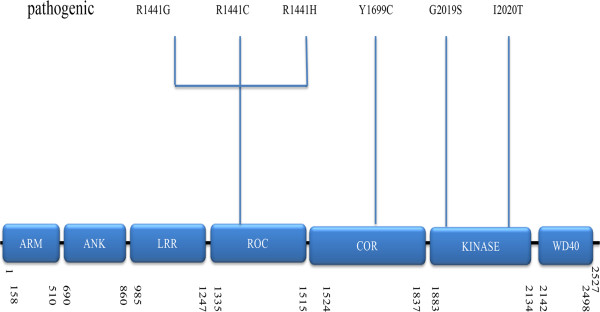
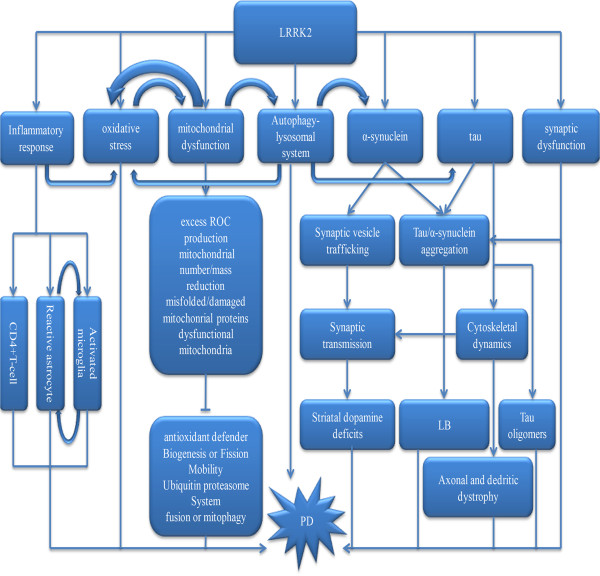
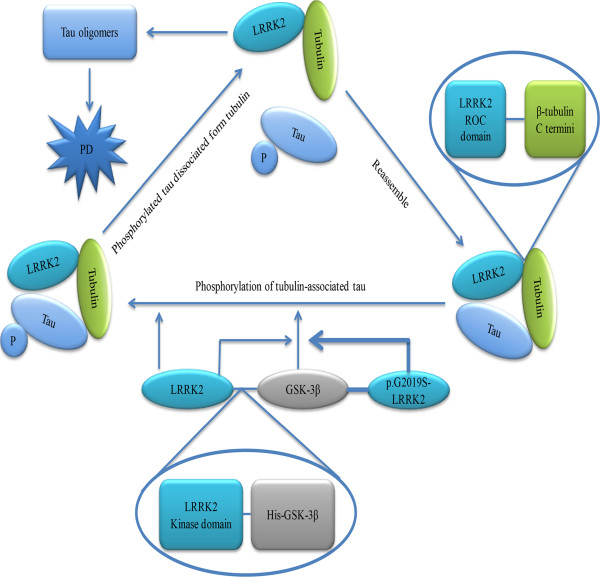
Verification
Claims the paper makes
The claims and statistics of this paper haven’t been checked yet.
Run the check — free, no account needed. It reads the open-access text and checks the sources it cites.
Claims other papers make about this one
Each is checked against this paper’s own text: does it say what the citing paper says it does?
The source backs part of the claim, not all of it — or backs it for a different population, condition or comparison.
In the citing paper
“It is characterized by filamentous and oligomeric 𝛂 -synuclein ( 𝛂 -syn) accumulation, and degeneration of dopaminergic neurons in the substantia nigra pars compacta (SNpc) leading to motor impairments (357, 616).”
From Blood-Brain Barrier: From Physiology to Disease and Back (2019) · cites this paper as [357]
Experimental — accuracy not yet measuredThe cited source says what the claim attributes to it.
In the citing paper
“LRRK2 (PARK8) gene mutations are the most common genetic cause of both familial and sporadic PD.257”
From Microglia in neurodegenerative diseases: mechanism and potential therapeutic targets (2023) · cites this paper as [257]
The cited source says what the claim attributes to it.
In the citing paper
“The most common LRRK2 mutation, G2019S (gain of function), is associated with 2% of sporadic cases and 6% of familial cases (357).”
From Blood-Brain Barrier: From Physiology to Disease and Back (2019) · cites this paper as [357]
Self-check
Percentages, sums and reported differences re-computed from the paper’s own numbers.
The self-check needs the paper’s full text.
Citations
Cites
Repertoires of Autophagy in the Pathogenesis of Ocular Diseases
Li, Y., Jiang, Q. L., Cao, G.-F., Yao, J., & Yan, B. (2015) · Cellular Physiology and Biochemistry · doi:10.1159/000373980 · Cited by 16,351
Staging of brain pathology related to sporadic Parkinson’s disease
Braak, H., Tredici, K. D., Rüb, U., de Vos, R. A. I., Jansen Steur, E. N. H., & Braak, E. (2003) · Neurobiology of Aging · doi:10.1016/s0197-4580(02)00065-9 · Cited by 10,777
Tau-mediated neurodegeneration in Alzheimer’s disease and related disorders
Ballatore, C., Lee, V. M.-Y., & Trojanowski, J. Q. (2007) · Nature Reviews Neuroscience · doi:10.1038/nrn2194 · Cited by 2,174
Lysosomes: fusion and function
Luzio, J. P., Pryor, P. R., & Bright, N. A. (2007) · Nature Reviews Molecular Cell Biology · doi:10.1038/nrm2217 · Cited by 1,807
Mice Lacking α-Synuclein Display Functional Deficits in the Nigrostriatal Dopamine System
Abeliovich, A., Schmitz, Y., Fariñas, I., Choi-Lundberg, D., Ho, W.-H., Castillo, P. E., Shinsky, N., Verdugo, J. M. G., Armanini, M., Ryan, A., et al. (2000) · Neuron · doi:10.1016/s0896-6273(00)80886-7 · Cited by 1,722
Inhibition of Macroautophagy Triggers Apoptosis
Boya, P., González‐Polo, R. A., Casares, N., Perfettini, J., Dessen, P., Larochette, N., Métivier, D., Meley, D., Souquère, S., Yoshimori, T., et al. (2005) · Molecular and Cellular Biology · doi:10.1128/mcb.25.3.1025-1040.2005 · Cited by 1,670
Bender, A., Krishnan, K. J., Morris, C. M., Taylor, G. A., Reeve, A. K., Perry, R. H., Jaros, E., Hersheson, J. S., Betts, J., Klopstock, T., et al. (2006) · Nature Genetics · doi:10.1038/ng1769 · Cited by 1,570
Healy, D. G., Falchi, M., O'Sullivan, S. S., Bonifati, V., Durr, A., Bressman, S., Brice, A., Aasly, J., Zabetian, C. P., Goldwurm, S., et al. (2008) · The Lancet Neurology · doi:10.1016/s1474-4422(08)70117-0 · Cited by 1,425
Wu, D. C., Jackson-Lewis, V., Vila, M., Tieu, K., Teismann, P., Vadseth, C., Choi, D.-K., Ischiropoulos, H., & Przedborski, S. (2002) · The Journal of Neuroscience · doi:10.1523/jneurosci.22-05-01763.2002 · Cited by 1,183
Tau pathology in Alzheimer disease and other tauopathies
Iqbal, K., del C. Alonso, A., Chen, S., Chohan, M. O., El-Akkad, E., Gong, C.-X., Khatoon, S., Li, B., Liu, F., Rahman, A., et al. (2005) · Biochimica et Biophysica Acta (BBA) - Molecular Basis of Disease · doi:10.1016/j.bbadis.2004.09.008 · Cited by 1,037
Tauopathy in Drosophila : Neurodegeneration Without Neurofibrillary Tangles
Wittmann, C. W., Wszolek, M. F., Shulman, J. M., Salvaterra, P. M., Lewis, J., Hutton, M., & Feany, M. B. (2001) · Science · doi:10.1126/science.1062382 · Cited by 939
Pathogenic Lysosomal Depletion in Parkinson's Disease
Dehay, B., Bové, J., Rodríguez-Muela, N., Perier, C., Recasens, A., Boya, P., & Vila, M. (2010) · The Journal of Neuroscience · doi:10.1523/jneurosci.1920-10.2010 · Cited by 825
Parkinson’s disease: genetics and pathogenesis
Shulman, J. M., De Jager, P. L., & Feany, M. B. (2011) · Annual Review of Pathology: Mechanisms of Disease · doi:10.1146/annurev-pathol-011110-130242 · Cited by 801
Progressive parkinsonism in mice with respiratory-chain-deficient dopamine neurons
Ekstrand, M. I., Terzioglu, M., Galter, D., Zhu, S., Hofstetter, C., Lindqvist, E., Thams, S., Bergstrand, A., Hansson, F. S., Trifunovic, A., et al. (2007) · Proceedings of the National Academy of Sciences · doi:10.1073/pnas.0605208103 · Cited by 605 · cited 1×
“There are more compelling evidences which come from mice possessing conditional knockout of mitochondrial transcription factor A in DA neurons, showing reduced mtDNA expression which in turn leads to a parkinsonism phenotype characterized by adult onset of a progressive impairment of motor function accompanied by form…”
BackgroundChaperone-Mediated Autophagy Markers in Parkinson Disease Brains
Alvarez‐Erviti, L., Rodríguez-Oroz, M. C., Cooper, J. A. D., Caballero, C., Ferrer, I., Obeso, J. A., & Schapira, A. H. V. (2010) · Archives of Neurology · doi:10.1001/archneurol.2010.198 · Cited by 577
Sánchez‐Danés, A., Richaud‐Patín, Y., Carballo‐Carbajal, I., Jiménez‐Delgado, S., Caig, C., Mora, S., Guglielmo, C. D., Ezquerra, M., Patel, B., Giralt, A., et al. (2012) · EMBO Molecular Medicine · doi:10.1002/emmm.201200215 · Cited by 571
The Familial Parkinsonism Gene LRRK2 Regulates Neurite Process Morphology
MacLeod, D., Dowman, J., Hammond, R., Leete, T., Inoue, K., & Abeliovich, A. (2006) · Neuron · doi:10.1016/j.neuron.2006.10.008 · Cited by 561
The role of leucine-rich repeat kinase 2 (LRRK2) in Parkinson's disease
Cookson, M. (2010) · Nature reviews. Neuroscience · doi:10.1038/nrn2935 · Cited by 552
Mutant LRRK2R1441G BAC transgenic mice recapitulate cardinal features of Parkinson's disease
Li, Y., Liu, W., Oo, T. F., Wang, L., Tang, Y. L., Jackson-Lewis, V. R., Zhou, C., Geghman, K. D., Bogdanov, M. B., Przedborski, S., et al. (2009) · Nature Neuroscience · doi:10.1038/nn.2349 · Cited by 551
Lin, X. Z., Parisiadou, L., Gu, X., Wang, L., Shim, H., Sun, L., Xie, C., Long, C.-X., Yang, W.-J., Ding, J., et al. (2009) · Neuron · doi:10.1016/j.neuron.2009.11.006 · Cited by 532
Localization of LRRK2 to membranous and vesicular structures in mammalian brain
Biskup, S., Moore, D. J., Celsi, F., Higashi, S., West, A. B., Andrabi, S. A., Kurkinen, K. M. A., Yu, S., Savitt, J. M., Waldvogel, H. J., et al. (2006) · Annals of Neurology · doi:10.1002/ana.21019 · Cited by 530
Role of autophagy in G2019S‐LRRK2‐associated neurite shortening in differentiated SH‐SY5Y cells
Plowey, E. D., Cherra, S. J., Liu, Y., & Chu, C. T. (2008) · Journal of Neurochemistry · doi:10.1111/j.1471-4159.2008.05217.x · Cited by 517
Cooper, O., Seo, H., Andrabi, S., Guardia-Laguarta, C., Graziotto, J., Sundberg, M., McLean, J. R., Carrillo-Reid, L., Xie, Z., Osborn, T., et al. (2012) · Science Translational Medicine · doi:10.1126/scitranslmed.3003985 · Cited by 508
LRRK2 in Parkinson's disease: protein domains and functional insights
Mata, I. F., Wedemeyer, W. J., Farrer, M. J., Taylor, J. P., & Gallo, K. A. (2006) · Trends in Neurosciences · doi:10.1016/j.tins.2006.03.006 · Cited by 498
LRRK2 Inhibition Attenuates Microglial Inflammatory Responses
Moehle, M. S., Webber, P. J., Tse, T., Sukar, N., Standaert, D. G., DeSilva, T. M., Cowell, R. M., & West, A. B. (2012) · The Journal of Neuroscience · doi:10.1523/jneurosci.5601-11.2012 · Cited by 463
Alegre‐Abarrategui, J., Christian, H., Lufino, M. M., Dafinca, R., Venda, L. L., Ansorge, O., & Wade‐Martins, R. (2009) · Human Molecular Genetics · doi:10.1093/hmg/ddp346 · Cited by 446
Characterization of a selective inhibitor of the Parkinson's disease kinase LRRK2
Deng, X., Dzamko, N. L., Prescott, A. R., Davies, P., Liu, Q., Yang, Q., Lee, J., Patricelli, M. P., Nomanbhoy, T. K., Alessi, D. R., et al. (2011) · Nature Chemical Biology · doi:10.1038/nchembio.538 · Cited by 434
LRRK2 Is Involved in the IFN-γ Response and Host Response to Pathogens
Gardet, A., Benita, Y., Li, C., Sands, B. E., Ballester, I., Stevens, C. R., Korzenik, J. R., Rioux, J. D., Daly, M. J., Xavier, R. J., et al. (2010) · The Journal of Immunology · doi:10.4049/jimmunol.1000548 · Cited by 427
Liu, Z., Lee, J., Krummey, S. M., Lü, W., Cai, H., & Lenardo, M. J. (2011) · Nature Immunology · doi:10.1038/ni.2113 · Cited by 374
McCoy, M. K., Martinez, T. N., Ruhn, K. A., Szymkowski, D. E., Smith, C. G., Botterman, B. R., Tansey, K. E., & Tansey, M. G. (2006) · Journal of Neuroscience · doi:10.1523/jneurosci.1504-06.2006 · Cited by 370
Koprich, J. B., Reske-Nielsen, C., Mithal, P., & Isacson, O. (2008) · Journal of Neuroinflammation · doi:10.1186/1742-2094-5-8 · Cited by 355
Autophagy: Principles and significance in health and disease
Todde, V., Marten Veenhuis, A., & van der Klei, I. J. (2008) · Biochimica et Biophysica Acta (BBA) - Molecular Basis of Disease · doi:10.1016/j.bbadis.2008.10.016 · Cited by 332
Mitochondrial impairment in patients with Parkinson disease with the G2019S mutation in LRRK2
Mortiboys, H., Johansen, K. K., Aasly, J. O., & Bandmann, O. (2010) · Neurology · doi:10.1212/wnl.0b013e3181ff9685 · Cited by 320
Khan, N. L., Jain, S., Lynch, J. M., Pavese, N., Abou‐Sleiman, P. M., Holton, J. L., Healy, D. G., Gilks, W. P., Sweeney, M. G., Ganguly, M., et al. (2005) · Brain · doi:10.1093/brain/awh667 · Cited by 317
Parisiadou, L., Xie, C., Cho, H. J., Lin, X. Z., Gu, X., Long, C., Lobbestael, E., Baekelandt, V., Taymans, J., Sun, L., et al. (2009) · Journal of Neuroscience · doi:10.1523/jneurosci.3799-09.2009 · Cited by 316
Andreadis, A. (2005) · Biochimica et Biophysica Acta (BBA) - Molecular Basis of Disease · doi:10.1016/j.bbadis.2004.08.010 · Cited by 311
α‐Synuclein oligomers and clinical implications for Parkinson disease
Kalia, L. V., Kalia, S. K., McLean, P. J., Lozano, A. M., & Lang, A. E. (2012) · Annals of Neurology · doi:10.1002/ana.23746 · Cited by 310
R1441C mutation in LRRK2 impairs dopaminergic neurotransmission in mice
Tong, Y., Pisani, A., Martella, G., Karouani, M., Yamaguchi, H., Pothos, E. N., & Shen, J. (2009) · Proceedings of the National Academy of Sciences · doi:10.1073/pnas.0906334106 · Cited by 307
Friedman, L. G., Lachenmayer, M. L., Wang, J., He, L., Poulose, S. M., Komatsu, M., Holstein, G. R., & Yue, Z. (2012) · The Journal of Neuroscience · doi:10.1523/jneurosci.5809-11.2012 · Cited by 303
Mixed lineage kinase inhibitor CEP-1347 fails to delay disability in early Parkinson disease
The Parkinson Study Group PRECEPT Investigators (2007) · Neurology · doi:10.1212/01.wnl.0000277648.63931.c0 · Cited by 296
A Drosophila model for LRRK2 -linked parkinsonism
Liu, Z., Wang, X., Yu, Y., Li, X., Wang, T., Jiang, H., Ren, Q., Jiao, Y., Sawa, A., Moran, T. H., et al. (2008) · Proceedings of the National Academy of Sciences · doi:10.1073/pnas.0708452105 · Cited by 286
Hakimi, M., Selvanantham, T., Swinton, E., Padmore, R., Tong, Y., Kabbach, G., Venderová, K., Girardin, S. E., Bulman, D. E., Scherzer, C. R., et al. (2011) · Journal of Neural Transmission · doi:10.1007/s00702-011-0653-2 · Cited by 284
LRRK2 Controls Synaptic Vesicle Storage and Mobilization within the Recycling Pool
Piccoli, G., Condliffe, S. B., Bauer, M., Giesert, F., Boldt, K., Astis, S. D., Meixner, A., Sarioglu, H., Weisenhorn, D. M. V., Wurst, W., et al. (2011) · Journal of Neuroscience · doi:10.1523/jneurosci.3730-10.2011 · Cited by 282
Lübke, T., Lobel, P., & Sleat, D. E. (2008) · Biochimica et Biophysica Acta (BBA) - Molecular Cell Research · doi:10.1016/j.bbamcr.2008.09.018 · Cited by 271
Sanders, L. H., Laganière, J., Cooper, O., Mak, S. K., Vu, B. J., Huang, Y. A., Paschon, D. E., Vangipuram, M., Sundararajan, R., Urnov, F. D., et al. (2013) · Neurobiology of Disease · doi:10.1016/j.nbd.2013.10.013 · Cited by 267
LRRK2 Modulates Vulnerability to Mitochondrial Dysfunction in Caenorhabditis elegans
Saha, S., Guillily, M. D., Ferree, A. W., Lanceta, J., Chan, D., Ghosh, J. G., Hsu, C. H., Segal, L., Raghavan, K., Matsumoto, K., et al. (2009) · Journal of Neuroscience · doi:10.1523/jneurosci.2281-09.2009 · Cited by 251
Fonzo, A. D., Chou, Y. W., Lu, C.-S., van Doeselaar, M., Simons, E. J., Rohé, C. F., Chang, H., Chen, R., Weng, Y.-H., Vanacore, N., et al. (2006) · Neurogenetics · doi:10.1007/s10048-006-0041-5 · Cited by 229
Gillardon, F., Schmid, R. A., & Draheim, H. J. (2012) · Neuroscience · doi:10.1016/j.neuroscience.2012.02.001 · Cited by 219
Tong, Y., Giaime, E., Yamaguchi, H., Ichimura, T., Liu, Y., Si, H., Cai, H., Bonventre, J. V., & Shen, J. (2012) · Molecular Neurodegeneration · doi:10.1186/1750-1326-7-2 · Cited by 219
Impaired Inflammatory Responses in Murine Lrrk2-Knockdown Brain Microglia
Kim, B., Yang, M.-S., Choi, D., Kim, J.-H., Kim, H.-S., Seol, W., Choi, S., Jou, I., Kim, E.-Y., & Joe, E.-H. (2012) · PLoS ONE · doi:10.1371/journal.pone.0034693 · Cited by 215
Parkin Protects against LRRK2 G2019S Mutant-Induced Dopaminergic Neurodegeneration in Drosophila
Ng, C.-H., Mok, S. Z. S., Koh, C., Ouyang, X., Fivaz, M. L., Tan, E.-K., Dawson, V. L., Dawson, T. M., Yu, F., & Lim, K. (2009) · Journal of Neuroscience · doi:10.1523/jneurosci.2375-09.2009 · Cited by 215
Roles of the Drosophila LRRK2 homolog in Rab7-dependent lysosomal positioning
Dodson, M. W., Zhang, T., Jiang, C., Chen, S., & Guo, M. A. (2011) · Human Molecular Genetics · doi:10.1093/hmg/ddr573 · Cited by 205
Sánchez‐Pernaute, R., Ferree, A. W., Cooper, O., Yu, M., Brownell, A., & Ole Isacson, A. (2004) · Journal of Neuroinflammation · doi:10.1186/1742-2094-1-6 · Cited by 205
MIXED LINEAGE KINASE INHIBITOR CEP- 1347 FAILS TO DELAY DISABILITY IN EARLY PARKINSON DISEASE
Wang, L. H., & Johnson, E. M. (2008) · Neurology · doi:10.1212/01.wnl.0000324506.93877.5e · Cited by 202
Apoptotic mechanisms in mutant LRRK2-mediated cell death
Iaccarino, C., Crosio, C., Vitale, C., Sanna, G., Carrì, M. T., & Barone, P. (2007) · Human Molecular Genetics · doi:10.1093/hmg/ddm080 · Cited by 194
Targets for neuroprotection in Parkinson's disease
Yacoubian, T. A., & Standaert, D. G. (2008) · Biochimica et Biophysica Acta (BBA) - Molecular Basis of Disease · doi:10.1016/j.bbadis.2008.09.009 · Cited by 193
Liang, C., Wang, T. T., Luby‐Phelps, K., & German, D. C. (2006) · Experimental Neurology · doi:10.1016/j.expneurol.2006.08.015 · Cited by 190
Leucine-rich repeat kinase 2 associates with lipid rafts
Hatano, T., Kubo, S., Imai, S., Maeda, M., Ishikawa, K., Mizuno, Y., & Hattori, N. (2007) · Human Molecular Genetics · doi:10.1093/hmg/ddm013 · Cited by 184
Venderová, K., Kabbach, G., Abdel-Messih, E., Zhang, Y., Parks, R. J., Imai, Y., Gehrke, S., Ngsee, J. K., LaVoie, M. J., Slack, R. S., et al. (2009) · Human Molecular Genetics · doi:10.1093/hmg/ddp394 · Cited by 182
The LRRK2 G2019S mutant exacerbates basal autophagy through activation of the MEK/ERK pathway
Pedro, J. M. B., Niso‐Santano, M., Gómez‐Sánchez, R., Pizarro‐Estrella, E., Aiastui, A., Gorostidi, A., Climent, V. E., de Maturana, R. L., Sánchez‐Pernaute, R., de Munaín, A. L., et al. (2012) · Cellular and Molecular Life Sciences · doi:10.1007/s00018-012-1061-y · Cited by 176
Ludolph, A. C., Kassubek, J., Landwehrmeyer, G. B., Mandelkow, E., Mandelkow, E., Burn, D. J., Caparros-Lefebvre, D., Frey, K. A., de Yébenes, J. G., Gasser, T., et al. (2009) · European Journal of Neurology · doi:10.1111/j.1468-1331.2008.02513.x · Cited by 174
Macroautophagy deficiency mediates age-dependent neurodegeneration through a phospho-tau pathway
Inoue, K., Rispoli, J., Kaphzan, H., Klann, E., Chen, E. I., Kim, J., Komatsu, M., & Abeliovich, A. (2012) · Molecular Neurodegeneration · doi:10.1186/1750-1326-7-48 · Cited by 168
Leucine‐rich repeat kinase 2 disturbs mitochondrial dynamics via Dynamin‐like protein
Niu, J., Yu, M., Wang, C., & Xu, Z. (2012) · Journal of Neurochemistry · doi:10.1111/j.1471-4159.2012.07809.x · Cited by 166
Lrrk2 phosphorylates alpha synuclein at serine 129: Parkinson disease implications
Qing, H., Wong, W., McGeer, E. G., & McGeer, P. L. (2009) · Biochemical and Biophysical Research Communications · doi:10.1016/j.bbrc.2009.06.142 · Cited by 163
Ramsden, N. G., Perrin, J., Ren, Z., Lee, B. D., Zinn, N., Dawson, V. L., Tam, D., Bova, M. P., Lang, M., Drewes, G., et al. (2011) · ACS Chemical Biology · doi:10.1021/cb2002413 · Cited by 158
Inhibition of LRRK2 kinase activity stimulates macroautophagy
Manzoni, C., Mamais, A., Dihanich, S., Abeti, R., Soutar, M. P. M., Plun‐Favreau, H., Giunti, P., Tooze, S. A., Bandopadhyay, R., & Lewis, P. A. (2013) · Biochimica et Biophysica Acta (BBA) - Molecular Cell Research · doi:10.1016/j.bbamcr.2013.07.020 · Cited by 158
Lrrk2 R1441C parkinsonism is clinically similar to sporadic Parkinson disease
Haugarvoll, K., Rademakers, R., Kachergus, J. M., Nuytemans, K., Ross, O. A., Gibson, J. M., Tan, E., Gaig, C., TOLOSA, E. S., Goldwurm, S., et al. (2008) · Neurology · doi:10.1212/01.wnl.0000304044.22253.03 · Cited by 154
Brain stem pathology in Parkinson's disease: An evaluation of the Braak staging model
Kingsbury, A. E., Bandopadhyay, R., Silveira‐Moriyama, L., Ayling, H., Kallis, C., Sterlacci, W., Maeir, H., Poewe, W. H., & Lees, A. J. (2010) · Movement Disorders · doi:10.1002/mds.23305 · Cited by 152
Yao, C., Khoury, R. E., Wang, W., Byrd, T. A., Pehek, E. A., Thacker, C. M., Zhu, X., Smith, M. A., Wilson‐Delfosse, A. L., & Chen, S. G. (2010) · Neurobiology of Disease · doi:10.1016/j.nbd.2010.04.002 · Cited by 148
Ahmed, I., Liang, Y., Schools, S., Dawson, V. L., Dawson, T. M., & Savitt, J. M. (2012) · The Journal of Neuroscience · doi:10.1523/jneurosci.0209-12.2012 · Cited by 144
Skibinski, G., Nakamura, K., Cookson, M., & Finkbeiner, S. M. (2014) · Journal of Neuroscience · doi:10.1523/jneurosci.2712-13.2014 · Cited by 143
Law, B. M. H., Spain, V. A., Leinster, V. H. L., Chia, R., Beilina, A. G., Cho, H. J., Taymans, J., Urban, M. K., Sancho, R. M., Ramírez, M. B., et al. (2013) · Journal of Biological Chemistry · doi:10.1074/jbc.m113.507913 · Cited by 135
Angeles, D. C., Gan, B.-H., Onstead, L., Zhao, Y., Lim, K., Dächsel, J. C., Melrose, H. L., Farrer, M. J., Wszołek, Z. K., Dickson, D. W., et al. (2011) · Human Mutation · doi:10.1002/humu.21582 · Cited by 133
Kawakami, F., Takatoshi, Y., Ohta, E., Maekawa, T., Shimada, N., Suzuki, M., Maruyama, H., Ichikawa, T., & Obata, F. (2012) · PLoS ONE · doi:10.1371/journal.pone.0030834 · Cited by 128
LRRK2 in Parkinson’s disease: genetic and clinical studies from patients
Kumari, U., & Tan, E. K. (2009) · The FEBS Journal · doi:10.1111/j.1742-4658.2009.07344.x · Cited by 125
LRRK2 enhances oxidative stress-induced neurotoxicity via its kinase activity
Heo, H. Y., Park, J.-M., Kim, C.-H., Han, B., Kim, K., & Seol, W. (2009) · Experimental Cell Research · doi:10.1016/j.yexcr.2009.09.014 · Cited by 124
Luzon-Toro, B., de la Torre, E. R., Delgado, A., Perez-Tur, J., & Hilfiker, S. (2007) · Human Molecular Genetics · doi:10.1093/hmg/ddm151 · Cited by 122
Hasegawa, K., Stoessl, A. J., Yokoyama, T., Kowa, H., Wszołek, Z. K., & Yagishita, S. (2008) · Parkinsonism & Related Disorders · doi:10.1016/j.parkreldis.2008.07.010 · Cited by 118
The WD40 Domain Is Required for LRRK2 Neurotoxicity
Jorgensen, N. D., Peng, Y., Ho, C. C., Rideout, H. J., Petrey, D. S., Liu, P., & Dauer, W. T. (2009) · PLoS ONE · doi:10.1371/journal.pone.0008463 · Cited by 116
Genetic characteristics of leucine-rich repeat kinase 2 (LRRK2) associated Parkinson’s disease
Bardien, S., Lesage, S., Brice, A., & Carr, J. A. (2011) · Parkinsonism & Related Disorders · doi:10.1016/j.parkreldis.2010.11.008 · Cited by 111
Activity-related redistribution of presynaptic proteins at the active zone
Tao-Cheng, J.-H. (2006) · Neuroscience · doi:10.1016/j.neuroscience.2006.04.061 · Cited by 105
Burke, R. E. (2007) · Pharmacology & Therapeutics · doi:10.1016/j.pharmthera.2007.02.002 · Cited by 105
A comparative study of Parkinson's disease and leucine-rich repeat kinase 2 p.G2019S parkinsonism
Trinh, J., Amouri, R., Duda, J. E., Morley, J. F., Read, M., Donald, A., Vilariño‐Güell, C., Thompson, C., Szu‐Tu, C., Gustavsson, E. K., et al. (2013) · Neurobiology of Aging · doi:10.1016/j.neurobiolaging.2013.11.015 · Cited by 95
Structural biology of the LRRK2 GTPase and kinase domains: implications for regulation
Gilsbach, B. K., & Kortholt, A. (2014) · Frontiers in Molecular Neuroscience · doi:10.3389/fnmol.2014.00032 · Cited by 87
Brockmann, K., Gröger, A., Santo, A. D., Liepelt, I., Schulte, C., Klose, U., Maetzler, W., Hauser, A., Hilker, R., Gomez‐Mancilla, B., et al. (2011) · Movement Disorders · doi:10.1002/mds.23991 · Cited by 86
LRRK2 interactions with α-synuclein in Parkinson’s disease brains and in cell models
Guerreiro, P. S., Huang, Y. M., Gysbers, A. M., Cheng, D., Gai, W., Outeiro, T. F., & Halliday, G. M. (2012) · Journal of Molecular Medicine · doi:10.1007/s00109-012-0984-y · Cited by 83
The Neurobiology of LRRK2 and its Role in the Pathogenesis of Parkinson’s Disease
Rideout, H. J., & Stefanis, L. (2013) · Neurochemical Research · doi:10.1007/s11064-013-1073-5 · Cited by 82
Higashi, S., Moore, D. J., Yamamoto, R., Minegishi, M., Sato, K., Togo, T., Katsuse, O., Uchikado, H., Furukawa, Y., Hino, H., et al. (2009) · Journal of Neuropathology & Experimental Neurology · doi:10.1097/nen.0b013e3181b44ed8 · Cited by 81
Kinase inhibitors arrest neurodegeneration in cell and C. elegans models of LRRK2 toxicity
Yao, C., Johnson, W. M., Gao, Y., Wang, W., Zhang, J., Deák, M., Alessi, D. R., Zhu, X., Mieyal, J. J., Röder, H., et al. (2012) · Human Molecular Genetics · doi:10.1093/hmg/dds431 · Cited by 78
Ancient Origin of the Parkinson Disease Gene LRRK2
Marín, I. (2008) · Journal of Molecular Evolution · doi:10.1007/s00239-008-9122-4 · Cited by 77
Santpere, G., & Ferrer, I. (2009) · Acta Neuropathologica · doi:10.1007/s00401-008-0478-8 · Cited by 76
Parkinson's disease and family history
Sellbach, A., Boyle, R. S., Silburn, P. A., & Mellick, G. D. (2006) · Parkinsonism & Related Disorders · doi:10.1016/j.parkreldis.2006.03.002 · Cited by 76
Lysosomal membrane permeabilization in Parkinson disease
Vila, M., Bové, J., Dehay, B., Rodríguez‐Muela, N., & Boya, P. (2010) · Autophagy · doi:10.4161/auto.7.1.13933 · Cited by 71
Neuropathology of Parkinson's disease with the R1441G mutation in LRRK2
Martí-Massó, J. F., Ruiz‐Martínez, J., Bolaño, M. J., Ruiz, I., Gorostidi, A., Moreno, F., Ferrer, I., & de Munaín, A. L. (2009) · Movement Disorders · doi:10.1002/mds.22677 · Cited by 70
Non-Motor and Motor Features in LRRK2 Transgenic Mice
Bichler, Z., Lim, H. C., Zeng, L., & Tan, E. K. (2013) · PLoS ONE · doi:10.1371/journal.pone.0070249 · Cited by 70
Kawakami, F., Shimada, N., Ohta, E., Kagiya, G., Kawashima, R., Maekawa, T., Maruyama, H., & Ichikawa, T. (2013) · FEBS Journal · doi:10.1111/febs.12579 · Cited by 67
Kinase Inhibitors as Potential Therapeutics for Acute and Chronic Neurodegenerative Conditions
Cuny, G. D. (2009) · Current Pharmaceutical Design · doi:10.2174/138161209789649330 · Cited by 65
Liu, M., Bender, S. A., Cuny, G. D., Sherman, W., Glicksman, M. A., & Ray, S. S. (2013) · Biochemistry · doi:10.1021/bi3012077 · Cited by 64
Synaptic dysfunction in genetic models of Parkinson's disease: A role for autophagy?
Plowey, E. D., & Chu, C. T. (2010) · Neurobiology of Disease · doi:10.1016/j.nbd.2010.10.011 · Cited by 62
Kondo, K., Obitsu, S., & Teshima, R. (2011) · Biological and Pharmaceutical Bulletin · doi:10.1248/bpb.34.1078 · Cited by 61
LRRK2 in Parkinson’s disease: biochemical functions
Anand, V. S., & Braithwaite, S. P. (2009) · FEBS Journal · doi:10.1111/j.1742-4658.2009.07341.x · Cited by 60
Analysis of 14 LRRK2 mutations in Parkinson's plus syndromes and late‐onset Parkinson's disease
Tan, E., Skipper, L. M., Chua, E., Wong, M. C., Ratnagopal, P., Bonnard, C., Kolatkar, P. R., & Liu, J. (2006) · Movement Disorders · doi:10.1002/mds.20875 · Cited by 60
Caesar, M., Zach, S., Carlson, C. B., Brockmann, K., Gasser, T., & Gillardon, F. (2013) · Neurobiology of Disease · doi:10.1016/j.nbd.2012.12.019 · Cited by 59
CORTICOBASAL SYNDROME AND PRIMARY PROGRESSIVE APHASIA AS MANIFESTATIONS OF LRRK2 GENE MUTATIONS
Ross, O. A., Toft, M., & Haugarvoll, K. (2008) · Neurology · doi:10.1212/01.wnl.0000320511.30222.dd · Cited by 57
Corticobasal syndrome and primary progressive aphasia as manifestations of LRRK2 gene mutations
Chen‐Plotkin, A. S., Yuan, W., Anderson, C., Wood, E. M., Hurtig, H. I., Clark, C. M., Miller, B. L., Lee, V. M.-Y., Trojanowski, J. Q., Grossman, M., et al. (2007) · Neurology · doi:10.1212/01.wnl.0000280574.17166.26 · Cited by 54
Angeles, D. C., Ho, P., Chua, L. L., Wang, C., Yap, Y. W., Ng, C., Zhou, Z., Lim, K., Wszołek, Z. K., Wang, H. Y., et al. (2014) · Human Molecular Genetics · doi:10.1093/hmg/ddu026 · Cited by 50
LRRK2 as a modulator of lysosomal calcium homeostasis with downstream effects on autophagy
Gómez‐Suaga, P., & Hilfiker, S. (2012) · Autophagy · doi:10.4161/auto.19305 · Cited by 46
Pereira, C., Martins, L. M., & Saraiva, L. (2014) · Biochimica et Biophysica Acta (BBA) - General Subjects · doi:10.1016/j.bbagen.2014.02.015 · Cited by 45
Dranka, B. P., Gifford, A., Ghosh, A., Zielonka, J., Joseph, J., Kanthasamy, A. G., & Kalyanaraman, B. (2013) · Neuroscience Letters · doi:10.1016/j.neulet.2013.05.034 · Cited by 43
Investigating Convergent Actions of Genes Linked to Familial Parkinson’s Disease
Wolozin, B. L., Saha, S., Guillily, M. D., Ferree, A. W., & Riley, M. M. (2008) · Neurodegenerative Diseases · doi:10.1159/000113697 · Cited by 42
Mood and cognition in leucine‐rich repeat kinase 2 G2019S Parkinson's disease
Shanker, V., Groves, M., Heiman, G. A., Palmese, C. A., Saunders-Pullman, R. J., Ozelius, L. J., Raymond, D., & Bressman, S. (2011) · Movement Disorders · doi:10.1002/mds.23746 · Cited by 40
LRRK2 R1628P variant is a risk factor of Parkinson's disease among Han‐Chinese from mainland China
Zhang, Z., Burgunder, J., An, X., Wu, Y. P., Chen, W., Zhang, J., Wang, Y., Xu, Y., Gou, Y., Yuan, G., et al. (2009) · Movement Disorders · doi:10.1002/mds.22371 · Cited by 39
Gatto, E. M., Parisi, V. L., Converso, D. P., Poderoso, J. J., Carreras, M. C., Martí-Massó, J. F., & Paisán‐Ruiz, C. (2013) · Neuroscience Letters · doi:10.1016/j.neulet.2013.01.011 · Cited by 38
Ozelius, L. J., Foroud, T., May, S. J., Senthil, G., Sandroni, P., Low, P. A., Reich, S. G., Colcher, A., Stern, M. B., Ondo, W. G., et al. (2007) · Movement Disorders · doi:10.1002/mds.21343 · Cited by 37
Haplotype analysis of Lrrk2 R1441H carriers with parkinsonism
Ross, O. A., Spanaki, C., Griffith, A., Lin, C., Kachergus, J. M., Haugarvoll, K., Latsoudis, H., Plaitakis, A., Ferreira, J. J., Sampaio, C., et al. (2008) · Parkinsonism & Related Disorders · doi:10.1016/j.parkreldis.2008.09.001 · Cited by 35
Illarioshkin, S. N., Shadrina, M. I., Slominsky, P. A., Bespalova, E. V., Борисовна, З. Т., Bagyeva, G. K., Markova, E. D., Limborska, S. A., & Ivanova‐Smolenskaya, I. A. (2007) · European Journal of Neurology · doi:10.1111/j.1468-1331.2007.01685.x · Cited by 27
Greenbaum, L., Israeli‐Korn, S., Cohen, O. S., Elincx-Benizri, S., Yahalom, G., Kozlova, E., Strauss, H., Molshatzki, N., Inzelberg, R., Spiegelmann, R., et al. (2013) · Parkinsonism & Related Disorders · doi:10.1016/j.parkreldis.2013.07.005 · Cited by 26
Pedro, J. M. B., Gómez‐Sánchez, R., Niso‐Santano, M., Pizarro‐Estrella, E., Aiastui, A., Gorostidi, A., Climent, V. E., de Maturana, R. L., Sánchez‐Pernaute, R., de Munaín, A. L., et al. (2012) · Autophagy · doi:10.4161/auto.21270 · Cited by 25
Structural and functional in silico analysis of LRRK2 missense substitutions
Cardona, F., Tormos-Pérez, M., & Pérez‐Tur, J. (2014) · Molecular Biology Reports · doi:10.1007/s11033-014-3111-z · Cited by 23
Cui, J., Yu, M., Niu, J., Yue, Z., & Xu, Z. (2011) · Bioscience Reports · doi:10.1042/bsr20100127 · Cited by 20
Genetic analysis of Parkinson's disease-linked leucine-rich repeat kinase 2
Tong, Y., & Shen, J. (2012) · Biochemical Society Transactions · doi:10.1042/bst20120112 · Cited by 19
Santos-Rebouças, C. B., Abdalla, C. B., Baldi, F. J. R., Martins, P. Á., Corrêa, J. C., Gonçalves, A. P., Cunha, M. S., de Borges, M. B., Pereira, J. S., Laks, J., et al. (2008) · Genetic Testing · doi:10.1089/gte.2008.0042 · Cited by 18
Gillardon, F., Kremmer, E., Froehlich, T. W., Ueffing, M., Hengerer, B., & Gloeckner, C. J. (2013) · Journal of Neuroscience Methods · doi:10.1016/j.jneumeth.2012.12.015 · Cited by 12
Huang, L., Shimoji, M., Wang, J., Shah, S., Kamila, S., Biehl, E. R., Lim, S., Chang, A., Maguire‐Zeiss, K. A., Su, X., et al. (2013) · Neurotherapeutics · doi:10.1007/s13311-013-0208-3 · Cited by 6
[Clinical features of LRRK2-associated Parkinson's disease].
Пчелина, С. Н., Ivanova, O. N., Емельянов, А. К., & Якимовский, А. Ф. (2011) · PubMed · Cited by 6
Shadrina, M. I., Illarioshkin, S. N., Bagyeva, G. K., Bespalova, E. V., Tb, Z., Slominskiĭ, P. A., Ed, M., Kliushnikov, S. A., Sa, L., & Ivanova-Smolenskaia, I. A. (2007) · PubMed · Cited by 3
P3‐276: Physical activity is predictive of dementia but not mortality
Garcia, J. M., Erickson, K. I., Raji, C. A., López, O. L., Newman, A. B., Rosano, C., & Kuller, L. H. (2011) · Alzheimer s & Dementia · doi:10.1016/j.jalz.2011.05.1718 · Cited by 1
Cited by
Sorted by citations
Blood-Brain Barrier: From Physiology to Disease and Back
Sweeney, M. D., Zhao, Z., Montagne, A., Nelson, A. R., & Zlokovic, B. V. (2019) · Physiological Reviews · doi:10.1152/physrev.00050.2017 · Cited by 2,312
Microglia in neurodegenerative diseases: mechanism and potential therapeutic targets
Gao, C., Jiang, J., Tan, Y., & Chen, S. (2023) · Signal Transduction and Targeted Therapy · doi:10.1038/s41392-023-01588-0 · Cited by 1,616
Inflammation in Parkinson’s Disease: Mechanisms and Therapeutic Implications
Pajares, M., I. Rojo, A., Manda, G., Boscá, L., & Cuadrado, A. (2020) · Cells · doi:10.3390/cells9071687 · Cited by 779
Brain-Gut-Microbiota Axis in Parkinson’s Disease
Mulak, A. (2015) · World Journal of Gastroenterology · doi:10.3748/wjg.v21.i37.10609 · Cited by 583
Autophagy in Parkinson's Disease
Hou, X., Watzlawik, J. O., Fiesel, F. C., & Springer, W. (2020) · Journal of Molecular Biology · doi:10.1016/j.jmb.2020.01.037 · Cited by 361
Metadata
- Authors
- Li, J.-Q., Tan, L., & Yu, J.-T.
- Affiliations
- Qingdao University (CN)
- Corresponding author
- Tan, Lan
- Yu, Jin-Tai
- ORCID
- Venue
- Molecular Neurodegeneration
- Published
- 2014-11-12
- Volume
- 9
- Issue
- 1
- Pages
- 47-47
- ISSN
- 1750-1326 (ISSN-L)
- PMC
- PMC4246469
- OpenAlex
- W2145005920
- Cited by
- 249
- References
- 127
- Citations by year
- 2026: 9 · 2025: 18 · 2024: 24 · 2023: 29 · 2022: 27 · 2021: 15 · 2020: 28 · 2019: 30 · 2018: 30 · 2017: 17 · 2016: 12 · 2015: 10
- FWCI
- 1.79
- Type
- journal article
- Language
- en
- Open access
- gold
- doi.org
- Licence
- cc-by
- Locations
- Molecular Neurodegeneration (publishedVersion, cc-by)
- Europe PMC (PubMed Central) (publishedVersion, cc-by)
- PubMed Central (publishedVersion, cc-by)
- PubMed (publishedVersion)
- Funders
- National Natural Science Foundation of China (81371406, ZR2011HZ001, 81171209, 81471309, ZR2010HQ004)
- Natural Science Foundation of Shandong Province (ZR2011HZ001, ZR2010HQ004)
- Topics
- Health Sciences › Medicine › Clinical Neurology › Parkinson's Disease Mechanisms and Treatments
- Life Sciences › Biochemistry, Genetics and Molecular Biology › Molecular Biology › Nuclear Receptors and Signaling
- Health Sciences › Medicine › Clinical Neurology › Deep Brain Stimulation and Movement Disorders
- Keywords
- LRRK2, Parkinson's disease, leucine-rich repeat kinase 2, LRRK2 mutations, alpha-synuclein, tau protein, neuroinflammation, oxidative stress, mitochondrial dysfunction, synaptic dysfunction, autophagy-lysosome pathway, therapeutic target
- MeSH terms
- Leucine-Rich Repeat Serine-Threonine Protein Kinase-2, Animals, Humans, Protein Serine-Threonine Kinases, Parkinsonian Disorders
About these checks
Registry, retraction, Cites and statistics results are computed, not judged, with one exception: a printed reference that no index lists is read once by a model before it counts as a citation error. Claims are extracted by a model and kept only when their quote appears verbatim in the text; each cited source is then checked, with a model’s help, for whether it says what the claim relies on. Those verdicts can be wrong — read the claim’s quote and the cited source before relying on one.
Statistics and arithmetic are recomputed, not judged.
Confidence bands are shown only for fields calibrated on our annotated test set. None is calibrated yet, so no band is shown.
What counts as a claim ›How we measure confidence ›How we check this ›
Are you an author, or do you see a problem with this page? Request a review
