

Purposeful selection of variables in logistic regression
Open accessThe DOI matches its Crossref record; 16 of the 17 references it cites were found in a registry or an index.
Abstract
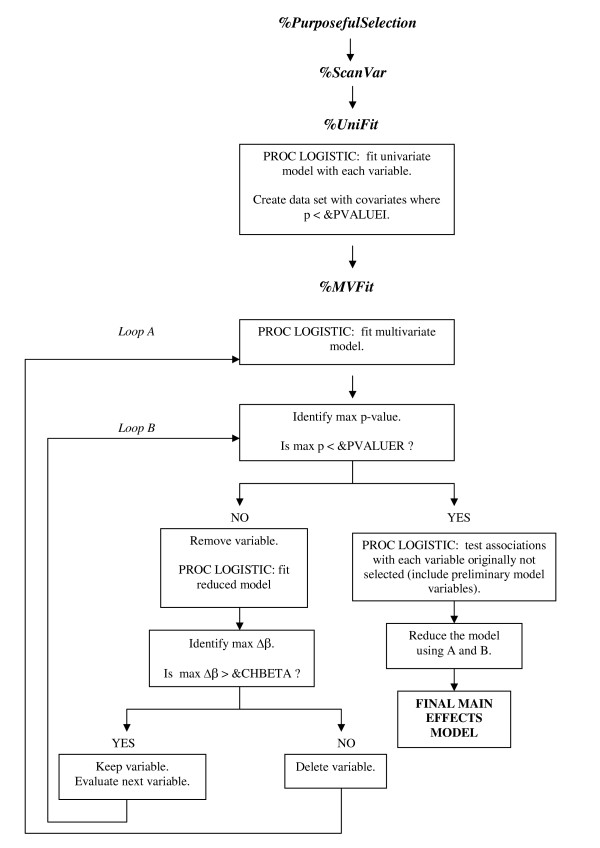
BACKGROUND: The main problem in many model-building situations is to choose from a large set of covariates those that should be included in the "best" model. A decision to keep a variable in the model might be based on the clinical or statistical significance. There are several variable selection algorithms in existence. Those methods are mechanical and as such carry some limitations. Hosmer and Lemeshow describe a purposeful selection of covariates within which an analyst makes a variable selection decision at each step of the modeling process. METHODS: In this paper we introduce an algorithm which automates that process. We conduct a simulation study to compare the performance of this algorithm with three well documented variable selection procedures in SAS PROC LOGISTIC: FORWARD, BACKWARD, and STEPWISE. RESULTS: We show that the advantage of this approach is when the analyst is interested in risk factor modeling and not just prediction. In addition to significant covariates, this variable selection procedure has the capability of retaining important confounding variables, resulting potentially in a slightly richer model. Application of the macro is further illustrated with the Hosmer and Lemeshow Worchester Heart Attack Study (WHAS) data. CONCLUSION: If an analyst is in need of an algorithm that will help guide the retention of significant covariates as well as confounding ones they should consider this macro as an alternative tool.
Overview
The claims and statistics of this paper haven’t been checked yet.
Free: it reads the open-access text and checks the first 5 claims that cite a source we can check. Create a free account to check every claim.
Integrity signals
Registry
Cites
Statistics
Figures
Verification
Claims the paper makes
The claims and statistics of this paper haven’t been checked yet.
Free: it reads the open-access text and checks the first 5 claims that cite a source we can check. Create a free account to check every claim.
Claims other papers make about this one
Each is checked against this paper’s own text: does it say what the citing paper says it does?
The source backs part of the claim, not all of it — or backs it for a different population, condition or comparison.
In the citing paper
“Most authors agree on the different techniques used to analyze and express the soundness of LR [174, 175, 176, 177], including the overall model evaluation, statistical tests of individual predictors, goodness-of-fit statistics and validation of the predicted probabilities.”
From Explainable Artificial Intelligence (XAI): Concepts, taxonomies, opportunities and challenges toward responsible AI (2020) · cites this paper as [174]
Experimental — accuracy not yet measured
Self-check
Percentages, sums and reported differences re-computed from the paper’s own numbers.
The self-check needs the paper’s full text.
Citations
Cites
(1990) · Choice Reviews Online · doi:10.5860/choice.27-3338 · Cited by 35,305
Self-citationArtificial intelligence: a modern approach
(1995) · Choice Reviews Online · doi:10.5860/choice.33-1577 · Cited by 21,974
Hosmer, D. W., & Lemeshow, S. (2000) · doi:10.1002/0471722146 · Cited by 20,302
Self-citationArtificial intelligence: A modern approach
Nilsson, N. J. (1996) · Artificial Intelligence · doi:10.1016/0004-3702(96)00007-0 · Cited by 10,583
(2000) · CrossRef Listing of Deleted DOIs · doi:10.1162/153244303322753616 · Cited by 3,502
Applied Survival Analysis: Regression Modeling of Time-to-Event Data
Hosmer, D. W., Lemeshow, S. A., & May, S. J. (2008) · Cited by 3,030
Self-citationTHE IMPACT OF CONFOUNDER SELECTION CRITERIA ON EFFECT ESTIMATION
MICKEY, R. M., & GREENLAND, S. (1989) · American Journal of Epidemiology · doi:10.1093/oxfordjournals.aje.a115101 · Cited by 2,362
RE:“;THE IMPACT OF CONFOUNDER SELECTION CRITERIA ON EFFECT ESTIMATION”
Greenland, S., & Mickey, R. M. (1989) · American Journal of Epidemiology · doi:10.1093/oxfordjournals.aje.a115409 · Cited by 2,108
Comparison of Stopping Rules in Forward “Stepwise” Regression
Bendel, R. B., & Afifi, A. A. (1977) · Journal of the American Statistical Association · doi:10.1080/01621459.1977.10479905 · Cited by 885
Applied Survival Analysis: Regression Modeling of Time to Event Data
Rao, P. V., Hosmer, D. W., & Lemeshow, S. (2000) · Journal of the American Statistical Association · doi:10.2307/2669422 · Cited by 861
Self-citation
Research works printed but not linked: 1
- SAS Institute Inc SAS/STAT User's Guide, Version 9.1 2004 Cary, NC: SAS Institute Inc
Cited by
Items 201–300 of 1,014
Lee, K. W., Ching, S. M., Hoo, F. K., Ramachandran, V., Chong, S. C., Tusimin, M., & Mohd Nordin, N. (2019) · BMC Pregnancy and Childbirth · doi:10.1186/s12884-019-2519-9 · Cited by 73
Dotse-Gborgbortsi, W., Nilsen, K., Ofosu, A., Matthews, Z., Tejedor-Garavito, N., Wright, J., & Tatem, A. J. (2022) · BMC Pregnancy and Childbirth · doi:10.1186/s12884-022-04998-0 · Cited by 73
“All independent variables in the crude model associated with SBA at 10 % significance level were added to the adjusted models to allow for associations that can be insignificant in the crude model but change in the presence of other variables [36].”
MethodMitchell, R., Harvey, L., Brodaty, H., Draper, B., & Close, J. (2016) · Disability and Rehabilitation · doi:10.3109/09638288.2015.1123306 · Cited by 72
“variate predictors of rehabilitation were included as a set of predictors in a multi-variable logistic regression model using the method of purposeful selection.[30] All vari-”
MethodJo, K.-W., Bajgur, S. S., Kim, H., Choi, H. A., Huh, P., & Lee, K. (2017) · PLoS ONE · doi:10.1371/journal.pone.0171425 · Cited by 73
Does biologic therapy impact the development of PsA among patients with psoriasis?
Meer, E. A., Merola, J. F., Fitzsimmons, R. P., Löve, Þ. J., Wang, S., Shin, D. B., Chen, Y., Xie, S. X., Choi, H. K., Zhang, Y., et al. (2022) · Annals of the Rheumatic Diseases · doi:10.1136/annrheumdis-2021-220761 · Cited by 77
Chidambaran, V., Zhang, X., Martin, L. J., Ding, L., Weirauch, M. T., Geisler, K. J., Stubbeman, B. L., Sadhasivam, S., & Ji, H. (2017) · Pharmacogenomics and Personalized Medicine · doi:10.2147/pgpm.s132691 · Cited by 79
“05 were retained.(32) DNA methylation levels were then added to the final nongenetic model to assess their association with the pain outcomes.”
BaHammam, A. S. (2015) · Saudi Medical Journal · doi:10.15537/smj.2015.2.9991 · Cited by 71
Gebremedhin, S., Baye, K., Bekele, T., Tharaney, M., Asrat, Y. T., Abebe, Y., & Reta, N. (2016) · Nutrition · doi:10.1016/j.nut.2016.06.002 · Cited by 85
Social determinants of malaria in an endemic area of Indonesia
Hasyim, H., Dale, P. E. R., Groneberg, D. A., Kuch, U., & Müller, R. (2019) · Malaria Journal · doi:10.1186/s12936-019-2760-8 · Cited by 79
Pham, T. T. H., Le, T. X., Nguyen, D. T., Luu, C. M., Truong, B. D., Tran, P. D., Toy, M., Bozkurt, S., & So, S. K. (2019) · PLoS ONE · doi:10.1371/journal.pone.0223733 · Cited by 71
Liel, C., Ulrich, S. M., Lorenz, S., Eickhorst, A., Fluke, J., & Walper, S. (2020) · Child Abuse & Neglect · doi:10.1016/j.chiabu.2020.104487 · Cited by 92
A rapid, non-invasive tool for periodontitis screening in a medical care setting
Verhulst, M. J. L., Teeuw, W. J., Bizzarro, S., Muris, J., Su, N., Nicu, E. A., Nazmi, K., Bikker, F. J., & Loos, B. G. (2019) · BMC Oral Health · doi:10.1186/s12903-019-0784-7 · Cited by 79
Tilahun, M., Gobena, T., Dereje, D., Welde, M., & Yideg, G. (2020) · Diabetes Metabolic Syndrome and Obesity · doi:10.2147/dmso.s260694 · Cited by 86
Aircraft taxi time prediction: Feature importance and their implications
Wang, X., Brownlee, A. E. I., Woodward, J. R., Weiszer, M., Mahfouf, M., & Chen, J. (2020) · Transportation Research Part C Emerging Technologies · doi:10.1016/j.trc.2020.102892 · Cited by 84
“To better address this issue, we use an effective backward feature elimination procedure [47] to identify the important features that affect the taxi time.”
MethodCutcher, Z., Degenhardt, L. J., Alati, R., & Kinner, S. A. (2014) · Australian and New Zealand Journal of Public Health · doi:10.1111/1753-6405.12207 · Cited by 87
Cryoprecipitate use in the PROMMTT study
Holcomb, J. B., Fox, E. E., Zhang, X., White, N. J., Wade, C. E., Cotton, B. A., del Junco, D. J., Bulger, E. M., Cohen, M. J. M., Schreiber, M. A., et al. (2013) · The Journal of Trauma: Injury, Infection, and Critical Care · doi:10.1097/ta.0b013e31828fa3ed · Cited by 80
Edney, S. M., Bogomolova, S., Ryan, J. C., Olds, T., Sanders, I., & Maher, C. A. (2018) · Journal of Medical Internet Research · doi:10.2196/10911 · Cited by 81
“Creative elements with a significant univariate association ( P .25) were included in purposeful selection modeling [39], and those that had a P .1 and changed the main effects by more than 10% were retained in the final models.”
Aviña-Zubieta, J. A., Mai, A., Amiri, N., Dehghan, N., Tan, J., Sayre, E. C., & Choi, H. K. (2016) · Arthritis & Rheumatology · doi:10.1002/art.39762 · Cited by 73
“We entered the confounders one at a time into the Cox models, using the forward-selection technique, according to the impact of each confounder on the hazard ratio (HR) in GPA relative to the HR in the model selected in the previous step (43).”
Adoption Factors of FinTech: Evidence from an Emerging Economy Country-Wide Representative Sample
Mahmud, K., Joarder, M. M. A., & Muheymin-Us-Sakib, K. (2022) · International Journal of Financial Studies · doi:10.3390/ijfs11010009 · Cited by 68
“Although computationally intensive, RFE offers one major In logistic regression in particular, and regression modelling in general, the key challenge is the selection of some combination of variables/features while eliminating others (Bursac et al. 2008). manual feature selection.”
BackgroundTun, W., Apicella, L., Casalini, C., Bikaru, D., Mbita, G., Jeremiah, K., Makyao, N., Koppenhaver, T., Mlanga, E., & Vu, L. (2019) · AIDS and Behavior · doi:10.1007/s10461-019-02549-x · Cited by 69
How to Write Statistical Analysis Section in Medical Research
Dwivedi, A. K. (2022) · Journal of Investigative Medicine · doi:10.1136/jim-2022-002479 · Cited by 83
“63 In a causal model, clinically guided methods should be used for variable selection and their adjustments.”
Care-seeking behaviour of adolescents with knee pain: a population-based study among 504 adolescents
Rathleff, M. S., Skuldbøl, S. K., Rasch, M. N. B., Roos, E. M., Rasmussen, S., & Olesen, J. L. (2013) · BMC Musculoskeletal Disorders · doi:10.1186/1471-2474-14-225 · Cited by 73
“Model construction was done according to Hosmer and Lemeshow’s “Purposeful selection of variables” [23].”
MethodNombo, A. P., Mwanri, A. W., Brouwer-Brolsma, E. M., Ramaiya, K. L., & Feskens, E. J. M. (2018) · Diabetes Research and Clinical Practice · doi:10.1016/j.diabres.2018.05.001 · Cited by 68
Landslide susceptibility and mobilization rates in the Mount Elgon region, Uganda
Broeckx, J., Maertens, M., Isabirye, M., Vanmaercke, M., Namazzi, B., Deckers, J., Tamale, J., Jacobs, L., Thiery, W., Kervyn, M., et al. (2018) · Landslides · doi:10.1007/s10346-018-1085-y · Cited by 74
Ukke, G. G., Gurara, M. K., & Godana, W. (2019) · PLoS ONE · doi:10.1371/journal.pone.0205545 · Cited by 80
Kobayashi, H. H., Abe, M., Nakamura, Y., Takahashi, K., Fujita, M., Takeda, Y., Yoneda, T., Kurihara, I., Itoh, H., Tsuiki, M., et al. (2019) · Hypertension · doi:10.1161/hypertensionaha.119.13131 · Cited by 69
“This type of model-building focuses on both significance and confounding.(24) In the second analysis, we used tertiles based on the observed, not predicted, initial eGFR decline, and repeated the main analysis of the relationship between initial eGFR decline and longterm eGFR slope and renal events.”
MethodRathleff, M. S., Winiarski, L. M., Krommes, K. K., Graven‐Nielsen, T., Hölmich, P., Olesen, J. L., Holden, S., & Thorborg, K. (2020) · Journal of Orthopaedic and Sports Physical Therapy · doi:10.2519/jospt.2020.8770 · Cited by 79
Ulibarri, M. D., Hiller, S. P., Lozada, R., Rangel, M. G., Stockman, J. K., Silverman, J. G., & Ojeda, V. D. (2013) · Journal of Environmental and Public Health · doi:10.1155/2013/631479 · Cited by 67
“10 in univariate analyses were considered for inclusion in the final model [37, 39, 40].”
MethodTorabi, M., Moeinaddini, S., Mirafzal, A., Rastegari, A., & Sadeghkhani, N. (2016) · The American Journal of Emergency Medicine · doi:10.1016/j.ajem.2016.07.017 · Cited by 81
Russomanno, J., & Jabson, J. M. (2020) · BMC Public Health · doi:10.1186/s12889-020-08684-8 · Cited by 78
The Determinants of Mental Health Literacy among Young Adolescents in Malaysia
Singh, S., Zaki, R. A., Farid, N. D. N., & Kaur, K. (2022) · International Journal of Environmental Research and Public Health · doi:10.3390/ijerph19063242 · Cited by 97
“3 were considered to have evidence of multicollinearity [24].”
BackgroundMethodHarvin, J. A., Mims, M. M., Duchesne, J. C., Cox, C. S., Wade, C. E., Holcomb, J. B., & Cotton, B. A. (2013) · The Journal of Trauma: Injury, Infection, and Critical Care · doi:10.1097/ta.0b013e31827e2a96 · Cited by 66
“Purposeful regression modeling was then used to construct a multivariate linear and a multivariate logistic regression model evaluating the time to fascial closure and predicting EPFC.27 This was performed using the technique of purposeful selection of covariates described by Hosmer and Lemeshow.28 In an effort to min…”
MethodInfluentialHan, D., Starikov, A., Hartaigh, B. Ó., Gransar, H., Kolli, K. K., Lee, J. H., Rizvi, A., Baskaran, L., Schulman‐Marcus, J., Lin, F. Y.-H., et al. (2016) · Journal of the American Heart Association · doi:10.1161/jaha.116.004186 · Cited by 75
“05.(21,22) After an elimination approach, MLD was selected in variables related to coronary stenosis, and PR and LAP were selected in variables related to APCs.”
MethodAndrianarisoa, M., Boyer, L., Godin, O., Brunel, L., Bulzacka, E., Aouizerate, B., Berna, F. S., Capdevielle, D., Dorey, J., Dubertret, C., et al. (2017) · Schizophrenia Research · doi:10.1016/j.schres.2016.12.021 · Cited by 71
Påhlman, M., Gillberg, C., & Himmelmann, K. (2021) · Developmental Medicine & Child Neurology · doi:10.1111/dmcn.14736 · Cited by 65
“Viking Speech Scale level I 97 10 (10) 12 (12) 16 (17) 59 (61) 22 (23) 28 (29) II 49 8 (16) 9 (19) 8 (16) 24 (49) 17 (35) 17 (35) III 16 0 (0) 2 (12) 6 (38) 8 (50) 2 (13) 8 (50) IV 38 12 (31) 6 (16) 1 (3) 19 (50) 18 (47) 7 (18) Epilepsy No 125 14 (11) 14 (11) 20 (16) 77 (62) 28 (22) 34 (27) Active 75 16 (21) 15 (20) 1…”
Association of Internet Addiction with Adolescents’ Lifestyle: A National School-Based Survey
Ying, C. Y., Awaluddin, S. M., Kuay, L. K., Man, C. S., Baharudin, A., Ling, M. Y. J., Sahril, N., Omar, M. A., Ahmad, N. A., & Ibrahim, N. (2020) · International Journal of Environmental Research and Public Health · doi:10.3390/ijerph18010168 · Cited by 84
All-cause and cause-specific mortality in systemic lupus erythematosus: a population-based study
Moghaddam, B., Marozoff, S., Li, L., Sayre, E. C., & Aviña-Zubieta, J. A. (2021) · Rheumatology · doi:10.1093/rheumatology/keab362 · Cited by 72
Soden, P. A., Zettervall, S. L., Ultee, K. H. J., Darling, J. D., Buck, D. B., Hile, C. N., Hamdan, A. D., & Schermerhorn, M. L. (2016) · Journal of Vascular Surgery · doi:10.1016/j.jvs.2016.02.055 · Cited by 65
“Introduction—Historically symptomatic AAAs were found to have intermediate mortality compared to asymptomatic and ruptured AAAs but, with wider EVAR use, a more recent study suggested mortality of symptomatic aneurysms were similar to asymptomatic AAAs.”
MethodInfluentialAn ecological analysis of infant neglect by adolescent mothers
Bartlett, J. D., Raskin, M., Kotake, C., Nearing, K. D., & Easterbrooks, M. A. (2014) · Child Abuse & Neglect · doi:10.1016/j.chiabu.2013.11.011 · Cited by 81
Revision Meniscal Surgery in Children and Adolescents
Shieh, A. K., Edmonds, E. W., & Pennock, A. T. (2016) · The American Journal of Sports Medicine · doi:10.1177/0363546515623511 · Cited by 64
“Univariate logistic regression was performed to identify independent variables for revision meniscal surgery, followed by multivariate logistic regression with purposeful selection.(5)”
MethodAsiamah-Asare, B. K. Y., Yirenya-Tawiah, D. R., Baafi, D., & Ackumey, M. M. (2017) · African Journal of Urology · doi:10.1016/j.afju.2016.12.003 · Cited by 82
Knowledge and practice of patients with diabetes mellitus in Lebanon: a cross-sectional study
Karaoui, L. R., Deeb, M. E., Nasser, L., & Hallit, S. R. (2018) · BMC Public Health · doi:10.1186/s12889-018-5416-7 · Cited by 79
“2 in the bivariate analysis [15, 16]; potential confounders may be eliminated only if p > 0.”
BackgroundLustgarten, M. S., Price, L. L., Chalé, A., & Fielding, R. A. (2014) · Aging Cell · doi:10.1111/acel.12251 · Cited by 64
“Therefore, PCA factors that were associated with measures of physical function at 0.05 ≤ P ≤ 0.10 [as recommended by Bursac et al. (2008)] and q ≤ 0.30 are shown in Table 1 and were additionally considered as candidate variables for backward elimination (BE) linear regression.”
BackgroundMethodInfluentialMajor Depression and Subthreshold Depression among Older Adults Receiving Home Care
Xiang, X., Leggett, A. N., Himle, J. A., & Kales, H. C. (2018) · American Journal of Geriatric Psychiatry · doi:10.1016/j.jagp.2018.05.001 · Cited by 76
Racial disparities in outcomes after intact abdominal aortic aneurysm repair
Deery, S. E., O’Donnell, T. F. X., Shean, K. E., Darling, J. D., Soden, P. A., Hughes, K., Wang, G. J., & Schermerhorn, M. L. (2017) · Journal of Vascular Surgery · doi:10.1016/j.jvs.2017.07.138 · Cited by 63
Lim, S. H., Cheung, D. H., Guadamuz, T. E., Wei, C., Koe, S., & Altice, F. L. (2015) · Drug and Alcohol Dependence · doi:10.1016/j.drugalcdep.2015.02.040 · Cited by 72
“A purposeful model selection approach was used to obtain the most parsimonious model; this approach is preferred over a stepwise approach in application to risk factor modeling (Bursac et al., 2008).”
MethodHunter, C. E., Palepu, A., Farrell, S., Gogosis, E., O’Brien, K., & Hwang, S. W. (2014) · Journal of Primary Care & Community Health · doi:10.1177/2150131914560610 · Cited by 72
“Multivariate models were constructed using a purposeful selection technique.(24) After generating univariate logistic regression models for each covariate against each outcome of interest, variables that met the inclusion criteria (P ≤ .”
MethodLanspa, M. J., Peyrani, P., Wiemken, T. L., Wilson, E. L., Ramírez, J. A., & Dean, N. C. (2014) · Journal of Hospital Medicine · doi:10.1002/jhm.2280 · Cited by 63
“We built the propensity score model using a variable selection algorithm described by Bursac et al.(22) Our model included variables for region (United States/Canada, Europe, Asia/ Africa or Latin America) and the variables listed in Table 1, with the exception of the PSI and the 4 clinical outcomes.”
MethodRisk of Colectomy in Patients With Pediatric‐onset Ulcerative Colitis
Rinawi, F., Assa, A., Eliakim, R., Mozer‐Glassberg, Y., Friedler, V. N., Niv, Y., Rosenbach, Y., Silbermintz, A., Zevit, N., & Shamir, R. (2017) · Journal of Pediatric Gastroenterology and Nutrition · doi:10.1097/mpg.0000000000001545 · Cited by 63
“2 for variables selection for the multivariate analysis based on accepted statistical methodology (19).”
Anrys, C., Tiggelen, H. V., Verhaeghe, S. T. L., Hecke, A. V., & Beeckman, D. (2018) · International Wound Journal · doi:10.1111/iwj.13032 · Cited by 74
“To form the multiple regression model, a purposeful selection process of variables was performed.(33) First, all potential risk factors were analysed in single binary logistic regression analysis.”
MethodMarta, O. F. D., Kuo, S., Bloomfield, J. G., Lee, H., Ruhyanudin, F., Poynor, M., Brahmadhi, A., Pratiwi, I. D., Aini, N., Mashfufa, E. W., et al. (2019) · Nurse Education Today · doi:10.1016/j.nedt.2019.104270 · Cited by 92
Harvin, J. A., Harvin, W. H., Camp, E. A., Caga-Anan, Z., Burgess, A. R., Wade, C. E., Holcomb, J. B., & Cotton, B. A. (2012) · The Journal of Trauma: Injury, Infection, and Critical Care · doi:10.1097/ta.0b013e3182782696 · Cited by 62
“White 181 (62) 104 (57) 89 (67) 62 (54) Hispanic 56 (19) 53 (29) 23 (17) 36 (31)”
Chisha, Y., Terefe, W., Assefa, H., & Lakew, S. (2017) · PLoS ONE · doi:10.1371/journal.pone.0171987 · Cited by 63
Lim, S. H., Mburu, G., Bourne, A. H., Pang, J., Wickersham, J. A., Wei, C. K. T., Yee, I., Wang, B., Cassolato, M., & Azwa, I. (2017) · PLoS ONE · doi:10.1371/journal.pone.0182838 · Cited by 68
“using a multivariable logistic regression model [62, 63].”
Racial disparities in perioperative outcomes after bariatric surgery
Sheka, A. C., Kizy, S., Wirth, K. M., Grams, J. M., Leslie, D. B., & Ikramuddin, S. (2018) · Surgery for Obesity and Related Diseases · doi:10.1016/j.soard.2018.12.021 · Cited by 65
Kim, H., Hong, T., & Kim, J. (2019) · Building and Environment · doi:10.1016/j.buildenv.2019.02.032 · Cited by 66
Gathirua‐Mwangi, W. G., Song, Y., Monahan, P. O., Champion, V. L., & Zollinger, T. W. (2018) · International Journal of Cancer · doi:10.1002/ijc.31344 · Cited by 61
“25) for their regression coefficients.(25) The multivariable models were adjusted for age (years), race (non-Hispanic White, non-Hispanic Black and other race), education (less than high school, high school, college/graduate education), physical activity (active, not active), cigarette smoking (never, former and curre…”
BackgroundLinks, P., Nisenbaum, R., Ambreen, M., Balderson, K., Bergmans, Y., Eynan, R., Harder, H., & Cutcliffe, J. (2012) · General Hospital Psychiatry · doi:10.1016/j.genhosppsych.2011.08.016 · Cited by 61
“[45].”
Stine, J., Pelletier, S., Schmitt, T., Porte, R., & Northup, P. (2016) · HPB · doi:10.1016/j.hpb.2015.10.008 · Cited by 53
“20) or have been shown in the literature to be clinically important.(3,19) Univariate comparisons were performed using the Fisher exact test, chi-square test, Wilcoxon sign rank test or Student-t test, as appropriate for categorical or continuous data.”
MethodNeeds of fathers during labour and childbirth: A cross-sectional study
Eggermont, K., Beeckman, D., Hecke, A. V., Delbaere, I., & Verhaeghe, S. T. L. (2017) · Women and Birth · doi:10.1016/j.wombi.2016.12.001 · Cited by 70
Roberts, A. L., Kubzansky, L. D., Malspeis, S., Feldman, C. H., & Costenbader, K. H. (2018) · JAMA Psychiatry · doi:10.1001/jamapsychiatry.2018.2462 · Cited by 65
Tenants with additional needs: when housing first does not solve homelessness
Volk, J. S., Aubry, T., Goering, P. N., Adair, C. E., Distasio, J., Jetté, J., Nolin, D., Stergiopoulos, V., Streiner, D. L., & Tsemberis, S. J. (2015) · Journal of Mental Health · doi:10.3109/09638237.2015.1101416 · Cited by 67
“A second statistically driven model originally included all variables that were different between the stably and unstably housed groups at baseline at a level of p 0.20, as recommended by Bursac et al. (2008).”
MethodInfluentialIndoor Tanning Dependence in Young Adult Women
Mays, D. M., Atkins, M. B., Ahn, J., & Tercyak, K. P. (2017) · Cancer Epidemiology Biomarkers & Prevention · doi:10.1158/1055-9965.epi-17-0403 · Cited by 63
“This purposeful variable selection is shown to have the capability of retaining important confounding variables in multivariable analysis (51).”
BackgroundHajj, A., Hachem, R. E., Khoury, R., Hallit, S. R., ElJEBBAWI, B., Nasr, F. L., Karak, F. E., Chahine, G. Y., Kattan, J. G., & Khabbaz, L. R. (2021) · BMC Cancer · doi:10.1186/s12885-021-08615-9 · Cited by 81
Aponte-Meléndez, Y., Mateu‐Gelabert, P., Fong, C., Eckhardt, B. J., Kapadia, S. N., & Marks, K. (2021) · Harm Reduction Journal · doi:10.1186/s12954-021-00568-3 · Cited by 60
“25 were entered into a multiple regression model [39].”
MethodLiu, Z., Sun, W., Chen, H., Zhuang, J., Wu, B., Xu, H., Peng, L., Chen, X., Li, J., & Yin, Y. (2022) · BMJ Open · doi:10.1136/bmjopen-2021-057817 · Cited by 79
Rural-urban disparity in cancer burden and care: findings from an Indian cancer registry
Khanna, D., Sharma, P., Budukh, A. M., Vishwakarma, R., Sharma, A. N., Bagal, S. S., Tripathi, V., Maurya, V. K., Chaturvedi, P., & Pradhan, S. (2024) · BMC Cancer · doi:10.1186/s12885-024-12041-y · Cited by 84
“Variables found significant on univariable analysis (p-value 0.2) [16] were entered into the multi-variable regression model after excluding collinearity.”
MethodInfluentialRisk factors for cardiovascular events in hospitalized patients with community-acquired pneumonia
Griffin, A. T., Wiemken, T. L., & Arnold, F. W. (2013) · International Journal of Infectious Diseases · doi:10.1016/j.ijid.2013.07.005 · Cited by 60
Samuels, N., van de Graaf, R., Been, J. V., de Jonge, R. C. J., Hanff, L. M., Wijnen, R. M. H., Kornelisse, R. F., Reiss, I. K. M., & Vermeulen, M. J. (2016) · Scientific Reports · doi:10.1038/srep31643 · Cited by 64
“Red blood cell transfusion 586 (46) 206 (31) < 0.”
Comparative safety and efficacy of combined IVT and MT with direct MT in large vessel occlusion
Goyal, N., Tsivgoulis, G. K., Frei, D. F., Turk, A. S., Baxter, B., Froehler, M. T., Mocco, J., Pandhi, A., Zand, R., Malhotra, K., et al. (2018) · Neurology · doi:10.1212/wnl.0000000000005299 · Cited by 60
“1 were included in the multivariable model as candidate variables.(27) The final variables that were independently associated in the multivariable models with the outcome of interest were selected by backward stepwise selection procedure.”
MethodSuccesses and final challenges along the HIV care continuum with transwomen in San Francisco
Baguso, G. N., Turner, C., Santos, G., Raymond, H. F., Dawson-Rose, C. S., Lin, J., & Wilson, E. C. (2019) · Journal of the International AIDS Society · doi:10.1002/jia2.25270 · Cited by 62
Conrady, B., Garcia, S., Minviel, J., & Raboisson, D. (2019) · Transboundary and Emerging Diseases · doi:10.1111/tbed.13300 · Cited by 60
Livestock grazing limits beaver restoration in northern New Mexico
Small, B. A., Frey, J. K., & Gard, C. C. (2016) · Restoration Ecology · doi:10.1111/rec.12364 · Cited by 58
“Bursac et al. (2008) recommended identifying a variable as a confounder if, when the variable of interest was removed, the beta coefficient of any of the remaining variables in the model changed by more than 15–20%.”
BackgroundMethodInfluentialGijzel, S. M. W., Rector, J. L., van Meulen, F., van der Loeff, R. S., van de Leemput, I. A., Scheffer, M., Rikkert, M. G. M. O., & Melis, R. J. F. (2019) · Journal of the American Medical Directors Association · doi:10.1016/j.jamda.2019.10.011 · Cited by 65
Melkamu, M. W., Tesfa, M., Afenigus, A. D., Hibstie, Y. T., Temesgen, B., Petrucka, P. M., & Alebel, A. (2020) · BMC Infectious Diseases · doi:10.1186/s12879-020-4772-y · Cited by 59
Delays Related to Prior Authorization in Inflammatory Bowel Disease
Constant, B. D., de Zoeten, E. F., Stahl, M. G., Vajravelu, R. K., Lewis, J. D., Fennimore, B. P., Gerich, M. E., & Scott, F. I. (2022) · PEDIATRICS · doi:10.1542/peds.2021-052501 · Cited by 63
Njotto, L. L., Simin, J., Fornes, R., Odsbu, I., Mussche, I., Callens, S. F. J., Engstrand, L. G., Bruyndonckx, R., & Brusselaers, N. (2023) · Drug Safety · doi:10.1007/s40264-023-01297-1 · Cited by 70
“To examine whether the multivariable logistic regression model fit the data well, a formal test such as Hosmer and Lemeshow statistics was used [33].”
MethodSkou, S. T., Wrigley, T. V., Metcalf, B., Hinman, R. S., & Bennell, K. L. (2013) · Arthritis Care & Research · doi:10.1002/acr.22208 · Cited by 77
“The construction of the ordinal logistic regression model followed the construction proposed by Bursac et al (18) and Hosmer et al (19): variables with a P value less than 0.”
MethodInfluentialDeterminants of self-rated health in Spain: differences by age groups for adults
Giron, P. (2010) · European Journal of Public Health · doi:10.1093/eurpub/ckq133 · Cited by 58
Sserwanja, Q., Mutisya, L. M., & Musaba, M. W. (2022) · BMC Women s Health · doi:10.1186/s12905-022-01594-4 · Cited by 68
Gari, T., Kenea, O., Loha, E., Deressa, W. A., Hailu, A., Balkew, M., Gebre-Michael, T., Robberstad, B., Overgaard, H. J., & Lindtjørn, B. (2016) · Malaria Journal · doi:10.1186/s12936-016-1199-4 · Cited by 62
“25 [25] and main factors were included in the multivariate analysis.”
BackgroundSoil Nutrient Depletion Is Associated with the Presence of Burkholderia pseudomallei
Hantrakun, V., Rongkard, P., Oyuchua, M., Amornchai, P., Lim, C., Wuthiekanun, V., Day, N., Peacock, S. J., & Limmathurotsakul, D. (2016) · Applied and Environmental Microbiology · doi:10.1128/aem.02538-16 · Cited by 66
“The final multivariable logistic regression models were developed using a purposeful selection method (24).”
Jneid, S., Jabbour, K., Hajj, A., Sarkis, A., Licha, H., Hallit, S. R., & Khabbaz, L. R. (2018) · Journal of Cardiovascular Pharmacology and Therapeutics · doi:10.1177/1074248418784292 · Cited by 83
Zahreddine, L., Hallit, S. R., Shakaroun, S., Al‐Hajje, A., Awada, S., & Lahoud, N. (2018) · Pharmacy Practice · doi:10.18549/pharmpract.2018.03.1194 · Cited by 71
“Multivariate logistic regressions reporting adjusted Odds Ratios (ORa) were carried out using variables that showed a p<0.2 in the bivariate analysis 22,23 ; potential confounders may be eliminated only if p>0.2, in order to protect against residual confounding.”
MethodInfluentialOpioid Overprescription After Knee Arthroscopy and Related Surgery in Adolescents and Young Adults
Tepolt, F. A., Bido, J., Burgess, S. L., Micheli, L. J., & Kocher, M. S. (2018) · Arthroscopy The Journal of Arthroscopic and Related Surgery · doi:10.1016/j.arthro.2018.07.021 · Cited by 58
Msimang, V., Weyer, J., le Roux, C., Kemp, A. C., Burt, F. J., Tempia, S., Grobbelaar, A. A., Moolla, N., Rostal, M. K., Bagge, W., et al. (2021) · PLoS neglected tropical diseases · doi:10.1371/journal.pntd.0009384 · Cited by 62
“All eliminated variables were then individually re-added in the model and retained if significant [37].”
MethodGhimire, M., Ayer, R., & Kondo, M. (2018) · International Journal for Equity in Health · doi:10.1186/s12939-018-0736-x · Cited by 57
Aabedi, A. A., Young, J. S., Zhang, Y., Ammanuel, S., Morshed, R. A., Ore, C. D., Brown, D., Phillips, J. J., Bush, N. A. O., Taylor, J. W., et al. (2021) · Neurosurgery · doi:10.1227/neu.0000000000001753 · Cited by 65
Delay discounting of gains and losses, glycemic control and therapeutic adherence in type 2 diabetes
Lebeau, G., Consoli, S. M., Bouc, R. L., Sola‐Gazagnes, A., Hartemann, A., Simon, D., Reach, G., Altman, J., Pessiglione, M., Limosin, F., et al. (2016) · Behavioural Processes · doi:10.1016/j.beproc.2016.09.006 · Cited by 67
“10, which is a standard cut-off value to select potential confounding variables to be included in a multivariate model [31].”
Aviña-Zubieta, J. A., Jansz, M., Sayre, E. C., & Choi, H. K. (2017) · The Journal of Rheumatology · doi:10.3899/jrheum.160185 · Cited by 57
Felaefel, M., Salem, M., Jaafar, R. F., Jassim, G., Edwards, H. A., Rashid‐Doubell, F., Yousri, R., Ali, N. M., & SILVERMAN, H. J. (2017) · Journal of Academic Ethics · doi:10.1007/s10805-017-9295-9 · Cited by 67
Olds, M. K., Ellis, R. F., Parmar, P. G. K., & Kersten, P. (2019) · BMJ Open Sport & Exercise Medicine · doi:10.1136/bmjsem-2018-000447 · Cited by 57
“This lower cut-off is the statistical threshold used to identify when variables should be retained in a multivariate model (when other variables are being adjusted for).(40) Coefficients for those variables retained in the multivariate model were used to develop the predictive tool.”
MethodDankwah, E., Kirychuk, S., Zeng, W., Feng, C. X., & Farag, M. (2019) · International Journal for Equity in Health · doi:10.1186/s12939-019-1063-6 · Cited by 64
Anin, S. K., Saaka, M., Fischer, F., & Kraemer, A. (2020) · Nutrients · doi:10.3390/nu12092565 · Cited by 76
Turban, J. L., King, D. S., Li, J. J., & Keuroghlian, A. S. (2021) · Journal of Adolescent Health · doi:10.1016/j.jadohealth.2021.06.001 · Cited by 69
Carroll, X., Liang, X., Zhang, W., Zhang, W., Liu, G., Turner, N., & Leeper-Woodford, S. (2018) · Scientific Reports · doi:10.1038/s41598-018-26412-6 · Cited by 56
Kent, W., Hochard, K. D., & Hulbert-Williams, N. J. (2019) · Journal of Contextual Behavioral Science · doi:10.1016/j.jcbs.2019.08.004 · Cited by 56
Determinants of in-hospital mortality in COVID-19; a prospective cohort study from Pakistan
Sarfaraz, S., Shaikh, Q., Saleem, S. G., Rahim, A., Herekar, F. F., Junejo, S., & Hussain, A. N. (2021) · PLoS ONE · doi:10.1371/journal.pone.0251754 · Cited by 63
Prevalence and risk factors for antimicrobial resistance among newborns with gram-negative sepsis
Solomon, S., Akeju, O., Odumade, O. A., Ambachew, R., Gebreyohannes, Z., Wickle, K. V., Abayneh, M., Metaferia, G., Carvalho, M. J., Thomson, K., et al. (2021) · PLoS ONE · doi:10.1371/journal.pone.0255410 · Cited by 68
“We selected covariates for the multivariable models using the purposeful selection method [43].”
MethodSserwanja, Q., Kamara, K., Mutisya, L. M., Musaba, M. W., & Ziaei, S. (2021) · Nutrition and Metabolic Insights · doi:10.1177/11786388211047056 · Cited by 68
Metadata
- Authors
- Bursac, Z., Gauss, C. H., Williams, D. K., & Hosmer, D. W.
- Affiliations
- University of Arkansas for Medical Sciences (US)
- University of Massachusetts Amherst (US)
- Corresponding author
- Bursac, Zoran
- Venue
- Source Code for Biology and Medicine
- Published
- 2008-12
- Volume
- 3
- Issue
- 1
- Pages
- 17-17
- ISSN
- 1751-0473 (ISSN-L)
- PMC
- PMC2633005
- OpenAlex
- W2134732827
- Cited by
- 4,035
- References
- 17
- Citations by year
- 2026: 425 · 2025: 476 · 2024: 394 · 2023: 355 · 2022: 444 · 2021: 434 · 2020: 310 · 2019: 284 · 2018: 250 · 2017: 203 · 2016: 140 · 2015: 119 · 2014: 79 · 2013: 63 · 2012: 31
- FWCI
- 7.87
- Type
- journal article
- Language
- en
- Open access
- hybrid
- doi.org
- Licence
- cc-by
- creativecommons.org/licenses/by/2.0 (tdm)
- Locations
- Source Code for Biology and Medicine (publishedVersion, cc-by)
- PubMed Central (publishedVersion, cc-by)
- PubMed (publishedVersion)
- Topics
- Physical Sciences › Mathematics › Statistics and Probability › Statistical Methods and Inference
- Physical Sciences › Mathematics › Statistics and Probability › Statistical Methods in Epidemiology
- Physical Sciences › Mathematics › Statistics and Probability › Statistical Methods and Applications
- Keywords
- feature selection, logistic regression, forward selection, backward selection, stepwise selection, confounding variables, SAS macro
About these checks
Registry, retraction, Cites and statistics results are computed, not judged, with one exception: a printed reference that no index lists is read once by a model before it counts as a citation error. Claims are extracted by a model and kept only when their quote appears verbatim in the text; each cited source is then checked, with a model’s help, for whether it says what the claim relies on. Those verdicts can be wrong — read the claim’s quote and the cited source before relying on one.
Statistics and arithmetic are recomputed, not judged.
Confidence bands are shown only for fields calibrated on our annotated test set. None is calibrated yet, so no band is shown.
What counts as a claim ›How we measure confidence ›How we check this ›
Are you an author, or do you see a problem with this page? Request a review
Data sources
Bibliographic data: Semantic Scholar, OpenAlex, Crossref.
Contains information from the Semantic Scholar Academic Graph Datasets, made available under the ODC Attribution License (ODC-BY 1.0).
Semantic Scholar’s data is described in: Kinney, R., et al. (2023). The Semantic Scholar Open Data Platform. arXiv:2301.10140.
