

Purposeful selection of variables in logistic regression
Open accessThe DOI matches its Crossref record; 16 of the 17 references it cites were found in a registry or an index.
Abstract
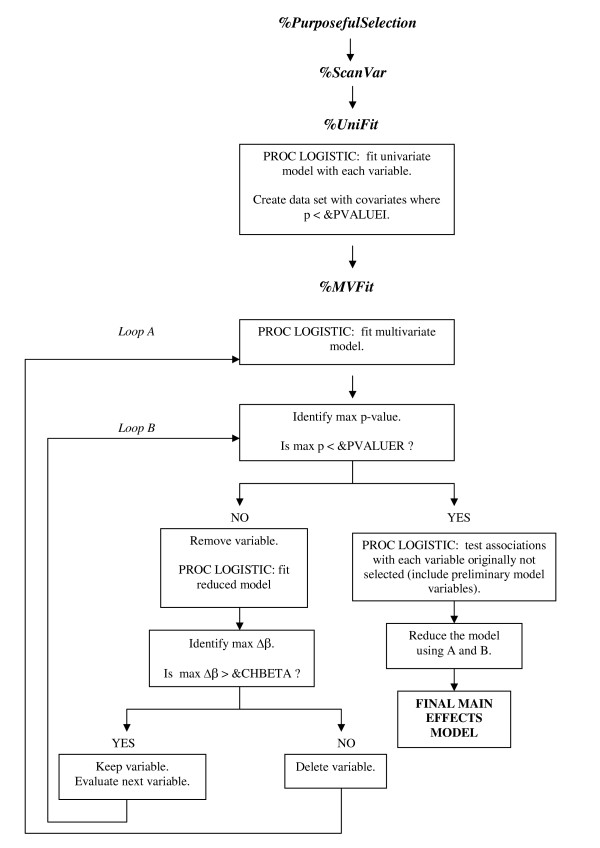
BACKGROUND: The main problem in many model-building situations is to choose from a large set of covariates those that should be included in the "best" model. A decision to keep a variable in the model might be based on the clinical or statistical significance. There are several variable selection algorithms in existence. Those methods are mechanical and as such carry some limitations. Hosmer and Lemeshow describe a purposeful selection of covariates within which an analyst makes a variable selection decision at each step of the modeling process. METHODS: In this paper we introduce an algorithm which automates that process. We conduct a simulation study to compare the performance of this algorithm with three well documented variable selection procedures in SAS PROC LOGISTIC: FORWARD, BACKWARD, and STEPWISE. RESULTS: We show that the advantage of this approach is when the analyst is interested in risk factor modeling and not just prediction. In addition to significant covariates, this variable selection procedure has the capability of retaining important confounding variables, resulting potentially in a slightly richer model. Application of the macro is further illustrated with the Hosmer and Lemeshow Worchester Heart Attack Study (WHAS) data. CONCLUSION: If an analyst is in need of an algorithm that will help guide the retention of significant covariates as well as confounding ones they should consider this macro as an alternative tool.
Overview
The claims and statistics of this paper haven’t been checked yet.
Free: it reads the open-access text and checks the first 5 claims that cite a source we can check. Create a free account to check every claim.
Integrity signals
Registry
Cites
Statistics
Figures
Verification
Claims the paper makes
The claims and statistics of this paper haven’t been checked yet.
Free: it reads the open-access text and checks the first 5 claims that cite a source we can check. Create a free account to check every claim.
Claims other papers make about this one
Each is checked against this paper’s own text: does it say what the citing paper says it does?
The source backs part of the claim, not all of it — or backs it for a different population, condition or comparison.
In the citing paper
“Most authors agree on the different techniques used to analyze and express the soundness of LR [174, 175, 176, 177], including the overall model evaluation, statistical tests of individual predictors, goodness-of-fit statistics and validation of the predicted probabilities.”
From Explainable Artificial Intelligence (XAI): Concepts, taxonomies, opportunities and challenges toward responsible AI (2020) · cites this paper as [174]
Experimental — accuracy not yet measured
Self-check
Percentages, sums and reported differences re-computed from the paper’s own numbers.
The self-check needs the paper’s full text.
Citations
Cites
(1990) · Choice Reviews Online · doi:10.5860/choice.27-3338 · Cited by 35,305
Self-citationArtificial intelligence: a modern approach
(1995) · Choice Reviews Online · doi:10.5860/choice.33-1577 · Cited by 21,974
Hosmer, D. W., & Lemeshow, S. (2000) · doi:10.1002/0471722146 · Cited by 20,302
Self-citationArtificial intelligence: A modern approach
Nilsson, N. J. (1996) · Artificial Intelligence · doi:10.1016/0004-3702(96)00007-0 · Cited by 10,583
(2000) · CrossRef Listing of Deleted DOIs · doi:10.1162/153244303322753616 · Cited by 3,502
Applied Survival Analysis: Regression Modeling of Time-to-Event Data
Hosmer, D. W., Lemeshow, S. A., & May, S. J. (2008) · Cited by 3,030
Self-citationTHE IMPACT OF CONFOUNDER SELECTION CRITERIA ON EFFECT ESTIMATION
MICKEY, R. M., & GREENLAND, S. (1989) · American Journal of Epidemiology · doi:10.1093/oxfordjournals.aje.a115101 · Cited by 2,362
RE:“;THE IMPACT OF CONFOUNDER SELECTION CRITERIA ON EFFECT ESTIMATION”
Greenland, S., & Mickey, R. M. (1989) · American Journal of Epidemiology · doi:10.1093/oxfordjournals.aje.a115409 · Cited by 2,108
Comparison of Stopping Rules in Forward “Stepwise” Regression
Bendel, R. B., & Afifi, A. A. (1977) · Journal of the American Statistical Association · doi:10.1080/01621459.1977.10479905 · Cited by 885
Applied Survival Analysis: Regression Modeling of Time to Event Data
Rao, P. V., Hosmer, D. W., & Lemeshow, S. (2000) · Journal of the American Statistical Association · doi:10.2307/2669422 · Cited by 861
Self-citation
Research works printed but not linked: 1
- SAS Institute Inc SAS/STAT User's Guide, Version 9.1 2004 Cary, NC: SAS Institute Inc
Cited by
Items 401–500 of 1,014
Labi, A.-K., Bjerrum, S., Enweronu-Laryea, C. C., Ayibor, P. K., Nielsen, K. L., Marvig, R. L., Newman, M. J., Andersen, L. P., & Kurtzhals, J. A. L. (2020) · Open Forum Infectious Diseases · doi:10.1093/ofid/ofaa109 · Cited by 47
“To identify factors associated with carriage of MDRGN as primary outcome and carriage of third-generation cephalosporin resistance as secondary outcome, we generated univariate and multivariate logistic regression models using the purposeful selection of covariates method [24].”
MethodSorba, E. L., Staartjes, V. E., Voglis, S., Tosic, L., Brandi, G., Tschopp, O., Serra, C., & Regli, L. (2020) · Neurosurgical Review · doi:10.1007/s10143-020-01340-0 · Cited by 55
Jawahir, S., Tan, E. H., Tan, Y. R., Noh, S. N. M., & Rahim, I. A. (2021) · BMC Health Services Research · doi:10.1186/s12913-021-06412-5 · Cited by 57
“25 [30] in the univariate analysis were included in the final multivariate analysis models.”
MethodHurst, C. P., Thinkhamrop, B., & Tran, H. T. (2015) · Diabetes & Metabolism Journal · doi:10.4093/dmj.2015.39.5.395 · Cited by 62
“Purposeful selection of covariates was used to build the best model for the presence of microvascular complication [25].”
MethodClients’ satisfaction with HIV treatment services in Bamenda, Cameroon: a cross-sectional study
Wung, B. A., Peter, N. F., & Atashili, J. (2016) · BMC Health Services Research · doi:10.1186/s12913-016-1512-5 · Cited by 46
“25 was set as the determining point for a variable to be considered as appearing to have an association with satisfaction in the bivariate analysis and be included in the multivariate logistic model [19].”
MethodSunny, B. S., Elze, M. C., Chihana, M. L., Gondwe, L., Crampin, A. C., Munkhondya, M., Kondowe, S., & Glynn, J. R. (2016) · International Journal of Educational Development · doi:10.1016/j.ijedudev.2016.10.004 · Cited by 51
“Variables that independently showed a strong association with grade repetition were selected for the multivariable analysis (Bursac et al., 2008).”
Kurek, A., Tajstra, M., Gadula‐Gacek, E., Buchta, P., Skrzypek, M., Pyka, Ł., Wasiak, M., Świetlińska, M., Hawranek, M., Poloński, L., et al. (2017) · Journal of Cardiovascular Electrophysiology · doi:10.1111/jce.13174 · Cited by 51
“3 143 in univariate analysis to include a variable in the multivariable analysis model (13,14).”
MethodYoung, Online and in the Dark: Scaling Up HIV Testing among MSM in ASEAN
Guadamuz, T. E., Cheung, D. H., Wei, C., Koe, S., & Lim, S. H. (2015) · PLoS ONE · doi:10.1371/journal.pone.0126658 · Cited by 52
“We fitted candidate variables using a modified purposeful modeling approach [20].”
MethodOptimisation and finite element simulation of the chopping process for chopper sugarcane harvesting
Xie, L., Wang, J., Cheng, S., Zeng, B., & Yang, Z. (2018) · Biosystems Engineering · doi:10.1016/j.biosystemseng.2018.08.004 · Cited by 46
Donovan, B. M., Breheny, P. J., Robinson, J. G., Baer, R. J., Saftlas, A. F., Bao, W., Greiner, A. L., Carter, K. D., Oltman, S. P., Rand, L., et al. (2019) · PLoS ONE · doi:10.1371/journal.pone.0215173 · Cited by 48
“[22] A variable was considered significant and kept in the final prediction model if, upon removal, the model discrimination (area under the curve (AUC)) was reduced or if the AUC remained unchanged but the beta coefficients for the remaining variables changed by>15% from the full model.[23,24] Prevalence and importan…”
MethodBurnout as a correlate of depression among medical students in Cameroon: a cross-sectional study
Njim, T. N., Mbanga, C. M., Tindong, M., Fonkou, S., Makebe, H., Toukam, L., Fondungallah, J., Fondong, A., Mulango, I., & Kika, B. T. (2019) · BMJ Open · doi:10.1136/bmjopen-2018-027709 · Cited by 50
Demoz, G. T., Berha, A. B., Woldu, M. A., Yifter, H., Shibeshi, W., & Engidawork, E. (2019) · PLoS ONE · doi:10.1371/journal.pone.0222985 · Cited by 62
“20 in the bivariate analyses were further analyzed in multivariate logistic regression to control the effect of confounders [25,26].”
Chrissian, A. A., Oyoyo, U. E., Patel, P., Beeson, W. L., Loo, L. K., Tavakoli, S., & Dubov, A. (2022) · Vaccine · doi:10.1016/j.vaccine.2022.04.046 · Cited by 46
“Hosmer-Lemeshow Goodness-of-Fit tests were conducted as a summary measure of model fit [41].”
Hepatitis B vaccination status and needlestick injuries among healthcare workers in Syria
Yacoub, R., Ali, R. A., Moukeh, G., Lahdo, A., Mouhammad, Y., & Nasser, M. M. (2010) · Journal of Global Infectious Diseases · doi:10.4103/0974-777x.59247 · Cited by 45
“The regression was done using a stepwise, backward selection procedure; this approach was used since it had the capability of retaining important confounding variables, potentially resulting in a rich model.[12]”
Belas, A., Salazar, A., Gama, L. T., Couto, N., & Pomba, C. (2014) · Veterinary Record · doi:10.1136/vr.101978 · Cited by 59
Hall, V. J., TAYE, A., WALSH, B., Maguire, H., Dave, J., Wright, A., Anderson, C. S., & Crook, P. (2017) · Epidemiology and Infection · doi:10.1017/s0950268816003393 · Cited by 45
Symptoms of posttraumatic stress disorder among hospitalized patients with cancer
Nipp, R. D., El-Jawahri, A. R., D’Arpino, S., Chan, A., Fuh, C., Johnson, P. C., Lage, D. E., Wong, R. L., Pirl, W. F., Traeger, L. N., et al. (2018) · Cancer · doi:10.1002/cncr.31576 · Cited by 50
“To explore relationships between participant characteristics and continuous PTSD scores, we used linear regression modeling with purposeful selection of covariates.(27) For purposeful selection, we included covariates that were associated at a significance level< .”
MethodBurden and determinants of undernutrition among young pregnant women in Ethiopia
Workicho, A., Belachew, T., Ghosh, S. A., Kershaw, M., Lachat, C. K., & Kolsteren, P. W. (2018) · Maternal and Child Nutrition · doi:10.1111/mcn.12751 · Cited by 50
Factors Associated with Enrolment of Households in Nepal’s National Health Insurance Program
Ghimire, P., Sapkota, V. P., & Poudyal, A. K. (2019) · International Journal of Health Policy and Management · doi:10.15171/ijhpm.2019.54 · Cited by 54
Zhang, J., Richardson, J. D., & Dunkley, B. T. (2020) · Scientific Reports · doi:10.1038/s41598-020-62713-5 · Cited by 48
Hallit, J., Salameh, P., Haddad, C., Sacre, H., Soufia, M., Akel, M., Obeïd, S., Hallit, R. R., & Hallit, S. R. (2020) · BMC Pediatrics · doi:10.1186/s12887-020-02116-7 · Cited by 50
Bicycle safety in Bogotá: A seven-year analysis of bicyclists’ collisions and fatalities
Carvajal, G. A., Sarmiento, O. L., Medaglia, A. L., Cabrales, S. A., Rodríguez, D. A., Quistberg, D. A., & López, S. A. (2020) · Accident Analysis & Prevention · doi:10.1016/j.aap.2020.105596 · Cited by 61
Nadler, E., Arondekar, B. V., Aguilar, K. M., Zhou, J., Chang, J., Zhang, X., & Pawar, V. S. (2020) · Journal of Cancer Research and Clinical Oncology · doi:10.1007/s00432-020-03414-4 · Cited by 55
Concurrence of stunting and overweight/obesity among children: Evidence from Ethiopia
Farah, A. M., Nour, T. Y., Endris, B. S., & Gebreyesus, S. H. (2021) · PLoS ONE · doi:10.1371/journal.pone.0245456 · Cited by 58
Wenzel, M., Preißer, F., Hoeh, B., Schroeder, M., Würnschimmel, C., Steuber, T. P., Heinzer, H., Banek, S., Ahrens, M., Becker, A., et al. (2021) · Frontiers in Oncology · doi:10.3389/fonc.2021.659135 · Cited by 49
“25 in univariable analyses were considered for multivariable analyses, as recently recommended (18).”
Klukowska, A. M., Staartjes, V. E., Vandertop, W. P., & Schröder, M. L. (2021) · Neurospine · doi:10.14245/ns.2142750.375 · Cited by 62
Metabolomics method to comprehensively analyze amino acids in different domains
Gu, H., Du, J., Neto, F. C., Carroll, P. A., Turner, S. J., Chiorean, E. G., Eisenman, R. N., & Raftery, D. (2015) · The Analyst · doi:10.1039/c4an02386b · Cited by 50
Tabak, Y. P., Johannes, R. S., Sun, X., Nuñez, C. M., & McDonald, L. C. (2015) · Infection Control and Hospital Epidemiology · doi:10.1017/ice.2015.37 · Cited by 43
“statistical significance.(15,16) We used P< .”
Coleman, T. A., Bauer, G. R., Pugh, D., Aykroyd, G., Powell, L., & Newman, R. (2016) · LGBT Health · doi:10.1089/lgbt.2016.0004 · Cited by 51
“05) to not prematurely eliminate important variables.(42,43) Complete case analysis was employed to account for missing values since missingness was only present in *5% or less of model variables.”
Association between Emotional Intelligence and Perceived Stress in Undergraduate Dental Students
Saddki, N., Sukerman, N., & Mohamad, D. (2017) · Malaysian Journal of Medical Sciences · doi:10.21315/mjms2017.24.1.7 · Cited by 53
“25 in the univariate analysis or reported to be influential in previous studies was entered into the multivariate analysis (12).”
BackgroundNicholson, K. J., Millhouse, P. W., Pflug, E. M., Woods, B. I., Schroeder, G. D., Anderson, D. G., Hilibrand, A. S., Kepler, C. K., Kurd, M. F., Rihn, J. A., et al. (2017) · Spine · doi:10.1097/brs.0000000000002478 · Cited by 44
“15 was assumed for retention.(7,29) One-way analysis of variances (ANOVAs) with Tukey HSD post-hoc analyses tested for differences in functionaloutcomesandradiographicparametersbetween subaxial alignment groups.”
MethodPredictors of severe relapse in pregnant women with psychotic or bipolar disorders
Taylor, C. L., Broadbent, M. T. M., Khondoker, M. R., Stewart, R. J., & Howard, L. M. (2018) · Journal of Psychiatric Research · doi:10.1016/j.jpsychires.2018.06.019 · Cited by 52
Kogan, A., Segel, M. J., Ram, E., Raanani, E., Peled‐Potashnik, Y., Levin, S., & Sternik, L. (2019) · Respiration · doi:10.1159/000495511 · Cited by 44
Jemere, A. T., Yeneneh, Y. E., Tilahun, B. C., Fritz, F., Alemu, S., & Kebede, M. M. (2019) · BMJ Open · doi:10.1136/bmjopen-2018-021766 · Cited by 50
Scott, G. G., Brodie, Z. P., Wilson, M. J., Ivory, L., Hand, C. J., & Sereno, S. C. (2019) · Computers in Human Behavior · doi:10.1016/j.chb.2019.09.020 · Cited by 53
Disposal practice and factors associated with unused medicines in Malaysia: a cross-sectional study
Wang, L. S., Aziz, Z., & Chik, Z. (2021) · BMC Public Health · doi:10.1186/s12889-021-11676-x · Cited by 44
“05, variables known to be important would have been excluded [33].”
BackgroundFactors affecting patients' adherence to orthodontic appointments
Bukhari, O. M., Sohrabi, K., & Tavares, M. A. (2016) · American Journal of Orthodontics and Dentofacial Orthopedics · doi:10.1016/j.ajodo.2015.07.040 · Cited by 59
“To determine which additional variables needed to be adjusted, we used the purposeful selection method.(13) The estimated attendance probabilities and odds ratios were reported.”
MethodCare Provision to Prevent Chronic Disease by Community Mental Health Clinicians
Bartlem, K. M., Bowman, J. A., Freund, M., Wye, P. M., McElwaine, K. M., Wolfenden, L., Campbell, E. M., Gillham, K. E., & Wiggers, J. H. (2014) · American Journal of Preventive Medicine · doi:10.1016/j.amepre.2014.08.003 · Cited by 43
Bruce, M. G., Bruden, D. L., Morris, J. M., Reasonover, A. L., Sacco, F. D., Hurlburt, D. A., Hennessy, T. W., Gove, J. E., Parkinson, A. J., SAHAGUN, G., et al. (2014) · Epidemiology and Infection · doi:10.1017/s0950268814001770 · Cited by 49
“Because of lower power associated with the sample size of patients with H. pylori reinfections, the multivariate model was built using purposeful forward selection [20].”
Sianturi, E. I., Perwitasari, D. A., Islam, M. A., & Taxis, K. (2019) · BMC Public Health · doi:10.1186/s12889-019-6392-2 · Cited by 43
Abdu, H., Gebrselassie, M., Abdu, M., Mare, K. U., Tadesse, W., & Liben, M. L. (2019) · BMC Pregnancy and Childbirth · doi:10.1186/s12884-019-2581-3 · Cited by 43
Baksh, R. A., Abrahams, S., Bertlich, M., Cameron, R., Jany, S., Dorrian, T., Baron‐Cohen, S., Allison, C. L., Smith, P. L., MacPherson, S. E., et al. (2020) · The Clinical Neuropsychologist · doi:10.1080/13854046.2020.1737236 · Cited by 47
“We chose a significance level of p< 0.20 over more traditional levels such as p< 0.05 since p< 0.05 can fail in identifying variables known to be important to the outcome variable and simulation studies have shown that a cut-off of p< 0.20 yields better outcomes (Bursac et al., 2008; Lee, 2014).”
MethodInfluentialHarstad, E. B., Shults, J., Barbaresi, W. J., Bax, A. C., Cacia, J., Deavenport‐Saman, A., Friedman, S., LaRosa, A., Loe, I. M., Mittal, S., et al. (2021) · JAMA · doi:10.1001/jama.2021.6118 · Cited by 44
Non-industrial private forest owners’ willingness to manage for climate change and biodiversity
Husa, M., & Kosenius, A. (2021) · Scandinavian Journal of Forest Research · doi:10.1080/02827581.2021.1981433 · Cited by 33
Aabedi, A. A., Young, J. S., Zhang, Y., Ammanuel, S. G., Morshed, R. A., Ore, C. L. D., Brown, D. A., Phillips, J. J., Bush, N. A. O., Taylor, J. W., et al. (2022) · eScholarship (California Digital Library) · Cited by 43
To, M. J., O'Brien, K., Palepu, A., Hubley, A. M., Farrell, S., Aubry, T., Gogosis, E., Muckle, W., & Hwang, S. W. (2015) · Journal of Head Trauma Rehabilitation · doi:10.1097/htr.0000000000000044 · Cited by 42
“were built using a purposeful selection strategy.[19] 186 Univariate logistic regression models were constructed to evaluate the effect of each covariate 187 on each outcome.”
MethodBehavioral and Attitudinal Correlates of Trusted Sources of COVID-19 Vaccine Information in the US
Latkin, C. A., Dayton, L., Miller, J., Yi, G. T., Jaleel, A., Nwosu, C. C., Yang, P., & Falade-Nwulia, O. O. (2021) · Behavioral Sciences · doi:10.3390/bs11040056 · Cited by 45
Buonsenso, D., Gualano, M. R., Rossi, M. F., Gris, A. V., Sisti, L. G., Borrelli, I., Santoro, P. E., Tumminello, A., Gentili, C., Malorni, W., et al. (2022) · International Journal of Environmental Research and Public Health · doi:10.3390/ijerph191711093 · Cited by 46
Ji, S., Liu, L., Li, J., Zhao, G., Cai, Y., Dong, Y., Wang, J., & Wu, S. (2023) · Journal of Orthopaedic Surgery and Research · doi:10.1186/s13018-023-03742-4 · Cited by 57
“25 for independent variables in the univariate analysis [14].”
BackgroundFaultExplainer: Leveraging large language models for interpretable fault detection and diagnosis
Khan, A., Nahar, R., Chen, H., Constante‐Flores, G. E., & Li, C. (2025) · Computers & Chemical Engineering · doi:10.1016/j.compchemeng.2025.109152 · Cited by 56
Martínez‐López, B., Barasona, J. Á., Gortázar, C., Rodríguez-Prieto, V., Sánchez‐Vizcaíno, J. M., & Vicente, J. (2013) · Preventive Veterinary Medicine · doi:10.1016/j.prevetmed.2013.11.002 · Cited by 42
Practice Pattern Variation in the Care of Children With Acute Asthma
Chamberlain, J. M., Teach, S. J., Hayes, K. L., Badolato, G. M., & Goyal, M. K. (2016) · Academic Emergency Medicine · doi:10.1111/acem.12857 · Cited by 42
Choudhury, N., Raihan, M. J., Sultana, S., Mahmud, Z., Farzana, F. D., Haque, M. A., Rahman, A. S., Waid, J. L., Chowdhury, A. M. R., Black, R. E., et al. (2016) · Maternal and Child Nutrition · doi:10.1111/mcn.12362 · Cited by 53
Sama, C., Takah, N. F., Danwe, V. K., Melo, U. F., Dingana, T. N., & Angwafo, F. (2017) · PLoS ONE · doi:10.1371/journal.pone.0172860 · Cited by 42
Bodewes, T. C. F., Pothof, A. B., Darling, J. D., Deery, S. E., Jones, D. W., Soden, P. A., Moll, F. L., & Schermerhorn, M. L. (2017) · Journal of Vascular Surgery · doi:10.1016/j.jvs.2017.05.103 · Cited by 43
“HCT, vol%, median (IQR) 42 (41-45) 27 (26-28) <.”
Melville, C. A., McGarty, A. M., Harris, L., Hughes-McCormack, L. A., Baltzer, M., McArthur, L. A., Morrison, J., Allan, L., & Cooper, S. (2017) · Journal of Intellectual Disability Research · doi:10.1111/jir.12454 · Cited by 48
“2013) to include in the multivariate model because this has been shown to be superior to stepwise methods in the retention of significant explanatory and confounding variables (Bursac et al. 2008).”
MethodPhillips, W. J., Johnson, C. B., Law, A., Turek, M. A., Small, A. R., Dent, S. F., Ruddy, T. D., Beanlands, R. S., Chow, B. J. W., & Small, G. R. (2019) · International Journal of Cardiology · doi:10.1016/j.ijcard.2019.01.056 · Cited by 47
Bak, S., Kim, J. E., Bae, K., Cho, J. M., Choi, H. C., Park, M. J., Choi, H. Y., Shin, H. S., Lee, S. M., & Kim, H. O. (2020) · European Radiology · doi:10.1007/s00330-020-06876-9 · Cited by 43
Rapid Isolation and Susceptibility Testing of Leptospira spp. Using a New Solid Medium, LVW Agar
Wuthiekanun, V., Amornchai, P., Paris, D. H., Langla, S., Thaipadungpanit, J., Chierakul, W., Smythe, L. D., White, N. J., Day, N., Limmathurotsakul, D., et al. (2012) · Antimicrobial Agents and Chemotherapy · doi:10.1128/aac.01812-12 · Cited by 53
“A final multivariable model was developed using a purposeful selection method (27).”
MethodBradley, J., & Rajendran, S. (2021) · BMC Veterinary Research · doi:10.1186/s12917-020-02728-2 · Cited by 55
“Logistic regression (LR) is a machine learning algorithm that is used to understand the probability of the occurrence of an event [39].”
MethodMare, K. U., Aychiluhm, S. B., Tadesse, A. W., & Abdu, M. (2022) · SAGE Open Medicine · doi:10.1177/20503121211068719 · Cited by 41
Skrzypek, M., Kowalska, M., Czech, E., Niewiadomska, E., & Zejda, J. E. (2017) · International Journal of Occupational Medicine and Environmental Health · doi:10.13075/ijomeh.1896.00823 · Cited by 41
Abla, O., Ribeiro, R. C., Testi, A. M., Montesinos, P., Creutzig, U., Sung, L., Giuseppe, G. D., Stephens, D., Feusner, J. H., Powell, B. L., et al. (2017) · Annals of Hematology · doi:10.1007/s00277-017-3042-6 · Cited by 41
Oberoi, D. V., WHITE, V. M., Seymour, J. F., Prince, H. M., Harrison, S. J., Jefford, M., Winship, I., Hill, D., Bolton, D. M., Kay, A. M., et al. (2017) · Supportive Care in Cancer · doi:10.1007/s00520-017-3766-9 · Cited by 50
“Based on the purposeful selection of variables for model building suggested by Hosmer and Lemeshow [30, 31], only those variables (T1 unmet needs and psychosocial variables) associated with the outcome variable in bivariate analyses at a p 0.20 level were included in multivariate logistic regression models to assess t…”
MethodInfluentialDental Caries Experience and Oral Health Related Quality of Life in Working Adults
Bukhari, O. M. (2019) · The Saudi Dental Journal · doi:10.1016/j.sdentj.2019.11.003 · Cited by 54
Esfahani, H. N., Arvin, R., Song, Z., & Sze, N. N. (2019) · Journal of Transportation Safety & Security · doi:10.1080/19439962.2019.1701166 · Cited by 47
“The backward selection method was applied to perform the model selection (Bursac et al., 2008).”
MethodParker, N. H., Gorzelitz, J., Ngo‐Huang, A., Caan, B. J., Prakash, L., Garg, N., Petzel, M. Q. B., Schadler, K., Basen‐Engquist, K., & Katz, M. H. G. (2021) · Integrative Cancer Therapies · doi:10.1177/1534735420986615 · Cited by 46
Chowdhury, M. R. K., Khan, H. T. A., Rashid, M., Kabir, R., Islam, S., Islam, M. S., & Kader, M. (2021) · BMJ Open · doi:10.1136/bmjopen-2021-052814 · Cited by 41
“35 On the other hand, the significance level was set at p 0.05 (two tailed) in multivariate analyses.”
BackgroundInfluentialTafesse, T., Yoseph, A., Mayiso, K., & Gari, T. (2021) · BMC Pediatrics · doi:10.1186/s12887-021-03029-9 · Cited by 41
“The bi-variable logistic regression analysis started with unadjusted analysis in which each potential predictor was assessed separately for its association with stunting [21].”
MethodTazebew, B., & Munshea, A. (2021) · Journal of Parasitology Research · doi:10.1155/2021/5580715 · Cited by 55
“25 in univariate test was selected and entered for multivariate logistic regression analysis to identify the most important predictors of malaria risk [28].”
MethodItani, L., Radwan, H. M., Hashim, M. S., Hasan, H. A., Obaid, R. S., Ghazal, H. A., Hilali, M. A., Rayess, R., Mohamed, H. J. J., Hamadeh, R., et al. (2020) · Nutrition Journal · doi:10.1186/s12937-020-00553-9 · Cited by 48
Ivey, K., Bernstein, K. T., Kirkcaldy, R. D., KISSINGER, P. J., Edwards, O. W., Sanchez, T., & Abara, W. E. (2023) · Substance Use & Misuse · doi:10.1080/10826084.2023.2184207 · Cited by 50
“…one by one to the model in the stepwise process and the final model was generated when none of the excluded variables had a significant F statistic (P = 0.25) to enter the model and every variable that remained in the final model had a significant F statistic (P = 0.15) (Bursac et al., 2008).”
InfluentialWye, P. M., Bowman, J., Wiggers, J. H., Baker, A., Carr, V. J., Terry, M., Knight, J., & Clancy, R. (2009) · Journal of Psychiatric and Mental Health Nursing · doi:10.1111/j.1365-2850.2009.01524.x · Cited by 40
“…of care provision, and the units’ comprehensive nicotine dependence treatment score were first investigated using Chi square analysis and subsequently by logistic regression that included variables shown by Chi square to be associated with care provision at p<0.25 (Bursac et al., 2008).”
MethodInfluentialDifferent Occupations Associated with Amyotrophic Lateral Sclerosis: Is Diesel Exhaust the Link?
Pamphlett, R., & Rikard-Bell, A. (2013) · PLoS ONE · doi:10.1371/journal.pone.0080993 · Cited by 52
“Smoking was found not to be a confounder since it did not change the ORs by more than 15% [15], so it was removed from further analysis.”
Prevalence of and factors associated with regular khat chewing among university students in Ethiopia
Astatkie, A., Demissie, M., Berhane, Y., & Worku, A. (2015) · Substance Abuse and Rehabilitation · doi:10.2147/sar.s78773 · Cited by 50
“25 in the unadjusted analysis and those deemed important based on literature.(35,50,51) We refined the initial adjusted model by removing variables with insignificant coefficients on joint test and whose removal does not significantly affect both the Wald test for all parameters and the coefficients of the individual…”
Lung density associates with survival in alpha 1 antitrypsin deficient patients
Green, C. E., Parr, D. G., Edgar, R. G., Stockley, R. A., & Turner, A. M. (2016) · Respiratory Medicine · doi:10.1016/j.rmed.2016.01.007 · Cited by 40
“15 were considered for inclusion in multivariate analysis, up to a maximum of one covariate/ten deaths [14].”
BackgroundHowe, C. J., Cipher, D. J., LeFlore, J. L., & Lipman, T. H. (2015) · Journal of Health Communication · doi:10.1080/10810730.2015.1083636 · Cited by 44
Vélez, M. P., Rosendaal, N. T. A., Alvarado, B., da Câmara, S. M. A., Bélanger, E., & Pirkle, C. M. (2018) · Maturitas · doi:10.1016/j.maturitas.2018.12.015 · Cited by 47
Disparities in Viral Suppression and Medication Adherence among Women in the USA, 2011–2016
for the HIV Outpatient Study Investigators, Geter, A., Sutton, M. Y., Armon, C., & Buchacz, K. A. (2019) · AIDS and Behavior · doi:10.1007/s10461-019-02494-9 · Cited by 40
Hecke, A. V., Goemaes, R., Verhaeghe, S. T. L., Beyers, W., Decoene, E., & Beeckman, D. (2019) · Journal of Nursing Management · doi:10.1111/jonm.12808 · Cited by 47
Landes, S. D., Turk, M. A., Damiani, M. R., Proctor, P., & Baier, S. (2021) · JAMA Network Open · doi:10.1001/jamanetworkopen.2021.12862 · Cited by 46
Cammarota, R. C., Liu, W., Bacsa, J., Davies, H. M. L., & Sigman, M. S. (2022) · Journal of the American Chemical Society · doi:10.1021/jacs.1c12198 · Cited by 44
Simon, A. K., Rao, A., Rajesh, G., Shenoy, R., & Pai, M. B. (2015) · Indian Journal of Pharmacology · doi:10.4103/0253-7613.165195 · Cited by 54
“25.[17] We ascertained the effects of gender, education, occupation, time since last dental visit, prescription of drugs to family/friends, and likelihood of undertaking self‐medication in the next 6 months on self‐medication practices.”
BackgroundMorgan, C., Gill, P. J., Lam, S., & Joffe, A. R. (2013) · Intensive Care Medicine · doi:10.1007/s00134-013-2849-4 · Cited by 43
“level of significance in simple linear regression were included as potential explanatory variables in multiple regression modeling [25, 26].”
MethodHahn, J. A., Fatch, R., Wanyenze, R. K., Baveewo, S., Kamya, M. R., Bangsberg, D. R., & Coates, T. J. (2014) · BMC Infectious Diseases · doi:10.1186/1471-2334-14-403 · Cited by 39
“For each of these models, we used a purposeful selection technique [35] to create multivariable models.”
MethodSadath, A., Troya, M. I., Nicholson, S., Cully, G., Leahy, D., Costa, A. P., Benson, R., Corcoran, P. E., Griffin, E., Phillip, E. T., et al. (2023) · Frontiers in Psychiatry · doi:10.3389/fpsyt.2023.1121313 · Cited by 55
“This variable selection procedure has the capability of retaining important confounding variables, resulting potentially in a richer model (43).”
BackgroundCase-control study of factors that trigger inflammatory bowel disease flares
Feagins, L. A., Iqbal, R., & Spechler, S. J. (2014) · World Journal of Gastroenterology · doi:10.3748/wjg.v20.i15.4329 · Cited by 45
Zhao, J., Zeng, H., Kalia, S., & Lui, H. (2016) · The Analyst · doi:10.1039/c5an02073e · Cited by 39
Hoare, E., Millar, L., Fuller-Tyszkiewicz, M., Skouteris, H., Nichols, M., Malakellis, M., Swinburn, B., & Allender, S. (2016) · BMJ Open · doi:10.1136/bmjopen-2015-010072 · Cited by 39
Impact of octogenarians on surgical outcome in colorectal cancer
Pirrera, B., Vaccari, S., Cuicchi, D., Lecce, F., Raffele, E. D., Via, B. D., Laudo, M. D., Tonini, V., Cervellera, M., & Cola, B. (2016) · International Journal of Surgery · doi:10.1016/j.ijsu.2016.09.006 · Cited by 39
Moschovas, A., Amorim, P., Nold, M., Färber, G., Diab, M., Bünger, T., & Doenst, T. (2017) · Interactive Cardiovascular and Thoracic Surgery · doi:10.1093/icvts/ivx140 · Cited by 42
Deery, S. E., O’Donnell, T. F. X., Bodewes, T. C. F., Dalebout, B. A., Pothof, A. B., Shean, K. E., Darling, J. D., & Schermerhorn, M. L. (2017) · Journal of Vascular Surgery · doi:10.1016/j.jvs.2017.06.104 · Cited by 39
Li, X., Nylander, W. A., Smith, T. S., Han, S., & Gunnar, W. (2018) · Surgical Infections · doi:10.1089/sur.2017.283 · Cited by 42
Medication and medical diagnosis as risk factors for falls in older hospitalized patients
Wedmann, F., Himmel, W., & Nau, R. (2019) · European Journal of Clinical Pharmacology · doi:10.1007/s00228-019-02668-3 · Cited by 48
Iranpour, S., Saadati, H. M., Koohi, F., & Sabour, S. (2019) · Clinical Nutrition · doi:10.1016/j.clnu.2019.09.003 · Cited by 43
Factors Associated with Domestic Violence in Rural Bangladesh
Haque, M. A., Choudhury, N., Ahmed, S. M. T., Farzana, F. D., Ali, M., Rahman, S. S., Faruque, A. S. G., Raihan, M. J., & Ahmed, T. (2020) · Journal of Interpersonal Violence · doi:10.1177/0886260520922353 · Cited by 57
“…covariates were used in multiple regression using stepwise forward-selection method if associated with p value 0.25 in the simple logistic regression analysis (Bursac et al., 2008), and p value 0.05 was used as the statistical significance level for the final multiple logistic regression model.”
MethodInfluentialSiste, K., Hanafi, E., Sen, L. T., Wahjoepramono, P. O. P., Kurniawan, A., & Yudistiro, R. (2021) · Journal of Medical Internet Research · doi:10.2196/25468 · Cited by 47
“25 [30] and relevance was based on prior studies [31,32] in the field.”
BackgroundMeasurement of Klebsiella Intestinal Colonization Density To Assess Infection Risk
Sun, Y., Patel, A., SantaLucia, J., Roberts, E., Zhao, L., Kaye, K. S., Rao, K. K., & Bachman, M. A. (2021) · mSphere · doi:10.1128/msphere.00500-21 · Cited by 39
“The model was built by purposeful selection, a common technique (24).”
MethodTabyshova, A. K., Sooronbaev, T., Akylbekov, A., Mademilov, M., Isakova, A., Erkinbaeva, A., Magdieva, K., Chavannes, N. H., Postma, M. J., & van Boven, J. F. M. (2022) · npj Primary Care Respiratory Medicine · doi:10.1038/s41533-022-00281-z · Cited by 49
“5) Median (minimum; maximum) 60 (19; 100) 61 (19; 100) 49 (21; 77)”
Epidemiology, Outcomes and Predictors of Recovery in Childhood Encephalitis: A Hospital-based Study
DuBray, K. A., Anglemyer, A. T., LaBeaud, A. D., Flori, H. R., Bloch, K. C., Joaquin, K. S., Messenger, S. L., Preas, C. P., Sheriff, H., & Glaser, C. A. (2013) · The Pediatric Infectious Disease Journal · doi:10.1097/inf.0b013e318290614f · Cited by 45
“namely, we used a purposeful covariate selection process.(16) using the Wald test and a P value cutoff point of <0.”
Method
Metadata
- Authors
- Bursac, Z., Gauss, C. H., Williams, D. K., & Hosmer, D. W.
- Affiliations
- University of Arkansas for Medical Sciences (US)
- University of Massachusetts Amherst (US)
- Corresponding author
- Bursac, Zoran
- Venue
- Source Code for Biology and Medicine
- Published
- 2008-12
- Volume
- 3
- Issue
- 1
- Pages
- 17-17
- ISSN
- 1751-0473 (ISSN-L)
- PMC
- PMC2633005
- OpenAlex
- W2134732827
- Cited by
- 4,035
- References
- 17
- Citations by year
- 2026: 425 · 2025: 476 · 2024: 394 · 2023: 355 · 2022: 444 · 2021: 434 · 2020: 310 · 2019: 284 · 2018: 250 · 2017: 203 · 2016: 140 · 2015: 119 · 2014: 79 · 2013: 63 · 2012: 31
- FWCI
- 7.87
- Type
- journal article
- Language
- en
- Open access
- hybrid
- doi.org
- Licence
- cc-by
- creativecommons.org/licenses/by/2.0 (tdm)
- Locations
- Source Code for Biology and Medicine (publishedVersion, cc-by)
- PubMed Central (publishedVersion, cc-by)
- PubMed (publishedVersion)
- Topics
- Physical Sciences › Mathematics › Statistics and Probability › Statistical Methods and Inference
- Physical Sciences › Mathematics › Statistics and Probability › Statistical Methods in Epidemiology
- Physical Sciences › Mathematics › Statistics and Probability › Statistical Methods and Applications
- Keywords
- feature selection, logistic regression, forward selection, backward selection, stepwise selection, confounding variables, SAS macro
About these checks
Registry, retraction, Cites and statistics results are computed, not judged, with one exception: a printed reference that no index lists is read once by a model before it counts as a citation error. Claims are extracted by a model and kept only when their quote appears verbatim in the text; each cited source is then checked, with a model’s help, for whether it says what the claim relies on. Those verdicts can be wrong — read the claim’s quote and the cited source before relying on one.
Statistics and arithmetic are recomputed, not judged.
Confidence bands are shown only for fields calibrated on our annotated test set. None is calibrated yet, so no band is shown.
What counts as a claim ›How we measure confidence ›How we check this ›
Are you an author, or do you see a problem with this page? Request a review
Data sources
Bibliographic data: Semantic Scholar, OpenAlex, Crossref.
Contains information from the Semantic Scholar Academic Graph Datasets, made available under the ODC Attribution License (ODC-BY 1.0).
Semantic Scholar’s data is described in: Kinney, R., et al. (2023). The Semantic Scholar Open Data Platform. arXiv:2301.10140.
