

Purposeful selection of variables in logistic regression
Open accessThe DOI matches its Crossref record; 16 of the 17 references it cites were found in a registry or an index.
Abstract
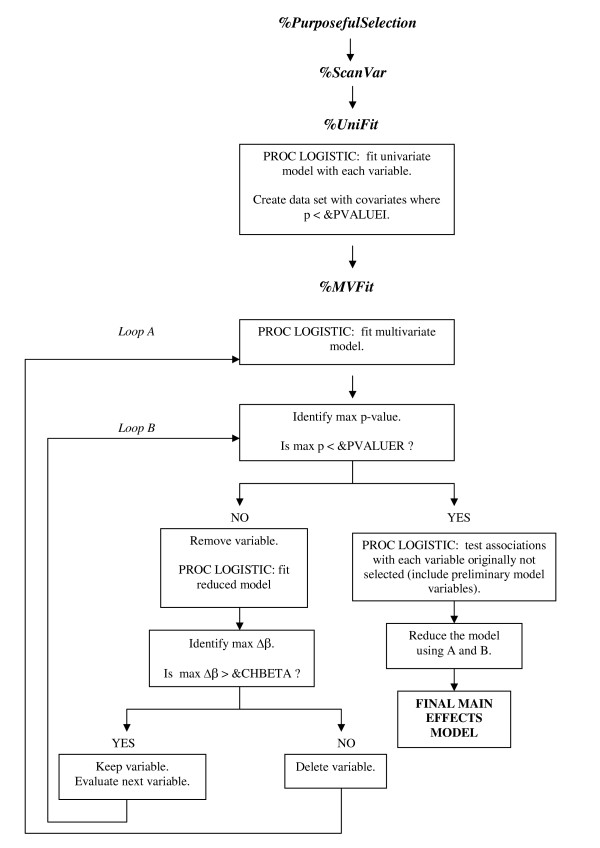
BACKGROUND: The main problem in many model-building situations is to choose from a large set of covariates those that should be included in the "best" model. A decision to keep a variable in the model might be based on the clinical or statistical significance. There are several variable selection algorithms in existence. Those methods are mechanical and as such carry some limitations. Hosmer and Lemeshow describe a purposeful selection of covariates within which an analyst makes a variable selection decision at each step of the modeling process. METHODS: In this paper we introduce an algorithm which automates that process. We conduct a simulation study to compare the performance of this algorithm with three well documented variable selection procedures in SAS PROC LOGISTIC: FORWARD, BACKWARD, and STEPWISE. RESULTS: We show that the advantage of this approach is when the analyst is interested in risk factor modeling and not just prediction. In addition to significant covariates, this variable selection procedure has the capability of retaining important confounding variables, resulting potentially in a slightly richer model. Application of the macro is further illustrated with the Hosmer and Lemeshow Worchester Heart Attack Study (WHAS) data. CONCLUSION: If an analyst is in need of an algorithm that will help guide the retention of significant covariates as well as confounding ones they should consider this macro as an alternative tool.
Overview
The claims and statistics of this paper haven’t been checked yet.
Free: it reads the open-access text and checks the first 5 claims that cite a source we can check. Create a free account to check every claim.
Integrity signals
Registry
Cites
Statistics
Figures
Verification
Claims the paper makes
The claims and statistics of this paper haven’t been checked yet.
Free: it reads the open-access text and checks the first 5 claims that cite a source we can check. Create a free account to check every claim.
Claims other papers make about this one
Each is checked against this paper’s own text: does it say what the citing paper says it does?
The source backs part of the claim, not all of it — or backs it for a different population, condition or comparison.
In the citing paper
“Most authors agree on the different techniques used to analyze and express the soundness of LR [174, 175, 176, 177], including the overall model evaluation, statistical tests of individual predictors, goodness-of-fit statistics and validation of the predicted probabilities.”
From Explainable Artificial Intelligence (XAI): Concepts, taxonomies, opportunities and challenges toward responsible AI (2020) · cites this paper as [174]
Experimental — accuracy not yet measured
Self-check
Percentages, sums and reported differences re-computed from the paper’s own numbers.
The self-check needs the paper’s full text.
Citations
Cites
(1990) · Choice Reviews Online · doi:10.5860/choice.27-3338 · Cited by 35,305
Self-citationArtificial intelligence: a modern approach
(1995) · Choice Reviews Online · doi:10.5860/choice.33-1577 · Cited by 21,974
Hosmer, D. W., & Lemeshow, S. (2000) · doi:10.1002/0471722146 · Cited by 20,302
Self-citationArtificial intelligence: A modern approach
Nilsson, N. J. (1996) · Artificial Intelligence · doi:10.1016/0004-3702(96)00007-0 · Cited by 10,583
(2000) · CrossRef Listing of Deleted DOIs · doi:10.1162/153244303322753616 · Cited by 3,502
Applied Survival Analysis: Regression Modeling of Time-to-Event Data
Hosmer, D. W., Lemeshow, S. A., & May, S. J. (2008) · Cited by 3,030
Self-citationTHE IMPACT OF CONFOUNDER SELECTION CRITERIA ON EFFECT ESTIMATION
MICKEY, R. M., & GREENLAND, S. (1989) · American Journal of Epidemiology · doi:10.1093/oxfordjournals.aje.a115101 · Cited by 2,362
RE:“;THE IMPACT OF CONFOUNDER SELECTION CRITERIA ON EFFECT ESTIMATION”
Greenland, S., & Mickey, R. M. (1989) · American Journal of Epidemiology · doi:10.1093/oxfordjournals.aje.a115409 · Cited by 2,108
Comparison of Stopping Rules in Forward “Stepwise” Regression
Bendel, R. B., & Afifi, A. A. (1977) · Journal of the American Statistical Association · doi:10.1080/01621459.1977.10479905 · Cited by 885
Applied Survival Analysis: Regression Modeling of Time to Event Data
Rao, P. V., Hosmer, D. W., & Lemeshow, S. (2000) · Journal of the American Statistical Association · doi:10.2307/2669422 · Cited by 861
Self-citation
Research works printed but not linked: 1
- SAS Institute Inc SAS/STAT User's Guide, Version 9.1 2004 Cary, NC: SAS Institute Inc
Cited by
Items 901–1,000 of 1,014
Predictors of past quit attempts and duration of abstinence among cigarette smokers
Layoun, N., Hallit, S. R., Waked, M., Bacha, Z. A., Godin, I., Lévêque, A., Dramaix, M. W., & Salameh, P. (2017) · Journal of Epidemiology and Global Health · doi:10.1016/j.jegh.2017.06.003 · Cited by 27
Şahin, U., Dalva, K., Gungor, F., Üstün, C., & Beksaç, M. (2018) · Annals of Hematology · doi:10.1007/s00277-018-3274-0 · Cited by 23
“into a Cox proportional hazards model, which was assessed by means of residual (Schoenfeld and Martingale) analysis [38].”
MethodSexual health of young people with perinatal HIV and HIV negative young people in England
Judd, A., Foster, C., Thompson, L. C., Sturgeon, K., Prevost, M. L., Jungmann, E., Rowson, K., Castro, H., & Gibb, D. M. (2018) · PLoS ONE · doi:10.1371/journal.pone.0205597 · Cited by 25
Mozafari, Z., Chamjangali, M. A., & Arashi, . (2020) · Chemometrics and Intelligent Laboratory Systems · doi:10.1016/j.chemolab.2020.103998 · Cited by 24
Effect of body mass index on intrauterine insemination cycle success
Whynott, R. M., Summers, K. M., Voorhis, B. J. V., & Mejia, R. B. (2020) · Fertility and Sterility · doi:10.1016/j.fertnstert.2020.07.003 · Cited by 31
Cella, L., Monti, S., Xu, T., Liuzzi, R., Stanzione, A., Durante, M., Mohan, R., Liao, Z. X., & Palma, G. (2021) · Radiotherapy and Oncology · doi:10.1016/j.radonc.2021.04.025 · Cited by 24
Associations of Region-Specific Foot Pain and Foot Biomechanics: The Framingham Foot Study
Riskowski, J. L., Hagedorn, T. J., Dufour, A. B., & Hannan, M. T. (2015) · The Journals of Gerontology Series A · doi:10.1093/gerona/glv067 · Cited by 26
Vincent, W., Gordon, D. M., Campbell, C. A., Ward, N. L., Albritton, T., & Kershaw, T. (2016) · Psychology of Men & Masculinity · doi:10.1037/a0039455 · Cited by 28
Lomax, S., Witenden, E., Windsor, P. A., & White, P. (2016) · Veterinary Anaesthesia and Analgesia · doi:10.1111/vaa.12384 · Cited by 23
“This p value was selected as a cut-off point so as not to exclude any scientifically relevant variables, while avoiding inclusion of any unnecessary variables (Mickey & Greenland 1989; Bursac et al. 2008).”
MethodHajj, A., Obeïd, S., Sahyoun, S., Haddad, C., Azar, J., Khabbaz, L. R., & Hallit, S. R. (2019) · International Journal of Molecular Sciences · doi:10.3390/ijms20194753 · Cited by 25
Chen, Y., Chen, C., Ouyang, Z., Duan, C., Liu, J., Hou, X., & Bai, T. (2022) · Neurogastroenterology & Motility · doi:10.1111/nmo.14266 · Cited by 22
Mansor, E., Ahmad, N., Raj, D., Zulkefli, N. A. M., & Shariff, Z. M. (2021) · Journal of Medical Internet Research · doi:10.2196/25219 · Cited by 29
“Based on the findings from simple linear regression, any variables with P .25 were included in the subsequent multiple linear regression analysis to identify the predictors of parental barriers in reducing excessive child screen time [41].”
Zhang, L., Ma, J., Wang, M., Zhang, L., Sun, W., Ji, H., Yue, C., Huang, J., Zi, W., Li, F., et al. (2024) · Neurology and Therapy · doi:10.1007/s40120-024-00588-8 · Cited by 28
“A methodical approach to variable selection was applied in the selection of covariates [15].”
MethodAli, I. A., Inchon, P., Suwannaporn, S., & Achalapong, J. (2024) · BMC Public Health · doi:10.1186/s12889-024-19149-7 · Cited by 28
“…in the univariable analysis used OR with 95%CI at p -value 0.20, as recommended by Bursac et al., for the reasoning to detect all the significant risk factors under controlling for adjusting all possible confounders [46], were considered candidates in the multivariable regression model.”
MethodInfluentialRamaekers, B. L. T., Joore, M. A., Lueza, B., Bonastre, J., Mauguen, A., Pignon, J., Pechoux, C. L., Ruysscher, D. D., & Grutters, J. P. C. (2013) · Journal of Thoracic Oncology · doi:10.1097/jto.0b013e31829f6c55 · Cited by 23
“Histology was excluded (according to the purposeful selection of covariates algorithm by Hosmer and Lemeshow).(1,5) This probability represents the mean 2-yr probability for the separate Weibull models (not the 2-yr probability as in the Markov trace).”
MethodPrognostic preoperative factors for successful outcome of surgery in horizontal strabismus
Amitava, A. K., Kumari, N., Ashraf, M., Grover, S., Khan, A., & Sonwani, P. (2017) · Oman Journal of Ophthalmology · doi:10.4103/ojo.ojo_133_2016 · Cited by 22
“On UA, those variables with P 0.2 were considered for the MLR model, [17] and the latter considered statistically significant at P 0.05.”
InfluentialAdenocarcinoma of the Sinonasal Tract: A Review of the National Cancer Database
Patel, N. N., Maina, I. W., Kuan, E. C., Triantafillou, V., Trope, M., Carey, R. M., Workman, A. D., Tong, C. C. L., Kohanski, M. A., Palmer, J. N., et al. (2019) · Journal of Neurological Surgery Part B Skull Base · doi:10.1055/s-0039-1696707 · Cited by 22
Dzimitrowicz, A., Bielawska‐Pohl, A., diCenzo, G. C., Jamróz, P., Macioszczyk, J., Klimczak, A., & Pohl, P. (2018) · Nanomaterials · doi:10.3390/nano8060398 · Cited by 26
Validation of the Arabic version of the MADRS scale among Lebanese patients with depression
Hallit, S. R., Obeïd, S., El‐Hage, W., & Kazour, F. (2018) · L Encéphale · doi:10.1016/j.encep.2018.05.004 · Cited by 23
Tan, T. L., Rondon, A. J., Wilt, Z. T., Wang, W. L., Kalbian, I. L., Foltz, C., Beredjiklian, P. K., & Arnold, W. V. (2020) · Journal of the American Academy of Orthopaedic Surgeons · doi:10.5435/jaaos-d-19-00676 · Cited by 22
Fond, G. B., Korchia, T., de Verville, P. L. S., Godin, O., Schürhoff, F., Berna, F. S., André, M., Aouizerate, B., Capdevielle, D., Chéreau, I., et al. (2020) · Journal of Affective Disorders · doi:10.1016/j.jad.2020.05.003 · Cited by 23
Zaba, T., Nyawo, M., & Morán, J. L. Á. (2020) · Archives of Public Health · doi:10.1186/s13690-020-00462-7 · Cited by 25
Gebrehiwot, T. G., Mekonen, H. H., Gebru, T. H., Kiros, K. G., Gebrehiwot, B. G., Woldemariam, G. T., Tadese, H. T., & Haileslassie, Y. (2020) · International Journal of Women s Health · doi:10.2147/ijwh.s266248 · Cited by 26
A study of factors that predict novice nurses’ perceived ability to provide care in acute situations
Sterner, A., Ramstrand, N., Palmér, L., & Hagiwara, M. A. (2021) · Nursing Open · doi:10.1002/nop2.871 · Cited by 37
“Univariate model testing of the predictors was performed and a p- value ≤ 0.25 was considered appropriate for including them in multivariate modelling (Bursac et al., 2008; Sperandei, 2014).”
MethodInfluentialAssociations between workplace characteristics and ‘outness’ in LGBTI workers in Austria
Markovic, L., Schönherr, D., Zandonella, M., Gil-Salmerón, A., Smith, L., McDermott, D. T., Yang, L., Dorner, T. E., Mües, H. M., & Grabovac, I. (2021) · Occupational and Environmental Medicine · doi:10.1136/oemed-2020-107345 · Cited by 24
Intimate partner violence among pregnant women attending antenatal care services in the rural Gambia
Jatta, J. W., Baru, A., Fawole, O. I., & Ojengbede, O. A. (2021) · PLoS ONE · doi:10.1371/journal.pone.0255723 · Cited by 24
Schaller, M., Foerch, C., Bohmann, F. O., Lapa, S., Misselwitz, B., Kohlhase, K. D., Rosenow, F., Strzelczyk, A., & Willems, L. M. (2022) · Frontiers in Neurology · doi:10.3389/fneur.2022.824450 · Cited by 25
“Since the multivariate analysis was based on values not corrected for multiple testing to address a possible suppressor effect, we refrained from additional post-hoc correction of the results of the univariate analysis that were used only descriptively (23).”
MethodRelationship between erosive tooth wear and possible etiological factors among dental students
Sezer, B., Giritlioğlu, B., Sıddıkoğlu, D., Lussi, A., & Kargül, B. (2022) · Clinical Oral Investigations · doi:10.1007/s00784-022-04425-w · Cited by 25
Supine correction index as a predictor for brace outcome in adolescent idiopathic scoliosis
Wong, L. P. K., Cheung, P. W. H., & Cheung, J. P. Y. (2022) · The Bone & Joint Journal · doi:10.1302/0301-620x.104b4.bjj-2021-1220.r1 · Cited by 22
Prehospital synergy: Tranexamic acid and blood transfusion in patients at risk for hemorrhage
Deeb, A., Hoteit, L., Li, S. R., Guyette, F. X., Eastridge, B. J., Nirula, R., Vercruysse, G. A., O’Keeffe, T., Joseph, B. A., Neal, M. D., et al. (2022) · The Journal of Trauma: Injury, Infection, and Critical Care · doi:10.1097/ta.0000000000003620 · Cited by 23
“Copyright © 2022 Wolters Kluwer H changed the primary treatment effect of interest coefficient by greater than 10%.(27) Multiple organ failure, defined by Denver criteria, was included as a covariate in the 30-day mortality model but not the 24-hour mortality model given that it is calculated after 24 hours.”
MethodKhanal, P., Devkota, N., Dahal, M., Paudel, K., Mishra, S. R., & Joshi, D. (2021) · PLOS Global Public Health · doi:10.1371/journal.pgph.0000083 · Cited by 35
Giri, L. M., Paudel, K., Bhusal, S., Adhikari, T. B., & Guliš, G. (2022) · PLOS Global Public Health · doi:10.1371/journal.pgph.0000458 · Cited by 27
“1 during bivariate analysis were entered into the regression model [25].”
MethodAlalaf, S., Mansour, T. M. M., Sileem, S., & Shabila, N. P. (2022) · BMC Pregnancy and Childbirth · doi:10.1186/s12884-022-04747-3 · Cited by 29
“They were based on a significant univariate test based on the Wald test from the logistic regression with a P value cutoff point of 0.25 considering the threshold for including variables in the multivariate model [27].”
InfluentialRising living alone among the elderly in Iran: prevalence and associated factors
Ghahfarokhi, M. S. (2022) · BMC Geriatrics · doi:10.1186/s12877-022-03309-8 · Cited by 26
Pogue, C. A., Li, P., Swiger, P. A., Gillespie, G. L., Ivankova, N. V., & Patrician, P. A. (2022) · Nursing Forum · doi:10.1111/nuf.12781 · Cited by 43
Sserwanja, Q., Mwamba, D., Poon, P. K.-M., & Kim, J. H. (2022) · Archives of Sexual Behavior · doi:10.1007/s10508-022-02385-6 · Cited by 30
“25 were included in the multiple logistic regression model (Bursac et al., 2008).”
MethodHamou, H. A., Alzaiyani, M., Rossmann, T., Pjontek, R., Kremer, B., Zaytoun, H., Ridwan, H., Clusmann, H., Höllig, A., & Veldeman, M. (2022) · Frontiers in Neurology · doi:10.3389/fneur.2022.977329 · Cited by 23
Um, S., Pin, P., Vang, D., & Chau, D. (2023) · PLOS Global Public Health · doi:10.1371/journal.pgph.0001440 · Cited by 28
“10 or background variables mother’s age, child’s age, place of residence, and survey years were included in the multiple logistic regression analysis [20, 21].”
MethodMohamud, A. K., Ali, A. İ., Dirie, N. I., Dirie, N. I., Inchon, P., Mohamud, A. A., & Mohamud, A. A. (2023) · BMC Public Health · doi:10.1186/s12889-023-16562-2 · Cited by 25
“Bur-sac et al. [36] suggest that variables with a p -value < 0.20 in univariate logistic regression may have some reasonable association with the outcome in the final model if they adjust each other due to the possibility of having a confounder in other variables.”
MethodInfluentialPlymoth, M., Lundqvist, R., Nystedt, A., Sjöstedt, A. B., & Gustafsson, T. N. (2024) · Clinical Infectious Diseases · doi:10.1093/cid/ciae098 · Cited by 24
“Statistical methods included logistic regression (categorical variables) and Mann-Whitney U test (continuous and ordinal variables) for univariate analysis; a multivariable logistic regression model using a stepwise backwards elimination protocol (Supplementary Table 1) [26].”
MethodWang, I., & Lin, T.-J. (2014) · Annals of Allergy Asthma & Immunology · doi:10.1016/j.anai.2014.10.019 · Cited by 25
van Straaten, B., van der Laan, J., Rodenburg, G., Boersma, S. N., Wolf, J., & van de Mheen, D. (2016) · Health & Social Care in the Community · doi:10.1111/hsc.12361 · Cited by 33
“…in the univariate analysis were inserted as independent predictors into an exploratory stepwise backward logistic regression model, to prevent exclusion of potentially important variables and the minimisation of type II errors in the selection process (Mickey & Greenland 1989, Bursac et al. 2008).”
MethodAffect Following First Exercise Session as a Predictor of Treatment Response in Depression
Suterwala, A. M., Rethorst, C. D., Carmody, T. J., Greer, T. L., Grannemann, B. D., Jha, M., & Trivedi, M. H. (2016) · The Journal of Clinical Psychiatry · doi:10.4088/jcp.15m10104 · Cited by 22
Lapshyn, H. V., Bolm, L., Kohler, I., Werner, M., Billmann, F. G., Bausch, D., Hopt, U. T., Makowiec, F., Wittel, U. A., Keck, T., et al. (2016) · HPB · doi:10.1016/j.hpb.2016.10.002 · Cited by 22
Environmental predictors of bovine Eimeria infection in western Kenya
Makau, D. N., Gitau, G. K., Muchemi, G. K., Thomas, L. F., Cook, E. A. J., Wardrop, N. A., Fèvre, E. M., & de Glanville, W. A. (2017) · Tropical Animal Health and Production · doi:10.1007/s11250-016-1209-0 · Cited by 22
“The significance threshold was set at the 0.1 alpha level, and confounding was assessed on the basis of a 20% or greater change in the value of the coefficient of any of the remaining variables following removal (Bursac et al. 2008).”
BackgroundMethodInfluentialPothof, A. B., Bodewes, T. C. F., O’Donnell, T. F. X., Deery, S. E., Shean, K. E., Soden, P. A., de Borst, G. J., & Schermerhorn, M. L. (2017) · Journal of Vascular Surgery · doi:10.1016/j.jvs.2017.05.114 · Cited by 22
“Using purposeful selection, we identified variables for inclusion in our models, which combine previously identified risk factors with significant covariates and confounders.(19) We did not adjust for perioperative transfusions in our initial multivariable models because perioperative transfusions likely act as a medi…”
Ren, L., Li, J., Zhou, S., Xia, X., Xie, Z., Liu, P., Xu, Y., Qian, Y., Zhang, H., Ma, L., et al. (2017) · Scientific Reports · doi:10.1038/s41598-017-10105-7 · Cited by 23
Association Between HIV Infection and Cancer Stage at Presentation at the Uganda Cancer Institute
Menon, M. P., Coghill, A. E., Mutyaba, I., Phipps, W. T., Okuku, F. M., Harlan, J. M., Orem, J., & Casper, C. (2017) · Journal of Global Oncology · doi:10.1200/jgo.17.00005 · Cited by 23
“Symptom duration before presentation, months, median (range) 4 (0-72) 9 (1-72) 4 (1-96) 5 (1-72) 5 (0-96)”
Hallit, S. R., Rahérison, C., Waked, M., Hallit, R. R., Layoun, N., & Salameh, P. (2018) · Journal of Asthma · doi:10.1080/02770903.2018.1441417 · Cited by 24
“2 in the bivariate analysis as the independent ones (41,42); potential confounders may be eliminated only if p > 0.”
BackgroundTianyi, F.-L., Agbor, V. N., & NJAMNSHI, A. K. (2018) · Health Science Reports · doi:10.1002/hsr2.44 · Cited by 22
“25 in bivariate analysis were further assessed using a multivariable logistic regression analysis according to the method suggested by Bursac et al.(18) A 2‐tailed statistical significance was set at a P value below .”
MethodChikandiwa, A. T., Kelly, H. A., Sawadogo, B., Ngou, J., Pisa, P. T., Gibson, L., Didelot, M.-N., Méda, N., Weiss, H. A., Segondy, M., et al. (2018) · PLoS ONE · doi:10.1371/journal.pone.0196018 · Cited by 24
“10.[24] A second logistic regression model (Model 2) adjusted for CD4+ cell count at enrolment in addition to factors adjusted for in Model 1 was run to explore associations with ART duration and HIV-1 viral suppression.”
MethodKhazaee, P. R., Bagherzadeh, J., Niazkhani, Z., & Pirnejad, H. (2018) · International Journal of Medical Informatics · doi:10.1016/j.ijmedinf.2018.09.012 · Cited by 22
Liang, P., Li, C., O’Donnell, T. F. X., Lo, R. C., Soden, P. A., Swerdlow, N. J., & Schermerhorn, M. L. (2018) · Journal of Vascular Surgery · doi:10.1016/j.jvs.2018.06.207 · Cited by 22
“Duration of stay, days 7 (4-12) 3 (1-8) <.”
Nedjat‐Haiem, F. R., Cadet, T. J., Amatya, A. K., & Mishra, S. I. (2018) · American Journal of Hospice and Palliative Medicine® · doi:10.1177/1049909118813720 · Cited by 28
Nedjat-Haiem, F. R., Cadet, T. J., Amatya, A., Thompson, B., & Mishra, S. I. (2019) · American Journal of Hospice and Palliative Medicine® · doi:10.1177/1049909119851470 · Cited by 22
“A minimization of variables indicated by the most parsimonious model fit was used for the logistic regression.(29) We conducted the analysis with the total sample of 61 participants to examine changes regarding AD completion rates from participants indicating “no” at pretest to “yes they completed an AD” at posttest.”
MethodIhdayhid, A. R., Goeller, M., Dey, D., Nerlekar, N., Yap, G., Thakur, U., Adams, D., Cameron, J. D., SENEVIRATNE, S. K., Achenbach, S. S., et al. (2019) · The American Journal of Cardiology · doi:10.1016/j.amjcard.2019.06.020 · Cited by 23
Swerdlow, N. J., Varkevisser, R. R. B., Soden, P. A., Zettervall, S. L., McCallum, J. C., Li, C., Wyers, M. C., & Schermerhorn, M. L. (2019) · Annals of Vascular Surgery · doi:10.1016/j.avsg.2019.05.024 · Cited by 22
Nilsson, H., Stranne, J., Hugosson, J., Wessman, C., Steineck, G., Bjartell, A. S., Carlsson, S., Thorsteinsdóttir, T., Tyritzis, S. Ι., Lantz, A. W., et al. (2020) · Hernia · doi:10.1007/s10029-020-02178-7 · Cited by 22
“Both the unadjusted result, the adjusted result and the model derived by the algorithm by Bursac [22], were calculated and presented.”
InfluentialLane, B., Fowler, K., Eaton, G., Chalifour, K., & Garland, S. N. (2020) · Supportive Care in Cancer · doi:10.1007/s00520-020-05785-3 · Cited by 27
“10 were then simultaneously entered into a multiple binomial logistic regression model [29].”
MethodTelemedicine in the Wake of the COVID-19 Pandemic: Increasing Access to Surgical Care
Dekker, P. K., Bhardwaj, P., Singh, T., Bekeny, J. C., Kim, K. G., Steinberg, J. S., Evans, K. K., Song, D. H., Attinger, C. E., & Fan, K. L. (2020) · Plastic & Reconstructive Surgery Global Open · doi:10.1097/gox.0000000000003228 · Cited by 29
Selecting appropriate plant indicator species for Result-Based Agri-Environment Payments schemes
Ruas, S., Rotchés‐Ribalta, R., hUallacháin, D. Ó., Ahmed, K. S. D., Gormally, M. J., Stout, J. C., White, B., & Moran, J. (2021) · Ecological Indicators · doi:10.1016/j.ecolind.2021.107679 · Cited by 26
“The process was repeated until no other effect in the model met the specified level for removal (Faraway, 2002; Bursac et al., 2008).”
Ngunguni, S. M., Moodley, A., Msefula, C. L., Mkakosya, R., & Muloi, D. M. (2024) · Preventive Veterinary Medicine · doi:10.1016/j.prevetmed.2024.106263 · Cited by 23
Trembach, B., Trembach, I., Maliuha, V., Knyazev, S. A., Krbaťa, M., Kabatskyi, O., Balenko, O., Зарічняк, Є. М., Бречка, М. М., Mykhailo, B., et al. (2025) · The International Journal of Advanced Manufacturing Technology · doi:10.1007/s00170-025-15414-0 · Cited by 21
Quad-phased data mining modeling for dementia diagnosis
Bang, S., Son, S., Roh, H., Lee, J., Bae, S., Lee, K., Hong, C., & Shin, H. (2017) · BMC Medical Informatics and Decision Making · doi:10.1186/s12911-017-0451-3 · Cited by 22
“Since it is important to interpret results of predicted diagnostics using intrinsic meaning of diagnostic criteria, in this study variable selection methods are more suitable [18 – 20].”
BackgroundJevtić, R., Župunski, V., Lalošević, M., Jocković, B., Orbović, B., & Ilin, S. (2020) · Scientific Reports · doi:10.1038/s41598-020-76693-z · Cited by 26
Plymoth, M., Sanders, E. J., van der Elst, E., Medstrand, P., Tesfaye, F., Winqvist, N., Balcha, T. T., & Björkman, P. (2020) · PLoS ONE · doi:10.1371/journal.pone.0244066 · Cited by 25
“The model was adapted through a stepwise backwards elimination protocol [37].”
MethodMazzeffi, M. A., Chow, J. H., Anders, M. G., Gibbons, M., Okojie, U., Feng, A., Ibrahim, I., Morris, N. A., Martz, D. G., & Rock, P. (2021) · Journal of Anesthesia · doi:10.1007/s00540-021-02901-3 · Cited by 21
“Confounders were selected for inclusion in the multivariable models using the purposeful selection of covariates SAS macro [9].”
MethodDeslippe, A. L., O’Connor, T. M., BRUSSONI, M. J., & Mâsse, L. C. (2021) · Appetite · doi:10.1016/j.appet.2021.105846 · Cited by 23
Kawuki, J., Kamara, K., & Sserwanja, Q. (2022) · BMC Infectious Diseases · doi:10.1186/s12879-022-07037-7 · Cited by 21
“25 in the bivariable analysis and not strongly collinear with other independent variables were included as candidate variables in the multivariable model [25].”
Psychosocial issues and quality of life of parenting partners of young women with breast cancer
Borstelmann, N. A., Gray, T. F., Gelber, S. I., Rosenberg, S. M., Zheng, Y. H., Meyer, M. E., Ruddy, K. J., Schapira, L., Come, S. E., Borges, V. F., et al. (2022) · Supportive Care in Cancer · doi:10.1007/s00520-022-06852-7 · Cited by 35
“[27] and implemented using SAS Proc REG (selection = stepwise).”
MethodLin, C., Huang, S., Tzou, S., Yin, C.-H., Chen, J., Chen, Y.-S., & Chang, S. (2022) · International Journal of Environmental Research and Public Health · doi:10.3390/ijerph19084520 · Cited by 21
Abrahams, Z., & Lund, C. (2022) · Cambridge Prisms Global Mental Health · doi:10.1017/gmh.2022.12 · Cited by 25
“25 (Bursac et al., 2008) in the univariate model were added.”
BackgroundMazzeffi, M. A., Keneally, R. J., Teal, C. B., Douglas, R., Starks, V., Chow, J. H., & Porter, S. B. (2022) · Anesthesia & Analgesia · doi:10.1213/ane.0000000000006058 · Cited by 21
Lusida, M. A. P., Salamah, S., Jonatan, M., Wiyogo, I. O., Asyari, C. H., Ali, N. D., Asmara, J., Wahyuningtyas, R. I., Triyono, E. A., Ratnadewi, N. K., et al. (2022) · PLoS ONE · doi:10.1371/journal.pone.0270966 · Cited by 32
“25 [38] were then subjected to multivariate regression using backward selection method.”
MethodTekdemir, R., Selvı, Y., Altınbaş, K., & Koçak, N. (2022) · Journal of Affective Disorders · doi:10.1016/j.jad.2022.08.034 · Cited by 26
Sex-based differences in atrial fibrillation ablation adverse events
Mszar, R., Friedman, D. J., Ong, E. L., Du, C., Wang, Y., Zeitler, E. P., Cunningham, S. D., Akar, J. G., Curtis, J. P., & Freeman, J. V. (2022) · Heart · doi:10.1136/heartjnl-2022-321192 · Cited by 23
Pesut, B., Thorne, S. E., Huisken, A., Wright, D. K., Chambaere, K., Tishelman, C., & Ghosh, S. (2022) · BMC Palliative Care · doi:10.1186/s12904-022-01074-4 · Cited by 21
“05 level may fail to identify important factors [24].”
BackgroundMixed‐methods analysis of decisional regret in parents following a child's death from cancer
Feifer, D., Broden, E. G., Xiong, N., Mazzola, E., Baker, J. N., Wolfe, J., & Snaman, J. M. (2023) · Pediatric Blood & Cancer · doi:10.1002/pbc.30541 · Cited by 21
Santos, G., Jin, H., & Raymond, H. F. (2015) · Journal of Urban Health · doi:10.1007/s11524-015-9958-z · Cited by 22
Barron, S. J., Balanda, K. P., Hughes, J., & Fahy, L. E. (2014) · BMC Public Health · doi:10.1186/1471-2458-14-24 · Cited by 21
“A stepwise selection logistic regression procedure [21] was used to develop a statistical model of this outcome (see Figure 1).”
MethodPeterson, K. L., Jacobs, J., Allender, S. E., Alston, L. V., & Nichols, M. S. (2016) · BMC Public Health · doi:10.1186/s12889-016-3389-y · Cited by 26
“[21], and were retained in the final adjusted model if they improved the model fit.”
BackgroundCrosby, R. A., Salazar, L. F., Mena, L. A., & Geter, A. (2016) · Sexually Transmitted Diseases · doi:10.1097/olq.0000000000000505 · Cited by 21
Deery, S. E., Zettervall, S. L., O’Donnell, T. F. X., Goodney, P. P., Weaver, F. A., Teixeira, P. G., Patel, V. I., & Schermerhorn, M. L. (2019) · Journal of Vascular Surgery · doi:10.1016/j.jvs.2019.03.045 · Cited by 21
Darling, J. D., O’Donnell, T. F. X., Deery, S. E., Norman, A. V., Vu, G. H., Guzman, R. J., Wyers, M. C., Hamdan, A. D., & Schermerhorn, M. L. (2018) · Journal of Vascular Surgery · doi:10.1016/j.jvs.2018.01.055 · Cited by 27
van Rooijen, M. S., van der Loeff, M. F. S., van Kempen, L., & de Vries, H. J. C. (2018) · Sexually Transmitted Diseases · doi:10.1097/olq.0000000000000794 · Cited by 22
Previous, current, and cumulative dose effect of waterpipe smoking on LDL and total cholesterol
Hallit, S. R., Hallit, R. R., Haddad, C., Youssef, L., Zoghbi, M., Costantine, R., Kheir, N., & Salameh, P. (2019) · Environmental Science and Pollution Research · doi:10.1007/s11356-019-04311-1 · Cited by 21
Belizaire, R., Mack, J. P., Kadauke, S., Kim, Y., Saidman, S. L., & Makar, R. S. J. (2019) · Transfusion · doi:10.1111/trf.15306 · Cited by 21
“0001 RBCs transfused, median (IQR) 4 (0-13) 4 (1-15) 3 (0-13) 0.”
Campbell, M., Lai, E. T. C., Pearce, A., Orton, E., Kendrick, D., Wickham, S. L., & Taylor-Robinson, D. C. (2019) · BMC Pediatrics · doi:10.1186/s12887-019-1514-7 · Cited by 21
Dzimitrowicz, A., Bielawska‐Pohl, A., Jamróz, P., Dora, J., Krawczenko, A., Busco, G., Grillon, C., Kiéda, C., Klimczak, A., Terefinko, D., et al. (2019) · Plasma Chemistry and Plasma Processing · doi:10.1007/s11090-019-10039-0 · Cited by 21
Multifocal breast cancers are more prevalent in BRCA2 versus BRCA1 mutation carriers
McCrorie, A. D., Ashfield, S., Begley, A., McIlmunn, C., Morrison, P. J., Boyd, C., Eccles, B., Greville-Heygate, S. L., Copson, E., Cutress, R., et al. (2020) · The Journal of Pathology Clinical Research · doi:10.1002/cjp2.155 · Cited by 21
“Thereafter, adjusted OR was calculated using a manually controlled backward stepwise elimination approach [14].”
MethodLacson, R. C., Shi, J., Kapoor, N., Eappen, S., Boland, G. W., & Khorasani, R. (2021) · Journal of the American College of Radiology · doi:10.1016/j.jacr.2020.12.009 · Cited by 22
“This cutoff is traditionally used in purposeful variable selection for logistic regression [21].”
Bhuiyan, M. U., Luby, S. P., Zaman, R. U., Rahman, M. W., Sharker, M. A. Y., Hossain, M. J., Rasul, C. H., Ekram, A. S., Rahman, M., Sturm-Ramirez, K. M., et al. (2014) · American Journal of Tropical Medicine and Hygiene · doi:10.4269/ajtmh.13-0484 · Cited by 25
Crowell, M. D., Murphy, T., Levy, R. L., Langer, S. L., Kunin‐Batson, A., Seburg, E. M., Senso, M. M., & Sherwood, N. E. (2014) · Journal of Pediatric Gastroenterology and Nutrition · doi:10.1097/mpg.0000000000000585 · Cited by 26
“A variant of the purposeful selection process was used to select covariates as described by Hosmer and Lemeshow (27).”
MethodFirst-Rank Symptoms in Methamphetamine Psychosis and Schizophrenia
Shelly, J., Uhlmann, A., Sinclair, H., Howells, F. M., Sibeko, G., Wilson, D., Stein, D. J., & Temmingh, H. S. (2016) · Psychopathology · doi:10.1159/000452476 · Cited by 23
Rectal Cancer in Patients Under 50 Years of Age
Dinaux, A. M., Leijssen, L. G. J., Bordeianou, L., Kunitake, H., & Berger, D. L. (2017) · Journal of Gastrointestinal Surgery · doi:10.1007/s11605-017-3525-8 · Cited by 21
Bodewes, T. C. F., Darling, J. D., O’Donnell, T. F. X., Deery, S. E., Shean, K. E., Mittleman, M. A., Moll, F. L., & Schermerhorn, M. L. (2017) · Journal of Vascular Surgery · doi:10.1016/j.jvs.2017.07.130 · Cited by 21
“10).(23) We evaluated the proportional hazards assumptions with the scaled Schoenfeld residuals on time and visually by log-log plots.”
Messineo, L., Taranto‐Montemurro, L., Sands, S. A., Marques, M., Azabarzin, A., & Wellman, A. (2017) · Frontiers in Neurology · doi:10.3389/fneur.2017.00718 · Cited by 28
Khatri, R. B., Karkee, R., Durham, J., & Assefa, Y. (2021) · Globalization and Health · doi:10.1186/s12992-021-00791-4 · Cited by 20
Jella, T. K., Patel, V. R., Cwalina, T. B., Schmidt, J. E., Lawler, E. A., & Vallier, H. A. (2023) · Clinical Orthopaedics and Related Research · doi:10.1097/corr.0000000000002625 · Cited by 20
“This method of purposeful variable selection using the threshold of p 0.2 has been described and validated across a variety of clinical disciplines to balance model parsimony and generalizability [8, 15, 16, 26].”
InfluentialFactors Influencing Compliance to Follow-up Visits in Orthopaedic Surgery
Bender, M., Jain, N., Giron, A., Harder, J. G., Rounds, A. D., & MacKay, B. J. (2024) · JAAOS Global Research and Reviews · doi:10.5435/jaaosglobal-d-23-00140 · Cited by 26
Metadata
- Authors
- Bursac, Z., Gauss, C. H., Williams, D. K., & Hosmer, D. W.
- Affiliations
- University of Arkansas for Medical Sciences (US)
- University of Massachusetts Amherst (US)
- Corresponding author
- Bursac, Zoran
- Venue
- Source Code for Biology and Medicine
- Published
- 2008-12
- Volume
- 3
- Issue
- 1
- Pages
- 17-17
- ISSN
- 1751-0473 (ISSN-L)
- PMC
- PMC2633005
- OpenAlex
- W2134732827
- Cited by
- 4,035
- References
- 17
- Citations by year
- 2026: 425 · 2025: 476 · 2024: 394 · 2023: 355 · 2022: 444 · 2021: 434 · 2020: 310 · 2019: 284 · 2018: 250 · 2017: 203 · 2016: 140 · 2015: 119 · 2014: 79 · 2013: 63 · 2012: 31
- FWCI
- 7.87
- Type
- journal article
- Language
- en
- Open access
- hybrid
- doi.org
- Licence
- cc-by
- creativecommons.org/licenses/by/2.0 (tdm)
- Locations
- Source Code for Biology and Medicine (publishedVersion, cc-by)
- PubMed Central (publishedVersion, cc-by)
- PubMed (publishedVersion)
- Topics
- Physical Sciences › Mathematics › Statistics and Probability › Statistical Methods and Inference
- Physical Sciences › Mathematics › Statistics and Probability › Statistical Methods in Epidemiology
- Physical Sciences › Mathematics › Statistics and Probability › Statistical Methods and Applications
- Keywords
- feature selection, logistic regression, forward selection, backward selection, stepwise selection, confounding variables, SAS macro
About these checks
Registry, retraction, Cites and statistics results are computed, not judged, with one exception: a printed reference that no index lists is read once by a model before it counts as a citation error. Claims are extracted by a model and kept only when their quote appears verbatim in the text; each cited source is then checked, with a model’s help, for whether it says what the claim relies on. Those verdicts can be wrong — read the claim’s quote and the cited source before relying on one.
Statistics and arithmetic are recomputed, not judged.
Confidence bands are shown only for fields calibrated on our annotated test set. None is calibrated yet, so no band is shown.
What counts as a claim ›How we measure confidence ›How we check this ›
Are you an author, or do you see a problem with this page? Request a review
Data sources
Bibliographic data: Semantic Scholar, OpenAlex, Crossref.
Contains information from the Semantic Scholar Academic Graph Datasets, made available under the ODC Attribution License (ODC-BY 1.0).
Semantic Scholar’s data is described in: Kinney, R., et al. (2023). The Semantic Scholar Open Data Platform. arXiv:2301.10140.
