

Purposeful selection of variables in logistic regression
Open accessThe DOI matches its Crossref record; 16 of the 17 references it cites were found in a registry or an index.
Abstract
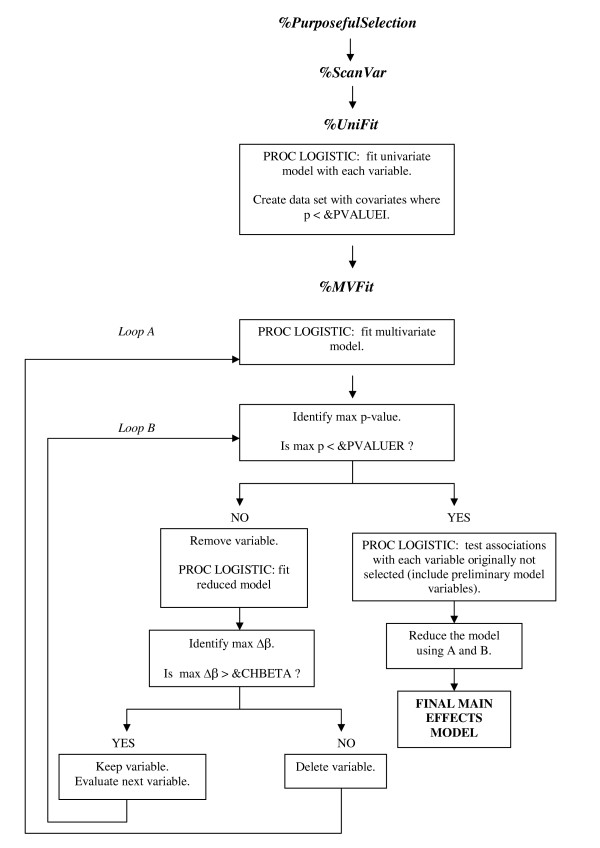
BACKGROUND: The main problem in many model-building situations is to choose from a large set of covariates those that should be included in the "best" model. A decision to keep a variable in the model might be based on the clinical or statistical significance. There are several variable selection algorithms in existence. Those methods are mechanical and as such carry some limitations. Hosmer and Lemeshow describe a purposeful selection of covariates within which an analyst makes a variable selection decision at each step of the modeling process. METHODS: In this paper we introduce an algorithm which automates that process. We conduct a simulation study to compare the performance of this algorithm with three well documented variable selection procedures in SAS PROC LOGISTIC: FORWARD, BACKWARD, and STEPWISE. RESULTS: We show that the advantage of this approach is when the analyst is interested in risk factor modeling and not just prediction. In addition to significant covariates, this variable selection procedure has the capability of retaining important confounding variables, resulting potentially in a slightly richer model. Application of the macro is further illustrated with the Hosmer and Lemeshow Worchester Heart Attack Study (WHAS) data. CONCLUSION: If an analyst is in need of an algorithm that will help guide the retention of significant covariates as well as confounding ones they should consider this macro as an alternative tool.
Overview
The claims and statistics of this paper haven’t been checked yet.
Free: it reads the open-access text and checks the first 5 claims that cite a source we can check. Create a free account to check every claim.
Integrity signals
Registry
Cites
Statistics
Figures
Verification
Claims the paper makes
The claims and statistics of this paper haven’t been checked yet.
Free: it reads the open-access text and checks the first 5 claims that cite a source we can check. Create a free account to check every claim.
Claims other papers make about this one
Each is checked against this paper’s own text: does it say what the citing paper says it does?
The source backs part of the claim, not all of it — or backs it for a different population, condition or comparison.
In the citing paper
“Most authors agree on the different techniques used to analyze and express the soundness of LR [174, 175, 176, 177], including the overall model evaluation, statistical tests of individual predictors, goodness-of-fit statistics and validation of the predicted probabilities.”
From Explainable Artificial Intelligence (XAI): Concepts, taxonomies, opportunities and challenges toward responsible AI (2020) · cites this paper as [174]
Experimental — accuracy not yet measured
Self-check
Percentages, sums and reported differences re-computed from the paper’s own numbers.
The self-check needs the paper’s full text.
Citations
Cites
(1990) · Choice Reviews Online · doi:10.5860/choice.27-3338 · Cited by 35,305
Self-citationArtificial intelligence: a modern approach
(1995) · Choice Reviews Online · doi:10.5860/choice.33-1577 · Cited by 21,974
Hosmer, D. W., & Lemeshow, S. (2000) · doi:10.1002/0471722146 · Cited by 20,302
Self-citationArtificial intelligence: A modern approach
Nilsson, N. J. (1996) · Artificial Intelligence · doi:10.1016/0004-3702(96)00007-0 · Cited by 10,583
(2000) · CrossRef Listing of Deleted DOIs · doi:10.1162/153244303322753616 · Cited by 3,502
Applied Survival Analysis: Regression Modeling of Time-to-Event Data
Hosmer, D. W., Lemeshow, S. A., & May, S. J. (2008) · Cited by 3,030
Self-citationTHE IMPACT OF CONFOUNDER SELECTION CRITERIA ON EFFECT ESTIMATION
MICKEY, R. M., & GREENLAND, S. (1989) · American Journal of Epidemiology · doi:10.1093/oxfordjournals.aje.a115101 · Cited by 2,362
RE:“;THE IMPACT OF CONFOUNDER SELECTION CRITERIA ON EFFECT ESTIMATION”
Greenland, S., & Mickey, R. M. (1989) · American Journal of Epidemiology · doi:10.1093/oxfordjournals.aje.a115409 · Cited by 2,108
Comparison of Stopping Rules in Forward “Stepwise” Regression
Bendel, R. B., & Afifi, A. A. (1977) · Journal of the American Statistical Association · doi:10.1080/01621459.1977.10479905 · Cited by 885
Applied Survival Analysis: Regression Modeling of Time to Event Data
Rao, P. V., Hosmer, D. W., & Lemeshow, S. (2000) · Journal of the American Statistical Association · doi:10.2307/2669422 · Cited by 861
Self-citation
Research works printed but not linked: 1
- SAS Institute Inc SAS/STAT User's Guide, Version 9.1 2004 Cary, NC: SAS Institute Inc
Cited by
Items 701–800 of 1,014
Chowdhury, R., Taneja, S., Bhandari, N., Kvestad, I., Strand, T. A., & Bhan, M. K. (2017) · Nutrition Journal · doi:10.1186/s12937-017-0285-y · Cited by 32
“[19, 20] These variables were used as adjustment variables in the multiple models where”
MethodInter-patient image registration algorithms to disentangle regional dose bioeffects
Monti, S., Pacelli, R., Cella, L., & Palma, G. (2018) · Scientific Reports · doi:10.1038/s41598-018-23327-0 · Cited by 31
Park, E. M., Stephenson, E. M., Moore, C., Deal, A. M., & Muriel, A. C. (2018) · Supportive Care in Cancer · doi:10.1007/s00520-018-4518-1 · Cited by 28
Palaniswamy, V., Ng, S., Manickaraj, N., Ryan, M., Yelland, M. J., Rabago, D., & Bisset, L. (2018) · PLoS ONE · doi:10.1371/journal.pone.0205171 · Cited by 35
Palma, G., Monti, S., Thor, M., Rimner, A., Deasy, J. O., & Cella, L. (2019) · Physics in Medicine and Biology · doi:10.1088/1361-6560/ab2e16 · Cited by 30
Gribble, R., Goodwin, L., & Fear, N. T. (2019) · European Journal of Psychotraumatology · doi:10.1080/20008198.2019.1654781 · Cited by 32
Mozooni, M., Pennell, C. E., & Preen, D. B. (2020) · PLoS Medicine · doi:10.1371/journal.pmed.1003061 · Cited by 28
“1 were removed from the final models [52].”
MethodResidential proximity to power lines and risk of brain tumor in the general population
Carles, C., Esquirol, Y., Turuban, M., Piel, C., Migault, L., Pouchieu, C., Bouvier, G., Fabbro-Péray, P., Lebailly, P., & Baldi, I. (2020) · Environmental Research · doi:10.1016/j.envres.2020.109473 · Cited by 28
“Confounders were selected using the suitable selection algorithm (Bursac et al., 2008).”
MethodDelirium in acute stroke: A prospective, cross‐sectional, cohort study
Rollo, E., Callea, A., Brunetti, V., Vollono, C., Marotta, J., Imperatori, C., Frisullo, G., Broccolini, A., & Marca, G. D. (2021) · European Journal of Neurology · doi:10.1111/ene.14749 · Cited by 30
“The model for multivariate analysis was made choosing variables for the significance in the univariate comparison and for clinical relevance [25].”
MethodWong, S. M. Y., Hui, C. L. M., Wong, C. S. M., Suen, Y. N., Chan, S. K. W., Lee, E. H. M., Chang, W., & Chen, E. Y. H. (2021) · Psychiatry Research · doi:10.1016/j.psychres.2021.113773 · Cited by 29
“We adopted this methodology because the steps involved in the procedure allows for retaining not only significant variables in the final model, but also those with confounding effects (Bursac et al., 2008), which has the potential for building more comprehensive prediction models.”
MethodAlsaleem, M. A., Awadalla, N. J., Shehata, S. F., AlSamghan, A. S., AlFlan, M. A., Alhumaidi, M. M., Alwadai, M. S., Althabet, F. S., Alzahrani, M. S., Alsaleem, S. A., et al. (2021) · Saudi Pharmaceutical Journal · doi:10.1016/j.jsps.2021.04.020 · Cited by 28
“Selection of the variables to be included in multivariate regression model was based on purposeful selection of covariates (Bursac et al., 2008).”
Pressure pain thresholds in individuals with knee pain: a cross-sectional study
Sylwander, C., Larsson, I., Haglund, E., Bergman, S., & Andersson, M. (2021) · BMC Musculoskeletal Disorders · doi:10.1186/s12891-021-04408-0 · Cited by 31
“25 in the univariate analysis were included in the multivariate regression analysis [39] controlled for age and sex.”
MethodImplementation and Practice Barriers of Family-Centered Care Encountered by Neonatal Nurses
Kutahyalioglu, N. S., Scafide, K. N., Mallinson, R. K., & D’Agata, A. L. (2021) · Advances in Neonatal Care · doi:10.1097/anc.0000000000000948 · Cited by 28
Depression during the COVID-19 pandemic amongst residents of homeless shelters in France
Scarlett, H., Davisse‐Paturet, C., Longchamps, C., Aarbaoui, T. E., Allaire, C., Colleville, A.-C., Convence-Arulthas, M., Crouzet, L., Ducarroz, S., Melchior, M., et al. (2021) · Journal of Affective Disorders Reports · doi:10.1016/j.jadr.2021.100243 · Cited by 35
Sfeir, M., Akel, M., Hallit, S. R., & Obeïd, S. (2022) · Current Psychology · doi:10.1007/s12144-021-02549-y · Cited by 30
Eckford, R. D., Gaisser, A., Arndt, V., Baumann, M. A., Kludt, E., Mehlis, K., Ubels, J., Winkler, E. C., Weg‐Remers, S., & Schlander, M. (2022) · Frontiers in Public Health · doi:10.3389/fpubh.2021.788598 · Cited by 31
“1 alpha level was included in the regression models to reduce the likelihood of missing potentially associated variables (21).”
MethodGhoneimy, A. M. E., Shehab, A. M., & Farid, N. (2022) · Clinical Orthopaedics and Related Research · doi:10.1097/corr.0000000000002150 · Cited by 28
“05 was considered a statistically significant result [4].”
BackgroundMa, Y., Cheng, H. Y., Sit, J. W. H., & Chien, W. T. (2022) · International Journal of Nursing Studies · doi:10.1016/j.ijnurstu.2022.104313 · Cited by 30
Dujon, A. M., Vincze, O., Lemaître, J., Alix‐Panabières, C., Pujol, P., Giraudeau, M., Újvári, B., & Thomas, F. (2023) · Proceedings of the Royal Society B Biological Sciences · doi:10.1098/rspb.2023.0940 · Cited by 29
“This approach retains confounders at a larger rate than other selection procedures when the response variable is binary (see [41]).”
BackgroundDevelopment of machine learning methodology for polymer gels screening for injection wells
Aldhaheri, M. N., Wei, M., Bai, B., & Alsaba, M. (2016) · Journal of Petroleum Science and Engineering · doi:10.1016/j.petrol.2016.12.038 · Cited by 28
El-Kassas, G., & Ziade, F. (2017) · Journal of Environmental and Public Health · doi:10.1155/2017/2879075 · Cited by 31
“15) were included in the analysis [33].”
Mapping of Urinary Schistosomiasis in Anambra State, Nigeria
Ndukwe, Y. E., Obiezue, R. N., Aguzie, I. O., Anunobi, J. T., & Okafor, F. C. (2019) · Annals of Global Health · doi:10.5334/aogh.2393 · Cited by 28
Ma, J., Roumiguié, M., Hayashi, T., Kohada, Y., Zlotta, A. R., Lévy, S., Matsumoto, T., Sano, T., & Black, P. C. (2023) · European Urology Focus · doi:10.1016/j.euf.2023.06.012 · Cited by 27
Awoniyi, A. M., Barreto, A. M. B., Argibay, H. D., Santana, J. O., Palma, F. A. G., Rivière-Cinnamond, A., Dobigny, G., Bertherat, E., Ferguson, L., Belmain, S. R., et al. (2024) · Scientific Reports · doi:10.1038/s41598-024-55203-5 · Cited by 32
Mohamud, A. K., Inchon, P., Suwannaporn, S., Prasert, K., & Dirie, N. I. (2024) · BMC Public Health · doi:10.1186/s12889-024-18136-2 · Cited by 34
“Bursac et al. [29] suggested that a p-value < 0.20 for univariable logistic regression might indicate some reasonable association with the outcome in the final model due to the possibility of confounding variables.”
BackgroundInfluentialPredictors of long-term effect from education and exercise in patients with knee and hip pain.
Skou, S. T., Simonsen, M. E., Odgaard, A., & Roos, E. M. (2014) · PubMed · Cited by 27
Alger, K. E., Bunting, E. M., Schuler, K. L., & Whipps, C. M. (2017) · Journal of Wildlife Diseases · doi:10.7589/2016-06-137 · Cited by 28
“Multiple logistic regression began with a global model that included all the variables selected by the univariate analysis and used a variable selection algorithm based on the work of Hosmer and Lemeshow (2000) and described by Bursac et al. (2008) to identify the most parsimonious model.”
MethodInfluentialEmotional well‐being in children with epilepsy: Family factors as mediators and moderators
Goodwin, S. W., Wilk, P., Campbell, M. K., & Speechley, K. N. (2017) · Epilepsia · doi:10.1111/epi.13900 · Cited by 31
“A higher significance value threshold during variable selection was chosen to increase the likelihood of retaining important variables that showed nonsignificance due to lack of included confounders.(32,33) Several models were examined to identify the effects of clinical factors and mediation and moderation effects of…”
BackgroundPothof, A. B., Zwanenburg, E. S., Deery, S. E., O’Donnell, T. F. X., de Borst, G. J., & Schermerhorn, M. L. (2017) · Journal of Vascular Surgery · doi:10.1016/j.jvs.2017.07.132 · Cited by 27
Wheezing phenotypes and risk factors in early life: The ELFE cohort
Hallit, S. R., Leynaert, B., Delmas, M. C., Rocchi, S., Jacques de, B. L. I. C., Marguet, C., Scherer, É., Dufourg, M., Bois, C., Reboux, G., et al. (2018) · PLoS ONE · doi:10.1371/journal.pone.0196711 · Cited by 34
“10 [24, 25];which included recommended covariates (such as maternal asthma, smoking, and educational level of the mother used as a proxy for socio-economical status).”
BackgroundTscharre, M., Vogel, B., Tentzeris, I., Freynhofer, M. K., Rohla, M., Wojta, J., Weiss, T., Ay, C., Huber, K., & Farhan, S. (2018) · Thrombosis and Haemostasis · doi:10.1055/s-0038-1676563 · Cited by 27
Associations Between Unhealthy Weight-Loss Strategies and Depressive Symptoms
Chaitoff, A. M., Swetlik, C., Ituarte, C. M., Pfoh, E. R., Lee, L.-L., Heinberg, L. J., & Rothberg, M. B. (2019) · American Journal of Preventive Medicine · doi:10.1016/j.amepre.2018.09.017 · Cited by 29
Kalembo, F. W., Kendall, G. E., Ali, M., & Chimwaza, A. F. (2019) · BMC Psychiatry · doi:10.1186/s12888-019-2046-2 · Cited by 33
“25, were entered into the multivariate model [68, 69].”
BackgroundMethodPsychiatric symptoms and their association with sleep disturbances in intensive care unit survivors
Wang, S., Meeker, J. W., Perkins, A. J., Gao, S., Khan, S., Sigua, N. L., Manchanda, S., Boustani, M. A., & Khan, B. A. (2019) · International Journal of General Medicine · doi:10.2147/ijgm.s193084 · Cited by 34
“1 in a univariate analysis (Table 1) and associations with sleep outcomes based on prior research or clinical judgment were included as covariates in a multivariate logistic regression model (Table 2).(23) P<0.”
MethodMellish, S., Pearson, E. L., McLeod, E. M., Tuckey, M. R., & Ryan, J. C. (2019) · Journal of Sustainable Tourism · doi:10.1080/09669582.2019.1625908 · Cited by 30
Spatial biases in residential mobility: Implications for travel behaviour research
Kamruzzaman, M., Vos, J. D., Currie, G., Giles‐Corti, B., & Turrell, G. (2019) · Travel Behaviour and Society · doi:10.1016/j.tbs.2019.09.001 · Cited by 30
Al‐Sani, F., Prasad, S., Panwar, J., Stimec, J., Khosroawshahi, A., Mizzi, T., Camp, M. W., Colaco, K., Kramer, A. I., & Boutis, K. (2019) · Academic Emergency Medicine · doi:10.1111/acem.13884 · Cited by 29
Falls in community-dwelling older adults with heart failure: A retrospective cohort study
Lee, K., Davis, M. A., Marcotte, J. E., Pressler, S. J., Liang, J., Gallagher, N. A., & Titler, M. G. (2020) · Heart & Lung · doi:10.1016/j.hrtlng.2019.12.005 · Cited by 29
Predictors of hospital readmission among older adults with cancer
Burhenn, P., Sun, C., Scher, K. S., Hsu, J., Pandya, P., Chui, C.-Y., Arsenyan, A., Mitani, D., Morrison, R. A., Katheria, V., et al. (2020) · Journal of Geriatric Oncology · doi:10.1016/j.jgo.2020.03.008 · Cited by 30
Gholizadeh, P., & Esmaeili, B. (2020) · International Journal of Environmental Research and Public Health · doi:10.3390/ijerph17134852 · Cited by 31
Latif, R. A., Yahya, N. H., Mohd, K. N. T., Kamardin, H., & Ariff, A. H. M. (2020) · International Journal of Energy Economics and Policy · doi:10.32479/ijeep.9508 · Cited by 27
“Following Bursac et al. (2008) and Nathans et al. (2012), this study employs hierarchical or stepwise regression to determine the most significance variables of the regression model.”
MethodEpidemiology and antibiogram of common mastitis-causing bacteria in Beetal goats
Jabbar, A., Saleem, M. H., Iqbal, M. Z., Qasim, M., Ashraf, M., Tolba, M. M., Nasser, H. A., Sajjad, H., Hassan, A., Imran, M., et al. (2020) · Veterinary World · doi:10.14202/vetworld.2020.2596-2607 · Cited by 27
“To determine the risk factors associated with mastitis occurrence in goats, all variables were initially tested through univariable analysis [33,34].”
MethodSadath, A., Jose, K., Jiji, K. M., Mercy, V. J., Ragesh, G., & Arensman, E. (2021) · Journal of Racial and Ethnic Health Disparities · doi:10.1007/s40615-021-00964-2 · Cited by 30
“This variable selection procedure has the capability of retaining important confounding variables, resulting potentially in a slightly richer model [25].”
Balkan, İ. İ., Alkan, M., Aygün, G., Kuşkucu, M. A., Ankaralı, H. Ç., Karagöz, A., Şen, S., Arsu, H. Y., Biçer, M., Kaya, S. Y., et al. (2021) · European Journal of Clinical Microbiology & Infectious Diseases · doi:10.1007/s10096-020-04124-y · Cited by 27
“This method is defined as “purposeful variable selection method” and is suggested in order to identify the confounders more clearly and diminish their effects particularly when the number of variables is high and the sample size is relatively small [14].”
MethodKhatri, R. B., Assefa, Y. A., Protani, M. M., Karkee, R., & Durham, J. (2021) · BMC Public Health · doi:10.1186/s12889-021-11142-8 · Cited by 28
Costa, D. S. A., Cruz, E. B., Silva, C., Canhão, H. M., Branco, J., Nunes, C., & Rodrigues, A. M. (2021) · Frontiers in Medicine · doi:10.3389/fmed.2021.773417 · Cited by 36
“25 for relationships between each independent variable and the outcome was considered as the cut-off to enter in the multivariable ordinal regression model, to avoid early exclusion of potentially important variables (Supplementary Material, Supplementary Table 2) (28).”
MethodEzzati, A., Abdulkadir, A., Jack, C. R., Thompson, P. M., Harvey, D. J., Truelove‐Hill, M., Sreepada, L. P., Davatzikos, C. A., Initiative, T. A. D. N., & Lipton, R. B. (2021) · Alzheimer s & Dementia · doi:10.1002/alz.12491 · Cited by 28
Clickbait for climate change: comparing emotions in headlines and full-texts and their engagement
Xu, Z., Laffidy, M., & Ellis, L. (2022) · Information Communication & Society · doi:10.1080/1369118x.2022.2050416 · Cited by 34
“Purposeful selection method ‘has the capability of retaining important confounding variables, resulting potentially in a slightly richer model’ (Bursac et al., 2008).”
BackgroundEndalew, M., Belay, D. G., Tsega, N. T., Aragaw, F. M., Gashaw, M., & Asratie, M. H. (2022) · Environmental Health Insights · doi:10.1177/11786302221095033 · Cited by 33
Sarmento, W. M., Biel, M. J., & Berger, J. (2019) · PLoS ONE · doi:10.1371/journal.pone.0225456 · Cited by 31
“We tested independence of covariates via 1) a variance inflation factor of less than five, and 2) whether correlation coefficients were under 40% between parameters [44].”
BackgroundMethodKhoury-Malhame, M. E., Sfeir, M., Hallit, S. R., & Sawma, T. (2023) · Current Psychology · doi:10.1007/s12144-022-04159-8 · Cited by 33
“Although PTG correlates with overall positive psychological outcomes (Bussell & Naus, 2010), research remains scarce regarding its prevalence during the COVID-19 outbreak.”
Buh, A. W., Deonandan, R., Gomes, J., Krentel, A., Oladimeji, O., & Yaya, S. (2023) · PLoS ONE · doi:10.1371/journal.pone.0283991 · Cited by 27
Agustina, R., Shankar, A., Ayuningtyas, A., Achadi, E. L., & Shankar, A. H. (2014) · Maternal and Child Health Journal · doi:10.1007/s10995-014-1603-z · Cited by 31
“25 based on bivariate analysis by X(2) test were considered as potential confounders [31].”
MethodRisk factors for the hypertensive phase after implantation of a glaucoma drainage device
Jung, K. I., & Park, C. K. (2015) · Acta Ophthalmologica · doi:10.1111/aos.12916 · Cited by 27
“1 between the hypertensive group and non-hypertensive group were put in the logistic regression model (Bursac et al. 2008).”
MethodInfluentialFatch, R., Emenyonu, N. I., Muyindike, W. R., Kekibiina, A., Woolf‐King, S. E., & Hahn, J. A. (2016) · AIDS and Behavior · doi:10.1007/s10461-016-1429-3 · Cited by 27
“We used a purposeful selection approach to create the multivariable model [51]; both interactive toxicity items were forced into the multivariable model.”
Miller, N. P., Amouzou, A., Hazel, E., Legesse, H., Degefie, T., Tafesse, M., Black, R. E., & Bryce, J. (2016) · Journal of Global Health · doi:10.7189/jogh.06.020404 · Cited by 31
Larsson, B. K., Gerdle, B. U. C., Björk, J., & Grimby‐Ekman, A. (2016) · Clinical Journal of Pain · doi:10.1097/ajp.0000000000000441 · Cited by 31
Merlo, P., Devita, M., Mandelli, A., Rusconi, M. L., Taddeucci, R., Terzi, A., Arosio, G., Bellati, M., Gavazzeni, M., & Mondini, S. (2017) · Aging Clinical and Experimental Research · doi:10.1007/s40520-017-0844-2 · Cited by 32
“Covariates were selected not only as a result of the difference that emerged between groups at the baseline (statistical approach), but also in line with theoretical and clinical criteria [30], according to which covariates can be chosen based on background knowledge [31].”
Loewenstern, J., Aggarwal, A., Pain, M., Barthélemy, E. J., Costa, A. B., Bederson, J. B., & Shrivastava, R. K. (2018) · Operative Neurosurgery · doi:10.1093/ons/opy107 · Cited by 27
Lichter, D. G., Benedict, R. H. B., & Hershey, L. A. (2018) · Journal of Parkinson s Disease · doi:10.3233/jpd-181375 · Cited by 31
Santoso, H., Tani, H., Wang, X., & Segah, H. (2018) · International Journal of Remote Sensing · doi:10.1080/01431161.2018.1516323 · Cited by 27
“05 for inclusion in the model to predict leaf nutrient contents (Bursac et al. 2008).”
MethodInfluentialChanderraj, R., Millar, J. A., Patel, T. S., Read, A. F., Washer, L., Kaye, K. S., & Woods, R. J. (2019) · Open Forum Infectious Diseases · doi:10.1093/ofid/ofz139 · Cited by 28
Jirathanyanatt, T., Suksaphar, W., Banomyong, D., & Ngoenwiwatkul, Y. (2019) · Journal of Investigative and Clinical Dentistry · doi:10.1111/jicd.12426 · Cited by 37
Humanised childbirth: the status of emotional support of women in rural Bangladesh
Perkins, J. E., Rahman, A. E., Mhajabin, S., Siddique, A. B., Mazumder, T., Haider, M. R., & Arifeen, S. E. (2019) · Sexual and Reproductive Health Matters · doi:10.1080/26410397.2019.1610277 · Cited by 34
Feagins, L. A., Kim, J., Chandrakumaran, A., Gandle, C., Naik, K. H., Cipher, D. J., Hou, J. K., Yao, M. D., & Gaidos, J. K. J. (2019) · Inflammatory Bowel Diseases · doi:10.1093/ibd/izz175 · Cited by 27
Mandro, M. N., Fodjo, J. N. S., Mukendi, D., Dusabimana, A., Menon, S., Haesendonckx, S., Lokonda, R., Nakato, S., Nyisi, F., Abhafule, G., et al. (2020) · PLoS neglected tropical diseases · doi:10.1371/journal.pntd.0007966 · Cited by 27
Nwaogu, J. M., Chan, A. P. C., & Tetteh, M. O. (2021) · Journal of Engineering Design and Technology · doi:10.1108/jedt-11-2020-0464 · Cited by 31
Pfeil, A. M., Vulsteke, C., Paridaens, R., Dieudonné, A.-S., Pettengell, R., Hatse, S., Neven, P., Lambrechts, D., Szucs, T. D., Schwenkglenks, M. M., et al. (2014) · BMC Cancer · doi:10.1186/1471-2407-14-201 · Cited by 29
“25), as recommended [20].”
Botero, L., Banks, M., Gordon, E. H., Bauer, J. D., & Young, A. (2024) · Clinical Nutrition · doi:10.1016/j.clnu.2024.03.014 · Cited by 28
Sagy, Y. W., Lavie, G., Ramot, N., Battat, E., Arbel, R., Reges, O., & Diker, D. (2024) · Nature Medicine · doi:10.1038/s41591-024-03052-0 · Cited by 30
“First, an association with the main outcome (primary incidence of CHF diagnosis), with a threshold of P 0.25, as was previously suggested for the purposeful selection of covariables in multivariable analyses 21 .”
InfluentialNgu, R. C., Choukem, S. P., Dimala, C. A., Ngu, J. N., & Monekosso, G. L. (2018) · BMC Research Notes · doi:10.1186/s13104-018-3444-0 · Cited by 25
Aspartate-aminotransferase to platelet ratio index score for predicting HELLP syndrome
Şaşmaz, M. İ., Ayvaz, M. A., Dülger, A. C., Kaykısız, E. K., & Güven, R. (2019) · The American Journal of Emergency Medicine · doi:10.1016/j.ajem.2019.02.014 · Cited by 26
Tscharre, M., Farhan, S., Bruno, V., Rohla, M., Egger, F., Weiss, T. W., Hübl, W., Willheim, M., Wojta, J., Geppert, A., et al. (2019) · European Journal of Clinical Investigation · doi:10.1111/eci.13157 · Cited by 26
Liu, Q., Matthan, N. R., Manson, J. E., Howard, B. V., Tinker, L. F., Neuhouser, M. L., Van Horn, L. V., Rossouw, J. E., Allison, M. A., Martin, L. W., et al. (2019) · Nutrients · doi:10.3390/nu11071672 · Cited by 26
Atinafu, B. T., Aga, F., & Demelew, T. M. (2020) · Journal of Cancer Prevention · doi:10.15430/jcp.2020.25.1.38 · Cited by 26
“25 level of significance were included in the multivariable analysis [20,21].”
Incidence and Determinants of Acute Mountain Sickness in Mount Kinabalu, Malaysia
Yang, S. L., Ibrahim, N. A., Jenarun, G., & Liew, H. B. (2020) · High Altitude Medicine & Biology · doi:10.1089/ham.2020.0026 · Cited by 26
Elucidating Mental Health Disorders among Rohingya Refugees: A Malaysian Perspective
Kaur, K., Sulaiman, A. H., Yoon, C. K., Hashim, A. H., Kaur, M., Hui, K. O., Sabki, Z. A., Francis, B., Singh, S., & Gill, J. S. (2020) · International Journal of Environmental Research and Public Health · doi:10.3390/ijerph17186730 · Cited by 28
“05) indicates that an interaction is present [15].”
BackgroundMethodInfluentialMugnier, A., Chastant‐Maillard, S., Mila, H., Lyazrhi, F., Guiraud, F., Adib-Lesaux, A., Gaillard, V., Saegerman, C., & Grellet, A. (2020) · BMC Veterinary Research · doi:10.1186/s12917-020-02577-z · Cited by 48
Early physical activity and clinical outcomes following pediatric sportrelated concussion
Wilson, J. C., Kirkwood, M. W., Potter, M. N., Wilson, P. E., Provance, A. J., & Howell, D. R. (2020) · Journal of Clinical and Translational Research · doi:10.18053/jctres.05.2020s4.002 · Cited by 26
“15) were then included as covariates in subsequent multivariable models [37].”
MethodMarquetand, J. C., Bode, L., Fuchs, S., Ernst, J., von Känel, R., & Boettger, S. (2021) · Gerontology · doi:10.1159/000514298 · Cited by 31
Nayfeh, A., Yarnell, C. J., Dale, C., Conn, L. G., Hales, B. M., Gupta, T. D., Chakraborty, A., Pinto, R. L., Taggar, R., & Fowler, R. (2021) · BMC Palliative Care · doi:10.1186/s12904-021-00841-z · Cited by 29
“2 [30]] and to inform potential groupings of certain geographically or culturally-similar ethnic groups.”
BackgroundFactors Affecting Adverse Health Effects of Gasoline Station Workers
Tongsantia, U., Chaiklieng, S., Suggaravetsiri, P., Andajani, S., & Autrup, H. N. (2021) · International Journal of Environmental Research and Public Health · doi:10.3390/ijerph181910014 · Cited by 26
Latkin, C. A., Dayton, L., Coyle, C. R., Yi, G. T., Winiker, A. K., & German, D. (2021) · The Journal of Climate Change and Health · doi:10.1016/j.joclim.2021.100099 · Cited by 32
“20 in the bivariate models were included in the final adjusted model [39,40].”
McDonald, E. J., Whitney, S., Horricks, L., Lipman, E. L., & Ferro, M. A. (2021) · PubMed Central · Cited by 32
Wong, J. K. W., Leung, T. K., Lai, J. S. M., & Chan, J. C. H. (2021) · Ophthalmology and Therapy · doi:10.1007/s40123-021-00447-x · Cited by 26
“15) and, therefore, candidates for further multivariate analysis [18]: age (P = 0.”
BackgroundAbebe, G. F., Alie, M. S., Girma, D., & Negesse, Y. (2022) · SAGE Open Medicine · doi:10.1177/20503121221079317 · Cited by 28
Chukwu, C., Mahmood, K., Elmakki, S., Gorton, J., Kalra, P. A., Poulikakos, D. J., & Middleton, R. (2022) · PLoS ONE · doi:10.1371/journal.pone.0265130 · Cited by 29
“In the MVA, Variables were chosen by purposeful selection [11].”
MethodTanaka, K. A., Alejo, D. E., Ghoreishi, M., Salenger, R., Fonner, C. E., Ad, N., Whitman, G. J. R., Taylor, B. S., & Mazzeffi, M. A. (2022) · Journal of Cardiothoracic and Vascular Anesthesia · doi:10.1053/j.jvca.2022.03.034 · Cited by 29
Singh, S., Lai, C. H., Iderus, N. H. M., Ghazali, S. M., Ahmad, L. C. R. Q., Lim, M. C., Nadzri, M. N. M., Zulkifli, A. A., Suppiah, J., Zaki, R. A., et al. (2023) · Children · doi:10.3390/children10010141 · Cited by 36
Man, O. M., Azamor, T., Cambou, M. C., Fuller, T. L., Kerin, T., Paiola, S. G., Cranston, J. S., Mok, T., Rao, R., Chen, W., et al. (2024) · Nature Communications · doi:10.1038/s41467-023-44549-5 · Cited by 30
“As recommended by ref. l 44 , we initially included all variables in a model and eliminated each variable above the p-value threshold of 0.25.”
InfluentialVitamin D status and associated factors of deficiency among Jordanian children of preschool age
Nichols, E. K., Khatib, I. M. D., Aburto, N., Serdula, M. K., Scanlon, K. S., Wirth, J. P., & Sullivan, K. M. (2014) · European Journal of Clinical Nutrition · doi:10.1038/ejcn.2014.142 · Cited by 27
Rates and Correlates of Syphilis Reinfection in Men Who Have Sex with Men
Jain, J. P., Santos, G., Scheer, S., Gibson, S., Crouch, P.-C., Kohn, R., Chang, W., & Carrico, A. W. (2016) · LGBT Health · doi:10.1089/lgbt.2016.0095 · Cited by 28
“11 The final multi-variable model ( N = 300) was arrived at using a stepwise backward procedure while retaining age and race/ethnicity because these have been identified as correlates of reinfection in prior research 3–6 ; likelihood ratio tests were to verify that variables removed from the nested…”
Turner, C., Coffin, P. O., Santos, D., Huffaker, S., Matheson, T., Euren, J., DeMartini, A., Rowe, C., Batki, S. L., & Santos, G. (2017) · Journal of Substance Abuse Treatment · doi:10.1016/j.jsat.2017.01.007 · Cited by 32
“Covariates with p-values less than 0.25 were included in initial multivariable models (Bursac et al., 2008).”
BackgroundMethodInfluentialLeung, A., Mandrusiak, A., Watter, P., Gavranich, J. B., & Johnston, L. M. (2017) · Physical & Occupational Therapy In Pediatrics · doi:10.1080/01942638.2017.1287811 · Cited by 26
The impact of contralateral carotid artery stenosis on outcomes after carotid endarterectomy
Pothof, A. B., Soden, P. A., Fokkema, M. T. M., Zettervall, S. L., Deery, S. E., Bodewes, T. C. F., de Borst, G. J., & Schermerhorn, M. L. (2017) · Journal of Vascular Surgery · doi:10.1016/j.jvs.2017.04.032 · Cited by 26
“We identified variables for inclusion in our models using purposeful selection, which combines previously identified risk factors with confounders and significant covariates.(15) We used the Hosmer-Lemeshow test for the evaluation of model stability.”
There is no weekend effect in hip fracture surgery – A comprehensive analysis of outcomes
Sheikh, H. Q., Aqil, A., Hossain, F. S., & Kapoor, H. (2017) · The Surgeon · doi:10.1016/j.surge.2017.11.001 · Cited by 26
van der Meer, H. G., Taxis, K., & Pont, L. (2018) · Frontiers in Pharmacology · doi:10.3389/fphar.2017.00990 · Cited by 30
“[20] The number of medication and days of treatment were reported as estimated marginal means with their 95% confidence intervals.”
MethodInfluentialImpact of funding sources on innovation: evidence from Brazilian software companies
Yiğitcanlar, T., Sabatini‐Marques, J., Kamruzzaman, M., Camargo, F., da‐Costa, E. M., Ioppolo, G., & Palandi, F. E. D. (2018) · R and D Management · doi:10.1111/radm.12323 · Cited by 36
Suicide ideation, planning, and attempts: the case of the Latinx LGB youth
Boyas, J. F., Villarreal‐Otálora, T., Alvarez-Hernandez, L. R., & Fatehi, M. (2019) · Health Promotion Perspectives · doi:10.15171/hpp.2019.28 · Cited by 28
Chen, H., Yong, Y.-M., Lin, C., Chen, Y., Chen, D., Ying, J. J.-C., & Chao, W. (2020) · BMJ Open · doi:10.1136/bmjopen-2020-041405 · Cited by 28
Metadata
- Authors
- Bursac, Z., Gauss, C. H., Williams, D. K., & Hosmer, D. W.
- Affiliations
- University of Arkansas for Medical Sciences (US)
- University of Massachusetts Amherst (US)
- Corresponding author
- Bursac, Zoran
- Venue
- Source Code for Biology and Medicine
- Published
- 2008-12
- Volume
- 3
- Issue
- 1
- Pages
- 17-17
- ISSN
- 1751-0473 (ISSN-L)
- PMC
- PMC2633005
- OpenAlex
- W2134732827
- Cited by
- 4,035
- References
- 17
- Citations by year
- 2026: 425 · 2025: 476 · 2024: 394 · 2023: 355 · 2022: 444 · 2021: 434 · 2020: 310 · 2019: 284 · 2018: 250 · 2017: 203 · 2016: 140 · 2015: 119 · 2014: 79 · 2013: 63 · 2012: 31
- FWCI
- 7.87
- Type
- journal article
- Language
- en
- Open access
- hybrid
- doi.org
- Licence
- cc-by
- creativecommons.org/licenses/by/2.0 (tdm)
- Locations
- Source Code for Biology and Medicine (publishedVersion, cc-by)
- PubMed Central (publishedVersion, cc-by)
- PubMed (publishedVersion)
- Topics
- Physical Sciences › Mathematics › Statistics and Probability › Statistical Methods and Inference
- Physical Sciences › Mathematics › Statistics and Probability › Statistical Methods in Epidemiology
- Physical Sciences › Mathematics › Statistics and Probability › Statistical Methods and Applications
- Keywords
- feature selection, logistic regression, forward selection, backward selection, stepwise selection, confounding variables, SAS macro
About these checks
Registry, retraction, Cites and statistics results are computed, not judged, with one exception: a printed reference that no index lists is read once by a model before it counts as a citation error. Claims are extracted by a model and kept only when their quote appears verbatim in the text; each cited source is then checked, with a model’s help, for whether it says what the claim relies on. Those verdicts can be wrong — read the claim’s quote and the cited source before relying on one.
Statistics and arithmetic are recomputed, not judged.
Confidence bands are shown only for fields calibrated on our annotated test set. None is calibrated yet, so no band is shown.
What counts as a claim ›How we measure confidence ›How we check this ›
Are you an author, or do you see a problem with this page? Request a review
Data sources
Bibliographic data: Semantic Scholar, OpenAlex, Crossref.
Contains information from the Semantic Scholar Academic Graph Datasets, made available under the ODC Attribution License (ODC-BY 1.0).
Semantic Scholar’s data is described in: Kinney, R., et al. (2023). The Semantic Scholar Open Data Platform. arXiv:2301.10140.
