

Redox balance is key to explaining full vs. partial switching to low-yield metabolism
Open accessThe DOI matches its Crossref record; 42 of the 42 references it cites were found in a registry or an index.
Abstract
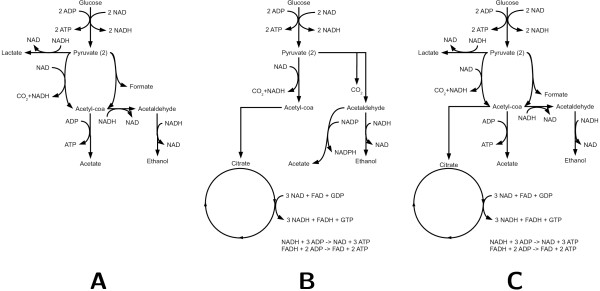
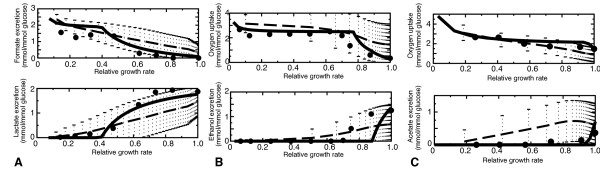
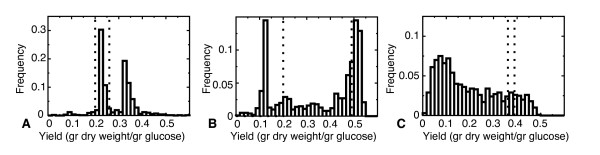
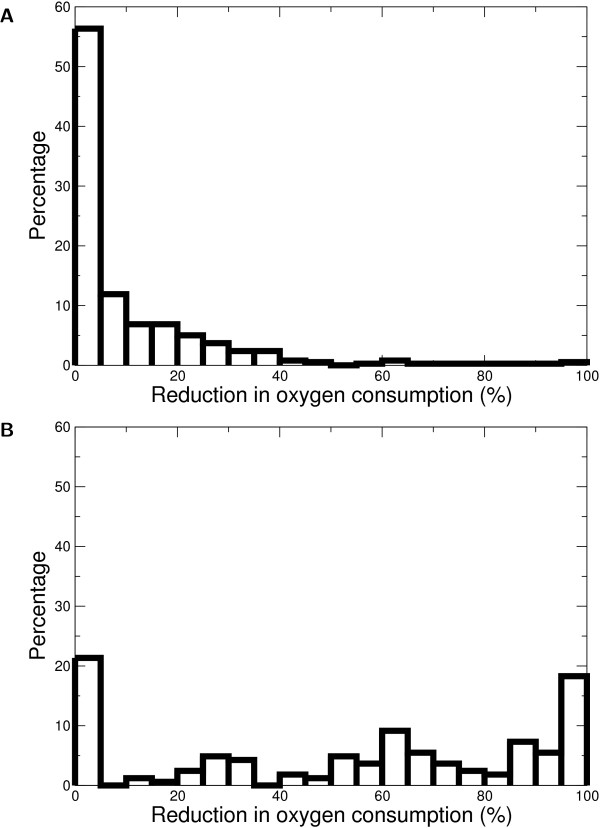
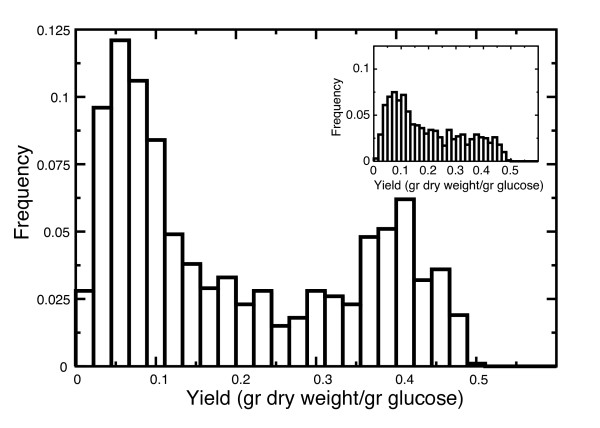
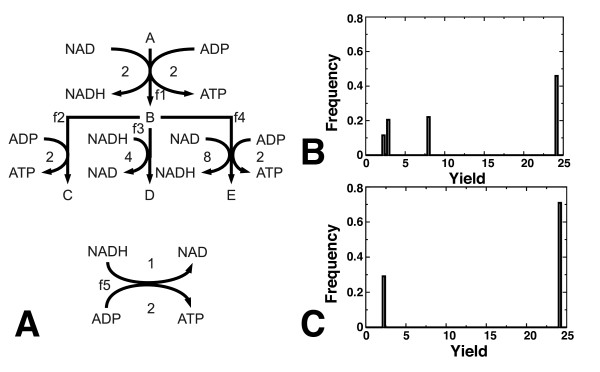
BACKGROUND: Low-yield metabolism is a puzzling phenomenon in many unicellular and multicellular organisms. In abundance of glucose, many cells use a highly wasteful fermentation pathway despite the availability of a high-yield pathway, producing many ATP molecules per glucose, e.g., oxidative phosphorylation. Some of these organisms, including the lactic acid bacterium Lactococcus lactis, downregulate their high-yield pathway in favor of the low-yield pathway. Other organisms, including Escherichia coli do not reduce the flux through the high-yield pathway, employing the low-yield pathway in parallel with a fully active high-yield pathway. For what reasons do some species use the high-yield and low-yield pathways concurrently and what makes others downregulate the high-yield pathway? A classic rationale for metabolic fermentation is overflow metabolism. Because the throughput of metabolic pathways is limited, influx of glucose exceeding the pathway's throughput capacity is thought to be redirected into an alternative, low-yield pathway. This overflow metabolism rationale suggests that cells would only use fermentation once the high-yield pathway runs at maximum rate, but it cannot explain why cells would decrease the flux through the high-yield pathway. RESULTS: Using flux balance analysis with molecular crowding (FBAwMC), a recent extension to flux balance analysis (FBA) that assumes that the total flux through the metabolic network is limited, we investigate the differences between Saccharomyces cerevisiae and L. lactis that downregulate the high-yield pathway at increasing glucose concentrations, and E. coli, which keeps the high-yield pathway functioning at maximal rate. FBAwMC correctly predicts the metabolic switching mode in these three organisms, suggesting that metabolic network architecture is responsible for differences in metabolic switching mode. Based on our analysis, we expect gradual, "overflow-like" switching behavior in organisms that have an additional energy-yielding pathway that does not consume NADH (e.g., acetate production in E. coli). Flux decrease through the high-yield pathway is expected in organisms in which the high-yield and low-yield pathways compete for NADH. In support of this analysis, a simplified model of metabolic switching suggests that the extra energy generated during acetate production produces an additional optimal growth mode that smoothens the metabolic switch in E. coli. CONCLUSIONS: Maintaining redox balance is key to explaining why some microbes decrease the flux through the high-yield pathway, while other microbes use "overflow-like" low-yield metabolism.
Overview
The claims and statistics of this paper haven’t been checked yet.
Free: it reads the open-access text and checks the first 5 claims that cite a source we can check. Create a free account to check every claim.
Integrity signals
Registry
Cites
Statistics
Figures
Verification
Claims the paper makes
The claims and statistics of this paper haven’t been checked yet.
Free: it reads the open-access text and checks the first 5 claims that cite a source we can check. Create a free account to check every claim.
Claims other papers make about this one
Each is checked against this paper’s own text: does it say what the citing paper says it does?
The cited source says what the claim attributes to it.
In the citing paper
“Overflow metabolism occurs in several organisms, including E. coli (Van Hoek & Merks, 2012), S. cerevisiae (Van Hoek et al, 1998), and cancer cells (Vazquez & Oltvai, 2011).”
From Improving the phenotype predictions of a yeast genome‐scale metabolic model by incorporating enzymatic constraints (2017) · cites this paper as Van Hoek & Merks, 2012
In the citing paper
“Similar results were observed using variations of the approach in lactate‐producing cancerous human cells (the Warburg effect) (Shlomi et al, 2011; Vazquez & Oltvai, 2011) and in ethanol‐producing Saccharomyces cerevisiae cells (the Crabtree effect) (Van Hoek & Merks, 2012; Nilsson & Nielsen, 2016).”
From Improving the phenotype predictions of a yeast genome‐scale metabolic model by incorporating enzymatic constraints (2017) · cites this paper as Van Hoek & Merks, 2012
Self-check
Percentages, sums and reported differences re-computed from the paper’s own numbers.
The self-check needs the paper’s full text.
Citations
Cites
Caspi, R., Billington, R., Ferrer, L., Foerster, H., Fulcher, C. A., Keseler, I. M., Kothari, A., Krummenacker, M., Latendresse, M., Mueller, L. A., et al. (2016) · Nucleic Acids Research · doi:10.1093/nar/gkv1164 · Cited by 3,395
Quantitative prediction of cellular metabolism with constraint-based models: the COBRA Toolbox v2.0
Schellenberger, J., Que, R., Fleming, R. M. T., Thiele, I., Orth, J. D., Feist, A. M., Zielinski, D. C., Bordbar, A., Lewis, N. E., Rahmanian, S., et al. (2011) · Nature Protocols · doi:10.1038/nprot.2011.308 · Cited by 1,835 · cited 1×
“The COBRA Toolbox [40] was used to perform FBAwMC in Matlab, with the GNU Linear Programming Kit as linear programming solver http://www.”
MethodFeist, A. M., Henry, C. S., Reed, J. L., Krummenacker, M., Joyce, A. R., Karp, P. D., Broadbelt, L. J., Hatzimanikatis, V., & Palsson, B. Ø. (2007) · Molecular Systems Biology · doi:10.1038/msb4100155 · Cited by 1,383
Cooperation and Competition in the Evolution of ATP-Producing Pathways
Pfeiffer, T., Schuster, S., & Bonhoeffer, S. (2001) · Science · doi:10.1126/science.1058079 · Cited by 1,354
Biochemistry of exercise-induced metabolic acidosis
Robergs, R. A., Ghiasvand, F., & Parker, D. (2004) · American Journal of Physiology-Regulatory, Integrative and Comparative Physiology · doi:10.1152/ajpregu.00114.2004 · Cited by 1,304 · cited 1×
“Muscle cells switch to low-yield metabolism during heavy exercise [7], fermenting glucose into lactic acid.”
BackgroundCancer's Molecular Sweet Tooth and the Warburg Effect
Kim, J.-W., & Dang, C. V. (2006) · Cancer Research · doi:10.1158/0008-5472.can-06-1501 · Cited by 1,215
Varma, A., & Palsson, B. O. (1994) · Applied and Environmental Microbiology · doi:10.1128/aem.60.10.3724-3731.1994 · Cited by 1,051
Energetics of bacterial growth: balance of anabolic and catabolic reactions
Russell, J. B., & Cook, G. M. (1995) · Microbiological Reviews · doi:10.1128/mr.59.1.48-62.1995 · Cited by 927 · cited 1×
“Why cells would produce less ATP per glucose molecule than they can is a long-standing question in biology [8-12].”
BackgroundEdwards, J. S., & Palsson, B. O. (2000) · Proceedings of the National Academy of Sciences · doi:10.1073/pnas.97.10.5528 · Cited by 875 · cited 1×
“By maximizing growth rate, FBA often correctly predicts cellular metabolism, including uptake, excretion and growth rates of cells [2,21].”
BackgroundQuantitative prediction of cellular metabolism with constraint-based models: the COBRA Toolbox
Becker, S. A., Feist, A. M., Mo, M. L., Hannum, G., Palsson, B. Ø., & Herrgard, M. J. (2007) · Nature Protocols · doi:10.1038/nprot.2007.99 · Cited by 791
Cited by
den Besten, G., van Eunen, K., Groen, A. K., Venema, K., Reijngoud, D.-J., & Bakker, B. M. (2013) · Journal of Lipid Research · doi:10.1194/jlr.r036012 · Cited by 5,048
Free Fatty Acid Receptors in Health and Disease
Kimura, I., Ichimura, A., Ohue-Kitano, R., & Igarashi, M. (2020) · Physiological Reviews · doi:10.1152/physrev.00041.2018 · Cited by 1,018
Sánchez, B. J., Zhang, C., Nilsson, A., Lahtvee, P., Kerkhoven, E. J., & Nielsen, J. (2017) · Molecular Systems Biology · doi:10.15252/msb.20167411 · Cited by 466
“…in a self-replicator model (Molenaar et al, 2009; Berkhout et al, 2013), E. coli (Vazquez et al, 2008; O’Brien et al, 2013; Basan et al, 2015; Peebo et al, 2015), cancer cells (Shlomi et al, 2011; Vazquez & Oltvai, 2011), and S. cerevisiae (Van Hoek & Merks, 2012; Nilsson & Nielsen, 2016).”
BackgroundMethodFaecal short chain fatty acids profile is changed in Polish depressive women
Skonieczna-Żydecka, K., Grochans, E., Maciejewska, D., Szkup, M., Schneider-Matyka, D., Jurczak, A., Łoniewski, I., Kaczmarczyk, M., Marlicz, W., Czerwińska-Rogowska, M., et al. (2018) · Nutrients · doi:10.3390/nu10121939 · Cited by 284
SteadyCom: Predicting microbial abundances while ensuring community stability
Chan, S. H. J., Simons, M. N., & Maranas, C. D. (2017) · PLOS Computational Biology · doi:10.1371/journal.pcbi.1005539 · Cited by 231
The Role of Prebiotics in Modulating Gut Microbiota: Implications for Human Health
Yoo, S., Jung, S.-C., Kwak, K., & Kim, J.-S. (2024) · International Journal of Molecular Sciences · doi:10.3390/ijms25094834 · Cited by 226
Cooperation in microbial communities and their biotechnological applications
Cavaliere, M., Feng, S., Soyer, O. S., & Jiménez, J. I. (2017) · Environmental Microbiology · doi:10.1111/1462-2920.13767 · Cited by 208
“…with inorganic terminal electron acceptors) and fermentation (i.e. pathways ending with organic terminal electron acceptors) pathways (Majewski and Domach, 1990; Vemuri et al., 2006; Molenaar et al., 2009; Zhuang et al., 2011; van Hoek and Merks, 2012; Flamholz et al., 2013; Basan et al., 2015).”
Backgroundde Groot, D. H., van Boxtel, C., Planqué, R., Bruggeman, F. J., & Teusink, B. (2019) · PLOS Computational Biology · doi:10.1371/journal.pcbi.1006858 · Cited by 167
Dual role of microbiota-derived short-chain fatty acids on host and pathogen
Mirzaei, R., Dehkhodaie, E., Bouzari, B., Rahimi, M., Gholestani, A., Hosseini-Fard, S. R., Keyvani, H., Teimoori, A., & Karampoor, S. (2022) · Biomedicine & Pharmacotherapy · doi:10.1016/j.biopha.2021.112352 · Cited by 163
Domenzain, I., Sánchez, B., Anton, M., Kerkhoven, E. J., Millán-Oropeza, A., Henry, C., Siewers, V., Morrissey, J. P., Sonnenschein, N., & Nielsen, J. (2021) · doi:10.1101/2021.03.05.433259 · Cited by 158
Domenzain, I., Sánchez, B., Anton, M., Kerkhoven, E. J., Millán-Oropeza, A., Henry, C., Siewers, V., Morrissey, J. P., Sonnenschein, N., & Nielsen, J. (2022) · Nature Communications · doi:10.1038/s41467-022-31421-1 · Cited by 157
Adaptation of Akkermansia muciniphila to the Oxic-Anoxic Interface of the Mucus Layer
Ouwerkerk, J. P., van der Ark, K. C. H., Davids, M., Claassens, N. J., Finestra, T. R., de Vos, W. M., & Belzer, C. (2016) · Applied and Environmental Microbiology · doi:10.1128/aem.01641-16 · Cited by 154
Understanding carbon catabolite repression in Escherichia coli using quantitative models
Kremling, A., Geiselmann, J., Ropers, D., & de Jong, H. (2014) · Trends in Microbiology · doi:10.1016/j.tim.2014.11.002 · Cited by 144
Park, D. M., Akhtar, M. S., Ansari, A. Z., Landick, R., & Kiley, P. J. (2013) · PLoS Genetics · doi:10.1371/journal.pgen.1003839 · Cited by 140
Metabolic Trade-offs in Yeast are Caused by F1F0-ATP synthase
Nilsson, A., & Nielsen, J. (2016) · Scientific Reports · doi:10.1038/srep22264 · Cited by 137
The ArcAB Two-Component System: Function in Metabolism, Redox Control, and Infection
Brown, A. N., Anderson, M. T., Bachman, M. A., & Mobley, H. L. T. (2022) · Microbiology and Molecular Biology Reviews · doi:10.1128/mmbr.00110-21 · Cited by 115
Hoek, M. J. A. V., & Merks, R. M. H. (2017) · BMC Systems Biology · doi:10.1186/s12918-017-0430-4 · Cited by 107
Self-citationSystems biology analysis of drivers underlying hallmarks of cancer cell metabolism
Zielinski, D. C., Jamshidi, N., Corbett, A. J., Bordbar, A., Thomas, A., & Palsson, B. O. (2017) · Scientific Reports · doi:10.1038/srep41241 · Cited by 104
Rheumatoid arthritis and oxidative stress, a review of a decade
Zamudio-Cuevas, Y. E., Martínez‐Flores, K., Martínez‐Nava, G. A., Clavijo‐Cornejo, D., Fernández‐Torres, J., & Sánchez‐Sánchez, R. (2022) · Cellular and Molecular Biology · doi:10.14715/cmb/2022.68.6.28 · Cited by 103
Glycolysis for Microbiome Generation
Wolfe, A. J. (2015) · Microbiology Spectrum · doi:10.1128/microbiolspec.mbp-0014-2014 · Cited by 101
Metabolite secretion in microorganisms: the theory of metabolic overflow put to the test
Pinu, F. R., Granucci, N., Daniell, J., Han, T.-L., Carneiro, S., Rocha, I., Nielsen, J., & Villas-Bôas, S. G. (2018) · Metabolomics · doi:10.1007/s11306-018-1339-7 · Cited by 101
El-Semman, I. E., Karlsson, F. H., Shoaie, S., Nookaew, I., Soliman, T. H., & Nielsen, J. (2014) · BMC Systems Biology · doi:10.1186/1752-0509-8-41 · Cited by 100
Basic concepts and principles of stoichiometric modeling of metabolic networks
Maarleveld, T. R., Khandelwal, R. A., Olivier, B. G., Teusink, B., & Bruggeman, F. J. (2013) · Biotechnology Journal · doi:10.1002/biot.201200291 · Cited by 97
Shimizu, K., & Matsuoka, Y. (2018) · Biotechnology Advances · doi:10.1016/j.biotechadv.2018.12.007 · Cited by 96
Neuroinflammation, Microbiota-Gut-Brain Axis, and Depression: The Vicious Circle
Reyes-Martínez, S., Segura-Real, L., Gómez-García, A. P., Tesoro-Cruz, E., Constantino-Jonapa, L. A., Amedei, A., & Aguirre‐García, M. M. (2023) · Journal of Integrative Neuroscience · doi:10.31083/j.jin2203065 · Cited by 92
Kentner, D., Martano, G., Callon, M., Chiquet, P., Brodmann, M., Burton, O., Wåhlander, Å., Nanni, P., Delmotte, N., Grossmann, J., et al. (2014) · Proceedings of the National Academy of Sciences · doi:10.1073/pnas.1406694111 · Cited by 92
de Groot, D. H., Lischke, J., Muolo, R., Planqué, R., Bruggeman, F. J., & Teusink, B. (2019) · Cellular and Molecular Life Sciences · doi:10.1007/s00018-019-03380-2 · Cited by 92
Shimizu, K., & Matsuoka, Y. (2019) · Biotechnology Advances · doi:10.1016/j.biotechadv.2019.107441 · Cited by 88
Metabolic Models of Protein Allocation Call for the Kinetome
Nilsson, A., Nielsen, J., & Palsson, B. O. (2017) · Cell Systems · doi:10.1016/j.cels.2017.11.013 · Cited by 87
“These include the maximum growth rate on different carbon sources and the switch from fermentation to respiro-fermentation (Adadi et al., 2012; Beg et al., 2007; Nilsson and Nielsen, 2016; van Hoek and Merks, 2012).”
BackgroundFrom bugs to brain: unravelling the GABA signalling networks in the brain–gut–microbiome axis
Belelli, D., Lambert, J. J., Wan, M. L. Y., Monteiro, A. R., Nutt, D. J., & Swinny, J. D. (2024) · Brain · doi:10.1093/brain/awae413 · Cited by 83
Genome scale models of yeast: towards standardized evaluation and consistent omic integration
Sánchez, B. J., & Nielsen, J. (2015) · Integrative Biology · doi:10.1039/c5ib00083a · Cited by 75
Macromolecular crowding explains overflow metabolism in cells
Vazquez, A., & Oltvai, Z. N. (2016) · Scientific Reports · doi:10.1038/srep31007 · Cited by 75
The changing microbial landscape of Western society: Diet, dwellings and discordance
Broussard, J. L., & Devkota, S. (2016) · Molecular Metabolism · doi:10.1016/j.molmet.2016.07.007 · Cited by 74
Großkopf, T., Consuegra, J., Gaffé, J., Willison, J. C., Lenski, R. E., Soyer, O. S., & Schneider, D. (2016) · BMC Evolutionary Biology · doi:10.1186/s12862-016-0733-x · Cited by 72
Improving lysine production through construction of an Escherichia coli enzyme‐constrained model
Ye, C., Luo, Q., Guo, L., Gao, C., Xu, N., Zhang, L., Liu, L., & Chen, X. (2020) · Biotechnology and Bioengineering · doi:10.1002/bit.27485 · Cited by 68
Glucose feeds the tricarboxylic acid cycle via excreted ethanol in fermenting yeast
Xiao, T., Khan, A., Shen, Y., Chen, L., & Rabinowitz, J. D. (2022) · Nature Chemical Biology · doi:10.1038/s41589-022-01091-7 · Cited by 61
Zhu, Z., Cheng, Y., Liu, X., Xu, X., Ding, W., Ling, Z., Liu, J., & Cai, G. (2025) · Frontiers in Immunology · doi:10.3389/fimmu.2025.1644160 · Cited by 60
A genome-scale metabolic flux model of Escherichia coli K–12 derived from the EcoCyc database
Weaver, D. S., Keseler, I. M., Mackie, A., Paulsen, I. T., & Karp, P. D. (2014) · BMC Systems Biology · doi:10.1186/1752-0509-8-79 · Cited by 58
Mirhakkak, M. H., Schäuble, S., Klassert, T. E., Brunke, S., Brandt, P., Loos, D., Vazquez-Uribe, R., Lino, F. S. D. O., Ni, Y., Vylkova, S., et al. (2020) · The ISME Journal · doi:10.1038/s41396-020-00848-z · Cited by 57
Awate, B., Steidl, R. J., Hamlischer, T., & Reguera, G. (2017) · Journal of Power Sources · doi:10.1016/j.jpowsour.2017.02.053 · Cited by 56
Zeng, H., & Yang, A. (2019) · BMC Systems Biology · doi:10.1186/s12918-018-0677-4 · Cited by 55
Structural Insights into Phosphite Dehydrogenase Variants Favoring a Non-natural Redox Cofactor
Liu, Y., Feng, Y., Wang, L., Guo, X., Liu, W., Li, Q., Wang, X., Xue, S., & Zhao, Z. K. (2019) · ACS Catalysis · doi:10.1021/acscatal.8b04822 · Cited by 55
Towards metagenome-scale models for industrial applications — the case of Lactic Acid Bacteria
dos Santos, F. B., de Vos, W. M., & Teusink, B. (2012) · Current Opinion in Biotechnology · doi:10.1016/j.copbio.2012.11.003 · Cited by 53
Ex Uno Plures: Clonal Reinforcement Drives Evolution of a Simple Microbial Community
Kinnersley, M. A., Wenger, J. W., Kroll, E., Adams, J., Sherlock, G., & Rosenzweig, F. (2014) · PLoS Genetics · doi:10.1371/journal.pgen.1004430 · Cited by 52
Yu, S., Lai, B., Plan, M. R., Hodson, M. P., Lestari, E. A., Song, H., & Krömer, J. O. (2017) · Biotechnology and Bioengineering · doi:10.1002/bit.26433 · Cited by 49
Butyrate-producing colonic clostridia: picky glycan utilization specialists
Leth, M. L., Pichler, M. J., & Hachem, M. A. (2023) · Essays in Biochemistry · doi:10.1042/ebc20220125 · Cited by 48
Maślanka, R., Zadrąg‐Tęcza, R., & Kwolek‐Mirek, M. (2020) · Genes · doi:10.3390/genes11070780 · Cited by 47
Campbell, K., Herrera-Domínguez, L., Correia‐Melo, C., Zelezniak, A., & Ralser, M. (2017) · Current Opinion in Systems Biology · doi:10.1016/j.coisb.2017.12.001 · Cited by 45
Genome-scale genetic engineering in Escherichia coli
Jeong, J., Cho, N., Jung, D., & Bang, D. (2013) · Biotechnology Advances · doi:10.1016/j.biotechadv.2013.04.003 · Cited by 44
ECMpy, a Simplified Workflow for Constructing Enzymatic Constrained Metabolic Network Model
Mao, Z., Zhao, X., Yang, X., Zhang, P., Du, J., Yuan, Q., & Ma, H. (2022) · Biomolecules · doi:10.3390/biom12010065 · Cited by 42
Wang, H., Ren, P., Lai, M., Shen, N., Chen, J., & Zhang, Y. (2019) · Journal of Functional Foods · doi:10.1016/j.jff.2019.02.030 · Cited by 42
Lai, B., Bernhardt, P. V., & Krömer, J. O. (2020) · ChemSusChem · doi:10.1002/cssc.202001645 · Cited by 41
Koduru, L., Lakshmanan, M., Lee, Y. Q., Ho, P. L., Lim, P. Y., Ler, W. X., Ng, S. K., Kim, D., Park, D., Banu, M., et al. (2022) · Cell Reports · doi:10.1016/j.celrep.2022.111735 · Cited by 37
Short-Chain Fatty Acid Production and Functional Aspects on Host Metabolism
Tungland, B. C. (2018) · Elsevier eBooks · doi:10.1016/b978-0-12-814649-1.00002-8 · Cited by 37
Łoniewski, I., Skonieczna‐Żydecka, K., Stachowska, L., Fraszczyk-Tousty, M., Tousty, P., & Łoniewska, B. (2022) · Frontiers in Nutrition · doi:10.3389/fnut.2022.939194 · Cited by 35
Resource allocation explains lactic acid production in mixed‐culture anaerobic fermentations
Regueira, A., Rombouts, J. L., Wahl, A., Mauricio‐Iglesias, M., Lema, J. M., & Kleerebezem, R. (2020) · Biotechnology and Bioengineering · doi:10.1002/bit.27605 · Cited by 34
Estaki, M., Morck, D. W., Ghosh, S., Quin, C., Pither, J., Barnett, J. A., Gill, S. K., & Gibson, D. L. (2020) · mSystems · doi:10.1128/msystems.00515-20 · Cited by 32
Microbial inefficient substrate use through the perspective of resource allocation models
Regueira, A., Lema, J. M., & Mauricio‐Iglesias, M. (2021) · Current Opinion in Biotechnology · doi:10.1016/j.copbio.2021.01.015 · Cited by 31
Duncan, J. D., Devillers, H., Camarasa, C., Setati, M. E., & Divol, B. (2024) · Food Microbiology · doi:10.1016/j.fm.2024.104624 · Cited by 31
Sun, J., Chen, J., Shen, Y., Yao, X., Sun, H., Chen, B., & Feng, J. (2025) · Frontiers in Pharmacology · doi:10.3389/fphar.2025.1689522 · Cited by 30
Rahman, M. N., Diantini, A., Fattah, M., Barliana, M. I., & Wijaya, A. (2021) · Analytical and Bioanalytical Chemistry · doi:10.1007/s00216-021-03639-3 · Cited by 30
Co-cultivation of Lactobacillus zeae and Veillonella criceti for the production of propionic acid
Dietz, D., Sabra, W. A., & Zeng, A. (2013) · AMB Express · doi:10.1186/2191-0855-3-29 · Cited by 27
Pérez-Fernández, B. A., Fernández-de-Cossio-Díaz, J., Boggiano-Ayo, T., León, K., & Mulet, R. (2021) · Biotechnology and Bioengineering · doi:10.1002/bit.27704 · Cited by 27
Rafieenia, R., Klemm, C., Hapeta, P., Fu, J., García, M. G., & Ledesma‐Amaro, R. (2024) · Trends in biotechnology · doi:10.1016/j.tibtech.2024.10.015 · Cited by 27
Keitel, L., Miebach, K., Rummel, L., Yordanov, S., & Büchs, J. (2024) · Annals of Microbiology · doi:10.1186/s13213-023-01745-4 · Cited by 27
Schroeder, W. L., Suthers, P. F., Willis, T. C., Mooney, E. J., & Maranas, C. D. (2024) · Metabolites · doi:10.3390/metabo14070365 · Cited by 26
Redefining the role of hypoxia-inducible factors (HIFs) in oxygen homeostasis
Arias, C. F., Acosta, F. J., Bertocchini, F., & Fernández-Arias, C. (2025) · Communications Biology · doi:10.1038/s42003-025-07896-1 · Cited by 26
ecBSU1: A Genome-Scale Enzyme-Constrained Model of Bacillus subtilis Based on the ECMpy Workflow
Wu, K., Mao, Z., Mao, Y., Niu, J., Cai, J., Yuan, Q., Yun, L., Liao, X., Wang, Z., & Ma, H. (2023) · Microorganisms · doi:10.3390/microorganisms11010178 · Cited by 25
Martínez‐Cárdenas, A., Chávez-Cabrera, C., Vásquez-Bahena, J. M., & Flores‐Cotera, L. B. (2018) · Microbial Cell Factories · doi:10.1186/s12934-018-0898-7 · Cited by 25
Xu, G., Cai, L., Ni, Y.-S., Tian, S., Lu, Y.-Q., Wang, L., Chen, L., Ma, W.-Y., & Deng, S. (2018) · Biological and Pharmaceutical Bulletin · doi:10.1248/bpb.b17-00978 · Cited by 24
Versluis, D. M., Schoemaker, R., Looijesteijn, E., Muysken, D., Jeurink, P. V., Paques, M., Geurts, J. M. W., & Merks, R. M. H. (2022) · mSystems · doi:10.1128/msystems.00446-22 · Cited by 23
Self-citationTyibilika, V., Setati, M. E., Bloem, A., Divol, B., & Camarasa, C. (2023) · International Journal of Food Microbiology · doi:10.1016/j.ijfoodmicro.2023.110537 · Cited by 22
Flores‐Cotera, L. B., Chávez-Cabrera, C., Martínez‐Cárdenas, A., Sánchez, S., & García-Flores, O. U. (2021) · Journal of Industrial Microbiology & Biotechnology · doi:10.1093/jimb/kuab048 · Cited by 22
A genomic view on lactic metabolism
Qiao, N., & Gänzle, M. G. (2025) · Food Microbiology · doi:10.1016/j.fm.2025.104945 · Cited by 21
Tracing regulatory routes in metabolism using generalised supply-demand analysis
Christensen, C. D., Hofmeyr, J. S., & Rohwer, J. M. (2015) · BMC Systems Biology · doi:10.1186/s12918-015-0236-1 · Cited by 21
Glycolysis for the Microbiome Generation
Wolfe, A. J. (2015) · ASM Press eBooks · doi:10.1128/9781555818883.ch1 · Cited by 21
McLeod, A., Mosleth, E. F., Rud, I., dos Santos, F. B., Snipen, L. G., Liland, K. H., & Axelsson, L. T. (2017) · PLoS ONE · doi:10.1371/journal.pone.0187542 · Cited by 20
Vitreoscilla Haemoglobin: A Tool to Reduce Overflow Metabolism
Taymaz‐Nikerel, H., & Lara, A. R. (2021) · Microorganisms · doi:10.3390/microorganisms10010043 · Cited by 20
mGem: Revisiting bacterial overflow metabolism
Chowdhury, N. B., Schroeder, W. L., Monteiro, L. M. O., & Burnum-Johnson, K. (2025) · mBio · doi:10.1128/mbio.01193-25 · Cited by 20
Optimality Principles in the Regulation of Metabolic Networks
Berkhout, J., Bruggeman, F. J., & Teusink, B. (2012) · Metabolites · doi:10.3390/metabo2030529 · Cited by 19
Keitel, L., Braun, K., Finger, M., Kosfeld, U., Yordanov, S., & Büchs, J. (2023) · BMC Microbiology · doi:10.1186/s12866-023-03127-x · Cited by 19
Brütting, C., Bisch, M. L., Brandsch, C., Hirche, F., & Stangl, G. I. (2020) · International Journal of Food Sciences and Nutrition · doi:10.1080/09637486.2020.1773415 · Cited by 18
Growth-rate-dependent and nutrient-specific gene expression resource allocation in fission yeast
Kleijn, I. T., Martínez-Segura, A., Bertaux, F., Saint, M., Kramer, H., Shahrezaei, V., & Marguerat, S. (2022) · Life Science Alliance · doi:10.26508/lsa.202101223 · Cited by 16
The cellular symphony of redox cofactor management by yeasts in wine fermentation
Duncan, J. D., Setati, M. E., & Divol, B. (2024) · International Journal of Food Microbiology · doi:10.1016/j.ijfoodmicro.2024.110966 · Cited by 16
Puranik, S., Shaligram, S., Paliwal, V., Raje, D. V., Kapley, A., & Purohit, H. J. (2012) · Bioresource Technology · doi:10.1016/j.biortech.2012.06.037 · Cited by 14
Chen, X., Li, F., Li, X., Otto, M., Chen, Y., & Siewers, V. (2024) · Metabolic Engineering · doi:10.1016/j.ymben.2024.11.010 · Cited by 14
Crystal structure of Phosphite Dehydrogenase mutant I151R/P176R/M207A from Ralstonia sp. 4506
Song, X., Feng, Y., Liu, Y., & Zhao, Z. (2019) · Worldwide Protein Data Bank · doi:10.2210/pdb6ih8/pdb · Cited by 14
Ma, Y., Shi, J., Li, J., He, P., Wang, Y., Zhang, X., Huang, Y., Cheng, Q., Zhang, Z., Dai, Y., et al. (2023) · Frontiers in Microbiology · doi:10.3389/fmicb.2023.1293160 · Cited by 13
Xue, B., Liu, Y., Yang, C., Liu, H., Yuan, Q., Wang, S., & Su, H. (2023) · Advanced Science · doi:10.1002/advs.202306662 · Cited by 13
Mao, L., & Verwoerd, W. S. (2013) · Journal of Industrial Microbiology & Biotechnology · doi:10.1007/s10295-013-1308-0 · Cited by 13
Bruschi, M., Krömer, J. O., Steen, J. A., & Nielsen, L. K. (2014) · Microbial Cell Factories · doi:10.1186/s12934-014-0099-y · Cited by 13
Saur, K. M., Fridley, N. A., Gausmann, M., & Jupke, A. (2025) · Annual Review of Chemical and Biomolecular Engineering · doi:10.1146/annurev-chembioeng-082323-120010 · Cited by 12
Elucidating the adaptation and temporal coordination of metabolic pathways using in-silico evolution
Gottstein, W., Müller, S., Herzel, H., & Steuer, R. (2014) · Biosystems · doi:10.1016/j.biosystems.2013.12.006 · Cited by 12
Jin, Y., Fan, Y., Sun, H., Zhang, Y., & Wang, H. (2021) · Frontiers in Microbiology · doi:10.3389/fmicb.2021.767769 · Cited by 12
Wu, Y., Liu, J., Han, X. J., Meng, X., Li, M., Wang, J., Xue, H., Yang, Y., Xu, P., & Tao, F. (2022) · iScience · doi:10.1016/j.isci.2022.105774 · Cited by 11
Metabolic characterization and viable delivery of Akkermansia muciniphila for its future application
van der Ark, K. C. H. (2018) · doi:10.18174/427507 · Cited by 10
2′-Fucosyllactose helps butyrate producers outgrow competitors in infant gut microbiota simulations
Versluis, D. M., Schoemaker, R., Looijesteijn, E., Geurts, J. M. W., & Merks, R. M. H. (2024) · iScience · doi:10.1016/j.isci.2024.109085 · Cited by 9
Self-citationKeitel, L., Schick, B., Pohen, G., Yordanov, S., & Büchs, J. (2024) · Biotechnology Progress · doi:10.1002/btpr.3526 · Cited by 9
Li, Y., Wu, S., Huangfu, K., Huang, H., Yu, M., Qiu, Y., & Liu, S. (2026) · Journal of Materials Chemistry A · doi:10.1039/d5ta07988h · Cited by 9
Xu, S., Zhang, P., Cao, M., Dong, Y., Li, J., Lin, Y., Che, L., Fang, Z., Feng, B., Zhuo, Y., et al. (2019) · Animals · doi:10.3390/ani9090632 · Cited by 8
Metadata
- Authors
- van Hoek, M. J., & Merks, R. M.
- Affiliations
- Leiden University (NL)
- Corresponding author
- Merks, Roeland MH
- ORCID
- Merks, Roeland MH
- Venue
- BMC Systems Biology
- Published
- 2012
- Volume
- 6
- Issue
- 1
- Pages
- 22
- ISSN
- 1752-0509 (ISSN-L)
- PMC
- PMC3384451
- OpenAlex
- W2077980171
- Cited by
- 131
- References
- 41
- Citations by year
- 2026: 7 · 2025: 13 · 2024: 15 · 2023: 7 · 2022: 13 · 2021: 11 · 2020: 7 · 2019: 11 · 2018: 9 · 2017: 10 · 2016: 5 · 2015: 5 · 2014: 7 · 2013: 8 · 2012: 3
- FWCI
- 2.95
- Type
- journal article
- Language
- en
- Open access
- gold
- doi.org
- Licence
- cc-by
- Locations
- BMC Systems Biology (publishedVersion, cc-by)
- Europe PMC (PubMed Central) (publishedVersion, cc-by)
- PubMed Central (publishedVersion, cc-by)
- PubMed (publishedVersion)
- Centrum Wiskunde & Informatica (CWI), the national research institute for mathematics and computer science in the Netherlands (submittedVersion, cc-by)
- Data Archiving and Networked Services (DANS) (submittedVersion, other-oa)
- DOAJ (DOAJ: Directory of Open Access Journals) (submittedVersion)
- Funders
- Nederlandse Organisatie voor Wetenschappelijk Onderzoek
- Topics
- Life Sciences › Biochemistry, Genetics and Molecular Biology › Molecular Biology › Microbial Metabolic Engineering and Bioproduction
- Life Sciences › Biochemistry, Genetics and Molecular Biology › Molecular Biology › Gene Regulatory Network Analysis
- Life Sciences › Biochemistry, Genetics and Molecular Biology › Molecular Biology › Fungal and yeast genetics research
- Keywords
- metabolic switch, redox homeostasis, overflow metabolism, fermentation, oxidative phosphorylation, macromolecular crowding, flux balance analysis, Saccharomyces cerevisiae, Lactococcus lactis, Escherichia coli, acetate production, glucose concentration
- MeSH terms
- Acetates, Escherichia coli, Glucose, Oxidation-Reduction, Saccharomyces cerevisiae, Lactococcus lactis, Computational Biology
About these checks
Registry, retraction, Cites and statistics results are computed, not judged, with one exception: a printed reference that no index lists is read once by a model before it counts as a citation error. Claims are extracted by a model and kept only when their quote appears verbatim in the text; each cited source is then checked, with a model’s help, for whether it says what the claim relies on. Those verdicts can be wrong — read the claim’s quote and the cited source before relying on one.
Statistics and arithmetic are recomputed, not judged.
Confidence bands are shown only for fields calibrated on our annotated test set. None is calibrated yet, so no band is shown.
What counts as a claim ›How we measure confidence ›How we check this ›
Are you an author, or do you see a problem with this page? Request a review
Data sources
Bibliographic data: Semantic Scholar, OpenAlex, Crossref.
Contains information from the Semantic Scholar Academic Graph Datasets, made available under the ODC Attribution License (ODC-BY 1.0).
Semantic Scholar’s data is described in: Kinney, R., et al. (2023). The Semantic Scholar Open Data Platform. arXiv:2301.10140.
