

The DOI matches its Crossref record; 79 of the 80 references it cites were found in a registry or an index.
Transgenerational consequences of PTSD: risk factors for the mental health of children whose mothers have been exposed to the Rwandan genocide
Open accessAbstract
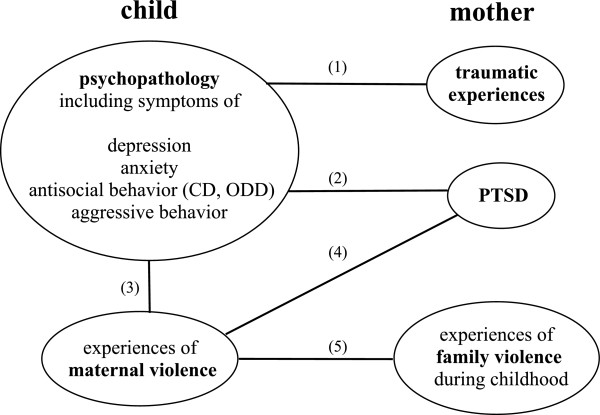
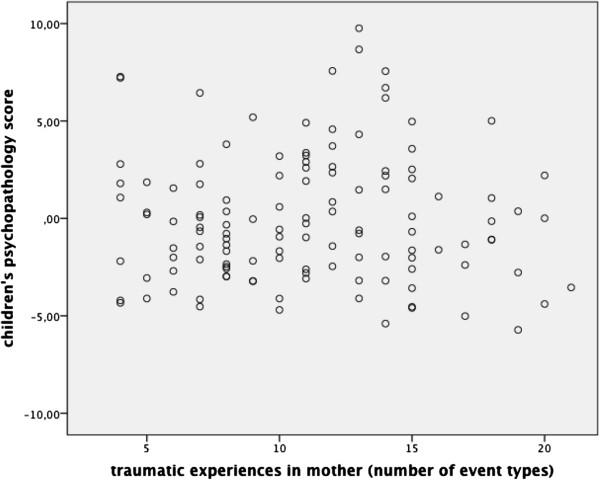
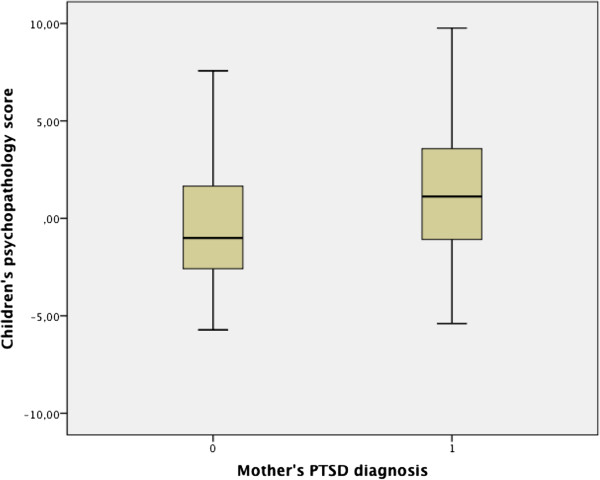
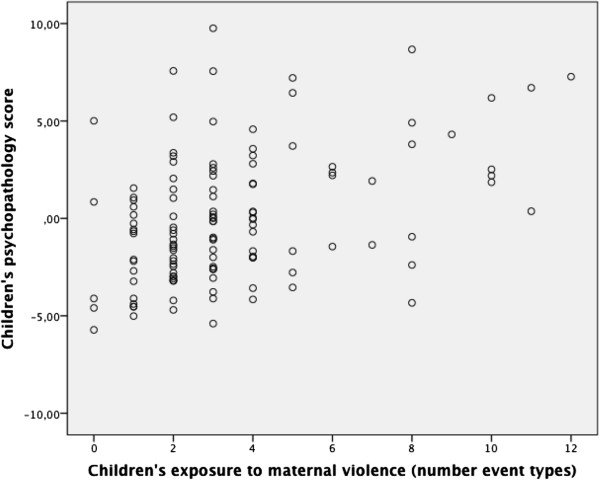
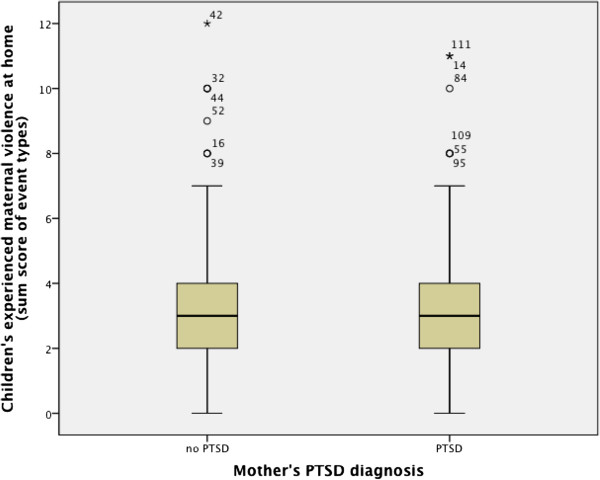
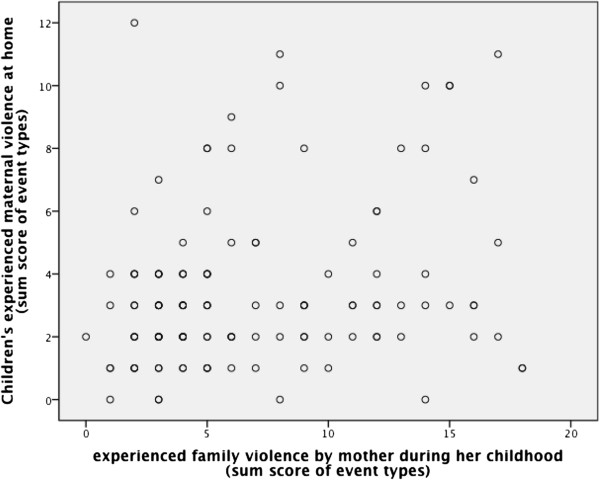
BACKGROUND: Understanding how parental Posttraumatic Stress Disorder (PTSD) may or may not affect the development and mental health in the offspring is particularly important in conflict regions, where trauma-related illness is endemic. In Rwanda, organised atrocities and the genocide against the Tutsi of 1994 have left a significant fraction of the population with chronic PTSD. The aim of the present investigation was to establish whether PTSD in mothers is associated with symptoms of depression, anxiety, and aggressive and antisocial behaviour in their children. METHODS: A community sample of 125 Rwandan mothers who experienced the genocide of 1994 and their 12-year-old children were interviewed. Using a structured interview, symptoms of maternal PTSD and children's depression, anxiety, and aggressive and antisocial behaviour were assessed by trained and on-site supervised local B.A. psychologists. The interview also included a detailed checklist of event types related to family violence. RESULTS: In showing that a maternal PTSD was not associated with child's psychopathology, the results contradict the assumption of straight "trans-generational trauma transmission". Instead, a child's exposure to maternal family violence posed a significant risk factor for a negative mental health outcome. Furthermore, it was not maternal PTSD-symptoms but mother's exposure to family violence during her own childhood that was associated with the magnitude of adversities that a child experiences at home. CONCLUSIONS: Contrary to a simple model of a trans-generational transmission of trauma, neither maternal PTSD nor maternal traumatic experiences were directly associated with symptoms of anxiety, depression, or antisocial and aggressive behaviour in the children. Instead, the present results suggest a relationship between parental child rearing practices and children's mental health. Furthermore, the study details the "cycle of violence", showing a significant link between maternal violence against a child and its mother's experience of childhood maltreatment.
Overview
The claims and statistics of this paper haven’t been checked yet.
Run the check — free, no account needed. It reads the open-access text and checks the sources it cites.
Integrity signals
Registry
Cites
Statistics
Figures
Verification
Claims the paper makes
The claims and statistics of this paper haven’t been checked yet.
Run the check — free, no account needed. It reads the open-access text and checks the sources it cites.
Claims other papers make about this one
Each is checked against this paper’s own text: does it say what the citing paper says it does?
The cited source doesn’t support the claim as written.
In the citing paper
“in the aftermath of the genocide, economic, environmental, mental and physical health problems, along with academic problems among children, have been the main factors contributing to domestic violence [30].”
From Contribution of community-based sociotherapy interventions for the psychological well-being of Rwandan youths born to genocide perpetrators and survivors: analysis of the stories telling of a sociotherapy approach (2020) · cites this paper as [30]
Checked by a reasoning model — may be wrong.
Experimental — accuracy not yet measuredThe source backs part of the claim, not all of it — or backs it for a different population, condition or comparison.
In the citing paper
“In some contexts, including families affected by the Khmer Rouge genocide and Rwandan genocide, parental PTSD and maternal violence have been associated with heightened anxiety, depression, and antisocial behaviors in offspring (97–99).”
From Epigenetic changes associated with multi-generational trauma: characterization, mechanisms, and therapeutics (2026) · cites this paper as [98]
Experimental — accuracy not yet measuredThe source backs part of the claim, not all of it — or backs it for a different population, condition or comparison.
In the citing paper
“Concerning the mental health problems in Rwandans, PTSD among the genocide survivors and the transmission of trauma to their descendants and other neighbors was reported [30, 42].”
From Contribution of community-based sociotherapy interventions for the psychological well-being of Rwandan youths born to genocide perpetrators and survivors: analysis of the stories telling of a sociotherapy approach (2020) · cites this paper as [30]
Experimental — accuracy not yet measuredThe cited source says what the claim attributes to it.
In the citing paper
“Many investigations focus on historically defined trauma-exposed populations, including Holocaust survivors, Rwandan genocide survivors, and Alaska Native communities (8, 82, 98).”
From Epigenetic changes associated with multi-generational trauma: characterization, mechanisms, and therapeutics (2026) · cites this paper as [98]
Self-check
Percentages, sums and reported differences re-computed from the paper’s own numbers.
The self-check needs the paper’s full text.
Citations
Cites
(1998) · The Journal of Clinical Psychiatry · Cited by 19,139
(1998) · PubMed · Cited by 10,216
The mini international neuropsychiatric interview
Lecrubier, Y., Sheehan, D. V., Hergueta, T., & Weiller, E. (1998) · European Psychiatry · doi:10.1016/s0924-9338(99)80239-9 · Cited by 5,899
Buss, A. H., & Perry, M. (1992) · Journal of Personality and Social Psychology · doi:10.1037/0022-3514.63.3.452 · Cited by 4,693
Behind Closed Doors: Violence in the American Family.
Boudouris, J., Straus, M. A., Gelles, R. J., & Steinmetz, S. K. (1982) · Contemporary Sociology A Journal of Reviews · doi:10.2307/2068814 · Cited by 3,089
Reliability and validity of a brief instrument for assessing post-traumatic stress disorder
Foa, E. B., Riggs, D. S., Dancu, C. V., & Rothbaum, B. O. (1993) · Journal of Traumatic Stress · doi:10.1002/jts.2490060405 · Cited by 2,537
The Abuse of Power: The Pervasive Fallacy of Power Calculations for Data Analysis
Hoenig, J. M., & Heisey, D. M. (2001) · The American Statistician · doi:10.1198/000313001300339897 · Cited by 2,046
Funnekotter, B. (2005) · Amsterdam University Press eBooks · doi:10.1017/9789048505418.012 · Cited by 1,672
The Use of Psychological Testing for Treatment Planning and Outcome Assessment
Maruish, M. E., & Leahy, R. L. (2000) · Journal of Cognitive Psychotherapy · doi:10.1891/0889-8391.14.2.205 · Cited by 1,634
Complex Trauma in Children and Adolescents
Cook, A., Spinazzola, J., Ford, J., Lanktree, C., Blaustein, M., Cloitre, M., DeRosa, R., Hubbard, R., Kagan, R., Liautaud, J., et al. (2005) · Psychiatric Annals · doi:10.3928/00485713-20050501-05 · Cited by 1,619
Handbook of Posttraumatic Growth
(2014) · Routledge · doi:10.4324/9781315805597 · Cited by 1,078
International Handbook of Multigenerational Legacies of Trauma
(1998) · doi:10.1007/978-1-4757-5567-1 · Cited by 957
International Handbook of Traumatic Stress Syndromes
Wilson, J. P., & Raphael, B. (1993) · Springer eBooks · doi:10.1007/978-1-4615-2820-3 · Cited by 871
Do abused children become abusive parents
Kaufman, J., & Zigler, E. (1987) · American Journal of Orthopsychiatry · doi:10.1111/j.1939-0025.1987.tb03528.x · Cited by 803
THE RELATIONSHIP BETWEEN CHILDHOOD MALTREATMENT AND ADOLESCENT INVOLVEMENT IN DELINQUENCY*
Smith, C. A., & Thornberry, T. P. (1995) · Criminology · doi:10.1111/j.1745-9125.1995.tb01186.x · Cited by 770
(2004) · Choice Reviews Online · doi:10.5860/choice.41sup-0588 · Cited by 742
(1987) · American Journal of Psychiatry · doi:10.1176/ajp.144.4.497 · Cited by 712
Problems in families of male Vietnam veterans with posttraumatic stress disorder.
Jordan, B. K., Marmar, C. R., Fairbank, J. A., Schlenger, W. E., Kulka, R. A., Hough, R. L., & Weiss, D. (1992) · Journal of Consulting and Clinical Psychology · doi:10.1037//0022-006x.60.6.916 · Cited by 710
Africa's World War: Congo, the Rwandan Genocide, and the Making of a Continental Catastrophe
Prunier, G. (2008) · Cited by 601
Intergenerational transmission of abuse: A two-generational prospective study of an at-risk sample
Pears, K. C., & Capaldi, D. M. (2001) · Child Abuse & Neglect · doi:10.1016/s0145-2134(01)00286-1 · Cited by 493
Neuner, F., Schauer, M., Karunakara, U. K., Klaschik, C., Robert, C., & Elbert, T. R. (2004) · BMC Psychiatry · doi:10.1186/1471-244x-4-34 · Cited by 466
Self-citationMollica, R. F., McInnes, K., Pool, C., & Tor, S. (1998) · British Journal of Psychiatry · doi:10.1192/bjp.173.6.482 · Cited by 425
Catani, C., Jacob, N., Schauer, E., Kohila, M., & Neuner, F. (2008) · BMC Psychiatry · doi:10.1186/1471-244x-8-33 · Cited by 423
Self-citationThomas, L. (1997) · Conservation Biology · doi:10.1046/j.1523-1739.1997.96102.x · Cited by 404
Trauma and PTSD Symptoms in Rwanda
Pham, P. N., Weinstein, H. M., & Longman, T. (2004) · JAMA · doi:10.1001/jama.292.5.602 · Cited by 387
Patterns of adjustment among children of battered women.
Grych, J. H., Jouriles, E. N., Swank, P. R., McDonald, R., & Norwood, W. D. (2000) · Journal of Consulting and Clinical Psychology · doi:10.1037//0022-006x.68.1.84 · Cited by 363
van IJzendoorn, M. H., Bakermans‐Kranenburg, M. J., & Sagi‐Schwartz, A. (2003) · Journal of Traumatic Stress · doi:10.1023/a:1025706427300 · Cited by 328
Ruscio, A. M., Weathers, F. W., King, L. A., & King, D. W. (2002) · Journal of Traumatic Stress · doi:10.1023/a:1020125006371 · Cited by 313
Epidemiology of Childhood Disorders in a Cross–Cultural Context
Bird, H. (1996) · Journal of Child Psychology and Psychiatry · doi:10.1111/j.1469-7610.1996.tb01379.x · Cited by 308
Banyard, V. L., Williams, L. M., & Siegel, J. A. (2003) · Child Maltreatment · doi:10.1177/1077559503257106 · Cited by 304
Evaluating cutpoints for the MHI-5 and MCS using the GHQ-12: a comparison of five different methods
Kelly, M. J., Dunstan, F., Lloyd, K. R., & Fone, D. L. (2008) · BMC Psychiatry · doi:10.1186/1471-244x-8-10 · Cited by 273
The mental health of crime victims: Impact of legal intervention
Herman, J. L. (2003) · Journal of Traumatic Stress · doi:10.1023/a:1022847223135 · Cited by 270
The impact of cumulative maternal trauma and diagnosis on parenting behavior
Cohen, L. R., Hien, D. A., & Batchelder, S. (2008) · Child Maltreatment · doi:10.1177/1077559507310045 · Cited by 268
CHILD MALTREATMENT AND YOUTHFUL PROBLEM BEHAVIOR*
Zingraff, M. T., Leiter, J., MYERS, K. A., & Johnsen, M. (1993) · Criminology · doi:10.1111/j.1745-9125.1993.tb01127.x · Cited by 264
Taft, C., Kaloupek, D., Schumm, J. A., Marshall, A. D., Panuzio, J., King, D., & Keane, T. (2007) · Journal of Abnormal Psychology · doi:10.1037/0021-843x.116.3.498 · Cited by 262
Children's Exposure to Violence in the Family and Community
Margolin, G., & Gordis, E. B. (2004) · Current Directions in Psychological Science · doi:10.1111/j.0963-7214.2004.00296.x · Cited by 252
Posttraumatic Stress Disorder across Two Generations of Cambodian Refugees
Sack, W. H., Clarke, G. N., & Seeley, J. R. (1995) · Journal of the American Academy of Child & Adolescent Psychiatry · doi:10.1097/00004583-199509000-00013 · Cited by 245
Posttraumatic Stress in Children Exposed to Family Violence and Single-Event Trauma
McCloskey, L. A., & WALKER, M. (2000) · Journal of the American Academy of Child & Adolescent Psychiatry · doi:10.1097/00004583-200001000-00023 · Cited by 242
(1994) · Choice Reviews Online · doi:10.5860/choice.32-0019 · Cited by 240
Lifespan Development and the Brain
Baltes, P. B., Reuter‐Lorenz, P. A., & Rösler, F. (2006) · Cambridge University Press eBooks · doi:10.1017/cbo9780511499722 · Cited by 221
Daud, A., Skoglund, E., & Rydelius, P. (2005) · International Journal of Social Welfare · doi:10.1111/j.1468-2397.2005.00336.x · Cited by 205
Davidson, A. C., & Mellor, D. J. (2001) · Australian & New Zealand Journal of Psychiatry · doi:10.1046/j.1440-1614.2001.00897.x · Cited by 191
Ten years after the genocide: Trauma confrontation and posttraumatic stress in Rwandan adolescents
Schaal, S., & Elbert, T. R. (2006) · Journal of Traumatic Stress · doi:10.1002/jts.20104 · Cited by 188
Self-citationPsychological trauma: Burnt into memory
Elbert, T., & Schauer, M. (2002) · Nature · doi:10.1038/419883a · Cited by 172
Self-citationPREVALENCE OF DEPRESSION IN RURAL RWANDA BASED ON SYMPTOM AND FUNCTIONAL CRITERIA
Bolton, P. A., Neugebauer, R., & Ndogoni, L. (2002) · The Journal of Nervous and Mental Disease · doi:10.1097/00005053-200209000-00009 · Cited by 167
Catani, C., Schauer, E., Elbert, T. R., Missmahl, I., Bette, J., & Neuner, F. (2009) · Journal of Traumatic Stress · doi:10.1002/jts.20415 · Cited by 167
Self-citationMen who batter and their children: an integrated review
Guille, L. (2003) · Aggression and Violent Behavior · doi:10.1016/s1359-1789(02)00119-2 · Cited by 149
Long-Term Psychological and Social Impact of Witnessing Physical Conflict Between Parents
Henning, K., Leitenberg, H., COFFEY, P., Turner, T., & BENNETT, R. T. (1996) · Journal of Interpersonal Violence · doi:10.1177/088626096011001003 · Cited by 146
PTSD transmission: A review of secondary traumatization in Holocaust survivor families.
Baranowsky, A., Young, M., Johnson, S. M., Williams-Keeler, L. H., & McCarrey, M. W. (1998) · Canadian Psychology/Psychologie canadienne · doi:10.1037/h0086816 · Cited by 141
Violence breeds violence: Childhood exposure and adolescent conduct problems
Weaver, C. M., Borkowski, J. G., & Whitman, T. L. (2007) · Journal of Community Psychology · doi:10.1002/jcop.20219 · Cited by 133
Rates and risks for prolonged grief disorder in a sample of orphaned and widowed genocide survivors.
Schaal, S., Jacob, N., Dusingizemungu, J.-P., & Elbert, T. (2010) · BMC Psychiatry · doi:10.1186/1471-244x-10-55 · Cited by 125
Self-citationValidation of a mental health assessment in an African conflict population.
Ertl, V., Pfeiffer, A., Saile, R., Schauer, E., Elbert, T. R., & Neuner, F. (2010) · Psychological Assessment · doi:10.1037/a0018810 · Cited by 120
Self-citationTransgenerational Transmission of Effects of the Holocaust
Felsen, I. (1998) · Springer eBooks · doi:10.1007/978-1-4757-5567-1_3 · Cited by 116
Children of survivors of the Nazi Holocaust: A critical review of the literature.
Solkoff, N. (1981) · American Journal of Orthopsychiatry · doi:10.1111/j.1939-0025.1981.tb01345.x · Cited by 106
Use of the Children's Depression Inventory
Sitarenios, G., & Stein, S. J. (2014) · Routledge eBooks · doi:10.4324/9781410610621-1 · Cited by 105
Caselli, L. T., & Motta, R. W. (1995) · Journal of Clinical Psychology · doi:10.1002/1097-4679(199501)51:1 · Cited by 105
Transgenerational Transmission of War-Related Trauma
Harkness, L. L. (1993) · International Handbook of Traumatic Stress Syndromes · doi:10.1007/978-1-4615-2820-3_53 · Cited by 96
The Influence of Organized Violence and Terror on Brain and Mind: A Co-Constructive Perspective
Elbert, T. R., Rockstroh, B. S., Kolassa, I., Schauer, M., & Neuner, F. (2006) · Cambridge University Press eBooks · doi:10.1017/cbo9780511499722.017 · Cited by 92
Self-citationSeptember 11: Trauma and Human Bonds
Murphy, R. T. (2004) · The Journal of Nervous and Mental Disease · doi:10.1097/00005053-200410000-00017 · Cited by 91
Children of survivors of the Nazi Holocaust: A critical review of the literature.
Solkoff, N. (1992) · American Journal of Orthopsychiatry · doi:10.1037/h0079348 · Cited by 91
The Legacy of Combat Trauma: Clinical Implications of Intergenerational Transmission
Ancharoff, M. R., Munroe, J. F., & Fisher, L. M. (1998) · International Handbook of Multigenerational Legacies of Trauma · doi:10.1007/978-1-4757-5567-1_17 · Cited by 89
Knowing and not knowing about trauma: Implications for therapy.
Goldsmith, R. E., Barlow, M., & Freyd, J. J. (2004) · Psychotherapy · doi:10.1037/0033-3204.41.4.448 · Cited by 87
Lauterbach, D., Bak, C., Reiland, S. A., Mason, S. T., Lute, M. R., & Earls, L. (2007) · Journal of Traumatic Stress · doi:10.1002/jts.20194 · Cited by 74
Al-Turkait, F. A., & OHAERI, J. U. (2008) · Child and Adolescent Psychiatry and Mental Health · doi:10.1186/1753-2000-2-12 · Cited by 69
Screening for Posttraumatic Stress Disorder among Somali ex-combatants: A validation study
Odenwald, M. G., Lingenfelder, B., Schauer, M., Neuner, F., Rockstroh, B. S., Hinkel, H., & Elbert, T. R. (2007) · Conflict and Health · doi:10.1186/1752-1505-1-10 · Cited by 64
Self-citationSchwartz, J. P., Hage, S. M., Bush, I., & Burns, L. K. (2006) · Trauma, Violence, & Abuse · doi:10.1177/1524838006288932 · Cited by 63
Hagengimana, A., Hinton, D. E., Bird, B. L., Pollack, M. H., & Pitman, R. K. (2003) · Psychiatry Research · doi:10.1016/s0165-1781(02)00301-3 · Cited by 61
Transgenerational Effects of the Holocaust
Solomon, Z. (1998) · Springer eBooks · doi:10.1007/978-1-4757-5567-1_4 · Cited by 58
Adolescent children of Vietnam combat veteran fathers: a population at risk
Dansby, V. S., & Marinelli, R. P. (1999) · Journal of Adolescence · doi:10.1006/jado.1999.0225 · Cited by 57
Onyut, L. P., Neuner, F., Schauer, E., Ertl, V., Odenwald, M. G., Schauer, M., & Elbert, T. R. (2004) · KOPS (University of Konstanz) · Cited by 51
Self-citationPerceived parental rearing behavior in children of Holocaust survivors.
Kellermann, N. P. F. (2001) · PubMed · Cited by 44
Coates, S. W., Rosenthal, J. E., & Schechter, D. S. (2013) · Routledge eBooks · doi:10.4324/9780203780527 · Cited by 36
Role Taking of Youths in a Family Context: Adolescents Exposed to Interparental Violence.
Goldblatt, H., & Eisikovits, Z. C. (2005) · American Journal of Orthopsychiatry · doi:10.1037/0002-9432.75.4.644 · Cited by 28
Derogatis, L. R., Lipman, R. S., Rickels, K., UHLENHUTH, E. H., & Covi, L. (1974) · PsycTESTS Dataset · doi:10.1037/t06011-000 · Cited by 20
Granero, R., Ezpeleta, L., Domenech, J. M., & de la Osa, N. (2008) · European Child & Adolescent Psychiatry · doi:10.1007/s00787-008-0677-9 · Cited by 20
Intergenerational Child Maltreatment
Buchanan, A. (1998) · Springer eBooks · doi:10.1007/978-1-4757-5567-1_32 · Cited by 18
Zalihić, A., Zalihić, D., & Pivić, G. (2008) · Bosnian Journal of Basic Medical Sciences · doi:10.17305/bjbms.2008.2990 · Cited by 12
Posttraumatische Belastungsstörung im Kindes- und Jugendalter
Ruf‐Leuschner, M., & Elbert, T. R. (2012) · Cited by 2
Self-citation
Cited by
Sorted by citations
Intergenerational transmission of trauma effects: putative role of epigenetic mechanisms
Yehuda, R., & Lehrner, A. (2018) · World Psychiatry · doi:10.1002/wps.20568 · Cited by 730
The Genetics of Stress-Related Disorders: PTSD, Depression, and Anxiety Disorders
Smoller, J. W. (2015) · Neuropsychopharmacology · doi:10.1038/npp.2015.266 · Cited by 516
Environmental stress and epigenetic transgenerational inheritance
Skinner, M. K. (2014) · BMC Medicine · doi:10.1186/s12916-014-0153-y · Cited by 226
Nexhmedin Morina, B., Stam, K., Pollet, T. V., & Priebe, S. (2018) · Journal of Affective Disorders · doi:10.1016/j.jad.2018.07.027 · Cited by 203
Inflammation and neuronal plasticity: a link between childhood trauma and depression pathogenesis
Cattaneo, A., Macchi, F., Plazzotta, G., Veronica, B., Bocchio-Chiavetto, L., Riva, M. A., & Pariante, C. M. (2015) · Frontiers in Cellular Neuroscience · doi:10.3389/fncel.2015.00040 · Cited by 152
Metadata
- Authors
- Roth, M., Neuner, F., & Elbert, T.
- Affiliations
- University of Konstanz (DE)
- Bielefeld University (DE)
- Corresponding author
- Elbert, Thomas
- Venue
- International Journal of Mental Health Systems
- Published
- 2014-04-01
- Volume
- 8
- Issue
- 1
- Pages
- 12-12
- ISSN
- 1752-4458 (ISSN-L)
- PMC
- PMC3978019
- OpenAlex
- W2108451247
- Cited by
- 129
- References
- 80
- Citations by year
- 2026: 4 · 2025: 12 · 2024: 9 · 2023: 5 · 2022: 9 · 2021: 14 · 2020: 34 · 2019: 9 · 2018: 8 · 2017: 7 · 2016: 7 · 2015: 9 · 2014: 2
- FWCI
- 9.86
- Type
- journal article
- Language
- en
- Open access
- gold
- doi.org
- Licence
- cc-by
- Locations
- International Journal of Mental Health Systems (publishedVersion, cc-by)
- Europe PMC (PubMed Central) (publishedVersion, cc-by)
- PubMed Central (publishedVersion, cc-by)
- PubMed (publishedVersion)
- KOPS (University of Konstanz) (submittedVersion)
- PUB – Publications at Bielefeld University (Bielefeld University) (submittedVersion)
- Funders
- University of Rwanda
- Deutsche Forschungsgemeinschaft
- European Refugee Fund
- Topics
- Social Sciences › Psychology › Clinical Psychology › Posttraumatic Stress Disorder Research
- Social Sciences › Psychology › Clinical Psychology › Child Abuse and Trauma
- Social Sciences › Psychology › Clinical Psychology › Migration, Health and Trauma
- Keywords
- post-traumatic stress disorder, maternal PTSD, child mental health, Rwandan genocide, domestic violence, child abuse, depression, anxiety, cycle of violence, child-rearing practices, genocide survivors
About these checks
Registry, retraction, Cites and statistics results are computed, not judged, with one exception: a printed reference that no index lists is read once by a model before it counts as a citation error. Claims are extracted by a model and kept only when their quote appears verbatim in the text; each cited source is then checked, with a model’s help, for whether it says what the claim relies on. Those verdicts can be wrong — read the claim’s quote and the cited source before relying on one.
Statistics and arithmetic are recomputed, not judged.
Confidence bands are shown only for fields calibrated on our annotated test set. None is calibrated yet, so no band is shown.
What counts as a claim ›How we measure confidence ›How we check this ›
Are you an author, or do you see a problem with this page? Request a review
