

The DOI matches its Crossref record; 79 of the 80 references it cites were found in a registry or an index.
Transgenerational consequences of PTSD: risk factors for the mental health of children whose mothers have been exposed to the Rwandan genocide
Open accessAbstract
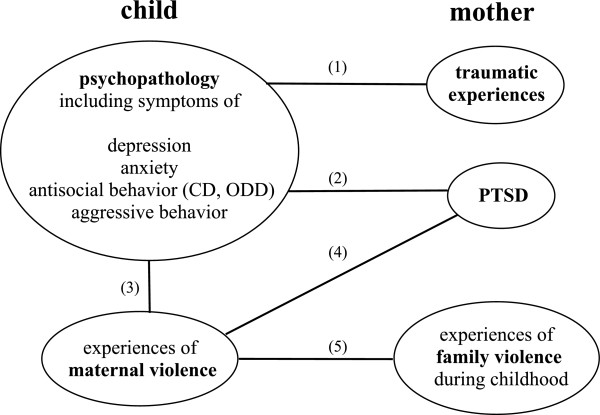
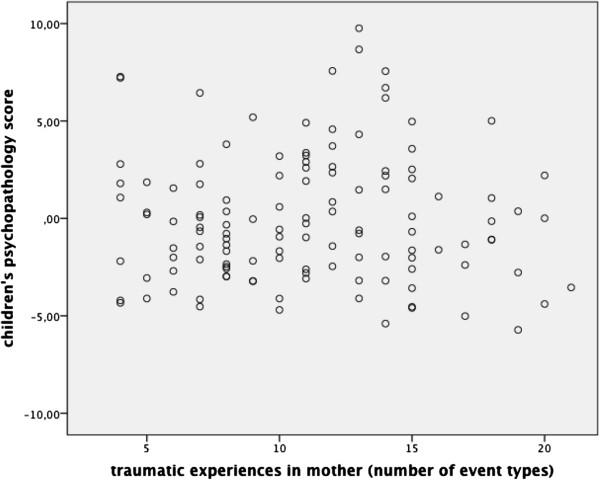
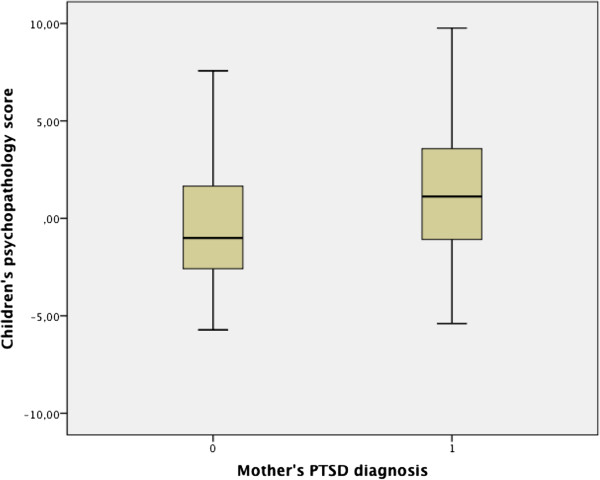
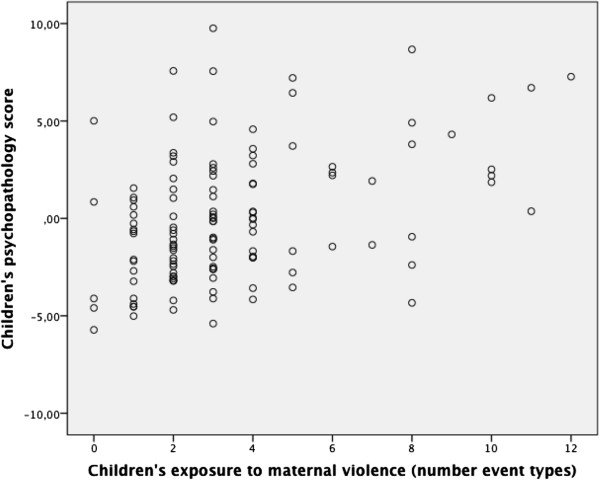
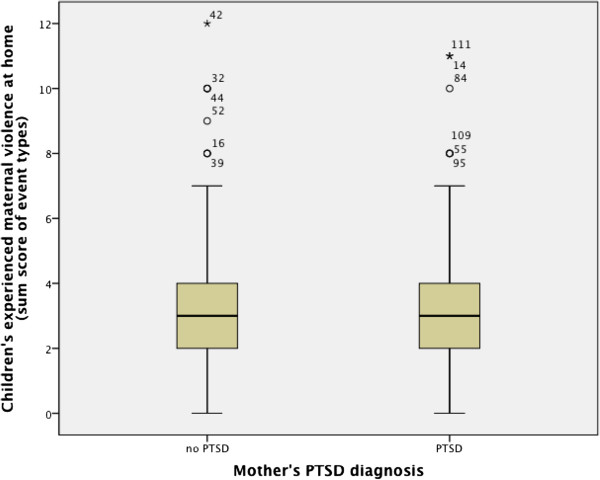
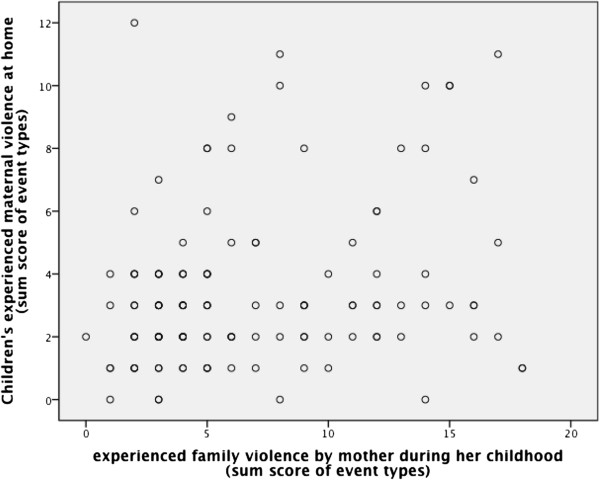
BACKGROUND: Understanding how parental Posttraumatic Stress Disorder (PTSD) may or may not affect the development and mental health in the offspring is particularly important in conflict regions, where trauma-related illness is endemic. In Rwanda, organised atrocities and the genocide against the Tutsi of 1994 have left a significant fraction of the population with chronic PTSD. The aim of the present investigation was to establish whether PTSD in mothers is associated with symptoms of depression, anxiety, and aggressive and antisocial behaviour in their children. METHODS: A community sample of 125 Rwandan mothers who experienced the genocide of 1994 and their 12-year-old children were interviewed. Using a structured interview, symptoms of maternal PTSD and children's depression, anxiety, and aggressive and antisocial behaviour were assessed by trained and on-site supervised local B.A. psychologists. The interview also included a detailed checklist of event types related to family violence. RESULTS: In showing that a maternal PTSD was not associated with child's psychopathology, the results contradict the assumption of straight "trans-generational trauma transmission". Instead, a child's exposure to maternal family violence posed a significant risk factor for a negative mental health outcome. Furthermore, it was not maternal PTSD-symptoms but mother's exposure to family violence during her own childhood that was associated with the magnitude of adversities that a child experiences at home. CONCLUSIONS: Contrary to a simple model of a trans-generational transmission of trauma, neither maternal PTSD nor maternal traumatic experiences were directly associated with symptoms of anxiety, depression, or antisocial and aggressive behaviour in the children. Instead, the present results suggest a relationship between parental child rearing practices and children's mental health. Furthermore, the study details the "cycle of violence", showing a significant link between maternal violence against a child and its mother's experience of childhood maltreatment.
Overview
The claims and statistics of this paper haven’t been checked yet.
Run the check — free, no account needed. It reads the open-access text and checks the sources it cites.
Integrity signals
Registry
Cites
Statistics
Figures
Verification
Claims the paper makes
The claims and statistics of this paper haven’t been checked yet.
Run the check — free, no account needed. It reads the open-access text and checks the sources it cites.
Claims other papers make about this one
Each is checked against this paper’s own text: does it say what the citing paper says it does?
The cited source doesn’t support the claim as written.
In the citing paper
“in the aftermath of the genocide, economic, environmental, mental and physical health problems, along with academic problems among children, have been the main factors contributing to domestic violence [30].”
From Contribution of community-based sociotherapy interventions for the psychological well-being of Rwandan youths born to genocide perpetrators and survivors: analysis of the stories telling of a sociotherapy approach (2020) · cites this paper as [30]
Checked by a reasoning model — may be wrong.
Experimental — accuracy not yet measuredThe source backs part of the claim, not all of it — or backs it for a different population, condition or comparison.
In the citing paper
“In some contexts, including families affected by the Khmer Rouge genocide and Rwandan genocide, parental PTSD and maternal violence have been associated with heightened anxiety, depression, and antisocial behaviors in offspring (97–99).”
From Epigenetic changes associated with multi-generational trauma: characterization, mechanisms, and therapeutics (2026) · cites this paper as [98]
Experimental — accuracy not yet measuredThe source backs part of the claim, not all of it — or backs it for a different population, condition or comparison.
In the citing paper
“Concerning the mental health problems in Rwandans, PTSD among the genocide survivors and the transmission of trauma to their descendants and other neighbors was reported [30, 42].”
From Contribution of community-based sociotherapy interventions for the psychological well-being of Rwandan youths born to genocide perpetrators and survivors: analysis of the stories telling of a sociotherapy approach (2020) · cites this paper as [30]
Experimental — accuracy not yet measuredThe cited source says what the claim attributes to it.
In the citing paper
“Many investigations focus on historically defined trauma-exposed populations, including Holocaust survivors, Rwandan genocide survivors, and Alaska Native communities (8, 82, 98).”
From Epigenetic changes associated with multi-generational trauma: characterization, mechanisms, and therapeutics (2026) · cites this paper as [98]
Self-check
Percentages, sums and reported differences re-computed from the paper’s own numbers.
The self-check needs the paper’s full text.
Citations
Cites
(1998) · The Journal of Clinical Psychiatry · Cited by 19,139
(1998) · PubMed · Cited by 10,216
The mini international neuropsychiatric interview
Lecrubier, Y., Sheehan, D. V., Hergueta, T., & Weiller, E. (1998) · European Psychiatry · doi:10.1016/s0924-9338(99)80239-9 · Cited by 5,899
Buss, A. H., & Perry, M. (1992) · Journal of Personality and Social Psychology · doi:10.1037/0022-3514.63.3.452 · Cited by 4,693
Behind Closed Doors: Violence in the American Family.
Boudouris, J., Straus, M. A., Gelles, R. J., & Steinmetz, S. K. (1982) · Contemporary Sociology A Journal of Reviews · doi:10.2307/2068814 · Cited by 3,089
Reliability and validity of a brief instrument for assessing post-traumatic stress disorder
Foa, E. B., Riggs, D. S., Dancu, C. V., & Rothbaum, B. O. (1993) · Journal of Traumatic Stress · doi:10.1002/jts.2490060405 · Cited by 2,537
The Abuse of Power: The Pervasive Fallacy of Power Calculations for Data Analysis
Hoenig, J. M., & Heisey, D. M. (2001) · The American Statistician · doi:10.1198/000313001300339897 · Cited by 2,046
Funnekotter, B. (2005) · Amsterdam University Press eBooks · doi:10.1017/9789048505418.012 · Cited by 1,672
The Use of Psychological Testing for Treatment Planning and Outcome Assessment
Maruish, M. E., & Leahy, R. L. (2000) · Journal of Cognitive Psychotherapy · doi:10.1891/0889-8391.14.2.205 · Cited by 1,634
Complex Trauma in Children and Adolescents
Cook, A., Spinazzola, J., Ford, J., Lanktree, C., Blaustein, M., Cloitre, M., DeRosa, R., Hubbard, R., Kagan, R., Liautaud, J., et al. (2005) · Psychiatric Annals · doi:10.3928/00485713-20050501-05 · Cited by 1,619
Cited by
Sorted by citations
Intergenerational transmission of trauma effects: putative role of epigenetic mechanisms
Yehuda, R., & Lehrner, A. (2018) · World Psychiatry · doi:10.1002/wps.20568 · Cited by 730
The Genetics of Stress-Related Disorders: PTSD, Depression, and Anxiety Disorders
Smoller, J. W. (2015) · Neuropsychopharmacology · doi:10.1038/npp.2015.266 · Cited by 516
Environmental stress and epigenetic transgenerational inheritance
Skinner, M. K. (2014) · BMC Medicine · doi:10.1186/s12916-014-0153-y · Cited by 226
Nexhmedin Morina, B., Stam, K., Pollet, T. V., & Priebe, S. (2018) · Journal of Affective Disorders · doi:10.1016/j.jad.2018.07.027 · Cited by 203
Inflammation and neuronal plasticity: a link between childhood trauma and depression pathogenesis
Cattaneo, A., Macchi, F., Plazzotta, G., Veronica, B., Bocchio-Chiavetto, L., Riva, M. A., & Pariante, C. M. (2015) · Frontiers in Cellular Neuroscience · doi:10.3389/fncel.2015.00040 · Cited by 152
The Intergenerational Impact of Structural Racism and Cumulative Trauma on Depression
Hankerson, S. H., Moise, N., Wilson, D., Waller, B., Arnold, K. T., Duarte, C. S., Lugo-Candelas, C. I., Weissman, M. M., Wainberg, M. L., Yehuda, R., et al. (2022) · American Journal of Psychiatry · doi:10.1176/appi.ajp.21101000 · Cited by 133
Cultural trauma and epigenetic inheritance
Lehrner, A. L., & Yehuda, R. (2018) · Development and Psychopathology · doi:10.1017/s0954579418001153 · Cited by 144
Ibrahim, H., Ertl, V., Catani, C., Ismail, A. A., & Neuner, F. (2018) · BMC Medicine · doi:10.1186/s12916-018-1140-5 · Cited by 116
Self-citationSerpeloni, F., Radtke, K. M., Hecker, T., Sill, J., Vukojevic, V., Assis, S. G. D., Schauer, M., Elbert, T., & Nätt, D. (2019) · Frontiers in Genetics · doi:10.3389/fgene.2019.00269 · Cited by 77
Self-citationRamo-Fernández, L., Boeck, C., Koenig, A. M., Schury, K., Binder, E. B., Gündel, H., Fegert, J. M., Karabatsiakis, A., & Kolassa, I.-T. (2019) · Scientific Reports · doi:10.1038/s41598-018-36689-2 · Cited by 67
Forke, C. M., Catallozzi, M., Localio, A. R., Grisso, J. A., Wiebe, D. J., & Fein, J. A. (2019) · Preventive Medicine Reports · doi:10.1016/j.pmedr.2019.100942 · Cited by 63
Rugema, L., Mogren, I., Ntaganira, J., & Krantz, G. (2015) · BMJ Open · doi:10.1136/bmjopen-2014-006778 · Cited by 62
The Intergenerational Effects of Early Adversity
Galler, J. R., & Rabinowitz, D. G. (2014) · Progress in molecular biology and translational science · doi:10.1016/b978-0-12-800977-2.00007-3 · Cited by 53
Crombach, A., & Bambonyé, M. (2015) · European Journal of Psychotraumatology · doi:10.3402/ejpt.v6.26995 · Cited by 48
Daskalakis, N. P., Xu, C., Bader, H. N., Chatzinakos, C., Weber, P. C., Makotkine, I., Lehrner, A. L., Bierer, L. M., Binder, E. B., & Yehuda, R. (2020) · Neuropsychopharmacology · doi:10.1038/s41386-020-00900-8 · Cited by 48
Early life exposures, neurodevelopmental disorders, and transposable elements
Lapp, H. E., & Hunter, R. G. (2019) · Neurobiology of Stress · doi:10.1016/j.ynstr.2019.100174 · Cited by 45
Shrira, A., Mollov, B., & Mudahogora, C. (2019) · Psychiatry Research · doi:10.1016/j.psychres.2018.11.040 · Cited by 43
Towards a better future: the trans-generational impact of the Troubles on mental health.
O’Neill, S. M., Armour, C., Bolton, D., Bunting, B., Corry, C., Devine, B., Ennis, E., Ferry, F. R., McKenna, Á. E., McLafferty, M., et al. (2015) · Cited by 40
PTSD: Past, present and future implications for China
Zhou, Y., Shang, Z., Zhang, F., Wu, L., Sun, L., Jia, Y., Yu, H., & Liu, W. (2021) · Chinese Journal of Traumatology · doi:10.1016/j.cjtee.2021.04.011 · Cited by 43
Burchert, S., Stammel, N., & Knaevelsrud, C. (2017) · Psychiatry Research · doi:10.1016/j.psychres.2017.04.033 · Cited by 42
Mbiydzenyuy, N. E., Hemmings, S. M. J., & Qulu, L. (2022) · Frontiers in Behavioral Neuroscience · doi:10.3389/fnbeh.2022.977416 · Cited by 44
Vos, J., & van Rijn, B. (2021) · Transactional Analysis Journal · doi:10.1080/03621537.2021.1904364 · Cited by 41
Veronese, G., Mahamid, F., & Bdier, D. (2023) · International Journal of Social Psychiatry · doi:10.1177/00207640231175787 · Cited by 37
Berckmoes, L. H., Eichelsheim, V. I., Rutayisire, T., Richters, A., & Holá, B. (2017) · Societies · doi:10.3390/soc7030024 · Cited by 36
Kahn, S., & Denov, M. S. (2022) · Transcultural Psychiatry · doi:10.1177/13634615221080231 · Cited by 36
Berckmoes, L. H., de Jong, J. T. V. M., & Reis, R. (2017) · Cambridge Prisms Global Mental Health · doi:10.1017/gmh.2017.23 · Cited by 29
Wang, X., Yin, G., Guo, F., HaiLi, H., Jiang, Z., Li, S., Shao, Z., & Wan, Y. (2021) · Journal of Interpersonal Violence · doi:10.1177/08862605211050093 · Cited by 28
Harghandiwal, B. (2025) · Global Public Health · doi:10.1080/17441692.2025.2495326 · Cited by 27
Intergenerational Trauma: A Scoping Review of Cross-Cultural Applications from 1999 to 2019
Chou, F., & Buchanan, M. J. (2021) · Canadian Journal of Counselling and Psychotherapy · doi:10.47634/cjcp.v55i3.71456 · Cited by 29
Dozio, E., Feldman, M., Bizouerne, C., Drain, É., Joubert, M. L., Mansouri, M., Moro, M. R., & Ouss, L. (2020) · Frontiers in Psychiatry · doi:10.3389/fpsyt.2020.480690 · Cited by 27
Augsburger, M., Meyer-Parlapanis, D., Bambonye, M., Elbert, T. R., & Crombach, A. (2015) · Frontiers in Psychology · doi:10.3389/fpsyg.2015.01756 · Cited by 27
Self-citationWilliams, Z. M. (2016) · Neurobiology of Learning and Memory · doi:10.1016/j.nlm.2016.03.023 · Cited by 20
Batchelor, V., & Pang, T. Y. (2019) · General and Comparative Endocrinology · doi:10.1016/j.ygcen.2019.04.010 · Cited by 23
Gender and the Genocide in Rwanda
Brown, S. E. (2017) · Routledge eBooks · doi:10.4324/9781315173078 · Cited by 18
Clinically relevant historical trauma sequelae: A systematic review
Mutuyimana, C., & Maercker, A. R. A. (2023) · Clinical Psychology & Psychotherapy · doi:10.1002/cpp.2836 · Cited by 17
Lindert, J., Knobler, H. Y., Kawachi, I., Bain, P. A., Abramowitz, M. Z., McKee, C., Reinharz, S., & McKee, M. (2016) · International Journal of Epidemiology · doi:10.1093/ije/dyw161 · Cited by 15
Kagoyire, M. G., Kangabe, J., & Ingabire, M. C. (2023) · BMC Psychology · doi:10.1186/s40359-023-01129-y · Cited by 20
The Role of Family Functioning in Refugee Child and Adult Mental Health
Hodes, M., & Hussain, N. (2020) · Cambridge University Press eBooks · doi:10.1017/9781108602105.003 · Cited by 17
Rudahindwa, S., Mutesa, L., Rutembesa, E., Mutabaruka, J., Qu, A., Wildman, D. E., Jansen, S., & Uddin, M. (2020) · Open Research Africa · doi:10.12688/aasopenres.12848.2 · Cited by 14
Working with refugee families, trauma and exile in family relationships
Hodgson, S. V. (2020) · Medicine Conflict & Survival · doi:10.1080/13623699.2020.1809066 · Cited by 14
Impact of intergenerational trauma on second-generation descendants: a systematic review
El-Khalil, C., Caculidis-Tudor, D., & Nedelcea, C. (2025) · BMC Psychology · doi:10.1186/s40359-025-03012-4 · Cited by 24
Langevin, R., Hébert, M., & Kern, A. (2021) · Journal of Interpersonal Violence · doi:10.1177/08862605211013963 · Cited by 14
Talley, L., & Brintnell, E. S. (2015) · International Journal of Inclusive Education · doi:10.1080/13603116.2015.1081634 · Cited by 13
Forced Separation, Ruptured Kinship and Transnational Family
Shapiro, D. K., & Montgomery, E. (2020) · Cambridge University Press eBooks · doi:10.1017/9781108602105.007 · Cited by 14
Bonumwezi, J. L., Grapin, S. L., Uddin, M., Coyle, S., Habintwali, D., & Lowe, S. R. (2024) · Social Science & Medicine · doi:10.1016/j.socscimed.2024.116837 · Cited by 13
The placental gateway of maternal transgenerational epigenetic inheritance
Sailasree, P., Srivastava, S., & Mishra, R. K. (2017) · Journal of Genetics · doi:10.1007/s12041-017-0788-5 · Cited by 12
Biracyaza, E., & Habimana, S. (2020) · BMC psychology · doi:10.1186/s40359-020-00471-9 · Cited by 10
Transgenerational Trauma Transmission in Refugee Families
Dalgaard, N. T., Thøgersen, M. H., & Riber, K. (2020) · Cambridge University Press eBooks · doi:10.1017/9781108602105.004 · Cited by 9
Rudahindwa, S., Mutesa, L., Rutembesa, E., Mutabaruka, J., Qu, A., Wildman, D. E., Jansen, S., & Uddin, M. (2018) · AAS Open Research · doi:10.12688/aasopenres.12848.1 · Cited by 12
Pells, K., Breed, A., Uwihoreye, C., Ndushabandi, E., Elliott, M., & Nzahabwanayo, S. (2021) · Culture Medicine and Psychiatry · doi:10.1007/s11013-021-09760-3 · Cited by 12
Jansen, S., Niyonsenga, J., Ingabire, M. C., Jansen, A., Nzabonimpa, E., Ingabire, N., Kangabe, J., Sarabwe, E., Richters, A., Rutayisire, T., et al. (2022) · Trials · doi:10.1186/s13063-022-06994-3 · Cited by 10
A review of the effects of parental PTSD: A focus on military children.
Banneyer, K. N., Koenig, S. A., Wang, L. A., & Stark, K. D. (2017) · Couple and Family Psychology Research and Practice · doi:10.1037/cfp0000093 · Cited by 10
Family Relationships and Intra-family Expectations in Unaccompanied Young Refugees
Derluyn, I., & Ang, W. (2020) · Cambridge University Press eBooks · doi:10.1017/9781108602105.008 · Cited by 11
Küffer, A., Thoma, M. V., & Maercker, A. R. A. (2016) · European Journal of Psychotraumatology · doi:10.3402/ejpt.v7.30804 · Cited by 9
Binagwaho, A., Remera, E., Bayingana, A., Gishoma, D., Scott, K., Goosman, M., Campbell, E., Agbonyitor, M., Kayiteshonga, Y., & Nsanzimana, S. (2021) · BMC Pediatrics · doi:10.1186/s12887-020-02475-1 · Cited by 4
Mukamana, D., Collins, A., & Rosa, W. E. (2018) · Research and theory for nursing practice · doi:10.1891/1541-6577.32.2.125 · Cited by 8
Abdulah, D. M., Abdulla, B. M. O., & Liamputtong, P. (2022) · International Journal of Social Psychiatry · doi:10.1177/00207640211068981 · Cited by 7
Niwenahisemo, L. C., Hong, S., & Kuang, L. (2024) · Frontiers in Psychiatry · doi:10.3389/fpsyt.2024.1346267 · Cited by 9
Mak, C., & Wieling, E. A. (2024) · Journal of Health Psychology · doi:10.1177/13591053241245098 · Cited by 10
Eichelsheim, V., Berckmoes, L., Hola, B., Rutayisire, T., & Richters, A. (2019) · Intervention Journal of Mental Health and Psychosocial Support in Conflict Affected Areas · doi:10.4103/1571-8883.239711 · Cited by 7
Cerniglia, L., Cimino, S., Ballarotto, G., & Tambelli, R. (2016) · Eating and Weight Disorders - Studies on Anorexia Bulimia and Obesity · doi:10.1007/s40519-016-0303-7 · Cited by 7
Family-School Relationships in Supporting Refugee Children’s School Trajectories
Fazel, M. S., & O’Higgins, A. (2020) · Cambridge University Press eBooks · doi:10.1017/9781108602105.019 · Cited by 9
Mahmood, H. N., Ahmed, D. R., Neldner, S., & Neuner, F. (2024) · Current Psychology · doi:10.1007/s12144-024-05863-3 · Cited by 7
Self-citationTrauma Narration in Family Therapy with Refugees
Haene, L. D., Adriaenssens, P., Deruddere, N., & Rober, P. (2020) · Cambridge University Press eBooks · doi:10.1017/9781108602105.011 · Cited by 7
Fritzemeyer, K. (2016) · International Journal of Applied Psychoanalytic Studies · doi:10.1002/aps.1513 · Cited by 6
Haene, L. D., & Rousseau, C. (2020) · Cambridge University Press eBooks · doi:10.1017/9781108602105.002 · Cited by 6
Posttraumatic stress disorder and psychological distress in Rwandan refugees living in Zambia
Mwanamwambwa, V., & Pillay, B. J. (2021) · South African Journal of Psychology · doi:10.1177/00812463211031812 · Cited by 7
Langevin, R., Kern, A., Fernet, M., & Brassard, A. (2022) · Journal of Interpersonal Violence · doi:10.1177/08862605221127214 · Cited by 8
Dozio, E., Feldman, M., Savelon, S. V., Bizouerne, C., Mansouri, M., Moro, M. R., & Radjack, R. (2024) · Child Care in Practice · doi:10.1080/13575279.2024.2402473 · Cited by 6
The challenge of managing headache disorders in a tertiary referral neurology clinic in Rwanda
Kaputu-Kalala-Malu, C., Walker, T. D., Ntumba-Tshitenge, O., Mafuta, E. M., Tugirimana, P. L., & Misson, J. P. (2016) · Neurosciences · doi:10.17712/nsj.2016.2.20150640 · Cited by 5
Reisinger, S. N., & Hannan, A. J. (2025) · Nature Mental Health · doi:10.1038/s44220-025-00495-3 · Cited by 5
Igreja, V., Axelsen, T., & Brekelmans, A. (2024) · Scientific Reports · doi:10.1038/s41598-024-79257-7 · Cited by 3
Pre- and Post-migration Trauma and Adversity
Cissé, A., Haene, L. D., Keatley, E. S., & Rasmussen, A. (2020) · Cambridge University Press eBooks · doi:10.1017/9781108602105.005 · Cited by 6
Dozio, E. (2020) · L Autre · doi:10.3917/lautr.062.0151 · Cited by 3
Family Violence, PTSD, and Parent-Child Interactions: Dyadic Data Analysis with Mexican Families
Cooper, D. K., Erolin, K. S., Wieling, E., Durtschi, J., Aguilar, E., Higuera, M. O. D., & García-Huidobro, D. (2020) · Child and Youth Care Forum · doi:10.1007/s10566-020-09564-3 · Cited by 3
Behaviour of Children of Holocaust Survivors in France Regarding Food
Halioua, B., Sulimovic, L., Corcos, M., Bantman, P., Vaislic, M., Rimmer, R., TAIEB, C., Ejnes, R., Dassa, S., & Shadili, G. (2025) · European Eating Disorders Review · doi:10.1002/erv.3187 · Cited by 4
A Systematic Review on Intergenerational Transmission of Genocide-Related Trauma
Kim, T., & Jordan, L. P. (2025) · Trauma Violence & Abuse · doi:10.1177/15248380251361043 · Cited by 3
Martin, F., Kalisa, J., Isingizwe, B. B., Gashugi, Y., Cheonga, F., Ishimwe, E., Uwizeye, P., Wicker, S., Ong, S. Y., Gishoma, D., et al. (2025) · BMC Psychology · doi:10.1186/s40359-025-03676-y · Cited by 4
Halioua, B., Vaislic, M., Bantman, P., Rimmer, R., Dassa, S., Taïeb, J., Halioua, D., Sarfati, S., Astruc, A., Bury, T., et al. (2021) · European Journal of Trauma & Dissociation · doi:10.1016/j.ejtd.2021.100249 · Cited by 3
Mobilizing Resources in Multifamily Groups
Mooren, T. T. M., & Bala, J. (2020) · Cambridge University Press eBooks · doi:10.1017/9781108602105.009 · Cited by 3
Working with Spirituality in Refugee Care
Fung, K. P.-L., Mok, M., & Phorn, V. (2020) · Cambridge University Press eBooks · doi:10.1017/9781108602105.013 · Cited by 3
Tutlam, N. T., Flick, L. H., Xian, H., Matsuo, H., Tutdeal, N., & Glowinski, A. L. (2022) · Global Social Welfare · doi:10.1007/s40609-022-00228-9 · Cited by 3
Disasters and Societal Trauma: Complex and Societal PTSD
Pagel, J. F. (2020) · Springer eBooks · doi:10.1007/978-3-030-55909-0_3 · Cited by 3
Current and Future Challenges in Group Therapy
Cooper, E. J., Hudson, J. S., Kranzberg, M. B., & Motherwell, L. (2017) · International Journal of Group Psychotherapy · doi:10.1080/00207284.2016.1238750 · Cited by 3
Collaborative Mental Health Care for Refugee Families in a School Context
Papazian-Zohrabian, G., Mamprin, C., Turpin-Samson, A., & Lemire, V. (2020) · Cambridge University Press eBooks · doi:10.1017/9781108602105.020 · Cited by 4
Interrogating Legality and Legitimacy in the Post-migratory Context
Rousseau, C. (2020) · Cambridge University Press eBooks · doi:10.1017/9781108602105.021 · Cited by 3
Cultural Belonging and Political Mobilization in Refugee Families
Kevers, R., & Rober, P. (2020) · Cambridge University Press eBooks · doi:10.1017/9781108602105.006 · Cited by 4
Understanding the etiology and impact of hatred globally in a public health context
Yudkin, J. S., & Messiah, S. E. (2019) · International Journal of Public Health · doi:10.1007/s00038-019-01279-0 · Cited by 3
Forced separation, ruptured kinship and transnational family life
Shapiro, D. K., & Montgomery, E. (2019) · Research at the University of Copenhagen (University of Copenhagen) · doi:10.1017/9781108602105 · Cited by 2
Assessment of emotion and emotion-related processes in PTSD
McDevitt‐Murphy, M. E., Zakarian, R. J., & Olin, C. C. (2020) · Elsevier eBooks · doi:10.1016/b978-0-12-816022-0.00001-6 · Cited by 3
Re-building Trust and Connectedness in Exile
Santhanam-Martin, R. (2020) · Cambridge University Press eBooks · doi:10.1017/9781108602105.018 · Cited by 2
Supporting Refugee Family Reunification in Exile
Sveaass, N., & Reichelt, S. (2020) · Cambridge University Press eBooks · doi:10.1017/9781108602105.015 · Cited by 3
Guzder, J. (2020) · Cambridge University Press eBooks · doi:10.1017/9781108602105.012 · Cited by 2
Göçün Kuşaklararası Bağlamda Psikopatolojik Yansımaları
UZUNKAYA, A. H., & Yılmaz, B. (2021) · Psikoloji Çalışmaları / Studies in Psychology · doi:10.26650/sp2019-0079 · Cited by 3
Le GRAND livre des 1000 premiers jours de vie
(2021) · Dunod eBooks · doi:10.3917/dunod.smith.2021.02.0325 · Cited by 2
In the Aftermath of Atrocities
Berckmoes, L. H. (2022) · Oxford University Press eBooks · doi:10.1093/oxfordhb/9780190915629.013.24 · Cited by 3
Health system redesign following sexual violence during the genocide in Rwanda
Uwizeye, G., Lee, B. X., & Kroll, T. (2016) · International Journal of Public Health · doi:10.1007/s00038-016-0873-1 · Cited by 2
Halioua, B., Bantman, P., Rimmer, R., Ghozlan, É., Vaislic, M., Halioua, D., Amson, F., TAIEB, C., Prasquier, R., Guthmann, J. F., et al. (2024) · SSRN Electronic Journal · doi:10.2139/ssrn.4846859 · Cited by 2
Kac, E., Qi, Q., & Ryznar, R. (2026) · Frontiers in Psychiatry · doi:10.3389/fpsyt.2026.1769422 · Cited by 1
Working through Trauma and Restoring Security in Refugee Parent-Child Relationships
Husseini, M. E., Dozio, E., Mansouri, M., Feldman, M., & Moro, M. R. (2020) · Cambridge University Press eBooks · doi:10.1017/9781108602105.010 · Cited by 1
Metadata
- Authors
- Roth, M., Neuner, F., & Elbert, T.
- Affiliations
- University of Konstanz (DE)
- Bielefeld University (DE)
- Corresponding author
- Elbert, Thomas
- Venue
- International Journal of Mental Health Systems
- Published
- 2014-04-01
- Volume
- 8
- Issue
- 1
- Pages
- 12-12
- ISSN
- 1752-4458 (ISSN-L)
- PMC
- PMC3978019
- OpenAlex
- W2108451247
- Cited by
- 129
- References
- 80
- Citations by year
- 2026: 4 · 2025: 12 · 2024: 9 · 2023: 5 · 2022: 9 · 2021: 14 · 2020: 34 · 2019: 9 · 2018: 8 · 2017: 7 · 2016: 7 · 2015: 9 · 2014: 2
- FWCI
- 9.86
- Type
- journal article
- Language
- en
- Open access
- gold
- doi.org
- Licence
- cc-by
- Locations
- International Journal of Mental Health Systems (publishedVersion, cc-by)
- Europe PMC (PubMed Central) (publishedVersion, cc-by)
- PubMed Central (publishedVersion, cc-by)
- PubMed (publishedVersion)
- KOPS (University of Konstanz) (submittedVersion)
- PUB – Publications at Bielefeld University (Bielefeld University) (submittedVersion)
- Funders
- University of Rwanda
- Deutsche Forschungsgemeinschaft
- European Refugee Fund
- Topics
- Social Sciences › Psychology › Clinical Psychology › Posttraumatic Stress Disorder Research
- Social Sciences › Psychology › Clinical Psychology › Child Abuse and Trauma
- Social Sciences › Psychology › Clinical Psychology › Migration, Health and Trauma
- Keywords
- post-traumatic stress disorder, maternal PTSD, child mental health, Rwandan genocide, domestic violence, child abuse, depression, anxiety, cycle of violence, child-rearing practices, genocide survivors
About these checks
Registry, retraction, Cites and statistics results are computed, not judged, with one exception: a printed reference that no index lists is read once by a model before it counts as a citation error. Claims are extracted by a model and kept only when their quote appears verbatim in the text; each cited source is then checked, with a model’s help, for whether it says what the claim relies on. Those verdicts can be wrong — read the claim’s quote and the cited source before relying on one.
Statistics and arithmetic are recomputed, not judged.
Confidence bands are shown only for fields calibrated on our annotated test set. None is calibrated yet, so no band is shown.
What counts as a claim ›How we measure confidence ›How we check this ›
Are you an author, or do you see a problem with this page? Request a review
