

Expression of a fungal ferulic acid esterase in alfalfa modifies cell wall digestibility
Open accessThe DOI matches its Crossref record; 54 of the 55 references it cites were found in a registry or an index.
Abstract
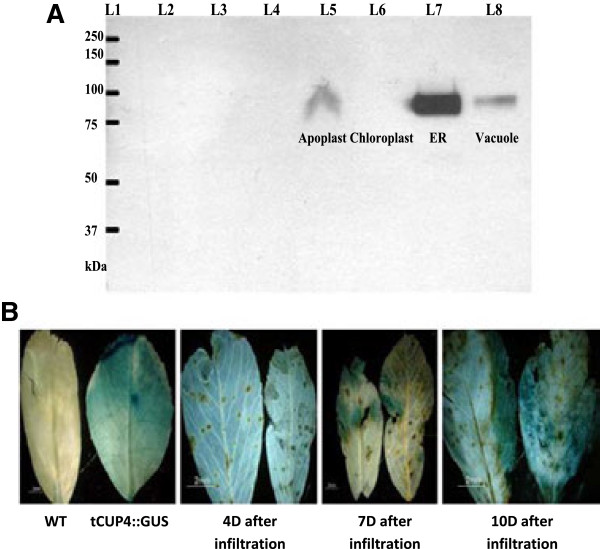
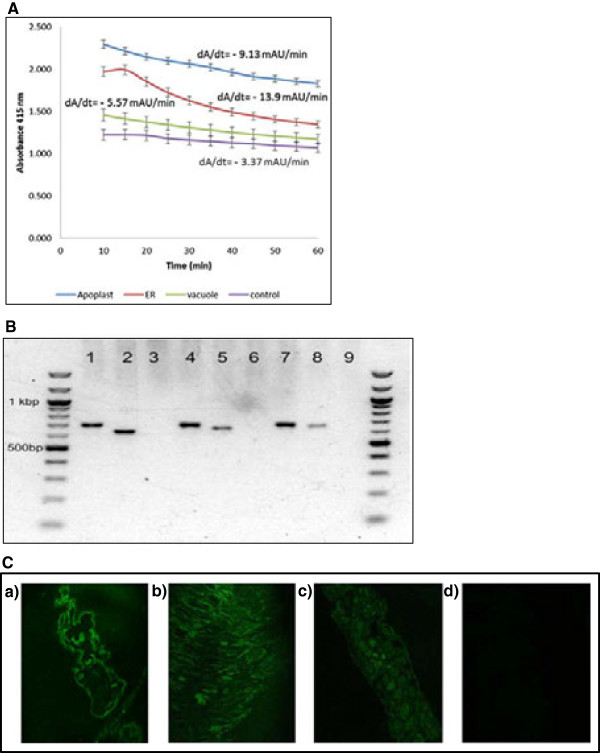
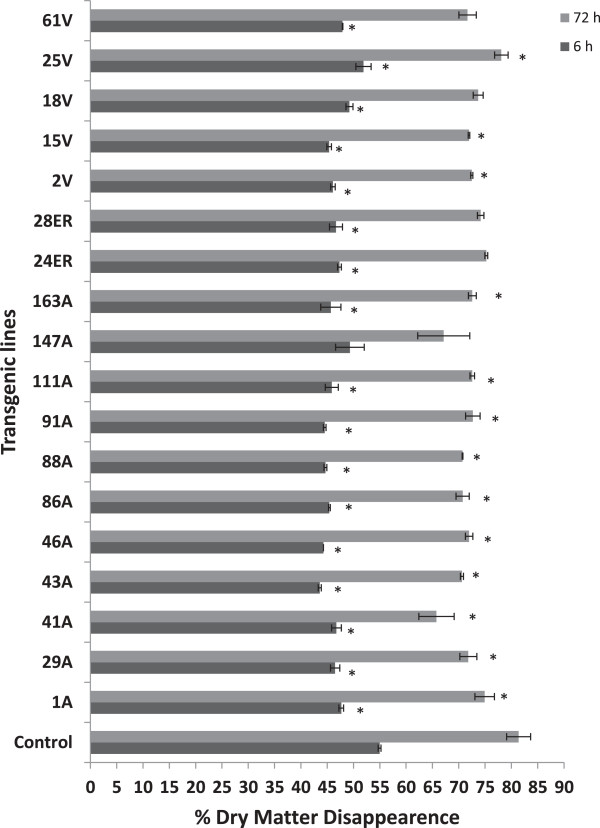
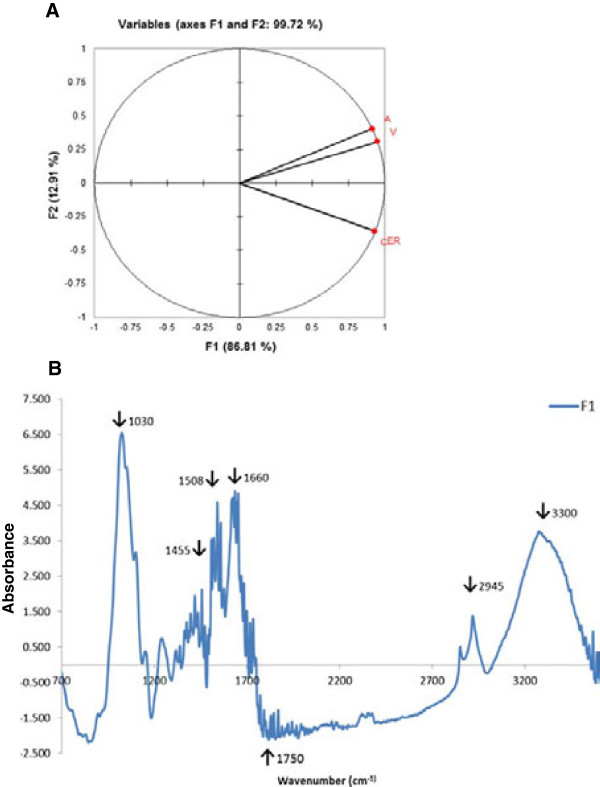
BACKGROUND: Alfalfa (Medicago sativa) is an important forage crop in North America owing to its high biomass production, perennial nature and ability to fix nitrogen. Feruloyl esterase (EC 3.1.1.73) hydrolyzes ester linkages in plant cell walls and has the potential to further improve alfalfa as biomass for biofuel production. RESULTS: In this study, faeB [GenBank:AJ309807] was synthesized at GenScript and sub-cloned into a novel pEACH vector containing different signaling peptides to target type B ferulic acid esterase (FAEB) proteins to the apoplast, chloroplast, endoplasmic reticulum and vacuole. Four constructs harboring faeB were transiently expressed in Nicotiana leaves, with FAEB accumulating at high levels in all target sites, except chloroplast. Stable transformed lines of alfalfa were subsequently obtained using Agrobacterium tumefaciens (LBA4404). Out of 136 transgenic plants regenerated, 18 independent lines exhibited FAEB activity. Subsequent in vitro digestibility and Fourier transformed infrared spectroscopy (FTIR) analysis of FAEB-expressing lines showed that they possessed modified cell wall morphology and composition with a reduction in ester linkages and elevated lignin content. Consequently, they were more recalcitrant to digestion by mixed ruminal microorganisms. Interestingly, delignification by alkaline peroxide treatment followed by exposure to a commercial cellulase mixture resulted in higher glucose release from transgenic lines as compared to the control line. CONCLUSION: Modifying cell wall crosslinking has the potential to lower recalcitrance of holocellulose, but also exhibited unintended consequences on alfalfa cell wall digestibility due to elevated lignin content. The combination of efficient delignification treatment (alkaline peroxide) and transgenic esterase activity complement each other towards efficient and effective digestion of transgenic lines.
Overview
The claims and statistics of this paper haven’t been checked yet.
Free: it reads the open-access text and checks the first 5 claims that cite a source we can check. Create a free account to check every claim.
Integrity signals
Registry
Cites
Statistics
Figures
Verification
Claims the paper makes
The claims and statistics of this paper haven’t been checked yet.
Free: it reads the open-access text and checks the first 5 claims that cite a source we can check. Create a free account to check every claim.
Self-check
Percentages, sums and reported differences re-computed from the paper’s own numbers.
The self-check needs the paper’s full text.
Citations
Cites
A Revised Medium for Rapid Growth and Bio Assays with Tobacco Tissue Cultures
Murashige, T., & Skoog, F. (1962) · Physiologia Plantarum · doi:10.1111/j.1399-3054.1962.tb08052.x · Cited by 67,392
Biomass Recalcitrance: Engineering Plants and Enzymes for Biofuels Production
Himmel, M. E., Ding, S.-Y., Johnson, D. K., Adney, W. S., Nimlos, M. R., Brady, J. W., & Foust, T. D. (2007) · Science · doi:10.1126/science.1137016 · Cited by 4,533
Phenol-hypochlorite reaction for determination of ammonia
Weatherburn, M. W. (1967) · Analytical Chemistry · doi:10.1021/ac60252a045 · Cited by 4,099 · cited 1×
“0 ml microcentrifuge tubes and stored at −20°C until analysis for ammonia by the phenyl-hypochlorite method [49].”
MethodPretreatment of Lignocellulosic Wastes to Improve Ethanol and Biogas Production: A Review
Taherzadeh, M. J., & Karimi, K. (2008) · International Journal of Molecular Sciences · doi:10.3390/ijms9091621 · Cited by 2,634
Semimicro determination of cellulose inbiological materials
Updegraff, D. M. (1969) · Analytical Biochemistry · doi:10.1016/s0003-2697(69)80009-6 · Cited by 2,081 · cited 1×
“The remains after trifluoroacetic acid (TFA) treatment were hydrolyzed in Updegraff reagent (acetic acid:nitric acid:water, 8:1:2 v/v) and used in an anthrone assay to quantify crystalline cellulose [51].”
MethodMenke, K. H., Raab, L., Salewski, A., Steingass, H., Fritz, D., & Schneider, W. (1979) · The Journal of Agricultural Science · doi:10.1017/s0021859600086305 · Cited by 1,927
The small, versatilepPZP family ofAgrobacterium binary vectors for plant transformation
Hajdukiewicz, P., Svab, Z., & Maliga, P. (1994) · Plant Molecular Biology · doi:10.1007/bf00014672 · Cited by 1,525 · cited 2×
“Additional file 11: Schematic map of the 5,103 bp pEACH vector based on pPZP100 [36].”
MethodChlorogenic acids and other cinnamates - nature, occurrence and dietary burden
Clifford, M. N. (1999) · Journal of the Science of Food and Agriculture · doi:10.1002/(sici)1097-0010(19990301)79:3<362::aid-jsfa256>3.0.co;2-d · Cited by 1,335
Lignin modification improves fermentable sugar yields for biofuel production
Chen, F., & Dixon, R. A. (2007) · Nature Biotechnology · doi:10.1038/nbt1316 · Cited by 1,330 · cited 2×
“A recent study showed that simple modification of the cell wall in alfalfa dramatically increased its susceptibility to hydrolysis [16].”
BackgroundKumar, R., Mago, G., Balan, V., & Wyman, C. E. (2009) · Bioresource Technology · doi:10.1016/j.biortech.2009.01.075 · Cited by 876 · cited 1×
“Physical and chemical pretreatments have been developed to optimize the separation of lignin and cell wall polysaccharides from different feedstocks [5,6].”
Background
Research works printed but not linked: 2
- 43. Han S, Kowalczys K, Latoszek-Green M, Brown DCW: Agrobacterium-medi- ated genetic transformation of alfalfa through somatic embryogenesis. In Somatic Embryogenesis and Genetic Transformation in Plants. Edited by http://www.biotechnologyforbiofuels.com/content/7/1/39
- 44. Julian A, Srivastava PS, Sharma MP. New Delhi: Narosa Publishing House; 2013:219-250.
Cited by
Silage review: Recent advances and future uses of silage additives
Muck, R. E., Nadeau, E. M. G., McAllister, T. A., Contreras-Govea, F. E., Santos, M. C., & Kung, L. (2018) · Journal of Dairy Science · doi:10.3168/jds.2017-13839 · Cited by 1,038
Self-citationMicro RNA 156 as a promising tool for alfalfa improvement
Aung, B., Gruber, M. Y., Amyot, L., Omari, K., Bertrand, A., & Hannoufa, A. (2015) · Plant Biotechnology Journal · doi:10.1111/pbi.12308 · Cited by 179
Dilokpimol, A., Mäkelä, M. R., Aguilar-Pontes, M. V., Benoit-Gelber, I., Hildén, K. S., & de Vries, R. P. (2016) · Biotechnology for Biofuels · doi:10.1186/s13068-016-0651-6 · Cited by 174
Mohapatra, S., Mishra, C., Behera, S. S., & Thatoi, H. (2017) · Renewable and Sustainable Energy Reviews · doi:10.1016/j.rser.2017.05.026 · Cited by 168
The interplay between miR156/SPL13 and DFR/WD40–1 regulate drought tolerance in alfalfa
Feyissa, B. A., Arshad, M. A., Gruber, M. Y., Kohalmi, S. E., & Hannoufa, A. (2019) · BMC Plant Biology · doi:10.1186/s12870-019-2059-5 · Cited by 154
Alfalfa response to heat stress is modulated by microRNA156
Matthews, C. J., Arshad, M. A., & Hannoufa, A. (2018) · Physiologia Plantarum · doi:10.1111/ppl.12787 · Cited by 111
Fibre digestion by rumen microbiota — a review of recent metagenomic and metatranscriptomic studies
Terry, S. A., Badhan, A., Wang, Y., Chaves, A. V., & McAllister, T. A. (2019) · Canadian Journal of Animal Science · doi:10.1139/cjas-2019-0024 · Cited by 112
“Subsequent enzyme activity is required to degrade plant cell walls, but lignocellulose is often remarkably recalcitrant towards enzymatic saccharification (Badhan et al. 2014a, 2014b).”
BackgroundSelf-citationThe release and catabolism of ferulic acid in plant cell wall by rumen microbes: A review
Wang, Y.-L., Wang, W., Wu, Q., & Yang, H. (2022) · Animal nutrition · doi:10.1016/j.aninu.2022.02.003 · Cited by 94
“However, less than 50% of these fractions are utilized by the ruminant hosts (Badhan et al., 2014).”
BackgroundSelf-citationBrandon, A. G., & Scheller, H. V. (2020) · Frontiers in Plant Science · doi:10.3389/fpls.2020.00282 · Cited by 83
Lei, Y., Hannoufa, A., & Yu, P. (2017) · International Journal of Molecular Sciences · doi:10.3390/ijms18020298 · Cited by 76
Gene editing by CRISPR/Cas9 in the obligatory outcrossing Medicago sativa
Gao, R., Feyissa, B. A., Croft, M., & Hannoufa, A. (2018) · Planta · doi:10.1007/s00425-018-2866-1 · Cited by 71
Gao, R., Austin, R. S., Amyot, L., & Hannoufa, A. (2016) · BMC Genomics · doi:10.1186/s12864-016-3014-6 · Cited by 72
“2 [56] was obtained from Dr.”
Aung, B., Gruber, M. Y., Amyot, L., Omari, K., Bertrand, A., & Hannoufa, A. (2015) · Plant Biotechnology Reports · doi:10.1007/s11816-015-0375-2 · Cited by 55
Characterization of the Role of SPL9 in Drought Stress Tolerance in Medicago sativa
Hanly, A. K., Karagiannis, J., Lu, Q. S. M., Tian, L., & Hannoufa, A. (2020) · International Journal of Molecular Sciences · doi:10.3390/ijms21176003 · Cited by 49
“2 [37] obtained from Daniel Brown (Agriculture and Agri-Food Canada, London, ON, Canada).”
Wang, Y., Gui, C., Wu, J., Gao, X., Huang, T., Cui, F., Liu, H., & Sethupathy, S. (2022) · Frontiers in Bioengineering and Biotechnology · doi:10.3389/fbioe.2022.917459 · Cited by 60
“…Furukawa et al. (2013) AnfaeB ↑ CaMV 35S Heterologousoverexpressed Increased and not reported Lower recalcitrance of transgenic lines Medicago sativa; Badhan et al. (2014) AnfaeA ↑ CaMV 35S Heterologousoverexpressed Increased and not reported Narrower shorted leaves, and decrease in…”
BackgroundSelf-citationBuanafina, M. M. D. O., & Morris, P. (2022) · Agronomy · doi:10.3390/agronomy12081847 · Cited by 49
“niger FAEB targeted to different cell compartments in alfalfa [123] resulted in reduced levels of ester bonds, increases in lignin content, and a reduced IVDMD, following 6 h and 72 h incubation with ruminal fluid.”
BackgroundZhang, L., Zhang, L., Zhou, T. H., Wu, Y., & Xu, F. (2015) · Bioresource Technology · doi:10.1016/j.biortech.2015.10.048 · Cited by 45
Park, S., Ong, R. G., & Sticklen, M. B. (2015) · Plant Biotechnology Journal · doi:10.1111/pbi.12505 · Cited by 41
“Some studies have chosen to indirectly use heterologously produced enzymes to increase conversions by altering the biomass composition and cell wall characteristics (Badhan et al., 2014; Buanafina et al., 2006, 2008, 2010, 2015; Furukawa et al., 2013; Latha Gandla et al., 2015; Pogorelko et al., 2011, 2013; Tsai et al…”
InfluentialLi, X., Zhang, Y., Hannoufa, A., & Yu, P. (2015) · Journal of Agricultural and Food Chemistry · doi:10.1021/acs.jafc.5b03717 · Cited by 41
Wang, Y.-L., Wang, W., Wu, Q., Zhang, F., Li, W., Yang, Z.-M., Bo, Y., & Yang, H. (2022) · Fermentation · doi:10.3390/fermentation8060285 · Cited by 46
Self-citationSinger, S. D., Hughes, K. B., Subedi, U., Dhariwal, G. K., Kader, K. A., Acharya, S. N., Chen, G., & Hannoufa, A. (2022) · Frontiers in Plant Science · doi:10.3389/fpls.2021.774146 · Cited by 35
Rafeeq, H., Hussain, A., Shabbir, S., Ali, S., Bilal, M., Sher, F., & Iqbal, H. M. N. (2021) · Biotechnology and Applied Biochemistry · doi:10.1002/bab.2277 · Cited by 35
Zhang, L., Lilley, C. J., İmren, M., Knox, J. P., & Urwin, P. E. (2017) · Frontiers in Plant Science · doi:10.3389/fpls.2017.01087 · Cited by 29
“A similar study has also shown the link between the expression of fungal ferulic acid esterase and cell wall digestibility (Badhan et al., 2014).”
BackgroundBuanafina, M. M. D. O., Dalton, S. J., Langdon, T., Timms‐Taravella, E., Shearer, E. A., & Morris, P. (2015) · Planta · doi:10.1007/s00425-015-2288-2 · Cited by 22
Niu, D., Zuo, S., Ren, J., Huhetaoli, H., Zheng, M., Jiang, D., & Xu, C. (2019) · Applied Microbiology and Biotechnology · doi:10.1007/s00253-019-10315-1 · Cited by 23
Xiao, Y., Poovaiah, C. R., & Coleman, H. D. (2016) · BioEnergy Research · doi:10.1007/s12155-016-9766-7 · Cited by 23
Feruloyl esterase activity and its role in regulating the feruloylation of maize cell walls
de Oliveira, D. M., Mota, T. R., Salatta, F. V., de Almeida, G. H. G., Olher, V. G. A., de Oliveira, M. A. S., Marchiosi, R., Ferrarese‐Filho, O., & dos Santos, W. D. (2020) · Plant Physiology and Biochemistry · doi:10.1016/j.plaphy.2020.08.046 · Cited by 18
Feyissa, B. A., Renaud, J. B., Nasrollahi, V., Kohalmi, S. E., & Hannoufa, A. (2020) · BMC Genomics · doi:10.1186/s12864-020-07118-4 · Cited by 30
Li, X., Hannoufa, A., Zhang, Y., & Yu, P. (2016) · International Journal of Molecular Sciences · doi:10.3390/ijms17050720 · Cited by 15
Donohoe, B. S., Wei, H., Mittal, A., Shollenberger, T., Lunin, V. V., Himmel, M. E., & Brunecky, R. (2017) · Scientific Reports · doi:10.1038/s41598-017-04502-1 · Cited by 12
Nasrollahi, V., Yuan, Z., Lu, Q. S. M., McDowell, T. W., Kohalmi, S. E., & Hannoufa, A. (2022) · Plant Molecular Biology · doi:10.1007/s11103-022-01303-7 · Cited by 12
Xiao, Y., He, X., Ojeda-Lassalle, Y., Poovaiah, C. R., & Coleman, H. D. (2018) · Biotechnology for Biofuels · doi:10.1186/s13068-018-1224-7 · Cited by 13
Xiao, Y., Poovaiah, C. R., Unda, F., Ritchie, L., Dombrov, M., Phalen, C., Argyros, A., & Coleman, H. D. (2020) · Biomass and Bioenergy · doi:10.1016/j.biombioe.2020.105473 · Cited by 11
Badhan, A., Wang, Y., & McAllister, T. A. (2017) · Methods in molecular biology · doi:10.1007/978-1-4939-6899-2_16 · Cited by 10
Self-citationWang, Y.-L., Wang, W., Wu, Q., Zhang, F., Li, W., Li, S., Wang, W., Cao, Z., & Yang, H. (2022) · Microorganisms · doi:10.3390/microorganisms10112269 · Cited by 10
“However, the plant cell walls limited the digestion and utilization of forage nutrients by the ruminant host [2].”
BackgroundSelf-citationMorris, P., Dalton, S. J., Langdon, T., Hauck, B. D., & Buanafina, M. M. D. O. (2017) · Plant Cell Tissue and Organ Culture (PCTOC) · doi:10.1007/s11240-017-1168-9 · Cited by 9
“niger targeted to the apoplast, endoplasmic reticulum or vacuole in alfalfa was shown to modify cell wall composition with a reduction in ester linkages with no visible plant phenotype, but with elevated lignin, resulting in recalcitrance to digestion by mixed ruminal microorganisms (Badhan et al. 2014).”
BackgroundSubramani, G., & Manian, R. (2023) · Biomass Conversion and Biorefinery · doi:10.1007/s13399-023-04891-6 · Cited by 9
“In contrast to the previous findings, [20] determined that 180 RPM was the ideal temperature.”
BackgroundMethodResultInfluentialYan, M., Guevara-Oquendo, V. H., Rodríguez‐Espinosa, M. E., Yang, J.-C., Lardner, H. A., Christensen, D. A., Feng, X. L., & Yu, P. (2020) · Critical Reviews in Food Science and Nutrition · doi:10.1080/10408398.2020.1843397 · Cited by 9
Subedi, U., Hughes, K. B., Chen, G., Hannoufa, A., & Singer, S. D. (2023) · Methods in molecular biology · doi:10.1007/978-1-0716-3159-1_16 · Cited by 8
Badhan, A., Wang, Y., Gruninger, R. J., Patton, D., Powlowski, J. B., Tsang, A., & McAllister, T. A. (2015) · BioMed Research International · doi:10.1155/2015/562952 · Cited by 7
“Similar results have been reported previously [9, 12] for barley straw where esterified pectin or xylan crosslinked to lignin was identified as the major factor responsible for the recalcitrance of these forages tomixed rumen enzymes as well as to commercial enzymes preparations.”
MethodResultSelf-citationThe down‐regulation of MsWOX13‐2 promotes enhanced waterlogging resilience in alfalfa
Subedi, U., Hughes, K. B., Lehmann, M., Chen, G., Acharya, S. N., Hannoufa, A., Nguyen, C., & Singer, S. D. (2025) · The Plant Journal · doi:10.1111/tpj.70411 · Cited by 7
Quantitative proteomic analysis of the role of miRNA156 in alfalfa under drought stress
Puri, A., Pajak, A., Hannoufa, A., & Marsolais, F. (2023) · Environmental and Experimental Botany · doi:10.1016/j.envexpbot.2023.105449 · Cited by 7
Sticklen, M. B. (2015) · Advances in Crop Science and Technology · doi:10.4172/2329-8863.1000e133 · Cited by 5
“the free space outside of the plasma membrane and the cell wall) [5], chloroplast [6], vacuole [7] and mitochondria [8] or within multiple number of sub-cellular compartments [9,10].”
BackgroundMsSPL9 Modulates Nodulation under Nitrate Sufficiency Condition in Medicago sativa
Nasrollahi, V., Allam, G., Kohalmi, S. E., & Hannoufa, A. (2023) · International Journal of Molecular Sciences · doi:10.3390/ijms24119615 · Cited by 5
miR156 Is a Negative Regulator of Aluminum Response in Medicago sativa
Allam, G., Sakariyahu, S. K., McDowell, T. W., Pitambar, T. A., Papadopoulos, Y. A., Bernards, M. A., & Hannoufa, A. (2025) · Plants · doi:10.3390/plants14060958 · Cited by 4
“4.2 [117] was obtained from Dr. Daniel Brown (Agriculture and Agri-Food Canada) and was used in transformation experiments and for all other purposes of this work.”
InfluentialNasrollahi, V., Yuan, Z., Kohalmi, S. E., & Hannoufa, A. (2022) · Plants · doi:10.3390/plants11223071 · Cited by 4
“2 [69] was obtained from Daniel Brown (Agriculture and Agri-Food Canada, London, ON, Canada) and was used as the wild-type (WT) genotype.”
MethodAluminum Stress Response Is Regulated Through a miR156/SPL13 Module in Medicago sativa
Allam, G., Sakariyahu, S. K., Shan, B., Aung, B., McDowell, T. W., Papadopoulos, Y. A., Bernards, M. A., & Hannoufa, A. (2025) · Genes · doi:10.3390/genes16070751 · Cited by 3
Ordóñes, S. R., Rueda, J. A., Contreras, C. I. M., Bautista, J. H., Corral-Luna, A., & Félix-Portillo, M. (2023) · Revista de la Facultad de Ciencias Agrarias UNCuyo · doi:10.48162/rev.39.115 · Cited by 2
Characterizing the Role of the miR156-SPL Network in Heat Stress Response in Medicago sativa
Matthews, C. J. (2018) · Scholarship@Western (Western University) · Cited by 2
Lei, Y. (2019) · HARVEST (University of Saskatchewan) · Cited by 1
Bytyqi, H., Ergün, B. G., Öztürk, A. B., & Kumar, G. (2026) · SSRN Electronic Journal · doi:10.2139/ssrn.6171466 · Cited by 1
New Energy Crops for Biofuel Production
Jin, Y., Su, J., Liu, C., & Sun, C. (2015) · Wiley eBooks · doi:10.1002/9781118991978.hces158
Brandon, A. G. (2019) · eScholarship (California Digital Library)
Zhang, S., Fu, C., & Liu, M. (2025) · Plant Cell & Environment · doi:10.1111/pce.70238
Feyissa, B. A., Renaud, J. B., Nasrollahi, V., Kohalmi, S. E., & Hannoufa, A. (2020) · Figshare · doi:10.6084/m9.figshare.13115601
Feyissa, B. A., Renaud, J., Nasrollahi, V., Kohalmi, S. E., & Hannoufa, A. (2020) · Figshare · doi:10.6084/m9.figshare.13115622
Guo, C., Wang, Y., Joan, F. M. K., Liu, Z., Han, H., Wei, S., Chen, A., & Li, S. (2026) · Food Bioscience · doi:10.1016/j.fbio.2026.108559
Self-citation
Metadata
- Authors
- Badhan, A., Jin, L., Wang, Y., Han, S., Kowalczys, K., Brown, D. C., Ayala, C. J., Latoszek-Green, M., Miki, B., Tsang, A., & McAllister, T.
- Affiliations
- Agriculture and Agri-Food Canada (CA)
- St. Boniface Hospital (CA)
- Concordia University (CA)
- Corresponding author
- McAllister, Tim
- Venue
- Biotechnology for Biofuels
- Published
- 2014-03-20
- Volume
- 7
- Issue
- 1
- Pages
- 39-39
- ISSN
- 1754-6834 (ISSN-L)
- PMC
- PMC3999942
- OpenAlex
- W2147732685
- Cited by
- 57
- References
- 54
- Citations by year
- 2026: 2 · 2025: 4 · 2023: 5 · 2022: 8 · 2021: 1 · 2020: 8 · 2019: 5 · 2018: 5 · 2017: 6 · 2016: 4 · 2015: 8 · 2014: 1
- FWCI
- 3.29
- Type
- journal article
- Language
- en
- Open access
- gold
- doi.org
- Licence
- cc-by
- Locations
- Biotechnology for Biofuels (publishedVersion, cc-by)
- Europe PMC (PubMed Central) (publishedVersion, cc-by)
- PubMed Central (publishedVersion, cc-by)
- PubMed (publishedVersion)
- Funders
- McGill University
- Genome Alberta
- Agriculture and Agri-Food Canada
- Topics
- Physical Sciences › Engineering › Biomedical Engineering › Biofuel production and bioconversion
- Life Sciences › Agricultural and Biological Sciences › Plant Science › Polysaccharides and Plant Cell Walls
- Life Sciences › Agricultural and Biological Sciences › Agronomy and Crop Science › Bioenergy crop production and management
- Keywords
- ferulic acid esterase, alfalfa, transgenic plants, cell wall digestibility, lignin content, ester linkage, biofuel feedstock, lignin removal, cellulase, ruminal digestion, subcellular targeting
About these checks
Registry, retraction, Cites and statistics results are computed, not judged, with one exception: a printed reference that no index lists is read once by a model before it counts as a citation error. Claims are extracted by a model and kept only when their quote appears verbatim in the text; each cited source is then checked, with a model’s help, for whether it says what the claim relies on. Those verdicts can be wrong — read the claim’s quote and the cited source before relying on one.
Statistics and arithmetic are recomputed, not judged.
Confidence bands are shown only for fields calibrated on our annotated test set. None is calibrated yet, so no band is shown.
What counts as a claim ›How we measure confidence ›How we check this ›
Are you an author, or do you see a problem with this page? Request a review
Data sources
Bibliographic data: Semantic Scholar, OpenAlex, Crossref.
Contains information from the Semantic Scholar Academic Graph Datasets, made available under the ODC Attribution License (ODC-BY 1.0).
Semantic Scholar’s data is described in: Kinney, R., et al. (2023). The Semantic Scholar Open Data Platform. arXiv:2301.10140.
