

Altered monocyte and fibrocyte phenotype and function in scleroderma interstitial lung disease: reversal by caveolin-1 scaffolding domain peptide
Open accessThe DOI matches its Crossref record; 30 of the 32 references it cites were found in a registry or an index.
Abstract
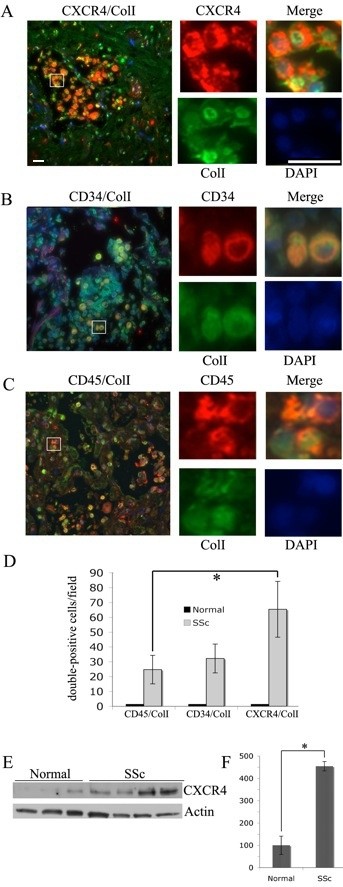
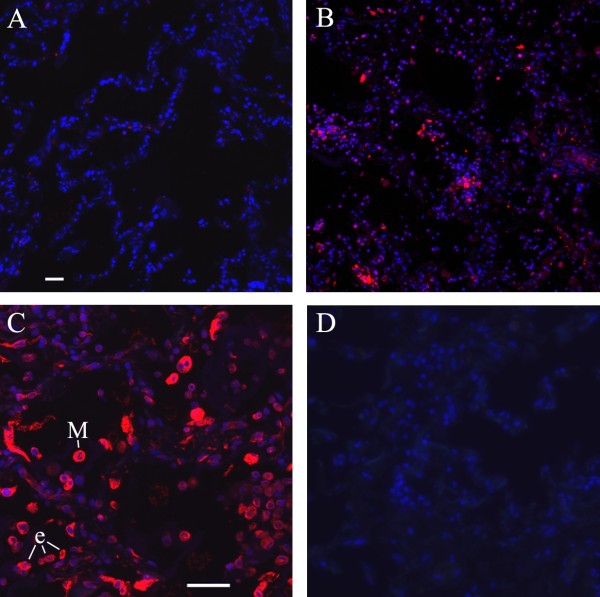
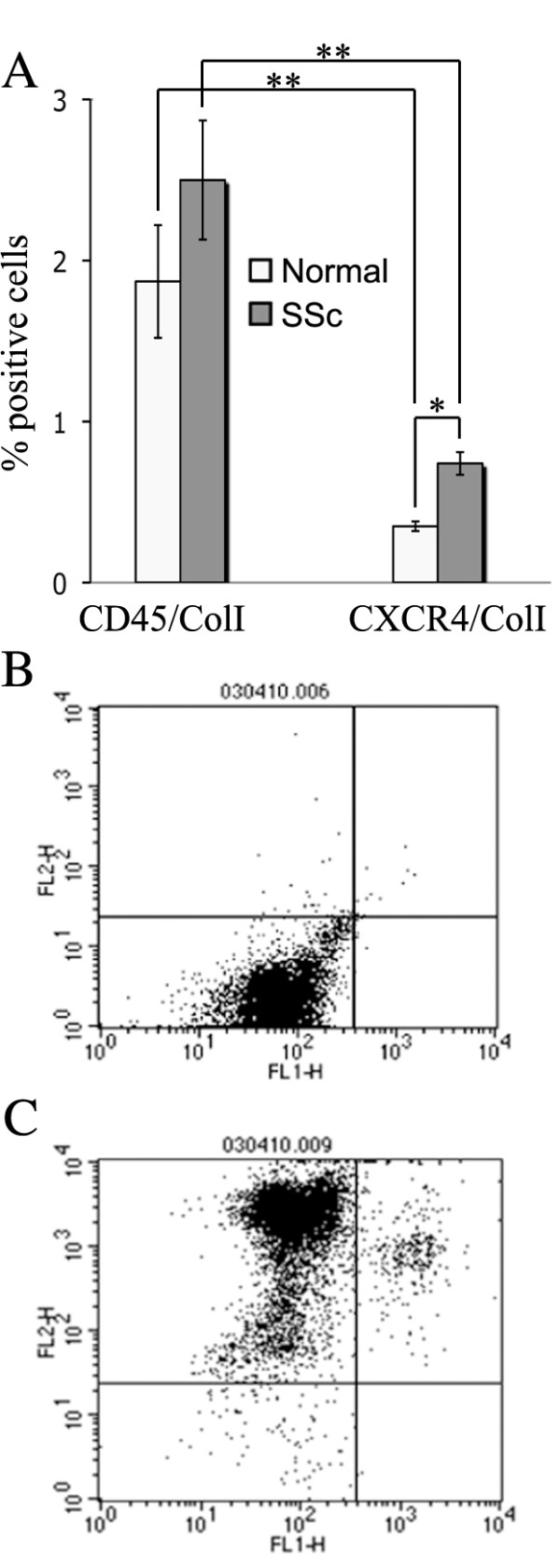
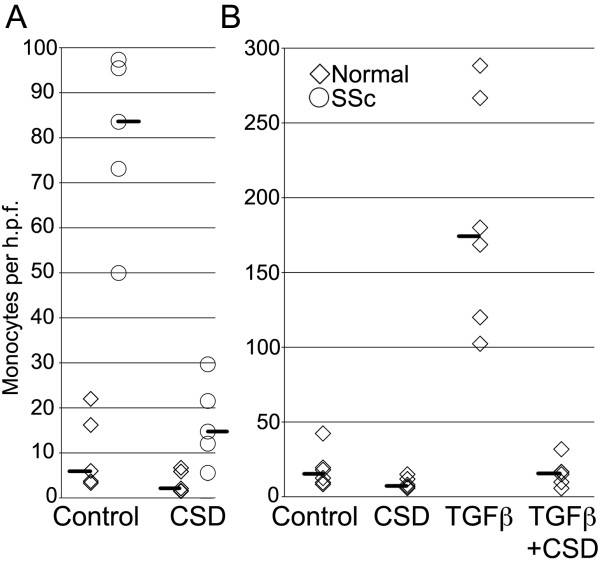
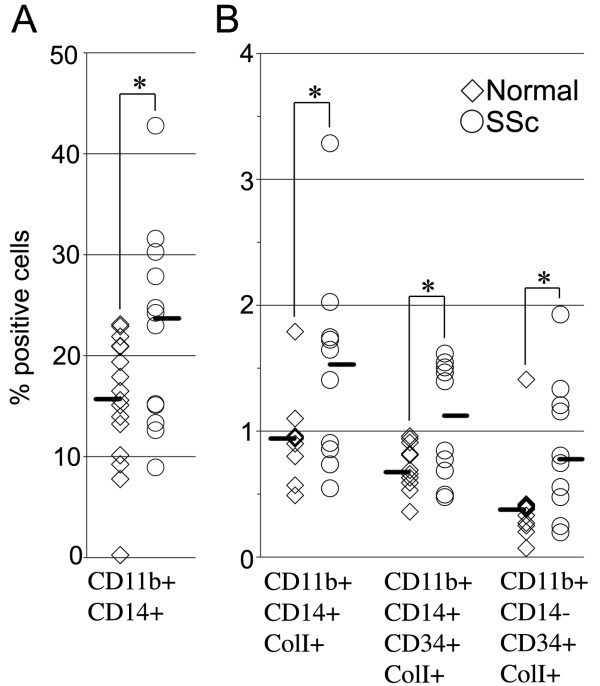
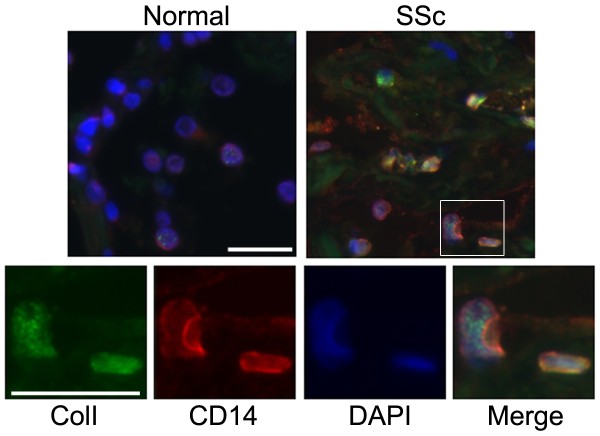
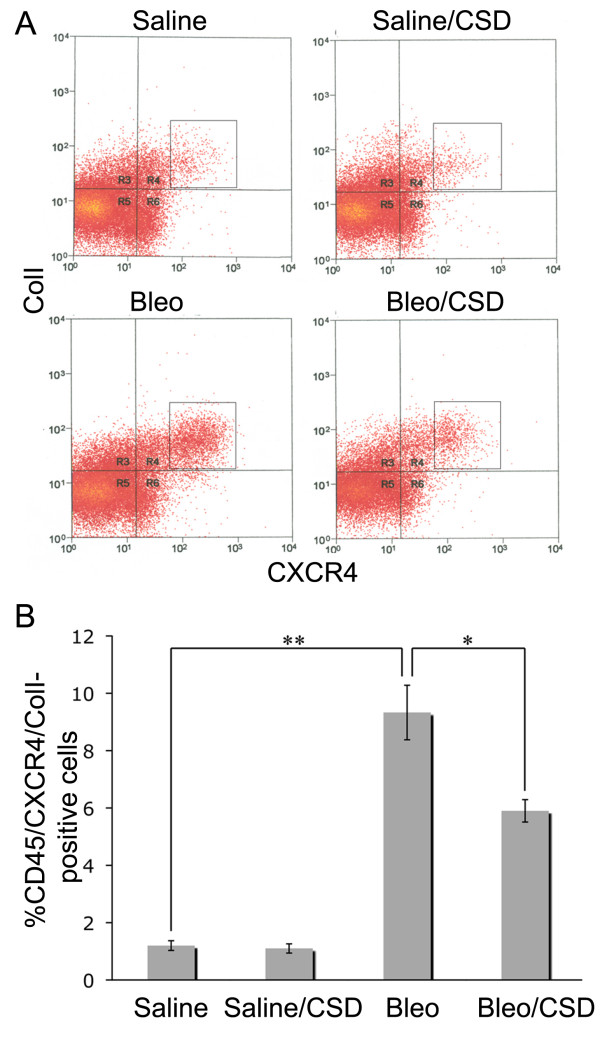
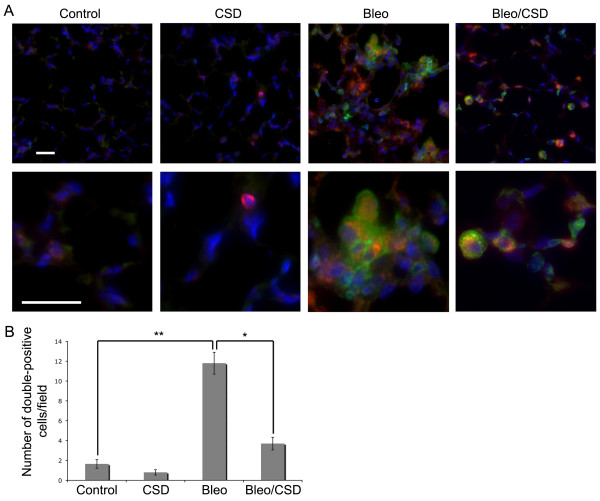
Interstitial lung disease (ILD) is a major cause of morbidity and mortality in scleroderma (systemic sclerosis, or SSc). Fibrocytes are a monocyte-derived cell population implicated in the pathogenesis of fibrosing disorders. Given the recently recognized importance of caveolin-1 in regulating function and signaling in SSc monocytes, in the present study we examined the role of caveolin-1 in the migration and/or trafficking and phenotype of monocytes and fibrocytes in fibrotic lung disease in human patients and an animal model. These studies fill a gap in our understanding of how monocytes and fibrocytes contribute to SSc-ILD pathology. We found that C-X-C chemokine receptor type 4-positive (CXCR4+)/collagen I-positive (ColI+), CD34+/ColI+ and CD45+/ColI+ cells are present in SSc-ILD lungs, but not in control lungs, with CXCR4+ cells being most prevalent. Expression of CXCR4 and its ligand, stromal cell-derived factor 1 (CXCL12), are also highly upregulated in SSc-ILD lung tissue. SSc monocytes, which lack caveolin-1 and therefore overexpress CXCR4, exhibit almost sevenfold increased migration toward CXCL12 compared to control monocytes. Restoration of caveolin-1 function by administering the caveolin scaffolding domain (CSD) peptide reverses this hypermigration. Similarly, transforming growth factor β-treated normal monocytes lose caveolin-1, overexpress CXCR4 and exhibit 15-fold increased monocyte migration that is CSD peptide-sensitive. SSc monocytes exhibit a different phenotype than normal monocytes, expressing high levels of ColI, CD14 and CD34. Because ColI+/CD14+ cells are prevalent in SSc blood, we looked for such cells in lung tissue and confirmed their presence in SSc-ILD lungs but not in normal lungs. Finally, in the bleomycin model of lung fibrosis, we show that CSD peptide diminishes fibrocyte accumulation in the lungs. Our results suggest that low caveolin-1 in SSc monocytes contributes to ILD via effects on cell migration and phenotype and that the hyperaccumulation of fibrocytes in SSc-ILD may result from the altered phenotype and migratory activity of their monocyte precursors.
Overview
The claims and statistics of this paper haven’t been checked yet.
Free: it reads the open-access text and checks the first 5 claims that cite a source we can check. Create a free account to check every claim.
Integrity signals
Registry
Cites
Statistics
Figures
Verification
Claims the paper makes
The claims and statistics of this paper haven’t been checked yet.
Free: it reads the open-access text and checks the first 5 claims that cite a source we can check. Create a free account to check every claim.
Claims other papers make about this one
Each is checked against this paper’s own text: does it say what the citing paper says it does?
In the citing paper
“Of note, fibrocytes can originate from monocytes, and, importantly, SSc monocytes display increased maturation toward myofibroblasts as indicated by αSMA expression when compared to monocytes from healthy controls (87).”
From Unraveling SSc Pathophysiology; The Myofibroblast (2018) · cites this paper as [87]
In the citing paper
“Paradoxically, fibrocyte numbers in blood are lower in SSc patients than in healthy controls.”
From Unraveling SSc Pathophysiology; The Myofibroblast (2018) · cites this paper as [87]
In the citing paper
“Furthermore, fibrocyte presence and involvement in pulmonary fibrosis can readily be detected in SSc (87).”
From Unraveling SSc Pathophysiology; The Myofibroblast (2018) · cites this paper as [87]
Self-check
Percentages, sums and reported differences re-computed from the paper’s own numbers.
The self-check needs the paper’s full text.
Citations
Cites
Preliminary criteria for the classification of systemic sclerosis (scleroderma)
Masi, A. T., & Subcommittee For Scleroderma Criteria of the American Rheumatism Association Diagnostic and Therapeutic Criteria Committee (1980) · Arthritis & Rheumatism · doi:10.1002/art.1780230510 · Cited by 4,898
Klinge, U., Park, J.-K., & Klosterhalfen, B. (2013) · Pathobiology · doi:10.1159/000348446 · Cited by 1,783
Circulating Fibrocytes Define a New Leukocyte Subpopulation That Mediates Tissue Repair
Bucala, R., Spiegel, L. A., Chesney, J., Hogan, M., & Cerami, A. (1994) · Molecular Medicine · doi:10.1007/bf03403533 · Cited by 1,308 · cited 1×
“were described previously [6] as a subpopulation of PBMCs that express collagen together with hematopoietic cell surface markers (for example C11b, CD34 and/ or CD45), but that do not express CD14.”
BackgroundCirculating fibrocytes traffic to the lungs in response to CXCL12 and mediate fibrosis
Phillips, R. J., Burdick, M. D., Hong, K., Lutz, M. A., Murray, L. A., Xue, Y. Y., Belperio, J. A., Keane, M. P., & Strieter, R. M. (2004) · Journal of Clinical Investigation · doi:10.1172/jci200420997 · Cited by 1,079 · cited 6×
“Since fibrocytes are derived from monocytes, SSc monocytes overexpress CXCR4 and CXCR4 mediates the migration of monocytes and fibrocytes into injured lung tissue [8], we used micro-Boyden chambers (in which cells placed in the upper chamber migrate through a membrane toward the chemoattractant placed in the lower cha…”
BackgroundMethodInfluentialPeripheral Blood Fibrocytes: Differentiation Pathway and Migration to Wound Sites
Abe, R., Donnelly, S. C., Peng, T., Bucala, R., & Metz, C. N. (2001) · The Journal of Immunology · doi:10.4049/jimmunol.166.12.7556 · Cited by 967 · cited 2×
“In addition, fibrocytes contribute to tissue remodeling by producing high levels of cytokines, fibrogenic growth factors, extracellular matrix proteins and matrix metalloproteinase [1,8-12].”
BackgroundMethodCirculating Fibrocytes Are an Indicator of Poor Prognosis in Idiopathic Pulmonary Fibrosis
Moeller, A., Gilpin, S. E., Ask, K., Cox, G., Cook, D., Gauldie, J., Margetts, P. J., Farkas, L., Dobranowski, J., Boylan, C., et al. (2009) · American Journal of Respiratory and Critical Care Medicine · doi:10.1164/rccm.200810-1534oc · Cited by 513 · cited 8×
“Fibrocytes and CXCR4 +/ColI+ cells are present in the lung tissue of IPF patients, but not in lung tissue from normal subjects [12].”
BackgroundInfluentialCCR2-Mediated Recruitment of Fibrocytes to the Alveolar Space after Fibrotic Injury
Moore, B. B., Kolodsick, J. E., Thannickal, V. J., Cooke, K., Moore, T. A., Hogaboam, C., Wilke, C. A., & Toews, G. B. (2005) · The American Journal of Pathology · doi:10.1016/s0002-9440(10)62289-4 · Cited by 441
Pilling, D., Fan, T., Huang, D., Kaul, B., & Gomer, R. H. (2009) · PLoS ONE · doi:10.1371/journal.pone.0007475 · Cited by 433 · cited 1×
“In contrast to CD14, CD34 is not present on normal monocytes [27].”
BackgroundCaveolin-1: a critical regulator of lung fibrosis in idiopathic pulmonary fibrosis
Wang, X. M., Zhang, Y., Kim, H. P., Zhou, Z., Feghali-Bostwick, C. A., Liu, F., Ifedigbo, E., Xu, X., Oury, T. D., Kaminski, N., et al. (2006) · The Journal of Experimental Medicine · doi:10.1084/jem.20061536 · Cited by 397 · cited 1×
“Our data, together with data from other groups, strongly suggest that caveolin-1 is a key signaling molecule in the monocyte-fibrocyte-fibroblast lineage and is responsible for functional differences observed among cells isolated from SSc-ILD and idiopathic pulmonary fibrosis (IPF) patients compared to control subject…”
ResultFibrocytes are a potential source of lung fibroblasts in idiopathic pulmonary fibrosis
Andersson-Sjöland, A., de Alba, C. G., Nihlberg, K., Becerril, C., Ramírez, R., Pardo, A., Westergren-Thorsson, G., & Selman, M. (2008) · The International Journal of Biochemistry & Cell Biology · doi:10.1016/j.biocel.2008.02.012 · Cited by 360 · cited 11×
“Fibrocytes and CXCR4 +/ColI+ cells are present in the lung tissue of IPF patients, but not in lung tissue from normal subjects [12].”
BackgroundResultInfluentialCohnheim, J. (1867) · Archiv für Pathologische Anatomie und Physiologie und für Klinische Medicin · doi:10.1007/bf02968135 · Cited by 335
The Role of CCL12 in the Recruitment of Fibrocytes and Lung Fibrosis
Moore, B. B., Murray, L., Das, A., Wilke, C. A., Herrygers, A. B., & Toews, G. B. (2006) · American Journal of Respiratory Cell and Molecular Biology · doi:10.1165/rcmb.2005-0239oc · Cited by 309
Hartlapp, I., Abe, R., Saeed, R. W., Peng, T., Voelter, W., Bucala, R., & Metz, C. N. (2001) · The FASEB Journal · doi:10.1096/fj.01-0049com · Cited by 265 · cited 1×
“In addition, fibrocytes contribute to tissue remodeling by producing high levels of cytokines, fibrogenic growth factors, extracellular matrix proteins and matrix metalloproteinase [1,8-12].”
BackgroundCirculating peripheral blood fibrocytes in human fibrotic interstitial lung disease
Mehrad, B., Burdick, M. D., Zisman, D. A., Keane, M. P., Belperio, J. A., & Strieter, R. M. (2007) · Biochemical and Biophysical Research Communications · doi:10.1016/j.bbrc.2006.11.149 · Cited by 255 · cited 3×
“In addition, fibrocytes contribute to tissue remodeling by producing high levels of cytokines, fibrogenic growth factors, extracellular matrix proteins and matrix metalloproteinase [1,8-12].”
BackgroundMethodKeane, M. P., Belperio, J. A., Moore, T. A., Moore, B. B., Arenberg, D. A., Smith, R. E., Burdick, M. D., Kunkel, S. L., & Strieter, R. M. (1999) · The Journal of Immunology · doi:10.4049/jimmunol.162.9.5511 · Cited by 246 · cited 1×
“Ten days after treatment with bleomycin or saline vehicle lungs were removed, diced and digested with collagenase for flow cytometry of fibrocytes in lung tissue [31].”
MethodMathai, S. K., Gulati, M., Peng, X., Russell, T. R., Shaw, A. C., Rubinowitz, A. N., Murray, L. A., Siner, J. M., Antin-Ozerkis, D. E., Montgomery, R. R., et al. (2010) · Laboratory Investigation · doi:10.1038/labinvest.2010.73 · Cited by 239 · cited 7×
“In the current study, we have confirmed and expanded upon recent observations regarding SSc-ILD fibrocytes [7].”
BackgroundResultInfluentialFibrocytes in health and disease
Herzog, E. L., & Bucala, R. (2010) · Experimental Hematology · doi:10.1016/j.exphem.2010.03.004 · Cited by 222
Strieter, R. M., Keeley, E. C., Hughes, M. A., Burdick, M. D., & Mehrad, B. (2009) · Journal of Leukocyte Biology · doi:10.1189/jlb.0309132 · Cited by 199 · cited 4×
“In summary, these data suggest that the recruitment of monocytes and fibrocytes into the lung tissue of SSc patients is mediated by the CXCR4/CXCL12 axis, which in turn is regulated by TGFb and caveolin-1 [13,18].”
BackgroundInfluentialFibrocyte CXCR4 regulation as a therapeutic target in pulmonary fibrosis
Mehrad, B., Burdick, M. D., & Strieter, R. M. (2009) · The International Journal of Biochemistry & Cell Biology · doi:10.1016/j.biocel.2009.02.020 · Cited by 175 · cited 8×
“Fibrocytes and CXCR4 +/ColI+ cells are present in the lung tissue of IPF patients, but not in lung tissue from normal subjects [12].”
BackgroundInfluentialCellular origins of fibroblasts: possible implications for organ fibrosis in systemic sclerosis
Postlethwaite, A. E., Shigemitsu, H., & Kanangat, S. (2004) · Current Opinion in Rheumatology · doi:10.1097/01.bor.0000139310.77347.9c · Cited by 174 · cited 2×
“Results from our laboratory and others [7,26] indicate that CD45/ColI/CD14 cells exist and are particularly prevalent in samples from SSc-ILD patients.”
ResultIncreased Circulating Fibrocytes in Asthma with Chronic Airflow Obstruction
Wang, C.-H., Huang, C.-D., Lin, H.-C., Lee, K.-Y., Lin, S.-M., Liu, C.-Y., Huang, K.-H., Ko, Y.-S., Chung, K. F., & Kuo, H.-P. (2008) · American Journal of Respiratory and Critical Care Medicine · doi:10.1164/rccm.200710-1557oc · Cited by 170 · cited 1×
“Discussion Fibrocyte accumulation in lung tissue or peripheral blood has been observed in a variety of fibrotic lung diseases, including IPF [12,18-20], SSc [7,21], asthma [22] and COPD [23].”
BackgroundGaldo, F. D., Sotgia, F., de Almeida, C. J., Jasmin, J., Musick, M., Lisanti, M. P., & Jiménez, S. A. (2008) · Arthritis & Rheumatism · doi:10.1002/art.23791 · Cited by 165 · cited 1×
“Our data, together with data from other groups, strongly suggest that caveolin-1 is a key signaling molecule in the monocyte-fibrocyte-fibroblast lineage and is responsible for functional differences observed among cells isolated from SSc-ILD and idiopathic pulmonary fibrosis (IPF) patients compared to control subject…”
ResultAntifibrotic properties of caveolin-1 scaffolding domain in vitro and in vivo
Tourkina, E., Richard, M., Gööz, P., Bonner, M., Pannu, J., Harley, R., Bernatchez, P. N., Sessa, W. C., Silver, R. M., & Hoffman, S. (2008) · American Journal of Physiology-Lung Cellular and Molecular Physiology · doi:10.1152/ajplung.00295.2007 · Cited by 152 · cited 4×
“Immunohistochemistry of human and mouse lung tissue sections was performed as previously described [14].”
MethodResultInfluentialSelf-citationGomperts, B. N., & Strieter, R. M. (2007) · Journal of Leukocyte Biology · doi:10.1189/jlb.0906587 · Cited by 142 · cited 9×
“Fibrocytes and CXCR4 +/ColI+ cells are present in the lung tissue of IPF patients, but not in lung tissue from normal subjects [12].”
BackgroundInfluentialFibrocytes: Bringing new insights into mechanisms of inflammation and fibrosis
Keeley, E. C., Mehrad, B., & Strieter, R. M. (2010) · The International Journal of Biochemistry & Cell Biology · doi:10.1016/j.biocel.2009.10.014 · Cited by 106 · cited 1×
“Other investigators dispute the idea that the precursors must be CD14 [18,25].”
BackgroundCirculating monocytes from healthy individuals and COPD patients
Aldonyte, R., Jansson, L., Piitulainen, E., & Janciauskiene, S. (2003) · Respiratory Research · doi:10.1186/1465-9921-4-11 · Cited by 102 · cited 3×
“Aldonyte R, Jansson L, Piitulainen E, Janciauskiene S: Circulating monocytes from healthy individuals and COPD patients.”
BackgroundTannic acid is an inhibitor of CXCL12 (SDF-1alpha)/CXCR4 with antiangiogenic activity.
Chen, X., Beutler, J. A., McCloud, T. G., Loehfelm, A., Yang, L., Dong, H., Chertov, O., Salcedo, R., Oppenheim, J. J., & Howard, O. M. Z. (2003) · PubMed · Cited by 100
Caveolin-1 regulates leucocyte behaviour in fibrotic lung disease
Tourkina, E., Richard, M., Oates, J., Hofbauer, A., Bonner, M., Gööz, P., Visconti, R., Zhang, J., Znoyko, S., Hatfield, C. M., et al. (2010) · Annals of the Rheumatic Diseases · doi:10.1136/ard.2009.117580 · Cited by 65 · cited 10×
“All 13 patients had evidence of SSc-ILD as previously defined [13].”
BackgroundMethodResultInfluentialSelf-citationFibrocytes: New Insights into Tissue Repair and Systemic Fibroses
Bucala, R. (2007) · WORLD SCIENTIFIC eBooks · doi:10.1142/6163 · Cited by 29
Immunity to Infectious Diseases
Ulrichs, T. (2009) · Statistics in the health sciences · doi:10.1007/978-0-387-93835-6_13 · Cited by 6
Research works printed but not linked: 3
- Metchnikov II Immunity of Infectious Diseases 1901 Paris, France. Masson
- Maximow AA Cultures of blood leucocytes: from lymphocyte and monocyte to connective tissue Arch Exp Zellforsch 1928 5 169 268
- Fischer AC Transformation outside of organism of mononuclears into fibroblasts Compt Rend Soc Biol 1925 92 109 112
Cited by
Fibroblasts in fibrosis: novel roles and mediators
Kendall, R. T., & Feghali-Bostwick, C. A. (2014) · Frontiers in Pharmacology · doi:10.3389/fphar.2014.00123 · Cited by 1,082
Scleroderma pathogenesis: a pivotal role for fibroblasts as effector cells
Gilbane, A. J., Denton, C. P., & Holmes, A. M. (2013) · Arthritis Research & Therapy · doi:10.1186/ar4230 · Cited by 196
“Since then, they have been associated with a broad range of fi brosing disorders, including SSc, sickle cell lung disease, asthma, pulmonary hypertension and atherosclerosis [31-35].”
BackgroundMethodThe Living Scar – Cardiac Fibroblasts and the Injured Heart
Rog-Zielinska, E. A., Norris, R. A., Kohl, P., & Markwald, R. (2016) · Trends in Molecular Medicine · doi:10.1016/j.molmed.2015.12.006 · Cited by 171
Unraveling SSc Pathophysiology; The Myofibroblast
van Caam, A., Vonk, M., van den Hoogen, F., van Lent, P., & van der Kraan, P. (2018) · Frontiers in Immunology · doi:10.3389/fimmu.2018.02452 · Cited by 153
“Furthermore, fibrocyte presence and involvement in pulmonary fibrosis can readily be detected in SSc (87).”
BackgroundWermuth, P. J., & Jimenez, S. A. (2015) · Clinical and Translational Medicine · doi:10.1186/s40169-015-0047-4 · Cited by 141
“This effect was mediated through induction of monocyte and fibrocyte expression of the remodeling/pro-fibrotic (M2) macrophage marker CXCR4 that regulates monocyte retention in the bone marrow [230].”
Background
Metadata
- Authors
- Tourkina, E., Bonner, M., Oates, J., Hofbauer, A., Richard, M., Znoyko, S., Visconti, R. P., Zhang, J., Hatfield, C. M., Silver, R. M., & Hoffman, S.
- Affiliations
- Medical University of South Carolina (US)
- Corresponding author
- Tourkina, Elena
- Venue
- Fibrogenesis & Tissue Repair
- Published
- 2011-07-01
- Volume
- 4
- Issue
- 1
- Pages
- 15-15
- ISSN
- 1755-1536 (ISSN-L)
- PMC
- PMC3155832
- OpenAlex
- W2016100345
- Cited by
- 104
- References
- 32
- Citations by year
- 2026: 1 · 2025: 3 · 2024: 4 · 2023: 3 · 2022: 5 · 2021: 2 · 2020: 7 · 2019: 10 · 2018: 8 · 2017: 11 · 2016: 8 · 2015: 4 · 2014: 9 · 2013: 12 · 2012: 15
- FWCI
- 8.53
- Type
- journal article
- Language
- en
- Open access
- hybrid
- doi.org
- Licence
- cc-by
- creativecommons.org/licenses/by/2.0 (tdm)
- Locations
- Fibrogenesis & Tissue Repair (publishedVersion, cc-by)
- Europe PMC (PubMed Central) (publishedVersion, cc-by)
- PubMed Central (publishedVersion, cc-by)
- PubMed (publishedVersion)
- Funders
- Yale University
- Medical University of South Carolina (C06 RR015455)
- University of South Carolina
- Fondation Leducq
- National Institutes of Health (1c06rr015455-01a1, RR-016434, AR049459)
- National Center for Complementary and Alternative Medicine
- National Institute of Arthritis and Musculoskeletal and Skin Diseases (R01AR062078, P60AR049459, P60AR062755)
- National Center for Research Resources (UL1RR029882, P20RR021949, C06 RR-015455)
- National Center for Complementary and Integrative Health (R21AT004450)
- Topics
- Health Sciences › Medicine › Rheumatology › Systemic Sclerosis and Related Diseases
- Health Sciences › Medicine › Pulmonary and Respiratory Medicine › Interstitial Lung Diseases and Idiopathic Pulmonary Fibrosis
- Health Sciences › Medicine › Pulmonary and Respiratory Medicine › Pulmonary Hypertension Research and Treatments
- Keywords
- systemic sclerosis, interstitial lung disease, caveolin-1, monocytes, fibrocytes, CXCR4, CXCL12, monocyte migration, pulmonary fibrosis, bleomycin-induced lung fibrosis, type I collagen, TGF-beta, CD14, CD34
About these checks
Registry, retraction, Cites and statistics results are computed, not judged, with one exception: a printed reference that no index lists is read once by a model before it counts as a citation error. Claims are extracted by a model and kept only when their quote appears verbatim in the text; each cited source is then checked, with a model’s help, for whether it says what the claim relies on. Those verdicts can be wrong — read the claim’s quote and the cited source before relying on one.
Statistics and arithmetic are recomputed, not judged.
Confidence bands are shown only for fields calibrated on our annotated test set. None is calibrated yet, so no band is shown.
What counts as a claim ›How we measure confidence ›How we check this ›
Are you an author, or do you see a problem with this page? Request a review
Data sources
Bibliographic data: Semantic Scholar, OpenAlex, Crossref.
Contains information from the Semantic Scholar Academic Graph Datasets, made available under the ODC Attribution License (ODC-BY 1.0).
Semantic Scholar’s data is described in: Kinney, R., et al. (2023). The Semantic Scholar Open Data Platform. arXiv:2301.10140.
