

A gene expression signature of RAS pathway dependence predicts response to PI3K and RAS pathway inhibitors and expands the population of RAS pathway activated tumors
Open accessThe DOI matches its Crossref record; 30 of the 30 references it cites were found in a registry or an index.
Abstract
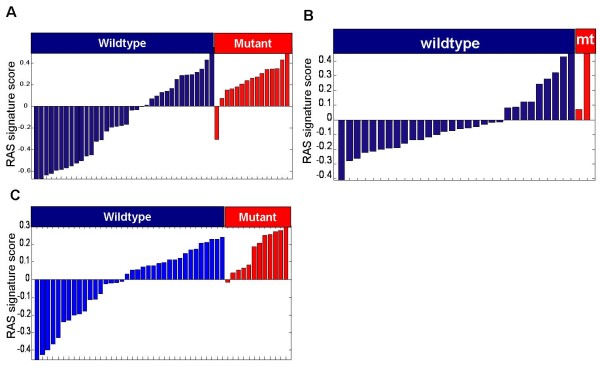
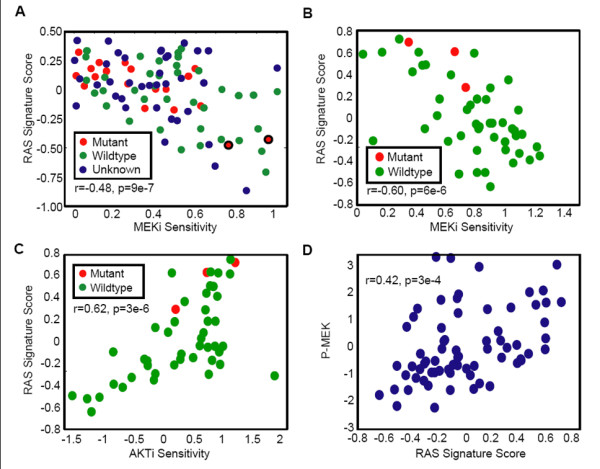
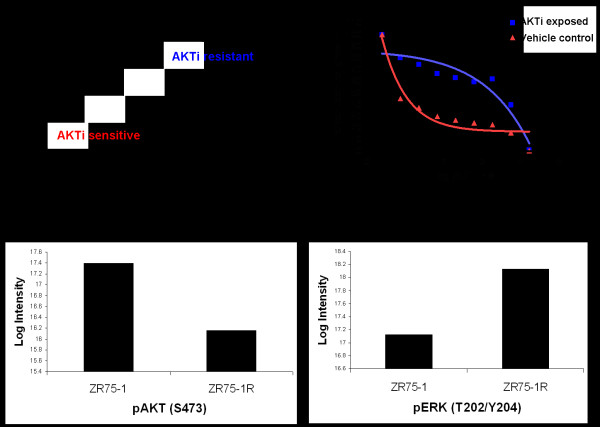
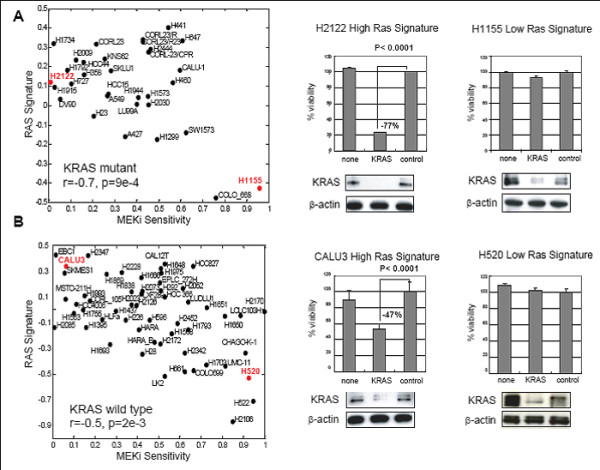
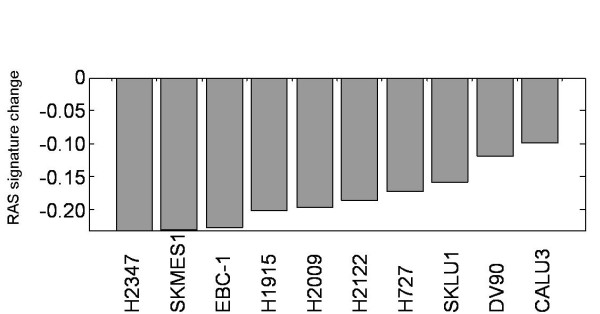
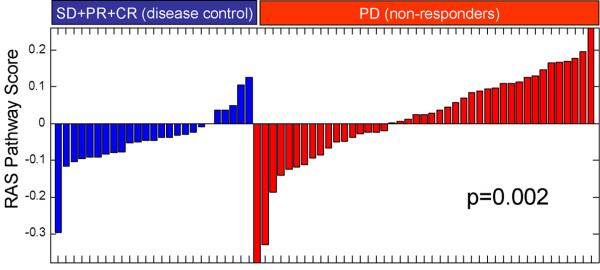
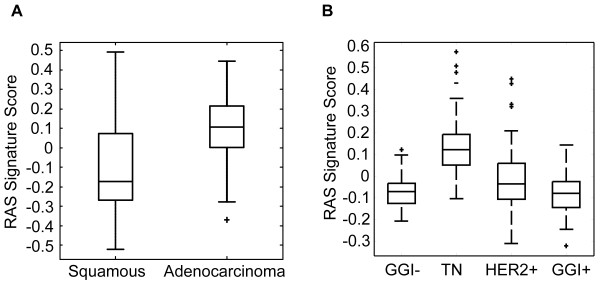
Background: Hyperactivation of the Ras signaling pathway is a driver of many cancers, and RAS pathway activation can predict response to targeted therapies. Therefore, optimal methods for measuring Ras pathway activation are critical. The main focus of our work was to develop a gene expression signature that is predictive of RAS pathway dependence. Methods: We used the coherent expression of RAS pathway-related genes across multiple datasets to derive a RAS pathway gene expression signature and generate RAS pathway activation scores in pre-clinical cancer models and human tumors. We then related this signature to KRAS mutation status and drug response data in pre-clinical and clinical datasets. Results: The RAS signature score is predictive of KRAS mutation status in lung tumors and cell lines with high (> 90%) sensitivity but relatively low (50%) specificity due to samples that have apparent RAS pathway activation in the absence of a KRAS mutation. In lung and breast cancer cell line panels, the RAS pathway signature score correlates with pMEK and pERK expression, and predicts resistance to AKT inhibition and sensitivity to MEK inhibition within both KRAS mutant and KRAS wild-type groups. The RAS pathway signature is upregulated in breast cancer cell lines that have acquired resistance to AKT inhibition, and is downregulated by inhibition of MEK. In lung cancer cell lines knockdown of KRAS using siRNA demonstrates that the RAS pathway signature is a better measure of dependence on RAS compared to KRAS mutation status. In human tumors, the RAS pathway signature is elevated in ER negative breast tumors and lung adenocarcinomas, and predicts resistance to cetuximab in metastatic colorectal cancer. Conclusions: These data demonstrate that the RAS pathway signature is superior to KRAS mutation status for the prediction of dependence on RAS signaling, can predict response to PI3K and RAS pathway inhibitors, and is likely to have the most clinical utility in lung and breast tumors.
Overview
The claims and statistics of this paper haven’t been checked yet.
Free: it reads the open-access text and checks the first 5 claims that cite a source we can check. Create a free account to check every claim.
Integrity signals
Registry
Cites
Statistics
Figures
Verification
Claims the paper makes
The claims and statistics of this paper haven’t been checked yet.
Free: it reads the open-access text and checks the first 5 claims that cite a source we can check. Create a free account to check every claim.
Claims other papers make about this one
Each is checked against this paper’s own text: does it say what the citing paper says it does?
The source backs part of the claim, not all of it — or backs it for a different population, condition or comparison.
In the citing paper
“supporting the notion that some KRAS-mutated CRC tumors are decoupled from RAS/MEK pathway activation [32]”
From An integrative gene expression signature analysis identifies CMS4 KRAS-mutated colorectal cancers sensitive to combined MEK and SRC targeted therapy (2022) · cites this paper as [32]
Experimental — accuracy not yet measured
Self-check
Percentages, sums and reported differences re-computed from the paper’s own numbers.
The self-check needs the paper’s full text.
Citations
Cites
2 retracted
Genomic signatures to guide the use of chemotherapeutics
Potti, A., Dressman, H. K., Bild, A., Riedel, R. F., Chan, G., Sayer, R., Cragun, J., Cottrill, H., Kelley, M. J., Petersen, R., et al. (2006) · Nature Medicine · doi:10.1038/nm1491 · Cited by 593 · cited 1×
“Moreover, recent studies have shown that pathway signatures can predict drug response in vitro and stratify tumors according to predicted pathway status [9-13].”
RetractedA Genomic Strategy to Refine Prognosis in Early-Stage Non–Small-Cell Lung Cancer
Potti, A., Mukherjee, S., Petersen, R., Dressman, H. K., Bild, A., Koontz, J., Kratzke, R., Watson, M. A., Kelley, M., Ginsburg, G. S., et al. (2006) · New England Journal of Medicine · doi:10.1056/nejmoa060467 · Cited by 576 · cited 1×
“To further explore the clinical utility of the RAS pathway signature in lung and breast cancer, we assessed the distribution of and prevalence of RAS pathway signature scores across breast (Expression Project for Oncology; GSE 2109), and lung [21] tumors in publicly available datasets.”
RetractedK-ras Mutations and Benefit from Cetuximab in Advanced Colorectal Cancer
Karapetis, C. S., Khambata-Ford, S., Jonker, D. J., O'Callaghan, C. J., Tu, D., Tebbutt, N. C., Simes, R. J., Chalchal, H., Shapiro, J. D., Robitaille, S., et al. (2008) · New England Journal of Medicine · doi:10.1056/nejmoa0804385 · Cited by 3,622 · cited 3×
“A gene expression signature-based pathway readout may be more appropriate than relying on a single indicator of pathway activity, as alterations in multiple signaling components could lead to pathway activation and result in similar downstream effects (for example, mutations in Braf also lead to pathway activation and…”
Targeting RAS signalling pathways in cancer therapy
Downward, J. (2003) · Nature Reviews Cancer · doi:10.1038/nrc969 · Cited by 3,256 · cited 1×
“Other candidate alterations include mutation sin H-ras, activation of receptor tyrosine kinases like EGFR, deletion of GTPase activating proteins, and other mechanisms (reviewed in [27]).”
Wild-Type KRAS Is Required for Panitumumab Efficacy in Patients With Metastatic Colorectal Cancer
Amado, R. G., Wolf, M., Peeters, M., Van Cutsem, E., Siena, S., Freeman, D. J., Juan, T., Sikorski, R., Suggs, S., Radinsky, R., et al. (2008) · Journal of Clinical Oncology · doi:10.1200/jco.2007.14.7116 · Cited by 3,207 · cited 1×
“For example, KRAS mutations are associated with decreased disease control rate, shorter progression-free survival and reduced overall survival in patients with advanced or metastatic colorectal cancer treated with the EGFR-targeting antibodies cetuximab or panitumumab [4-6].”
Sotiriou, C., Wirapati, P., Loi, S., Harris, A., Fox, S., Smeds, J., Nordgren, H., Farmer, P., Praz, V., Haibe-Kains, B., et al. (2006) · JNCI: Journal of the National Cancer Institute · doi:10.1093/jnci/djj052 · Cited by 2,063 · cited 1×
“For (B), GGI = genomic grade index [32].”
Oncogenic pathway signatures in human cancers as a guide to targeted therapies
Bild, A. H., Yao, G., Chang, J. T., Wang, Q., Potti, A., Chasse, D., Joshi, M.-B., Harpole, D., Lancaster, J. M., Berchuck, A., et al. (2006) · Nature · doi:10.1038/nature04296 · Cited by 2,032 · cited 3×
“activity, we started with published RAS pathway signatures generated using different model systems by three laboratories [9,12,17].”
Wild-Type BRAF Is Required for Response to Panitumumab or Cetuximab in Metastatic Colorectal Cancer
Di Nicolantonio, F., Martini, M., Molinari, F., Sartore-Bianchi, A., Arena, S., Saletti, P., De Dosso, S., Mazzucchelli, L., Frattini, M., Siena, S., et al. (2008) · Journal of Clinical Oncology · doi:10.1200/jco.2008.18.0786 · Cited by 1,591 · cited 3×
“A gene expression signature-based pathway readout may be more appropriate than relying on a single indicator of pathway activity, as alterations in multiple signaling components could lead to pathway activation and result in similar downstream effects (for example, mutations in Braf also lead to pathway activation and…”
Expression profiling using microarrays fabricated by an ink-jet oligonucleotide synthesizer
Hughes, T. R., Mao, M., Jones, A. R., Burchard, J., Marton, M. J., Shannon, K. W., Lefkowitz, S. M., Ziman, M., Schelter, J. M., Meyer, M. R., et al. (2001) · Nature Biotechnology · doi:10.1038/86730 · Cited by 1,298 · cited 1×
“Samples profiled on Agilent arrays: Samples were amplified and labeled using a custom automated version of the 5 μg RT/IVT protocol described in [31].”
Self-citationThe PI3K Pathway As Drug Target in Human Cancer
Courtney, K. D., Corcoran, R. B., & Engelman, J. A. (2010) · Journal of Clinical Oncology · doi:10.1200/jco.2009.25.3641 · Cited by 1,237 · cited 1×
“Background Signal transduction in response to growth factor receptor activation in tumors is a complex process that involves downstream signaling through the RAS (reviewed in [1]) and PI3K (reviewed in [2]) signaling pathways.”
Khambata-Ford, S., Garrett, C. R., Meropol, N. J., Basik, M., Harbison, C. T., Wu, S., Wong, T. W., Huang, X., Takimoto, C. H., Godwin, A. K., et al. (2007) · Journal of Clinical Oncology · doi:10.1200/jco.2006.10.5437 · Cited by 1,125 · cited 5×
“For this purpose, we compared baseline levels of the RAS pathway signature to clinical response to the EGFR inhibitor cetuximab in a published dataset of metastatic colorectal carcinoma patients [5].”
InfluentialHigh-throughput oncogene mutation profiling in human cancer
Thomas, R. K., Baker, A. C., DeBiasi, R. M., Winckler, W., LaFramboise, T., Lin, W. M., Wang, M., Feng, W., Zander, T., MacConaill, L. E., et al. (2007) · Nature Genetics · doi:10.1038/ng1975 · Cited by 988 · cited 1×
“Lung tumor mutation data were generated using mass spectrometry-based genotyping (OncoMap) [30].”
Blockade of the MAP kinase pathway suppresses growth of colon tumors in vivo
Sebolt-Leopold, J. S., Dudley, D. T., Herrera, R., Becelaere, K. V., Wiland, A., Gowan, R. C., Tecle, H., Barrett, S. D., Bridges, A., Przybranowski, S., et al. (1999) · Nature Medicine · doi:10.1038/10533 · Cited by 970 · cited 1×
“Sensitivity of cells to PD325901 (a derivative of CI-1040 [28], a potent and selective noncompetitive inhibitor of MEK1 and MEK2) and MK-2206, an allosteric inhibitor of AKT1, AKT2, and AKT3 [29] was determined at 8 concentrations using Cell Titer Glo (Promega; Madison, WI).”
Paweletz, C. P., Charboneau, L., Bichsel, V. E., Simone, N. L., Chen, T., Gillespie, J. W., Emmert-Buck, M. R., Roth, M. J., Petricoin III, E. F., & Liotta, L. A. (2001) · Oncogene · doi:10.1038/sj.onc.1204265 · Cited by 956
Self-citationLinardou, H., Dahabreh, I. J., Kanaloupiti, D., Siannis, F., Bafaloukos, D., Kosmidis, P., Papadimitriou, C. A., & Murray, S. (2008) · The Lancet Oncology · doi:10.1016/s1470-2045(08)70206-7 · Cited by 739 · cited 1×
“This is consistent with the known association between KRAS mutations and lung adenocarcinomas, but suggests that the true proportion of lung tumors with elevated RAS pathway activity is larger than the ~15% reported prevalence of KRAS mutations in lung cancer [22, 23 ].”
Pratilas, C. A., Taylor, B. S., Ye, Q., Viale, A., Sander, C., Solit, D. B., & Rosen, N. (2009) · Proceedings of the National Academy of Sciences · doi:10.1073/pnas.0900780106 · Cited by 614 · cited 1×
“For example, Pratilas et al [ 26 ] recently showed that tumors with activating mutations in Braf are insensitive to feedback downregulation of RAF signaling after MEK inhibition,”
Mascaux, C., Iannino, N., Martin, B., Paesmans, M., Berghmans, T., Dusart, M., Haller, A., Lothaire, P., Meert, A.-P., Noel, S., et al. (2005) · British Journal of Cancer · doi:10.1038/sj.bjc.6602258 · Cited by 605 · cited 1×
“This is consistent with the known association between KRAS mutations and lung adenocarcinomas, but suggests that the true proportion of lung tumors with elevated RAS pathway activity is larger than the ~15% reported prevalence of KRAS mutations in lung cancer [22,23].”
An oncogenic KRAS2 expression signature identified by cross-species gene-expression analysis.
Sweet-Cordero, A., Mukherjee, S., Subramanian, A., You, H., Roix, J. J., Ladd-Acosta, C., Mesirov, J., Golub, T. R., & Jacks, T. (2005) · Nature Genetics · doi:10.1038/ng1490 · Cited by 414 · cited 3×
“activity, we started with published RAS pathway signatures generated using different model systems by three laboratories [9,12,17].”
Jackman, D. M., Miller, V. A., Cioffredi, L.-A., Yeap, B. Y., Jänne, P. A., Riely, G. J., Ruiz, M. G., Giaccone, G., Sequist, L. V., & Johnson, B. E. (2009) · Clinical Cancer Research · doi:10.1158/1078-0432.ccr-09-0888 · Cited by 379 · cited 1×
“As such, there has been no clear relationship between KRAS mutation status and clinical outcomes in patients treated with the EGFR tyrosine kinase inhibitors gefitinib or erlotinib [7].”
Warnat, P., Eils, R., & Brors, B. (2005) · BMC Bioinformatics · doi:10.1186/1471-2105-6-265 · Cited by 228 · cited 1×
“However, comparing pathway signatures to one another and assessing their robustness in independent datasets can be hampered by the use of heterogeneous microarray profiling and analysis methods [14-16].”
Chapter 1 Ras Signaling and Therapies
(2009) · Advances in Cancer Research · doi:10.1016/s0065-230x(09)02001-6 · Cited by 205 · cited 1×
“Background Signal transduction in response to growth factor receptor activation in tumors is a complex process that involves downstream signaling through the RAS (reviewed in [1]) and PI3K (reviewed in [2]) signaling pathways.”
High‐resolution genomic and expression analyses of copy number alterations in breast tumors
Haverty, P. M., Fridlyand, J., Li, L., Getz, G., Beroukhim, R., Lohr, S., Wu, T. D., Cavet, G., Zhang, Z., & Chant, J. (2008) · Genes, Chromosomes and Cancer · doi:10.1002/gcc.20558 · Cited by 158 · cited 1×
“As breast cancers are reported to have a very low prevalence of KRAS mutations [25], these results suggest that ER negative breast tumors frequently have elevated RAS pathway activity, even in the absence of frequent KRAS mutation.”
Targeting the Mitogen-Activated Protein Kinase Pathway in the Treatment of Malignant Melanoma
Panka, D. J., Atkins, M. B., & Mier, J. W. (2006) · Clinical Cancer Research · doi:10.1158/1078-0432.ccr-05-2539 · Cited by 120 · cited 1×
“These include multiple transcription factors and targets of ERK signaling such as FOS and IER3 as well as MAPK-phosphatases and sprouty genes involved in feedback inhibition of MEK/ERK signaling (dual specificity phosphatases 6 (DUSP6), DUSP1, DUSP4, DUSP5 and SPRY4)) [18].”
A Genomic Strategy to Elucidate Modules of Oncogenic Pathway Signaling Networks
Chang, J. T., Carvalho, C., Mori, S., Bild, A. H., Gatza, M. L., Wang, Q., Lucas, J. E., Potti, A., Febbo, P. G., West, M., et al. (2009) · Molecular Cell · doi:10.1016/j.molcel.2009.02.030 · Cited by 107 · cited 1×
“Moreover, recent studies have shown that pathway signatures can predict drug response in vitro and stratify tumors according to predicted pathway status [9-13].”
Cross platform microarray analysis for robust identification of differentially expressed genes
Bosotti, R., Locatelli, G., Healy, S., Scacheri, E., Sartori, L., Mercurio, C., Calogero, R., & Isacchi, A. (2007) · BMC Bioinformatics · doi:10.1186/1471-2105-8-s1-s5 · Cited by 72 · cited 1×
“However, comparing pathway signatures to one another and assessing their robustness in independent datasets can be hampered by the use of heterogeneous microarray profiling and analysis methods [ 14-16 ].”
Blum, R., Elkon, R., Yaari, S., Zundelevich, A., Jacob‐Hirsch, J., Rechavi, G., Shamir, R., & Kloog, Y. (2007) · Cancer Research · doi:10.1158/0008-5472.can-06-4287 · Cited by 54 · cited 2×
“activity, we started with published RAS pathway signatures generated using different model systems by three laboratories [9,12,17].”
Severgnini, M., Bicciato, S., Mangano, E., Scarlatti, F., Mezzelani, A., Mattioli, M., Ghidoni, R., Peano, C., Bonnal, R. J. P., Viti, F., et al. (2006) · Analytical Biochemistry · doi:10.1016/j.ab.2006.03.023 · Cited by 44 · cited 1×
“However, comparing pathway signatures to one another and assessing their robustness in independent datasets can be hampered by the use of heterogeneous microarray profiling and analysis methods [14-16].”
Biomarker Discovery: Identification of a Growth Factor Gene Signature
Loboda, A. P., Nebozhyn, M., Cheng, C., Vessey, R., Huang, P., Dai, H. A., & Watters, J. W. F. (2009) · Clinical Pharmacology & Therapeutics · doi:10.1038/clpt.2009.48 · Cited by 22 · cited 1×
“We calculated a composite score for our RAS pathway signature as described in [19].”
Self-citationLiu, Z., Wang, M., Alvarez, J. V., Bonney, M., Chen, C.-C., D’Cruz, C. M., Pan, T.-C., Tadesse, M. G., & Chodosh, L. A. (2008) · Genome biology · doi:10.1186/gb-2008-9-12-r180 · Cited by 14 · cited 1×
“Moreover, recent studies have shown that pathway signatures can predict drug response in vitro and stratify tumors according to predicted pathway status [9-13].”
The most important news at ASCO 2009
DeVita, V. T. (2009) · Nature Reviews Clinical Oncology · doi:10.1038/nrclinonc.2009.93 · Cited by 3 · cited 1×
“As AKT is a central node in the PI3K pathway and MEK is a central node in the RAS pathway, developing inhibitors of AKT and MEK is a strategy being pursued by the pharmaceutical industry [3].”
Research works printed but not linked: 2
- Yan L MK-2206: A potent oral allosteric AKT inhibitor American Association for Cancer Research; April 19; Denver, CO 2009
- Sotiriou C Wirapati P Loi S Harris A Fox S Smeds J Nordgren H Farmer P Praz V Haibe-Kains B Gene Expression Profiling in Breast Cancer: Understanding the Molecular Basis of Histologic Grade To Improve Prognosis J Natl Cancer Inst 2006 98 262 272 10.1093/jnci/djj052 16478745 · DOI · Paper page
Cited by
Oncogenic RAS Signaling Promotes Tumor Immunoresistance by Stabilizing PD-L1 mRNA
Coelho, M. A., de Carné Trécesson, S., Rana, S., Zecchin, D., Moore, C., Molina-Arcas, M., East, P., Spencer-Dene, B., Nye, E., Barnouin, K., et al. (2017) · Immunity · doi:10.1016/j.immuni.2017.11.016 · Cited by 653
“To account for the effects of alternative oncogenes that can activate downstream RAS effector pathways such as EGFR, BRAF, and ALK, we used two published gene expression signatures for RAS activation (Loboda et al., 2010; Sweet-Cordero et al., 2005) to segregate patient samples into ‘‘high’’ and ‘‘low’’ RAS pathway ac…”
MethodMEK1 and MEK2 inhibitors and cancer therapy: the long and winding road
Caunt, C. J., Sale, M. J., Smith, P. D., & Cook, S. J. (2015) · Nature Reviews Cancer · doi:10.1038/nrc4000 · Cited by 606
Hofmann, M. H., Gmachl, M., Ramharter, J., Savarese, F., Gerlach, D., Marszalek, J. R., Sanderson, M. P., Kessler, D., Trapani, F., Arnhof, H., et al. (2021) · Cancer Discovery · doi:10.1158/2159-8290.cd-20-0142 · Cited by 444
“S3f and Supplementary Table S7) in line 314 with published data on gene expression responses to other specific MAPK pathway inhibitors 315 (34,35).”
ResultSchabath, M. B., Welsh, E. A., Fulp, W. J., Chen, L., Teer, J. K., Thompson, Z. J., Engel, B. E., Xie, M., Berglund, A. E., Creelan, B. C., et al. (2016) · Oncogene · doi:10.1038/onc.2015.375 · Cited by 416
An unbiased oncology compound screen to identify novel combination strategies
O'Neil, J., Benita, Y., Feldman, I., Chenard, M., Roberts, B., Liu, Y., Li, J., Kral, A., Lejnine, S., Loboda, A., et al. (2016) · Molecular Cancer Therapeutics · doi:10.1158/1535-7163.mct-15-0843 · Cited by 407
“In our work, we show that although the combination is efficacious in a context-dependent manner, combination benefit is not exclusively observed in RASmutant cancer cell lines or in cell lines with high RAS signature (Supplementary Table S1), which we believe is a better predictor of RAS pathway activation (25).”
BackgroundSelf-citation
Metadata
- Authors
- Loboda, A., Nebozhyn, M., Klinghoffer, R., Frazier, J., Chastain, M., Arthur, W., Roberts, B., Zhang, T., Chenard, M., Haines, B., Andersen, J., Nagashima, K., Paweletz, C., Lynch, B., Feldman, I., Dai, H., Huang, P., & Watters, J.
- Affiliations
- Merck & Co., Inc., Rahway, NJ, USA (United States) (US)
- Corresponding author
- Watters, James
- ORCID
- Venue
- BMC Medical Genomics
- Published
- 2010-06-30
- Volume
- 3
- Issue
- 1
- Pages
- 26-26
- ISSN
- 1755-8794 (ISSN-L)
- PMC
- PMC2911390
- OpenAlex
- W2022577155
- Cited by
- 152
- References
- 30
- Citations by year
- 2026: 3 · 2025: 4 · 2024: 6 · 2023: 8 · 2022: 8 · 2021: 4 · 2020: 8 · 2019: 11 · 2018: 12 · 2017: 14 · 2016: 14 · 2015: 12 · 2014: 14 · 2013: 10 · 2012: 13
- FWCI
- 4.43
- Type
- journal article
- Language
- en
- Open access
- gold
- doi.org
- Licence
- Locations
- BMC Medical Genomics (publishedVersion, cc-by)
- PubMed Central (publishedVersion, cc-by)
- PubMed (publishedVersion)
- DOAJ (DOAJ: Directory of Open Access Journals) (submittedVersion, cc-by-sa)
- Funders
- Moffitt Cancer Center
- Topics
- Life Sciences › Biochemistry, Genetics and Molecular Biology › Molecular Biology › Protein Kinase Regulation and GTPase Signaling
- Life Sciences › Biochemistry, Genetics and Molecular Biology › Molecular Biology › Melanoma and MAPK Pathways
- Life Sciences › Biochemistry, Genetics and Molecular Biology › Molecular Biology › Protein Tyrosine Phosphatases
- Keywords
- RAS pathway activation, gene expression signatures, KRAS mutation status, PI3K inhibitors, MEK inhibitors, AKT inhibition, drug response prediction, lung cancer, breast cancer, lung adenocarcinoma, cetuximab resistance, colorectal cancer
- MeSH terms
- Cetuximab, Phosphoinositide-3 Kinase Inhibitors, Antibodies, Monoclonal, Antineoplastic Agents, Breast Neoplasms, Enzyme Inhibitors, Female, Humans, Lung Neoplasms, Mutation, Neoplasms, Proto-Oncogene Proteins, Colorectal Neoplasms, Signal Transduction, Gene Expression Regulation, Neoplastic, Proto-Oncogene Proteins p21(ras), ras Proteins, Drug Resistance, Neoplasm, Phosphatidylinositol 3-Kinases, Gene Expression Profiling, Mitogen-Activated Protein Kinase Kinases, Databases, Genetic, RNA Interference, RNA, Small Interfering, Cell Line, Tumor, Proto-Oncogene Proteins c-akt, Antibodies, Monoclonal, Humanized
About these checks
Registry, retraction, Cites and statistics results are computed, not judged, with one exception: a printed reference that no index lists is read once by a model before it counts as a citation error. Claims are extracted by a model and kept only when their quote appears verbatim in the text; each cited source is then checked, with a model’s help, for whether it says what the claim relies on. Those verdicts can be wrong — read the claim’s quote and the cited source before relying on one.
Statistics and arithmetic are recomputed, not judged.
Confidence bands are shown only for fields calibrated on our annotated test set. None is calibrated yet, so no band is shown.
What counts as a claim ›How we measure confidence ›How we check this ›
Are you an author, or do you see a problem with this page? Request a review
Data sources
Bibliographic data: Semantic Scholar, OpenAlex, Crossref.
Contains information from the Semantic Scholar Academic Graph Datasets, made available under the ODC Attribution License (ODC-BY 1.0).
Semantic Scholar’s data is described in: Kinney, R., et al. (2023). The Semantic Scholar Open Data Platform. arXiv:2301.10140.
