

A gene expression signature of RAS pathway dependence predicts response to PI3K and RAS pathway inhibitors and expands the population of RAS pathway activated tumors
Open accessThe DOI matches its Crossref record; 30 of the 30 references it cites were found in a registry or an index.
Abstract
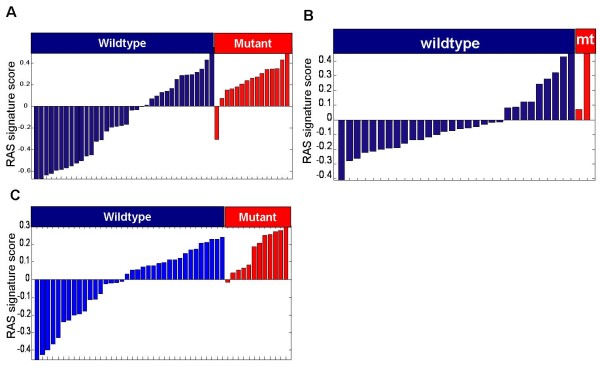
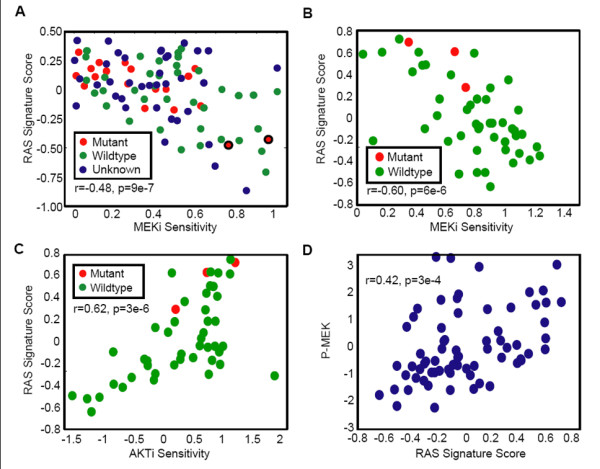
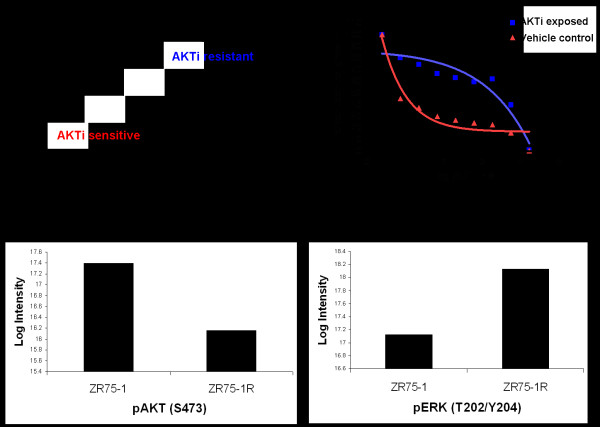
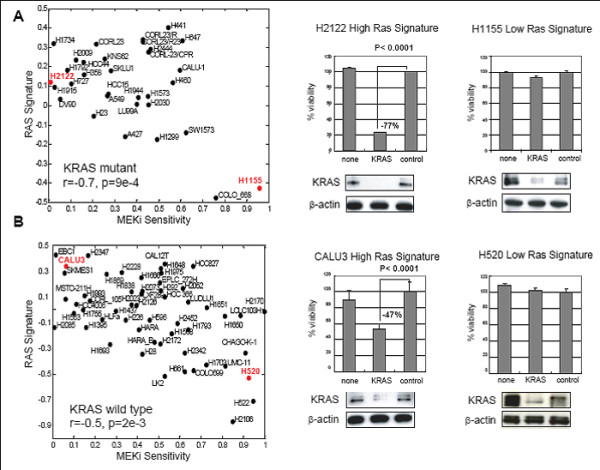
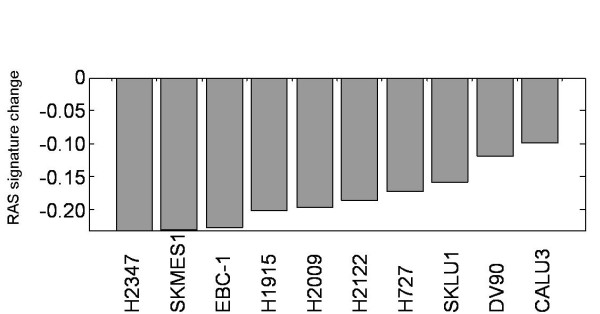
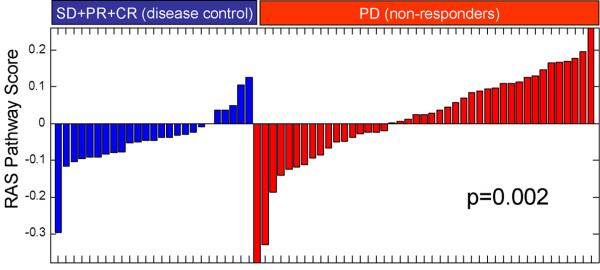
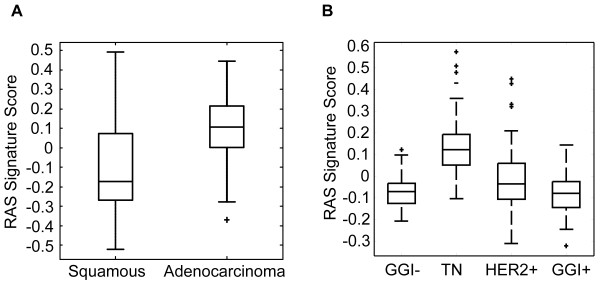
Background: Hyperactivation of the Ras signaling pathway is a driver of many cancers, and RAS pathway activation can predict response to targeted therapies. Therefore, optimal methods for measuring Ras pathway activation are critical. The main focus of our work was to develop a gene expression signature that is predictive of RAS pathway dependence. Methods: We used the coherent expression of RAS pathway-related genes across multiple datasets to derive a RAS pathway gene expression signature and generate RAS pathway activation scores in pre-clinical cancer models and human tumors. We then related this signature to KRAS mutation status and drug response data in pre-clinical and clinical datasets. Results: The RAS signature score is predictive of KRAS mutation status in lung tumors and cell lines with high (> 90%) sensitivity but relatively low (50%) specificity due to samples that have apparent RAS pathway activation in the absence of a KRAS mutation. In lung and breast cancer cell line panels, the RAS pathway signature score correlates with pMEK and pERK expression, and predicts resistance to AKT inhibition and sensitivity to MEK inhibition within both KRAS mutant and KRAS wild-type groups. The RAS pathway signature is upregulated in breast cancer cell lines that have acquired resistance to AKT inhibition, and is downregulated by inhibition of MEK. In lung cancer cell lines knockdown of KRAS using siRNA demonstrates that the RAS pathway signature is a better measure of dependence on RAS compared to KRAS mutation status. In human tumors, the RAS pathway signature is elevated in ER negative breast tumors and lung adenocarcinomas, and predicts resistance to cetuximab in metastatic colorectal cancer. Conclusions: These data demonstrate that the RAS pathway signature is superior to KRAS mutation status for the prediction of dependence on RAS signaling, can predict response to PI3K and RAS pathway inhibitors, and is likely to have the most clinical utility in lung and breast tumors.
Overview
The claims and statistics of this paper haven’t been checked yet.
Free: it reads the open-access text and checks the first 5 claims that cite a source we can check. Create a free account to check every claim.
Integrity signals
Registry
Cites
Statistics
Figures
Verification
Claims the paper makes
The claims and statistics of this paper haven’t been checked yet.
Free: it reads the open-access text and checks the first 5 claims that cite a source we can check. Create a free account to check every claim.
Claims other papers make about this one
Each is checked against this paper’s own text: does it say what the citing paper says it does?
The source backs part of the claim, not all of it — or backs it for a different population, condition or comparison.
In the citing paper
“supporting the notion that some KRAS-mutated CRC tumors are decoupled from RAS/MEK pathway activation [32]”
From An integrative gene expression signature analysis identifies CMS4 KRAS-mutated colorectal cancers sensitive to combined MEK and SRC targeted therapy (2022) · cites this paper as [32]
Experimental — accuracy not yet measured
Self-check
Percentages, sums and reported differences re-computed from the paper’s own numbers.
The self-check needs the paper’s full text.
Citations
Cites
2 retracted
Genomic signatures to guide the use of chemotherapeutics
Potti, A., Dressman, H. K., Bild, A., Riedel, R. F., Chan, G., Sayer, R., Cragun, J., Cottrill, H., Kelley, M. J., Petersen, R., et al. (2006) · Nature Medicine · doi:10.1038/nm1491 · Cited by 593 · cited 1×
“Moreover, recent studies have shown that pathway signatures can predict drug response in vitro and stratify tumors according to predicted pathway status [9-13].”
RetractedA Genomic Strategy to Refine Prognosis in Early-Stage Non–Small-Cell Lung Cancer
Potti, A., Mukherjee, S., Petersen, R., Dressman, H. K., Bild, A., Koontz, J., Kratzke, R., Watson, M. A., Kelley, M., Ginsburg, G. S., et al. (2006) · New England Journal of Medicine · doi:10.1056/nejmoa060467 · Cited by 576 · cited 1×
“To further explore the clinical utility of the RAS pathway signature in lung and breast cancer, we assessed the distribution of and prevalence of RAS pathway signature scores across breast (Expression Project for Oncology; GSE 2109), and lung [21] tumors in publicly available datasets.”
RetractedK-ras Mutations and Benefit from Cetuximab in Advanced Colorectal Cancer
Karapetis, C. S., Khambata-Ford, S., Jonker, D. J., O'Callaghan, C. J., Tu, D., Tebbutt, N. C., Simes, R. J., Chalchal, H., Shapiro, J. D., Robitaille, S., et al. (2008) · New England Journal of Medicine · doi:10.1056/nejmoa0804385 · Cited by 3,622 · cited 3×
“A gene expression signature-based pathway readout may be more appropriate than relying on a single indicator of pathway activity, as alterations in multiple signaling components could lead to pathway activation and result in similar downstream effects (for example, mutations in Braf also lead to pathway activation and…”
Targeting RAS signalling pathways in cancer therapy
Downward, J. (2003) · Nature Reviews Cancer · doi:10.1038/nrc969 · Cited by 3,256 · cited 1×
“Other candidate alterations include mutation sin H-ras, activation of receptor tyrosine kinases like EGFR, deletion of GTPase activating proteins, and other mechanisms (reviewed in [27]).”
Wild-Type KRAS Is Required for Panitumumab Efficacy in Patients With Metastatic Colorectal Cancer
Amado, R. G., Wolf, M., Peeters, M., Van Cutsem, E., Siena, S., Freeman, D. J., Juan, T., Sikorski, R., Suggs, S., Radinsky, R., et al. (2008) · Journal of Clinical Oncology · doi:10.1200/jco.2007.14.7116 · Cited by 3,207 · cited 1×
“For example, KRAS mutations are associated with decreased disease control rate, shorter progression-free survival and reduced overall survival in patients with advanced or metastatic colorectal cancer treated with the EGFR-targeting antibodies cetuximab or panitumumab [4-6].”
Sotiriou, C., Wirapati, P., Loi, S., Harris, A., Fox, S., Smeds, J., Nordgren, H., Farmer, P., Praz, V., Haibe-Kains, B., et al. (2006) · JNCI: Journal of the National Cancer Institute · doi:10.1093/jnci/djj052 · Cited by 2,063 · cited 1×
“For (B), GGI = genomic grade index [32].”
Oncogenic pathway signatures in human cancers as a guide to targeted therapies
Bild, A. H., Yao, G., Chang, J. T., Wang, Q., Potti, A., Chasse, D., Joshi, M.-B., Harpole, D., Lancaster, J. M., Berchuck, A., et al. (2006) · Nature · doi:10.1038/nature04296 · Cited by 2,032 · cited 3×
“activity, we started with published RAS pathway signatures generated using different model systems by three laboratories [9,12,17].”
Wild-Type BRAF Is Required for Response to Panitumumab or Cetuximab in Metastatic Colorectal Cancer
Di Nicolantonio, F., Martini, M., Molinari, F., Sartore-Bianchi, A., Arena, S., Saletti, P., De Dosso, S., Mazzucchelli, L., Frattini, M., Siena, S., et al. (2008) · Journal of Clinical Oncology · doi:10.1200/jco.2008.18.0786 · Cited by 1,591 · cited 3×
“A gene expression signature-based pathway readout may be more appropriate than relying on a single indicator of pathway activity, as alterations in multiple signaling components could lead to pathway activation and result in similar downstream effects (for example, mutations in Braf also lead to pathway activation and…”
Expression profiling using microarrays fabricated by an ink-jet oligonucleotide synthesizer
Hughes, T. R., Mao, M., Jones, A. R., Burchard, J., Marton, M. J., Shannon, K. W., Lefkowitz, S. M., Ziman, M., Schelter, J. M., Meyer, M. R., et al. (2001) · Nature Biotechnology · doi:10.1038/86730 · Cited by 1,298 · cited 1×
“Samples profiled on Agilent arrays: Samples were amplified and labeled using a custom automated version of the 5 μg RT/IVT protocol described in [31].”
Self-citationThe PI3K Pathway As Drug Target in Human Cancer
Courtney, K. D., Corcoran, R. B., & Engelman, J. A. (2010) · Journal of Clinical Oncology · doi:10.1200/jco.2009.25.3641 · Cited by 1,237 · cited 1×
“Background Signal transduction in response to growth factor receptor activation in tumors is a complex process that involves downstream signaling through the RAS (reviewed in [1]) and PI3K (reviewed in [2]) signaling pathways.”
Research works printed but not linked: 2
- Yan L MK-2206: A potent oral allosteric AKT inhibitor American Association for Cancer Research; April 19; Denver, CO 2009
- Sotiriou C Wirapati P Loi S Harris A Fox S Smeds J Nordgren H Farmer P Praz V Haibe-Kains B Gene Expression Profiling in Breast Cancer: Understanding the Molecular Basis of Histologic Grade To Improve Prognosis J Natl Cancer Inst 2006 98 262 272 10.1093/jnci/djj052 16478745 · DOI · Paper page
Cited by
Oncogenic RAS Signaling Promotes Tumor Immunoresistance by Stabilizing PD-L1 mRNA
Coelho, M. A., de Carné Trécesson, S., Rana, S., Zecchin, D., Moore, C., Molina-Arcas, M., East, P., Spencer-Dene, B., Nye, E., Barnouin, K., et al. (2017) · Immunity · doi:10.1016/j.immuni.2017.11.016 · Cited by 653
“To account for the effects of alternative oncogenes that can activate downstream RAS effector pathways such as EGFR, BRAF, and ALK, we used two published gene expression signatures for RAS activation (Loboda et al., 2010; Sweet-Cordero et al., 2005) to segregate patient samples into ‘‘high’’ and ‘‘low’’ RAS pathway ac…”
MethodMEK1 and MEK2 inhibitors and cancer therapy: the long and winding road
Caunt, C. J., Sale, M. J., Smith, P. D., & Cook, S. J. (2015) · Nature Reviews Cancer · doi:10.1038/nrc4000 · Cited by 606
Hofmann, M. H., Gmachl, M., Ramharter, J., Savarese, F., Gerlach, D., Marszalek, J. R., Sanderson, M. P., Kessler, D., Trapani, F., Arnhof, H., et al. (2021) · Cancer Discovery · doi:10.1158/2159-8290.cd-20-0142 · Cited by 444
“S3f and Supplementary Table S7) in line 314 with published data on gene expression responses to other specific MAPK pathway inhibitors 315 (34,35).”
ResultSchabath, M. B., Welsh, E. A., Fulp, W. J., Chen, L., Teer, J. K., Thompson, Z. J., Engel, B. E., Xie, M., Berglund, A. E., Creelan, B. C., et al. (2016) · Oncogene · doi:10.1038/onc.2015.375 · Cited by 416
An unbiased oncology compound screen to identify novel combination strategies
O'Neil, J., Benita, Y., Feldman, I., Chenard, M., Roberts, B., Liu, Y., Li, J., Kral, A., Lejnine, S., Loboda, A., et al. (2016) · Molecular Cancer Therapeutics · doi:10.1158/1535-7163.mct-15-0843 · Cited by 407
“In our work, we show that although the combination is efficacious in a context-dependent manner, combination benefit is not exclusively observed in RASmutant cancer cell lines or in cell lines with high RAS signature (Supplementary Table S1), which we believe is a better predictor of RAS pathway activation (25).”
BackgroundSelf-citationEMT is the dominant program in human colon cancer
Loboda, A., Nebozhyn, M. V., Watters, J. W., Buser, C. A., Shaw, P. M., Huang, P. S., Van't Veer, L., Tollenaar, R. A., Jackson, D. B., Agrawal, D., et al. (2011) · BMC Medical Genomics · doi:10.1186/1755-8794-4-9 · Cited by 274
Self-citationMEK in cancer and cancer therapy
Neuzillet, C., Tijeras-Raballand, A., de Mestier, L., Cros, J., Faivre, S., & Raymond, E. (2014) · Pharmacology & Therapeutics · doi:10.1016/j.pharmthera.2013.10.001 · Cited by 264
Davis, N. M., Sokolosky, M., Stadelman, K., Abrams, S. L., Libra, M., Candido, S., Nicoletti, F., Polesel, J., Maestro, R., D’Assoro, A., et al. (2014) · Oncotarget · doi:10.18632/oncotarget.2209 · Cited by 250
“The Ras pathway signature also predicts resistant to the EGFR1-targeting agent cetuximab (Erbitux) in metastatic colorectal cancer [134].”
BackgroundYi, M., Nissley, D. V., McCormick, F., & Stephens, R. M. (2020) · Scientific Reports · doi:10.1038/s41598-020-66986-8 · Cited by 235
Gwinn, D. M., Lee, A. G., Briones-Martin-del-Campo, M., Conn, C. S., Simpson, D. R., Scott, A. I., Le, A., Cowan, T. M., Ruggero, D., & Sweet-Cordero, E. A. (2018) · Cancer Cell · doi:10.1016/j.ccell.2017.12.003 · Cited by 230
“Many groups have described gene expression alterations induced by KRAS in different cell types and model systems (Arena et al., 2007; Loboda et al., 2010; Sweet-Cordero et al., 2005); however, the importance of nutrient status in defining the transcriptional output of KRAS is not well defined.”
BackgroundLee, J., Kim, S. T., Kim, K., Lee, H., Kozarewa, I., Mortimer, P. G. S., Odegaard, J. I., Harrington, E. A., Lee, J., Lee, T., et al. (2019) · Cancer Discovery · doi:10.1158/2159-8290.cd-19-0442 · Cited by 228
“On the basis of a study showing that the RAS pathway can be activated in the absence of KRAS mutation and that the RAS-pathway signature was superior to KRAS mutation status for the prediction of response to RAS-pathway inhibitors (41), a 6-gene MEK signature (DUSP4, DUSP6, ETV4, ETV5, PHLDA1, and SPRY2) was developed…”
BackgroundMaximising the potential of AKT inhibitors as anti-cancer treatments
Brown, J. S., & Banerji, U. (2017) · Pharmacology & Therapeutics · doi:10.1016/j.pharmthera.2016.12.001 · Cited by 221
“Other potential biomarkers such as the RAS pathway signature score and proteomic signatures predictive of response to AKT inhibitors attempt to look beyond the PI3K/AKT pathway itself and should be explored further (Cheraghchi-Bashi et al., 2015; Loboda et al., 2010).”
BackgroundThe PI3K/Akt/mTOR pathway in ovarian cancer: therapeutic opportunities and challenges
Cheaib, B., Auguste, A., & Leary, A. (2015) · Chinese Journal of Cancer · doi:10.5732/cjc.014.10289 · Cited by 216
“For example, a low-RAS signature has been derived in silico from 3 publically available datasets and was shown to associate with sensitivity to the AKT inhibitor MK2206 in vitro ([50]).”
BackgroundLittle, A. S., Balmanno, K., Sale, M. J., Newman, S., Dry, J. R., Hampson, M., Edwards, P. A. W., Smith, P. D., & Cook, S. J. (2011) · Science Signaling · doi:10.1126/scisignal.2001752 · Cited by 210
An Integrated Genomic Screen Identifies LDHB as an Essential Gene for Triple-Negative Breast Cancer
McCleland, M. L., Adler, A. S., Shang, Y., Hunsaker, T., Truong, T., Peterson, D., Torres, E., Li, L., Haley, B., Stephan, J.-P., et al. (2012) · Cancer Research · doi:10.1158/0008-5472.can-12-1098 · Cited by 191
TRAF6 is an amplified oncogene bridging the RAS and NF-κB pathways in human lung cancer
Starczynowski, D. T., Lockwood, W. W., Deléhouzée, S., Chari, R., Wegrzyn, J., Fuller, M., Tsao, M.-S., Lam, S., Gazdar, A. F., Lam, W. L., et al. (2011) · Journal of Clinical Investigation · doi:10.1172/jci58818 · Cited by 173
Super enhancers define regulatory subtypes and cell identity in neuroblastoma
Gartlgruber, M., Sharma, A. K., Quintero, A., Dreidax, D., Jansky, S., Park, Y.-G., Kreth, S., Meder, J., Doncevic, D., Saary, P., et al. (2020) · Nature Cancer · doi:10.1038/s43018-020-00145-w · Cited by 169
The acinar differentiation determinant PTF1A inhibits initiation of pancreatic ductal adenocarcinoma
Krah, N. M., De La O, J.-P., Swift, G. H., Hoang, C. Q., Willet, S. G., Chen Pan, F., Cash, G. M., Bronner, M. P., Wright, C. V., MacDonald, R. J., et al. (2015) · eLife · doi:10.7554/elife.07125 · Cited by 166
“Here, we demonstrate that loss of Ptf1a leads to upregulation of genes associated with KRAS-dependency in human cancer cells (Singh et al., 2009; Loboda et al., 2010).”
BackgroundMethodInfluentialMAPK pathway activity plays a key role in PD‐L1 expression of lung adenocarcinoma cells
Stutvoet, T. S., Kol, A., de Vries, E. G., de Bruyn, M., Fehrmann, R. S., Terwisscha van Scheltinga, A. G., & de Jong, S. (2019) · The Journal of Pathology · doi:10.1002/path.5280 · Cited by 162
“Activation of the MAPK pathway was determined using validated signatures for RAS or MEK activation [21,22].”
MethodThe RasGAP Gene, RASAL2, Is a Tumor and Metastasis Suppressor
McLaughlin, S. K., Olsen, S. N., Dake, B., De Raedt, T., Lim, E., Bronson, R. T., Beroukhim, R., Polyak, K., Brown, M., Kuperwasser, C., et al. (2013) · Cancer Cell · doi:10.1016/j.ccr.2013.08.004 · Cited by 135
Crosstalk between Estrogen Signaling and Breast Cancer Metabolism
Kulkoyluoglu‐Cotul, E., Blanco, A. A., & Madak‐Erdogan, Z. (2018) · Trends in Endocrinology and Metabolism · doi:10.1016/j.tem.2018.10.006 · Cited by 140
Dynamic and adaptive cancer stem cell population admixture in colorectal neoplasia
Gil Vazquez, E., Nasreddin, N., Valbuena, G. N., Mulholland, E. J., Belnoue-Davis, H. L., Eggington, H. R., Schenck, R. O., Wouters, V. M., Wirapati, P., Gilroy, K., et al. (2022) · Cell Stem Cell · doi:10.1016/j.stem.2022.07.008 · Cited by 125
“The signatures used were previously published: Yap (Gregorieff et al., 2015; Yui et al., 2018), Wnt (Sansom et al., 2004; Van der Flier et al., 2007), Kras (Loboda et al., 2010), IFN-g (Ayers et al., 2017), Fibroblast TGF-b response (Calon et al., 2012), and the MSigDB Hallmark gene set (Liberzon et al., 2015) and Rea…”
InfluentialMottini, C., Napolitano, F., Li, Z., Gao, X., & Cardone, L. (2021) · Seminars in Cancer Biology · doi:10.1016/j.semcancer.2019.09.023 · Cited by 118
Tian, S., Simon, I., Moreno, V., Roepman, P., Tabernero, J., Snel, M., van't Veer, L., Salazar, R., Bernards, R., & Capella, G. (2013) · Gut · doi:10.1136/gutjnl-2012-302423 · Cited by 128
West, N. R., Murray, J. I., & Watson, P. H. (2013) · Oncogene · doi:10.1038/onc.2013.105 · Cited by 126
Galectin-3, a Druggable Vulnerability for KRAS-Addicted Cancers
Seguin, L., Camargo, M. F., Wettersten, H. I., Kato, S., Desgrosellier, J. S., von Schalscha, T., Elliott, K. C., Cosset, E., Lesperance, J., Weis, S. M., et al. (2017) · Cancer Discovery · doi:10.1158/2159-8290.cd-17-0539 · Cited by 102
“Notably, our determination of KRAS dependency in 3D culture varies from the designations previously reported for some of the same cell lines tested under 2D culture [3, 29].”
BackgroundTargeting the Ras–ERK pathway in pancreatic adenocarcinoma
Neuzillet, C., Hammel, P. R., Tijeras‐Raballand, A., Couvelard, A., & Raymond, É. (2012) · Cancer and Metastasis Reviews · doi:10.1007/s10555-012-9396-2 · Cited by 111
“ERK1/2 activation [91], DUSP6 expression [89], and the “gene expression signature of Ras pathway” [92] are other potential biomarkers of sensitivity/resistance to MEK-i.”
BackgroundDefining biomarkers to predict sensitivity to PI3K/Akt/mTOR pathway inhibitors in breast cancer
Gonzalez-Angulo, A. M., & Blumenschein, G. R. (2012) · Cancer Treatment Reviews · doi:10.1016/j.ctrv.2012.11.002 · Cited by 109
“The latter observation has particular implications for basal-like breast cancers, where a high incidence of KRAS alterations is found.(28,68) Of note, the presence of KRAS mutations did not appear to affect the sensitivity of BKM120 in tumor cell lines.”
A negative genetic interaction map in isogenic cancer cell lines reveals cancer cell vulnerabilities
Vizeacoumar, F. J., Arnold, R., Vizeacoumar, F. S., Chandrashekhar, M., Buzina, A., Young, J. T. F., Kwan, J. H. M., Sayad, A., Mero, P., Lawo, S., et al. (2013) · Molecular Systems Biology · doi:10.1038/msb.2013.54 · Cited by 98
“Analysis of published expression profiles revealed that HKDC1 expression was upregulated in 807 cell lines and 2158 tumors samples with a high RAS dependency score (Loboda et al, 2010; Figure 6F and Supplementary Figures S11F and G).”
Reconstructing targetable pathways in lung cancer by integrating diverse omics data
Balbin, O. A., Prensner, J. R., Sahu, A., Yocum, A., Shankar, S., Malik, R., Fermin, D., Dhanasekaran, S. M., Chandler, B., Thomas, D., et al. (2013) · Nature Communications · doi:10.1038/ncomms3617 · Cited by 87
“To this end, microarray gene expression profiling has been extensively used to define expression signatures characterizing Ras mutations in cell lines and tumours 10–12 , but gene signatures vary considerably across these studies.”
MethodBraña, I., Berger, R., Golan, T., Haluska, P., Edenfield, J., Fiorica, J., Stephenson, J. R., Martin, L. P., Westin, S. N., Hanjani, P., et al. (2014) · British Journal of Cancer · doi:10.1038/bjc.2014.497 · Cited by 96
“anti-IGF-1R antibody dalotuzumab in combination with the AKT inhibitor MK-2206, the mTOR inhibitor ridaforolimus, or the NOTCH inhibitor MK-0752, in patients with advanced solid tumours”
BackgroundPichler, M., Winter, E., Stotz, M., Eberhard, K., Samonigg, H., Lax, S., & Hoefler, G. (2012) · British Journal of Cancer · doi:10.1038/bjc.2012.175 · Cited by 90
“Recently, Loboda et al (2010) demonstrated that activation of the RAS signalling pathway as determined by the analysis of a RAS pathway gene expression signature can predict resistance to cetuximab in CRC.”
BackgroundCritical parameters in targeted drug development: the pharmacological audit trail
Banerji, U., & Workman, P. (2016) · Seminars in Oncology · doi:10.1053/j.seminoncol.2016.06.001 · Cited by 75
“Other methodologies include use of mRNA gene expression signatures; examples include RAF or RASlike signatures [23,24], which have been proposed and are currently being used in clinical trials [25].”
MethodKim, J.-Y., Welsh, E. A., Fang, B., Bai, Y., Kinose, F., Eschrich, S. A., Koomen, J. M., & Haura, E. B. (2016) · Molecular Cancer Research · doi:10.1158/1541-7786.mcr-15-0506 · Cited by 76
Ress, A. L., Stiegelbauer, V., Winter, E., Schwarzenbacher, D., Kiesslich, T., Lax, S., Jahn, S., Deutsch, A. J. A., Bauernhofer, T., Ling, H. Y., et al. (2014) · Molecular Carcinogenesis · doi:10.1002/mc.22218 · Cited by 83
Transcriptomic Determinants of Response to Pembrolizumab Monotherapy across Solid Tumor Types
Cristescu, R., Nebozhyn, M., Zhang, C., Albright, A. V., Kobie, J., Huang, L., Zhao, Q., Wang, A., Ma, H., Cao, Z. A., et al. (2021) · Clinical Cancer Research · doi:10.1158/1078-0432.ccr-21-3329 · Cited by 82
Self-citationDrug repurposing to overcome resistance to various therapies for colorectal cancer
Fong, W., & To, K. K. W. (2019) · Cellular and Molecular Life Sciences · doi:10.1007/s00018-019-03134-0 · Cited by 81
Lung cancer incidence in the arab league countries: risk factors and control.
Salim, E. I., Jazieh, A. R., & Moore, M. A. (2011) · PubMed · Cited by 71
Loss of the Notch effector RBPJ promotes tumorigenesis
Kulić, I., Robertson, G., Chang, L., Baker, J. H. E., Lockwood, W. W., Mok, W., Fuller, M., Fournier, M., Wong, N. K. Y., Chou, V., et al. (2014) · The Journal of Experimental Medicine · doi:10.1084/jem.20121192 · Cited by 68
“Expression data for each gene was compiled for 828 invasive breast cancers using a method modified from Loboda et al. (2010) to determine the Notch signature score.”
MethodEleveld, T. F., Schild, L. G., Köster, J., Zwijnenburg, D. A., Alles, L. K., Ebus, M. E., Volckmann, R., Tijtgat, G. A., Sluis, P. V., Versteeg, R., et al. (2018) · Cancer Research · doi:10.1158/0008-5472.can-18-1045 · Cited by 65
Thomson, T. M., Sewer, A., Martin, F. P., Belcastro, V., Frushour, B. P., Gebel, S., Park, J., Schlage, W. K., Talikka, M., Vasilyev, D. M., et al. (2013) · Toxicology and Applied Pharmacology · doi:10.1016/j.taap.2013.07.007 · Cited by 64
Comprehensive Biomarker Analysis and Final Efficacy Results of Sorafenib in the BATTLE Trial
Blumenschein, G. R., Saintigny, P., Liu, S., Kim, E. S., Tsao, A. S., Herbst, R. S., Alden, C. M., Lee, J. J., Tang, X., Stewart, D. J., et al. (2013) · Clinical Cancer Research · doi:10.1158/1078-0432.ccr-12-1818 · Cited by 65
Laethem, J. V., Riess, H. B., Jassem, J., Haas, M., Martens, U. M., Weekes, C. D., Peeters, M., Ross, P. J., Bridgewater, J. A., Melichar, B., et al. (2016) · Targeted Oncology · doi:10.1007/s11523-016-0469-y · Cited by 65
“Messenger RNA expression data for all genes and for genes with published KRAS pathway signatures [22] were tested for correlation with response to treatment; visual inspection of principal component analysis and hierarchical clustering results showed no obvious correlation (data not shown; no statistical analysis was…”
MethodK-Ras prenylation as a potential anticancer target
Baranyi, M., Buday, L., & Hegedűs, B. (2020) · Cancer and Metastasis Reviews · doi:10.1007/s10555-020-09902-w · Cited by 62
Di Cosimo, S., Sathyanarayanan, S., Bendell, J. C., Cervantes, A., Stein, M. N., Braña, I., Roda, D., Haines, B. B., Zhang, T., Winter, C. G., et al. (2015) · Clinical Cancer Research · doi:10.1158/1078-0432.ccr-14-0940 · Cited by 55
“Activation of the RAS pathway has also been correlated with resistance to AKT inhibition (19).”
BackgroundMethodSelf-citationLeblanc, V., Firme, M. R., Song, J., Chan, S. Y., Lee, M. H., Yip, S. S. F., Chittaranjan, S., & Marra, M. A. (2017) · The Journal of Pathology · doi:10.1002/path.4894 · Cited by 57
“Hallmark gene sets and oncogenic signatures significantly enriched for genes overexpressed in CICKO lines included gene sets whose expression was found to increase upon activation of epidermal growth factor receptor (EGFR), ERBB2, RAF, KRAS, MEK, or mammalian target of rapamycin (MTOR) (supplementary material, Table S…”
BackgroundInfluentialEvaluating TBK1 as a Therapeutic Target in Cancers with Activated IRF3
Muvaffak, A., Pan, Q., Yan, H., Fernandez, R., Lim, J., Dolinski, B., Nguyen, T. T., Strack, P., Wu, S., Chung, R., et al. (2014) · Molecular Cancer Research · doi:10.1158/1541-7786.mcr-13-0642 · Cited by 49
Self-citationHassounah, N. B., Nuñez, M., Fordyce, C., Roe, D. J., Nagle, R. B., Bunch, T. A., & McDermott, K. M. (2017) · Molecular Cancer Research · doi:10.1158/1541-7786.mcr-17-0034 · Cited by 55
BCL-XL directly modulates RAS signalling to favour cancer cell stemness
Trécesson, S. D. C., Souazé, F., Basseville, A., Bernard, A.-C., Pécot, J., Lopez, J., Bessou, M., Sarosiek, K. A., Letai, A. G., Barillé‐Nion, S., et al. (2017) · Nature Communications · doi:10.1038/s41467-017-01079-1 · Cited by 54
Guinney, J., Ferté, C., Dry, J., McEwen, R., Manceau, G., Kao, K., Chang, K.-M., Bendtsen, C., Hudson, K., Huang, E., et al. (2014) · Clinical Cancer Research · doi:10.1158/1078-0432.ccr-13-1943 · Cited by 43
“A Model of the RAS Phenotype in Colorectal Cancer We first assessed the performance of four recently published gene expression signatures(14,16,27,28) to classify samples with KRAS mutation in several large human CRC datasets.”
MethodZhou, S., Li, J., Xu, H., Zhang, S., Chen, X., Chen, W., Yang, S., Zhong, S., Zhao, J., & Tang, J. (2017) · Gene · doi:10.1016/j.gene.2017.04.026 · Cited by 45
Ayers, M., Nebozhyn, M., Cristescu, R., McClanahan, T. K., Perini, R. F., Rubin, E. H., Cheng, J. D., Kaufman, D. R., & Loboda, A. P. (2019) · Clinical Cancer Research · doi:10.1158/1078-0432.ccr-18-1316 · Cited by 45
Self-citationRAS oncogenic activity predicts response to chemotherapy and outcome in lung adenocarcinoma
East, P., Kelly, G. P., Biswas, D., Marani, M., Hancock, D. C., Creasy, T. H., Sachsenmeier, K. F., Swanton, C., Downward, J., & Trécesson, S. D. C. (2022) · Nature Communications · doi:10.1038/s41467-022-33290-0 · Cited by 44
Schell, M. J., Yang, M., Missiaglia, E., Delorenzi, M., Soneson, C., Yue, B., Nebozhyn, M. V., Loboda, A., Bloom, G., & Yeatman, T. J. (2016) · Clinical Cancer Research · doi:10.1158/1078-0432.ccr-15-0143 · Cited by 42
“6Merck, Sharp and Dohme, West Point, Pennsylvania Note: Supplementary data for this article are available at Clinical Cancer Research Online (http://clincancerres.aacrjournals.org/).”
MethodSelf-citationAguilera-Aguirre, L., Hosoki, K., Bácsi, A., Radak, Z. O., Wood, T. G., Widen, S. G., Sur, S., Ameredes, B. T., Saavedra‐Molina, A., Brasier, A. R., et al. (2015) · Free Radical Biology and Medicine · doi:10.1016/j.freeradbiomed.2015.01.004 · Cited by 41
“Indeed, the RAS signature set of genes was developed based on cell lines mostly isolated from tumors [49].”
BackgroundMethodInfluentialSini, P., Gürtler, U., Zahn, S. K., Baumann, C., Rudolph, D., Baumgartinger, R., Strauss, E., Haslinger, C., Tontsch-Grunt, U., Waizenegger, I. C., et al. (2016) · Molecular Cancer Therapeutics · doi:10.1158/1535-7163.mct-16-0066 · Cited by 43
Lee, J., Hong, Y. S., Hong, J. Y., Han, S. W., Kim, T. W., Kang, H. J., Kim, T. Y., Kim, K., Kim, S. H., Do, I., et al. (2014) · Investigational New Drugs · doi:10.1007/s10637-014-0065-x · Cited by 40
Mottini, C., Tomihara, H., Carrella, D., Lamolinara, A., Iezzi, M., Huang, J. K.-L., Amoreo, C. A., Buglioni, S., Manni, I., Robinson, F. S., et al. (2019) · Cancer Research · doi:10.1158/0008-5472.can-19-0187 · Cited by 38
“Notably, the L-score for KRAS dependency has been derived as a molecular response to MEK inhibitor treatment (15), and it is worth concluding that a high gene score of KRAS dependency can reflect a degree of sensitivity for the MEK inhibitor.”
BackgroundIndarte, M., Puentes, R., Maruggi, M., Ihle, N. T., Grandjean, G. V., Scott, M. J., Ahmed, Z., Meuillet, E. J., Zhang, S., Lemos, R., et al. (2019) · Cancer Research · doi:10.1158/0008-5472.can-18-2372 · Cited by 38
“KRAS)has beenpreviously reported for 2D culture (27, 28).”
BackgroundOoi, C.-H., Oh, H. K., Wang, H., Tan, A. L. K., Wu, J., Lee, M., Rha, S. Y., Chung, H. C., Virshup, D. M., & Tan, P. B. O. (2011) · PLoS Genetics · doi:10.1371/journal.pgen.1002415 · Cited by 38
“Expression signatures of pathway activity have been used to define distinct subtypes of cancer ([11], uncover prevalently mutated cancer pathways [12,13], and predict responses to targeted therapies [14].”
SIGNATURE: A workbench for gene expression signature analysis
Chang, J. T., Gatza, M. L., Lucas, J. E., Barry, W. T., Vaughn, P., & Nevins, J. R. (2011) · BMC Bioinformatics · doi:10.1186/1471-2105-12-443 · Cited by 38
“The second type of signature relates the magnitude of increase or decrease in gene expression, in the form of weighted values, to a biological phenotype using a quantitative predictive model [6-16].”
MethodA Phase I Trial of Combined Ridaforolimus and MK-2206 in Patients with Advanced Malignancies
Gupta, S., Argilés, G., Münster, P. N., Hollebecque, A., Dajani, O. F., Cheng, J. D., Wang, R., Swift, A. M., Tosolini, A., & Piha-Paul, S. A. (2015) · Clinical Cancer Research · doi:10.1158/1078-0432.ccr-15-0180 · Cited by 37
“A low RAS signature score correlates with high PI3K pathway dependency and better responsiveness to PI3K pathway inhibition (32).”
BackgroundInfluentialGenomic features of rapid versus late relapse in triple negative breast cancer
Zhang, Y., Asad, S., Weber, Z., Tallman, D., Nock, W., Wyse, M. M., Bey, J. F., Dean, K. L., Adams, E. J., Stockard, S., et al. (2021) · BMC Cancer · doi:10.1186/s12885-021-08320-7 · Cited by 35
Wojtalla, A., Salm, F., Christiansen, D. G., Cremona, T. P., Ćwiek, P., Shalaby, T., Groß, N., Grotzer, M. A., & Arcaro, A. (2012) · PLoS ONE · doi:10.1371/journal.pone.0047109 · Cited by 35
“A decrease in activity of class IA PI3K inhibitors has been observed previously in cell lines with mutant KRAS and attributed to the enhanced activation of the Erk pathway [76].”
BackgroundMelosky, B. L., Bradbury, P. A., Tu, D., Florescu, M., Reiman, T., Nicholas, G. A., Basappa, N. S., Rothenstein, J. M., Goffin, J. R., Laurie, S. A., et al. (2019) · Lung Cancer · doi:10.1016/j.lungcan.2019.04.027 · Cited by 34
Use of Gene Expression and Pathway Signatures to Characterize the Complexity of Human Melanoma
Freedman, J. A., Tyler, D. S., Nevins, J. R., & Augustine, C. K. (2011) · American Journal Of Pathology · doi:10.1016/j.ajpath.2011.02.037 · Cited by 34
“More important, we showed that these genomic signatures accurately predict responses to various targeted therapeutics in vitro, in vivo, and in human studies, a result seen in other independent studies.(20) The opportunity to use these genomic signatures to dissect the complexity of melanoma provides a more in-depth u…”
BackgroundPalmitoyl transferase ZDHHC20 promotes pancreatic cancer metastasis
Tomić, G., Sheridan, C., Refermat, A. Y., Baggelaar, M. P., Sipthorp, J., Sudarshan, B., Ocasio, C. A., Suárez‐Bonnet, A., Priestnall, S. L., Herbert, E., et al. (2024) · Cell Reports · doi:10.1016/j.celrep.2024.114224 · Cited by 32
Clinically Viable Gene Expression Assays with Potential for Predicting Benefit from MEK Inhibitors
Brant, R., Sharpe, A., Liptrot, T., Dry, J. R., Harrington, E. A., Barrett, J. C., Whalley, N., Womack, C., Smith, P., & Hodgson, D. R. (2017) · Clinical Cancer Research · doi:10.1158/1078-0432.ccr-16-0021 · Cited by 28
“Signature scores were generated from the normalized Log2 transformed data as previously described (8, 9).”
BackgroundMethodRutkowski, M. R., Allegrezza, M. J., Svoronos, N., Tesone, A. J., Stephen, T. L., Perales‐Puchalt, A., Nguyen, J. M., Zhang, P. J., Fiering, S., Tchou, J. C., et al. (2014) · Journal of Visualized Experiments · doi:10.3791/51171 · Cited by 28
A Physical Mechanism and Global Quantification of Breast Cancer
Yu, C., & Wang, J. (2016) · PLoS ONE · doi:10.1371/journal.pone.0157422 · Cited by 27
“Computational models and experiments which aim to rationalize and overcome the experimental bottleneck are widely used on drug target prediction [16, 17].”
Mus, L. M., Lambertz, I., Claeys, S., Kumps, C., Loocke, W. V., Neste, C. V., Umapathy, G., Vaapil, M., Bartenhagen, C., Laureys, G., et al. (2020) · Scientific Reports · doi:10.1038/s41598-019-57076-5 · Cited by 26
Adaptation of a RAS pathway activation signature from FF to FFPE tissues in colorectal cancer
Omolo, B., Yang, M., Lo, F. Y., Schell, M. J., Austin, S., Howard, K., Madan, A., & Yeatman, T. J. (2016) · BMC Medical Genomics · doi:10.1186/s12920-016-0225-2 · Cited by 25
“Gene expression signatures have been identified for prediction of RAS pathway dependence and drug response [2, 3].”
BackgroundMethodInfluentialHyper-active RAS/MAPK introduces cancer-specific mitotic vulnerabilities
Herman, J., Romain, R. R., Hoellerbauer, P., Shirnekhi, H. K., King, D. C., DeLuca, K. F., Nishimura, E. O., Paddison, P. J., & DeLuca, J. G. (2022) · Proceedings of the National Academy of Sciences · doi:10.1073/pnas.2208255119 · Cited by 24
Direct GDP-KRAS G12C inhibitors and mechanisms of resistance: the tip of the iceberg
Rosen, J. C., Sacher, A. G., & Tsao, M. (2023) · Therapeutic Advances in Medical Oncology · doi:10.1177/17588359231160141 · Cited by 24
Darinaparsin: Solid Tumor Hypoxic Cytotoxin and Radiosensitizer
Tian, J. J., Zhao, H., Nolley, R., Reese, S. W., Young, S. R., Li, X., Peehl, D. M., & Knox, S. J. (2012) · Clinical Cancer Research · doi:10.1158/1078-0432.ccr-11-3179 · Cited by 24
Utilization of the Eμ-Myc Mouse to Model Heterogeneity of Therapeutic Response
Rempel, R. E., Jiang, X., Fullerton, P. T., Tan, T. Z., Ye, J., Lau, J. A., Mori, S., Chi, J., Nevins, J. R., & Friedman, D. R. (2014) · Molecular Cancer Therapeutics · doi:10.1158/1535-7163.mct-13-0044 · Cited by 23
Brijwani, N., Jain, M., Dhandapani, M., Zahed, F., Mukhopadhyay, P., Biswas, M., Khatri, D., Radhakrishna, V. D., Majumder, B., Radhakrishnan, P., et al. (2017) · Scientific Reports · doi:10.1038/s41598-017-01566-x · Cited by 24
Liu, K., Guo, J., Liu, K., Fan, P., Zeng, Y., Xu, C., Zhong, J., Li, Q., & Zhou, Y. (2018) · EBioMedicine · doi:10.1016/j.ebiom.2018.09.034 · Cited by 23
“Additionally, there are reports suggesting that a gene expression signature-based pathway readout might bemore appropriate than relying on a single indicator (KRAS mutation status) of pathway activity [48,49].”
BackgroundMethodInfluentialRepurposing EGFR Inhibitor Utility in Colorectal Cancer in Mutant APC and TP53 Subpopulations
Yang, M., Schell, M. J., Loboda, A. P., Nebozhyn, M., Li, J., Teer, J. K., Pledger, W. J., & Yeatman, T. J. (2019) · Cancer Epidemiology Biomarkers & Prevention · doi:10.1158/1055-9965.epi-18-1383 · Cited by 25
“Finally, preclinical studies have indicated that EGFRi resistance can be reversed in some mutant KRAS colorectal cancer cell lines (52), and some KRAS-mutated colorectal cancer tumors may be decoupled from RAS pathway activation (25).”
BackgroundResultSelf-citationNakanome, A., Brydun, A., Matsumoto, M., Ota, K., Funayama, R., Nakayama, K., Ono, M., Shiga, K., Kobayashi, T., & Igarashi, K. (2012) · Oncogene · doi:10.1038/onc.2012.336 · Cited by 23
Yang, M., Davis, T. B., Pflieger, L., Nebozhyn, M. V., Loboda, A., Wang, H., Schell, M. J., Thota, R., Pledger, W. J., & Yeatman, T. J. (2022) · BMC Cancer · doi:10.1186/s12885-022-09344-3 · Cited by 22
“scores in 468 human CRCs Due to numerous genetic changes in tumors and the complexity of mechanisms underlying RAS signaling pathway, a gene expression signature-based pathway readout is thought to be more robust than a single molecular indicator in predicting RAS/MEK pathway activation, which is a pre-requisite for d…”
BackgroundMethodSelf-citationTumor Cell Resistance to the Inhibition of BRAF and MEK1/2
Chen, W., & Park, J. (2023) · International Journal of Molecular Sciences · doi:10.3390/ijms241914837 · Cited by 23
“A 147-gene expression signature was also identified to predict RAS -mutant tumor responsiveness to PI3K and RAS pathway inhibition [125].”
MethodSystems Biology Approach for New Target and Biomarker Identification
Wang, I., Stone, D. J., Nickle, D. C., Loboda, A. P., Puig, Ó., & Roberts, C. (2012) · Current topics in microbiology and immunology · doi:10.1007/82_2012_252 · Cited by 22
“Other patterns can be traced to pathway activation status, such as the state of the RAS pathway (Loboda et al. 2010), Myc signaling (Huang et al. 2003), or the degree of epithelial-to-mesenchymal transition (Loboda et al. 2011) (see Sect.”
Self-citationLiu, Y., Ni, R., Zhang, H., Miao, L., Wang, J., Jia, W., & Wang, Y. (2016) · OncoTargets and Therapy · doi:10.2147/ott.s114230 · Cited by 22
“36 Ras signaling pathway is involved in growth factor receptor activation in tumors.”
Research progress on estrogen receptor-positive/progesterone receptor-negative breast cancer
Lu, Z., Wang, T., Wang, L., & Ming, J. (2025) · Translational Oncology · doi:10.1016/j.tranon.2025.102387 · Cited by 20
“Among these, the PI3K/AKT pathway serves as a key regulator of all cellular characteristics, influencing cell proliferation, metabolism, survival, and apoptosis [24].”
EGF upregulates RFPL3 and hTERT via the MEK signaling pathway in non‑small cell lung cancer cells
Lin, C., Yu, Q., Zhang, H., Gao, M., & Wang, Y. (2018) · Oncology Reports · doi:10.3892/or.2018.6417 · Cited by 20
“An in vitro study (17,18) has indicated that drug resistance in lung cancer may be directly related to activation of telomerase.”
Andò, S., Malivindi, R., Catalano, S., Rizza, P., Barone, I., Panza, S., Rovito, D., Emprou, C., Bornert, J.-M., LAVERNY, G., et al. (2017) · Oncogene · doi:10.1038/onc.2017.252 · Cited by 18
Neault, M., Lebert‐Ghali, C., Fournier, M., Capdevielle, C., Garfinkle, E. A. R., Obermayer, A., Cotton, A., Boulay, K., Sawchyn, C., St-Amand, S., et al. (2023) · Cell Reports · doi:10.1016/j.celrep.2023.113084 · Cited by 17
Rao, D. D., Luo, X., Wang, Z., Jay, C. M., Brunicardi, F. C., Maltese, W. A., Manning, L., Senzer, N. N., & Nemunaitis, J. J. (2018) · PLoS ONE · doi:10.1371/journal.pone.0193644 · Cited by 17
Treatment of KRAS-Mutant Non–Small Cell Lung Cancer: The End of the Beginning for Targeted Therapies
Kaufman, J. M., & Stinchcombe, T. E. (2017) · JAMA · doi:10.1001/jama.2017.3436 · Cited by 17
Gene expression profiling for targeted cancer treatment
Yuryev, A. (2014) · Expert Opinion on Drug Discovery · doi:10.1517/17460441.2015.971007 · Cited by 16
“Anti-EGFR drug cetuximab resistance signatures were suggested for colon cancer [36,37] and head-andneck cancer [38].”
BackgroundThe paradox of cancer cell apoptosis
Bruce, C. B. (2010) · Frontiers in bioscience · doi:10.2741/3819 · Cited by 16
“Many of these are likely to be passenger mutations and play little or no role in tumour growth, but a number of genetic changes such as the acquisition of activating mutations in the PIK3CA, MYC, RAS and BRAF genes are clearly associated with tumour growth and are often referred to as “drivers” of tumour growth (35).”
BackgroundVintonenko, N., Jaïs, J., Kassis, N., Abdelkarim, M., Perret, G. Y., Lecouvey, M., Crépin, M., & Benedetto, M. D. (2012) · Molecular Pharmacology · doi:10.1124/mol.111.077248 · Cited by 15
“In addition, only nine genes (DKK1, FGF1, FST, G0S2, HIF1A, LGALS3, PVR, TNFRSF12, and UAP1) depending on Ras activation were modified compared with previous work (Loboda et al., 2010).”
ResultAnalysis of K-Ras Interactions by Biotin Ligase Tagging
Ritchie, C., Mack, A. R., Harper, L., Alfadhli, A., Stork, P. A., Nan, X., & Barklis, E. (2017) · Cancer Genomics & Proteomics · doi:10.21873/cgp.20034 · Cited by 15
High cyclin D3 expression confers erlotinib resistance in aerodigestive tract cancer
Petty, W. J., Voelzke, W. R., Urbanic, J. J., Varela, V. A., Waller, L. L., Swift, C. B., Graham, R. M., Memoli, V. A., & Dragnev, K. H. (2011) · Lung Cancer · doi:10.1016/j.lungcan.2011.04.004 · Cited by 14
Integrating RAS Status into Prognostic Signatures for Adenocarcinomas of the Lung
Starmans, M. H. W., Pintilie, M., Chan‐Seng‐Yue, M., Moon, N. C., Haider, S., Nguyen, F., Lau, S. K., Liu, G., Kasprzyk, A., Wouters, B. G., et al. (2015) · Clinical Cancer Research · doi:10.1158/1078-0432.ccr-14-1749 · Cited by 13
“DUSP6, and LAMB3)were previously identified as RAS-associated in other transcriptome studies (12, 41, 46).”
BackgroundMethodResultInfluentialMottini, C., & Cardone, L. (2020) · International Journal of Molecular Sciences · doi:10.3390/ijms21145023 · Cited by 13
Zhang, M., Meng, L., Zhang, Z., Wu, J., Chen, X., Wang, Y., & He, J. (2022) · BMC Medical Genomics · doi:10.1186/s12920-022-01402-w · Cited by 12
“The RAS pathway signature is superior to KRAS mutation status in predicting the dependence on RAS signaling [41].”
BackgroundGuo, S. J., Chen, D., Huang, X., Cai, J., Wery, J., & Li, Q. (2016) · Oncotarget · doi:10.18632/oncotarget.10499 · Cited by 12
“By analyzing three previously generated gene lists for scoring RAS signaling activity per expression profiling, Loboda and colleagues described an empirically-derived gene expression signature of RAS pathway activity based on the relative expression levels of 147 genes [17], so called the “RAS pathway signature”.”
BackgroundMethodResultInfluentialGeng, W., Dong, K., Pu, Q., Lv, Y., & Gao, H. (2019) · Molecular Medicine Reports · doi:10.3892/mmr.2019.10889 · Cited by 12
Metadata
- Authors
- Loboda, A., Nebozhyn, M., Klinghoffer, R., Frazier, J., Chastain, M., Arthur, W., Roberts, B., Zhang, T., Chenard, M., Haines, B., Andersen, J., Nagashima, K., Paweletz, C., Lynch, B., Feldman, I., Dai, H., Huang, P., & Watters, J.
- Affiliations
- Merck & Co., Inc., Rahway, NJ, USA (United States) (US)
- Corresponding author
- Watters, James
- ORCID
- Venue
- BMC Medical Genomics
- Published
- 2010-06-30
- Volume
- 3
- Issue
- 1
- Pages
- 26-26
- ISSN
- 1755-8794 (ISSN-L)
- PMC
- PMC2911390
- OpenAlex
- W2022577155
- Cited by
- 152
- References
- 30
- Citations by year
- 2026: 3 · 2025: 4 · 2024: 6 · 2023: 8 · 2022: 8 · 2021: 4 · 2020: 8 · 2019: 11 · 2018: 12 · 2017: 14 · 2016: 14 · 2015: 12 · 2014: 14 · 2013: 10 · 2012: 13
- FWCI
- 4.43
- Type
- journal article
- Language
- en
- Open access
- gold
- doi.org
- Licence
- Locations
- BMC Medical Genomics (publishedVersion, cc-by)
- PubMed Central (publishedVersion, cc-by)
- PubMed (publishedVersion)
- DOAJ (DOAJ: Directory of Open Access Journals) (submittedVersion, cc-by-sa)
- Funders
- Moffitt Cancer Center
- Topics
- Life Sciences › Biochemistry, Genetics and Molecular Biology › Molecular Biology › Protein Kinase Regulation and GTPase Signaling
- Life Sciences › Biochemistry, Genetics and Molecular Biology › Molecular Biology › Melanoma and MAPK Pathways
- Life Sciences › Biochemistry, Genetics and Molecular Biology › Molecular Biology › Protein Tyrosine Phosphatases
- Keywords
- RAS pathway activation, gene expression signatures, KRAS mutation status, PI3K inhibitors, MEK inhibitors, AKT inhibition, drug response prediction, lung cancer, breast cancer, lung adenocarcinoma, cetuximab resistance, colorectal cancer
- MeSH terms
- Cetuximab, Phosphoinositide-3 Kinase Inhibitors, Antibodies, Monoclonal, Antineoplastic Agents, Breast Neoplasms, Enzyme Inhibitors, Female, Humans, Lung Neoplasms, Mutation, Neoplasms, Proto-Oncogene Proteins, Colorectal Neoplasms, Signal Transduction, Gene Expression Regulation, Neoplastic, Proto-Oncogene Proteins p21(ras), ras Proteins, Drug Resistance, Neoplasm, Phosphatidylinositol 3-Kinases, Gene Expression Profiling, Mitogen-Activated Protein Kinase Kinases, Databases, Genetic, RNA Interference, RNA, Small Interfering, Cell Line, Tumor, Proto-Oncogene Proteins c-akt, Antibodies, Monoclonal, Humanized
About these checks
Registry, retraction, Cites and statistics results are computed, not judged, with one exception: a printed reference that no index lists is read once by a model before it counts as a citation error. Claims are extracted by a model and kept only when their quote appears verbatim in the text; each cited source is then checked, with a model’s help, for whether it says what the claim relies on. Those verdicts can be wrong — read the claim’s quote and the cited source before relying on one.
Statistics and arithmetic are recomputed, not judged.
Confidence bands are shown only for fields calibrated on our annotated test set. None is calibrated yet, so no band is shown.
What counts as a claim ›How we measure confidence ›How we check this ›
Are you an author, or do you see a problem with this page? Request a review
Data sources
Bibliographic data: Semantic Scholar, OpenAlex, Crossref.
Contains information from the Semantic Scholar Academic Graph Datasets, made available under the ODC Attribution License (ODC-BY 1.0).
Semantic Scholar’s data is described in: Kinney, R., et al. (2023). The Semantic Scholar Open Data Platform. arXiv:2301.10140.
