

Development and evaluation of a novel contamination device that targets multiple life-stages of Aedes aegypti
Open accessThe DOI matches its Crossref record; 36 of the 37 references it cites were found in a registry or an index.
Abstract
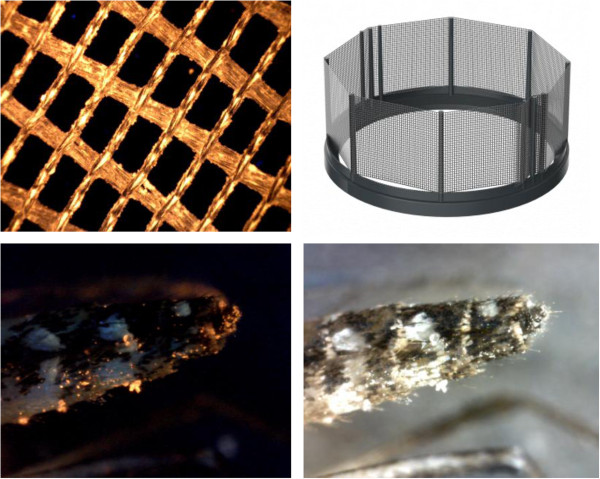
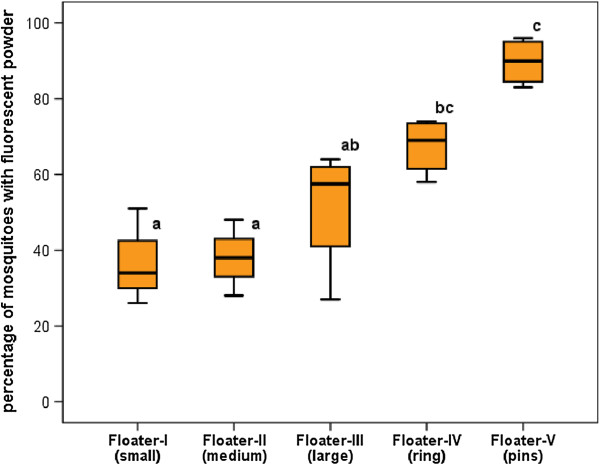
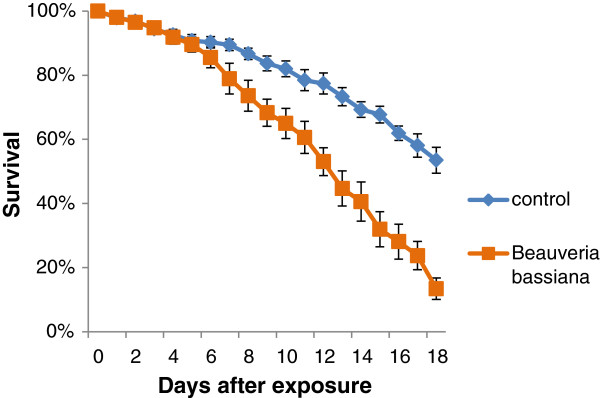
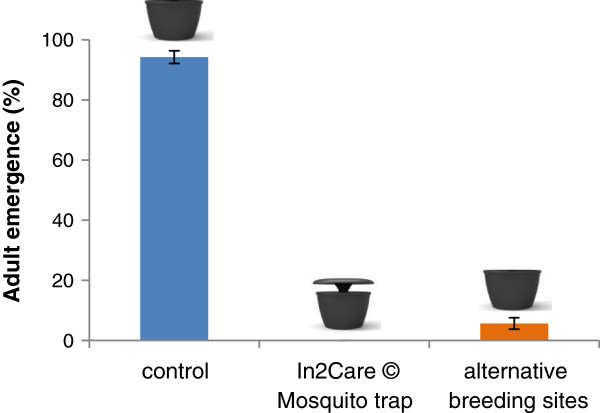
BACKGROUND: The increasing global threat of Dengue demands new and easily applicable vector control methods. Ovitraps provide a low-tech and inexpensive means to combat Dengue vectors. Here we describe the development and optimization process of a novel contamination device that targets multiple life-stages of the Aedes aegypti mosquito. Special focus is directed to the diverse array of control agents deployed in this trap, covering adulticidal, larvicidal and autodissemination impacts. METHODS: Different trap prototypes and their parts are described, including a floater to contaminate alighting gravid mosquitoes. The attractiveness of the trap, different odor lures and floater design were studied using fluorescent powder adhering to mosquito legs and via choice tests. We demonstrate the mosquitocidal impacts of the control agents: a combination of the larvicide pyriproxyfen and the adulticidal fungus Beauveria bassiana. The impact of pyriproxyfen was determined in free-flight dissemination experiments. The effect on larval development inside the trap and in surrounding breeding sites was measured, as well as survival impacts on recaptured adults. RESULTS: The developmental process resulted in a design that consists of a black 3 Liter water-filled container with a ring-shaped floater supporting vertically placed gauze dusted with the control agents. On average, 90% of the mosquitoes in the fluorescence experiments made contact with the gauze on the floater. Studies on attractants indicated that a yeast-containing tablet was the most attractive odor lure. Furthermore, the fungus Beauveria bassiana was able to significantly increase mortality of the free-flying adults compared to controls. Dissemination of pyriproxyfen led to >90% larval mortality in alternative breeding sites and 100% larval mortality in the trap itself, against a control mortality of around 5%. CONCLUSION: This ovitrap is a promising new tool in the battle against Dengue. It has proven to be attractive to Aedes aegypti mosquitoes and effective in contaminating these with Beauveria bassiana. Furthermore, we show that the larvicide pyriproxyfen is successfully disseminated to breeding sites close to the trap. Its low production and operating costs enable large scale deployment in Dengue-affected locations.
Overview
The claims and statistics of this paper haven’t been checked yet.
Free: it reads the open-access text and checks the first 5 claims that cite a source we can check. Create a free account to check every claim.
Integrity signals
Registry
Cites
Statistics
Figures
Verification
Claims the paper makes
The claims and statistics of this paper haven’t been checked yet.
Free: it reads the open-access text and checks the first 5 claims that cite a source we can check. Create a free account to check every claim.
Claims other papers make about this one
Each is checked against this paper’s own text: does it say what the citing paper says it does?
The source backs part of the claim, not all of it — or backs it for a different population, condition or comparison.
In the citing paper
“Electrostatic netting can be useful for house-screening products and point-source applications such as mosquito traps (36).”
From Electrostatic coating enhances bioavailability of insecticides and breaks pyrethroid resistance in mosquitoes (2015) · cites this paper as [36]
Experimental — accuracy not yet measuredThe cited source says what the claim attributes to it.
In the citing paper
“Experiments with Beauveria bassiana spores and pyriproxyfen applied on electrostatic netting inside a novel Aedes ovitrap showed that effective doses of these agents were transferred to gravid aedine mosquitoes, inducing high fungus infection rates and successful larvicide dissemination (36).”
From Electrostatic coating enhances bioavailability of insecticides and breaks pyrethroid resistance in mosquitoes (2015) · cites this paper as [36]
The cited source says what the claim attributes to it.
In the citing paper
“Previous studies show that it can be used effectively to apply novel and biological control agents such as entomopathogens and autodisseminants.”
From Electrostatic coating enhances bioavailability of insecticides and breaks pyrethroid resistance in mosquitoes (2015) · cites this paper as [36]
Self-check
Percentages, sums and reported differences re-computed from the paper’s own numbers.
The self-check needs the paper’s full text.
Citations
Cites
The global distribution and burden of dengue
Bhatt, S., Gething, P. W., Brady, O. J., Messina, J. P., Farlow, A. W., Moyes, C. L., Drake, J. M., Brownstein, J. S., Hoen, A. G., Sankoh, O., et al. (2013) · Nature · doi:10.1038/nature12060 · Cited by 10,037 · cited 1×
“With over 390 million cases annually [2], Dengue is currently the fastest spreading infectious disease in the tropics.”
Insecticide Resistance in Insect Vectors of Human Disease
Hemingway, J., & Ranson, H. (2000) · Annual Review of Entomology · doi:10.1146/annurev.ento.45.1.371 · Cited by 1,558 · cited 1×
“A major disadvantage of these lethal ovitraps is the fact that insecticides deployed in such traps have shown reduced efficacy due to widespread insecticide resistance in Aedes populations [21].”
BackgroundHow to make evolution-proof insecticides for malaria control
Read, A. F., Lynch, P. A., & Thomas, M. B. (2009) · PLoS Biology · doi:10.1371/journal.pbio.1000058 · Cited by 288 · cited 1×
“bassiana provides a long-lasting adult control option by targeting only the older females that can transmit disease, thereby drastically reducing the chances for development of resistance [35].”
BackgroundA preferred oviposition site as a surveillance method for Aedes aegypti.
Fay, R. W., & Eliason, D. A. (1966) · Mosquito news · Cited by 246
Ponnusamy, L., Xu, N., Nojima, S., Wesson, D. M., Schal, C., & Apperson, C. S. (2008) · Proceedings of the National Academy of Sciences · doi:10.1073/pnas.0802505105 · Cited by 244
Reiter, P. (2007) · Vector-Borne and Zoonotic Diseases · doi:10.1089/vbz.2006.0630 · Cited by 242 · cited 1×
“lays small numbers of eggs in multiple sites [4]) and prefers man-made containers as oviposition sites [5].”
Using adult mosquitoes to transfer insecticides to Aedes aegypti larval habitats
Devine, G. J., Perea, E. Z., Killeen, G. F., Stancil, J. D., Clark, S. J., & Morrison, A. C. (2009) · Proceedings of the National Academy of Sciences · doi:10.1073/pnas.0901369106 · Cited by 215 · cited 1×
“Because Aedes mosquitoes are skip-ovipositors, pyriproxyfen can be used as an autodissemination agent for ‘mosquitodriven larval control’; utilizing the gravid female to disperse the larvicide and contaminate multiple breeding sites in the vicinity [25,26].”
Wong, J., Stoddard, S. T., Astete, H., Morrison, A. C., & Scott, T. W. (2011) · PLoS Neglected Tropical Diseases · doi:10.1371/journal.pntd.0001015 · Cited by 207 · cited 2×
“Studies show that volatiles emitting from larvae are attractive to gravid Dengue vectors [12], and can therefore be expected to augment the attractiveness of the trap.”
The “Auto-Dissemination” Approach: A Novel Concept to Fight Aedes albopictus in Urban Areas
Caputo, B., Ienco, A., Cianci, D., Pombi, M., Petrarca, V., Baseggio, A., Devine, G. J., & della Torre, A. (2012) · PLoS Neglected Tropical Diseases · doi:10.1371/journal.pntd.0001793 · Cited by 167
Fungal infection counters insecticide resistance in African malaria mosquitoes
Farenhorst, M., Mouatcho, J. C., Kikankie, C. K., Brooke, B. D., Hunt, R. H., Thomas, M. B., Koekemoer, L. L., Knols, B. G. J., & Coetzee, M. (2009) · Proceedings of the National Academy of Sciences · doi:10.1073/pnas.0908530106 · Cited by 166 · cited 2×
“An additional benefit of this fungus is that it is highly virulent to insecticide-resistant mosquitoes [27,31] and even has the potential to augment the efficacy of chemical insecticides [27,32].”
BackgroundSelf-citation
Cited by
Control methods against invasive Aedes mosquitoes in Europe: a review
Baldacchino, F., Caputo, B., Chandre, F., Drago, A., della Torre, A., Montarsi, F., & Rizzoli, A. (2015) · Pest Management Science · doi:10.1002/ps.4044 · Cited by 225
Sustained, Area-Wide Control of Aedes aegypti Using CDC Autocidal Gravid Ovitraps
Barrera, R., Amador, M., Acevedo, V., Hemme, R. R., & Felix, G. E. (2014) · American Journal of Tropical Medicine and Hygiene · doi:10.4269/ajtmh.14-0426 · Cited by 116
Andriessen, R., Snetselaar, J., Suer, R. A., Osinga, A. J., Deschietere, J., Lyimo, I. N., Mnyone, L. L., Brooke, B. D., Ranson, H., Knols, B. G. J., et al. (2015) · Proceedings of the National Academy of Sciences · doi:10.1073/pnas.1510801112 · Cited by 86
“Experiments with Beauveria bassiana spores and pyriproxyfen applied on electrostatic netting inside a novel Aedes ovitrap showed that effective doses of these agents were transferred to gravid aedine mosquitoes, inducing high fungus infection rates and successful larvicide dissemination (36).”
BackgroundSelf-citationMosquito-fungus interactions and antifungal immunity
Tawidian, P., Rhodes, V. L. M., & Michel, K. (2019) · Insect Biochemistry and Molecular Biology · doi:10.1016/j.ibmb.2019.103182 · Cited by 107
Dormont, L., Mulatier, M., Carrasco, D., & Cohuet, A. (2021) · Journal of Chemical Ecology · doi:10.1007/s10886-021-01261-2 · Cited by 109
Use of pyriproxyfen in control of Aedes mosquitoes: A systematic review
Hustedt, J. C., Boyce, R. M., Bradley, J., Hii, J., & Alexander, N. D. E. (2020) · PLoS neglected tropical diseases · doi:10.1371/journal.pntd.0008205 · Cited by 109
“bassiana is a fungus that grows in soils throughout the world and infects mosquitoes reducing their vectoral capacity, inhibiting dengue virus replication, and eventually killing the mosquito [50].”
BackgroundMethodSingh, R. K., Dhama, K., Khandia, R., Munjal, A. K., Karthik, K., Tiwari, R., Chakraborty, S., Malik, Y. S., & Bueno‐Marí, R. (2018) · Frontiers in Microbiology · doi:10.3389/fmicb.2018.00087 · Cited by 102
“bassiana had already shown better adulticidal activity and hence can be used in the mosquito traps for an effective control of the vectors (Snetselaar et al., 2014).”
BackgroundA Review of the Control of Aedes aegypti (Diptera: Culicidae) in the Continental United States
McGregor, B. L., & Connelly, C. R. (2020) · Journal of Medical Entomology · doi:10.1093/jme/tjaa157 · Cited by 114
Community effectiveness of pyriproxyfen as a dengue vector control method: A systematic review
Maoz, D., Ward, T., Samuel, M., Müller, P., Runge‐Ranzinger, S., Toledo, J., Boyce, R. M., Velayudhan, R., & Horstick, O. (2017) · PLoS neglected tropical diseases · doi:10.1371/journal.pntd.0005651 · Cited by 86
Chandel, K., Suman, D. S., Wang, Y., Ünlü, I., Williges, E., Williams, G., & Gaugler, R. R. (2016) · PLoS neglected tropical diseases · doi:10.1371/journal.pntd.0005235 · Cited by 69
Mbare, O., Lindsay, S. W., & Fillinger, U. (2014) · Parasites & Vectors · doi:10.1186/1756-3305-7-280 · Cited by 62
“Species-specific oviposition attractants might be used to lure gravid females to the auto-dissemination stations to pick up lethal doses of PPF for transfer to uncontaminated aquatic habitats [79,80].”
BackgroundHapairai, L. K., Mysore, K., Chen, Y., Harper, E. I., Scheel, M. P., Lesnik, A., Sun, L., Severson, D. W., Wei, N., & Duman‐Scheel, M. (2017) · Scientific Reports · doi:10.1038/s41598-017-13566-y · Cited by 66
Ünlü, I., Suman, D. S., Wang, Y., Klingler, K., Faraji, A., & Gaugler, R. R. (2017) · Parasites & Vectors · doi:10.1186/s13071-017-2034-7 · Cited by 59
“[28], using a combination of attractant media, Beauveria bassina (an entomopathogenic fungi), and pyriproxyfen (a biopesticide).”
MethodBuckner, E. A., Williams, K. F., Marsicano, A. L., Latham, M. D., & Lesser, C. R. (2017) · Journal of the American Mosquito Control Association · doi:10.2987/17-6642r.1 · Cited by 50
“…quantities of PPF may be sufficient for effective larval control in small containers like the flowerpot we used in our experiments, but it is unclear if PPF autodissemination can also be effective for large (multiple-liter) larval habitats such as water storage containers (Suman et al. 2014).”
BackgroundNew tools for Aedes control: mass trapping
Barrera, R. (2022) · Current Opinion in Insect Science · doi:10.1016/j.cois.2022.100942 · Cited by 44
Snetselaar, J., Njiru, B. N., Gachie, B., Owigo, P., Andriessen, R., Glunt, K., Osinga, A. J., Mutunga, J., Farenhorst, M., & Knols, B. G. J. (2017) · Malaria Journal · doi:10.1186/s12936-017-1926-5 · Cited by 43
“The second method to determine mosquito responses to eave tubes was based on colour marking of mosquitoes with fluorescent dye when making contact with tube netting [29].”
BackgroundMethodSelf-citationHaramboure, M., Labbé, P., Baldet, T., Damiens, D. D., Gouagna, L., Bouyer, J., & Tran, A. (2020) · Ecological Modelling · doi:10.1016/j.ecolmodel.2020.109002 · Cited by 51
Ünlü, I., Rochlin, I., Suman, D. S., Wang, Y., Chandel, K., & Gaugler, R. R. (2020) · Journal of Medical Entomology · doi:10.1093/jme/tjaa011 · Cited by 46
Wolbachia-based emerging strategies for control of vector-transmitted disease
Montenegro, D., Cortés-Cortés, G., Balbuena-Alonso, M. G., Warner, C., & Camps, M. (2024) · Acta Tropica · doi:10.1016/j.actatropica.2024.107410 · Cited by 53
The Potential of a New Beauveria bassiana Isolate for Mosquito Larval Control
Tawidian, P., Kang, Q., & Michel, K. (2022) · Journal of Medical Entomology · doi:10.1093/jme/tjac179 · Cited by 49
Garcia, K. K. S., Versiani, H. D. S., de Araújo, T. O., Conceição, J. P. A., Obara, M. T., Ramalho, W. M., Minuzzi-Souza, T. T. C., Gomes, G. D., Vianna, E. N., Timbó, R. V., et al. (2020) · Parasites & Vectors · doi:10.1186/s13071-020-04221-z · Cited by 36
Rodrigues, J., Catão, A. M. L., dos Santos, A. S., da Paixão, F. R. S., Santos, T. R., Martinez, J. M., Marreto, R. N., Mascarin, G. M., Fernandes, É. K. K., Humber, R. A., et al. (2021) · Applied Microbiology and Biotechnology · doi:10.1007/s00253-021-11157-6 · Cited by 35
Lee, J. Y., Woo, R. M., Choi, C. J., Shin, T. Y., Gwak, W. S., & Woo, S. D. (2019) · AMB Express · doi:10.1186/s13568-019-0933-z · Cited by 31
Renuka, S., Chalageri, V. H., & Eapen, A. (2023) · Journal of Fungi · doi:10.3390/jof9020223 · Cited by 35
Buckner, E. A., Williams, K. F., Ramirez, S., Darrisaw, C., Carrillo, J. M., Latham, M. D., & Lesser, C. R. (2021) · Journal of the American Mosquito Control Association · doi:10.2987/21-7038 · Cited by 23
“…Trap (In2Care Trap; In2Care B.V., Wageningen, The Netherlands), which combines PPF autodissemination with the entomopathogenic fungus Beauveria bassiana (Balsamo-Crivelli) to reduce the emergence of Aedes mosquitoes and subsequently kill the contaminated adult females (Snetselaar et al. 2014).”
BackgroundRodrigues, J., Borges, P. R., Fernandes, É. K. K., & Luz, C. (2019) · Acta Tropica · doi:10.1016/j.actatropica.2019.03.002 · Cited by 30
Su, T., Mullens, P., Thieme, J., Melgoza, A., Real, R., & Brown, M. Q. (2020) · Journal of the American Mosquito Control Association · doi:10.2987/20-6929.1 · Cited by 21
“It is reasonable to assume that mosquito eggs laid into the trap reservoirs are unlikely to develop to adult stage when traps are serviced regularly, as documented in prior semifield studies (Snetselaar et al. 2014, Buckner et al. 2017).”
BackgroundInfluentialOrtega-Morales, A. I., Moreno‐García, M., Acosta, C. G., & Morales, F. C. (2018) · Florida Entomologist · doi:10.1653/024.101.0425 · Cited by 25
“Ovitraps do not require electrical power sources, additional carbon dioxide (Snetselaar et al. 2014), or daily monitoring.”
BackgroundMulatier, M., Boullis, A., & Vega-Rúa, A. (2022) · Parasites & Vectors · doi:10.1186/s13071-022-05337-0 · Cited by 29
“Field experiments are generally conducted to compare the efficacy of a candidate to water [30–33] or to existing attractants [31] and can also help in improving the efficacy of commercial traps [20, 31, 34, 35].”
BackgroundLobo, L. S., Rodrigues, J., & Luz, C. (2015) · Biocontrol Science and Technology · doi:10.1080/09583157.2015.1123220 · Cited by 24
“quito succumbs to the fungal infection (Snetselaar et al., 2014).”
BackgroundInfluentialFalvo, M. L., Pereira-Junior, R. A., Rodrigues, J., Lastra, C. C. L., García, J. J., Fernandes, É. K. K., & Luz, C. (2016) · Journal of Applied Microbiology · doi:10.1111/jam.13309 · Cited by 19
“focus on trap technology where target adult vectors are contaminated and infected, and pathogens are spread among the host population after leaving the trap (Snetselaar et al. 2014).”
BackgroundBarrera, R. (2015) · Elsevier eBooks · doi:10.1016/b978-0-12-800246-9.00006-5 · Cited by 20
A new method of deploying entomopathogenic fungi to control adult Aedes aegypti mosquitoes
Silva, L. E. I., de Paula, A. R., Ribeiro, A., Butt, T. M., Silva, C. P., & Samuels, R. I. (2017) · Journal of Applied Entomology · doi:10.1111/jen.12402 · Cited by 21
“A adult mosquito trap with an odour lure is now available from In2Care® (http://www.in2care.org/) incorporating an insecticide (pyriproxyfen) to kill mosquito larvae and a fungus (Beauveria bassiana) to kill the adults (Snetselaar et al., 2014).”
BackgroundField evaluation of sticky BR-OVT traps to collect culicids eggs and adult mosquitoes inside houses
Xavier, M. D. N., Santos, E. M. D. M., da Silva, A. P. A., Júnior, P. P. G., Barbosa, R. M. R., & de Oliveira, C. M. F. (2018) · Revista da Sociedade Brasileira de Medicina Tropical · doi:10.1590/0037-8682-0417-2017 · Cited by 16
Harburguer, L., Licastro, S., Masuh, H., & Zerba, E. N. (2016) · Journal of Medical Entomology · doi:10.1093/jme/tjw022 · Cited by 16
Popko, D. A., Henke, J. A., Mullens, B. A., & Walton, W. E. (2017) · Journal of Medical Entomology · doi:10.1093/jme/tjx233 · Cited by 17
Hamid, N. A., Alexander, N. D. E., Suer, R. A., Ahmed, N. W., Mudin, R. N., Omar, T., Dapari, R., Din, S. N. A. C. M., Rahman, R. A., Jaraee, R., et al. (2020) · Bulletin of Entomological Research · doi:10.1017/s0007485320000188 · Cited by 17
“The latter can take 7–14 days to develop and then kill exposed mosquitoes, providing the opportunity for them, in the meantime, to transfer PPF to other surrounding larval habitats (Snetselaar et al., 2014).”
BackgroundSelf-citationChoi, C. J., Lee, J., Woo, R. M., Shin, T. Y., Gwak, W. S., & Woo, S. D. (2020) · Journal of Asia-Pacific Entomology · doi:10.1016/j.aspen.2020.04.007 · Cited by 16
Khemrattrakool, P., Yanola, J., Lumjuan, N., & Somboon, P. (2019) · Insects · doi:10.3390/insects10020055 · Cited by 13
de Paula, A. R., Silva, L. E. I., Ribeiro, A., Butt, T. M., Silva, C. P., & Samuels, R. I. (2018) · Parasites & Vectors · doi:10.1186/s13071-018-2871-z · Cited by 17
“Females become infected and are killed by the fungus [13].”
BackgroundEfficacy of focal applications of a mycoinsecticide to control Aedes aegypti in Central Brazil
Martinez, J. M., Rodrigues, J., Marreto, R. N., Mascarin, G. M., Fernandes, É. K. K., Humber, R. A., & Luz, C. (2021) · Applied Microbiology and Biotechnology · doi:10.1007/s00253-021-11644-w · Cited by 14
[Dengue and Chikungunya vector control: Is it necessary to re-examine present strategies?].
Barrera, R. (2015) · PubMed · doi:10.7705/biomedica.v35i3 · Cited by 18
Saadatian‐Elahi, M., Rabilloud, M., Möhlmann, T. W. R., Langlois‐Jacques, C., Ariffin, F. D., Farenhorst, M., Elsensohn, M., Schmitt, F., Richardson, J. H., Baur, F., et al. (2025) · The Lancet Infectious Diseases · doi:10.1016/s1473-3099(25)00086-6 · Cited by 24
Self-citationSaadatian‐Elahi, M., Alexander, N. D. E., Möhlmann, T. W. R., Langlois, C., Suer, R. A., Ahmad, N. W., Mudin, R. N., Ariffin, F. D., Baur, F., Schmitt, F., et al. (2021) · Trials · doi:10.1186/s13063-021-05298-2 · Cited by 12
Self-citationFigurskey, A. C., Hollingsworth, B., Doyle, M. S., & Reiskind, M. H. (2022) · Pest Management Science · doi:10.1002/ps.6917 · Cited by 17
Chapter 14: Odour-mediated oviposition-site selection by mosquitoes
Khan, Z., Ignell, R., & Hill, S. R. (2022) · Wageningen Academic Publishers eBooks · doi:10.3920/978-90-8686-932-9_14 · Cited by 15
Sperling, S., Cordel, M., Gordon, S. W., Knols, B. G., & Rose, A. (2017) · MalariaWorld journal · doi:10.5281/zenodo.10776625 · Cited by 11
Self-citationBrisco, K. K., Jacobsen, C. M., Seok, S., Wang, X., Lee, Y., Akbari, O. S., & Cornel, A. J. (2023) · Journal of Medical Entomology · doi:10.1093/jme/tjad005 · Cited by 10
Chen, Y.-A., Lai, Y., Wu, K.-C., Yen, T., Chen, C., & Tsai, K. (2020) · Insects · doi:10.3390/insects11040251 · Cited by 10
“Previous studies created PPFdusted dissemination stations and found, through scanning electron microscopy or by using a fluorescent powder, that PPF can adhere to the legs and bodies of mosquitoes [11,15,16].”
BackgroundLeveraging the Ecology of Invertebrate Pathogens in Microbial Control
Dara, S. K., Goble, T. A., & Shapiro‐Ilan, D. I. (2017) · doi:10.1002/9781119256106.ch13 · Cited by 10
Li, Y., Peng, J., Li, H., Zhang, R., Chen, J., Hou, X., & Yang, G. (2024) · Pest Management Science · doi:10.1002/ps.8339 · Cited by 9
Comparison of Fan-Traps and Gravitraps for Aedes Mosquito Surveillance in Taiwan
Pan, C.-Y., Cheng, L., Liu, W., Su, M. P., Ho, H.-P., Liao, C.-H., Chang, J.-H., Yang, Y., Hsu, C.-C., Huang, J., et al. (2022) · Frontiers in Public Health · doi:10.3389/fpubh.2022.778736 · Cited by 10
“Passive traps include ovitraps (4, 5), gravitraps (6), MosquiTRAPTM (7), Mosq-ovitrap (8), Autocidal Gravid Ovitraps (AGO) (9, 10), Gravid Aedes Traps (GAT) (11), and In2Care R© Mosquito Traps (12).”
BackgroundKirsch, J. M., & Tay, J. (2022) · Journal of Medical Entomology · doi:10.1093/jme/tjac084 · Cited by 16
Mosquito-Borne Diseases: Prevention Is the Cure for Dengue, Chikungunya and Zika Viruses
Suman, D. S., Chandel, K., Faraji, A., Gaugler, R. R., & Chandra, K. (2018) · Parasitology research monographs · doi:10.1007/978-3-319-94075-5_11 · Cited by 12
Salazar, F. V., Angeles, J. R., Sy, A. K., Inobaya, M. T., Aguila, A. M. A., Toner, T. M., Bangs, M. J., Thomsen, E. K., & Paul, R. E. L. (2019) · Trials · doi:10.1186/s13063-019-3376-6 · Cited by 11
Microbial Control of Medically Important Mosquitoes in Tropical Climates
Lacey, L. A. (2016) · Elsevier eBooks · doi:10.1016/b978-0-12-803527-6.00028-7 · Cited by 9
Thammavong, P., Boyer, S., Luangamath, P., Phommavanh, N., Vungkyly, V., Nilaxay, S., Lakeomany, K., Brey, P. T., Grandadam, M., & Marcombe, S. (2022) · PLoS ONE · doi:10.1371/journal.pone.0270987 · Cited by 7
“bassiana strain GHA, as active ingredients, were used for the experiments [23, 24].”
MethodLee, J., Woo, R. M., & Woo, S. D. (2023) · Journal of Asia-Pacific Entomology · doi:10.1016/j.aspen.2023.102056 · Cited by 13
Mmbaga, A. T., & Lwetoijera, D. W. (2023) · Wellcome Open Research · doi:10.12688/wellcomeopenres.19131.2 · Cited by 6
A Review: Autodissemination of Pyriproxyfen as Novel Strategy to Control Dengue Outbreaks
Ngesom, A. M. M., Greenhalgh, D., Lasim, A. M., Sahani, M., Hod, R., & Othman, H. (2020) · Pertanika journal of science & technology · doi:10.47836/pjst.28.4.01 · Cited by 6
“Other studies using a combination of Beauveria bassina (entomopathogenic fungus) and pyriproxyfen also gave 100% larval mortality in the laboratory; however, the study did not include any field trials (Buckner et al., 2017; Snetselaar et al., 2014).”
ResultInsights into the autecology of Aedes albopictus
Guo, X., Li, Z., Zhao, S., Guo, Y., Zeng, S., Chen, H., Liu, X., He, Q. B., Ge, L., & Zhou, X. (2025) · Parasites & Vectors · doi:10.1186/s13071-025-07032-2 · Cited by 8
“…and egg-laying Use and improvement of the ovitrap Design of lethal ovitrap [53, 88, 89] Egg resistance and diapause – Photoperiod manipulation strategy of diapause for mosquito control [90] Larval habitat – Development of larvicide; improvement of the environment and cleaning of habitats [41, 91]”
Paradza, V. M., Khamis, F. M., Yusuf, A. A., Subramanian, S., & Akutse, K. S. (2022) · Frontiers in Insect Science · doi:10.3389/finsc.2022.991336 · Cited by 5
“(77), an efficient autodissemination device allows for easy conidia acquisition by insects upon contact and the contaminated adults then disperse the infective propagules to their conspecifics (39).”
BackgroundKhater, E. I. M., Autry, D., Gaines, M. K., & Xue, R. (2022) · Journal of the Florida Mosquito Control Association · doi:10.32473/jfmca.v69i1.130626 · Cited by 5
“A study using the In2Care trap showed that the combined use of IGR (pyriproxyfen) and entomopathogenic agents (the fungus B. bassiana) will ultimately target all mosquito life cycle immature and adult stages (Snetselaar et al. 2014).”
MethodArduíno, M. D. B., Serpa, L. L. N., Rangel, O., & dos Santos, G. V. (2023) · Revista da Sociedade Brasileira de Medicina Tropical · doi:10.1590/0037-8682-0337-2022 · Cited by 6
McNamara, T. D., Vargas, N., McDuffie, D., Bartz, C. E., Mosore, M.-T., Kline, D. L., Buckner, E. A., Jiang, Y., & Martin, E. M. (2024) · Journal of Medical Entomology · doi:10.1093/jme/tjae089 · Cited by 4
“The In2Care Mosquito Station (In2Care station) utilizes 2 active ingredients: pyriproxyfen, an insect growth regulator, and Beauveria bassiana strain GHA , an entomopathogenic fungus to control skip ovipositing Ae. aegypti and Ae. albopictus (Snetselaar et al. 2014).”
Autry, D. (2021) · Journal of the Florida Mosquito Control Association · doi:10.32473/jfmca.v68i1.129105 · Cited by 4
“Clearly, CDC-AGO traps and In2Care mosquito traps were shown to be effective when tested previously (Buckner et al. 2017, Cilek et al. 2017, Su et al. 2020).”
BackgroundA Review of the Use of Pyriproxyfen for Controlling Aedes aegypti in Argentina
Harburguer, L., Mendoza, J., & Gonzalez, P. V. (2022) · Current Tropical Medicine Reports · doi:10.1007/s40475-022-00278-1 · Cited by 3
Pradeepkumar, K., V, Arunadevi, P. S., & Myvizhi., P. (2020) · Advances in Zoology and Botany · doi:10.13189/azb.2020.080603 · Cited by 2
Mmbaga, A. T., & Lwetoijera, D. W. (2023) · Wellcome Open Research · doi:10.12688/wellcomeopenres.19131.1 · Cited by 9
Dulbecco, A. B. (2019) · El Servicio de Difusión de la Creación Intelectual (National University of La Plata) · doi:10.35537/10915/73519 · Cited by 3
Ramayanti, I., Herlinda, S., MUSLIM, A., Hasyim, H., Anwar, C., Suwandi, S., Damiri, N., IRSAN, C., & Verawaty, M. (2023) · Biodiversitas Journal of Biological Diversity · doi:10.13057/biodiv/d240917 · Cited by 1
“Adult females were fed on blood through direct sucking on the guinea pig for one hour twice a week (Snetselaar et al. 2014).”
MethodSynthetic Alfalfa Infusion Odour Attracts Gravid Culex quinquefasciatus Under Laboratory Conditions
Wondwosen, B., Isberg, E., Birgersson, G., Hill, S. R., & Ignell, R. (2024) · Journal of Chemical Ecology · doi:10.1007/s10886-024-01528-4 · Cited by 2
“…frequently employed as lures in gravid traps for culicine mosquitoes (Allan et al. 2005; Barrera et al. 2014; Bazin and Williams 2018; Chadee and Ritchie 2010; Eiras et al. 2014; Eiras et al. 2021; Mackay et al. 2013; Reisen and Meyer 1990; Ritchie 2001; Snetselaar et al. 2014; Tarter et al. 2019).”
BackgroundQadir, M. S., Hafeez, F., Hussain, D., Akram, W., Iftikhar, A., Saleem, M. J., & Saleem, U. (2025) · The Journal of Animal and Plant Sciences · doi:10.36899/japs.2025.5.0113 · Cited by 1
He, M., Chen, Y., Yang, H., & Li, Y. (2025) · Decoding Infection and Transmission · doi:10.1016/j.dcit.2025.100059 · Cited by 4
Alqassim, A. Y. (2025) · Pathogens and Global Health · doi:10.1080/20477724.2025.2609157 · Cited by 2
“Complementary biological control methods utilizing natural predators such as copepods and larvivor-ous fish have demonstrated success, particularly when implemented within community-based programs [52,53].”
Vasconcelos, C. A. A. D., Silva, S. O. F., Gomes, B., & Alencar, J. A. F. (2024) · Journal of the American Mosquito Control Association · doi:10.2987/24-7183 · Cited by 1
Pradeepkumar, K., V, Arunadevi, P. S., & Myvizhi., P. (2020) · Advances in Zoology and Botany · doi:10.13189/azb.2020.080505 · Cited by 2
“FMC containing Beauveria bassiana is an entomopathogenic fungus that causes white muscadine disease in a range of insects particularly of adult mosquitoes[21] found in MSW and it spores come in contact with a host insect and is infected, the fungus rapidly grows inside of the insect, feeding on the nutrients present i…”
BackgroundBecker, N., Petrić, D. V., Zgomba, M., Boase, C., Madon, M. B., Dahl, C., & Kaiser, A. (2020) · Fascinating life sciences · doi:10.1007/978-3-030-11623-1_4 · Cited by 1
(2021) · Middle East Journal of Applied Sciences · doi:10.36632/mejas/2021.11.4.82 · Cited by 1
Mwingira, V. S. (2020) · doi:10.18174/518498 · Cited by 2
Falvo, M. L. (2019) · El Servicio de Difusión de la Creación Intelectual (National University of La Plata) · doi:10.35537/10915/73538 · Cited by 1
Xie, L., Liu, T., Yang, W., Xie, Y., Zhao, S., Wu, K., Zhou, X., Gu, J., & Chen, X. (2021) · Research Square · doi:10.21203/rs.3.rs-591823/v1
“Furthermore, we also noted that teabags are readily available organic compounds that can improve Ae. aegypti oviposition[12].”
Mosquito Repellents: How much Relevant are they?
Sumangala Bhat, K., & Aravind, G. (2021) · Acta Scientific Medical Sciences · doi:10.31080/asms.2021.05.1095
Beal, V. E., Fonseca, E. O. L., Barbosa, J. D. V., Machado, B. A. S., & Badaró, R. J. D. S. (2023) · Concilium · doi:10.53660/clm-1781-23m15
Estrada-Gómez, S., Salinas-Restrepo, C., Vargas-Muñoz, L. J., Guzmán, F., Segura, C., Plá, D., Sanz, L., & Calvete, J. J. (2025) · Toxicon X · doi:10.1016/j.toxcx.2025.100224 · Cited by 1
“Vector control relies on environmental and chemical strategies that disrupt the larval stage of the mosquito life cycle (Snetselaar et al., 2014; Quintero et al., 2014).”
Birhanie, S. K., Hans, J., Melgoza, A., Reisinger, B., & Brown, M. Q. (2025) · Journal of the American Mosquito Control Association · doi:10.2987/25-7226
¿Qué atrae a las hembras de los mosquitos a oviponer? Los secretos detrás de sus elecciones
Flores, A. E., Gutiérrez-Rodríguez, S. M., Dávila-Barboza, J. A., Téllez, E. A. R., Rodriguez-Sanchez, I. P., Cerda-Apresa, D., & López-Monroy, B. (2025) · Biología y Sociedad · doi:10.29105/bys8.16-193 · Cited by 1
Becker, N., Petrić, D. V., Zgomba, M., Rahola, N., Boase, C., Schmidt‐Chanasit, J., & Kaiser, A. (2025) · Springer eBooks · doi:10.1007/978-3-662-69125-0_4
Liu-pao Tea as a Source of Botanical Oviposition Attractants for Aedes Mosquitoes
Xie, L., Liu, T., Yang, W., Xie, Y., Zhao, S., & Chen, X. (2025) · Insects · doi:10.3390/insects16101065
“Oviposition attraction was defined as oviposition rate > 50% and OAI > 0, with OAI > 0.3 indicating significant attraction [11].”
InfluentialMcNamara, T. D., Cabezas, D., Galvez, A., Addae, C. A., Bartz, C. E., Kline, D., Jiang, Y., & Martin, E. M. (2025) · Journal of Medical Entomology · doi:10.1093/jme/tjaf141
Kirsch, J. M., & Tay, J. (2025) · Journal of Asia-Pacific Entomology · doi:10.1016/j.aspen.2025.102509
Saadatian‐Elahi, M., Alexander, N. D. E., Möhlmann, T. W. R., Langlois, C., Suer, R. A., Ahmad, N. W., Mudin, R. N., Ariffin, F. D., Baur, F., Schmitt, F., et al. (2021) · Figshare · doi:10.6084/m9.figshare.14703903
Self-citationSaadatian‐Elahi, M., Alexander, N. D. E., Möhlmann, T. W. R., Langlois, C., Suer, R. A., Ahmad, N. W., Mudin, R. N., Ariffin, F. D., Baur, F., Schmitt, F., et al. (2021) · Figshare · doi:10.6084/m9.figshare.14703900
Self-citationSaadatian‐Elahi, M., Alexander, N. D. E., Möhlmann, T. W. R., Langlois, C., Suer, R. A., Ahmad, N. W., Mudin, R. N., Ariffin, F. D., Baur, F., Schmitt, F., et al. (2021) · Figshare · doi:10.6084/m9.figshare.14703909
Self-citationSaadatian‐Elahi, M., Alexander, N. D. E., Möhlmann, T. W. R., Langlois, C., Suer, R. A., Ahmad, N. W., Mudin, R. N., Ariffin, F. D., Baur, F., Schmitt, F., et al. (2021) · Figshare · doi:10.6084/m9.figshare.14703906
Self-citationHaramboure, M. (2020) · theses.fr (ABES) · doi:10.70675/5f83af97z5a78z4978zbf4fza6c21e47dce2 · Cited by 2
Modelling population control of Aedes aegypti using mosquito-disseminated pyriproxyfen
Chauque, F. E., Alonso, L. E., Lopez, G. M., & Aparicio, J. P. (2026) · Applied Mathematical Modelling · doi:10.1016/j.apm.2026.117141
Alexander, N. D. E., Hamid, N. A., Ariffin, F. D., Rabilloud, M., Möhlmann, T. W. R., Schmitt, F., Richardson, J. H., & Saadatian‐Elahi, M. (2026) · Tropical Medicine and Infectious Disease · doi:10.3390/tropicalmed11070199
“The safety of the iDEM vector control tools [11,12] was among the major facilitators of the intervention.”
Metadata
- Authors
- Snetselaar, J., Andriessen, R., Suer, R. A., Osinga, A. J., Knols, B. G., & Farenhorst, M.
- Corresponding author
- Farenhorst, Marit
- Venue
- Parasites & Vectors
- Published
- 2014-04-25
- Volume
- 7
- Issue
- 1
- Pages
- 200-200
- ISSN
- 1756-3305 (ISSN-L)
- PMC
- PMC4005817
- OpenAlex
- W2161712247
- Cited by
- 100
- References
- 37
- Citations by year
- 2026: 2 · 2025: 12 · 2024: 5 · 2023: 9 · 2022: 12 · 2021: 13 · 2020: 15 · 2019: 7 · 2018: 5 · 2017: 9 · 2016: 4 · 2015: 5 · 2014: 2
- FWCI
- 6.63
- Type
- journal article
- Language
- en
- Open access
- gold
- doi.org
- Licence
- cc-by
- Locations
- Parasites & Vectors (publishedVersion, cc-by)
- Europe PMC (PubMed Central) (publishedVersion, cc-by)
- PubMed Central (publishedVersion, cc-by)
- PubMed (publishedVersion)
- LSHTM Research Online (London School of Hygiene and Tropical Medicine) (acceptedVersion)
- DOAJ (DOAJ: Directory of Open Access Journals) (submittedVersion)
- Funders
- Bill and Melinda Gates Foundation (OPP1025518)
- Topics
- Health Sciences › Medicine › Public Health, Environmental and Occupational Health › Mosquito-borne diseases and control
- Health Sciences › Medicine › Public Health, Environmental and Occupational Health › Dengue and Mosquito Control Research
- Life Sciences › Agricultural and Biological Sciences › Plant Science › Insect Pest Control Strategies
- Keywords
- Aedes aegypti, ovitraps, dengue vector control, pyriproxyfen, Beauveria bassiana, entomopathogenic fungi, mosquito attractants, larval mortality
- MeSH terms
- Aedes, Animals, Behavior, Animal, Dengue, Female, Insect Vectors, Life Cycle Stages, Mosquito Control, Odorants, Oviposition, Biological Control Agents
About these checks
Registry, retraction, Cites and statistics results are computed, not judged, with one exception: a printed reference that no index lists is read once by a model before it counts as a citation error. Claims are extracted by a model and kept only when their quote appears verbatim in the text; each cited source is then checked, with a model’s help, for whether it says what the claim relies on. Those verdicts can be wrong — read the claim’s quote and the cited source before relying on one.
Statistics and arithmetic are recomputed, not judged.
Confidence bands are shown only for fields calibrated on our annotated test set. None is calibrated yet, so no band is shown.
What counts as a claim ›How we measure confidence ›How we check this ›
Are you an author, or do you see a problem with this page? Request a review
Data sources
Bibliographic data: Semantic Scholar, OpenAlex, Crossref.
Contains information from the Semantic Scholar Academic Graph Datasets, made available under the ODC Attribution License (ODC-BY 1.0).
Semantic Scholar’s data is described in: Kinney, R., et al. (2023). The Semantic Scholar Open Data Platform. arXiv:2301.10140.
