

Multiple functions of precursor BDNF to CNS neurons: negative regulation of neurite growth, spine formation and cell survival
Open accessThe DOI matches its Crossref record; 60 of the 60 references it cites were found in a registry or an index.
Abstract
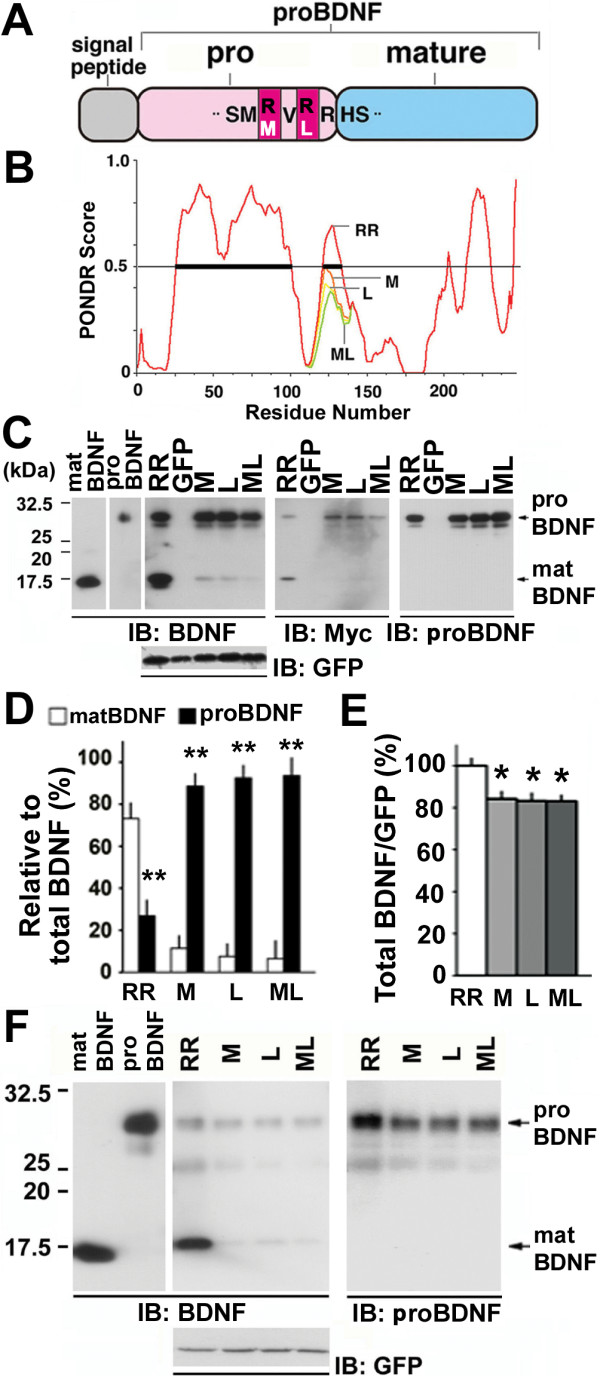
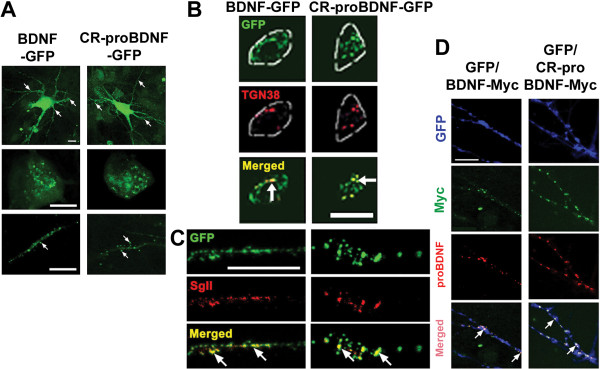
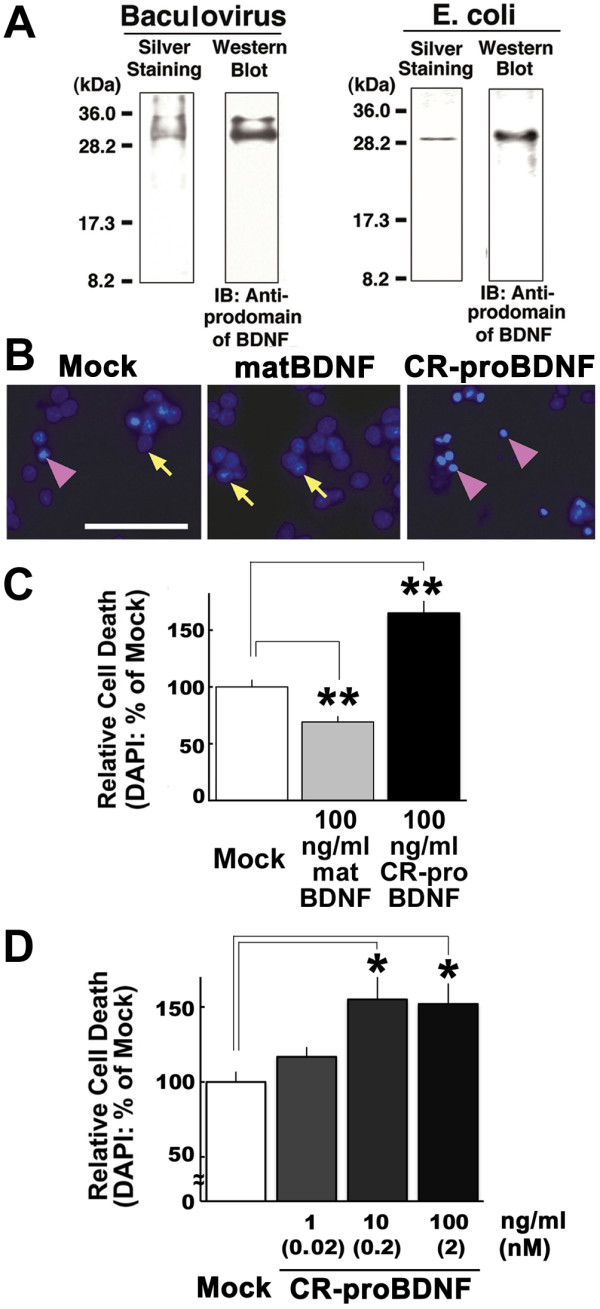
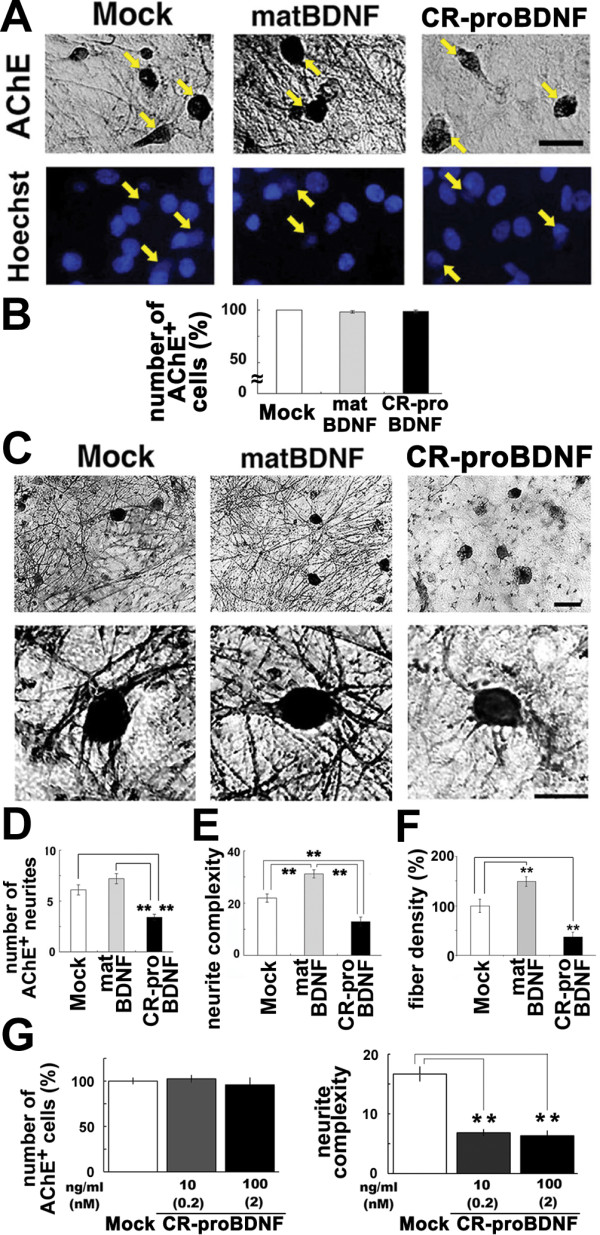
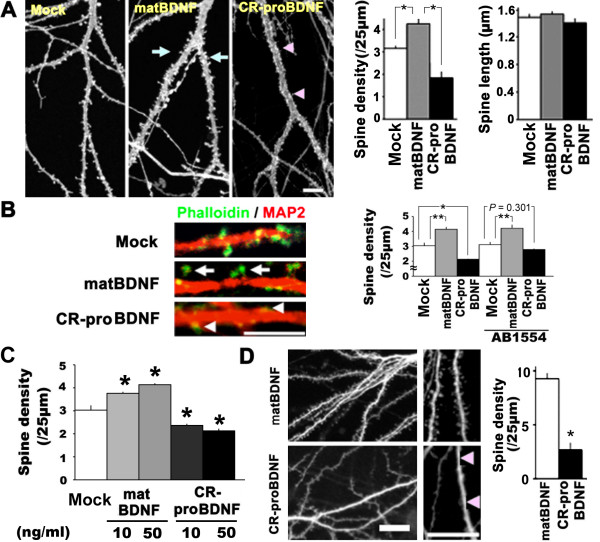
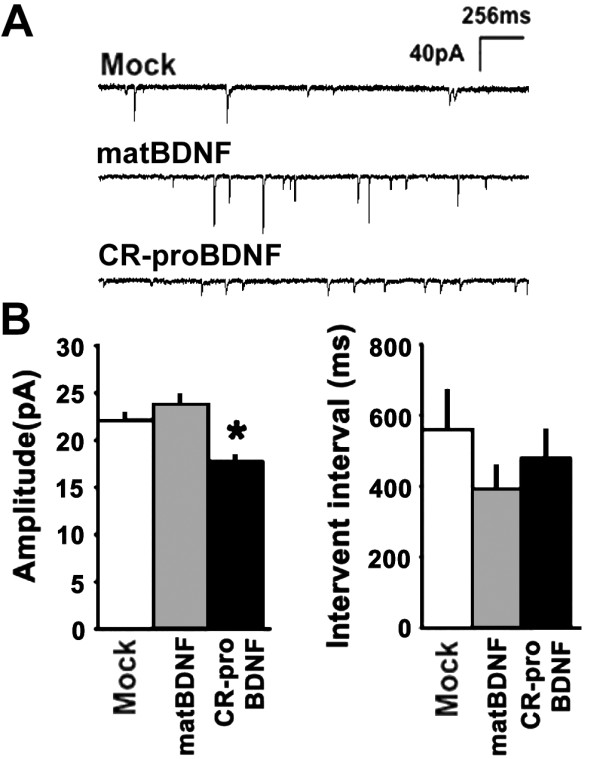
Background: Proneurotrophins and mature neurotrophins elicit opposite effects via the p75 neurotrophin receptor (p75 NTR) and Trk tyrosine kinase receptors, respectively; however the molecular roles of proneurotrophins in the CNS are not fully understood. Results: Based on two rare single nucleotide polymorphisms (SNPs) of the human brain-derived neurotrophic factor (BDNF)gene, we generated R125M-, R127L- and R125M/R127L-BDNF, which have amino acid substitution(s) near the cleavage site between the pro- and mature-domain of BDNF. Western blot analyses demonstrated that these BDNF variants are poorly cleaved and result in the predominant secretion of proBDNF. Using these cleavage-resistant proBDNF (CR-proBDNF) variants, the molecular and cellular roles of proBDNF on the CNS neurons were examined. First, CR-proBDNF showed normal intracellular distribution and secretion in cultured hippocampal neurons, suggesting that inhibition of proBDNF cleavage does not affect intracellular transportation and secretion of BDNF. Second, we purified recombinant CR-proBDNF and tested its biological effects using cultured CNS neurons. Treatment with CR-proBDNF elicited apoptosis of cultured cerebellar granule neurons (CGNs), while treatment with mature BDNF (matBDNF) promoted cell survival. Third, we examined the effects of CR-proBDNF on neuronal morphology using more than 2-week cultures of basal forebrain cholinergic neurons (BFCNs) and hippocampal neurons. Interestingly, in marked contrast to the action of matBDNF, which increased the number of cholinergic fibers and hippocampal dendritic spines, CR-proBDNF dramatically reduced the number of cholinergic fibers and hippocampal dendritic spines, without affecting the survival of these neurons. Conclusion: These results suggest that proBDNF has distinct functions in different populations of CNS neurons and might be responsible for specific physiological cellular processes in the brain.
Overview
The claims and statistics of this paper haven’t been checked yet.
Free: it reads the open-access text and checks the first 5 claims that cite a source we can check. Create a free account to check every claim.
Integrity signals
Registry
Cites
Statistics
Figures
Verification
Claims the paper makes
The claims and statistics of this paper haven’t been checked yet.
Free: it reads the open-access text and checks the first 5 claims that cite a source we can check. Create a free account to check every claim.
Claims other papers make about this one
Each is checked against this paper’s own text: does it say what the citing paper says it does?
The source backs part of the claim, not all of it — or backs it for a different population, condition or comparison.
In the citing paper
“Pro-BDNF binding to p75NTR has also been shown to induce pruning of axons and dendrites85,88–91 and promote long-term depression (LTD)92–94.”
From Neuronal plasticity and neurotrophic factors in drug responses (2017) · cites this paper as [89]
Experimental — accuracy not yet measured
Self-check
Percentages, sums and reported differences re-computed from the paper’s own numbers.
The self-check needs the paper’s full text.
Citations
Cites
Egan, M. F., Kojima, M., Callicott, J. H., Goldberg, T. E., Kolachana, B. S., Bertolino, A., Zaitsev, E., Gold, B., Goldman, D., Dean, M., et al. (2003) · Cell · doi:10.1016/s0092-8674(03)00035-7 · Cited by 3,888
Self-citationA simple method for organotypic cultures of nervous tissue
Stoppini, L., Buchs, P.-A., & Muller, D. (1991) · Journal of Neuroscience Methods · doi:10.1016/0165-0270(91)90128-m · Cited by 3,089 · cited 1×
“Hippocampal organotypic slice cultures were prepared from B6C3F1 mice (postnatal day 5–7), according to previous reports [58,59], with a few modifications.”
Neurotrophins and their receptors: A convergence point for many signalling pathways
Chao, M. V. (2003) · Nature Reviews Neuroscience · doi:10.1038/nrn1078 · Cited by 2,298 · cited 3×
“4), which are a well-known population of p75NTR-highly expressing neurons in the adult brain [24].”
BackgroundInfluentialNeurotrophin-regulated signalling pathways
Reichardt, L. F. (2006) · Philosophical Transactions of the Royal Society B: Biological Sciences · doi:10.1098/rstb.2006.1894 · Cited by 2,195 · cited 1×
“These proteins elicit their biological actions by binding to the Trk family of receptor-type tyrosine kinases [3].”
BackgroundRegulation of Cell Survival by Secreted Proneurotrophins
Lee, R., Kermani, P., Teng, K. K., & Hempstead, B. L. (2001) · Science · doi:10.1126/science.1065057 · Cited by 1,670 · cited 3×
“Discussion Since the discovery that proNGF binds p75NTR with a higher affinity than matNGF and that it induces apoptosis rather than enhancing cell survival in sympathetic neurons [4], proneurotrophin-p75NTR signaling and function have returned to the center stage in the field of neurotrophin research.”
BackgroundThe yin and yang of neurotrophin action
Lu, B., Pang, P. T., & Woo, N. H. (2005) · Nature Reviews Neuroscience · doi:10.1038/nrn1726 · Cited by 1,356 · cited 11×
“Another important question is whether proBDNF has a physiological function [10,13].”
BackgroundInfluentialSelf-citationGenetic variant BDNF (Val66Met) polymorphism alters anxiety-related behavior
Chen, Z.-Y., Jing, D., Bath, K. G., Ieraci, A., Khan, T., Siao, C.-J., Herrera, D. G., Toth, M., Yang, C., McEwen, B. S., et al. (2006) · Science · doi:10.1126/science.1129663 · Cited by 1,340
Rapid Spine Delivery and Redistribution of AMPA Receptors After Synaptic NMDA Receptor Activation
Shi, S.-H., Hayashi, Y., Petralia, R. S., Zaman, S. H., Wenthold, R. J., Svoboda, K., & Malinow, R. (1999) · Science · doi:10.1126/science.284.5421.1811 · Cited by 1,276 · cited 1×
“Hippocampal organotypic slice cultures were prepared from B6C3F1 mice (postnatal day 5–7), according to previous reports [58,59], with a few modifications.”
MethodNeurotrophins: key regulators of cell fate and cell shape in the vertebrate nervous system
Bibel, M., & Barde, Y.-A. (2000) · Genes & Development · doi:10.1101/gad.841400 · Cited by 1,065 · cited 2×
“A large body of evidence demonstrates that matBDNF promotes survival and differentiation of BFCNs [1].”
BackgroundShrinkage of dendritic spines associated with long-term depression of hippocampal synapses
Zhou, Q., Homma, K. J., & Poo, M.-M. (2004) · Neuron · doi:10.1016/j.neuron.2004.11.011 · Cited by 1,025
Cited by
Items 101–200 of 201
Kirchner, J. H., Euler, L., Fritz, I., Castro, A. F., & Gjorgjieva, J. (2025) · eLife · doi:10.7554/elife.87527.3 · Cited by 26
A new perspective on hippocampal synaptic plasticity and post‐stroke depression
Sun, N., Cui, W., Min, X., Zhang, G., Liu, J., & Wu, H. (2023) · European Journal of Neuroscience · doi:10.1111/ejn.16093 · Cited by 25
“Many studies have demonstrated that pro-BDNF interacts with p75NTR to induce neuronal apoptosis, leading to a reduction in the number of neurons, which induces the onset of PSD (Koshimizu et al., 2009; Luo, Li, Deng, et al., 2019; Yang et al., 2014).”
BackgroundMercado, N. M., Stancati, J. A., Sortwell, C. E., Mueller, R. L., Boezwinkle, S. A., Duffy, M. F., Fischer, D. L., Sandoval, I. M., Manfredsson, F. P., Collier, T. J., et al. (2020) · Neurobiology of Disease · doi:10.1016/j.nbd.2020.105175 · Cited by 27
MMP-9 Signaling Pathways That Engage Rho GTPases in Brain Plasticity
Figiel, I., Kruk, P. K., Zaręba-Kozioł, M., Rybak, P., Bijata, M., Włodarczyk, J., & Dzwonek, J. (2021) · Cells · doi:10.3390/cells10010166 · Cited by 26
Bennett, M. R., Arnold, J. C., Hatton, S. N., & Lagopoulos, J. (2016) · Behavioural Brain Research · doi:10.1016/j.bbr.2016.11.029 · Cited by 24
Journey of brain-derived neurotrophic factor: from intracellular trafficking to secretion
Kojima, M., Ishii, C., Sano, Y., Mizui, T., & Furuichi, T. (2020) · Cell and Tissue Research · doi:10.1007/s00441-020-03274-x · Cited by 24
Self-citationHartmann, D. A., Drummond, J. B., Handberg, E., Ewell, S. N., & Pozzo‐Miller, L. D. (2012) · Neural Plasticity · doi:10.1155/2012/203734 · Cited by 23
“Several studies have since used Sindbis virus-mediated transduction to investigate trafficking and release of variants of BDNF [36].”
MethodTransgenic overexpression of furin increases epileptic susceptibility
Yang, Y., He, M., Tian, X., Guo, Y., Liu, F., Li, Y., Zhang, H., Lu, X., Xu, D., Zhou, R., et al. (2018) · Cell Death and Disease · doi:10.1038/s41419-018-1076-x · Cited by 23
Mitra, J., Kodavati, M. M., Provasek, V. E., Rao, K. S. J., MITRA, S. P., Hamilton, D. J., Horner, P. J., Vahidy, F., Britz, G. W., Kent, T. A., et al. (2022) · Ageing Research Reviews · doi:10.1016/j.arr.2022.101687 · Cited by 22
Brain-Derived Neurotrophic Factor as a Treatment Option for Retinal Degeneration
Daly, C., Ward, R. H. R., Reynolds, A., Galvin, O., Collery, R. F., & Kennedy, B. N. (2018) · Advances in experimental medicine and biology · doi:10.1007/978-3-319-75402-4_57 · Cited by 21
Ahn, S., Kim, Y. R., Kim, H. N., Choi, Y. W., Lee, J., Kim, C. M., Baek, J. U., Shin, H. K., & Choi, B. T. (2015) · BMC Complementary and Alternative Medicine · doi:10.1186/s12906-015-0741-1 · Cited by 19
“Among two forms of extracellular BDNF, pro- and mature BDNF, mature BDNF is essential in protection of neonatal or developing brain from ischemia injury as well as neuronal cells, whereas pro-BDNF may induce neuronal death [44–48].”
BackgroundLi, Y., Chen, J., Yu, H., Ye, J., Wang, C., & Kong, L. (2023) · Frontiers in Psychiatry · doi:10.3389/fpsyt.2023.1127658 · Cited by 19
Molecular Pathways Bridging Frontotemporal Lobar Degeneration and Psychiatric Disorders
Zanardini, R., Ciani, M., Benussi, L., & Ghidoni, R. (2016) · Frontiers in Aging Neuroscience · doi:10.3389/fnagi.2016.00010 · Cited by 19
“In contrast, pro-BDNF activates apoptotic pathways after binding to p75NTR (Teng et al., 2005) and induce neuronal remodeling including axonal and dendritic pruning (Barker, 2009; Koshimizu et al., 2009).”
BackgroundKojima, M., Otabi, H., Kumanogoh, H., Toyoda, A., Ikawa, M., Okabe, M., & Mizui, T. (2020) · International Journal of Molecular Sciences · doi:10.3390/ijms21113984 · Cited by 18
“In in vitro studies, the proteolytic conversion of the mutant proBDNF construct into mBDNF was impaired and induced shrinkage of dendritic spines in cultured hippocampal neurons [29].”
BackgroundSelf-citationEngineering a switchable single‐chain TEV protease to control protein maturation in living neurons
Renna, P., Ripoli, C., Dağliyan, O., Pastore, F., Rinaudo, M., Re, A., Paciello, F., & Grassi, C. (2022) · Bioengineering & Translational Medicine · doi:10.1002/btm2.10292 · Cited by 16
Risk and Resilience: The Role of Brain-derived Neurotrophic Factor in Alcohol Use Disorder
Ceballos, N. A., & Sharma, S. (2016) · AIMS neuroscience · doi:10.3934/neuroscience.2016.4.398 · Cited by 15
“In this role and others, BDNF promotes the formation and survival of dendritic spines, which are crucial for proper synaptic plasticity and connectivity in the adult brain [13,14].”
BackgroundXu, S., Zhou, Y., Wang, S., Li, Q., Feng, Y., Chen, L., & Duan, K. (2024) · European Journal of Obstetrics & Gynecology and Reproductive Biology · doi:10.1016/j.ejogrb.2024.03.024 · Cited by 14
Sun, Y., Hao, M., Wu, H., Zhang, C., Dong, W., Li, S., Song, Z., & Tao, Y. (2024) · Cell & Bioscience · doi:10.1186/s13578-024-01236-2 · Cited by 14
“The binding of p75 NTR to proBDNF can trigger apoptosis and hinder neurite growth [119].”
BackgroundNg, T., Chand, D. S., Song, L., Chawaf, A. A., Watson, J. D., Boutros, P. C., Belsham, D. D., & Lovejoy, D. A. (2011) · Regulatory Peptides · doi:10.1016/j.regpep.2011.12.003 · Cited by 20
Wang, T., Ye, X., Bian, W., Chen, Z., Du, J., Li, M., Zhou, P., Cui, H., Ding, Y., Qi, S., et al. (2020) · Frontiers in Cellular Neuroscience · doi:10.3389/fncel.2019.00569 · Cited by 14
RetractedJensen, S. K., & Yong, V. W. (2014) · Clinical and Experimental Neuroimmunology · doi:10.1111/cen3.12093 · Cited by 16
Mei, F., Zhao, C. F., Li, S., Xue, Z., Zhao, Y., Xu, Y., Ye, R., You, H., Yu, P., Han, X., et al. (2024) · Nature Communications · doi:10.1038/s41467-024-51707-w · Cited by 13
Self-citationRobinson, A. A., Abraham, C. R., & Rosene, D. L. (2018) · GeroScience · doi:10.1007/s11357-018-0006-2 · Cited by 13
Natarajan, C., Cook, C., Ramaswamy, K., & Krishnan, B. (2023) · International Journal of Molecular Sciences · doi:10.3390/ijms24043372 · Cited by 12
Zhang, X., Liu, F., Chen, Y., Guo, W., & Zhang, Z. (2019) · Neural Regeneration Research · doi:10.4103/1673-5374.270314 · Cited by 12
“In addition, pro-BDNF can act in vivo to regulate neurite growth, spine formation and cell survival, effects that are all distinct from those of m-BDNF (Koshimizu et al., 2009; Yang et al., 2014).”
BackgroundTacke, C., DiStefano, P. S., Lindsay, R. M., Metzdorf, K., Zagrebelsky, M., & Körte, M. (2022) · Frontiers in Molecular Neuroscience · doi:10.3389/fnmol.2022.945348 · Cited by 12
Neurotrophic Factors in Development and Regulation of Respiratory Control
Ogier, M., Kron, M., & Katz, D. M. (2013) · Comprehensive physiology · doi:10.1002/cphy.c120029 · Cited by 12
Russo, A., Buratta, L., Pippi, R., Aiello, C., Ranucci, C., Reginato, E., Santangelo, V., DeFeo, P., & Mazzeschi, C. (2016) · Psychological Reports · doi:10.1177/0033294116679122 · Cited by 13
Mizui, T., Tanima, Y., Komatsu, H., Kumanogoh, H., & Kojima, M. (2014) · Neuroscience & Medicine · doi:10.4236/nm.2014.54021 · Cited by 14
“Using cultured hippocampal neurons, we demonstrated that proBDNF reduces the density of dendritic spines, and that the amplitude of spontaneous activity was significantly reduced in proBDNF-treated cultures [19].”
BackgroundSelf-citationQuintana, P. J. E., Lopez-Galvez, N., Matt, G. E., Merianos, A. L., Dodder, N. G., Hoh, E., Stone, L., Wullenweber, C. A., & Mahabee-Gittens, E. M. (2023) · Journal of Environmental Exposure Assessment · doi:10.20517/evcna.2023.34 · Cited by 12
“Secreted CPE and exogenously applied CPE promoted survival of pheochromocytoma (PC12) cells under nutrient starvation, and HCC cells under hypoxic conditions, respectively.”
BackgroundAhn, S., Kim, H. N., Kim, Y. R., Oh, E. Y., Choi, Y. W., Shin, H. K., & Choi, B. T. (2014) · Journal of Ethnopharmacology · doi:10.1016/j.jep.2014.05.027 · Cited by 10
Nafian, F., Rasaee, M. J., Yazdani, S., Daftarian, N., Soheili, Z., & Azad, B. K. D. (2018) · Journal of Cellular Biochemistry · doi:10.1002/jcb.28036 · Cited by 12
“BDNF directly influences dendrite morphology and branching, as well as synaptic plasticity and long‐term potentiation.(1) This protein influences memory and learning, as Nagahara and Tuszynski(2) noted.”
BackgroundAdam, O., Psomiades, M., Rey, R., Mandairon, N., Suaud‐Chagny, M., Mondino, M., & Brunelin, J. (2021) · Brain Sciences · doi:10.3390/brainsci11050662 · Cited by 11
Nicolini, C., & Nelson, A. J. (2021) · Frontiers in Neuroergonomics · doi:10.3389/fnrgo.2021.678541 · Cited by 9
“…2008; Waterhouse and Xu, 2009; Fritsch et al., 2010; Yoshii and Constantine-Paton, 2010; Lu et al., 2014; Gibon and Barker, 2017; Leal et al., 2017; Kowiański et al., 2018), a neural substrate of cognitive function and motor behavior (Rioult-Pedotti et al., 2000; Muellbacher et al., 2002; Doyon…”
BackgroundNeurotrophin and synaptogenesis
Jeanneteau, F. D., Arango-Lievano, M., & Chao, M. V. (2020) · Elsevier eBooks · doi:10.1016/b978-0-12-823672-7.00007-7 · Cited by 11
Yu, A., Wang, S., Xing, Y., Han, M., & Shao, K. (2021) · International Journal of Medical Sciences · doi:10.7150/ijms.65733 · Cited by 10
“ProBDNF can induce the apoptosis of nerve cells by activating p75NTR signaling pathway, while mBDNF can promote the formation of axons and dendrites of nerve cells and delay the apoptosis of nerve cells through activating TrkB signaling pathway [10,11].”
BackgroundIdentification of REST-Regulated Genes and Pathways Using a REST-Targeted Antisense Approach
Sedaghat, Y., Bui, H., Mazur, C., & Monia, B. P. (2013) · Nucleic Acid Therapeutics · doi:10.1089/nat.2013.0445 · Cited by 10
“…of the brain-derived neurotrophic factor (BDNF) gene, which plays crucial roles in the survival, growth, and maintenance of brain and peripheral neurons (Soppet et al., 1991; Carter et al., 1996; Seidah et al., 1996; Nestler et al., 2002; Koshimizu et al., 2009; Xu et al., 2011; Sartori, 2011).”
Muzyka, V. V., Menshanov, P. N., Bannova, A. V., & Дыгало, Н. Н. (2012) · Neurochemical Journal · doi:10.1134/s1819712412040095 · Cited by 9
Retrograde Axonal Transport of Neurotrophins in Basal Forebrain Cholinergic Neurons
Shekari, A., & Fahnestock, M. L. (2022) · Methods in molecular biology · doi:10.1007/978-1-0716-1990-2_13 · Cited by 9
Expression of apoptosis genes in the brain of rats with genetically defined fear-induced aggression
Ilchibaeva, T. V., Tsybko, A. S., Kozhemyakina, R. V., & Naumenko, V. S. (2016) · Molecular Biology · doi:10.1134/s0026893316030079 · Cited by 9
Begenisic, T., Pavese, C., Aiachini, B., Nardone, A., & Rossi, D. (2021) · Restorative Neurology and Neuroscience · doi:10.3233/rnn-211169 · Cited by 7
Ohto, A., Mizoguchi, Y., Imamura, Y., Kojima, N., Yamada, S., & Monji, A. (2021) · Psychogeriatrics · doi:10.1111/psyg.12695 · Cited by 7
Rapid and Sensitive Detection of Brain-Derived Neurotrophic Factor with a Plasmonic Chip
Tawa, K., Satoh, M., Uegaki, K., Hara, T., Kojima, M., Kumanogoh, H., Aota, H., Yokota, Y., Nakaoki, T., Umetsu, M., et al. (2013) · Japanese Journal of Applied Physics · doi:10.7567/jjap.52.06gk01 · Cited by 7
Self-citationWani, S. N., Grewal, A. K., Khan, H., & Singh, T. G. (2024) · Psychopharmacology · doi:10.1007/s00213-024-06684-9 · Cited by 8
“BDNF promotes neuro - nal proliferation and maintenance, and facilitates neuronal connections (Baydyuk and Xu 2014; Koshimizu et al. 2009 ).”
Gellé, T., Vinais, T., Lacroix, A., Plansont, B., Nubukpo, P., & Girard, M. F. (2024) · Heliyon · doi:10.1016/j.heliyon.2024.e38940 · Cited by 6
“BDNF is synthesized after proteolytic cleavage of its precursor, pro-BDNF [17].”
Sohn, J. M. B., Cardoso, N. C., Raymundi, A. M., Prickaerts, J., & Stern, C. A. J. (2023) · Scientific Reports · doi:10.1038/s41598-023-47717-1 · Cited by 6
“ProBDNF binding to the P75NTR receptor induces long-term depression (LTD) in hippocampal neurons 54 , a mechanism that underlies the induction of fear extinction 55,56 .”
BackgroundHerrera, B. M. (2020) · Revista Iberoamericana de Ciencias de la Actividad Física y el Deporte · doi:10.24310/riccafd.2020.v9i1.8303 · Cited by 6
Aksoy, H. K., Ergun, T., Akkіprіk, M., Eyüboğlu, İ. P., Gençosmanoğlu, D. S., Ünalan, G. P. C., & Yöney, H. (2021) · Dermatologic Therapy · doi:10.1111/dth.14872 · Cited by 6
“BDNF is synthesized from its precursor pro-BDNF which has been shown to exert opposing functions such as promotion of neuronal death.(12) A balance between”
BackgroundAmyloid-Beta, BDNF, and the Mechanism of Neurodegeneration in Alzheimer’s Disease
Rosa, E., & Fahnestock, M. (2014) · Springer eBooks · doi:10.1007/978-1-4614-5836-4_43 · Cited by 4
Koshimizu, H., Suzuki, S., Araki, T., Yamada, M., Kojima, M., & Hatanaka, H. (2011) · Cellular and Molecular Neurobiology · doi:10.1007/s10571-011-9700-7 · Cited by 5
“…the number of living cells using diamidinophenylindole (DAPI, Sigma)staining and measuring released lactate dehydrogenase (LDH) in cultured medium using an LDH cytotoxicity test (Wako, Tokyo, Japan) as previously described (Koshimizu et al. 2009; Nishiyama et al. 2005) with minor modifications.”
BackgroundMethodSelf-citationDetecting BDNF Protein Forms by ELISA, Western Blot, and Immunofluorescence
Donegà, S., & Tongiorgi, E. (2018) · Neuromethods · doi:10.1007/7657_2018_13 · Cited by 7
Mehrabi, S., Janahamdi, M., Joghataie, M. T., Barati, M., Marzban, M., Hadjighassem, M., & Farahmandfar, M. (2018) · Iranian Biomedical Journal · doi:10.29252/ibj.22.4.264 · Cited by 4
Umemori, J., Didio, G., Winkel, F., Pou, M. L., Harkki, J., Russo, G. L., Verie, M., Antila, H., Buj, C., Taira, T., et al. (2021) · bioRxiv (Cold Spring Harbor Laboratory) · doi:10.1101/2021.02.14.431126 · Cited by 5
USP48/USP31 Is a Nuclear Deubiquitinase that Potently Regulates Synapse RemodelingPreprint
Ma, Q., Ruan, H., Dai, H., & Yao, W. (2023) · bioRxiv (Cold Spring Harbor Laboratory) · doi:10.1101/2023.09.19.558317 · Cited by 4
“Both genes have been reported to promote dendrite and synapse pruning (D'Amelio et al., 2012; Erturk et al., 2014; Guo et al., 2016; Koshimizu et al., 2009).”
Wang, P.-J., Fan, H., Jiang, B., Shi, J., Cai, X., Ji, L., Yan, Q., & Liu, C. (2025) · Biomedicine & Pharmacotherapy · doi:10.1016/j.biopha.2025.118406 · Cited by 3
Marik, S. A., & Gilbert, C. D. (2018) · Oxford University Press eBooks · doi:10.1093/oxfordhb/9780190635374.013.8 · Cited by 3
Правикова, П. Д., Arssan, M. A., Zalivina, E. A., Kondaurova, E. M., Kulikova, E. A., Belokopytova, I. I., & Naumenko, V. S. (2024) · Vavilov Journal of Genetics and Breeding · doi:10.18699/vjgb-24-46 · Cited by 3
Masullo, M., Agbangla, N. F., & Arcone, R. (2025) · RIVISTA DI STUDI SULLA SOSTENIBILITA · doi:10.3280/riss2025oa19843 · Cited by 3
BDNF and Synaptic Plasticity: The Recent Cell Biology for Understanding of Brain Disorders
Mizui, T. (2013) · Clinical Pharmacology & Biopharmaceutics · doi:10.4172/2167-065x.s1-004 · Cited by 4
“Thus, a bidirectional role of BDNF and proBDNF in structural and functional plasticity is also thought to be a tempting model [81] because it has been shown that proBDNF promotes synaptic depression and spine retraction [68,70].”
BackgroundInfluentialRole of GPR40 for Fish Oil PUFA-mediated BDNF Synthesis in the Monkey Hippocampus
Mathivanan, A., & Minabe, Y. (2016) · Journal of Alzheimer’s Disease & Parkinsonism · doi:10.4172/2161-0460.1000213 · Cited by 3
Shin, S., Kim, H., Kim, D. C., & Chang, W. H. (2026) · PLoS ONE · doi:10.1371/journal.pone.0343929 · Cited by 2
“BDNF polymorphism significantly reduces the conversion of proBDNF to mature BDNF, both within and outside the cell, resulting in proBDNF being the primary secreted form [28].”
Shekari, A., Mahadeo, C., Sanwalka, N., & Fahnestock, M. L. (2023) · Springer eBooks · doi:10.1007/978-3-031-20792-1_4 · Cited by 3
Trigos, A., Longart, M., García, L., Castillo, C., Forsyth, P., & Medina, R. (2015) · Frontiers in Cellular Neuroscience · doi:10.3389/fncel.2015.00364 · Cited by 3
“Such is the case for proBDNF, which inhibited neurite outgrowth in basal forebrain cholinergic neurons and reduced dendritic spine density in hippocampal neurons in a p75NTR -dependent manner (Koshimizu et al., 2009).”
Neurotrophic Factors and Ethanol Neurotoxicity
Davis, M. I. (2014) · Springer eBooks · doi:10.1007/978-1-4614-5836-4_47 · Cited by 2
Covaceuszach, S., Peche, L. Y., Konarev, P. V., Grdadolnik, J., Cattaneo, A., & Lamba, D. (2022) · International Journal of Molecular Sciences · doi:10.3390/ijms23126596 · Cited by 3
Temporal expression of brainstem neurotrophic proteins following mild traumatic brain injury
McPherson, J. I., Muthaiah, V. P. K., Kaliyappan, K., Leddy, J. J., & Personius, K. E. (2024) · Brain Research · doi:10.1016/j.brainres.2024.148908 · Cited by 2
Maltese, M., Stanic, J., Tassone, A., Sciamanna, G., Ponterio, G., Vanni, V., Martella, G., Imbriani, P., Bonsi, P., Mercuri, N. B., et al. (2018) · eLife · doi:10.7554/elife.33331.019 · Cited by 2
Ahn, S., Kim, Y. R., Kim, H. N., Choi, Y. W., Lee, J., Kim, C. M., Baek, J. U., Shin, H. K., & Choi, B. T. (2015) · BMC Complementary and Alternative Medicine · doi:10.1186/s12906-015-0796-z · Cited by 2
Kirchner, J. H., Euler, L., Fritz, I., Castro, A. F., & Gjorgjieva, J. (2024) · eLife · doi:10.7554/elife.87527.2 · Cited by 2
State of Art of Serum Brain-Derived Neurotrophic Factor in Schizophrenia
Carlino, D., Baiano, M., De, M., & Tongiorgi, E. (2011) · InTech eBooks · doi:10.5772/26267 · Cited by 2
“In particular, proBDNF regulate neuronal survival (Teng et al., 2005; Koshimizu et al., 2009; Woo et al., 2005) and boosts synaptic pruning whereas mBDNF improves the differentiation of new neurons.”
Rafieva, L. M., Shubin, A. V., & Gasanov, E. V. (2012) · Russian Journal of Bioorganic Chemistry · doi:10.1134/s1068162012050123 · Cited by 2
Modulation of the Core Neural Network in Stress: The Role of Endocannabinoids and LTD
Bennett, M. R., & Lagopoulos, J. (2018) · Springer eBooks · doi:10.1007/978-3-319-91116-8_5 · Cited by 1
Spaccapaniccia, E., Cazzorla, T., Rossetti, D., Simone, L. D., Antonangeli, M. I., Antonosante, A., Galli, F., Cattani, F., Maffei, M., & Martin, F. (2024) · International Journal of Molecular Sciences · doi:10.3390/ijms252413425 · Cited by 1
“In association with p75 and sortilin, the ProBDNF induces cell death [15]; whereas, in association with p75 and/or TrkB, the BDNF supports cell survival [16].”
Kirchner, J. H., Euler, L., & Gjorgjieva, J. (2023) · eLife · doi:10.7554/elife.87527.1 · Cited by 3
Efectos de la radiación X neonatal sobre el hipocampo de rata. Estrategias de neuroprotección
Caceres, L. G. (2013) · Repositorio Digital Institucional de la Universidad de Buenos Aires (Universidad de Buenos Aires)
Evolução e modelagem molecular do fator neurotrófico derivado do cérebro (BDNF) em mamíferos
Mattei, F. S. (2010) · Americanae (AECID Library)
The association of p75NTR and co-receptors in hippocampal neurons and astrocytes
Yarotsky, J. (2015) · doi:10.7282/t3qr501j
“Interestingly, hippocampal neurons maintained in culture for two weeks no longer undergo apoptosis when 7 exposed tohigh levels of NGF even though p75NTR is still expressed (Koshimizu et al., 2009a).”
BackgroundExploring the Role of BDNF and NTRK2 Genetic Polymorphisms on Eating Behaviours in Young Children
Lee, Y. K. M. (2017) · TSpace (University of Toronto)
Pierre, C. L. S., Sharif, K., Funsten, E., Palmer, A. A., & Parker, C. C. (2019) · Oxford University Press eBooks · doi:10.1093/oso/9780198793014.003.0007
Taghizadeh, M., Maghsoudi, N., Manaheji, H. S., Akparov, V. K., Baniasadi, M., Mohammadi, M., Danyali, S., Ghasemi, R., & Zaringhalam, J. (2021) · Heliyon · doi:10.1016/j.heliyon.2021.e06219
RetractedZeng, Y., Chen, Y., Li, J., & Su, Y. (2021) · E3S Web of Conferences · doi:10.1051/e3sconf/202127103069
A review on shared clinical and biological aspects of bipolar disorder and frontotemporal dementiaPreprint
Nascimento, C. F., Nunes, P. V., Rodriguez, R. D., Takada, L. T., Suemoto, C. K., Grinberg, L. T., Nitríni, R., & Lafer, B. (2018) · OSF Preprints (OSF Preprints) · doi:10.31219/osf.io/7gjzn
Kirchner Jan, H., Lucas, E., & Julijana, G. (2023) · eLife · doi:10.7554/elife.87527.1.sa0
Kirchner, J. H., Euler, L., & Gjorgjieva, J. (2023) · eLife · doi:10.7554/elife.87527.1.sa4
Kirchner, J. H., Euler, L., & Gjorgjieva, J. (2023) · eLife · doi:10.7554/elife.87527.1.sa1
Kirchner, J. H., Euler, L., & Gjorgjieva, J. (2023) · eLife · doi:10.7554/elife.87527.1.sa2
Zunino, G. (2015) · Unitn-eprints PhD (University of Trento) · doi:10.15168/11572_369003
Aulakh, S. S. (2024) · MacSphere (McMaster University) · doi:10.71548/13101
CUSTODIO, J. C. S. (2017) · riUfes (Universidade Federal do Espírito Santo)
ProNGF and BDNF transport in basal forebrain neurons
Kropf, E. (2024) · MacSphere (McMaster University) · doi:10.71548/15329
Xue, Z., Lan, J., Zhao, Y., Yu, P., Liu, L. A., Lu, B., & Yang, F. (2026) · Neuropharmacology · doi:10.1016/j.neuropharm.2026.110911 · Cited by 1
Self-citationRôle du BDNF dans le développement des synapses GABAergiques de l'hippocampe de rat
Langlois, A. (2012) · theses.fr (ABES) · doi:10.70675/716ccbc7zb855z45d1z9dcezc7c995ff0974
Gellé, T. (2023) · theses.fr (ABES) · doi:10.70675/b5c1dd63zccacz4eb5z98b3z9b3ff2fc3ba2 · Cited by 1
Metadata
- Authors
- Koshimizu, H., Kiyosue, K., Hara, T., Hazama, S., Suzuki, S., Uegaki, K., Nagappan, G., Zaitsev, E., Hirokawa, T., Tatsu, Y., Ogura, A., Lu, B., & Kojima, M.
- Affiliations
- National Institute of Advanced Industrial Science and Technology (JP)
- Japan Science and Technology Agency (JP)
- National Institutes of Health (US)
- The University of Osaka (JP)
- Corresponding author
- Kojima, Masami
- ORCID
- Venue
- Molecular Brain
- Published
- 2009-08-13
- Volume
- 2
- Issue
- 1
- Pages
- 27-27
- ISSN
- 1756-6606 (ISSN-L)
- PMC
- PMC2743674
- OpenAlex
- W2096603652
- Cited by
- 195
- References
- 60
- Citations by year
- 2026: 3 · 2025: 4 · 2024: 10 · 2023: 15 · 2022: 9 · 2021: 13 · 2020: 15 · 2019: 7 · 2018: 19 · 2017: 15 · 2016: 14 · 2015: 15 · 2014: 13 · 2013: 12 · 2012: 15
- FWCI
- 4.30
- Type
- journal article
- Language
- en
- Open access
- gold
- doi.org
- Licence
- cc-by
- Locations
- Molecular Brain (publishedVersion, cc-by)
- PubMed Central (publishedVersion, cc-by)
- PubMed (publishedVersion)
- DOAJ (DOAJ: Directory of Open Access Journals) (submittedVersion)
- Funders
- National Institute of Advanced Industrial Science and Technology
- Ministry of Education, Culture, Sports, Science and Technology (40344171, CREST)
- National Institutes of Health
- Novartis Pharma
- Japan Society for the Promotion of Science (CREST)
- Japan Science and Technology Agency (CREST, 40344171)
- National Institute of Mental Health
- Core Research for Evolutional Science and Technology
- Topics
- Life Sciences › Neuroscience › Cellular and Molecular Neuroscience › Nerve injury and regeneration
- Life Sciences › Biochemistry, Genetics and Molecular Biology › Molecular Biology › Cell death mechanisms and regulation
- Life Sciences › Neuroscience › Developmental Neuroscience › Neurogenesis and neuroplasticity mechanisms
- Keywords
- proBDNF, brain-derived neurotrophic factor, single nucleotide polymorphisms, cerebellar granule cells, basal forebrain cholinergic neurons, hippocampal neurons, neurite outgrowth, dendritic spine formation, apoptosis, neuronal survival, neurotrophin signaling
- MeSH terms
- Animals, Antibody Specificity, Biological Transport, Cell Survival, Cells, Cultured, Central Nervous System, Culture Media, Hippocampus, Humans, Potassium, Protein Precursors, Protein Processing, Post-Translational, Recombinant Proteins, Neurites, Apoptosis, Protein Structure, Secondary, Brain-Derived Neurotrophic Factor, Computational Biology, Amino Acid Substitution, Polymorphism, Single Nucleotide, Intracellular Space, Mutant Proteins, Mice, Rats
About these checks
Registry, retraction, Cites and statistics results are computed, not judged, with one exception: a printed reference that no index lists is read once by a model before it counts as a citation error. Claims are extracted by a model and kept only when their quote appears verbatim in the text; each cited source is then checked, with a model’s help, for whether it says what the claim relies on. Those verdicts can be wrong — read the claim’s quote and the cited source before relying on one.
Statistics and arithmetic are recomputed, not judged.
Confidence bands are shown only for fields calibrated on our annotated test set. None is calibrated yet, so no band is shown.
What counts as a claim ›How we measure confidence ›How we check this ›
Are you an author, or do you see a problem with this page? Request a review
Data sources
Bibliographic data: Semantic Scholar, OpenAlex, Crossref.
Contains information from the Semantic Scholar Academic Graph Datasets, made available under the ODC Attribution License (ODC-BY 1.0).
Semantic Scholar’s data is described in: Kinney, R., et al. (2023). The Semantic Scholar Open Data Platform. arXiv:2301.10140.
