

Multiple functions of precursor BDNF to CNS neurons: negative regulation of neurite growth, spine formation and cell survival
Open accessThe DOI matches its Crossref record; 60 of the 60 references it cites were found in a registry or an index.
Abstract
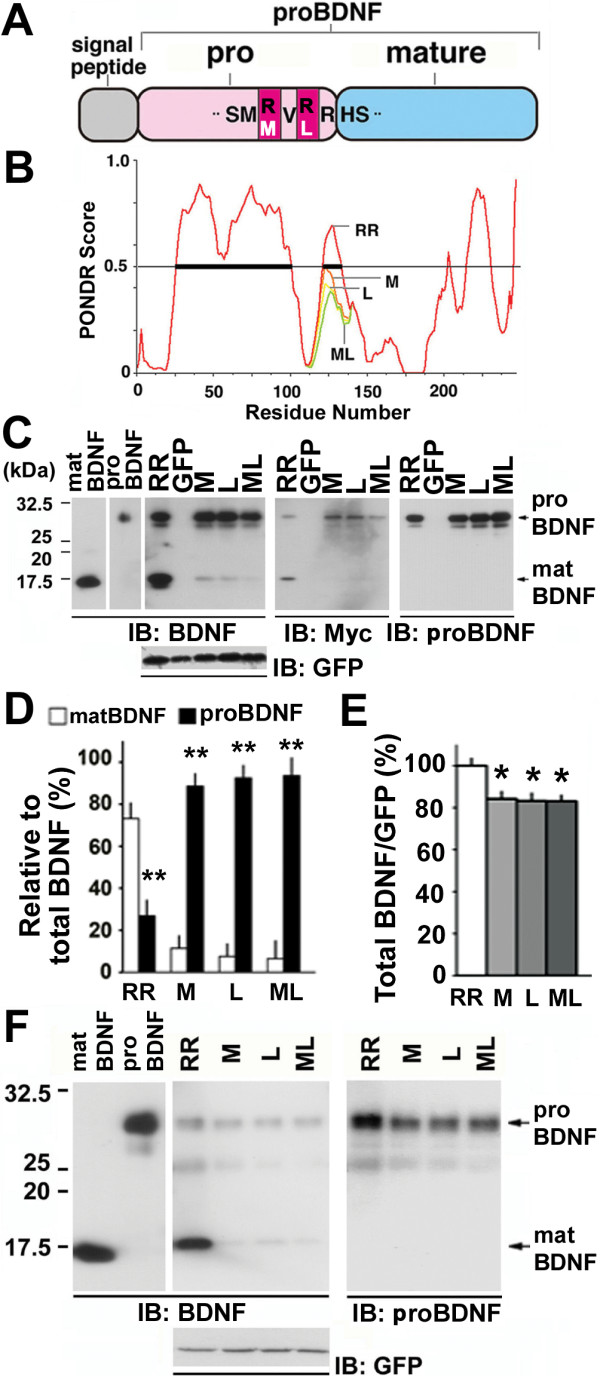
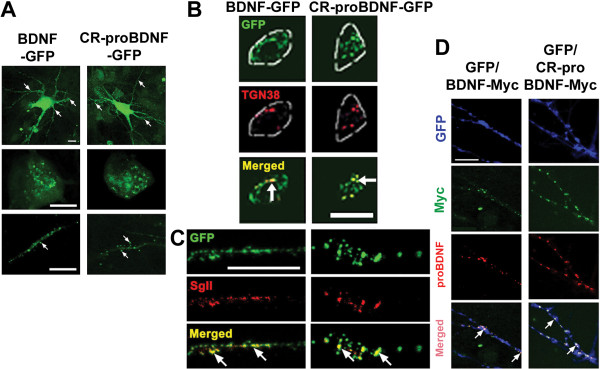
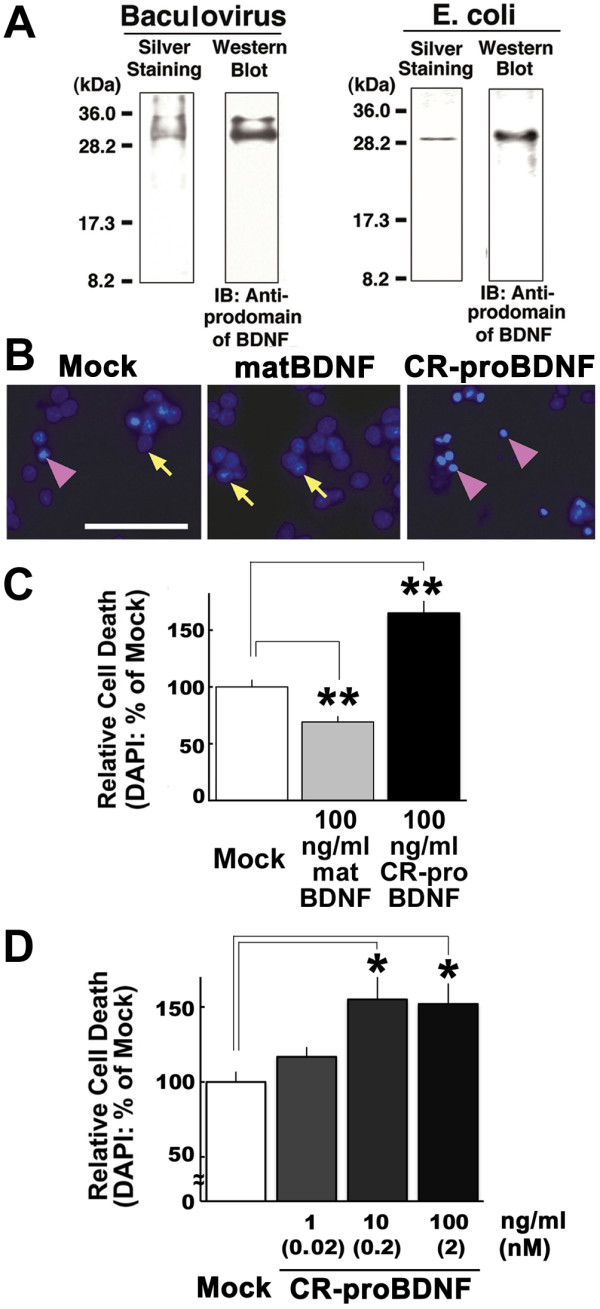
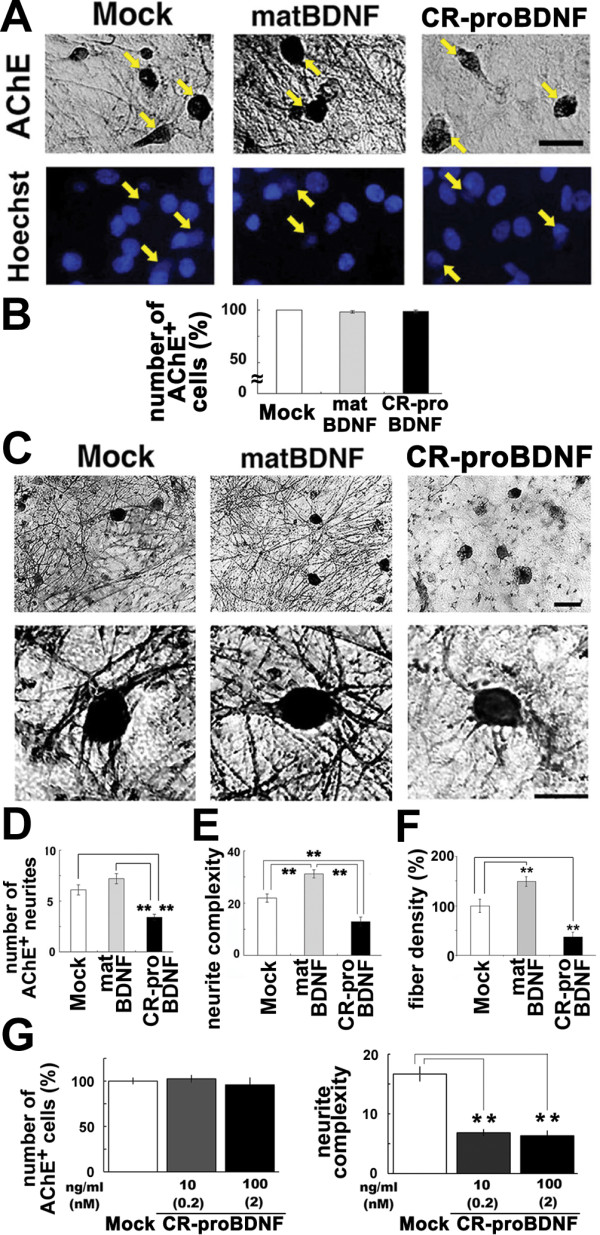
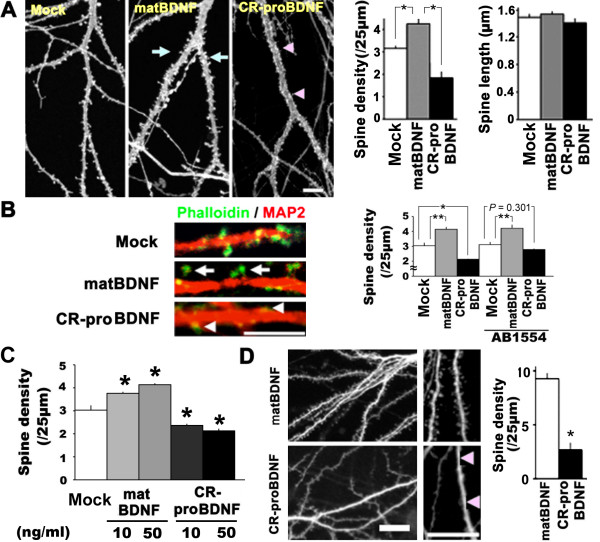
Background: Proneurotrophins and mature neurotrophins elicit opposite effects via the p75 neurotrophin receptor (p75 NTR) and Trk tyrosine kinase receptors, respectively; however the molecular roles of proneurotrophins in the CNS are not fully understood. Results: Based on two rare single nucleotide polymorphisms (SNPs) of the human brain-derived neurotrophic factor (BDNF)gene, we generated R125M-, R127L- and R125M/R127L-BDNF, which have amino acid substitution(s) near the cleavage site between the pro- and mature-domain of BDNF. Western blot analyses demonstrated that these BDNF variants are poorly cleaved and result in the predominant secretion of proBDNF. Using these cleavage-resistant proBDNF (CR-proBDNF) variants, the molecular and cellular roles of proBDNF on the CNS neurons were examined. First, CR-proBDNF showed normal intracellular distribution and secretion in cultured hippocampal neurons, suggesting that inhibition of proBDNF cleavage does not affect intracellular transportation and secretion of BDNF. Second, we purified recombinant CR-proBDNF and tested its biological effects using cultured CNS neurons. Treatment with CR-proBDNF elicited apoptosis of cultured cerebellar granule neurons (CGNs), while treatment with mature BDNF (matBDNF) promoted cell survival. Third, we examined the effects of CR-proBDNF on neuronal morphology using more than 2-week cultures of basal forebrain cholinergic neurons (BFCNs) and hippocampal neurons. Interestingly, in marked contrast to the action of matBDNF, which increased the number of cholinergic fibers and hippocampal dendritic spines, CR-proBDNF dramatically reduced the number of cholinergic fibers and hippocampal dendritic spines, without affecting the survival of these neurons. Conclusion: These results suggest that proBDNF has distinct functions in different populations of CNS neurons and might be responsible for specific physiological cellular processes in the brain.
Overview
The claims and statistics of this paper haven’t been checked yet.
Free: it reads the open-access text and checks the first 5 claims that cite a source we can check. Create a free account to check every claim.
Integrity signals
Registry
Cites
Statistics
Figures
Verification
Claims the paper makes
The claims and statistics of this paper haven’t been checked yet.
Free: it reads the open-access text and checks the first 5 claims that cite a source we can check. Create a free account to check every claim.
Claims other papers make about this one
Each is checked against this paper’s own text: does it say what the citing paper says it does?
The source backs part of the claim, not all of it — or backs it for a different population, condition or comparison.
In the citing paper
“Pro-BDNF binding to p75NTR has also been shown to induce pruning of axons and dendrites85,88–91 and promote long-term depression (LTD)92–94.”
From Neuronal plasticity and neurotrophic factors in drug responses (2017) · cites this paper as [89]
Experimental — accuracy not yet measured
Self-check
Percentages, sums and reported differences re-computed from the paper’s own numbers.
The self-check needs the paper’s full text.
Citations
Cites
Egan, M. F., Kojima, M., Callicott, J. H., Goldberg, T. E., Kolachana, B. S., Bertolino, A., Zaitsev, E., Gold, B., Goldman, D., Dean, M., et al. (2003) · Cell · doi:10.1016/s0092-8674(03)00035-7 · Cited by 3,888
Self-citationA simple method for organotypic cultures of nervous tissue
Stoppini, L., Buchs, P.-A., & Muller, D. (1991) · Journal of Neuroscience Methods · doi:10.1016/0165-0270(91)90128-m · Cited by 3,089 · cited 1×
“Hippocampal organotypic slice cultures were prepared from B6C3F1 mice (postnatal day 5–7), according to previous reports [58,59], with a few modifications.”
Neurotrophins and their receptors: A convergence point for many signalling pathways
Chao, M. V. (2003) · Nature Reviews Neuroscience · doi:10.1038/nrn1078 · Cited by 2,298 · cited 3×
“4), which are a well-known population of p75NTR-highly expressing neurons in the adult brain [24].”
BackgroundInfluentialNeurotrophin-regulated signalling pathways
Reichardt, L. F. (2006) · Philosophical Transactions of the Royal Society B: Biological Sciences · doi:10.1098/rstb.2006.1894 · Cited by 2,195 · cited 1×
“These proteins elicit their biological actions by binding to the Trk family of receptor-type tyrosine kinases [3].”
BackgroundRegulation of Cell Survival by Secreted Proneurotrophins
Lee, R., Kermani, P., Teng, K. K., & Hempstead, B. L. (2001) · Science · doi:10.1126/science.1065057 · Cited by 1,670 · cited 3×
“Discussion Since the discovery that proNGF binds p75NTR with a higher affinity than matNGF and that it induces apoptosis rather than enhancing cell survival in sympathetic neurons [4], proneurotrophin-p75NTR signaling and function have returned to the center stage in the field of neurotrophin research.”
BackgroundThe yin and yang of neurotrophin action
Lu, B., Pang, P. T., & Woo, N. H. (2005) · Nature Reviews Neuroscience · doi:10.1038/nrn1726 · Cited by 1,356 · cited 11×
“Another important question is whether proBDNF has a physiological function [10,13].”
BackgroundInfluentialSelf-citationGenetic variant BDNF (Val66Met) polymorphism alters anxiety-related behavior
Chen, Z.-Y., Jing, D., Bath, K. G., Ieraci, A., Khan, T., Siao, C.-J., Herrera, D. G., Toth, M., Yang, C., McEwen, B. S., et al. (2006) · Science · doi:10.1126/science.1129663 · Cited by 1,340
Rapid Spine Delivery and Redistribution of AMPA Receptors After Synaptic NMDA Receptor Activation
Shi, S.-H., Hayashi, Y., Petralia, R. S., Zaman, S. H., Wenthold, R. J., Svoboda, K., & Malinow, R. (1999) · Science · doi:10.1126/science.284.5421.1811 · Cited by 1,276 · cited 1×
“Hippocampal organotypic slice cultures were prepared from B6C3F1 mice (postnatal day 5–7), according to previous reports [58,59], with a few modifications.”
MethodNeurotrophins: key regulators of cell fate and cell shape in the vertebrate nervous system
Bibel, M., & Barde, Y.-A. (2000) · Genes & Development · doi:10.1101/gad.841400 · Cited by 1,065 · cited 2×
“A large body of evidence demonstrates that matBDNF promotes survival and differentiation of BFCNs [1].”
BackgroundShrinkage of dendritic spines associated with long-term depression of hippocampal synapses
Zhou, Q., Homma, K. J., & Poo, M.-M. (2004) · Neuron · doi:10.1016/j.neuron.2004.11.011 · Cited by 1,025
ProBDNF Induces Neuronal Apoptosis via Activation of a Receptor Complex of p75NTRand Sortilin
Teng, H. K., Teng, K. K., Lee, R., Wright, S., Tevar, S., Almeida, R. D., Kermani, P., Torkin, R., Chen, Z.-Y., Lee, F. S., et al. (2005) · The Journal of Neuroscience · doi:10.1523/jneurosci.5123-04.2005 · Cited by 1,013 · cited 7×
“Since then, proapoptotic effects of proNGF and proBDNF mediated by p75 NTR have been demonstrated in a number of model systems [ 4-8 ].”
BackgroundResultInfluentialSortilin is essential for proNGF-induced neuronal cell death
Nykjaer, A., Lee, R., Teng, K. K., Jansen, P., Madsen, P., Nielsen, M. S., Jacobsen, C., Kliemannel, M., Schwarz, E., Willnow, T. E., et al. (2004) · Nature · doi:10.1038/nature02319 · Cited by 962 · cited 1×
“Cell viability was quantified by counting the number of dead cells using DAPI or Hoechst staining [54], and by measuring LDH released into the medium using the kit (Wako) [27].”
MethodD'Mello, S. R., Galli, C., Ciotti, T., & Calissano, P. (1993) · Proceedings of the National Academy of Sciences · doi:10.1073/pnas.90.23.10989 · Cited by 892
Activation of p75NTR by proBDNF facilitates hippocampal long-term depression
Woo, N. H., Teng, H. K., Siao, C.-J., Chiaruttini, C., Pang, P. T., Milner, T. A., Hempstead, B. L., & Lu, B. (2005) · Nature Neuroscience · doi:10.1038/nn1510 · Cited by 815 · cited 9×
“During LTD, Rap mediates the NMDA-R-dependent removal of synaptic AMPA receptors [46].”
BackgroundInfluentialSelf-citationNAKAYAMA, K. (1997) · Biochemical Journal · doi:10.1042/bj3270625 · Cited by 789 · cited 1×
“Nakayama (1997) also described in a review article that since furin cleavage is essential for the production of a wide variety of biologically active proteins it is possible that mutation of the furin cleavage site of the precursors may result in genetic disorders [41].”
BackgroundRas and Rap control AMPA receptor trafficking during synaptic plasticity
Zhu, J. J., Qin, Y., Zhao, M., Van Aelst, L., & Malinow, R. (2002) · Cell · doi:10.1016/s0092-8674(02)00897-8 · Cited by 769 · cited 1×
“During LTD, Rap mediates the NMDA-R-dependent removal of synaptic AMPA receptors [46].”
BackgroundSeidah, N. G., & Chrétien, M. (1999) · Brain Research · doi:10.1016/s0006-8993(99)01909-5 · Cited by 761
Alderson, R. F., Alterman, A. L., Barde, Y.-A., & Lindsay, R. M. (1990) · Neuron · doi:10.1016/0896-6273(90)90166-d · Cited by 685 · cited 3×
“A previous, yet initial, report characterized biological response of the BFCNs to matBDNF [28]: (1) the pro-survival effect was relatively more striking in low-density cultures, while the differentiated effects were more pronounced in high-density culture and (2) delayed application of matBDNF diminished the pro-survi…”
BackgroundKnüsel, B., Winslow, J. W., Rosenthal, A., Burton, L. E., Seid, D. P., Nikolics, K., & Hefti, F. (1991) · Proceedings of the National Academy of Sciences · doi:10.1073/pnas.88.3.961 · Cited by 603 · cited 2×
“Dissociated BFCN cultures were prepared using E20 rats (Wistar ST) as described [49,50], with a few modifications.”
MethodTan, W., Wang, K., & Drake, T. J. (2004) · Current Opinion in Chemical Biology · doi:10.1016/j.cbpa.2004.08.010 · Cited by 461
Yang, J., Siao, C.-J., Nagappan, G., Marinic, T., Jing, D., McGrath, K., Chen, Z.-Y., Mark, W., Tessarollo, L., Lee, F. S., et al. (2009) · Nature Neuroscience · doi:10.1038/nn.2244 · Cited by 449 · cited 3×
“Two recent reports described the mechanisms of BDNF secretion [11, 12 ].”
BackgroundInfluentialSelf-citationTago, H., Kimura, H., & Maeda, T. (1986) · Journal of Histochemistry & Cytochemistry · doi:10.1177/34.11.2430009 · Cited by 426 · cited 1×
“AChE histochemistry was performed as described [55].”
ProNGF Induces p75-Mediated Death of Oligodendrocytes following Spinal Cord Injury
Beattie, M. S., Harrington, A. W., Lee, R., Kim, J. Y., Boyce, S. L., Longo, F. M., Bresnahan, J. C., Hempstead, B. L., & Yoon, S. O. (2002) · Neuron · doi:10.1016/s0896-6273(02)01005-x · Cited by 414
Regulation of Dendritic Spine Density in Cultured Rat Hippocampal Neurons by Steroid Hormones
Murphy, D. D., & Segal, M. (1996) · The Journal of Neuroscience · doi:10.1523/jneurosci.16-13-04059.1996 · Cited by 399 · cited 2×
“Dendritic spine density was quantified according to previous reports [31,33,56], with a few modifications.”
MethodBiosynthesis and processing of endogenous BDNF: CNS neurons store and secrete BDNF, not pro-BDNF
Matsumoto, T., Rauskolb, S., Polack, M., Klose, J., Kolbeck, R., Korte, M., & Barde, Y.-A. (2008) · Nature Neuroscience · doi:10.1038/nn2038 · Cited by 360 · cited 2×
“Two recent reports described the mechanisms of BDNF secretion [ 11 ,12].”
BackgroundMowla, S. J., Pareek, S., Farhadi, H. F., Petrecca, K., Fawcett, J. P., Seidah, N. G., Morris, S. J., Sossin, W. S., & Murphy, R. A. (1999) · The Journal of Neuroscience · doi:10.1523/jneurosci.19-06-02069.1999 · Cited by 350 · cited 1×
“Exogenously expressed BDNFRR appeared to be cleaved in a fashion similar to endogenous BDNF [20].”
BackgroundSingle-Cell Electroporationfor Gene Transfer In Vivo
Haas, K., Sin, W.-C., Javaherian, A., Li, Z., & Cline, H. T. (2001) · Neuron · doi:10.1016/s0896-6273(01)00235-5 · Cited by 345
Morphological analysis of dendritic spine development in primary cultures of hippocampal neurons
Papa, M., Bundman, M., Greenberger, V, & Segal, M. (1995) · The Journal of Neuroscience · doi:10.1523/jneurosci.15-01-00001.1995 · Cited by 330 · cited 3×
“Dendritic spine density was quantified according to previous reports [31,33,56], with a few modifications.”
MethodJi, Y., Pang, P. T., Feng, L., & Lu, B. (2005) · Nature Neuroscience · doi:10.1038/nn1381 · Cited by 325 · cited 1×
“Consistently with a previous report [32], matBDNF dramatically increased spine density in hippocampal neurons (Fig.”
ResultSelf-citationHempstead, B. (2002) · Current Opinion in Neurobiology · doi:10.1016/s0959-4388(02)00321-5 · Cited by 321 · cited 2×
“Therefore, proteolytic cleavage of proneurotrophins is thought to be an important regulatory step for the direction of neurotrophin function, given the diametrically opposed functions of proneurotrophins and mature neurotrophins, which are elicited via the p75NTR and Trk receptors, respectively [9,10].”
BackgroundHartikka, J., & Hefti, F. (1988) · The Journal of Neuroscience · doi:10.1523/jneurosci.08-08-02967.1988 · Cited by 317 · cited 2×
“Dissociated BFCN cultures were prepared using E20 rats (Wistar ST) as described [49,50], with a few modifications.”
MethodZagrebelsky, M., Holz, A., Dechant, G., Barde, Y.-A., Bonhoeffer, T., & Korte, M. (2005) · The Journal of Neuroscience · doi:10.1523/jneurosci.2492-05.2005 · Cited by 286 · cited 1×
“reported a crucial role of p75NTR on spine formation by gain-of function and loss-of function studies [44].”
BackgroundLindholm, D., Dechant, G., Heisenberg, C., & Thoenen, H. (1993) · European Journal of Neuroscience · doi:10.1111/j.1460-9568.1993.tb00213.x · Cited by 283 · cited 1×
“Consistently with previous reports [26,27], matBDNF promoted the survival of CGNs, even when cell death was induced by LK (Fig.”
ResultSequence Data Analysis for Long Disordered Regions Prediction in the Calcineurin Family.
Romero, P. R., Zoran Obradovic, A., & Dunker, K. (1997) · PubMed · Cited by 277
Prion protein attenuates excitotoxicity by inhibiting NMDA receptors
Khosravani, H., Zhang, Y., Tsutsui, S., Hameed, S., Altier, C., Hamid, J., Chen, L., Villemaire, M., Ali, Z., Jirik, F. R., et al. (2008) · The Journal of Cell Biology · doi:10.1083/jcb.200711002 · Cited by 275
Control of extracellular cleavage of ProBDNF by high frequency neuronal activity
Nagappan, G., Zaitsev, E., Senatorov, V. V., Yang, J., Hempstead, B. L., & Lu, B. (2009) · Proceedings of the National Academy of Sciences · doi:10.1073/pnas.0807322106 · Cited by 270 · cited 2×
“2), which suggests that the amino acid substitutions per se do not alter intracellular sorting and trafficking and supports the notion that endogenous proBDNF is transported [12] and secreted in an activitydependent manner [42].”
BackgroundSelf-citationSecreted proNGF is a pathophysiological death-inducing ligand after adult CNS injury
Harrington, A. W., Leiner, B., Blechschmitt, C., Arevalo, J. C., Lee, R., Mörl, K., Meyer, M., Hempstead, B. L., Yoon, S. O., & Giehl, K. M. (2004) · Proceedings of the National Academy of Sciences · doi:10.1073/pnas.0305755101 · Cited by 269 · cited 1×
“Since then, proapoptotic effects of proNGF and proBDNF mediated by p75NTR have been demonstrated in a number of model systems [4-8].”
Volosin, M., Song, W., Almeida, R. D., Kaplan, D. R., Hempstead, B. L., & Friedman, W. J. (2006) · The Journal of Neuroscience · doi:10.1523/jneurosci.1560-06.2006 · Cited by 265
β-Amyloid1–42Induces Neuronal Death through the p75 Neurotrophin Receptor
Sotthibundhu, A., Sykes, A. M., Fox, B., Underwood, C. K., Thangnipon, W., & Coulson, E. J. (2008) · The Journal of Neuroscience · doi:10.1523/jneurosci.0350-08.2008 · Cited by 236
BDNF-induced recruitment of TrkB receptor into neuronal lipid rafts
Suzuki, S., Numakawa, T., Shimazu, K., Koshimizu, H., Hara, T., Hatanaka, H., Mei, L., Lu, B., & Kojima, M. (2004) · The Journal of Cell Biology · doi:10.1083/jcb.200404106 · Cited by 206 · cited 6×
“The number of AChE-positive cholinergic fibers that extended from the cell body were counted according to Suzuki et al. (2004) [52].”
BackgroundMethodInfluentialSelf-citationBolton, M. M., Pittman, A. J., & Lo, D. C. (2000) · The Journal of Neuroscience · doi:10.1523/jneurosci.20-09-03221.2000 · Cited by 201 · cited 1×
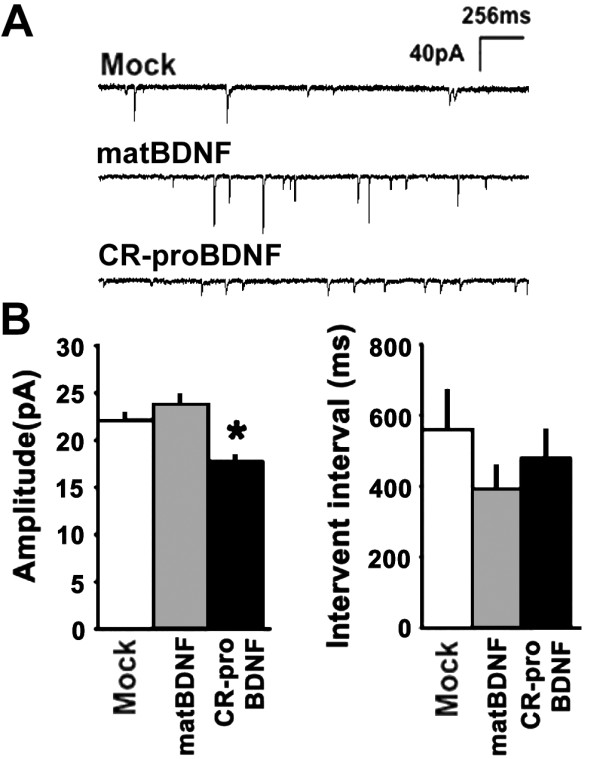
“As reported previously [39], the amplitude of mEPSCs did not increase significantly after matBDNF treatment.”
BackgroundKenchappa, R. S., Zampieri, N., Chao, M. V., Barker, P. A., Teng, H. K., Hempstead, B. L., & Carter, B. D. (2006) · Neuron · doi:10.1016/j.neuron.2006.03.011 · Cited by 189 · cited 1×
“In vitro experiments have shown that proBDNF enhances apoptosis of sympathetic neurons and basal forebrain neurons [7,8, 14 ].”
BackgroundKubo, T., Nonomura, T., Enokido, Y., & Hatanaka, H. (1995) · Developmental Brain Research · doi:10.1016/0165-3806(94)00220-t · Cited by 184 · cited 4×
“Primary cultures of dissociated rat and mouse CGNs were prepared from the cerebella of P9 rats and P6-7 p75NTR-/ - mice, respectively, according to a previous report [27] with some modifications.”
BackgroundMethodResultInfluentialTheta Stimulation Polymerizes Actin in Dendritic Spines of Hippocampus
Lin, B., Kramár, E. A., Bi, X., Brucher, F. A., Gall, C. M., & Lynch, G. (2005) · The Journal of Neuroscience · doi:10.1523/jneurosci.4283-04.2005 · Cited by 184 · cited 1×
“We further visualized spine protrusions using the F-actinbinding dye phalloidin [34].”
MethodBrain-Derived Neurotrophic Factor Regulates Cholesterol Metabolism for Synapse Development
Suzuki, S., Kiyosue, K., Hazama, S., Ogura, A., Kashihara, M., Hara, T., Koshimizu, H., & Kojima, M. (2007) · Journal of Neuroscience · doi:10.1523/jneurosci.0690-07.2007 · Cited by 175 · cited 2×
“The electrophysiological study was carried out as described previously [37,38].”
MethodSelf-citationNatively Disordered Proteins: Functions and Predictions
Romero, P., Obradovic, Z., & Dunker, A. K. (2004) · Applied Bioinformatics · doi:10.2165/00822942-200403020-00005 · Cited by 163
Gehler, S., Gallo, G., Veien, E., & Letourneau, P. C. (2004) · The Journal of Neuroscience · doi:10.1523/jneurosci.0404-04.2004 · Cited by 132
Pro-BDNF–induced synaptic depression and retraction at developing neuromuscular synapses
Yang, F., Je, H.-S., Ji, Y., Nagappan, G., Hempstead, B., & Lu, B. (2009) · Journal of Cell Biology · doi:10.1083/jcb.200811147 · Cited by 130 · cited 1×
“Very recently, it has been demonstrated that proBDNF eliminated presynaptic terminals using Xenopus nerve-muscle co-cultures [ 48 ].”
BackgroundSelf-citationFarhadi, H. F., Mowla, S. J., Petrecca, K., Morris, S. J., Seidah, N. G., & Murphy, R. A. (2000) · The Journal of Neuroscience · doi:10.1523/jneurosci.20-11-04059.2000 · Cited by 127
Structure of the Brain-Derived Neurotrophic Factor/Neurotrophin 3 Heterodimer
Robinson, R. C., Radziejewski, C., Stuart, D. I., & Jones, E. Y. (1995) · Biochemistry · doi:10.1021/bi00013a001 · Cited by 124 · cited 1×
“Consistent with the X-ray structure analysis [17], mature domain of BDNF (residue 129–247) was predicted to be thermally stable.”
ResultBarker, P. A. (2009) · Nature Neuroscience · doi:10.1038/nn0209-105 · Cited by 110
Signaling pathways and survival effects of BDNF and NT-3 on cultured cerebellar granule cells
Nonomura, T., Kubo, T., Oka, T., Shimoke, K., Yamada, M., Enokido, Y., & Hatanaka, H. (1996) · Developmental Brain Research · doi:10.1016/s0165-3806(96)00130-7 · Cited by 98 · cited 7×
“Transferrin, insulin, progesterone, cytosine arabinoside (AraC) and polyethylenimine were purchased from Sigma.”
BackgroundMethodInfluentialNakayama, K., Kiyosue, K., & Taguchi, T. (2005) · The Journal of Neuroscience · doi:10.1523/jneurosci.4115-04.2005 · Cited by 84 · cited 3×
“The electrophysiological study was carried out as described previously [37,38].”
MethodSelf-citationActivation of pro‐BDNF by the pericellular serine protease plasmin
Gray, K., & Ellis, V. (2008) · FEBS Letters · doi:10.1016/j.febslet.2008.02.026 · Cited by 66 · cited 1×
“Interestingly, it was reported that a specific plasmin-cleavage could occur after Arg125 rather than Arg128 of the RVRR sequence [40].”
BackgroundPilpel, Y., & Segal, M. (2005) · Journal of Neurochemistry · doi:10.1111/j.1471-4159.2005.03467.x · Cited by 40 · cited 1×
“Dendritic spine density was quantified according to previous reports [31,33,56], with a few modifications.”
MethodOkada, T., Yamada, N., Kakegawa, W., Tsuzuki, K., Kawamura, M., Nawa, H., Iino, M., & Ozawa, S. (2001) · European Journal of Neuroscience · doi:10.1046/j.0953-816x.2001.01523.x · Cited by 27 · cited 2×
“In this plasmid, two subgenomic promoters were arranged in tandem and the recombinant enhanced GFP (EGFP) gene was subcloned downstream of the second subgenomic promoter [ 19 ].”
BackgroundInoue, M., Akimaru, J., Nishikawa, T., Seki, N., & Yamada, H. (1998) · Biotechnology and Applied Biochemistry · doi:10.1111/j.1470-8744.1998.tb00531.x · Cited by 17
Rap1 is involved in the signal transduction of myelin-associated glycoprotein
Taniguchi, J., Fujitani, M., Endo, M., Kubo, T., Fujitani, M., Miller, F. D., Kaplan, D. R., & Yamashita, T. (2007) · Cell Death and Differentiation · doi:10.1038/sj.cdd.4402278 · Cited by 10
Method for purifying porcine mature interleukin-18 from silkworm haemolymph
Nagaya, H., Muneta, Y., Enomoto, C., Matsumoto, S., Yokomizo, Y., & Mori, Y. (2004) · Biotechnology Letters · doi:10.1023/b:bile.0000025894.87314.2d · Cited by 4 · cited 8×
“(D) Apoptotic effect of recombinant CRproBDNF derived from Baculovirus and E. Coli.”
MethodInfluential(1953) · Europe PMC (PubMed Central)
Cited by
BDNF and synaptic plasticity, cognitive function, and dysfunction
Lu, B., Nagappan, G., & Lu, Y. (2014) · Handbook of Experimental Pharmacology · doi:10.1007/978-3-642-45106-5_9 · Cited by 1,043
Self-citationPostsynaptic BDNF‐TrkB signaling in synapse maturation, plasticity, and disease
Yoshii, A., & Constantine‐Paton, M. (2010) · Developmental Neurobiology · doi:10.1002/dneu.20765 · Cited by 744
“, 2005); and that application of a cleavage-resistant proBDNF reduces the number of spines in cultured neurons (Koshimizu et al., 2009).”
InfluentialBrain-Derived Neurotrophic Factor in Alzheimer’s Disease and Its Pharmaceutical Potential
Gao, L., Zhang, Y., Sterling, K., & Song, W. (2022) · Translational Neurodegeneration · doi:10.1186/s40035-022-00279-0 · Cited by 606
Mustapic, M., Eitan, E., Werner, J. K., Berkowitz, S. T., Lazaropoulos, M. P., Tran, J., Goetzl, E. J., & Kapogiannis, D. (2017) · Frontiers in Neuroscience · doi:10.3389/fnins.2017.00278 · Cited by 441
“Both BDNF and its precursor protein proBDNF (Koshimizu et al., 2009) were detected in significantly and substantially higher concentrations in L1CAM+ EVs compared to plasma samples (Figures 5C,D).”
ResultThe Role of BDNF on Neural Plasticity in Depression
Yang, T., Nie, Z., Shu, H., Kuang, Y., Chen, X., Cheng, J., Yu, S., & Liu, H. (2020) · Frontiers in Cellular Neuroscience · doi:10.3389/fncel.2020.00082 · Cited by 435
Metadata
- Authors
- Koshimizu, H., Kiyosue, K., Hara, T., Hazama, S., Suzuki, S., Uegaki, K., Nagappan, G., Zaitsev, E., Hirokawa, T., Tatsu, Y., Ogura, A., Lu, B., & Kojima, M.
- Affiliations
- National Institute of Advanced Industrial Science and Technology (JP)
- Japan Science and Technology Agency (JP)
- National Institutes of Health (US)
- The University of Osaka (JP)
- Corresponding author
- Kojima, Masami
- ORCID
- Venue
- Molecular Brain
- Published
- 2009-08-13
- Volume
- 2
- Issue
- 1
- Pages
- 27-27
- ISSN
- 1756-6606 (ISSN-L)
- PMC
- PMC2743674
- OpenAlex
- W2096603652
- Cited by
- 195
- References
- 60
- Citations by year
- 2026: 3 · 2025: 4 · 2024: 10 · 2023: 15 · 2022: 9 · 2021: 13 · 2020: 15 · 2019: 7 · 2018: 19 · 2017: 15 · 2016: 14 · 2015: 15 · 2014: 13 · 2013: 12 · 2012: 15
- FWCI
- 4.30
- Type
- journal article
- Language
- en
- Open access
- gold
- doi.org
- Licence
- cc-by
- Locations
- Molecular Brain (publishedVersion, cc-by)
- PubMed Central (publishedVersion, cc-by)
- PubMed (publishedVersion)
- DOAJ (DOAJ: Directory of Open Access Journals) (submittedVersion)
- Funders
- National Institute of Advanced Industrial Science and Technology
- Ministry of Education, Culture, Sports, Science and Technology (40344171, CREST)
- National Institutes of Health
- Novartis Pharma
- Japan Society for the Promotion of Science (CREST)
- Japan Science and Technology Agency (CREST, 40344171)
- National Institute of Mental Health
- Core Research for Evolutional Science and Technology
- Topics
- Life Sciences › Neuroscience › Cellular and Molecular Neuroscience › Nerve injury and regeneration
- Life Sciences › Biochemistry, Genetics and Molecular Biology › Molecular Biology › Cell death mechanisms and regulation
- Life Sciences › Neuroscience › Developmental Neuroscience › Neurogenesis and neuroplasticity mechanisms
- Keywords
- proBDNF, brain-derived neurotrophic factor, single nucleotide polymorphisms, cerebellar granule cells, basal forebrain cholinergic neurons, hippocampal neurons, neurite outgrowth, dendritic spine formation, apoptosis, neuronal survival, neurotrophin signaling
- MeSH terms
- Animals, Antibody Specificity, Biological Transport, Cell Survival, Cells, Cultured, Central Nervous System, Culture Media, Hippocampus, Humans, Potassium, Protein Precursors, Protein Processing, Post-Translational, Recombinant Proteins, Neurites, Apoptosis, Protein Structure, Secondary, Brain-Derived Neurotrophic Factor, Computational Biology, Amino Acid Substitution, Polymorphism, Single Nucleotide, Intracellular Space, Mutant Proteins, Mice, Rats
About these checks
Registry, retraction, Cites and statistics results are computed, not judged, with one exception: a printed reference that no index lists is read once by a model before it counts as a citation error. Claims are extracted by a model and kept only when their quote appears verbatim in the text; each cited source is then checked, with a model’s help, for whether it says what the claim relies on. Those verdicts can be wrong — read the claim’s quote and the cited source before relying on one.
Statistics and arithmetic are recomputed, not judged.
Confidence bands are shown only for fields calibrated on our annotated test set. None is calibrated yet, so no band is shown.
What counts as a claim ›How we measure confidence ›How we check this ›
Are you an author, or do you see a problem with this page? Request a review
Data sources
Bibliographic data: Semantic Scholar, OpenAlex, Crossref.
Contains information from the Semantic Scholar Academic Graph Datasets, made available under the ODC Attribution License (ODC-BY 1.0).
Semantic Scholar’s data is described in: Kinney, R., et al. (2023). The Semantic Scholar Open Data Platform. arXiv:2301.10140.
