

The DOI matches its Crossref record; 77 of the 77 references it cites were found in a registry or an index.
Sex- and brain region-specific acceleration of β-amyloidogenesis following behavioral stress in a mouse model of Alzheimer's disease
Open accessAbstract
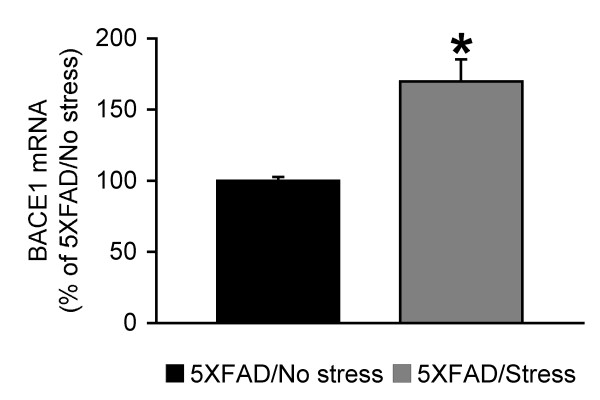
BACKGROUND: It is hypothesized that complex interactions between multiple environmental factors and genetic factors are implicated in sporadic Alzheimer's disease (AD); however, the underlying mechanisms are poorly understood. Importantly, recent evidence reveals that expression and activity levels of the β-site APP cleaving enzyme 1 (BACE1), which initiates amyloid-β (Aβ) production, are elevated in AD brains. In this study, we investigated a molecular mechanism by which sex and stress interactions may accelerate β-amyloidogenesis and contribute to sporadic AD. RESULTS: We applied 5-day restraint stress (6 h/day) to the male and female 5XFAD transgenic mouse model of AD at the pre-pathological stage of disease, which showed little amyloid deposition under non-stressed control conditions. Exposure to the relatively brief behavioral stress increased levels of neurotoxic Aβ42 peptides, the β-secretase-cleaved C-terminal fragment (C99) and plaque burden in the hippocampus of female 5XFAD mice but not in that of male 5XFAD mice. In contrast, significant changes in the parameters of β-amyloidosis were not observed in the cerebral cortex of stressed male or female 5XFAD mice. We found that this sex- and brain region-specific acceleration of β-amyloidosis was accounted for by elevations in BACE1 and APP levels in response to adverse stress. Furthermore, not only BACE1 mRNA but also phosphorylation of the translation initiation factor eIF2α (a proposed mediator of the post-transcriptional upregulation of BACE1) was elevated in the hippocampus of stressed female 5XFAD mice. CONCLUSIONS: Our results suggest that the higher prevalence of sporadic AD in women may be attributable to the vulnerability of female brains (especially, the hippocampus) to stressful events, which alter APP processing to favor the β-amyloidogenesis through the transcriptional and translational upregulation of BACE1 combined with elevations in its substrate APP.
Overview
The claims and statistics of this paper haven’t been checked yet.
Run the check — free, no account needed. It reads the open-access text and checks the sources it cites.
Integrity signals
Registry
Cites
Statistics
Figures
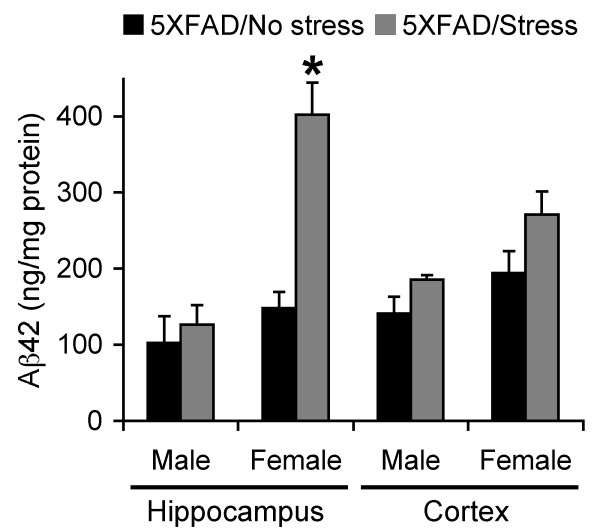
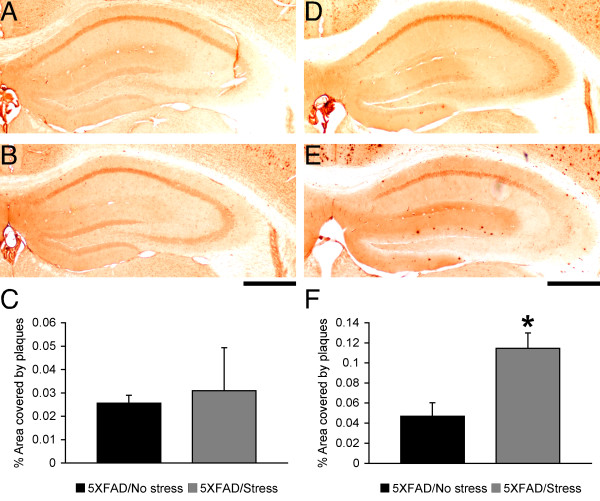
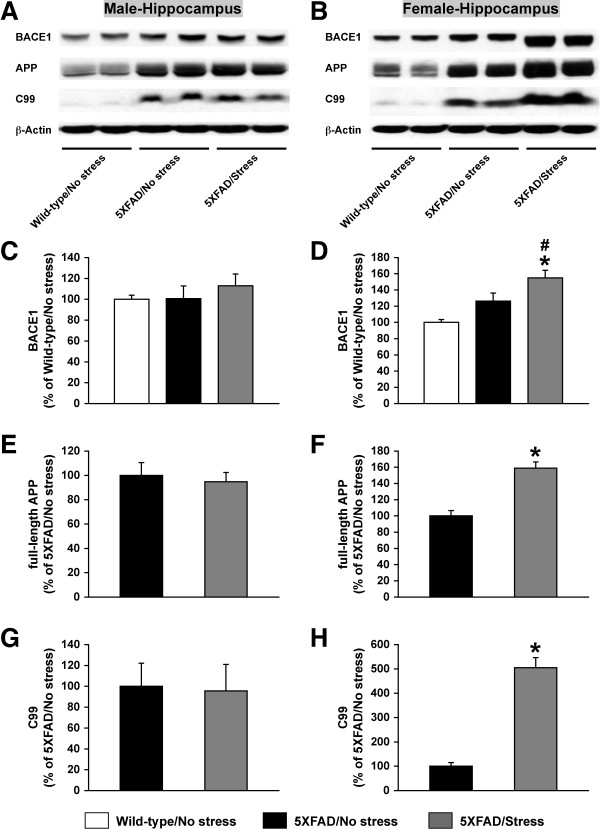
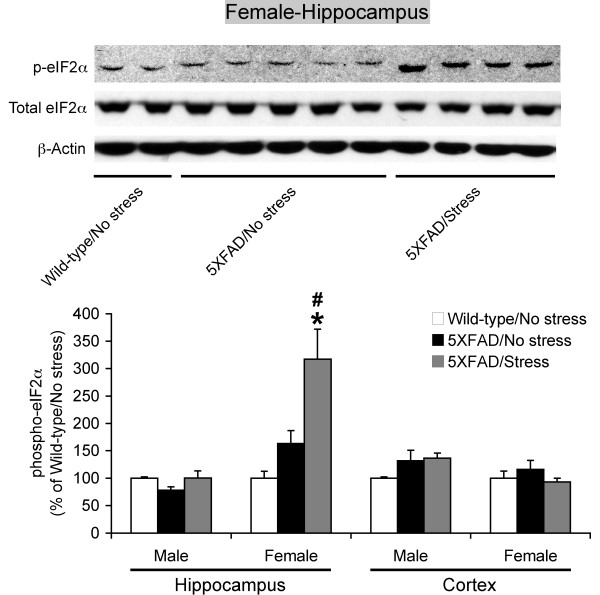
Verification
Claims the paper makes
The claims and statistics of this paper haven’t been checked yet.
Run the check — free, no account needed. It reads the open-access text and checks the sources it cites.
Claims other papers make about this one
Each is checked against this paper’s own text: does it say what the citing paper says it does?
In the citing paper
“Females also appear to have increased BACE1 activity, a β-secretase processing enzyme which cleaves pAPP and produces pathogenic Aβ fragments [40,41], ultimately leading to increased amyloid plaque burden compared to male 5XFAD mice [41,42].”
From Centella Asiatica Improves Memory and Promotes Antioxidative Signaling in 5XFAD Mice (2019) · cites this paper as [41]
Self-check
Percentages, sums and reported differences re-computed from the paper’s own numbers.
The self-check needs the paper’s full text.
Citations
Cites
The mouse brain in stereotaxic coordinates
Konsman, J. (2003) · Psychoneuroendocrinology · doi:10.1016/s0306-4530(03)00088-x · Cited by 16,796
The Mouse Brain in Stereotaxic Coordinates
Paxinos, G. (2001) · Cited by 12,859
Alzheimer's Disease: Genes, Proteins, and Therapy
Selkoe, D. J. (2001) · Physiological Reviews · doi:10.1152/physrev.2001.81.2.741 · Cited by 6,063
Soluble protein oligomers in neurodegeneration: lessons from the Alzheimer's amyloid β-peptide
Haass, C., & Selkoe, D. J. (2007) · Nature Reviews Molecular Cell Biology · doi:10.1038/nrm2101 · Cited by 4,744
Shankar, G. M., Li, S., Mehta, T. H., Garcia-Munoz, A., Shepardson, N. E., Smith, I., Brett, F. M., Farrell, M. A., Rowan, M. J., Lemere, C. A., et al. (2008) · Nature Medicine · doi:10.1038/nm1782 · Cited by 3,685
Oakley, H., Cole, S. L., Logan, S., Maus, E., Shao, P., Craft, J., Guillozet-Bongaarts, A., Ohno, M., Disterhoft, J., Van Eldik, L., et al. (2006) · The Journal of Neuroscience · doi:10.1523/jneurosci.1202-06.2006 · Cited by 3,530 · cited 3×
“Specifically, 5XFAD transgenic model mice at 3 months of age, which exhibit little or only faint amyloid pathology under normal conditions [ 23 ], were exposed to 5-day restraint stress, and we compared levels of BACE1, APP, its b-cleavage products and plaque burden between stressed and non-stressed subjects.”
MethodInfluentialSelf-citationBlennow, K., de Leon, M. J., & Zetterberg, H. (2006) · The Lancet · doi:10.1016/s0140-6736(06)69113-7 · Cited by 3,134
The stressed hippocampus, synaptic plasticity and lost memories
Kim, J. J., & Diamond, D. M. (2002) · Nature Reviews Neuroscience · doi:10.1038/nrn849 · Cited by 1,543
Amyloid, the presenilins and Alzheimer’s disease
Hardy, J. (1997) · Trends in Neurosciences · doi:10.1016/s0166-2236(96)01030-2 · Cited by 1,370
Epidemiology of Alzheimer's disease: occurrence, determinants, and strategies toward intervention
Qiu, C., Kivipelto, M., & von Strauss, E. (2009) · Dialogues in Clinical Neuroscience · doi:10.31887/dcns.2009.11.2/cqiu · Cited by 1,261
Cited by
Sorted by citations
Items 101–129 of 129
Dose-dependent neuroprotective effect of the JNK inhibitor Brimapitide in 5xFAD transgenic mice
Porte, B., Marguerit, G., Thomasseau, S., Paquet, C., & Hugon, J. (2019) · Brain Research · doi:10.1016/j.brainres.2019.146587 · Cited by 8
Tang, W. X., Cheng, J., Wang, Z., Chen, K., Han, Z., Wang, Q., & Yao, Y. (2016) · Journal of Alzheimer s Disease · doi:10.3233/jad-160011 · Cited by 8
A gender dimorphism in up-regulation of BACE1 gene expression in schizophrenia
Nafisi-Far, N., Ghafouri‐Fard, S., Panah, A. S. T., Sayad, A., & Taheri, M. N. (2018) · Metabolic Brain Disease · doi:10.1007/s11011-018-0205-7 · Cited by 8
Möller, J. E. L., Schmitt, F. W., Günther, D., Stöver, A., & Bouter, Y. (2024) · Pharmacology Biochemistry and Behavior · doi:10.1016/j.pbb.2024.173944 · Cited by 9
Spouse bereavement and brain pathologies: A propensity score matching study
Kim, J. W., Byun, M. S., Lee, J. H., Yi, D., Kim, M. J., Jung, G., Lee, J., Lee, Y., Kim, Y. K., Kang, K. M., et al. (2022) · Psychiatry and Clinical Neurosciences · doi:10.1111/pcn.13439 · Cited by 7
Segal‐Gavish, H., Danino, O., Barhum, Y., Ben‐Zur, T., Shai, E., Varon, D., Offen, D., & Fischer, B. (2017) · Journal of Alzheimer s Disease · doi:10.3233/jad-161236 · Cited by 6
p35 Hemizygous Deletion in 5xFAD Mice Increases Aβ Plaque Load in Males but Not in Females
Barrett, T., Marchalant, Y., & Park, K. H. J. (2019) · Neuroscience · doi:10.1016/j.neuroscience.2019.08.017 · Cited by 5
Aberrant Cortical Activity in 5xFAD Mice in Response to Social and Non-Social Olfactory Stimuli
Kosel, F., Hartley, M. R., & Franklin, T. B. (2023) · Journal of Alzheimer s Disease · doi:10.3233/jad-230858 · Cited by 4
Neuharth, J., Hernandez, K. A., Bernholtz, J., Edwards, H., & Stewart, A. (2025) · Biology of Sex Differences · doi:10.1186/s13293-025-00788-3 · Cited by 3
Wieg, L., Ciola, J., Wasén, C., Gaba, F., Colletti, B. R., Schroeder, M. K., Hinshaw, R. G., Ekwudo, M. N., Holtzman, D. M., Saito, T., et al. (2024) · International Journal of Molecular Sciences · doi:10.3390/ijms25179379 · Cited by 6
The effects of social environment on AD-related pathology in hAPP-J20 mice and tau-P301L mice
Lanooij, S. D., Drinkenburg, W. H. I. M., Eisel, U. L. M., van der Zee, E. A., & Kas, M. J. (2023) · Neurobiology of Disease · doi:10.1016/j.nbd.2023.106309 · Cited by 4
Damborsky, J. C., & Yakel, J. L. (2024) · Journal of Molecular Neuroscience · doi:10.1007/s12031-024-02260-0 · Cited by 2
Analysis of Brain Protein Stability Changes in a Mouse Model of Alzheimer’s Disease
Tang, Y., Park, H.-J., Li, S., & Fitzgerald, M. C. (2024) · Journal of Proteome Research · doi:10.1021/acs.jproteome.4c00406 · Cited by 2
Faborode, O. S., Dallé, E., & Mabandla, M. V. (2021) · Neurochemistry International · doi:10.1016/j.neuint.2021.105170 · Cited by 4
Torraville, S. E., Flynn, C. M., Kendall, T. L., & Yuan, Q. (2023) · Biomedicines · doi:10.3390/biomedicines11071884 · Cited by 4
Wright, A. L., Weible, A. P., Estes, O. B., & Wehr, M. (2025) · Frontiers in Aging Neuroscience · doi:10.3389/fnagi.2025.1505908 · Cited by 2
Ciric, J., Perović, M., Milovanovic, N., Polaka, S., Macura, I. J., Nestorović, N. M., & Tešić, V. (2025) · Molecular Neurobiology · doi:10.1007/s12035-025-05355-w · Cited by 1
Morphofunctional Changes in the Brain Nervous Tissue of 5xFAD Transgenic Mice
Tumanova, N. L., Vasiliev, D. S., Dubrovskaya, N. M., & Nalivaeva, N. N. (2022) · Cell and Tissue Biology · doi:10.1134/s1990519x22040095 · Cited by 1
SLEEP ALTERATIONS IN MOUSE GENETIC MODELS OF HUMAN DISEASE
Sethi, M. (2016) · UKnowledge (University of Kentucky) · doi:10.13023/etd.2016.522
Differential Na+/K+ Pump Isoform Expression in Higher and Lower Brain Regions of the Mouse
Lowry, C. A. (2017) · QSpace (Queen's University Library)
Assessing Cognition In A Mouse Model Of Alzheimer’s Disease
Mels, J. (2018) · Scholarship@Western (Western University)
(2015) · International Journal of Neuroscience · doi:10.3109/00207454.2013.790902
RetractedZampar, S. (2021) · eDiss (Georg-August-Universität Göttingen) · doi:10.53846/goediss-9004
The Missing Half: Why Sex Differences Matter in Alzheimer’s Disease
O’Connell, K. M. S. (2025) · Biological Psychiatry · doi:10.1016/j.biopsych.2025.02.898
The paradoxical protective effect of chronic stress on advanced Alzheimer’s disease pathology
Shor, Y., Said, R., Fainstein, N., Wolf, G., Sofer, L., Lachish, M., Ganz, T., Shwaiky, Y., Benyamini, H., Nevo, Y., et al. (2025) · Brain Behavior and Immunity · doi:10.1016/j.bbi.2025.106224
Rôle central des glucocorticoïdes et de leurs récepteurs dans l’étiologie de la Maladie d’Alzheimer
Canet, G. (2020) · theses.fr (ABES) · doi:10.70675/c46cedbczd8bbz4a8eza301z82de5785048c
Diphenhydramine disrupts sleep architecture in 5XFAD Alzheimer's disease model and wild-type mice
Copeland, M. H., Youngstrom, D. E., Konrad, K., Diering, G. H., Letsinger, A. C., Wilson, L. R., Yakel, J. L., & Cushman, J. D. (2026) · Neurobiology of Sleep and Circadian Rhythms · doi:10.1016/j.nbscr.2026.100154
Investigation of BACE1 as a stress-induced regulator of neuronal metabolism
Findlay, J. A. (2014) · Discovery Research Portal (University of Dundee)
Metadata
- Authors
- Devi, L., Alldred, M. J., Ginsberg, S. D., & Ohno, M.
- Affiliations
- Nathan Kline Institute for Psychiatric Research (US)
- Corresponding author
- Ohno, Masuo
- Venue
- Molecular Brain
- Published
- 2010-11-08
- Volume
- 3
- Issue
- 1
- Pages
- 34-34
- ISSN
- 1756-6606 (ISSN-L)
- PMC
- PMC2988063
- OpenAlex
- W2171661607
- Cited by
- 129
- References
- 77
- Citations by year
- 2026: 1 · 2025: 9 · 2024: 11 · 2023: 11 · 2022: 7 · 2021: 10 · 2020: 8 · 2019: 13 · 2018: 11 · 2017: 9 · 2016: 5 · 2015: 8 · 2014: 6 · 2013: 7 · 2012: 7
- FWCI
- 4.33
- Type
- journal article
- Language
- en
- Open access
- gold
- doi.org
- Licence
- cc-by
- Locations
- Molecular Brain (publishedVersion, cc-by)
- PubMed Central (publishedVersion, cc-by)
- PubMed (publishedVersion)
- DOAJ (DOAJ: Directory of Open Access Journals) (submittedVersion, cc-by-sa)
- Funders
- Alzheimer's Association (IIRG-08-91231)
- National Institutes of Health
- National Institute on Aging (P01AG014449, R01AG043375, P01AG017617)
- National Institute of Mental Health (R01MH067251)
- Topics
- Life Sciences › Neuroscience › Cellular and Molecular Neuroscience › Alzheimer's disease research and treatments
- Health Sciences › Medicine › Psychiatry and Mental health › Dementia and Cognitive Impairment Research
- Life Sciences › Neuroscience › Neurology › Neuroinflammation and Neurodegeneration Mechanisms
- Keywords
- Alzheimer's disease, behavioral stress, restraint stress, sex differences, 5xFAD mice, BACE1, amyloid-beta 42, APP processing, eIF2α phosphorylation, hippocampus, cerebral cortex, amyloid plaques
- MeSH terms
- Alzheimer Disease, Animals, Behavior, Animal, Brain, Disease Models, Animal, Female, Humans, Male, Mice, Transgenic, Sex Factors, Stress, Psychological, Aspartic Acid Endopeptidases, Amyloid beta-Protein Precursor, Mice, Amyloid Precursor Protein Secretases
About these checks
Registry, retraction, Cites and statistics results are computed, not judged, with one exception: a printed reference that no index lists is read once by a model before it counts as a citation error. Claims are extracted by a model and kept only when their quote appears verbatim in the text; each cited source is then checked, with a model’s help, for whether it says what the claim relies on. Those verdicts can be wrong — read the claim’s quote and the cited source before relying on one.
Statistics and arithmetic are recomputed, not judged.
Confidence bands are shown only for fields calibrated on our annotated test set. None is calibrated yet, so no band is shown.
What counts as a claim ›How we measure confidence ›How we check this ›
Are you an author, or do you see a problem with this page? Request a review
