

The DOI matches its Crossref record; 77 of the 77 references it cites were found in a registry or an index.
Sex- and brain region-specific acceleration of β-amyloidogenesis following behavioral stress in a mouse model of Alzheimer's disease
Open accessAbstract
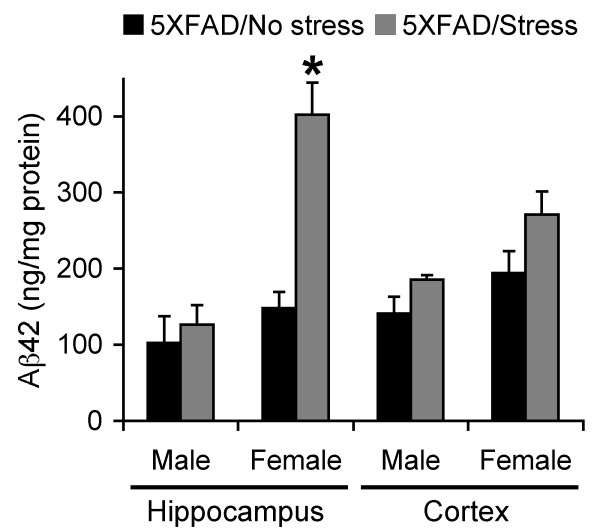
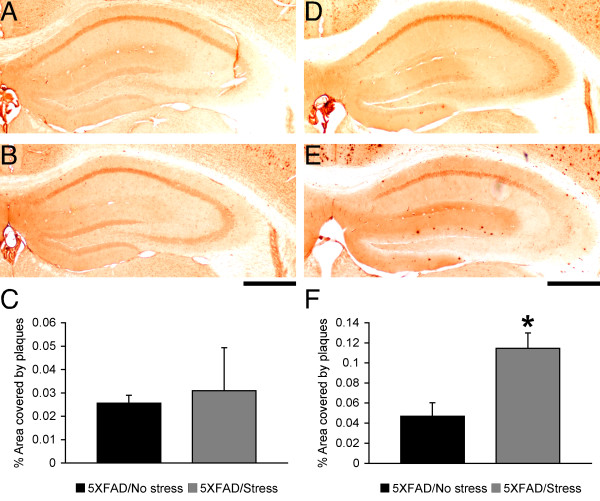
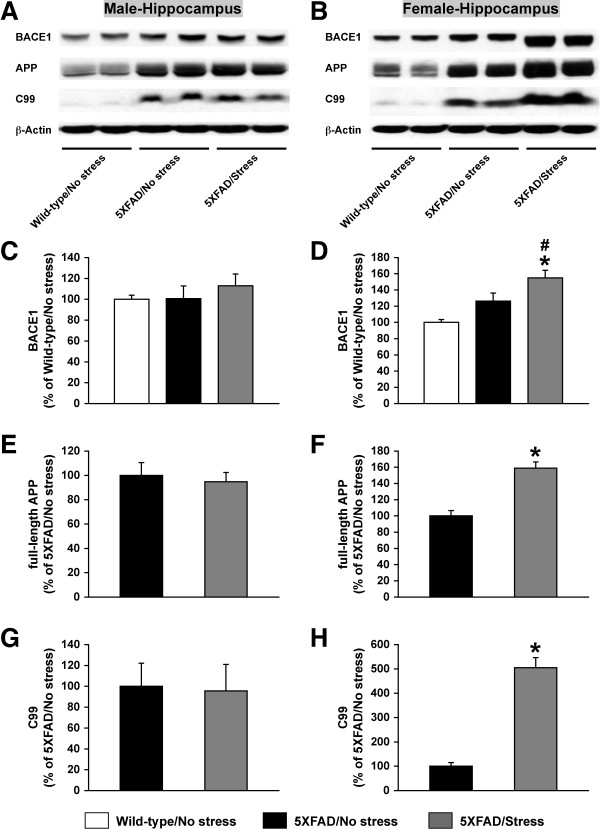
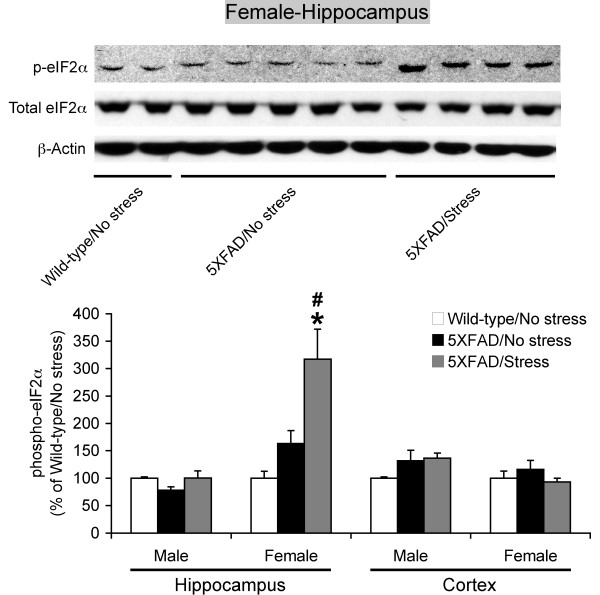
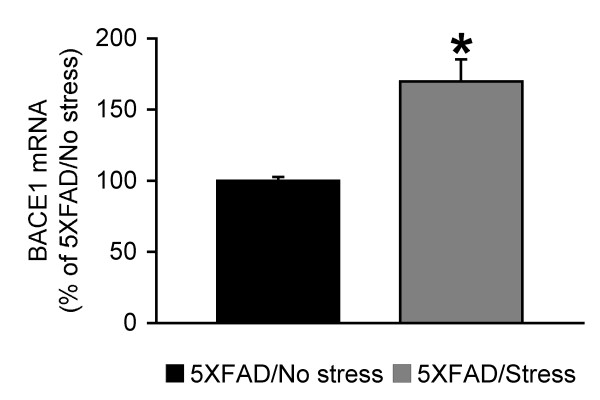
BACKGROUND: It is hypothesized that complex interactions between multiple environmental factors and genetic factors are implicated in sporadic Alzheimer's disease (AD); however, the underlying mechanisms are poorly understood. Importantly, recent evidence reveals that expression and activity levels of the β-site APP cleaving enzyme 1 (BACE1), which initiates amyloid-β (Aβ) production, are elevated in AD brains. In this study, we investigated a molecular mechanism by which sex and stress interactions may accelerate β-amyloidogenesis and contribute to sporadic AD. RESULTS: We applied 5-day restraint stress (6 h/day) to the male and female 5XFAD transgenic mouse model of AD at the pre-pathological stage of disease, which showed little amyloid deposition under non-stressed control conditions. Exposure to the relatively brief behavioral stress increased levels of neurotoxic Aβ42 peptides, the β-secretase-cleaved C-terminal fragment (C99) and plaque burden in the hippocampus of female 5XFAD mice but not in that of male 5XFAD mice. In contrast, significant changes in the parameters of β-amyloidosis were not observed in the cerebral cortex of stressed male or female 5XFAD mice. We found that this sex- and brain region-specific acceleration of β-amyloidosis was accounted for by elevations in BACE1 and APP levels in response to adverse stress. Furthermore, not only BACE1 mRNA but also phosphorylation of the translation initiation factor eIF2α (a proposed mediator of the post-transcriptional upregulation of BACE1) was elevated in the hippocampus of stressed female 5XFAD mice. CONCLUSIONS: Our results suggest that the higher prevalence of sporadic AD in women may be attributable to the vulnerability of female brains (especially, the hippocampus) to stressful events, which alter APP processing to favor the β-amyloidogenesis through the transcriptional and translational upregulation of BACE1 combined with elevations in its substrate APP.
Overview
The claims and statistics of this paper haven’t been checked yet.
Run the check — free, no account needed. It reads the open-access text and checks the sources it cites.
Integrity signals
Registry
Cites
Statistics
Figures
Verification
Claims the paper makes
The claims and statistics of this paper haven’t been checked yet.
Run the check — free, no account needed. It reads the open-access text and checks the sources it cites.
Claims other papers make about this one
Each is checked against this paper’s own text: does it say what the citing paper says it does?
In the citing paper
“Females also appear to have increased BACE1 activity, a β-secretase processing enzyme which cleaves pAPP and produces pathogenic Aβ fragments [40,41], ultimately leading to increased amyloid plaque burden compared to male 5XFAD mice [41,42].”
From Centella Asiatica Improves Memory and Promotes Antioxidative Signaling in 5XFAD Mice (2019) · cites this paper as [41]
Self-check
Percentages, sums and reported differences re-computed from the paper’s own numbers.
The self-check needs the paper’s full text.
Citations
Cites
The mouse brain in stereotaxic coordinates
Konsman, J. (2003) · Psychoneuroendocrinology · doi:10.1016/s0306-4530(03)00088-x · Cited by 16,796
The Mouse Brain in Stereotaxic Coordinates
Paxinos, G. (2001) · Cited by 12,859
Alzheimer's Disease: Genes, Proteins, and Therapy
Selkoe, D. J. (2001) · Physiological Reviews · doi:10.1152/physrev.2001.81.2.741 · Cited by 6,063
Soluble protein oligomers in neurodegeneration: lessons from the Alzheimer's amyloid β-peptide
Haass, C., & Selkoe, D. J. (2007) · Nature Reviews Molecular Cell Biology · doi:10.1038/nrm2101 · Cited by 4,744
Shankar, G. M., Li, S., Mehta, T. H., Garcia-Munoz, A., Shepardson, N. E., Smith, I., Brett, F. M., Farrell, M. A., Rowan, M. J., Lemere, C. A., et al. (2008) · Nature Medicine · doi:10.1038/nm1782 · Cited by 3,685
Oakley, H., Cole, S. L., Logan, S., Maus, E., Shao, P., Craft, J., Guillozet-Bongaarts, A., Ohno, M., Disterhoft, J., Van Eldik, L., et al. (2006) · The Journal of Neuroscience · doi:10.1523/jneurosci.1202-06.2006 · Cited by 3,530 · cited 3×
“Specifically, 5XFAD transgenic model mice at 3 months of age, which exhibit little or only faint amyloid pathology under normal conditions [ 23 ], were exposed to 5-day restraint stress, and we compared levels of BACE1, APP, its b-cleavage products and plaque burden between stressed and non-stressed subjects.”
MethodInfluentialSelf-citationBlennow, K., de Leon, M. J., & Zetterberg, H. (2006) · The Lancet · doi:10.1016/s0140-6736(06)69113-7 · Cited by 3,134
The stressed hippocampus, synaptic plasticity and lost memories
Kim, J. J., & Diamond, D. M. (2002) · Nature Reviews Neuroscience · doi:10.1038/nrn849 · Cited by 1,543
Amyloid, the presenilins and Alzheimer’s disease
Hardy, J. (1997) · Trends in Neurosciences · doi:10.1016/s0166-2236(96)01030-2 · Cited by 1,370
Epidemiology of Alzheimer's disease: occurrence, determinants, and strategies toward intervention
Qiu, C., Kivipelto, M., & von Strauss, E. (2009) · Dialogues in Clinical Neuroscience · doi:10.31887/dcns.2009.11.2/cqiu · Cited by 1,261
Cited by
Sorted by citations
Practical considerations for choosing a mouse model of Alzheimer’s disease
Jankowsky, J. L., & Zheng, H. (2017) · Molecular Neurodegeneration · doi:10.1186/s13024-017-0231-7 · Cited by 449
Bisht, K., Sharma, K. P., & Tremblay, M. (2018) · Neurobiology of Stress · doi:10.1016/j.ynstr.2018.05.003 · Cited by 366
Sex differences in Alzheimer’s disease and common neuropathologies of aging
Oveisgharan, S., Arvanitakis, Z., Yu, L., Farfel, J., Schneider, J. A., & Bennett, D. A. (2018) · Acta Neuropathologica · doi:10.1007/s00401-018-1920-1 · Cited by 330
Devi, L., & Ohno, M. (2012) · Neuropsychopharmacology · doi:10.1038/npp.2011.191 · Cited by 282
Self-citationSexual dimorphism in predisposition to Alzheimer's disease
Fisher, D. W., Bennett, D. A., & Dong, H. (2018) · Neurobiology of Aging · doi:10.1016/j.neurobiolaging.2018.04.004 · Cited by 270
Carroll, J. C., Iba, M., Bangasser, D. A., Valentino, R. J., James, M. J., Brunden, K. R., Lee, V. M. ‐., & Trojanowski, J. Q. (2011) · Journal of Neuroscience · doi:10.1523/jneurosci.3836-11.2011 · Cited by 265
The relationship between stress and Alzheimer's disease
Justice, N. J. (2018) · Neurobiology of Stress · doi:10.1016/j.ynstr.2018.04.002 · Cited by 237
Zhu, Z., Yan, J., Jiang, W., Yao, X., Chen, J., Chen, L., Li, C., Hu, L., Jiang, H., & Shen, X. (2013) · Journal of Neuroscience · doi:10.1523/jneurosci.4790-12.2013 · Cited by 207
Male or Female? Brains are Intersex
Joel, D. (2011) · Frontiers in Integrative Neuroscience · doi:10.3389/fnint.2011.00057 · Cited by 191
Landel, V., Baranger, K., Virard, I., Loriod, B., Khrestchatisky, M., Rivera, S., Benech, P., & Féron, F. (2014) · Molecular Neurodegeneration · doi:10.1186/1750-1326-9-33 · Cited by 176
Devi, L., & Ohno, M. (2014) · Neurobiology of Aging · doi:10.1016/j.neurobiolaging.2014.04.031 · Cited by 169
Self-citationChami, L., & Checler, F. (2012) · Molecular Neurodegeneration · doi:10.1186/1750-1326-7-52 · Cited by 168
Song, J., Malampati, S., Zeng, Y. X., Durairajan, S. S. K., Yang, C., Tong, B. C., Iyaswamy, A., Shang, W., Sreenivasmurthy, S. G., Zhu, Z., et al. (2019) · Aging Cell · doi:10.1111/acel.13069 · Cited by 162
Devi, L., Alldred, M. J., Ginsberg, S. D., & Ohno, M. (2012) · PLoS ONE · doi:10.1371/journal.pone.0032792 · Cited by 159
Self-citationCOVID-19 and Alzheimer’s disease: how one crisis worsens the other
Xia, X., Wang, Y., & Zheng, J. (2021) · Translational Neurodegeneration · doi:10.1186/s40035-021-00237-2 · Cited by 138
Mast Cells in Stress, Pain, Blood-Brain Barrier, Neuroinflammation and Alzheimer’s Disease
Kempuraj, D., Mentor, S., Thangavel, R., Ahmed, M. E., Selvakumar, G. P., Raikwar, S. P., Dubova, I., Zaheer, S. A., Iyer, S. S., & Zaheer, A. (2019) · Frontiers in Cellular Neuroscience · doi:10.3389/fncel.2019.00054 · Cited by 136
Ginsberg, S. D., Mufson, E. J., Alldred, M. J., Counts, S., Wuu, J., Nixon, R. A., & Che, S. (2011) · Journal of Chemical Neuroanatomy · doi:10.1016/j.jchemneu.2011.05.012 · Cited by 132
Self-citationRoles of eIF2α kinases in the pathogenesis of Alzheimer’s disease
Ohno, M. (2014) · Frontiers in Molecular Neuroscience · doi:10.3389/fnmol.2014.00022 · Cited by 123
Self-citationRen, Y. L., Savadlou, A., Park, S., Siska, P., Epp, J. R., & Sargin, D. (2023) · Frontiers in Neuroendocrinology · doi:10.1016/j.yfrne.2023.101061 · Cited by 137
Gu, X., Xu, L.-J., Liu, Z., Wei, B., Yang, Y., Xu, G., Yin, X., & Wang, W. (2016) · Behavioural Brain Research · doi:10.1016/j.bbr.2016.05.052 · Cited by 114
Alzheimer, mitochondria and gender
Grimm, A., Mensah‐Nyagan, A. G., & Eckert, A. (2016) · Neuroscience & Biobehavioral Reviews · doi:10.1016/j.neubiorev.2016.04.012 · Cited by 111
Diesel engine exhaust accelerates plaque formation in a mouse model of Alzheimer’s disease
Hullmann, M., Albrecht, C., van Berlo, D., Gerlofs-Nijland, M. E., Wahle, T., Boots, A. W., Krutmann, J., Cassee, F. R., Bayer, T. A., & Schins, R. P. F. (2017) · Particle and Fibre Toxicology · doi:10.1186/s12989-017-0213-5 · Cited by 107
Increased fragmentation of sleep–wake cycles in the 5XFAD mouse model of Alzheimer’s disease
Sethi, M., Joshi, S., Webb, R. L., Beckett, T. L., Donohue, K. D., Murphy, M. P., O’Hara, B. F., & Duncan, M. J. (2015) · Neuroscience · doi:10.1016/j.neuroscience.2015.01.035 · Cited by 109
Sexual Dimorphism in the 3xTg-AD Mouse Model and Its Impact on Pre-Clinical Research
Dennison, J. L., Ricciardi, N. R., Lohse, I., Volmar, C., & Wahlestedt, C. (2021) · Journal of Alzheimer s Disease · doi:10.3233/jad-201014 · Cited by 107
The Influence of Chronic Stress on Dementia-related Diagnostic Change in Older Adults
Peavy, G. M., Jacobson, M. W., Salmon, D. P., Gamst, A. C., Patterson, T. L., Goldman, S., Mills, P. J., Khandrika, S., & Galasko, D. (2011) · Alzheimer Disease & Associated Disorders · doi:10.1097/wad.0b013e3182389a9c · Cited by 98
Sex differences in Alzheimer’s disease: Understanding the molecular impact
Toro, C. A., Zhang, L., Cao, J., & Cai, D. (2019) · Brain Research · doi:10.1016/j.brainres.2019.05.031 · Cited by 105
EFAD transgenic mice as a human APOE relevant preclinical model of Alzheimerʼns disease
Tai, L. M., Balu, D., Avila-Munoz, E., Abdullah, L., Thomas, R., Collins, N., Valencia-Olvera, A. C., & LaDu, M. J. (2017) · Journal of Lipid Research · doi:10.1194/jlr.r076315 · Cited by 93
Devi, L., & Ohno, M. (2015) · Translational Psychiatry · doi:10.1038/tp.2015.55 · Cited by 92
Self-citationSex Differences in Stress Response: Classical Mechanisms and Beyond
Hodes, G. E., Bangasser, D. A., Sotiropoulos, I., Kokras, N., & Dalla, C. (2023) · Current Neuropharmacology · doi:10.2174/1570159x22666231005090134 · Cited by 103
Ardestani, P. M., Evans, A. K., Yi, B., Nguyen, T., Coutellier, L. D., & Shamloo, M. (2017) · Neuropharmacology · doi:10.1016/j.neuropharm.2017.01.010 · Cited by 91
Sierksma, A. S. R., Prickaerts, J., Chouliaras, L., Rostamian, S., Delbroek, L., Rutten, B. P. F., Steinbusch, H. W. M., & van den Hove, D. (2012) · Neurobiology of Aging · doi:10.1016/j.neurobiolaging.2012.05.012 · Cited by 88
Centella Asiatica Improves Memory and Promotes Antioxidative Signaling in 5XFAD Mice
Matthews, D. G., Caruso, M., Murchison, C. F., Zhu, J. Y., Wright, K. M., Harris, C. J., Gray, N. E., Quinn, J. F., & Soumyanath, A. (2019) · Antioxidants · doi:10.3390/antiox8120630 · Cited by 86
Agostinho, P. M., Pliássova, A., Oliveira, C. R., & Cunha, R. A. (2015) · Journal of Alzheimer s Disease · doi:10.3233/jad-142730 · Cited by 90
Ginsberg, S. D., Alldred, M. J., & Che, S. (2011) · Neurobiology of Disease · doi:10.1016/j.nbd.2011.07.013 · Cited by 88
Self-citationJustice, N. J., Huang, L., Tian, J.-B., Cole, A., Pruski, M., Hunt, A. J., Flores, R., Zhu, M. X., Arenkiel, B. R., & Zheng, H. (2015) · The Journal of Neuroscience · doi:10.1523/jneurosci.3333-14.2015 · Cited by 81
Picard, K., St‐Pierre, M., Vecchiarelli, H. A., Bordeleau, M., & Tremblay, M. (2021) · Neurochemistry International · doi:10.1016/j.neuint.2021.104987 · Cited by 79
Cui, B., Li, K., Gai, Z., She, X., Zhang, N., Xu, C.-X., Chen, X., An, G., Ma, Q., & Wang, R. (2015) · Scientific Reports · doi:10.1038/srep12943 · Cited by 77
Frederiksen, H. R., Haukedal, H., & Freude, K. (2019) · BioMed Research International · doi:10.1155/2019/7420189 · Cited by 63
Hong, X., Liu, J., Zhu, G., Zhuang, Y., Suo, H., Wang, P., Huang, D., Xu, J., Huang, Y., Yu, M., et al. (2013) · Human Molecular Genetics · doi:10.1093/hmg/ddt501 · Cited by 73
Devi, L., & Ohno, M. (2013) · PLoS ONE · doi:10.1371/journal.pone.0077335 · Cited by 66
Self-citationMohamed, A. Z., Cumming, P. D., Srour, H., Gunasena, T., Uchida, A., Haller, C. N., & Nasrallah, F. A. (2018) · NeuroImage Clinical · doi:10.1016/j.nicl.2018.05.016 · Cited by 66
Sex and Gender Differences in Alzheimer’s Disease: Genetic, Hormonal, and Inflammation Impacts
Kolahchi, Z., Henkel, N., Eladawi, M. A., Villarreal, E. C., Kandimalla, P., Lundh, A., McCullumsmith, R. E., & Cuevas, E. (2024) · International Journal of Molecular Sciences · doi:10.3390/ijms25158485 · Cited by 66
Manji, Z., Rojas, A., Wang, W., Dingledine, R. J., Varvel, N. H., & Ganesh, T. (2019) · Journal of Alzheimer s Disease · doi:10.3233/jad-180678 · Cited by 65
Kaur, G., Sharma, A., Xu, W., Gerum, S., Alldred, M. J., Subbanna, S., Basavarajappa, B. S., Pawlik, M., Ohno, M., Ginsberg, S. D., et al. (2014) · The Journal of Neuroscience · doi:10.1523/jneurosci.5338-13.2014 · Cited by 58
Self-citationDubal, D. B., Broestl, L., & Worden, K. (2012) · Biology of Sex Differences · doi:10.1186/2042-6410-3-24 · Cited by 62
Tau Phosphorylation in Female Neurodegeneration: Role of Estrogens, Progesterone, and Prolactin
Muñoz-Mayorga, D., Guerra‐Araiza, C., Torner, L., & Morales, T. (2018) · Frontiers in Endocrinology · doi:10.3389/fendo.2018.00133 · Cited by 57
Ohno, M. (2017) · Brain Research Bulletin · doi:10.1016/j.brainresbull.2017.08.007 · Cited by 55
Self-citationDevi, L., & Ohno, M. (2013) · Neurobiology of Learning and Memory · doi:10.1016/j.nlm.2013.02.001 · Cited by 52
Self-citationOhno, M. (2016) · Brain Research Bulletin · doi:10.1016/j.brainresbull.2016.04.007 · Cited by 51
Self-citationMichael, J., Zirknitzer, J., Unger, M. S., Poupardin, R., Rieß, T., Paiement, N., Zerbe, H., Hutter‐Paier, B., Reitsamer, H. A., & Aigner, L. (2021) · International Journal of Molecular Sciences · doi:10.3390/ijms22052782 · Cited by 50
Giesers, N. K., & Wirths, O. (2020) · ASN Neuro · doi:10.1177/1759091420925356 · Cited by 47
Stress and Alzheimer’s disease: A senescence link?
Lyons, C. E., & Bartolomucci, A. (2020) · Neuroscience & Biobehavioral Reviews · doi:10.1016/j.neubiorev.2020.05.010 · Cited by 49
Zaletel, I., Schwirtlich, M., Perović, M., Jovanović, M., Stevanović, M., Kanazir, S., & Puškaš, N. (2018) · Journal of Alzheimer's Disease · doi:10.3233/jad-180277 · Cited by 44
Uses for humanised mouse models in precision medicine for neurodegenerative disease
Nair, R., Corrochano, S., Gasco, S., Tibbit, C., Thompson, D., Maduro, C., Ali, Z., Fratta, P., Acevedo‐Arozena, A., Cunningham, T. J., et al. (2019) · Mammalian Genome · doi:10.1007/s00335-019-09807-2 · Cited by 43
Sex-Specific Regulation of Fear Memory by Targeted Epigenetic Editing of Cdk5
Sase, A., Lombroso, S. I., Santhumayor, B. A., Wood, R. R., Lim, C. J., Neve, R. L., & Heller, E. A. (2018) · Biological Psychiatry · doi:10.1016/j.biopsych.2018.11.022 · Cited by 42
Peterman, J. L., White, J. D., Calcagno, A., Hagen, C. W., Quiring, M. E., Paulhus, K., Gurney, T., Eimerbrink, M. J., Curtis, M., Boehm, G. W., et al. (2019) · Behavioural Brain Research · doi:10.1016/j.bbr.2019.112366 · Cited by 41
Lazić, D., Tešić, V., Jovanović, M., Brkić, M., Milanović, D., Zloković, B. V., Kanazir, S., & Perović, M. (2020) · Neurobiology of Disease · doi:10.1016/j.nbd.2020.104745 · Cited by 40
Mechanisms that lessen benefits of β-secretase reduction in a mouse model of Alzheimer’s disease
Devi, L., & Ohno, M. (2013) · Translational Psychiatry · doi:10.1038/tp.2013.59 · Cited by 38
Self-citationAccelerated aging‐related transcriptome changes in the female prefrontal cortex
Yuan, Y., Chen, Y. P., Boyd-Kirkup, J. D., Khaitovich, P., & Somel, M. (2012) · Aging Cell · doi:10.1111/j.1474-9726.2012.00859.x · Cited by 38
A combination Alzheimer’s therapy targeting BACE1 and neprilysin in 5XFAD transgenic mice
Devi, L., & Ohno, M. (2015) · Molecular Brain · doi:10.1186/s13041-015-0110-5 · Cited by 37
Self-citationRestraint Stress in Rats Alters Gene Transcription and Protein Translation in the Hippocampus
Sántha, P., Pákáski, M., Fazekas, Ö. C., Fodor, E. K., Kálmán, S., Kalman, J. L., Janka, Z., Szabó, G., & Kalman, J. L. (2012) · Neurochemical Research · doi:10.1007/s11064-011-0688-7 · Cited by 36
Paesler, K., Xie, K., Hettich, M. M., Siwek, M. E., Ryan, D. P., Schröder, S., Papazoglou, A., Broich, K., Müller, R., Trog, A., et al. (2015) · Neural Plasticity · doi:10.1155/2015/825157 · Cited by 36
Wahle, T., Sofranko, A., Dekkers, S., Miller, M. R., Heusinkveld, H. J., Albrecht, C., Cassee, F. R., & Schins, R. P. F. (2020) · Neurochemistry International · doi:10.1016/j.neuint.2020.104755 · Cited by 34
Bengtsson, S. K. S., Johansson, M., Bäckström, T. C., & Wang, M. (2012) · Journal of Alzheimer s Disease · doi:10.3233/jad-2012-120268 · Cited by 34
Therapeutics of Alzheimer’s Disease: Recent Developments
Burns, S., Selman, A., Sehar, U., Rawat, P., Reddy, A. P., & Reddy, P. H. (2022) · Antioxidants · doi:10.3390/antiox11122402 · Cited by 36
Viola, K. L., Bicca, M. A., Bebenek, A. M., Kranz, D. L., Nandwana, V., Waters, E. A., Haney, C. R., Lee, M. Y., Gupta, A., Brahmbhatt, Z., et al. (2022) · Frontiers in Neuroscience · doi:10.3389/fnins.2021.768646 · Cited by 29
Wilson, C. A., Fouda, S. E. E., & Sakata, S. (2020) · Scientific Reports · doi:10.1038/s41598-020-72421-9 · Cited by 28
Interplay between microglia and environmental risk factors in Alzheimer's disease
Zhang, M., Liang, C., Chen, X., Cai, Y., & Cui, L. (2023) · Neural Regeneration Research · doi:10.4103/1673-5374.389745 · Cited by 30
Jacobs, I. R., Xu, C., Hermes, D. J., League, A. F., Xu, C., Nath, B., Jiang, W., Niphakis, M. J., Cravatt, B. F., Mackie, K., et al. (2019) · Journal of Neuroimmune Pharmacology · doi:10.1007/s11481-019-09867-w · Cited by 28
Burrage, E. N., Coblentz, T., Prabhu, S. S., Childers, R., Bryner, R. W., Lewis, S. E., DeVallance, E., Kelley, E. E., & Chantler, P. D. (2023) · Journal of Cerebral Blood Flow & Metabolism · doi:10.1177/0271678x231152551 · Cited by 28
Todorovic, S. T., Lončarević‐Vasiljković, N., Jović, M., Sokanovic, S. J., Kanazir, S., & Mladenović, A. (2019) · Mechanisms of Ageing and Development · doi:10.1016/j.mad.2019.111195 · Cited by 26
Yan, H., Pang, P., Chen, W., Zhu, H., Afewerky, H. K., Li, H., Wu, Z., Ke, X., Wu, J., Zhang, T., et al. (2017) · Molecular Neurobiology · doi:10.1007/s12035-017-0621-4 · Cited by 24
Yan, H., Pang, P., Chen, W., Zhu, H., Afewerky, H. K., Li, H., Wu, Z., Ke, X., Wu, J., Zhang, T., et al. (2017) · Molecular Neurobiology · doi:10.1007/s12035-017-0672-6 · Cited by 23
Chronic stress and Alzheimer's disease
Mohammadi, S., Zandi, M., Kataj, P. D., & Karimi‐Zandi, L. (2021) · Biotechnology and Applied Biochemistry · doi:10.1002/bab.2216 · Cited by 22
Diminich, E. D., Clouston, S., Kranidis, A. M., Kritikos, M., Kotov, R., Kuan, P. F., Carr, M. A., Bromet, E. J., & Luft, B. J. (2020) · Journal of Traumatic Stress · doi:10.1002/jts.22631 · Cited by 23
Adverse events in older adults and the risk of dementia and cognitive decline
Nilaweera, D., Gurvich, C., Freak-Poli, R., Woods, R., Owen, A., Murray, A., Orchard, S. G., Britt, C., Wu, Z., McNeil, J., et al. (2023) · Journal of Affective Disorders Reports · doi:10.1016/j.jadr.2023.100592 · Cited by 21
Reyna, N. C., Clark, B. J., Hamilton, D. A., & Pentkowski, N. S. (2023) · Frontiers in Aging Neuroscience · doi:10.3389/fnagi.2023.1251075 · Cited by 21
SENP1 and SENP2 regulate SUMOylation of amyloid precursor protein
Maruyama, T., Abe, Y., & Niikura, T. (2018) · Heliyon · doi:10.1016/j.heliyon.2018.e00601 · Cited by 20
5XFAD Mice Show Early Onset Gap Detection Deficits
Kaylegian, K., Stebritz, A. J., Weible, A. P., & Wehr, M. (2019) · Frontiers in Aging Neuroscience · doi:10.3389/fnagi.2019.00066 · Cited by 20
Ramsden, C. E., Keyes, G. S., Calzada, E., Horowitz, M. S., Zamora, D., Jahanipour, J., Sedlock, A., Indig, F. E., Moaddel, R., Kapogiannis, D., et al. (2022) · Journal of Alzheimer's Disease · doi:10.3233/jad-220071 · Cited by 19
Singhaarachchi, P. H., Antal, P., Calon, F., Culmsee, C., Delpech, J.-C., Feldotto, M., Geertsema, J., Hoeksema, E. E., Kőrösi, A., Layé, S., et al. (2024) · Neuroscience & Biobehavioral Reviews · doi:10.1016/j.neubiorev.2024.105724 · Cited by 20
Sleep Deprivation, a Link Between Post-Traumatic Stress Disorder and Alzheimer’s Disease
Delic, V., Ratliff, W. A., & Citron, B. A. (2021) · Journal of Alzheimer s Disease · doi:10.3233/jad-201378 · Cited by 19
Dysregulated ac4C modification of mRNA in a mouse model of early-stage Alzheimer’s disease
Ji, H., Zhou, H.-Q., Qie, J., Lu, W.-M., Gao, H., & Wu, D. (2025) · Cell & Bioscience · doi:10.1186/s13578-025-01389-8 · Cited by 17
The 5×FAD mouse model of Alzheimer's disease
Ismeurt, C., Giannoni, P., & Claeysen, S. (2020) · Elsevier eBooks · doi:10.1016/b978-0-12-815854-8.00013-6 · Cited by 18
Macura, I. J., Živanović, A., Perović, M., Ciric, J., Major, T., Kanazir, S., & Ivković, S. (2023) · International Journal of Molecular Sciences · doi:10.3390/ijms241814092 · Cited by 17
Grigoryan, G., Biella, G., Albani, D., Forloni, G., & Segal, M. (2013) · Neurodegenerative Diseases · doi:10.1159/000354231 · Cited by 15
Neurological, psychological, psychosocial complications of long-COVID and their management
Narayanan, S. N., Padiyath, S., Chandrababu, K., Raj, L., Baby Chakrapani, P. S., Ninan, G. A., Sivadasan, A., Jacobs, A. R., Li, Y. W., & Bhaskar, A. (2024) · Neurological Sciences · doi:10.1007/s10072-024-07854-5 · Cited by 17
Singaravelu, S. K., Hoheisel, U., Mense, S., & Treede, R. (2021) · PAIN Reports · doi:10.1097/pr9.0000000000000904 · Cited by 13
Macyczko, J. R., Wang, N., Lü, W., Jeevaratnam, S., Shue, F., Martens, Y. A., Liu, C., Kanekiyo, T., Bu, G., & Li, Y. (2023) · Journal of Alzheimer s Disease · doi:10.3233/jad-230218 · Cited by 11
Abdelhamid, M., Jung, C., Zhou, C., Inoue, R., Chen, Y., Sento, Y., Hida, H., & Michikawa, M. (2024) · Nutrients · doi:10.3390/nu16040538 · Cited by 13
BACE1 as an early biomarker and its relevance to risk factors for Alzheimer’s disease
Ohno, M. (2025) · Brain Research Bulletin · doi:10.1016/j.brainresbull.2025.111475 · Cited by 12
Self-citationAmyloid Pathology in the Central Auditory Pathway of 5XFAD Mice Appears First in Auditory Cortex
Weible, A. P., & Wehr, M. (2022) · Journal of Alzheimer s Disease · doi:10.3233/jad-220538 · Cited by 11
Yu, C., Liu, W., Chen, H., Wang, L., & Zhang, Z. (2014) · Cell Biochemistry and Function · doi:10.1002/cbf.3055 · Cited by 11
Macura, I. J., Milanović, D., Tešić, V., Major, T., Perović, M., Adžić, M., & Ivković, S. (2024) · International Journal of Molecular Sciences · doi:10.3390/ijms25179400 · Cited by 10
Shlomi-Loubaton, S., Nitzan, K., Rivkin-Natan, M., Sabbah, S., Toledano, R., Franko, M., Bentulila, Z., David, D., Frenkel, D., & Doron, R. (2025) · Brain Behavior and Immunity · doi:10.1016/j.bbi.2025.03.021 · Cited by 10
Lei, Y., Nougaisse, J., Malek, M., Mishu, M. M., Bai, Y., Denney, K., Du, Q., Stranahan, A. M., Garza, J. C., & Lu, X. (2025) · Molecular Psychiatry · doi:10.1038/s41380-025-03067-0 · Cited by 15
Bregman-Yemini, N., Nitzan, K., Franko, M., & Doron, R. (2024) · Ageing Research Reviews · doi:10.1016/j.arr.2024.102349 · Cited by 9
Yuan, Q., Su, H., Chau, W. H., Ng, C. T., Huang, J., Wu, W., & Lin, Z. (2013) · PLoS ONE · doi:10.1371/journal.pone.0053480 · Cited by 9
Cervellati, C., Vergallo, A., Trentini, A., Campo, G. C., Sega, F. V. D., Rizzo, P., Bonaccorsi, G., Rosta, V., Renzini, C., Pacifico, S., et al. (2022) · The Journal of Prevention of Alzheimer s Disease · doi:10.14283/jpad.2022.78 · Cited by 8
Lü, W., Shue, F., Kurti, A., Jeevaratnam, S., Macyczko, J. R., Roy, B., Izhar, T., Wang, N., Bu, G., Kanekiyo, T., et al. (2024) · Neurobiology of Aging · doi:10.1016/j.neurobiolaging.2024.10.005 · Cited by 9
Metadata
- Authors
- Devi, L., Alldred, M. J., Ginsberg, S. D., & Ohno, M.
- Affiliations
- Nathan Kline Institute for Psychiatric Research (US)
- Corresponding author
- Ohno, Masuo
- Venue
- Molecular Brain
- Published
- 2010-11-08
- Volume
- 3
- Issue
- 1
- Pages
- 34-34
- ISSN
- 1756-6606 (ISSN-L)
- PMC
- PMC2988063
- OpenAlex
- W2171661607
- Cited by
- 129
- References
- 77
- Citations by year
- 2026: 1 · 2025: 9 · 2024: 11 · 2023: 11 · 2022: 7 · 2021: 10 · 2020: 8 · 2019: 13 · 2018: 11 · 2017: 9 · 2016: 5 · 2015: 8 · 2014: 6 · 2013: 7 · 2012: 7
- FWCI
- 4.33
- Type
- journal article
- Language
- en
- Open access
- gold
- doi.org
- Licence
- cc-by
- Locations
- Molecular Brain (publishedVersion, cc-by)
- PubMed Central (publishedVersion, cc-by)
- PubMed (publishedVersion)
- DOAJ (DOAJ: Directory of Open Access Journals) (submittedVersion, cc-by-sa)
- Funders
- Alzheimer's Association (IIRG-08-91231)
- National Institutes of Health
- National Institute on Aging (P01AG014449, R01AG043375, P01AG017617)
- National Institute of Mental Health (R01MH067251)
- Topics
- Life Sciences › Neuroscience › Cellular and Molecular Neuroscience › Alzheimer's disease research and treatments
- Health Sciences › Medicine › Psychiatry and Mental health › Dementia and Cognitive Impairment Research
- Life Sciences › Neuroscience › Neurology › Neuroinflammation and Neurodegeneration Mechanisms
- Keywords
- Alzheimer's disease, behavioral stress, restraint stress, sex differences, 5xFAD mice, BACE1, amyloid-beta 42, APP processing, eIF2α phosphorylation, hippocampus, cerebral cortex, amyloid plaques
- MeSH terms
- Alzheimer Disease, Animals, Behavior, Animal, Brain, Disease Models, Animal, Female, Humans, Male, Mice, Transgenic, Sex Factors, Stress, Psychological, Aspartic Acid Endopeptidases, Amyloid beta-Protein Precursor, Mice, Amyloid Precursor Protein Secretases
About these checks
Registry, retraction, Cites and statistics results are computed, not judged, with one exception: a printed reference that no index lists is read once by a model before it counts as a citation error. Claims are extracted by a model and kept only when their quote appears verbatim in the text; each cited source is then checked, with a model’s help, for whether it says what the claim relies on. Those verdicts can be wrong — read the claim’s quote and the cited source before relying on one.
Statistics and arithmetic are recomputed, not judged.
Confidence bands are shown only for fields calibrated on our annotated test set. None is calibrated yet, so no band is shown.
What counts as a claim ›How we measure confidence ›How we check this ›
Are you an author, or do you see a problem with this page? Request a review
