

Health-related quality of life in women with endometriosis: a systematic review
Open accessThe DOI matches its Crossref record; 56 of the 57 references it cites were found in a registry or an index; 15 of the 129 sources its claims cite were checked for support.
Abstract
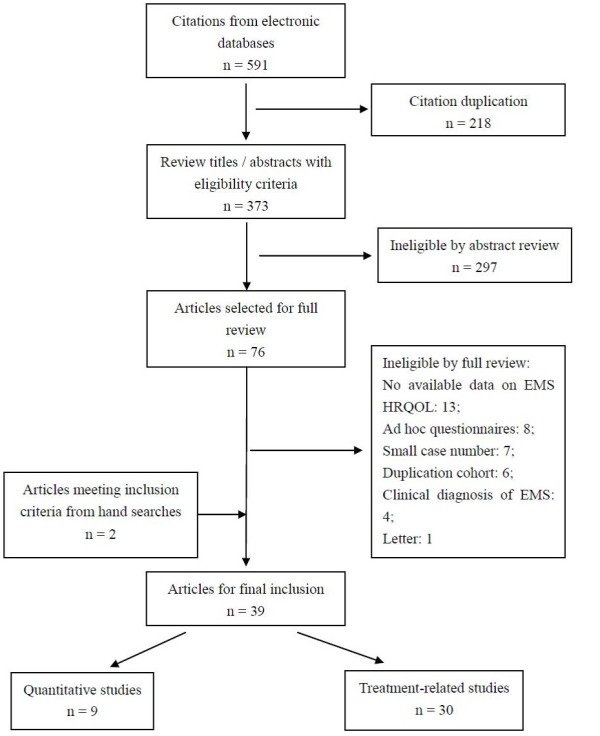
Endometriosis has critical implications for women’s quality of life. However, an overview of the current knowledge of this issue is limited. The objective of this systematic review was to determine the extent of endometriosis and its treatment upon women’s health-related quality of life (HRQoL). PubMed, Embase, PsycoINFO, CINAHL and the Cochrane Clinical Trials were searched up to May 2012, and only studies using standardized instruments to evaluate HRQoL in women with endometriosis were selected. Our electronic searches identified 591 citations, of which 39 studies satisfied the inclusion criteria including nine qualitative studies and 30 treatment-related studies. Findings showed that endometriosis impaired women’s HRQoL. Pain was strongly related to a poor HRQoL, and medical or surgical treatment could partially restore this impairment. No conclusive evidence was available on whether endometriosis imposed an additional impairment in HRQoL per se, apart from the decrease caused by chronic pelvic pain, or on the superiority of various hormonal suppression agents. The impacts of disease extent, duration and fertility status upon HRQoL were inconsistent. In summary, HRQoL was impaired in women with endometriosis, and medical or surgical treatment to alleviate pain could partially restore this impairment.
Overview
CoChat Summary
## TL;DR
This systematic review found that endometriosis is associated with impaired health-related quality of life (HRQoL), especially when pain is severe, and that medical or surgical treatment can partially improve this impairment. The authors found 39 eligible studies out of 591 citations, but evidence was inconsistent on whether endometriosis adds HRQoL impairment beyond chronic pelvic pain alone and on the superiority of specific hormonal regimens.
## Key findings
- The search identified 591 citations, and 39 primary articles met inclusion criteria: 9 qualitative/impact studies and 30 treatment-related studies.
- Endometriosis was associated with poorer HRQoL than healthy controls, including in one Brazilian case-control study of women with chronic pelvic pain (n = 93) versus 82 healthy volunteers; women with endometriosis also showed greater work productivity loss and increased sexual dysfunction in several studies.
- Pain was strongly related to poorer HRQoL, with severe pain linked to higher HRQoL impairment, depression, anxiety, sexual dysfunction, and work productivity loss in multiple studies.
- Treatment generally improved HRQoL: GnRHa, progestins, oral contraceptives, and conservative surgery were reported to improve HRQoL; laparoscopic excision showed benefits lasting up to 5 years (n = 176) in one study, and laparoscopic colorectal resection improved HRQoL across 6 studies including 446 women.
## Methods
- Systematic review conducted according to the MOOSE consensus statement; no ethical approval was needed.
- Searched Medline/PubMed, Embase, CINAHL, PsycINFO, and the Cochrane Clinical Trials database up to May 2012, plus reference lists; only peer-reviewed English-language studies were included.
- Included studies of women with surgical and/or histological diagnosis of endometriosis, minimum sample size 30, and standardized HRQoL instruments/questionnaires; because of heterogeneity, the authors did not pool data and instead synthesized evidence using predefined levels of evidence.
## Limitations
- The paper states that interpretation was hindered by high heterogeneity in study design, patient demographics, disease severity, measures, and data presentation.
- The authors state that most studies did not adjust for confounders, and no sample size calculations were described in many studies.
- The authors note that unpublished studies were not identified, which could lead to publication bias.
- Evident from the text: many findings come from small, observational, or treatment-arm analyses, and the review relied on English-language published studies only, which may limit completeness and generalizability.
Model-written summary. Check it against the paper before relying on it.
Integrity signals
Registry
Cites
Statistics
Figures
Verification
Claims the paper makes
8 Valid · 2 Not valid · 53 Not checked · 8 Own results and interpretations
At least one cited source doesn’t support this claim or points to a different paper, and none confirmed it — see the verdicts below.
In the paper
“The impacts of disease extent, duration and fertility status upon HRQoL were inconsistent.”
- Also stated in: § Impact of demographics and symptoms on HRQoL · plain
“With respect to infertility, no consistent conclusion could be made [3,16,17].”
§ Health-related quality of life in women with endometriosis: a systematic review > Abstract
What the sources say
- Not checked yetcites [3] Sepulcri RP Do AV Depressive symptoms, anxiety, and quality of life in women with pelvic endometriosis Eur J Obstet Gynecol Reprod Biol 2009 142 53 56 10.1016/j.ejogrb.2008.09.003 19010584 source
- Not checked yetcites [16] Marques A Bahamondes L Aldrighi JM Petta CA Quality of life in Brazilian women with endometriosis assessed through a medical outcome questionnaire Journal of Reproductive Medicine for the Obstetrician and Gynecologist 2004 49 115 120 15018440
- Disputedcites [17] Fourquet J Baez L Figueroa M Iriarte RI Flores I Quantification of the impact of endometriosis symptoms on health-related quality of life and work productivity Fertil Steril 2011 96 107 112 10.1016/j.fertnstert.2011.04.095 21621771 PMC3129383 sourceExperimental — accuracy not yet measured
The Abstract Conclusion states that infertility negatively and substantially affects HRQoL in patients with endometriosis, rather than describing its impact as inconsistent. The Discussion also reports distress about the possibility of not being able to conceive. The paper does not present a comparison of HRQoL by fertility status, so that distinction should not be treated as a measured finding. (LLM, conf=0.76)
Checked by a reasoning model — may be wrong.
plain- Asserted: passes — The authors put it forward as true.
- Checkable: passes — It can be checked against evidence.
- Load-bearing: passes — The paper’s conclusions depend on it.
- Based: passes — The paper gives a reason why it holds.
- Also stated in: § Impact of demographics and symptoms on HRQoL · plain
At least one cited source doesn’t support this claim or points to a different paper, and none confirmed it — see the verdicts below.
In the paper
“Therapy with OCs also improved the HRQoL in women with endometriosis [21,22,26].”
§ Health-related quality of life in women with endometriosis: a systematic review > Results > Impact of treatment upon HRQoL
What the sources say
- Not checked yetcites [21] Vercellini P De Giorgi O Mosconi P Stellato G Vicentini S Crosignani PG Cyproterone acetate versus a continuous monophasic oral contraceptive in the treatment of recurrent pelvic pain after conservative surgery for symptomatic endometriosis Fertil Steril 2002 77 52 61 10.1016/S0015-0282(01)02951-X 11779591 source
- Disputedcites [22] Zupi E Marconi D Sbracia M Zullo F De Vivo B Exacustos C Add-back therapy in the treatment of endometriosis-associated pain Fertil Steril 2004 82 1303 1308 10.1016/j.fertnstert.2004.03.062 15533351 sourceExperimental — accuracy not yet measured
Our copy of Zupi et al. (2004) measured HRQoL with the SF-36 in three arms (GnRH-a plus add-back, GnRH-a alone, oral contraceptive/estroprogestin) in women with relapsed endometriosis-associated pain, and the Discussion states the opposite of the claim: 'The same can be said for oral contraceptive alone, because its lesser degree of pain control did not give patients a substantial feeling of improvement in their general health, health function, and vitality.' The RESULTS on Table 3 likewise report that the add-back group was better than the other two groups for vitality, general health and physical function, and that the GnRH-a-alone group's values for general health, vitality and physical function 'were similar to those of the oral contraceptive group.' Nowhere does our copy attribute an HRQoL improvement to oral-contraceptive therapy; the paper's only positive quality-of-life conclusion is for add-back therapy (abstract: 'better patient quality of life compared with GnRH analogue alone or oral contraceptive'). (LLM, conf=0.75)
Checked by a reasoning model — may be wrong.
- Not checked yetcites [26] Sesti F Pietropolli A Capozzolo T Broccoli P Pierangeli S Bollea MR Hormonal suppression treatment or dietary therapy versus placebo in the control of painful symptoms after conservative surgery for endometriosis stage III-IV. A randomized comparative trial Fertil Steril 2007 88 1541 1547 10.1016/j.fertnstert.2007.01.053 17434511 source
plainstates a cause- Asserted: passes — The authors put it forward as true.
- Checkable: passes — It can be checked against evidence.
- Load-bearing: passes — The paper’s conclusions depend on it.
- Based: passes — The paper gives a reason why it holds.
The sources with a verdict support this claim; the rest weren’t checked yet, have no full text we could read, or their verdicts aren’t rated yet.
In the paper
“GnRHa plus add-back therapy improved HRQoL in women with recurrent [22] or intractable endometriosis-related pain [28].”
§ Health-related quality of life in women with endometriosis: a systematic review > Results > Impact of treatment upon HRQoL
What the sources say
- Supportedcites [22] Zupi E Marconi D Sbracia M Zullo F De Vivo B Exacustos C Add-back therapy in the treatment of endometriosis-associated pain Fertil Steril 2004 82 1303 1308 10.1016/j.fertnstert.2004.03.062 15533351 source
The Abstract describes a randomized study of women with recurrent endometriosis-related pain after surgery and reports better SF-36 quality-of-life scores with GnRH analogue plus add-back therapy than with either comparator. The Results likewise report better quality of life in the add-back group. This supports the recurrent-pain part of the citing sentence attributed to this source; the intractable-pain part is attached to a different citation. (LLM, conf=0.94)
- Not checked yetcites [28] Al-Azemi M Jones G Sirkeci F Walters S Houdmont M Ledger W Immediate and delayed add-back hormonal replacement therapy during ultra long GnRH agonist treatment of chronic cyclical pelvic pain BJOG 2009 116 1646 1656 10.1111/j.1471-0528.2009.02319.x 19735378 source
plainstates a cause- Asserted: passes — The authors put it forward as true.
- Checkable: passes — It can be checked against evidence.
- Load-bearing: passes — The paper’s conclusions depend on it.
- Based: passes — The paper gives a reason why it holds.
- Supported
The cited sources support only part of this claim — read each source’s verdict below.
In the paper
“Six months of GnRHa treatment improved women’s HRQoL even at one year after treatment, according to the SF-36 questionnaire [24-27,29], as well as work-related indexes [18,20].”
§ Health-related quality of life in women with endometriosis: a systematic review > Results > Impact of treatment upon HRQoL
What the sources say
- Not checked yetcites [24] Crosignani PG Luciano A Ray A Bergqvist A Subcutaneous depot medroxyprogesterone acetate versus leuprolide acetate in the treatment of endometriosis-associated pain Hum Reprod 2006 21 248 256 16176939 source
- Supportedcites [25] Schlaff WD Carson SA Luciano A Ross D Bergqvist A Subcutaneous injection of depot medroxyprogesterone acetate compared with leuprolide acetate in the treatment of endometriosis-associated pain Fertil Steril 2006 85 314 325 10.1016/j.fertnstert.2005.07.1315 16595206 source
The Quality-of-Life Measures section reports that SF-36 physical function, role-physical, and social functioning scores improved after six months of treatment in the leuprolide group, with improvements maintained through 12 months of follow-up. Leuprolide is the GnRH agonist studied here. (LLM, conf=0.94)
- Not checked yetcites [26] Sesti F Pietropolli A Capozzolo T Broccoli P Pierangeli S Bollea MR Hormonal suppression treatment or dietary therapy versus placebo in the control of painful symptoms after conservative surgery for endometriosis stage III-IV. A randomized comparative trial Fertil Steril 2007 88 1541 1547 10.1016/j.fertnstert.2007.01.053 17434511 source
- Not checked yetcites [27] Harada T Momoeda M Taketani Y Aso T Fukunaga M Hagino H Terakawa N Dienogest is as effective as intranasal buserelin acetate for the relief of pain symptoms associated with endometriosis–a randomized, double-blind, multicenter, controlled trial Fertil Steril 2009 91 675 681 10.1016/j.fertnstert.2007.12.080 18653184 source
- Partly supportedcites [29] Strowitzki T Marr J Gerlinger C Faustmann T Seitz C Dienogest is as effective as leuprolide acetate in treating the painful symptoms of endometriosis: a 24-week, randomized, multicentre, open-label trial Hum Reprod 2010 25 633 641 10.1093/humrep/dep469 20089522 sourceExperimental — accuracy not yet measured
The Quality-of-life variables section reports improved SF-36 scores in the leuprolide acetate group after 24 weeks of treatment. The Discussion says the study was restricted to 24 weeks and does not address long-term outcomes, so it cannot support improvement one year after treatment. Page numbers were not available in our copy. (LLM, conf=0.90)
plainstates a cause- Asserted: passes — The authors put it forward as true.
- Checkable: passes — It can be checked against evidence.
- Load-bearing: passes — The paper’s conclusions depend on it.
- Based: passes — The paper gives a reason why it holds.
The cited sources support only part of this claim — read each source’s verdict below.
In the paper
“Pain was strongly related to a poor HRQoL.”
- Also stated in: § Impact of demographics and symptoms on HRQoL · hedged
“Women with severe pain were more likely to report higher levels of HRQoL impairment, depression, anxiety, sexual dysfunction, and more work productivity loss [3,4,12-14], although Marques et al. denied this correlation [16].”
§ Health-related quality of life in women with endometriosis: a systematic review > Results > Impact of demographics and symptoms on HRQoL
What the sources say
- Not checked yetcites [3] Sepulcri RP Do AV Depressive symptoms, anxiety, and quality of life in women with pelvic endometriosis Eur J Obstet Gynecol Reprod Biol 2009 142 53 56 10.1016/j.ejogrb.2008.09.003 19010584 source
- Supportedcites [4] Nnoaham KE Hummelshoj L Webster P D'Hooghe T De Cicco Nardone F De Cicco Nardone C Jenkinson C Kennedy SH Zondervan KT Impact of endometriosis on quality of life and work productivity: A multicenter study across ten countries Fertil Steril 2011 96 366 373 10.1016/j.fertnstert.2011.05.090 21718982 PMC3679489 source
The Results section 'Endometriosis and Health-Related Quality of Life' states that HRQoL was higher in women who did not report any pelvic pain (P=.017) and lower in those with more severe pelvic pain (P<.001), i.e. a strong association between pain and poorer HRQoL in affected women. The Discussion reinforces this: 'The effect was less if women were employed and free of pelvic pain, and worse with severe pelvic pain and advanced disease,' and identifies bodily pain as the SF36v2 dimension most impaired in endometriosis. The source's pain measure is pelvic pain severity, which the paraphrase renders generically as 'pain'; the population (women with surgically confirmed endometriosis, GSWH multicenter study) matches. (LLM, conf=0.88)
- Partly supportedcites [12] Souza CA Oliveira LM Scheffel C Genro VK Rosa V Chaves MF Cunha Filho JS Quality of life associated to chronic pelvic pain is independent of endometriosis diagnosis--a cross-sectional survey Health Qual Life Outcomes 2011 9 41 10.1186/1477-7525-9-41 21663624 PMC3123165 sourceExperimental — accuracy not yet measured
The Abstract Background (p. 1) states verbatim 'Pain is strongly related to poor quality of life', and the Discussion ('In this study, we demonstrated that the intensity of pelvic pain is inversely correlated with alteration in the quality of life of patients with CPP... two domains - psychological and environmental') plus the Conclusions support a link between higher pain scores and lower HRQoL. However, the study's own data show only a modest correlation confined to the psychological domain (r = -0.31, P = .02; Results, High CPP × Low CPP), with no significant correlation for physical, social or environmental domains, so 'strongly' overstates what this paper reports. The link was demonstrated in women with chronic pelvic pain generally, not in women with endometriosis: the paper's headline finding is that QoL scores were similar between groups with and without endometriosis and that endometriosis per se adds no impact, so the endometriosis-specific qualifier is not supported. (LLM, conf=0.72)
- Not checked yetcites [13] Tripoli TM Sato H Sartori MG De Araujo FF Girao MJ Schor E Evaluation of quality of life and sexual satisfaction in women suffering from chronic pelvic pain with or without endometriosis J Sex Med 2011 8 497 503 10.1111/j.1743-6109.2010.01976.x 20722779 source
- Not checked yetcites [14] Petrelluzzi KFS Garcia MC Petta CA Grassi-Kassisse DM Spadari-Bratfisch RC Salivary cortisol concentrations, stress and quality of life in women with endometriosis and chronic pelvic pain Stress 2008 11 390 397 10.1080/10253890701840610 18800310 source
boostedstates an association- Asserted: passes — The authors put it forward as true.
- Checkable: passes — It can be checked against evidence.
- Load-bearing: passes — The paper’s conclusions depend on it.
- Based: passes — The paper gives a reason why it holds.
- Also stated in: § Impact of demographics and symptoms on HRQoL · hedged
38 more claims · 4 with their cited sources checked
Create a free account to see all 71 claims and to verify the 114 references still open.
- It may state two separate claims as one. 19
- The quote only partly states this claim. 3
- Probably not a substantial claim. 7
Self-check
Percentages, sums and reported differences re-computed from the paper’s own numbers.
Each contradiction between two passages listed here was confirmed by an independent check.
Rated minor: it would not touch a result — a value no result rests on, a p-value that stays on the same side of the significance level, or a conflict that is clerical, resolved elsewhere in the paper, or outside its own findings.
In the paper
§ Health-related quality of life in women with endometriosis: a systematic review > Abstract
“Our electronic searches identified 591 citations, of which 39 studies satisfied the inclusion criteria including nine qualitative studies and 30 treatment-related studies.”
§ Health-related quality of life in women with endometriosis: a systematic review > Results > Literature identification, study characteristics and quality
“Of these studies, nine aimed to quantify the impact of endometriosis upon HRQoL, with [4,12-15] or without [3,5,16,17] comparison to women without endometriosis. The remaining 30 studies were treatment-related discussing the impact of various interventions upon HRQoL in endometriosis: medical treatment studies [18-31]; surgical treatment studies [32-44]; and complementary therapy studies [45-47].”
Citations
Cites
Meta-analysis of Observational Studies in Epidemiology<SUBTITLE>A Proposal for Reporting</SUBTITLE>
Stroup, D. F. (2000) · JAMA · doi:10.1001/jama.283.15.2008 · Cited by 20,623
Measuring Health-Related Quality of Life
Guyatt, G. H., Feeny, D. H., & Patrick, D. L. (1993) · Annals of Internal Medicine · doi:10.7326/0003-4819-118-8-199304150-00009 · Cited by 3,958
ESHRE guideline for the diagnosis and treatment of endometriosis
Kennedy, S., Bergqvist, A., Chapron, C., D’Hooghe, T., Dunselman, G., Greb, R., Hummelshoj, L., Prentice, A., & Saridogan, E. (2005) · Human Reproduction · doi:10.1093/humrep/dei135 · Cited by 1,584 · cited 4×
“Thus, a multidisciplinary strategy involving a pain clinic and counseling is recommended [1], but unfortunately no comparatively study was available on their impact upon HRQoL.”
BackgroundInfluentialNnoaham, K. E., Hummelshoj, L., Webster, P., d’Hooghe, T., de Cicco Nardone, F., de Cicco Nardone, C., Jenkinson, C., Kennedy, S. H., & Zondervan, K. T. (2011) · Fertility and Sterility · doi:10.1016/j.fertnstert.2011.05.090 · Cited by 1,584 · cited 10×
“Employed women were significantly less likely to be impacted by endometriosis [4], as were those”
BackgroundResultInfluentialSimoens, S., Dunselman, G., Dirksen, C., Hummelshoj, L., Bokor, A., Brandes, I., Brodszky, V., Canis, M., Colombo, G. L., DeLeire, T., et al. (2012) · Human Reproduction · doi:10.1093/humrep/des073 · Cited by 1,070 · cited 5×
“Moreover, this decreased quality of life often predicts women’s quality-adjusted life-years lost and health care costs [5].”
BackgroundInfluentialQuality of life among long-term breast cancer survivors: A systematic review
Mols, F., Vingerhoets, A. J. J. M., Coebergh, J. W., & van de Poll-Franse, L. V. (2005) · European Journal of Cancer · doi:10.1016/j.ejca.2005.05.017 · Cited by 585
Physical risk factors for neck pain
Ariëns, G. A., van Mechelen, W., Bongers, P. M., Bouter, L. M., & van der Wal, G. (2000) · Scandinavian Journal of Work, Environment & Health · doi:10.5271/sjweh.504 · Cited by 525 · cited 1×
“We identified potential effectors on HRQoL in endometriosis by defining five levels of evidence [9,11] as follows: (i) strong evidence, meaning consistent findings (≥ 75%) in at least two high quality studies; (ii) moderate evidence, meaning consistent findings (≥ 75%) in one high quality study and at least one low qu…”
ResultLaparoscopic excision of endometriosis: A randomized, placebo-controlled trial
Abbott, J., Hawe, J., Hunter, D., Holmes, M., Finn, P., & Garry, R. (2004) · Fertility and Sterility · doi:10.1016/j.fertnstert.2004.03.046 · Cited by 502 · cited 3×
“demonstrated that laparoscopic excision of the endometriotic tissues was more effective than placebo treatment for reducing pain and improving HRQoL and sexual activity with a 12-month follow-up, albeit with a 30% placebo response rate [34].”
BackgroundMethodChronic pelvic pain and endometriosis: translational evidence of the relationship and implications
Stratton, P., & Berkley, K. J. (2011) · Human Reproduction Update · doi:10.1093/humupd/dmq050 · Cited by 442 · cited 2×
“Moreover, women with endometriosis have a higher rate of other comorbid pain syndromes and may be prone to depression, anxiety and chronic fatigue [53].”
BackgroundAbbott, J. A. (2003) · Human Reproduction · doi:10.1093/humrep/deg275 · Cited by 403
Practice Bulletin No. 114: Management of Endometriosis
(2010) · Obstetrics & Gynecology · doi:10.1097/aog.0b013e3181e8b073 · Cited by 382
Strowitzki, T., Marr, J., Gerlinger, C., Faustmann, T., & Seitz, C. (2010) · Human Reproduction · doi:10.1093/humrep/dep469 · Cited by 381 · cited 9×
“Moreover, six months of therapy with progestins seemed equivalent to that of GnRHa in improving HRQoL and reducing pain, according to six RCTs [20,23-25,27,29].”
BackgroundMethodResultInfluentialPetta, C. A., Ferriani, R. A., Abrao, M. S., Hassan, D., Rosa e Silva, J. C., Podgaec, S., & Bahamondes, L. (2005) · Human Reproduction · doi:10.1093/humrep/deh869 · Cited by 363 · cited 9×
“Moreover, six months of therapy with progestins seemed equivalent to that of GnRHa in improving HRQoL and reducing pain, according to six RCTs [20,23-25,27,29].”
BackgroundInfluentialDevelopment of an endometriosis quality-of-life instrument: The Endometriosis Health Profile-30
Jones, G. (2001) · Obstetrics & Gynecology · doi:10.1016/s0029-7844(01)01433-8 · Cited by 334 · cited 2×
“The EHP-30, based on open-ended exploratory interviews with patients, is currently the only validated questionnaire for endometriosis [48].”
BackgroundDepressive symptoms, anxiety, and quality of life in women with pelvic endometriosis
Sepulcri, R. D. P., & Amaral, V. F. D. (2009) · European Journal of Obstetrics & Gynecology and Reproductive Biology · doi:10.1016/j.ejogrb.2008.09.003 · Cited by 304 · cited 13×
“In 2008, a case– control study in Brazil reported that women with endometriosis and chronic pelvic pain (CPP, n = 93) showed impairment of all domains of the SF-36 (except for rolerelated emotional functioning) and higher levels of perceived stress than 82 healthy volunteers [14].”
BackgroundInfluentialThe impact of endometriosis upon quality of life: a qualitative analysis
Jones, G., Jenkinson, C., & Kennedy, S. (2004) · Journal of Psychosomatic Obstetrics & Gynecology · doi:10.1080/01674820400002279 · Cited by 291 · cited 1×
“It is also a major cause of infertility, which in turn causes psychological stress, low self-esteem and depression [2].”
BackgroundHarada, T., Momoeda, M., Taketani, Y., Aso, T., Fukunaga, M., Hagino, H., & Terakawa, N. (2009) · Fertility and Sterility · doi:10.1016/j.fertnstert.2007.12.080 · Cited by 279
Fourquet, J., Báez, L., Figueroa, M., Iriarte, R. I., & Flores, I. (2011) · Fertility and Sterility · doi:10.1016/j.fertnstert.2011.04.095 · Cited by 262 · cited 6×
“With respect to infertility, no consistent conclusion could be made [3,16,17].”
BackgroundInfluentialDaraï, E., Dubernard, G., Coutant, C., Frey, C., Rouzier, R., & Ballester, M. (2010) · Annals of Surgery · doi:10.1097/sla.0b013e3181d9691d · Cited by 244 · cited 3×
“Moreover, laparoscopic approach offered a higher pregnancy rate than open surgery with similar improvements in symptoms and in HRQoL [35].”
BackgroundTripoli, T. M., Sato, H., Sartori, M. G., de Araujo, F. F., Girão, M. J. B. C., & Schor, E. (2011) · The Journal of Sexual Medicine · doi:10.1111/j.1743-6109.2010.01976.x · Cited by 209 · cited 9×
“Women with severe pain were more likely to report higher levels of HRQoL impairment, depression, anxiety, sexual dysfunction, and more work productivity loss [3,4,12-14], although Marques et al.”
BackgroundResultInfluentialPetrelluzzi, K. F. S., Garcia, M. C., Petta, C. A., Grassi-Kassisse, D. M., & Spadari-Bratfisch, R. C. (2008) · Stress · doi:10.1080/10253890701840610 · Cited by 196 · cited 4×
“Of these studies, nine aimed to quantify the impact of endometriosis upon HRQoL, with [4,12-15] or without [3,5,16,17] comparison to women without endometriosis.”
BackgroundInfluentialA critical review of patient-rated quality of life studies of long-term survivors of cervical cancer
Vistad, I., Fosså, S. D., & Dahl, A. A. (2006) · Gynecologic Oncology · doi:10.1016/j.ygyno.2006.03.050 · Cited by 195
Laursen, B. S., Bajaj, P., Olesen, A. S., Delmar, C., & Arendt‐Nielsen, L. (2005) · European Journal of Pain · doi:10.1016/j.ejpain.2004.07.003 · Cited by 191 · cited 1×
“Women with CPP often present some degrees of pain hypersensitivity [52].”
BackgroundVercellini, P., De Giorgi, O., Mosconi, P., Stellato, G., Vicentini, S., & Crosignani, P. G. (2002) · Fertility and Sterility · doi:10.1016/s0015-0282(01)02951-x · Cited by 180 · cited 6×
“Therapy with OCs also improved the HRQoL in women with endometriosis [21,22,26].”
BackgroundMethodInfluentialCrosignani, P. G., Luciano, A., Ray, A., & Bergqvist, A. (2006) · Human Reproduction · doi:10.1093/humrep/dei290 · Cited by 179
Schlaff, W. D., Carson, S. A., Luciano, A., Ross, D., & Bergqvist, A. (2006) · Fertility and Sterility · doi:10.1016/j.fertnstert.2005.07.1315 · Cited by 168 · cited 10×
“Moreover, six months of therapy with progestins seemed equivalent to that of GnRHa in improving HRQoL and reducing pain, according to six RCTs [20,23-25,27,29].”
BackgroundMethodInfluentialJones, G. L., Kennedy, S. H., & Jenkinson, C. (2002) · American Journal of Obstetrics and Gynecology · doi:10.1067/mob.2002.124940 · Cited by 161 · cited 1×
“However, their psychometric properties and internal consistency were not well established in endometriosis [50].”
BackgroundEvaluating the responsiveness of the endometriosis health profile questionnaire: The EHP-30
Jones, G., Jenkinson, C., & Kennedy, S. (2004) · Quality of Life Research · doi:10.1023/b:qure.0000021316.79349.af · Cited by 158 · cited 1×
“scale for use in endometriosis [48,49].”
Ford, J., English, J., Miles, W. A., & Giannopoulos, T. (2004) · BJOG: An International Journal of Obstetrics & Gynaecology · doi:10.1111/j.1471-0528.2004.00093.x · Cited by 158
A systematic review of health-related quality of life in cutaneous melanoma
Cornish, D., Holterhues, C., van de Poll-Franse, L. V., Coebergh, J. W. W., & Nijsten, T. E. C. (2009) · Annals of Oncology · doi:10.1093/annonc/mdp255 · Cited by 151 · cited 4×
“Table 1 14-item criteria assessing the methodological quality of included studies [9,10]”
BackgroundMethodInfluentialVercellini, P., Aimi, G., Busacca, M., Apolone, G., Uglietti, A., & Crosignani, P. G. (2003) · Fertility and Sterility · doi:10.1016/s0015-0282(03)00613-7 · Cited by 137 · cited 6×
“However, it should be noted that the efficacy is short-term and recurrence is common in both medical and surgical modalities [32,36,38].”
BackgroundResultInfluentialZhao, L., Wu, H., Zhou, X., Wang, Q., Zhu, W., & Chen, J. (2012) · European Journal of Obstetrics & Gynecology and Reproductive Biology · doi:10.1016/j.ejogrb.2012.02.029 · Cited by 126 · cited 3×
“Recently, a RCT reported that PMR training was more effective in improving anxiety, depression and HRQoL in endometriosis women under GnRHa therapy [47].”
BackgroundCatastrophizing: a predictor of persistent pain among women with endometriosis at 1 year
Martin, C. E., Johnson, E., Wechter, M. E., Leserman, J., & Zolnoun, D. A. (2011) · Human Reproduction · doi:10.1093/humrep/der292 · Cited by 113 · cited 1×
“CPP, the main and most wildly studies symptoms of endometriosis, often bothers women with endometriosis for years [4], frustrates both patient and clinician [51], and is associated with work productivity loss and significant physical and social debility [5].”
BackgroundSiedentopf, F., Tariverdian, N., Rücke, M., Kentenich, H., & Arck, P. C. (2008) · American Journal of Reproductive Immunology · doi:10.1111/j.1600-0897.2008.00644.x · Cited by 113
Souza, C. A., Oliveira, L. M., Scheffel, C., Genro, V. K., Rosa, V., Chaves, M. F., & Cunha Filho, J. S. (2011) · Health and Quality of Life Outcomes · doi:10.1186/1477-7525-9-41 · Cited by 113 · cited 6×
“Thus, to consider endometriosis-related CPP in the context of chronic pain, and to understand commonalities across different forms of chronic pain might provide an alternative approach to improve HRQoL of these patients [12].”
BackgroundResultInfluentialTanmahasamut, P., Rattanachaiyanont, M., Angsuwathana, S., Techatraisak, K., Indhavivadhana, S., & Leerasiri, P. (2012) · Obstetrics & Gynecology · doi:10.1097/aog.0b013e31824264c3 · Cited by 105 · cited 3×
“Postoperative levonorgestrel intrauterine system (LNG-IUS) for 12 months improved both physical and mental health for women with moderate to severe pain related to endometriosis [30], although inconsistent finding was reported, possibly due to low sensitivity of the PGWBI questionnaire applied [23].”
BackgroundAdd-back therapy in the treatment of endometriosis-associated pain
Zupi, E., Marconi, D., Sbracia, M., Zullo, F., De Vivo, B., Exacustos, C., & Sorrenti, G. (2004) · Fertility and Sterility · doi:10.1016/j.fertnstert.2004.03.062 · Cited by 103
Meuleman, C., D’Hoore, A., Cleynenbreugel, B. V., Beks, N., & D’Hooghe, T. M. (2009) · Reproductive BioMedicine Online · doi:10.1016/s1472-6483(10)60267-2 · Cited by 101 · cited 5×
“Similar findings were also reported by Meuleman and colleagues using a multidisciplinary laparoscopic approach, giving a high fertility rate (n = 29/61) and gynecological pain relief [42,43].”
BackgroundMethodResultInfluentialChanges in quality of life after hormonal treatment of endometriosis
Bergqvist, A., & Theorell, T. (2001) · Acta Obstetricia et Gynecologica Scandinavica · doi:10.1034/j.1600-0412.2001.800708.x · Cited by 99 · cited 11×
“Moreover, six months of therapy with progestins seemed equivalent to that of GnRHa in improving HRQoL and reducing pain, according to six RCTs [20,23-25,27,29].”
BackgroundMethodInfluentialDubernard, G., Rouzier, R., David-Montefiore, E., Bazot, M., & Darai, E. (2008) · Human Reproduction · doi:10.1093/humrep/den026 · Cited by 98 · cited 13×
“In 2008, a case– control study in Brazil reported that women with endometriosis and chronic pelvic pain (CPP, n = 93) showed impairment of all domains of the SF-36 (except for rolerelated emotional functioning) and higher levels of perceived stress than 82 healthy volunteers [14].”
BackgroundMethodInfluentialSesti, F., Pietropolli, A., Capozzolo, T., Broccoli, P., Pierangeli, S., Bollea, M. R., & Piccione, E. (2007) · Fertility and Sterility · doi:10.1016/j.fertnstert.2007.01.053 · Cited by 97 · cited 9×
“Therapy with OCs also improved the HRQoL in women with endometriosis [21,22,26].”
BackgroundMethodResultInfluentialBassi, M. A., Podgaec, S., Dias, J., Filho, N. D., Petta, C. A., & Abrão, M. S. (2011) · Journal of Minimally Invasive Gynecology · doi:10.1016/j.jmig.2011.07.014 · Cited by 93
Is acupuncture in addition to conventional medicine effective as pain treatment for endometriosis?
Rubi-Klein, K., Kucera-Sliutz, E., Nissel, H., Bijak, M., Stockenhuber, D., Fink, M., & Wolkenstein, E. (2010) · European Journal of Obstetrics & Gynecology and Reproductive Biology · doi:10.1016/j.ejogrb.2010.06.023 · Cited by 84 · cited 2×
“Acupuncture was reported to improve all domains of the SF-36 (except for physical role limitation) in women with symptomatic endometriosis [45].”
BackgroundMarques, A., Bahamondes, L. G., Aldrighi, J. M., & Petta, C. A. (2004) · PubMed · Cited by 80
Mabrouk, M., Montanari, G., Guerrini, M., Villa, G., Solfrini, S., Vicenzi, C., Mignemi, G., Zannoni, L., Frasca, C., Di Donato, N., et al. (2011) · Health and Quality of Life Outcomes · doi:10.1186/1477-7525-9-98 · Cited by 78
Miller, J. D. (2000) · American Journal of Obstetrics and Gynecology · doi:10.1067/mob.2000.106846 · Cited by 68 · cited 2×
“Notably, an increase in pain and a decrease in HRQoL were reported by women during one month of GnRHa therapy [19].”
BackgroundMabrouk, M., Spagnolo, E., Raimondo, D., D'Errico, A., Caprara, G., Malvi, D., Catena, F., Ferrini, G., Paradisi, R., & Seracchioli, R. (2012) · Human Reproduction · doi:10.1093/humrep/des048 · Cited by 65 · cited 3×
“However, no correlation between the presence of positive margins and HRQoL amelioration was observed [44].”
BackgroundMeuleman, C., Tomassetti, C., D'Hoore, A., Buyens, A., Van Cleynenbreugel, B., Fieuws, S., Penninckx, F., Vergote, I., & D'Hooghe, T. (2011) · Human Reproduction · doi:10.1093/humrep/der231 · Cited by 63 · cited 5×
“Similar findings were also reported by Meuleman and colleagues using a multidisciplinary laparoscopic approach, giving a high fertility rate (n = 29/61) and gynecological pain relief [42,43].”
BackgroundMethodResultInfluentialZullo, F., Palomba, S., Zupi, E., Russo, T., Morelli, M., Sena, T., Pellicano, M., & Mastrantonio, P. (2004) · The Journal of the American Association of Gynecologic Laparoscopists · doi:10.1016/s1074-3804(05)60005-9 · Cited by 61 · cited 5×
“The remaining 30 studies were treatment-related discussing the impact of various interventions upon HRQoL in endometriosis: medical treatment studies [18-31]; surgical treatment studies [32-44]; and complementary therapy studies [45-47].”
BackgroundResultInfluentialSurgical Treatment of Endometriosis in Private Practice: Cohort Study with Mean Follow-up of 3 Years
Roman, J. D. (2010) · Journal of Minimally Invasive Gynecology · doi:10.1016/j.jmig.2009.09.019 · Cited by 34 · cited 3×
“However, it should be noted that the efficacy is short-term and recurrence is common in both medical and surgical modalities [32,36,38].”
BackgroundFrishman, G. N. (2005) · Journal of Minimally Invasive Gynecology · doi:10.1016/j.jmig.2005.08.016 · Cited by 33
Nafarelin in the management of endometriosis:Quality of life assessment
Burry, K. A. (1992) · American Journal of Obstetrics and Gynecology · doi:10.1016/0002-9378(92)91705-f · Cited by 31 · cited 6×
“The remaining 30 studies were treatment-related discussing the impact of various interventions upon HRQoL in endometriosis: medical treatment studies [18-31]; surgical treatment studies [32-44]; and complementary therapy studies [45-47].”
BackgroundMethodInfluentialA Feasibility Study Exploring the Role of Chinese Herbal Medicine in the Treatment of Endometriosis
Flower, A., Lewith, G. T., & Little, P. S. (2011) · The Journal of Alternative and Complementary Medicine · doi:10.1089/acm.2010.0073 · Cited by 30
Al‐Azemi, M., Jones, G. L., Sirkeci, F., Walters, S. J., Houdmont, M., & Ledger, W. J. (2009) · BJOG An International Journal of Obstetrics & Gynaecology · doi:10.1111/j.1471-0528.2009.02319.x · Cited by 23 · cited 14×
“The remaining 30 studies were treatment-related discussing the impact of various interventions upon HRQoL in endometriosis: medical treatment studies [18-31]; surgical treatment studies [32-44]; and complementary therapy studies [45-47].”
BackgroundMethodInfluentialHow to interpret the findings of the eVALuate study
CHIEN, P. F. W., Khan, K. S., & Mol, B. W. (2005) · BJOG An International Journal of Obstetrics & Gynaecology · doi:10.1111/j.1471-0528.2005.00629.x · Cited by 17 · cited 1×
“Commons Attribution License (http://creativec reproduction in any medium, provided the or assessment of HRQoL into clinical studies and routine clinical management, including that for endometriosis [7].”
BackgroundBhattacharya, S. M. (2009) · Gynecological Endocrinology · doi:10.1080/09513590903015460 · Cited by 11 · cited 3×
“Three months of GnRHa treatment was also associated with HRQoL improvement [47], and the pseudomenopausal symptoms it induced caused less deterioration of HRQoL than that caused by surgically induced menopause [31].”
Background
Cited by
The social and psychological impact of endometriosis on women's lives: a critical narrative review
Culley, L., Law, C., Hudson, N., Denny, E., Mitchell, H., Baumgarten, M., & Raine-Fenning, N. (2013) · Human Reproduction Update · doi:10.1093/humupd/dmt027 · Cited by 684
“QoL measures have been widely used in studies of endometriosis, and are discussed in several review papers (Gao et al., 2006; Jia et al., 2012).”
BackgroundMethodImpact of endometriosis on women’s lives: a qualitative study
Moradi, M., Parker, M., Sneddon, A., Lopez, V., & Ellwood, D. (2014) · BMC Women's Health · doi:10.1186/1472-6874-14-123 · Cited by 523
“In addition, review studies confirm that pain is the most important issue related to endometriosis [40,1,21].”
BackgroundAnxiety and depression in patients with endometriosis: impact and management challenges
Laganà, A. S., La Rosa, V. L., Rapisarda, A. M. C., Valenti, G., Sapia, F., Chiofalo, B., Rossetti, D., Ban Frangež, H., Vrtačnik Bokal, E., & Giovanni Vitale, S. (2017) · International Journal of Women's Health · doi:10.2147/ijwh.s119729 · Cited by 405
“Symptoms of endometriosis can often affect psychological and social functioning of patients.(21,22) For this reason, endometriosis is considered as a disabling condition that may significantly compromise social relationships, sexuality and mental health.”
Farquhar, C. M., Bhattacharya, S., Repping, S., Mastenbroek, S., Kamath, M. S., Marjoribanks, J., & Boivin, J. (2019) · Nature Reviews Disease Primers · doi:10.1038/s41572-018-0058-8 · Cited by 180
Quality of Life in Women with Endometriosis: An Integrative Review
Marinho, M. C. P., Magalhaes, T. F., Fernandes, L. F. C., Augusto, K. L., Brilhante, A. V. M., & Bezerra, L. R. P. S. (2018) · Journal of Women's Health · doi:10.1089/jwh.2017.6397 · Cited by 149
“5,39 Impact of disease on women’s QoL was more frequently associated to the presence of specific symptoms (more commonly, pain), and not to the diagnosis of endometriosis per se .”
Metadata
- Authors
- Jia, S.-Z., Leng, J.-H., Shi, J.-H., Sun, P.-R., & Lang, J.-H.
- Affiliations
- Chinese Academy of Medical Sciences & Peking Union Medical College (CN)
- Venue
- Journal of Ovarian Research
- Published
- 2012-10-18
- Volume
- 5
- Issue
- 1
- Pages
- 29-29
- ISSN
- 1757-2215 (ISSN-L)
- PMC
- PMC3507705
- OpenAlex
- W2098503209
- Semantic Scholar
- fd918167ce2d959742a3c636c5e035ca65acb956
- Cited by
- 132
- References
- 57
- Citations by year
- 2026: 9 · 2025: 7 · 2024: 15 · 2023: 15 · 2022: 10 · 2021: 12 · 2020: 11 · 2019: 10 · 2018: 7 · 2017: 14 · 2016: 4 · 2015: 4 · 2014: 8 · 2013: 6
- FWCI
- 0.78
- Type
- journal article
- Language
- en
- Open access
- gold
- doi.org
- Licence
- cc-by
- Locations
- Journal of Ovarian Research (publishedVersion, cc-by)
- PubMed Central (publishedVersion, cc-by)
- PubMed (publishedVersion)
- DOAJ (DOAJ: Directory of Open Access Journals) (submittedVersion)
- Topics
- Health Sciences › Medicine › Reproductive Medicine › Endometriosis Research and Treatment
- Health Sciences › Medicine › Obstetrics and Gynecology › Ectopic Pregnancy Diagnosis and Management
- Health Sciences › Medicine › Public Health, Environmental and Occupational Health › Menstrual Health and Disorders
- Keywords
- endometriosis, health-related quality of life, chronic pelvic pain, surgical treatment, medical treatment, disease extent, fertility status, women's health
About these checks
Registry, retraction, Cites and statistics results are computed, not judged, with one exception: a printed reference that no index lists is read once by a model before it counts as a citation error. Claims are extracted by a model and kept only when their quote appears verbatim in the text; each cited source is then checked, with a model’s help, for whether it says what the claim relies on. Those verdicts can be wrong — read the claim’s quote and the cited source before relying on one.
The claim verdicts this report counts are experimental: their accuracy is not yet measured.
A language model drew the claims from the paper on 2026-10-11, under version 3 of the claim definition (model deepseek-v4.1-flash, prompt extract-v3).
A second model labelled each claim on 2026-10-11 (model jev-1.13-20260917, definition revision gold-guideline-v0.2).
Cited sources are checked with a language model’s help (gpt-6-sol and qwen3.8-omni-flash).
Statistics and arithmetic are recomputed, not judged.
Confidence bands are shown only for fields calibrated on our annotated test set. None is calibrated yet, so no band is shown.
What counts as a claim ›How we measure confidence ›How we check this ›
Are you an author, or do you see a problem with this page? Request a review
Data sources
Bibliographic data: Semantic Scholar, OpenAlex, Crossref.
Contains information from the Semantic Scholar Academic Graph Datasets, made available under the ODC Attribution License (ODC-BY 1.0).
Semantic Scholar’s data is described in: Kinney, R., et al. (2023). The Semantic Scholar Open Data Platform. arXiv:2301.10140.
