

A pilot open-label trial of minocycline in patients with autism and regressive features
Open accessThe DOI matches its Crossref record; 47 of the 47 references it cites were found in a registry or an index.
Abstract
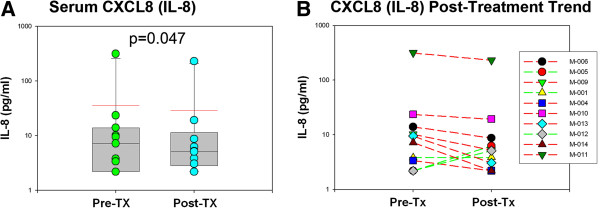
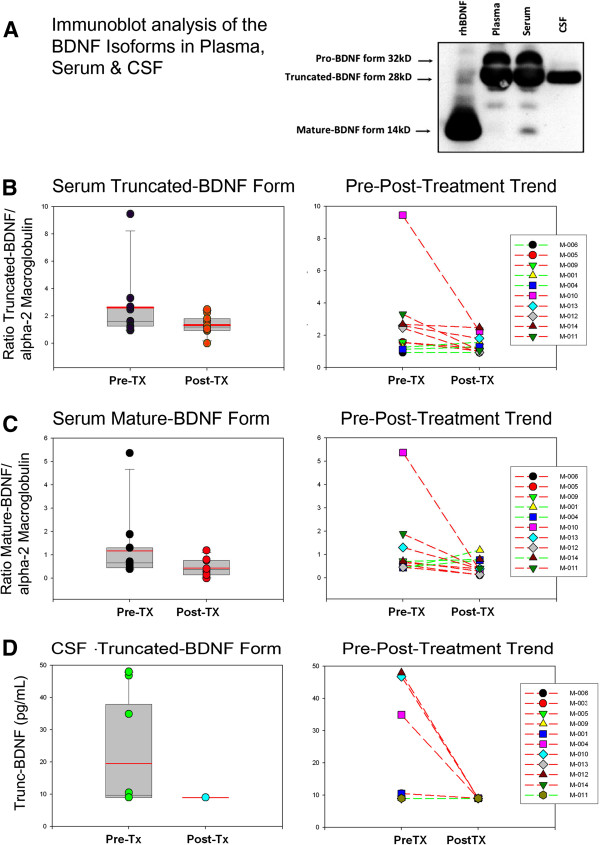
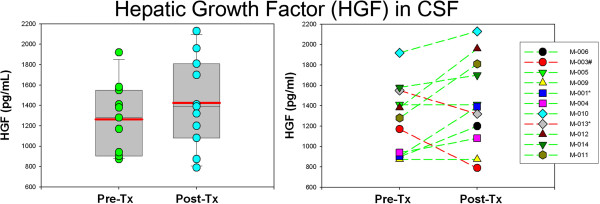
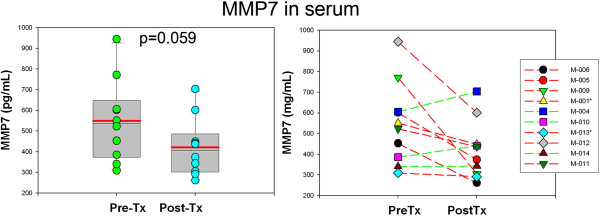
BACKGROUND: Minocycline is a tetracycline derivative that readily crosses the blood brain barrier and appears to have beneficial effects on neuroinflammation, microglial activation and neuroprotection in a variety of neurological disorders. Both microglial activation and neuroinflammation have been reported to be associated with autism. The study was designed to evaluate the effects of minocycline treatment on markers of neuroinflammation and autism symptomatology in children with autism and a history of developmental regression. METHODS: Eleven children were enrolled in an open-label trial of six months of minocycline (1.4 mg/kg). Ten children completed the trial. Behavioral measures were collected and cerebrospinal fluid (CSF), serum and plasma were obtained before and at the end of minocycline treatment and were analyzed for markers of neuroinflammation. RESULTS: Clinical improvements were negligible. The laboratory assays demonstrated significant changes in the expression profile of the truncated form of brain derived neurotrophic factor (BDNF) (P = 0.042) and hepatic growth factor (HGF) (P = 0.028) in CSF. In serum, the ratio of the truncated BDNF form and α-2 macroglobulin (α-2 M), was also significantly lower (P = 0.028) while the mature BDNF/α-2 M ratio revealed no difference following treatment. Only the chemokine CXCL8 (IL-8) was significantly different (P = 0.047) in serum while no significant changes were observed in CSF or serum in chemokines such as CCL2 (MCP-1) or cytokines such as TNF-α, CD40L, IL-6, IFN-γ and IL-1β when pre- and post-treatment levels of these proteins were compared. No significant pre- and post-treatment changes were seen in the profiles of plasma metalloproteinases, putative targets of the effects of minocycline. CONCLUSIONS: Changes in the pre- and post-treatment profiles of BDNF in CSF and blood, HGF in CSF and CXCL8 (IL-8) in serum, suggest that minocycline may have effects in the CNS by modulating the production of neurotrophic growth factors. However, in this small group of children, no clinical improvements were observed during or after the six months of minocycline administration. TRIAL REGISTRATION: NCT00409747.
Overview
The claims and statistics of this paper haven’t been checked yet.
Free: it reads the open-access text and checks the first 5 claims that cite a source we can check. Create a free account to check every claim.
Integrity signals
Registry
Cites
Statistics
Figures
Verification
Claims the paper makes
The claims and statistics of this paper haven’t been checked yet.
Free: it reads the open-access text and checks the first 5 claims that cite a source we can check. Create a free account to check every claim.
Claims other papers make about this one
Each is checked against this paper’s own text: does it say what the citing paper says it does?
In the citing paper
“ASD with regressive features may be resistant to minocycline therapy242.”
From Immune mediators in the brain and peripheral tissues in autism spectrum disorder (2015) · cites this paper as [242]
Self-check
Percentages, sums and reported differences re-computed from the paper’s own numbers.
The self-check needs the paper’s full text.
Citations
Cites
Lord, C., Risi, S., Lambrecht, L., Cook, E. H., Leventhal, B. L., DiLavore, P. C., Pickles, A., & Rutter, M. (2000) · Journal of Autism and Developmental Disorders · doi:10.1023/a:1005592401947 · Cited by 7,520 · cited 1×
“Autism diagnoses were made using the Autism Diagnostic Interview - Revised (ADI-R) [34] or a Toddler version, the Autism Diagnostic Observation Schedule [35], and clinical judgment based on DSM-IV criteria for autistic disorder.”
MethodKettenmann, H., Hanisch, U.-K., Noda, M., & Verkhratsky, A. (2011) · Physiological Reviews · doi:10.1152/physrev.00011.2010 · Cited by 3,547 · cited 1×
“Under normal conditions, microglia are integral components of brain homeostasis involved in synaptic plasticity, neurogenesis, axon guidance, and cortical organization [8-11].”
BackgroundNeuroglial activation and neuroinflammation in the brain of patients with autism
Vargas, D. L., Nascimbene, C., Krishnan, C., Zimmerman, A. W., & Pardo, C. A. (2005) · Annals of Neurology · doi:10.1002/ana.20315 · Cited by 2,149 · cited 2×
“In autism, microglial activation has been shown to occur in regions of the central nervous system such as the cerebellum and the frontal and anterior cingular cortices [6,7], areas of the brain involved in the neurobehavioral abnormalities that characterize this disorder [13].”
BackgroundSelf-citationVineland Adaptive Behavior Scales
Sparrow, S. S. (2011) · Encyclopedia of Clinical Neuropsychology · doi:10.1007/978-0-387-79948-3_1602 · Cited by 1,966
Microglia Shape Adult Hippocampal Neurogenesis through Apoptosis-Coupled Phagocytosis
Sierra, A., Encinas, J. M., Deudero, J. J. P., Chancey, J. H., Enikolopov, G., Overstreet-Wadiche, L. S., Tsirka, S. E., & Maletic-Savatic, M. (2010) · Cell Stem Cell · doi:10.1016/j.stem.2010.08.014 · Cited by 1,622
Amaral, D. G., Schumann, C. M., & Nordahl, C. W. (2008) · Trends in Neurosciences · doi:10.1016/j.tins.2007.12.005 · Cited by 1,492 · cited 1×
“In autism, microglial activation has been shown to occur in regions of the central nervous system such as the cerebellum and the frontal and anterior cingular cortices [6,7], areas of the brain involved in the neurobehavioral abnormalities that characterize this disorder [13].”
BackgroundA Prospective Study of the Emergence of Early Behavioral Signs of Autism
Ozonoff, S., Iosif, A.-M., Baguio, F., Cook, I. C., Hill, M. M., Hutman, T., Rogers, S. J., Rozga, A., Sangha, S., Sigman, M., et al. (2010) · Journal of the American Academy of Child & Adolescent Psychiatry · doi:10.1016/j.jaac.2009.11.009 · Cited by 1,011 · cited 1×
“In this subset with regression, an accelerated disturbance of the neurobiological developmental trajectories may be taking place [2,3].”
BackgroundThe Role of Microglia in the Healthy Brain: Figure 1.
Tremblay, M.-È., Stevens, B., Sierra, A., Wake, H., Bessis, A., & Nimmerjahn, A. (2011) · The Journal of Neuroscience · doi:10.1523/jneurosci.4158-11.2011 · Cited by 992 · cited 1×
“Under normal conditions, microglia are integral components of brain homeostasis involved in synaptic plasticity, neurogenesis, axon guidance, and cortical organization [8-11].”
BackgroundAshwood, P., Krakowiak, P., Hertz-Picciotto, I., Hansen, R., Pessah, I., & Van de Water, J. (2011) · Brain, Behavior, and Immunity · doi:10.1016/j.bbi.2010.08.003 · Cited by 940 · cited 1×
“In this subset with regression, an accelerated disturbance of the neurobiological developmental trajectories may be taking place [2,3].”
BackgroundBuie, T., Campbell, D. B., Fuchs, G. J., Furuta, G. T., Levy, J., VandeWater, J., Whitaker, A. H., Atkins, D., Bauman, M. L., Beaudet, A. L., et al. (2010) · Pediatrics · doi:10.1542/peds.2009-1878c · Cited by 872
Research works printed but not linked: 4
- Le Couteur A Lord C Rutter M Autism Diagnostic Interview-Revised (ADI-R) 2003 Los Angeles: Western Psychological Services
- Mullen E Infant Mullen Scales of Early Learning 1995 Circle Pines, MN: American Guidance Service
- Elliott C Manual for the Differential Ability Scales 2007 San Antonio, TX: Pearson Assessments
- Guy W ECDEU Assessment Manual of Psychopharmacology-Revised 1976 Rockville, MD: Psychopharmacology Research Branch
Cited by
Maternal immune activation and neuroinflammation in human neurodevelopmental disorders
Han, V. X., Patel, S., Jones, H. F., & Dale, R. C. (2021) · Nature Reviews Neurology · doi:10.1038/s41582-021-00530-8 · Cited by 683
Immune mediators in the brain and peripheral tissues in autism spectrum disorder
Estes, M. L., & McAllister, A. K. (2015) · Nature Reviews Neuroscience · doi:10.1038/nrn3978 · Cited by 514
Immunoneuropsychiatry — novel perspectives on brain disorders
Pape, K., Tamouza, R., Leboyer, M., & Zipp, F. (2019) · Nature Reviews Neurology · doi:10.1038/s41582-019-0174-4 · Cited by 458
Saghazadeh, A., Ataeinia, B., Keynejad, K., Abdolalizadeh, A., Hirbod-Mobarakeh, A., & Rezaei, N. (2019) · Journal of Psychiatric Research · doi:10.1016/j.jpsychires.2019.05.019 · Cited by 235
Gut microbiota and autism: key concepts and findings
Ding, H. T., Taur, Y., & Walkup, J. T. (2017) · Journal of Autism and Developmental Disorders · doi:10.1007/s10803-016-2960-9 · Cited by 232
Zawadzka, A., Cieślik, M., & Adamczyk, A. (2021) · International Journal of Molecular Sciences · doi:10.3390/ijms222111516 · Cited by 171
“However, the group of children was too small to observe clinical improvement [165]”
BackgroundRojas, D. C. (2014) · Journal of Neural Transmission · doi:10.1007/s00702-014-1216-0 · Cited by 191
“open-label pilot study in 11 patients with autism did not find improvements in any clinical symptom measures, however (Pardo et al. 2013).”
BackgroundImmune Abnormalities in Autism Spectrum Disorder—Could They Hold Promise for Causative Treatment?
Gładysz, D., Krzywdzińska, A., & Hozyasz, K. K. (2018) · Molecular Neurobiology · doi:10.1007/s12035-017-0822-x · Cited by 127
“The most prominent changes were captured in anterior cingulate gyrus; however, several proteins turned out to be up-regulated in all studied regions (MCP-1, TARC,TGF-β1) and one in CSF as well (MCP-1).”
BackgroundInfluentialCattane, N., Richetto, J., & Cattaneo, A. (2020) · Neuroscience & Biobehavioral Reviews · doi:10.1016/j.neubiorev.2018.07.001 · Cited by 117
Brain-Derived Neurotrophic Factor Levels in Autism: A Systematic Review and Meta-Analysis
Saghazadeh, A., & Rezaei, N. (2017) · Journal of Autism and Developmental Disorders · doi:10.1007/s10803-016-3024-x · Cited by 132
Asadi, A., Abdi, M., Kouhsari, E., Panahi, P., Sholeh, M., Sadeghifard, N., Amiriani, T., Ahmadi, A., Maleki, A., & Gholami, M. (2020) · Journal of Global Antimicrobial Resistance · doi:10.1016/j.jgar.2020.01.022 · Cited by 126
Tetracycline repurposing in neurodegeneration: focus on Parkinson’s disease
Bortolanza, M., Nascimento, G. C., Socías, S. B., Ploper, D., Chehín, R. N., Raisman‐Vozari, R., & Bel, E. A. D. (2018) · Journal of Neural Transmission · doi:10.1007/s00702-018-1913-1 · Cited by 109
Minocycline in neurodegenerative and psychiatric diseases: An update
Romero‐Miguel, D., Lamanna‐Rama, N., Casquero‐Veiga, M., Gómez‐Rangel, V., Desco, M., & Soto‐Montenegro, M. L. (2021) · European Journal of Neurology · doi:10.1111/ene.14642 · Cited by 93
“The administration of minocycline for 6 months to children with ASD in an OLS showed significant changes in the expression of several neurotrophins (the truncate form of BDNF or hepatocyte growth factor and ILs, such as IL-8 in serum), but these changes did not correlate with behavioral improvements [124].”
BackgroundComplementary and Alternative Medicine Treatments for Children with Autism Spectrum Disorders
Levy, S. E., & Hyman, S. L. (2014) · Child and Adolescent Psychiatric Clinics of North America · doi:10.1016/j.chc.2014.09.004 · Cited by 100
Tumor Necrosis Factor-α Modulates Cerebral Aneurysm Formation and Rupture
Starke, R. M., Raper, D. M. S., Ding, D., Chalouhi, N., Owens, G. K., Hasan, D. M., Medel, R., & Dumont, A. S. (2013) · Translational Stroke Research · doi:10.1007/s12975-013-0287-9 · Cited by 86
Pardo, C. A., Farmer, C. A., Thurm, A., Shebl, F. M., Ilieva, J., Kalra, S., & Swedo, S. (2017) · Molecular Autism · doi:10.1186/s13229-016-0115-7 · Cited by 80
“The procedures followed recommendations and wellestablished protocols for evaluation of serum [42, 43] and the CSF [44, 45].”
MethodSelf-citationModulating Neuroinflammation to Treat Neuropsychiatric Disorders
Radtke, F. A., Chapman, G., Hall, J., & Syed, Y. A. (2017) · BioMed Research International · doi:10.1155/2017/5071786 · Cited by 76
“TNF-α, CD40L, IL-6, IFN-γ and IL-1β, were unchanged [205].”
Ferencová, N., Višňovcová, Z., Ondrejka, I., Hrtánek, I., Bujnakova, I., Kovacova, V., Macejova, A., & Tonhajzerová, I. (2023) · International Journal of Molecular Sciences · doi:10.3390/ijms241411710 · Cited by 81
Yoo, M. H., Kim, T.-Y., Yoon, Y. H., & Koh, J. (2016) · Scientific Reports · doi:10.1038/srep28548 · Cited by 81
Bordeleau, M., Carrier, M., Luheshi, G. N., & Tremblay, M.-È. (2019) · Seminars in Cell & Developmental Biology · doi:10.1016/j.semcdb.2019.06.001 · Cited by 75
Neuropsychiatric Effects of Antimicrobial Agents
Zareifopoulos, N., & Panayiotakopoulos, G. D. (2017) · Clinical Drug Investigation · doi:10.1007/s40261-017-0498-z · Cited by 79
Immunological Dysfunction in Autism Spectrum Disorder: A Potential Target for Therapy
Marchezan, J., Winkler dos Santos, E. G. A., Deckmann, I., & Riesgo, R. D. S. (2018) · Neuroimmunomodulation · doi:10.1159/000492225 · Cited by 70
Ghaleiha, A., Alikhani, R., Kazemi, M.-R., Mohammadi, M.-R., Mohammadinejad, P., Zeinoddini, A., Hamedi, M., Shahriari, M., Keshavarzi, Z., & Akhondzadeh, S. (2016) · Journal of Child and Adolescent Psychopharmacology · doi:10.1089/cap.2015.0175 · Cited by 55
“Recently, Pardo et al. (2013) investigated the efficacy of minocycline in an open-label trial on 10 children with ASD.”
Minocycline protects the immature white matter against hyperoxia
Schmitz, T., Krabbe, G., Weikert, G., Scheuer, T., Matheus, F., Wang, Y., Mueller, S. G., Kettenmann, H., Matyash, V., Bührer, C., et al. (2014) · Experimental Neurology · doi:10.1016/j.expneurol.2014.01.017 · Cited by 61
The chemistry of gut microbiome in health and diseases
Lau, A., Tan, L. T., Mutalib, N. A., Wong, S. H., Letchumanan, V., & Lee, L. (2021) · Progress In Microbes & Molecular Biology · doi:10.36877/pmmb.a0000175 · Cited by 59
“These clinical progressions may be due to the altered gut microbiome's antibiotics' consequences([244]).”
BackgroundSelf-citationThe psychopharmacology of autism spectrum disorder and Rett syndrome
Persico, A. M., Ricciardello, A., & Cucinotta, F. (2019) · Handbook of clinical neurology · doi:10.1016/b978-0-444-64012-3.00024-1 · Cited by 61
Review of Clinical Studies Targeting Inflammatory Pathways for Individuals With Autism
Hafizi, S., Tabatabaei, D., & Lai, M. (2019) · Frontiers in Psychiatry · doi:10.3389/fpsyt.2019.00849 · Cited by 49
Emerging drugs for the treatment of irritability associated with autism spectrum disorder
Shamabadi, A., Karimi, H., Bahri, R. A., Motavaselian, M., & Akhondzadeh, S. (2024) · Expert Opinion on Emerging Drugs · doi:10.1080/14728214.2024.2313650 · Cited by 51
“A pilot open-label clinical study by Pardo et al . reported no clinical improvement in ten children with autism receiving 1.4 mg/kg minocycline for six months, while the production of neurotrophic growth factors was modulated [94].”
MethodInfluentialThompson, L. C., Gillberg, C., Landberg, S., Kantzer, A., Miniscalco, C., Olsson, M. B., Eriksson, M. A., & Fernell, E. (2019) · Journal of Autism and Developmental Disorders · doi:10.1007/s10803-018-03871-4 · Cited by 50
Pediatric Acute-Onset Neuropsychiatric Syndrome: Current Perspectives
Gagliano, A., Carta, A., Tanca, M. G., & Sotgiu, S. (2023) · Neuropsychiatric Disease and Treatment · doi:10.2147/ndt.s362202 · Cited by 49
“Its use has been previously trialed for improving the symptoms of depression(161) and as adjunctive treatment in children with ASD.(162,163)”
MethodCurrent Position and Future Direction of Inflammation in Neuropsychiatric Disorders: A Review
Upthegrove, R., Zuelli, F. M. D. G. C., Couch, A. C. M., Barnes, N. M., & Vernon, A. C. (2025) · JAMA Psychiatry · doi:10.1001/jamapsychiatry.2025.1369 · Cited by 46
Microglial contribution to the pathology of neurodevelopmental disorders in humans
Matulevičiūtė, R., Akinluyi, E. T., Muntslag, T. A. O., Dewing, J. M., Long, K. R., Vernon, A. C., Tremblay, M., & Menassa, D. A. (2023) · Acta Neuropathologica · doi:10.1007/s00401-023-02629-2 · Cited by 44
“An open-label trial in children with ASCs with a history of regression revealed that 6-month minocycline treatment reduced the serum levels of IL-8 in seven out of ten children recruited for the study [147].”
BackgroundMedical Therapies for Children With Autism Spectrum Disorder—An Update
Edwin Williamson, M. D., Sathe, N. A., & Andrews, J. C. (2017) · doi:10.23970/ahrqepccer189 · Cited by 50
Kim, J. W., Hong, J. Y., & Bae, S. M. (2018) · Clinical Psychopharmacology and Neuroscience · doi:10.9758/cpn.2018.16.3.246 · Cited by 39
Immunotherapy of Autoimmune Diseases with Nonantibiotic Properties of Tetracyclines
Park, C., Kim, S., & Lee, C. (2020) · Immune Network · doi:10.4110/in.2020.20.e47 · Cited by 33
“In a clinical trial involving a small group of children, no improvements were observed during or after 6 months of minocycline administration (66).”
Backgroundon behalf of the ACTG A5235 team, Sacktor, N. C., Miyahara, S., Evans, S. R., Schifitto, G., Cohen, B. A., Haughey, N. J., Drewes, J. L., Graham, D., Zink, M. C., et al. (2014) · Journal of NeuroVirology · doi:10.1007/s13365-014-0292-0 · Cited by 31
“The laboratory quality assurance program used standard operating procedures to review results for unexpected or unacceptable variance (evidence of bead clumping; coefficients of variation greater than 20 %; unusual distributions of values; outliers more than 4 SD from the mean) (Pardo et al. 2013).”
Self-citationPandina, G., Ring, R. H., Bangerter, A., & Ness, S. L. (2020) · Psychiatric Clinics of North America · doi:10.1016/j.psc.2020.08.003 · Cited by 23
Mahmoudian, Z. G., Ghanbari, A., Rashidi, I., Amiri, I., & Komaki, A. (2023) · European Journal of Pharmacology · doi:10.1016/j.ejphar.2023.175784 · Cited by 21
Updating Neuroimmune Targets in Central Nervous System Dysfunction
Valente, L. A., Begg, L. R., & Filiano, A. J. (2019) · Trends in Pharmacological Sciences · doi:10.1016/j.tips.2019.04.013 · Cited by 18
Pandina, G., Ring, R. H., Bangerter, A., & Ness, S. L. (2020) · Child and Adolescent Psychiatric Clinics of North America · doi:10.1016/j.chc.2019.12.004 · Cited by 18
Endocannabinoid System Unlocks the Puzzle of Autism Treatment via Microglia
Su, T., Yan, Y., Li, Q., Ye, J., & Pei, L. (2021) · Frontiers in Psychiatry · doi:10.3389/fpsyt.2021.734837 · Cited by 43
“However, chronic CB2 activation has not been found to produce any tolerance, while CB1 activation is associated with withdrawal effects in the CNS (77).”
BackgroundLoss of CC2D1A in Glutamatergic Neurons Results in Autistic-Like Features in Mice
Yang, C.-Y., Hung, Y.-C., Cheng, K., Ling, P., & Hsu, K. (2021) · Neurotherapeutics · doi:10.1007/s13311-021-01072-z · Cited by 15
Erickson, C. A., Shaffer, R. C., Will, M., Schmitt, L., Horn, P. S., Hirst, K., Pedapati, E. V., Ober, N., Tumuluru, R. V., Handen, B. L., et al. (2023) · Journal of Autism and Developmental Disorders · doi:10.1007/s10803-023-06132-1 · Cited by 10
“Specifically in autism research, eleven children (mean age = 7.19 years; age range = 3–12 years; 9 boys, 2 girls) with a history of ASD and early life skill regression were enrolled in a 6-month open label trial of minocycline (1.4 mg/kg/day) (Pardo et al., 2013).”
InfluentialImmune Modulatory Treatments for Autism Spectrum Disorder
Thom, R. P., & McDougle, C. J. (2020) · Seminars in Pediatric Neurology · doi:10.1016/j.spen.2020.100836 · Cited by 12
Pharmacology of Autism Spectrum Disorder
Greydanus, D. E., Kaplan, G., & Patel, D. R. (2015) · Contemporary clinical neuroscience · doi:10.1007/978-1-4939-2190-4_9 · Cited by 8
Wang, Y.-C., Chen, C., Yang, C.-Y., Ling, P., & Hsu, K. (2022) · Molecular Neurobiology · doi:10.1007/s12035-022-03146-1 · Cited by 7
“A previous randomized placebo-controlled trial showed that minocycline is an effective adjuvant drug of risperidone for improving irritability and hyperactivity symptoms in ASD children [60], whereas results from a small pilot study revealed no clinical improvement in children with regressive autism after minocycline…”
ResultThe Role of Inflammation in Autism Spectrum Disorder
Ferretti, C. J., & Hollander, E. (2015) · Current topics in neurotoxicity · doi:10.1007/978-3-319-13602-8_14 · Cited by 7
Psychotropic Treatment of Autism
Pallanti, S., Bencini, L., Cantisani, A., & Hollander, E. (2015) · Key issues in mental health (Online)/Key issues in mental health (Print) · doi:10.1159/000363614 · Cited by 5
Harrington, J. W., & Bora, S. (2017) · Elsevier eBooks · doi:10.1016/b978-0-323-35868-2.00008-6 · Cited by 5
Neurodevelopmental and Neuropsychiatric Disorders
Monji, A., Maezawa, I., Mizoguchi, Y., Kato, T. A., & Jin, L. (2014) · Springer eBooks · doi:10.1007/978-1-4939-1429-6_14 · Cited by 4
Greydanus, D. E., Patel, D. R., & Rowland, D. C. (2021) · Elsevier eBooks · doi:10.1016/b978-0-12-820472-6.00085-2 · Cited by 4
Gupta, S., Mehan, S., Gupta, A. K., Kumar, A., Gupta, G. D., Narula, A. S., Samant, R., & Tongra, M. (2026) · Neurochemical Research · doi:10.1007/s11064-026-04820-9 · Cited by 2
“Increased pro-inflammatory cytokines (TNF-α, IL-1β) alongside reduced anti-inflammatory IL-10 create a chronic inflammatory environment that worsens neuronal injury and impairs neural connectivity [125 – 127 ].”
CRISPR-Cas Systems in Gut Microbiome of Children with Autism Spectrum Disorders
Zakharevich, N. V., Nikitin, M. S., Kovtun, A. S., Malov, V. O., Averina, O. V., Даниленко, В. Н., & Artamonova, I. I. (2022) · Life · doi:10.3390/life12030367 · Cited by 2
“Later this suggestion was supported by several studies [21,22], including one that demonstrated the behavioral improvements for ASD children treated with Clostridiales-targeting antibiotics [23].”
ResultModulators of Glutamatergic Signaling as Potential Treatments for Autism Spectrum Disorders
Sogos, C., & Fioriello, F. (2022) · Springer eBooks · doi:10.1007/978-3-030-87480-3_20 · Cited by 2
Bilgiç, A., Katırcıoğlu, D. Ö., Taş, M. B., Kılınç, İ., Oflaz, M. B., & Akça, Ö. F. (2024) · International Journal of Developmental Disabilities · doi:10.1080/20473869.2024.2359143 · Cited by 2
“However, data are not uniform, and others did not find significant differences between patients with ASD and healthy controls in respect for circulating TNF-a levels (Pardo et al. 2013; Pecorelli et al. 2016; Kutuk et al. 2020).”
Microglial Abnormalities in the Pathophysiology of
Monji, S., Mizoguchi, Y., & Kato, T. A. (2014) · Cited by 1
Future Directions in Psychopharmacology of Autism Spectrum Disorder
Mankad, D., & Anagnostou, E. A. (2014) · WORLD SCIENTIFIC eBooks · doi:10.1142/9789814602167_0019
Olatomide, O. D., Emmanuel, C. T., Arogundade, T. T., Alake, T. G., Idowu, O. D., Akin-Adekeye, U. T., Tawose, O. M., Omotoso, D. R., Ajayi, O. F., & Oguntimehin, B. M. (2025) · SSRN Electronic Journal · doi:10.2139/ssrn.5399288
Tetracycline antibiotics: Emerging roles in neuropsychiatric disorders
Acar, A. Ş., Saday, Ö., & Erbaş, O. (2024) · Demiroglu Science University Florence Nightingale Journal of Medicine · doi:10.5606/fng.btd.2024.149
Metadata
- Authors
- Pardo, C. A., Buckley, A., Thurm, A., Lee, L.-C., Azhagiri, A., Neville, D. M., & Swedo, S. E.
- Affiliations
- Johns Hopkins University (US)
- National Institutes of Health (US)
- Corresponding author
- Pardo, Carlos A
- Venue
- Journal of Neurodevelopmental Disorders
- Published
- 2013-04-08
- Volume
- 5
- Issue
- 1
- Pages
- 9-9
- ISSN
- 1866-1947 (ISSN-L)
- 1866-1955
- PMC
- PMC3663771
- OpenAlex
- W2134333739
- Cited by
- 58
- References
- 47
- Citations by year
- 2026: 1 · 2025: 2 · 2024: 3 · 2023: 5 · 2022: 3 · 2021: 6 · 2020: 6 · 2019: 7 · 2018: 5 · 2017: 5 · 2016: 3 · 2015: 4 · 2014: 7 · 2013: 1
- FWCI
- 2.74
- Type
- journal article
- Language
- en
- Open access
- gold
- doi.org
- Licence
- cc-by
- creativecommons.org/licenses/by/2.0 (tdm)
- Locations
- Journal of Neurodevelopmental Disorders (publishedVersion, cc-by)
- Europe PMC (PubMed Central) (publishedVersion, cc-by)
- PubMed Central (publishedVersion, cc-by)
- PubMed (publishedVersion)
- Funders
- National Institutes of Health
- National Institute of Mental Health
- Topics
- Life Sciences › Neuroscience › Cognitive Neuroscience › Autism Spectrum Disorder Research
- Life Sciences › Neuroscience › Neurology › Neuroinflammation and Neurodegeneration Mechanisms
- Life Sciences › Neuroscience › Biological Psychiatry › Tryptophan and brain disorders
- Keywords
- minocycline, autism spectrum disorder, developmental regression, neuroinflammation, microglial activation, neuroprotection, brain-derived neurotrophic factor, hepatocyte growth factor, alpha2-macroglobulin, interleukin-8, cerebrospinal fluid biomarkers, children, tetracycline derivatives, metalloproteinases, cytokines
About these checks
Registry, retraction, Cites and statistics results are computed, not judged, with one exception: a printed reference that no index lists is read once by a model before it counts as a citation error. Claims are extracted by a model and kept only when their quote appears verbatim in the text; each cited source is then checked, with a model’s help, for whether it says what the claim relies on. Those verdicts can be wrong — read the claim’s quote and the cited source before relying on one.
Statistics and arithmetic are recomputed, not judged.
Confidence bands are shown only for fields calibrated on our annotated test set. None is calibrated yet, so no band is shown.
What counts as a claim ›How we measure confidence ›How we check this ›
Are you an author, or do you see a problem with this page? Request a review
Data sources
Bibliographic data: Semantic Scholar, OpenAlex, Crossref.
Contains information from the Semantic Scholar Academic Graph Datasets, made available under the ODC Attribution License (ODC-BY 1.0).
Semantic Scholar’s data is described in: Kinney, R., et al. (2023). The Semantic Scholar Open Data Platform. arXiv:2301.10140.
