

The DOI matches its Crossref record; 166 of the 168 references it cites were found in a registry or an index.
The biodiversity hypothesis and allergic disease: world allergy organization position statement
Open accessAbstract
Biodiversity loss and climate change secondary to human activities are now being associated with various adverse health effects. However, less attention is being paid to the effects of biodiversity loss on environmental and commensal (indigenous) microbiotas. Metagenomic and other studies of healthy and diseased individuals reveal that reduced biodiversity and alterations in the composition of the gut and skin microbiota are associated with various inflammatory conditions, including asthma, allergic and inflammatory bowel diseases (IBD), type1 diabetes, and obesity. Altered indigenous microbiota and the general microbial deprivation characterizing the lifestyle of urban people in affluent countries appear to be risk factors for immune dysregulation and impaired tolerance. The risk is further enhanced by physical inactivity and a western diet poor in fresh fruit and vegetables, which may act in synergy with dysbiosis of the gut flora. Studies of immigrants moving from non-affluent to affluent regions indicate that tolerance mechanisms can rapidly become impaired in microbe-poor environments. The data on microbial deprivation and immune dysfunction as they relate to biodiversity loss are evaluated in this Statement of World Allergy Organization (WAO). We propose that biodiversity, the variability among living organisms from all sources are closely related, at both the macro- and micro-levels. Loss of the macrodiversity is associated with shrinking of the microdiversity, which is associated with alterations of the indigenous microbiota. Data on behavioural means to induce tolerance are outlined and a proposal made for a Global Allergy Plan to prevent and reduce the global allergy burden for affected individuals and the societies in which they live.
Overview
The claims and statistics of this paper haven’t been checked yet.
Run the check — free, no account needed. It reads the open-access text and checks the sources it cites.
Integrity signals
Registry
Cites
Statistics
Figures
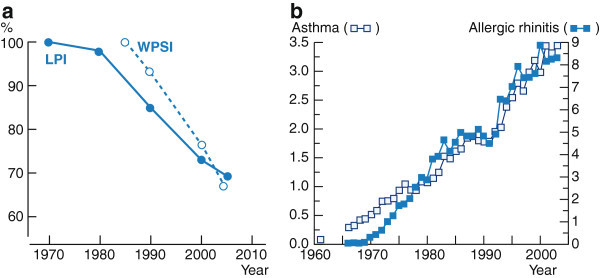
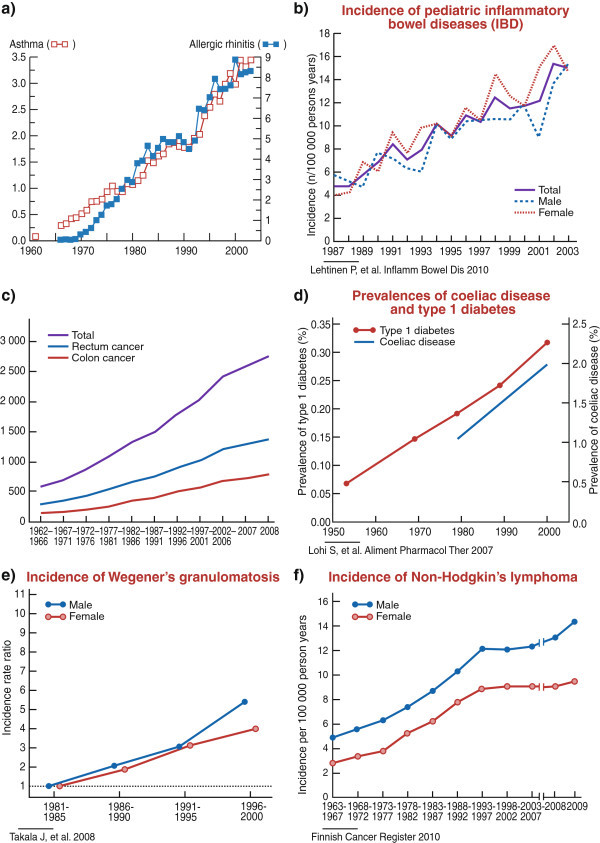
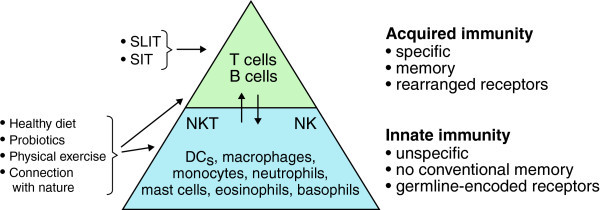
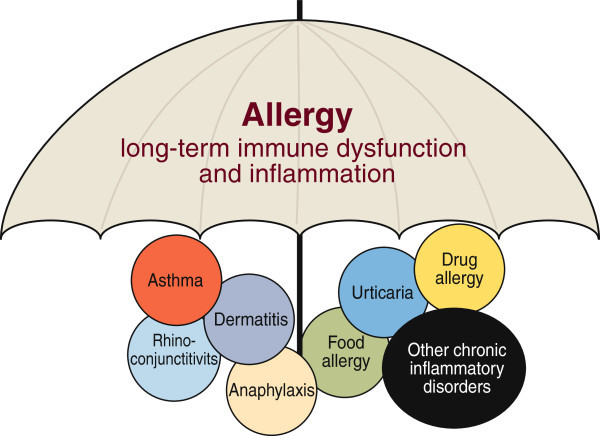
Verification
Claims the paper makes
The claims and statistics of this paper haven’t been checked yet.
Run the check — free, no account needed. It reads the open-access text and checks the sources it cites.
Claims other papers make about this one
Each is checked against this paper’s own text: does it say what the citing paper says it does?
The cited source says what the claim attributes to it.
In the citing paper
“Similarly, the biodiversity hypothesis highlights the role of natural environments in shaping the human microbiome [38], enhancing immune balance, and reducing inflammation-related diseases [38,39,40].”
Self-check
Percentages, sums and reported differences re-computed from the paper’s own numbers.
The self-check needs the paper’s full text.
Citations
Cites
An obesity-associated gut microbiome with increased capacity for energy harvest
Turnbaugh, P. J., Ley, R. E., Mahowald, M. A., Magrini, V., Mardis, E. R., & Gordon, J. I. (2006) · Nature · doi:10.1038/nature05414 · Cited by 12,444
A human gut microbial gene catalogue established by metagenomic sequencing
MetaHIT Consortium, Qin, J., Li, R., Raes, J., Arumugam, M., Burgdorf, K. S., Manichanh, C., Nielsen, T., Pons, N., Levenez, F., et al. (2010) · Nature · doi:10.1038/nature08821 · Cited by 11,624
Pattern Recognition Receptors and Inflammation
Takeuchi, O., & Akira, S. (2010) · Cell · doi:10.1016/j.cell.2010.01.022 · Cited by 8,895
Diversity of the Human Intestinal Microbial Flora
Eckburg, P. B., Bik, E. M., Bernstein, C. N., Purdom, E., Dethlefsen, L., Sargent, M., Gill, S. R., Nelson, K. E., & Relman, D. A. (2005) · Science · doi:10.1126/science.1110591 · Cited by 7,913
A core gut microbiome in obese and lean twins
Turnbaugh, P. J., Hamady, M., Yatsunenko, T., Cantarel, B. L., Duncan, A., Ley, R. E., Sogin, M. L., Jones, W. J., Roe, B. A., Affourtit, J. P., et al. (2009) · Nature · doi:10.1038/nature07540 · Cited by 7,823
Linking long-term dietary patterns with gut microbial enterotypes
Wu, G. D., Chen, J., Hoffmann, C., Bittinger, K., Chen, Y.-Y., Keilbaugh, S. A., Bewtra, M., Knights, D., Walters, W. A., Knight, R., et al. (2011) · Science · doi:10.1126/science.1208344 · Cited by 6,513
De Filippo, C., Cavalieri, D., Di Paola, M., Ramazzotti, M., Poullet, J. B., Massart, S., Collini, S., Pieraccini, G., & Lionetti, P. (2010) · Proceedings of the National Academy of Sciences · doi:10.1073/pnas.1005963107 · Cited by 5,579
Hay fever, hygiene, and household size.
Strachan, D. P. (1989) · BMJ · doi:10.1136/bmj.299.6710.1259 · Cited by 5,054
The gut microbiota shapes intestinal immune responses during health and disease
Round, J. L., & Mazmanian, S. K. (2009) · Nature Reviews Immunology · doi:10.1038/nri2515 · Cited by 5,029
Global Biodiversity: Indicators of Recent Declines
Butchart, S. H. M., Walpole, M., Collen, B., van Strien, A., Scharlemann, J. P. W., Almond, R. E. A., Baillie, J. E. M., Bomhard, B., Brown, C., Bruno, J., et al. (2010) · Science · doi:10.1126/science.1187512 · Cited by 4,892
Cited by
Sorted by citations
Items 201–300 of 429
Wang, M., Li, H., Zhang, W., Zhang, L., Wang, S., Miao, J., Jia, L., Zhang, Y., Gao, H., Zhang, X., et al. (2025) · PLoS ONE · doi:10.1371/journal.pone.0311207 · Cited by 14
Primary Prevention of Allergic Diseases: The Role of Early Exposure to Cow's Milk Formula
Mastrorilli, C., Santoro, A., & Caffarelli, C. (2020) · Frontiers in Pediatrics · doi:10.3389/fped.2020.00420 · Cited by 14
Stojkovic-Andjelkovic, A., Simovic, A. M., Bogdanović, Z., Banković, D., & Poskurica, M. (2016) · Srpski arhiv za celokupno lekarstvo · doi:10.2298/sarh1602038s · Cited by 14
Mazhary, Z., Fard, N. A., Minuchehr, Z., & Javanshir, N. (2019) · Informatics in Medicine Unlocked · doi:10.1016/j.imu.2019.100280 · Cited by 14
Allergy as a sentinel measure of planetary health and biodiversity loss
Prescott, S. L. (2020) · Allergy · doi:10.1111/all.14255 · Cited by 14
Li, P., Ma, X., Liu, D., Wei, Y., Li, P., Hou, H., Yao, J., Chen, A., Liang, Y., Zhou, Z., et al. (2022) · Environmental Pollution · doi:10.1016/j.envpol.2022.120415 · Cited by 14
Armari, M., Zavattaro, E., Trejo, C. F., Galeazzi, A., Grossetti, A., Veronese, F., Savoia, P., & Azzimonti, B. (2024) · Antibiotics · doi:10.3390/antibiotics13080697 · Cited by 13
Mazur, A., Szylling, A., Bielecka, T., Strzelak, A., & Kulus, M. (2017) · Journal of Asthma · doi:10.1080/02770903.2017.1400046 · Cited by 13
Asthma in adolescents – Prevalence trends and associated factors in northeast Brazil
Oliveira-Santos, S., Franco, J. M., Barreto, Í. D. D. C., Solé, D., & Gurgel, R. Q. (2014) · Allergologia et Immunopathologia · doi:10.1016/j.aller.2014.05.006 · Cited by 14
H omo sapiens , industrialisation and the environmental mismatch hypothesis
Longman, D. P., & Shaw, C. N. (2025) · Biological reviews/Biological reviews of the Cambridge Philosophical Society · doi:10.1111/brv.70094 · Cited by 23
Advances in research on gut microbiota and allergic diseases in children
Ke, H., Yao, H., & Wei, P. (2025) · Current Research in Microbial Sciences · doi:10.1016/j.crmicr.2025.100362 · Cited by 16
The Microbiome as a Gateway to Prevention of Allergic Disease Development
Kloepfer, K. M., McCauley, K. E., & Kirjavainen, P. V. (2022) · The Journal of Allergy and Clinical Immunology In Practice · doi:10.1016/j.jaip.2022.05.033 · Cited by 14
Migrants and allergy: a new view of the atopic march
Biagioni, B., Vitiello, G., Bormioli, S., Tarrini, D., Lombardi, C., Rossi, O., & Parronchi, P. (2019) · European Annals of Allergy and Clinical Immunology · doi:10.23822/eurannaci.1764-1489.96 · Cited by 12
Prescott, S. L., & Bland, J. S. (2020) · International Journal of Environmental Research and Public Health · doi:10.3390/ijerph17041407 · Cited by 12
Allergy-Related Disorders in the Construction Industry
Carino, M., Romita, P., & Foti, C. (2013) · ISRN Preventive Medicine · doi:10.5402/2013/864679 · Cited by 12
Climate change, air pollution, and biodiversity in Asia Pacific: impact on allergic diseases
Pawankar, R. (2019) · Asia Pacific Allergy · doi:10.5415/apallergy.2019.9.e11 · Cited by 12
Self-citationYear-long trends of airborne pollen in Argentina: More research is needed
Ramon, G. D., Vanegas, E., Félix, M., Barrionuevo, L. B., Kahn, A. M., Bertone, M., Reyes, M. S., Gaviot, S., Ottaviano, C., & Chérrez-Ojeda, I. (2020) · World Allergy Organization Journal · doi:10.1016/j.waojou.2020.100135 · Cited by 11
Introduction to Biotechnologies and Biomimetics for Civil Engineering
Pacheco-Torgal, F. (2014) · Springer eBooks · doi:10.1007/978-3-319-09287-4_1 · Cited by 11
High prevalence of rhinitis symptoms without allergic sensitization in Estonia and Finland
Pallasaho, P., Kainu, A., Juusela, M., Meren, M., & Sovijärvi, A. (2015) · European Clinical Respiratory Journal · doi:10.3402/ecrj.v2.25401 · Cited by 10
Microbiota of the first‐pass meconium and subsequent atopic and allergic disorders in children
Kielenniva, K., Ainonen, S., Vänni, P., Paalanne, N., Renko, M., Salo, J., Tejesvi, M. V., Pokka, T. M.-L., Pirttilä, A. M., & Tapiainen, T. (2022) · Clinical & Experimental Allergy · doi:10.1111/cea.14117 · Cited by 9
A review on aero‐allergen induced allergy in India
Laha, A., Moitra, S., & Podder, S. (2023) · Clinical & Experimental Allergy · doi:10.1111/cea.14266 · Cited by 10
Use of probiotics to prevent ventilator-associated pneumonia: A survey of pharmacists' attitudes
Wheeler, K. E., Cook, D. J., Mehta, S., Calce, A., Guenette, M. D., Perreault, M. M., Thiboutot, Z., Duffett, M., & Burry, L. D. (2015) · Journal of Critical Care · doi:10.1016/j.jcrc.2015.10.016 · Cited by 10
Yao, J., & Sbihi, H. (2016) · Canadian Journal of Public Health · doi:10.17269/cjph.107.5614 · Cited by 10
How do Microbiota Influence the Development and Natural History of Eczema and Food Allergy?
Marrs, T., & Flohr, C. (2016) · The Pediatric Infectious Disease Journal · doi:10.1097/inf.0000000000001314 · Cited by 10
Plant microbiota: implications for human health
von Hertzen, L. (2015) · British Journal Of Nutrition · doi:10.1017/s0007114515003979 · Cited by 10
Galitskaya, P., Luukkonen, A., Roslund, M. I., Mänttäri, M., Yli-Viikari, A., Tyrväinen, L., Sinkkonen, A., & Laitinen, O. H. (2024) · BMC Public Health · doi:10.1186/s12889-024-20655-x · Cited by 10
Greenspace Morphology and Preterm Birth: A State-Wide Study in Georgia, United States (2001–2016)
Wang, H., Huang, X., Hao, H., & Chang, H. H. (2024) · Environmental Health Perspectives · doi:10.1289/ehp14571 · Cited by 9
Xu, S., Marcon, A., Bertelsen, R. J., Benediktsdóttir, B., Brandt, J. G., Frohn, L. M., Geels, C., Gíslason, Þ., Heinrich, J., Holm, M., et al. (2025) · Environmental Research · doi:10.1016/j.envres.2025.120938 · Cited by 9
Milani, T., Sandy, C. M., Calazans, A. P. C. T., Silva, R. Q., da Fonseca, V. M. B., Martins, F. S., & Borges, M. D. C. (2022) · Probiotics and Antimicrobial Proteins · doi:10.1007/s12602-022-10014-w · Cited by 9
Zhang, G., & Souëf, P. N. L. (2024) · World Allergy Organization Journal · doi:10.1016/j.waojou.2023.100857 · Cited by 9
From biodiversity to nature deficiency in human health and disease
Haahtela, T., Bousquet, J. J., & Antó, J. M. (2024) · Porto Biomedical Journal · doi:10.1097/j.pbj.0000000000000245 · Cited by 12
Self-citationThe Role of Home Environments in Allergic Disease
Kennedy, K., Allenbrand, R., & Bowles, E. (2019) · Clinical Reviews in Allergy & Immunology · doi:10.1007/s12016-018-8724-x · Cited by 9
Microbiome of Barrier Organs in Allergy: Who Runs the World? Germs!
Schwierzeck, V., Hülpüsch, C., & Reiger, M. (2021) · Handbook of experimental pharmacology · doi:10.1007/164_2021_478 · Cited by 10
A cultural ecosystem service perspective on the interactions between humans and soils in gardens
Teuber, S. (2021) · People and Nature · doi:10.1002/pan3.10255 · Cited by 8
Why has epidemiology not (yet) succeeded in identifying the origin of the asthma epidemic?
Antó, J. M., Pearce, N. E., Douwes, J. E., García‐Aymerich, J., Pembrey, L., Richiardi, L., & Sunyer, J. (2023) · International Journal of Epidemiology · doi:10.1093/ije/dyad035 · Cited by 10
Poutiainen, H., Hakulinen, T., Mäki, P., & Laatikainen, T. K. (2016) · International Journal of Nursing Practice · doi:10.1111/ijn.12478 · Cited by 9
Parasites and allergy: Observations from Brazil
de Andrade, C. M., Carneiro, V. L., Cerqueira, J. V., Fonseca, H. F., Queiroz, G. A., Costa, R. D. S., Alcântara‐Neves, N. M., Cooper, P. J., & Figueiredo, C. A. (2018) · Parasite Immunology · doi:10.1111/pim.12588 · Cited by 9
Hall, K. S., Barnes, C. R., Duggan, L., Walton, S., Moran, P., Turner, K. M., & Evans, J. (2024) · Wellbeing Space and Society · doi:10.1016/j.wss.2024.100187 · Cited by 10
Charry, M. A. E., & Quintanilla‐Carvajal, M. X. (2025) · Journal of Functional Foods · doi:10.1016/j.jff.2025.106812 · Cited by 8
Myths and Issues about Sustainable Living
Butters, C. (2021) · Sustainability · doi:10.3390/su13147521 · Cited by 8
Martín‐Masot, R., Díaz, J. J., Santamaria-Orleans, A., & Navas‐López, V. M. (2023) · Nutrients · doi:10.3390/nu15163586 · Cited by 8
Impact of Biodiversity Loss on Pollen Allergies: A Bibliometric Analysis
Braun, K., & Haluza, D. (2024) · Sustainability · doi:10.3390/su16219285 · Cited by 8
Contributing factors to the development of childhood asthma: working toward risk minimization
Guibas, G. V., Megremis, S., West, P., & Papadopoulos, N. G. (2015) · Expert Review of Clinical Immunology · doi:10.1586/1744666x.2015.1035649 · Cited by 8
Karmakar, B., Saha, B., Jana, K., & Gupta-Bhattacharya, S. (2020) · Journal of Biological Chemistry · doi:10.1074/jbc.ra120.015801 · Cited by 8
Diamine oxidase levels in different chronic urticaria phenotypes
Daschner, Á., González‐Fernández, J., Valls, A., Frutos, C. D., Rodero, M., & Cuéllar, C. (2015) · Allergologia et Immunopathologia · doi:10.1016/j.aller.2015.01.009 · Cited by 8
Leru, P. M., Matei, D. B., & Ianovici, N. (2015) · DOAJ (DOAJ: Directory of Open Access Journals) · Cited by 8
Why medical community should take biodiversity loss seriously?
Haahtela, T. (2016) · Porto Biomedical Journal · doi:10.1016/j.pbj.2016.10.007 · Cited by 8
Self-citationThe holobiont mind: A bridge between 4E-cognition and the microbiome
Palacios-Garcia, I., & Parada, F. J. (2021) · doi:10.31234/osf.io/thuvc · Cited by 21
Zimmermann, E. J., Candeias, J., Gawlitta, N., Bisig, C., Binder, S., Pantzke, J., Offer, S., Rastak, N., Bauer, S., Huber, A., et al. (2023) · Journal of Applied Toxicology · doi:10.1002/jat.4458 · Cited by 7
Impacts of COVID-19 pandemic on early life gut microbiome
Zhang, L., Xu, W., Meng, H. Y. H., Ching, J. Y. L., Liu, Y., Wang, S., Yan, S., Lin, L., Cheong, P. K., Ip, K. L., et al. (2024) · Gut Microbes · doi:10.1080/19490976.2024.2443117 · Cited by 7
Ran, H., Xiao, H., Zhou, X., Guo, L., & Lu, S. (2020) · Experimental and Therapeutic Medicine · doi:10.3892/etm.2020.9232 · Cited by 9
Human rights and the environment
Knox, J. H., & Morgera, E. (2022) · FAO eBooks · doi:10.4060/cb9664en · Cited by 7
Parker, W., Patel, E. M., Jirků‐Pomajbíková, K., & Laman, J. D. (2023) · iScience · doi:10.1016/j.isci.2023.106167 · Cited by 6
Li, X., Luo, J., Nie, C., Li, Q., Sun, X., Li, H., & Zhang, Y. (2020) · Allergy Asthma and Clinical Immunology · doi:10.1186/s13223-020-00475-5 · Cited by 6
The Health and Social Benefits of Nature and Biodiversity Protection: Executive Summary
ten Brink, P., Mutafoglu, K., Schweitzer, J.-P., Kettunen, M., Twigger-Ross, C., Kuipers, Y., Emonts, M., Tyrväinen, L., Hujala, T., & Ojala, A. (2016) · doi:10.13140/rg.2.1.4312.2807 · Cited by 7
Climate change from the Asia‐Pacific perspective: What an allergist needs to know and do
Zain, A., Yeo, I. S. X., Wong, L. S. Y., & Shek, L. P. (2024) · Pediatric Allergy and Immunology · doi:10.1111/pai.14216 · Cited by 6
Avizemel, O., Frishman, S., Pinto, Y., Michael, Y., Turjeman, S., Tenenbaum-Gavish, K., Yariv, O., Peled, Y., Poran, E., Pardo, J., et al. (2023) · International Journal of Hygiene and Environmental Health · doi:10.1016/j.ijheh.2023.114191 · Cited by 6
The place of Omalizumab in the treatment of allergic diseases
Kurbacheva, O. M., & Galitskaya, M. A. (2019) · Meditsinskiy sovet = Medical Council · doi:10.21518/2079-701x-2019-15-38-49 · Cited by 7
Hymenoptera allergy and anaphylaxis: are warmer temperatures changing the impact?
Demain, J. G. (2020) · Current Opinion in Allergy and Clinical Immunology · doi:10.1097/aci.0000000000000660 · Cited by 6
Self-citationLa biodiversité, de l’océan à la cité
Bœuf, G. (2014) · Collège de France eBooks · doi:10.4000/books.cdf.3610 · Cited by 10
Assmuth, T. W., Dubrovin, T., & Lyytimäki, J. M. (2019) · Environment Systems & Decisions · doi:10.1007/s10669-019-09751-1 · Cited by 6
Ye, Q., Liu, H., & Shang, S. (2021) · Journal of Infection · doi:10.1016/j.jinf.2021.10.025 · Cited by 6
The Rising Incidence of Food Allergies and Infant Food Allergies
Jaiswal, Y. S., & Williams, L. L. (2025) · Annual Review of Food Science and Technology · doi:10.1146/annurev-food-111523-121952 · Cited by 5
Air Pollution and Disrupted Microbiomes: Tracing the Impact on Human Health
Thomas, T., & Nashwan, A. J. (2025) · Cureus · doi:10.7759/cureus.89267 · Cited by 5
Genetic associations between gut microbiota and allergic rhinitis: an LDSC and MR analysis
Zheng, X., Chen, M., Zhuang, Y., Xu, J. Y., Zhao, L., Qian, Y., & Shen, W. (2024) · Frontiers in Microbiology · doi:10.3389/fmicb.2024.1395340 · Cited by 6
Principales aeroalérgenos en rinoconjuntivitis alérgica en la ciudad de Temuco, Chile
Grau, M., Pedro Mardones, P., Donoso, G., Aguilera, R., Loreto Nicklas, D., Iglesias, V., & Cãrdova, A. (2018) · Revista médica de Chile · doi:10.4067/s0034-98872018000900994 · Cited by 5
Ito, K. (2023) · Indoor Environment · doi:10.7879/siej.26.29 · Cited by 4
Butters, C., & Cheshmehzangi, A. (2017) · Palgrave series in Asia and Pacific studies · doi:10.1007/978-981-10-6638-2_2 · Cited by 5
European Nature and Health Network Initiatives
Keune, H., Friesenbichler, K., Häsler, B., Hilgers, A., Jäppinen, J.-P., Job-Hoben, B., Livoreil, B., Oosterbroek, B., Romanelli, C., Soubelet, H., et al. (2019) · Springer eBooks · doi:10.1007/978-3-030-02318-8_15 · Cited by 5
Automatic particle detectors lead to a new generation in plant diversity investigation
Šaulienė, I., Šukienė, L., Daunys, G., Valiulis, G., & Vaitkevičius, L. (2021) · Notulae Botanicae Horti Agrobotanici Cluj-Napoca · doi:10.15835/nbha49312444 · Cited by 5
Villanueva-Pájaro, D. J., & Cano, J. M. (2015) · Revista de la Facultad de Medicina · doi:10.15446/revfacmed.v63n2.48055 · Cited by 5
Atopic Dermatitis Host and Environment Model: Revisiting Therapeutic Options
Lopes, A., Sokolova, A., Abreu, C., & Lopes, C. (2019) · European Annals of Allergy and Clinical Immunology · doi:10.23822/eurannaci.1764-1489.125 · Cited by 5
Haahtela, T. (2025) · World Allergy Organization Journal · doi:10.1016/j.waojou.2025.101106 · Cited by 5
Self-citationBeyond breastfeeding: a One Health Decalogue for nurturing the infant microbiota
Biagioli, V., Matera, M., Cavecchia, I., Illiceto, M. T., Pennazzi, L., Luongo, G., Lugli, S., & Striano, P. (2026) · Frontiers in Nutrition · doi:10.3389/fnut.2026.1784544 · Cited by 4
Li, Y., Sun, Y., Shi, L., Wang, A., Gao, X., & Leng, H. (2026) · Frontiers in Allergy · doi:10.3389/falgy.2026.1799085 · Cited by 5
Newman, N. S., Abbott, C. A., Brame, J. E., Cando‐Dumancela, C., Fickling, N. W., Liddicoat, C., Robinson, J. M., & Breed, M. F. (2024) · The Science of The Total Environment · doi:10.1016/j.scitotenv.2024.172158 · Cited by 5
Effects of urban green space habitats and tree species on ectomycorrhizal fungal diversity
Lin, Q.-C., Cen, Y.-Q., Xu, M., Jiang, D., & Zhang, J. (2024) · Scientific Reports · doi:10.1038/s41598-024-74448-8 · Cited by 4
Cross Talk Between Functional Foods and Gut Health
Thakur, K., Zhang, J., Wei, Z., Kumar, N., Tomar, S. K., & Pophaly, S. D. (2017) · Advances in human services and public health (AHSPH) book series · doi:10.4018/978-1-5225-2970-5.ch009 · Cited by 4
Transient childhood wheeze is associated with less atopy in adolescence
Lodge, C., Lowe, A. J., Abramson, M. J., Svanes, C., Zaloumis, S. G., Thomas, P. S., & Dharmage, S. C. (2020) · Pediatric Allergy and Immunology · doi:10.1111/pai.13304 · Cited by 4
Gawlitta, N., Zimmermann, E. J., Orasche, J., Huber, A., Buters, J., Bucchianico, S. D., Oeder, S., Gröger, T., & Zimmermann, R. (2021) · Exposure and Health · doi:10.1007/s12403-021-00429-1 · Cited by 4
‘Out of the mouth of babes’ – Lessons in immunology
Adar, T., & Adar, A. (2013) · Pediatric Allergy and Immunology · doi:10.1111/pai.12135 · Cited by 4
Attitudes toward allergy: what do the pediatricians think?
Convers, K. D., & Slavin, R. G. (2014) · Annals of Allergy Asthma & Immunology · doi:10.1016/j.anai.2014.08.012 · Cited by 4
The microbiome: what it means for medicine
Allen‐Vercoe, E., & Petrof, E. O. (2014) · British Journal of General Practice · doi:10.3399/bjgp14x677374 · Cited by 4
APAAACI Allergy Week on Climate change, One Health and digital health
Pawankar, R., & Wang, J. (2023) · Asia Pacific Allergy · doi:10.5415/apallergy.0000000000000107 · Cited by 4
Self-citationShotgun metagenomics reveals distinct skin microbial species in allergen-sensitized individuals
Riskumäki, M., Ruuskanen, M. O., Mäenpää, K., Ruokolainen, L., Mäkelä, M. J., Jousilahti, P., Vartiainen, E. A., Ottman, N., Laatikainen, T. K., Haahtela, T., et al. (2025) · Microbial Genomics · doi:10.1099/mgen.0.001527 · Cited by 3
Self-citationThe sterile society: hyperselection and the loss of adaptive variance
Yong, J. C., Groome, S. S., & Tan, E. (2026) · Frontiers in Psychology · doi:10.3389/fpsyg.2026.1904076 · Cited by 3
Observing Linkages between Biodiversity and Planetary Health
Simkovic, V., & Nelson, D. H. (2019) · CAND Journal · doi:10.54434/candj.42 · Cited by 3
Heikkilä, M., & Hautamäki, R. (2024) · Journal of Environmental Planning and Management · doi:10.1080/09640568.2024.2418343 · Cited by 3
Peltonen, H., Kukkonen, A. K., Korkalo, L., Fogelholm, M., Mäkelä, M. J., Erkkola, M., & Vepsäläinen, H. (2024) · BMC Pediatrics · doi:10.1186/s12887-024-05218-8 · Cited by 4
Immune development of children born from Caesarean section
Munasir, Z., & Khoe, L. C. (2020) · World Nutrition Journal · doi:10.25220/wnj.v04.s2.0003 · Cited by 3
Minami, M., Konishi, T., Takase, H., & Makino, T. (2021) · Journal of Natural Medicines · doi:10.1007/s11418-021-01585-z · Cited by 3
Augusto Peñaranda, S., Pérez-Herrera, L. C., Gantiva, M., Moreno, S., Manrique, J., Peñaranda, D., & García, E. (2023) · Allergologia et Immunopathologia · doi:10.15586/aei.v51i4.833 · Cited by 3
Conte, M., Varraso, R., Fournier, A., Rothwell, J. A., Baglietto, L., Fornili, M., Sbidian, É., & Severi, G. (2023) · Environmental Research · doi:10.1016/j.envres.2023.117062 · Cited by 3
Li, H., Jansen, R. E. V., Sijuwade, C., Macura, B., Giusti, M., & Jørgensen, P. S. (2024) · Environmental Evidence · doi:10.1186/s13750-024-00335-4 · Cited by 3
Haahtela, T., von Hertzen, L., & Hanski, I. (2013) · Brazilian Journal of Allergy and Immunology (BJAI) · doi:10.5935/2318-5015.20130003 · Cited by 3
Self-citationParada, F. J., & Palacios-García, I. (2022) · Adaptive Behavior · doi:10.1177/10597123221088874 · Cited by 3
Fast food and asthma and allergy: Be afried, be deeply afried?
James, A. L., & Abramson, M. J. (2018) · Respirology · doi:10.1111/resp.13376 · Cited by 3
Pawankar, R. (2021) · Asia Pacific Allergy · doi:10.5415/apallergy.2021.11.e11 · Cited by 3
Self-citationBiodiversity and Human Health: A Scoping Review and Case Studies on Underrepresented LinkagesPreprint
Robinson, J. M., Breed, A. C., Camargo, A., Redvers, N., & Breed, M. F. (2022) · Preprints.org · doi:10.20944/preprints202210.0275.v1 · Cited by 2
Role of dysbiosis and leaky gut syndrome in allergic manifestations
Goyal, J., Rajvanshi, N., Kumar, P., Masand, R., & Bhardwaj, A. (2023) · Journal of Pediatric Pulmonology · doi:10.4103/jopp.jopp_48_23 · Cited by 2
Metadata
- Authors
- Haahtela, T., Holgate, S., Pawankar, R., Akdis, C. A., Benjaponpitak, S., Caraballo, L., Demain, J., Portnoy, J., & von Hertzen, L.
- Affiliations
- Helsinki University Hospital (FI)
- University of Southampton (GB)
- Nippon Medical School (JP)
- Mahidol University (TH)
- Universidad de Cartagena (CO)
- University of Washington (US)
- University of Missouri–Kansas City (US)
- Corresponding author
- Haahtela, Tari
- ORCID
- Venue
- World Allergy Organization Journal
- Publisher
- Elsevier BV
- Published
- 2013
- Volume
- 6
- Issue
- 1
- Pages
- 3
- ISSN
- 1939-4551 (ISSN-L)
- PMC
- PMC3646540
- OpenAlex
- W2105617257
- Cited by
- 426
- References
- 168
- Citations by year
- 2026: 30 · 2025: 24 · 2024: 39 · 2023: 37 · 2022: 36 · 2021: 40 · 2020: 38 · 2019: 33 · 2018: 30 · 2017: 29 · 2016: 27 · 2015: 31 · 2014: 23 · 2013: 7
- FWCI
- 13.15
- Type
- journal article
- Language
- en
- Open access
- gold
- doi.org
- Licence
- Locations
- World Allergy Organization Journal (publishedVersion, cc-by-nc-nd)
- Europe PMC (PubMed Central) (publishedVersion, cc-by)
- PubMed Central (publishedVersion, cc-by)
- PubMed (publishedVersion)
- Zurich Open Repository and Archive (University of Zurich) (acceptedVersion, cc-by)
- DOAJ (DOAJ: Directory of Open Access Journals) (submittedVersion, cc-by-sa)
- Työväentutkimus Vuosikirja (submittedVersion)
- Zurich Open Repository and Archive (University of Zurich) (submittedVersion, cc-by)
- Zurich Open Repository and Archive (University of Zurich)
- Funders
- National Institute for Health and Care Research (NF-SI-0510-10021)
- Topics
- Life Sciences › Biochemistry, Genetics and Molecular Biology › Molecular Biology › Gut microbiota and health
- Health Sciences › Medicine › Pulmonary and Respiratory Medicine › Asthma and respiratory diseases
- Health Sciences › Medicine › Immunology and Allergy › Allergic Rhinitis and Sensitization
- Keywords
- biodiversity loss, allergic diseases, gut microbiota, skin microbiome, dysbiosis, immune tolerance, immune dysregulation, asthma, inflammatory bowel disease, type 1 diabetes, obesity, climate change, urban lifestyle, immigrant health, allergy prevention
About these checks
Registry, retraction, Cites and statistics results are computed, not judged, with one exception: a printed reference that no index lists is read once by a model before it counts as a citation error. Claims are extracted by a model and kept only when their quote appears verbatim in the text; each cited source is then checked, with a model’s help, for whether it says what the claim relies on. Those verdicts can be wrong — read the claim’s quote and the cited source before relying on one.
Statistics and arithmetic are recomputed, not judged.
Confidence bands are shown only for fields calibrated on our annotated test set. None is calibrated yet, so no band is shown.
What counts as a claim ›How we measure confidence ›How we check this ›
Are you an author, or do you see a problem with this page? Request a review
