

Fragile X and autism: Intertwined at the molecular level leading to targeted treatments
Open accessThe DOI matches its Crossref record; 177 of the 177 references it cites were found in a registry or an index.
Abstract
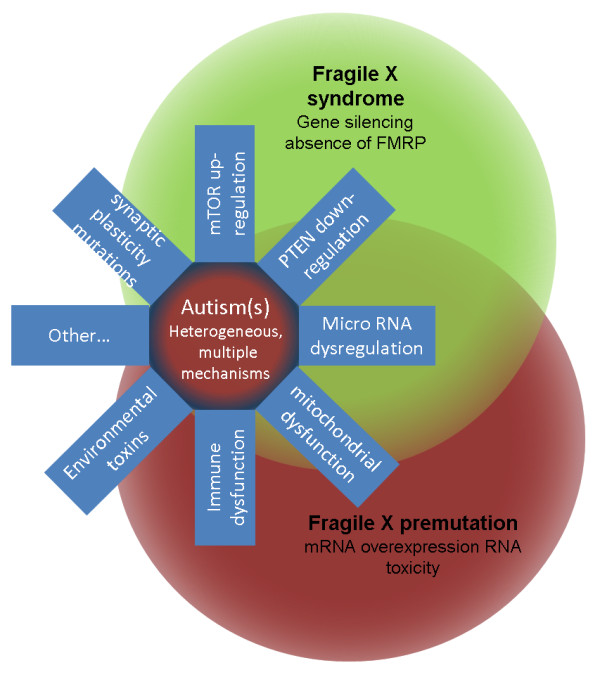
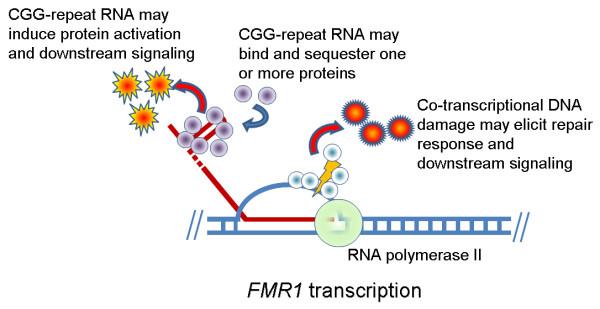
Fragile X syndrome (FXS) is caused by an expanded CGG repeat (> 200 repeats) in the 5' untranslated portion of the fragile mental retardation 1 gene (FMR1), leading to deficiency or absence of the FMR1 protein (FMRP). FMRP is an RNA carrier protein that controls the translation of several other genes that regulate synaptic development and plasticity. Autism occurs in approximately 30% of FXS cases, and pervasive developmental disorder, not otherwise specified (PDD-NOS) occurs in an additional 30% of cases. Premutation repeat expansions (55 to 200 CGG repeats) may also give rise to autism spectrum disorders (ASD), including both autism and PDD-NOS, through a different molecular mechanism that involves a direct toxic effect of the expanded CGG repeat FMR1 mRNA. RNA toxicity can also lead to aging effects including tremor, ataxia and cognitive decline, termed fragile X-associated tremor ataxia syndrome (FXTAS), in premutation carriers in late life. In studies of mice bearing premutation expansions, there is evidence of early postnatal neuronal cell toxicity, presenting as reduced cell longevity, decreased dendritic arborization and altered synaptic morphology. There is also evidence of mitochondrial dysfunction in premutation carriers. Many of the problems with cellular dysregulation in both premutation and full mutation neurons also parallel the cellular abnormalities that have been documented in autism without fragile X mutations. Research regarding dysregulation of neurotransmitter systems in FXS, including the metabotropic glutamate receptor (mGluR)1/5 pathway and γ aminobutyric acid (GABA)A pathways, have led to new targeted treatments for FXS. Preliminary evidence suggests that these new targeted treatments will also be beneficial in non-fragile X forms of autism.
Overview
The claims and statistics of this paper haven’t been checked yet.
Free: it reads the open-access text and checks the first 5 claims that cite a source we can check. Create a free account to check every claim.
Integrity signals
Registry
Cites
Statistics
Figures
Verification
Claims the paper makes
The claims and statistics of this paper haven’t been checked yet.
Free: it reads the open-access text and checks the first 5 claims that cite a source we can check. Create a free account to check every claim.
Claims other papers make about this one
Each is checked against this paper’s own text: does it say what the citing paper says it does?
The source backs part of the claim, not all of it — or backs it for a different population, condition or comparison.
In the citing paper
“The majority of FXS patients have social anxiety and almost a third have symptoms that overlap with ASD (Hagerman et al., 2010).”
From Oxytocin and vasopressin systems in genetic syndromes and neurodevelopmental disorders (2014) · cites this paper as Hagerman et al., 2010
Experimental — accuracy not yet measuredIn the citing paper
“This variable expressivity has parallels in known associations of ASD with Mendelian genes like FMR1 or TSC2, which are near fully penetrant for syndromic features of Fragile X or Tuberous Sclerosis, respectively, but only partially penetrant for ASD (Hagerman et al., 2010; Wiznitzer, 2004).”
From Using Whole-Exome Sequencing to Identify Inherited Causes of Autism (2013) · cites this paper as Hagerman et al., 2010
Self-check
Percentages, sums and reported differences re-computed from the paper’s own numbers.
The self-check needs the paper’s full text.
Citations
Cites
Miller, D. T., Adam, M. P., Aradhya, S., Biesecker, L. G., Brothman, A. R., Carter, N. P., Church, D. M., Crolla, J. A., Eichler, E. E., Epstein, C. J., et al. (2010) · The American Journal of Human Genetics · doi:10.1016/j.ajhg.2010.04.006 · Cited by 2,882 · cited 1×
“Because FXS is the most common single gene cause of autism, responsible for 2% to 6% of all cases of autism, it is clinically recommended that all individuals diagnosed with autism or ASD should have the FX DNA test (both PCR and Southern blot) when the etiology of their autism is not known [1-4].”
BackgroundThe mGluR theory of fragile X mental retardation
Bear, M. F., Huber, K. M., & Warren, S. T. (2004) · Trends in Neurosciences · doi:10.1016/j.tins.2004.04.009 · Cited by 1,580 · cited 2×
“Bear and colleagues have proposed the mGluR theory of FX, suggesting that the deficits associated with FXS are related to upregulation of the downstream effectors of the mGluR5 pathway, leading to enhanced long-term depression (LTD), and that treatment with an mGluR5 antagonist could be a targeted treatment for FXS [1…”
BackgroundγH2AX: a sensitive molecular marker of DNA damage and repair
Mah, L.-J., El-Osta, A., & Karagiannis, T. C. (2010) · Leukemia · doi:10.1038/leu.2010.6 · Cited by 1,557 · cited 1×
“sions, and the fact that another DNA-repair protein, g-H2AX[96], is found in the intranuclear FXTAS inclu-”
BackgroundFragile X Syndrome: Loss of Local mRNA Regulation Alters Synaptic Development and Function
Bassell, G. J., & Warren, S. T. (2008) · Neuron · doi:10.1016/j.neuron.2008.10.004 · Cited by 1,051 · cited 1×
“FMRP is an mRNA-binding protein that is important for mRNA transport, mRNA stabilization and translation of mRNA into protein at the synapse [129-131].”
BackgroundAbnormal dendritic spines in fragile X knockout mice: Maturation and pruning deficits
Comery, T. A., Harris, J. B., Willems, P. J., Oostra, B. A., Irwin, S. A., Weiler, I. J., & Greenough, W. T. (1997) · Proceedings of the National Academy of Sciences · doi:10.1073/pnas.94.10.5401 · Cited by 1,046 · cited 1×
“Both FMRP and mGluRs play important roles in synaptogenesis and synaptic plasticity and in the absence of FMRP there are long, thin and immature dendritic spines in both human and animal models of FXS [137-142].”
BackgroundCorrection of Fragile X Syndrome in Mice
Dölen, G., Osterweil, E., Rao, B. S. S., Smith, G. B., Auerbach, B. D., Chattarji, S., & Bear, M. F. (2007) · Neuron · doi:10.1016/j.neuron.2007.12.001 · Cited by 979 · cited 1×
“Support for the “mGluR theory” has been shown by generating FMR1 mutant mice with a 50% reduction in mGluR5 expression [145].”
Intention tremor, parkinsonism, and generalized brain atrophy in male carriers of fragile X
Hagerman, R. J., Leehey, M., Heinrichs, W., Tassone, F., Wilson, R., Hills, J., Grigsby, J., Gage, B., & Hagerman, P. J. (2001) · Neurology · doi:10.1212/wnl.57.1.127 · Cited by 964
Self-citationButler, M. G., Dasouki, M. J., Zhou, X.-P., Talebizadeh, Z., Brown, M., Takahashi, T. N., Miles, J. H., Wang, C. H., Stratton, R., Pilarski, R., et al. (2005) · Journal of Medical Genetics · doi:10.1136/jmg.2004.024646 · Cited by 778 · cited 1×
“Most of these proteins are associated with synapse formation and plasticity; however, the PTEN gene encodes a dual specificity phosphatase effecting G1 cell cycle arrest and/or apoptosis, and 17% (3/18) of individuals with autism and macrocephaly were found to have a PTEN mutation [51].”
BackgroundTassone, F., Hagerman, R. J., Taylor, A. K., Gane, L. W., Godfrey, T. E., & Hagerman, P. J. (2000) · The American Journal of Human Genetics · doi:10.1086/302720 · Cited by 774 · cited 3×
“However, although carriers of premutation alleles have elevated FMR1 mRNA [27,80,81], the strongest argument for an RNA-based toxicity mechanism in both FXTAS and FXPOI [82-84], is that these clinical syndromes are limited to a premutation repeat range, where the gene is active; that is, low levels (or absence) of FMR…”
BackgroundSelf-citationFragile X Premutation Tremor/Ataxia Syndrome: Molecular, Clinical, and Neuroimaging Correlates
Jacquemont, S., Hagerman, R. J., Leehey, M., Grigsby, J., Zhang, L., Brunberg, J. A., Greco, C., Des Portes, V., Jardini, T., Levine, R., et al. (2003) · The American Journal of Human Genetics · doi:10.1086/374321 · Cited by 762 · cited 2×
“Subsequently, the late onset neurodegenerative disorder, FX-associated tremor ataxia syndrome (FXTAS), was described [19,20],”
BackgroundSelf-citation
Research works printed but not linked: 6
- [53]Nishimura Y Martin CL Vazquez-Lopez A Spence SJ Alvarez-Retuerto AI Sigman M Steindler C Pellegrini S Schanen NC Warren ST Geschwind DH Genome-wide expression profiling of lymphoblastoid cell lines distinguishes different forms of autism and reveals shared pathways Hum Mol Genet 2007 16 1682 1698 10.1093/hmg/ddm116 17519220 · DOI · Paper page
- [95]Sellier C Hagerman P Willemsen R Charlet-Berguerand N DROSHA/DGCR8 sequestration by expanded CGG repeats leads to global micro-RNA processing alteration in FXTAS patients [abstract] 12th International Fragile X Conference; July 21-25; Detroit, MI 2010
- [106]Aziz M Stathopulu E Callias M Taylor C Turk J Oostra B Willemsen R Patton M Clinical features of boys with fragile X premutations and intermediate alleles Am J Med Genet 2003 121B 119 127 10.1002/ajmg.b.20030 12898586 · DOI · Paper page
- [108]Farzin F Perry H Hessl D Loesch D Cohen J Bacalman S Gane L Tassone F Hagerman P Hagerman R Autism spectrum disorders and attention-deficit/hyperactivity disorder in boys with the fragile X premutation J Dev Behav Pediatr 2006 27 S137 144 10.1097/00004703-200604002-00012 16685180 · DOI · Paper page
- [165]Miyashiro KY Beckel-Mitchener A Purk TP Becker KG Barret T Liu L Carbonetto S Weiler IJ Greenough WT Eberwine J RNA cargoes associating with FMRP reveal deficits in cellular functioning in Fmr1 null mice Neuron 2003 37 417 431 10.1016/S0896-6273(03)00034-5 12575950 · DOI · Paper page
- [175]Kooy F Heulens I D'Hulst C Van der Aa N Bagni C Hassan B De Deyn P The GABAA receptor as a potential target for therapy of the fragile X syndrome [abstract] NFXF 12th International FX Conference; July 21 - 25; Detroit, MI 2010
Cited by
Items 101–200 of 256
Napoli, E., Ross‐Inta, C., Song, G., Wong, S., Hagerman, R. J., Gane, L. W., Smilowitz, J. T., Tassone, F., & Giulivi, C. (2016) · Frontiers in Neuroscience · doi:10.3389/fnins.2016.00159 · Cited by 28
“…carriers, but not as often as in Fragile X syndrome [i.e., incidence of ASD in FXS is ∼4-fold of that in premutation carriers (Farzin et al., 2006; Garcia-Nonell et al., 2008; Harris et al., 2008; D’Hulst et al., 2009; Zingerevich et al., 2009; Hagerman et al., 2010; Chonchaiya et al., 2013)].”
BackgroundSelf-citationRNA and neuronal function: the importance of post-transcriptional regulation
Bhat, V. D., Jayaraj, J., & Babu, K. (2022) · Oxford Open Neuroscience · doi:10.1093/oons/kvac011 · Cited by 28
“A vast number of studies implicate the involvement of FMRP in the pathogenesis of ASD, necessitating the elucidation of its molecular mechanisms [48, 72, 87, 88, 102, 105, 168, 174, 211].”
BackgroundBruno, J. L., Romano, D., Mazaika, P. K., Lightbody, A. A., Hazlett, H. C., Piven, J., & Reiss, A. L. (2017) · Proceedings of the National Academy of Sciences · doi:10.1073/pnas.1620994114 · Cited by 26
“Fragile X syndrome (FXS) is the most common inherited cause for intellectual disability (2).”
BackgroundJacobs, S. A., Cheng, C., & Doering, L. C. (2016) · Neuroscience · doi:10.1016/j.neuroscience.2016.03.011 · Cited by 28
“Fragile X syndrome (FXS) is the most common inherited form of intellectual disability and is the leading single gene cause of autism spectrum disorders (Hagerman et al., 2010; Abekhoukh and Bardoni, 2014).”
BackgroundZerbi, V., Markicevic, M., Gasparini, F., Schroeter, A., Rudin, M., & Wenderoth, N. (2019) · NeuroImage · doi:10.1016/j.neuroimage.2019.02.051 · Cited by 25
“399 through a pathway convergent with other risk genes for autism, which has motivated frequent use of Fmr1-/y mice in drug-development research (Auerbach et al., 2011; Hagerman et al., 2010).”
BackgroundElucidating the neurophysiological underpinnings of autism spectrum disorder: new developments
Luckhardt, C., Jarczok, T. A., & Bender, S. (2014) · Journal of Neural Transmission · doi:10.1007/s00702-014-1265-4 · Cited by 27
“FRAX has a high prevalence of ASD-like symptoms and is associated with altered glutamatergic and GABAergic neurotransmission (Hagerman et al. 2010).”
Blanco‐Urrejola, M., Gaminde‐Blasco, A., Gamarra, M., de la Cruz, A., Vecino, E., Alberdi, E. M., & Baleriola, J. (2021) · Cells · doi:10.3390/cells10030632 · Cited by 24
High-functioning autism spectrum disorder and fragile X syndrome: report of two affected sisters
Chaste, P., Betancur, C., Gérard‐Blanluet, M., Bargiacchi, A., Kuzbari, S., Drunat, S., Leboyer, M., Bourgeron, T., & Delorme, R. (2012) · Molecular Autism · doi:10.1186/2040-2392-3-5 · Cited by 25
“In women as well as in men with FXS, the literature reports a strong association between ID and autistic features, with individuals with a lower IQ being more likely to be diagnosed with autism [8-10,12,14,15,20,26].”
BackgroundSynaptopathology in autism spectrum disorders: Complex effects of synaptic genes on neural circuits
Wang, X., Kéry, R., & Xiong, Q. (2017) · Progress in Neuro-Psychopharmacology and Biological Psychiatry · doi:10.1016/j.pnpbp.2017.09.026 · Cited by 24
“More recent evidence suggests ASD functional connectivity is in fact intrinsically heterogeneous and idiosyncratic (Hahamy et al., 2015).”
Cerebellar contribution to autism-relevant behaviors in fragile X syndrome models
Gibson, J. M., Vazquez, A. H., Yamashiro, K., Jakkamsetti, V., Ren, C., Lei, K., Dentel, B., Pascual, J. M., & Tsai, P. T. (2023) · Cell Reports · doi:10.1016/j.celrep.2023.113533 · Cited by 24
“5 FXS accounts for up to 1%–2% of all cases of ASD 6 and is also associated with intellectual disability, anxiety, and sensory hypersensitivity.”
BackgroundThe ongoing dissection of the genetic architecture of autistic spectrum disorder
Gillis, R. F., & Rouleau, G. A. (2011) · Molecular Autism · doi:10.1186/2040-2392-2-12 · Cited by 22
“Others have also been described in transcription factors expressed in the fetal brain (in the case of ARX [26]), genes involved in translational repression by RNA binding (in the case of FMR1, the gene responsible for fragile X syndrome[27-29]), and in tumor suppressor genes (for example, TSC1 and TSC2) [28,30,31].”
BackgroundUsing Organoids to Model Sex Differences in the Human Brain
Pavlinek, A., Adhya, D., Tsompanidis, A., Warrier, V., Baron‐Cohen, S., Allison, C. L., Warrier, V., Tsompanidis, A., Adhya, D., Holt, R., et al. (2024) · Biological Psychiatry Global Open Science · doi:10.1016/j.bpsgos.2024.100343 · Cited by 28
“Rett syndrome, where there is a mutation in the X-linked gene MECP2 (54), and fragile X syndrome, with a mutation in the X-linked FMR1 gene, are two of the most common syndromic forms of autism (55).”
Increasing our understanding of human cognition through the study of fragile X syndrome
Cook, D., Nuro, E., & Murai, K. K. (2013) · Developmental Neurobiology · doi:10.1002/dneu.22096 · Cited by 22
“, 2004) and 5% of identified ASD cases are found to be due to hypermethylation of the Fmr1 gene, making loss of FMRP a leading single gene cause of autism (Bassell and Warren, 2008; Pfeiffer and Huber, 2009; Hagerman et al., 2010; Budimirovic and Kaufmann, 2011).”
BackgroundNeuronal BC RNA Transport Impairments Caused by Systemic Lupus Erythematosus Autoantibodies
Muslimov, I. A., Iacoangeli, A., Eom, T., Ruiz, A., Lee, M., Stephenson, S. I., Ginzler, E. M., & Tiedge, H. (2019) · Journal of Neuroscience · doi:10.1523/jneurosci.1657-18.2019 · Cited by 21
“(Hagerman et al., 2010, 2016; Hagerman, 2013).”
Pham, T. T., Yin, J., Eid, J. S., Adams, E., Lam, R., Turner, S. W., Loomis, E. W., Wang, J. Y., Hagerman, P. J., & Hanes, J. W. (2016) · Molecular Genetics and Genomics · doi:10.1007/s00438-016-1167-2 · Cited by 20
Self-citationCowley, B. U., Kirjanen, S., Partanen, J. V., & Castrén, M. L. (2016) · Frontiers in Human Neuroscience · doi:10.3389/fnhum.2016.00353 · Cited by 23
“A subpopulation around 30% of FXS individuals meet the criteria for ASD regarding communication difficulties, such as gaze avoidance, stereotypic and repetitive behavior, sensory abnormalities, and social anxiety (Hagerman et al., 2010).”
BackgroundEvidence-Based Neuroethics for Neurodevelopmental Disorders
Racine, É., Bell, E. C., Pietro, N. C. D., Wade, L., & Illes, J. (2011) · Seminars in Pediatric Neurology · doi:10.1016/j.spen.2011.02.002 · Cited by 22
Kong, S. W., Sahin, M., Collins, C. D., Wertz, M. H., Campbell, M. G., Leech, J. D., Krueger, D., Bear, M. F., Kunkel, L. M., & Kohane, I. S. (2014) · Molecular Autism · doi:10.1186/2040-2392-5-16 · Cited by 19
“Conversely, 30% and 50-61% of patients with FXS and TSC present ASD core symptoms, respectively [7,8].”
BackgroundKéri, S., & Benedek, G. (2012) · Neuroscience · doi:10.1016/j.neuroscience.2012.01.005 · Cited by 19
“Moreover, from a clinical point of view, male premutation carriers are at a higher risk of RNA toxicity than female premutation carriers (Hagerman et al., 2010), which warrants the investigation of potential toxicity markers (e.g. visual dysfunctions).”
BackgroundInfluentialGenetic mouse models of autism spectrum disorder present subtle heterogenous cardiac abnormalities
Assimopoulos, S., Hammill, C. F., Fernandes, D., Noakes, T. L. S., Zhou, Y., Nutter, L. M. J., Ellegood, J., Anagnostou, E. A., Sled, J. G., & Lerch, J. P. (2022) · Autism Research · doi:10.1002/aur.2728 · Cited by 23
MicroRNAs: A Light into the “Black Box” of Neuropediatric Diseases?
Omran, A. G., Elimam, D., Shalaby, S., Peng, J., & Yin, F. (2012) · NeuroMolecular Medicine · doi:10.1007/s12017-012-8193-y · Cited by 20
“Fragile X mental retardation (FXS) is the most common cause of inherited IDs and the most common known single gene cause of autism (Hagerman et al. 2010).”
BackgroundInfluentialWinarni, T. I., Utari, A., Mundhofir, F. E., Hagerman, R. J., & Faradz, S. M. (2013) · Clinical Genetics · doi:10.1111/cge.12095 · Cited by 20
“ASD and FXS have similar symptoms and shared molecular mechanisms because FMRP regulates translation of many other genes also associated with autism and involved with synaptic plasticity (19, 20).”
BackgroundSelf-citationAutism, Mitochondria and Polybrominated Diphenyl Ether Exposure
Wong, S., & Giulivi, C. (2016) · CNS & Neurological Disorders - Drug Targets · doi:10.2174/1871527315666160413122624 · Cited by 21
Colvin, S. M., & Kwan, K. Y. (2014) · Frontiers in Genetics · doi:10.3389/fgene.2014.00239 · Cited by 19
Impact of FMR1 Premutation on Neurobehavior and Bioenergetics in Young Monozygotic Twins
Napoli, E., Schneider, A., Hagerman, R. J., Song, G., Wong, S., Tassone, F., & Giulivi, C. (2018) · Frontiers in Genetics · doi:10.3389/fgene.2018.00338 · Cited by 17
Self-citationFragile X syndrome in children
Acero-Garcés, D. O., Saldarriaga, W., Cabal-Herrera, A. M., Cerón, C. A. R., & Hagerman, R. J. (2023) · Colombia medica · doi:10.25100/cm.v54i2.5089 · Cited by 22
“Colomb Méd (Cali), 2023; 54(2):e3005089 http://doi.”
Self-citationConvergence on CaMK4: A Key Modulator of Autism-Associated Signaling Pathways in Neurons
Kaiser, J., Risteska, A., Muller, A. G., Sun, H., Lei, B., Nay, K., Means, A. R., Cousin, M. A., Drewry, D. H., Oakhill, J. S., et al. (2024) · Biological Psychiatry · doi:10.1016/j.biopsych.2024.10.012 · Cited by 19
“Genetic variations that result in a loss or reduction of FMRP expression result in fragile X syndrome (e.g., OMIM: 309550.0001), which is the most widely recognized cause of autism spectrum disorder (Table 1) (69).”
InfluentialSpontaneous motor-behavior abnormalities in two Drosophila models of neurodevelopmental disorders
Andrew, D. R., Moe, M. E., Chen, D., Tello, J. A., Doser, R. L., Conner, W. E., GHUMAN, J. K., & Restifo, L. L. (2020) · Journal of Neurogenetics · doi:10.1080/01677063.2020.1833005 · Cited by 16
Torres, E. B. (2021) · Journal of Personalized Medicine · doi:10.3390/jpm11111119 · Cited by 19
“Among them, various types of Ataxias [25] and Fragile X [26,27] make up for a large percentage of individuals with Autism today.”
BackgroundBruno, J. L., Hosseini, S. M. H., Lightbody, A. A., Manchanda, M. K., & Reiss, A. L. (2019) · Journal of Psychopharmacology · doi:10.1177/0269881119858304 · Cited by 16
“Fragile X syndrome (FXS), the most common inherited cause for intellectual disability and the most common single gene cause for autism symptoms (Hagerman et al., 2010), is one disorder that has received a great deal of attention (BerryKravis, 2014) but for which no effective targeted therapy yet exists.”
Urokinase plasminogen activator mediates changes in human astrocytes modeling fragile X syndrome
Peteri, U., Pitkonen, J., de Toma, I., Nieminen, O., Utami, K. H., Strandin, T. M., Corcoran, P., Roybon, L., Vaheri, A., Ethell, I., et al. (2021) · Glia · doi:10.1002/glia.24080 · Cited by 16
“Epilepsy manifests in around 20% of cases (Berry-Kravis, 2002; Louhivuori et al., 2009) and criteria for ASD are fulfilled in 30%–54% of FXS males (Hagerman et al., 2010).”
BackgroundOptimal time lags from causal prediction model help stratify and forecast nervous system pathology
Bermperidis, T., Rai, R., Ryu, J., Zanotto, D., Agrawal, S. K., Lalwani, A. K., & Torres, E. B. (2021) · Scientific Reports · doi:10.1038/s41598-021-00156-2 · Cited by 18
Autism spectrum disorder in the fragile X premutation state: possible mechanisms and implications
Aishworiya, R., Protic, D. D., & Hagerman, R. J. (2022) · Journal of Neurology · doi:10.1007/s00415-022-11209-5 · Cited by 15
“Further, there are linkages between FMRP and many proteins that have been related to ASD, including neuroligin 3 and 4, neurorexin, PDP (postsynaptic density protein) 95, CYFIP (cytoplasmic FMR1-interacting protein) 1 and 2, SHANK (Src homology 3 and multiple ankyrin repeat domains) 3, and PTEN (phosphatase and tensin…”
BackgroundSelf-citationThe Anti-Inflammatory Effects of the Small Molecule Pifithrin-µ on BV2 Microglia
Fleiss, B., Chhor, V., Rajudin, N., Lebon, S., Hagberg, H., Gressèns, P., & Thornton, C. (2015) · Developmental Neuroscience · doi:10.1159/000370031 · Cited by 15
Intellectual disabilities, neuronal posttranscriptional RNA metabolism, and RNA-binding proteins
Bardoni, B., Abekhoukh, S., Zongaro, S., & Melko, M. (2012) · Progress in brain research · doi:10.1016/b978-0-444-54299-1.00003-0 · Cited by 16
Analysis of Fmr1 Deletion in a Subpopulation of Post‐Mitotic Neurons in Mouse Cortex and Hippocampus
Amiri, A., Sanchez‐Ortiz, E., Cho, W., Birnbaum, S. G., Xu, J., McKay, R. M., & Parada, L. F. (2014) · Autism Research · doi:10.1002/aur.1342 · Cited by 15
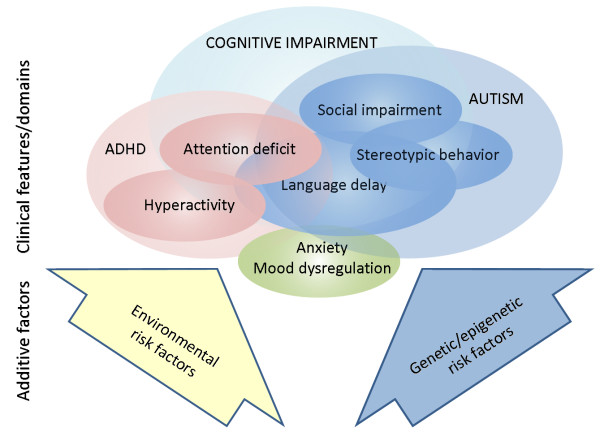
“Both environmental and genetic risk factors have been suggested to play a role in FXS behavioral phenotypes [Hagerman et al. 2010].”
BackgroundGlutamatergic agents in Autism Spectrum Disorders: Current trends
Canitano, R., & Scandurra, V. (2014) · Research in Autism · doi:10.1016/j.rasd.2013.12.009 · Cited by 14
Mutational Analyses of the FMR1 Gene in Chinese Pediatric Population of Fragile X Suspects
Luo, S., Huang, W., Xia, Q., Du, Q., Wu, L., & Duan, R. (2014) · Journal of Child Neurology · doi:10.1177/0883073814538508 · Cited by 14
“Fragile X syndrome is the most frequently encountered form of inherited intellectual disability, and the most common monogenic cause of autism.(1) More than 95% to 99% of fragile X syndrome cases are caused by the expansion of CGG repeats; the remaining corresponds to other molecular alterations in the fragile X menta…”
Alcohol use dependence in fragile X syndrome
Salcedo‐Arellano, M. J., Lozano, R., Tassone, F., Hagerman, R. J., & Saldarriaga, W. (2016) · Intractable & Rare Diseases Research · doi:10.5582/irdr.2016.01046 · Cited by 14
“How often do you have six or more drinks on one occasion? (0) Never (1) Less than monthly (2) Monthly (3) Weekly (4) Daily or almost daily 4.”
BackgroundInfluentialSelf-citationIdentification and Computational Analysis of Gene Regulatory Elements
Taher, L., Narlikar, L., & Ovcharenko, I. (2015) · Cold Spring Harbor Protocols · doi:10.1101/pdb.top083642 · Cited by 22
“Several studies in the last years have associated different human diseases with mutations in noncoding repetitive DNA, supporting this initial hypothesis (Boby et al. 2005; Sha et al. 2009; Hagerman et al. 2010; Renton et al. 2011).”
BackgroundCanitano, R. (2012) · Behavioural Brain Research · doi:10.1016/j.bbr.2012.11.024 · Cited by 16
Lieb-Lundell, C. (2016) · Physical Therapy · doi:10.2522/ptj.20140430 · Cited by 17
Importance of a specialty clinic for individuals with fragile X syndrome
Visootsak, J., Kidd, S. A., Anderson, T., Bassell‐Hawkins, J., Sherman, S. L., & Berry‐Kravis, E. (2016) · American Journal of Medical Genetics Part A · doi:10.1002/ajmg.a.37982 · Cited by 13
“females range from normal to moderate impairment [Hagerman et al., 2010].”
BackgroundSragovich, S., Gershovits, M., Lam, J. C. K., Li, V. O. K., & Gozes, I. (2021) · Journal of Alzheimer s Disease · doi:10.3233/jad-201158 · Cited by 13
Winarni, T. I., Utari, A., Mundhofir, F. E., Tong, T., Durbin-Johnson, B. P., Faradz, S. M., & Tassone, F. (2011) · Genetic Testing and Molecular Biomarkers · doi:10.1089/gtmb.2011.0089 · Cited by 15
Li, R., Bruno, J. L., Jordan, T. L., Miller, J. G., Lee, C. H.-Y., Bartholomay, K. L., Marzelli, M., Piccirilli, A. M., Lightbody, A. A., & Reiss, A. L. (2021) · Biological Psychiatry Cognitive Neuroscience and Neuroimaging · doi:10.1016/j.bpsc.2021.09.003 · Cited by 12
Danesi, C., KEINÄNEN, K. P., & Castrén, M. L. (2019) · Frontiers in Synaptic Neuroscience · doi:10.3389/fnsyn.2019.00002 · Cited by 12
“FXS accounts for 5%–7% of all ASD cases (Hagerman et al., 2010).”
BackgroundJana, A., Nath, A., Sen, P., Kundu, S., Alghamdi, B. S. A., Abujamel, T. S., Saboor, M., Chan, W., Alexiou, A. T., Papadakis, M., et al. (2024) · NeuroMolecular Medicine · doi:10.1007/s12017-024-08781-6 · Cited by 12
“The Fmr1-KO mouse model of FXS, a monogenic developmental condition linked to ASD, has been investigated the most regarding the ECS in relation to ASD models.”
BackgroundInfluentialMortazavi, M., Guevara, J., Diaz, J., Tran, S. S., Jam, H. Z., Reeves, C., Batalov, S., Jepsen, K., Bainbridge, M., Besterman, A. D., et al. (2026) · Cell Genomics · doi:10.1016/j.xgen.2026.101186 · Cited by 13
“…hypermethylated independently of X chromosome inactivation Fragile X syndrome (FXS), the most common inherited cause of intellectual disability and autism, 49 is caused by de novo CGG repeat expansions in the 5 ′ untranslated region (UTR) of the X-linked gene FMR1 (chrX:147,912,051–147,912,110).”
Etiología del autismo: el continuo idiopático-sindrómico como tentativa explicativa
Rivera, F. B. (2015) · Revista chilena de neuro-psiquiatría · doi:10.4067/s0717-92272015000400007 · Cited by 19
Molecular Pathogenesis and Peripheral Monitoring of Adult Fragile X-Associated Syndromes
Valor, L. M., Morales, J. C., Hervás-Corpión, I., & Marín, R. (2021) · International Journal of Molecular Sciences · doi:10.3390/ijms22168368 · Cited by 11
“Therefore, PM boys have higher risk to be diagnosed of autism spectrum disorder (ASD) or ADHD than age-matched PM girls, although in both groups the risk was higher than in controls, leading to the hypothesis that reduced protein levels of FMR1 are responsible for the mild signs of the developmental and cognitive impa…”
ResultPugin, A., Faùndes, V., María, L. S., Curotto, B., Aliaga, S., Salas, I., Soto, P., Bravo, P. E., Pena, M., & Alliende, M. A. (2014) · Neurología · doi:10.1016/j.nrl.2014.10.009 · Cited by 15
Lorang, E. K., & Sterling, A. M. (2017) · Autism & Developmental Language Impairments · doi:10.1177/2396941517745673 · Cited by 10
Role of FMRP in rapid antidepressant effects and synapse regulation
Heaney, C. F., Namjoshi, S. V., Uneri, A., Bach, E. C., Weiner, J. L., & Raab‐Graham, K. F. (2021) · Molecular Psychiatry · doi:10.1038/s41380-020-00977-z · Cited by 12
“FMRP is one of the best characterized RBPs, affecting mRNA trafficking [12], mRNA repression in dendrites [13], and is implicated in Fragile X Syndrome (FXS), the leading single-gene cause of ASD [14, 15].”
BackgroundInfluentialIncreased iron content in the heart of the Fmr1 knockout mouse
Talvio, K., Kanninen, K. M., White, A. R., Koıstınaho, J., & Castrén, M. L. (2021) · BioMetals · doi:10.1007/s10534-021-00320-1 · Cited by 11
Gao, Y., Li, R., Ma, Q., Bartholomay, K. L., Lightbody, A. A., & Reiss, A. L. (2024) · Biological Psychiatry · doi:10.1016/j.biopsych.2024.06.020 · Cited by 10
Fragile X syndrome as a rare disease in China – Therapeutic challenges and opportunities
Jin, X., & Chen, L. (2015) · Intractable & Rare Diseases Research · doi:10.5582/irdr.2014.01037 · Cited by 11
Dysregulation of FMRP/mTOR Signaling Cascade in Hypoxic-Ischemic Injury of Premature Human Brain
Lechpammer, M., Wintermark, P., Merry, K. M., Jackson, M. C., Jantzie, L. L., & Jensen, F. E. (2015) · Journal of Child Neurology · doi:10.1177/0883073815596617 · Cited by 9
Validation of a robust PCR-based assay for quantifying fragile X CGG repeats
Kwok, Y. K. Y., Wong, K. M., Lo, I. F. M., Kong, G. W. S., Moore, J. K., Wu, S., Lam, S. T. S., Schermer, M. J., Leung, T. Y., & Choy, K. W. (2016) · Clinica Chimica Acta · doi:10.1016/j.cca.2016.02.027 · Cited by 10
341 Repeats Is Not Enough for Methylation in a New Fragile X Mouse Model
Colvin, S. M., Lea, N., Zhang, Q., Wienisch, M., Kaiser, T., Aida, T., & Feng, G. (2022) · eNeuro · doi:10.1523/eneuro.0142-22.2022 · Cited by 10
“Introduction Fragile X syndrome (FXS) is the most commonly inherited form of intellectual disability and leading monogenic cause of autism spectrum disorders (Hagerman et al., 2010; Lubs et al., 2012; Duy and Budimirovic, 2017), representing between 2–6% and 5–10% of all cases, respectively (Darnell and Klann, 2013).”
BackgroundHunsaker, M. R. (2013) · F1000Research · doi:10.12688/f1000research.2-287.v1 · Cited by 8
Molecular medicine of fragile X syndrome: based on known molecular mechanisms
Luo, S.-Y., Wu, L., & Duan, R. (2015) · World Journal of Pediatrics · doi:10.1007/s12519-015-0052-0 · Cited by 9
BC RNA Mislocalization in the Fragile X Premutation
Muslimov, I. A., Eom, T., Iacoangeli, A., Chuang, S.-C., Hukema, R. K., Willemsen, R., Stefanov, D. G., Wong, R. K. S., & Tiedge, H. (2018) · eNeuro · doi:10.1523/eneuro.0091-18.2018 · Cited by 8
“Subsets of human premutation carriers also exhibit early-onset neurodevelopmental dysfunction that may include epilepsy, ASD, and related cognitive impairment (Jacquemont et al., 2007; Hagerman et al., 2010, 2016; Chonchaiya et al., 2012; Hagerman, 2013).”
BackgroundInfluentialScreening for FMR1 CGG Repeat Expansion in Thai Patients with Autism Spectrum Disorder
Hnoonual, A., Jankittunpaiboon, C., & Limprasert, P. (2021) · BioMed Research International · doi:10.1155/2021/4359308 · Cited by 11
“Many of these genes, including neuroligins, neurorexin 1, PTEN, PSD95, MAPK1, JAKMIP, SHANK3, and CYFIP1, are linked to autism when they are mutated [7, 8, 15, 66], which may explain the high comorbidity that exists between FXS and ASD.”
Yousuf, A., Ahmed, N., & Qurashi, A. (2022) · Frontiers in Genetics · doi:10.3389/fgene.2022.866021 · Cited by 9
“FXS is the most common form of inherited intellectual disability (ID) and is the leading genetic cause of autism (Hagerman et al., 2010).”
BackgroundDendrites in Autism Spectrum Disorders
Martínez‐Cerdeño, V., Maezawa, I., & Jin, L. (2016) · Springer eBooks · doi:10.1007/978-4-431-56050-0_20 · Cited by 8
“For example, autism occurs in approximately 30% of FXS cases, and PDD-NOS occurs in an additional 30% of FXS cases (Hagerman et al. 2010).”
BackgroundProgress toward therapeutic potential for AFQ056 in Fragile X syndrome
Doering, L. C., Sourial, M. M., & Cheng, C. (2013) · Journal of Experimental Pharmacology · doi:10.2147/jep.s27044 · Cited by 10
“Deficits in GABA inhibition underlie symptoms such as seizures, anxiety, and autistic-like behaviors in FXS.(79) Recent findings indicate that Fmr1-KO mice express lower mRNA and protein levels of GABA A R subunits, which is not surprising given that mRNAs encoding the GABA A R subunits are targets of FMRP.”
BackgroundPsychopharmacology of Neurodevelopmental Disorders in Children
Singh, J., & Santosh, P. (2016) · Springer eBooks · doi:10.1007/978-81-322-3619-1_18 · Cited by 9
Microglial Pten safeguards postnatal integrity of the cortex and sociability
Zhou, X., Wei, J., Li, L., Shu, Z., You, L., Liu, Y., Zhao, R., Yao, J., Wang, J., Luo, M., et al. (2022) · Frontiers in Immunology · doi:10.3389/fimmu.2022.1059364 · Cited by 7
Huang, W., Luo, S., Ou, J., Zhu, F., Xia, Y., Xue, J., Pan, Q., Wu, L., & Duan, R. (2013) · Journal of Medical Genetics · doi:10.1136/jmedgenet-2013-101978 · Cited by 7
Majumder, P., Chatterjee, B., Akter, K., Ahsan, A., Tan, S. J., Huang, C.-C. S., Chu, J.-F., & Shen, C.-K. J. (2025) · Cellular & Molecular Biology Letters · doi:10.1186/s11658-024-00684-5 · Cited by 6
“They were also confirmed by fluorescence patterns of GFP‑actin as illustrated in Supplementary Figs. phenotypes, recapitulate many of the behavioral and pathophysiological changes related to ASD [31, 33].”
Connective Tissue Disorders and Fragile X Molecular Status in Females: A Case Series and Review
Butler, M. G., Hossain, W. A., Steinle, J., Gao, H., Cox, E., Niu, Y., Quach, M., & Veatch, O. J. (2022) · International Journal of Molecular Sciences · doi:10.3390/ijms23169090 · Cited by 6
Westmark, C. J. (2017) · Frontiers in Molecular Neuroscience · doi:10.3389/fnmol.2017.00029 · Cited by 6
“Fragile X syndrome (FXS) is a neurodevelopmental disorder characterized by cognitive impairment, attention deficit, hyperactivity, anxiety, unstable mood, autistic behaviors, language delay, and seizures (Hagerman et al., 2010).”
InfluentialLi, D., Feng, D., Hu, C., Tian, Y., Reiss, A. L., Hagerman, R. J., Xu, X., Qiao, Z., Li, R., & Qiong, X. (2025) · Molecular Psychiatry · doi:10.1038/s41380-025-03112-y · Cited by 7
“To confront this complexity, one promising strategy involves delving into the neuropathological intricacies within a more homogenous subgroup of ASD with a con fi rmed genetic etiology, such as Fragile X syndrome (FXS), the leading monogenic cause of ASD [4, 5].”
Self-citationUneri, A., McArdle, C. J., Deng, Z., Barth, S. H., Keene, D., Craft, S., & Raab‐Graham, K. F. (2024) · Journal of Alzheimer s Disease · doi:10.1177/13872877241291175 · Cited by 5
“27 The role of FMRP is emerging in the fi eld of AD research.”
Westmark, C. J. (2025) · Frontiers in Molecular Neuroscience · doi:10.3389/fnmol.2025.1520211 · Cited by 5
Conceptos actuales sobre la etiología del autismo
Varela-González, D. M., Ruíz-Garcìa, M., Vela-Amieva, M. B., Báez, L. M., & Hernández–Antúnez, B. G. (2011) · Acta Pediátrica de México · doi:10.18233/apm32no4pp213-222 · Cited by 67
A Novel Assay for Evaluating Fragile X Locus Repeats
Adler, K. E., Moore, J. K., Filippov, G., Wu, S., Carmichael, J. B., & Schermer, M. J. (2011) · Journal of Molecular Diagnostics · doi:10.1016/j.jmoldx.2011.06.002 · Cited by 8
Talvio, K., Minkeviciene, R., Townsley, K. G., Achuta, V. S., Huckins, L. M., Corcoran, P., Brennand, K. J., & Castrén, M. L. (2022) · Frontiers in Cell and Developmental Biology · doi:10.3389/fcell.2022.1034679 · Cited by 5
“Autism spectrum disorder (ASD), epilepsy, and varying degree of developmental delay commonly occur simultaneously (Tuchman and Cuccaro, 2011) and a number of overlapping genes are associated with these disorders (Zhu et al., 2014; Heyne et al., 2018; Ball et al., 2020; Leblond et al., 2021).”
InfluentialSerotonin in Autism Spectrum Disorder: Insights from Human Studies and Animal Models
Benza, N., & Chugani, D. C. (2015) · Contemporary clinical neuroscience · doi:10.1007/978-1-4939-2190-4_13 · Cited by 6
Hassiotis, A., Stueber, K., Thomas, B., & Charlot, L. (2013) · Autism and child psychopathology series · doi:10.1007/978-1-4614-8250-5_11 · Cited by 7
Clinical, molecular, and pharmacological aspects of FMR1 -related disorders
Pugin, A., Faùndes, V., María, L. S., Curotto, B., Aliaga, S., Salas, I., Soto, P., Bravo, P. E., Pena, M., & Alliende, M. A. (2016) · Neurología (English Edition) · doi:10.1016/j.nrleng.2014.10.018 · Cited by 8
Ferreira, J. F. B., Batista, J. D. S., & Fantin, C. (2019) · Anais da Academia Brasileira de Ciências · doi:10.1590/0001-3765201920180882 · Cited by 28
Practice Guidelines for Molecular Diagnosis of Fragile X Syndrome
Macpherson, J., & Sharif, A. (2014) · Cited by 8
Duan, J., Zeng, D., Wu, T., Luo, Z., Jingwen, G., Tan, W., & Zeng, Y. (2025) · Progress in Neurobiology · doi:10.1016/j.pneurobio.2025.102759 · Cited by 6
Imaging Metabotropic Glutamate Receptor 5 and Excitatory Neural Activity in Autism
Naples, A. J., Yang, Y., Gravel, P., Toyonaga, T., Sadabad, F. E., Koohsari, S., Pittman, B. P., Gallezot, J., Pisani, L., Finn, C., et al. (2025) · American Journal of Psychiatry · doi:10.1176/appi.ajp.20241084 · Cited by 5
Berg, E. L., & Silverman, J. L. (2022) · Elsevier eBooks · doi:10.1016/b978-0-12-816393-1.00010-5 · Cited by 7
Molecular analysis of patients suspected of Fragile X Syndrome
Amancio, A. P., Melo, C. A. D. O., Vieira, A., Minasi, L. B., Silva, D. D. M. E., da Silva, C. C., & da Cruz, A. D. (2015) · Genetics and Molecular Research · doi:10.4238/2015.november.18.30 · Cited by 4
Neurobiology of Autism Spectrum Disorders
Martins, G. J. (2017) · Springer eBooks · doi:10.1007/978-3-319-42713-3_2 · Cited by 7
Neurodevelopmental and Neuropsychiatric Disorders
Monji, A., Maezawa, I., Mizoguchi, Y., Kato, T. A., & Jin, L. (2014) · Springer eBooks · doi:10.1007/978-1-4939-1429-6_14 · Cited by 4
Winarni, T. I., Aishworiya, R., Culpepper, H., Zafarullah, M., Mendoza, G., Wilaisakditipakorn, T. J., Likhitweerawong, N., Law, J., Hagerman, R., & Tassone, F. (2025) · International Journal of Molecular Sciences · doi:10.3390/ijms26072840 · Cited by 3
“Further, elevated levels of FMR1 mRNA lead to RNA gaining a toxic function, which may contribute to an increased risk of neurodevelopmental problems, including autism [28].”
Self-citationIs metabotropic glutamate receptor 5 upregulated in prefrontal cortex in fragile X syndrome?
Lohith, T. G., Osterweil, E. K., Fujita, M., Jenko, K. J., Bear, M. F., & Innis, R. B. (2013) · Molecular Autism · doi:10.1186/2040-2392-4-15 · Cited by 52
“Considering that autism and FXS are intertwined at the molecular level [15], the findings of the autism study are in agreement with the significantly increased mGluR5 expression observed in the present study in human prefrontal cortex of individuals with FXS.”
BackgroundResultBhat, S. A., Yousuf, A., Mushtaq, Z., Kumar, V., & Qurashi, A. (2021) · Human Molecular Genetics · doi:10.1093/hmg/ddab087 · Cited by 3
Zhou, X., Shi, W., Ye, M., Chen, S., Xu, N., & Xu, C. (2022) · Gene · doi:10.1016/j.gene.2022.146204 · Cited by 3
Lisik, M., Gutmajster, E., & Sieroń, A. L. (2014) · Neurodegenerative Diseases · doi:10.1159/000369215 · Cited by 3
ASSOCIATION OF FRAGILE X SYNDROME, ROBERTSONIAN TRANSLOCATION (13, 22) AND AUTISM IN A CHILD
Răchişan, A. L., Niculae, A.-Ş., Tintea, I., Pop, B., Militaru, M. S., Bizo, A., & Hruşcă, A. (2017) · Medicine and Pharmacy Reports · doi:10.15386/cjmed-763 · Cited by 3
“FXS is caused by a CGG trinucleotide repeat of 200 repeats or greater (normal range is 55 repeats and 55–200 results in the pre-mutation), in the fragile X mental retardation gene (FMR-1) on the X chromosome, leading to low or absent levels of the fragile X mental retardation protein (FMRP) [2,3].”
BackgroundInfluentialO’Leary, H., & Benke, T. A. (2017) · Elsevier eBooks · doi:10.1016/b978-0-12-804066-9.00074-2 · Cited by 2
Kelm, K., & Bolduc, F. V. (2021) · Frontiers in Psychiatry · doi:10.3389/fpsyt.2021.731011 · Cited by 2
Castrén, M. L., Westermarck, T., & Atroshi, F. (2014) · InTech eBooks · doi:10.5772/57512 · Cited by 2
Hogan, A. J. (2013) · Scholarly Commons (University of Pennsylvania) · Cited by 2
Metadata
- Authors
- Hagerman, R., Hoem, G., & Hagerman, P.
- Affiliations
- University of California Davis Medical Center (US)
- UiT The Arctic University of Norway (NO)
- University of California, Davis (US)
- Corresponding author
- Hagerman, Randi
- Venue
- Molecular Autism
- Published
- 2010
- Volume
- 1
- Issue
- 1
- Pages
- 12
- ISSN
- 2040-2392 (ISSN-L)
- PMC
- PMC2954865
- OpenAlex
- W2099899772
- Cited by
- 247
- References
- 175
- Citations by year
- 2026: 4 · 2025: 10 · 2024: 7 · 2023: 4 · 2022: 12 · 2021: 19 · 2020: 5 · 2019: 12 · 2018: 8 · 2017: 14 · 2016: 22 · 2015: 16 · 2014: 33 · 2013: 32 · 2012: 28
- FWCI
- 14.56
- Type
- journal article
- Language
- en
- Open access
- gold
- doi.org
- Licence
- cc-by
- Locations
- Molecular Autism (publishedVersion, cc-by)
- PubMed Central (publishedVersion, cc-by)
- PubMed (publishedVersion)
- DOAJ (DOAJ: Directory of Open Access Journals) (submittedVersion)
- eScholarship (California Digital Library) (submittedVersion)
- Funders
- Norges Forskningsråd
- National Institute on Aging (RL1AG032115)
- National Institute of Dental and Craniofacial Research (UL1DE019583)
- National Center for Research Resources (HD02274, AG032115, AG032119, HD036071, 90DD05969, UL1RR024146, DE019583, DA024854)
- Eunice Kennedy Shriver National Institute of Child Health and Human Development (R01HD036071)
- Topics
- Life Sciences › Biochemistry, Genetics and Molecular Biology › Genetics › Genetics and Neurodevelopmental Disorders
- Life Sciences › Neuroscience › Cognitive Neuroscience › Autism Spectrum Disorder Research
- Life Sciences › Neuroscience › Cellular and Molecular Neuroscience › Genetic Neurodegenerative Diseases
- Keywords
- fragile X syndrome, autism spectrum disorder, FMR1 gene, CGG repeat expansion, FMRP, fragile X premutation, fragile X-associated tremor/ataxia syndrome, RNA toxicity, synaptic development, mitochondrial dysfunction, GABAA receptor, targeted therapy, pervasive developmental disorders
About these checks
Registry, retraction, Cites and statistics results are computed, not judged, with one exception: a printed reference that no index lists is read once by a model before it counts as a citation error. Claims are extracted by a model and kept only when their quote appears verbatim in the text; each cited source is then checked, with a model’s help, for whether it says what the claim relies on. Those verdicts can be wrong — read the claim’s quote and the cited source before relying on one.
Statistics and arithmetic are recomputed, not judged.
Confidence bands are shown only for fields calibrated on our annotated test set. None is calibrated yet, so no band is shown.
What counts as a claim ›How we measure confidence ›How we check this ›
Are you an author, or do you see a problem with this page? Request a review
Data sources
Bibliographic data: Semantic Scholar, OpenAlex, Crossref.
Contains information from the Semantic Scholar Academic Graph Datasets, made available under the ODC Attribution License (ODC-BY 1.0).
Semantic Scholar’s data is described in: Kinney, R., et al. (2023). The Semantic Scholar Open Data Platform. arXiv:2301.10140.
