

Fragile X and autism: Intertwined at the molecular level leading to targeted treatments
Open accessThe DOI matches its Crossref record; 177 of the 177 references it cites were found in a registry or an index.
Abstract
Fragile X syndrome (FXS) is caused by an expanded CGG repeat (> 200 repeats) in the 5' untranslated portion of the fragile mental retardation 1 gene (FMR1), leading to deficiency or absence of the FMR1 protein (FMRP). FMRP is an RNA carrier protein that controls the translation of several other genes that regulate synaptic development and plasticity. Autism occurs in approximately 30% of FXS cases, and pervasive developmental disorder, not otherwise specified (PDD-NOS) occurs in an additional 30% of cases. Premutation repeat expansions (55 to 200 CGG repeats) may also give rise to autism spectrum disorders (ASD), including both autism and PDD-NOS, through a different molecular mechanism that involves a direct toxic effect of the expanded CGG repeat FMR1 mRNA. RNA toxicity can also lead to aging effects including tremor, ataxia and cognitive decline, termed fragile X-associated tremor ataxia syndrome (FXTAS), in premutation carriers in late life. In studies of mice bearing premutation expansions, there is evidence of early postnatal neuronal cell toxicity, presenting as reduced cell longevity, decreased dendritic arborization and altered synaptic morphology. There is also evidence of mitochondrial dysfunction in premutation carriers. Many of the problems with cellular dysregulation in both premutation and full mutation neurons also parallel the cellular abnormalities that have been documented in autism without fragile X mutations. Research regarding dysregulation of neurotransmitter systems in FXS, including the metabotropic glutamate receptor (mGluR)1/5 pathway and γ aminobutyric acid (GABA)A pathways, have led to new targeted treatments for FXS. Preliminary evidence suggests that these new targeted treatments will also be beneficial in non-fragile X forms of autism.
Overview
The claims and statistics of this paper haven’t been checked yet.
Free: it reads the open-access text and checks the first 5 claims that cite a source we can check. Create a free account to check every claim.
Integrity signals
Registry
Cites
Statistics
Figures
Verification
Claims the paper makes
The claims and statistics of this paper haven’t been checked yet.
Free: it reads the open-access text and checks the first 5 claims that cite a source we can check. Create a free account to check every claim.
Claims other papers make about this one
Each is checked against this paper’s own text: does it say what the citing paper says it does?
The source backs part of the claim, not all of it — or backs it for a different population, condition or comparison.
In the citing paper
“The majority of FXS patients have social anxiety and almost a third have symptoms that overlap with ASD (Hagerman et al., 2010).”
From Oxytocin and vasopressin systems in genetic syndromes and neurodevelopmental disorders (2014) · cites this paper as Hagerman et al., 2010
Experimental — accuracy not yet measuredIn the citing paper
“This variable expressivity has parallels in known associations of ASD with Mendelian genes like FMR1 or TSC2, which are near fully penetrant for syndromic features of Fragile X or Tuberous Sclerosis, respectively, but only partially penetrant for ASD (Hagerman et al., 2010; Wiznitzer, 2004).”
From Using Whole-Exome Sequencing to Identify Inherited Causes of Autism (2013) · cites this paper as Hagerman et al., 2010
Self-check
Percentages, sums and reported differences re-computed from the paper’s own numbers.
The self-check needs the paper’s full text.
Citations
Cites
Miller, D. T., Adam, M. P., Aradhya, S., Biesecker, L. G., Brothman, A. R., Carter, N. P., Church, D. M., Crolla, J. A., Eichler, E. E., Epstein, C. J., et al. (2010) · The American Journal of Human Genetics · doi:10.1016/j.ajhg.2010.04.006 · Cited by 2,882 · cited 1×
“Because FXS is the most common single gene cause of autism, responsible for 2% to 6% of all cases of autism, it is clinically recommended that all individuals diagnosed with autism or ASD should have the FX DNA test (both PCR and Southern blot) when the etiology of their autism is not known [1-4].”
BackgroundThe mGluR theory of fragile X mental retardation
Bear, M. F., Huber, K. M., & Warren, S. T. (2004) · Trends in Neurosciences · doi:10.1016/j.tins.2004.04.009 · Cited by 1,580 · cited 2×
“Bear and colleagues have proposed the mGluR theory of FX, suggesting that the deficits associated with FXS are related to upregulation of the downstream effectors of the mGluR5 pathway, leading to enhanced long-term depression (LTD), and that treatment with an mGluR5 antagonist could be a targeted treatment for FXS [1…”
BackgroundγH2AX: a sensitive molecular marker of DNA damage and repair
Mah, L.-J., El-Osta, A., & Karagiannis, T. C. (2010) · Leukemia · doi:10.1038/leu.2010.6 · Cited by 1,557 · cited 1×
“sions, and the fact that another DNA-repair protein, g-H2AX[96], is found in the intranuclear FXTAS inclu-”
BackgroundFragile X Syndrome: Loss of Local mRNA Regulation Alters Synaptic Development and Function
Bassell, G. J., & Warren, S. T. (2008) · Neuron · doi:10.1016/j.neuron.2008.10.004 · Cited by 1,051 · cited 1×
“FMRP is an mRNA-binding protein that is important for mRNA transport, mRNA stabilization and translation of mRNA into protein at the synapse [129-131].”
BackgroundAbnormal dendritic spines in fragile X knockout mice: Maturation and pruning deficits
Comery, T. A., Harris, J. B., Willems, P. J., Oostra, B. A., Irwin, S. A., Weiler, I. J., & Greenough, W. T. (1997) · Proceedings of the National Academy of Sciences · doi:10.1073/pnas.94.10.5401 · Cited by 1,046 · cited 1×
“Both FMRP and mGluRs play important roles in synaptogenesis and synaptic plasticity and in the absence of FMRP there are long, thin and immature dendritic spines in both human and animal models of FXS [137-142].”
BackgroundCorrection of Fragile X Syndrome in Mice
Dölen, G., Osterweil, E., Rao, B. S. S., Smith, G. B., Auerbach, B. D., Chattarji, S., & Bear, M. F. (2007) · Neuron · doi:10.1016/j.neuron.2007.12.001 · Cited by 979 · cited 1×
“Support for the “mGluR theory” has been shown by generating FMR1 mutant mice with a 50% reduction in mGluR5 expression [145].”
Intention tremor, parkinsonism, and generalized brain atrophy in male carriers of fragile X
Hagerman, R. J., Leehey, M., Heinrichs, W., Tassone, F., Wilson, R., Hills, J., Grigsby, J., Gage, B., & Hagerman, P. J. (2001) · Neurology · doi:10.1212/wnl.57.1.127 · Cited by 964
Self-citationButler, M. G., Dasouki, M. J., Zhou, X.-P., Talebizadeh, Z., Brown, M., Takahashi, T. N., Miles, J. H., Wang, C. H., Stratton, R., Pilarski, R., et al. (2005) · Journal of Medical Genetics · doi:10.1136/jmg.2004.024646 · Cited by 778 · cited 1×
“Most of these proteins are associated with synapse formation and plasticity; however, the PTEN gene encodes a dual specificity phosphatase effecting G1 cell cycle arrest and/or apoptosis, and 17% (3/18) of individuals with autism and macrocephaly were found to have a PTEN mutation [51].”
BackgroundTassone, F., Hagerman, R. J., Taylor, A. K., Gane, L. W., Godfrey, T. E., & Hagerman, P. J. (2000) · The American Journal of Human Genetics · doi:10.1086/302720 · Cited by 774 · cited 3×
“However, although carriers of premutation alleles have elevated FMR1 mRNA [27,80,81], the strongest argument for an RNA-based toxicity mechanism in both FXTAS and FXPOI [82-84], is that these clinical syndromes are limited to a premutation repeat range, where the gene is active; that is, low levels (or absence) of FMR…”
BackgroundSelf-citationFragile X Premutation Tremor/Ataxia Syndrome: Molecular, Clinical, and Neuroimaging Correlates
Jacquemont, S., Hagerman, R. J., Leehey, M., Grigsby, J., Zhang, L., Brunberg, J. A., Greco, C., Des Portes, V., Jardini, T., Levine, R., et al. (2003) · The American Journal of Human Genetics · doi:10.1086/374321 · Cited by 762 · cited 2×
“Subsequently, the late onset neurodegenerative disorder, FX-associated tremor ataxia syndrome (FXTAS), was described [19,20],”
BackgroundSelf-citationGasparini, F., Lingenhöhl, K., Stoehr, N., Flor, P. J., Heinrich, M., Vranesic, I., Biollaz, M., Allgeier, H., Heckendorn, R., Urwyler, S., et al. (1999) · Neuropharmacology · doi:10.1016/s0028-3908(99)00082-9 · Cited by 725 · cited 1×
“phenylethynyl pyridine hydrochloride) is a potent, highly selective antagonist of mGluR5 receptors [147].”
BackgroundBormann, J. (2000) · Trends in Pharmacological Sciences · doi:10.1016/s0165-6147(99)01413-3 · Cited by 628 · cited 1×
“The main difference between them is that the first is a ligand gated Cl channel that gives fast inhibition, whereas the latter is a G-protein coupled receptor which gives slower and more prolonged inhibitory signals [162,163].”
BackgroundDendritic Spine Structural Anomalies in Fragile-X Mental Retardation Syndrome
Irwin, S. A. (2000) · Cerebral Cortex · doi:10.1093/cercor/10.10.1038 · Cited by 626 · cited 1×
“Both FMRP and mGluRs play important roles in synaptogenesis and synaptic plasticity and in the absence of FMRP there are long, thin and immature dendritic spines in both human and animal models of FXS [137-142].”
BackgroundAdvances in the Treatment of Fragile X Syndrome
Hagerman, R. J., Berry-Kravis, E., Kaufmann, W. E., Ono, M. Y., Tartaglia, N., Lachiewicz, A., Kronk, R., Delahunty, C., Hessl, D., Visootsak, J., et al. (2009) · Pediatrics · doi:10.1542/peds.2008-0317 · Cited by 596 · cited 3×
“A summary of treatment for FXS is reviewed by Hagerman et al [63].”
MethodSelf-citationThe neuropathology of autism: defects of neurogenesis and neuronal migration, and dysplastic changes
Wegiel, J., Kuchna, I., Nowicki, K., Imaki, H., Wegiel, J., Marchi, E., Ma, S. Y., Chauhan, A., Chauhan, V., Bobrowicz, T. W., et al. (2010) · Acta Neuropathologica · doi:10.1007/s00401-010-0655-4 · Cited by 577 · cited 1×
“unpublished data), which are similar to those reported in individuals with autism [134].”
ResultAbnormal Development of Dendritic Spines in FMR1 Knock-Out Mice
Nimchinsky, E. A., Oberlander, A. M., & Svoboda, K. (2001) · The Journal of Neuroscience · doi:10.1523/jneurosci.21-14-05139.2001 · Cited by 560 · cited 1×
“Both FMRP and mGluRs play important roles in synaptogenesis and synaptic plasticity and in the absence of FMRP there are long, thin and immature dendritic spines in both human and animal models of FXS [137-142].”
BackgroundNeuronal intranuclear inclusions in a new cerebellar tremor/ataxia syndrome among fragile X carriers
Greco, C. M. (2002) · Brain · doi:10.1093/brain/awf184 · Cited by 560 · cited 16×
“Although numerous studies point to RNA toxicity as the underlying pathogenic trigger in fragile X-associated tremor ataxia syndrome (FXTAS), the specific mechanism for such toxicity is not known.”
BackgroundInfluentialDysregulation of mTOR signaling in fragile X syndrome
Sharma, A., Hoeffer, C. A., Takayasu, Y., Miyawaki, T., McBride, S. M., Klann, E., & Zukin, R. S. (2010) · The Journal of Neuroscience · doi:10.1523/jneurosci.3696-09.2010 · Cited by 557 · cited 1×
“There is also evidence for upregulation of the mammalian target of rapamycin (mTOR) pathway in the hippocampus of the knockout (KO)mouse [55] and in studies of humans with FXS [56].”
BackgroundAnalysis of neocortex in three males with the Fragile X syndrome
Hinton, V. J., Brown, W. T., Wisniewski, K., & Rudelli, R. D. (1991) · American Journal of Medical Genetics · doi:10.1002/ajmg.1320410306 · Cited by 527
Suppression of two major Fragile X Syndrome mouse model phenotypes by the mGluR5 antagonist MPEP
Yan, Q. J., Rammal, M., Tranfaglia, M., & Bauchwitz, R. P. (2005) · Neuropharmacology · doi:10.1016/j.neuropharm.2005.06.004 · Cited by 521 · cited 2×
“In vitro, both MPEP and fenobam, another mGluR5 antagonist, were able to rescue hippocampal dendritic abnormalities in the KO mice [148,149].”
BackgroundMihalek, R. M., Banerjee, P. K., Korpi, E. R., Quinlan, J. J., Firestone, L. L., Mi, Z.-P., Lagenaur, C., Tretter, V., Sieghart, W., Anagnostaras, S. G., et al. (1999) · Proceedings of the National Academy of Sciences · doi:10.1073/pnas.96.22.12905 · Cited by 520
Association of FMR1 repeat size with ovarian dysfunction
Sullivan, A. K., Marcus, M., Epstein, M. P., Allen, E. G., Anido, A. E., Paquin, J. J., Yadav-Shah, M., & Sherman, S. L. (2005) · Human Reproduction · doi:10.1093/humrep/deh635 · Cited by 498 · cited 3×
“Carriers of premutation alleles were generally consid- ered to be clinically uninvolved until premature ovarian failure, recently renamed FX-associated primary ovarian insufficiency (FXPOI), was reported [18].”
BackgroundRNA cargoes associating with FMRP reveal deficits in cellular functioning in Fmr1 null mice
Miyashiro, K. Y., Beckel-Mitchener, A., Purk, T. P., Becker, K. G., Barret, T., Liu, L., Carbonetto, S., Weiler, I. J., Greenough, W. T., & Eberwine, J. (2003) · Neuron · doi:10.1016/s0896-6273(03)00034-5 · Cited by 495 · cited 1×
“Direct binding between FMRP and the mRNA of the delta subunit of the GABAA receptor has been shown [165].”
BackgroundROGERS, S. J., WEHNER, E. A., & HAGERMAN, R. (2001) · Journal of Developmental & Behavioral Pediatrics · doi:10.1097/00004703-200112000-00008 · Cited by 488 · cited 3×
“Approximately 30% of males with FXS have full autism, as determined by the standardized criteria of the Autism Diagnostic Observation Scale (ADOS) and the Autism Diagnostic Interview (ADI-R) [11-15].”
BackgroundMethodSelf-citationFragile X Syndrome: Diagnosis, Treatment, And Research
Silverman, & Cronister, A. (1991) · Johns Hopkins University Press eBooks · Cited by 481
Progress report on new antiepileptic drugs: A summary of the Eigth Eilat Conference (EILAT VIII)
Bialer, M., Johannessen, S. I., Kupferberg, H. J., Levy, R. H., Perucca, E., & Tomson, T. (2007) · Epilepsy Research · doi:10.1016/j.eplepsyres.2006.10.008 · Cited by 477
McBride, S. M. J., Choi, C. H., Wang, Y., Liebelt, D., Braunstein, E., Ferreiro, D., Sehgal, A., Siwicki, K. K., Dockendorff, T. C., Nguyen, H. T., et al. (2005) · Neuron · doi:10.1016/j.neuron.2005.01.038 · Cited by 472 · cited 1×
“When MPEP and lithium, a partial mGluR5 antagonist that also blocks GSK3b, were given to dfmr1 loss of function Drosophila mutants, the flies had restored normal courtship behavior, memory and brain structural abnormalities through the reduction of mGluR activity [151].”
BackgroundBilousova, T. V., Dansie, L., Ngo, M., Aye, J., Charles, J. R., Ethell, D. W., & Ethell, I. M. (2009) · Journal of Medical Genetics · doi:10.1136/jmg.2008.061796 · Cited by 465 · cited 2×
“When minocycline was administered to FMR1 KO mice, their hippocampal neurons exhibited mature dendritic spines, and behaviorally, they showed decreased anxiety and improved exploration skills [140].”
BackgroundKenneson, A. (2001) · Human Molecular Genetics · doi:10.1093/hmg/10.14.1449 · Cited by 456 · cited 1×
“However, although carriers of premutation alleles have elevated FMR1 mRNA [27,80,81], the strongest argument for an RNA-based toxicity mechanism in both FXTAS and FXPOI [82-84], is that these clinical syndromes are limited to a premutation repeat range, where the gene is active; that is, low levels (or absence) of FMR…”
BackgroundCo‐occurring conditions associated with FMR1 gene variations: Findings from a national parent survey
Bailey, D. B., Raspa, M., Olmsted, M., & Holiday, D. B. (2008) · American Journal of Medical Genetics Part A · doi:10.1002/ajmg.a.32439 · Cited by 446 · cited 2×
“Although there is clearly a bias towards an ASD phenotype in those who present clinically, a recent on-line family questionnaire filled out by over 1200 families affected by FXS detected an autism diagnosis in 19% of 57 males with the premutation, which is significantly different than controls (5%), and in 1% of 199 f…”
BackgroundRoberts, E. M., English, P. B., Grether, J. K., Windham, G. C., Somberg, L., & Wolff, C. (2007) · Environmental Health Perspectives · doi:10.1289/ehp.10168 · Cited by 442 · cited 1×
“strated linkage between FMRP and many proteins that are related to autism, including neuroligin 3 and 4, neurorexin, PDP (postsynaptic density protein) 95, CYFIP (cytoplasmic FMR1 interacting protein) 1 and 2, SHANK (Src homology 3 and multiple ankyrin repeat domains)3, Arc, PTEN (phosphatase and tensin homolog), MAPK…”
BackgroundThe ABC of GABA receptors: a brief review
Chebib, M., & Johnston, G. A. R. (1999) · Clinical and Experimental Pharmacology and Physiology · doi:10.1046/j.1440-1681.1999.03151.x · Cited by 436 · cited 1×
“The main difference between them is that the first is a ligand gated Cl channel that gives fast inhibition, whereas the latter is a G-protein coupled receptor which gives slower and more prolonged inhibitory signals [162,163].”
BackgroundThe Pathophysiology of Fragile X Syndrome
Penagarikano, O., Mulle, J. G., & Warren, S. T. (2007) · Annual Review of Genomics and Human Genetics · doi:10.1146/annurev.genom.8.080706.092249 · Cited by 420 · cited 1×
“FMRP is an mRNA-binding protein that is important for mRNA transport, mRNA stabilization and translation of mRNA into protein at the synapse [129-131].”
BackgroundThe FMR1 premutation and reproduction
Wittenberger, M. D., Hagerman, R. J., Sherman, S. L., McConkie-Rosell, A., Welt, C. K., Rebar, R. W., Corrigan, E. C., Simpson, J. L., & Nelson, L. M. (2007) · Fertility and Sterility · doi:10.1016/j.fertnstert.2006.09.004 · Cited by 412 · cited 3×
“Carriers of premutation alleles were generally consid- ered to be clinically uninvolved until premature ovarian failure, recently renamed FX-associated primary ovarian insufficiency (FXPOI), was reported [18].”
BackgroundSelf-citationA pilot open label, single dose trial of fenobam in adults with fragile X syndrome
Berry-Kravis, E., Hessl, D., Coffey, S., Hervey, C., Schneider, A., Yuhas, J., Hutchison, J., Snape, M., Tranfaglia, M., Nguyen, D. V., et al. (2009) · Journal of Medical Genetics · doi:10.1136/jmg.2008.063701 · Cited by 411 · cited 1×
“MPEP is toxic to humans, so other mGluR5 antagonists including fenobam have been studied in FXS [152,153].”
BackgroundSelf-citationKaufmann, W. E., Cortell, R., Kau, A. S. M., Bukelis, I., Tierney, E., Gray, R. M., Cox, C., Capone, G. T., & Stanard, P. (2004) · American Journal of Medical Genetics Part A · doi:10.1002/ajmg.a.30229 · Cited by 401
Autism Profiles of Males With Fragile X Syndrome
Harris, S. W., Hessl, D., Goodlin-Jones, B., Ferranti, J., Bacalman, S., Barbato, I., Tassone, F., Hagerman, P. J., Herman, K., & Hagerman, R. J. (2008) · American Journal on Mental Retardation · doi:10.1352/2008.113:427-438 · Cited by 396 · cited 8×
“Approximately 30% of males with FXS have full autism, as determined by the standardized criteria of the Autism Diagnostic Observation Scale (ADOS) and the Autism Diagnostic Interview (ADI-R) [11-15].”
BackgroundMethodInfluentialSelf-citationAutism Spectrum Phenotype in Males and Females with Fragile X Full Mutation and Premutation
Clifford, S., Dissanayake, C., Bui, Q. M., Huggins, R., Taylor, A. K., & Loesch, D. Z. (2007) · Journal of Autism and Developmental Disorders · doi:10.1007/s10803-006-0205-z · Cited by 377 · cited 15×
“These proteins were also dysregulated in boys with idiopathic ASD relative to their unaffected siblings [53].”
ResultInfluentialScanziani, M., Capogna, M., Gähwiler, B. H., & Thompson, S. M. (1992) · Neuron · doi:10.1016/0896-6273(92)90244-8 · Cited by 369 · cited 1×
“g Aminobutyric acid (GABA)B receptor agonists, such as baclofen, inhibit both presynaptic release of glutamate and postsynaptic transmission and/or intracellular signaling downstream from mGluR5 [154-156].”
BackgroundA new function for the fragile X mental retardation protein in regulation of PSD-95 mRNA stability
Zalfa, F., Eleuteri, B., Dickson, K. S., Mercaldo, V., De Rubeis, S., di Penta, A., Tabolacci, E., Chiurazzi, P., Neri, G., Grant, S. G. N., et al. (2007) · Nature Neuroscience · doi:10.1038/nn1893 · Cited by 364
RNA-Mediated Neurodegeneration Caused by the Fragile X Premutation rCGG Repeats in Drosophila
Jin, P., Zarnescu, D. C., Zhang, F., Pearson, C. E., Lucchesi, J. C., Moses, K., & Warren, S. T. (2003) · Neuron · doi:10.1016/s0896-6273(03)00533-6 · Cited by 360
Protein composition of the intranuclear inclusions of FXTAS
Iwahashi, C. K., Yasui, D. H., An, H.-J., Greco, C. M., Tassone, F., Nannen, K., Babineau, B., Lebrilla, C. B., Hagerman, R. J., & Hagerman, P. J. (2006) · Brain · doi:10.1093/brain/awh650 · Cited by 359 · cited 1×
“sions [97], suggests that transcription-induced DNA”
Self-citationAutistic behavior in children with fragile X syndrome: Prevalence, stability, and the impact of FMRP
Hatton, D. D., Sideris, J., Skinner, M., Mankowski, J., Bailey, D. B., Roberts, J., & Mirrett, P. (2006) · American Journal of Medical Genetics Part A · doi:10.1002/ajmg.a.31286 · Cited by 359 · cited 3×
“Approximately 30% of males with FXS have full autism, as determined by the standardized criteria of the Autism Diagnostic Observation Scale (ADOS) and the Autism Diagnostic Interview (ADI-R) [11-15].”
BackgroundMethodSellier, C., Rau, F., Liu, Y., Tassone, F., Hukema, R. K., Gattoni, R., Schneider, A., Richard, S., Willemsen, R., Elliott, D. J., et al. (2010) · The EMBO Journal · doi:10.1038/emboj.2010.21 · Cited by 358 · cited 2×
“[94]presented evidence for both sequestration of an RNA processing protein, Sam68 and the consequent altered splice-site regulation of several RNAs whose splicing is known to be regulated by Sam68.”
BackgroundResultSelf-citationExpanded clinical phenotype of women with the FMR1 premutation
Coffey, S. M., Cook, K., Tartaglia, N., Tassone, F., Nguyen, D. V., Pan, R., Bronsky, H. E., Yuhas, J., Borodyanskaya, M., Grigsby, J., et al. (2008) · American Journal of Medical Genetics Part A · doi:10.1002/ajmg.a.32060 · Cited by 351 · cited 16×
“Although numerous studies point to RNA toxicity as the underlying pathogenic trigger in fragile X-associated tremor ataxia syndrome (FXTAS), the specific mechanism for such toxicity is not known.”
BackgroundInfluentialSelf-citationFMRP expression as a potential prognostic indicator in fragile X syndrome
Tassone, F., Hagerman, R. J., Ikl�, D. N., Dyer, P. N., Lampe, M., Willemsen, R., Oostra, B. A., & Taylor, A. K. (1999) · American Journal of Medical Genetics · doi:10.1002/(sici)1096-8628(19990528)84:3<250::aid-ajmg17>3.0.co;2-4 · Cited by 347 · cited 1×
“strated linkage between FMRP and many proteins that are related to autism, including neuroligin 3 and 4, neurorexin, PDP (postsynaptic density protein) 95, CYFIP (cytoplasmic FMR1 interacting protein) 1 and 2, SHANK (Src homology 3 and multiple ankyrin repeat domains)3, Arc, PTEN (phosphatase and tensin homolog), MAPK…”
BackgroundSelf-citationFragile X syndrome and autism at the intersection of genetic and neural networks
Belmonte, M. K., & Bourgeron, T. (2006) · Nature Neuroscience · doi:10.1038/nn1765 · Cited by 345 · cited 1×
“of proteins that are important for synaptic plasticity and connectivity in the brain leads to the gradual deficits in socialization, behavior and cognition that characterize the FXS phenotype [60,61].”
BackgroundSofola, O. A., Jin, P., Qin, Y., Duan, R., Liu, H., de Haro, M., Nelson, D. L., & Botas, J. (2007) · Neuron · doi:10.1016/j.neuron.2007.07.021 · Cited by 336 · cited 1×
“A growing number of cell- and animal-based studies support this “direct RNA” model [71, 72, 93, 94].”
BackgroundPenetrance of FMR1 premutation associated pathologies in fragile X syndrome families
Rodriguez-Revenga, L., Madrigal, I., Pagonabarraga, J., Xunclà, M., Badenas, C., Kulisevsky, J., Gomez, B., & Milà, M. (2009) · European Journal of Human Genetics · doi:10.1038/ejhg.2009.51 · Cited by 325 · cited 15×
“Although numerous studies point to RNA toxicity as the underlying pathogenic trigger in fragile X-associated tremor ataxia syndrome (FXTAS), the specific mechanism for such toxicity is not known.”
BackgroundInfluentialFARZIN, F., PERRY, H., HESSL, D., LOESCH, D., COHEN, J., BACALMAN, S., GANE, L., TASSONE, F., HAGERMAN, P., & HAGERMAN, R. (2006) · Journal of Developmental & Behavioral Pediatrics · doi:10.1097/00004703-200604002-00012 · Cited by 325 · cited 16×
“These proteins were also dysregulated in boys with idiopathic ASD relative to their unaffected siblings [53].”
BackgroundInfluentialSelf-citationDecreased expression of the GABAA receptor in fragile X syndrome
D'Hulst, C., De Geest, N., Reeve, S. P., Van Dam, D., De Deyn, P. P., Hassan, B. A., & Kooy, R. F. (2006) · Brain Research · doi:10.1016/j.brainres.2006.08.115 · Cited by 318 · cited 4×
“zures, anxiety and autistic-like behaviors [167,169,173].”
BackgroundInfluentialSchenck, A., Bardoni, B., Langmann, C., Harden, N., Mandel, J.-L., & Giangrande, A. (2003) · Neuron · doi:10.1016/s0896-6273(03)00354-4 · Cited by 316 · cited 1×
“Both CYFIP1 (a partner protein to FMRP and regulated by FMRP) and JAKMIP1 are involved with the RacGTPase system, which modulates the neurite development that is crucial for proper brain connectivity [54].”
BackgroundRescue of behavioral phenotype and neuronal protrusion morphology in Fmr1 KO mice
de Vrij, F. M. S., Levenga, J., van der Linde, H. C., Koekkoek, S. K., De Zeeuw, C. I., Nelson, D. L., Oostra, B. A., & Willemsen, R. (2008) · Neurobiology of Disease · doi:10.1016/j.nbd.2008.04.002 · Cited by 313 · cited 2×
“In vitro, both MPEP and fenobam, another mGluR5 antagonist, were able to rescue hippocampal dendritic abnormalities in the KO mice [148,149].”
BackgroundJin, P., Duan, R., Qurashi, A., Qin, Y., Tian, D., Rosser, T. C., Liu, H., Feng, Y., & Warren, S. T. (2007) · Neuron · doi:10.1016/j.neuron.2007.07.020 · Cited by 312
Pathogenic mechanisms of myotonic dystrophy
Lee, J. E., & Cooper, T. A. (2009) · Biochemical Society Transactions · doi:10.1042/bst0371281 · Cited by 307 · cited 1×
“Based on the toxic RNA gain of function model for myotonic dystrophy, in which disease pathogenesis involves the sequestration of one or more proteins by an expanded rCUG repeat in the 3’ untranslated region of the myotonic dystrophy protein kinase (DMPK) gene [91,92], the first view of FXTAS envisioned a similar, dir…”
BackgroundThe full mutation in the FMR–1 gene of male fragile X patients is absent in their sperm
Reyniers, E., Vits, L., De Boulle, K., Roy, B. V., Velzen, D. V., de Graaff, E., Verkerk, A. J. M. H., Jorens, H. Z. J., Darby, J. K., Oostra, B., et al. (1993) · Nature Genetics · doi:10.1038/ng0693-143 · Cited by 303 · cited 2×
“A father who is a carrier of either a premutation or full mutation allele will pass only a premutation to all of his daughters, presumably due to selective production of premutation allele-bearing sperm [17].”
BackgroundPhenotypic variation and FMRP levels in fragile X
Loesch, D. Z., Huggins, R. M., & Hagerman, R. J. (2004) · Mental Retardation and Developmental Disabilities Research Reviews · doi:10.1002/mrdd.20006 · Cited by 298 · cited 1×
“strated linkage between FMRP and many proteins that are related to autism, including neuroligin 3 and 4, neurorexin, PDP (postsynaptic density protein) 95, CYFIP (cytoplasmic FMR1 interacting protein) 1 and 2, SHANK (Src homology 3 and multiple ankyrin repeat domains)3, Arc, PTEN (phosphatase and tensin homolog), MAPK…”
BackgroundSelf-citationvan Karnebeek, C. D. M., Jansweijer, M. C. E., Leenders, A. G. E., Offringa, M., & Hennekam, R. C. M. (2005) · European Journal of Human Genetics · doi:10.1038/sj.ejhg.5201279 · Cited by 291 · cited 2×
“strated linkage between FMRP and many proteins that are related to autism, including neuroligin 3 and 4, neurorexin, PDP (postsynaptic density protein) 95, CYFIP (cytoplasmic FMR1 interacting protein) 1 and 2, SHANK (Src homology 3 and multiple ankyrin repeat domains)3, Arc, PTEN (phosphatase and tensin homolog), MAPK…”
BackgroundRole for metabotropic glutamate receptor 5 (mGluR5) in the pathogenesis of fragile X syndrome
Dölen, G., & Bear, M. F. (2008) · The Journal of Physiology · doi:10.1113/jphysiol.2008.150722 · Cited by 278 · cited 1×
“Bear and colleagues have proposed the mGluR theory of FX, suggesting that the deficits associated with FXS are related to upregulation of the downstream effectors of the mGluR5 pathway, leading to enhanced long-term depression (LTD), and that treatment with an mGluR5 antagonist could be a targeted treatment for FXS [1…”
BackgroundNishimura, Y., Martin, C. L., Vazquez-Lopez, A., Spence, S. J., Alvarez-Retuerto, A. I., Sigman, M., Steindler, C., Pellegrini, S., Schanen, N. C., Warren, S. T., et al. (2007) · Human Molecular Genetics · doi:10.1093/hmg/ddm116 · Cited by 276 · cited 2×
“These proteins were also dysregulated in boys with idiopathic ASD relative to their unaffected siblings [53].”
BackgroundEpilepsy in fragile X syndrome
Berry‐Kravis, E. (2002) · Developmental Medicine & Child Neurology · doi:10.1111/j.1469-8749.2002.tb00277.x · Cited by 271
Mitochondrial dysfunction in autism spectrum disorders: a population-based study
Oliveira, G., Diogo, L., Grazina, M., Garcia, P., Ataíde, A., Marques, C., Miguel, T., Borges, L., Vicente, A., & Oliveira, C. (2005) · Developmental Medicine & Child Neurology · doi:10.1017/s0012162205000332 · Cited by 266 · cited 1×
“[98] reported that 14 of 69 patients with autism had hyperlactacidemia, and”
BackgroundWillemsen, R. (2003) · Human Molecular Genetics · doi:10.1093/hmg/ddg114 · Cited by 264
Qin, M., Kang, J., Burlin, T. V., Jiang, C., & Smith, C. B. (2005) · The Journal of Neuroscience · doi:10.1523/jneurosci.0093-05.2005 · Cited by 263
Mitochondrial Disease in Autism Spectrum Disorder Patients: A Cohort Analysis
Weissman, J. R., Kelley, R. I., Bauman, M. L., Cohen, B. H., Murray, K. F., Mitchell, R. L., Kern, R. L., & Natowicz, M. R. (2008) · PLoS ONE · doi:10.1371/journal.pone.0003815 · Cited by 263 · cited 1×
“Two of the patients had pathological mitochondrial DNA mutations [99].”
BackgroundIdentification of small molecules rescuing fragile X syndrome phenotypes in Drosophila
Chang, S., Bray, S. M., Li, Z., Zarnescu, D. C., He, C., Jin, P., & Warren, S. T. (2008) · Nature Chemical Biology · doi:10.1038/nchembio.78 · Cited by 254 · cited 3×
“In addition, abnormal male courtship behavior and mushroom body abnormalities were rescued by GABA agents [166].”
BackgroundInfluentialCritical period plasticity is disrupted in the barrel cortex of FMR1 knockout mice
Harlow, E. G., Till, S. M., Russell, T. A., Wijetunge, L. S., Kind, P., & Contractor, A. (2010) · Neuron · doi:10.1016/j.neuron.2010.01.024 · Cited by 252
Carter, R. B., Wood, P. L., Wieland, S., Hawkinson, J. E., Belelli, D., Lambert, J. J., White, H. S., Wolf, H. H., Mirsadeghi, S., Tahir, S. H., et al. (1997) · PubMed · Cited by 251
Selby, L., Zhang, C., & Sun, Q.-Q. (2007) · Neuroscience Letters · doi:10.1016/j.neulet.2006.11.062 · Cited by 245
FMR1 RNA within the Intranuclear Inclusions of Fragile X-Associated Tremor/Ataxia Syndrome (FXTAS)
Tassone, F., Iwahashi, C., & Hagerman, P. J. (2004) · RNA Biology · doi:10.4161/rna.1.2.1035 · Cited by 240 · cited 16×
“Although numerous studies point to RNA toxicity as the underlying pathogenic trigger in fragile X-associated tremor ataxia syndrome (FXTAS), the specific mechanism for such toxicity is not known.”
BackgroundInfluentialSelf-citationLuo, Y., Shan, G., Guo, W., Smrt, R. D., Johnson, E. B., Li, X., Pfeiffer, R. L., Szulwach, K. E., Duan, R., Barkho, B. Z., et al. (2010) · PLoS Genetics · doi:10.1371/journal.pgen.1000898 · Cited by 237 · cited 1×
“These alterations lead to downregulation of neurogenin 1, which is an early initiator of neuronal differentiation and an inhibitor of astrocyte differentiation [132].”
BackgroundHessl, D., Tassone, F., Loesch, D. Z., Berry‐Kravis, E., Leehey, M. A., Gane, L. W., Barbato, I., Rice, C., Gould, E., Hall, D. A., et al. (2005) · American Journal of Medical Genetics Part B: Neuropsychiatric Genetics · doi:10.1002/ajmg.b.30241 · Cited by 233 · cited 1×
“In contrast to the neuropsychological testing, standardized emotional assessments demonstrating problems with anxiety and/or depression have been found in both males and females with the premutation both with and without FXTAS compared to controls at multiple centers [22, 120-124] An emerging phenotype includes the fi…”
ResultSelf-citationOpen-label add-on treatment trial of minocycline in fragile X syndrome.
Paribello, C., Tao, L., Folino, A., Berry-Kravis, E., Tranfaglia, M., Ethell, I. M., & Ethell, D. W. (2010) · BMC Neurology · doi:10.1186/1471-2377-10-91 · Cited by 223
Cytogenetic abnormalities and fragile-x syndrome in Autism Spectrum Disorder
Reddy, K. S. (2005) · BMC Medical Genetics · doi:10.1186/1471-2350-6-3 · Cited by 222 · cited 1×
“Because FXS is the most common single gene cause of autism, responsible for 2% to 6% of all cases of autism, it is clinically recommended that all individuals diagnosed with autism or ASD should have the FX DNA test (both PCR and Southern blot) when the etiology of their autism is not known [1-4].”
BackgroundFragile X‐associated Tremor/Ataxia Syndrome (FXTAS)
Hagerman, P. J., & Hagerman, R. J. (2004) · Mental Retardation and Developmental Disabilities Research Reviews · doi:10.1002/mrdd.20005 · Cited by 219
Self-citationDownregulation of Tonic GABAergic Inhibition in a Mouse Model of Fragile X Syndrome
Curia, G., Papouin, T., Séguéla, P., & Avoli, M. (2009) · Cerebral Cortex · doi:10.1093/cercor/bhn159 · Cited by 218 · cited 1×
“There is a profound reorganization of neocortical inhibitory circuits of GABAergic intraneurons in the KO mouse [164,167-173].”
BackgroundClinical involvement and protein expression in individuals with theFMR1 premutation
Tassone, F., Hagerman, R. J., Taylor, A. K., Mills, J. B., Harris, S. W., Gane, L. W., & Hagerman, P. J. (2000) · American Journal of Medical Genetics · doi:10.1002/(sici)1096-8628(20000313)91:2<144::aid-ajmg14>3.0.co;2-v · Cited by 217 · cited 1×
“Although autism and other clinical involvement in a subgroup of young premutation carriers was initially thought to be only an occasional occurrence [26,103-106], research cohorts demonstrated that approximately 14% of boys and 5% of girls with a premutation had ASD [107].”
ResultSelf-citationDecreased GABAA receptor expression in the seizure-prone fragile X mouse
El Idrissi, A., Ding, X.-H., Scalia, J., Trenkner, E., Brown, W. T., & Dobkin, C. (2005) · Neuroscience Letters · doi:10.1016/j.neulet.2004.11.087 · Cited by 210 · cited 1×
“There is a profound reorganization of neocortical inhibitory circuits of GABAergic intraneurons in the KO mouse [164,167-173].”
BackgroundBailey, D. B., Hatton, D. D., Skinner, M., & Mesibov, G. (2001) · Journal of Autism and Developmental Disorders · doi:10.1023/a:1010747131386 · Cited by 207
Gothelf, D., Furfaro, J. A., Hoeft, F., Eckert, M. A., Hall, S. S., O'Hara, R., Erba, H. W., Ringel, J., Hayashi, K. M., Patnaik, S., et al. (2008) · Annals of Neurology · doi:10.1002/ana.21243 · Cited by 203 · cited 1×
“strated linkage between FMRP and many proteins that are related to autism, including neuroligin 3 and 4, neurorexin, PDP (postsynaptic density protein) 95, CYFIP (cytoplasmic FMR1 interacting protein) 1 and 2, SHANK (Src homology 3 and multiple ankyrin repeat domains)3, Arc, PTEN (phosphatase and tensin homolog), MAPK…”
BackgroundEarly Development, Temperament, and Functional Impairment in Autism and Fragile X Syndrome
Bailey, D. B., Hatton, D. D., Mesibov, G., Ament, N., & Skinner, M. (2000) · Journal of Autism and Developmental Disorders · doi:10.1023/a:1005412111706 · Cited by 202 · cited 1×
“However, there is a strong association between low IQ and the autism diagnosis in both males and females with FXS [11-14,31-35].”
BackgroundHeterozygous fragile X female: Historical, physical, cognitive, and cytogenetic features
Cronister, A., Schreiner, R., Wittenberger, M., Amiri, K., Harris, K., & Hagerman, R. J. (1991) · American Journal of Medical Genetics · doi:10.1002/ajmg.1320380221 · Cited by 193 · cited 2×
“strated linkage between FMRP and many proteins that are related to autism, including neuroligin 3 and 4, neurorexin, PDP (postsynaptic density protein) 95, CYFIP (cytoplasmic FMR1 interacting protein) 1 and 2, SHANK (Src homology 3 and multiple ankyrin repeat domains)3, Arc, PTEN (phosphatase and tensin homolog), MAPK…”
BackgroundSelf-citationA Review of Fragile X Premutation Disorders: Expanding the Psychiatric Perspective
Bourgeois, J. A., Coffey, S. M., Rivera, S. M., Hessl, D., Gane, L. W., Tassone, F., Greco, C., Finucane, B., Nelson, L., Berry-Kravis, E., et al. (2009) · The Journal of Clinical Psychiatry · doi:10.4088/jcp.08r04476 · Cited by 192
Self-citationLifetime Prevalence of Mood and Anxiety Disorders in Fragile X Premutation Carriers
Bourgeois, J. A., Seritan, A. L., Casillas, E. M., Hessl, D., Schneider, A., Yang, Y., Kaur, I., Cogswell, J. B., Nguyen, D. V., & Hagerman, R. J. (2011) · The Journal of Clinical Psychiatry · doi:10.4088/jcp.09m05407blu · Cited by 190 · cited 1×
“In contrast to the neuropsychological testing, standardized emotional assessments have demonstrated problems with anxiety and/or depression in both males and females with a premutation, both with and without FXTAS, compared with controls at multiple centers [22,120-124] An emerging phenotype includes the finding of au…”
ResultSelf-citationChuang, S.-C., Zhao, W., Bauchwitz, R., Yan, Q., Bianchi, R., & Wong, R. K. S. (2005) · The Journal of Neuroscience · doi:10.1523/jneurosci.1777-05.2005 · Cited by 190 · cited 1×
“There are also enhanced, abnormal epileptiform discharges consistent with an enhanced rate of clinical seizures in FXS [143, 144].”
BackgroundEntezam, A., Biacsi, R., Orrison, B., Saha, T., Hoffman, G. E., Grabczyk, E., Nussbaum, R. L., & Usdin, K. (2007) · Gene · doi:10.1016/j.gene.2007.02.026 · Cited by 184
Myotonic dystrophy: RNA-mediated muscle disease
Wheeler, T. M., & Thornton, C. A. (2007) · Current Opinion in Neurology · doi:10.1097/wco.0b013e3282ef6064 · Cited by 181 · cited 1×
“Based on the toxic RNA gain of function model for myotonic dystrophy, in which disease pathogenesis involves the sequestration of one or more proteins by an expanded rCUG repeat in the 3’ untranslated region of the myotonic dystrophy protein kinase (DMPK) gene [91,92], the first view of FXTAS envisioned a similar, dir…”
BackgroundHall, S. S., Lightbody, A. A., & Reiss, A. L. (2008) · American Journal on Mental Retardation · doi:10.1352/0895-8017(2008)113[44:csaabi]2.0.co;2 · Cited by 181 · cited 2×
“Approximately 30% of males with FXS have full autism, as determined by the standardized criteria of the Autism Diagnostic Observation Scale (ADOS) and the Autism Diagnostic Interview (ADI-R) [11-15].”
BackgroundMethodAutism spectrum disorder in fragile X syndrome: a longitudinal evaluation
Hernandez, R. N., Feinberg, R. L., Vaurio, R., Passanante, N. M., Thompson, R. E., & Kaufmann, W. E. (2009) · American Journal of Medical Genetics Part A · doi:10.1002/ajmg.a.32848 · Cited by 178 · cited 1×
“These differences continue to evolve with age, as does the severity of the autistic features in FXS [59].”
BackgroundFragile X: Leading the Way for Targeted Treatments in Autism
Wang, L. W., Berry-Kravis, E., & Hagerman, R. J. (2010) · Neurotherapeutics · doi:10.1016/j.nurt.2010.05.005 · Cited by 176 · cited 2×
“Currently there are two additional mGluR5 antagonists undergoing trials in adults with FXS at multiple centers [153].”
BackgroundSelf-citationThe Prader-Willi phenotype of fragile X syndrome
Nowicki, S. T., Tassone, F., Ono, M. Y., Ferranti, J., Croquette, M. F., Goodlin-Jones, B., & Hagerman, R. J. (2007) · Journal of Developmental & Behavioral Pediatrics · doi:10.1097/01.dbp.0000267563.18952.c9 · Cited by 174 · cited 4×
“An example of the later condition is the Prader-Willi phenotype (PWP) of FXS, in which there is no structural or methylation change at 15q 11-13; rather, there is significant downregulation of expression of CYFIP 1, which is located at the 15q locus in Prader-Willi syndrome (PWS) [38].”
BackgroundInfluentialSelf-citationAutism Associated With the Mitochondrial DNA G8363A Transfer RNALys Mutation
Graf, W. D., Marin-Garcia, J., Gao, H. G., Pizzo, S., Naviaux, R. K., Markusic, D., Barshop, B. A., Courchesne, E., & Haas, R. H. (2000) · Journal of Child Neurology · doi:10.1177/088307380001500601 · Cited by 173 · cited 1×
“Other reports of mitochondrial gene mutations in children with autism have been reported [100-102].”
BackgroundEvidence of mitochondrial dysfunction in fragile X-associated tremor/ataxia syndrome
Ross-Inta, C., Omanska-Klusek, A., Wong, S., Barrow, C., Garcia-Arocena, D., Iwahashi, C., Berry-Kravis, E., Hagerman, R. J., Hagerman, P. J., & Giulivi, C. (2010) · Biochemical Journal · doi:10.1042/bj20091960 · Cited by 173
Self-citationGenotype–phenotype relationship in female carriers of the premutation and full mutation of FMR-1
Franke, P., Leboyer, M., Gänsicke, M., Weiffenbach, O., Biancalana, V., Cornillet-Lefebre, P., Françoise Croquette, M., Froster, U., G. Schwab, S., Poustka, F., et al. (1998) · Psychiatry Research · doi:10.1016/s0165-1781(98)00055-9 · Cited by 173 · cited 1×
“In contrast to the neuropsychological testing, standardized emotional assessments have demonstrated problems with anxiety and/or depression in both males and females with a premutation, both with and without FXTAS, compared with controls at multiple centers [22,120-124] An emerging phenotype includes the finding of au…”
ResultGrigsby, J., Brega, A. G., Engle, K., Leehey, M. A., Hagerman, R. J., Tassone, F., Hessl, D., Hagerman, P. J., Cogswell, J. B., Bennett, R. E., et al. (2008) · Neuropsychology · doi:10.1037/0894-4105.22.1.48 · Cited by 172 · cited 3×
“In contrast to these four reports, Hunter et al. [118] found no neuropsychological deficits in 54 men with a premutation who were aged under 50 years, although the Behavioral Dyscontrol Scale (BDS) [113,119], which was found to be most sensitive to executive dysfunction in older male carriers [112], was not used.”
BackgroundMethodSelf-citationGantois, I., Vandesompele, J., Speleman, F., Reyniers, E., D'Hooge, R., Severijnen, L.-A., Willemsen, R., Tassone, F., & Kooy, R. F. (2006) · Neurobiology of Disease · doi:10.1016/j.nbd.2005.07.017 · Cited by 166 · cited 3×
“There is a profound reorganization of neocortical inhibitory circuits of GABAergic intraneurons in the KO mouse [164, 167-173].”
BackgroundInfluentialThe GABAA receptor: a novel target for treatment of fragile X?
D’Hulst, C., & Kooy, R. F. (2007) · Trends in Neurosciences · doi:10.1016/j.tins.2007.06.003 · Cited by 166 · cited 2×
“GABAA receptors are more abundant than GABAB receptors in mammalian brain, and disorders such as epilepsy, sleep disorders and anxiety are now being treated using drugs that act on the GABAA receptor[164].”
BackgroundA Review of Fragile X Premutation Disorders: Expanding the Psychiatric Perspective
Bourgeois, J. A., Coffey, S. M., Rivera, S. M., Hessl, D., Gane, L. W., Tassone, F., Greco, C., Finucane, B., Nelson, L., Berry-Kravis, E., et al. (2009) · The Journal of Clinical Psychiatry · doi:10.4088/jcp.08m04476 · Cited by 164 · cited 2×
“In contrast to the neuropsychological testing, standardized emotional assessments have demonstrated problems with anxiety and/or depression in both males and females with a premutation, both with and without FXTAS, compared with controls at multiple centers [22,120-124] An emerging phenotype includes the finding of au…”
BackgroundResultSelf-citationD'Hulst, C., Heulens, I., Brouwer, J. R., Willemsen, R., De Geest, N., Reeve, S. P., De Deyn, P. P., Hassan, B. A., & Kooy, R. F. (2009) · Brain Research · doi:10.1016/j.brainres.2008.11.075 · Cited by 164 · cited 1×
“There is a profound reorganization of neocortical inhibitory circuits of GABAergic intraneurons in the KO mouse [164,167-173].”
BackgroundWaly, M., Olteanu, H., Banerjee, R., Choi, S.-W., Mason, J. B., Parker, B. S., Sukumar, S., Shim, S., Sharma, A., Benzecry, J. M., et al. (2004) · Molecular Psychiatry · doi:10.1038/sj.mp.4001476 · Cited by 164 · cited 1×
“strated linkage between FMRP and many proteins that are related to autism, including neuroligin 3 and 4, neurorexin, PDP (postsynaptic density protein) 95, CYFIP (cytoplasmic FMR1 interacting protein) 1 and 2, SHANK (Src homology 3 and multiple ankyrin repeat domains)3, Arc, PTEN (phosphatase and tensin homolog), MAPK…”
BackgroundTassone, F., Adams, J., Berry‐Kravis, E. M., Cohen, S. S., Brusco, A., Leehey, M. A., Li, L., Hagerman, R. J., & Hagerman, P. J. (2007) · American Journal of Medical Genetics Part B: Neuropsychiatric Genetics · doi:10.1002/ajmg.b.30482 · Cited by 162 · cited 1×
“These observations, plus elevated levels of FMR1 mRNA in children with premutation alleles [90], support the presence of an early developmental component of FMR1 mRNA-associated toxicity.”
BackgroundSelf-citationA neuropsychological investigation of male premutation carriers of fragile X syndrome
Moore, C. J., Daly, E. M., Schmitz, N., Tassone, F., Tysoe, C., Hagerman, R. J., Hagerman, P. J., Morris, R. G., Murphy, K. C., & Murphy, D. G. M. (2004) · Neuropsychologia · doi:10.1016/j.neuropsychologia.2004.05.002 · Cited by 159
Self-citationSeizures in Fragile X Syndrome: Characteristics and Comorbid Diagnoses
Berry-Kravis, E., Raspa, M., Loggin-Hester, L., Bishop, E., Holiday, D., & Bailey, D. B. (2010) · American Journal on Intellectual and Developmental Disabilities · doi:10.1352/1944-7558-115.6.461 · Cited by 155
Pharmacology of Endogenous Neuroactive Steroids
Reddy, D. S. (2004) · Critical Reviews? in Neurobiology · doi:10.1615/critrevneurobiol.v15.i34.20 · Cited by 155 · cited 1×
“Human trials indicate that ganaxolone is well tolerated and that it may be efficacious in the treatment of diverse forms of epilepsy in children and adults [176-180].”
BackgroundOf mice and the fragile X syndrome
Kooy, R. F. (2003) · Trends in Genetics · doi:10.1016/s0168-9525(03)00017-9 · Cited by 155 · cited 2×
“zures, anxiety and autistic-like behaviors [167,169,173].”
BackgroundClinical features of boys with fragile X premutations and intermediate alleles
Aziz, M., Stathopulu, E., Callias, M., Taylor, C., Turk, J., Oostra, B., Willemsen, R., & Patton, M. (2003) · American Journal of Medical Genetics Part B: Neuropsychiatric Genetics · doi:10.1002/ajmg.b.20030 · Cited by 155 · cited 1×
“Although autism and other clinical involvement in a subgroup of young premutation carriers was initially thought to be only an occasional occurrence [26,103-106], research cohorts demonstrated that approximately 14% of boys and 5% of girls with a premutation had ASD [107].”
ResultArocena, D. G., Iwahashi, C. K., Won, N., Beilina, A., Ludwig, A. L., Tassone, F., Schwartz, P. H., & Hagerman, P. J. (2005) · Human Molecular Genetics · doi:10.1093/hmg/ddi394 · Cited by 153 · cited 1×
“A growing number of animal and cell- l-based studies support this ‘direct RNA’ model [71,72,93,94].”
ResultSelf-citationFragile X: A Family of Disorders
Chonchaiya, W., Schneider, A., & Hagerman, R. J. (2009) · Advances in Pediatrics · doi:10.1016/j.yapd.2009.08.008 · Cited by 152 · cited 1×
“strated linkage between FMRP and many proteins that are related to autism, including neuroligin 3 and 4, neurorexin, PDP (postsynaptic density protein) 95, CYFIP (cytoplasmic FMR1 interacting protein) 1 and 2, SHANK (Src homology 3 and multiple ankyrin repeat domains)3, Arc, PTEN (phosphatase and tensin homolog), MAPK…”
BackgroundSelf-citationChen, Y., Tassone, F., Berman, R. F., Hagerman, P. J., Hagerman, R. J., Willemsen, R., & Pessah, I. N. (2010) · Human Molecular Genetics · doi:10.1093/hmg/ddp479 · Cited by 151 · cited 1×
“strated linkage between FMRP and many proteins that are related to autism, including neuroligin 3 and 4, neurorexin, PDP (postsynaptic density protein) 95, CYFIP (cytoplasmic FMR1 interacting protein) 1 and 2, SHANK (Src homology 3 and multiple ankyrin repeat domains)3, Arc, PTEN (phosphatase and tensin homolog), MAPK…”
BackgroundSelf-citationMitochondrial dysfunction in autistic patients with 15q inverted duplication
Filipek, P. A., Juranek, J., Smith, M., Mays, L. Z., Ramos, E. R., Bocian, M., Masser‐Frye, D., Laulhere, T. M., Modahl, C., Spence, M. A., et al. (2003) · Annals of Neurology · doi:10.1002/ana.10596 · Cited by 149 · cited 1×
“Other reports of mitochondrial gene mutations in children with autism have also been reported [100-102].”
BackgroundMitochondrial DNA abnormalities and autistic spectrum disorders
Pons, R. M., Andreu, A. L., Checcarelli, N., Vilà, M. R., Engelstad, K., Sue, C. M., Shungu, D. C., Haggerty, R., Vivo, D. C. D., & DiMauro, S. (2004) · The Journal of Pediatrics · doi:10.1016/j.jpeds.2003.10.023 · Cited by 149 · cited 1×
“Other reports of mitochondrial gene mutations in children with autism have also been reported [100-102].”
BackgroundMolecular and cognitive predictors of the continuum of autistic behaviours in fragile X
Loesch, D. Z., Bui, M., Dissanayake, C., Clifford, S. M., Gould, E. L., Bulhak‐Paterson, D., Tassone, F., Taylor, A. K., Hessl, D. R., Hagerman, R. J., et al. (2006) · Neuroscience & Biobehavioral Reviews · doi:10.1016/j.neubiorev.2006.09.007 · Cited by 148 · cited 2×
“strated linkage between FMRP and many proteins that are related to autism, including neuroligin 3 and 4, neurorexin, PDP (postsynaptic density protein) 95, CYFIP (cytoplasmic FMR1 interacting protein) 1 and 2, SHANK (Src homology 3 and multiple ankyrin repeat domains)3, Arc, PTEN (phosphatase and tensin homolog), MAPK…”
BackgroundSelf-citationAge-dependent cognitive changes in carriers of the fragile X syndrome
Cornish, K. M., Li, L., Kogan, C. S., Jacquemont, S., Turk, J., Dalton, A., Hagerman, R. J., & Hagerman, P. J. (2007) · Cortex · doi:10.1016/j.cortex.2006.11.002 · Cited by 145 · cited 1×
“Studies have detected deficits in executive function in a subgroup of males with a premutation, but not in the corresponding group of females [112-117].”
BackgroundSelf-citationGanaxolone for treating intractable infantile spasms: a multicenter, open-label, add-on trial
Kerrigan, J., Shields, W. D., Nelson, T. Y., Bluestone, D. L., Dodson, W. E., Bourgeois, B. F. D., Pellock, J. M., Morton, L. D., & Monaghan, E. P. (2000) · Epilepsy Research · doi:10.1016/s0920-1211(00)00170-4 · Cited by 139 · cited 1×
“Human trials indicate that ganaxolone is well tolerated and that it may be efficacious in the treatment of diverse forms of epilepsy in children and adults [176-180].”
BackgroundTherapeutic implications of the mGluR theory of fragile X mental retardation
Bear, M. F. (2005) · Genes, Brain and Behavior · doi:10.1111/j.1601-183x.2005.00135.x · Cited by 137 · cited 1×
“[146]that excessive mGluR5 signaling is responsible for the psychiatric and neurolo-”
BackgroundDam, D. V., Errijgers, V., Kooy, R. F., Willemsen, R., Mientjes, E., Oostra, B. A., & Deyn, P. P. D. (2005) · Behavioural Brain Research · doi:10.1016/j.bbr.2005.03.007 · Cited by 137 · cited 1×
“A range of studies on the adverse consequences of expressing the expanded CGG repeat in human, animal and cell models has helped to establish an RNA toxicity model involving a toxic gain of function of premutation FMR1 RNA [69-79].”
BackgroundAdvances in understanding the molecular basis of FXTAS
Garcia-Arocena, D., & Hagerman, P. J. (2010) · Human Molecular Genetics · doi:10.1093/hmg/ddq166 · Cited by 136 · cited 2×
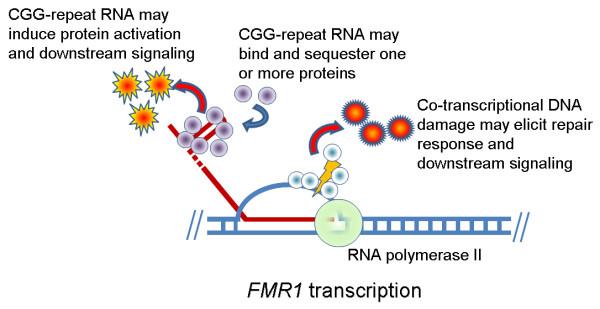
“mechanisms cannot be discounted [68] (Figure 3).”
BackgroundSelf-citationPacey, L. K. K., Heximer, S. P., & Hampson, D. R. (2009) · Molecular Pharmacology · doi:10.1124/mol.109.056127 · Cited by 133 · cited 1×
“Baclofen has been shown to be efficacious in treating hyperactivity [157], marble burying (Seaside Therapeutics, unpublished data), and audiogenic seizure phenotypes in fragile X KO mice [158].”
BackgroundHoeft, F., Carter, J. C., Lightbody, A. A., Cody Hazlett, H., Piven, J., & Reiss, A. L. (2010) · Proceedings of the National Academy of Sciences · doi:10.1073/pnas.1002762107 · Cited by 130 · cited 2×
“Those authors also documented enhanced white matter volume, particularly of the striatal-frontal regions, becoming more dramatic in the early years ( 1 to 3 years) and suggesting axonal pathology as opposed to secondary connectional dysregulation [62].”
BackgroundFMRP RNA targets: identification and validation
Darnell, J. C., Mostovetsky, O., & Darnell, R. B. (2005) · Genes, Brain and Behavior · doi:10.1111/j.1601-183x.2005.00144.x · Cited by 130 · cited 1×
“strated linkage between FMRP and many proteins that are related to autism, including neuroligin 3 and 4, neurorexin, PDP (postsynaptic density protein) 95, CYFIP (cytoplasmic FMR1 interacting protein) 1 and 2, SHANK (Src homology 3 and multiple ankyrin repeat domains)3, Arc, PTEN (phosphatase and tensin homolog), MAPK…”
BackgroundA study of the distributional characteristics of FMR1 transcript levels in 238 individuals
He, W., Yadav-Shah, M., Sherman, S. L., & Allen, E. G. (2004) · Human Genetics · doi:10.1007/s00439-004-1086-x · Cited by 125 · cited 1×
“However, although carriers of premutation alleles have elevated FMR1 mRNA [27,80,81], the strongest argument for an RNA-based toxicity mechanism in both FXTAS and FXPOI [82-84], is that these clinical syndromes are limited to a premutation repeat range, where the gene is active; that is, low levels (or absence) of FMR…”
BackgroundLearning-disabled Males With a Fragile X CGG Expansion in the Upper Premutation Size Range
Hagerman, R. J., Staley, L. W., O'Conner, R., Lugenbeel, K., Nelson, D., McLean, S. D., & Taylor, A. (1996) · Pediatrics · doi:10.1542/peds.97.1.122 · Cited by 124 · cited 1×
“Although autism and other clinical involvement in a subgroup of young premutation carriers was initially thought to be only an occasional occurrence [26,103-106], research cohorts demonstrated that approximately 14% of boys and 5% of girls with a premutation had ASD [107].”
ResultSelf-citationCo‐occurring diagnoses among FMR1 premutation allele carriers
Hunter, J., Rohr, J., & Sherman, S. (2010) · Clinical Genetics · doi:10.1111/j.1399-0004.2009.01317.x · Cited by 121 · cited 4×
“Carriers of premutation alleles were generally consid- ered to be clinically uninvolved until premature ovarian failure, recently renamed FX-associated primary ovarian insufficiency (FXPOI), was reported [18].”
BackgroundInfluentialLoesch, D. Z., Bui, Q. M., Grigsby, J., Butler, E., Epstein, J., Huggins, R. M., Taylor, A. K., & Hagerman, R. J. (2003) · Neuropsychology · doi:10.1037/0894-4105.17.4.646 · Cited by 121 · cited 2×
“[118] found no neuropsychological deficits in 54 men with a premutation who were aged under 50 years, although the Behavioral Dyscontrol Scale (BDS) [113,119], which was found to be most sensitive to executive dysfunction in older male carriers [112], was not used.”
BackgroundMethodSelf-citationHanda, V. (2003) · Nucleic Acids Research · doi:10.1093/nar/gkg818 · Cited by 119 · cited 1×
“A range of studies on the adverse consequences of expressing the expanded CGG repeat in human, animal and cell models has helped to establish an RNA toxicity model involving a toxic gain of function of premutation FMR1 RNA [69-79].”
BackgroundAutistic Spectrum Disorder and the Fragile X Premutation
GOODLIN-JONES, B. L., TASSONE, F., GANE, L. W., & HAGERMAN, R. J. (2004) · Journal of Developmental & Behavioral Pediatrics · doi:10.1097/00004703-200412000-00002 · Cited by 117 · cited 2×
“Although autism and other clinical involvement in a subgroup of young premutation carriers was initially thought to be only an occasional occurrence [26,103-106], research cohorts demonstrated that approximately 14% of boys and 5% of girls with a premutation had ASD [107].”
BackgroundResultSelf-citationHessl, D. R., Tassone, F., Cordeiro, L., Koldewyn, K., McCormick, C. E. B., Green, C. C., Wegelin, J. A., Yuhas, J., & Hagerman, R. J. (2007) · Journal of Autism and Developmental Disorders · doi:10.1007/s10803-007-0365-5 · Cited by 116 · cited 1×
“Background genetic effects include additional pathological mutations (FXS has been reported with sex chromosomal disorders, Down syndrome, Tourette syndrome and other conditions [28, 29, 36], allelic variants [37], or gene expression changes [38]).”
BackgroundSelf-citationThe FMR1 gene and fragile X‐associated tremor/ataxia syndrome
Brouwer, J. R., Willemsen, R., & Oostra, B. A. (2009) · American Journal of Medical Genetics Part B: Neuropsychiatric Genetics · doi:10.1002/ajmg.b.30910 · Cited by 113 · cited 2×
“RNA Toxicity and the Premutation Carrier The discovery of the neurodegenerative disorder, FXTAS, in older adult carriers of premutation alleles, coupled with increased FMR1 transcriptional activity in the premutation range, led to the recognition of an entirely distinct pathogenic mechanism associated with the FMR1 ge…”
BackgroundHazlett, H. C., Poe, M. D., Lightbody, A. A., Gerig, G., MacFall, J. R., Ross, A. K., Provenzale, J., Martin, A., Reiss, A. L., & Piven, J. (2009) · Journal of Neurodevelopmental Disorders · doi:10.1007/s11689-009-9009-8 · Cited by 108 · cited 2×
“Those with FXS have an enlarged caudate compared with typically developing individuals and those with autism, whereas those with autism have a larger amygdala compared with FXS or controls [58].”
BackgroundLaxer, K., Blum, D., Abou‐Khalil, B. W., Morrell, M. J., Lee, D. A., Data, J. L., Monaghan, E. P., & the Ganaxolone Presurgical Study Group (2000) · Epilepsia · doi:10.1111/j.1528-1157.2000.tb00324.x · Cited by 107 · cited 1×
“Human trials indicate that ganaxolone is well tolerated and that it may be efficacious in the treatment of diverse forms of epilepsy in children and adults [176-180].”
BackgroundUtari, A., Chonchaiya, W., Rivera, S. M., Schneider, A., Hagerman, R. J., Faradz, S. M. H., Ethell, I. M., & Nguyen, D. V. (2010) · American Journal on Intellectual and Developmental Disabilities · doi:10.1352/1944-7558-115.5.433 · Cited by 105 · cited 1×
“Off-label use of minocycline to treat 50 individuals with FXS resulted in two-thirds of families noticing positive improvements in their child’s language, attention, and/or behavioral improvements while on the medication [182].”
BackgroundSelf-citationLifespan changes in working memory in fragile X premutation males
Cornish, K. M., Kogan, C. S., Li, L., Turk, J., Jacquemont, S., & Hagerman, R. J. (2009) · Brain and Cognition · doi:10.1016/j.bandc.2008.11.006 · Cited by 104 · cited 1×
“Studies have detected deficits in executive function in a subgroup of males with a premutation, but not in the corresponding group of females [112-117].”
BackgroundSelf-citationDahlhaus, R., & El-Husseini, A. (2010) · Behavioural Brain Research · doi:10.1016/j.bbr.2009.11.019 · Cited by 102 · cited 1×
“strated linkage between FMRP and many proteins that are related to autism, including neuroligin 3 and 4, neurorexin, PDP (postsynaptic density protein) 95, CYFIP (cytoplasmic FMR1 interacting protein) 1 and 2, SHANK (Src homology 3 and multiple ankyrin repeat domains)3, Arc, PTEN (phosphatase and tensin homolog), MAPK…”
BackgroundEctopic expression of CGG containing mRNA is neurotoxic in mammals
Hashem, V., Galloway, J. N., Mori, M., Willemsen, R., Oostra, B. A., Paylor, R., & Nelson, D. L. (2009) · Human Molecular Genetics · doi:10.1093/hmg/ddp182 · Cited by 102 · cited 1×
“A range of studies on the adverse consequences of expressing the expanded CGG repeat in human, animal and cell models has helped to establish an RNA toxicity model involving a toxic gain of function of premutation FMR1 RNA [69-79].”
BackgroundLewis, P., Abbeduto, L., Murphy, M., Richmond, E., Giles, N., Bruno, L., Schroeder, S., Anderson, J., & Orsmond, G. (2006) · Journal of Intellectual Disability Research · doi:10.1111/j.1365-2788.2006.00907.x · Cited by 100 · cited 2×
“strated linkage between FMRP and many proteins that are related to autism, including neuroligin 3 and 4, neurorexin, PDP (postsynaptic density protein) 95, CYFIP (cytoplasmic FMR1 interacting protein) 1 and 2, SHANK (Src homology 3 and multiple ankyrin repeat domains)3, Arc, PTEN (phosphatase and tensin homolog), MAPK…”
BackgroundBilousova, T. V., Rusakov, D. A., Ethell, D. W., & Ethell, I. M. (2006) · Journal of Neurochemistry · doi:10.1111/j.1471-4159.2006.03701.x · Cited by 98 · cited 1×
“MMPs are enzymes involved in synaptic plasticity, and are associated with immature dendritic spine morphology [140,181]; MMP-9 is elevated in FXS.”
BackgroundKenet, T., Froemke, R. C., Schreiner, C. E., Pessah, I. N., & Merzenich, M. M. (2007) · Proceedings of the National Academy of Sciences · doi:10.1073/pnas.0701944104 · Cited by 97 · cited 1×
“strated linkage between FMRP and many proteins that are related to autism, including neuroligin 3 and 4, neurorexin, PDP (postsynaptic density protein) 95, CYFIP (cytoplasmic FMR1 interacting protein) 1 and 2, SHANK (Src homology 3 and multiple ankyrin repeat domains)3, Arc, PTEN (phosphatase and tensin homolog), MAPK…”
BackgroundHoeft, F., Hernandez, A., Parthasarathy, S., Watson, C. L., Hall, S. S., & Reiss, A. L. (2007) · Human Brain Mapping · doi:10.1002/hbm.20406 · Cited by 96 · cited 1×
“The level of FMRP is correlated with the degree of clinical involvement including physical, cognitive and structural/functional brain involvement [5-10].”
BackgroundIsaacson, J. S., & Hille, B. (1997) · Neuron · doi:10.1016/s0896-6273(01)80053-2 · Cited by 91 · cited 1×
“g Aminobutyric acid (GABA)B receptor agonists, such as baclofen, inhibit both presynaptic release of glutamate and postsynaptic transmission and/or intracellular signaling downstream from mGluR5 [154-156].”
BackgroundTargeted Treatments for Cognitive and Neurodevelopmental Disorders in Tuberous Sclerosis Complex
de Vries, P. J. (2010) · Neurotherapeutics · doi:10.1016/j.nurt.2010.05.001 · Cited by 91 · cited 1×
“The mTOR pathway is dysregulated in several other genetic disorders that are associated with autism, such as tuberous sclerosis (TS) [57].”
BackgroundGene, brain, and behavior relationships in fragile X syndrome: Evidence from neuroimaging studies
Lightbody, A. A., & Reiss, A. L. (2009) · Developmental Disabilities Research Reviews · doi:10.1002/ddrr.77 · Cited by 85 · cited 1×
“strated linkage between FMRP and many proteins that are related to autism, including neuroligin 3 and 4, neurorexin, PDP (postsynaptic density protein) 95, CYFIP (cytoplasmic FMR1 interacting protein) 1 and 2, SHANK (Src homology 3 and multiple ankyrin repeat domains)3, Arc, PTEN (phosphatase and tensin homolog), MAPK…”
BackgroundHashimoto, R.-I., Backer, K. C., Tassone, F., Hagerman, R. J., & Rivera, S. M. (2011) · Journal of Psychiatric Research · doi:10.1016/j.jpsychires.2010.04.030 · Cited by 85 · cited 16×
“Although numerous studies point to RNA toxicity as the underlying pathogenic trigger in fragile X-associated tremor ataxia syndrome (FXTAS), the specific mechanism for such toxicity is not known.”
BackgroundInfluentialSelf-citationHunter, J. E., Allen, E. G., Abramowitz, A. J., Rusin, M. J., Leslie, M., Novak, G., Hamilton, D., Shubeck, L., Charen, K. H., & Sherman, S. L. (2008) · The American Journal of Human Genetics · doi:10.1016/j.ajhg.2008.10.021 · Cited by 84
Diffusion tensor imaging in male premutation carriers of the fragile X mental retardation gene
Hashimoto, R., Srivastava, S., Tassone, F., Hagerman, R. J., & Rivera, S. M. (2011) · Movement Disorders · doi:10.1002/mds.23646 · Cited by 80
Self-citationClinical and Neuropathologic Findings in a Woman With the FMR1 Premutation and Multiple Sclerosis
Greco, C., Tassone, F., Garcia-Arocena, D., Tartaglia, N. R., Coffey, S. M., Vartanian, T. K., Brunberg, J. A., Hagerman, P. J., & Hagerman, R. J. (2008) · Archives of Neurology · doi:10.1001/archneur.65.8.1114 · Cited by 78 · cited 15×
“Although numerous studies point to RNA toxicity as the underlying pathogenic trigger in fragile X-associated tremor ataxia syndrome (FXTAS), the specific mechanism for such toxicity is not known.”
BackgroundInfluentialSelf-citationSecondary medical diagnosis in fragile X syndrome with and without autism spectrum disorder
García‐Nonell, C., Ratera, E. R., Harris, S., Hessl, D., Ono, M. Y., Tartaglia, N., Marvin, E., Tassone, F., & Hagerman, R. J. (2008) · American Journal of Medical Genetics Part A · doi:10.1002/ajmg.a.32290 · Cited by 76 · cited 3×
“strated linkage between FMRP and many proteins that are related to autism, including neuroligin 3 and 4, neurorexin, PDP (postsynaptic density protein) 95, CYFIP (cytoplasmic FMR1 interacting protein) 1 and 2, SHANK (Src homology 3 and multiple ankyrin repeat domains)3, Arc, PTEN (phosphatase and tensin homolog), MAPK…”
BackgroundSelf-citationFibroblast phenotype in male carriers of FMR1 premutation alleles
Garcia-Arocena, D., Yang, J. E., Brouwer, J. R., Tassone, F., Iwahashi, C., Berry-Kravis, E. M., Goetz, C. G., Sumis, A. M., Zhou, L., Nguyen, D. V., et al. (2010) · Human Molecular Genetics · doi:10.1093/hmg/ddp497 · Cited by 76 · cited 1×
“[88] observed abnormal lamin A/C architecture, with loss of ring-like nuclear staining, in embryonic fibroblasts from the KI mouse.”
BackgroundSelf-citationMcConkie‐Rosell, A., Abrams, L., Finucane, B., Cronister, A., Gane, L. W., Coffey, S. M., Sherman, S., Nelson, L. M., Berry‐Kravis, E., Hessl, D., et al. (2007) · Journal of Genetic Counseling · doi:10.1007/s10897-007-9099-y · Cited by 76 · cited 2×
“strated linkage between FMRP and many proteins that are related to autism, including neuroligin 3 and 4, neurorexin, PDP (postsynaptic density protein) 95, CYFIP (cytoplasmic FMR1 interacting protein) 1 and 2, SHANK (Src homology 3 and multiple ankyrin repeat domains)3, Arc, PTEN (phosphatase and tensin homolog), MAPK…”
BackgroundSelf-citationProgressive spatial processing deficits in a mouse model of the fragile X premutation.
Hunsaker, M. R., Wenzel, H. J., Willemsen, R., & Berman, R. F. (2009) · Behavioral Neuroscience · doi:10.1037/a0017616 · Cited by 75 · cited 1×
“In behavioral studies with the KI mice, there were progressive deficits in spatial processing (but no motor involvement) in mice as young as 12 weeks [70,89].”
BackgroundUtari, A., Adams, E., Berry-Kravis, E., Chavez, A., Scaggs, F., Ngotran, L., Boyd, A., Hessl, D., Gane, L. W., Tassone, F., et al. (2010) · Journal of Neurodevelopmental Disorders · doi:10.1007/s11689-010-9047-2 · Cited by 73 · cited 1×
“Therefore, FMRP is important throughout life and there is a high incidence of motor problems, including Parkinson disease (PD), with aging in those with FXS [133].”
BackgroundSelf-citationFragile X–Associated Tremor/Ataxia Syndrome: An Aging Face of the Fragile X Gene
Amiri, K., Hagerman, R. J., & Hagerman, P. J. (2008) · Archives of Neurology · doi:10.1001/archneurol.2007.30 · Cited by 73 · cited 1×
“coupled with increased FMR1 transcriptional activity in the premutation range, led to the recognition of an entirely distinct pathogenic mechanism associated with the FMR1 gene: RNA toxicity [64-68].”
BackgroundSelf-citationTransmitting males and carrier females in fragile X–revisited
Loesch, D. Z., Hay, D. A., & Mulley, J. (1994) · American Journal of Medical Genetics · doi:10.1002/ajmg.1320510418 · Cited by 73 · cited 1×
“Although autism and other clinical involvement in a subgroup of young premutation carriers was initially thought to be only an occasional occurrence [26,103-106], research cohorts demonstrated that approximately 14% of boys and 5% of girls with a premutation had ASD [107].”
ResultInvolvement of cholinergic and gabaergic systems in the fragile X knockout mice
D’Antuono, M., Merlo, D., & Avoli, M. (2003) · Neuroscience · doi:10.1016/s0306-4522(03)00103-9 · Cited by 72 · cited 1×
“in brain slices from these animals exhibit impaired GABAA receptor-mediated inhibitory function [174].”
BackgroundFMR1 premutation in females diagnosed with multiple sclerosis
Zhang, L., Coffey, S. M., Lua, L. L., Greco, C., Schafer, J., Brunberg, J. A., Borodyanskaya, M., Agius, M. A., Apperson, M., Leehey, M. A., et al. (2009) · Journal of Neurology Neurosurgery & Psychiatry · doi:10.1136/jnnp.2008.160960 · Cited by 70 · cited 15×
“Although numerous studies point to RNA toxicity as the underlying pathogenic trigger in fragile X-associated tremor ataxia syndrome (FXTAS), the specific mechanism for such toxicity is not known.”
BackgroundInfluentialSelf-citationLoesch, D. Z., Cook, M. J., Litewka, L., Gould, E., Churchyard, A., Tassone, F., Slater, H., & Storey, E. (2007) · Journal of Medical Genetics · doi:10.1136/jmg.2007.054171 · Cited by 62 · cited 16×
“Although numerous studies point to RNA toxicity as the underlying pathogenic trigger in fragile X-associated tremor ataxia syndrome (FXTAS), the specific mechanism for such toxicity is not known.”
BackgroundInfluentialEvidence of depressive symptoms in fragile-X syndrome premutated females
Rodriguez-Revenga, L., Madrigal, I., Alegret, M., Santos, M., & Milà, M. (2008) · Psychiatric Genetics · doi:10.1097/ypg.0b013e3282f97e0b · Cited by 58 · cited 1×
“In contrast to the neuropsychological testing, standardized emotional assessments have demonstrated problems with anxiety and/or depression in both males and females with a premutation, both with and without FXTAS, compared with controls at multiple centers [22,120-124] An emerging phenotype includes the finding of au…”
ResultSohn, J., Lee, D., Cho, H., Lim, W., Shin, H., Lee, S., & Ho, W. (2007) · The Journal of Physiology · doi:10.1113/jphysiol.2006.125914 · Cited by 52 · cited 1×
“g Aminobutyric acid (GABA)B receptor agonists, such as baclofen, inhibit both presynaptic release of glutamate and postsynaptic transmission and/or intracellular signaling downstream from mGluR5 [154-156].”
BackgroundMouse Models of Fragile X-Associated Tremor Ataxia
Berman, R. F., & Willemsen, R. (2009) · Journal of Investigative Medicine · doi:10.2310/jim.0b013e3181af59d6 · Cited by 52 · cited 2×
“A range of studies on the adverse consequences of expressing the expanded CGG repeat in human, animal and cell models has helped to establish an RNA toxicity model involving a toxic gain of function of premutation FMR1 RNA [69-79].”
BackgroundFragile X-associated tremor/ataxia syndrome presenting in a woman after chemotherapy
O'Dwyer, J. P., Clabby, C., Crown, J. P., Barton, D. E., & Hutchinson, M. (2005) · Neurology · doi:10.1212/01.wnl.0000168865.36352.53 · Cited by 49 · cited 1×
“We hypothesize that premutation neurons are more vulnerable to environmental toxins, and clinical case reports appear to support this notion [42, 45].”
BackgroundNeurosteroids: Endogenous Modulators of Seizure Susceptibility
Rogawski, M. A., & Reddy, D. S. (2004) · Cited by 49
Learning and memory in theFMR1 knockout mouse
Fisch, G. S., Hao, H. K., Bakker, C., & Oostra, B. A. (1999) · American Journal of Medical Genetics · doi:10.1002/(sici)1096-8628(19990528)84:3<277::aid-ajmg22>3.0.co;2-w · Cited by 47
Self-citationFragile-X syndrome: Diagnosis, treatment and research
Reiss, A. L. (1993) · Europe PMC (PubMed Central) · Cited by 46
Argonaute-2-dependent rescue of a Drosophila model of FXTAS by FRAXE premutation repeat
Sofola-Adesakin, O., Jin, P., Botas, J., & Nelson, D. L. (2007) · Human Molecular Genetics · doi:10.1093/hmg/ddm186 · Cited by 45 · cited 1×
“A range of studies on the adverse consequences of expressing the expanded CGG repeat in human, animal and cell models has helped to establish an RNA toxicity model involving a toxic gain of function of premutation FMR1 RNA [69-79].”
BackgroundEarly onset of neurological symptoms in fragile X premutation carriers exposed to neurotoxins
Paul, R., Pessah, I. N., Gane, L., Ono, M., Hagerman, P. J., Brunberg, J. A., Tassone, F., Bourgeois, J. A., Adams, P. E., & Nguyen, D. V. (2010) · NeuroToxicology · doi:10.1016/j.neuro.2010.04.002 · Cited by 43 · cited 1×
“strated linkage between FMRP and many proteins that are related to autism, including neuroligin 3 and 4, neurorexin, PDP (postsynaptic density protein) 95, CYFIP (cytoplasmic FMR1 interacting protein) 1 and 2, SHANK (Src homology 3 and multiple ankyrin repeat domains)3, Arc, PTEN (phosphatase and tensin homolog), MAPK…”
BackgroundSelf-citationEarly Acceleration of Head Circumference in Children with Fragile X Syndrome and Autism
Chiu, S., Wegelin, J. A., Blank, J., Jenkins, M., Day, J., Hessl, D., Tassone, F., & Hagerman, R. (2007) · Journal of Developmental & Behavioral Pediatrics · doi:10.1097/01.dbp.0000257518.60083.2d · Cited by 38 · cited 1×
“broad foreheads described by Butler and colleagues; this characteristic is hypothesized to be related to the downregulation of PTEN that occurs in FXS [47,52].”
BackgroundSelf-citation(2004) · CRC Press eBooks · doi:10.3109/9780203021934 · Cited by 34
Chonchaiya, W., Tassone, F., Ashwood, P., Hessl, D., Schneider, A., Campos, L., Nguyen, D. V., & Hagerman, R. J. (2010) · Human Genetics · doi:10.1007/s00439-010-0882-8 · Cited by 30
Self-citationKogan, C. S., & Cornish, K. M. (2010) · Brain and Cognition · doi:10.1016/j.bandc.2010.05.008 · Cited by 29 · cited 1×
“Studies have detected deficits in executive function in a subgroup of males with a premutation, but not in the corresponding group of females [112-117].”
BackgroundExpanded Clinical Phenotype of Women With the FMR1 Premutation
Dungan, J. S. (2009) · Yearbook of Obstetrics Gynecology and Women s Health · doi:10.1016/s1090-798x(09)79147-7 · Cited by 25
Dominant Non-Coding Repeat Expansions in Human Disease
Dick, K. A., Margolis, J., Day, J., & Ranum, L. P. W. (2006) · KARGER eBooks · doi:10.1159/000092501 · Cited by 23 · cited 1×
“coupled with increased FMR1 transcriptional activity in the premutation range, led to the recognition of an entirely distinct pathogenic mechanism associated with the FMR1 gene: RNA toxicity [64-68].”
BackgroundRNA-mediated pathogenesis in fragile X-associated disorders
Tan, H., He, L., & Jin, P. (2009) · Neuroscience Letters · doi:10.1016/j.neulet.2009.07.053 · Cited by 22 · cited 2×
“coupled with increased FMR1 transcriptional activity in the premutation range, led to the recognition of an entirely distinct pathogenic mechanism associated with the FMR1 gene: RNA toxicity [64-68].”
BackgroundZupan, B., & Toth, M. (2008) · The Journal of Pharmacology and Experimental Therapeutics · doi:10.1124/jpet.108.143990 · Cited by 19 · cited 1×
“Baclofen has been shown to be efficacious in treating hyperactivity [157], marble burying (Seaside Therapeutics, unpublished data) and audiogenic seizure phenotypes in FX KO mice [158].”
BackgroundArousal Modulation in Females with Fragile X or Turner Syndrome
Roberts, J. E., Mazzocco, M. M. M., Murphy, M. M., & Hoehn‐Saric, R. (2007) · Journal of Autism and Developmental Disorders · doi:10.1007/s10803-007-0356-6 · Cited by 19 · cited 1×
“In contrast to the neuropsychological testing, standardized emotional assessments have demonstrated problems with anxiety and/or depression in both males and females with a premutation, both with and without FXTAS, compared with controls at multiple centers [22,120-124] An emerging phenotype includes the finding of au…”
ResultClinical Report: A Male With Down Syndrome, Fragile X Syndrome, and Autism
Stevens, L. A., Tartaglia, N. R., Hagerman, R. J., & Riley, K. (2010) · Journal of Developmental & Behavioral Pediatrics · doi:10.1097/dbp.0b013e3181d5aa56 · Cited by 7
Self-citationLightbody, A. A., Piven, J., Carter, J. C., et al. (2020) · Carolina Digital Repository (University of North Carolina at Chapel Hill) · doi:10.17615/mnv1-2q02 · Cited by 4
Irwin (2001) · doi:10.1002/1096-8628(20010115)98:2<161::aid-ajmg1025>3.0.co;2-b · cited 1×
“Both FMRP and mGluRs play important roles in synaptogenesis and synaptic plasticity and in the absence of FMRP there are long, thin and immature dendritic spines in both human and animal models of FXS [137-142].”
BackgroundMiller (1999) · doi:10.1002/(sici)1096-8628(19990402)83:4<268::aid-ajmg7>3.0.co;2-k · cited 1×
“The level of FMRP is correlated with the degree of clinical involvement including physical, cognitive and structural/functional brain involvement [5-10].”
BackgroundSelf-citation
Research works printed but not linked: 6
- [53]Nishimura Y Martin CL Vazquez-Lopez A Spence SJ Alvarez-Retuerto AI Sigman M Steindler C Pellegrini S Schanen NC Warren ST Geschwind DH Genome-wide expression profiling of lymphoblastoid cell lines distinguishes different forms of autism and reveals shared pathways Hum Mol Genet 2007 16 1682 1698 10.1093/hmg/ddm116 17519220 · DOI · Paper page
- [95]Sellier C Hagerman P Willemsen R Charlet-Berguerand N DROSHA/DGCR8 sequestration by expanded CGG repeats leads to global micro-RNA processing alteration in FXTAS patients [abstract] 12th International Fragile X Conference; July 21-25; Detroit, MI 2010
- [106]Aziz M Stathopulu E Callias M Taylor C Turk J Oostra B Willemsen R Patton M Clinical features of boys with fragile X premutations and intermediate alleles Am J Med Genet 2003 121B 119 127 10.1002/ajmg.b.20030 12898586 · DOI · Paper page
- [108]Farzin F Perry H Hessl D Loesch D Cohen J Bacalman S Gane L Tassone F Hagerman P Hagerman R Autism spectrum disorders and attention-deficit/hyperactivity disorder in boys with the fragile X premutation J Dev Behav Pediatr 2006 27 S137 144 10.1097/00004703-200604002-00012 16685180 · DOI · Paper page
- [165]Miyashiro KY Beckel-Mitchener A Purk TP Becker KG Barret T Liu L Carbonetto S Weiler IJ Greenough WT Eberwine J RNA cargoes associating with FMRP reveal deficits in cellular functioning in Fmr1 null mice Neuron 2003 37 417 431 10.1016/S0896-6273(03)00034-5 12575950 · DOI · Paper page
- [175]Kooy F Heulens I D'Hulst C Van der Aa N Bagni C Hassan B De Deyn P The GABAA receptor as a potential target for therapy of the fragile X syndrome [abstract] NFXF 12th International FX Conference; July 21 - 25; Detroit, MI 2010
Cited by
Autism spectrum disorder: neuropathology and animal models
Varghese, M., Keshav, N., Jacot-Descombes, S., Warda, T., Wicinski, B., Dickstein, D. L., Harony-Nicolas, H., De Rubeis, S., Drapeau, E., Buxbaum, J. D., et al. (2017) · Acta Neuropathologica · doi:10.1007/s00401-017-1736-4 · Cited by 536
Using Whole-Exome Sequencing to Identify Inherited Causes of Autism
Yu, T. W., Chahrour, M. H., Coulter, M. E., Jiralerspong, S., Okamura-Ikeda, K., Ataman, B., Schmitz-Abe, K., Harmin, D. A., Adli, M., Malik, A. N., et al. (2013) · Neuron · doi:10.1016/j.neuron.2012.11.002 · Cited by 442
“Sense (+, pin See also Table S5. which are near fully penetrant for syndromic features of Fragile X or Tuberous Sclerosis, respectively, but only partially penetrant for ASD (Hagerman et al., 2010; Wiznitzer, 2004).”
BackgroundThe dendritic tree and brain disorders
Kulkarni, V. A., & Firestein, B. L. (2012) · Molecular and Cellular Neuroscience · doi:10.1016/j.mcn.2012.03.005 · Cited by 390
Circuit level defects in the developing neocortex of fragile X mice
Gonçalves, J. T., Anstey, J. E., Golshani, P., & Portera-Cailliau, C. (2013) · Nature Neuroscience · doi:10.1038/nn.3415 · Cited by 279
Persico, A. M., & Napolioni, V. (2013) · Behavioural Brain Research · doi:10.1016/j.bbr.2013.06.012 · Cited by 238
“Autism prevalence in FXS is approximately 30% and PDD-NOS ccurs in an additional 30% of cases [22].”
BackgroundInfluential
Metadata
- Authors
- Hagerman, R., Hoem, G., & Hagerman, P.
- Affiliations
- University of California Davis Medical Center (US)
- UiT The Arctic University of Norway (NO)
- University of California, Davis (US)
- Corresponding author
- Hagerman, Randi
- Venue
- Molecular Autism
- Published
- 2010
- Volume
- 1
- Issue
- 1
- Pages
- 12
- ISSN
- 2040-2392 (ISSN-L)
- PMC
- PMC2954865
- OpenAlex
- W2099899772
- Cited by
- 247
- References
- 175
- Citations by year
- 2026: 4 · 2025: 10 · 2024: 7 · 2023: 4 · 2022: 12 · 2021: 19 · 2020: 5 · 2019: 12 · 2018: 8 · 2017: 14 · 2016: 22 · 2015: 16 · 2014: 33 · 2013: 32 · 2012: 28
- FWCI
- 14.56
- Type
- journal article
- Language
- en
- Open access
- gold
- doi.org
- Licence
- cc-by
- Locations
- Molecular Autism (publishedVersion, cc-by)
- PubMed Central (publishedVersion, cc-by)
- PubMed (publishedVersion)
- DOAJ (DOAJ: Directory of Open Access Journals) (submittedVersion)
- eScholarship (California Digital Library) (submittedVersion)
- Funders
- Norges Forskningsråd
- National Institute on Aging (RL1AG032115)
- National Institute of Dental and Craniofacial Research (UL1DE019583)
- National Center for Research Resources (HD02274, AG032115, AG032119, HD036071, 90DD05969, UL1RR024146, DE019583, DA024854)
- Eunice Kennedy Shriver National Institute of Child Health and Human Development (R01HD036071)
- Topics
- Life Sciences › Biochemistry, Genetics and Molecular Biology › Genetics › Genetics and Neurodevelopmental Disorders
- Life Sciences › Neuroscience › Cognitive Neuroscience › Autism Spectrum Disorder Research
- Life Sciences › Neuroscience › Cellular and Molecular Neuroscience › Genetic Neurodegenerative Diseases
- Keywords
- fragile X syndrome, autism spectrum disorder, FMR1 gene, CGG repeat expansion, FMRP, fragile X premutation, fragile X-associated tremor/ataxia syndrome, RNA toxicity, synaptic development, mitochondrial dysfunction, GABAA receptor, targeted therapy, pervasive developmental disorders
About these checks
Registry, retraction, Cites and statistics results are computed, not judged, with one exception: a printed reference that no index lists is read once by a model before it counts as a citation error. Claims are extracted by a model and kept only when their quote appears verbatim in the text; each cited source is then checked, with a model’s help, for whether it says what the claim relies on. Those verdicts can be wrong — read the claim’s quote and the cited source before relying on one.
Statistics and arithmetic are recomputed, not judged.
Confidence bands are shown only for fields calibrated on our annotated test set. None is calibrated yet, so no band is shown.
What counts as a claim ›How we measure confidence ›How we check this ›
Are you an author, or do you see a problem with this page? Request a review
Data sources
Bibliographic data: Semantic Scholar, OpenAlex, Crossref.
Contains information from the Semantic Scholar Academic Graph Datasets, made available under the ODC Attribution License (ODC-BY 1.0).
Semantic Scholar’s data is described in: Kinney, R., et al. (2023). The Semantic Scholar Open Data Platform. arXiv:2301.10140.
