

Prevalence of autism in mainland China, Hong Kong and Taiwan: a systematic review and meta-analysis
Open accessThe DOI matches its Crossref record; 64 of the 65 references it cites were found in a registry or an index.
Abstract
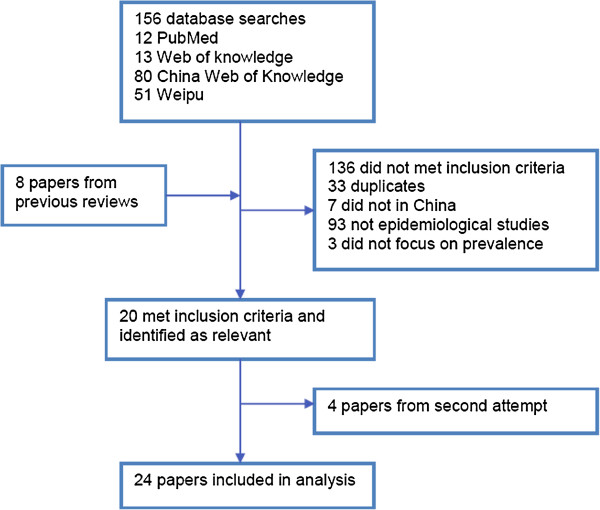
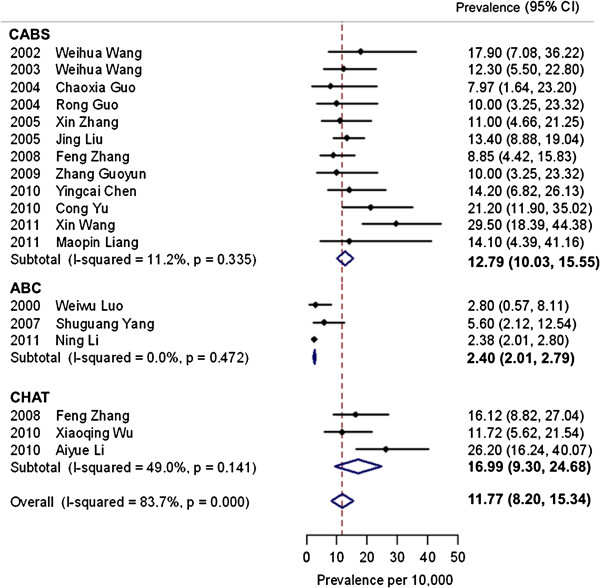
BACKGROUND: The prevalence of autism spectrum conditions (ASC) is 1% in developed countries, but little data are available from mainland China, Hong Kong and Taiwan. This study synthesizes evidence relating to the prevalence of ASC in these areas and assesses the effects of research methodology on prevalence estimates. METHODS: Systematic literature searches were conducted in PubMed, Web of Knowledge, China Web of Knowledge and Weipu databases, as well as relevant papers published from 1987 to 2011, reporting prevalence estimates of ASC or childhood autism in mainland China, Hong Kong and Taiwan. Summary estimates of prevalence were calculated with a random effects model. The effects of research methodology on the prevalence estimates were assessed using a meta-regression model. RESULTS: There were 25 studies eligible for review, 18 of which were suitable for inclusion in a meta-analysis. Pooled prevalence of childhood autism was 11.8 per 10,000 individuals (95% confidence interval (CI): 8.2, 15.3) in mainland China. Pooled prevalence of ASC was 26.6 per 10,000 (95% CI: 18.5, 34.6) in three areas. Substantial heterogeneity was identified between studies (I2>75%). The prevalence estimate of childhood autism was most strongly associated with the choice of screening instrument. After adjustment for age group, the odds ratio for prevalence estimates when using the Autism Behavior Checklist (ABC) as the screening instrument compared with those using the Clancy Autism Behavior Scale (CABS) was 0.29 (95% CI: 0.12, 0.69), and 1.79 (95% CI: 0.70, 4.55; P= 0.20) when using the Checklist for Autism in Toddlers (CHAT) compared to the CABS. CONCLUSIONS: The available studies investigating the prevalence of ASC in China, Hong Kong and Taiwan have focused mainly on childhood autism rather than the whole spectrum. The prevalence estimates are lower than estimates from developed countries. Studies using more recently developed screening instruments reported higher prevalence than older ones. However, available studies have methodological weaknesses and therefore these results lack comparability with those from developed countries. Our findings indicate a potential under-diagnosis and under-detection of ASC in mainland China, Hong Kong and Taiwan, and a need to adopt more advanced methods for research of ASC in these areas.
Overview
The claims and statistics of this paper haven’t been checked yet.
Free: it reads the open-access text and checks the first 5 claims that cite a source we can check. Create a free account to check every claim.
Integrity signals
Registry
Cites
Statistics
Figures
Verification
Claims the paper makes
The claims and statistics of this paper haven’t been checked yet.
Free: it reads the open-access text and checks the first 5 claims that cite a source we can check. Create a free account to check every claim.
Claims other papers make about this one
Each is checked against this paper’s own text: does it say what the citing paper says it does?
The source backs part of the claim, not all of it — or backs it for a different population, condition or comparison.
In the citing paper
“There are many factors contributing to the geographical variation in prevalence, including varying exposure to risk factors, cultural variation in behavioural norms, validity and choice of screening and diagnostic tools, participants' responses to survey questions, or even their choice to participate.30, 31”
From The global epidemiology and health burden of the autism spectrum: findings from the Global Burden of Disease Study 2021. (2025) · cites this paper as [30]
Experimental — accuracy not yet measured
Self-check
Percentages, sums and reported differences re-computed from the paper’s own numbers.
The self-check needs the paper’s full text.
Citations
Cites
Measuring inconsistency in meta-analyses
Higgins, J. P. T., Thompson, S. G., Deeks, J. J., & Altman, D. G. (2003) · BMJ · doi:10.1136/bmj.327.7414.557 · Cited by 63,139 · cited 1×
“The extent of heterogeneity was estimated by calculating I(2) (values of 25%, 50% and 75%, representing low, medium and high heterogeneity, respectively) [35].”
MethodCochrane Handbook for Systematic Reviews of Interventions: Cochrane Book Series
(2008) · doi:10.1002/9780470712184 · Cited by 25,048 · cited 1×
“Only the studies that conducted both screening and diagnostic assessment for childhood autism were examined using meta-regression, since the recommended minimum number of studies for inclusion in a meta-regression analysis is ten [66].”
MethodLord, C., Rutter, M., & Le Couteur, A. (1994) · Journal of Autism and Developmental Disorders · doi:10.1007/bf02172145 · Cited by 9,065 · cited 3×
“Abbreviations ADI-R: Autism Diagnostic Interview-Revised; ADOS: Autism Diagnostic Observation Schedule; AQ: Autism Spectrum Quotient; ASDASQ: Autism Spectrum Disorder in Adults Screening Questionnaire; CARS: Childhood Autism Rating Scale; CAST: Childhood Autism Spectrum Test; CCMD: Chinese Classification of Mental Dis…”
MethodCochrane Handbook for Systematic Reviews of Interventions Version 5.0.1. The Cochrane Collaboration
Higgins, J. P. T., Green, S. R., & Higgins, J. P. T. (2008) · Cited by 7,259
Clinical Epidemiology: A Basic Science for Clinical Medicine.
(1991) · Annals of Internal Medicine · doi:10.7326/0003-4819-114-9-825_9 · Cited by 3,476
Toward objective classification of childhood autism: Childhood Autism Rating Scale (CARS)
Schopler, E., Reichler, R. J., DeVellis, R. F., & Daly, K. (1980) · Journal of Autism and Developmental Disorders · doi:10.1007/bf02408436 · Cited by 2,432 · cited 8×
“Perry A, Condillac RA, Freeman NL, Dunn-Geier J, Belair J: Multi-site study of the childhood autism rating scale (CARS) in five clinical groups of young children.”
MethodInfluentialLord, C., Rutter, M., Goode, S., Heemsbergen, J., Jordan, H., Mawhood, L., & Schopler, E. (1989) · Journal of Autism and Developmental Disorders · doi:10.1007/bf02211841 · Cited by 2,030
Epidemiology of Pervasive Developmental Disorders
Fombonne, E. (2009) · Pediatric Research · doi:10.1203/pdr.0b013e31819e7203 · Cited by 1,971 · cited 2×
“In addition, the bibliographies of previous reviews were examined to identify published prevalence studies [1,22,34].”
Background
Research works printed but not linked: 8
- Dai S Jia M Tao K-t Help autistic children get away from loneliness 2008 Beijing: Chinese Women Press
- Chinese Society of Psychiatry Chinese Classification of Mental Disorders, 2nd edition, revised (CCMD-2-R) 1993 Shandong: Shandong Publishing House of Science and Technology
- Chinese Society of Psychiatry Chinese Classification of Mental Disorders, 3rd edition (CCMD-3) 2001 Shandong: Shandong Publishing House of Science and Technology
- Li A Zhang X Lv C Zhu Y Li Y Liu Y Analysis of behavioural characteristics of children with autism aged 1.5-3 years old Child Mental Health Journal 2010 24 215 218
- American Psychiatric Association (APA) Diagnostic and Statistical Manual of Mental Disorders, 3rd edition,revised (DSM-III-R) 1987 Washington DC: APA
- American Psychiatric Association (APA) Diagnostic and Statistical Manual of Mental Disorders, 4th edition (DSM-IV) 1994 Washington DC: APA
- Higgins JPT, Green S Cochrane Handbook for Systematic Reviews of Interventions 2011 Oxford: The Cochrane Collaboration
- Sun X Allison C Matthews F Zhang Z Auyeung B Baron-Cohen S Brayne C An exploration of the underdiagnosis of autism in mainland China using screening and diagnostic instruments 2012 Cambridge: Submitted for publication
Cited by
Items 101–200 of 201
Li, M., Zhao, S., Chen, W., Huang, T., & Chen, L. (2022) · Genes · doi:10.3390/genes13020239 · Cited by 16
Automatic Autism Spectrum Disorder Detection Using Everyday Vocalizations Captured by Smart Devices
Gong, Y., Yatawatte, H., Poellabauer, C., Schneider, S. L., & Latham, S. E. (2018) · ACM International Conference on Bioinformatics, Computational Biology, and Health Informatics (ACM-BCB) · doi:10.1145/3233547.3233574 · Cited by 16
“As a consequence, many ASD children remain undiagnosed or receive their diagnosis very late, which is reflected in the significant lower reported ASD prevalence rates in these regions compared to developed countries [2, 22, 25, 26, 28].”
BackgroundLuo, X., Xiong, Y., Gu, M., Huang, L., Lu, Z., Zhong, X., & Zou, S. (2022) · Frontiers in Pediatrics · doi:10.3389/fped.2022.939841 · Cited by 15
Li, S.-T., Chien, W., Chung, C., & Tzeng, N. (2024) · Frontiers in Psychiatry · doi:10.3389/fpsyt.2024.1329836 · Cited by 16
Lai, B., Yi, A., Zhang, F., Wang, S., Xin, J., Li, S., & Yu, L. (2024) · Scientific Reports · doi:10.1038/s41598-024-53128-7 · Cited by 19
“The experimental protocol was approved by the Research Ethics Committee of South China Normal University, and all experiments were performed in accordance with relevant guidelines and regulations.”
MethodInfluentialThe autism ‘epidemic’: misinterpretation, misinformation and conspiracy
Fombonne, E. J. (2025) · European Journal of Epidemiology · doi:10.1007/s10654-025-01316-8 · Cited by 14
“In China, autism first appeared in the medical literature in 1983, and first prevalence estimates were low around 0.1% [30]; recent dissemination of evidence-based practices and improved awareness and service access resulted in much higher detection of autism with prevalence estimates going 7…”
InfluentialShek, D. T. L., & Yu, L. (2015) · Journal of Intellectual & Developmental Disability · doi:10.3109/13668250.2015.1073232 · Cited by 14
“It has also been argued that the available studies suffered methodological weaknesses, such as small sample size, divergent conceptual principles, and inconsistent measurement tools (Sun et al., 2013).”
BackgroundSong, X., Lee, C., & So, W. (2021) · Journal of Autism and Developmental Disorders · doi:10.1007/s10803-021-05104-7 · Cited by 13
Zhou, P., Ma, W., & Zhan, L. (2019) · First Language · doi:10.1177/0142723719885270 · Cited by 14
“While no nationwide prevalence survey of ASD in China has been published, some epidemiological studies based on meta-analyses suggest that prevalence is likely to be between 10.18 and 11.80 per 10,000 individuals (Sun & Allison, 2010; Sun et al., 2013; F. Wang et al., 2018).”
BackgroundInfluentialT-STAT for detecting autism spectrum disorder in toddlers aged 18–24 months
Wu, C., Chiang, C., Chu, C.-L., Iao, L., & Hou, Y. (2020) · Autism · doi:10.1177/1362361320972300 · Cited by 12
“Similar to previous studies (e.g. Stone et al., 2008; Veness et al., 2012), in this study, toddlers with ASD demonstrated deficits in early social-communicative skills at <24 months of age.”
ResultDang, X., Wei, R., & Li, G. (2016) · Journal of Ambient Intelligence and Humanized Computing · doi:10.1007/s12652-016-0424-x · Cited by 12
“Moreover, the prevalence rates of ASD appear to be gradually increasing and have been reported as high as 1 in 68 in the United States (Baio 2014) and 11.8 per 10,000 individuals in china (Sun et al. 2013).”
BackgroundInfluentialHan, C., & Cumming, T. M. (2019) · International Journal of Inclusive Education · doi:10.1080/13603116.2019.1629120 · Cited by 18
“…in Mainland China is much lower than the prevalence reported in other western countries, such as Australia, it is still recognised as one of the most common developmental disabilities in both China and Australia (Huang, Jia, and Wheeler 2013; Sun et al. 2013; Randall et al. 2016; Wang et al. 2018).”
BackgroundInfluentialWang, Q., Ng, S., & Zhou, X. (2023) · PLoS ONE · doi:10.1371/journal.pone.0291168 · Cited by 17
Association of oligodendrocytes differentiation regulator geneDUSP15with autism
Tian, Y., Wang, L., Jia, M., Lu, T., Ruan, Y., Wu, Z., Wang, L., Liu, J., & Zhang, D. (2016) · The World Journal of Biological Psychiatry · doi:10.1080/15622975.2016.1178395 · Cited by 15
“This research was supported by research grants from National Basic Research Development Programme of China (973 programme 2010CB833905), National Natural Science Foundation of China (81471383, 81471360) and Beijing Municipal Science & Technology Commission (Z131107002213100).”
MethodInfluentialXu, S., Fan, J., Zhang, H., Zhang, M., Zhao, H., Jiang, X., Ding, H., & Zhang, Y. (2023) · Journal of Speech Language and Hearing Research · doi:10.1044/2023_jslhr-22-00589 · Cited by 8
Yum, Y. N., Poon, K., Lau, W. K., Ho, F. C. 何., Sin, K. F., Chung, K. M., Lee, H. Y., & Liang, D. C. (2024) · Autism Research · doi:10.1002/aur.3254 · Cited by 15
“With increased public awareness and advances in identification, ASD prevalence has risen globally, with approximately 1 in 100 children being autistic worldwide and 26.6 per 10,000 children in China (Sun et al., 2013; Zeidan et al., 2022).”
InfluentialLee, G. T., Chen, J., Xu, S., Feng, H., & Guo, Z. (2018) · Child & Family Behavior Therapy · doi:10.1080/07317107.2018.1477352 · Cited by 10
Luo, M., Xiao, B., Zhao, X.-L., Feng, C., Peng, Q., Yao, X.-F., Li, X.-Y., & Ma, L. (2020) · PubMed Central · doi:10.7499/j.issn.1008-8830.2001035 · Cited by 9
“·494· [Chin J Contemp Pediatr, 2020, 22(5): 494-498] Key words: Autism spectrum disorder; Children Neuropsychological and Behavioral Scale-Revision 2016; Global developmental delay; Young child [收稿日期]2020-01-07;[接受日期]2020-03-11 [基金项目]深圳市科技创新项目(JCYJ20170412110026229);深圳市科技创新项目(JCYJ20180305164359668)。 [作者简介]罗美芳,女,硕士,住院医…”
BackgroundInfluentialLan, K., Wang, X., Lu, Y., Zhang, A., Jia, M., Lu, L., Wei, Y. B., & Liu, J. (2023) · Journal of Autism and Developmental Disorders · doi:10.1007/s10803-023-06180-7 · Cited by 15
“However, despite their widespread use over the years, reporting of sensitivity and specificity for a positive screen of instruments was not uniform across studies (Stewart & Lee, 2017; Fekar Gharamaleki et al., 2022; Sun et al., 2013b, 2014 ; Chu et al., 2022).”
Autism Spectrum Disorder in Children: The Disparities between the Developed and Developing Countries
Uwaezuoke, S. N. (2015) · Autism - Open Access · doi:10.4172/2165-7890.1000152 · Cited by 12
Autism prevalence and meat consumption – A hypothesis that needs to be tested
Pisula, W., & Pisula, E. (2014) · Medical Hypotheses · doi:10.1016/j.mehy.2014.08.007 · Cited by 11
Shen, Y., Xun, G., Guo, H., He, Y., Ou, J., Dong, H., Xia, K., & Zhao, J. (2015) · Autism Research · doi:10.1002/aur.1540 · Cited by 10
“The results of this study indicated that the prevalence of ASDs in three areas was 0.27% [Sun et al., 2013].”
ResultInfluentialAttitudes of Chinese public towards the autism community: Evidence from a decade of Weibo data
Li, X., Xu, H., & Zhang, J. (2024) · Heliyon · doi:10.1016/j.heliyon.2024.e35113 · Cited by 13
Yan, T., Hou, Y., & Liang, L. (2023) · Healthcare · doi:10.3390/healthcare11091281 · Cited by 12
“Although there is no official report on the exact number of children with ASD, it is estimated that the ratio of children being diagnosed with various autistic symptoms in China has reached approximately 1 per 100 [3]; given the immense population of China, this ratio translates into some 13 million children across th…”
BackgroundYu, X.-F., Li, M., & Zheng, Y. (2017) · PubMed Central · doi:10.7499/j.issn.1008-8830.2017.03.007 · Cited by 11
Barbaro, J., Wang, C., Wang, J., Liu, G., Liang, Y., Wang, J., Abdullahi, I., & Dissanayake, C. (2020) · Frontiers in Neurology · doi:10.3389/fneur.2020.597790 · Cited by 9
Millennium Nutrient N,N-Dimethylglycine (DMG) and its Effectiveness in Autism Spectrum Disorders
Dhanjal, D. S., Bhardwaj, S., Chopra, C., Singh, R., Patočka, J., Plucar, B., Nepovimová, E., Vališ, M., & Kuča, K. (2021) · Current Medicinal Chemistry · doi:10.2174/0929867328666211125091811 · Cited by 11
Lü, D., Ma, E., Ren, J., Pu, D., Yang, H.-J., & Yiu, E. M. ‐. (2017) · Journal of Voice · doi:10.1016/j.jvoice.2017.09.015 · Cited by 8
“Additionally, the cultural and social economic contexts are different in mainland China and Hong Kong where these two languages or dialects are the lingua franca of each region, respectively.(22) Therefore, there is a need to establish a validated Mandarin (simplified) Chinese version of the VAPP (MCVAPP).”
BackgroundReview of Child and Adolescent Mental Health (CAMH) Policy in Mainland China
Tan, L., & Shek, D. T. L. (2025) · Applied Research in Quality of Life · doi:10.1007/s11482-025-10480-8 · Cited by 10
“A subsequent meta-analysis encompassing eighteen studies published between 1987 and 2011 reported a prevalence rate of 11.8 per 10,000 population for autism among children in China (Sun et al., 2013).”
InfluentialSecondhand Smoke Exposure and Autism Spectrum Disorder: A Meta-analysis
Johani, F. H., Mohamed, N. E., Majid, M. S. A., Ibrahim, S. D., & Isa, Z. M. (2020) · Sains Malaysiana · doi:10.17576/jsm-2020-4907-13 · Cited by 7
“The reported prevalence of ASD varies substantially across studies and appears to be increasing worldwide (Baio et al. 2018; Christensen et al. 2016; Kim et al. 2011; Samadi et al. 2012; Sun et al. 2013; WHO 2017).”
BackgroundWang, S., Wei, J., Wang, D., Li, H., Pan, D., Fu, L., Yang, J., & Sun, G. (2021) · Food Science and Human Wellness · doi:10.1016/j.fshw.2021.02.009 · Cited by 8
Zhao, M., You, Y., Gao, X., Li, L., Li, J., & Cao, M. (2024) · Complementary Therapies in Clinical Practice · doi:10.1016/j.ctcp.2024.101865 · Cited by 12
Pan, N., Chen, L., Wu, B., Chen, F., Chen, J., Huang, S., Guo, C., Wu, J., Wang, Y. X., Chen, X., et al. (2025) · Psychiatry Research · doi:10.1016/j.psychres.2025.116353 · Cited by 9
A Programmatic Description of an International Private Behaviorally Orientated Autism School
Au, A. H.-C., Mountjoy, T., Man, K. L. P., Leaf, J. B., Leaf, R. B., Taubman, M. T., & McEachin, J. J. (2015) · Education and Treatment of Children · doi:10.1353/etc.2015.0002 · Cited by 6
“There have been few epidemiological studies evaluating the prevalence rate of individuals diagnosed with ASD in Hong Kong; thus, it is not known what the exact prevalence of autism currently is (Sun et al., 2013).”
BackgroundGe, Y., Ashwin, C., Li, F., Cao, W., Zhang, Y., Zhao, X., Sun, B., & Li, W. (2023) · PLoS ONE · doi:10.1371/journal.pone.0275903 · Cited by 9
“4 billion and prevalence rates are reported to be approximately 1% for ASD [78], and for psychopathy [79], this suggests there are about 14 million autistics and people with psychopathy in China.”
BackgroundInfluentialZhang, X., Xu, X., Zhang, Y., Zhang, Y., & Nie, X. (2018) · Iranian Journal of Pediatrics · doi:10.5812/ijp.60114 · Cited by 10
“3/10000 based on eight epidemiological studies in the mainland of China (5).”
BackgroundInfluentialThe Application of the First Year Inventory for ASD Screening in China
Li, W.-H., Hu, L.-F., Yuan, L., Hao, G. J., & Zhu, Z.-W. (2018) · Journal of Pediatric Nursing · doi:10.1016/j.pedn.2018.11.004 · Cited by 8
“A meta-analysis published in 2013 showed that the pooled prevalence of childhood autism was 11.8 per 10,000 individuals in mainland China, and the pooled prevalence of ASD was 26.6 per 10,000 in mainland China, Hong Kong and Taiwan (Sun et al., 2013).”
BackgroundInfluentialCharacteristic symptoms and adaptive behaviors of children with autism.
Rauf, N. K., Anis-ul-Haq, Aslam, N., & Anjum, U. (2014) · PubMed · Cited by 12
Autism screening for children based on appearance features across multiple paradigms
Lu, X., Yue, S., Li, C., Yang, X., Wang, Y., & Liu, Z. (2025) · Displays · doi:10.1016/j.displa.2025.103049 · Cited by 7
Characteristics and treatment patterns of autism spectrum disorder in China, 2020
Luo, Y., Zhao, Y., Wang, Y., Liang, R., Hong, C., Yang, Y., & Zheng, X. (2022) · Psychiatry Research · doi:10.1016/j.psychres.2022.114879 · Cited by 7
Autism Spectrum Disorder’s Severity Prediction System Using Utterance Features
Sakishita, M., Ogawa, C., Tsuchiya, K. J., Iwabuchi, T., Kishimoto, T., & Kano, Y. (2020) · Transactions of the Japanese Society for Artificial Intelligence · doi:10.1527/tjsai.b-j45 · Cited by 30
Evans, B. (2017) · Manchester University Press eBooks · doi:10.26530/oapen_625488 · Cited by 43
Early academic skills in Chinese children with autism spectrum disorders
Hao, G. J., & Layton, T. L. (2017) · Speech Language and Hearing · doi:10.1080/2050571x.2017.1329182 · Cited by 5
“Systematic review from the available data reported the pooled prevalence was approximately 24.5 per 10,000 for ASD with widely varying rates ranging between studies due to methodological differences across studies and among the different regions of China (Sun et al., 2013).”
BackgroundInfluentialZhang, X., Fu, C., Wang, M., Feng, D., Wang, H., Li, H., Liu, X., Zeng, L., Li, L., & Yao, P. (2025) · Journal of Psychiatry and Neuroscience · doi:10.1503/jpn.250087 · Cited by 5
Mao, Y., Lin, X., Wu, Y., Lu, J., Shen, J., Zhong, S., Jin, X., & Ma, J. (2024) · Molecular Autism · doi:10.1186/s13229-024-00596-3 · Cited by 8
“[89].”
The Direct Cost of Autism and its Economic Impact on the Filipino Family
Quilendrino, M. I. O., Castor, M. A. R., Mendoza, N. R. N. P., Vea, J. R., & Castillo-Carandang, N. T. (2022) · Acta Medica Philippina · doi:10.47895/amp.v56i9.5005 · Cited by 11
Symptoms of ADHD and Autism Spectrum Disorder Interactively Predict Children’s Verbal Fluency
Xing, J., Wei, R., Wang, H., Hua, Z., Tang, X., Yi, L., Li, X., & Liu, J. (2024) · Journal of Attention Disorders · doi:10.1177/10870547241232081 · Cited by 9
“Lastly, although the ABC scale is a widely recognized tool for assessing ASD symptoms (e.g., Fumagalli Marteleto & Marcondes Pedromônico, 2005; Sun et al., 2013; Tang et al., 2023) with demonstrated reliability and construct validity (e.g., Eaves et al., 2000; Eaves & Williams, 2006; Juneja et al.,…”
MethodChong, Y. Y., Lam, W. C., Wong, K. S., Wong, C., Lam, P. C. M., Hsu, S. M., & Chien, W. T. (2024) · Journal of Contextual Behavioral Science · doi:10.1016/j.jcbs.2024.100806 · Cited by 5
Hu, X., Lee, G. T., Liu, Y., & Man-man, W. (2019) · Education and Training in Autism and Developmental Disabilities · doi:10.1177/215416471905400203 · Cited by 6
“InChina, the estimated prevalence of ASD is 1% of the total population, which is approximately 13 million people (Sun et al., 2013).”
Ying, H., Cheng, C., Law, W.-W., Wong, T., Leung, O.-K., & So, W. (2022) · Journal of Speech Language and Hearing Research · doi:10.1044/2022_jslhr-21-00494 · Cited by 4
Chang, X., Sun, L., & Li, R. (2023) · BMC Psychiatry · doi:10.1186/s12888-023-04647-6 · Cited by 6
Gao, C., Yang, F., Wu, B., Liang, Y., Qin, Y., & Guo, Y. (2023) · Environmental Monitoring and Assessment · doi:10.1007/s10661-023-11570-6 · Cited by 4
Xu, L., Carpenter-Aeby, T., Aeby, V. G., & Lu, W. (2015) · Psychology and Cognitive Sciences - Open Journal · doi:10.17140/pcsoj-1-105 · Cited by 3
Chen, H.-B., Warrington, R., Mandy, W., Yang, F., Tang, Y., Yang, J., Ai, L., Lin, Y.-Q., Xu, M., Jia, F., et al. (2023) · Asian Journal of Psychiatry · doi:10.1016/j.ajp.2023.103733 · Cited by 3
Wang, B., Han, F., Ding, P., Tong, J., Liu, K., Yan, S., Wang, S., Chen, G., Wu, X., Huang, K., et al. (2024) · Environment & Health · doi:10.1021/envhealth.4c00032 · Cited by 5
Akbar, S., Shah, S. M., Tahir, R., Khan, M. J., & Aamir, N. (2025) · VAWKUM Transactions on Computer Sciences · doi:10.21015/vtcs.v13i1.2095 · Cited by 3
Chan, H., Liu, W., Hsieh, Y.-H., Lin, C.-F., Ling, T.-S., & Huang, Y. (2016) · Neuropsychiatric Disease and Treatment · doi:10.2147/ndt.s113880 · Cited by 4
“6/10,000.(31) Nonetheless, we did not find any studies of ASD conducted in aboriginal populations in Taiwan.”
Caregiver Burden in Asian Children with Autism Spectrum Disorder (ASD): Role of Family Therapy
Sharma, V., Suri, R. K., Suri, G. K., & Singh, J. (2025) · International Journal of Systemic Therapy · doi:10.1080/2692398x.2025.2481333 · Cited by 3
“Similarly, in China one study reported the prevalence of ASD to be 3.923% (F. Wang et al., 2018), another stating an estimate of 0.70% (Zhou et al., 2020), and yet another stating 0.12% (Sun, Allison, Matthews, et al., 2013).”
InfluentialRelationship between Gingivitis and Autism in Children: A Matched Case-control Study
Sikarwar, A., Parolia, A., Runai, F., & Barua, A. (2015) · British Microbiology Research Journal · doi:10.9734/bmrj/2015/14108 · Cited by 2
Xu, L., & Richman, A. R. (2015) · International Journal of Special Education (IJSE) · Cited by 2
Wan, T., Wong, N. W. T., Tso, W. W. Y., & Wong, M. S. (2023) · Global Pediatrics · doi:10.1016/j.gpeds.2023.100073 · Cited by 3
Letter to the Editor: Misquoting the ASD Prevalence Rate for Hong Kong: Comment on Tse (2020)
Tse, H. M. (2021) · Journal of Autism and Developmental Disorders · doi:10.1007/s10803-021-04870-8 · Cited by 2
Xie, Y., He, H., Watson, L. R., & Dong, Z.-H. (2024) · Research in Autism · doi:10.1016/j.rasd.2024.102349 · Cited by 1
Chu, C.-L., Su, W.-S., Iao, L., Wu, C., & Hou, Y. (2024) · Children · doi:10.3390/children11050557 · Cited by 1
“However, when compared to Western countries, Taiwan has a relatively lower prevalence of ASD, especially for young children [12–14].”
ResultA Qualitative Study of the Diagnostic Experiences of Young Autistic Adults in China
Li, C., Chang, Y., Zhang, J., & Liao, Y. (2025) · Journal of Autism and Developmental Disorders · doi:10.1007/s10803-025-07073-7 · Cited by 2
Vo, T. V., Nguyen, P. M., Nguyen, D. N., Nguyen, V., Thai, D. M., Ly, H. H. V., & Luu, T. N. N. (2026) · Journal of Autism and Developmental Disorders · doi:10.1007/s10803-026-07227-1 · Cited by 2
Wang, Y., Wang, S., & Zheng, M. (2026) · Social Science & Medicine · doi:10.1016/j.socscimed.2026.119156 · Cited by 1
A cross-sectional study on the quality of pediatric autism-related videos on short video platforms
Ou, J., Sun, C., & Zhang, L. (2026) · Scientific Reports · doi:10.1038/s41598-026-53838-0 · Cited by 2
Neurodevelopmental Disorders in the Hamamatsu Birth Cohort for Mothers and Children (HBC Study)
Tsuchiya, K. J., & Takagai, S. (2018) · Current topics in environmental health and preventive medicine · doi:10.1007/978-981-13-2194-8_11 · Cited by 1
Razafindralambo, H. L. (2019) · Novel Techniques in Nutrition & Food Science · doi:10.31031/ntnf.2019.03.000563 · Cited by 1
“Autism is today considered as an “epidemic” disease, owing to the great increase of the number of children diagnosed for this neurodevelopment disorder, recently 1 in 60 to 400 [3,4] against 1 in 10000, years ago.”
BackgroundStudy on the Action of Chia Seed Oil in Rats’ Model of Autism
Zhang, Y., Bai, Q., Li, Q., Zhu, J., Hu, R., & Hui, J. (2023) · European Journal of Lipid Science and Technology · doi:10.1002/ejlt.202200074 · Cited by 1
Yu, Y. H., & Shafer, V. L. (2020) · Chinese language learning sciences · doi:10.1007/978-981-15-7606-5_13 · Cited by 1
Chu, J., Bian, F., Yan, R.-Y., Li, Y.-L., Cui, Y., & Li, Y. (2020) · Research Square · doi:10.21203/rs.3.rs-54129/v2 · Cited by 1
Hai, Y., Muhammad, S., Ain, Q. U., Zou, M., Liu, D., & Wu, L. (2023) · Research Square · doi:10.21203/rs.3.rs-3012853/v1 · Cited by 1
Tsai, P., Yu, K., Chou, I., Luo, S., Tseng, W.-Y., Huang, L.-H., & Kuo, C. (2019) · Revue du Rhumatisme · doi:10.1016/j.rhum.2019.02.002
Chu, J., Bian, F., Yan, R.-Y., Li, Y.-L., Cui, Y., & Li, Y. (2020) · Research Square · doi:10.21203/rs.3.rs-54129/v1
“Page 4/11 In addition, CABS is the most commonly used screening tool on the Chinese mainland [17].”
BackgroundMethodSyeda, N., & Dresens, E. (2020) · The School community journal/School community journal
Evans, B. (2017) · Manchester University Press eBooks · doi:10.7765/9781526110015.00017
Warren, Z., & Dohrmann, E. H. (2017) · Springer eBooks · doi:10.1007/978-1-4614-6435-8_593-3
Warren, Z., & Dohrmann, E. H. (2021) · Springer eBooks · doi:10.1007/978-3-319-91280-6_593
Cheung, R. Y. M. (2022) · Advancing inclusive and special education in the Asia-Pacific · doi:10.1007/978-981-16-6417-5_13
Sam, S. K.-L. (2022) · Advancing inclusive and special education in the Asia-Pacific · doi:10.1007/978-981-16-6417-5_6
Survey on Autism Rehabilitation Institutions in Guangzhou
黄, 丹. (2023) · Advances in Psychology · doi:10.12677/ap.2023.1312820
Li, X., Liu, G., Chen, W.-X., Bi, Z., & Liang, H. (2020) · Figshare · doi:10.6084/m9.figshare.13107708
Zhao, Y., Fan, H., Zhang, R., & Zheng, X. (2024) · Journal of Zhejiang University SCIENCE B · doi:10.1631/jzus.b2300874 · Cited by 3
“…that people with ASD live longer than they did before (Buescher et al., 2014) and the number of children diagnosed with ASD in China is increasing (Sun et al., 2013; Zhou et al., 2020), the number of caregivers living with ASD is in‐ creasing as well and is expected to rise further in the coming…”
Yang, W., He, S., & Zuoqiu, S. (2025) · Frontiers in Public Health · doi:10.3389/fpubh.2025.1666873 · Cited by 1
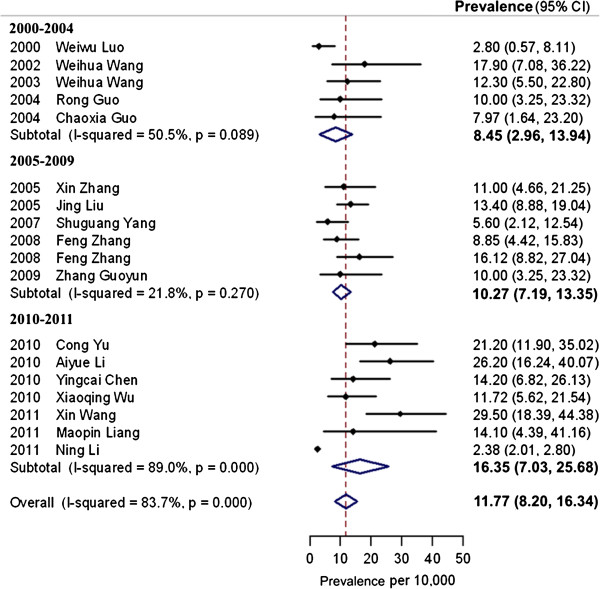
“The pooled prevalence estimate increased from 8.5 per 10,000 population (range: 3.0, 13.9) between 2000 and 2004 to 16.4 per 10,000 population (range: 7.0, 25.7) between 2010 and 2011 (7).”
InfluentialMengesha, A. K., Beyna, A. T., Kidanu, G. E., Misker, M. F., & Ayele, H. S. (2025) · Scientific Reports · doi:10.1038/s41598-025-97654-4 · Cited by 3
Xia, Y., Vincent, J., Zhao, M., & Wang, P. (2025) · Research in Autism · doi:10.1016/j.reia.2025.202776
Sun, Y., Li, X., Xu, L., Ma, Z., Yang, Y., Yin, T., Gao, Z., Gong, X., Li, L., Liu, Q., et al. (2021) · Figshare · doi:10.6084/m9.figshare.15085886
Mao, Y., Lin, X., Wu, Y., Lu, J., Shen, J., Zhong, S., Jin, X., & Ma, J. (2024) · Figshare · doi:10.6084/m9.figshare.25583878
Yu, Y., Chaulagain, A., Pedersen, S. A., Lydersen, S., Leventhal, B. L., Szatmári, P., Aleksić, B., Ozaki, N., & Skokauskas, N. (2020) · Figshare · doi:10.6084/m9.figshare.11978739
Yu, Y., Chaulagain, A., Pedersen, S. A., Lydersen, S., Leventhal, B. L., Szatmári, P., Aleksić, B., Ozaki, N., & Skokauskas, N. (2020) · Figshare · doi:10.6084/m9.figshare.11978745
Jeon, G. Y., & Han, S. Y. (2025) · Journal of Autism and Developmental Disorders · doi:10.1007/s10803-025-07137-8
Zhang, B. (2026) · Journal of Autism and Developmental Disorders · doi:10.1007/s10803-026-07293-5
The Prevalence of Autism in the World: An Umbrella Review and Meta-Analysis
Ekvan, M. H., Sahebi, A., Kord, M., Soltanali, Z., Ahmadi, A. H., & Mohamadi, S. (2026) · OBM Neurobiology · doi:10.21926/obm.neurobiol.2602332 · Cited by 1
Wong, C. H. M., Chan, C. K. Y., & Wong, P. W. C. (2026) · Frontiers in Public Health · doi:10.3389/fpubh.2026.1789943
Hai, Y., Yang, Y., Zou, M., Ye, P., Wang, J., Feng, L., Gong, X., Zhang, T., Tian, M., Sun, C., et al. (2026) · BMJ Paediatrics Open · doi:10.1136/bmjpo-2025-004048
“17 The increase in disease burden of ASD over time Several factors contribute to the growing burden of ASD over time.”
The Comprehension of Mandarin Wh -questions in children with and without ASD
Nie, C., Su, Y. E., & Durrleman, S. (2026) · Applied Psycholinguistics · doi:10.1017/s0142716426100708
“The parent rating scale of the ABC is one of the most widely used autism screening tools in China (Sun et al., 2013).”
Huang, Y., Wang, Y., Zhang, H.-H., Zhou, M.-W., Su, Z., Cheung, T. C. C., Ungvari, G. S., Smith, R. D., Ng, C. H., & Xiang, Y. (2026) · Journal of Autism and Developmental Disorders · doi:10.1007/s10803-026-07438-6
Anwar, F., Zainab, S., Uddin, S., Khan, K., Ahmad, A., Naz, M., Ullah, I., Hussain, A., Khan, H., Rahman, H. U., et al. (2026) · Research Square · doi:10.21203/rs.3.rs-10527511/v1
Metadata
- Authors
- Sun, X., Allison, C., Matthews, F. E., Sharp, S. J., Auyeung, B., Baron-Cohen, S., & Brayne, C.
- Affiliations
- University of Cambridge (GB)
- MRC Biostatistics Unit (GB)
- Addenbrooke's Hospital (GB)
- Corresponding author
- Sun, Xiang
- Venue
- Molecular Autism
- Published
- 2013
- Volume
- 4
- Issue
- 1
- Pages
- 7
- ISSN
- 2040-2392 (ISSN-L)
- PMC
- PMC3643868
- OpenAlex
- W2149989587
- Cited by
- 200
- References
- 65
- Citations by year
- 2026: 11 · 2025: 12 · 2024: 15 · 2023: 15 · 2022: 10 · 2021: 19 · 2020: 25 · 2019: 17 · 2018: 19 · 2017: 22 · 2016: 6 · 2015: 20 · 2014: 9
- FWCI
- 0.99
- Type
- journal article
- Language
- en
- Open access
- gold
- doi.org
- Licence
- cc-by
- Locations
- Molecular Autism (publishedVersion, cc-by)
- Europe PMC (PubMed Central) (publishedVersion, cc-by)
- PubMed Central (publishedVersion, cc-by)
- PubMed (publishedVersion)
- Apollo (University of Cambridge) (submittedVersion, cc-by)
- Repository@Hull (Worktribe) (University of Hull) (submittedVersion, cc-by)
- Funders
- Wellcome Trust
- Waterloo Foundation
- Peking University First Hospital
- National Institute for Health and Care Research (NF-SI-0611-10084)
- Cambridge Commonwealth Trust
- Peking University
- Medical Research Council
- Topics
- Life Sciences › Neuroscience › Cognitive Neuroscience › Autism Spectrum Disorder Research
- Health Sciences › Medicine › Psychiatry and Mental health › Child Nutrition and Feeding Issues
- Social Sciences › Psychology › Clinical Psychology › Family and Disability Support Research
- Keywords
- autism spectrum disorder, autism prevalence, childhood autism, screening tool, Autism Behavior Checklist, underdiagnosis, mainland China, Hong Kong, Taiwan
About these checks
Registry, retraction, Cites and statistics results are computed, not judged, with one exception: a printed reference that no index lists is read once by a model before it counts as a citation error. Claims are extracted by a model and kept only when their quote appears verbatim in the text; each cited source is then checked, with a model’s help, for whether it says what the claim relies on. Those verdicts can be wrong — read the claim’s quote and the cited source before relying on one.
Statistics and arithmetic are recomputed, not judged.
Confidence bands are shown only for fields calibrated on our annotated test set. None is calibrated yet, so no band is shown.
What counts as a claim ›How we measure confidence ›How we check this ›
Are you an author, or do you see a problem with this page? Request a review
Data sources
Bibliographic data: Semantic Scholar, OpenAlex, Crossref.
Contains information from the Semantic Scholar Academic Graph Datasets, made available under the ODC Attribution License (ODC-BY 1.0).
Semantic Scholar’s data is described in: Kinney, R., et al. (2023). The Semantic Scholar Open Data Platform. arXiv:2301.10140.
