

Prevalence of autism in mainland China, Hong Kong and Taiwan: a systematic review and meta-analysis
Open accessThe DOI matches its Crossref record; 64 of the 65 references it cites were found in a registry or an index.
Abstract
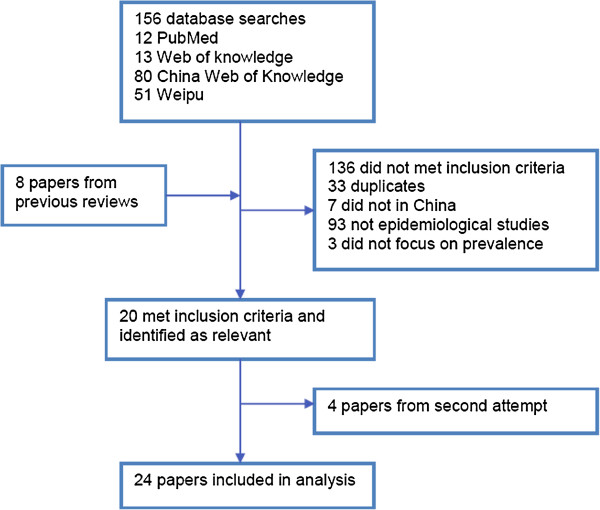
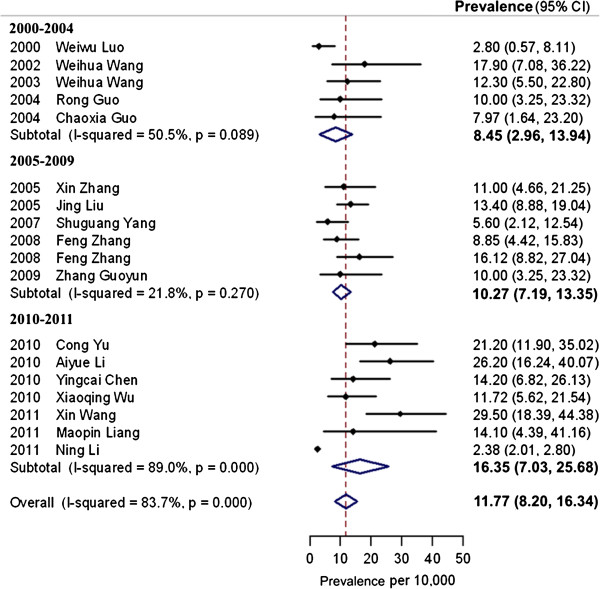
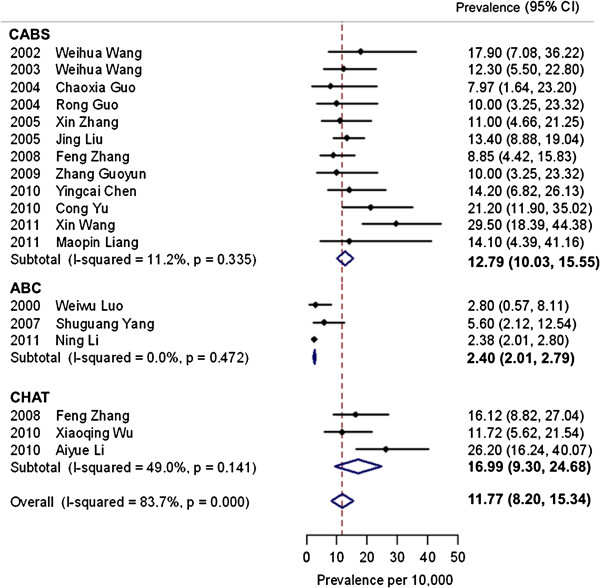
BACKGROUND: The prevalence of autism spectrum conditions (ASC) is 1% in developed countries, but little data are available from mainland China, Hong Kong and Taiwan. This study synthesizes evidence relating to the prevalence of ASC in these areas and assesses the effects of research methodology on prevalence estimates. METHODS: Systematic literature searches were conducted in PubMed, Web of Knowledge, China Web of Knowledge and Weipu databases, as well as relevant papers published from 1987 to 2011, reporting prevalence estimates of ASC or childhood autism in mainland China, Hong Kong and Taiwan. Summary estimates of prevalence were calculated with a random effects model. The effects of research methodology on the prevalence estimates were assessed using a meta-regression model. RESULTS: There were 25 studies eligible for review, 18 of which were suitable for inclusion in a meta-analysis. Pooled prevalence of childhood autism was 11.8 per 10,000 individuals (95% confidence interval (CI): 8.2, 15.3) in mainland China. Pooled prevalence of ASC was 26.6 per 10,000 (95% CI: 18.5, 34.6) in three areas. Substantial heterogeneity was identified between studies (I2>75%). The prevalence estimate of childhood autism was most strongly associated with the choice of screening instrument. After adjustment for age group, the odds ratio for prevalence estimates when using the Autism Behavior Checklist (ABC) as the screening instrument compared with those using the Clancy Autism Behavior Scale (CABS) was 0.29 (95% CI: 0.12, 0.69), and 1.79 (95% CI: 0.70, 4.55; P= 0.20) when using the Checklist for Autism in Toddlers (CHAT) compared to the CABS. CONCLUSIONS: The available studies investigating the prevalence of ASC in China, Hong Kong and Taiwan have focused mainly on childhood autism rather than the whole spectrum. The prevalence estimates are lower than estimates from developed countries. Studies using more recently developed screening instruments reported higher prevalence than older ones. However, available studies have methodological weaknesses and therefore these results lack comparability with those from developed countries. Our findings indicate a potential under-diagnosis and under-detection of ASC in mainland China, Hong Kong and Taiwan, and a need to adopt more advanced methods for research of ASC in these areas.
Overview
The claims and statistics of this paper haven’t been checked yet.
Free: it reads the open-access text and checks the first 5 claims that cite a source we can check. Create a free account to check every claim.
Integrity signals
Registry
Cites
Statistics
Figures
Verification
Claims the paper makes
The claims and statistics of this paper haven’t been checked yet.
Free: it reads the open-access text and checks the first 5 claims that cite a source we can check. Create a free account to check every claim.
Claims other papers make about this one
Each is checked against this paper’s own text: does it say what the citing paper says it does?
The source backs part of the claim, not all of it — or backs it for a different population, condition or comparison.
In the citing paper
“There are many factors contributing to the geographical variation in prevalence, including varying exposure to risk factors, cultural variation in behavioural norms, validity and choice of screening and diagnostic tools, participants' responses to survey questions, or even their choice to participate.30, 31”
From The global epidemiology and health burden of the autism spectrum: findings from the Global Burden of Disease Study 2021. (2025) · cites this paper as [30]
Experimental — accuracy not yet measured
Self-check
Percentages, sums and reported differences re-computed from the paper’s own numbers.
The self-check needs the paper’s full text.
Citations
Cites
Measuring inconsistency in meta-analyses
Higgins, J. P. T., Thompson, S. G., Deeks, J. J., & Altman, D. G. (2003) · BMJ · doi:10.1136/bmj.327.7414.557 · Cited by 63,139 · cited 1×
“The extent of heterogeneity was estimated by calculating I(2) (values of 25%, 50% and 75%, representing low, medium and high heterogeneity, respectively) [35].”
MethodCochrane Handbook for Systematic Reviews of Interventions: Cochrane Book Series
(2008) · doi:10.1002/9780470712184 · Cited by 25,048 · cited 1×
“Only the studies that conducted both screening and diagnostic assessment for childhood autism were examined using meta-regression, since the recommended minimum number of studies for inclusion in a meta-regression analysis is ten [66].”
MethodLord, C., Rutter, M., & Le Couteur, A. (1994) · Journal of Autism and Developmental Disorders · doi:10.1007/bf02172145 · Cited by 9,065 · cited 3×
“Abbreviations ADI-R: Autism Diagnostic Interview-Revised; ADOS: Autism Diagnostic Observation Schedule; AQ: Autism Spectrum Quotient; ASDASQ: Autism Spectrum Disorder in Adults Screening Questionnaire; CARS: Childhood Autism Rating Scale; CAST: Childhood Autism Spectrum Test; CCMD: Chinese Classification of Mental Dis…”
MethodCochrane Handbook for Systematic Reviews of Interventions Version 5.0.1. The Cochrane Collaboration
Higgins, J. P. T., Green, S. R., & Higgins, J. P. T. (2008) · Cited by 7,247
Clinical Epidemiology: A Basic Science for Clinical Medicine.
(1991) · Annals of Internal Medicine · doi:10.7326/0003-4819-114-9-825_9 · Cited by 3,476
Toward objective classification of childhood autism: Childhood Autism Rating Scale (CARS)
Schopler, E., Reichler, R. J., DeVellis, R. F., & Daly, K. (1980) · Journal of Autism and Developmental Disorders · doi:10.1007/bf02408436 · Cited by 2,432 · cited 8×
“Perry A, Condillac RA, Freeman NL, Dunn-Geier J, Belair J: Multi-site study of the childhood autism rating scale (CARS) in five clinical groups of young children.”
MethodInfluentialLord, C., Rutter, M., Goode, S., Heemsbergen, J., Jordan, H., Mawhood, L., & Schopler, E. (1989) · Journal of Autism and Developmental Disorders · doi:10.1007/bf02211841 · Cited by 2,030
Epidemiology of Pervasive Developmental Disorders
Fombonne, E. (2009) · Pediatric Research · doi:10.1203/pdr.0b013e31819e7203 · Cited by 1,971 · cited 2×
“In addition, the bibliographies of previous reviews were examined to identify published prevalence studies [1,22,34].”
Background
Research works printed but not linked: 8
- Dai S Jia M Tao K-t Help autistic children get away from loneliness 2008 Beijing: Chinese Women Press
- Chinese Society of Psychiatry Chinese Classification of Mental Disorders, 2nd edition, revised (CCMD-2-R) 1993 Shandong: Shandong Publishing House of Science and Technology
- Chinese Society of Psychiatry Chinese Classification of Mental Disorders, 3rd edition (CCMD-3) 2001 Shandong: Shandong Publishing House of Science and Technology
- Li A Zhang X Lv C Zhu Y Li Y Liu Y Analysis of behavioural characteristics of children with autism aged 1.5-3 years old Child Mental Health Journal 2010 24 215 218
- American Psychiatric Association (APA) Diagnostic and Statistical Manual of Mental Disorders, 3rd edition,revised (DSM-III-R) 1987 Washington DC: APA
- American Psychiatric Association (APA) Diagnostic and Statistical Manual of Mental Disorders, 4th edition (DSM-IV) 1994 Washington DC: APA
- Higgins JPT, Green S Cochrane Handbook for Systematic Reviews of Interventions 2011 Oxford: The Cochrane Collaboration
- Sun X Allison C Matthews F Zhang Z Auyeung B Baron-Cohen S Brayne C An exploration of the underdiagnosis of autism in mainland China using screening and diagnostic instruments 2012 Cambridge: Submitted for publication
Cited by
Qiao, J., Wang, Y., Li, X., Jiang, F., Zhang, Y., Ma, J., Song, Y., Ma, J., Fu, W., Pang, R., et al. (2021) · The Lancet · doi:10.1016/s0140-6736(20)32708-2 · Cited by 569
Prefrontal Cortex and Social Cognition in Mouse and Man
Bicks, L. K., Koike, H., Akbarian, S., & Morishita, H. (2015) · Frontiers in Psychology · doi:10.3389/fpsyg.2015.01805 · Cited by 500
“Many human studies of ASD (Rubenstein and Merzenich, 2003) and SCZ (Sun et al., 2013) patients also show decreases in inhibitory neurotransmission measured by decreased power of gamma oscillations, an indication of decreased activity of fast-spiking inhibitory basket cells (Bartos et al., 2007).”
BackgroundZhou, H., Xu, X., Yan, W., Zou, X., Wu, L., Luo, X., Li, T., Huang, Y., Guan, H., Chen, X., et al. (2020) · Neuroscience Bulletin · doi:10.1007/s12264-020-00530-6 · Cited by 464
“35%) in mainland China, Hong Kong, and Taiwan region [22].”
BackgroundMethodInfluentialJiang, H.-Y., Xu, L.-L., Shao, L., Xia, R.-M., Yu, Z.-H., Ling, Z.-X., Yang, F., Deng, M., & Ruan, B. (2016) · Brain Behavior and Immunity · doi:10.1016/j.bbi.2016.06.005 · Cited by 391
“The estimated prevalence of ASD has dramatically increased over the past decade (Baxter et al., 2015; Sun et al., 2013).”
BackgroundAutism prevalence in China is comparable to Western prevalence
Sun, X., Allison, C., Wei, L., Matthews, F. E., Auyeung, B., Wu, Y. Y., Griffiths, S., Zhang, J., Baron-Cohen, S., & Brayne, C. (2019) · Molecular Autism · doi:10.1186/s13229-018-0246-0 · Cited by 266
Self-citationSantomauro, D. F., Erskine, H. E., Mantilla Herrera, A. M., Miller, P. A., Shadid, J., Hagins, H., Addo, I. Y., Adnani, Q. E. S., Ahinkorah, B. O., Ahmed, A., et al. (2025) · The Lancet Psychiatry · doi:10.1016/s2215-0366(24)00363-8 · Cited by 223
Zhang, M., Ma, W., Zhang, J., He, Y., & Wang, J. (2018) · Scientific Reports · doi:10.1038/s41598-018-32219-2 · Cited by 188
Guo, H., Wang, T., Wu, H., Long, M., Coe, B. P., Li, H., Xun, G., Ou, J., Chen, B., Duan, G., et al. (2018) · Molecular Autism · doi:10.1186/s13229-018-0247-z · Cited by 154
Public knowledge and stigma of autism spectrum disorder: Comparing China with the United States
Yu, L., Stronach, S. T., & Harrison, A. J. (2020) · Autism · doi:10.1177/1362361319900839 · Cited by 188
Genetics and epigenetics of autism: A Review
Waye, M. M. Y., & Cheng, H. Y. (2018) · Psychiatry and Clinical Neurosciences · doi:10.1111/pcn.12606 · Cited by 146
“6 per 10 000 individuals in China and the three areas, respectively, between 1987 and 2011), it has been hypothesized that these lower numbers are likely due to under-detection or under-diagnosis.(2) As 30% of autistic children may grow up to be incapable of living independently, this has very important social implica…”
BackgroundCen, C., Liang, Y., Chen, Q., Chen, K., Deng, H., Chen, B.-Y., & Zou, X. (2017) · BMC Psychiatry · doi:10.1186/s12888-016-1185-y · Cited by 166
“[5] performed a systematic review and meta-analysis of relevant studies (from 1987 to 2011) from Mainland China, Hong Kong and Taiwan.”
The association of environmental toxicants and autism spectrum disorders in children
Ye, B. S., Leung, A. O. W., & Wong, M. H. (2017) · Environmental Pollution · doi:10.1016/j.envpol.2017.04.039 · Cited by 152
“49 in every 10,000 children are diagnosed with autism (Sun et al., 2013; Wong and Hui, 2008).”
BackgroundInfluentialThe prevalence of autism spectrum disorders in China: a comprehensive meta-analysis
Wang, F., Lu, L., Wang, S.-B., Zhang, L., Ng, C. H., Ungvari, G. S., Cao, X.-L., Lu, J.-P., Hou, C.-L., Jia, F.-J., et al. (2018) · International Journal of Biological Sciences · doi:10.7150/ijbs.24063 · Cited by 132
“Further, screening tools that have been widely used in China, such as the CABS, were originally designed to be completed by parents [26].”
MethodLiu, Y., Li, J., Zheng, Q., Zaroff, C. M., Hall, B. J., Li, X., & Hao, Y. (2016) · BMC Psychiatry · doi:10.1186/s12888-016-0845-2 · Cited by 179
“11 %) [2, 20] suggest a deficiency in diagnosis, possibly due in part to low levels of awareness in the general population.”
BackgroundCommunicative Development in Bilingually Exposed Chinese Children With Autism Spectrum Disorders
Reetzke, R., Zou, X., Sheng, L., & Katsos, N. (2015) · Journal of Speech Language and Hearing Research · doi:10.1044/2015_jslhr-l-13-0258 · Cited by 152
Song, Y., Nie, T., Shi, W., Zhao, X., & Yang, Y. (2019) · Frontiers in Psychology · doi:10.3389/fpsyg.2019.01902 · Cited by 128
“Clinically, ASCs are characterized by high morbidity (Sun et al., 2013), a low cure rate (Gor et al.”
BackgroundClassifying ASD children with LSTM based on raw videos
Li, J., Zhong, Y., Han, J., Ouyang, G., Li, X., & Liu, H. (2019) · Neurocomputing · doi:10.1016/j.neucom.2019.05.106 · Cited by 112
Pitch Processing in Tonal-Language-Speaking Children with Autism: An Event-Related Potential Study
Yu, L., Fan, Y., Deng, Z., Huang, D., Wang, S., & Zhang, Y. (2015) · Journal of Autism and Developmental Disorders · doi:10.1007/s10803-015-2510-x · Cited by 96
“…–Revised (ADI-R; Lord et al. 1994) and the Autism Diagnostic Observation Schedule (ADOS; Lord et al. 2000), have not been officially validated and widely adopted in China (Huang et al. 2013; Sun et al. 2013), we confirmed diagnoses using the Chinese version of the Gilliam Autism Rating Scale–”
MethodInfluentialYang, X.-L., Liang, S., Zou, M.-Y., Sun, C.-H., Han, P.-P., Jiang, X.-T., Xia, W., & Wu, L.-J. (2018) · Psychiatry Research · doi:10.1016/j.psychres.2017.10.040 · Cited by 76
Current state and recent developments of child psychiatry in China
Zheng, Y., & Zheng, X. (2015) · Child and Adolescent Psychiatry and Mental Health · doi:10.1186/s13034-015-0040-0 · Cited by 80
“Analysis of these studies shows that the prevalence of ASD are most strongly associated with the choice of screening instrument [19].”
BackgroundInfluentialGuo, D., Yang, X., & Shi, L. (2020) · Cells · doi:10.3390/cells9040835 · Cited by 73
Liu, Q., Hsieh, W., & Chen, G. (2020) · Autism · doi:10.1177/1362361320943380 · Cited by 89
Jiang, J., Liu, F., Wan, X., & Jiang, C. (2015) · Journal of Autism and Developmental Disorders · doi:10.1007/s10803-015-2370-4 · Cited by 68
Hoang, V. M., Le, T. V., Chu, T. T. Q., Le, B. N., Duong, M. D., Thanh, N. M., Tac Pham, V., Minas, H., & Bui, T. T. H. (2019) · International Journal of Mental Health Systems · doi:10.1186/s13033-019-0285-8 · Cited by 67
Yu, Y., Chaulagain, A., Pedersen, S. A., Lydersen, S., LEVENTHAL, B. L., Szatmári, P., Aleksić, B., Ozaki, N., & Skokauskas, N. (2020) · BMC Psychiatry · doi:10.1186/s12888-020-2477-9 · Cited by 79
“While there has been some controversy about the prevalence of ASD [3], prevalence estimates in the range of 2–3% of the population have been consistent [4–6]; similar prevalence has been reported in different countries with ASD apparently occurring in all racial, ethnic, and socioeconomic groups [7, 8].”
ResultPerinatal and background risk factors for childhood autism in central China
Duan, G., Yao, M., Ma, Y., & Zhang, W. (2014) · Psychiatry Research · doi:10.1016/j.psychres.2014.05.057 · Cited by 73
“In China the most recent estimates of the prevalence of ASD are between 2.8 and 29.5 per 10,000 (Sun et al., 2013; Feng et al., 2013).”
InfluentialWang, X., Wang, S., Fan, Y., Huang, D., & Zhang, Y. (2017) · Scientific Reports · doi:10.1038/srep43254 · Cited by 65
Wang, Y., Xiao, L., Chen, R., Chen, C., Xun, G., Lu, X., Shen, Y., Wu, R., Xia, K., Zhao, J., et al. (2018) · Psychiatry Research · doi:10.1016/j.psychres.2018.05.057 · Cited by 78
Guo, C., Luo, M., Wang, X., Huang, S., Meng, Z., Shao, J., Zhang, X., Shao, Z., Jieling, W., Robins, D. L., et al. (2018) · Journal of Autism and Developmental Disorders · doi:10.1007/s10803-018-3682-y · Cited by 71
Imbalance in the Gut Microbiota of Children With Autism Spectrum Disorders
Ding, H., Yi, X., Zhang, X., Wang, H., Liu, H., & Mou, W.-W. (2021) · Frontiers in Cellular and Infection Microbiology · doi:10.3389/fcimb.2021.572752 · Cited by 76
Copy number variation in Han Chinese individuals with autism spectrum disorder
Gazzellone, M. J., Zhou, X., Lionel, A. C., Uddin, M., Thiruvahindrapuram, B., Liang, S., Sun, C., Wang, J., Zou, M., Tammimies, K., et al. (2014) · Journal of Neurodevelopmental Disorders · doi:10.1186/1866-1955-6-34 · Cited by 59
“The prevalence of ASD in mainland China and Western countries varies considerably [1,6,7].”
BackgroundExploring the Underdiagnosis and Prevalence of Autism Spectrum Conditions in Beijing
Sun, X., Allison, C., Matthews, F. E., Zhang, Z., Auyeung, B., Baron‐Cohen, S., & Brayne, C. (2015) · Autism Research · doi:10.1002/aur.1441 · Cited by 53
“…were well-recognized for case identification—the Autism Diagnostic Observation Schedule (ADOS) [Lord, Rutter, DiLavore, & Risi, 2001] and Autism Diagnostic Interview-Revised (ADI-R) [Rutter, LeCouteur, & Lord, 2003]—have not yet been adopted in autism research in mainland China [Sun et al., 2013a].”
Neik, T. T. X., Lee, L. W., Low, H. M., Chia, N. K. H., & Chua, A. C. K. (2014) · International Journal of Special Education (IJSE) · Cited by 90
Wang, J., Fu, K., Chen, L., Duan, X., Guo, X., Chen, H., Wu, Q., Xia, W., Wu, L., & Chen, H. (2017) · Frontiers in Physiology · doi:10.3389/fphys.2017.00588 · Cited by 57
“…in the prevalence estimates for ASD, but two previous reviews based on published provincial epidemiological studies also reported that the prevalence of ASD has increased from 10.3 per 10,000 in 2009 (Sun and Allison, 2009) to a high of 26.6 per 10,000 in 2013 (Sun et al., 2013) in mainland China.”
ResultInfluentialPang, Y., Lee, C.-M., Wright, M., Shen, J., Shen, B., & Bo, J. (2018) · Research in Autism · doi:10.1016/j.rasd.2018.06.003 · Cited by 53
Sun, X., Allison, C. L., Auyeung, B., Matthews, F. E., Zhang, Z., Baron‐Cohen, S., & Brayne, C. (2014) · Research in Developmental Disabilities · doi:10.1016/j.ridd.2014.02.005 · Cited by 57
Jin, Z., Yang, Y., Liu, S., Huang, H., & Jin, X. (2018) · Journal of Autism and Developmental Disorders · doi:10.1007/s10803-018-3507-z · Cited by 53
“3/10,000) (Sun et al. 2013), but lower than that reported in a recent study in Beijing (119 per 10,00, 95% CI 53/10,000, 265/10,000) (Sun et al.”
BackgroundChang, Y.-C., Chen, C.-H., Huang, P.-C., & Lin, L.-Y. (2019) · Scandinavian Journal of Occupational Therapy · doi:10.1080/11038128.2018.1449887 · Cited by 46
“[4] Sun X, Allison C, Matthews FE, et al.”
BackgroundHuang, D., Yu, L., Wang, X., Fan, Y., Wang, S., & Zhang, Y. (2018) · European Journal of Neuroscience · doi:10.1111/ejn.13657 · Cited by 42
Chen, Y., Liu, S., Xu, H., Zheng, H., Bai, C., Pan, W., Zhou, H., Liao, M., Huang, C., & Dong, Q. (2019) · Toxicology · doi:10.1016/j.tox.2019.02.016 · Cited by 42
Han, Y., Xi, Q., Dai, W., Yang, S., Gao, L., Su, Y., & Zhang, X. (2015) · International Journal of Developmental Neuroscience · doi:10.1016/j.ijdevneu.2015.06.006 · Cited by 44
“A recent meta-analysis showed that between 2010 and 2011, the Chinese population presented the highest pooled prevalence (16.4 per 10,000) of ASD (Sun et al., 2013).”
BackgroundInfluentialXu, Y., Yang, J., Jing, Y., Chen, J. R., Zhuang, X., Wang, W., Zhang, X., & Lee, G. T. (2017) · Journal of Early Intervention · doi:10.1177/1053815117748408 · Cited by 49
Ho, R. Y. F., Zhang, D., Chan, S. K. C., Gao, T. T., Lee, E. K. P., Lo, H. H. M., Au Yeung, P., Lai, K. Y. C., Bögels, S. M., de Bruin, E. I., et al. (2021) · Journal of Autism and Developmental Disorders · doi:10.1007/s10803-020-04729-4 · Cited by 39
Impact of DSM-5 on epidemiology of Autism Spectrum Disorder
Tsai, L. Y. (2014) · Research in Autism Spectrum Disorders · doi:10.1016/j.rasd.2014.07.016 · Cited by 39
Nyffeler, J., Walitza, S., Bobrowski, E., Gundelfinger, R., & Grünblatt, E. (2014) · Journal of Molecular Psychiatry · doi:10.1186/2049-9256-2-1 · Cited by 39
“0% [3-6], with a male:female ratio of 4:1 [6].”
BackgroundYang, J., Chen, Y., Xiong, X., Zhou, X., Han, L., Ni, L., Wang, W., Wang, X., Zhao, L., Shao, D., et al. (2018) · PROTEOMICS - CLINICAL APPLICATIONS · doi:10.1002/prca.201700164 · Cited by 40
The Development of Early Life Microbiota in Human Health and Disease
Lv, H., Zhang, L., Han, Y., Wu, L. M., & Wang, B. (2021) · Engineering · doi:10.1016/j.eng.2020.12.014 · Cited by 47
Ng, C. S. M., Fang, Y., Wang, Z., & Zhang, M. (2021) · Focus on Autism and Other Developmental Disabilities · doi:10.1177/10883576211012599 · Cited by 36
“This could explain why many children with ASD received delayed diagnosis and intervention in China (Sun et al., 2013).”
BackgroundInfluentialBertelli, M. O., Merli, M. P., Bradley, E. A., Keller, R., Varrucciu, N., Furia, C. D., & Panocchia, N. (2015) · Advances in Mental Health and Intellectual Disabilities · doi:10.1108/amhid-05-2015-0024 · Cited by 40
Air Pollution during Pregnancy and Childhood Autism Spectrum Disorder in Taiwan
Wang, S.-Y., Cheng, Y., Guo, H., & Tseng, Y.-C. (2021) · International Journal of Environmental Research and Public Health · doi:10.3390/ijerph18189784 · Cited by 38
Huang, X., Zhang, H., & Chen, S. (2019) · Current Medical Science · doi:10.1007/s11596-019-2033-3 · Cited by 42
Dental Caries Status in Autistic Children: A Meta-analysis
Zhang, Y., Lin, L., Liu, J., Shi, L., & Lu, J. (2020) · Journal of Autism and Developmental Disorders · doi:10.1007/s10803-019-04256-x · Cited by 43
Genetic Risk of Autism Spectrum Disorder in a Pakistani Population
Khalid, M., Raza, H., Driessen, T. M., Lee, J. S., Tejwani, L., Sami, A., Nawaz, M., Baig, S. M., Lim, J., & Raja, G. K. (2020) · Genes · doi:10.3390/genes11101206 · Cited by 45
“64% [8] and in around 12 per 10,000 in China [9].”
InfluentialThe association between air pollutants and autism spectrum disorders
Yang, C., Zhao, W., Deng, K., Zhou, V., Zhou, X., & Hou, Y. (2017) · Environmental Science and Pollution Research · doi:10.1007/s11356-017-8928-2 · Cited by 32
“8 out of 10,000 individuals in mainland China (Sun et al. 2013).”
InfluentialQu, L., Chen, H., Miller, H. L., Miller, A. L., Colombi, C., Chen, W., & Ulrich, D. A. (2022) · Frontiers in Psychology · doi:10.3389/fpsyg.2022.859145 · Cited by 38
Sun, X., Allison, C. L., Auyeung, B., Zhang, Z., Matthews, F. E., Baron‐Cohen, S., & Brayne, C. (2015) · Autism · doi:10.1177/1362361314556785 · Cited by 34
“A recent review of prevalence studies of ASC in mainland China suggested the prevalence of autistic disorder was around 12 per 10,000 (Sun et al., 2013).”
An, S., Feng, X., Dai, Y., Bo, H., Wang, X., Li, M., Woo, J. Z., Liang, X., Guo, C., Liu, C. X., et al. (2017) · Molecular Autism · doi:10.1186/s13229-017-0165-5 · Cited by 32
“[33] systematically reviewed the literature regarding estimates of the prevalence of ASD or childhood autism in Mainland China, Hong Kong, and Taiwan.”
BackgroundSu, Y. E., & Naigles, L. (2021) · Reading and Writing · doi:10.1007/s11145-021-10214-w · Cited by 36
“Yi (Esther) Su1 · Letitia R. Naigles2 1 Child Language Lab, School of Foreign Languages, Central South University, Changsha 410083, Hunan, China 2 Department of Psychology, University of Connecticut, 406 Babbidge Road, Unit 1020, Storrs, CT 06269-1020, USA”
BackgroundInfluentialConstruct Validity of the Chinese Version of the Psycho-Educational Profile-3rd Edition (CPEP-3)
Shek, D. T. L., & Yu, L. (2014) · Journal of Autism and Developmental Disorders · doi:10.1007/s10803-014-2143-5 · Cited by 33
“Their meta-analytic findings also suggested a potential under-diagnosis and under-detection of ASD in Chinese communities and argued for the need to use more advanced methods for research of ASD (Sun et al. 2013).”
BackgroundMethodLin, L. (2015) · Research in Autism · doi:10.1016/j.rasd.2015.04.002 · Cited by 39
Chu, J.-H., Bian, F., Yan, R.-Y., Li, Y.-L., Cui, Y., & Li, Y. (2022) · World Journal of Clinical Cases · doi:10.12998/wjcc.v10.i4.1206 · Cited by 32
Hu, X., & Han, Z. R. (2019) · International Journal of Developmental Disabilities · doi:10.1080/20473869.2019.1602350 · Cited by 29
“This study replicated the intervention materials and procedure used in Hu et al., 2019 and applied to children with ASD in inclusive education settings in China.”
BackgroundInfluentialSu, Y. E., & Naigles, L. (2019) · Autism Research · doi:10.1002/aur.2190 · Cited by 29
“The parent rating scale of the ABC is one of the most widely used autism screening tools in China [Sun et al., 2013].”
MethodFang, Z., Barlow, J., & Zhang, C. (2020) · Trauma Violence & Abuse · doi:10.1177/1524838020915599 · Cited by 34
Kommu, J. V. S., K.R., G., Srinath, S., Girimaji, S. C., P. Seshadri, S., Gopalakrishna, G., & Doddaballapura K., S. (2017) · Asian Journal of Psychiatry · doi:10.1016/j.ajp.2017.03.017 · Cited by 29
Zhao, Y., Lu, F., Wang, X., Luo, Y., Zhang, R., He, P., & Zheng, X. (2023) · Asian Journal of Psychiatry · doi:10.1016/j.ajp.2023.103877 · Cited by 35
Socioeconomic status and childhood autism: A population-based study in China
He, P., Guo, C., Wang, Z., Gong, C., Li, N., & Zheng, X. (2017) · Psychiatry Research · doi:10.1016/j.psychres.2017.08.046 · Cited by 34
“Finally, children with mental disability were screened with autism using the Autism Behavior Checklist by psychiatrists (Sun et al., 2013), and were ascertained with childhood autism (diagnostic code: F84) according to the ICD-10 (Li et al., 2011).”
Liao, Y., Dillenburger, K., He, W., Xu, Y., & Cai, H. (2020) · Review Journal of Autism and Developmental Disorders · doi:10.1007/s40489-020-00196-w · Cited by 33
Xie, F., Pascual, E., & OAKLEY, T. V. (2023) · Frontiers in Psychology · doi:10.3389/fpsyg.2023.1010615 · Cited by 34
“The ABC is one of the most frequently used scientific screening assessments in studies of ASD in mainland China (Sun et al., 2013; Su et al., 2014, 2018).”
MethodInfluentialKhan, Z. U. N., Chand, P., Majid, H., Ahmed, S., Khan, A. H., Jamil, A., Ejaz, S., Wasim, A., Khan, K. A., & Jafri, L. (2022) · BMC Neurology · doi:10.1186/s12883-022-02630-4 · Cited by 32
“Several reasons may contribute to this rise, such as the definition of ASD has become broader, changes in the use of screening tools and diagnostic criteria, greater awareness, and recognition of ASD [15, 17].”
BackgroundYum, Y. N., Lau, W. K., Poon, K., & Ho, F. C. 何. (2020) · BMC Pediatrics · doi:10.1186/s12887-020-02454-6 · Cited by 25
Zhou, B., Zhou, H., Wu, L., Zou, X., Luo, X., Fombonne, E. J., Wang, Y., Yan, W., & Xu, X. (2017) · Neuroscience Bulletin · doi:10.1007/s12264-017-0114-5 · Cited by 29
“Furthermore, the targeted clinical cases were variable, with most studies screening for children with classical autism, and some for those with ASD [9].”
BackgroundCheung, P. P. P., Brown, T., Yu, M., & Siu, A. M. H. (2020) · Journal of Autism and Developmental Disorders · doi:10.1007/s10803-020-04683-1 · Cited by 38
Li, C., Zhou, H., Wang, T., Long, S., Du, X., Xu, X., Yan, W., & Wang, Y. (2018) · Neuroscience Bulletin · doi:10.1007/s12264-018-0237-3 · Cited by 26
Yan, J., Chen, F., Gao, X., & Peng, G. (2021) · Journal of Speech Language and Hearing Research · doi:10.1044/2021_jslhr-21-00029 · Cited by 29
Validation of the Simplified Chinese Psychoeducational Profile Third Edition in Mainland China
Yu, L., Zhu, X., Shek, D. T. L., Zou, X., Deng, H., & Yeung, P. W. H. A. (2018) · Journal of Autism and Developmental Disorders · doi:10.1007/s10803-018-3827-z · Cited by 22
Autism Spectrum Disorder Interventions in Mainland China: a Systematic Review
Sullivan, O. A., & Wang, C. (2019) · Review Journal of Autism and Developmental Disorders · doi:10.1007/s40489-019-00191-w · Cited by 31
Automatic classification of ASD children using appearance-based features from videos
Li, J., Chen, Z., Li, G., Ouyang, G., & Li, X. (2021) · Neurocomputing · doi:10.1016/j.neucom.2021.10.074 · Cited by 28
Tsai, P., Yu, K., Chou, I., Luo, S., Tseng, W.-Y., Huang, L.-H., & Kuo, C. (2017) · Joint Bone Spine · doi:10.1016/j.jbspin.2017.11.005 · Cited by 24
Tang, T. Y., Wang, R. Y., You, Y., Huang, L. Z., & Chen, C. P. (2015) · ACM International Joint Conference on Pervasive and Ubiquitous Computing (UbiComp) · doi:10.1145/2800835.2800913 · Cited by 21
“Most of them are targeted at children younger than 13 years old [3, 4, 5, 19], and English remains the main language used in these systems, including mobile aids [3].”
BackgroundInfluentialCatalá-López, F., Ridao-López, M., Hurtado, I., Núñez-Beltrán, A., Gènova-Maleras, R., Alonso‐Arroyo, A., Tobías, A., Aleixandre‐Benavent, R., Catalá, M. A., & Tabarés‐Seisdedos, R. (2019) · Systematic Reviews · doi:10.1186/s13643-019-1061-1 · Cited by 26
Identification of ASD Children based on Video Data
Li, J., Zhong, Y., & Ouyang, G. (2018) · Proceedings - International Conference on Pattern Recognition/Proceedings/International Conference on Pattern Recognition · doi:10.1109/icpr.2018.8545113 · Cited by 25
“TABLE CONFUSION MATRIX OF THE BEST METHOD Predicted ASD Predicted TD True ASD 51 2 True TD 10 126 ACKNOWLEDGEMENTS This work is supported by National Natural Science Foundation of China (61703198 and 61463032), National Key Research and Development Program of China (2016YFC1306203), and Open Fund of State Key Laborato…”
InfluentialThe modified checklist for autism in Turkish toddlers: A different cultural adaptation sample
Kondolot, M., Özmert, E. N., Öztop, D. B., Mazıcıoğlu, M. M., Gümüş, H., & Elmalı, F. (2015) · Research in Autism · doi:10.1016/j.rasd.2015.10.006 · Cited by 25
Wu, C., Chu, C.-L., Stewart, L., Chiang, C., Hou, Y., & Liu, J.-H. (2020) · Journal of Autism and Developmental Disorders · doi:10.1007/s10803-019-04350-0 · Cited by 21
Tasew, S., Mekonnen, H., & Goshu, A. T. (2021) · SAGE Open Medicine · doi:10.1177/20503121211049121 · Cited by 25
Heterogeneous neurodevelopmental disorders in children with Kawasaki disease: what is new today?
Lin, C., Lin, W., Chou, I., Lee, I., & Hong, S. (2019) · BMC Pediatrics · doi:10.1186/s12887-019-1786-y · Cited by 21
Yang, W., Xia, H. M., Wen, G., Liu, L., Fu, X., Lu, J., & Li, H. (2015) · BMC Pediatrics · doi:10.1186/s12887-015-0531-4 · Cited by 22
“[13] showed that the prevalence of childhood autism in China ranged between 0.”
BackgroundChen, S., Xiong, J., Chen, B., Zhang, C., Deng, X., He, F. P., Yang, L., Chen, C., Peng, J., & Yin, F. (2021) · Clinica Chimica Acta · doi:10.1016/j.cca.2021.11.014 · Cited by 28
Internet of Things (IoT)-Enhanced Applied Behavior Analysis (ABA) for Special Education Needs
Wong, C. M. V., Chan, R. Y.-Y., Yum, Y. N., & Wang, K. (2021) · Sensors · doi:10.3390/s21196693 · Cited by 17
“6 per 10,000 children [9], with increasing figures in recent years due to the expansion of diagnostic criteria and a higher public awareness.”
BackgroundHealth-related risky behaviors in Chinese adolescents with autism: a cross-sectional study
Sun, Y., Li, X., Xu, L., Ma, Z., Yang, Y., Yin, T., Gao, Z.-L., Gong, X., Li, L., Liu, Q., et al. (2021) · Child and Adolescent Psychiatry and Mental Health · doi:10.1186/s13034-021-00390-6 · Cited by 16
“This disorder can seriously impair autistic individuals’ social function and impose a heavy burden on both families and society [4, 5].”
BackgroundMa, W., Mao, J., Xie, Y., Li, S., & Wang, M. (2023) · Behavioral Sciences · doi:10.3390/bs13100860 · Cited by 23
“At the beginning of the study, all three participants completed the Social Responsiveness Scale (SRS) [35], the Childhood Autism Rating Scale (CARS) [36] and the Test of Theory-of-Mind (TToM) [32] to meet the selection criteria for participation in this study and assess their social skill deficits.”
MethodAutism in Taiwan and Thailand: Influences of Culture
Westby, C. E., Kai-mei, C., Cheng, L., Jithavech, P., & Maroonroge, S. (2024) · Neuropsychiatric Disease and Treatment · doi:10.2147/ndt.s462864 · Cited by 19
Network analysis of autistic disease comorbidities in Chinese children based on ICD-10 codes
Li, X., Liu, G., Chen, W.-X., Bi, Z., & Liang, H. (2020) · BMC Medical Informatics and Decision Making · doi:10.1186/s12911-020-01282-z · Cited by 20
Applied Behavior Analysis in Autism Spectrum Disorders in China and Hong Kong
Chang, K. (2017) · Acta Psychopathologica · doi:10.4172/2469-6676.100124 · Cited by 19
Wan, G., Deng, F., Jiang, Z., Lin, S., Zhao, C.-L., Liu, B., Chen, G., Shen-hong, C., Cai, X., Wang, H.-B., et al. (2019) · Frontiers of Information Technology & Electronic Engineering · doi:10.1631/fitee.1800555 · Cited by 15
“As for China, a meta-analysis of 18 published suitable studies from 1987 to 2011 estimated that the prevalence of childhood autism was 11.8 per 10 000 individuals in mainland China, and of autism spectrum conditions (ASC) was 26.6 per 10 000 in mainland China, Hong Kong, and Taiwan (Sun et al., 2013).”
InfluentialLiao, Y., Dillenburger, K., & Buchanan, I. (2017) · European Journal of Behavior Analysis · doi:10.1080/15021149.2017.1399657 · Cited by 20
“The under-diagnosis in China is likely due to the narrow focus on classic autism, rather than the full spectrum, and subsequent delays in diagnosis or misdiagnosis (Sun et al., 2013).”
BackgroundResultInfluentialCurrent status and challenge in clinical work of autism spectrum disorders in China
Zhu, Z.-W., Jin, Y., Wu, L., & Liu, X. (2018) · World Journal of Pediatrics · doi:10.1007/s12519-018-0166-2 · Cited by 15
Gut Microbiome and Autism: Recent Advances and Future Perspectives
Liu, J., Zhang, M., & Kong, X. (2016) · North American Journal of Medicine and Science · Cited by 15
An Emotional Skills Intervention for Elementary Children with Autism in China: A Pilot Study
Lee, G. T., Xu, S., Feng, H., Lee, G. K., Jin, S., Li, D., & Zhu, S. (2018) · Journal of Rational-Emotive & Cognitive-Behavior Therapy · doi:10.1007/s10942-018-0295-5 · Cited by 18
La determinación social del autismo en población infantil ecuatoriana
Chávez, C. L., Castelo, M. D. L. L., Breilh, J., & Muñoz, Y. T. (2020) · Revista Ciencias de la Salud · doi:10.12804/revistas.urosario.edu.co/revsalud/a.8993 · Cited by 27
“En tanto, Delobel-Ayoub (56) afirma que la prevalencia de autismo es superior en niños/ as que viven en la pobreza, ubicados principalmente en el cuarto y quinto quintil, con menor ingreso familiar (44, 45, 46); así como también se encontró un número elevado de niños autistas en la población de inmigrantes y de famili…”
Background
Metadata
- Authors
- Sun, X., Allison, C., Matthews, F. E., Sharp, S. J., Auyeung, B., Baron-Cohen, S., & Brayne, C.
- Affiliations
- University of Cambridge (GB)
- MRC Biostatistics Unit (GB)
- Addenbrooke's Hospital (GB)
- Corresponding author
- Sun, Xiang
- Venue
- Molecular Autism
- Published
- 2013
- Volume
- 4
- Issue
- 1
- Pages
- 7
- ISSN
- 2040-2392 (ISSN-L)
- PMC
- PMC3643868
- OpenAlex
- W2149989587
- Cited by
- 200
- References
- 65
- Citations by year
- 2026: 11 · 2025: 12 · 2024: 15 · 2023: 15 · 2022: 10 · 2021: 19 · 2020: 25 · 2019: 17 · 2018: 19 · 2017: 22 · 2016: 6 · 2015: 20 · 2014: 9
- FWCI
- 0.99
- Type
- journal article
- Language
- en
- Open access
- gold
- doi.org
- Licence
- cc-by
- Locations
- Molecular Autism (publishedVersion, cc-by)
- Europe PMC (PubMed Central) (publishedVersion, cc-by)
- PubMed Central (publishedVersion, cc-by)
- PubMed (publishedVersion)
- Apollo (University of Cambridge) (submittedVersion, cc-by)
- Repository@Hull (Worktribe) (University of Hull) (submittedVersion, cc-by)
- Funders
- Wellcome Trust
- Waterloo Foundation
- Peking University First Hospital
- National Institute for Health and Care Research (NF-SI-0611-10084)
- Cambridge Commonwealth Trust
- Peking University
- Medical Research Council
- Topics
- Life Sciences › Neuroscience › Cognitive Neuroscience › Autism Spectrum Disorder Research
- Health Sciences › Medicine › Psychiatry and Mental health › Child Nutrition and Feeding Issues
- Social Sciences › Psychology › Clinical Psychology › Family and Disability Support Research
- Keywords
- autism spectrum disorder, autism prevalence, childhood autism, screening tool, Autism Behavior Checklist, underdiagnosis, mainland China, Hong Kong, Taiwan
About these checks
Registry, retraction, Cites and statistics results are computed, not judged, with one exception: a printed reference that no index lists is read once by a model before it counts as a citation error. Claims are extracted by a model and kept only when their quote appears verbatim in the text; each cited source is then checked, with a model’s help, for whether it says what the claim relies on. Those verdicts can be wrong — read the claim’s quote and the cited source before relying on one.
Statistics and arithmetic are recomputed, not judged.
Confidence bands are shown only for fields calibrated on our annotated test set. None is calibrated yet, so no band is shown.
What counts as a claim ›How we measure confidence ›How we check this ›
Are you an author, or do you see a problem with this page? Request a review
Data sources
Bibliographic data: Semantic Scholar, OpenAlex, Crossref.
Contains information from the Semantic Scholar Academic Graph Datasets, made available under the ODC Attribution License (ODC-BY 1.0).
Semantic Scholar’s data is described in: Kinney, R., et al. (2023). The Semantic Scholar Open Data Platform. arXiv:2301.10140.
