

Intraflagellar transport complex structure and cargo interactions
Open accessThe DOI matches its Crossref record; 120 of the 120 references it cites were found in a registry or an index.
Abstract
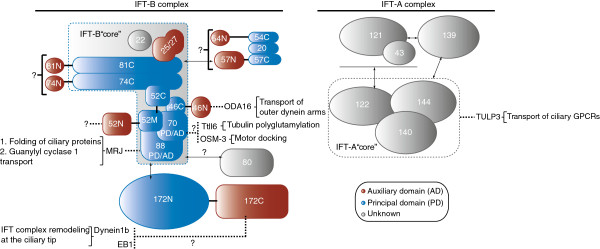
Intraflagellar transport (IFT) is required for the assembly and maintenance of cilia, as well as the proper function of ciliary motility and signaling. IFT is powered by molecular motors that move along the axonemal microtubules, carrying large complexes of IFT proteins that travel together as so-called trains. IFT complexes likely function as adaptors that mediate interactions between anterograde/retrograde motors and ciliary cargoes, facilitating cargo transport between the base and tip of the cilium. Here, we provide an up-to-date review of IFT complex structure and architecture, and discuss how interactions with cargoes and motors may be achieved.
Overview
The claims and statistics of this paper haven’t been checked yet.
Free: it reads the open-access text and checks the first 5 claims that cite a source we can check. Create a free account to check every claim.
Integrity signals
Registry
Cites
Statistics
Figures
Verification
Claims the paper makes
The claims and statistics of this paper haven’t been checked yet.
Free: it reads the open-access text and checks the first 5 claims that cite a source we can check. Create a free account to check every claim.
Claims other papers make about this one
Each is checked against this paper’s own text: does it say what the citing paper says it does?
The cited source says what the claim attributes to it.
In the citing paper
“Likewise, progress has been made towards understanding the interactions between specific IFT particle polypeptides and specific ciliary cargo proteins or motor subunits during anterograde or retrograde IFT, as well as how IFT motor activity is regulated 24, 48–52.”
From Cellular signalling by primary cilia in development, organ function and disease (2019) · cites this paper as [48]
Experimental — accuracy not yet measured
Self-check
Percentages, sums and reported differences re-computed from the paper’s own numbers.
The self-check needs the paper’s full text.
Citations
Cites
Crystal Structure of Rhodopsin: A G Protein-Coupled Receptor
Palczewski, K., Kumasaka, T., Hori, T., Behnke, C. A., Motoshima, H., Fox, B. A., Trong, I. L., Teller, D. C., Okada, T., Stenkamp, R. E., et al. (2000) · Science · doi:10.1126/science.289.5480.739 · Cited by 5,637
The HHpred interactive server for protein homology detection and structure prediction
Soding, J., Biegert, A., & Lupas, A. N. (2005) · Nucleic Acids Research · doi:10.1093/nar/gki408 · Cited by 3,740
A Map of the Interactome Network of the Metazoan C. elegans
Li, S., Armstrong, C. M., Bertin, N., Ge, H., Milstein, S., Boxem, M., Vidalain, P.-O., Han, J.-D. J., Chesneau, A., Hao, T., et al. (2004) · Science · doi:10.1126/science.1091403 · Cited by 1,628
Vertebrate Smoothened functions at the primary cilium
Corbit, K. C., Aanstad, P., Singla, V., Norman, A. R., Stainier, D. Y. R., & Reiter, J. F. (2005) · Nature · doi:10.1038/nature04117 · Cited by 1,481 · cited 1×
“A similar motif in mammalian Smoothened (smo) was also shown to be required for localization to the cilium [60].”
BackgroundRosenbaum, J. L., & Witman, G. B. (2002) · Nature Reviews Molecular Cell Biology · doi:10.1038/nrm952 · Cited by 1,423 · cited 1×
“Mutations in IFT proteins have been shown to cause several ciliopathies [12-22].”
BackgroundNachury, M. V., Loktev, A. V., Zhang, Q., Westlake, C. J., Peränen, J., Merdes, A., Slusarski, D. C., Scheller, R. H., Bazan, J. F., Sheffield, V. C., et al. (2007) · Cell · doi:10.1016/j.cell.2007.03.053 · Cited by 1,384 · cited 1×
“The BBSome is a multi-protein complex associated with IFT that is also required for the traffic of several membrane proteins into and out of the cilium [82-87].”
BackgroundWhen cilia go bad: cilia defects and ciliopathies
Fliegauf, M., Benzing, T., & Omran, H. (2007) · Nature Reviews Molecular Cell Biology · doi:10.1038/nrm2278 · Cited by 1,257
Pazour, G. J., Dickert, B. L., Vucica, Y., Seeley, E. S., Rosenbaum, J. L., Witman, G. B., & Cole, D. G. (2000) · The Journal of Cell Biology · doi:10.1083/jcb.151.3.709 · Cited by 1,147 · cited 1×
“The genetic deletion of an entire IFT protein often leads to a general defect in cilia assembly (presumably due to IFT complex disruption), making it difficult to assess the specific functions of individual IFT proteins from mutant phenotypes alone [8,23-31].”
BackgroundThe Ciliopathies: An Emerging Class of Human Genetic Disorders
Badano, J. L., Mitsuma, N., Beales, P. L., & Katsanis, N. (2006) · Annual Review of Genomics and Human Genetics · doi:10.1146/annurev.genom.7.080505.115610 · Cited by 1,144 · cited 1×
“Mutations in IFT proteins have been shown to cause several ciliopathies [12-22].”
BackgroundProteomic analysis of a eukaryotic cilium
Pazour, G. J., Agrin, N., Leszyk, J., & Witman, G. B. (2005) · The Journal of Cell Biology · doi:10.1083/jcb.200504008 · Cited by 1,025 · cited 1×
“As approximately 600 different proteins reside within the cilium [57], it seems likely that one or more ZIP codes also exist for ciliary targeting [58].”
Background
Cited by
Genes and molecular pathways underpinning ciliopathies
Reiter, J. F., & Leroux, M. R. (2017) · Nature Reviews Molecular Cell Biology · doi:10.1038/nrm.2017.60 · Cited by 1,588
Non-syndromic retinitis pigmentosa
Verbakel, S. K., van Huet, R. A. C., Boon, C. J. F., den Hollander, A. I., Collin, R. W. J., Klaver, C. C. W., Hoyng, C. B., Roepman, R., & Klevering, B. J. (2018) · Progress in Retinal and Eye Research · doi:10.1016/j.preteyeres.2018.03.005 · Cited by 973
Cellular signalling by primary cilia in development, organ function and disease
Anvarian, Z., Mykytyn, K., Mukhopadhyay, S., Pedersen, L. B., & Christensen, S. T. (2019) · Nature Reviews Nephrology · doi:10.1038/s41581-019-0116-9 · Cited by 845
IFT–Cargo Interactions and Protein Transport in Cilia
Lechtreck, K. F. (2015) · Trends in Biochemical Sciences · doi:10.1016/j.tibs.2015.09.003 · Cited by 316
“How many distinct cargo binding sites are present on IFT trains? Abundant proteins such as tubulin appear to have dedicated binding sites [56, 57].”
BackgroundIns and outs of GPCR signaling in primary cilia
Schou, K. B., Pedersen, L. B., & Christensen, S. T. (2015) · The EMBO Reports · doi:10.15252/embr.201540530 · Cited by 221
“…some studies have suggested the presence of phenylalanine – arginine (FR) CTSs in the C-terminus of several ciliary GPCRs, but structural evidence suggests that these FR motifs are inaccessible for the ciliary targeting machinery and rather mediate proper protein folding (discussed in [ 148 ]).”
Taschner, M., Weber, K., Mourão, A., Vetter, M., Awasthi, M., Stiegler, M., Bhogaraju, S., & Lorentzen, E. (2016) · The EMBO Journal · doi:10.15252/embj.201593164 · Cited by 187
“However, the deletion of the first 130 residues of IFT74 did result in moderately slower Chlamydomonas flagellum regeneration kinetics and somewhat shorter flagellum length consistent with a reduction in the amounts of tubulin transported to the ciliary tip (Brown et al , 2015).”
InfluentialSelf-citationLoss of primary cilia occurs early in breast cancer development
Menzl, I., Lebeau, L., Pandey, R., Hassounah, N. B., Li, F. W., Nagle, R., Weihs, K., & McDermott, K. M. (2014) · Cilia · doi:10.1186/2046-2530-3-7 · Cited by 152
“We assembled a list of genes reported in the literature to be associated with ciliogenesis and/or cilia-related genetic disorders (ciliopathies) [2,28].”
BackgroundG-protein-coupled receptors, Hedgehog signaling and primary cilia
Mukhopadhyay, S., & Rohatgi, R. (2014) · Seminars in Cell & Developmental Biology · doi:10.1016/j.semcdb.2014.05.002 · Cited by 142
“mediated by kinesin-II, whereas retrograde transport is powered by the dynein 2 motor (for review, see [83, 84]).”
BackgroundChristensen, S. T., Morthorst, S. K., Mogensen, J. B., & Pedersen, L. B. (2017) · Cold Spring Harbor Perspectives in Biology · doi:10.1101/cshperspect.a028167 · Cited by 125
“1) (Pedersen et al. 2008; Bhogaraju et al. 2013; Lechtreck 2015).”
Taschner, M., Kotsis, F., Braeuer, P., Kuehn, E. W., & Lorentzen, E. (2014) · Journal of Cell Biology · doi:10.1083/jcb.201408002 · Cited by 122
“…structural studies of IFT complexes are limited to the electron tomographic reconstructions of IFT trains (Pigino et al., 2009), high-resolution crystal structures of the IFT27/25 subcomplex (Bhogaraju et al., 2011), and the N-terminal calponin homology domain of IFT81 (Bhogaraju et al., 2013b).”
BackgroundSelf-citationKatoh, Y., Terada, M., Nishijima, Y., Takei, R., Nozaki, S., Hamada, H., & Nakayama, K. (2016) · Journal of Biological Chemistry · doi:10.1074/jbc.m116.713883 · Cited by 119
“cargo proteins with molecular motors (4, 5).”
Together, the IFT81 and IFT74 N-termini form the main module for intraflagellar transport of tubulin
Kubo, T., Brown, J. M., Bellve, K., Craige, B., Craft, J. M., Fogarty, K., Lechtreck, K. F., & Witman, G. B. (2016) · Journal of Cell Science · doi:10.1242/jcs.187120 · Cited by 103
“This is noteworthy because calponin-homology domains have been reported to interact with actin (Castresana and Saraste, 1995) as well as tubulin (Ciferri et al., 2008; Bhogaraju et al., 2013b), and actin is a subunit of some inner-arm dyneins (Kato-Minoura et al., 1997).”
BackgroundResultInfluentialRaman, M., Sergeev, M., Garnaas, M., Lydeard, J. R., Huttlin, E. L., Goessling, W., Shah, J. V., & Harper, J. W. (2015) · Nature Cell Biology · doi:10.1038/ncb3238 · Cited by 115
Structural basis for membrane targeting of the BBSome by ARL6
Mourão, A., Nager, A. R., Nachury, M. V., & Lorentzen, E. (2014) · Nature Structural & Molecular Biology · doi:10.1038/nsmb.2920 · Cited by 89
“reflections 51,878 (6,201) 29,942 (3,511) 83,301 (11,179) 70,112 (6,437) 56,947 (5,395)”
Self-citationRole for the IFT-A Complex in Selective Transport to the Primary Cilium
Fu, W., Wang, L., Kim, S., Li, J., & Dynlacht, B. D. (2016) · Cell Reports · doi:10.1016/j.celrep.2016.10.018 · Cited by 86
“Tubulin and outer dynein arm components were found to be cargoes of IFT (Ahmed et al., 2008; Bhogaraju et al., 2013a; Hou et al., 2007).”
Aprea, I., Raidt, J., Höben, I. M., Loges, N. T., Nöthe-Menchen, T., Pennekamp, P., Olbrich, H., Kaiser, T., Biebach, L., Tüttelmann, F., et al. (2021) · PLoS Genetics · doi:10.1371/journal.pgen.1009306 · Cited by 104
The intraflagellar transport machinery in ciliary signaling
Mourão, A., Christensen, S. T., & Lorentzen, E. (2016) · Current Opinion in Structural Biology · doi:10.1016/j.sbi.2016.06.009 · Cited by 83
Self-citationA recombinant BBSome core complex and how it interacts with ciliary cargo
Klink, B. U., Zent, E., Juneja, P., Kuhlee, A., Raunser, S., & Wittinghofer, A. (2017) · eLife · doi:10.7554/elife.27434 · Cited by 83
“It is a hydrophobic and basic residue motif directly carboxy-terminal to the seventh transmembrane helix of GPCRs (Corbit et al., 2005; Deretic, 2006; Bhogaraju et al., 2013).”
BackgroundInfluentialAssembly of IFT Trains at the Ciliary Base Depends on IFT74
Brown, J. M., Cochran, D. A., Craige, B., Kubo, T., & Witman, G. B. (2015) · Current Biology · doi:10.1016/j.cub.2015.04.060 · Cited by 82
Structure of the human BBSome core complex
Klink, B. U., Gatsogiannis, C., Hofnagel, O., Wittinghofer, A., & Raunser, S. (2020) · eLife · doi:10.7554/elife.53910 · Cited by 85
“BBS1 emerged to be the most important BBSome subunit for cargo recognition, with several described interactions with ciliary cargo proteins (Jin et al., 2010; Seo et al., 2011; Su et al., 2014; Seo et al., 2009; Bhogaraju et al., 2013; Ruat et al., 2012; Zhang et al., 2012b).”
BackgroundShared and Distinct Mechanisms of Compartmentalized and Cytosolic Ciliogenesis
Avidor‐Reiss, T., & Leroux, M. R. (2015) · Current Biology · doi:10.1016/j.cub.2015.11.001 · Cited by 84
“R1144 Current Biology 25, R1143–R1150, December 7, 2015 a2015 [2,14].”
InfluentialCiliopathies: The Trafficking Connection
Madhivanan, K., & Aguilar, R. C. (2014) · Traffic · doi:10.1111/tra.12195 · Cited by 89
“Up to date, no direct IFT–cargo interaction has been reported (118); however, cargo has been observed hopping on and off the ‘IFT trains’ (119).”
BackgroundRoutes and machinery of primary cilium biogenesis
Bernabé‐Rubio, M., & Alonso, M. A. (2017) · Cellular and Molecular Life Sciences · doi:10.1007/s00018-017-2570-5 · Cited by 86
“Soluble and membrane proteins are transported along the primary cilium by the IFT machinery [7, 85, 100].”
BackgroundInsights into Ciliary Genes and Evolution from Multi-Level Phylogenetic Profiling
Nevers, Y., Prasad, M. K., Poidevin, L., Chennen, K., Allot, A., Kress, A., Ripp, R., Thompson, J. D., Dollfus, H., Poch, O., et al. (2017) · Molecular Biology and Evolution · doi:10.1093/molbev/msx146 · Cited by 70
“It has been shown that the products of these genes participate in these two complexes in human but are dispensable for complex stability, cilium assembly and intraflagellar transport (Bhogaraju et al. 2013).”
BackgroundRaman, M., Sergeev, M., Garnaas, M., Lydeard, J. R., Huttlin, E. L., Goessling, W., Shah, J. V., & Harper, J. W. (2016) · Nature Cell Biology · doi:10.1038/ncb3318 · Cited by 67
Modes of flagellar assembly in Chlamydomonas reinhardtii and Trypanosoma brucei
Höög, J. L., Lacomble, S., O'Toole, E. T., Hoenger, A., McIntosh, J. R., & Gull, K. (2014) · eLife · doi:10.7554/elife.01479 · Cited by 72
“The roles of IFT in ciliary function are well studied (Pedersen and Rosenbaum, 2008), and the molecular mechanisms that mediate IFT of axonemal proteins are beginning to be characterized (Bhogaraju et al., 2013).”
BackgroundTiosano, D., Baris, H. N., Chen, A., Hitzert, M. M., Schueler, M., Gulluni, F., Wiesener, A., Bergua, A., Mory, A., Copeland, B., et al. (2019) · PLOS Genetics · doi:10.1371/journal.pgen.1008088 · Cited by 65
“sub-complex IFT-B, and is essential for the trafficking of ciliary protein cargoes along the axonemal microtubules [34,35].”
BackgroundBinding of IFT22 to the intraflagellar transport complex is essential for flagellum assembly
Wachter, S., Jung, J., Shafiq, S., Basquin, J., Fort, C., Bastin, P., & Lorentzen, E. (2019) · The EMBO Journal · doi:10.15252/embj.2018101251 · Cited by 53
“In addition to the coiled-coil regions, IFT74/81 contains an N-terminal tubulin-binding module contributed by both proteins (Bhogaraju et al , 2013a).”
Self-citationXu, Y., Cao, J., Huang, S., Feng, D., Zhang, W., Zhu, X., & Yan, X. (2015) · PLoS ONE · doi:10.1371/journal.pone.0124378 · Cited by 59
Ensemble and single-molecule dynamics of IFT dynein in Caenorhabditis elegans cilia
Mijalkovic, J., Prevo, B., Oswald, F., Mangeol, P. J. J., & Peterman, E. J. G. (2017) · Nature Communications · doi:10.1038/ncomms14591 · Cited by 58
Xue, B., Liu, Y., Dong, B., Wingfield, J. L., Wu, M., Sun, J., Lechtreck, K. F., & Fan, Z. (2020) · Proceedings of the National Academy of Sciences · doi:10.1073/pnas.1901665117 · Cited by 67
“IFT trains are composed of repeating units of two multiprotein complexes called IFT-A (6 subunits) and IFT-B (16 subunits) (20–22), which are conserved among ciliated species (23).”
BackgroundThe exocyst is required for photoreceptor ciliogenesis and retinal development
Lobo, G. P., Fulmer, D. B., Guo, L., Zuo, X., Dang, Y., Kim, S. H., Su, Y., George, K. D., Obert, E., Fogelgren, B., et al. (2017) · Journal of Biological Chemistry · doi:10.1074/jbc.m117.795674 · Cited by 52
Taschner, M., Mourão, A., Awasthi, M., Basquin, J., & Lorentzen, E. (2017) · Journal of Biological Chemistry · doi:10.1074/jbc.m117.780155 · Cited by 50
Self-citationRegulation of ciliary membrane protein trafficking and signalling by kinesin motor proteins
Morthorst, S. K., Christensen, S. T., & Pedersen, L. B. (2018) · The FEBS Journal · doi:10.1111/febs.14583 · Cited by 49
Structure of Rab11–FIP3–Rabin8 reveals simultaneous binding of FIP3 and Rabin8 effectors to Rab11
Vetter, M., Stehle, R., Minard‐Basquin, C., & Lorentzen, E. (2015) · Nature Structural & Molecular Biology · doi:10.1038/nsmb.3065 · Cited by 56
Self-citationThe heterotrimeric kinesin-2 complex interacts with and regulates GLI protein function
Carpenter, B. S., Barry, R. L., Verhey, K. J., & Allen, B. L. (2015) · Journal of Cell Science · doi:10.1242/jcs.162552 · Cited by 52
“These results are of particular significance given that ciliary transport of cargo is currently believed to be largely mediated by interactions with IFT particles (Scholey, 2003; Bhogaraju et al., 2013; Qin et al., 2004).”
BackgroundCargo adapters expand the transport range of intraflagellar transport
Lechtreck, K. (2022) · Journal of Cell Science · doi:10.1242/jcs.260408 · Cited by 43
Reck, J., Schauer, A. M., VanderWaal Mills, K., Bower, R., Tritschler, D., Perrone, C. A., & Porter, M. E. (2016) · Molecular Biology of the Cell · doi:10.1091/mbc.e16-03-0191 · Cited by 43
Blisnick, T., Buisson, J., Absalon, S., Marie, A., Cayet, N., & Bastin, P. (2014) · Molecular Biology of the Cell · doi:10.1091/mbc.e14-05-0961 · Cited by 50
“1 (Bhogaraju et al. , 2013a; Buisson et al. , 2013).”
BackgroundResultGetting tubulin to the tip of the cilium: One IFT train, many different tubulin cargo‐binding sites?
Bhogaraju, S., Weber, K., Engel, B. D., Lechtreck, K., & Lorentzen, E. (2014) · BioEssays · doi:10.1002/bies.201400007 · Cited by 42
Self-citationPal, K., & Mukhopadhyay, S. (2014) · Developmental Neurobiology · doi:10.1002/dneu.22193 · Cited by 48
“The IFT-B complex is implicated in anterograde IFT (as mutants have phenotypes similar to lack of kinesin II, the anterograde motor), whereas the IFT-A complex is mainly thought to regulate retrograde transport (as mutants have defects similar to lack of the retrograde IFT motor dynein 2 that cause axonemal bulges due…”
BackgroundInfluentialDesai, P. B., Freshour, J. R., & Mitchell, D. R. (2015) · Cytoskeleton · doi:10.1002/cm.21206 · Cited by 44
“specific interactions of axonemal assembly cargos with IFT particles [Bhogaraju et al., 2013], but the analysis of Chlamydomonas assembly defective mutants suggest that the”
BackgroundAwasthi, M., Ranjan, P., Sharma, K., Veetil, S. K., & Kateriya, S. (2016) · Scientific Reports · doi:10.1038/srep34646 · Cited by 44
Intraflagellar transport protein IFT52 recruits IFT46 to the basal body and flagella
Lv, B., Wan, L., Taschner, M., Cheng, X., Lorentzen, E., & Huang, K. (2017) · Journal of Cell Science · doi:10.1242/jcs.200758 · Cited by 40
“…loop of different GPCRs, the Ax(S/A) xQ and RVxP motifs, NLSs or SUMOylation – IFT46-C1 is not a general or ‘classic’ basal body targeting sequence or signal (Bhogaraju et al., 2013; Dishinger et al., 2010; Malicki and Jo u rn al o f Ce ll Sc ie n ce Avidor-Reiss, 2014; McIntyre et al., 2015).”
BackgroundInfluentialSelf-citationMcCafferty, C. L., Papoulas, O., Jordan, M. A., Hoogerbrugge, G., Nichols, C., Pigino, G., Taylor, D. W., Wallingford, J. B., & Marcotte, E. M. (2022) · eLife · doi:10.7554/elife.81977 · Cited by 40
Depletion of BBS Protein LZTFL1 Affects Growth and Causes Retinal Degeneration in Mice
Jiang, J., Promchan, K., Jiang, H., Awasthi, P., Marshall, H., Harned, A., & Natarajan, V. (2016) · Journal of Genetics and Genomics · doi:10.1016/j.jgg.2015.11.006 · Cited by 38
“…form IFT trains moving along the microtubule (Pigino et al., 2009; Taschner et al., 2011), and BBSome can facilitate IFT assembly and turnaround in the cilium (Scholey, 2008; Taschner et al., 2011; Pedersen and Christensen, 2012; Wei et al., 2012; Bhogaraju et al., 2013; Williams et al., 2014).”
BackgroundVuong, L. T., Iomini, C., Balmer, S., Esposito, D., Aaronson, S. A., & Mlodzik, M. (2018) · Nature Communications · doi:10.1038/s41467-018-07605-z · Cited by 37
Liu, Y., Xue, B., Sun, W.-Y., Wingfield, J. L., Sun, J., Wu, M., Lechtreck, K. F., Wu, Z., & Fan, Z. (2021) · eLife · doi:10.7554/elife.59119 · Cited by 37
“GTP-bound IFT22 is released from BBS3 and binds IFT-B1 through a direct interaction between IFT22 and the IFT74/81 sub-complex for ciliary entry (Bhogaraju et al., 2013; Lucker et al., 2010; Taschner et al., 2014).”
BackgroundCytoplasmic preassembly and trafficking of axonemal dyneins
Desai, P. B., Dean, A. B., & Mitchell, D. R. (2017) · Elsevier eBooks · doi:10.1016/b978-0-12-809471-6.00004-8 · Cited by 43
UBXD Proteins: A Family of Proteins with Diverse Functions in Cancer
Rezvani, K. S. (2016) · International Journal of Molecular Sciences · doi:10.3390/ijms17101724 · Cited by 32
SUMOylation regulates ciliary localization of olfactory signaling proteins
McIntyre, J. C., Joiner, A. M., Zhang, L., Iñiguez-Lluhí, J. A., & Martens, J. R. (2015) · Journal of Cell Science · doi:10.1242/jcs.164673 · Cited by 33
“Ciliary enrichment is a complicated process for which multiple mechanisms have been identified that often act in concert for the trafficking of individual proteins (Berbari et al., 2008a; Bhogaraju et al., 2013; Geng et al., 2006; Hurd et al., 2010; Hurd et al., 2011; Jenkins et al., 2006; Jenkins et al., 2009; Kee et…”
Badiner, N. M., Taylor, S. P., Forlenza, K. N., Lachman, R. S., Bamshad, M. J., Nickerson, D. A., Cohn, D. H., & Krakow, D. (2016) · Clinical Genetics · doi:10.1111/cge.12947 · Cited by 28
“The IFT-A complex consists of proteins (IFT144, IFT140, IFT139, IFT122, IFT121, and IFT43) that act as adaptors between the dynein motor and associated cargos (14).”
BackgroundHedgehog Signaling Regulates the Ciliary Transport of Odorant Receptors in Drosophila
Sanchez, G. M., Alkhori, L., Hatano, E., Schultz, S. W., Kuzhandaivel, A., Jafari, S., Granseth, B., & Alenius, M. (2016) · Cell Reports · doi:10.1016/j.celrep.2015.12.059 · Cited by 32
“The IFT-B particle is an evolutionarily conserved multiprotein adaptor complex that links cilium cargos to the cilium kinesin II complex (Bhogaraju et al., 2013).”
BackgroundTrafficking of ciliary G protein-coupled receptors
McIntyre, J. C., Hege, M., & Berbari, N. F. (2016) · Methods in cell biology · doi:10.1016/bs.mcb.2015.11.009 · Cited by 31
Cdc42 and sec10 Are Required for Normal Retinal Development in Zebrafish
Choi, S. Y., Baek, J., Zuo, X., Kim, S.-H., Dunaief, J. L., & Lipschutz, J. H. (2015) · Investigative Ophthalmology & Visual Science · doi:10.1167/iovs.14-15692 · Cited by 28
Oswald, F., Prevo, B., Açar, Ş., & Peterman, E. J. G. (2018) · Cell Reports · doi:10.1016/j.celrep.2018.09.019 · Cited by 26
The complexity of the cilium: spatiotemporal diversity of an ancient organelle
Heydeck, W., Fievet, L., Davis, E. E., & Katsanis, N. (2018) · Current Opinion in Cell Biology · doi:10.1016/j.ceb.2018.08.001 · Cited by 25
Hazime, K. S., Zhu, Z., Joachimiak, E., Bulgakova, N. A., Włoga, D., & Malicki, J. J. (2021) · Scientific Reports · doi:10.1038/s41598-021-86909-5 · Cited by 22
Siller, S. S., Burke, M., Li, F., & Takemaru, K. (2015) · Cell Cycle · doi:10.1080/15384101.2015.1080396 · Cited by 23
“Cby regulates ciliary localization of IFT-B sub-complex members in ciliated cells The IFT complex consists of >20 subunits that are grouped into 2 distinct sub-complexes: the IFT-B and IFT-A sub-complexes.(24,28) As IFT88 is one of the IFT-B complex members, we speculated that other IFT-B and IFT-A sub-complex compone…”
BackgroundMethodHwang, S., & Mukhopadhyay, S. (2015) · Birth Defects Research Part A: Clinical and Molecular Teratology · doi:10.1002/bdra.23267 · Cited by 20
Fort, C., Collingridge, P. W., Brownlee, C., & Wheeler, G. L. (2021) · Journal of Cell Science · doi:10.1242/jcs.253492 · Cited by 23
Chekuri, A., Guru, A. A., Biswas, P., Branham, K. E. H., Borooah, S., Soto‐Hermida, A., Hicks, M. A., Khan, N. W., Matsui, H., Alapati, A. N., et al. (2018) · Human Genetics · doi:10.1007/s00439-018-1897-9 · Cited by 23
Efficient live fluorescence imaging of intraflagellar transport in mammalian primary cilia
Ishikawa, H., & Marshall, W. F. (2015) · Methods in cell biology · doi:10.1016/bs.mcb.2015.01.002 · Cited by 23
“Ciliogenesis in most cell types relies on Intraflagellar transport (IFT), a kinesin-based motile process that takes place within cilia and flagella (Rosenbaum and Witman, 2002; Scholey 2003; Cole 2003; Pedersen and Rosenbaum 2008; Qin 2012; Bhogaraju et al., 2013a).”
BackgroundC21ORF2 mutations point towards primary cilia dysfunction in amyotrophic lateral sclerosis
Decker, M. D., Zelina, P., Moens, T. G., Beckers, J., Contardo, M., Dittlau, K. S., Schoor, E. V., Ronisz, A., Eggermont, K., Moisse, M., et al. (2024) · Brain · doi:10.1093/brain/awae331 · Cited by 23
Vetter, M., Wang, J., Lorentzen, E., & Deretic, D. (2015) · Small GTPases · doi:10.1080/21541248.2015.1091539 · Cited by 19
Self-citationBachor, T. P., Karbanová, J., Büttner, E., Bermúdez, V., Marquioni‐Ramella, M. D., Carmeliet, P., Corbeil, D., & Suburo, Á. M. (2017) · Neurobiology of Disease · doi:10.1016/j.nbd.2017.07.010 · Cited by 15
Perlaza, K., Mirvis, M., Ishikawa, H., & Marshall, W. F. (2021) · Molecular Biology of the Cell · doi:10.1091/mbc.e21-09-0472 · Cited by 16
“In fact, when a tubulin-binding motif on the IFT cargo molecules is mutated, flagellar regeneration and length are impaired significantly (Bhogaraju et al., 2013b; Kubo et al., 2016).”
BackgroundInfluentialCytoskeletal networks in primary cilia: Current knowledge and perspectives
Ge, R., Cao, M., Chen, M., Liu, M., & Xie, S. (2022) · Journal of Cellular Physiology · doi:10.1002/jcp.30865 · Cited by 17
“B complexes, which contain 6 and 16 subunits, respectively (Bhogaraju et al., 2013).”
BackgroundZebrafish as models to study ciliopathies of the eye and kidney.
Shi, Y. Y., Su, Y., Lipschutz, J. H., & Lobo, G. P. (2017) · PubMed · Cited by 20
Stevenson, N. L. (2023) · Biology Open · doi:10.1242/bio.059719 · Cited by 14
“This enrichment, as well as cilium growth and maintenance, relies on the movement of proteins along the axoneme by a specialised intraflagellar transport (IFT) system (see Fig. 2; Bhogaraju et al., 2013).”
BackgroundJiang, X., Hernandez, D., Hernandez, C., Ding, Z., Nan, B., Aufderheide, K. J., & Qin, H. (2017) · Journal of Cell Science · doi:10.1242/jcs.199117 · Cited by 14
Wang, J., Taschner, M. J., Petriman, N.-A., Andersen, M. B., Basquin, J., Bhogaraju, S., Vetter, M., Wachter, S., Lorentzen, A., & Lorentzen, E. (2020) · Protein Science · doi:10.1002/pro.3864 · Cited by 16
Self-citationGirotra, M., Srivastava, S., Kulkarni, A., Barbora, A., Bobra, K., Ghosal, D., Devan, P., Aher, A., Jain, A., Panda, D., et al. (2017) · Traffic · doi:10.1111/tra.12461 · Cited by 17
“IFT and the Bardet Biedl Syndrome complex are the major carriers of cargo into cilia/flagella assembly.(53) Genetic studies in C.”
BackgroundThe flagellar length control system: exploring the physical biology of organelle size
Marshall, W. F. (2023) · Physical Biology · doi:10.1088/1478-3975/acb18d · Cited by 17
Boegholm, N., Petriman, N.-A., Loureiro, M., Wang, J., Santiago‐Vela, M. I., Liu, B., Kanie, T., Ng, R., Jackson, P. K., Andersen, J., et al. (2023) · The EMBO Journal · doi:10.15252/embj.2022111807 · Cited by 11
Self-citationA case of Bardet‑Biedl syndrome caused by a recurrent variant inBBS12: A case report
Focșa, I. O., Budișteanu, M., Burloiu, C., Khan, S., Sadeghpour, A., Bohîlțea, L. C., Davis, E. E., & Bălgrădean, M. (2021) · Biomedical Reports · doi:10.3892/br.2021.1479 · Cited by 13
“IFT27/BBS19, IFT74/BBS20 and IFT172 are components of the IFT‐B complex, which confers anterograde IFT (22).”
BackgroundInfluentialCiliary Regulation: Disassembly Takes the Spotlight
Avasthi, P. P., & Marshall, W. F. (2013) · Current Biology · doi:10.1016/j.cub.2013.09.052 · Cited by 10
Aldosterone controls primary cilium length and cell size in renal collecting duct principal cells
Komarynets, O., Chassot, A., Bernabeu, E., Czogalla, J., Roth, I., Liaudet, N., Prodon, F., Loffing, J., & Féraille, E. (2019) · The FASEB Journal · doi:10.1096/fj.201901947r · Cited by 9
Patra, S., Jülicher, F., & Chowdhury, D. (2020) · New Journal of Physics · doi:10.1088/1367-2630/ab9ee4 · Cited by 14
“These small Ras-like GTPases [54, 65] function as switch molecules which cycle between an active GTP-bound form and an inactive GDP-bound form.”
BackgroundPatra, S., Jülicher, F., & Chowdhury, D. (2020) · MPG.PuRe (Max Planck Society) · Cited by 8
Takahashi, K., Sudharsan, R., & Beltran, W. A. (2025) · Investigative Ophthalmology & Visual Science · doi:10.1167/iovs.66.2.1 · Cited by 8
Regulation of c-SMAC formation and AKT-mTOR signaling by the TSG101-IFT20 axis in CD4+ T cells
Jeong, J., Kang, I., Kim, Y., Ku, K. B., Park, J. H., Kim, H.-J., Kim, C. W., La, J., Jung, H. E., Kim, H. C., et al. (2023) · Cellular and Molecular Immunology · doi:10.1038/s41423-023-01008-x · Cited by 8
Hu, R., Huang, W., Liu, J., Jin, M., Wu, Y., Li, J., Wang, J., Yu, Z., Wang, H., & Cao, Y. (2019) · The FASEB Journal · doi:10.1096/fj.201802140r · Cited by 7
“Cilia are generally classified as motile or primary (nonmotile, sensory) cilia (2).”
BackgroundRah, G., Cha, H., Kim, J., Song, J., Kim, H., Oh, Y. K., Ahn, C., Kang, M., Kim, J. M., Yoo, K. H., et al. (2022) · Journal of the American Society of Nephrology · doi:10.1681/asn.2021111455 · Cited by 7
The emerging functions of intraflagellar transport 52 in ciliary transport and ciliopathies
Udupa, P., & Ghosh, D. K. (2024) · Traffic · doi:10.1111/tra.12929 · Cited by 6
“17 The IFT complexes are large and multi-subunit protein complexes which are categorized as two complexes, complex A (IFT-A) and complex B (IFT-B).”
BackgroundIFT52 plays an essential role in sensory cilia formation and neuronal sensory function in Drosophila
Hou, Y., Zhang, Y., Wang, Y., Wu, Z., Luan, Y., & Wei, Q. (2022) · Insect Science · doi:10.1111/1744-7917.13140 · Cited by 5
Landmark contributions of Chlamydomonas to understanding cilia
Sale, W. S., & Dutcher, S. K. (2023) · Elsevier eBooks · doi:10.1016/b978-0-12-822508-0.00014-9 · Cited by 5
C21orf2 mutations found in ALS disrupt primary cilia functionPreprint
Decker, M. D., Zelina, P., Moens, T. G., Eggermont, K., Moisse, M., Veldink, J. H., Bosch, L. V. D., Pasterkamp, R. J., & Damme, P. V. (2022) · bioRxiv (Cold Spring Harbor Laboratory) · doi:10.1101/2022.02.28.482239 · Cited by 5
CDKL1 variants affecting ciliary formation predispose to thoracic aortic aneurysm and dissection
Nauth, T., Philipp, M., Renner, S., Burkhalter, M. D., Schüler, H., Saygi, C., Händler, K., Siebels, B., Busch, A., Mair, T., et al. (2025) · Journal of Clinical Investigation · doi:10.1172/jci186287 · Cited by 5
“IFT is required for the assembly and maintenance of cilia, as well as for cilium-depen-dent signaling; IFT protein complexes function as adaptors facilitating cargo transport between the base and tip of the cilium (58, 59).”
Crystal structure of aChlamydomonas reinhardtiiflagellar RabGAP TBC-domain at 1.8 Å resolution
Bhogaraju, S., & Lorentzen, E. (2014) · Proteins Structure Function and Bioinformatics · doi:10.1002/prot.24597 · Cited by 5
Self-citationYang, E., Fan, X., Ye, H., Sun, X., Ji, Q., Ding, Q., Zhong, S., Zhao, S., Xuan, C., Fang, M., et al. (2024) · Journal of Translational Medicine · doi:10.1186/s12967-024-04890-9 · Cited by 5
“UBXD3‘s involvement in ciliogenesis, particularly its interaction with the intraflagellar transport B (IFT-B) complex, links it to tumorigenesis, presenting a new perspective on cancer development associated with defective ciliogenesis [37, 96–98].”
BackgroundComplex Reconstitution from Individual Protein Modules
Basquin, J., Taschner, M. J., & Lorentzen, E. (2016) · Advances in experimental medicine and biology · doi:10.1007/978-3-319-27216-0_19 · Cited by 3
Self-citationStructure of the human BBSome core complex in the open conformationPreprint
Klink, B. U., Gatsogiannis, C., Hofnagel, O., Wittinghofer, A., & Raunser, S. (2019) · bioRxiv (Cold Spring Harbor Laboratory) · doi:10.1101/845982 · Cited by 3
Lorentzen, E., & Lechtreck, K. F. (2023) · Elsevier eBooks · doi:10.1016/b978-0-12-822508-0.00012-5 · Cited by 3
Self-citationThe kinesin–tubulin complex: considerations in structural and functional complexity
Paluh, J. L., Colliver, A. G., & Olmsted, Z. T. (2015) · Cell Health and Cytoskeleton · doi:10.2147/chc.s75310 · Cited by 3
“Here, we discuss briefly the newly emerging roles in centrosomal complexes as well as summarize the now extensive studies on cilia and flagella, also reviewed in detail elsewhere.(98,100,126,129) The centrosome is a massive microtubule-generating and microtubule-organizing center and hub for intracellular signaling.”
Schmid, F., Christensen, S. T., & Pedersen, L. B. (2015) · Elsevier eBooks · doi:10.1016/b978-0-12-394447-4.20064-3 · Cited by 3
Photoactivated Protein Kinases in Green Algae and Their Functional Role in Abiotic Stress
Sushmita, K., Kaushik, M. S., Sizova, I. A., & Kateriya, S. (2020) · Wiley eBooks · doi:10.1002/9781119541578.ch3 · Cited by 2
Deciphering vesicle-assisted transport mechanisms in cytoplasm to cilium trafficking
Tingey, M., Ruba, A., Jiang, Z., & Yang, W. (2024) · Frontiers in Cellular Neuroscience · doi:10.3389/fncel.2024.1379976 · Cited by 2
“BBS1 has been implicated as the critical component for cargo recognition and is likely the region associating with active GPCRs (Seo et al., 2009, 2011; Jin et al., 2010; Ruat et al., 2012; Zhang et al., 2012; Bhogaraju et al., 2013; Su et al., 2014; Klink et al., 2020).”
BackgroundMitchell, D. R., & Yamamoto, R. (2023) · Elsevier eBooks · doi:10.1016/b978-0-12-822508-0.00013-7 · Cited by 2
Refai, O., Rodriguez, P., Gichi, Z., & Blakely, R. (2024) · Journal of Neurochemistry · doi:10.1111/jnc.16188 · Cited by 2
“…subunits for the function of this octa-meric protein complex, and as noted above has been most extensively studied in relation to cilia biogenesis (Bhogaraju et al., 2013 ; Jin et al., 2010 ; Klink et al., 2017, 2020 ; Seo et al., 2009 ; Singh et al., 2020; Su et al., 2014 ; Zhang et al., 2012 ).”
Metadata
- Authors
- Bhogaraju, S., Engel, B. D., & Lorentzen, E.
- Affiliations
- Max Planck Institute of Biochemistry (DE)
- Max Planck Society (DE)
- Corresponding author
- Lorentzen, Esben
- Venue
- Cilia
- Published
- 2013-08-14
- Volume
- 2
- Issue
- 1
- Pages
- 10-10
- ISSN
- 2046-2530 (ISSN-L)
- PMC
- PMC3751104
- OpenAlex
- W2123117059
- Cited by
- 111
- References
- 120
- Citations by year
- 2025: 2 · 2024: 5 · 2023: 7 · 2022: 8 · 2021: 6 · 2020: 6 · 2019: 7 · 2018: 7 · 2017: 13 · 2016: 16 · 2015: 17 · 2014: 16 · 2013: 1
- FWCI
- 11.06
- Type
- journal article
- Language
- en
- Open access
- hybrid
- doi.org
- Licence
- cc-by
- creativecommons.org/licenses/by/2.0 (tdm)
- creativecommons.org/licenses/by/2.0 (vor)
- Locations
- Cilia (publishedVersion, cc-by)
- Europe PMC (PubMed Central) (publishedVersion, cc-by)
- PubMed Central (publishedVersion, cc-by)
- PubMed (publishedVersion)
- edoc (University of Basel) (acceptedVersion)
- Max Planck Digital Library (submittedVersion, other-oa)
- MPG.PuRe (Max Planck Society) (submittedVersion, other-oa)
- edoc (University of Basel)
- Funders
- Alexander von Humboldt-Stiftung
- Topics
- Life Sciences › Biochemistry, Genetics and Molecular Biology › Genetics › Genetic and Kidney Cyst Diseases
- Health Sciences › Medicine › Pulmonary and Respiratory Medicine › Cystic Fibrosis Research Advances
- Life Sciences › Neuroscience › Cellular and Molecular Neuroscience › Hereditary Neurological Disorders
- Keywords
- intraflagellar transport, axoneme, molecular motors, freight transport, adaptor proteins, anterograde and retrograde transport, ciliary motility, ciliary signaling, microtubules
About these checks
Registry, retraction, Cites and statistics results are computed, not judged, with one exception: a printed reference that no index lists is read once by a model before it counts as a citation error. Claims are extracted by a model and kept only when their quote appears verbatim in the text; each cited source is then checked, with a model’s help, for whether it says what the claim relies on. Those verdicts can be wrong — read the claim’s quote and the cited source before relying on one.
Statistics and arithmetic are recomputed, not judged.
Confidence bands are shown only for fields calibrated on our annotated test set. None is calibrated yet, so no band is shown.
What counts as a claim ›How we measure confidence ›How we check this ›
Are you an author, or do you see a problem with this page? Request a review
Data sources
Bibliographic data: Semantic Scholar, OpenAlex, Crossref.
Contains information from the Semantic Scholar Academic Graph Datasets, made available under the ODC Attribution License (ODC-BY 1.0).
Semantic Scholar’s data is described in: Kinney, R., et al. (2023). The Semantic Scholar Open Data Platform. arXiv:2301.10140.
