

The nuts and bolts of PROSPERO: an international prospective register of systematic reviews
Open accessThe DOI matches its Crossref record; 14 of the 14 references it cites were found in a registry or an index; 3 of the 5 sources its claims cite were checked for support.
Abstract
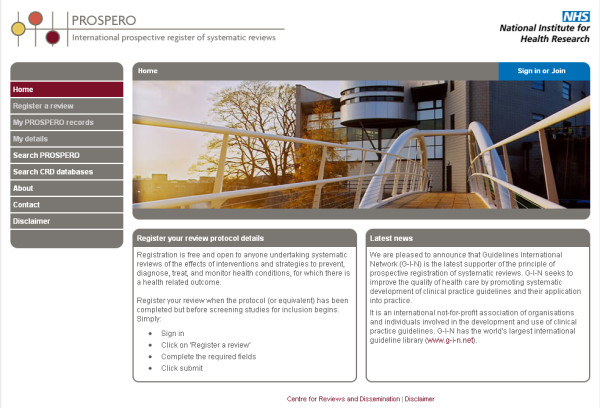
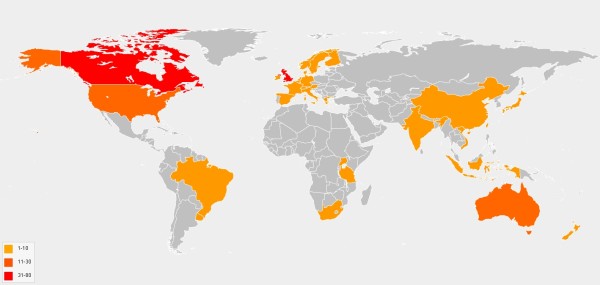
BACKGROUND: Following publication of the PRISMA statement, the UK Centre for Reviews and Dissemination (CRD) at the University of York in England began to develop an international prospective register of systematic reviews with health-related outcomes. The objectives were to reduce unplanned duplication of reviews and provide transparency in the review process, with the aim of minimizing reporting bias. METHODS: An international advisory group was formed and a consultation undertaken to establish the key items necessary for inclusion in the register and to gather views on various aspects of functionality. This article describes the development of the register, now called PROSPERO, and the process of registration. RESULTS: PROSPERO offers free registration and free public access to a unique prospective register of systematic reviews across all areas of health from all around the world. The dedicated web-based interface is electronically searchable and available to all prospective registrants. At the moment, inclusion in PROSPERO is restricted to systematic reviews of the effects of interventions and strategies to prevent, diagnose, treat, and monitor health conditions, for which there is a health-related outcome.Ideally, registration should take place before the researchers have started formal screening against inclusion criteria but reviews are eligible as long as they have not progressed beyond the point of completing data extraction.The required dataset captures the key attributes of review design as well as the administrative details necessary for registration.Submitted registration forms are checked against the scope for inclusion in PROSPERO and for clarity of content before being made publicly available on the register, rejected, or returned to the applicant for clarification.The public records include an audit trail of major changes to planned methods, details of when the review has been completed, and links to resulting publications when provided by the authors. CONCLUSIONS: There has been international support and an enthusiastic response to the principle of prospective registration of protocols for systematic reviews and to the development of PROSPERO.In October 2011, PROSPERO contained 200 records of systematic reviews being undertaken in 26 countries around the world on a diverse range of interventions.
Overview
CoChat Summary
## TL;DR
PROSPERO is a free, web-based international prospective register for systematic reviews with health-related outcomes, created to reduce unplanned duplication and improve transparency in review methods. By October 2011, it contained 200 records from 26 countries.
## Key findings
- PROSPERO provides free registration and free public access, with an electronically searchable interface and an audit trail of major changes to planned methods.
- At the time of writing, inclusion was limited to systematic reviews of effects of interventions and strategies to prevent, diagnose, treat, and monitor health conditions with a health-related outcome; the paper states that 200 records were in the register in October 2011.
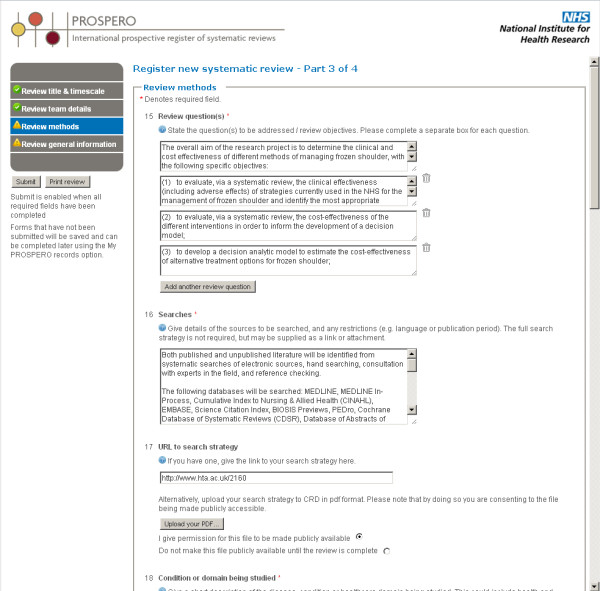
- The registration form required a minimum dataset with 15 review-method fields, of which 12 were required, plus administrative and general-information fields.
- In the Delphi consultation, 266 participants responded to one or both surveys, and their feedback supported balancing completeness with a process that was not overly burdensome.
## Methods
- Development paper describing the design and registration process for PROSPERO, not an evaluation of review outcomes.
- A small international advisory group guided development; a wider international consultation used a two-round electronic modified Delphi survey to define required and optional fields and gather views on functionality.
- Feedback from the Delphi process and pilot testing informed the final register and registration workflow.
## Limitations
- The paper states that the initial scope was restricted to certain health-related systematic reviews; scoping reviews, reviews of reviews, methodological reviews, and animal-study reviews were excluded at that time.
- The paper notes that the registration template may not suit broader types of knowledge syntheses, and that other templates may be needed for different fields; this is an explicit design limitation.
- Evidence of limitation from the text: the paper reports register development and early uptake, but not a formal outcome evaluation of whether PROSPERO reduced duplication or reporting bias.
Model-written summary. Check it against the paper before relying on it.
Integrity signals
Registry
Cites
Statistics
Figures
Verification
Claims the paper makes
2 Valid · 1 Not valid · 2 Not checked · 40 Own results and interpretations
The cited sources support only part of this claim — read each source’s verdict below.
In the paper
“Following the 2010 publication of the PRISMA statement advocating registration of systematic review protocols [1,2] and in response to user demand and increased recognition of the importance of accurate prospective registers of research [3], the Centre for Reviews and Dissemination (CRD) at the University of York in England began to develop PROSPERO, an international prospective register of system”
§ The nuts and bolts of PROSPERO: an international prospective register of systematic reviews > Background
What the sources say
- Partly supportedcites [1] Liberati A, Altman DG, Tetzlaff J, Mulrow C, Gøtzsche PC, Ioannidis JPA, Clarke M, Devereaux PJ, Kleijnen J, Moher D: The PRISMA statement for reporting systematic reviews and meta-analyses of studies that evaluate health care interventions: explanation and elaboration. PLoS Med. 2009, 6: e1000100-10.1371/journal.pmed.1000100. sourceExperimental — accuracy not yet measured
Our copy (the PRISMA Explanation and Elaboration, PLoS Medicine, 2009) does deal with protocol registration — Item 5 'PROTOCOL AND REGISTRATION' (METHODS) asks authors to 'indicate if a review protocol exists, if and where it can be accessed... and, if available, provide registration information including the registration number', and the TITLE and ABSTRACT section recommends reporting a registration number. But it frames this as a conditional reporting item and explicitly notes that 'protocol registration for systematic reviews is still not common practice', rather than advocating that reviews be registered; the paper nowhere calls for prospective registration as a requirement. Also, our copy is a 2009 publication, so the '2010 publication' date attributed here is not supported by it. (LLM, conf=0.78)
- Partly supportedcites [2] Moher D, Tetzlaff J, Altman DG, The PRISMA Group: Preferred reporting items for systematic reviews and meta-analyses: the PRISMA statement. PLoS Med. 2009, 6: e1000097-10.1371/journal.pmed.1000097. sourceExperimental — accuracy not yet measured
Our copy does support the substance of the attribution: in 'Developing the PRISMA Statement' the paper states that 'Item 5 asks authors to provide registration information about the systematic review, including a registration number, if available', noting that systematic review registration was 'not yet widely available' and that transparency/accountability benefits would accrue, and Box 1 ('Completing a Systematic Review Is an Iterative Process') stresses the value of a publicly accessible protocol. Two parts are not supported, however: (a) the dating — our copy is the PRISMA Statement published in PLoS Medicine in 2009, and no passage of it refers to a 2010 publication; (b) the wording 'registration of systematic review protocols' — Item 5 as described here asks for registration information about the review (a registration number), not explicitly for prospective protocol registration. (LLM, conf=0.72)
plainstates a cause- Asserted: passes — The authors put it forward as true.
- Checkable: passes — It can be checked against evidence.
- Load-bearing: passes — The paper’s conclusions depend on it.
- Based: passes — The paper gives a reason why it holds.
- Partly supported
A result the paper states — it cites no source for it, so there is none to check. The quote shows it is in the paper.
In the paper
“The register is electronically searchable; open to all prospective registrants; requires the submission of a minimum data set; and has a validation mechanism to ensure that entries fall within scope and are complete.”
§ The nuts and bolts of PROSPERO: an international prospective register of systematic reviews > Results and discussion > Design of the register
plainstates a cause- Asserted: passes — The authors put it forward as true.
- Checkable: passes — It can be checked against evidence.
- Load-bearing: unclear — It is unclear whether the paper’s conclusions depend on it.
- Based: passes — The paper gives a reason why it holds.
In the paper
“Reviews of methodological issues will not be included in PROSPERO as the findings are likely to relate to recommendations about changes in methods rather than direct effects on health outcomes [8].”
§ The nuts and bolts of PROSPERO: an international prospective register of systematic reviews > Results and discussion > Scope for inclusion
What the sources say
- Not checked yetcites [8] Tricco A, Tetzlaff J, Sampson M, Fergusson D, Cogo E, Horsley T, Moher D: Few systematic reviews exist documenting the extent of bias: a systematic review. J Clin Epidemiol. 2008, 61: 422-434. 10.1016/j.jclinepi.2007.10.017. source
plain- Asserted: passes — The authors put it forward as true.
- Checkable: passes — It can be checked against evidence.
- Load-bearing: passes — The paper’s conclusions depend on it.
- Based: passes — The paper gives a reason why it holds.
A result the paper reports from its own data — it cites no other source for it, so there is none to check. The quote shows it is in the paper.
In the paper
“PROSPERO offers free registration and free public access to a unique prospective register of systematic reviews across all areas of health from all around the world.”
§ The nuts and bolts of PROSPERO: an international prospective register of systematic reviews > Abstract > Results
plain- Asserted: passes — The authors put it forward as true.
- Checkable: passes — It can be checked against evidence.
- Load-bearing: passes — The paper’s conclusions depend on it.
- Based: passes — The paper gives a reason why it holds.
A result the paper reports from its own data — it cites no other source for it, so there is none to check. The quote shows it is in the paper.
In the paper
“The organizational affiliation of the review*, funding sources/sponsors* and conflicts of interest* were categorized as essential details by respondents to the consultation.”
§ The nuts and bolts of PROSPERO: an international prospective register of systematic reviews > Results and discussion > The PROSPERO registration form
plain- Asserted: passes — The authors put it forward as true.
- Checkable: passes — It can be checked against evidence.
- Load-bearing: unclear — It is unclear whether the paper’s conclusions depend on it.
- Based: passes — The paper gives a reason why it holds.
7 more claims
Create a free account to see all 45 claims and to verify the 2 references still open.
- Probably not a substantial claim. 29
- It may state two separate claims as one. 10
Claims other papers make about this one
Each is checked against this paper’s own text: does it say what the citing paper says it does?
The source backs part of the claim, not all of it — or backs it for a different population, condition or comparison.
In the citing paper
“the protocol outline preregistered with PROSPERO (#CRD42021281153) (28).”
From Interventions for insomnia in cancer patients and survivors-a comprehensive systematic review and meta-analysis (2024) · cites this paper as [28]
Experimental — accuracy not yet measuredThe source backs part of the claim, not all of it — or backs it for a different population, condition or comparison.
In the citing paper
“The present review was preregistered with PROSPERO (registration number: CRD42018096911)20”
From Mindfulness‐based interventions for psychological and physical health outcomes in cancer patients and survivors: A systematic review and meta‐analysis of randomized controlled trials (2019) · cites this paper as [20]
Experimental — accuracy not yet measuredThe cited source says what the claim attributes to it.
In the citing paper
“The eligibility of the selected systematic reviews was further validated by assessing their adherence to the PRISMA (Preferred Reporting Items for Systematic Reviews and Meta-Analyses) guidelines [13]. Additionally, the registration status of these reviews was verified in the PROSPERO database [14].”
From Hallucination Rates and Reference Accuracy of ChatGPT and Bard for Systematic Reviews: Comparative Analysis (2024) · cites this paper as [14]
The cited source says what the claim attributes to it.
In the citing paper
“Publicly recording details of inclusion and exclusion criteria, planned outcomes, and syntheses enables peer reviewers, journal editors, and readers to compare the completed review with what was planned, identify any deviations, and decide whether these may have introduced bias.”
From PRISMA 2020 explanation and elaboration: updated guidance and exemplars for reporting systematic reviews (2021) · cites this paper as [153]
The cited source says what the claim attributes to it.
In the citing paper
“In addition, the publishing landscape has transformed, with multiple avenues now available for registering and disseminating systematic review protocols,[33, 34] disseminating reports of systematic reviews, and sharing data and materials, such as preprint servers and publicly accessible repositories.”
From The PRISMA 2020 statement: An updated guideline for reporting systematic reviews (2021) · cites this paper as [33]
5 more claims about this paper
Create a free account to see every claim other papers make about this one.
Citations
Cites
Preferred Reporting Items for Systematic Reviews and Meta-Analyses: the PRISMA statement
Moher, D., Liberati, A., Tetzlaff, J., Altman, D. G., & for the PRISMA Group (2009) · BMJ · doi:10.1136/bmj.b2535 · Cited by 83,823
Self-citationPreferred Reporting Items for Systematic Reviews and Meta-Analyses: The PRISMA Statement
Moher, D., Liberati, A., Tetzlaff, J., Altman, D. G., & The PRISMA Group (2009) · PLoS Medicine · doi:10.1371/journal.pmed.1000097 · Cited by 64,042
Self-citationPreferred reporting items for systematic reviews and meta-analyses: the PRISMA Statement.
(2009) · PubMed Central · Cited by 44,859
Self-citationLiberati, A., Altman, D. G., Tetzlaff, J., Mulrow, C., Gøtzsche, P. C., Ioannidis, J. P. A., Clarke, M., Devereaux, P. J., Kleijnen, J., & Moher, D. (2009) · PLoS Medicine · doi:10.1371/journal.pmed.1000100 · Cited by 28,164 · cited 2×
“Following the 2010 publication of the PRISMA statement advocating registration of systematic review protocols [1,2] and in response to user demand and increased recognition of the importance of accurate prospective registers of research [3], the Centre for Reviews and Dissemination (CRD) at the University of York in E…”
BackgroundMethodSelf-citationWang, G., Ma, R., Qiao, G., Wada, K., Aizawa, Y., & Satoh, T. (2015) · Integrative Medicine International · doi:10.1159/000368408 · Cited by 18,657
Moher, D. (2009) · Journal of Chinese Integrative Medicine · doi:10.3736/jcim20090918 · Cited by 909
Self-citationAn international registry of systematic-review protocols
Booth, A., Clarke, M., Ghersi, D., Moher, D., Petticrew, M., & Stewart, L. (2011) · The Lancet · doi:10.1016/s0140-6736(10)60903-8 · Cited by 512
Self-citationComparison of protocols and registry entries to published reports for randomised controlled trials
Dwan, K., Altman, D. G., Cresswell, L., Blundell, M., Gamble, C. L., & Williamson, P. R. (2011) · Cochrane Database of Systematic Reviews · doi:10.1002/14651858.mr000031.pub2 · Cited by 243
Clarke, M., Hopewell, S., & Chalmers, I. (2010) · The Lancet · doi:10.1016/s0140-6736(10)61045-8 · Cited by 166 · cited 1×
“This includes systematic reviews undertaken before and after clinical trials to help design the trial or to place the results in context [7].”
BackgroundSelf-citationSystematic reviews: when is an update an update?
Moher, D., & Tsertsvadze, A. (2006) · The Lancet · doi:10.1016/s0140-6736(06)68358-x · Cited by 110 · cited 1×
“Updating a systematic review is a discrete event during which efforts are made to identify and incorporate new evidence into a previously completed systematic review [10].”
BackgroundSelf-citation
Cited by
Items 101–146 of 146
Hannan, A. L., Harders, M. P., Hing, W., Climstein, M., Coombes, J. S., & Furness, J. (2019) · BMC Sports Science, Medicine and Rehabilitation · doi:10.1186/s13102-019-0126-8 · Cited by 119
Johannsen, M., Nissen, E. R., Lundorff, M., & O'Toole, M. S. (2022) · Clinical Psychology Review · doi:10.1016/j.cpr.2022.102156 · Cited by 116
How to reduce unnecessary duplication: use PROSPERO
Moher, D., Booth, A., & Stewart, L. (2014) · BJOG: An International Journal of Obstetrics & Gynaecology · doi:10.1111/1471-0528.12657 · Cited by 113
Self-citationRyan, P. M., Seltzer, S., Hayward, N. E., Rodriguez, D. A., Sless, R. T., & Hawkes, C. P. (2021) · The Journal of Pediatrics · doi:10.1016/j.jpeds.2021.05.009 · Cited by 111
A Youth Suicide Prevention Plan for Canada: A Systematic Review of Reviews
Bennett, K., Rhodes, A. E., Duda, S., Cheung, A. H., Manassis, K., Links, P., Mushquash, C., Braunberger, P., Newton, A. S., Kutcher, S., et al. (2015) · The Canadian Journal of Psychiatry · doi:10.1177/070674371506000603 · Cited by 83
Ewais, T., Begun, J., Kenny, M., Rickett, K., Hay, K., Ajilchi, B., & Kisely, S. (2019) · Journal of Psychosomatic Research · doi:10.1016/j.jpsychores.2018.11.010 · Cited by 89
HIIT is not superior to MICT in altering blood lipids: a systematic review and meta-analysis
Wood, G., Murrell, A., van der Touw, T., & Smart, N. (2019) · BMJ Open Sport & Exercise Medicine · doi:10.1136/bmjsem-2019-000647 · Cited by 85
Meta-analytic insights into evolutionary ecology: an introduction and synthesis
Nakagawa, S., & Poulin, R. (2012) · Evolutionary Ecology · doi:10.1007/s10682-012-9593-z · Cited by 77
Hindelang, M., Sitaru, S., & Zink, A. (2024) · JMIR Medical Informatics · doi:10.2196/56628 · Cited by 79
Lunny, C., Brennan, S. E., Reid, J., McDonald, S., & McKenzie, J. E. (2020) · Journal of Clinical Epidemiology · doi:10.1016/j.jclinepi.2019.09.025 · Cited by 71
Beamish, N., Fisher, J., & Rowe, H. (2019) · Australasian Psychiatry · doi:10.1177/1039856218789764 · Cited by 70
SPIRIT (Standard Protocol Items: Recommendations for Interventional Trials)
Moher, D., & Chan, A. (2014) · Guidelines for Reporting Health Research: A User's Manual · doi:10.1002/9781118715598.ch7 · Cited by 66
Self-citationMeta-Analysis of Complex Interventions
Tanner-Smith, E. E., & Grant, S. (2018) · Annual Review of Public Health · doi:10.1146/annurev-publhealth-040617-014112 · Cited by 62
Park, H. Y., Suh, C. H., Woo, S., Kim, P. H., & Kim, K. W. (2022) · Korean Journal of Radiology · doi:10.3348/kjr.2021.0808 · Cited by 61
“PROSPERO is a database that authors can use to register their protocols [52].”
Protocol registration improves reporting quality of systematic reviews in dentistry
dos Santos, M. B. F., Agostini, B. A., Bassani, R., Pereira, G. K. R., & Sarkis-Onofre, R. (2020) · BMC Medical Research Methodology · doi:10.1186/s12874-020-00939-7 · Cited by 61
Determinants of eating patterns and nutrient intake among adolescent athletes: a systematic review
Noll, M., de Mendonça, C. R., de Souza Rosa, L. P., & Silveira, E. A. (2017) · Nutrition Journal · doi:10.1186/s12937-017-0267-0 · Cited by 60
Lin, D., Lapen, K., Sherer, M. V., Kantor, J., Zhang, Z., Boyce, L. M., Bosch, W., Korenstein, D., & Gillespie, E. F. (2020) · International Journal of Radiation Oncology*Biology*Physics · doi:10.1016/j.ijrobp.2020.04.011 · Cited by 59
Takaesu, Y., Utsumi, T., Okajima, I., Shimura, A., Kotorii, N., Kuriyama, K., Yamashita, H., Suzuki, M., Watanabe, N., & Mishima, K. (2019) · Sleep Medicine Reviews · doi:10.1016/j.smrv.2019.101214 · Cited by 57
Abbott, R., Bethel, A., Rogers, M., Whear, R., Orr, N., Shaw, L., Stein, K., & Thompson Coon, J. (2022) · BMJ Evidence-Based Medicine · doi:10.1136/bmjebm-2021-111710 · Cited by 56
Paudel, G., Vandelanotte, C., Dahal, P. K., Biswas, T., Yadav, U. N., Sugishita, T., & Rawal, L. (2022) · Journal of Global Health · doi:10.7189/jogh.12.04056 · Cited by 54
“This review adhered to the PRISMA guidelines [26] and is registered in the PROSPERO website [151] (Registration number: CRD42021242930).”
MethodNissen, E. R., Neumann, H., Knutzen, S. M., Henriksen, E. N., Amidi, A., Johansen, C., von Heymann, A., Christiansen, P., & Zachariae, R. (2024) · JNCI Cancer Spectrum · doi:10.1093/jncics/pkae041 · Cited by 46
Questions and answers about conducting systematic reviews in sport and exercise psychology
Gunnell, K., Poitras, V. J., & Tod, D. (2020) · International Review of Sport and Exercise Psychology · doi:10.1080/1750984x.2019.1695141 · Cited by 45
“A commonly used free preregistration platform for health research, and by extension some sport and exercise psychology research that specifically has a health-related outcome, is the International Prospective Register of Systematic Reviews (PROSPERO; Booth et al., 2012; see Table 1).”
MethodWood, G., Taylor, E., Ng, V., Murrell, A., Patil, A., van der Touw, T., Sigal, R., Wolden, M., & Smart, N. (2022) · British Journal of Sports Medicine · doi:10.1136/bjsports-2021-103999 · Cited by 45
Takeshima, M., Utsumi, T., Aoki, Y., Wang, Z., Suzuki, M., Okajima, I., Watanabe, N., Watanabe, K., & Takaesu, Y. (2020) · Psychiatry and Clinical Neurosciences · doi:10.1111/pcn.12976 · Cited by 43
“Methods This study was conducted in accordance with the PRISMA recommendations for reporting systematic reviews and meta-analyses,(23) and preregistered with PROSPERO (registration number: CRD 42019141232).(24)”
MethodWu, J., Liu, X., Li, M., Li, W., Su, Z., Lin, S., Garay, L., Zhang, Z., Zhang, Y., Zeng, Q., et al. (2024) · NEJM AI · doi:10.1056/aira2400012 · Cited by 41
Wu, V. S., Smith, A. B., & Girgis, A. (2022) · European Journal of Cancer Care · doi:10.1111/ecc.13269 · Cited by 40
Harris, R. G., Neale, E. P., & Ferreira, I. (2019) · The American Journal of Clinical Nutrition · doi:10.1093/ajcn/nqz071 · Cited by 38
Naude, C., Skvarc, D., Knowles, S., Russell, L., Evans, S., & Mikocka-Walus, A. (2023) · Journal of Psychosomatic Research · doi:10.1016/j.jpsychores.2023.111232 · Cited by 37
A systematic review of drug treatment of Vulvodynia: Evidence of a strong placebo effect
Miranda Varella Pereira, G., Soriano Marcolino, M., Silveira Nogueira Reis, Z., & Vale de Castro Monteiro, M. (2018) · BJOG: An International Journal of Obstetrics & Gynaecology · doi:10.1111/1471-0528.15223 · Cited by 32
Wood, G., Taylor, E., Ng, V., Murrell, A., Patil, A., van der Touw, T., Wolden, M., Andronicos, N., & Smart, N. A. (2023) · Sports Medicine · doi:10.1007/s40279-023-01817-0 · Cited by 31
“This systematic review with multivariate meta-analysis and meta-regression was designed by GW and NS and registered in the International Prospective Register of Systematic Reviews (PROSPERO) [28], CRD42020151925.”
MethodPandis, N., Fleming, P. S., Worthington, H., Dwan, K., & Salanti, G. (2015) · PLOS ONE · doi:10.1371/journal.pone.0137667 · Cited by 30
“While research on selective reporting has focused both on RCT s and non-randomized studies [10,11], similar issues may arise within SRs [12].”
BackgroundChandio, N., Micheal, S., Tadakmadla, S. K., Sohn, W., Cartwright, S., White, R., Sanagavarapu, P., Parmar, J. S., & Arora, A. (2022) · BMC Oral Health · doi:10.1186/s12903-022-02270-7 · Cited by 29
“The protocol of this systematic review has been registered and published with the PROSPERO International Prospective Register of Systematic Reviews (CRD42022312080) [29].”
MethodA Systematic Review of Body Image Measures for People Diagnosed with Head and Neck Cancer (HNC)
Shunmuga Sundaram, C., Dhillon, H. M., Butow, P. N., Sundaresan, P., & Rutherford, C. (2019) · Supportive Care in Cancer · doi:10.1007/s00520-019-04919-6 · Cited by 29
GPS use and navigation ability: A systematic review and meta-analysis
Miola, L., Muffato, V., Sella, E., Meneghetti, C., & Pazzaglia, F. (2024) · Journal of Environmental Psychology · doi:10.1016/j.jenvp.2024.102417 · Cited by 24
Finning, K., Moore, D., Ukoumunne, O. C., Danielsson-Waters, E., & Ford, T. (2017) · Systematic Reviews · doi:10.1186/s13643-017-0523-6 · Cited by 22
“This protocol follows the Preferred Reporting Items for Systematic review and Meta-Analysis Protocols (PRISMAP) guidelines [19] (see Additional file 1) and is registered on PROSPERO, an international register of systematic reviews [20] (CRD42016052961).”
MethodReporting and methodological quality of meta-analyses in urological literature
Xia, L., Xu, J., & Guzzo, T. J. (2017) · PeerJ · doi:10.7717/peerj.3129 · Cited by 22
“Another common registration platform for systematic reviews and meta-analyses is 402 PROSPERO (Booth et al., 2012).”
BackgroundFausto, D. Y., Leitão, A. E., Silveira, J., Martins, J. B. B., Dominski, F. H., & Guimarães, A. C. A. (2023) · Menopause · doi:10.1097/gme.0000000000002105 · Cited by 21
There is room for improvement in the use of scoping reviews in dentistry
Zauza, D., Dotto, L., Moher, D., Tricco, A. C., Agostini, B. A., & Sarkis-Onofre, R. (2022) · Journal of Dentistry · doi:10.1016/j.jdent.2022.104161 · Cited by 16
Self-citationMuzambi, R., Bhaskaran, K., Brayne, C., Smeeth, L., & Warren-Gash, C. (2019) · BMJ Open · doi:10.1136/bmjopen-2019-030874 · Cited by 11
MS2: Multi-Document Summarization of Medical Studies
DeYoung, J., Beltagy, I., van Zuylen, M., Kuehl, B., & Wang, L. L. (2021) · arXiv · doi:10.48550/arxiv.2104.06486 · Cited by 10
“They are a fixture in the biomedical literature, with many established protocol around their registration, production, and publication (Chalmers et al., 2002; Starr et al., 2009; Booth et al., 2012).”
BackgroundDaily Timing of Meals and Weight Loss After Bariatric Surgery: A Systematic Review
Cossec, M., Atger, F., Blanchard, C., & Jacobi, D. (2021) · Obesity Surgery · doi:10.1007/s11695-021-05278-0 · Cited by 9
“The methodological features of this review were specified in advance and documented in the International Prospective Register of Systematic Reviews (PROSPERO, registration number 181053) [17].”
MethodComparison of protocols and registry entries to published reports for systematic reviews
Pieper, D., Allers, K., Mathes, T., Hoffmann, F., Klerings, I., Rombey, T., & Nussbaumer-Streit, B. (2020) · Cochrane Database of Systematic Reviews · doi:10.1002/14651858.mr000053 · Cited by 8
Xu, J., Guo, Y., Wang, F., Xu, H., Lucero, R., Bian, J., & Prosperi, M. (2022) · BMJ Open · doi:10.1136/bmjopen-2021-059715 · Cited by 6
Protocol for Development of a Reporting Guideline for Causal and Counterfactual Prediction Models
(2021) · doi:10.1101/2021.11.19.21266604 · Cited by 6
Concussion Disrupts Sleep in Adolescents: A Systematic Review and Meta-Analysis
Noordeen, S., Wang, P., Strazda, A. E., Arany, E. S., Ergisi, M., Yeo, L. J., Popovic, R., Mahendran, A., Khawaja, M., Grover, K., et al. (2025) · Clocks & Sleep · doi:10.3390/clockssleep7030046 · Cited by 2
“Pre-registration was performed in accordance with best practice guidelines [34,35].”
(2018) · International journal of body, mind and culture · doi:10.22122/ijbmc.v5i2.117 · Cited by 1
“ACT aims to increase the psychological acceptance of subjective experiences (thoughts and feelings), decrease ineffective efforts to control them, and improve awareness of the present-moment (Booth et al., 2012).”
Background
Metadata
- Authors
- Booth, A., Clarke, M., Dooley, G., Ghersi, D., Moher, D., Petticrew, M., & Stewart, L.
- Affiliations
- University of York (GB)
- Queen's University Belfast (GB)
- National Health and Medical Research Council (AU)
- University of Ottawa (CA)
- London School of Hygiene & Tropical Medicine (GB)
- Corresponding author
- Booth, Alison
- ORCID
- Venue
- Systematic Reviews
- Published
- 2012-02-09
- Volume
- 1
- Issue
- 1
- Pages
- 2-2
- ISSN
- 2046-4053 (ISSN-L)
- PMC
- PMC3348673
- OpenAlex
- W2163661402
- Cited by
- 1,433
- References
- 14
- Citations by year
- 2026: 177 · 2025: 127 · 2024: 159 · 2023: 164 · 2022: 157 · 2021: 167 · 2020: 120 · 2019: 96 · 2018: 70 · 2017: 68 · 2016: 46 · 2015: 39 · 2014: 21 · 2013: 16 · 2012: 4
- FWCI
- 7.05
- Type
- journal article
- Language
- en
- Open access
- gold
- doi.org
- Licence
- cc-by
- creativecommons.org/licenses/by/2.0 (tdm)
- Locations
- Systematic Reviews (publishedVersion, cc-by)
- Europe PMC (PubMed Central) (publishedVersion, cc-by)
- PubMed Central (publishedVersion, cc-by)
- PubMed (publishedVersion)
- uO Research (University of Ottawa) (submittedVersion, public-domain)
- DOAJ (DOAJ: Directory of Open Access Journals) (submittedVersion)
- Research Portal (Queen's University Belfast) (submittedVersion)
- Funders
- National Institute for Health and Care Research (NF-SI-0507-10259)
- Topics
- Social Sciences › Decision Sciences › Statistics, Probability and Uncertainty › Meta-analysis and systematic reviews
- Social Sciences › Library and Information Sciences › Academic Publishing and Open Access
- Social Sciences › Sociology and Political Science › Delphi Technique in Research
- Keywords
- Prospero, reporting bias, PRISMA, health outcomes, audit trail
- MeSH terms
- Registries, Review Literature as Topic, Internet, Information Dissemination, Internationality, Evidence-Based Practice
About these checks
Registry, retraction, Cites and statistics results are computed, not judged, with one exception: a printed reference that no index lists is read once by a model before it counts as a citation error. Claims are extracted by a model and kept only when their quote appears verbatim in the text; each cited source is then checked, with a model’s help, for whether it says what the claim relies on. Those verdicts can be wrong — read the claim’s quote and the cited source before relying on one.
The claim verdicts this report counts are experimental: their accuracy is not yet measured.
A language model drew the claims from the paper on 2026-10-11, under version 3 of the claim definition (model deepseek-v4.1-flash, prompt extract-v3).
A second model labelled each claim on 2026-10-11 (model jev-1.13-20260917, definition revision gold-guideline-v0.2).
Cited sources are checked with a language model’s help (qwen3.8-omni-flash).
Statistics and arithmetic are recomputed, not judged.
Confidence bands are shown only for fields calibrated on our annotated test set. None is calibrated yet, so no band is shown.
What counts as a claim ›How we measure confidence ›How we check this ›
Are you an author, or do you see a problem with this page? Request a review
Data sources
Bibliographic data: Semantic Scholar, OpenAlex, Crossref.
Contains information from the Semantic Scholar Academic Graph Datasets, made available under the ODC Attribution License (ODC-BY 1.0).
Semantic Scholar’s data is described in: Kinney, R., et al. (2023). The Semantic Scholar Open Data Platform. arXiv:2301.10140.
