

Conflicts of interest and critiques of the use of systematic reviews in policymaking: an analysis of opinion articles
Open accessThe DOI matches its Crossref record; 51 of the 51 references it cites were found in a registry or an index.
Abstract
BACKGROUND: Strong opinions for or against the use of systematic reviews to inform policymaking have been published in the medical literature. The purpose of this paper was to examine whether funding sources and author financial conflicts of interest were associated with whether an opinion article was supportive or critical of the use of systematic reviews for policymaking. We examined the nature of the arguments within each article, the types of disclosures present, and whether these articles are being cited in the academic literature. METHODS: We searched for articles that expressed opinions about the use of systematic reviews for policymaking. We included articles that presented opinions about the use of systematic reviews for policymaking and categorized each article as supportive or critical of such use. We extracted all arguments regarding the use of systematic reviews from each article and inductively coded each as internal or external validity argument, categorized disclosed funding sources, conflicts of interest, and article types, and systematically searched for undisclosed financial ties. We counted the number of times each article has been cited in the "Web of Science." We report descriptive statistics. RESULTS: Articles that were critical of the use of systematic reviews (n=25) for policymaking had disclosed or undisclosed industry ties 2.3 times more often than articles that were supportive of the use (n=34). We found that editorials, comments, letters, and perspectives lacked published disclosures nearly twice as often (60% v. 33%) as other types of articles. We also found that editorials, comments, letters, and perspectives were less frequently cited in the academic literature than other article types (median number of citations=5 v. 19). CONCLUSIONS: It is important to consider whether an article has industry ties when evaluating the strength of the argument for or against the use of systematic reviews for policymaking. We found that journal conflict of interest disclosures are often inadequate, particularly for editorials, comments, letters, and perspectives and that these articles are being cited as evidence in the academic literature. Our results further suggest the need for more consistent and complete disclosure for all article types.
Overview
The claims and statistics of this paper haven’t been checked yet.
Free: it reads the open-access text and checks the first 5 claims that cite a source we can check. Create a free account to check every claim.
Integrity signals
Registry
Cites
Statistics
Figures
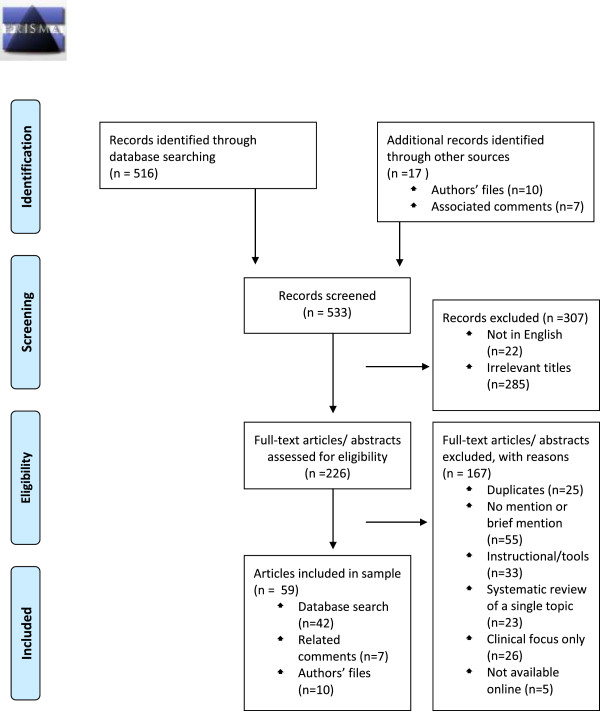
Verification
Claims the paper makes
The claims and statistics of this paper haven’t been checked yet.
Free: it reads the open-access text and checks the first 5 claims that cite a source we can check. Create a free account to check every claim.
Claims other papers make about this one
Each is checked against this paper’s own text: does it say what the citing paper says it does?
The source backs part of the claim, not all of it — or backs it for a different population, condition or comparison.
In the citing paper
“This lack of disclosure is consistent with the lack of transparency and compliance with conflict of interest disclosure policies reported in several fields [48, 55–58].”
From Relationship between research outcomes and risk of bias, study sponsorship, and author financial conflicts of interest in reviews of the effects of artificially sweetened beverages on weight outcomes: a systematic review of reviews (2016) · cites this paper as [48]
Experimental — accuracy not yet measuredIn the citing paper
“We used a modification of a previous method to identify undisclosed financial conflicts of interest of authors [48].”
Self-check
Percentages, sums and reported differences re-computed from the paper’s own numbers.
The self-check needs the paper’s full text.
Citations
Cites
Methods for the thematic synthesis of qualitative research in systematic reviews
Thomas, J., & Harden, A. (2008) · BMC Medical Research Methodology · doi:10.1186/1471-2288-8-45 · Cited by 9,312
Weber, R. (1990) · doi:10.4135/9781412983488 · Cited by 7,750
Cochrane Handbook for Systematic Reviews of Interventions Version 5.0.1. The Cochrane Collaboration
Higgins, J. P. T., Green, S. R., & Higgins, J. P. T. (2008) · Cited by 7,259
Methods for the synthesis of qualitative research: a critical review
Barnett-Page, E., & Thomas, J. (2009) · BMC Medical Research Methodology · doi:10.1186/1471-2288-9-59 · Cited by 2,042
Industry sponsorship and research outcome
Lundh, A., Lexchin, J., Mintzes, B., Schroll, J. B., & Bero, L. (2017) · Cochrane Database of Systematic Reviews · doi:10.1002/14651858.mr000033.pub3 · Cited by 1,697
Self-citationEvidence-Based Public Health: A Fundamental Concept for Public Health Practice
Brownson, R. C., Fielding, J. E., & Maylahn, C. M. (2009) · Annual Review of Public Health · doi:10.1146/annurev.publhealth.031308.100134 · Cited by 1,124 · cited 1×
“The authors of these articles generally argued that well-conducted systematic reviews were the highest level of evidence available [30,31] and effectively summarized large bodies of evidence, resulting in strong external validity [32].”
BackgroundBoutron, I. (2010) · JAMA · doi:10.1001/jama.2010.651 · Cited by 842 · cited 1×
“Our results are consistent with previous studies that showed a positive relationship between industry ties and favorable conclusions in research articles, even when the results of the study do not support the conclusions drawn [13,14,45,48].”
ResultIndustry sponsorship and research outcome
Lundh, A., Sismondo, S., Lexchin, J., Busuioc, O. A., & Bero, L. (2012) · Cochrane Database of Systematic Reviews · doi:10.1002/14651858.mr000033.pub2 · Cited by 605 · cited 2×
“Primary studies or reviews funded by the pharmaceutical or tobacco industries are more likely to having findings or conclusions that favor the sponsor’s product than those funded by non-industry sources [12-14].”
BackgroundSelf-citationA brief history of research synthesis
Chalmers, I., Hedges, L. V., & Cooper, H. (2002) · Evaluation & the Health Professions · doi:10.1177/0163278702025001003 · Cited by 552 · cited 1×
“Systematic reviews synthesize the results of primary qualitative and quantitative research, using strategies to reduce bias [6,7].”
BackgroundGREENHALGH, T., POTTS, H. W. W., WONG, G., BARK, P., & SWINGLEHURST, D. (2009) · The Milbank Quarterly · doi:10.1111/j.1468-0009.2009.00578.x · Cited by 541 · cited 1×
“Systematic reviews of qualitative research summarize and narratively synthesize results using a range of methods [8-10].”
BackgroundHarden, A., Garcia, J., Oliver, S., Rees, R., Shepherd, J., Brunton, G., & Oakley, A. (2004) · Journal of Epidemiology and Community Health · doi:10.1136/jech.2003.014829 · Cited by 328 · cited 1×
“Opinion pieces are often difficult to locate, are inconsistently indexed, and may have uninformative titles [20,21].”
BackgroundRising, K., Bacchetti, P., & Bero, L. (2008) · PLoS Medicine · doi:10.1371/journal.pmed.0050217 · Cited by 328 · cited 1×
“For example, unpublished data are more likely to show that a study drug is ineffective than data that are published [44-47].”
BackgroundSelf-citationUse of research to inform public policymaking
Lavis, J. N., Posada, F. B., Haines, A., & Osei, E. (2004) · The Lancet · doi:10.1016/s0140-6736(04)17317-0 · Cited by 307 · cited 1×
“contended that this lack of bias, as well the transparency and comprehensiveness of systematic review methodology, provides policymakers with more complete and valid information than they are likely to encounter in individual studies [28].”
BackgroundEffect of reporting bias on meta-analyses of drug trials: reanalysis of meta-analyses
Hart, B., Lundh, A., & Bero, L. (2012) · BMJ · doi:10.1136/bmj.d7202 · Cited by 255 · cited 2×
“For example, unpublished data are more likely to show that a study drug is ineffective than data that are published [44-47].”
BackgroundResultSelf-citationYank, V., Rennie, D., & Bero, L. A. (2007) · BMJ · doi:10.1136/bmj.39376.447211.be · Cited by 235 · cited 3×
“After analysis, we then thematically grouped similar arguments together for analysis and coded them as “internal reliability” arguments or “external validity” arguments using adapted definitions from previous studies [14,22].”
BackgroundMethodResultSelf-citationHow Consumers and Policymakers Can Use Systematic Reviews for Decision Making
Bero, L. A., & Jadad, A. R. (1997) · Annals of Internal Medicine · doi:10.7326/0003-4819-127-1-199707010-00007 · Cited by 196
Self-citationAccuracy of Conflict-of-Interest Disclosures Reported by Physicians
Okike, K., Kocher, M. S., Wei, E. X., Mehlman, C. T., & Bhandari, M. (2009) · New England Journal of Medicine · doi:10.1056/nejmsa0807160 · Cited by 192 · cited 1×
“In addition, authors’ COI statements and funding disclosures may not be entirely accurate [18,19].”
BackgroundThe Imperative to Share Clinical Study Reports: Recommendations from the Tamiflu Experience
Doshi, P., Jefferson, T., & Del Mar, C. (2012) · PLoS Medicine · doi:10.1371/journal.pmed.1001201 · Cited by 165 · cited 1×
“For example, unpublished data are more likely to show that a study drug is ineffective than data that are published [44-47].”
BackgroundAdvocating evidence-based health promotion: reflections and a way forward
Rychetnik, L. (2004) · Health Promotion International · doi:10.1093/heapro/dah212 · Cited by 165 · cited 3×
“” In five critical articles [34-38], and six supportive [30,39-43], authors expressed concerns about generalizability of systematic review results.”
BackgroundWhy we need easy access to all data from all clinical trials and how to accomplish it
Gøtzsche, P. C. (2011) · Trials · doi:10.1186/1745-6215-12-249 · Cited by 137
Requirements and Definitions in Conflict of Interest Policies of Medical Journals
Blum, J. A. (2009) · JAMA · doi:10.1001/jama.2009.1669 · Cited by 126 · cited 2×
“Some journals have only recently required and/or printed COI statements and funding disclosure statements [17,25,26].”
BackgroundSystematic reviews and knowledge translation
Tugwell, P. (2006) · Bulletin of the World Health Organization · doi:10.2471/blt.05.026658 · Cited by 115 · cited 2×
“” In five critical articles [34-38], and six supportive [30,39-43], authors expressed concerns about generalizability of systematic review results.”
BackgroundAncker, J. S., & Flanagin, A. (2007) · Science and Engineering Ethics · doi:10.1007/s11948-007-9011-z · Cited by 112 · cited 1×
“Some journals have only recently required and/or printed COI statements and funding disclosure statements [17,25,26].”
BackgroundScientific Value of Systematic Reviews: Survey of Editors of Core Clinical Journals
Meerpohl, J. J., Herrle, F., Antes, G., & von Elm, E. B. (2012) · PLoS ONE · doi:10.1371/journal.pone.0035732 · Cited by 81 · cited 1×
“Systematic reviews synthesize the results of primary qualitative and quantitative research, using strategies to reduce bias [6,7].”
BackgroundCoyne, J. C., Thombs, B. D., & Hagedoorn, M. (2010) · Health Psychology · doi:10.1037/a0017633 · Cited by 80 · cited 1×
“They argued that this is exacerbated when the authors of meta-analyses fail to exclude poor-quality studies or to account for the variability in study quality by performing sensitivity analyses [29].”
BackgroundThe limits of competing interest disclosures.
Bero, L. A., Glantz, S. A., & Hong, M.-K. (2005) · PubMed Central · Cited by 73
Self-citationBetter evidence about wicked issues in tackling health inequities
Petticrew, M. P., Tugwell, P., Welch, V. A., Ueffing, E., Kristjansson, E., Armstrong, R., Doyle, J., & Waters, E. (2009) · Journal of Public Health · doi:10.1093/pubmed/fdp076 · Cited by 71 · cited 2×
“” In five critical articles [34-38], and six supportive [30,39-43], authors expressed concerns about generalizability of systematic review results.”
BackgroundThe International Working Group for HTA Advancement, Neumann, P. J., Drummond, M., Jönsson, B., Luce, B. R., Schwartz, J. S., Siebert, U., & Sullivan, S. D. (2010) · International Journal of Technology Assessment in Health Care · doi:10.1017/s0266462309990833 · Cited by 68 · cited 3×
“criticized the Drug Effectiveness Review Project, which produces systematic reviews of drug-drug comparisons that are used by some US states to develop Medicaid preferred drug lists for not adequately considering costs and a “full societal perspective” [34].”
BackgroundSystematic Reviews: Time to Address Clinical and Policy Relevance As Well As Methodological Rigor
Laupacis, A., & Straus, S. (2007) · Annals of Internal Medicine · doi:10.7326/0003-4819-147-4-200708210-00180 · Cited by 65 · cited 1×
“” In five critical articles [34-38], and six supportive [30,39-43], authors expressed concerns about generalizability of systematic review results.”
BackgroundEditorial Policies of Pediatric Journals: Survey of Instructions for Authors
Meerpohl, J. J., Wolff, R. F., Niemeyer, C. M., Antes, G., & von Elm, E. (2010) · Archives of Pediatrics & Adolescent Medicine · doi:10.1001/archpediatrics.2009.287 · Cited by 64 · cited 1×
“Some journals have only recently required and/or printed COI statements and funding disclosure statements [17,25,26].”
BackgroundHave You Ever Meta-Analysis You Didn't Like?
Goodman, S. N. (1991) · Annals of Internal Medicine · doi:10.7326/0003-4819-114-3-244 · Cited by 54 · cited 2×
“One [37] raised questions about the utility to physicians of summary statistics; another [36] described the process of pooling heterogeneous patient data as “the risks run in pooling data from different studies to determine care guidelines are enormous”.”
BackgroundAhmad, N., Boutron, I., Dechartres, A., Durieux, P., & Ravaud, P. (2010) · Trials · doi:10.1186/1745-6215-11-20 · Cited by 53 · cited 3×
“[38] expressed concerns about the use by public health policymakers in low-income countries of systematic reviews of studies that are conducted primarily in high-income countries.”
BackgroundPassive Smoking, Coronary Heart Disease, and Meta-Analysis
Bailar, J. C. (1999) · New England Journal of Medicine · doi:10.1056/nejm199903253401211 · Cited by 44
Meta‐analysis or best‐evidence synthesis?
Eysenck, H. J. (1995) · Journal of Evaluation in Clinical Practice · doi:10.1111/j.1365-2753.1995.tb00005.x · Cited by 41 · cited 5×
“For example, Eysenck [33] argued that the results of a meta-analysis on the toxicity of secondhand smoke by the National Research Council were scientifically meaningless and should not be used in policymaking because of detection bias resulting from unreliable cause of death information on death certificates, authors’…”
BackgroundInfluentialConflict of interest in oncology publications: A survey of disclosure policies and statements
Kesselheim, A. S., Lee, J. L.-Y., Avorn, J., Servi, A. D., Shrank, W. H., & Choudhry, N. K. (2011) · Cancer · doi:10.1002/cncr.26237 · Cited by 38
Systematic reviews for evidence-based management: how to find them and what to do with them.
Chan, K. S., Morton, S. C., & Shekelle, P. (2004) · PubMed · Cited by 32
Making systematic reviews more useful for policy-makers.
Gruen, R. L., Morris, P. S., McDonald, E. L., & Bailie, R. S. (2005) · Europe PMC (PubMed Central) · Cited by 31
Financial disclosures of authors involved in spine research: an underestimated source of bias
Bartels, R., Delye, H., & Boogaarts, J. H. D. (2011) · European Spine Journal · doi:10.1007/s00586-011-2086-x · Cited by 25 · cited 2×
“Primary studies or reviews funded by the pharmaceutical or tobacco industries are more likely to having findings or conclusions that favor the sponsor’s product than those funded by non-industry sources [12-14].”
BackgroundResultSystematic Reviews and Health Policy: The Influence of a Project on Perinatal Care since 1988
Fox, D. M. (2011) · Milbank Quarterly · doi:10.1111/j.1468-0009.2011.00635.x · Cited by 23
Schotland, M., & Bero, L. A. (2002) · Risk Analysis · doi:10.1111/0272-4332.t01-1-00011 · Cited by 21 · cited 1×
“After analysis, we then thematically grouped similar arguments together for analysis and coded them as “internal reliability” arguments or “external validity” arguments using adapted definitions from previous studies [14,22].”
MethodSelf-citationAuthor disclosure of conflict of interest in vascular surgery journals
Forbes, T. L. (2011) · Journal of Vascular Surgery · doi:10.1016/j.jvs.2011.06.019 · Cited by 21 · cited 1×
“Disclosure policies vary among journals and may be different for research articles and opinion pieces [15-17].”
BackgroundWoodman, J., Harden, A., Thomas, J., Brunton, J., Kavanagh, J., & Stansfield, C. (2010) · Journal of the Medical Library Association JMLA · doi:10.3163/1536-5050.98.2.006 · Cited by 18 · cited 1×
“Opinion pieces are often difficult to locate, are inconsistently indexed, and may have uninformative titles [20,21].”
BackgroundOdierna, D. H., & Bero, L. A. (2009) · Journal of Clinical Epidemiology · doi:10.1016/j.jclinepi.2009.01.009 · Cited by 11 · cited 2×
“” In five critical articles [34-38], and six supportive [30,39-43], authors expressed concerns about generalizability of systematic review results.”
BackgroundSelf-citationCoffman, J. M., HONG, M., Aubry, W. M., Luft, H. S., & Yelin, E. H. (2009) · Milbank Quarterly · doi:10.1111/j.1468-0009.2009.00582.x · Cited by 10 · cited 1×
“The authors of these articles generally argued that well-conducted systematic reviews were the highest level of evidence available [30,31] and effectively summarized large bodies of evidence, resulting in strong external validity [32].”
BackgroundMeta-analysis: Convenient assumptions and inconvenient truth*
Marini, J. J. (2008) · Critical Care Medicine · doi:10.1097/01.ccm.0000297959.02114.2b · Cited by 6 · cited 2×
“One [37] raised questions about the utility to physicians of summary statistics; another [36] described the process of pooling heterogeneous patient data as “the risks run in pooling data from different studies to determine care guidelines are enormous”.”
BackgroundThe governance of standard-setting to improve health.
Fox, D. M. (2010) · PubMed · Cited by 6
Neumann, P. J., Drummond, M., Jönsson, B., Luce, B. R., Schwartz, J. S., Siebert, U., & Sullivan, S. D. (2010) · International Journal of Technology Assessment in Health Care · doi:10.1017/s0266462310001108 · Cited by 3
Woodman, J., Harden, A., Brunton, J., Kavanagh, J., Stansfield, C., & Thomas, J. (2010) · UCL Discovery (University College London) · Cited by 2
(2011) · Medical Entomology and Zoology
Research works printed but not linked: 2
- Sweet M Moynihan R Fund MM Improving Population Health: The Uses of Systematic Reviews 2007 New York: Milbank Memorial Fund
- Pringle P Eysenck took pounds 800,000 tobacco funds. The Independent 1996 London: Independent Print Limited
Cited by
Li, J., Pega, F., Ujita, Y., Brisson, C., Clays, E., Descatha, A., Ferrario, M. M., Godderis, L., Iavicoli, S., Landsbergis, P. A., et al. (2020) · Environment International · doi:10.1016/j.envint.2020.105739 · Cited by 183
Mandrioli, D., Kearns, C. E., & Bero, L. A. (2016) · PLOS ONE · doi:10.1371/journal.pone.0162198 · Cited by 160
“We used a modification of a previous method to identify undisclosed financial conflicts of interest of authors [48].”
MethodSelf-citationHulshof, C. T. J., Pega, F., Neupane, S., van der Molen, H. F., Colosio, C., Daams, J. G., Descatha, A., Prakash, K. C., Kuijer, P., Mandić‐Rajčević, S., et al. (2020) · Environment International · doi:10.1016/j.envint.2020.106157 · Cited by 210
“A modification of a previous method was used to identify and assess undisclosed financial interests (Forsyth et al., 2014).”
MethodDescatha, A., Sembajwe, G. N., Pega, F., Ujita, Y., Baer, M., Boccuni, F., Tecco, C. D., Duret, C., Evanoff, B., Gagliardi, D., et al. (2020) · Environment International · doi:10.1016/j.envint.2020.105746 · Cited by 172
Rugulies, R., Sørensen, K., Tecco, C. D., Bonafede, M., Rondinone, B. M., Ahn, S., Ando, E., Ayuso‐Mateos, J. L., Cabello, M., Descatha, A., et al. (2021) · Environment International · doi:10.1016/j.envint.2021.106629 · Cited by 154
Metadata
- Authors
- Forsyth, S. R., Odierna, D. H., Krauth, D., & Bero, L. A.
- Affiliations
- University of California, San Francisco (US)
- Corresponding author
- Bero, Lisa A
- Venue
- Systematic Reviews
- Published
- 2014-11-18
- Volume
- 3
- Issue
- 1
- Pages
- 122-122
- ISSN
- 2046-4053 (ISSN-L)
- PMC
- PMC4241194
- OpenAlex
- W2120736871
- Cited by
- 50
- References
- 51
- Citations by year
- 2026: 1 · 2024: 2 · 2023: 1 · 2022: 2 · 2021: 8 · 2020: 10 · 2019: 8 · 2018: 11 · 2017: 1 · 2016: 6
- FWCI
- 0.42
- Type
- journal article
- Language
- en
- Open access
- gold
- doi.org
- Licence
- Locations
- Systematic Reviews (publishedVersion, cc-by)
- Europe PMC (PubMed Central) (publishedVersion, cc-by)
- PubMed Central (publishedVersion, cc-by)
- PubMed (publishedVersion)
- eScholarship (California Digital Library) (submittedVersion)
- Funders
- Tobacco-Related Disease Research Program
- Flight Attendant Medical Research Institute
- University of California, San Francisco
- Topics
- Health Sciences › Nursing › Issues, ethics and legal aspects › Pharmaceutical industry and healthcare
- Social Sciences › Decision Sciences › Statistics, Probability and Uncertainty › Meta-analysis and systematic reviews
- Health Sciences › Medicine › Public Health, Environmental and Occupational Health › Global Public Health Policies and Epidemiology
- Keywords
- conflicts of interest, evidence-informed policy, financial disclosure, funding sources, industry ties, citation patterns, disclosure adequacy, internal and external validity
- MeSH terms
- Peer Review, Policy Making, Conflict of Interest
About these checks
Registry, retraction, Cites and statistics results are computed, not judged, with one exception: a printed reference that no index lists is read once by a model before it counts as a citation error. Claims are extracted by a model and kept only when their quote appears verbatim in the text; each cited source is then checked, with a model’s help, for whether it says what the claim relies on. Those verdicts can be wrong — read the claim’s quote and the cited source before relying on one.
Statistics and arithmetic are recomputed, not judged.
Confidence bands are shown only for fields calibrated on our annotated test set. None is calibrated yet, so no band is shown.
What counts as a claim ›How we measure confidence ›How we check this ›
Are you an author, or do you see a problem with this page? Request a review
Data sources
Bibliographic data: Semantic Scholar, OpenAlex, Crossref.
Contains information from the Semantic Scholar Academic Graph Datasets, made available under the ODC Attribution License (ODC-BY 1.0).
Semantic Scholar’s data is described in: Kinney, R., et al. (2023). The Semantic Scholar Open Data Platform. arXiv:2301.10140.
