

User-centered design and the development of patient decision aids: protocol for a systematic review
Open accessThe DOI matches its Crossref record; 41 of the 42 references it cites were found in a registry or an index.
Abstract
BACKGROUND: Providing patient-centered care requires that patients partner in their personal health-care decisions to the full extent desired. Patient decision aids facilitate processes of shared decision-making between patients and their clinicians by presenting relevant scientific information in balanced, understandable ways, helping clarify patients' goals, and guiding decision-making processes. Although international standards stipulate that patients and clinicians should be involved in decision aid development, little is known about how such involvement currently occurs, let alone best practices. This systematic review consisting of three interlinked subreviews seeks to describe current practices of user involvement in the development of patient decision aids, compare these to practices of user-centered design, and identify promising strategies. METHODS/DESIGN: A research team that includes patient and clinician representatives, decision aid developers, and systematic review method experts will guide this review according to the Cochrane Handbook and PRISMA reporting guidelines. A medical librarian will hand search key references and use a peer-reviewed search strategy to search MEDLINE, EMBASE, PubMed, Web of Science, the Cochrane Library, the ACM library, IEEE Xplore, and Google Scholar. We will identify articles across all languages and years describing the development or evaluation of a patient decision aid, or the application of user-centered design or human-centered design to tools intended for patient use. Two independent reviewers will assess article eligibility and extract data into a matrix using a structured pilot-tested form based on a conceptual framework of user-centered design. We will synthesize evidence to describe how research teams have included users in their development process and compare these practices to user-centered design methods. If data permit, we will develop a measure of the user-centeredness of development processes and identify practices that are likely to be optimal. DISCUSSION: This systematic review will provide evidence of current practices to inform approaches for involving patients and other stakeholders in the development of patient decision aids. We anticipate that the results will help move towards the establishment of best practices for the development of patient-centered tools and, in turn, help improve the experiences of people who face difficult health decisions. SYSTEMATIC REVIEW REGISTRATION: PROSPERO CRD42014013241.
Overview
The claims and statistics of this paper haven’t been checked yet.
Free: it reads the open-access text and checks the first 5 claims that cite a source we can check. Create a free account to check every claim.
Integrity signals
Registry
Cites
Statistics
Figures
Verification
Claims the paper makes
The claims and statistics of this paper haven’t been checked yet.
Free: it reads the open-access text and checks the first 5 claims that cite a source we can check. Create a free account to check every claim.
Claims other papers make about this one
Each is checked against this paper’s own text: does it say what the citing paper says it does?
The source backs part of the claim, not all of it — or backs it for a different population, condition or comparison.
In the citing paper
“User-centered design is an approach that involves end-users in designing applications, and has been shown to increase the usability of applications [13, 14].”
From Development of a decision guide to support the elderly in decision making about location of care: an iterative, user-centered design (2016) · cites this paper as [14]
Experimental — accuracy not yet measuredThe cited source says what the claim attributes to it.
In the citing paper
“Regarding DA development, there is little evidence about effective methods to involve patients [14, 36].”
From Development of a decision guide to support the elderly in decision making about location of care: an iterative, user-centered design (2016) · cites this paper as [14]
The cited source says what the claim attributes to it.
In the citing paper
“Although DA development is often presented as a linear process [19], the separate development phases are better described as an ongoing cyclical process [14, 32].”
From Development of a decision guide to support the elderly in decision making about location of care: an iterative, user-centered design (2016) · cites this paper as [14]
Self-check
Percentages, sums and reported differences re-computed from the paper’s own numbers.
The self-check needs the paper’s full text.
Citations
Cites
Decision aids for people facing health treatment or screening decisions
Stacey, D., Légaré, F., Lewis, K., Barry, M. J., Bennett, C. L., Eden, K. B., Holmes-Rovner, M., Llewellyn-Thomas, H., Lyddiatt, A., Thomson, R., et al. (2017) · Cochrane Database of Systematic Reviews · doi:10.1002/14651858.cd001431.pub5 · Cited by 6,685
Self-citationNorman, D. (2016) · Vahlen eBooks · doi:10.15358/9783800648108 · Cited by 6,374
Shared decision making — The pinnacle of patient-centered care
Barry, M. J., & Edgman-Levitan, S. (2012) · New England Journal of Medicine · doi:10.1056/nejmp1109283 · Cited by 3,433 · cited 1×
“…from a health-care professional in the process of shared decision-making [8] and provide a means for clinicians and patients to collaboratively incorporate their expertise, insights, and views in order to make evidence-based health decisions that are aligned with patients ’ preferences [9,10].”
BackgroundDesigning for usability: key principles and what designers think
Gould, J. D., & Lewis, C. (1985) · Communications of the ACM · doi:10.1145/3166.3170 · Cited by 2,066 · cited 1×
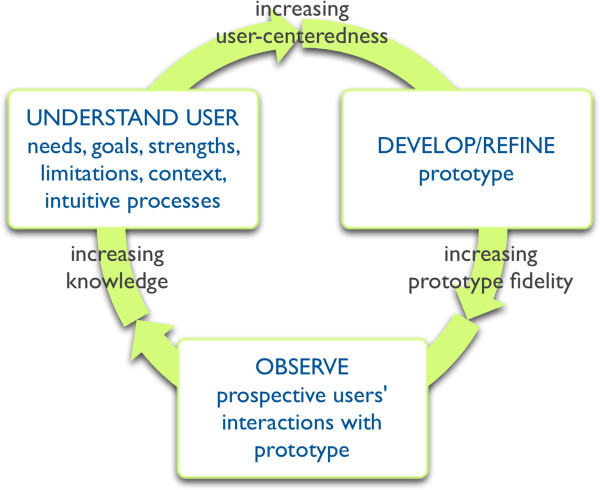
“Figure 1 shows a visual depiction of user-centered design, distilled from seminal work in the field of Human Factors [18,20,22,31-33].”
MethodElwyn, G. (2006) · BMJ · doi:10.1136/bmj.38926.629329.ae · Cited by 1,824 · cited 1×
“However, due to the lack of a robust evidence base from which to draw conclusions about best practices, practical guidance is minimal and vague [11-14].”
BackgroundAn integrative model of shared decision making in medical encounters
Makoul, G., & Clayman, M. L. (2006) · Patient Education and Counseling · doi:10.1016/j.pec.2005.06.010 · Cited by 1,621 · cited 1×
“…intended to be used by patients to complement information and counseling from a health-care professional in the process of shared decision-making [8] and provide a means for clinicians and patients to collaboratively incorporate their expertise, insights, and views in order to make…”
BackgroundTalking about tactile experiences
Obrist, M., Seah, S. A., & Subramanian, S. (2013) · Proceedings of the SIGCHI Conference on Human Factors in Computing Systems · doi:10.1145/2470654.2466220 · Cited by 1,613
Brett, J., Staniszewska, S., Mockford, C., Herron‐Marx, S., Hughes, J., Tysall, C., & Suleman, R. (2014) · Health Expectations · doi:10.1111/j.1369-7625.2012.00795.x · Cited by 1,598 · cited 1×
“Patient partnership in research teams is increasingly encouraged or required by funding organizations [3-6].”
Background(1987) · Andalas University Repository (Andalas University) · Cited by 1,584
Decision aids for people facing health treatment or screening decisions
Stacey, D., Légaré, F., Col, N. F., Bennett, C. L., Barry, M. J., Eden, K. B., Holmes-Rovner, M., Llewellyn-Thomas, H., Lyddiatt, A., Thomson, R., et al. (2014) · Cochrane Database of Systematic Reviews · doi:10.1002/14651858.cd001431.pub4 · Cited by 1,471 · cited 7×
“Patient decision aids are structured tools, often booklets or websites, that aim to provide unbiased, evidence-based information and guidance to patients making health decisions [7].”
BackgroundMethodInfluentialSelf-citation
Research works printed but not linked: 4
- 3. Topic of conversation. Den Haag. Netherlands: Dutch organization for health and innovation in healthcare; 2010. p. 1-17.
- 13. Coulter A, Kryworuchko J, Mullen PD, Ng CJ, Stillwell D, van der Weijden T. Chapter A: using a systematic development process. In: Volk RJ, Llewellyn-Thomas HA, editors. 2012 update of the international patient decision Aid standards (IPDAS) Collaboration's background document. 2012. p. 1-16. Available at: http://ipdas.ohri.ca/IPDAS-Chapter-A.pdf.
- 22. Iso DIS. 9241-210:2010: ergonomics of human-system interaction-part 210: human-centred design for interactive systems (formerly known as 13407). Switzerland: International Standards Organization; 2010.
- 28. Garrett JJ. Elements of user experience. 2nd ed. New Riders: Berkeley, CA; 2011.
Cited by
Renal Mass and Localized Renal Cancer: AUA Guideline
Campbell, S., Uzzo, R. G., Allaf, M. E., Bass, E. B., Cadeddu, J. A., Chang, A., Clark, P. E., Davis, B. J., Derweesh, I. H., Giambarresi, L., et al. (2017) · Journal of Urology · doi:10.1016/j.juro.2017.04.100 · Cited by 1,242
Increasing Vaccination: Putting Psychological Science Into Action
Brewer, N. T., Chapman, G. B., Rothman, A. J., Leask, J., & Kempe, A. (2017) · Psychological Science in the Public Interest · doi:10.1177/1529100618760521 · Cited by 1,233
Renal Mass and Localized Renal Cancer: Evaluation, Management, and Follow-Up: AUA Guideline: Part I
Campbell, S. C., Clark, P. E., Chang, S. S., Karam, J. A., Souter, L., & Uzzo, R. G. (2021) · Journal of Urology · doi:10.1097/ju.0000000000001911 · Cited by 775
“The development of aids to improve informed medical decision-making is ongoing.(49) Management: Randomized prospective trials comparing PN versus RN,(24,50) PN versus TA, standard PN versus TE, and AS versus intervention, should be prioritized to assess oncologic and functional outcomes and treatment-related morbiditi…”
Design Thinking in Health Care
Altman, M., Huang, T. T. K., & Breland, J. Y. (2018) · Preventing Chronic Disease · doi:10.5888/pcd15.180128 · Cited by 548
Sepucha, K. R., Abhyankar, P., Hoffman, A. S., Bekker, H. L., LeBlanc, A., Levin, C. A., Ropka, M., Shaffer, V. A., Sheridan, S. L., Stacey, D., et al. (2018) · BMJ Quality & Safety · doi:10.1136/bmjqs-2017-006986 · Cited by 204
“…several issues that the IPDAS-RG had also discussed, including the potential overlap with existing guidelines, feasibility of including the information in an evaluation paper, potential overlap with work being done on developing guidelines for PDA development process 28 and relationship to IPDAS.”
MethodSelf-citationDopp, A. R., Parisi, K. E., Munson, S. A., & Lyon, A. R. (2020) · Implementation Science Communications · doi:10.1186/s43058-020-00020-w · Cited by 169
“The field of user-centered design (UCD) holds considerable potential for increasing the impact and sustainment of EBPs (see [3, 11, 16, 17]).”
BackgroundMethodVaisson, G., Provencher, T., Dugas, M., Trottier, M.-È., Dansokho, S. C., Colquhoun, H. L., Fagerlin, A., Giguere, A. M. C., Hakim, H., Haslett, L., et al. (2021) · Medical Decision Making · doi:10.1177/0272989x20984134 · Cited by 140
Self-citationDopp, A. R., Parisi, K. E., Munson, S. A., & Lyon, A. R. (2019) · Health Research Policy and Systems · doi:10.1186/s12961-018-0403-0 · Cited by 123
European Journal of Cancer Care
(2022) · European Journal of Cancer Care · doi:10.1111/(issn)1365-2354 · Cited by 122
Agile research to complement agile development: A proposal for an mHealth research lifecycle
Wilson, K., Bell, C., Wilson, L., & Witteman, H. (2018) · npj Digital Medicine · doi:10.1038/s41746-018-0053-1 · Cited by 118
Self-citationWieringa, T. H., Rodríguez‐Gutiérrez, R., Spencer‐Bonilla, G., de Wit, M., Ponce, O. J., Sanchez-Herrera, M. F., Suárez, N. R. E., Zisman‐Ilani, Y., Kunneman, M., Schoonmade, L. J., et al. (2019) · Systematic Reviews · doi:10.1186/s13643-019-1034-4 · Cited by 126
Self-citationAnkolekar, A., Dekker, A. L. A. J., Fijten, R., & Berlanga, A. J. (2018) · JCO Clinical Cancer Informatics · doi:10.1200/cci.18.00013 · Cited by 105
Hilty, D. M., Chan, S., Hwang, T., Wong, A., & Bauer, A. M. (2017) · mHealth · doi:10.21037/mhealth.2017.06.02 · Cited by 84
Chambers, C. T. (2018) · Pain · doi:10.1097/j.pain.0000000000001327 · Cited by 87
“eHealth research is equally vulnerable to dissemination and implementation failures as any other kind of intervention research and is of particular concern because many researcherdeveloped eHealth interventions are out of date in terms of technology by the time they are published and do not typically apply user-center…”
BackgroundDurand, M., Alam, S. S., Grande, S. W., & Elwyn, G. J. (2016) · BMJ Open · doi:10.1136/bmjopen-2015-010008 · Cited by 86
“51 However, practical guidance and best practice for usercentered design applied to the development of patient decision aid are scarce and lack detail.(49) Only half of patient decision aids included in the 2014 Cochrane review of patient decision aids included patients and potential users in the development process.”
BackgroundHiggins, K. S., Tutelman, P. R., Chambers, C. T., Witteman, H. O., Barwick, M., Corkum, P., Grant, D., Stinson, J. N., Lalloo, C., Robins, S., et al. (2018) · PAIN Reports · doi:10.1097/pr9.0000000000000686 · Cited by 65
Self-citationHaines, E. R., Dopp, A. R., Lyon, A. R., Witteman, H. O., Bender, M., Vaisson, G., Hitch, D., & Birken, S. A. (2021) · Implementation Science Communications · doi:10.1186/s43058-021-00147-4 · Cited by 71
Self-citationBecerra-Perez, M.-M., Menear, M., Turcotte, S., Labrecque, M., & Légaré, F. (2016) · BMC Family Practice · doi:10.1186/s12875-016-0558-0 · Cited by 72
Self-citationHoffman, A. S., Bateman, D. R., Ganoe, C. H., Punjasthitkul, S., Das, A. K., Hoffman, D. B., Housten, A. J., Peirce, H. A., Dreyer, L., Tang, C., et al. (2019) · The Gerontologist · doi:10.1093/geront/gnz141 · Cited by 66
Self-citationWitteman, H. O., Vaisson, G., Provencher, T., Dansokho, S. C., Colquhoun, H. L., Dugas, M., Fagerlin, A., Giguere, A. M. C., Haslett, L., Hoffman, A. S., et al. (2021) · Journal of Medical Internet Research · doi:10.2196/15032 · Cited by 63
Self-citationDugas, M., Trottier, M.-È., Dansokho, S. C., Vaisson, G., Provencher, T., Colquhoun, H. L., Dogba, M. J., Dupéré, S., Fagerlin, A., Giguere, A. M. C., et al. (2017) · BMC Medical Informatics and Decision Making · doi:10.1186/s12911-016-0399-8 · Cited by 60
“Two independent analysts extracted data about development processes based on a conceptual framework of user-centered design [16].”
MethodSelf-citationWoodard, T. L., Hoffman, A. S., Covarrubias, L., Holman, D., Schover, L. R., Bradford, A. M., Hoffman, D. B., Mathur, A., Thomas, J., & Volk, R. J. (2017) · Journal of Cancer Survivorship · doi:10.1007/s11764-017-0649-5 · Cited by 56
“A modified user-centered design approach guided the iterative cycles of design-testrefine with stakeholders [19, 22, 23].”
MethodSelf-citationZeballos-Palacios, C. L., Hargraves, I. G., Noseworthy, P. A., Branda, M. E., Kunneman, M., Burnett, B., Gionfriddo, M. R., McLeod, C. J., Gorr, H. S., Brito, J. P., et al. (2019) · Mayo Clinic Proceedings · doi:10.1016/j.mayocp.2018.08.030 · Cited by 57
Self-citationGrudniewicz, A., Bhattacharyya, O. K., McKibbon, K. A., & Straus, S. E. (2015) · Implementation Science · doi:10.1186/s13012-015-0339-5 · Cited by 56
Heen, A. F., Vandvik, P. O., Brandt, L., Achille, F., Guyatt, G. H., Akl, E. A., Treweek, S. P., & Agoritsas, T. (2021) · BMC Medical Informatics and Decision Making · doi:10.1186/s12911-021-01541-7 · Cited by 50
Alam, S. S., Elwyn, G. J., Percac‐Lima, S., Grande, S. W., & Durand, M. (2016) · BMC Medical Informatics and Decision Making · doi:10.1186/s12911-016-0384-2 · Cited by 49
“active methods to engage attention [36, 37].”
Hoffman, A. S., Crocker, L. C., Mathur, A., Holman, D., Weston, J., Campbell, S. B., Housten, A. J., Bradford, A. M., Agrawala, S., & Woodard, T. L. (2021) · JMIR Formative Research · doi:10.2196/25083 · Cited by 48
Self-citationGarvelink, M. M., Emond, J., Menear, M., Brière, N., Freitas, A., Boland, L., Perez, M. M. B., Blair, L., Stacey, D., & Légaré, F. (2016) · Research Involvement and Engagement · doi:10.1186/s40900-016-0040-0 · Cited by 45
“In brief, we developed (Cycle 1) and refined (Cycles 2–3) a series of prototypes of the guide, adjusting them according to end-user feedback [14].”
BackgroundMethodInfluentialSelf-citationAnkolekar, A., Vanneste, B. G. L., Gurp, E. B., van Roermund, J. G. H., Limbergen, E. J. V., van de Beek, K., Marcelissen, T. A. T., Zambon, V., Oelke, M., Dekker, A. L. A. J., et al. (2019) · BMC Medical Informatics and Decision Making · doi:10.1186/s12911-019-0862-4 · Cited by 53
“User-centered design has been proposed as a way to make PDAs more suitable for clinical implementation [16].”
Savelberg, W., van der Weijden, T., Boersma, L. J., Smidt, M. L., Willekens, C., & Moser, A. (2017) · BMC Medical Informatics and Decision Making · doi:10.1186/s12911-017-0505-6 · Cited by 46
“The iterated process in ongoing data collection and alternating the PtDA has proved to be a well-chosen way to involve end users and to improve the PtDA [27].”
MethodLandis‐Lewis, Z., Kononowech, J., Scott, W., Hogikyan, R. V., Carpenter, J. G., Periyakoil, V. S., Miller, S. C., Levy, C. R., Ersek, M. T., & Sales, A. E. (2020) · Implementation Science · doi:10.1186/s13012-019-0950-y · Cited by 44
“The method specifies steps within a general UCD cycle [14] (understand user, develop/refine prototype, and observe user) and operationalizes the cycle to include 3 steps during prototype refinement: measures, data, and display.”
BackgroundMethodInfluentialKaźmierska, J., Hope, A. J., Spezi, E., Beddar, S. A., Nailon, W. H., Osong, B., Ankolekar, A., Choudhury, A., Dekker, A. L. A. J., Redalen, K. R., et al. (2020) · Radiotherapy and Oncology · doi:10.1016/j.radonc.2020.09.054 · Cited by 51
“Implementation of AI-enhanced decision aids is more likely to succeed when development follows a user-centered design process that takes into account end-users’ contexts, needs, goals, and decision-making [69].”
BackgroundRole of digital health in pulmonary rehabilitation and beyond: shaping the future
Pimenta, S., Hansen, H., Demeyer, H., Slevin, P., & Cruz, J. (2022) · ERJ Open Research · doi:10.1183/23120541.00212-2022 · Cited by 41
Social rhythm therapy—A potentially translatable psychosocial intervention for bipolar disorder
Crowe, M., Inder, M., Swartz, H. A., Murray, G., & Porter, R. (2019) · Bipolar Disorders · doi:10.1111/bdi.12840 · Cited by 41
Persson, J., & Rydenfält, C. (2021) · Journal of Medical Internet Research · doi:10.2196/26694 · Cited by 43
“In parallel with the introduction of digital systems in the workplace, the field of human-computer interaction (HCI) has developed, and the usability (ie, the efficient, effective, and satisfactory use of a system with respect to the specified user, goal, and use context [17]) of digital systems in health care has bec…”
BackgroundPsychometric Properties of the Treatment Perception and Preferences Measure
Sidani, S., Epstein, D. R., Fox, M. T., & Miranda, J. (2016) · Clinical Nursing Research · doi:10.1177/1054773816654137 · Cited by 40
“Its design is consistent with the key elements of decision making (Witteman et al., 2015), enabling patients to learn about alternative treatments, evaluate the treatments relative to important attributes, and choose the desired treatment.”
BackgroundResultInfluentialShared decision making implementation: a case study analysis to increase uptake in New South Wales
Dimopoulos-Bick, T. L., Osten, R., Shipway, C., Trevena, L. J., & Hoffmann, T. (2019) · Australian Health Review · doi:10.1071/ah18138 · Cited by 36
Abujarad, F., Alfano, S. L., Bright, T. J., Kannoth, S., Grant, N., Gueble, M., Peduzzi, P. N., & Chupp, G. L. (2017) · PubMed · Cited by 41
Ramos, S. R. (2017) · CIN Computers Informatics Nursing · doi:10.1097/cin.0000000000000356 · Cited by 39
Communicating laboratory results to patients and families
Witteman, H. O., & Zikmund‐Fisher, B. J. (2018) · Clinical Chemistry and Laboratory Medicine (CCLM) · doi:10.1515/cclm-2018-0634 · Cited by 41
Self-citationBilodeau, G., Witteman, H. O., Légaré, F., Lafontaine-Bruneau, J., Voyer, P., Kröger, E., Tremblay, M., & Giguere, A. M. C. (2019) · BMJ Open · doi:10.1136/bmjopen-2018-027727 · Cited by 36
Self-citationAdvancing nursing participation in user-centred design
Risling, T., & Risling, D. (2020) · Journal of research in nursing · doi:10.1177/1744987120913590 · Cited by 37
“…the work that has been done on collaborative design, especially within the healthcare setting, has demonstrated strong synergies between these approaches and nursing’s disciplinary commitment to patient and family-centred care (Sonney et al., 2019; Witteman et al., 2015, Wolstenholme et al., 2016).”
BackgroundMethodInfluentialHilty, D. M., Chan, S., Hwang, T., Wong, A., & Bauer, A. M. (2018) · Focus · doi:10.1176/appi.focus.16301 · Cited by 31
Gillies, K., & Campbell, M. (2019) · Trials · doi:10.1186/s13063-019-3489-y · Cited by 37
Suen, A. O., Butler, R. A., Arnold, R. M., Myers, B. A., Witteman, H. O., Cox, C. E., Argenas, A., Buddadhumaruk, P., Bursic, A. E., Ernecoff, N. C., et al. (2019) · Journal of Critical Care · doi:10.1016/j.jcrc.2019.12.002 · Cited by 32
“User testing, a part of the user-centered design process, is defined as inviting prospective users to use a version of a tool being developed, observing how they use the tool, gathering their feedback about it, and adapting the design accordingly to better suit users [24,25].”
BackgroundMethodSelf-citationCol, N. F., Hull, S., Springmann, V., Ngo, L. H., Merritt, E., GOLD, S. D., Sprintz, M., Genova, N., Nesin, N., Tierman, B., et al. (2020) · BMC Medical Informatics and Decision Making · doi:10.1186/s12911-020-01279-8 · Cited by 34
Extended User Centered Design (UCD) Process in the Aspect of Human Computer Interaction
Mithun, A. M., Mithun, A. M., & Yafooz, W. M. S. (2018) · International Conference on Smart Computing and Electronic Enterprise (ICSCEE) · doi:10.1109/icscee.2018.8538388 · Cited by 40
“The three stages of UCD process rests on the idea that a system, service or product is most likely to fulfill user needs when its development based on iterative cycle [20].”
BackgroundKim, M., Kim, Y., & Choi, M. (2022) · BMC Medical Informatics and Decision Making · doi:10.1186/s12911-022-01945-z · Cited by 34
“In the user-centered design approach, it is important to accurately assess the end-users’ needs and develop systems that focus on meeting their requirements [27, 28].”
BackgroundSandholdt, C. T., Cunningham, J., Westendorp, R. G. J., & Kristiansen, M. (2020) · International Journal of Environmental Research and Public Health · doi:10.3390/ijerph17124551 · Cited by 31
“In a healthcare system t at wishes to emphasise patient ownership and develop future healthcare services centred around empathy, this mi dset is highly relevant [20,21].”
BackgroundeHealth and mHealth in prostate cancer detection and active surveillance
Azevedo, N. P., & Venderbos, L. D. F. (2018) · Translational Andrology and Urology · doi:10.21037/tau.2017.12.22 · Cited by 33
“Because of its ease of use and broad acceptance, mHealth is considered a valuable tool in the implementation of patient-centered care (patient-reported preferences, experiences and outcomes), which has become a goal of contemporary healthcare systems and international standards (4).”
BackgroundMilestones, barriers and beacons: Shared decision making in Canada inches ahead
Légaré, F., Stacey, D., Forest, P., Coutu, M., Archambault, P. M., Boland, L., Witteman, H. O., LeBlanc, A., Lewis, K. B., & Giguere, A. M. C. (2017) · Zeitschrift für Evidenz Fortbildung und Qualität im Gesundheitswesen · doi:10.1016/j.zefq.2017.05.020 · Cited by 28
Self-citationGiguere, A. M. C., Lawani, M. A., Fortier-Brochu, É., Carmichael, P., Légaré, F., Kröger, E., Witteman, H. O., Voyer, P., Caron, D., & Rodríguez, C. (2018) · Trials · doi:10.1186/s13063-018-2697-1 · Cited by 28
Self-citationSinger, I., Klatte, I. S., de Vries, R., van der Lugt, R., & Gerrits, E. (2022) · International Journal of Language & Communication Disorders · doi:10.1111/1460-6984.12753 · Cited by 27
Roch, G., Silva, R. B. D., de Montigny, F., Witteman, H. O., Pierce, T., Semenic, S. E., Poissant, J., Parent, A.-A., White, D., Chaillet, N., et al. (2018) · BMC Health Services Research · doi:10.1186/s12913-018-3204-9 · Cited by 29
“This multipronged study uses convergent mixed methods through a collaborative research approach to integrate and mobilize knowledge [34, 35].”
MethodSelf-citationHirschey, J., Bane, S., MANSOUR, M. C., Sperber, J., Agboola, S. O., Kvedar, J. C., & Jethwani, K. (2018) · JMIR Human Factors · doi:10.2196/humanfactors.8004 · Cited by 26
“Pilot studies that qualitatively examine patient perceptions of usability and usefulness are a valuable and often underutilized method for assessing the real-world acceptability of an intervention [25,26].”
Staes, C. J., Beck, A. C., Chalkidis, G., Scheese, C. H., Taft, T., Guo, J., Newman, M. G., Kawamoto, K., Sloss, E. A., & McPherson, J. P. (2023) · Journal of the American Medical Informatics Association · doi:10.1093/jamia/ocad201 · Cited by 28
“55 Second, to establish or increase prototype fidelity, an ML model or interface is developed or refined based on the use case and synthesis of findings from prior rounds.”
MethodInfluentialHaines, E. R., Lux, L., Smitherman, A. B., Kessler, M. L., Schonberg, J., Dopp, A. R., Stover, A. M., Powell, B. J., & Birken, S. A. (2021) · Supportive Care in Cancer · doi:10.1007/s00520-021-06024-z · Cited by 28
STOTZ, S. A., Ricks, K. A. B., Eisenstat, S. A., Wexler, D. J., & Berkowitz, S. A. (2021) · The Science of Diabetes Self-Management and Care · doi:10.1177/0145721721996291 · Cited by 24
Concepts for the Development of Anesthesia-Related Patient Decision Aids
Urman, R. D., Southerland, W. A., Shapiro, F. E., & Joshi, G. P. (2018) · Anesthesia & Analgesia · doi:10.1213/ane.0000000000003804 · Cited by 24
Marrie, R. A., Walker, J. R., Graff, L. A., Patten, S. B., Bolton, J. M., Marriott, J. J., Fisk, J. D., Hitchon, C. A., PESCHKEN, C. A., & Bernstein, C. N. (2019) · Patient Education and Counseling · doi:10.1016/j.pec.2019.04.007 · Cited by 25
Crowley, P., Ikeda, E., Islam, S. M. S., Kildedal, R., Jacobsen, S. S., Larsen, J. R., Johansson, P. J., Hettiarachchi, P., Aadahl, M., Mork, P. J., et al. (2022) · JMIR Research Protocols · doi:10.2196/35697 · Cited by 24
“UCD refers to an iterative design process, where design decisions are based largely on users’ needs and specifications [16].”
BackgroundMethodInfluentialZandstra, D., Busser, J., Aarts, J. W. M., & Nieboer, T. E. (2017) · European Journal of Obstetrics & Gynecology and Reproductive Biology · doi:10.1016/j.ejogrb.2017.02.026 · Cited by 22
Plaisance, A., Witteman, H. O., LeBlanc, A., Kryworuchko, J., Heyland, D. K., Ebell, M. H., Blair, L., Tapp, D., Dupuis, A., Lavoie-Bérard, C.-A., et al. (2018) · PLoS ONE · doi:10.1371/journal.pone.0191844 · Cited by 25
Self-citationNcube, T., Murray, Ú., & Dennehy, D. (2023) · Communications of the Association for Information Systems · doi:10.17705/1cais.05306 · Cited by 31
“Similarly, user centred design is founded on the notion that a system, service, or product is most likely to fulfil user needs when its development process is based on iterative cycles in which potential users are consulted early and often (Witteman et al, 2015; Still & Crane, 2017).”
Scalia, P., Durand, M., Faber, M. J., Kremer, J. A. M., Song, J. H., & Elwyn, G. J. (2019) · BMJ Open · doi:10.1136/bmjopen-2018-026748 · Cited by 20
“5 Patient input enables developers to create robust tools that are acceptable to potential users while addressing their needs and concerns.(6) However, involving patients is time-consuming and costly.”
BackgroundStacey, D., Ludwig, C., Archambault, P. M., Babulic, K., Edwards, N. C., Lavoie, J. G., Sinha, S. K., & O'Connor, A. M. C. (2020) · Medical Decision Making · doi:10.1177/0272989x20979693 · Cited by 21
Self-citationvan Strien‐Knippenberg, I. S., Boshuizen, M. C. S., Determann, D., de Boer, J. H., & Damman, O. C. (2022) · Health Expectations · doi:10.1111/hex.13510 · Cited by 26
Considering Breast Reconstruction after Mastectomy: A Patient Decision Aid Video and Workbook
Hoffman, A. S., Cantor, S. B., Fingeret, M. C., Housten, A. J., Hanson, S. E., McGee, J. H., Pietz, J. T., Bennett, A. M., Volk, R. J., & Reece, G. P. (2019) · Plastic & Reconstructive Surgery Global Open · doi:10.1097/gox.0000000000002500 · Cited by 21
Self-citationGrudniewicz, A., Bhattacharyya, O. K., McKibbon, K. A., & Straus, S. E. (2016) · Journal of Continuing Education in the Health Professions · doi:10.1097/ceh.0000000000000112 · Cited by 22
Technology-Supported Behavior Change—Applying Design Thinking to mHealth Application Development
Schweitzer, R., Schlögl, S., & Schweitzer, M. (2024) · European Journal of Investigation in Health Psychology and Education · doi:10.3390/ejihpe14030039 · Cited by 27
“Involving stakeholders throughout the design and development process helps to distinguish between what potential technology users need and want, and what technology providers believe may be beneficial [33,48,49].”
Groos, S. S., Linn, A. J., Kuiper, J. I., van Schoor, N. M., van der Velde, N., & van Weert, J. C. M. (2024) · International Journal of Medical Informatics · doi:10.1016/j.ijmedinf.2024.105420 · Cited by 19
Blythe, R. D., Naicker, S., White, N. M., Donovan, R., Scott, I. A., Mckelliget, A., & McPhail, S. (2024) · BMC Medical Informatics and Decision Making · doi:10.1186/s12911-024-02647-4 · Cited by 19
“…tools can be designed in a variety of ways, but may benefit from understanding the characteristics of the users and the local environment in which tools are implemented, [13] the nature of the tasks end-users are expected to perform, [14] and the interface between the user and the tools [15].”
BackgroundLawani, M. A., Turgeon, Y., Côté, L., Légaré, F., Witteman, H. O., Morin, M., Kröger, E., Voyer, P., Rodríguez, C., & Giguere, A. M. C. (2021) · BMC Medical Informatics and Decision Making · doi:10.1186/s12911-021-01396-y · Cited by 22
Self-citationMobile Health in Urology: The Good, the Bad and the Ugly
Azevedo, N. P., Gravas, S., & de la Rosette, J. J. M. C. H. (2020) · Journal of Clinical Medicine · doi:10.3390/jcm9041016 · Cited by 19
“Because of its ease of use and extensive acceptance, mHealth is considered to be a valuable tool in the implementation of patient-centered care (patient-reported preferences, experiences, and outcomes), which has become a goal of contemporary healthcare systems and international standards [3].”
BackgroundImproving a Web-Based Tool to Support Older Adults to Stay Independent at Home: Qualitative Study
Garvelink, M. M., Agbadjé, T. T., Freitas, A., Bergeron, L., Petitjean, T., Dugas, M., Blair, L., Archambault, P. M., Roy, N., Jones, C. A., et al. (2020) · JMIR mhealth and uhealth · doi:10.2196/16979 · Cited by 18
“We conducted a qualitative descriptive study to improve the content of an interactive website [14,22].”
MethodSelf-citationLiu, Y., Chen, C., Tsou, Y.-C., Lin, Y., Chen, H., Yeh, J.-Y., & Chiu, S. Y. (2018) · JMIR mhealth and uhealth · doi:10.2196/10931 · Cited by 17
“Several pilot studies have attempted to develop and evaluate a specific design [18-20].”
BackgroundMethodWoodard, T. L., Hoffman, A. S., Crocker, L. C., Holman, D., Hoffman, D. B., Ma, J., Bassett, R. L., Leal, V. B., & Volk, R. J. (2018) · BMJ Open · doi:10.1136/bmjopen-2017-019994 · Cited by 19
Self-citationBasit, M. A., Baldwin, K. L., Kannan, V., Flahaven, E. L., Parks, C. J., Ott, J. M., & Willett, D. L. (2018) · JMIR Medical Informatics · doi:10.2196/medinform.9679 · Cited by 18
“User-centered design methods now being applied in health care seek to optimize clinician and patient experience with software and include the equivalent of iterative manual acceptance testing [24-27].”
MethodKoon, S. (2019) · The Permanente Journal · doi:10.7812/tpp/19.064 · Cited by 16
Agbadjé, T. T., Menear, M., Dugas, M., Gagnon, M., Rahimi, S. A., Robitaille, H., Giguere, A. M. C., Rousseau, F., Wilson, B. J., & Légaré, F. (2018) · BMC Health Services Research · doi:10.1186/s12913-018-3244-1 · Cited by 21
“Inspired by the principle of user-centred design [30], in our second design phase we therefore involved the targeted users.”
MethodSelf-citationSmets, L., Debucquoy, A., Oldenburger, E., Audenhove, C. V., Debrun, L., Dekervel, J., Bislenghi, G., D’Hoore, A. J. L., Wolthuis, A. M., & Haustermans, K. M. (2023) · Cancers · doi:10.3390/cancers15030806 · Cited by 17
“This design process involves end-users (healthcare professionals and patients) in the development process, allowing them to provide feedback both on content and design of the prototype, resulting in an improved acceptance among healthcare professionals (HCPs) [33].”
BackgroundPlaisance, A., Witteman, H. O., Heyland, D. K., Ebell, M. H., Dupuis, A., Lavoie-Bérard, C.-A., Légaré, F., & Archambault, P. M. (2016) · JMIR Research Protocols · doi:10.2196/resprot.5107 · Cited by 16
“User-centered design is a highly iterative method for optimizing the user experience—and thus the effectiveness—of a system, service, or product [27].”
Self-citationBackman, C., Harley, A., Kuziemsky, C. E., Mercer, J. G., & Peyton, L. (2020) · JMIR Formative Research · doi:10.2196/18169 · Cited by 17
“The different requirements were reconciled between the participant groups using a model to develop common ground regarding the system requirements [17].”
BackgroundMarier-Deschênes, P., Gagnon, M., & Lamontagne, M. (2019) · Disability and Rehabilitation · doi:10.1080/09638288.2019.1686543 · Cited by 16
“context of use [35] which allows for a better understanding of the end user.”
BackgroundPoitras, M.-È., Légaré, F., Vaillancourt, V. T., Godbout, I., Poirier, A., Prévost, K., Spence, C., Chouinard, M., Zomahoun, H. T. V., Khadhraoui, L., et al. (2020) · Patient · doi:10.1007/s40271-020-00465-0 · Cited by 14
Self-citationDevelopment of a patient decision aid on inhaled corticosteroids use for adults with asthma
Gagné, M. E., Légaré, F., Moisan, J., & Boulet, L. (2016) · Journal of Asthma · doi:10.3109/02770903.2016.1166384 · Cited by 14
“Many studies assessed PDA acceptability in patients, but not in health care workers [38–40], and not all PDAs are developed with target users, notably clinicians and patients [42].”
BackgroundSelf-citationA Web Application About Herd Immunity Using Personalized Avatars: Development Study
Hakim, H., Bettinger, J. A., Chambers, C. T., Driedger, S. M., Dubé, È., Gavaruzzi, T., Giguere, A. M. C., Kavanagh, É., Leask, J., MacDonald, S. E., et al. (2020) · Journal of Medical Internet Research · doi:10.2196/20113 · Cited by 15
“Our guiding methodological framework was that of a user-centered design [33] in which potential users are consulted early and often, with their responses to prototype versions serving to help guide iterative improvements of the intervention or tool.”
MethodSelf-citationDogba, M. J., Brent, M. H., Bach, C., Asad, S. S., Grimshaw, J., Ivers, N. M., Légaré, F., Witteman, H. O., Squires, J. E., Wang, X., et al. (2020) · JMIR Research Protocols · doi:10.2196/15109 · Cited by 14
Self-citationSturge, J. L., Meijering, L., Jones, C. A., Garvelink, M. M., Caron, D., Nordin, S., Elf, M., & Légaré, F. (2021) · JMIR Research Protocols · doi:10.2196/19244 · Cited by 16
“The size of the groups is adequate for a user-centered process [53], ensuring optimal participation of the end users in the co-design group.”
BackgroundSelf-citationKremer, I., Jongen, P. J., Evers, S., Hoogervorst, E. L. J., Verhagen, W. I. M., & Hiligsmann, M. (2021) · BMC Medical Informatics and Decision Making · doi:10.1186/s12911-021-01479-w · Cited by 15
Hogden, A., Greenfield, D., Caga, J., & Cai, X. (2016) · BMJ Open · doi:10.1136/bmjopen-2015-010532 · Cited by 12
“Researchers will include a human factors engineer to ensure that the tools are developed to meet users (ie, patients, carers and health professionals) physical and psychological needs.(24)”
BackgroundDeveloping tools to support patients and healthcare providers when in conversation about obesity
Noël, G., Luig, T., Heatherington, M., & Campbell-Scherer, D. L. (2018) · Information Design Journal · doi:10.1075/idj.00004.noe · Cited by 12
Monnet, F., Dupont, C., Smets, T., Vleminck, A. D., Audenhove, C. V., den Block, L. V., & Pivodic, L. (2023) · JMIR Research Protocols · doi:10.2196/46935 · Cited by 13
“This includes the evaluation of the ease of learning, efficiency of use, memorability, error frequency, and satisfaction [35].”
BackgroundUmaefulam, V. O., Wilson, M. K., Boucher, M. C., Brent, M. H., Dogba, M. J., Drescher, O., Grimshaw, J., Ivers, N. M., Lawrenson, J. G., Lorencatto, F., et al. (2023) · BMC Health Services Research · doi:10.1186/s12913-023-09329-3 · Cited by 12
“Our co-development process was rooted in the Framework of User-Centred Design [21], which emphasizes iterative development with those for whom an intervention is developed and underscores three concepts: understand users, develop and refine intervention prototypes, and observe users’ interactions with the prototype.”
MethodSelf-citationBackman, C., Harley, A., Peyton, L., Kuziemsky, C. E., Mercer, J. G., Monahan, M. A., Schmidt, S., Singh, H., & Gravelle, D. (2018) · JMIR Research Protocols · doi:10.2196/11031 · Cited by 15
“We will follow a user-centered design process, integrated with a modern agile software development methodology [29-32].”
BackgroundMethodDevelopment and Pilot-Testing of a Patient Decision Aid for Left Ventricular Assist Device Placement
Kostick, K. M., Delgado, E. D., Garan, L. A. W., Bruce, C. R., Estep, J. D., Loebe, M. M., Minard, C. G., & Blumenthal‐Barby, J. S. (2016) · The VAD Journal · doi:10.14434/vad.v2i0.27937 · Cited by 12
Garvelink, M. M., Jones, C. A., Archambault, P. M., Roy, N., Blair, L., & Légaré, F. (2017) · JMIR Human Factors · doi:10.2196/humanfactors.8387 · Cited by 13
“Study Design and Context We used a 3-phase, multiprong, user-centered design [22] involving a needs assessment with qualitative interviews (phase I), module development (including script, videos, and textual information; phase II), and acceptability and usability testing (phase III).”
Self-citationLewis, K. B., Birnie, D. H., Carroll, S. L., Clark, L., Kelly, F., Gibson, P. J., Rockburn, L., Rockburn, L., & Stacey, D. (2018) · The Journal of Cardiovascular Nursing · doi:10.1097/jcn.0000000000000477 · Cited by 15
Self-citationMunro, S. B., Meglio, G. D., Williams, A., Barbic, S. P., Begun, S., Black, A., Carson, A., Fortin, M., Jacob, K., Khan, Z., et al. (2023) · BMJ Open · doi:10.1136/bmjopen-2022-070904 · Cited by 12
Weinberger, N., Weis, A., Pohlmann, S., Brändle, C., Zentek, T., Ose, D. J., & Szécsényi, J. (2021) · Informatics for Health and Social Care · doi:10.1080/17538157.2020.1865968 · Cited by 11
Metadata
- Authors
- Witteman, H. O., Dansokho, S. C., Colquhoun, H., Coulter, A., Dugas, M., Fagerlin, A., Giguere, A. M., Glouberman, S., Haslett, L., Hoffman, A., Ivers, N., Légaré, F., Légaré, J., Levin, C., Lopez, K., Montori, V. M., Provencher, T., Renaud, J.-S., Sparling, K., Stacey, D., Vaisson, G., Volk, R. J., & Witteman, W.
- Affiliations
- Université Laval (CA)
- University of Oxford (GB)
- University of Michigan (US)
- Hôpital du Saint-Sacrement (CA)
- Dartmouth Institute for Health Policy and Clinical Practice (US)
- University of Toronto (CA)
- Centre hospitalier universitaire de Québec (CA)
- Healthwise (US)
- University of Ottawa (CA)
- The University of Texas MD Anderson Cancer Center (US)
- Corresponding author
- Witteman, Holly O
- ORCID
- Venue
- Systematic Reviews
- Published
- 2015-01-26
- Volume
- 4
- Issue
- 1
- Pages
- 11-11
- ISSN
- 2046-4053 (ISSN-L)
- PMC
- PMC4328638
- OpenAlex
- W2117757460
- Semantic Scholar
- dadd30861520033b7f49f7cc9644c21f6d327f7d
- Cited by
- 202
- References
- 42
- Citations by year
- 2026: 9 · 2025: 12 · 2024: 10 · 2023: 22 · 2022: 13 · 2021: 34 · 2020: 22 · 2019: 21 · 2018: 28 · 2017: 13 · 2016: 13 · 2015: 5
- FWCI
- 3.53
- Type
- journal article
- Language
- en
- Open access
- gold
- doi.org
- Licence
- Locations
- Systematic Reviews (publishedVersion, cc-by)
- Europe PMC (PubMed Central) (publishedVersion, cc-by)
- PubMed Central (publishedVersion, cc-by)
- PubMed (publishedVersion)
- TSpace (University of Toronto) (acceptedVersion)
- Funders
- Patient-Centered Outcomes Research Institute (ME-1306-03174)
- University of Ottawa
- University of Toronto
- Canadian Institutes of Health Research
- Department of Family and Community Medicine, University of Toronto
- National Institute on Aging
- Topics
- Health Sciences › Health Professions › General Health Professions › Patient-Provider Communication in Healthcare
- Health Sciences › Health Professions › General Health Professions › Mental Health and Patient Involvement
- Health Sciences › Health Professions › General Health Professions › Health Policy Implementation Science
- Keywords
- patient decision aids, user-centered design, shared decision-making, human-centered design, patient-centered care, stakeholder engagement, best practices, health decision-making
- MeSH terms
- Systematic Reviews as Topic, Decision Making, Decision Support Techniques, Health Services Research, Humans, Patient Education as Topic, Patient Participation, Patient-Centered Care
About these checks
Registry, retraction, Cites and statistics results are computed, not judged, with one exception: a printed reference that no index lists is read once by a model before it counts as a citation error. Claims are extracted by a model and kept only when their quote appears verbatim in the text; each cited source is then checked, with a model’s help, for whether it says what the claim relies on. Those verdicts can be wrong — read the claim’s quote and the cited source before relying on one.
Statistics and arithmetic are recomputed, not judged.
Confidence bands are shown only for fields calibrated on our annotated test set. None is calibrated yet, so no band is shown.
What counts as a claim ›How we measure confidence ›How we check this ›
Are you an author, or do you see a problem with this page? Request a review
Data sources
Bibliographic data: Semantic Scholar, OpenAlex, Crossref.
Contains information from the Semantic Scholar Academic Graph Datasets, made available under the ODC Attribution License (ODC-BY 1.0).
Semantic Scholar’s data is described in: Kinney, R., et al. (2023). The Semantic Scholar Open Data Platform. arXiv:2301.10140.
