

Species and genus level resolution analysis of gut microbiota in Clostridium difficile patients following fecal microbiota transplantation
Open accessThe DOI matches its Crossref record; 48 of the 48 references it cites were found in a registry or an index.
Abstract
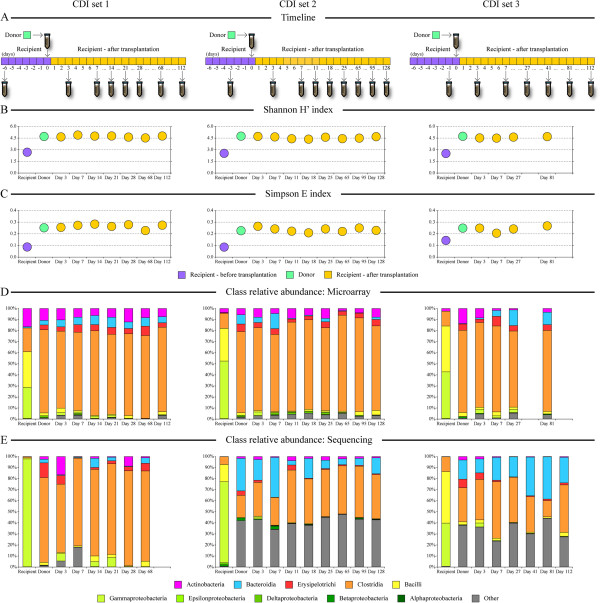
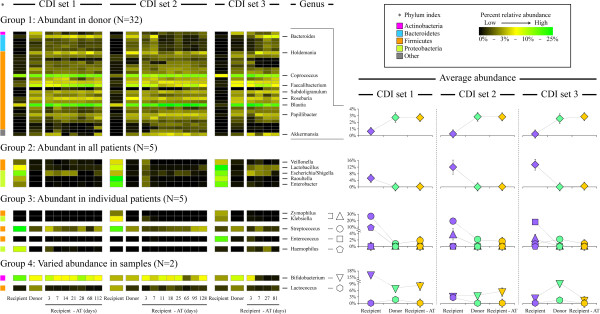
BACKGROUND: Clostridium difficile is an opportunistic human intestinal pathogen, and C. difficile infection (CDI) is one of the main causes of antibiotic-induced diarrhea and colitis. One successful approach to combat CDI, particularly recurrent form of CDI, is through transplantation of fecal microbiota from a healthy donor to the infected patient. In this study we investigated the distal gut microbial communities of three CDI patients before and after fecal microbiota transplantation, and we compared these communities to the composition of the donor's fecal microbiota. We utilized phylogenetic Microbiota Array, high-throughput Illumina sequencing, and fluorescent in situ hybridization to profile microbiota composition down to the genus and species level resolution. RESULTS: The original patients' microbiota had low diversity, was dominated by members of Gammaproteobacteria and Bacilli, and had low numbers of Clostridia and Bacteroidia. At the genus level, fecal samples of CDI patients were rich in members of the Lactobacillus, Streptococcus, and Enterobacter genera. In comparison, the donor community was dominated by Clostridia and had significantly higher diversity and evenness. The patients' distal gut communities were completely transformed within 3 days following fecal transplantation, and these communities remained stable in each patient for at least 4 months. Despite compositional differences among recipients' pre-treatment gut microbiota, the transplanted gut communities were highly similar among recipients post-transplantation, were indistinguishable from that of the donor, and were rich in members of Blautia, Coprococcus, and Faecalibacterium. In each case, the gut microbiota restoration led to a complete patient recovery and symptom alleviation. CONCLUSION: We conclude that C. difficile infection can be successfully treated by fecal microbiota transplantation and that this leads to stable transformation of the distal gut microbial community from the one abundant in aerotolerant species to that dominated by members of the Clostridia.
Overview
The claims and statistics of this paper haven’t been checked yet.
Free: it reads the open-access text and checks the first 5 claims that cite a source we can check. Create a free account to check every claim.
Integrity signals
Registry
Cites
Statistics
Figures
Verification
Claims the paper makes
The claims and statistics of this paper haven’t been checked yet.
Free: it reads the open-access text and checks the first 5 claims that cite a source we can check. Create a free account to check every claim.
Claims other papers make about this one
Each is checked against this paper’s own text: does it say what the citing paper says it does?
In the citing paper
“Nevertheless, additional clinical evidence has proven no association between donor and FMT outcomes.53,54”
From Fecal microbiota transplantation: Review and update (2019) · cites this paper as [54]
Self-check
Percentages, sums and reported differences re-computed from the paper’s own numbers.
The self-check needs the paper’s full text.
Citations
Cites
Schloss, P. D., Westcott, S. L., Ryabin, T., Hall, J. R., Hartmann, M., Hollister, E. B., Lesniewski, R. A., Oakley, B. B., Parks, D. H., Robinson, C. J., et al. (2009) · Applied and Environmental Microbiology · doi:10.1128/aem.01541-09 · Cited by 19,549 · cited 1×
“Sequence data were processed and analyzed using the MOTHUR program [18].”
The Ribosomal Database Project: improved alignments and new tools for rRNA analysis
Cole, J. R., Wang, Q., Cardenas, E., Fish, J., Chai, B., Farris, R. J., Kulam-Syed-Mohideen, A. S., McGarrell, D. M., Marsh, T., Garrity, G. M., et al. (2009) · Nucleic Acids Research · doi:10.1093/nar/gkn879 · Cited by 4,762 · cited 1×
“Sequences were clustered into OTUs using the furthest neighbor algorithm with a 90% cutoff [19].”
Gut microbiota in health and disease
Sekirov, I., Russell, S. L., Antunes, L. C. M., & Finlay, B. B. (2010) · Physiological Reviews · doi:10.1152/physrev.00045.2009 · Cited by 4,182
Duodenal Infusion of Donor Feces for Recurrent Clostridium difficile
van Nood, E., Vrieze, A., Nieuwdorp, M., Fuentes, S., Zoetendal, E. G., de Vos, W. M., Visser, C. E., Kuijper, E. J., Bartelsman, J. F. W. M., Tijssen, J. G. P., et al. (2013) · New England Journal of Medicine · doi:10.1056/nejmoa1205037 · Cited by 3,708 · cited 4×
“While several previous reports have evaluated microbiota alterations following FMT therapy in human patients [7-9,23,24], the genus and species level changes were explored only in few studies [25].”
InfluentialDysfunction of the intestinal microbiome in inflammatory bowel disease and treatment
Morgan, X. C., Tickle, T. L., Sokol, H., Gevers, D., Devaney, K. L., Ward, D. V., Reyes, J. A., Shah, S. A., LeLeiko, N., Snapper, S. B., et al. (2012) · Genome Biology · doi:10.1186/gb-2012-13-9-r79 · Cited by 2,713 · cited 1×
“In addition to the tolerance against molecular oxygen and its effects, these oxidative stress response genes also provide protection against ROS generated by neutrophils and macrophages and released into the gut during inflammation [34].”
Multivariate analyses in microbial ecology
Ramette, A. (2007) · FEMS Microbiology Ecology · doi:10.1111/j.1574-6941.2007.00375.x · Cited by 1,928 · cited 1×
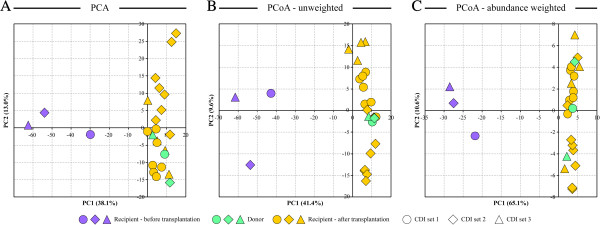
“Consistent with our analysis as described above, there was a considerable difference in the community phylotype structure between the CDI and donor samples, and this difference was the largest determinant of dataset variability, because the donor and CDI samples were separated along the principal component/coordinate…”
Moving pictures of the human microbiome
Caporaso, J. G., Lauber, C. L., Costello, E. K., Berg-Lyons, D., Gonzalez, A., Stombaugh, J., Knights, D., Gajer, P., Ravel, J., Fierer, N., et al. (2011) · Genome Biology · doi:10.1186/gb-2011-12-5-r50 · Cited by 1,138 · cited 1×
“In contrast to the fecal communities of CDI patients, the fecal samples of the donor were dominated by members of Clostridia, Actinobacteria, Erysipelotrichi, and Bacteroidia, which is a common composition of the distal gut microbiota in healthy humans [43].”
Hamady, M., Lozupone, C., & Knight, R. (2010) · The ISME Journal · doi:10.1038/ismej.2009.97 · Cited by 1,099 · cited 1×
“PCoA analyses were carried out on the Fast UniFrac web server [17].”
Willing, B. P., Dicksved, J., Halfvarson, J., Andersson, A. F., Lucio, M., Zheng, Z., Järnerot, G., Tysk, C., Jansson, J. K., & Engstrand, L. (2010) · Gastroenterology · doi:10.1053/j.gastro.2010.08.049 · Cited by 1,032
Treating Clostridium difficile infection with fecal microbiota transplantation
Bakken, J. S., Borody, T., Brandt, L. J., Brill, J. V., Demarco, D. C., Franzos, M. A., Kelly, C., Khoruts, A., Louie, T., Martinelli, L. P., et al. (2011) · Clinical Gastroenterology and Hepatology · doi:10.1016/j.cgh.2011.08.014 · Cited by 1,003
Self-citation
Cited by
Kelly, C. R., Khoruts, A., Staley, C., Sadowsky, M. J., Abd, M., Alani, M., Bakow, B., Curran, P., McKenney, J., Tisch, A., et al. (2016) · Annals of Internal Medicine · doi:10.7326/m16-0271 · Cited by 613
“Prior Lactobacillus GG use, n (%) 5 (23) 3 (13)”
BackgroundResultFecal microbiota transplantation: Review and update
Wang, J.-W., Kuo, C.-H., Kuo, F.-C., Wang, Y.-K., Hsu, W.-H., Yu, F.-J., Hu, H.-M., Hsu, P.-I., Wang, J.-Y., & Wu, D.-C. (2019) · Journal of the Formosan Medical Association · doi:10.1016/j.jfma.2018.08.011 · Cited by 576
Understanding the mechanisms of faecal microbiota transplantation
Khoruts, A., & Sadowsky, M. J. (2016) · Nature Reviews Gastroenterology & Hepatology · doi:10.1038/nrgastro.2016.98 · Cited by 561
Application of multivariate statistical techniques in microbial ecology
Paliy, O., & Shankar, V. (2016) · Molecular Ecology · doi:10.1111/mec.13536 · Cited by 452
“at least 70 days, confirming a previously reported observation (Shankar et al. 2014).”
BackgroundMethodResultInfluentialThe Super-Donor Phenomenon in Fecal Microbiota Transplantation
Wilson, B. C., Vatanen, T., Cutfield, W. S., & O'Sullivan, J. M. (2019) · Frontiers in Cellular and Infection Microbiology · doi:10.3389/fcimb.2019.00002 · Cited by 413
“Microbial analyses carried out on CDI patients before and after FMT have confirmed FMT is rapidly capable of restoring microbial diversity in patients to donor-like proportions (Song et al., 2013; Shankar et al., 2014; Kelly et al., 2016; Staley et al., 2016; Khanna et al., 2017; Kellingray et al., 2018).”
BackgroundTLR4 at the Crossroads of Nutrients, Gut Microbiota, and Metabolic Inflammation
Velloso, L. A., Folli, F., & Saad, M. J. (2015) · Endocrine Reviews · doi:10.1210/er.2014-1100 · Cited by 337
Staley, C., Hamilton, M. J., Vaughn, B. P., Graiziger, C. T., Newman, K. M., Kabage, A. J., Sadowsky, M. J., & Khoruts, A. (2017) · American Journal of Gastroenterology · doi:10.1038/ajg.2017.6 · Cited by 244
Yang, C., Mogno, I., Contijoch, E. J., Borgerding, J. N., Aggarwala, V., Li, Z., Siu, S., Grasset, E. K., Helmus, D. S., Dubinsky, M. C., et al. (2020) · Cell Host & Microbe · doi:10.1016/j.chom.2020.01.016 · Cited by 221
Gut microbiota and malnutrition
Million, M., Diallo, A., & Raoult, D. (2017) · Microbial Pathogenesis · doi:10.1016/j.micpath.2016.02.003 · Cited by 219
(2020) · Progress in Molecular Biology and Translational Science · doi:10.1016/bs.pmbts.2020.04.003 · Cited by 212
Million, M., Tidjani Alou, M., Khelaifia, S., Bachar, D., Lagier, J.-C., Dione, N., Brah, S., Hugon, P., Lombard, V., Armougom, F., et al. (2016) · Scientific Reports · doi:10.1038/srep26051 · Cited by 204
RetractedGut microbiota density influences host physiology and is shaped by host and microbial factors
Contijoch, E. J., Britton, G. J., Yang, C., Mogno, I., Li, Z., Ng, R., Llewellyn, S. R., Hira, S., Johnson, C., Rabinowitz, K. M., et al. (2019) · eLife · doi:10.7554/elife.40553 · Cited by 176
Faecal microbiota transplantation for Clostridioides difficile: mechanisms and pharmacology
Khoruts, A., Staley, C., & Sadowsky, M. J. (2021) · Nature Reviews Gastroenterology & Hepatology · doi:10.1038/s41575-020-0350-4 · Cited by 155
Self-citationWeingarden, A. R., Dosa, P. I., DeWinter, E., Steer, C. J., Shaughnessy, M. K., Johnson, J. R., Khoruts, A., & Sadowsky, M. J. (2016) · PLOS ONE · doi:10.1371/journal.pone.0147210 · Cited by 153
Early Fecal Microbiota Transplantation Improves Survival in Severe Clostridium difficile Infections
Hocquart, M., Lagier, J.-C., Cassir, N., Saidani, N., Eldin, C., Kerbaj, J., Delord, M., Valles, C., Brouqui, P., Raoult, D., et al. (2018) · Clinical Infectious Diseases · doi:10.1093/cid/cix762 · Cited by 151
Implications of microbiota and bile acid in liver injury and regeneration
Liu, H.-X., Keane, R., Sheng, L., & Wan, Y.-J. Y. (2015) · Journal of Hepatology · doi:10.1016/j.jhep.2015.08.001 · Cited by 143
“In addition, exogenous CA increased pathogenic Clostridia and Erysipelotrichi populations, which can lead to colitis and cirrhosis [85].”
BackgroundHuman Gut Microbiota: Toward an Ecology of Disease
Selber-Hnatiw, S., Rukundo, B., Ahmadi, M., Akoubi, H., Al-Bizri, H., Aliu, A. F., Ambeaghen, T. U., Avetisyan, L., Bahar, I., Baird, A., et al. (2017) · Frontiers in Microbiology · doi:10.3389/fmicb.2017.01265 · Cited by 144
“The decreased symptoms and clinical improvements remained stable for at least four months post procedure (Shankar et al., 2014), while FMT re-established a GI microbiota whose composition shifted from the diseased state and resembled more that of the donor (ib.”
BackgroundInfluentialThe bacterial communities associated with fecal types and body weight of rex rabbits
Zeng, B., Han, S., Wang, P., Wen, B., Jian, W., Guo, W., Yu, Z., Du, D., Fu, X., Kong, F., et al. (2015) · Scientific Reports · doi:10.1038/srep09342 · Cited by 143
Ke, S., Pollock, N. R., Wang, X., Chen, X., Daugherty, K., Lin, Q., Xu, H. J., Garey, K. W., Gonzales-Luna, A. J., Kelly, C. P., et al. (2021) · Gut Microbes · doi:10.1080/19490976.2021.1935186 · Cited by 124
Rodriguez, C., Taminiau, B., Brévers, B., Avesani, V., Broeck, J. V., Leroux, A., Gallot, M., Bruwier, A., Amory, H., Delmée, M., et al. (2015) · BMC Microbiology · doi:10.1186/s12866-015-0514-5 · Cited by 124
Britton, G. J., Contijoch, E. J., Spindler, M. P., Aggarwala, V., Dogan, B., Bongers, G., Mateo, L. S., Baltus, A. E., Das, A., Gevers, D., et al. (2020) · Proceedings of the National Academy of Sciences · doi:10.1073/pnas.1922189117 · Cited by 114
Staley, C., Kelly, C. R., Brandt, L. J., Khoruts, A., & Sadowsky, M. J. (2016) · mBio · doi:10.1128/mbio.01965-16 · Cited by 105
MICROBIOTA INSIGHTS IN CLOSTRIDIUM DIFFICILE INFECTION AND INFLAMMATORY BOWEL DISEASE
Rodriguez, C., Romero, E., Garrido‐Sánchez, L., Alcaín‐Martínez, G., Andrade, R., Taminiau, B., Daube, G., & García‐Fuentes, E. (2020) · Gut Microbes · doi:10.1080/19490976.2020.1725220 · Cited by 119
Jalanka, J., Mattila, E., Jouhten, H., Hartman, J., de Vos, W. M., Arkkila, P., & Satokari, R. (2016) · BMC Medicine · doi:10.1186/s12916-016-0698-z · Cited by 104
“Several studies have followed the short-term stability of the transplanted microbiota and constituted that, overall, FMTinduced changes tend to persist over time [14, 16, 17].”
Gut Microbiota Implications for Health and Welfare in Farm Animals: A Review
Chen, S., Luo, S., & Yan, C. (2021) · Animals · doi:10.3390/ani12010093 · Cited by 124
Hourigan, S. K., Chen, L. A., Grigoryan, Z., Laroche, G., Weidner, M., Sears, C. L., & Oliva‐Hemker, M. (2015) · Alimentary Pharmacology & Therapeutics · doi:10.1111/apt.13326 · Cited by 101
He, R., Li, P., Wang, J., Cui, B., Zhang, F., & Zhao, F. (2022) · Gut Microbes · doi:10.1080/19490976.2022.2100197 · Cited by 98
Davis, M. Y., Zhang, H., Brannan, L., Carman, R. J., & Boone, J. H. (2016) · Microbiome · doi:10.1186/s40168-016-0198-6 · Cited by 102
“Even when children under 2 years of age were diagnosed with CDI, the outcomes of treated and untreated CDI were not significantly different [54].”
BackgroundInfluentialFunctional Restoration of Bacteriomes and Viromes by Fecal Microbiota Transplantation
Fujimoto, K., Kimura, Y., Allegretti, J. R., Yamamoto, M., Zhang, Y., Katayama, K., Tremmel, G., Kawaguchi, Y., Shimohigoshi, M., Hayashi, T., et al. (2021) · Gastroenterology · doi:10.1053/j.gastro.2021.02.013 · Cited by 89
Ross, C. L., Spinler, J. K., & Savidge, T. (2016) · Anaerobe · doi:10.1016/j.anaerobe.2016.05.006 · Cited by 87
Bella, S. D., Gouliouris, T., & Petrosillo, N. (2015) · Journal of Infection and Chemotherapy · doi:10.1016/j.jiac.2015.01.011 · Cited by 77
Kumar, R., Yi, N., Zhi, D., Eipers, P., Goldsmith, K. T., Dixon, P., Crossman, D. K., Crowley, M. R., Lefkowitz, E. J., Rodriguez, J. M., et al. (2017) · npj Biofilms and Microbiomes · doi:10.1038/s41522-017-0020-7 · Cited by 72
Gonzales-Luna, A. J., Carlson, T. J., & Garey, K. W. (2023) · Gut Microbes · doi:10.1080/19490976.2023.2223345 · Cited by 71
Microbiota Replacement Therapies: Innovation in Gastrointestinal Care
Khanna, S. (2018) · Clinical Pharmacology & Therapeutics · doi:10.1002/cpt.923 · Cited by 62
“Although the recipient microbiota composition post-FMT is different from pretransplant, the degree of similarity to the donor microbiota after FMT is different among patients.(56,60,61) It has been shown that donor bacteria can persist in recipients up to 2 years post-FMT.”
BackgroundGut Microbiota and Clostridium difficile: What We Know and the New Frontiers
Piccioni, A., Rosa, F., Manca, F., Pignataro, G., Zanza, C., Savioli, G., Covino, M., Ojetti, V., Gasbarrini, A., Franceschi, F., et al. (2022) · International Journal of Molecular Sciences · doi:10.3390/ijms232113323 · Cited by 70
The contribution of bile acid metabolism to the pathogenesis of Clostridioides difficile infection
Mullish, B. H., & Allegretti, J. R. (2021) · Therapeutic Advances in Gastroenterology · doi:10.1177/17562848211017725 · Cited by 61
The Multifaceted Role of Commensal Microbiota in Homeostasis and Gastrointestinal Diseases
Silva, M. J. B., Carneiro, M. B. H., Pultz, B. D. A., Silva, D. P., Lopes, M. E., & dos Santos, L. M. (2015) · Journal of Immunology Research · doi:10.1155/2015/321241 · Cited by 70
“Infections caused by this microorganism are correlated with the decrease of commensal organisms in the gut [129].”
BackgroundRisk Factors and Outcomes for Bloodstream Infections Secondary to Clostridium difficile Infection
Falcone, M., Russo, A., Iraci, F., Carfagna, P., Goldoni, P., Vullo, V., & Venditti, M. (2015) · Antimicrobial Agents and Chemotherapy · doi:10.1128/aac.01927-15 · Cited by 59
Development of Fecal Microbiota Transplantation Suitable for Mainstream Medicine
Khoruts, A., Sadowsky, M. J., & Hamilton, M. J. (2014) · Clinical Gastroenterology and Hepatology · doi:10.1016/j.cgh.2014.11.014 · Cited by 59
Staley, C., Vaughn, B. P., Graiziger, C. T., Singroy, S., Hamilton, M. J., Yao, D., Chen, C., Khoruts, A., & Sadowsky, M. J. (2017) · Gut Microbes · doi:10.1080/19490976.2017.1299310 · Cited by 53
“Previously, colonoscopic administration was shown to result in a return to donor-like assemblage within days following FMT.(10,11) In contrast, in patients receiving capsules, approximately one month was required before Bacteroides reached donor-like proportions and maximal”
BackgroundResultShankar, V., Agans, R., & Paliy, O. (2017) · Scientific Reports · doi:10.1038/s41598-017-06693-z · Cited by 60
Park, H., Laffin, M. R., Jovel, J., Millan, B., Hyun, J. E., Hotte, N., Kao, D., & Madsen, K. L. (2019) · Gut Microbes · doi:10.1080/19490976.2019.1586037 · Cited by 49
López-Fernández, S., Sonego, P., Moretto, M., Pancher, M., Engelen, K., Pertot, I., & Campisano, A. (2015) · Frontiers in Microbiology · doi:10.3389/fmicb.2015.00419 · Cited by 57
“The interaction in microbial communities can also trigger the disease process (Shankar et al., 2014) and recently a shift of the paradigm from “pathogens” to “pathobiome” was proposed (Vayssier-Taussat et al., 2014).”
BackgroundContemporary Applications of Fecal Microbiota Transplantation to Treat Intestinal Diseases in Humans
Staley, C. M., Khoruts, A., & Sadowsky, M. J. (2017) · Archives of Medical Research · doi:10.1016/j.arcmed.2017.11.006 · Cited by 50
Clostridioides difficile and Gut Microbiota: From Colonization to Infection and Treatment
Spigaglia, P. (2024) · Pathogens · doi:10.3390/pathogens13080646 · Cited by 60
Fecal Microbiota of Toxigenic Clostridioides difficile-Associated Diarrhea
Hernández, M., de Frutos, M., Rodrı́guez-Làzaro, D., López-Urrutia, L., Quijada, N. M., & Bouza, J. M. E. (2019) · Frontiers in Microbiology · doi:10.3389/fmicb.2018.03331 · Cited by 45
“However, fecal microbiota transplantation appears to be a promising treatment for recurrent CDI (Shankar et al., 2014; Juul et al., 2018).”
Fecal Microbiota Transplantation: From Clostridium difficile to Inflammatory Bowel Disease.
Gianotti, R. J., & Moss, A. C. (2017) · Europe PMC (PubMed Central) · Cited by 53
Broecker, F., Klumpp, J., & Moelling, K. (2016) · Annals of the New York Academy of Sciences · doi:10.1111/nyas.13100 · Cited by 48
Microbiota-Based Therapies for Clostridium difficile and Antibiotic-Resistant Enteric Infections
Lewis, B. B., & Pamer, E. G. (2017) · Annual Review of Microbiology · doi:10.1146/annurev-micro-090816-093549 · Cited by 51
Kellingray, L., Gall, G. L., Defernez, M., Beales, I. L. P., Franslem-Elumogo, N., & Narbad, A. (2018) · Journal of Infection · doi:10.1016/j.jinf.2018.04.012 · Cited by 43
Hourigan, S. K., Ahn, M., Gibson, K. M., Pérez-Losada, M., Felix, G., Weidner, M., Leibowitz, I., Niederhuber, J. E., Sears, C. L., Crandall, K. A., et al. (2019) · Open Forum Infectious Diseases · doi:10.1093/ofid/ofz379 · Cited by 43
“pneumonia pre-FMT in recipients have been reported in adult studies of patients undergoing FMT [65, 66].”
ResultRecipient-independent, high-accuracy FMT-response prediction and optimization in mice and humans
Shtossel, O., Turjeman, S., Riumin, A., Goldberg, M. R., Elizur, A., Bekor, Y., Mor, H., Koren, O., & Louzoun, Y. (2023) · Microbiome · doi:10.1186/s40168-023-01623-w · Cited by 50
Microbiome modulates intestinal homeostasis against inflammatory diseases
Sun, X., & Jia, Z. (2018) · Veterinary Immunology and Immunopathology · doi:10.1016/j.vetimm.2018.10.014 · Cited by 48
Recurrent Clostridium difficile infection and the microbiome
Almeida, R., Gerbaba, T. K., & Petrof, E. O. (2015) · Journal of Gastroenterology · doi:10.1007/s00535-015-1099-3 · Cited by 39
“as efficacious [71, 87, 88].”
Analysis of gut microbiota – An ever changing landscape
Sadowsky, M. J., Staley, C. M., Heiner, C. R., Hall, R. J., Kelly, C. R., Brandt, L. J., & Khoruts, A. (2017) · Gut Microbes · doi:10.1080/19490976.2016.1277313 · Cited by 34
“Early on, however, microarrays or phylochips were the only reliable technologies available to assign sequence data to the genus and species level.(24) This technology was limited to uncovering those taxa known to be present and species covered by the array, rather than also encompassing unknown microbes present in the…”
MethodResultInfluentialBrüssow, H. (2016) · Microbial Biotechnology · doi:10.1111/1751-7915.12391 · Cited by 33
“Shankar et al. (2014) observed high amounts of Gammaproteobacteria and Bacilli in CDI patients (41% and 34% respectively) which decreased to 2% upon FMT with a concomitant increase in Clostridia (76%).”
Clostridium difficile infection and intestinal microbiota interactions
Rodriguez, C., Taminiau, B., Broeck, J. V., Delmée, M., & Daube, G. (2015) · Microbial Pathogenesis · doi:10.1016/j.micpath.2015.10.018 · Cited by 34
Ward, N. L., Phillips, C. D., Nguyen, D. D., Shanmugam, N. K. N., Song, Y., Hodin, R. A., Shi, H. N., Cherayil, B. J., & Goldstein, A. M. (2016) · Inflammatory Bowel Diseases · doi:10.1097/mib.0000000000000914 · Cited by 29
Haran, J. P., Ward, D. V., Bhattarai, S. K., Loew, E. B., Dutta, P., Higgins, A., McCormick, B. A., & Bucci, V. (2021) · Gut Microbes · doi:10.1080/19490976.2021.1897209 · Cited by 28
Persistent diarrhea: a persistent infection with enteropathogens or a gut commensal dysbiosis?
Sarker, S. A., Ahmed, T., & Brüssow, H. (2017) · Environmental Microbiology · doi:10.1111/1462-2920.13873 · Cited by 31
“Fecal transfer corrected the Proteobacteria dominance and resolved clinical problems (Shahinas et al., 2012; Shankar et al., 2014).”
BackgroundConsortium of Probiotics Attenuates Colonization of Clostridioides difficile
Li, X., Chu, Q., Huang, Y., Xiao, Y., Song, L., Zhu, S., Kang, Y., Lu, S., Xu, J., & Ren, Z. (2019) · Frontiers in Microbiology · doi:10.3389/fmicb.2019.02871 · Cited by 30
“Besides, Coprococcus and Dorea were also reported to be lower level of abundance in C. difficile-infected patient (Shankar et al., 2014; Sokol et al., 2018).”
BackgroundInvasions of Host-Associated Microbiome Networks
Murall, C. L., Abbate, J. L., Touzel, M. P., Allen‐Vercoe, E., Alizon, S., Froissart, R., & McCann, K. S. (2017) · Advances in ecological research/Advances in Ecological Research · doi:10.1016/bs.aecr.2016.11.002 · Cited by 29
Kumar, R., Maynard, C. L., Eipers, P. G., Goldsmith, K. T., Ptacek, T., Grubbs, J. A., Dixon, P. B., Howard, D., Crossman, D. K., Crowley, M. R., et al. (2016) · BMC Microbiology · doi:10.1186/s12866-015-0622-2 · Cited by 27
Khoruts, A., Hippen, K. L., Lemire, A. M., Holtan, S. G., Knights, D., & Young, J. H. (2016) · Translational research · doi:10.1016/j.trsl.2016.07.013 · Cited by 22
“[57] It results in prompt and sustained engraftment of donor microbiota and donor-like normalization of the fecal microbial community structure.[57-61] The notion of microbiota reconstitution in HCT setting dates was explored anecdotally in 1970s, primarily as a means to improve colonization resistance.”
Yau, Y. K., Mak, J. W. Y., Lui, N. S. R., Ng, W. Y. R., Cheung, C. Y. K., Li, Y. L. A., Ching, Y. L. J., Chin, M. L., Lau, H. S. L., Chan, K. L. F., et al. (2021) · United European Gastroenterology Journal · doi:10.1002/ueg2.12160 · Cited by 19
“However, the link between specific components of stools from healthy donors and the treatment efficacy has yet to be fully elucidated.(55)”
BackgroundWang, X., Niu, L., Wang, Y., Zhan, S., Wang, L., Dai, D., Cao, J., Guo, J., Li, L., Zhang, H., et al. (2023) · International Journal of Molecular Sciences · doi:10.3390/ijms241411423 · Cited by 18
Chiu, C.-W., Tsai, P.-J., Lee, C., Ko, W., & Hung, Y. (2021) · Pathogens · doi:10.3390/pathogens10060649 · Cited by 23
“Since the poor bacterial diversity is correlated with rCDIs in clinical patients, the efficacy of FMT in preventing rCDIs has been correlated with the restoration of the disturbed and poor diversity of gut microbiota due to the disruption by antibiotic exposures [17,18], for example, replanting the genera of Bacteroid…”
BackgroundInfluentialFaecal Transplant in GIT Treatment (Pilot Clinical Experience)
Scherbakov, P., Belova, N. D., Generozov, E. V., Zhgun, E. S., Ivanova, O. I., Ilina, E. N., Калачнюк, Т. Н., Pavlenko, A. V., Podgorskiy, V. V., Manolov, A. I., et al. (2019) · Doctor Ru · doi:10.31550/1727-2378-2019-158-3-40-46 · Cited by 15
The role of microbiota and its modulation in colonic diverticular disease
Marasco, G., Buttitta, F., Cremon, C., Barbaro, M. R., Stanghellini, V., & Barbara, G. (2023) · Neurogastroenterology & Motility · doi:10.1111/nmo.14615 · Cited by 19
“129 Recipient shifts to a donor-like microbiota within one-two days and remains comparable to that of donors until 6– 12 months.”
BackgroundEngineering the Microbiome: a Novel Approach to Immunotherapy for Allergic and Immune Diseases
Shen, N., & Clemente, J. C. (2015) · Current Allergy and Asthma Reports · doi:10.1007/s11882-015-0538-9 · Cited by 16
Genomic Techniques Used to Investigate the Human Gut Microbiota
Singh, A. P. (2021) · Biochemistry · doi:10.5772/intechopen.91808 · Cited by 18
Lee, P., Chang, T.-E., Wang, Y., Lee, K., Lin, Y.-T., Chiou, J.-J., Huang, C.-W., Yang, U., Li, F.-Y., Huang, H., et al. (2021) · Journal of the Formosan Medical Association · doi:10.1016/j.jfma.2021.11.001 · Cited by 13
Gao, Y., Li, H., Yang, H., Su, J., & Huang, L. (2019) · Critical Reviews in Microbiology · doi:10.1080/1040841x.2019.1700905 · Cited by 11
“…is emerging as a widely accepted alternative treatment method of CDI relapse through normalising the community structure and functionality of gut microbiota (Khoruts et al. 2010; Fouhy et al. 2012; van Nood et al. 2013; Seekatz et al. 2014; Shankar et al. 2014; Weingarden et al. 2014, 2015).”
MethodDong, L., Tomassen, M. M. M., Ariëns, R. M. C., Oosterink, E., Wichers, H. J., Veldkamp, T., Mes, J. J., & Govers, C. (2021) · Food & Function · doi:10.1039/d1fo00673h · Cited by 12
The Contribution of Strains and Hosts to Outcomes in Clostridium difficile Infection
Martin, J. S. H. (2015) · Infectious Disease Clinics of North America · doi:10.1016/j.idc.2014.11.012 · Cited by 13
Afouda, P., Ndongo, S., Khelaifia, S., Labas, N., Cadoret, F., Pinto, F. D., Delerce, J., Raoult, D., & Million, M. (2016) · New Microbes and New Infections · doi:10.1016/j.nmni.2016.12.013 · Cited by 11
“org/lice Some cases of Clostridium difficile infection were treated by transplantation of faecal microbiota [36].”
Szoboszlay, M., Näther, A., Mullins, E. D., & Tebbe, C. C. (2019) · PLoS ONE · doi:10.1371/journal.pone.0222737 · Cited by 11
Jouhten, H., Ronkainen, A., Aakko, J., Salminen, S., Mattila, E. J., Arkkila, P., & Satokari, R. M. (2020) · Frontiers in Microbiology · doi:10.3389/fmicb.2020.01663 · Cited by 10
Yuan, T., Qazi, I. H., Huang, X., & Liu, J. (2024) · Chemical and Biological Technologies in Agriculture · doi:10.1186/s40538-024-00583-z · Cited by 9
“It is also believed that the disease process can also be triggered by the interaction between microbial communities [68].”
BackgroundOverview of microbial therapeutics in immunological disorders
Mishra, R., Mohanty, S., Mahapatra, S., & Prasad, P. (2023) · Elsevier eBooks · doi:10.1016/b978-0-323-99336-4.00008-2 · Cited by 8
Yan, D., Huang, Y., Chen, Y., Lv, T., Zhu, C., Huang, J., & Li, L. (2021) · Hepatobiliary & pancreatic diseases international · doi:10.1016/j.hbpd.2021.03.004 · Cited by 6
Assessing live microbial therapeutic transmission
Faith, J. J. (2025) · Gut Microbes · doi:10.1080/19490976.2024.2447836 · Cited by 4
“53,55 These species-based inferences of transmission are more challenging in FMT for indications without very distinct gut microbiome composition from a normal healthy adult, as the pre-FMT microbiome will likely have a large genus and species overlap with the donor microbiome, limiting the number…”
Multiscale analysis of the murine intestine for modeling human diseases
Lyons, J., Herring, C. A., Banerjee, A., Simmons, A. J., & Lau, K. S. (2015) · Integrative Biology · doi:10.1039/c5ib00030k · Cited by 5
Chen, S., Liu, H., Yan, C., Li, Y., Xiao, J., & Zhao, X. (2024) · Poultry Science · doi:10.1016/j.psj.2024.103926 · Cited by 7
“…the fecal microbiota from a healthy donor into a recipient and normalizes the composition and functionality of gut microbiota (Seekatz et al., 2014; Shankar et al., 2014), which acts as an important therapy and has been used for the treatments of certain diseases (Surawicz et al., 2013;…”
Gîlcă-Blanariu, G.-E., Ștefănescu, G., Gîrleanu, I., Iqbal, T. H., Segal, J. P., Mullish, B. H., Quraishi, M. N., Keller, J. J., Molnár, T., Mégraud, F., et al. (2021) · Journal of Gastrointestinal and Liver Diseases · doi:10.15403/jgld-3297 · Cited by 6
Burdette, R. A., Whitt, C. C., Behm, B. W., & Warren, C. A. (2025) · ACG Case Reports Journal · doi:10.14309/crj.0000000000001660 · Cited by 3
Wang, J., Zhang, X., Cui, C., Li, M., Xie, Z., Yang, L., Ding, D., Li, X., & Zhao, M. (2025) · Journal of Inflammation Research · doi:10.2147/jir.s539452 · Cited by 2
“36 We speculate that the absence of FMT following skin transplantation in the study by Zhang et al may have reduced the protective effect of FMT on the grafts in the model mice.”
Methods for Microbiota Analysis: Sample Collection and Laboratory Methods
Ibrahim, S. M., & Belheouane, M. (2018) · Springer eBooks · doi:10.1007/978-3-319-79026-8_2 · Cited by 3
Nonspecific Energy Expenditure of the Body and Body Mass Regulation
Загоскин, П. П. (2019) · Journal of Nutritional Biology · doi:10.18314/jnb.v5i1.1630 · Cited by 2
“According to some authors, the most radical way to prevent and treat such forms of obesity is to transplant the microbiome from a healthy donor [25-28].”
BackgroundFecal Microbial Transplant: For Whom, How, and When
Kahn, S. A., & Kaplan, J. L. (2015) · Springer eBooks · doi:10.1007/978-3-319-17169-2_35 · Cited by 1
Clinical Utility and Alterations in Bacterial Flora in Fecal Microbiome Transplantation
Dave, A. A., & Robson, R. L. (2015) · International Journal of Medical Students · doi:10.5195/ijms.2015.135 · Cited by 1
“The third reason there has been no concrete correlation of certain variables with outcomes is the high success rate of FMT in CDI.”
BackgroundResultInfluentialThe impact of host-microbe interactions on murine colonic secretomotor function
Lomasney, K. W. (2014) · Cork Open Research Archive (University College Cork, Ireland)
Profiling Metagenomic Communities Using Circular Consensus and Single Molecule, Real-Time Sequencing
Hall, R. J., Oh, S. D., & Heiner, C. R. (2015)
C. difficile Microbiome Manipulation
Wick, J., Basein, T., & Doron, S. (2017) · Springer eBooks · doi:10.1007/978-3-319-60980-5_16
Celiac Disease and Imbalance of Intestinal Flora
Taufner, G. H. (2017) · Advances in Biotechnology & Microbiology · doi:10.19080/aibm.2017.02.555588
“The main bacterium in this group colonizing the intestine is Clostridium difficile, responsible for the production of two toxins of high pathological effect, known as Toxin A and Toxin B [65,66].”
BackgroundPrecision medicine and gut dysbiosis
Harris, C., Kim, P. T., Waterhouse, D., Feng, Z. Z., Niergarth, J., & Lee, C. (2020) · Healthcare Management Forum · doi:10.1177/0840470419899426 · Cited by 2
“The balance of these key bacteria may be partly responsible for the restoration of health and improved quality of life in cured patients.(11,12,14)”
BackgroundInfluentialFaecal microbiota transplantation: a review
Sinclair, H., & Chapman, P. R. (2020) · Microbiology Australia · doi:10.1071/ma20019
The Role of Microbiota in Gut Inflammation and Sepsis
Glibetić, N., Aan, F. J., Montoya-Uribe, V., & Matter, M. L. (2021) · Elsevier eBooks · doi:10.1016/b978-0-12-819265-8.00023-1 · Cited by 1
Ke, S., Pollock, N. R., Xu-wen, W., Chen, X., Daugherty, K., Lin, Q., Xu, H. X., Garey, K. W., Gonzales-Luna, A. J., Liu, Y., et al. (2020) · Research Square · doi:10.21203/rs.3.rs-65421/v1
Metadata
- Authors
- Shankar, V., Hamilton, M. J., Khoruts, A., Kilburn, A., Unno, T., Paliy, O., & Sadowsky, M. J.
- Affiliations
- Wright State University (US)
- University of Minnesota (US)
- Corresponding author
- Paliy, Oleg
- Sadowsky, Michael J
- Venue
- Microbiome
- Published
- 2014-04-21
- Volume
- 2
- Issue
- 1
- Pages
- 13-13
- ISSN
- 2049-2618 (ISSN-L)
- PMC
- PMC4030581
- OpenAlex
- W2156875941
- Cited by
- 106
- References
- 48
- Citations by year
- 2025: 3 · 2024: 4 · 2023: 7 · 2022: 2 · 2021: 13 · 2020: 9 · 2019: 13 · 2018: 4 · 2017: 15 · 2016: 17 · 2015: 17 · 2014: 2
- FWCI
- 11.95
- Type
- journal article
- Language
- en
- Open access
- gold
- doi.org
- Licence
- cc-by
- Locations
- Microbiome (publishedVersion, cc-by)
- Europe PMC (PubMed Central) (publishedVersion, cc-by)
- PubMed Central (publishedVersion, cc-by)
- PubMed (publishedVersion)
- Funders
- National Institutes of Health (AT003423)
- Topics
- Health Sciences › Medicine › Infectious Diseases › Clostridium difficile and Clostridium perfringens research
- Life Sciences › Biochemistry, Genetics and Molecular Biology › Molecular Biology › Gut microbiota and health
- Health Sciences › Medicine › Gastroenterology › Gastrointestinal motility and disorders
- Keywords
- Clostridium difficile infection, fecal microbiota transplantation, gut microbiota, Clostridia, donor microbiota, microbial community composition, species-level resolution, recurrent Clostridium difficile infection, antibiotic-associated diarrhea, Blautia, Coprococcus, Faecalibacterium, Lactobacillus, Streptococcus, Enterobacter, microbial diversity
About these checks
Registry, retraction, Cites and statistics results are computed, not judged, with one exception: a printed reference that no index lists is read once by a model before it counts as a citation error. Claims are extracted by a model and kept only when their quote appears verbatim in the text; each cited source is then checked, with a model’s help, for whether it says what the claim relies on. Those verdicts can be wrong — read the claim’s quote and the cited source before relying on one.
Statistics and arithmetic are recomputed, not judged.
Confidence bands are shown only for fields calibrated on our annotated test set. None is calibrated yet, so no band is shown.
What counts as a claim ›How we measure confidence ›How we check this ›
Are you an author, or do you see a problem with this page? Request a review
Data sources
Bibliographic data: Semantic Scholar, OpenAlex, Crossref.
Contains information from the Semantic Scholar Academic Graph Datasets, made available under the ODC Attribution License (ODC-BY 1.0).
Semantic Scholar’s data is described in: Kinney, R., et al. (2023). The Semantic Scholar Open Data Platform. arXiv:2301.10140.
