

mGluR2/3 blockade produces rapid and long-lasting reversal of anhedonia caused by chronic stress exposure
Open accessThe DOI matches its Crossref record; 21 of the 21 references it cites were found in a registry or an index.
Abstract
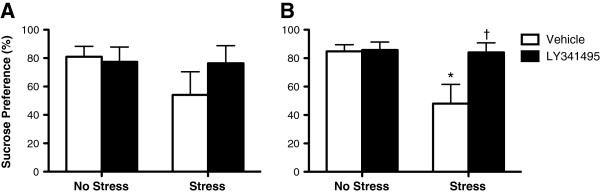
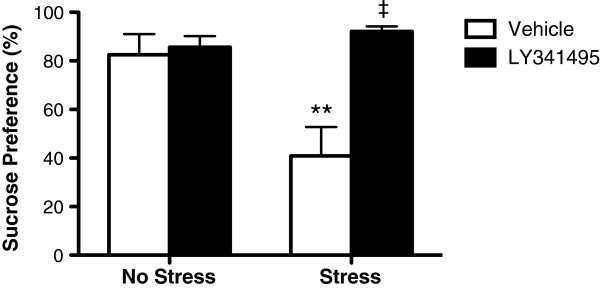
Background: Depression is a prevalent neuropsychiatric disorder that affects an estimated 350 million people worldwide. Currently available treatments for depression are lacking in both speed of onset and efficacy. Recent pharmacological efforts have targeted the glutamatergic neurotransmitter system using the N-methyl-D-aspartate (NMDA) receptor antagonist ketamine to produce rapid and robust antidepressant effects, however the widespread clinical use of ketamine is limited due to side effects and abuse liability. More recently, work evaluating metabotropic mGluR2/3 receptor antagonists has demonstrated many similarities with ketamine. Methods: Male, Sprague–Dawley rats were exposed to a chronic unpredictable stress paradigm, which produces decreased sucrose preference, a measure of anhedonia. Rats were then treated with vehicle or a single injection of the mGluR2/3 antagonist LY341495 (3 mg/kg, i.p.) and tested at 24 hrs, 48 hrs or 10 days after a single treatment. Results: We demonstrate that a single treatment with LY341495 produces a rapid (within 1–2 days) and long-lasting (10 days) reversal of anhedonia caused by chronic unpredictable stress in rats. This model provides a rigorous test of rapid-acting agents as typical antidepressants require several weeks of treatment to produce a response. Conclusions: These data suggest that LY341495 has the ability to produce rapid and robust antidepressant effects similar to ketamine. Together, the results highlight the potential for similar compounds to produce rapid and lasting efficacy for the treatment of depression.
Overview
The claims and statistics of this paper haven’t been checked yet.
Free: it reads the open-access text and checks the first 5 claims that cite a source we can check. Create a free account to check every claim.
Integrity signals
Registry
Cites
Statistics
Figures
Verification
Claims the paper makes
The claims and statistics of this paper haven’t been checked yet.
Free: it reads the open-access text and checks the first 5 claims that cite a source we can check. Create a free account to check every claim.
Claims other papers make about this one
Each is checked against this paper’s own text: does it say what the citing paper says it does?
The cited source says what the claim attributes to it.
In the citing paper
“LY341495 (3 mg/kg i.p.) in rats was sufficient to reverse anhedonia produced by a chronic unpredictable stress model of depression and measured using the sucrose preference test at 48 hours post-treatment (Dwyer et al., 2013).”
From Mechanisms of ketamine and its metabolites as antidepressants (2022) · cites this paper as Dwyer et al., 2013
Self-check
Percentages, sums and reported differences re-computed from the paper’s own numbers.
The self-check needs the paper’s full text.
Citations
Cites
Molecular Mechanisms of Depression: Perspectives on New Treatment Strategies
Lang, U. E., & Borgwardt, S. (2013) · Cellular Physiology and Biochemistry · doi:10.1159/000350094 · Cited by 8,475
Kessler, R. C., Berglund, P., Demler, O., Jin, R., Koretz, D., Merikangas, K. R., Rush, A. J., Walters, E. E., & Wang, P. S. (2003) · JAMA · doi:10.1001/jama.289.23.3095 · Cited by 7,988 · cited 1×
“Major Depressive Disorder (MDD) is a debilitating neuropsychiatric disorder that affects nearly one fifth of the US population [1], and according to the World Health Organization (WHO), affects an estimated 350 million people worldwide, making it the leading cause of disability.”
BackgroundAntidepressant effects of ketamine in depressed patients
Berman, R. M., Cappiello, A., Anand, A., Oren, D. A., Heninger, G. R., Charney, D. S., & Krystal, J. H. (2000) · Biological Psychiatry · doi:10.1016/s0006-3223(99)00230-9 · Cited by 3,856 · cited 6×
“The discovery that the non-competitive N-methyl-D-aspartate (NMDA) receptor antagonist ketamine produces rapid antidepressant effects in humans (within 2 hours) that last roughly one week after a single intravenous administration has generated interest in targeting the glutamatergic system for the treatment of MDD [2,…”
BackgroundInfluentialA randomized trial of an N-methyl-D-aspartate antagonist in treatment-resistant major depression.
Zarate, C. A., Singh, J. B., Carlson, P. J., Brutsche, N. E., Ameli, R., Luckenbaugh, D. A., Charney, D. S., & Manji, H. K. (2006) · Archives of General Psychiatry · doi:10.1001/archpsyc.63.8.856 · Cited by 3,766 · cited 6×
“The discovery that the non-competitive N-methyl-D-aspartate (NMDA) receptor antagonist ketamine produces rapid antidepressant effects in humans (within 2 hours) that last roughly one week after a single intravenous administration has generated interest in targeting the glutamatergic system for the treatment of MDD [2,…”
BackgroundInfluentialmTOR-Dependent Synapse Formation Underlies the Rapid Antidepressant Effects of NMDA Antagonists
Li, N., Lee, B., Liu, R.-J., Banasr, M., Dwyer, J. M., Iwata, M., Li, X.-Y., Aghajanian, G., & Duman, R. S. (2010) · Science · doi:10.1126/science.1190287 · Cited by 2,881 · cited 1×
“through the mechanistic target of rapamycin complex 1 (mTORC1) pathway [4,5], which is a ubiquitously expressed serine/threonine kinase pathway involved in regulation of cell growth and protein translation.”
BackgroundSelf-citationMoghaddam, B., Adams, B., Verma, A., & Daly, D. (1997) · The Journal of Neuroscience · doi:10.1523/jneurosci.17-08-02921.1997 · Cited by 1,793 · cited 1×
“Much like ketamine, mGluR2/3 antagonists produce rapid and transient increases in glutamate release in the mPFC [13,14].”
BackgroundShigemoto, R., Kinoshita, A., Wada, E., Nomura, S., Ohishi, H., Takada, M., Flor, P. J., Neki, A., Abe, T., Nakanishi, S., et al. (1997) · The Journal of Neuroscience · doi:10.1523/jneurosci.17-19-07503.1997 · Cited by 1,116 · cited 1×
“The mGluR2 receptor is located pre- and post-synaptically [6] but is thought to be predominantly located at the pre-terminal portion of axons [7] where it functions as an autoreceptor.”
BackgroundMaeng, S., Zarate, C. A., Du, J., Schloesser, R. J., McCammon, J., Chen, G., & Manji, H. K. (2008) · Biological Psychiatry · doi:10.1016/j.biopsych.2007.05.028 · Cited by 1,103 · cited 1×
“Blockade of post-synaptic AMPA receptors blocks the antidepressant effects of both ketamine and mGluR2/3 antagonists in rodent models [15,16].”
BackgroundLi, N., Liu, R.-J., Dwyer, J. M., Banasr, M., Lee, B., Son, H., Li, X.-Y., Aghajanian, G., & Duman, R. S. (2011) · Biological Psychiatry · doi:10.1016/j.biopsych.2010.12.015 · Cited by 1,082 · cited 4×
“This rapid effect of LY341495 is similar to that observed following ketamine treatment as previous studies have shown a reversal of the deficit in sucrose preference within 24 hrs of ketamine treatment [4].”
BackgroundResultInfluentialSelf-citationOhishi, H., Shigemoto, R., Nakanishi, S., & Mizuno, N. (1993) · Neuroscience · doi:10.1016/0306-4522(93)90485-x · Cited by 560 · cited 1×
“While mGluR2 expression seems to be confined to neurons [8], mGluR3 receptors, which are also pre- and post-synaptic, are located on neurons as well as glia [9].”
Background
Cited by
Targeting glutamate signalling in depression: progress and prospects
Murrough, J. W., Abdallah, C. G., & Mathew, S. J. (2017) · Nature Reviews Drug Discovery · doi:10.1038/nrd.2017.16 · Cited by 482
Emerging treatment mechanisms for depression: focus on glutamate and synaptic plasticity
Gerhard, D. M., Wohleb, E. S., & Duman, R. S. (2016) · Drug Discovery Today · doi:10.1016/j.drudis.2016.01.016 · Cited by 261
“LY341495 also rapidly reverses the anhedonia caused by chronic stress exposure, a rigorous rodent test of rapid antidepressant actions [84].”
BackgroundSelf-citationDuman, R. S. (2014) · Dialogues in Clinical Neuroscience · doi:10.31887/dcns.2014.16.1/rduman · Cited by 249
Self-citationKetamine and rapid-acting antidepressants: a new era in the battle against depression and suicide
Duman, R. S. (2018) · F1000Research · doi:10.12688/f1000research.14344.1 · Cited by 207
“Preclinical studies have reported that mGluR2/3 antagonists, notably LY341,495 and MGS0039, produce antidepressant effects in a number of rodent models, including the FST, NSFT, and a chronic unpredictable stress-anhedonia model, and also require mTORC1 signaling 29,63,64 .”
BackgroundSelf-citationLindsley, C. W., Emmitte, K. A., Hopkins, C. R., Bridges, T. M., Gregory, K. J., Niswender, C. M., & Conn, P. J. (2016) · Chemical Reviews · doi:10.1021/acs.chemrev.5b00656 · Cited by 181
Mechanisms of ketamine and its metabolites as antidepressants
Hess, E. M., Riggs, L. M., Michaelides, M., & Gould, T. D. (2022) · Biochemical Pharmacology · doi:10.1016/j.bcp.2021.114892 · Cited by 175
Fukumoto, K., Iijima, M., & Chaki, S. (2016) · Neuropsychopharmacology · doi:10.1038/npp.2015.233 · Cited by 174
Convergent Mechanisms Underlying Rapid Antidepressant Action
Zanos, P., Thompson, S. M., Duman, R. S., Zarate, C. A., & Gould, T. D. (2018) · CNS Drugs · doi:10.1007/s40263-018-0492-x · Cited by 171
“In particular, a single administration of an mGluR2/3 antagonist reduced immobility time in the 24-h forced-swim test [193], decreased time delay until food consumption in the novelty-suppressed feeding test [194, 195], rapidly reversed chronic stress-induced decreases in sucrose preference, which was sustained for at…”
BackgroundSelf-citationKoike, H., & Chaki, S. (2014) · Behavioural Brain Research · doi:10.1016/j.bbr.2014.05.065 · Cited by 175
Neurobiology of rapid-acting antidepressants: convergent effects on GluA1-synaptic function
Duman, R. S., Shinohara, R., Fogaça, M. V., & Hare, B. (2019) · Molecular Psychiatry · doi:10.1038/s41380-019-0400-x · Cited by 154
Self-citation( 2R,6R )-hydroxynorketamine exerts mGlu 2 receptor-dependent antidepressant actions
Zanos, P., Highland, J. N., Stewart, B. W., Georgiou, P., Jenne, C. E., Lovett, J., Morris, P. J., Thomas, C. J., Moaddel, R., Zarate, C. A., et al. (2019) · Proceedings of the National Academy of Sciences · doi:10.1073/pnas.1819540116 · Cited by 152
Molecular and Cellular Mechanisms of Rapid-Acting Antidepressants Ketamine and Scopolamine
Wohleb, E. S., Gerhard, D., Thomas, A., & Duman, R. S. (2017) · Current Neuropharmacology · doi:10.2174/1570159x14666160309114549 · Cited by 148
“Prior administration with the selective mTORC1 inhibitor rapamycin blocks the behavioral and synaptogenic actions of these agents, further supporting a role for the mTORC1 pathway [24, 58-60].”
Self-citationNeuronal correlates of depression
Chaudhury, D., Liu, H., & Han, M.-H. (2015) · Cellular and Molecular Life Sciences · doi:10.1007/s00018-015-2044-6 · Cited by 144
Molecular Pharmacology and Neurobiology of Rapid-Acting Antidepressants
Gould, T. D., Zarate, C. A., & Thompson, S. M. (2019) · Annual Review of Pharmacology and Toxicology · doi:10.1146/annurev-pharmtox-010617-052811 · Cited by 133
Dong, C., Zhang, J.-C., Yao, W., Ren, Q., Ma, M., Yang, C., Chaki, S., & Hashimoto, K. (2016) · International Journal of Neuropsychopharmacology · doi:10.1093/ijnp/pyw089 · Cited by 116
“Although there is a report showing rapid and sustained antidepressant effects for LY341495 in a chronic unpredictable stress model (Dwyer et al., 2013), these effects have not been fully addressed in the context of synaptic plasticity.”
BackgroundDepression in Sub-Saharan Africa
Gbadamosi, I., Henneh, I. T., Aluko, O. M., Yawson, E. O., Fokoua, A. R., Koomson, A. E., Torbi, J., Olorunnado, S. E., Lewu, F. S., Yusha’u, Y., et al. (2022) · IBRO Neuroscience Reports · doi:10.1016/j.ibneur.2022.03.005 · Cited by 153
Joffe, M. E., Santiago, C. I., Oliver, K. H., Maksymetz, J., Harris, N. A., Engers, J. L., Lindsley, C. W., Winder, D. G., & Conn, P. J. (2020) · Neuron · doi:10.1016/j.neuron.2019.09.044 · Cited by 76
mGlu2/3 Receptor Antagonists as Novel Antidepressants
Chaki, S. (2017) · Trends in Pharmacological Sciences · doi:10.1016/j.tips.2017.03.008 · Cited by 73
Dogra, S., & Conn, P. J. (2021) · Neuropharmacology · doi:10.1016/j.neuropharm.2021.108687 · Cited by 71
Novel rapid-acting glutamatergic modulators: Targeting the synaptic plasticity in depression
Wang, Y., Wang, X., Feng, S., Chen, N., Wang, Z., & Zhang, Y. (2021) · Pharmacological Research · doi:10.1016/j.phrs.2021.105761 · Cited by 69
Engers, J. L., Rodriguez, A. L., Konkol, L. C., Morrison, R. D., Thompson, A. D., Byers, F. W., Blobaum, A. L., Chang, S., Venable, D. F., Loch, M. T., et al. (2015) · Journal of Medicinal Chemistry · doi:10.1021/acs.jmedchem.5b01005 · Cited by 68
Ketamine as a therapeutic agent for depression and pain: mechanisms and evidence
Subramanian, S., Haroutounian, S., Palanca, B. J. A., & Lenze, E. J. (2022) · Journal of the Neurological Sciences · doi:10.1016/j.jns.2022.120152 · Cited by 77
Epigenetic signaling in schizophrenia
Ibi, D., & González-Maeso, J. (2015) · Cellular Signalling · doi:10.1016/j.cellsig.2015.06.003 · Cited by 61
Peterlik, D., Flor, P. J., & Uschold‐Schmidt, N. (2015) · Current Neuropharmacology · doi:10.2174/1570159x13666150515234920 · Cited by 58
Chávez-Castillo, M., Núñez, V., Nava, M., Ortega, Á., Rojas, M., Bermúdez, V., & Rojas, J. (2019) · Advances in Pharmacological Sciences · doi:10.1155/2019/7943481 · Cited by 76
“Riluzole has also been reported to stimulate BDNF expression [62] and accelerate Glu clearance from the synaptic cleft by facilitating Glu reuptake by astrocytes [63].”
BackgroundGroup II metabotropic glutamate receptor blockade promotes stress resilience in mice
Highland, J. N., Zanos, P., Georgiou, P., & Gould, T. D. (2019) · Neuropsychopharmacology · doi:10.1038/s41386-019-0380-1 · Cited by 54
Metabotropic Glutamate Receptors in Central Nervous System Diseases
V. Golubeva, A., D. Moloney, R., M. O';Connor, R., G. Dinan, T., & F. Cryan, J. (2016) · Current Drug Targets · doi:10.2174/1389450116666150316224011 · Cited by 47
Metabotropic glutamate receptors as emerging research targets in bipolar disorder
Blacker, C. J., Lewis, C. P., Frye, M. A., & Veldić, M. (2017) · Psychiatry Research · doi:10.1016/j.psychres.2017.07.059 · Cited by 49
Witkin, J. M., Mitchell, S. N., Wafford, K. A., Carter, G., Gilmour, G., Li, J., Eastwood, B. J., Overshiner, C. D., Li, X., Rorick‐Kehn, L. M., et al. (2017) · Journal of Pharmacology and Experimental Therapeutics · doi:10.1124/jpet.116.238121 · Cited by 42
“Multiple additional commonalties in biologic activities have been found between ketamine and other mGlu2/3 receptor antagonists (e.g., Dwyer et al., 2012, 2013; Dong et al., 2016; Fukumoto et al., 2016 Witkin et al., 2016a), providing an overall consistent profile across laboratories, biologic…”
BackgroundJoffe, M. E., Santiago, C. I., Engers, J. L., Lindsley, C. W., & Conn, P. J. (2017) · Molecular Psychiatry · doi:10.1038/s41380-017-0015-z · Cited by 44
Beyond Ketamine: New Approaches to the Development of Safer Antidepressants
Chaki, S. (2017) · Current Neuropharmacology · doi:10.2174/1570159x15666170221101054 · Cited by 40
“Moreover, like ketamine, mGlu2/3 receptor antagonists exerted rapid antidepressant effects lasting for more than a week in both the chronic social defeat stress model [78] and chronic unpredictable stress model [79].”
BackgroundFelts, A. S., Rodriguez, A. L., Smith, K. A., Engers, J. L., Morrison, R. D., Byers, F. W., Blobaum, A. L., Locuson, C. W., Chang, S., Venable, D. F., et al. (2015) · Journal of Medicinal Chemistry · doi:10.1021/acs.jmedchem.5b01371 · Cited by 35
“The compounds examined (24, 25, 27, 28) Felts et al.”
BackgroundFukumoto, K., Iijima, M., Funakoshi, T., & Chaki, S. (2018) · Neuropharmacology · doi:10.1016/j.neuropharm.2018.05.001 · Cited by 34
“Importantly, mGlu2/3 receptor antagonists exert ketamine-like antidepressant effects in rodents; rapid-acting and long-lasting antidepressant effects (Dong et al., 2017; Dwyer et al., 2013) as well as efficacy in animal models refractory to conventional antidepressants (Ago et al.”
Advances in novel molecular targets for antidepressants
Wang, Q., & Dwivedi, Y. (2020) · Progress in Neuro-Psychopharmacology and Biological Psychiatry · doi:10.1016/j.pnpbp.2020.110041 · Cited by 34
“As with ketamine, mGluR2/3 antagonists also target mTOR signaling to mediate their effects (Dwyer et al., 2013; Koike et al., 2011).”
BackgroundRafało-Ulińska, A., Brański, P., & Pałucha-Poniewiera, A. (2022) · Pharmaceuticals · doi:10.3390/ph15020125 · Cited by 29
Chaki, S., & Fukumoto, K. (2019) · International Journal of Molecular Sciences · doi:10.3390/ijms20061270 · Cited by 30
Chappell, M. D., Li, R., Smith, S. C., Dressman, B. A., Tromiczak, E. G., Tripp, A. E., Blanco, M.-J., Vetman, T. N., Quimby, S. J., Matt, J. E., et al. (2016) · Journal of Medicinal Chemistry · doi:10.1021/acs.jmedchem.6b01119 · Cited by 30
mGlu receptors as potential targets for novel antidepressants
Chaki, S., & Fukumoto, K. (2018) · Current Opinion in Pharmacology · doi:10.1016/j.coph.2018.02.001 · Cited by 34
Potential of Glutamate-Based Drug Discovery for Next Generation Antidepressants
Chaki, S., & Fukumoto, K. (2015) · Pharmaceuticals · doi:10.3390/ph8030590 · Cited by 35
Zhang, X., Kumata, K., Yamasaki, T., Cheng, R., Hatori, A., Ma, L., Zhang, Y., Xie, L., Wang, L., Kang, H. J., et al. (2017) · ACS Chemical Neuroscience · doi:10.1021/acschemneuro.7b00098 · Cited by 30
The faster-onset antidepressant effects of hypidone hydrochloride (YL-0919)
Sun, L., Zhang, L.-M., Liu, D., Xue, R., Liu, Y., Li, L., Guo, Y., Shang, C., Yao, J.-Q., Zhang, Y., et al. (2019) · Metabolic Brain Disease · doi:10.1007/s11011-019-00439-8 · Cited by 28
Targeting metabotropic glutamate receptors for rapid-acting antidepressant drug discovery
Musazzi, L. (2020) · Expert Opinion on Drug Discovery · doi:10.1080/17460441.2020.1822814 · Cited by 26
Seo, M. K., Hiền, L. T. T., Park, M. K., Choi, A. J., Seog, D., Kim, S. H., Park, S. W., & Lee, J. G. (2020) · Scientific Reports · doi:10.1038/s41598-020-58017-3 · Cited by 24
Perisynaptic astrocytes as a potential target for novel antidepressant drugs
Frizzo, M. E., & Ohno, Y. (2020) · Journal of Pharmacological Sciences · doi:10.1016/j.jphs.2020.11.002 · Cited by 26
Chaki, S., & Watanabe, M. (2023) · European Archives of Psychiatry and Clinical Neuroscience · doi:10.1007/s00406-023-01561-6 · Cited by 28
Witkin, J. M., Monn, J., Li, J., Johnson, B., McKinzie, D. L., Xs, W., Heinz, B., Li, R., Ornstein, P. L., Smith, S., et al. (2017) · Pharmacology Biochemistry and Behavior · doi:10.1016/j.pbb.2017.03.001 · Cited by 23
“…upon mTor pathways, and the ultimate generation of synapses and functional enhancement by thosemorphological changes and behavioral changes that are consistent with an antidepressant action (Li et al., 2010; Dwyer et al., 2012, 2013; Witkin et al., 2016, 2017; however, see also Popp et al., 2016).”
Hicks, C., Gregg, R. A., Nayak, S. U., Cannella, L. A., Schena, G. J., Tallarida, C. S., Reitz, A. B., Smith, G. R., & Rawls, S. M. (2017) · Psychopharmacology · doi:10.1007/s00213-017-4568-y · Cited by 25
“…experiment, we administered the selective mGluR2/3 antagonist LY341495 at a dose of 3 mg/ kg based on previous evidence that it reverses anhedonia induced by chronic stress (Dwyer et al. 2013) and blocks the anti-reinstatement effect of modafinil in the CPP paradigm (Tahsili-Fahadan et al. 2010).”
MethodMcWhirt, J., Sathyanesan, M., Sampath, D., & Newton, S. S. (2019) · Neurobiology of Stress · doi:10.1016/j.ynstr.2019.100169 · Cited by 23
“(10d) is noteworthy because currently mGlu 2/3 receptor antagonists are being studied as novel antidepressants (Dwyer et al., 2013).”
Current Status of Ketamine and Related Therapies for Mood and Anxiety Disorders
Costi, S., Dam, N. T. V., & Murrough, J. W. (2015) · Current Behavioral Neuroscience Reports · doi:10.1007/s40473-015-0052-3 · Cited by 21
“The mGlu2/3 antagonist demonstrated antidepressant effects in a rodent model of depression [85, 86] and a”
BackgroundResultShang, C., Yao, R., Guo, Y., Ding, Z.-C., Sun, L., Ran, Y., Xue, R., Wang, H., Zhang, J., Zhang, Y., et al. (2020) · Journal of Psychopharmacology · doi:10.1177/0269881119896304 · Cited by 24
“The Western blot data are normalised to β-actin and expressed as the fold change compared to the vehicletreated WT control group. actions (Dwyer et al., 2013; Li et al., 2011; Tang et al., 2015).”
MethodChaki, S. (2019) · Advances in pharmacology · doi:10.1016/bs.apha.2019.03.004 · Cited by 23
New investigational agents for the treatment of major depressive disorder
Pochwat, B., Krupa, A. J., Siwek, M., & Szewczyk, B. (2022) · Expert Opinion on Investigational Drugs · doi:10.1080/13543784.2022.2113376 · Cited by 23
Zhang, X., Zhang, Y., Chen, Z., Shao, T., Van, R. S., Kumata, K., Deng, X., Fu, H., Yamasaki, T., Rong, J., et al. (2020) · Theranostics · doi:10.7150/thno.42587 · Cited by 20
“In particular, selective modulation of mGlu2 is a potential strategy for the treatment of schizophrenia [20-22], depression [23, 24], Parkinson’s disease (PD) [25-28], Alzheimer’s disease (AD) [29, 30], drug abuse and addiction [31-35].”
BackgroundDogra, S., Putnam, J., & Conn, P. J. (2022) · Pharmacology Biochemistry and Behavior · doi:10.1016/j.pbb.2022.173493 · Cited by 20
Dong, C., Tian, Z. R., Fujita, Y., Fujita, A., Hino, N., Iijima, M., & Hashimoto, K. (2021) · Pharmacology Biochemistry and Behavior · doi:10.1016/j.pbb.2021.173316 · Cited by 18
Targeting of Metabotropic Glutamate Receptors for the Development of Novel Antidepressants
Chaki, S., Koike, H., & Fukumoto, K. (2019) · Chronic Stress · doi:10.1177/2470547019837712 · Cited by 21
“LY341495, an orthosteric mGlu2/3 receptor antagonist, reversed the decreased sucrose preference caused by chronic unpredictable stress (CUS) in rats within 48 h after a single dose.(34) Another orthosteric mGlu2/3 receptor antagonist, MGS0039, ameliorated depressive-like behaviors observed in socially defeated mice wi…”
BackgroundRole of group II metabotropic glutamate receptors in ketamine's antidepressant actions
Onisiforou, A., Georgiou, P., & Zanos, P. (2023) · Pharmacology Biochemistry and Behavior · doi:10.1016/j.pbb.2023.173531 · Cited by 12
Toward Improved Classification of Perceived Stress Using Time Domain Features
Rauf, U., & Saeed, S. M. U. (2024) · IEEE Access · doi:10.1109/access.2024.3369674 · Cited by 17
“More than 350 million people worldwide are affected by stress [1].”
BackgroundWang, S., Tang, S., Huang, J., & Chen, H. (2022) · General Psychiatry · doi:10.1136/gpsych-2022-100922 · Cited by 15
Are mGluR2/3 Inhibitors Potential Compounds for Novel Antidepressants?
Yajie, J., Zou, M., Ren, T., & Wang, Y. (2022) · Cellular and Molecular Neurobiology · doi:10.1007/s10571-022-01310-8 · Cited by 14
Seo, M. K., Lee, J. A., Jeong, S., Seog, D., Lee, J. G., & Park, S. W. (2022) · International Journal of Molecular Sciences · doi:10.3390/ijms23126416 · Cited by 13
Neurobiology of Mood Disorders
Manchia, M., & Schatzberg, A. F. (2024) · Springer eBooks · doi:10.1007/978-3-030-51366-5_83 · Cited by 11
Qunies, A. M., & Emmitte, K. A. (2021) · Expert Opinion on Therapeutic Patents · doi:10.1080/13543776.2021.1903431 · Cited by 10
“work with models of depression suggests a potential application to treatment-resistant depression (TRD) [37] and anhedonia [38].”
BackgroundPałucha-Poniewiera, A. (2022) · Pharmacology Biochemistry and Behavior · doi:10.1016/j.pbb.2022.173454 · Cited by 10
“It was found that a subeffective dose of only one ketamine enantiomer, (R)-ketamine, coadministered with a subeffective dose of LY341495, was able to reverse the CUMS-induced behavioral effects, including decreased grooming time (reflecting apathy), decreased sucrose preference (indicating anhedonia), and increased im…”
BackgroundInfluentialGasperi, R. D., Sosa, M. A. G., Garcia, G. S. P., Perez, G. M., Pryor, D., Morrison, C., Lind, R., Abutarboush, R., Kawoos, U., Statz, J. K., et al. (2023) · Journal of Neurotrauma · doi:10.1089/neu.2023.0252 · Cited by 10
mGlu2/3 receptor as a novel target for rapid acting antidepressants
Chaki, S. (2020) · Advances in pharmacology · doi:10.1016/bs.apha.2020.04.001 · Cited by 10
TAKAHASHI, K., Kitamura, Y., Ushio, S., & Sendo, T. (2020) · Acta medica Okayama · doi:10.18926/amo/60368 · Cited by 8
Neuroprotective effects of hypidone hydrochloride (YL-0919) after traumatic brain injury in mice
Zhang, Y., Bai, Y., Hou, X., Yang, Y., Ma, H., Wang, G., & Li, Y. (2025) · Chinese Medical Journal · doi:10.1097/cm9.0000000000003400 · Cited by 6
Melanson, B. A., Lapointe, T., & Leri, F. (2021) · Psychopharmacology · doi:10.1007/s00213-020-05748-w · Cited by 5
Réus, G. Z., Abelaira, H. M., Coutellier, L. D., Manosso, L. M., & Pavlovic, Z. M. (2022) · Springer eBooks · doi:10.1007/978-3-030-87480-3_3 · Cited by 4
Coutellier, L. D., Musazzi, L., & Pavlovic, Z. M. (2022) · Springer eBooks · doi:10.1007/978-3-030-87480-3_4 · Cited by 2
de Diego, S. A. A., Linares, M. L., Molina, A. G., de Lucas, A. I., del Cerro, A., Alonso, J. M., Donck, L. V., Cid, J. M., Trabanco, A. A., & Gool, M. V. (2024) · Journal of Medicinal Chemistry · doi:10.1021/acs.jmedchem.4c01227 · Cited by 3
mGlu Receptor Modulation in Murine Models of Stress and Affective Disorders
Maksymetz, J., & Joffe, M. E. (2021) · Neuromethods · doi:10.1007/978-1-0716-1107-4_13 · Cited by 2
Bao, K. H. (2021) · Research Square · doi:10.21203/rs.3.rs-374465/v1 · Cited by 4
Pałucha-Poniewiera, A. (2025) · Cells · doi:10.3390/cells14241967 · Cited by 4
mGlu2/3 Receptor Antagonists as Rapid-Acting Antidepressants
Chaki, S. (2021) · Contemporary clinical neuroscience · doi:10.1007/978-3-030-79790-4_7 · Cited by 2
Neurobiologic Foundations of Mood Disorders
Polan, H. J., Duman, R. S., & Schatzberg, A. F. (2015) · Wiley eBooks · doi:10.1002/9781118753378.ch21
Self-citationグループII mGlu 受容体拮抗薬の抗うつ作用:mTOR シグナルおよびセロトニン神経系の関与
茶木, 茂., 福本, 健., & 小池, 宏. (2016) · 日本生物学的精神医学会誌 = Japanese journal of biological psychiatry · doi:10.11249/jsbpjjpp.27.1_27
Möhler, H. (2019) · Faculty Opinions – Post-Publication Peer Review of the Biomedical Literature · doi:10.3410/f.735371319.793560281
Neurobiological Foundations of Mood Disorders
Manchia, M., & Schatzberg, A. F. (2023) · Springer eBooks · doi:10.1007/978-3-030-42825-9_83-1
Li, M., You, Z., Zeng, J., Li, J., Li, J., Yan, S., Aslam, M. S., Li, P., Shen, J., Liu, S., et al. (2026) · Behavioural Brain Research · doi:10.1016/j.bbr.2026.116346
BindingDB (2022) · UC San Diego · doi:10.7270/q2611419
Metadata
- Authors
- Dwyer, J. M., Lepack, A. E., & Duman, R. S.
- Affiliations
- Yale University (US)
- Corresponding author
- Duman, Ronald S
- Venue
- Journal of Molecular Psychiatry
- Published
- 2013-09-17
- Volume
- 1
- Issue
- 1
- Pages
- 15-15
- ISSN
- 2049-9256 (ISSN-L)
- PMC
- PMC4224009
- OpenAlex
- W2120091916
- Cited by
- 81
- References
- 21
- Citations by year
- 2026: 1 · 2025: 2 · 2024: 3 · 2023: 4 · 2022: 11 · 2021: 9 · 2020: 8 · 2019: 11 · 2018: 5 · 2017: 9 · 2016: 7 · 2015: 9 · 2014: 2
- FWCI
- 4.66
- Type
- journal article
- Language
- en
- Open access
- hybrid
- doi.org
- Licence
- cc-by
- Locations
- Journal of Molecular Psychiatry (publishedVersion, cc-by)
- Europe PMC (PubMed Central) (publishedVersion, cc-by)
- PubMed Central (publishedVersion, cc-by)
- PubMed (publishedVersion)
- Funders
- National Science Foundation
- National Institute of Mental Health (R01MH093897, R01MH105910)
- Topics
- Health Sciences › Medicine › Pharmacology (medical) › Treatment of Major Depression
- Life Sciences › Neuroscience › Cellular and Molecular Neuroscience › Neuroscience and Neuropharmacology Research
- Life Sciences › Neuroscience › Cellular and Molecular Neuroscience › Neurotransmitter Receptor Influence on Behavior
- Keywords
- LY341495, anhedonia, chronic unpredictable mild stress, depression, rapid-acting antidepressants, ketamine, metabotropic glutamate receptors, sucrose preference
About these checks
Registry, retraction, Cites and statistics results are computed, not judged, with one exception: a printed reference that no index lists is read once by a model before it counts as a citation error. Claims are extracted by a model and kept only when their quote appears verbatim in the text; each cited source is then checked, with a model’s help, for whether it says what the claim relies on. Those verdicts can be wrong — read the claim’s quote and the cited source before relying on one.
Statistics and arithmetic are recomputed, not judged.
Confidence bands are shown only for fields calibrated on our annotated test set. None is calibrated yet, so no band is shown.
What counts as a claim ›How we measure confidence ›How we check this ›
Are you an author, or do you see a problem with this page? Request a review
Data sources
Bibliographic data: Semantic Scholar, OpenAlex, Crossref.
Contains information from the Semantic Scholar Academic Graph Datasets, made available under the ODC Attribution License (ODC-BY 1.0).
Semantic Scholar’s data is described in: Kinney, R., et al. (2023). The Semantic Scholar Open Data Platform. arXiv:2301.10140.
