

Quantitation of small intestinal permeability during normal human drug absorption
Open accessThe DOI matches its Crossref record; 65 of the 66 references it cites were found in a registry or an index.
Abstract
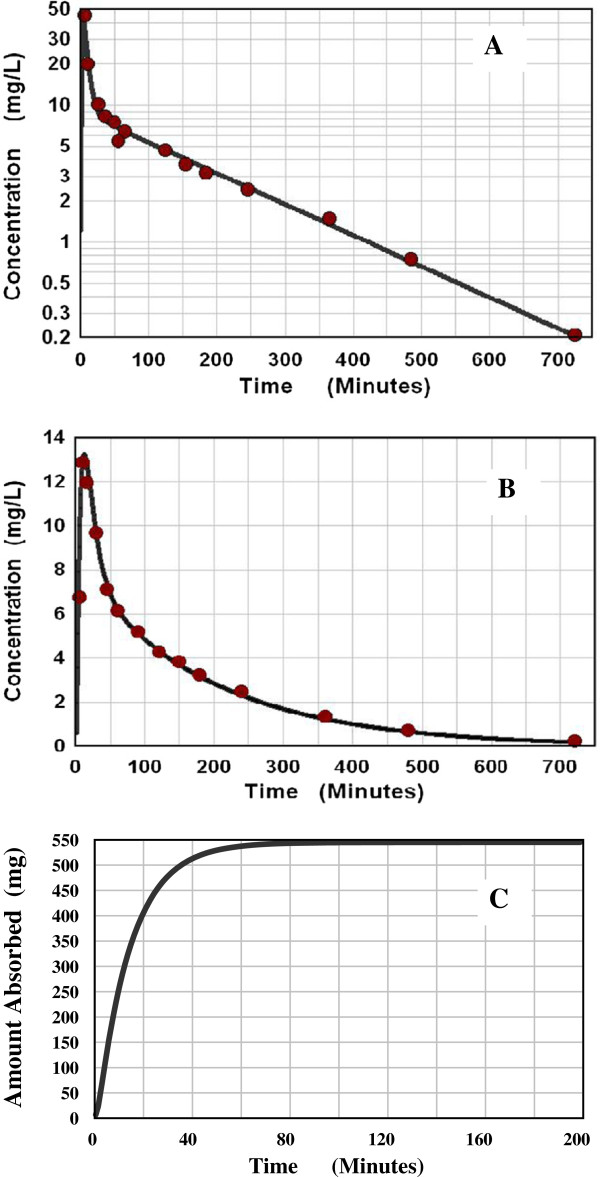
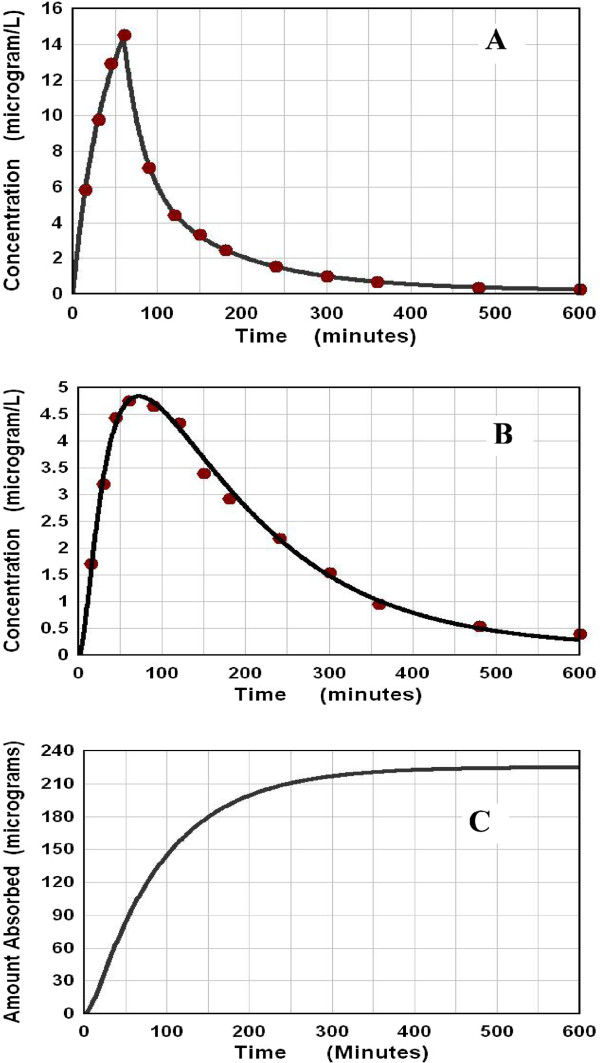
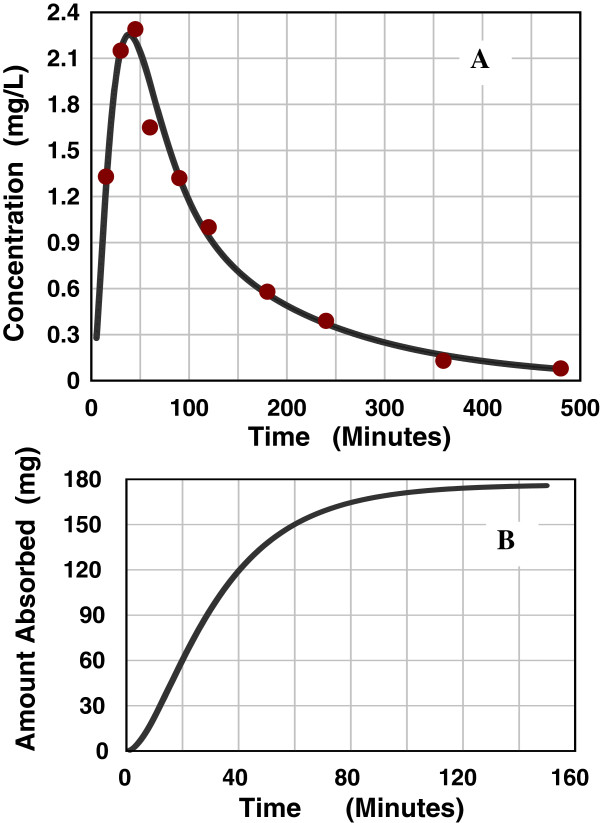
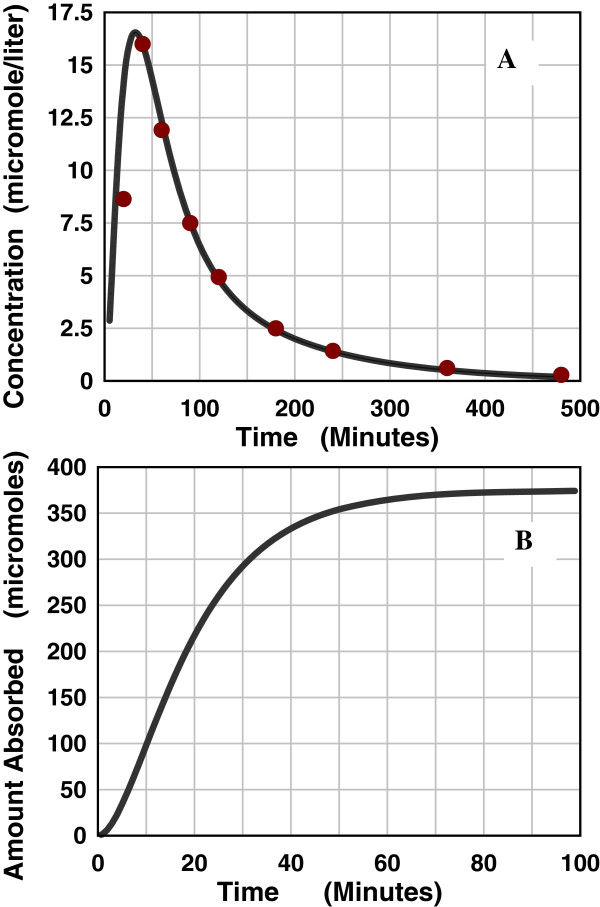
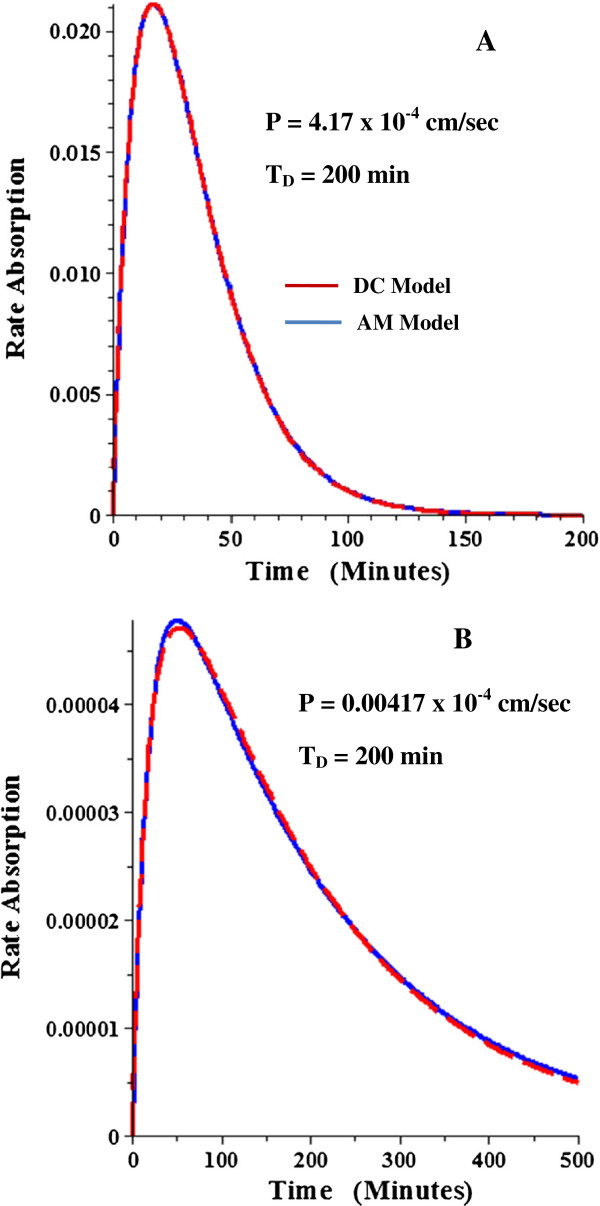
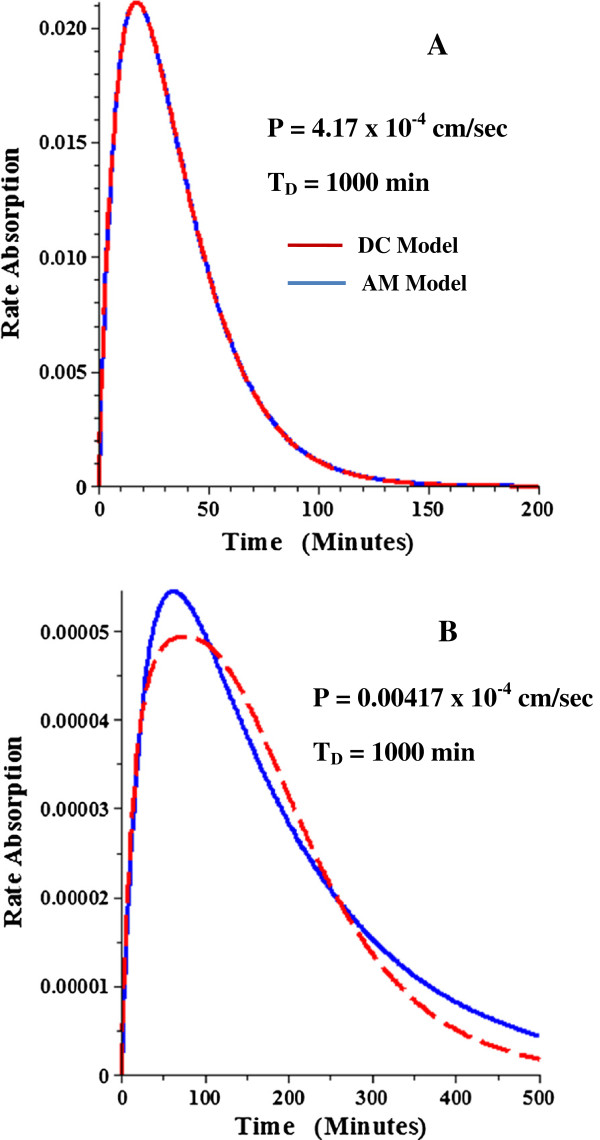
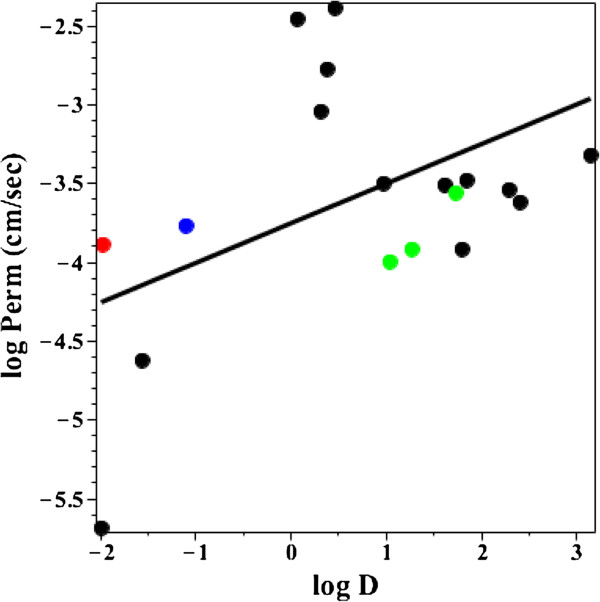
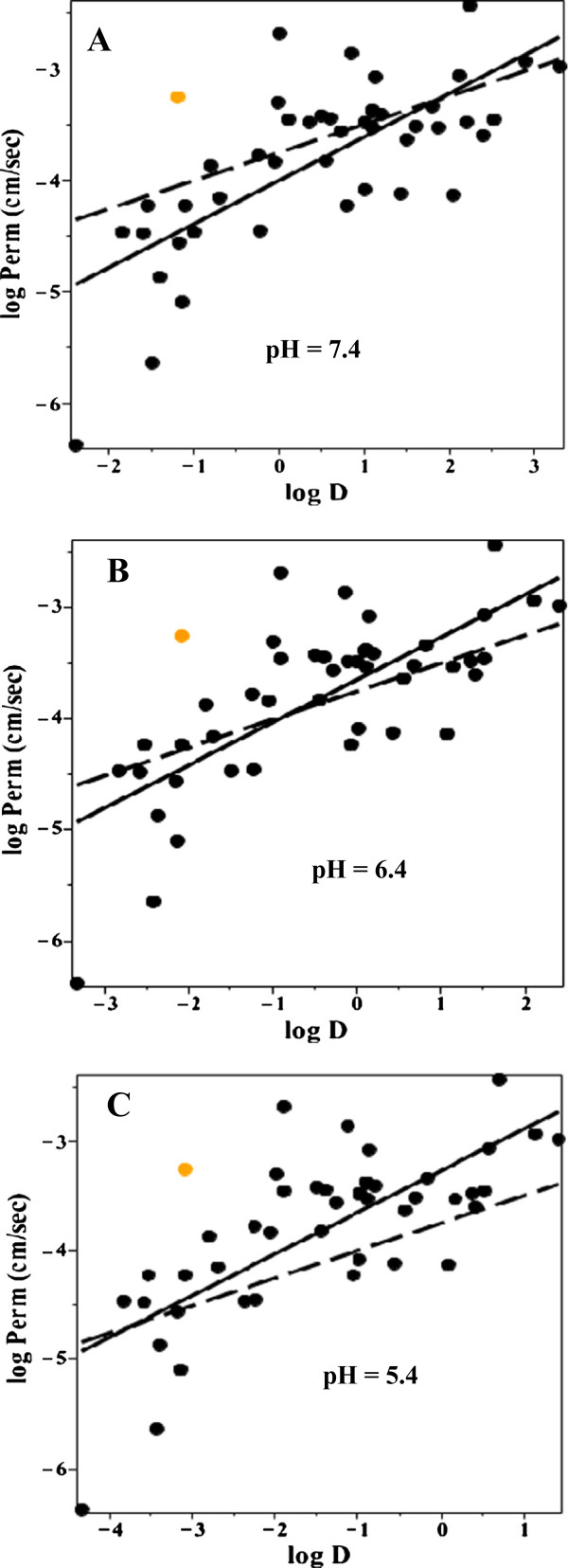
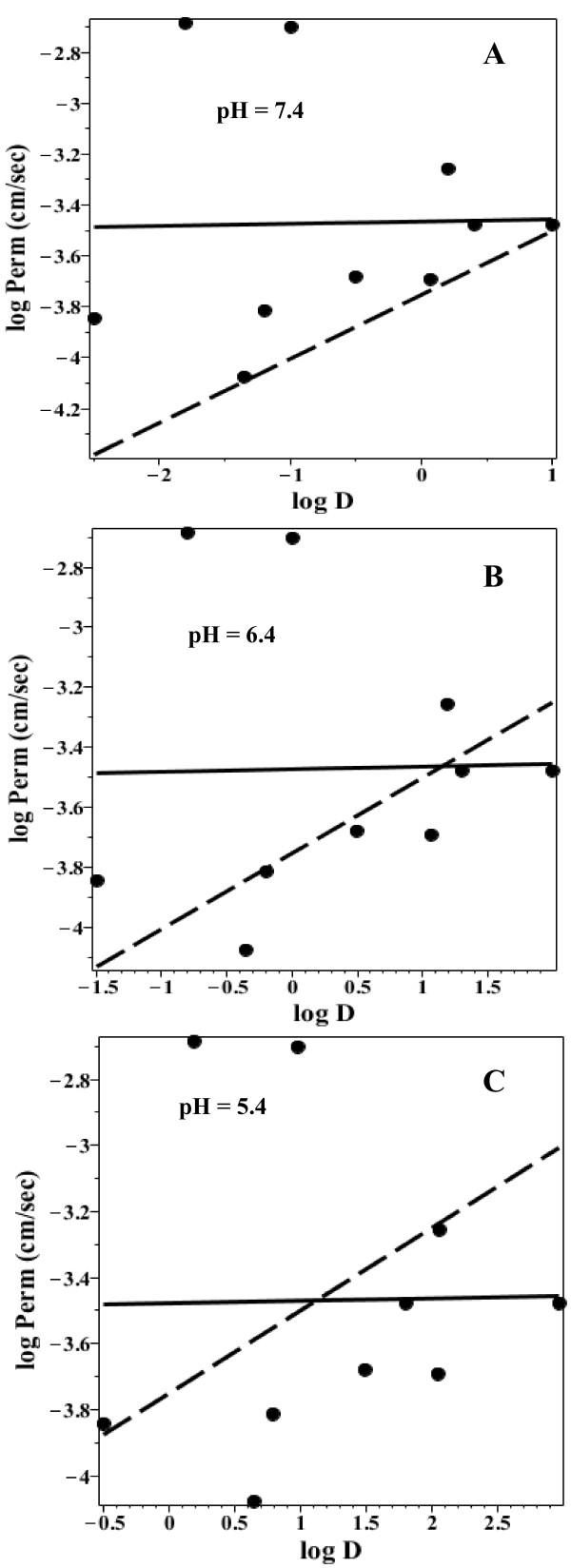
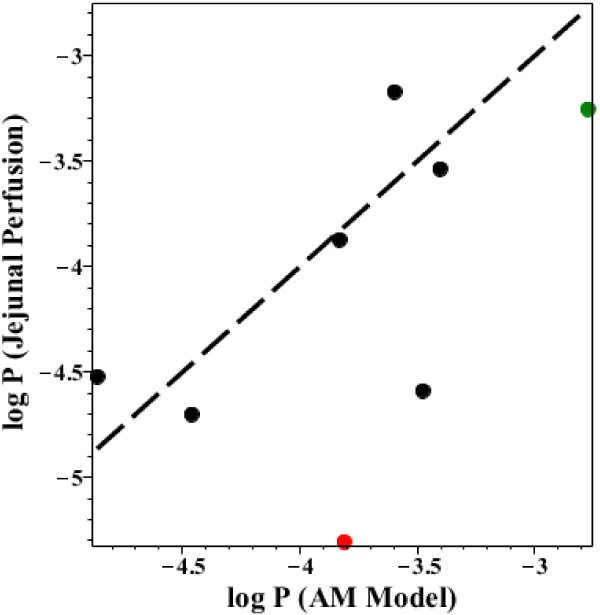
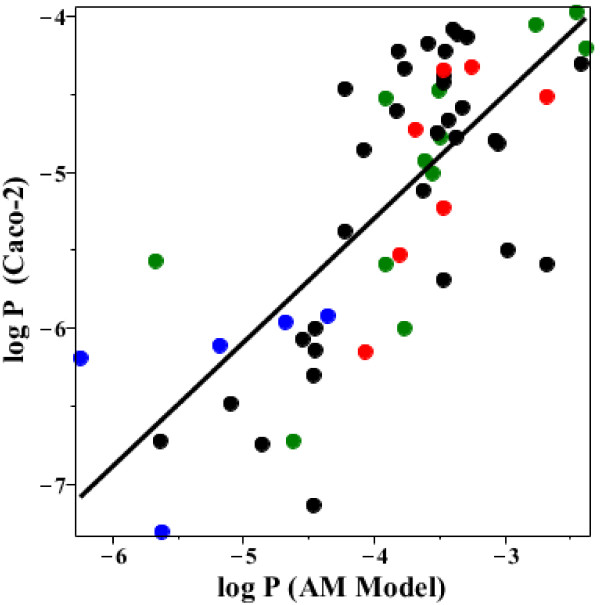
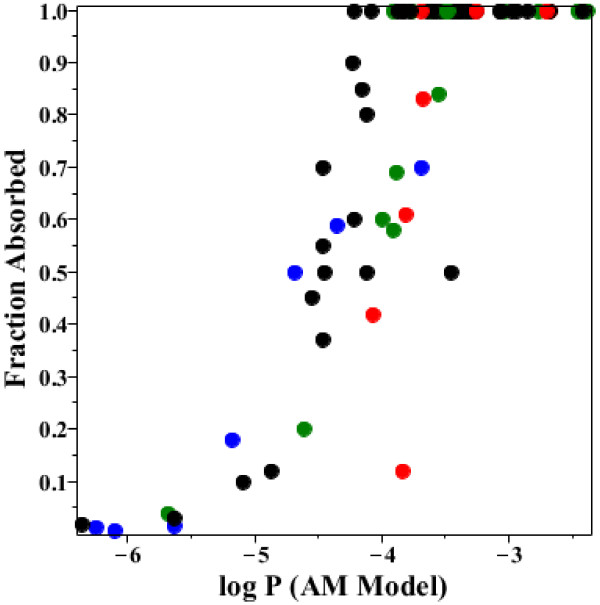
BACKGROUND: Understanding the quantitative relationship between a drug's physical chemical properties and its rate of intestinal absorption (QSAR) is critical for selecting candidate drugs. Because of limited experimental human small intestinal permeability data, approximate surrogates such as the fraction absorbed or Caco-2 permeability are used, both of which have limitations. METHODS: Given the blood concentration following an oral and intravenous dose, the time course of intestinal absorption in humans was determined by deconvolution and related to the intestinal permeability by the use of a new 3 parameter model function ("Averaged Model" (AM)). The theoretical validity of this AM model was evaluated by comparing it to the standard diffusion-convection model (DC). This analysis was applied to 90 drugs using previously published data. Only drugs that were administered in oral solution form to fasting subjects were considered so that the rate of gastric emptying was approximately known. All the calculations are carried out using the freely available routine PKQuest Java (http://www.pkquest.com) which has an easy to use, simple interface. RESULTS: Theoretically, the AM permeability provides an accurate estimate of the intestinal DC permeability for solutes whose absorption ranges from 1% to 99%. The experimental human AM permeabilities determined by deconvolution are similar to those determined by direct human jejunal perfusion. The small intestinal pH varies with position and the results are interpreted in terms of the pH dependent octanol partition. The permeability versus partition relations are presented separately for the uncharged, basic, acidic and charged solutes. The small uncharged solutes caffeine, acetaminophen and antipyrine have very high permeabilities (about 20 x 10-4 cm/sec) corresponding to an unstirred layer of only 45 μm. The weak acid aspirin also has a large AM permeability despite its low octanol partition at pH 7.4, suggesting that it is nearly completely absorbed in the first part of the intestine where the pH is about 5.4. CONCLUSIONS: The AM deconvolution method provides an accurate estimate of the human intestinal permeability. The results for these 90 drugs should provide a useful benchmark for evaluating QSAR models.
Overview
The claims and statistics of this paper haven’t been checked yet.
Free: it reads the open-access text and checks the first 5 claims that cite a source we can check. Create a free account to check every claim.
Integrity signals
Registry
Cites
Statistics
Figures
Verification
Claims the paper makes
The claims and statistics of this paper haven’t been checked yet.
Free: it reads the open-access text and checks the first 5 claims that cite a source we can check. Create a free account to check every claim.
Self-check
Percentages, sums and reported differences re-computed from the paper’s own numbers.
The self-check needs the paper’s full text.
Citations
Cites
Press, W. H., Teukolsky, S. A., Vetterling, W. T., & Flannery, B. P. (1994) · Cited by 15,411
Arzneimittelforschung: Erstanwendung am Menschen in der Phase I
Miletzki, B., & Gleiter, C. H. (2005) · Bundesgesundheitsblatt Gesundheitsforsch.Gesundheitsschutz · doi:10.1007/s00103-005-1024-7 · Cited by 9,355
Measurement of gastrointestinal pH profiles in normal ambulant human subjects
Evans, D. F., Pye, G., Bramley, R., Clark, A. G., Dyson, T. J., & Hardcastle, J. D. (1988) · Gut · doi:10.1136/gut.29.8.1035 · Cited by 1,240 · cited 1×
“[36] reported pH values of 6.”
Transit of pharmaceutical dosage forms through the small intestine.
Davis, S. S., Hardy, J. G., & Fara, J. W. (1986) · Gut · doi:10.1136/gut.27.8.886 · Cited by 853 · cited 1×
“[22] found an average small intestinal half time of about 240 minutes.”
BackgroundPredicting the Impact of Physiological and Biochemical Processes on Oral Drug Bioavailability
Agoram, B., Woltosz, W. S., & Bolger, M. B. (2001) · Advanced Drug Delivery Reviews · doi:10.1016/s0169-409x(01)00179-x · Cited by 651 · cited 1×
“The most widely used quantitative model of intestinal absorption is the “compartmental absorption and transit” (CAT) model which has been incorporated into the commercial program GastroPlusTM [10,11].”
MethodThe dependence of paracetamol absorption on the rate of gastric emptying
HEADING, R. C., NIMMO, J., PRESCOTT, L. F., & TOTHILL, P. (1973) · British Journal of Pharmacology · doi:10.1111/j.1476-5381.1973.tb08339.x · Cited by 568 · cited 1×
“Its intestinal absorption rate is usually assumed to be so fast that its absorption rate is a measure of the rate limiting gastric emptying [24-26].”
BackgroundZhao, Y. H., Le, J., Abraham, M. H., Hersey, A., Eddershaw, P. J., Luscombe, C. N., Boutina, D., Beck, G., Sherborne, B., Cooper, I., et al. (2001) · Journal of Pharmaceutical Sciences · doi:10.1002/jps.1031 · Cited by 526
Lennernaäs, H. (1998) · Journal of Pharmaceutical Sciences · doi:10.1021/js970332a · Cited by 500
Absorption and Drug Development: Solubility, Permeability, and Charge State
Avdeef, A. (2003) · Cited by 483
ON THE MECHANISM OF INTESTINAL ABSORPTION OF DRUGS
Hogben, C. A. M., Tocco, D. J., Brodie, B. B., & Schanker, L. S. (1959) · The Journal of Pharmacology and Experimental Therapeutics · doi:10.1016/s0022-3565(25)12995-9 · Cited by 474 · cited 1×
“[49] used this rapid absorption of aspirin to infer that there must be a pH of about 5.”
Method
Research works printed but not linked: 2
- Gray VA Dressman JB Change of pH requirement for simulated intestinal fluid TS Pharmacopeial Forum 1996 22 1 1943 1945
- Lalezari D Gastrointestinal pH profile in subjects with irritible syndrome Ann Gastroenterol 2012 25 4 1 524713794
Cited by
The Safety of Ingested Caffeine: A Comprehensive Review
Temple, J. L., Bernard, C., Lipshultz, S. E., Czachor, J. D., Westphal, J. A., & Mestre, M. A. (2017) · Frontiers in Psychiatry · doi:10.3389/fpsyt.2017.00080 · Cited by 557
“Caffeine is absorbed rapidly and totally in the small intestine in less than 1 h (44) and diffuses rapidly in other tissues (45).”
BackgroundDahlgren, D., Roos, C., Sjögren, E., & Lennernäs, H. (2014) · Journal of Pharmaceutical Sciences · doi:10.1002/jps.24258 · Cited by 141
Metal–Organic Frameworks as Efficient Oral Detoxifying Agents
Rojas, S., Baâti, T., Njim, L., Manchego, L., Neffati, F., Abdeljelil, N., Saguem, S., Serre, C., Najjar, M. F., Zakhama, A., et al. (2018) · Journal of the American Chemical Society · doi:10.1021/jacs.8b04435 · Cited by 110
Levitt, M. D., & Levitt, D. G. (2020) · Clinical and Experimental Gastroenterology · doi:10.2147/ceg.s260600 · Cited by 91
Self-citationLevitt, D. G., & Levitt, M. D. (2014) · Clinical and Experimental Gastroenterology · doi:10.2147/ceg.s64283 · Cited by 83
Self-citation
Metadata
- Authors
- Levitt, D. G.
- Affiliations
- University of Minnesota (US)
- Corresponding author
- Levitt, David G
- ORCID
- Levitt, David G
- Venue
- BMC Pharmacology and Toxicology
- Published
- 2013-06-24
- Volume
- 14
- Issue
- 1
- Pages
- 34-34
- ISSN
- 2050-6511 (ISSN-L)
- PMC
- PMC3734790
- OpenAlex
- W2046132328
- Cited by
- 32
- References
- 66
- Citations by year
- 2026: 4 · 2024: 2 · 2022: 2 · 2021: 3 · 2020: 5 · 2019: 2 · 2018: 2 · 2017: 2 · 2016: 2 · 2015: 4 · 2014: 4
- FWCI
- 2.01
- Type
- journal article
- Language
- en
- Open access
- gold
- doi.org
- Licence
- cc-by
- creativecommons.org/licenses/by/2.0 (tdm)
- Locations
- BMC Pharmacology and Toxicology (publishedVersion, cc-by)
- Europe PMC (PubMed Central) (publishedVersion, cc-by)
- PubMed Central (publishedVersion, cc-by)
- PubMed (publishedVersion)
- Topics
- Life Sciences › Pharmacology, Toxicology and Pharmaceutics › Pharmaceutical Science › Drug Solubulity and Delivery Systems
- Health Sciences › Medicine › Oncology › Drug Transport and Resistance Mechanisms
- Life Sciences › Pharmacology, Toxicology and Pharmaceutics › Drug Discovery › Computational Drug Discovery Methods
- Keywords
- intestinal permeability, small intestinal absorption, drug absorption, deconvolution, averaged model, convection-diffusion model, QSAR, intestinal pH, unstirred layer, caffeine, paracetamol, antipyrine, aspirin
- MeSH terms
- Absorption, Pharmaceutical Preparations, Humans, Intestinal Absorption, Intestine, Small, Models, Biological, Permeability
About these checks
Registry, retraction, Cites and statistics results are computed, not judged, with one exception: a printed reference that no index lists is read once by a model before it counts as a citation error. Claims are extracted by a model and kept only when their quote appears verbatim in the text; each cited source is then checked, with a model’s help, for whether it says what the claim relies on. Those verdicts can be wrong — read the claim’s quote and the cited source before relying on one.
Statistics and arithmetic are recomputed, not judged.
Confidence bands are shown only for fields calibrated on our annotated test set. None is calibrated yet, so no band is shown.
What counts as a claim ›How we measure confidence ›How we check this ›
Are you an author, or do you see a problem with this page? Request a review
Data sources
Bibliographic data: Semantic Scholar, OpenAlex, Crossref.
Contains information from the Semantic Scholar Academic Graph Datasets, made available under the ODC Attribution License (ODC-BY 1.0).
Semantic Scholar’s data is described in: Kinney, R., et al. (2023). The Semantic Scholar Open Data Platform. arXiv:2301.10140.
