

Noninvasive optical characterization of muscle blood flow, oxygenation, and metabolism in women with fibromyalgia
Open accessThe DOI matches its Crossref record; 61 of the 61 references it cites were found in a registry or an index.
Abstract
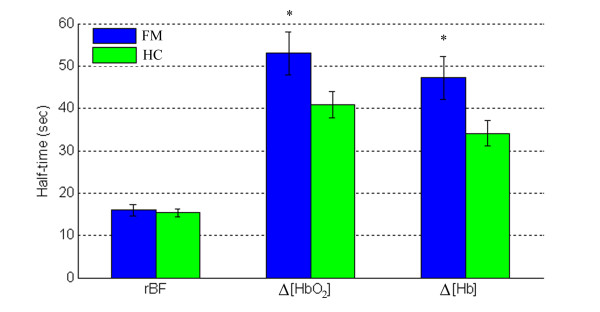
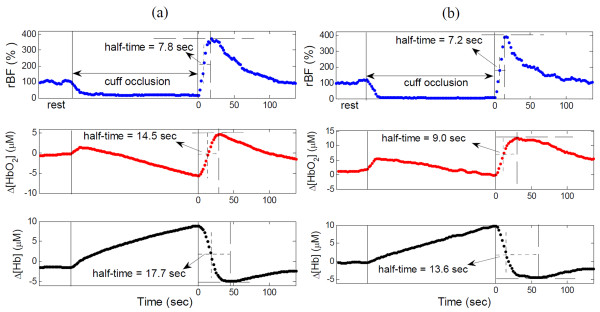
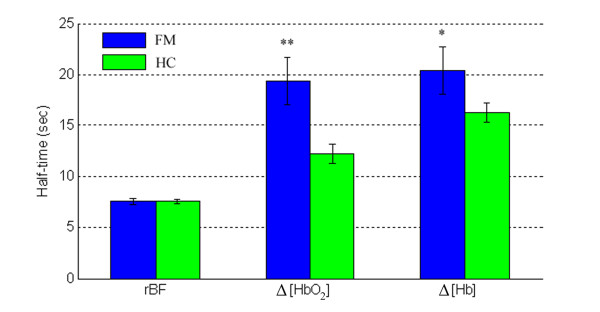
Introduction: Women with fibromyalgia (FM) have symptoms of increased muscular fatigue and reduced exercise tolerance, which may be associated with alterations in muscle microcirculation and oxygen metabolism. This study used near-infrared diffuse optical spectroscopies to noninvasively evaluate muscle blood flow, blood oxygenation and oxygen metabolism during leg fatiguing exercise and during arm arterial cuff occlusion in post-menopausal women with and without FM. Methods: Fourteen women with FM and twenty-three well-matched healthy controls participated in this study. For the fatiguing exercise protocol, the subject was instructed to perform 6 sets of 12 isometric contractions of knee extensor muscles with intensity steadily increasing from 20 to 70% maximal voluntary isometric contraction (MVIC). For the cuff occlusion protocol, forearm arterial blood flow was occluded via a tourniquet on the upper arm for 3 minutes. Leg or arm muscle hemodynamics, including relative blood flow (rBF), oxy- and deoxy-hemoglobin concentration ([HbO 2] and [Hb]), total hemoglobin concentration (THC) and blood oxygen saturation (StO 2), were continuously monitored throughout protocols using a custom-built hybrid diffuse optical instrument that combined a commercial near-infrared oximeter for tissue oxygenation measurements and a custom-designed diffuse correlation spectroscopy (DCS) flowmeter for tissue blood flow measurements. Relative oxygen extraction fraction (rOEF) and oxygen consumption rate (rVO 2) were calculated from the measured blood flow and oxygenation data. Post-manipulation (fatiguing exercise or cuff occlusion) recovery in muscle hemodynamics was characterized by the recovery half-time, a time interval from the end of manipulation to the time that tissue hemodynamics reached a half-maximal value. Results: Subjects with FM had similar hemodynamic and metabolic response/recovery patterns as healthy controls during exercise and during arterial occlusion. However, tissue rOEF during exercise in subjects with FM was significantly lower than in healthy controls, and the half-times of oxygenation recovery (Δ[HbO 2] and Δ[Hb]) were significantly longer following fatiguing exercise and cuff occlusion. Conclusions: Our results suggest an alteration of muscle oxygen utilization in the FM population. This study demonstrates the potential of using combined diffuse optical spectroscopies (i.e., NIRS/DCS) to comprehensively evaluate tissue oxygen and flow kinetics in skeletal muscle.
Overview
The claims and statistics of this paper haven’t been checked yet.
Free: it reads the open-access text and checks the first 5 claims that cite a source we can check. Create a free account to check every claim.
Integrity signals
Registry
Cites
Statistics
Figures
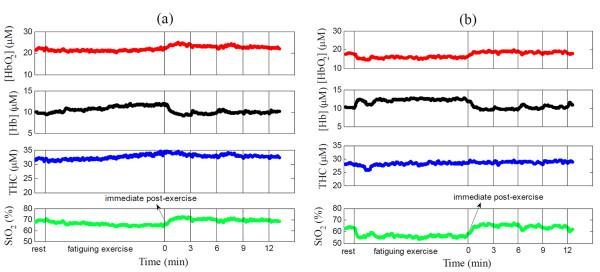
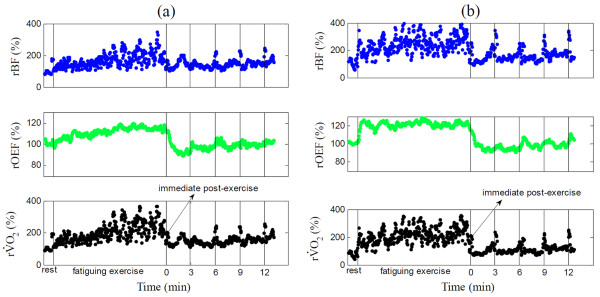
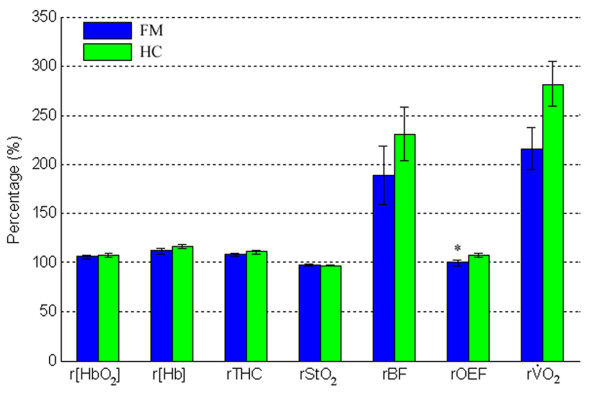
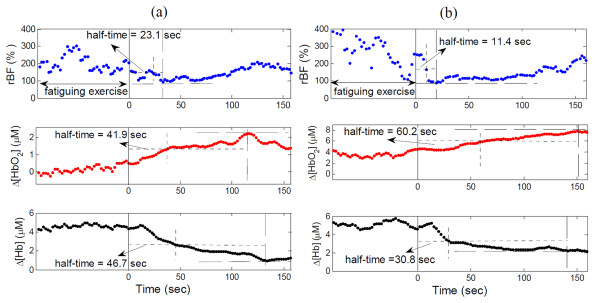
Verification
Claims the paper makes
The claims and statistics of this paper haven’t been checked yet.
Free: it reads the open-access text and checks the first 5 claims that cite a source we can check. Create a free account to check every claim.
Claims other papers make about this one
Each is checked against this paper’s own text: does it say what the citing paper says it does?
The source backs part of the claim, not all of it — or backs it for a different population, condition or comparison.
In the citing paper
“The measured values are consistent with values reported in the literature using similar NIRS methods to measure skeletal muscles (Yu et al. 2005; Gurley et al. 2012; Shang et al. 2012; Mesquita et al. 2013; Baker et al. 2017).”
From Validation of a novel wearable, wireless technology to estimate oxygen levels and lactate threshold power in the exercising muscle (2018) · cites this paper as Shang et al. 2012
Experimental — accuracy not yet measured
Self-check
Percentages, sums and reported differences re-computed from the paper’s own numbers.
The self-check needs the paper’s full text.
Citations
Cites
International physical activity questionnaire: 12-country reliability and validity
CRAIG, C. L., MARSHALL, A. L., SJ??STR??M, M., BAUMAN, A. E., BOOTH, M. L., AINSWORTH, B. E., PRATT, M., EKELUND, U., YNGVE, A., SALLIS, J. F., et al. (2003) · Medicine & Science in Sports & Exercise · doi:10.1249/01.mss.0000078924.61453.fb · Cited by 21,619 · cited 3×
“None of the baseline hemodynamic/metabolic variables were correlated with subject demographic data (age, height, weight, BMI), IPAQ, or baseline MVIC.”
MethodInfluentialThe american college of rheumatology 1990 criteria for the classification of fibromyalgia
Wolfe, F., Smythe, H. A., Yunus, M. B., Bennett, R. M., Bombardier, C., Goldenberg, D. L., Tugwell, P., Campbell, S. M., Abeles, M., Clark, P., et al. (1990) · Arthritis & Rheumatism · doi:10.1002/art.1780330203 · Cited by 9,563
Wolfe, F., Ross, K., Anderson, J., Russell, I. J., & Hebert, L. (1995) · Arthritis & Rheumatism · doi:10.1002/art.1780380104 · Cited by 2,416 · cited 1×
“Fibromyalgia (FM) is a common chronic widespread pain syndrome affecting approximately 2 to 5% of the US population [1,2].”
BackgroundBiochemistry of exercise-induced metabolic acidosis
Robergs, R. A., Ghiasvand, F., & Parker, D. (2004) · American Journal of Physiology-Regulatory, Integrative and Comparative Physiology · doi:10.1152/ajpregu.00114.2004 · Cited by 1,304 · cited 1×
“Fatiguing exercise [53] and muscle ischemic challenge [54] as used in the present study could induce extra muscle blood lactate in FM subjects.”
MethodFatigue in cancer patients compared with fatigue in the general United States population
Cella, D., Lai, J., Chang, C., Peterman, A., & Slavin, M. (2002) · Cancer · doi:10.1002/cncr.10245 · Cited by 841 · cited 1×
“Historically, older women are more susceptible to FM compared to men or young women [2-4].”
BackgroundStrangman, G., Franceschini, M. A., & Boas, D. A. (2003) · NeuroImage · doi:10.1016/s1053-8119(03)00021-1 · Cited by 581 · cited 2×
“0 cm for leg muscles) to calculate the changes of [HbO2] and [Hb] (that is, Δ[HbO2] and Δ[Hb]) relative to their baselines (before physiological manipulations), based on the modified Beer-Lambert Law [45].”
MethodInfluentialRecovery from exercise-induced desaturation in the quadriceps muscles of elite competitive rowers
Chance, B., Dait, M. T., Zhang, C., Hamaoka, T., & Hagerman, F. (1992) · American Journal of Physiology-Cell Physiology · doi:10.1152/ajpcell.1992.262.3.c766 · Cited by 528 · cited 1×
“Hemodynamic recovery (that is, rBF, Δ[HbO2], Δ[Hb]) after fatiguing exercise or cuff occlusion was characterized by the recovery half-time [18,19,48], which was defined as the time interval from the end of occlusion/exercise to the time by which tissue hemodynamics had recovered to the half-maximal value.”
BackgroundFerrari, M., Muthalib, M., & Quaresima, V. (2011) · Philosophical Transactions of the Royal Society A: Mathematical, Physical and Engineering Sciences · doi:10.1098/rsta.2011.0230 · Cited by 450 · cited 1×
“[24], approximately160 articles on the use of NIRS to study muscle physiology (primarily in upper and lower limb muscles) were published from 2007 up to the end of 2010 [24].”
BackgroundQuantitation of central activation failure during maximal voluntary contractions in humans
Kent-Braun, J. A., & Le Blanc, R. (1996) · Muscle & Nerve · doi:10.1002/(sici)1097-4598(199607)19:7<861::aid-mus8>3.0.co;2-7 · Cited by 381 · cited 1×
“After performing MVIC measures, the central activation ratio (CAR) was quantified using the following equation: CAR = MVIC/total force, where the total force = MVIC + superimposed twitch [40].”
MethodDurduran, T., Yu, G., Burnett, M. G., Detre, J. A., Greenberg, J. H., Wang, J., Zhou, C., & Yodh, A. G. (2004) · Optics Letters · doi:10.1364/ol.29.001766 · Cited by 346 · cited 2×
“DCS combines several attractive features for blood flow measurement including noninvasiveness, high temporal resolution (up to several milliseconds) [29], portability, and relatively large penetration depth (up to several centimeters) [30,31].”
BackgroundMethodSelf-citationFrequency-domain multichannel optical detector for noninvasive tissue spectroscopy and oximetry
Fantini, S. (1995) · Optical Engineering · doi:10.1117/12.183988 · Cited by 330 · cited 2×
“Absolute values of [HbO2] and [Hb] were extracted from the measured tissue absorption coefficients at the two wavelengths [44].”
BackgroundMethodKim, M. N., Durduran, T., Frangos, S., Edlow, B. L., Buckley, E. M., Moss, H. E., Zhou, C., Yu, G., Choe, R., Maloney-Wilensky, E., et al. (2010) · Neurocritical Care · doi:10.1007/s12028-009-9305-x · Cited by 306 · cited 2×
“Although this unit is different from the classical blood flow unit in biological tissues (ml/min/100 ml), its percentage changes have been found to correlate well with the blood flow changes measured by many other established modalities [32-36].”
BackgroundMethodSelf-citationWiener, D. H., Fink, L. I., Maris, J., Jones, R. A., Chance, B., & Wilson, J. R. (1986) · Circulation · doi:10.1161/01.cir.73.6.1127 · Cited by 301 · cited 2×
“This very short post-exercise measurement period was selected as the most accurate reflection of the exercise state since rapid hemodynamic changes occur in muscle immediately after exercise [46,47].”
BackgroundMethodWolfe, F. (2004) · PubMed · Cited by 277
Quadriceps muscle strength, contractile properties, and motor unit firing rates in young and old men
Roos, M. R., Rice, C. L., Connelly, D. M., & Vandervoort, A. A. (1999) · Muscle & Nerve · doi:10.1002/(sici)1097-4598(199908)22:8<1094::aid-mus14>3.0.co;2-g · Cited by 270 · cited 1×
“During MVIC, an electrical stimulation (ES) was used to noninvasively induce superimposed force to the muscle via surface electrodes over the proximal and distal portions of the thigh [39].”
MethodYu, G., Durduran, T., Lech, G., Zhou, C., Chance, B., Mohler, E. R., & Yodh, A. G. (2005) · Journal of Biomedical Optics · doi:10.1117/1.1884603 · Cited by 230 · cited 5×
“Both protocols have been widely used to assess a variety of diseases affecting skeletal muscle, including peripheral arterial disease [27], CFS [5], and FM [18,19].”
BackgroundMethodInfluentialSelf-citationYu, G., Floyd, T. F., Durduran, T., Zhou, C., Wang, J., Detre, J. A., & Yodh, A. G. (2007) · Optics Express · doi:10.1364/oe.15.001064 · Cited by 223 · cited 2×
“Although this unit is different from the classical blood flow unit in biological tissues (ml/min/100 ml), its percentage changes have been found to correlate well with the blood flow changes measured by many other established modalities [32-36].”
BackgroundMethodSelf-citationBennett, R. M., Clark, S. R., Goldberg, L., Nelson, D., Bonafede, R. P., Porter, J., & Specht, D. (1989) · Arthritis & Rheumatism · doi:10.1002/anr.1780320415 · Cited by 221 · cited 2×
“Although previous studies have individually measured skeletal muscle blood flow [8,12,16,17,20], oxygenation [18,19,21] or oxygen consumption [14] in the FM population, none have investigated all these variables simultaneously in a single study.”
BackgroundDiffuse optical monitoring of hemodynamic changes in piglet brain with closed head injury
Zhou, C., Eucker, S. A., Durduran, T., Yu, G., Ralston, J., Friess, S. H., Ichord, R. N., Margulies, S. S., & Yodh, A. G. (2009) · Journal of Biomedical Optics · doi:10.1117/1.3146814 · Cited by 176 · cited 2×
“Although this unit is different from the classical blood flow unit in biological tissues (ml/min/100 ml), its percentage changes have been found to correlate well with the blood flow changes measured by many other established modalities [32-36].”
BackgroundMethodSelf-citationEffect of 830 nm low-level laser therapy in exercise-induced skeletal muscle fatigue in humans
Leal Junior, E. C. P., Lopes-Martins, R. Á. B., Vanin, A. A., Baroni, B. M., Grosselli, D., De Marchi, T., Iversen, V. V., & Bjordal, J. M. (2009) · Lasers in Medical Science · doi:10.1007/s10103-008-0592-9 · Cited by 175 · cited 1×
“Lactate accumulation was recently proposed to be associated with muscle pain in FM subjects [55], although controversy remains [56].”
BackgroundInvestigation of the effects of pool-based exercise on fibromyalgia syndrome
Altan, L., Bingöl, U., Aykaç, M., Koç, Z., & Yurtkuran, M. (2004) · Rheumatology International · doi:10.1007/s00296-003-0371-7 · Cited by 168 · cited 1×
“Details about the fatigue and pain questionnaires can be found in references [41] and [42].”
BackgroundNoninvasive detection of functional brain activity with near-infrared diffusing-wave spectroscopy
Li, J., Dietsche, G., Iftime, D., Skipetrov, S. E., Maret, G., Elbert, T., Rockstroh, B., & Gisler, T. (2005) · Journal of Biomedical Optics · doi:10.1117/1.2007987 · Cited by 166 · cited 1×
“DCS combines several attractive features for blood flow measurement including noninvasiveness, high temporal resolution (up to several milliseconds) [29], portability, and relatively large penetration depth (up to several centimeters) [30,31].”
BackgroundCordero, M. D., De Miguel, M., Moreno Fernández, A. M., Carmona López, I. M., Garrido Maraver, J., Cotán, D., Gómez Izquierdo, L., Bonal, P., Campa, F., Bullon, P., et al. (2010) · Arthritis Research & Therapy · doi:10.1186/ar2918 · Cited by 165
Metabolic response of skeletal muscle to ischemia
Harris, K., Walker, P. M., Mickle, D. A., Harding, R., Gatley, R., Wilson, G. J., Kuzon, B., McKee, N., & Romaschin, A. D. (1986) · American Journal of Physiology-Heart and Circulatory Physiology · doi:10.1152/ajpheart.1986.250.2.h213 · Cited by 159 · cited 1×
“Fatiguing exercise [53] and muscle ischemic challenge [54] as used in the present study could induce extra muscle blood lactate in FM subjects.”
MethodElvin, A., Siösteen, A., Nilsson, A., & Kosek, E. (2006) · European Journal of Pain · doi:10.1016/j.ejpain.2005.02.001 · Cited by 158 · cited 7×
“Laser Doppler cannot detect blood flow in deep muscle tissue, and is limited to superficial layers (such as skin) [8].”
BackgroundResultInfluentialAnti-GQ1b IgG antibody is associated with ataxia as well as ophthalmoplegia
Kusunoki, S., Chiba, A., & Kanazawa, I. (1999) · Muscle & Nerve · doi:10.1002/(sici)1097-4598(199908)22:8<983::aid-mus1>3.0.co;2-v · Cited by 157
Park, J. H., Phothimat, P., Oates, C. T., Hernanz-Schulman, M., & Olsen, N. J. (1998) · Arthritis & Rheumatism · doi:10.1002/1529-0131(199803)41:3<406::aid-art5>3.0.co;2-l · Cited by 135 · cited 4×
“Some studies have found reduced skin/muscle blood flow or oxygen consumption in people with FM [8,11,12,14,15,17], whereas others reported that muscle blood flow or oxygen metabolism was not significantly altered by FM [13,16].”
BackgroundMethodResultInfluentialPatients with Fibromyalgia Benefit from Aerobic Endurance Exercise
Meiworm, L., Jakob, E., Walker, U. A., Peter, H. H., & Keul, J. (2000) · Clinical Rheumatology · doi:10.1007/s100670070040 · Cited by 135 · cited 2×
“Some studies have found reduced skin/muscle blood flow or oxygen consumption in people with FM [8,11,12,14,15,17], whereas others reported that muscle blood flow or oxygen metabolism was not significantly altered by FM [13,16].”
BackgroundResultDietsche, G., Ninck, M., Ortolf, C., Li, J., Jaillon, F., & Gisler, T. (2007) · Applied Optics · doi:10.1364/ao.46.008506 · Cited by 132 · cited 1×
“DCS combines several attractive features for blood flow measurement including noninvasiveness, high temporal resolution (up to several milliseconds) [29], portability, and relatively large penetration depth (up to several centimeters) [30,31].”
BackgroundSako, T., Hamaoka, T., Higuchi, H., Kurosawa, Y., & Katsumura, T. (2001) · Journal of Applied Physiology · doi:10.1152/jappl.2001.90.1.338 · Cited by 132 · cited 1×
“Phosphorus magnetic resonance spectroscopy (P-31 MRS) has been used to assess muscle oxygen consumption [14], but does not provide high temporal resolution and requires large and expensive instrumentation [22].”
MethodRobbins, J. L., Jones, W. S., Duscha, B. D., Allen, J. D., Kraus, W. E., Regensteiner, J. G., Hiatt, W. R., & Annex, B. H. (2011) · Journal of Applied Physiology · doi:10.1152/japplphysiol.00141.2011 · Cited by 131 · cited 1×
“However, some clinical outcomes, such as muscle capillary density, are found to be closely associated with the absolute values of muscle blood flow and oxygen consumption rate [57,58].”
BackgroundPortable optical tissue flow oximeter based on diffuse correlation spectroscopy
Shang, Y., Zhao, Y., Cheng, R., Dong, L., Irwin, D., & Yu, G. (2009) · Optics Letters · doi:10.1364/ol.34.003556 · Cited by 122 · cited 7×
“, IL, USA) and a custom-designed DCS tissue flowmeter for measurements of both tissue blood flow and blood oxygenation [23].”
BackgroundMethodInfluentialSelf-citationGender differences in fibromyalgia and other related syndromes.
Yunus, M. B. (2002) · PubMed · Cited by 112
Abnormal microcirculation and temperature in skin above tender points in patients with fibromyalgia
Jeschonneck, M., Grohmann, G., Hein, G., & Sprott, H. (2000) · Rheumatology · doi:10.1093/rheumatology/39.8.917 · Cited by 111 · cited 2×
“Some studies have found reduced skin/muscle blood flow or oxygen consumption in people with FM [8,11,12,14,15,17], whereas others reported that muscle blood flow or oxygen metabolism was not significantly altered by FM [13,16].”
BackgroundResultValkeinen, H., Alén, M., HÄKKINEN, A. H., Hannonen, P., Kukkonen-Harjula, K. T., & Häkkinen, K. (2008) · Archives of Physical Medicine and Rehabilitation · doi:10.1016/j.apmr.2008.01.022 · Cited by 104 · cited 1×
“A higher oxygen debt in FM subjects was also observed in other studies [4,11,51,52], where subjects with FM were found to have a higher concentration of muscle lactate during anaerobic respiration.”
ResultNon-invasive measurements of tissue hemodynamics with hybrid diffuse optical methods
Durduran, T. (2004) · Scholarly Commons (University of Pennsylvania) · Cited by 90
Katz, D. L., Greene, L., Ali, A., & Faridi, Z. (2007) · Medical Hypotheses · doi:10.1016/j.mehy.2005.10.037 · Cited by 89 · cited 1×
“Lactate accumulation was recently proposed to be associated with muscle pain in FM subjects [55], although controversy remains [56].”
BackgroundDiffuse optical monitoring of repeated cerebral ischemia in mice
Shang, Y., Chen, L., Toborek, M. J., & Yu, G. (2011) · Optics Express · doi:10.1364/oe.19.020301 · Cited by 82 · cited 4×
“Laser Doppler cannot detect blood flow in deep muscle tissue, and is limited to superficial layers (such as skin) [8].”
BackgroundMethodInfluentialSelf-citationGurley, K., Shang, Y., & Yu, G. (2012) · Journal of Biomedical Optics · doi:10.1117/1.jbo.17.7.075010 · Cited by 81
Self-citationValkeinen, H., Häkkinen, A., Hannonen, P., Häkkinen, K., & Alén, M. (2006) · Arthritis & Rheumatism · doi:10.1002/art.21751 · Cited by 80 · cited 1×
“A higher oxygen debt in FM subjects was also observed in other studies [4,11,51,52], where subjects with FM were found to have a higher concentration of muscle lactate during anaerobic respiration.”
ResultMorf, S., Amann-Vesti, B., Forster, A., Franzeck, U. K., Koppensteiner, R., Uebelhart, D., & Sprott, H. (2004) · Arthritis Res Ther · doi:10.1186/ar1459 · Cited by 77 · cited 5×
“Laser Doppler cannot detect blood flow in deep muscle tissue, and is limited to superficial layers (such as skin) [8].”
BackgroundResultInfluentialMuscle Fiber Characteristics, Capillaries and Enzymes in Patients with Fibromyalgia and Controls
Lindh, M., JOHANSSON, G., Hedberg, M., Henning, G. B., & Grimby, G. (1995) · Scandinavian Journal of Rheumatology · doi:10.3109/03009749509095152 · Cited by 76 · cited 1×
“Although the specific pathogenic mechanisms of FM remain unclear, studies have suggested that the muscle pain and fatigue of FM may be associated with mitochondrial dysfunction [6], lower capillary density [7,8], reduced capillary permeability [9], or impaired vasodilatory capacity [10,11].”
BackgroundA New Treatment Modality for Fibromyalgia Syndrome: Hyperbaric Oxygen Therapy
Yildiz, Ş., Kiralp, M., Akin, A., Keskin, I., Ay, H., Dursun, H., & Cimsit, M. (2004) · Journal of International Medical Research · doi:10.1177/147323000403200305 · Cited by 71 · cited 2×
“Historically, older women are more susceptible to FM compared to men or young women [2-4].”
BackgroundResultMcIver, K. L., Evans, C., Kraus, R. M., Ispas, L., Sciotti, V. M., & Hickner, R. C. (2006) · Pain · doi:10.1016/j.pain.2005.10.032 · Cited by 70 · cited 4×
“Some studies have found reduced skin/muscle blood flow or oxygen consumption in people with FM [8,11,12,14,15,17], whereas others reported that muscle blood flow or oxygen metabolism was not significantly altered by FM [13,16].”
BackgroundResultInfluentialShang, Y., Symons, T. B., Durduran, T., Yodh, A. G., & Yu, G. (2010) · Biomedical Optics Express · doi:10.1364/boe.1.000500 · Cited by 68 · cited 3×
“Since the optical signals during exercise were easily contaminated by the muscle fiber motion during leg contractions [26], hemodynamic/metabolic responses during fatiguing exercise were estimated by averaging the optical data over the 6 seconds immediately after fatiguing exercise.”
BackgroundMethodSelf-citationEstimation of capillary density in human skeletal muscle based on maximal oxygen consumption rates
McGuire, B. J., & Secomb, T. W. (2003) · American Journal of Physiology-Heart and Circulatory Physiology · doi:10.1152/ajpheart.00559.2003 · Cited by 66 · cited 1×
“However, some clinical outcomes, such as muscle capillary density, are found to be closely associated with the absolute values of muscle blood flow and oxygen consumption rate [57,58].”
BackgroundMuscle metabolism with blood flow restriction in chronic fatigue syndrome
McCully, K. K., Smith, S., Rajaei, S., Leigh, J. S., & Natelson, B. H. (2004) · Journal of Applied Physiology · doi:10.1152/japplphysiol.00141.2003 · Cited by 57 · cited 3×
“Both protocols have been widely used to assess a variety of diseases affecting skeletal muscle, including peripheral arterial disease [27], CFS [5], and FM [18,19].”
MethodMuscle blood flow during forearm exercise in patients with severe heart failure.
Arnold, J. M., Ribeiro, J. P., & Colucci, W. S. (1990) · Circulation · doi:10.1161/01.cir.82.2.465 · Cited by 55 · cited 2×
“This very short post-exercise measurement period was selected as the most accurate reflection of the exercise state since rapid hemodynamic changes occur in muscle immediately after exercise [46,47].”
BackgroundMethodMunk, N., Symons, T. B., Shang, Y., Cheng, R., & Yu, G. (2011) · Journal of Bodywork and Movement Therapies · doi:10.1016/j.jbmt.2011.01.018 · Cited by 54 · cited 2×
“The principle of the hybrid instrument has been described elsewhere [23,43].”
BackgroundMethodSelf-citationYu, G., Shang, Y., Zhao, Y., Cheng, R., Dong, L., & Saha, S. P. (2011) · Journal of Biomedical Optics · doi:10.1117/1.3533320 · Cited by 54 · cited 1×
“Near-infrared diffuse correlation spectroscopy (DCS) is an emerging technique capable of directly and noninvasively measuring microvascular blood flow in various tissues, including human skeletal muscles [23,26-28].”
BackgroundSelf-citationBlood flow and muscle metabolism in chronic fatigue syndrome
McCULLY, K. K., SMITH, S., RAJAEI, S., LEIGH, J. S., & NATELSON, B. H. (2003) · Clinical Science · doi:10.1042/cs20020279 · Cited by 46
Kaşıkçıoğlu, E., Dinler, M., & Berker, E. (2006) · Medical Hypotheses · doi:10.1016/j.mehy.2005.11.028 · Cited by 45 · cited 1×
“Although the specific pathogenic mechanisms of FM remain unclear, studies have suggested that the muscle pain and fatigue of FM may be associated with mitochondrial dysfunction [6], lower capillary density [7,8], reduced capillary permeability [9], or impaired vasodilatory capacity [10,11].”
BackgroundEffect of aerobic exercise training on oxygen uptake and kinetics in patients with fibromyalgia
Dinler, M., Dıraçoğlu, D., Kaşıkçıoğlu, E., Şayli, Ö., Akın, A., Aksoy, C., Oncel, A., & Berker, E. (2009) · Rheumatology International · doi:10.1007/s00296-009-1126-x · Cited by 39 · cited 7×
“Both protocols have been widely used to assess a variety of diseases affecting skeletal muscle, including peripheral arterial disease [27], CFS [5], and FM [18,19].”
BackgroundMethodResultInfluentialStrobel, E. S., Krapf, M., Suckf�ll, M., Br�ckle, W., Fleckenstein, W., & M�ller, W. (1997) · Rheumatology International · doi:10.1007/bf01330292 · Cited by 30 · cited 2×
“Partial pressure of oxygen (PO2) electrodes have been used to invasively assess muscle oxygenation in a tiny spot [21], which may not be representative of the whole skeletal muscle.”
BackgroundMethodBlood flow in fibromyotic muscles.
Klemp, P., Hv, N., Korsgård, J., & Crone, P. (1982) · PubMed · Cited by 24
Capillary permeability in fibromyalgia.
Grassi, W., Core, P., Carlino, G., Salaffi, F., & Cervini, C. (1994) · PubMed · Cited by 21
A prospective study of low back pain in a general population. III. Medical service--work consequence
Biering‐Sørensen, F. (1983) · Journal of Rehabilitation Medicine · doi:10.2340/165019771983152123 · Cited by 19 · cited 4×
“Some studies have found reduced skin/muscle blood flow or oxygen consumption in people with FM [8,11,12,14,15,17], whereas others reported that muscle blood flow or oxygen metabolism was not significantly altered by FM [13,16].”
BackgroundResultInfluentialWang, B., Tian, Q., Zhang, Z., & Gong, H. (2012) · European Journal of Applied Physiology · doi:10.1007/s00421-011-2007-z · Cited by 15 · cited 1×
“On the other hand, following fatiguing exercise and cuff occlusion, extra oxygen is needed to compensate the oxygen loss in hemoglobin during exercise, and to oxidize lactate generated from anaerobic respiration [49].”
BackgroundExercise capacity and oxygen recovery half times of skeletal muscle in patients with fibromyalgia
Dinler, M., Kaşıkçıoğlu, E., Akın, A., Şayli, Ö., Aksoy, C., Oncel, A., & Berker, E. (2006) · Rheumatology International · doi:10.1007/s00296-006-0211-7 · Cited by 14 · cited 8×
“Both protocols have been widely used to assess a variety of diseases affecting skeletal muscle, including peripheral arterial disease [27], CFS [5], and FM [18,19].”
BackgroundMethodResultInfluentialReduced blood flow in fibromyotic muscles during ultrasound therapy
P, S. B. K. (1983) · Journal of Rehabilitation Medicine · doi:10.2340/16501977198315133140 · Cited by 6
Excessive oxygen uptake during exercise and recovery in heavy exercise
Yano, T., Yunoki, T., Matsuura, R., Arimitsu, T., & Kimura, T. (2007) · Physiological Research · doi:10.33549/physiolres.931145 · Cited by 4 · cited 1×
“This process is termed ‘repaying the oxygen debt’ [50].”
Background
Cited by
Fibromyalgia: Pathogenesis, Mechanisms, Diagnosis and Treatment Options Update
Siracusa, R., Paola, R. D., Cuzzocrea, S., & Impellizzeri, D. (2021) · International Journal of Molecular Sciences · doi:10.3390/ijms22083891 · Cited by 659
“Although no differences were noted in measurements of performance or muscle fatigue between subjects with and without FM, individuals with FM, especially women, reported increased fatigue and pain during exercise [79,80].”
BackgroundNeurobiology of fibromyalgia and chronic widespread pain
Sluka, K. A., & Clauw, D. J. (2016) · Neuroscience · doi:10.1016/j.neuroscience.2016.06.006 · Cited by 671
“Interestingly, there are no differences in performance or muscle fatigue measures in individuals with fibromyalgia compared to healthy controls, yet these women self-report enhanced fatigue and increased pain to a given fatiguing exercise task (Shang et al., 2012; Dailey et al., 2015).”
BackgroundGrassi, B., & Quaresima, V. (2016) · Journal of Biomedical Optics · doi:10.1117/1.jbo.21.9.091313 · Cited by 345
“In patients with fibromyalgia, Shang et al. 204 combined the utilization of a commercially available NIR oximeter with a custom-built NIR diffuse correlation spectroscopy (DCS) instrument for tissue _Q m measurements.”
BackgroundFibromyalgia: A Critical and Comprehensive Review
Borchers, A. T., & Gershwin, M. E. (2015) · Clinical Reviews in Allergy & Immunology · doi:10.1007/s12016-015-8509-4 · Cited by 275
“However, even non-invasive techniques have yielded conflicting results [504, 505].”
ResultChronic Pain: Where the Body Meets the Brain.
Crofford, L. J. (2015) · Europe PMC (PubMed Central) · Cited by 344
Self-citation
Metadata
- Authors
- Shang, Y., Gurley, K., Symons, B., Long, D., Srikuea, R., Crofford, L. J., Peterson, C. A., & Yu, G.
- Affiliations
- University of Kentucky (US)
- Corresponding author
- Yu, Guoqiang
- Venue
- Arthritis Research & Therapy
- Published
- 2012-11-01
- Volume
- 14
- Issue
- 6
- Pages
- R236-R236
- ISSN
- 1478-6354 (ISSN-L)
- PMC
- PMC3674608
- OpenAlex
- W2109064735
- Semantic Scholar
- 8db57e51ee04d673ed2fe0b05d8955e5e1143aab
- Cited by
- 64
- References
- 60
- Citations by year
- 2026: 2 · 2025: 5 · 2024: 10 · 2023: 2 · 2022: 2 · 2021: 7 · 2020: 4 · 2019: 6 · 2018: 6 · 2017: 3 · 2016: 5 · 2015: 3 · 2014: 3 · 2013: 4 · 2012: 2
- FWCI
- 2.90
- Type
- journal article
- Language
- en
- Open access
- gold
- doi.org
- Licence
- cc-by
- creativecommons.org/licenses/by/2.0/ (tdm)
- creativecommons.org/licenses/by/2.0/ (vor)
- Locations
- Arthritis Research & Therapy (publishedVersion, cc-by)
- Europe PMC (PubMed Central) (publishedVersion, cc-by)
- PubMed Central (publishedVersion, cc-by)
- PubMed (publishedVersion)
- UKnowledge (University of Kentucky) (submittedVersion, cc-by)
- Funders
- National Institutes of Health (1ul1rr033173-01, UL1TR000117, UL1TR001998)
- National Institute on Aging (R21AG034279, UL1RR033173, R21-AG-34279)
- National Center for Research Resources (UL1RR-033173)
- National Center for Advancing Translational Sciences (UL1RR033173)
- Topics
- Health Sciences › Medicine › Radiology, Nuclear Medicine and Imaging › Optical Imaging and Spectroscopy Techniques
- Health Sciences › Medicine › Psychiatry and Mental health › Fibromyalgia and Chronic Fatigue Syndrome Research
- Health Sciences › Medicine › Physiology (medical) › Cardiovascular and exercise physiology
- Keywords
- fibromyalgia, muscle blood flow, muscle oxygenation, diffuse correlation spectroscopy, near-infrared spectroscopy, oxygen consumption rate, arterial occlusion, fatiguing exercise, postmenopausal women, muscle hemodynamics, recovery kinetics, skeletal muscle
- MeSH terms
- Blood Flow Velocity, Fatigue, Female, Fibromyalgia, Hemodynamics, Humans, Isometric Contraction, Middle Aged, Oxygen Consumption, Oxyhemoglobins, Surveys and Questionnaires, Linear Models, Exercise Tolerance, Muscle, Skeletal
About these checks
Registry, retraction, Cites and statistics results are computed, not judged, with one exception: a printed reference that no index lists is read once by a model before it counts as a citation error. Claims are extracted by a model and kept only when their quote appears verbatim in the text; each cited source is then checked, with a model’s help, for whether it says what the claim relies on. Those verdicts can be wrong — read the claim’s quote and the cited source before relying on one.
Statistics and arithmetic are recomputed, not judged.
Confidence bands are shown only for fields calibrated on our annotated test set. None is calibrated yet, so no band is shown.
What counts as a claim ›How we measure confidence ›How we check this ›
Are you an author, or do you see a problem with this page? Request a review
Data sources
Bibliographic data: Semantic Scholar, OpenAlex, Crossref.
Contains information from the Semantic Scholar Academic Graph Datasets, made available under the ODC Attribution License (ODC-BY 1.0).
Semantic Scholar’s data is described in: Kinney, R., et al. (2023). The Semantic Scholar Open Data Platform. arXiv:2301.10140.
