

Haplotype and isoform specific expression estimation using multi-mapping RNA-seq reads
Open accessThe DOI matches its Crossref record; 22 of the 22 references it cites were found in a registry or an index.
Abstract
We present a novel pipeline and methodology for simultaneously estimating isoform expression and allelic imbalance in diploid organisms using RNA-seq data. We achieve this by modeling the expression of haplotype-specific isoforms. If unknown, the two parental isoform sequences can be individually reconstructed. A new statistical method, MMSEQ, deconvolves the mapping of reads to multiple transcripts (isoforms or haplotype-specific isoforms). Our software can take into account non-uniform read generation and works with paired-end reads.
Overview
The claims and statistics of this paper haven’t been checked yet.
Free: it reads the open-access text and checks the first 5 claims that cite a source we can check. Create a free account to check every claim.
Integrity signals
Registry
Cites
Statistics
Figures

Verification
Claims the paper makes
The claims and statistics of this paper haven’t been checked yet.
Free: it reads the open-access text and checks the first 5 claims that cite a source we can check. Create a free account to check every claim.
Claims other papers make about this one
Each is checked against this paper’s own text: does it say what the citing paper says it does?
The source backs part of the claim, not all of it — or backs it for a different population, condition or comparison.
In the citing paper
“Including all reads by allocating the allelic multireads using an EM algorithm improves the accuracy of allele-specific expression (Turro et al. 2011).”
From RNA-Seq Alignment to Individualized Genomes Improves Transcript Abundance Estimates in Multiparent Populations (2014) · cites this paper as Turro et al. 2011
Experimental — accuracy not yet measuredThe cited source says what the claim attributes to it.
In the citing paper
“To perform this Gibbs sampling, we adopt the model of Turro et al. [27] (details in Supplementary Note 2).”
From Salmon provides fast and bias-aware quantification of transcript expression (2017) · cites this paper as [27]
The cited source says what the claim attributes to it.
In the citing paper
“The inclusion of multireads adds complexity to the abundance estimation problem but EM algorithms are well suited to this task (Li and Dewey 2011; Nicolae et al. 2011; Turro et al. 2011; Roberts and Pachter 2013).”
From RNA-Seq Alignment to Individualized Genomes Improves Transcript Abundance Estimates in Multiparent Populations (2014) · cites this paper as Turro et al. 2011
In the citing paper
“Collapsing fragments into equivalence classes is a well-established idea in the transcript quantification literature, and numerous different notions of equivalence classes have been previously introduced, and shown to greatly reduce the time required to perform iterative optimization such as that described in Offline phase.”
From Salmon provides fast and bias-aware quantification of transcript expression (2017) · cites this paper as [27]
Self-check
Percentages, sums and reported differences re-computed from the paper’s own numbers.
The self-check needs the paper’s full text.
Citations
Cites
The Sequence Alignment/Map format and SAMtools
Li, H., Handsaker, B., Wysoker, A., Fennell, T., Ruan, J., Homer, N., Marth, G., Abecasis, G., Durbin, R., & 1000 Genome Project Data Processing Subgroup (2009) · Bioinformatics · doi:10.1093/bioinformatics/btp352 · Cited by 62,041 · cited 1×
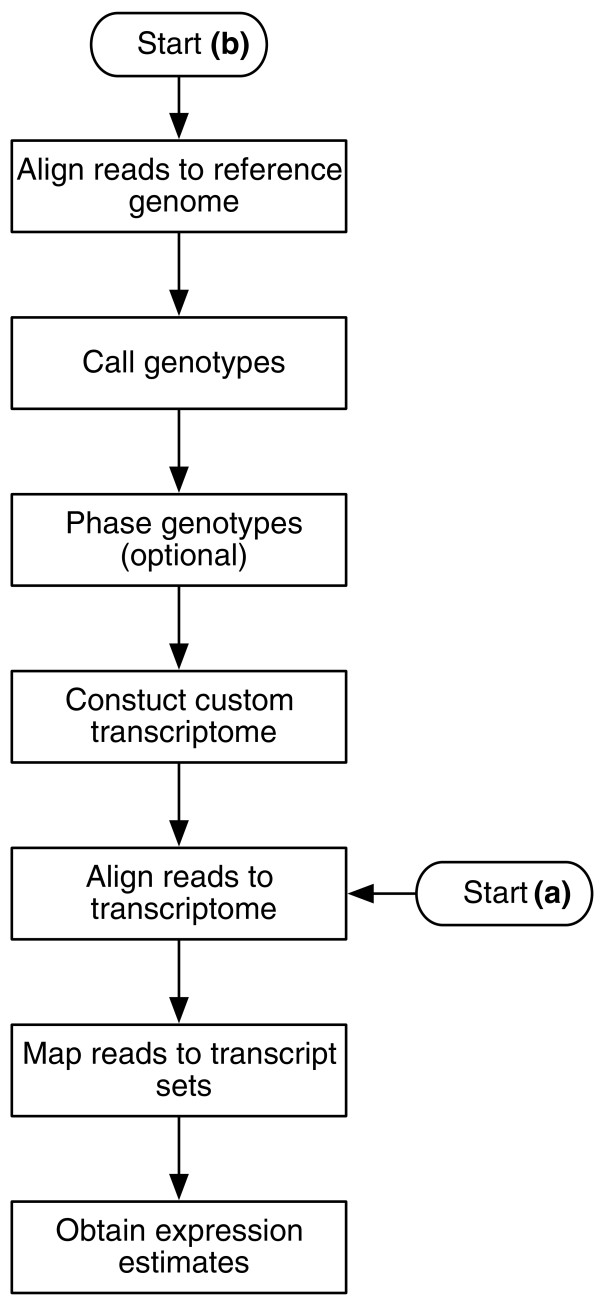
“Then, genotypes are called with SAMtools pileup [ 18 ].”
MethodUltrafast and memory-efficient alignment of short DNA sequences to the human genome.
Langmead, B., Trapnell, C., Pop, M., & Salzberg, S. L. (2009) · Genome Biology · doi:10.1186/gb-2009-10-3-r25 · Cited by 21,849 · cited 1×
“The reads are realigned to the individualized haplotype specific transcriptome reference with Bowtie [ 20 ], finding alignments for reads that originally failed to align due to having too many mismatches with the standard reference (approximately 0:3% more reads recovered, with some transcripts receiving up to 13% mor…”
MethodDifferential expression analysis for sequence count data
Anders, S., & Huber, W. (2010) · Genome Biology · doi:10.1186/gb-2010-11-10-r106 · Cited by 15,581
Trapnell, C., Williams, B. A., Pertea, G., Mortazavi, A., Kwan, G., van Baren, M. J., Salzberg, S. L., Wold, B. J., & Pachter, L. (2010) · Nature Biotechnology · doi:10.1038/nbt.1621 · Cited by 15,556
Mapping and quantifying mammalian transcriptomes by RNA-Seq
Mortazavi, A., Williams, B. A., McCue, K., Schaeffer, L., & Wold, B. (2008) · Nature Methods · doi:10.1038/nmeth.1226 · Cited by 13,696 · cited 3×
“The authors have shown an improvement of their method for gene-level estimation over strategies that discard multiply aligned reads or allocate them to mapped transcripts according to the coverage by single-mapping reads (as in [3]).”
MethodInfluentialTopHat: discovering splice junctions with RNA-Seq
Trapnell, C., Pachter, L., & Salzberg, S. L. (2009) · Bioinformatics · doi:10.1093/bioinformatics/btp120 · Cited by 11,617
RNA-Seq gene expression estimation with read mapping uncertainty
Li, B., Ruotti, V., Stewart, R. M., Thomson, J. A., & Dewey, C. N. (2010) · Bioinformatics · doi:10.1093/bioinformatics/btp692 · Cited by 1,198 · cited 5×
“The RSEM method [6] employs a similar model, but models the probability of each read individually, rather than read counts.”
MethodInfluentialTranscriptome genetics using second generation sequencing in a Caucasian population
Montgomery, S. B., Sammeth, M., Gutierrez-Arcelus, M., Lach, R. P., Ingle, C., Nisbett, J., Guigo, R., & Dermitzakis, E. T. (2010) · Nature · doi:10.1038/nature08903 · Cited by 797 · cited 5×
“The reads are realigned to the individualized haplotype specific transcriptome reference with Bowtie [20], finding alignments for reads that originally failed to align due to having too many mismatches with the standard reference (approximately 0:3% more reads recovered, with some transcripts receiving up to 13% more…”
BackgroundMethodInfluentialBiases in Illumina transcriptome sequencing caused by random hexamer priming
Hansen, K. D., Brenner, S. E., & Dudoit, S. (2010) · Nucleic Acids Research · doi:10.1093/nar/gkq224 · Cited by 713 · cited 2×
“However, two recent papers [7,8] have shown that deviations from uniformity in the generation of reads are in great part sequence rather than position-dependent for a given experimental protocol and sequencing platform.”
BackgroundMethodHigh-Resolution Analysis of Parent-of-Origin Allelic Expression in the Mouse Brain
Gregg, C., Zhang, J., Weissbourd, B., Luo, S., Schroth, G. P., Haig, D., & Dulac, C. (2010) · Science · doi:10.1126/science.1190830 · Cited by 591 · cited 10×
“We further apply our method to a published dataset of F1 initial and reciprocal crosses of CAST/EiJ (CAST) and C57BL/6J (C57) inbred mice [ 2 ] and demonstrate that MMSEQ is able to detect parental imbalance between the two haplotypes of each isoform.”
BackgroundMethodInfluential
Cited by
Items 201–300 of 304
Chen, G., Chen, J., Shi, C., Shi, L. M., Tong, W., & Shi, T. (2013) · PLoS ONE · doi:10.1371/journal.pone.0066521 · Cited by 4
“We next followed the MMSEQ [37] (version 0.”
MethodInfluentialRNA sequencing for the study of gene expression regulation
Gonçalves, Â. (2012) · Apollo (University of Cambridge) · doi:10.17863/cam.11726 · Cited by 4
“This model has been implemented in the MMSEQ method [147], while variations on it have been implemented in POEM [120], the method of Jiang and Wong (J&W) [63], MISO [65] and RSEM [83].”
BackgroundMethodInfluentialSelf-citationStatistical Modeling of High Dimensional Counts
Love, M. I. (2021) · Methods in molecular biology · doi:10.1007/978-1-0716-1307-8_7 · Cited by 3
Satraplatin Demonstrates High Cytotoxic Activity Against Genetically Defined Lymphoid Malignancies
Zander, T., Xue, J., MARKSON, G., Dahm, F., & RENNER, C. (2022) · Anticancer Research · doi:10.21873/anticanres.15658 · Cited by 3
An approach for assessing RNA-seq quantification algorithms in replication studies
Wu, P.-Y., Phan, J. H., & Wang, M. D. (2013) · IEEE International Workshop on Genomic Signal Processing and Statistics · doi:10.1109/gensips.2013.6735918 · Cited by 3
Modeling Exon-Specific Bias Distribution Improves the Analysis of RNA-Seq Data
Liu, X., Zhang, L., & Chen, S. (2015) · PLoS ONE · doi:10.1371/journal.pone.0140032 · Cited by 3
The selection of quantification pipelines for Illumina RNA-seq data using a subsampling approach
Wu, P.-Y., & Wang, M. D. (2016) · IEEE-EMBS International Conference on Biomedical and Health Informatics (BHI ...) · doi:10.1109/bhi.2016.7455839 · Cited by 3
“In contrast, we apply RSEM, eXpress, and MMSEQ to quantify gene and transcript expression using transcriptomic mapping information produced by Bowtie.”
InfluentialNOVEL COMPUTATIONAL METHODS FOR TRANSCRIPT RECONSTRUCTION AND QUANTIFICATION USING RNA-SEQ DATA
Huang, Y. (2015) · UKnowledge (University of Kentucky) · Cited by 3
Fast Approximate Inference of Transcript Expression Levels from RNA-seq DataPreprint
Hensman, J. J., Glaus, P., Honkela, A., & Rattray, M. (2013) · arXiv (Cornell University) · doi:10.48550/arxiv.1308.5953 · Cited by 3
“Mixture models have been successfully applied to infer the proportion of different gene isoforms or allelic variants in a particular sample (Katz et al., 2010; Turro et al., 2011), for improving overall gene expression estimates (Li et al.”
BackgroundMethodInfluentialO’Loughlin, A. (2011) · Maynooth University ePrints and eTheses Archive (Maynooth University) · Cited by 3
Dual transcriptomics data and detection of host-pathogen interactions
Eldem, V., Çınar, Y. U., Çay, S. B., Kuralay, S. C., Kayalar, Ö., Zararsız, G., Bakır, Y., & Dikmen, F. (2024) · Elsevier eBooks · doi:10.1016/b978-0-323-95890-5.00012-0 · Cited by 2
Tree-based differential testing using inferential uncertainty for RNA-seq
Singh, N., Wu, E. Y., Fan, J., Love, M. I., & Patro, R. (2025) · Genome Research · doi:10.1101/gr.279981.124 · Cited by 2
“Such capabilities are provided by several existing quantification methods (Li and Dewey 2011; Turro et al. 2011; Bray et al. 2016; Patro et al. 2017).”
ASET: an end-to-end pipeline for quantification and visualization of allele specific expression
Wu, W.-S., Shedden, K., Vincenz, C., Gates, C., & Strassmann, B. I. (2025) · BMC Bioinformatics · doi:10.1186/s12859-025-06282-2 · Cited by 2
“With diploid genome construction and sufficient density of heterozygous SNPs (e.g. from inbred mouse strains), there are approaches to resolve ASE quantification on the isoform-level [31, 32].”
Piot, A., El-Kassaby, Y. A., & Porth, I. M. (2024) · Compendium of plant genomes · doi:10.1007/978-3-031-50787-8_7 · Cited by 2
Su, Q., Long, Y., Gou, D., Quan, J., & Lian, Q. (2024) · Briefings in Bioinformatics · doi:10.1093/bib/bbae532 · Cited by 2
The promise of long-read RNA-seq: reducing bias in analyses of allele imbalance
Nolte, N., Petek, M., Angulo, P., Mulroney, L., Nicassio, F., Marroni, F., & McIntyre, L. M. (2026) · NAR Genomics and Bioinformatics · doi:10.1093/nargab/lqag071 · Cited by 3
“Counting the gene-specific reads is then by necessity a separate step [ 2 , 36 , 54 , 55 ].”
Piot, A. (2023) · Corpus Université Laval (Université Laval) · Cited by 2
Regulatory Divergence of Transcript Isoforms in a Mammalian Model System
Leigh-Brown, S., Gonçalves, Â., Thybert, D., Stefflova, K., Watt, S., Flicek, P., Brāzma, A., Marioni, J. C., & Odom, D. T. (2015) · PLoS ONE · doi:10.1371/journal.pone.0137367 · Cited by 2
Self-citationClassifying Osteosarcoma Using Meta-Analysis of Gene Expression
Alge, O., Gryak, J., Hua, Y., & Najaria, K. (2018) · IEEE International Conference on Bioinformatics and Biomedicine (BIBM) · doi:10.1109/bibm.2018.8621119 · Cited by 2
“66 using Bowtie [7], and expression values were calculated using mmseq [8].”
MethodGenetic modifiers of Cep290 -mediated retinal degenerationPreprint
Meyer, K. J., Whitmore, S. S., Burnight, E. R., Riker, M. J., Mercer, H. E., Ajose, A., Howell, G. R., Stone, E. M., Mullins, R. F., Tucker, B. A., et al. (2022) · bioRxiv (Cold Spring Harbor Laboratory) · doi:10.1101/2022.01.26.477596 · Cited by 2
A Robust Methodology for Assessing Homoeolog-Specific Expression
Boatwright, J. L. (2023) · Methods in molecular biology · doi:10.1007/978-1-0716-2561-3_13 · Cited by 1
Steibel, J. P., Wang, H., & Zhong, P. (2015) · BMC Bioinformatics · doi:10.1186/s12859-015-0479-2 · Cited by 1
“As a way to mitigate this problem, the use of phased haplotypes has been proposed [11], with the purpose of more reliably calling genotypes by exploiting linkage disequilibrium and minimizing the chances of missing heterozygote individuals.”
MethodInfluentialannotation and visualisation of extreme changes in splicing from RNA-seq experiments with SwitchSeq
Gonz, M. (2014) · Cited by 1
Toxicogenomics of Multi‐Walled Carbon Nanotubes
Joseph, P. (2023) · Wiley eBooks · doi:10.1002/9781119896258.ch7 · Cited by 1
TreeTerminus —creating transcript trees using inferential replicate counts
Singh, N., Love, M. I., & Patro, R. (2023) · iScience · doi:10.1016/j.isci.2023.106961 · Cited by 1
Optimizing K-Mer Fingerprint Generation for Machine Learning
Kromer-Edwards, C. (2023) · ACM International Conference on Bioinformatics, Computational Biology, and Health Informatics (ACM-BCB) · doi:10.1145/3584371.3612946 · Cited by 1
“The Fasta file reader in C was utilized from Turro et al. [17] to read in the Fasta files, contributing to timing.”
MethodGenome dosage and parent of origin effects in a ploidy series of Arabidopsis thaliana
Antoine, F. (2013) · Arrow@dit (Dublin Institute of Technology) · doi:10.13025/15768 · Cited by 1
BADER: Bayesian analysis of differential expression in RNA sequencing dataPreprint
Katzfuß, M., Neudecker, A., Anders, S., & Gagneur, J. (2014) · arXiv (Cornell University) · doi:10.48550/arxiv.1410.4827 · Cited by 1
Making microarray and RNA-seq gene expression data comparable
Uziela, K. (2012) · Aaltodoc (Aalto University) · Cited by 1
Regulation of gene expression in macrophage immune response
Alasoo, K. (2017) · Apollo (University of Cambridge) · doi:10.17863/cam.9233 · Cited by 1
“Next, I used mmseq and mmdiff to quantify transcript expression and identify transcripts whose proportions had significantly changed (Turro et al., 2011, 2014).”
MethodInfluentialThe dark side of innate immune memory: the development of atherosclerosis
Bekkering, S. (2017) · Radboud Repository (Radboud University) · Cited by 1
Discovery and In Vivo Characterization of Long Noncoding RNAs
Liapis, S. C. (2016) · Digital Access to Scholarship at Harvard (DASH) (Harvard University) · Cited by 1
Naseem, F. (2019) · Wolverhampton Intellectual Repository and E-Theses (University of Wolverhampton) · Cited by 1
Huang, S. (2021) · Mspace (University of Manitoba) · Cited by 1
Forecasting of a complex microbial community using meta-omicsPreprint
Delogu, F., Kunath, B. J., Queirós, P., Halder, R., Lebrun, L., Pope, P. B., May, P., Widder, S., Muller, E. E. L., & Wilmes, P. (2022) · bioRxiv (Cold Spring Harbor Laboratory) · doi:10.1101/2022.10.19.512887 · Cited by 1
Unified Transcriptome and Mechanics Map of the Intact Mammalian Preimplantation Embryo In SituPreprint
Habibi, E., Sinha, A., Yang, H., Yadollahpour, P., Rodríguez-Aller, R., Li, Y., Lee, L., Wollensak, D., Chiang, Z., Sakkas, D., et al. (2026) · bioRxiv (Cold Spring Harbor Laboratory) · doi:10.64898/2026.02.23.706394 · Cited by 1
Detecting Dysregulated Processes and Pathways
Stöckel, D., & Lenhof, H. (2014) · Wiley eBooks · doi:10.1002/9783527672165.ch14
Determining differential expression of Splice Variants in RNA-seq
Weistra, W. (2012) · Utrecht University Repository (Utrecht University)
Benchmarking of read mapping bias in allele specific expression analysis
James, A. R. (2013) · Chalmers Publication Library (Chalmers University of Technology)
Expression profile analyses of human HCT-116 colon cancer cell line before and after serum induction
Yin, H., Yan, Z., Liang, Y., Liu, B., & Su, Q. (2012) · Gene · doi:10.1016/j.gene.2012.11.057
Genomic Imprinting in the Brain: the persistent influences from Mom and Dad
Perez, J. D. (2015) · Digital Access to Scholarship at Harvard (DASH) (Harvard University)
Isoform Expression Analysis Based on RNA-seq Data
Li, H. (2014) · Springer eBooks · doi:10.1007/978-3-319-07212-8_12
Maretty, L., Sibbesen, J. A., & Krogh, A. (2014)
Efficient Computational Genetics Methods for Multiparent Crosses
Zhang, Z. (2014) · Carolina Digital Repository (University of North Carolina at Chapel Hill) · doi:10.17615/v6tg-tf12
Computational Analysis of Transcript Interactions and Variants in Cancer
Zhang, W. (2015) · University of Minnesota Digital Conservancy (University of Minnesota)
Network-based Transcript Quantification with RNA-Seq DataPreprint
Zhang, W., Minn, K. T., Lin, L., Wu, B., CHIEN, J. R., Zheng, H., & Kuang, R. (2014) · arXiv (Cornell University)
Transcriptomics in the Age of Ultra High-Throughput Sequencing
Morin, R. D., & Marra, M. A. (2012) · Elsevier eBooks · doi:10.1016/b978-0-12-382227-7.00012-4
Correcting Reference Bias in High-throughput Sequencing Analysis
Huang, S. (2015) · Carolina Digital Repository (University of North Carolina at Chapel Hill) · doi:10.17615/02pb-pe30
Genomic Tools for Robust Quantitative Trait Locus Discovery and Interpretation
van de Geijn, B. (2016) · Knowledge@UChicago (University of Chicago) · doi:10.6082/0s7fj-ztp95
The Drosophila gut response to infection : a systems approach
Sleiman, M. S. B. (2016) · Infoscience (Ecole Polytechnique Fédérale de Lausanne) · doi:10.5075/epfl-thesis-7151
Graph regularized, semi-supervised learning improves annotation of de novo transcriptomesPreprint
Malik, L. I., Thatipally, S., Junneti, N., & Patro, R. (2016) · bioRxiv (Cold Spring Harbor Laboratory) · doi:10.1101/089417
“This concept has proven very powerful in transcript-level quantification, and was first introduced, to the best of our knowledge, by Turro et al. [12].”
BackgroundComputational personal genomics : understanding the functional effects of sequence variation
Altshuler, R. C. (2016) · DSpace@MIT (Massachusetts Institute of Technology)
Lineage Specification of Pluripotent Populations in Murine Development
DeVeale, B. (2013) · Library and Archives Canada (Government of Canada)
Deonovic, B., Smith, B., Au, K. F., Cavanaugh, J., Breheny, P. J., & Cowles, K. (2017) · doi:10.17077/etd.v5fp2ey7
Jorge, N. A. N. (2017) · Americanae (AECID Library)
Novel Approaches to Studying the Effects of Cis-Regulatory Variants in the Central Nervous System
Shen, S. Q. (2018) · Open Scholarship Institutional Repository (Washington University in St. Louis) · doi:10.7936/k7z89bvf
“The experimental design and analytical approaches of this project were inspired by, and rely upon, previous work (Wittkopp et al. 2004; Tirosh et al. 2009; Corbo et al. 2010; Emerson et al. 2010; McManus et al. 2010; Keane et al. 2011; Turro et al. 2011; Goncalves et al. 2012; Turro et al. 2014).”
MethodInfluentialKiskin, F. N. (2018) · Apollo (University of Cambridge) · doi:10.17863/cam.32696
“8a (Turro et al., 2011; Turro et al., 2014) was used with default parameters to calculate fragment counts and DESeq2 (Love et al.”
MethodGaussian Process Modelling of Genome-wide High-throughput Sequencing Time Series
Topa, H. (2018) · Aaltodoc (Aalto University)
Gene regulation and the genomic basis of speciation and adaptation in house mice (Mus musculus)
Mack, K. L. (2018) · eScholarship (California Digital Library)
Allele specific expression in various tissues of Gallus gallus domesticus
Tomlinson, M. J. (2018) · Library, Museums and Press - UDSpace (University of Delaware) · doi:10.58088/ay4e-8f51
Frochaux, M. (2019) · Infoscience (Ecole Polytechnique Fédérale de Lausanne) · doi:10.5075/epfl-thesis-9723
“offsetGTF tool included in the mmseq package (Turro et al., 2011) on the Ensembl BDGP5.”
MethodExploring allele-specific expression mechanisms in health and disease
Goovaerts, T. (2020) · Ghent University Academic Bibliography (Ghent University)
Computational approaches for improving the accuracy and efficiency of RNA-seq analysis
Sarkar, H. (2020) · University Libraries (University of Maryland) · doi:10.13016/tuy4-kjcc
Algorithms meet sequencing technologies – 10th edition of the RECOMB-Seq workshop
Patro, R., & Salmela, L. (2020) · iScience · doi:10.1016/j.isci.2020.101956
“Many methods have been developed to tackle the problem of transcript abundance estimation (Trapnell et al., 2010; Li et al., 2010; Turro et al., 2011; Glaus et al., 2012; Roberts and Pachter, 2013; Patro et al., 2014, 2017) that apply a range of different probabilistic models and inference techniques to estimate trans…”
Gene Expression Differences in Hybrids at Beginning of Speciation Continuum
Long, N. A. (2016) · UTA ResearchCommons (University of Texas Arlington)
Cis-regulation and genetic control of gene expression in neuroblastoma
Burkert, C. M. (2021) · edoc Publication server (Humboldt University of Berlin) · doi:10.18452/23008
Perplexity: Evaluating Transcript Abundance Estimation in the Absence of Ground Truth
Fan, J., Chan, S. S., & Patro, R. (2021) · DROPS (Schloss Dagstuhl – Leibniz Center for Informatics) · doi:10.4230/lipics.wabi.2021.4
Perplexity: evaluating transcript abundance estimation in the absence of ground truth
Fan, J., Chan, S. S., & Patro, R. (2022) · Algorithms for Molecular Biology · doi:10.1186/s13015-022-00214-y
“The majority of these approaches perform statistical inference over a probabilistic generative model of the experiment based either on sufficient statistics of counts [7, 8] or the set of fragment alignments themselves [9].”
BackgroundJoseph, P. (2022) · Wiley eBooks · doi:10.1002/9781119807704.ch7
Teichmann, S. A., & Hagai, T. (2019) · Faculty Opinions – Post-Publication Peer Review of the Biomedical Literature · doi:10.3410/f.736963101.793567815
Ainciburu, M. (2022) · Depósito Académico Digital Universidad de Navarra (University of Navarra) · doi:10.15581/10171/65224
Transcriptomic profiling–based identification of biomarkers of stem cells
Sharma, S., Kalpdev, D., & Choudhary, A. (2024) · Elsevier eBooks · doi:10.1016/b978-0-443-13222-3.00034-4
Unraveling the History and Mysteries of RNA Sequencing Technology
Kar, A. C. R. (2024) · International Journal of Science and Research (IJSR) · doi:10.21275/sr24109000554
Fast effect size shrinkage software for beta-binomial models of allelic imbalance
Love, M. I., & Zitovsky, J. P. (2020) · Carolina Digital Repository (University of North Carolina at Chapel Hill) · doi:10.17615/cqgf-7k80
Wang, J., Sun, Z., Wang, G., & Miao, Y. (2025) · International Journal of Molecular Sciences · doi:10.3390/ijms26125700
Pramanik, S., Seth, D., Das, A., & Debnath, S. (2025) · Elsevier eBooks · doi:10.1016/b978-0-443-33341-5.00015-x
Turro, E. (2020) · F1000Research · doi:10.5256/f1000research.23018.r57280
Self-citationA next generation of studies: Heterosis and inbreeding depression
Mukherjee, S. (2014) · Iowa State University Digital Repository (Iowa State University) · doi:10.31274/etd-180810-4297
Additional file 14 of The Tug1 lncRNA locus is essential for male fertility
Lewandowski, J. P., Dumbović, G., Watson, A. R., Hwang, T., Jacobs-Palmer, E., Chang, N. P., Much, C., Turner, K. M., Kirby, C. J., Rubinstein, N. D., et al. (2020) · Figshare · doi:10.6084/m9.figshare.12926405
Additional file 15 of The Tug1 lncRNA locus is essential for male fertility
Lewandowski, J. P., Dumbović, G., Watson, A. R., Hwang, T., Jacobs-Palmer, E., Chang, N. P., Much, C., Turner, K. M., Kirby, C. J., Rubinstein, N. D., et al. (2020) · Figshare · doi:10.6084/m9.figshare.12926408
Additional file 13 of The Tug1 lncRNA locus is essential for male fertility
Lewandowski, J. P., Dumbović, G., Watson, A. R., Hwang, T., Jacobs-Palmer, E., Chang, N. P., Much, C., Turner, K. M., Kirby, C. J., Rubinstein, N. D., et al. (2020) · Figshare · doi:10.6084/m9.figshare.12926402
Additional file 2 of The Tug1 lncRNA locus is essential for male fertility
Lewandowski, J. P., Dumbović, G., Watson, A. R., Hwang, T., Jacobs-Palmer, E., Chang, N. P., Much, C., Turner, K. M., Kirby, C. J., Rubinstein, N. D., et al. (2020) · Figshare · doi:10.6084/m9.figshare.12926420
Additional file 11 of The Tug1 lncRNA locus is essential for male fertility
Lewandowski, J. P., Dumbović, G., Watson, A. R., Hwang, T., Jacobs-Palmer, E., Chang, N. P., Much, C., Turner, K. M., Kirby, C. J., Rubinstein, N. D., et al. (2020) · Figshare · doi:10.6084/m9.figshare.12926393
Additional file 2 of Personalized and graph genomes reveal missing signal in epigenomic data
Groza, C., Kwan, T., Soranzo, N., Pastinen, T., & Bourque, G. (2020) · Figshare · doi:10.6084/m9.figshare.12368159
Additional file 4 of The Tug1 lncRNA locus is essential for male fertility
Lewandowski, J. P., Dumbović, G., Watson, A. R., Hwang, T., Jacobs-Palmer, E., Chang, N. P., Much, C., Turner, K. M., Kirby, C. J., Rubinstein, N. D., et al. (2020) · Figshare · doi:10.6084/m9.figshare.12926426
Statistical Challenges in Sequencing Data: Addressing Uncertainty in Analysis
Wu, E. (2025) · Carolina Digital Repository (University of North Carolina at Chapel Hill) · doi:10.17615/4tea-6930
Additional file 17 of The Tug1 lncRNA locus is essential for male fertility
Lewandowski, J. P., Dumbović, G., Watson, A. R., Hwang, T., Jacobs-Palmer, E., Chang, N. P., Much, C., Turner, K. M., Kirby, C. J., Rubinstein, N. D., et al. (2020) · Figshare · doi:10.6084/m9.figshare.12926414
Additional file 12 of The Tug1 lncRNA locus is essential for male fertility
Lewandowski, J. P., Dumbović, G., Watson, A. R., Hwang, T., Jacobs-Palmer, E., Chang, N. P., Much, C., Turner, K. M., Kirby, C. J., Rubinstein, N. D., et al. (2020) · Figshare · doi:10.6084/m9.figshare.12926396
Wu, E. Y., Singh, N. P., Choi, K., Zakeri, M., Vincent, M. J., Churchill, G. A., Ackert‐Bicknell, C. L., Patro, R., & Love, M. I. (2024) · Figshare · doi:10.6084/m9.figshare.26603722
Additional file 1 of Personalized and graph genomes reveal missing signal in epigenomic data
Groza, C., Kwan, T., Soranzo, N., Pastinen, T., & Bourque, G. (2020) · Figshare · doi:10.6084/m9.figshare.12368156
Additional file 16 of The Tug1 lncRNA locus is essential for male fertility
Lewandowski, J. P., Dumbović, G., Watson, A. R., Hwang, T., Jacobs-Palmer, E., Chang, N. P., Much, C., Turner, K. M., Kirby, C. J., Rubinstein, N. D., et al. (2020) · Figshare · doi:10.6084/m9.figshare.12926411
Wu, E. Y., Singh, N. P., Choi, K., Zakeri, M., Vincent, M. J., Churchill, G. A., Ackert‐Bicknell, C. L., Patro, R., & Love, M. I. (2024) · Figshare · doi:10.6084/m9.figshare.26603719
Incorporation Of Quantification Uncertainty Into Bulk and Single-Cell RNA-seq Analysis
Buren, S. K. V. (2020) · Carolina Digital Repository (University of North Carolina at Chapel Hill) · doi:10.17615/avjg-9098
Zhou, X. (2017) · Zurich Open Repository and Archive (University of Zurich) · doi:10.5167/uzh-204915
Additional file 3 of The Tug1 lncRNA locus is essential for male fertility
Lewandowski, J. P., Dumbović, G., Watson, A. R., Hwang, T., Jacobs-Palmer, E., Chang, N. P., Much, C., Turner, K. M., Kirby, C. J., Rubinstein, N. D., et al. (2020) · Figshare · doi:10.6084/m9.figshare.12926423
Additional file 1 of The Tug1 lncRNA locus is essential for male fertility
Lewandowski, J. P., Dumbović, G., Watson, A. R., Hwang, T., Jacobs-Palmer, E., Chang, N. P., Much, C., Turner, K. M., Kirby, C. J., Rubinstein, N. D., et al. (2020) · Figshare · doi:10.6084/m9.figshare.12926417
Additional file 10 of The Tug1 lncRNA locus is essential for male fertility
Lewandowski, J. P., Dumbović, G., Watson, A. R., Hwang, T., Jacobs-Palmer, E., Chang, N. P., Much, C., Turner, K. M., Kirby, C. J., Rubinstein, N. D., et al. (2020) · Figshare · doi:10.6084/m9.figshare.12926390
de Sousa, A. E. F. (2021) · Portuguese National Funding Agency for Science, Research and Technology (RCAAP Project by FCT) · doi:10.34626/6d35-2e85
Deciphering splicing with sparse regression techniques in the era of high-throughput RNA sequencing.
Bernard, E. (2016) · theses.fr (ABES) · doi:10.70675/1074a190z4aa6z4e52zb386z0491fcaff5f3
“Several works (Jiang and Wong, 2009; Turro et al., 2011; Trapnell et al., 2010) on transcript abundances estimation model the read counts as Poisson distributed.”
BackgroundMethod
Metadata
- Authors
- Turro, E., Su, S.-Y., Gonçalves, Â., Coin, L. J., Richardson, S., & Lewin, A.
- Affiliations
- Imperial College London (GB)
- University of California, San Francisco (US)
- European Bioinformatics Institute (GB)
- Corresponding author
- Turro, Ernest
- Venue
- Genome Biology
- Published
- 2011-02-10
- Volume
- 12
- Issue
- 2
- Pages
- R13-R13
- ISSN
- 1465-6906 (ISSN-L)
- 1474-760X
- PMC
- PMC3188795
- OpenAlex
- W2129916363
- Cited by
- 264
- References
- 22
- Citations by year
- 2026: 2 · 2025: 10 · 2024: 14 · 2023: 17 · 2022: 12 · 2021: 10 · 2020: 28 · 2019: 23 · 2018: 17 · 2017: 18 · 2016: 16 · 2015: 25 · 2014: 28 · 2013: 20 · 2012: 18
- FWCI
- 9.34
- Type
- journal article
- Language
- en
- Open access
- gold
- doi.org
- Licence
- cc-by
- creativecommons.org/licenses/by/2.0/ (tdm)
- creativecommons.org/licenses/by/2.0/ (vor)
- Locations
- Genome biology (publishedVersion, cc-by)
- Europe PMC (PubMed Central) (publishedVersion, cc-by)
- PubMed Central (publishedVersion, cc-by)
- PubMed (publishedVersion)
- LSHTM Research Online (London School of Hygiene and Tropical Medicine) (acceptedVersion)
- Minerva Access (University of Melbourne) (submittedVersion, cc-by)
- Brunel University Research Archive (BURA) (Brunel University London) (submittedVersion)
- eScholarship (California Digital Library) (submittedVersion)
- Funders
- Biotechnology and Biological Sciences Research Council (BB/G000352/1)
- Topics
- Life Sciences › Biochemistry, Genetics and Molecular Biology › Molecular Biology › Genomics and Phylogenetic Studies
- Life Sciences › Biochemistry, Genetics and Molecular Biology › Molecular Biology › RNA Research and Splicing
- Life Sciences › Biochemistry, Genetics and Molecular Biology › Molecular Biology › Single-cell and spatial transcriptomics
- Keywords
- allelic imbalance, diploids, paired-end reads, RNA-seq
- MeSH terms
- Algorithms, Animals, Haplotypes, Humans, RNA, Messenger, Software, Models, Statistical, Alternative Splicing, Sequence Analysis, RNA, Computational Biology, Gene Expression Profiling, Allelic Imbalance, Mice, Transcriptome
About these checks
Registry, retraction, Cites and statistics results are computed, not judged, with one exception: a printed reference that no index lists is read once by a model before it counts as a citation error. Claims are extracted by a model and kept only when their quote appears verbatim in the text; each cited source is then checked, with a model’s help, for whether it says what the claim relies on. Those verdicts can be wrong — read the claim’s quote and the cited source before relying on one.
Statistics and arithmetic are recomputed, not judged.
Confidence bands are shown only for fields calibrated on our annotated test set. None is calibrated yet, so no band is shown.
What counts as a claim ›How we measure confidence ›How we check this ›
Are you an author, or do you see a problem with this page? Request a review
Data sources
Bibliographic data: Semantic Scholar, OpenAlex, Crossref.
Contains information from the Semantic Scholar Academic Graph Datasets, made available under the ODC Attribution License (ODC-BY 1.0).
Semantic Scholar’s data is described in: Kinney, R., et al. (2023). The Semantic Scholar Open Data Platform. arXiv:2301.10140.
