

Metagenomic biomarker discovery and explanation
Open accessThe DOI matches its Crossref record; 115 of the 115 references it cites were found in a registry or an index.
Abstract
This study describes and validates a new method for metagenomic biomarker discovery by way of class comparison, tests of biological consistency and effect size estimation. This addresses the challenge of finding organisms, genes, or pathways that consistently explain the differences between two or more microbial communities, which is a central problem to the study of metagenomics. We extensively validate our method on several microbiomes and a convenient online interface for the method is provided at http://huttenhower.sph.harvard.edu/lefse/ .
Overview
The claims and statistics of this paper haven’t been checked yet.
Free: it reads the open-access text and checks the first 5 claims that cite a source we can check. Create a free account to check every claim.
Integrity signals
Registry
Cites
Statistics
Figures
Verification
Claims the paper makes
The claims and statistics of this paper haven’t been checked yet.
Free: it reads the open-access text and checks the first 5 claims that cite a source we can check. Create a free account to check every claim.
Claims other papers make about this one
Each is checked against this paper’s own text: does it say what the citing paper says it does?
The cited source says what the claim attributes to it.
In the citing paper
“conducted high dimensional class comparisons using linear discriminant analysis of effect size (LEfSe) (Segata et al., 2011) which detected marked differences in the predominance of bacterial communities between LTS and STS”
From Tumor Microbiome Diversity and Composition Influence Pancreatic Cancer Outcomes (2019) · cites this paper as Segata et al., 2011
The cited source says what the claim attributes to it.
In the citing paper
“Linear discriminant analysis (LDA) identified 15 key bacterial genera differentially abundance between the two gastrointestinal regions [29] (p < 0.001, Fig. 1M, Additional File S4).”
From Reductive acetogenesis is a dominant process in the ruminant hindgut (2025) · cites this paper as [29]
Self-check
Percentages, sums and reported differences re-computed from the paper’s own numbers.
The self-check needs the paper’s full text.
Citations
Cites
Matplotlib: a 2D graphics environment
Hunter, J. D. (2007) · Computing in Science & Engineering · doi:10.1109/mcse.2007.55 · Cited by 39,249 · cited 1×
“LEfSe is implemented in Python and makes use of R statistical functions in the coin [111] and MASS [112] libraries through the rpy2 library [113] and of the matplotlib [114] library for graphical output.”
MethodModern Applied Statistics with S
Venables, W. N., & Ripley, B. D. (2002) · Statistics and Computing · doi:10.1007/978-0-387-21706-2 · Cited by 24,305
Naïve Bayesian Classifier for Rapid Assignment of rRNA Sequences into the New Bacterial Taxonomy
Wang, Q., Garrity, G. M., Tiedje, J. M., & Cole, J. R. (2007) · Applied and Environmental Microbiology · doi:10.1128/aem.00062-07 · Cited by 19,885 · cited 1×
“Except as stated otherwise, taxonomic abundances for 16S samples were generated from filtered sequence reads using the RDP classifier [101], with confidences below 80% rebinned to ‘uncertain’.”
MethodSchloss, P. D., Westcott, S. L., Ryabin, T., Hall, J. R., Hartmann, M., Hollister, E. B., Lesniewski, R. A., Oakley, B. B., Parks, D. H., Robinson, C. J., et al. (2009) · Applied and Environmental Microbiology · doi:10.1128/aem.01541-09 · Cited by 19,549 · cited 2×
“UniFrac [38] compares sets of metagenomes at a strictly taxonomic level using phylogenetic distance, while MGRAST [39], ShotgunFunctionalizeR [40], mothur [41], and METAREP [42] all process metagenomic data using standard statistical tests (mainly t-tests with some modifications).”
MethodIndividual Comparisons by Ranking Methods
Wilcoxon, F. (1945) · Biometrics Bulletin · doi:10.2307/3001968 · Cited by 15,354
THE USE OF MULTIPLE MEASUREMENTS IN TAXONOMIC PROBLEMS
FISHER, R. A. (1936) · Annals of Eugenics · doi:10.1111/j.1469-1809.1936.tb02137.x · Cited by 15,227 · cited 2×
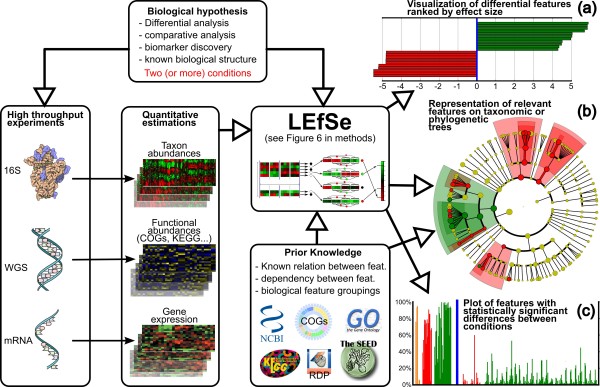
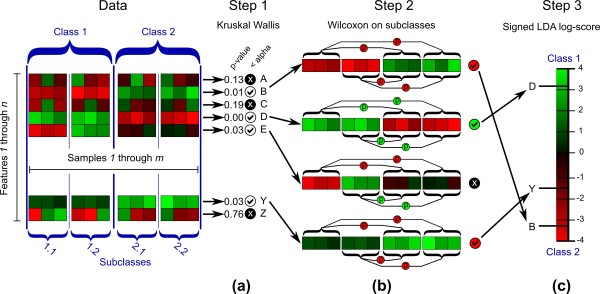
“The LEfSe algorithm is introduced in overview in the Results section, and Figure 6 illustrates in detail the format of the input (a matrix with n rows and m columns) and the three steps performed by the computational tool: the KW rank sum test [49] on classes, the pairwise Wilcoxon test [50,51] between subclasses of d…”
MethodOn a Test of Whether one of Two Random Variables is Stochastically Larger than the Other
Mann, H. B., & Whitney, D. R. (1947) · The Annals of Mathematical Statistics · doi:10.1214/aoms/1177730491 · Cited by 14,320 · cited 2×
“The LEfSe algorithm is introduced in overview in the Results section, and Figure 6 illustrates in detail the format of the input (a matrix with n rows and m columns) and the three steps performed by the computational tool: the KW rank sum test [49] on classes, the pairwise Wilcoxon test [50,51] between subclasses of d…”
MethodUse of Ranks in One-Criterion Variance Analysis
Kruskal, W. H., & Wallis, W. A. (1952) · Journal of the American Statistical Association · doi:10.1080/01621459.1952.10483441 · Cited by 13,912 · cited 2×
“The LEfSe algorithm is introduced in overview in the Results section, and Figure 6 illustrates in detail the format of the input (a matrix with n rows and m columns) and the three steps performed by the computational tool: the KW rank sum test [49] on classes, the pairwise Wilcoxon test [50,51] between subclasses of d…”
MethodAn obesity-associated gut microbiome with increased capacity for energy harvest
Turnbaugh, P. J., Ley, R. E., Mahowald, M. A., Magrini, V., Mardis, E. R., & Gordon, J. I. (2006) · Nature · doi:10.1038/nature05414 · Cited by 12,444 · cited 1×
“Changes in microbial abundances in the gut, oral cavity, and skin have been associated with disease states ranging from obesity [15-17] to psoriasis [18].”
BackgroundSmyth, G. K. (2004) · Statistical Applications in Genetics and Molecular Biology · doi:10.2202/1544-6115.1027 · Cited by 11,829
Research works printed but not linked: 1
- 110. Sequence Read Archive: SRP002012 Human Microbiome Project 454 Clinical Production Pilot (PPS) http://trace.ncbi.nlm.nih.gov/Traces/sra/?study=SRP002012#
Cited by
Items 601–700 of 1,161
Gut Microbiota Changes in Patients with Bipolar Depression
Hu, S., Li, A., Huang, T., Lai, J., Li, J., Sublette, M. E., Lu, H., Lu, Q., Du, Y., Hu, Z., et al. (2019) · Advanced Science · doi:10.1002/advs.201900752 · Cited by 175
Discovering new indicators of fecal pollution
McLellan, S. L., & Eren, A. M. (2014) · Trends in Microbiology · doi:10.1016/j.tim.2014.08.002 · Cited by 175
Resistant starch can improve insulin sensitivity independently of the gut microbiota
Bindels, L. B., Segura Munoz, R. R., Gomes-Neto, J. C., Mutemberezi, V., Martínez, I., Salazar, N., Cody, E. A., Quintero-Villegas, M. I., Kittana, H., de los Reyes-Gavilán, C. G., et al. (2017) · Microbiome · doi:10.1186/s40168-017-0230-5 · Cited by 175
“We used LEfSe to calculate and visualize the LDA Effect size [89] (http://huttenhower.”
MethodIntestinal microbial communities associated with acute enteric infections and disease recovery
Singh, P., Teal, T. K., Marsh, T. L., Tiedje, J. M., Mosci, R., Jernigan, K., Zell, A., Newton, D. W., Salimnia, H., Lephart, P., et al. (2015) · Microbiome · doi:10.1186/s40168-015-0109-2 · Cited by 175
“criminant analysis (LDA) effect size (LEfSe) method [19], which identified 14 microbial features (LDA > 2.”
MethodLiu, J., Ma, Q., Hui, X., Ran, J., Ma, Q., Wang, X., & Wang, Z. (2020) · Soil Biology and Biochemistry · doi:10.1016/j.soilbio.2020.107918 · Cited by 175
Simms-Waldrip, T. R., Sunkersett, G., Coughlin, L. A., Savani, M. R., Arana, C., Kim, J., Kim, M., Zhan, X., Greenberg, D. E., Xie, Y., et al. (2017) · Biology of Blood and Marrow Transplantation · doi:10.1016/j.bbmt.2017.02.004 · Cited by 175
Song, Y., Li, X., Yao, S., Yang, X., & Jiang, X. (2020) · Science of The Total Environment · doi:10.1016/j.scitotenv.2020.138439 · Cited by 175
Maccioni, L., Gao, B., Leclercq, S., Pirlot, B., Horsmans, Y., De Timary, P., Leclercq, I., Fouts, D., Schnabl, B., & Stärkel, P. (2020) · Gut Microbes · doi:10.1080/19490976.2020.1782157 · Cited by 174
“Linear discriminant analysis (LDA) effect size (LEfSe) was used to compare the difference between different groups.(30)”
MethodZhang, S., Nie, Q., Sun, Y., Zuo, S., Chen, C., Li, S., Yang, J., Hu, J., Zhou, X., Yu, Y., et al. (2024) · Microbiome · doi:10.1186/s40168-024-01896-9 · Cited by 174
“…effect size (LEfSe) analysis was performed by Galaxy to identify the major bacteria taxa enriched in different groups, and the effect size of the differentially abundant taxa was obtained through linear discriminant analysis (LDA) based on the Kruskal–Wallis test at an α setting of 0.05 [26].”
MethodInfluentialWang, Y., Gao, X., Ghozlane, A., Hu, H., Li, X., Xiao, Y., Li, D., Yu, G., & Zhang, T. (2018) · Journal of Crohn's and Colitis · doi:10.1093/ecco-jcc/jjx153 · Cited by 174
Gut microbiota and dietary patterns in children with attention-deficit/hyperactivity disorder
Wang, L.-J., Yang, C.-Y., Chou, W.-J., Lee, M.-J., Chou, M.-C., Kuo, H.-C., Yeh, Y.-M., Lee, S.-Y., Huang, L.-H., & Li, S.-C. (2020) · European Child & Adolescent Psychiatry · doi:10.1007/s00787-019-01352-2 · Cited by 174
“Finally, we used linear discriminant analysis effect size (LEfSe) [45] to determine the taxa that most likely explains the differences between the experimental samples and the control samples.”
MethodDiversity of gut microbiomes in marine fishes is shaped by host‐related factors
Huang, Q., Sham, R. C., Deng, Y., Mao, Y., Wang, C., Zhang, T., & Leung, K. M. Y. (2020) · Molecular Ecology · doi:10.1111/mec.15699 · Cited by 174
“To further identify the critical bacteria differentiating the fish orders, discriminative bacterial clades among the fish orders (Figure S5) were identified using a nonparametric test of significance and linear discriminant analysis implemented in LEfSe with a stricter cut-off than the default (LDA score (log 10)> 3.4…”
MethodInfluentialSáenz, J. S., Marques, T. V., Barone, R. S. C., Cyrino, J. E. P., Kublik, S., Nesme, J., Schloter, M., Rath, S., & Vestergaard, G. (2019) · Microbiome · doi:10.1186/s40168-019-0632-7 · Cited by 175
“Linear discriminant analysis (LDA) was used to determine biomarkers for every treatment using LEfSe [70].”
MethodLongevity of centenarians is reflected by the gut microbiome with youth-associated signatures
Pang, S., Chen, X., Lu, Z., Meng, L., Huang, Y., Yu, X., Huang, L., Ye, P., Chen, X., Liang, J., et al. (2023) · Nature Aging · doi:10.1038/s43587-023-00389-y · Cited by 173
Electronic Cigarette Aerosol Modulates the Oral Microbiome and Increases Risk of Infection
Pushalkar, S., Paul, B., Li, Q., Yang, J., Vasconcelos, R., Makwana, S., González, J. M., Shah, S., Xie, C., Janal, M. N., et al. (2020) · iScience · doi:10.1016/j.isci.2020.100884 · Cited by 173
Meta'omic Analytic Techniques for Studying the Intestinal Microbiome
Morgan, X. C., & Huttenhower, C. (2014) · Gastroenterology · doi:10.1053/j.gastro.2014.01.049 · Cited by 173
Self-citationMicrobial-host-isozyme analyses reveal microbial DPP4 as a potential antidiabetic target
Wang, K., Zhang, Z., Hang, J., Liu, J., Guo, F., Ding, Y., Li, M., Nie, Q., Lin, J., Zhuo, Y., et al. (2023) · Science · doi:10.1126/science.add5787 · Cited by 173
Alrafas, H. R., Busbee, P. B., Nagarkatti, M., & Nagarkatti, P. S. (2019) · Journal of Leukocyte Biology · doi:10.1002/jlb.3a1218-476rr · Cited by 173
Gut Microbiota Modulate CD8 T Cell Responses to Influence Colitis-Associated Tumorigenesis
Yu, A. I., Zhao, L., Eaton, K. A., Ho, S., Chen, J., Poe, S., Becker, J., Gonzalez, A., McKinstry, D., Hasso, M., et al. (2020) · Cell Reports · doi:10.1016/j.celrep.2020.03.035 · Cited by 173
“To identify specific differences between the two microbiomes, we used linear discriminant analysis (LDA) effect size (LEfSe) analysis (Segata et al., 2011) to identify operational taxonomic units (OTUs), which are bacterial sequences that are at least 97% identical, significantly associated with WT1 or WT2 microbiomes…”
MethodZhang, C., Liu, G., Song, Z., Wang, J., & Guo, L. (2018) · Soil Biology and Biochemistry · doi:10.1016/j.soilbio.2018.05.026 · Cited by 173
LaCourse, K. D., Zepeda-Rivera, M., Kempchinsky, A. G., Baryiames, A., Minot, S. S., Johnston, C. D., & Bullman, S. (2022) · Cell Reports · doi:10.1016/j.celrep.2022.111625 · Cited by 173
Ward, D. V., Scholz, M., Zolfo, M., Taft, D. H., Schibler, K. R., Tett, A., Segata, N., & Morrow, A. L. (2016) · Cell Reports · doi:10.1016/j.celrep.2016.03.015 · Cited by 173
“To identify taxa that were significantly enriched in either term or preterm infants, we used LEfSe (Segata et al., 2011) (Figures S4A–S4C).”
MethodSelf-citationAlterations of host-gut microbiome interactions in multiple sclerosis
Cantoni, C., Lin, Q., Dorsett, Y., Ghezzi, L., Liu, Z., Pan, Y., Chen, K., Han, Y., Li, Z., Xiao, H., et al. (2022) · EBioMedicine · doi:10.1016/j.ebiom.2021.103798 · Cited by 173
Intestinal microbiota influences clinical outcome and side effects of early breast cancer treatment
Terrisse, S., Derosa, L., Iebba, V., Ghiringhelli, F., Vaz-Luis, I., Kroemer, G., Fidelle, M., Christodoulidis, S., Segata, N., Thomas, A. M., et al. (2021) · Cell Death & Differentiation · doi:10.1038/s41418-021-00784-1 · Cited by 172
“Univariate analyses were performed using LEfSe [59] to estimate the”
MethodInfluentialSelf-citationZhang, T., Wang, N.-F., Liu, H.-Y., Zhang, Y.-Q., & Yu, L.-Y. (2016) · Frontiers in Microbiology · doi:10.3389/fmicb.2016.00227 · Cited by 172
“A previous study also reported that some members of Verrucariaceae prefer sites with high pH (calcareous sites) (Shivarov, 2013; Gueidan et al., 2014).”
BackgroundMéndez-Salazar, E. O., Ortiz-López, M. G., Granados-Silvestre, M. D. L. Á., Palacios-González, B., & Menjivar, M. (2018) · Frontiers in Microbiology · doi:10.3389/fmicb.2018.02494 · Cited by 172
Liao, L., Schneider, K. M., Galvez, E. J. C., Frissen, M., Marschall, H.-U., Su, H., Hatting, M., Wahlström, A., Haybaeck, J., Puchas, P., et al. (2019) · Gut · doi:10.1136/gutjnl-2018-316670 · Cited by 172
Li, X., Yao, S., Bian, Y., Jiang, X., & Song, Y. (2020) · Journal of Hazardous Materials · doi:10.1016/j.jhazmat.2020.123227 · Cited by 172
A synthetic probiotic engineered for colorectal cancer therapy modulates gut microbiota
Chung, Y., Ryu, Y., An, B. C., Yoon, Y.-S., Choi, O., Kim, T. Y., Yoon, J., Ahn, J. Y., Park, H. J., Kwon, S.-K., et al. (2021) · Microbiome · doi:10.1186/s40168-021-01071-4 · Cited by 172
“Overall, the LEfSe results after the last DSS administration showed that Akkermansia and Verrucomicrobia at various ranks, to which Akkermansia belongs, followed by an uncultured Ruminococcaceae (OTU 330333) and Oscillibacter, were most characteristic of PP*-P8, and Turicibacter and Erysipelotrichia at various ranks,…”
MethodInfluentialBattaglioli, E. J., Hale, V. L., Chen, J., Jeraldo, P., Ruiz-Mojica, C., Schmidt, B. A., Rekdal, V. M., Till, L. M., Huq, L., Smits, S. A., et al. (2018) · Science Translational Medicine · doi:10.1126/scitranslmed.aam7019 · Cited by 172
Quintela‐Baluja, M., Abouelnaga, M. I., Romalde, J. L., Su, J., Yu, Y., López, M. G., Smets, B. F., Zhu, Y., & Graham, D. W. (2019) · Water Research · doi:10.1016/j.watres.2019.06.075 · Cited by 172
“To determine bacterial taxa with significantly different abundance among sampling sites, biomarker analysis was performed using the linear discriminant analysis (LDA) effect size (LEfSe) method (Segata et al., 2011) in conjunction with an OTUnormalized relative abundance matrix.”
MethodGlobal analysis of the apple fruit microbiome: are all apples the same?
Abdelfattah, A., Freilich, S., Bartuv, R., Zhimo, V. Y., Kumar, A., Biasi, A., Salim, S., Feygenberg, O., Burchard, E., Dardick, C. D., et al. (2021) · Environmental Microbiology · doi:10.1111/1462-2920.15469 · Cited by 176
“Linear discriminant analysis effect size (LEfSe; Segata et al., 2011) was used for biomarker discovery to determine a list of taxa that best characterize each geographical location (Country).”
MethodOliver, A., Chase, A. B., Weihe, C., Orchanian, S. B., Riedel, S. F., Hendrickson, C. L., Lay, M., Sewall, J. M., Martiny, J. B. H., & Whiteson, K. (2021) · mSystems · doi:10.1128/msystems.00115-21 · Cited by 171
“Lefse (87) was used to determine pathways which may differentiate pre- versus postintervention samples.”
MethodGut microbiota and metabolic health among overweight and obese individuals
Kim, M.-H., Yun, K. E., Kim, J., Park, E., Chang, Y., Ryu, S., Kim, H.-L., & Kim, H.-N. (2020) · Scientific Reports · doi:10.1038/s41598-020-76474-8 · Cited by 171
Wang, S. P., Rubio, L. A., Duncan, S. H., Donachie, G. E., Holtrop, G., Lo, G., Farquharson, F. M., Wagner, J., Parkhill, J., Louis, P., et al. (2020) · mSystems · doi:10.1128/msystems.00645-20 · Cited by 171
“LEfSe (56) and Spearman correlation analyses to assess associations between different lactate infusion levels and microbiota composition at the two different pHs were carried out using MicrobiomeAnalyst (57).”
Identification of mucin degraders of the human gut microbiota
Raimondi, S., Musmeci, E., Candeliere, F., Amaretti, A., & Rossi, M. (2021) · Scientific Reports · doi:10.1038/s41598-021-90553-4 · Cited by 171
Markey, K. A., Schluter, J., Gomes, A. L. C., Littmann, E. R., Pickard, A. J., Taylor, B. P., Giardina, P. A., Weber, D., Dai, A., Docampo, M. D., et al. (2020) · Blood · doi:10.1182/blood.2019003369 · Cited by 171
Human-Gut-DNA Virome Variations across Geography, Ethnicity, and Urbanization
Zuo, T., Sun, Y., Wan, Y., Yeoh, Y. K., Zhang, F., Cheung, C. P., Chen, N., Luo, J., Wang, W., Sung, J. J. Y., et al. (2020) · Cell Host & Microbe · doi:10.1016/j.chom.2020.08.005 · Cited by 155
Ralser, A., Dietl, A., Jarosch, S., Engelsberger, V., Wanisch, A., Janssen, K., Middelhoff, M. A., Vieth, M. W., Quante, M., Haller, D., et al. (2023) · Gut · doi:10.1136/gutjnl-2022-328075 · Cited by 173
Active biointegrated living electronics for managing inflammation
Shi, J., Kim, S., Li, P., Dong, F., Yang, C., Nam, B., Han, C., Eig, E., Shi, L. L., Niu, S., et al. (2024) · Science · doi:10.1126/science.adl1102 · Cited by 171
Bacterial Signatures of “Red-Operculum” Disease in the Gut of Crucian Carp (Carassius auratus)
Li, T., Li, H., Gatesoupe, F.-J., She, R., Lin, Q., Yan, X., Li, J., & Li, X. (2017) · Microbial Ecology · doi:10.1007/s00248-017-0967-1 · Cited by 170
Aberrant IgA responses to the gut microbiota during infancy precede asthma and allergy development
Dzidic, M., Abrahamsson, T. R., Artacho, A., Björkstén, B., Collado, M. C., Mira, A., & Jenmalm, M. C. (2017) · Journal of Allergy and Clinical Immunology · doi:10.1016/j.jaci.2016.06.047 · Cited by 170
Liu, T.-C., Kern, J. T., Jain, U., Sonnek, N. M., Xiong, S., Simpson, K. F., VanDussen, K. L., Winkler, E. S., Haritunians, T., Malique, A., et al. (2021) · Cell Host & Microbe · doi:10.1016/j.chom.2021.04.004 · Cited by 170
Pu, Y., Tan, Y., Qu, Y., Chang, L., Wang, S., Wei, Y., Wang, X., & Hashimoto, K. (2021) · Brain, Behavior, and Immunity · doi:10.1016/j.bbi.2020.12.032 · Cited by 170
Seishima, J., Iida, N., Kitamura, K., Yutani, M., Wang, Z., Seki, A., Yamashita, T., Sakai, Y., Honda, M., Yamashita, T., et al. (2019) · Genome Biology · doi:10.1186/s13059-019-1879-9 · Cited by 170
Namasivayam, S., Maiga, M., Yuan, W., Thovarai, V., Costa, D. L., Mittereder, L. R., Wipperman, M. F., Glickman, M. S., Dzutsev, A., Trinchieri, G., et al. (2017) · Microbiome · doi:10.1186/s40168-017-0286-2 · Cited by 150
Nakamura, Y., Janowitz, C., Metea, C., Asquith, M. J., Karstens, L., Rosenbaum, J. T., & Lin, P. (2017) · Scientific Reports · doi:10.1038/s41598-017-12163-3 · Cited by 170
Teng, H., Wang, Y., Sui, X., Fan, J., Li, S., Lei, X., Shi, C., Sun, W., Song, M., Wang, H., et al. (2023) · Cancer Cell · doi:10.1016/j.ccell.2022.11.013 · Cited by 149
Faecal bacterial and short-chain fatty acids signature in hypercholesterolemia
Granado-Serrano, A. B., Martín-Garí, M., Sánchez, V., Riart Solans, M., Berdún, R., Ludwig, I. A., Rubió, L., Vilaprinyó, E., Portero-Otín, M., & Serrano, J. C. E. (2019) · Scientific Reports · doi:10.1038/s41598-019-38874-3 · Cited by 169
Kable, M. E., Srisengfa, Y., Laird, M., Zaragoza, J., McLeod, J., Heidenreich, J., & Marco, M. L. (2016) · mBio · doi:10.1128/mbio.00836-16 · Cited by 169
“Acinetobacter numbers were significantly enriched in this group relative to the second group (statistically significant by MaAsLin and LefSe).”
InfluentialRuan, J.-L., Lee, C., Wouters, S., Tullis, I. D. C., Verslegers, M., Mysara, M., Then, C. K., Smart, S. C., Hill, M. A., Muschel, R. J., et al. (2021) · International Journal of Radiation Oncology*Biology*Physics · doi:10.1016/j.ijrobp.2021.08.004 · Cited by 169
“The identification of significant differences in the relative abundance of OTUs was conducted using Linear Discriminant Analysis (LDA) Effect Size (LEfSe)(28).”
MethodZhu, X.-X., Yang, X.-J., Chao, Y.-L., Zheng, H.-M., Sheng, H.-F., Liu, H.-Y., He, Y., & Zhou, H.-W. (2017) · EBioMedicine · doi:10.1016/j.ebiom.2017.02.002 · Cited by 169
“We used LEfSe (linear discriminant analysis effect size) to determine differential features between groups (Segata et al., 2011).”
MethodChen, R., Wu, P., Cai, Z., Fang, Y., Zhou, H., Lasanajak, Y., Tang, L., Ye, L., Hou, C., & Zhao, J. (2019) · The Journal of Nutritional Biochemistry · doi:10.1016/j.jnutbio.2018.12.004 · Cited by 169
Mycobiome: Approaches to analysis of intestinal fungi
Tang, J., Iliev, I. D., Brown, J., Underhill, D. M., & Funari, V. A. (2015) · Journal of Immunological Methods · doi:10.1016/j.jim.2015.04.004 · Cited by 155
Piyathilake, C. J., Ollberding, N. J., Kumar, R., Macaluso, M., Alvarez, R. D., & Morrow, C. D. (2016) · Cancer Prevention Research · doi:10.1158/1940-6207.capr-15-0350 · Cited by 154
“Linear Discriminant Analysis Effect Size (LEfSe) (34) and DESeq2 (35) were used to detect differences in OTUs according to CIN and 8-OHdG status.”
MethodLiraglutide modulates gut microbiota and reduces NAFLD in obese mice
Moreira, G., Azevedo, F., Ribeiro, L., Santos, A., Guadagnini, D., Gama, P., Liberti, E., Saad, M., & Carvalho, C. (2018) · The Journal of Nutritional Biochemistry · doi:10.1016/j.jnutbio.2018.07.009 · Cited by 156
Cooking shapes the structure and function of the gut microbiome
Carmody, R. N., Bisanz, J. E., Bowen, B. P., Maurice, C. F., Lyalina, S., Louie, K. B., Treen, D., Chadaideh, K. S., Maini Rekdal, V., Bess, E. N., et al. (2019) · Nature Microbiology · doi:10.1038/s41564-019-0569-4 · Cited by 150
“16S rDNA sequence data were processed using the Quantitative Insights into Microbial Ecology (QIIME) software package version 1.8.0 31 , with microbial biomarker discovery performed using LEfSe 32 and/or linear mixed effects models 33 where appropriate.”
InfluentialSeferovic, M. D., Mohammad, M. A., Pace, R. M., Engevik, M. A., Versalovic, J. A., Bode, L., Haymond, M. W., & Aagaard, K. M. (2020) · Scientific Reports · doi:10.1038/s41598-020-79022-6 · Cited by 169
Intratumor microbiome-derived butyrate promotes lung cancer metastasis
Ma, Y., Chen, H., Li, H., Zheng, M., Zuo, X., Wang, W., Wang, S., Lu, Y., Wang, J., Li, Y., et al. (2024) · Cell Reports Medicine · doi:10.1016/j.xcrm.2024.101488 · Cited by 170
Wang, D., Li, T., Huang, K., He, X., & Zhang, X.-X. (2019) · Science of The Total Environment · doi:10.1016/j.scitotenv.2018.11.321 · Cited by 169
Gomez-Arango, L. F., Barrett, H. L., McIntyre, H. D., Callaway, L. K., Morrison, M., & Nitert, M. D. (2017) · Scientific Reports · doi:10.1038/s41598-017-03066-4 · Cited by 168
Qiao, Y., Wu, M., Feng, Y., Zhou, Z., Chen, L., & Chen, F. (2018) · Scientific Reports · doi:10.1038/s41598-018-19982-y · Cited by 168
Xiao, C., Ran, S., Huang, Z., & Liang, J. (2016) · Frontiers in Microbiology · doi:10.3389/fmicb.2016.01145 · Cited by 171
VirusSeeker, a computational pipeline for virus discovery and virome composition analysis
Zhao, G., Wu, G. H., Lim, E. S., Droit, L., Krishnamurthy, S. R., Barouch, D. H., Virgin, H. W., & Wang, D. (2017) · Virology · doi:10.1016/j.virol.2017.01.005 · Cited by 168
“Scripts to generate the output in the format for LEfSe (Linear discriminant analysis Effect Size) [37] analysis are also included.”
MethodIndole-3-carbinol prevents colitis and associated microbial dysbiosis in an IL-22–dependent manner
Busbee, P. B., Menzel, L., Alrafas, H., Dopkins, N., Becker, W., Miranda, K., Tang, C., Chatterjee, S., Singh, U., Nagarkatti, M., et al. (2020) · JCI Insight · doi:10.1172/jci.insight.127551 · Cited by 152
Machine learning approaches in microbiome research: challenges and best practices
Παπουτσόγλου, Γ., Tarazona, S., Lopes, M. B., Klammsteiner, T., Ibrahimi, E., Eckenberger, J., Novielli, P., Tonda, A. P., Mihajlović, A., Shigdel, R., et al. (2023) · Frontiers in Microbiology · doi:10.3389/fmicb.2023.1261889 · Cited by 175
Corrêa, J. D., Calderaro, D. C., Ferreira, G. A., Mendonça, S. M. S., Fernandes, G. R., Xiao, E., Teixeira, A. L., Leys, E. J., Graves, D. T., & Silva, T. A. (2017) · Microbiome · doi:10.1186/s40168-017-0252-z · Cited by 167
“Briefly, LEfSe is a metagenomic biomarkerdiscovery approach based on an algorithm that first performs a nonparametric Kruskal-Wallis test in order to identify bacterial taxa whose relative abundance is significantly different in a group of interest compared to controls.”
MethodInfluentialZhou, X., Shen, X., Johnson, J. S., Spakowicz, D. J., Agnello, M., Zhou, W., Avina, M., Honkala, A., Chleilat, F., Chen, S. J., et al. (2024) · Cell Host & Microbe · doi:10.1016/j.chom.2024.02.012 · Cited by 167
Bajaj, J. S., Liu, E. J., Kheradman, R., Fagan, A., Heuman, D. M., White, M., Gavis, E. A., Hylemon, P., Sikaroodi, M., & Gillevet, P. M. (2018) · Gut · doi:10.1136/gutjnl-2016-313170 · Cited by 167
Pang, Z., Dong, F., Liu, Q., Lin, W., Hu, C., & Yuan, Z. (2021) · Frontiers in Microbiology · doi:10.3389/fmicb.2021.627569 · Cited by 167
“The KruskalWallis sum-rank test and linear discriminant analysis (LDA) were used to analyze LDA effect size to find statistical differences in KEGG pathway (Segata et al., 2011).”
MethodIntestinal anastomotic injury alters spatially defined microbiome composition and function
Shogan, B. D., Smith, D. P., Christley, S., Gilbert, J. A., Zaborina, O., & Alverdy, J. C. (2014) · Microbiome · doi:10.1186/2049-2618-2-35 · Cited by 167
“The metagenomic predictions produced by PICRUSt were further analyzed by HUMAnN [48] to provide KEGG metabolic pathway coverage, and LEfSe [49] was used for comparative analysis of the differentially enriched KEGG metabolic pathways between postoperative day 0 and day 6 for stool contents and anastomosis tissue sample…”
MethodThe Oral Microbiome in the Elderly With Dental Caries and Health
Jiang, Q., Liu, J., Chen, L., Gan, N., & Yang, D. (2019) · Frontiers in Cellular and Infection Microbiology · doi:10.3389/fcimb.2018.00442 · Cited by 146
Beneficial effects of ginger on prevention of obesity through modulation of gut microbiota in mice
Wang, J., Wang, P., Li, D., Hu, X., & Chen, F. (2019) · European Journal of Nutrition · doi:10.1007/s00394-019-01938-1 · Cited by 168
Kim, B.-S., Choi, C. W., Shin, H., Jin, S.-P., Bae, J.-S., Han, M., Seo, E. Y., Chun, J., & Chung, J. H. (2019) · Journal of Microbiology and Biotechnology · doi:10.4014/jmb.1811.11023 · Cited by 149
“The LEfSe (linear discriminant analysis coupled with effect size measurements) was used to find potential markers among different groups [32].”
MethodZeng, X., Li, S.-W., Leng, Y., & Kang, X.-H. (2020) · The Science of The Total Environment · doi:10.1016/j.scitotenv.2020.138081 · Cited by 167
Xu, D., Wang, N., Rinne, M., Ke, W., Weinberg, Z. G., Da, M., Bai, J., Zhang, Y., Li, F., & Guo, X. (2020) · Microbial Biotechnology · doi:10.1111/1751-7915.13623 · Cited by 168
“LEfSe method was used to determine the genes most likely to explain differences between treatments by coupling standard tests for statistical significance with additional tests encoding biological consistency and effect relevance (Segata et al., 2011).”
MethodTao, W., Zhang, G., Wang, X., Guo, M., Zeng, W., Xu, Z., Cao, D., Pan, A., Wang, Y., Zhang, K., et al. (2020) · Medicine in Microecology · doi:10.1016/j.medmic.2020.100023 · Cited by 168
“ed u/galaxy/) was used for additional statistical analyses [17].”
MethodProcessed foods drive intestinal barrier permeability and microvascular diseases
Snelson, M., Tan, S. M., Clarke, R. E., de Pasquale, C., Thallas-Bonke, V., Nguyen, T.-V., Penfold, S. A., Harcourt, B. E., Sourris, K. C., Lindblom, R. S., et al. (2021) · Science Advances · doi:10.1126/sciadv.abe4841 · Cited by 154
Wu, B., Luo, H., Wang, X., Liu, H., He, P., Sheng, M., Xu, F., & Xu, H. Y. (2021) · The Science of The Total Environment · doi:10.1016/j.scitotenv.2021.149899 · Cited by 168
Exploring rhizo-microbiome transplants as a tool for protective plant-microbiome manipulation
Jiang, G., Zhang, Y., Gan, G., Li, W., Wan, W., Jiang, Y., Yang, T., Zhang, Y., Xu, Y., Wang, Y., et al. (2022) · ISME Communications · doi:10.1038/s43705-022-00094-8 · Cited by 167
Gut microbiota changes in patients with autism spectrum disorders
Ding, X., Xu, Y., Zhang, X., Zhang, L., Duan, G., Song, C., Li, Z., Yang, Y., Wang, Y., Wang, X., et al. (2020) · Journal of Psychiatric Research · doi:10.1016/j.jpsychires.2020.06.032 · Cited by 166
Hassan, A. M., Mancano, G., Kashofer, K., Fröhlich, E. E., Matak, A., Mayerhofer, R., Reichmann, F., Olivares, M., Neyrinck, A. M., Delzenne, N. M., et al. (2019) · Nutritional Neuroscience · doi:10.1080/1028415x.2018.1465713 · Cited by 166
Indole-3-Acetic Acid Alters Intestinal Microbiota and Alleviates Ankylosing Spondylitis in Mice
Shen, J., Yang, L., You, K., Chen, T., Su, Z., Cui, Z., Wang, M., Zhang, W., Liu, B., Zhou, K., et al. (2022) · Frontiers in Immunology · doi:10.3389/fimmu.2022.762580 · Cited by 166
“Significant differences in the relative abundance of gut microbiota between the control, PG, and IAA groups were determined using linear discriminant analysis (LDA) effect size (LEfSe) analysis (43), based on the Kruskal– Wallis rank-sum test.”
MethodAltered Gut Microbiota Composition Associated with Eczema in Infants
Zheng, H., Liang, H., Wang, Y., Miao, M., Shi, T., Yang, F., Liu, E., Yuan, W., Ji, Z.-S., & Li, D.-K. (2016) · PLOS ONE · doi:10.1371/journal.pone.0166026 · Cited by 166
Duncan, S. H., Russell, W. R., Quartieri, A., Rossi, M., Parkhill, J., Walker, A. W., & Flint, H. J. (2016) · Environmental Microbiology · doi:10.1111/1462-2920.13158 · Cited by 166
“Table shows the proportional abundance and taxonomic classification for each OTU, and the LEfSe analysis (calculated using pooled solid and liquid sample data) comparing proportional abundance of each OTU at the 4 h and 48 h time points and between faecal donors.”
MethodInfluentialGut dysbiosis is prevailing in Sjögren’s syndrome and is related to dry eye severity
Moon, J., Choi, S. H., Yoon, C. H., & Kim, M. K. (2020) · PLOS ONE · doi:10.1371/journal.pone.0229029 · Cited by 166
“Compositional abundance differences were first identified from each sample by analysis using linear discriminant analysis (LDA) of effect size (LEfSe) and the Kruskal-Wallis test[25].”
MethodLi, X., He, C., Li, N., Ding, L., Chen, H., Wan, J., Yang, X., Xia, L., He, W., Xiong, H., et al. (2020) · Gut Microbes · doi:10.1080/19490976.2020.1770042 · Cited by 166
“LEfSe was performed to identify the differential taxa between groups at the genus or higher taxonomy levels.(33) Statistical analysis”
MethodA meta-analysis of the bovine gastrointestinal tract microbiota
Holman, D. B., & Gzyl, K. E. (2019) · FEMS Microbiology Ecology · doi:10.1093/femsec/fiz072 · Cited by 166
Ling, L., Luo, Y., Jiang, B., Lv, J., Meng, C., Liao, Y., Reid, B. J., Ding, F., Lu, Z., Kuzyakov, Y., et al. (2022) · Soil Biology and Biochemistry · doi:10.1016/j.soilbio.2022.108778 · Cited by 166
Diverse Vaginal Microbiomes in Reproductive-Age Women with Vulvovaginal Candidiasis
Liu, M.-B., Xu, S.-R., He, Y., Deng, G.-H., Sheng, H.-F., Huang, X.-M., Ouyang, C.-Y., & Zhou, H.-W. (2013) · PLoS ONE · doi:10.1371/journal.pone.0079812 · Cited by 132
“According to our results, the level of Prevotella was the highest in the BV/VVC group, with an LDA significance value of 4.0 by LEfSe (Fig.”
MethodInfluentialFeed additives shift gut microbiota and enrich antibiotic resistance in swine gut
Zhao, Y., Su, J., An, X., Huang, F.-Y., Rensing, C., Brandt, K. K., & Zhu, Y. (2017) · The Science of The Total Environment · doi:10.1016/j.scitotenv.2017.10.106 · Cited by 167
Rumen bacterial community structure impacts feed efficiency in beef cattle
Paz, H. A., Hales, K. E., Wells, J. E., Kuehn, L. A., Freetly, H. C., Berry, E. D., Flythe, M. D. D., Spangler, M. L., & Fernando, S. C. (2018) · Journal of Animal Science · doi:10.1093/jas/skx081 · Cited by 169
Gut microbiota, dietary intakes and intestinal permeability reflected by serum zonulin in women
Mörkl, S., Lackner, S., Meinitzer, A., Mangge, H., Lehofer, M., Halwachs, B., Gorkiewicz, G., Kashofer, K., Painold, A., Holl, A. K., et al. (2018) · European Journal of Nutrition · doi:10.1007/s00394-018-1784-0 · Cited by 150
Liao, H., Friman, V., Geisen, S., Zhao, Q., Cui, P. L., Lü, X., Chen, Z., Yu, Z., & Zhou, S. (2018) · The Science of The Total Environment · doi:10.1016/j.scitotenv.2018.12.353 · Cited by 166
Shi, Y., Liu, X., & Zhang, Q. (2019) · The Science of The Total Environment · doi:10.1016/j.scitotenv.2019.05.394 · Cited by 166
Shao, D., Vogtmann, E., Liu, A., Qin, J., Chen, W., Abnet, C. C., & Wei, W. (2019) · Cancer · doi:10.1002/cncr.32403 · Cited by 166
“The linear discriminant analysis effect size (LEfSe) method was used to identify microbes associated with the tumor status or site.(32) Using the nonparametric KruskalWallis rank-sum test and the Wilcoxon rank-sum test, LEfSe detects microbiota with significant differences Figure 1.”
MethodMetatranscriptomics for the Human Microbiome and Microbial Community Functional Profiling
Zhang, Y., Thompson, K. N., Branck, T. A., Yan, Y., Nguyen, L. H., Franzosa, E. A., & Huttenhower, C. (2021) · Annual Review of Biomedical Data Science · doi:10.1146/annurev-biodatasci-031121-103035 · Cited by 168
Self-citationWang, L., Li, P., Tang, Z., Yan, X., & Feng, B. (2016) · Scientific Reports · doi:10.1038/srep33251 · Cited by 165
Zheng, Y., Yu, M., Liu, J., Qiao, Y., Wang, L., Li, Z., Zhang, X.-H., & Yu, M. (2017) · Frontiers in Microbiology · doi:10.3389/fmicb.2017.01362 · Cited by 165
“Linear discriminate analysis (LDA) effect size (LEfSe) (Segata et al., 2011) with default parameters (except for LDA value, which was above 3.0 for rearing water and 2.5 for shrimp larvae) was used to determine bacterial lineages with significant differences (P 0.05) between healthy and diseased…”
MethodInfluentialPerez Perez, G. I., Gao, Z., Jourdain, R., Ramirez, J., Gany, F., Clavaud, C., Demaude, J., Breton, L., & Blaser, M. J. (2016) · PLOS ONE · doi:10.1371/journal.pone.0151990 · Cited by 165
“Linear discriminant analysis effect size (LEfSe) [34] was used, via the Galaxy Browser, to detect significant changes in relative abundance of the microbial taxa among different groups.”
Method
Metadata
- Authors
- Segata, N., Izard, J., Waldron, L., Gevers, D., Miropolsky, L., Garrett, W. S., & Huttenhower, C.
- Affiliations
- Harvard University (US)
- Broad Institute (US)
- Corresponding author
- Huttenhower, Curtis
- Venue
- Genome Biology
- Published
- 2011-06-24
- Volume
- 12
- Issue
- 6
- Pages
- R60-R60
- ISSN
- 1465-6906 (ISSN-L)
- 1474-760X
- PMC
- PMC3218848
- OpenAlex
- W2133856765
- Semantic Scholar
- 92c6dc9b4943d031200fc5646bc49e927b2cb750
- Cited by
- 16,192
- References
- 114
- Citations by year
- 2026: 1388 · 2025: 1816 · 2024: 2070 · 2023: 1973 · 2022: 2152 · 2021: 2096 · 2020: 1650 · 2019: 1030 · 2018: 833 · 2017: 527 · 2016: 326 · 2015: 156 · 2014: 87 · 2013: 49 · 2012: 19
- FWCI
- 20.63
- Type
- journal article
- Language
- en
- Open access
- gold
- doi.org
- Licence
- cc-by
- creativecommons.org/licenses/by/2.0/ (tdm)
- creativecommons.org/licenses/by/2.0/ (vor)
- Locations
- Genome biology (publishedVersion, cc-by)
- PubMed Central (publishedVersion, cc-by)
- PubMed (publishedVersion)
- Digital Access to Scholarship at Harvard (DASH) (Harvard University) (submittedVersion, cc-by)
- Lincoln (University of Nebraska) (submittedVersion, cc-by)
- DSpace@MIT (Massachusetts Institute of Technology) (submittedVersion, cc-by-nc)
- Institutional Research Information System (Università degli Studi di Trento) (submittedVersion, cc-by-nc-sa)
- Funders
- Broad Institute
- National Institutes of Health
- National Human Genome Research Institute (R01HG005969)
- NIH Office of the Director
- National Institute of Allergy and Infectious Diseases (K08AI078942, AI078942)
- National Institute of Dental and Craniofacial Research (DE017106, R21DE017106)
- Topics
- Life Sciences › Biochemistry, Genetics and Molecular Biology › Molecular Biology › Genomics and Phylogenetic Studies
- Life Sciences › Biochemistry, Genetics and Molecular Biology › Molecular Biology › Gut microbiota and health
- Life Sciences › Biochemistry, Genetics and Molecular Biology › Molecular Biology › Bioinformatics and Genomic Networks
- Keywords
- LEfSe, microbial community comparison, effect size estimation, microbiome, microbial taxa, web-based analysis tool
- MeSH terms
- Adult, Animals, Bacteria, Colitis, Ulcerative, Humans, Infant, Mice, Inbred BALB C, Mucous Membrane, Sensitivity and Specificity, Software, Viruses, Biomarkers, Mice, Knockout, Mice, Metagenome, Metagenomics, Data Mining
About these checks
Registry, retraction, Cites and statistics results are computed, not judged, with one exception: a printed reference that no index lists is read once by a model before it counts as a citation error. Claims are extracted by a model and kept only when their quote appears verbatim in the text; each cited source is then checked, with a model’s help, for whether it says what the claim relies on. Those verdicts can be wrong — read the claim’s quote and the cited source before relying on one.
Statistics and arithmetic are recomputed, not judged.
Confidence bands are shown only for fields calibrated on our annotated test set. None is calibrated yet, so no band is shown.
What counts as a claim ›How we measure confidence ›How we check this ›
Are you an author, or do you see a problem with this page? Request a review
Data sources
Bibliographic data: Semantic Scholar, OpenAlex, Crossref.
Contains information from the Semantic Scholar Academic Graph Datasets, made available under the ODC Attribution License (ODC-BY 1.0).
Semantic Scholar’s data is described in: Kinney, R., et al. (2023). The Semantic Scholar Open Data Platform. arXiv:2301.10140.
